
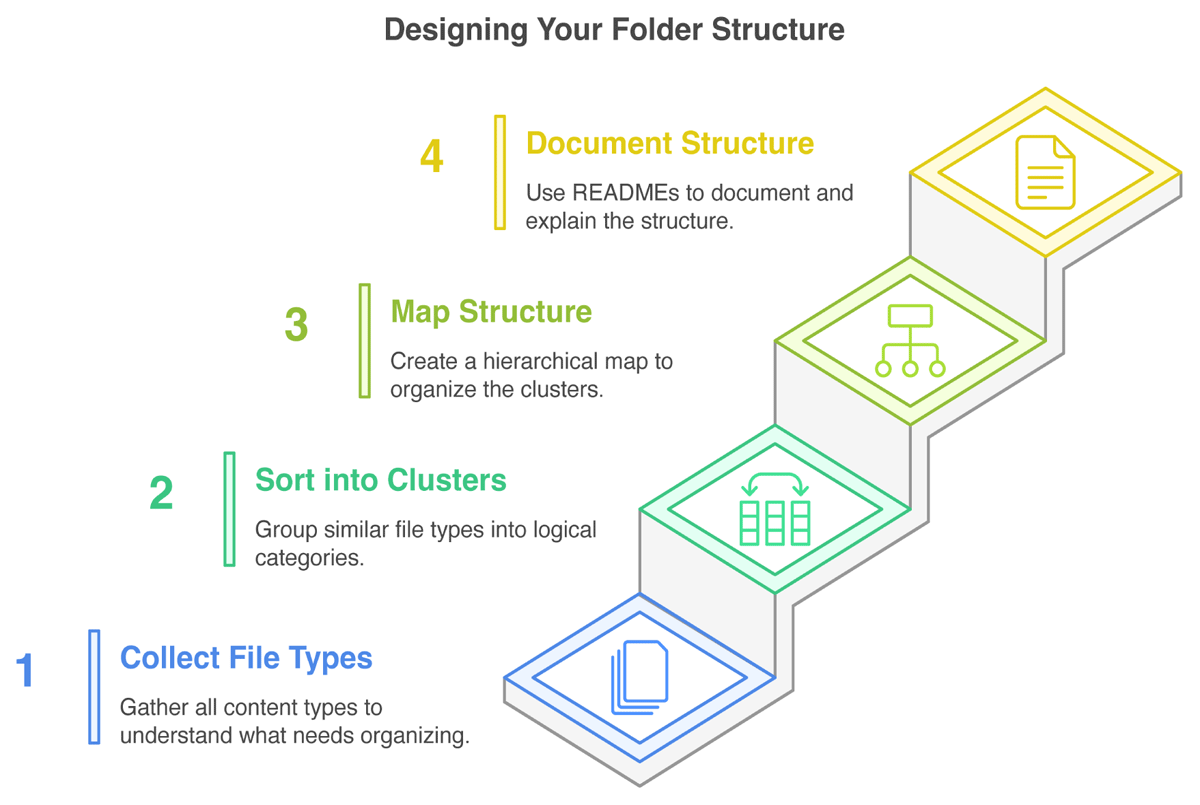
Figure 1
An overview of the four step process for creating a folder structure for a research project.
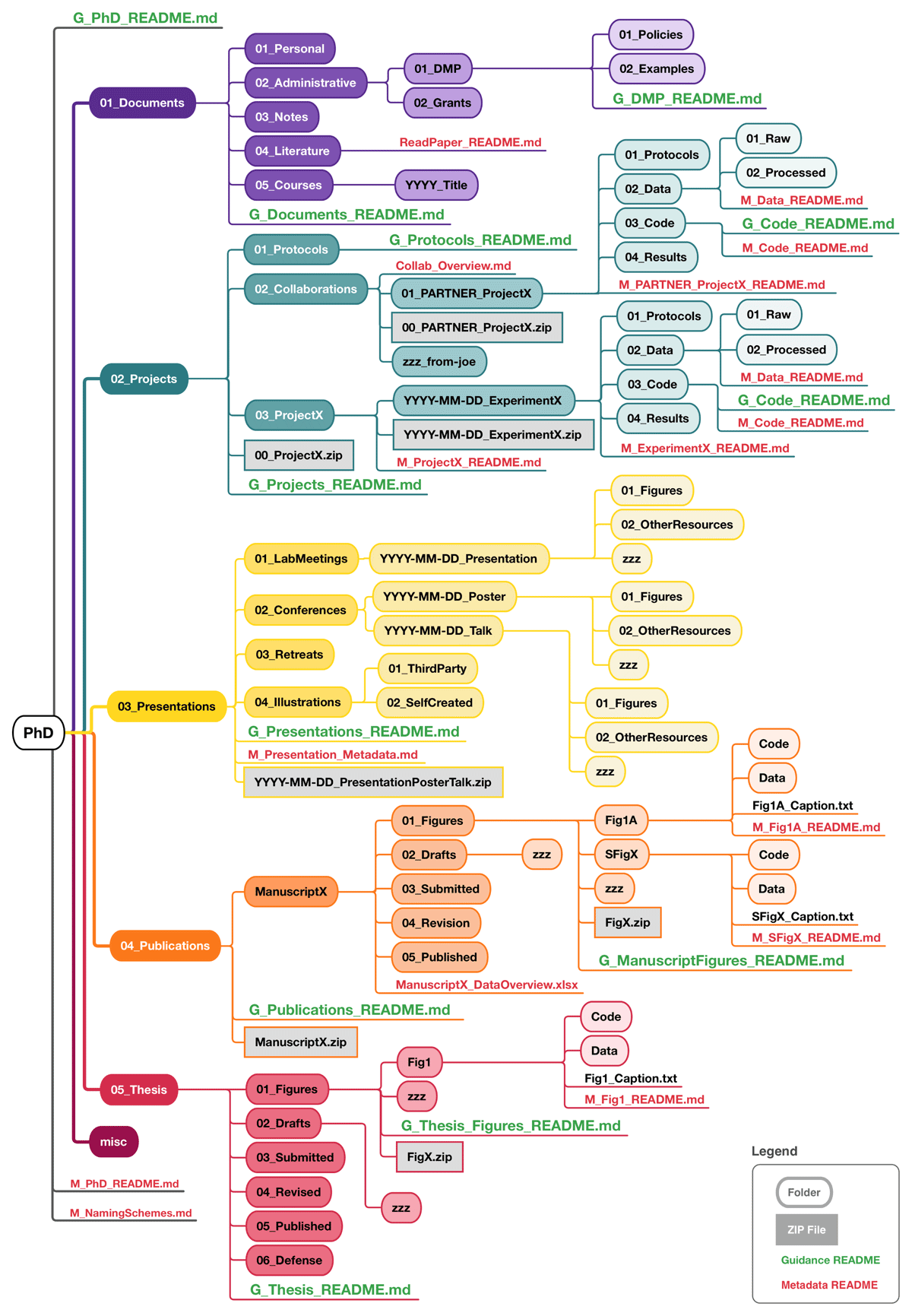
Figure 2
An overview of the folder structure template (FST) presented here.
Table 1
The FST supports the creation of (meta)data guided by the FAIR principles. For each of the four principles, the table shows the FST’s features supporting it.
| FAIR PRINCIPLE SUPPORTED… | … BY FEATURES OF THE FST |
|---|---|
| Findable | Comes with and supports the creation of intuitive and documented folder structure and naming scheme. Metadata README templates prompt sign-posting. |
| Accessible | Simple, software-independent folder system and parser with DOI acts as accessible publication example. Metadata README templates prompt the entry of contributor and license information. |
| Interoperable | All files are provided in Markdown format. Guidance on file formats supports the creation of readable and interoperable (meta)data fit for long-term archiving. |
| Reusable | Flexible metadata README templates enable immediate, structured metadata recording adaptable to any discipline. Metadata README templates and guidance READMEs encourage comprehensive documentation. All FST contents provide and thus encourage the provision of license information. |
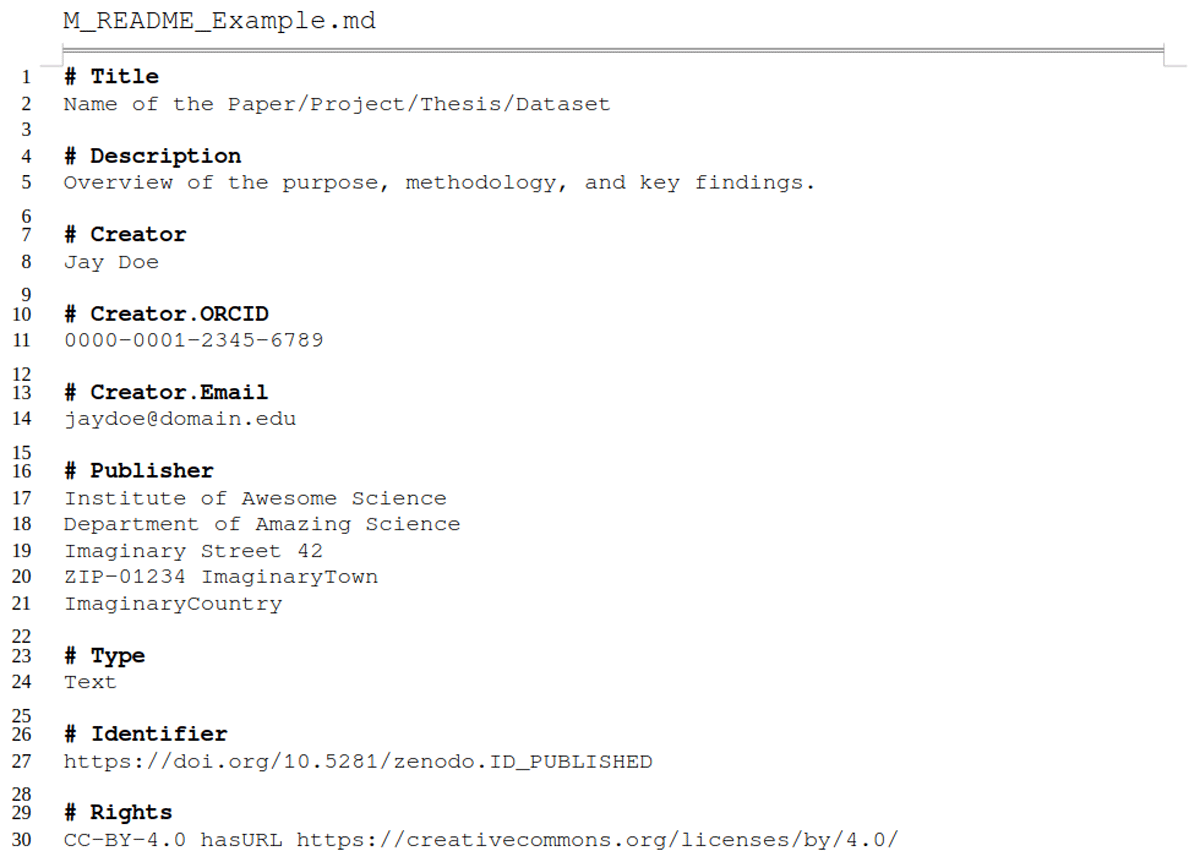
Listing 1
Exemplary (shortened) descriptive Markdown file for enriching metadata, designed for both human-readability and machine-friendly processing. The sections as well as the markup syntax facilitate the use of key-value pairs and support nested structures and relationship definitions.