
1. Introduction
A continuation of the work of Ibrahim et al. (2024), this paper examines how enhancing North-South collaboration through a capacity-development approach can address the unique challenges and opportunities present in Africa. Capacity development is fundamentally about collaboratively enhancing the capabilities of individuals, organizations, and institutions to articulate and achieve their goals (Scott et al., 2016). The challenges associated with capacity building vary across sectors and countries, necessitating tailored strategies. Capacity building extends beyond training to involve improvements in infrastructure for both hardware and software, as well as budgetary support and vehicles (Haack and Ryerson, 2016).
Kasprowicz et al. (2020) discussed the complexities of enhancing health research capacity in sub-Saharan Africa, highlighting the significance of African-led research initiatives and the support provided through partnerships such as the USA-South African collaboration that facilitated research training for 30 postgraduate students at two South African universities (Airhihenbuwa et al., 2011, Maponga et al., 2023). Additionally, Nyirenda et al. (2021) proposed a novel mnemonic acronym-based framework to guide sustainable capacity building through collaborative North-South implementation. The European & Developing Countries Clinical Trials Partnerships EDCTP2 program has also contributed toward strengthening human capital and institutional capacities across 39 countries in sub-Saharan Africa.
Recognizing the importance of public sector capacity building, the World Bank (2005) identified it as a core objective in its recent country strategies for the African region. Tsafack Nanfosso (2011) emphasized the need for urgent actions to enhance both the qualitative and quantitative aspects of scientific capacity in Africa. Marjanovic et al. (2013) proposed network models as a means to bolster health research capacity, while O’Connell et al. (2019) identified critical socio-economic contexts relevant to four key areas of conservation capacity building in Africa, including protected area management and community engagement. Additionally, El Achi et al. (2019) presented a conceptual framework for health research capacity strengthening, adapting the existing models for North and East Africa. Furthermore, Walker et al. (2020) focused on the needs and assets required for building the capacity of African science centers, aligning with asset-based development approaches.
Strengthening North-South collaboration through a capacity development approach necessitates long-term, collaborative effort. This approach aims to enhance the ability of individuals, organizations, and institutions to articulate and achieve their goals, adopting sector-specific strategies to ensure effectiveness and sustainability (Iao-Jörgensen, 2024; Scott et al., 2016).
Disaster and crisis management (DCM) requires proactive planning, response coordination, and recovery efforts to mitigate the impacts of crises on people, infrastructure, and the environment (Ahmed and Hanson, 2011; Iao-Jörgensen, 2024). A critical question arises: how can we strengthen North-South collaboration to promote multi- and Trans-disciplinary research in Disaster Risk Reduction (DRR) and crisis management? This involves identifying mechanisms for knowledge sharing, developing joint research initiatives, and addressing gaps in capacity development.
Open Science (OS), Artificial Intelligence (AI) and geoinformatics are vital in enhancing DRR and crisis management. By promoting transparency and collaboration, OS allows researchers and practitioners to openly share findings and methodologies, leading to more effective disaster management strategies. OS offers a robust framework for understanding vulnerabilities, enhancing resilience, and fostering sustainable development (Qadir et al., 2016; Ibrahim et al., 2024). Geoinformatics, and Geo-AI leveraging spatial data and technology, enables the analysis and visualization of disaster risks, thus empowering decision-makers to make informed choices regarding disaster preparedness and response (Ibrahim and Elramly, 2016; Ibrahim and Elramly, 2017a; Ibrahim and Elramly, 2017b; Borges et al., 2023). These fields contribute to a more resilient and proactive approach to DRR and crisis management.
OS, which facilitates the sharing of research data and results, is crucial for accelerating the achievement of the sustainable development goals (Ibrahim et al., 2024). This paper explores how OS can be harnessed to enhance research and decision-making in Africa, ensuring that data are accessible and effectively utilized in planning adaptation strategies. Accurate data collection, archival, and usage are vital for effective DRR, supported by geoinformatics and AI to inform decisions (Ibrahim et al., 2020; Ibrahim et al., 2024). The prompt availability of public information, such as evacuation notices and medical care, is critical during disasters (Kinsky et al., 2021).
UNESCO has partnered with CODATA comprising resources including a factsheet, a guidance document, and a checklist for data policies for times of crisis facilitated by OS, to assist policymakers, and stakeholders in designing the most efficient data policies for times of crisis (Crawley et al., 2024).
In this context, we propose a conceptual capacity-strengthening framework for DCM, discussing how geoinformatics, AI and OS can support the development of reliable data systems for DCM. This ensures that countries in Africa can better anticipate, respond to, and recover from disasters and crises. Finally, this article presents how to design the most efficient data policies in times of crisis and how we can use these tools to improve North-South cooperation in Africa’s DCM.
2. Contribution to Theory and Research Gap
This paper aims to answer the question of how to enhance North-South collaboration in Africa to foster multi- and trans-disciplinary research to build a more resilient and proactive approach to DRR and crisis management.
The current study answers this question through reviewing key contributions on crisis and disaster risk management, drawing on lessons learned from the COVID-19 pandemic. It develops a Decision Support Framework for disaster risk and crisis management. By leveraging geoinformatics, we outline how open science promotes cross-disciplinary collaboration and the sharing of knowledge, while geoinformatics enables real-time data analysis that supports proactive disaster preparedness, response, and recovery. This article encompasses a strategic comprehensive capacity-building framework, including various sectors and levels for achieving sustainable strengthening of North-South collaboration. In addition, it highlights the challenges of implementation and presents solutions and opportunities for Africa. Furthermore, it presents how to design the most efficient data policies in times of crisis and how we can use these tools to improve North-South cooperation in Africa’s DCM.
3. Literature Review
3.1 The role of open science in disaster and crisis management
A crisis is referred to as an unpredictable event that threatens stakeholder expectations about health, economy, etc.. These events can have a significant impact on an organization’s performance and generate unfavorable feedback such as during economic crisis and epidemics (Asyraff et al., 2024). DCM encompasses the systematic identification, assessment, response, recovery, and mitigation of risks associated with natural hazards, and various emergencies or disasters. This process necessitates collaboration among a diverse array of stakeholders. It entails a multifaceted decision-making framework that depends on precise, and timely information to facilitate the implementation of suitable measures aimed at protecting lives and assets (Ghaffarian et al., 2023; Asyraff et al., 2024).
OS can play a crucial role in enhancing North-South Africa by fostering collaboration, transparency, and the rapid dissemination of information. Here are several ways in which OS may contribute to DCM.
Data Sharing and Collaboration: OS encourages the sharing of data, research findings, and methodologies among scientists, researchers, and organizations. During a crisis, this facilitates collaboration across different disciplines and institutions, enabling a more comprehensive understanding of the situation and faster development of effective solutions (Das et al., 2024).
Real-time Information Dissemination: Open access to research allows for the rapid dissemination of information to the public, policymakers, and other stakeholders. This helps in keeping the public informed, correcting misinformation, and in ensuring that decision-makers have access to the latest scientific knowledge for evidence-based decision-making (Coombs, 2010; Eriksson, 2018).
Crowdsourced Research and Innovation: OS can involve the participation of the wider community in problem-solving. Crowdsourcing platforms and open data initiatives allow individuals, researchers, and organizations to contribute their expertise, data, and ideas to address specific challenges related to a crisis (Munro, 2013).
Rapid Research and Development: OS can accelerate the research and development of solutions during a crisis. Open access to research articles, preprints, and data enables researchers to build upon each other’s work, avoiding duplication of efforts and speeding up the overall progress.
Interdisciplinary Approaches: Crises often require interdisciplinary approaches. OS facilitates the sharing of knowledge and expertise across disciplines, fostering a more holistic understanding of complex issues and encouraging the development of innovative solutions that draw on diverse perspectives (Aliperti et al., 2019; Lallemant et al., 2023).
Open Source Software and Tools: In crisis management, open source software and tools play a vital role. These resources are often freely available, allowing developers and organizations to collaborate on creating technology solutions for data analysis, communication, and other critical aspects of crisis response (West, 2003).
Citizen Science: OS encourages the involvement of the general public in scientific endeavors. Citizen science projects during crises can help in collecting valuable data, monitoring the situation on the ground, and engaging communities in proactive response efforts (Vahidi et al., 2021; Diethei et al., 2021).
Policy Development and Advocacy: OS provides the evidence base for sound policy development. Policymakers can access openly available research to inform their decisions and take actions that are grounded in scientific understanding, contributing to more effective crisis management strategies (Calatrava et al., 2023).
Overall, embracing OS principles enhances the agility and effectiveness of the scientific community and society at large in responding to and managing crises and can create a more resilient, informed, and responsive approach to crisis management (Rindrasih et al., 2024). This promotes a culture of collaboration, transparency, and innovation that is essential for addressing the complex challenges posed by crises.
However, there are some challenges and ethical considerations in open data sharing, including privacy, intellectual property, and data ownership that should be taken into account (Table 1).
Table 1
Ethical considerations and barriers to open data sharing.
| ITEM | CHALLENGE | REFERENCES |
|---|---|---|
| Privacy Concerns |
| Ohm, 2010; Narayanan and Shmatikov, 2008. |
| Intellectual Property and Data Ownership |
| Koutras, 2018; Huijboom and Van den Broek, 2011. |
| Technical and Organizational Challenges |
| Zuiderwijk et al., 2012; Janssen et al., 2012. |
| Sustainability and Governance Challenges |
| Ubaldi, 2013; Dawes, 2010. |
These challenges and barriers highlight the need for a comprehensive and collaborative approach to open data sharing, involving policymakers, data producers, and users, to address the legal, technical, and organizational aspects of open data initiatives.
3.2 Geoinformatics for disaster preparedness and response
Geoinformatics, AI and OS play a vital role in crisis management by providing tools and techniques for collecting, analyzing, and visualizing spatial data to understand, respond to, and mitigate crises (Rawat et al., 2024; Muir and Opdyke, 2024). Table 2 shows the role of these fields in DCM based on Agenda 2063 and Sustainable Development Goals (SDGs) (United Nations, 2012; UNDRR, 2015; UNEP, 2016; GFDRR, 2019; WHO, 2020; Ibrahim et al., 2024).
Table 2
Role of Geoinformatics, AI and open science in disaster and crisis management.
| ITEM | AU AGENDA 2063 | ROLE OF GEOINFORMATICS, AI AND OS | SDG |
|---|---|---|---|
| DRR |
|
| SDG 11 – ‘Sustainable Cities and Communities’ |
| Early Warning Systems |
|
| SDG 13 – ‘Climate Action’ |
| Humanitarian Assistance and Response | ‘World-class infrastructure crisis – crosses Africa’. |
| SDG 3 – ‘Good Health and Well-being’ |
| Public Health Surveillance | ‘Healthy and well-nourished citizens’ |
| |
| Environmental Monitoring and Management |
|
| SDG 15 – ‘Life on Land’ |
By leveraging these fields, stakeholders can enhance their capacity to address crises in alignment with SDGs, fostering resilience, sustainability, and inclusive development.
3.2.1 Role of Geo-AI in crisis management
Artificial Intelligence (AI) can play a crucial role in crisis management by providing valuable tools and technologies to assist various aspects of disaster and recovery:
Warning Systems: AI can analyze vast amounts of data from various sources, such as sensors, and social media to detect early warning signs of disasters like earthquakes, or wildfires. By processing this data in-time, AI can issue timely alerts and evacuation to mitigate the impact of the crisis (Lantada et al., 2020; Rawat et al., 2024).
Predict Analytics: AI algorithms can analyse historical data and patterns to predict the potential impact of a crisis, such as the spread of a disease outbreak or of a hurricane. This information can help decision-makers allocate effectively and make informed decisions to minimize damage and save lives (Kumar and Garg 2018).
Image and Video: AI-powered image and video analysis can help emergency responders quickly assess and identify the damage that requires immediate attention (Shabbir et al., 2024). For example, real-time aerial imagery can be analysed by AI to assess structural damage of a natural disaster.
Natural Language Processing: technologies like natural language processing can analyse media posts, news articles and other text data to monitor public sentiment, identify emerging trends, and detect during a crisis (Swaminathan et al., 2023). It can help authorities respond to public concerns and communicate information to the affected population.
Overall, GEO-AI reinvents the DRR workflow by leveraging spatial data and other data that are of high quality, massive scale, across disciplines in swift manners which narrows down the response time in support of proactive decision making.
3.3 Role of partnerships in reducing risk
Stakeholders play an important role in the implementation of the present framework in which civil society, volunteers, and community-based organizations collaborate with public institutions to provide expertise and practical guidance in developing and implementing DRR frameworks (Micheli et al., 2022; Ibrahim et al., 2024). These stakeholders are encouraged to actively participate in implementation at various levels, raising public awareness, promoting a culture of prevention, and advocating for resilient communities through inclusive disaster risk management practices that enhance cooperation among different groups. Their role is to support the implementation of national and local DRR plans and strategies, as well as the formation of partnerships at the local, regional, national, and international levels.
In the given context, academia, scientific research entities, and networks are also encouraged to concentrate on studying various crises factors and scenarios, including emerging risks, over the medium and long term. They are also urged to enhance research efforts for practical application at regional, national, and local levels, to support local communities and authorities in taking action, and to facilitate the connection between policy-making and scientific insights for informed decision-making.
Although not all hazards are relevant to all countries, some hazards should be a part of standardized reporting requirements. For instance, all countries should report on floods, climate changes, or disease outbreak, even if the history for such events is rare (UNDRR, 2020).
African countries are confronted with difficulties concerning disasters and rising risks, particularly in improving the resilience of their infrastructure, healthcare systems, and livelihoods. Addressing these challenges necessitates heightened international collaboration and the provision of sufficient assistance to African nations to enable the effective implementation of the current framework.
For tackling various challenges (i.e., crises and disasters) and seizing opportunities in Africa to achieve the SDGs (UN, 2024), the African Union adopted Agenda 2063, aligned with the goals of the 2030 Agenda for Sustainable Development, aiming to enhance North-South, South-South and international cooperation. In this respect, African leadership and partnerships with the international community are needed to build a strong research, development, and innovation environment. By fostering partnerships and investing in research and innovation, Africa can work toward sustainable development and address pressing issues effectively (Ahmed and Hanson, 2011; Ibrahim et al., 2024; Iao-Jörgensen, 2024; Rindrasih et al., 2024).
3.4 Lessons learnt
Global challenges in crisis response identified gaps in DCM: areas where response efforts failed and how they can be improved, are presented in Table 3 (Janssen et al., 2012; UNDRR Sendai Framework, 2015; FEMA, 2020; World Bank Group, 2022; IFRC, 2023; UNDRR, 2024a,b).
Table 3
Challenges in disaster and crisis management and identifying gaps where response efforts failed and how they can be improved.
Lack of Resources:
| Complexity of Hazards:
| Climate Change:
|
Preparedness and Planning:
| Mitigation and Prevention:
| Governance and Institutional Challenges:
|
Urbanization and Infrastructure:
| Information Management:
| Emerging Threats and Complexities:
|
Coordination and Collaboration:
| Response and Recovery:
| Vulnerable Populations:
|
Community Engagement:
|
4. Methodology
The study uses a mixed design (Schoonenboom and Johnson 2017), to gather and analyze information (Table 4). The purpose of mixed design is learning from different perspectives on teams and in the field and literature; qualitative methods focus on gathering descriptive data through engaging with experts and a structured literature review.
Table 4
Materials and methods.
| METHOD | DESCRIPTION | PURPOSE |
|---|---|---|
| Qualitative Methods | Gathering descriptive data through discussions. | Exploring crisis and disaster knowledge by engaging with experts using culturally relevant methods to foster trust and open dialogue. |
| Structured Review | A review that gathers and synthesizes the results of studies that answer a specific topic using defined, systematic techniques. | Identifying gaps and challenges in existing knowledge in building capacities in Africa during disasters and crises situations. |
The sample (Figure 1) for this study was derived from a strategic search utilizing the search terms ‘open science in disaster risk’, ‘geoinformatics in disaster risk reduction’, ‘crisis management’, ‘capacity building in crisis’, ‘strengthening North South Africa’, ‘North South Africa capacity building’ and ‘decision support for disaster risk’. The primary source for identifying relevant articles was the SCOPUS and EBSCO database. The structured review (Figure 1) encompasses papers published between 1998 and 2024. The year 1998 was selected as initial boundary for the review as OS research mainly started to emerge in the crises and disasters field following Heath’s contribution (1998).
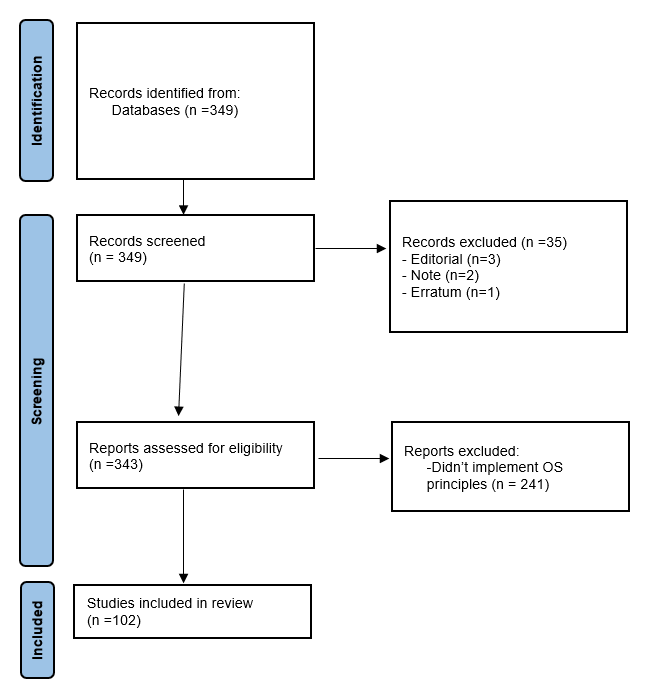
Figure 1
Identification of studies.
As a result, we could comprehend the present status of research in this sector and build a solid foundation of knowledge. In addition, we looked at case studies that have effectively promoted cooperation, information exchange, and creativity. Through a thorough analysis, we can comprehend these efforts’ benefits, drawbacks, and the main elements that make them successful. Finally, we use the information from case studies, experts, and literature studies to synthesize our findings and draw conclusions, allowing us to offer suggestions for further support and involvement. Our approach guarantees a comprehensive investigation for identifying the current gaps in Africa and stimulates more studies and actions in this vital field.
4.1 Strategic Framework
Building capacities and achieving sustainable strengthening of North-South Africa requires a comprehensive capacity development framework, encompassing various sectors and levels (Table 5). Moreover, developing a decision support framework for DCM in Africa involves a combination of preparing for, responding to, and recovering from various types of disasters and crises that are common in the region. Table 6 shows a structured framework for decision support for DCM.
Table 5
Decision Support Framework for enhancing North-South Africa collaboration for effective DRR and crisis management.
| HUMAN CAPITAL DEVELOPMENT | ||
|---|---|---|
| EDUCATION | HEALTH | SKILLS DEVELOPMENT |
|
|
|
| INSTITUTIONAL CAPACITY BUILDING | ||
| GOVERNANCE | INFRASTRUCTURE | RESEARCH & DEVELOPMENT |
|
|
|
| ECONOMIC DIVERSIFICATION | ||
| AGRIBUSINESS | TOURISM | MANUFACTURING & INDUSTRY |
|
|
|
| TECHNOLOGICAL EMPOWERMENT | ||
| DIGITAL LITERACY | ICT INFRASTRUCTURE | INNOVATION & TECHNOLOGY TRANSFER |
|
|
|
| REGIONAL COOPERATION AND INTEGRATION | ||
| TRADE | CROSS-BORDER COLLABORATION | KNOWLEDGE SHARING |
|
|
|
| IMPLEMENTATION STRATEGIES | ||
| PARTNERSHIPS | SUSTAINABLE FUNDING | MONITORING & EVALUATION |
|
|
|
Table 6
Decision support framework for disaster and crisis management.
| 1. RISK ASSESSMENT | 2. PREPAREDNESS | 3. RESPONSE |
|---|---|---|
|
|
|
| 4. RECOVERY | 5. MONITORING AND EVALUATION | 6. CROSS-CUTTING CONSIDERATIONS |
|
|
|
The proposed conceptual framework (Tables 5,6,7,8,9,10), was derived from our experiences and the findings in the literature and then presented in the events (Table 7) to provide adequate guidance to the policymakers on implementation strategies and the application of how to build the human, institutional, and technological capacity required for effective DCM (Tadele and Bernard, 2009; Hagelsteen and Becker, 2014; Scott and Few, 2016; Few et al., 2016; Scott et al., 2016; Hagelsteen et al., 2019; Albris et al., 2020; Kong et al., 2020; Yang, 2020; Hagelsteen et al., 2021; Lindgren and Lang, 2023; Karimi et al., 2023).
Table 7
Events in support of Sendai Framework and AU Agenda 2063.
| EVENT | DESCRIPTION | OBJECTIVES |
|---|---|---|
| SFSA 2024 | Organized by AOSP1 & SAEON.2 |
|
| AMASA 2024 | Organized by AOSP, CO-Data,3 NASAC,4 PeriPeri,5 AAST.6 |
|
Table 8
Development of Data-Driven Future for Africa.
| CHALLENGE | SOLUTION |
|---|---|
| Integrate Data Literacy into Education |
|
| Increase Data Access and Availability |
|
| Foster Collaboration and Partnerships |
|
| Incentives and Recognition |
|
| Evidence-Based Policymaking |
|
| Data-Driven Economic Growth |
|
| Data-Driven Agriculture and Environment |
|
Table 9
Challenges of insufficient data resources and cutting-edge technologies and solutions.
| CHALLENGE | SOLUTION |
|---|---|
| Policy and Regulatory Harmonization |
|
| Common Standards and Protocols |
|
| Interoperability Incentives |
|
| Mutually Beneficial Partnerships |
|
| Strong Data Governance Framework |
|
| Digital Public Infrastructure |
|
| Capacity Building and Training |
|
| International Collaboration and Benchmarking |
|
| Address Data Quality and Interoperability Challenges |
|
Table 10
Policies and Alignment.
| POLICY | ALIGNMENT |
|---|---|
| Emphasizing Data Sharing and Transparency |
|
| Promoting Interoperability and Standardization |
|
| Addressing Privacy and Security Concerns |
|
| Fostering Collaboration Frameworks |
|
| Implementing Feedback and Learning Mechanisms |
|
| Global Data Governance Frameworks |
|
| Creation of International Collaboration Platforms |
|
| Funding and Resource Allocation |
|
| Capacity Development Programs |
|
| Monitoring and Evaluation Mechanisms |
|
The framework’s conceptual thinking is based on the idea that African policymakers will be able to make appropriate decisions in policy development and facilitate the connection between policy-making and scientific insights for informed decision-making about DCM if they are given clear, concise strategies and framework for crisis and disaster resilience. This conceptual assumption was derived from the findings in the literature that despite enormous research conducted on DRR, there is no strategic framework that provides adequate guidance to the policymakers on implementation strategies and the application of how to build the human, institutional and technological capacity required for effective DCM.
The proposed framework (Table 5) consists of key areas of implementation aimed at effectively addressing capacity development for strengthening Africa, with the goal of helping policymakers make informed decisions based on knowledge systems. It encompasses three phases (Table 6); pre-crisis, during crisis, and post crisis. The first phase (pre-crisis) involves gathering evidence to create the framework, focusing on developing a program for risk assessment, developing disaster preparedness plans at national, regional, and local levels. The second phase (during crisis) focuses on establishing clear communication channels and coordination mechanisms among relevant stakeholders, developing recovery plans to address the short-term and long-term needs of affected populations. The third phase (post crisis) emphasizes monitoring and evaluating its effectiveness, with the goal of helping policymakers make informed decisions (Table 6). By following this decision support framework (Tables 5,6,7,8,9,10), African countries can improve their preparedness for disasters and crises, enhance their response capabilities, and promote long-term resilience in the face of evolving risks.
4.2 Events
We created two events (Table 7) in support of the Sendai Framework (UNDRR 2024b) and the AU agenda 2063 that aimed to facilitate the development of responsible and socially engaged collaboration on climate action and DCM. The first event was in Algeria during the Annual Meeting of African Science Academies (AMASA 2024, https://nasaconline.org/amasa-events/). The second event was at Science Forum South Africa (SFSA, 2024), South Africa (https://www.sfsa.co.za/).
AMASA 2024 and SASF 2024 are forums and workshops for discussing research findings and case studies in science, technology, innovation, and related fields such as DRR, crisis management, climate change, and sustainable development. Attendees (scientists, policy makers, and stakeholders) came from more than 20 different countries, with diverse backgrounds, addressing a wide range of issues. Contributions are published in the proceedings of these forum, so no ethical approval is required. The events were used to provide discussion, recommendations, opportunities to enhance crisis response, capacity development, and policy.
4.3 Data policies at times of crises
A consultation is being launched by UNESCO and the Committee on Data (CODATA) to investigate how effective rules for data sharing during emergencies could be guided by the ideas of open science (UNESCO 2024). This article presents how to design the most efficient data policies in times of crisis and how we can use these tools to improve North-South cooperation in Africa’s DCM.
5. Challenges and Solutions
Africa faces several grand challenges in achieving the SDGs. These challenges are multifaceted and interconnected, requiring comprehensive and coordinated efforts from diverse stakeholders. To develop interoperable, strategic and interconnected data and overcome the challenges of insufficient data resources and cutting-edge technologies for SDGs research, several key steps (Tables 8 and 9) should be taken (Kaijage, 2016; van Reisen et al., 2021; Africafc, 2024; AU, 2024; Ibrahim et al., 2024).
By addressing these strategies, Africa can develop data literacy empowerment ensuring that data is used effectively to drive sustainable development and create a better future for its citizens.
6. Results and Discussions
As shown in Figure 2, 66.8% of publications from 1998–2024 were concerned with the social sciences, computer science, environment, engineering, which are directly related to SDGs. The European Commission is engaged in an ambitious effort to increase awareness, create collaboration, and monitor the impact of disasters and crises situations on the countries.
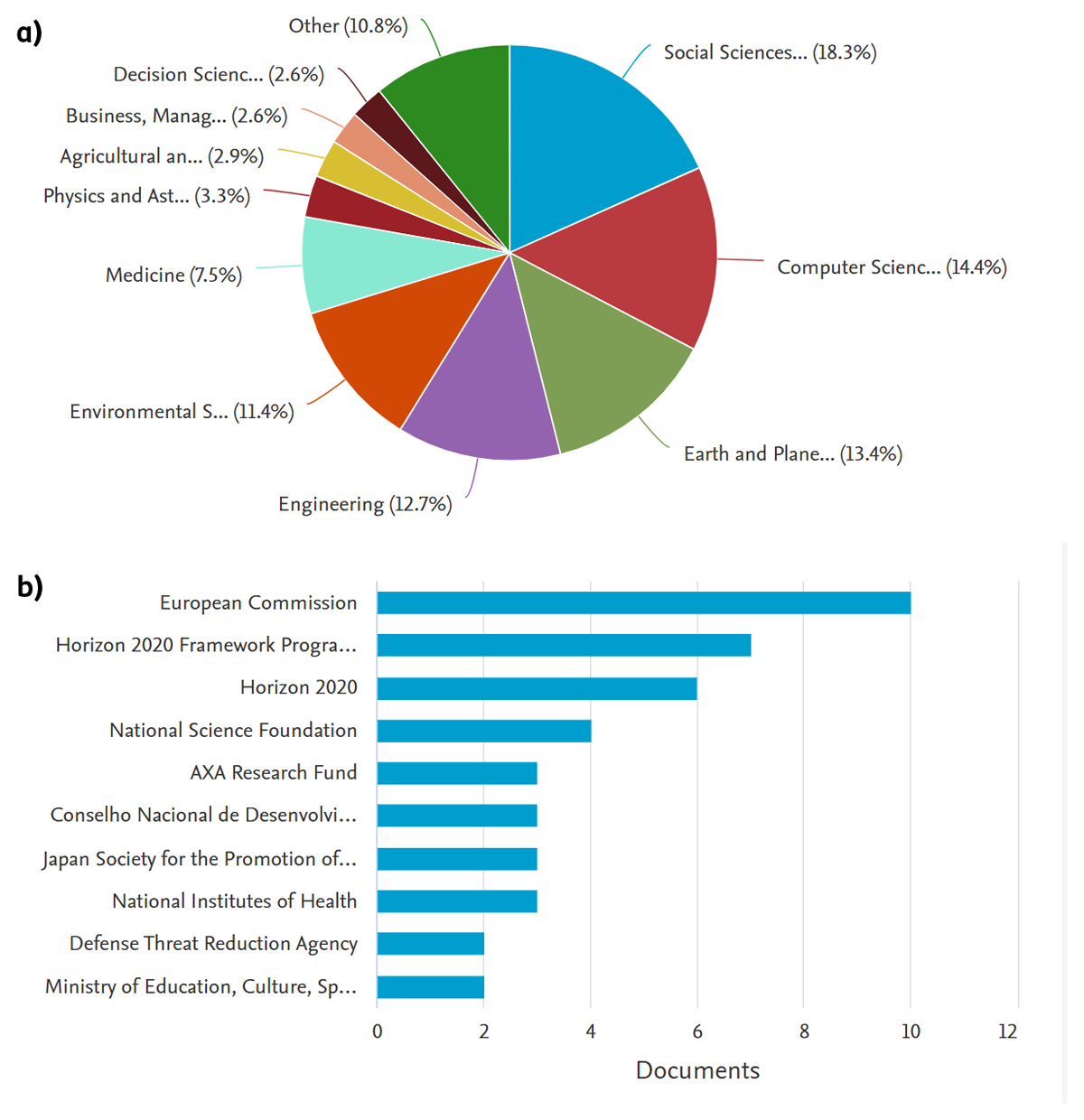
Figure 2
Contributions to disaster risk and crisis management. a) Documents by subject. b) Documents by funding sponsor; compare documents counts up to 15 affiliations.
The events allowed us to experiment with numerous implications meant to accomplish the strategic framework outlined in Section 4.1:
Collaboration and Sharing of Knowledge: By leveraging open data platforms and collaborative tools, researchers can work together in real-time, enhancing the development of effective strategies and solutions (Qadir et al., 2016; Akter and Wamba, 2019).
Accessible and Interactive Data: By integrating open science with geoinformatics, DCM can benefit from easily accessible, interactive, and up-to-date data to make better-informed decisions in real time. This accessibility will allow stakeholders to have a comprehensive understanding of the situation, enabling them to develop quicker responses and more effective recovery strategies.
Advanced Analytics and Modeling: Combining open science with geoinformatics and AI can lead to advanced analytics and modeling techniques for DCM. For example, by integrating machine learning algorithms into geospatial data analysis, researchers can gain insights into potential risk areas and predict the impact of a crisis on various scales. This will enable decision-makers to better understand the risks involved in their strategies and adapt them accordingly.
Improved Decision-Making Processes: OS and geoinformatics integration will improve decision-making processes by providing stakeholders with accurate, real-time data and analysis. By incorporating advanced tools and techniques into DCM, authorities can make more informed decisions regarding resource allocation, evacuation measures, or rescue operations. This improved decision-making process will lead to better outcomes and reduced negative impacts during a crisis (Ibrahim et al., 2024).
Remote Sensing and Monitoring: Geoinformatics, particularly remote sensing technology, play an essential role in monitoring the environment and identifying potential threats during crises. Integrating OS into this technology can lead to more accessible tools and techniques for DCM (Ibrahim and Elramly, 2017b). This will allow researchers and decision-makers to monitor events in real-time, enabling them to adapt their strategies accordingly and prevent or minimize the impacts of a crisis.
Education and Capacity Building: By embracing OS principles and integrating geoinformatics into DCM, stakeholders can develop better tools for education and capacity building within communities. This will enable them to better understand the risks they face and prepare more effectively for future crises.
6.1 Opportunities and policy recommendations
Policymakers can play a crucial role in fostering the adoption and effective usage of geoinformatics and OS tools by following several approaches (Goodchild and Glennon, 2010; Migliorini et al., 2019; Upadhyay et al., 2020; Quan and Solheim, 2023, Ibrahim et al., 2024):
Investment: (a) Provide funding for research and development projects focusing on Geoinformatics. (b) Allocate resources for education programs, workshops, and conferences that encourage the use of Geoinformatics and OS tools among professionals and academia. (c)Support startups and companies that develop geospatial technology solutions to address societal challenges or improve services in various sectors. (d) Direct investment to develop resilient, interoperable and collaborative open science infrastructures to tackle regional health crises under a trustworthy technical framework.
Training: (a) Develop training programs for professionals working in fields related to Geoinformatics, such as geographers, remote sensing experts, and more. These programs should cover both theoretical and practical aspects of using geospatial data analysis tools (Sharaf Eldin et al., 2012, Sharaf Eldin et al., 2014). (b) Encourage institutions to offer specialized courses or certifications in Geoinformatics and OS tools as part of their academic curriculums, making it easier for students to learn and apply these technologies in their respective fields. (c) Organize workshops and seminars to train professionals on how to use geoinformatics and open-source tools efficiently and effectively. These events should be accessible to a diverse audience, including those with limited technical knowledge or access to resources.
Regulatory Frameworks: (a) Establish clear policies and guidelines that support the adoption of Geoinformatics in various sectors, such as urban planning, agriculture, environment, disaster management, etc. This can be done by creating regulatory frameworks that promote data sharing, open accessibility, and collaboration between stakeholders. (b) Develop legislation to protect intellectual property rights and ensure that users abide by the terms of licenses when using geospatial datasets or tools. (c) Encourage the standardization and interoperability of geospatial data formats and protocols, ensuring seamless integration across different platforms and applications. This can be achieved through the establishment of best practices and guidelines for sharing and processing geospatial data.
Public-private partnerships: To advance geoinformatics and open science efforts, policymakers can encourage cooperation between the public and commercial sectors, utilizing their respective resources and capacities. By facilitating partnerships between academia, industry, and government, policymakers can accelerate the development and implementation of geospatial technologies and open science practices.
Table 10 shows how we can use these tools to improve North-South cooperation in Africa’s DCM (Ogedengbe et al., 2015; Kaijage, 2016; Nikièma, 2016; van Reisen et al., 2021; American Library Association, 2022; World Bank, 2022; Africafc, 2024; AU, 2024; Sun et al., 2024, Ibrahim et al., 2024).
By implementing these approaches, policymakers can create a conducive environment for the use of Geoinformatics and OS tools, fostering innovation and collaboration in geospatial research and decision-making processes.
6.2 Opportunities and capacity development
To build human and technological capacity for effective DCM, consider these strategies to enhance overall preparedness and response effectiveness: (a) Training Programs: Implement regular training for personnel on crisis response protocols and technology usage. (b) Cross-Disciplinary Teams: Foster collaboration between various sectors (health, security, IT) to enhance resource sharing and knowledge. (c) Technology Integration: Invest in advanced data analytics and communication tools to streamline decision-making and real-time response. (d) Simulation Exercises: Conduct drills to test readiness and improve coordination among teams. (f) Feedback Mechanisms: Establish systems for post-crisis evaluation to learn from experiences and refine strategies.
OS, AI and Geoinformatics tools can provide a range of opportunities to address gaps in pandemic response. Here are some key areas where these approaches can be beneficial:
Surveillance and Monitoring: Geospatial technologies, such as remote sensing, can be used to monitor and track the spread of infectious diseases, identify hotspots, and support early warning systems (Hay et al., 2013). Open data platforms and citizen science initiatives can enhance disease surveillance and data collection (Paolotti et al., 2014).
Epidemiological Modelling and Forecasting: Open-source Geoinformatics tools, such as geographic information systems (GIS) and spatial analysis, can support epidemiological modelling and forecasting of disease outbreaks (Nsoesie et al., 2014). Collaborative data sharing and open-source modeling platforms can improve the accuracy and timeliness of pandemic forecasts (Chretien et al., 2014).
Supply Chain and Resource Optimization: Geospatial data and analysis can support the optimization of supply chain logistics and the distribution of critical resources during pandemics (Kittichotsatsawat et al., 2021). Open-source tools and platforms can facilitate collaborative planning and coordination among stakeholders (Qadir et al., 2016; Akter and Wamba, 2019).
Community Engagement and Public Health Communication: Geospatial visualization and storytelling can enhance public health communication and community engagement during pandemics (Dionisio et al., 2015). Open-source platforms and citizen science initiatives can promote community-based data collection and knowledge sharing (Haklay, 2013).
By leveraging these tools, researchers, public health authorities, and the broader community can collaborate to address the gaps and challenges in pandemic response, improve situational awareness, support decision-making, and enhance resilience.
6.3 Opportunities and enhance crisis response
To improve crisis response in the future, several practical strategies can be implemented (World Health Organization, 2020; Global cooperation for a global pandemic, 2022; World Health Organization, 2022; Cardwell et al., 2023):
Strengthening Global Health Infrastructures: Building resilient healthcare systems and investing in public health infrastructure can help countries better prepare for and respond to future crises. This includes enhancing surveillance systems, stockpiling essential medical supplies, and ensuring healthcare workers have adequate training and resources.
Promote DDR under the open science framework: Open science helps bring free flow of research resources in a reliable and trusted manner. Thus, any design and development in enhanced crisis response should deploy open science approaches, and share adequate data and knowledge to potential stakeholders, to ensure resilient DRR actions within the entire crisis management ecosystem.
Improving Communication and Coordination: Clear and consistent communication is essential during a crisis to ensure that accurate information is disseminated to the public. Governments, international organizations, and other stakeholders should work together to coordinate their response efforts and share data and best practices.
Addressing Inequities: The pandemic has disproportionately affected marginalized communities and exacerbated existing inequalities. To improve crisis response, it is essential to address these disparities by ensuring equitable access to healthcare, resources, and information.
Investing in Research and Development: Research and development efforts have played a crucial role in responding to the pandemic, from developing vaccines to improving treatment options. Investing in scientific research and innovation can help us better prepare for and respond to future health crises.
Establishing Early Warning Systems: Early detection of a potential crisis is key to mounting an effective response. Establishing early warning systems and monitoring trends in global health can help identify emerging threats before they escalate into a full-blown crisis.
Cities are on the front line of global challenges, including climate change, health emergencies, and disaster risks. As urban populations grow, so does the need for innovative, technology-driven, and inclusive solutions that leave no one behind. Through dynamic, flexible and adaptable solutions, and solidarity, cooperation among countries may facilitate experience and knowledge sharing to build up based on good practices and lessons learnt as well as horizontal partnerships to address common health and development challenges.
For further strengthening of national and local health capacities, to be better prepared and efficiently respond, through the promotion of South-South, North-South cooperation, international organizations can (a) Support countries and promote cooperation among them. (b) Convene policy dialogues, create new partnerships. (c) Mobilize additional resources. (d) Identify, include practices and existing capacities in member states. (e) Include technological innovation that can be shared and transferred among countries to reduce health inequalities.
The growing complexity of risks and the cascading impacts of disasters across sectors demands that we adopt a multi-sectoral approach to a resilience building. Since disasters affect certain groups more than others, it is critical that DRR must be inclusive, sustainable, and equitable, including health for all. There are various governance challenges, conflicts, and many issues of inequality. All of these inequities increase the impact of disasters. Then the drivers of change which could be poverty, lack of adequate nutrition, lack of education, lack of access to health services and so on, all of these can also increase the vulnerability of people. We are responsible for the disasters that happen. It is our laws, regulations, and policies.
To that end, the authors offer three recommendations for action. First, we must continue raising the awareness and capacity of institutions and staff to address this problem. Second, we must ensure that there are mechanisms to engage with at-risk groups and to capture their needs in planning processes. Third, we need to promote international cooperation and the sharing of good practices among countries.
Consequently, the key lessons that can inform our crisis response in the future include the importance of early detection and rapid response, the need for global cooperation and coordination, the impact of systemic inequalities on crisis outcomes, the importance of data-driven decision-making, and the need for robust healthcare systems. By implementing these strategies and incorporating the key lessons learnt, Africa can strengthen its crisis response capabilities and better prepare for future challenges.
7. Conclusion
This paper attempted to demonstrate how to sustain North-South cooperation by promoting transparency and collaboration. OS allows researchers and practitioners to openly share their findings and methodologies, leading to more effective disaster management strategies. Geoinformatics, AI enable decision-makers to make informed choices in disaster preparedness and response. These fields contribute to a more resilient and proactive approach to disaster risk reduction. The comprehensive analysis and proposed strategies are expected to provide valuable insights for policymakers and stakeholders aiming to enhance sustainability, resilience, DCM, and climate action.
Notes
[1] https://aosp.org.za/.
[3] https://codata.org/.
Acknowledgements
The authors express their sincere gratitude to the editor and reviewers for their dedicated efforts and time in reviewing this paper. Their insightful revisions have significantly strengthened the work, enhancing its contribution to the field. Additionally, the authors would like to extend their thanks to the UNDRR, UNOSSC, and PAHO/WHO for their support of the Joint Certificate Training Program 2025. https://www.undrr.org/event/undrr-unossc-paho2025.
Competing Interests
The authors have no competing interests to declare.
Author Contributions
| Contribution Type | Authors |
| Topic | Rania Elsayed Ibrahim, Tshiamo Motshegwa |
| Conceptualization | Rania Elsayed Ibrahim, Tshiamo Motshegwa, Francais Crawley |
| Methodology | Rania Elsayed Ibrahim, Tshiamo Motshegwa, Djillali Benouar, Mohamed KHODJA, Nokuthula P. Mchunu, Sepo Hachigonta |
| Software | Rania Elsayed Ibrahim |
| Validation | Rania Elsayed Ibrahim |
| Formal Analysis | Rania Elsayed Ibrahim |
| Investigation | Rania Elsayed Ibrahim |
| Resources | Rania Elsayed Ibrahim, Tshiamo Motshegwa, Djillali Benouar, Hamed Ead, Francais Crawley, Nokuthula P. Mchunu, Simon Hodson, Mohamed KHODJA, VANESSA MCBRIDE, Lili Zhang, Teketel Yohannes, Sepo Hachigonta |
| Writing—Original Draft Preparation | Rania Elsayed Ibrahim |
| Writing—Review and Editing | Rania Elsayed Ibrahim, Hamed Abdelreheem Ead, Lili Zhang |
| Project Administration | Rania Elsayed Ibrahim, Tshiamo Motshegwa, Djillali Benouar, Sepo Hachigonta, Mohamed KHODJA |