
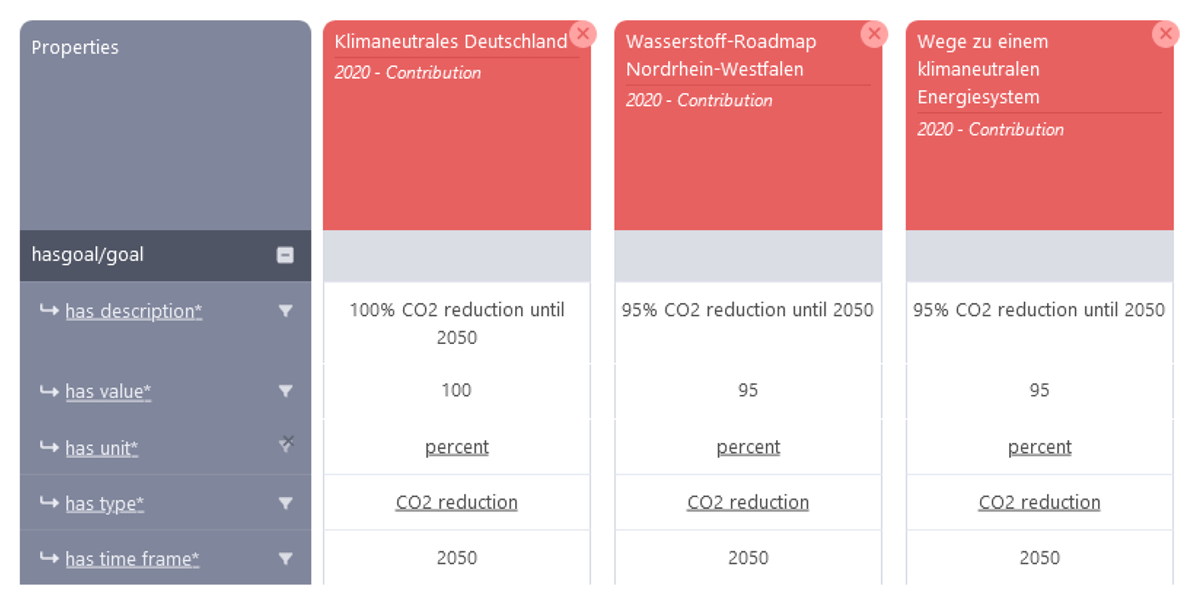
Figure 1
Snippet of an ORKG comparison of targeted CO2 reduction until 2050 (Karras et al., 2024; Kullmann et al., 2021).
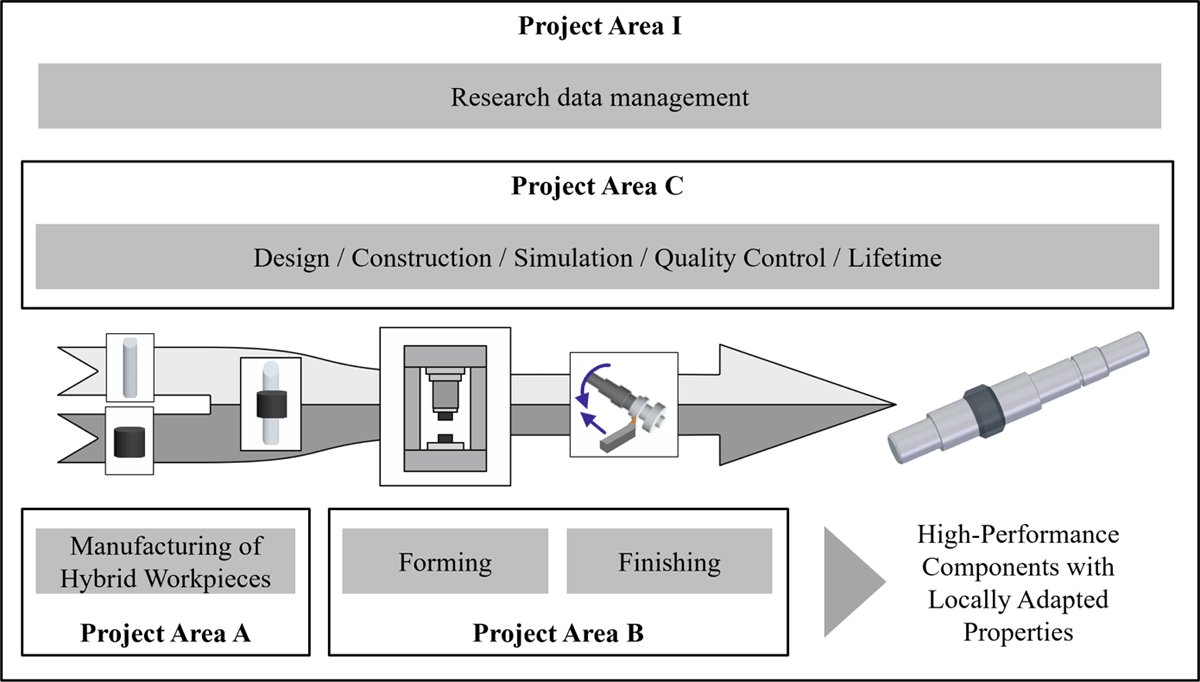
Figure 2
General process chain of CRC 1153 and its project areas.
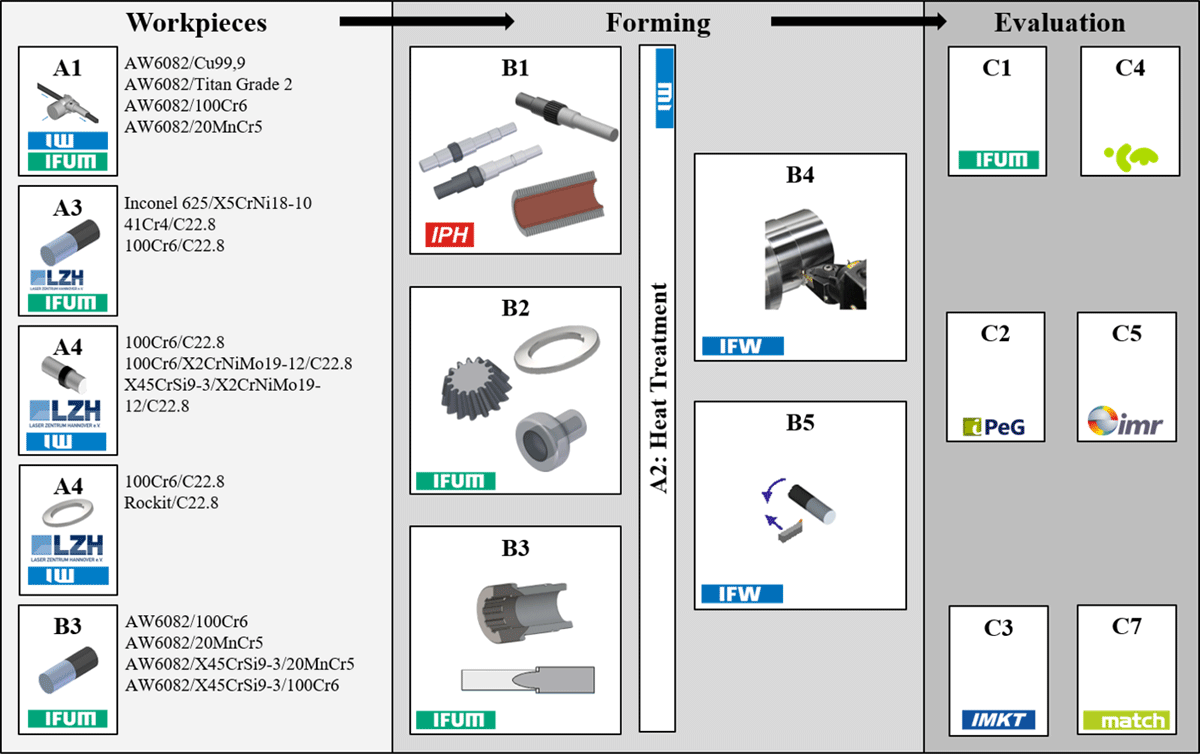
Figure 3
General process chain of CRC 1153 and its sub-projects.
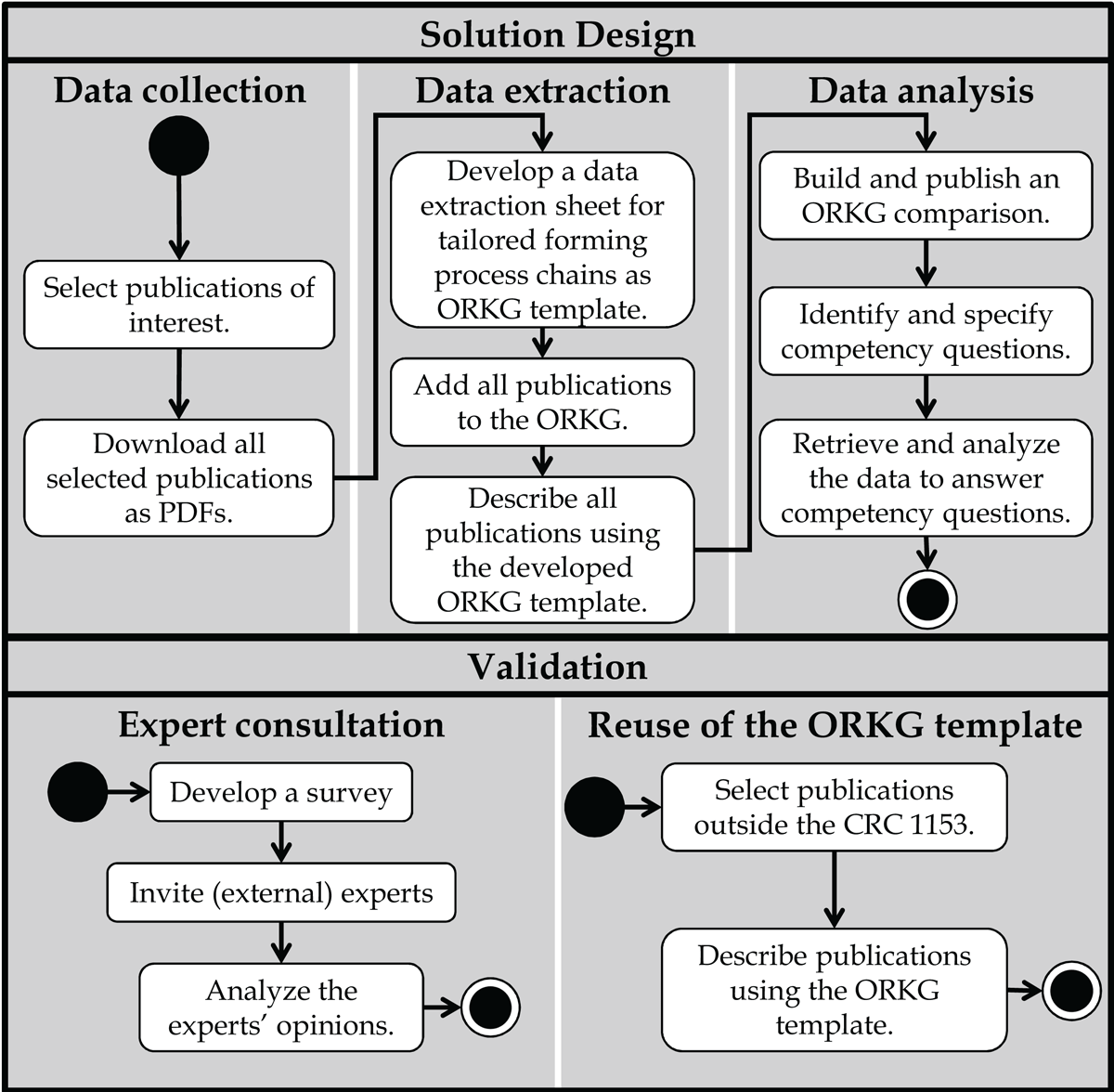
Figure 4
Activity diagram of the research approach.
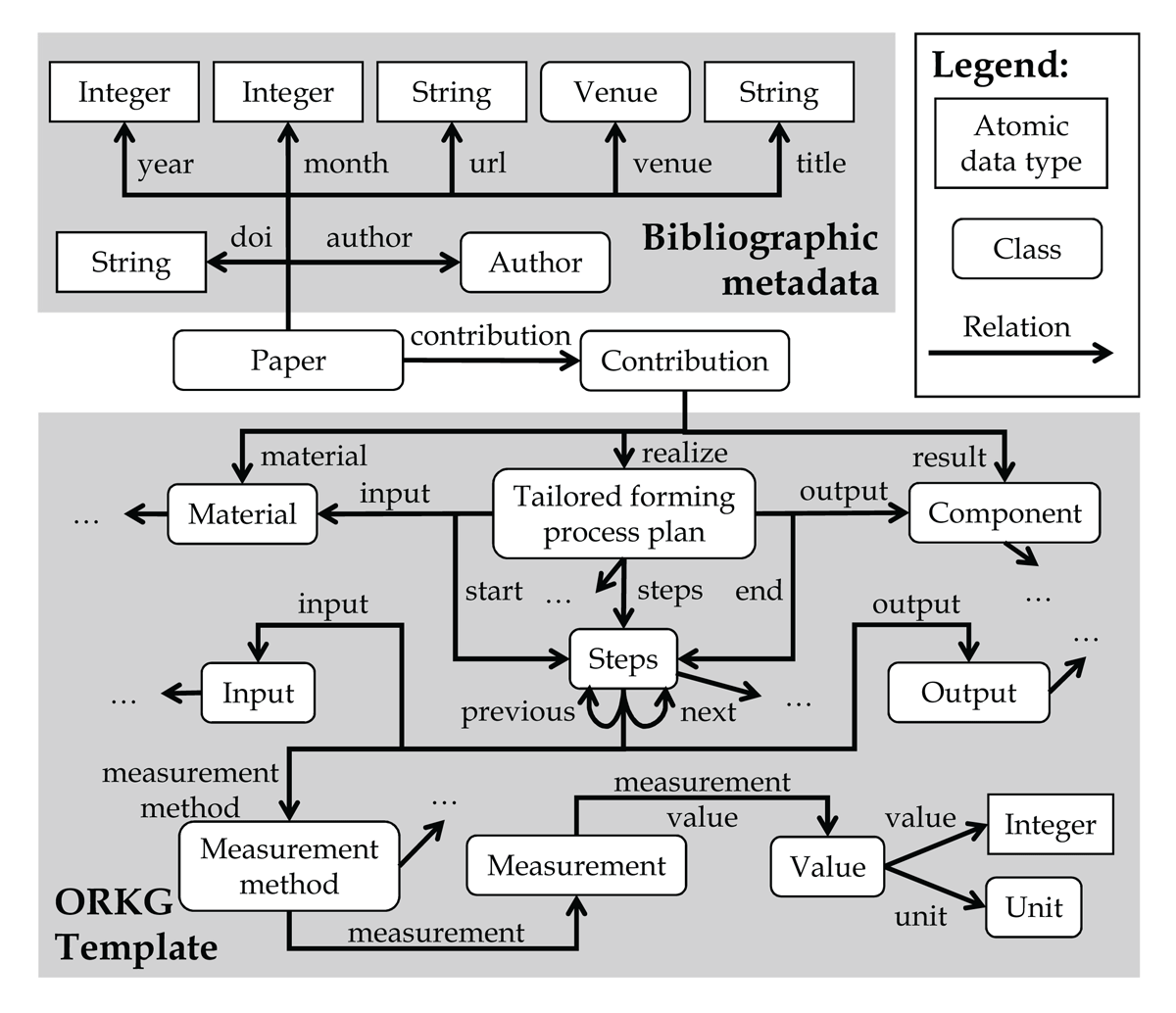
Figure 5
Excerpt from the ORKG template for data extraction.
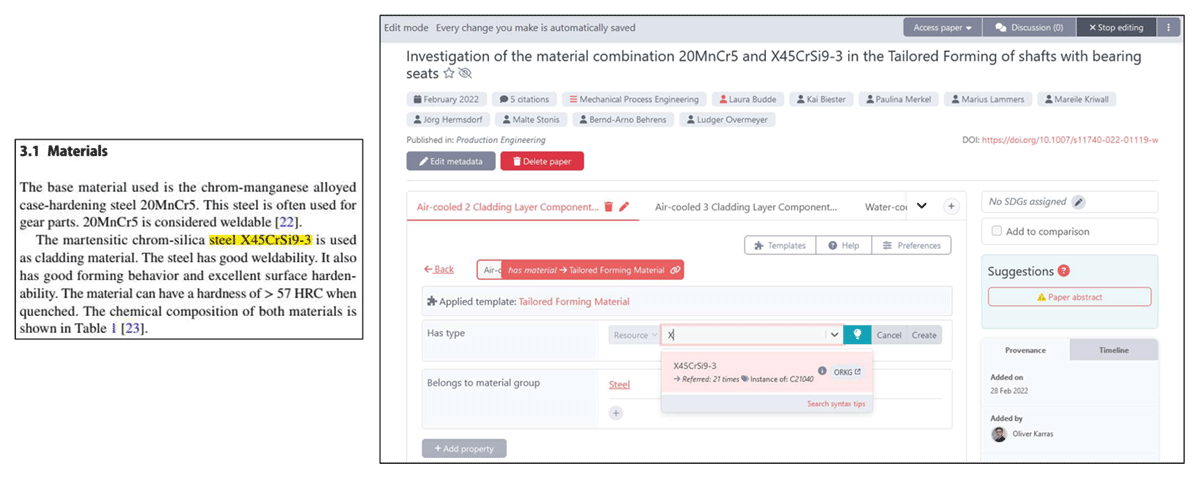
Figure 6
Data extraction example: On the left, a paragraph of the publication by Budde et al. (2022) about the materials used in the TFPCs. We highlighted the material to be described in yellow. On the right, we show the input form of the ORKG generated based on our ORKG template for describing materials.
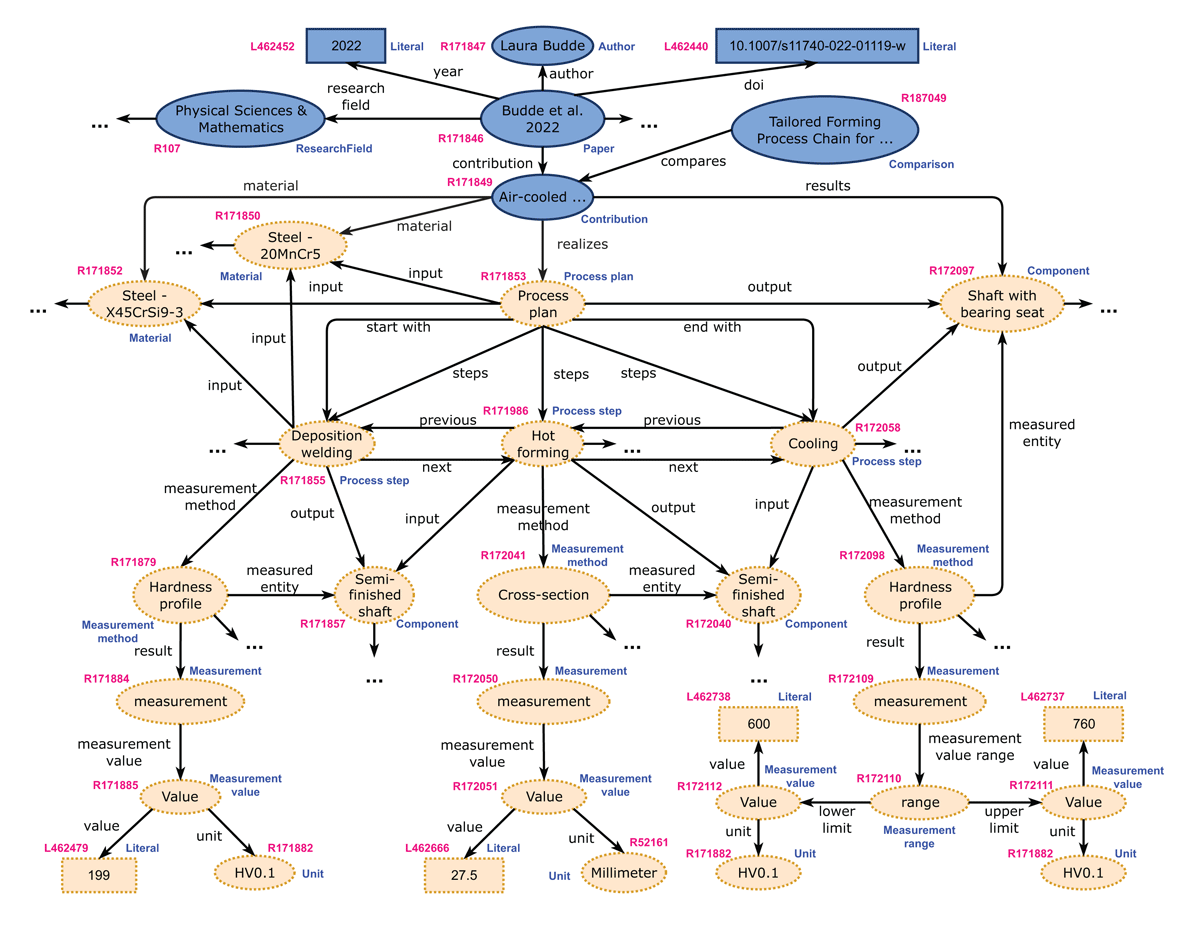
Figure 7
Example from selected publications (Budde et al., 2022) in the ORKG: Blue shapes represent ORKG resources and predicates. Yellow shapes are user-generated. Class labels are in blue, and resource IDs are in magenta.
Table 1
The eight competency questions asked by the two domain experts.
| ID | COMPETENCY QUESTION |
|---|---|
| 1 | How often are which qualities of hybrid components examined in the individual steps of the Tailored Forming Process Chain? |
| 2 | Which material combinations are used for the manufacturing of hybrid components? |
| 3 | How do the steps of the Tailored Forming Process Chain affect the hardness of the cladding layer of hybrid components? |
| 4 | In which material combinations and steps of the Tailored Forming Process Chain can defects occur in hybrid components? |
| 5 | What service lives can be achieved for hybrid components in the Tailored Forming Process Chain? |
| 6 | Which manufacturing methods are used in the individual steps of the Tailored Forming Process Chain to manufacture the respective hybrid component? |
| 7 | How often are certain manufacturing methods used in total in all described Tailored Forming Process Chains? |
| 8 | Which microstructures are present in hybrid components after the steps of the Tailored Forming Process Chain? |
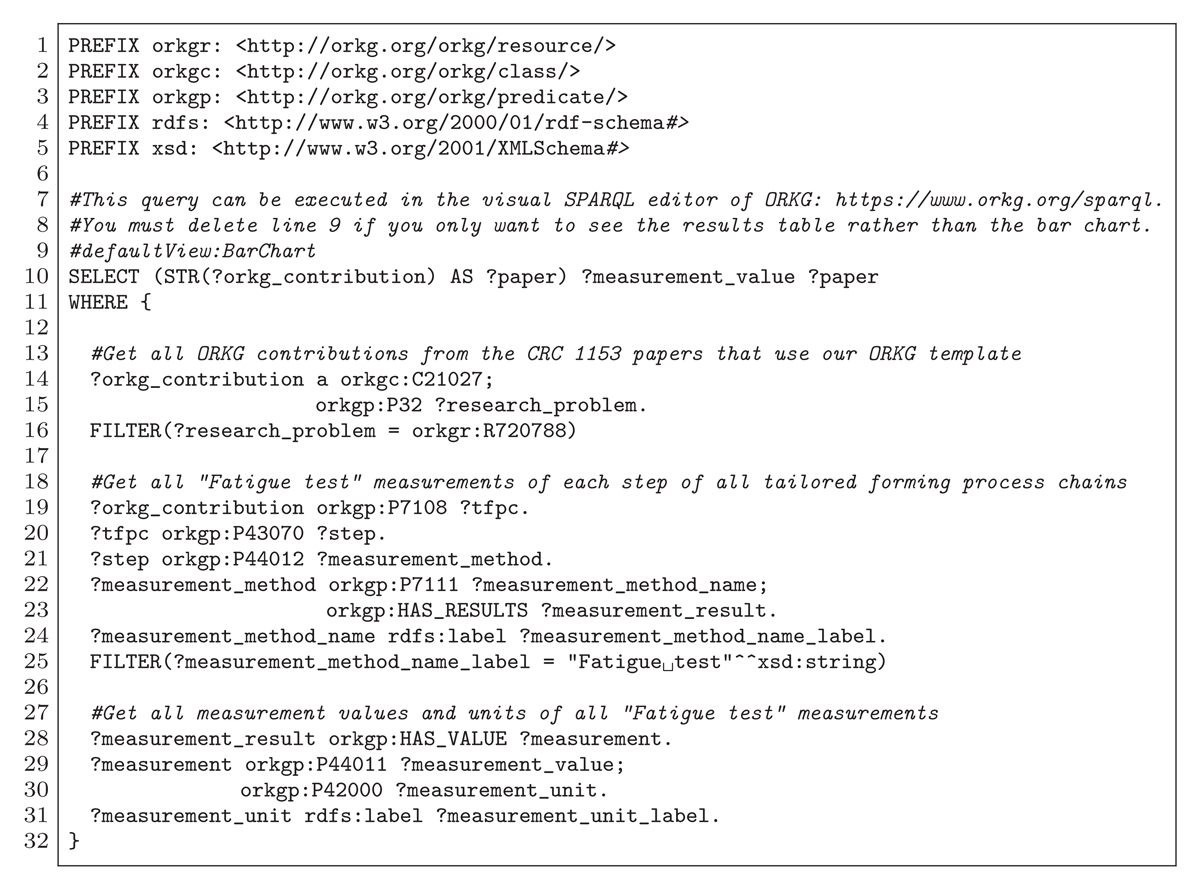
Listing 1
Exemplary SPARQL query to retrieve the data for answering the fifth competence question on the service lives achieved for hybrid components in the Tailored Forming Process Chain (cf. Table 1).
Table 2
Statements describing the organization of the data extraction topics assessed by the respondents.
| TOPIC | STATEMENT |
|---|---|
| Material | A material has one or more qualities that are measured. |
| Process chain | A process chain has two or more process steps, a start process step, an end process step, an input, and an output. |
| Process step | A process step can have a previous process step and a next process step, and it has an input, an output, one or more manufacturing methods, and one or more measurement methods. |
| Input | An input is either one or more materials or the output of the previous process step. |
| Output | An output is a manufactured component. |
| Manufacturing method | A manufacturing method is the method used in a process step to manufacture the output of the process step. |
| Manufactured component | A manufactured component has one or more layers. |
| Layer | A layer consists of a material. |
| Quality | A quality is measured by one or more measurements. |
| Measurement method | A measurement method has an output of a process step as the object of investigation and one or more measurements. |
| Measurement | A measurement has a value and a unit. |
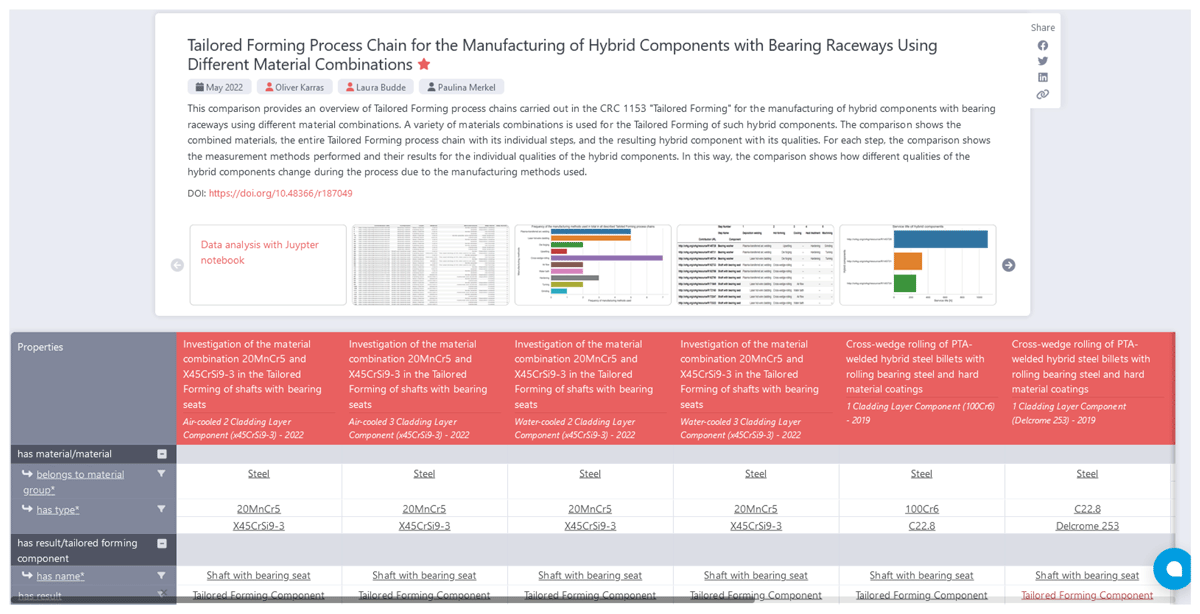
Figure 8
Comparison of TFPCs for the manufacturing of hybrid components (Karras et al., 2023a).
Table 3
Complexity of our use case, of nine use cases from related work, and of 507 ORKG comparisons with DOI.
| PUBLICATION | #PAPERS | #CONTRIB. | #STATEMENTS | #RESOURCES | #LITERALS | #RELATED RESOURCES | #RELATED FIGURES |
|---|---|---|---|---|---|---|---|
| Our use case | |||||||
| This article | 5 | 10 | 1918 | 3662 | 174 | 1 | 8 |
| Nine use case from related work | |||||||
| Runnwerth et al. (2020) | 6 | 6 | 50 | 100 | 0 | 0 | 0 |
| Karras et al. (2021) | 19 | 19 | 609 | 820 | 398 | 0 | 0 |
| Karras et al. (2021) | 27 | 27 | 503 | 683 | 323 | 0 | 0 |
| Auer et al. (2020) | 17 | 17 | 202 | 382 | 22 | 0 | 0 |
| Auer et al. (2020) | 21 | 31 | 415 | 568 | 262 | 2 | 2 |
| Auer et al. (2020) | 16 | 16 | 127 | 159 | 95 | 0 | 0 |
| Auer et al. (2020) | 6 | 6 | 54 | 67 | 41 | 0 | 0 |
| Anteghini et al. (2020) | 3 | 3 | 100 | 199 | 1 | 0 | 0 |
| Knoll (2022) | 5 | 5 | 46 | 76 | 16 | 0 | 0 |
| Mean | 13.33 | 14.44 | 234 | 339.33 | 128.67 | 0.22 | 0.22 |
| Std. deviation | 8.04 | 9.57 | 204.88 | 270.03 | 146.75 | 0.63 | 0.63 |
| Median | 16 | 16 | 127 | 199 | 41 | 0 | 0 |
| All 507 ORKG comparisons with DOI | |||||||
| Mean | 9.94 | 12.85 | 343.11 | 514.48 | 171.74 | 0.01 | 0.02 |
| Std. deviation | 12.43 | 19.11 | 589.59 | 882.18 | 352.87 | 0.11 | 0.38 |
| Minimum | 1 | 2 | 6 | 12 | 0 | 0 | 0 |
| Median | 6 | 7 | 157 | 234 | 80 | 0 | 0 |
| Maximum | 86 | 157 | 6089 | 9503 | 4842 | 2 | 8 |
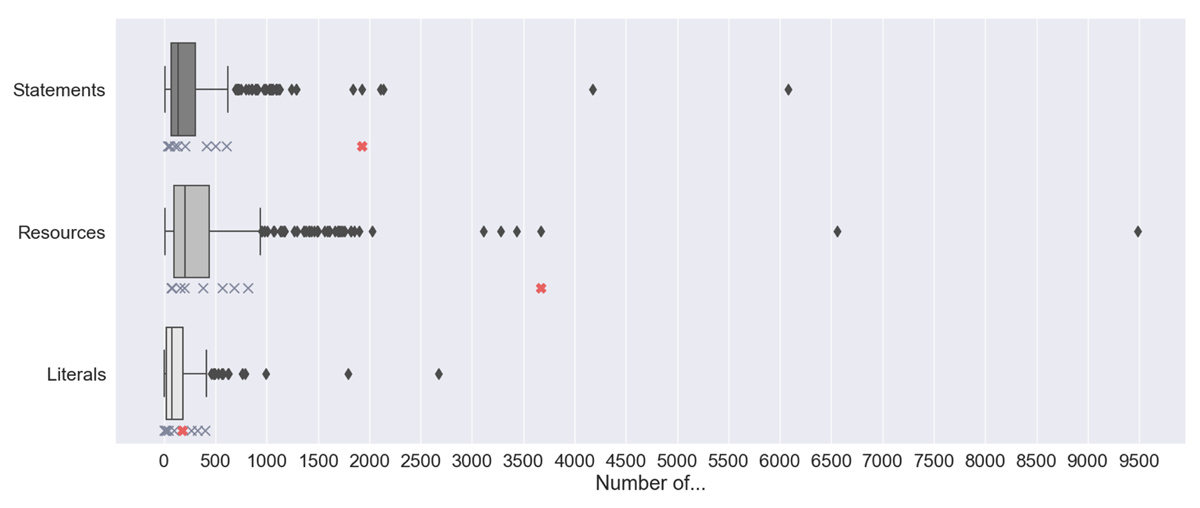
Figure 9
Boxplots of the complexity of 507 ORKG comparisons with DOI, the nine use cases from related work and our use case. Remark: The ×-symbol marks use cases from related work. The  -symbol marks the use case of this article. The
  -symbol marks potential outliers that are more than 1.5 times the interquartile range above the upper quartile.
Table 4
Coverage of the eight competency questions, with details on the number of TFPCs and publications that provide relevant information to answer the questions and thus meet the information needs.
| COMPETENCY QUESTION ID | QUESTION ANSWERED? | RELEVANT INFORMATION FROM | |
|---|---|---|---|
| #TFPCs | #PUBLICATIONS | ||
| 1 | Yes | 10 | 5 |
| 2 | Yes | 10 | 5 |
| 3 | Yes | 10 | 5 |
| 4 | Yes | 6 | 3 |
| 5 | Yes | 3 | 3 |
| 6 | Yes | 10 | 5 |
| 7 | Yes | 10 | 5 |
| 8 | Yes | 9 | 4 |
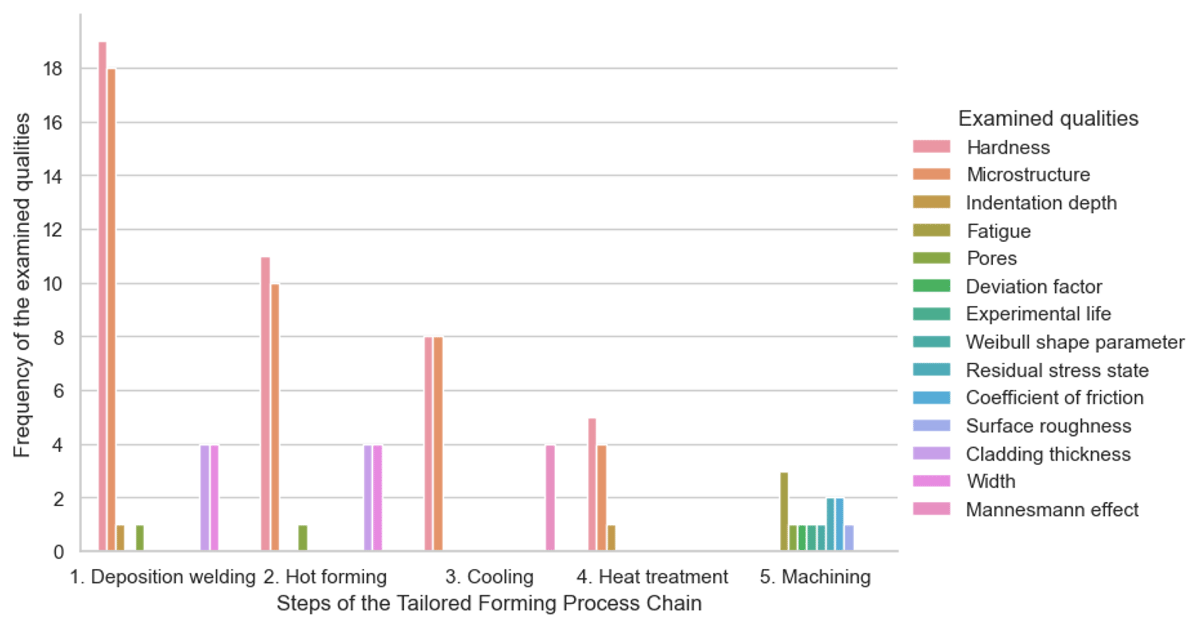
Figure 10
Frequency of examined qualities of hybrid components per step of the TFPC.
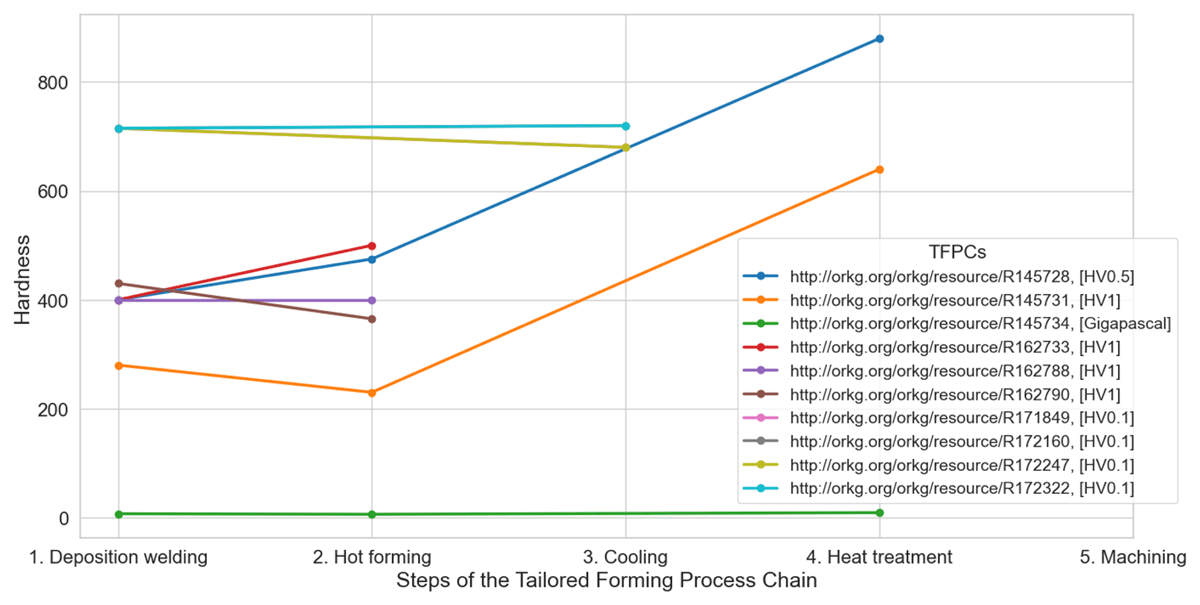
Figure 11
Hardness of the cladding layer of hybrid components per step of the TFPC.
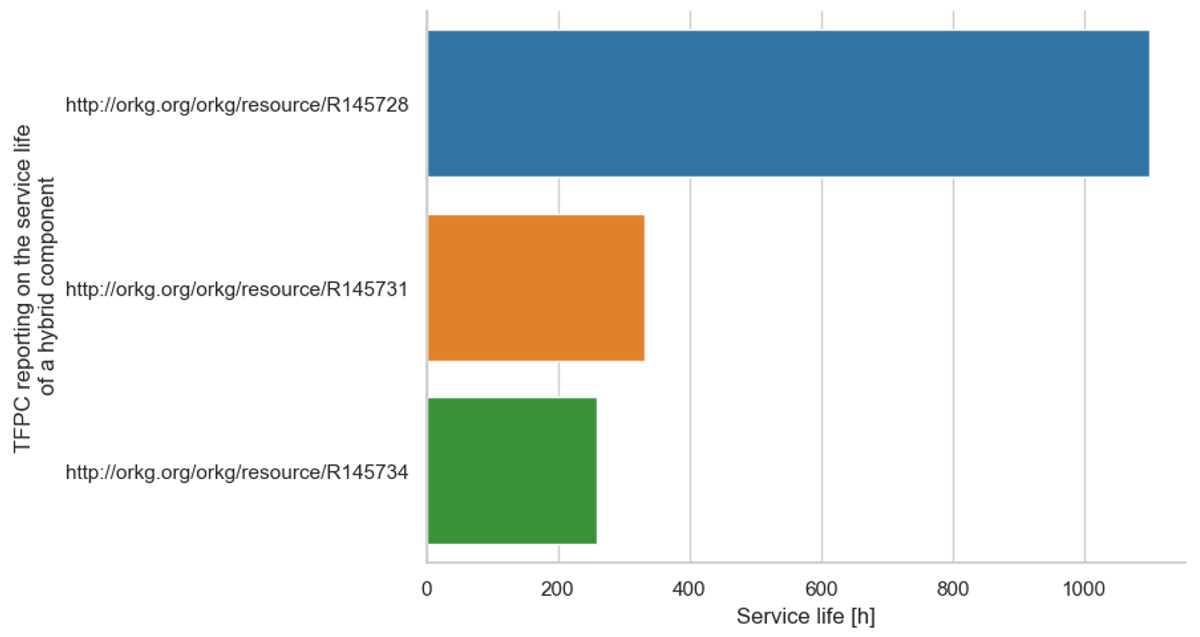
Figure 12
Service lives of hybrid components manufactured in TFPCs.
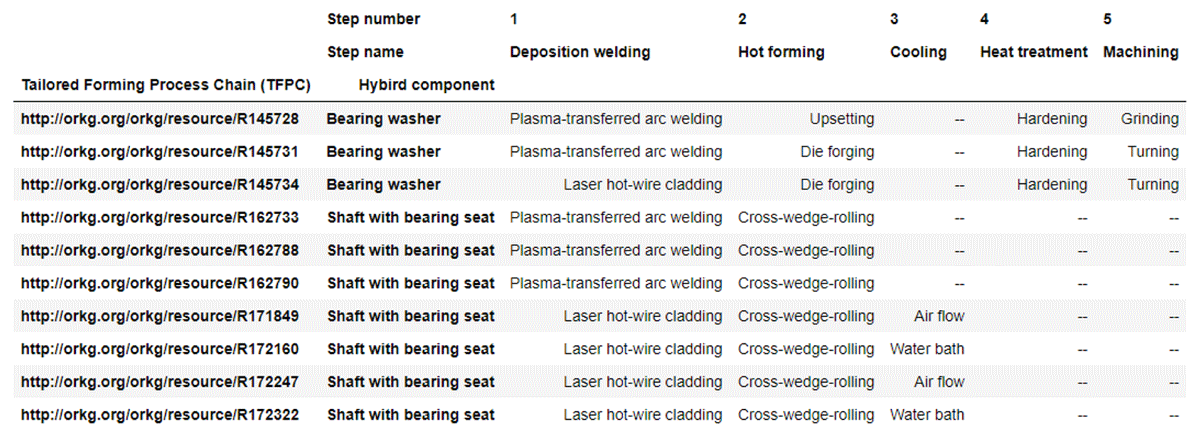
Figure 13
Manufacturing methods per step of the TFPCs.
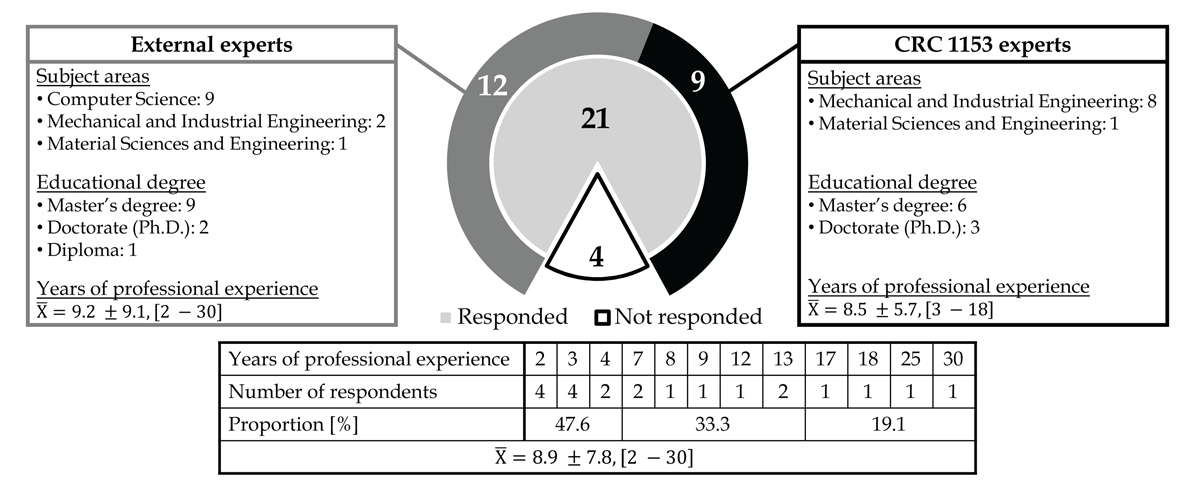
Figure 14
Demographics of the experts surveyed.
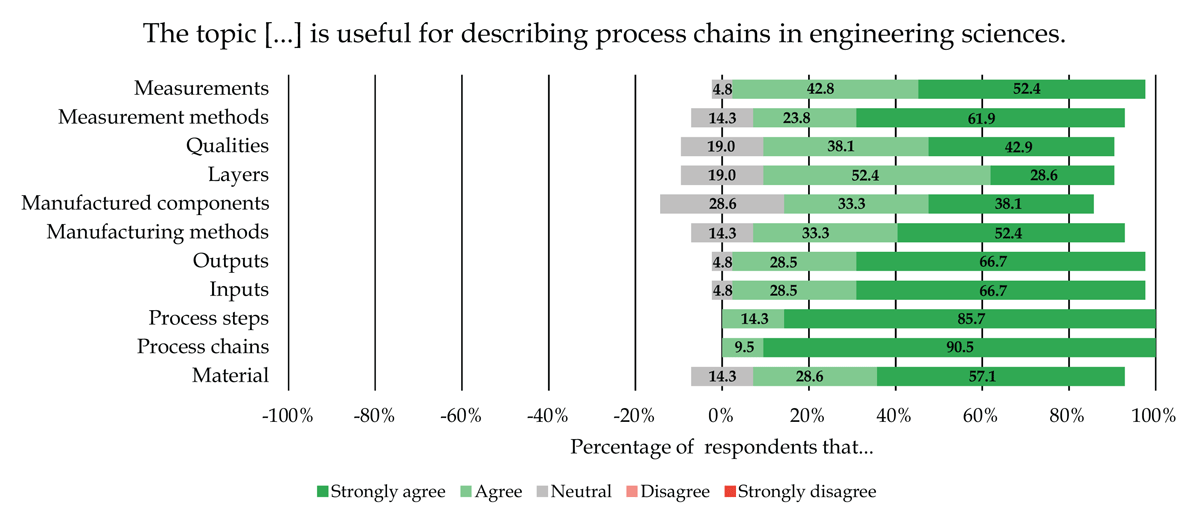
Figure 15
Experts’ level of agreement with the usefulness of the data extraction topics.
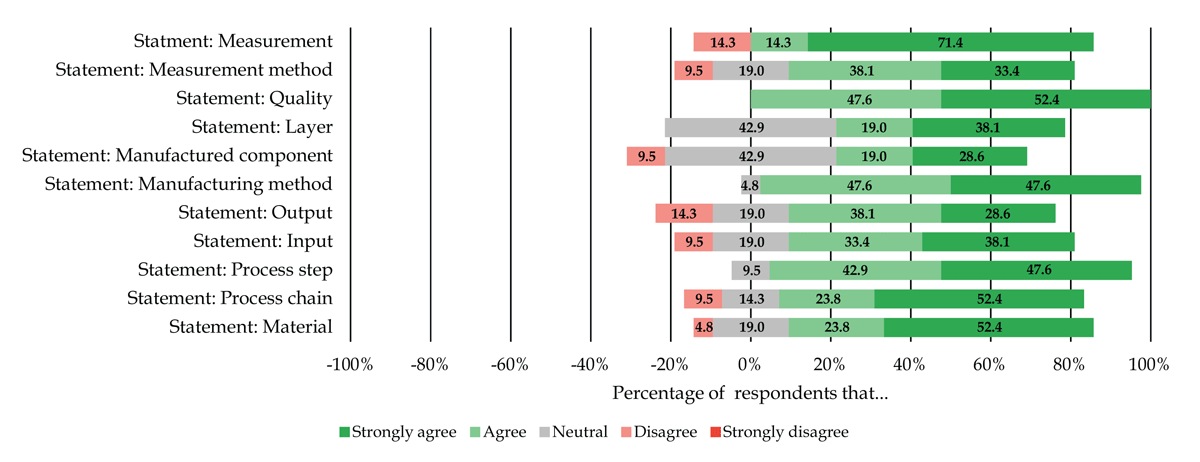
Figure 16
Experts’ level of agreement with the organization of the data extraction topics.
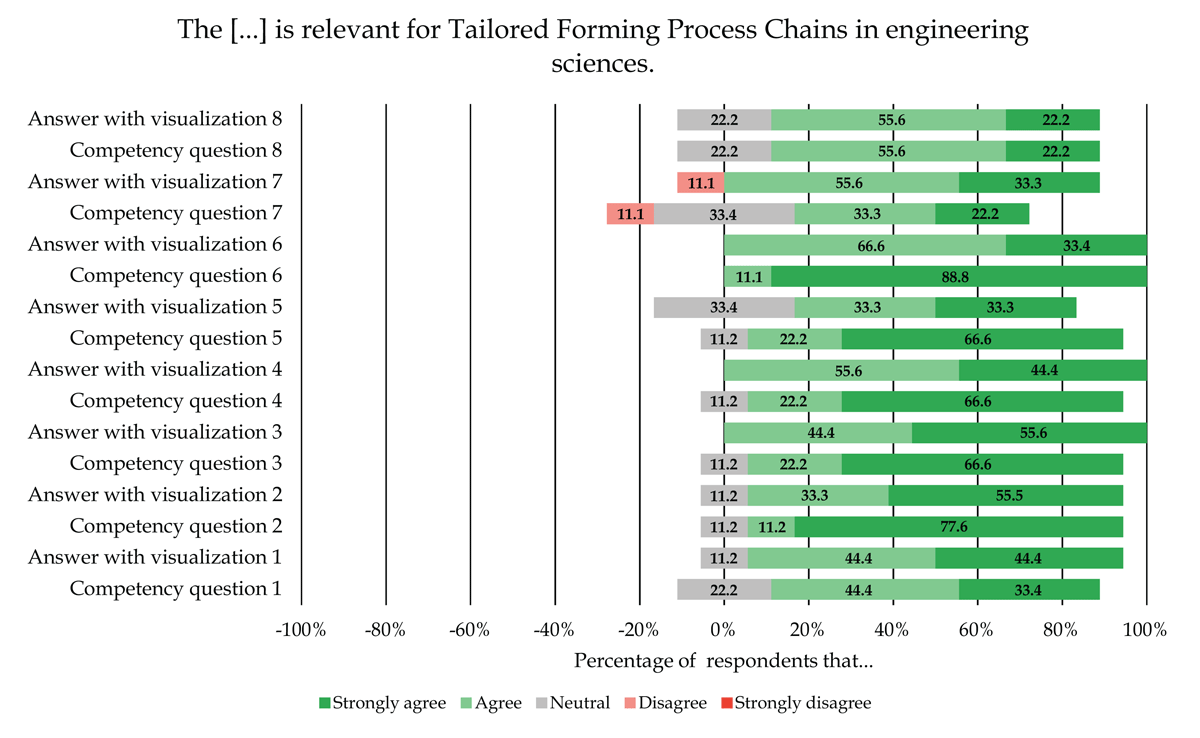
Figure 17
Experts’ level of agreement with the relevance of the competency questions and answers with visualizations for Tailored Forming Process Chains in engineering sciences.
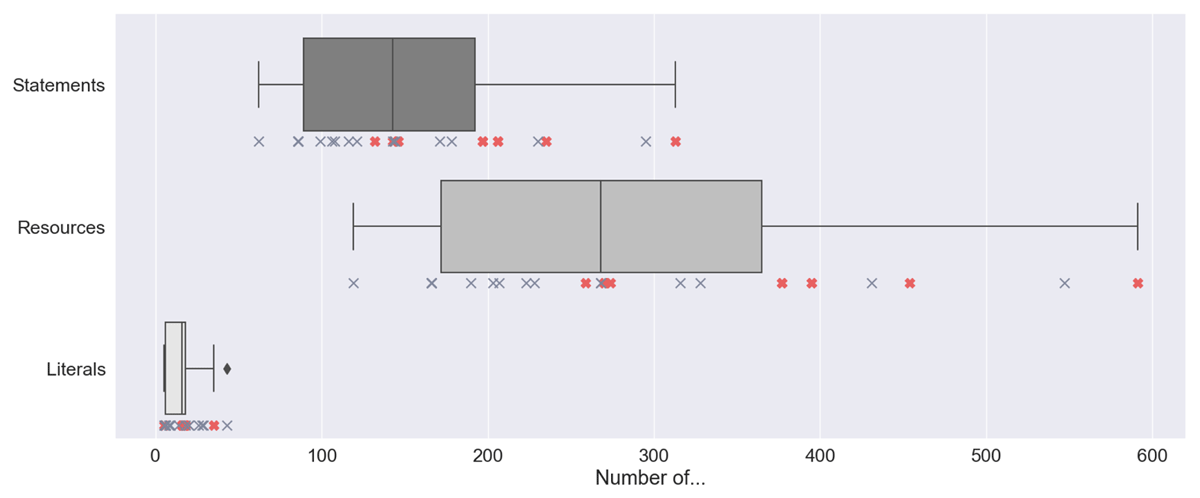
Figure 18
Boxplots of the complexity of 30 process chains described. Remark: The ×-symbol marks the 20 AMPCs from the three external publications. The -symbol marks the 10 TFPCs from the five publications of the CRC 1153. The -symbol marks potential outliers that are more than 1.5 times the interquartile range above the upper quartile.
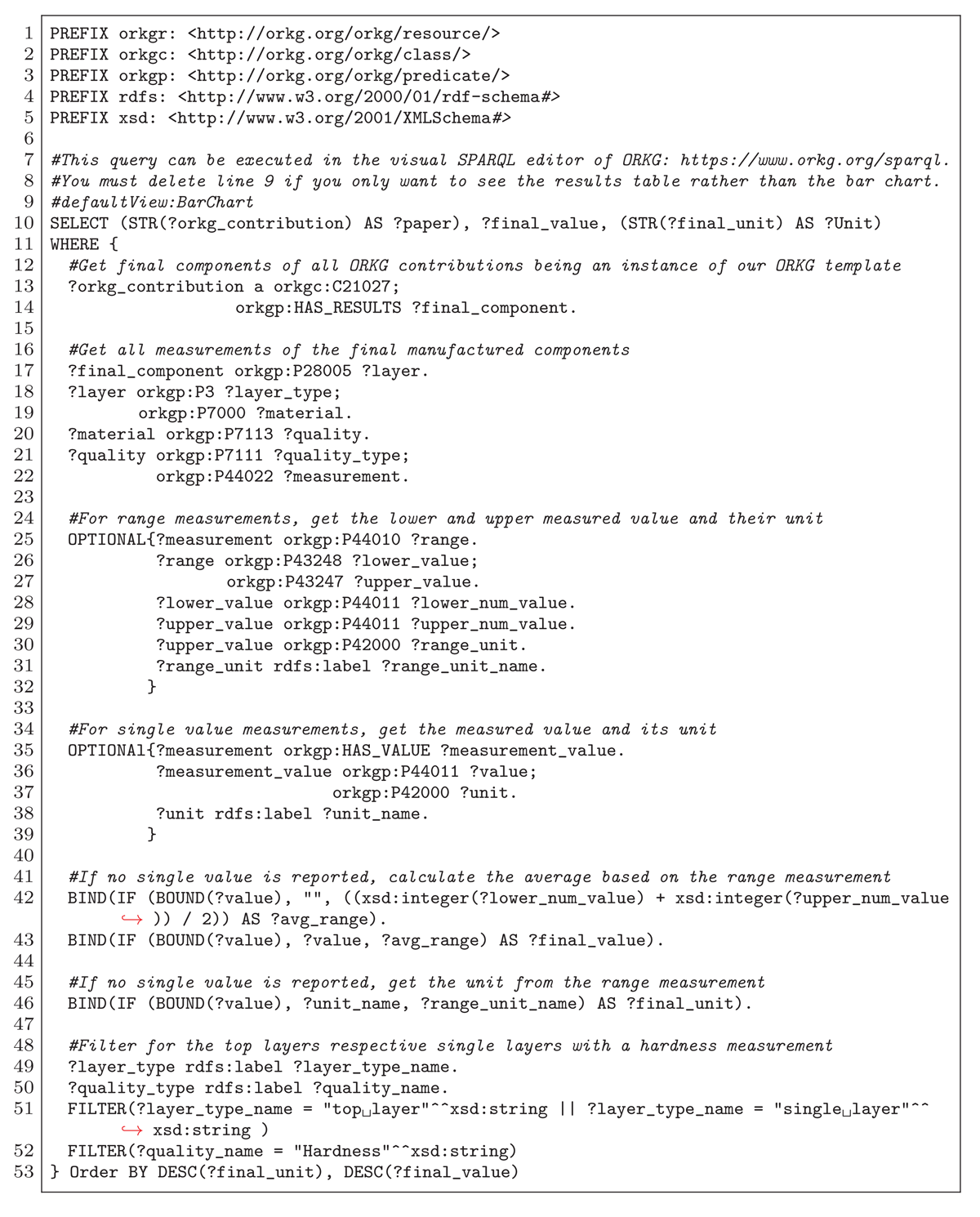
Listing 2
SPARQL query to retrieve the hardness in the outermost layer of all final components manufactured in the 30 described process chains, if reported.
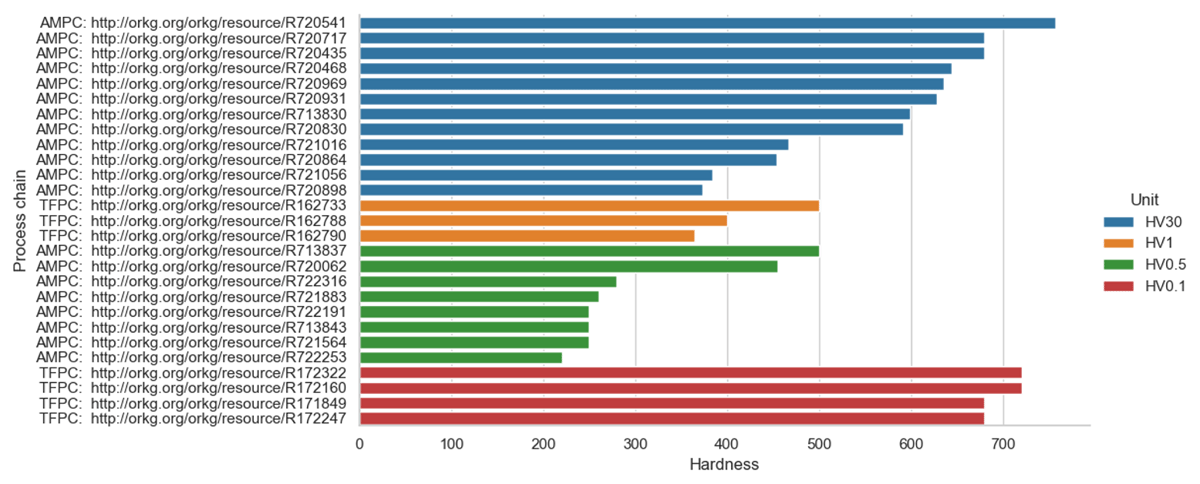
Figure 19
Hardness in the outermost layer of all final manufactured components, reported in 27 of the 30 process chains described.