
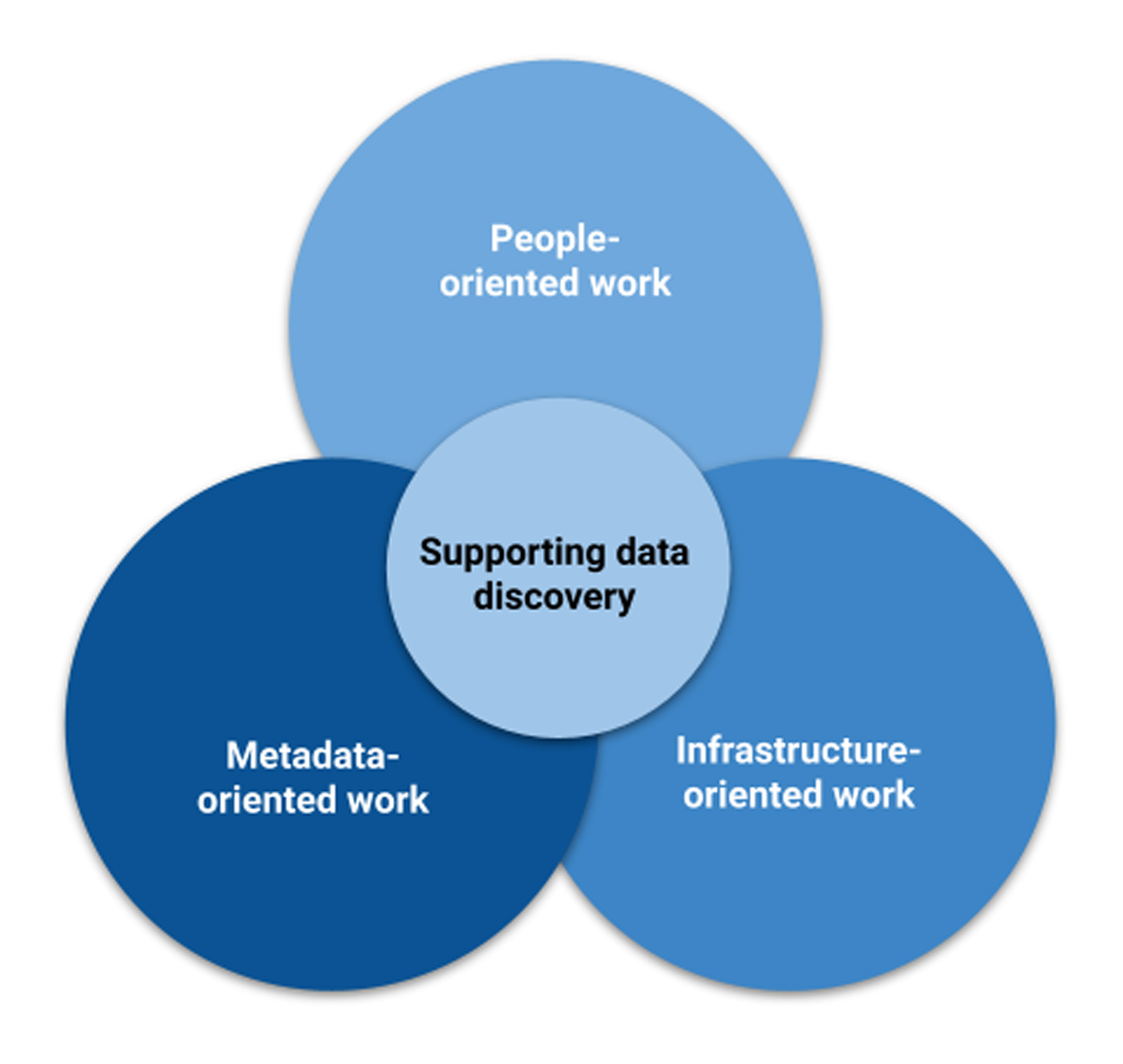
Figure 1
Types of work involved in supporting data discovery.
Table 1
Methodologies and study descriptions for data used in our synthesis.
| STUDY NUMBER | METHODOLOGY | PARTICIPANTS | DISCIPLINARY FOCUS | YEAR OF DATA COLLECTION | PUBLISHED WORK |
|---|---|---|---|---|---|
| Study 1 | Survey | Researchers (n = 1630); Support professionals (n = 47) | Multiple disciplines | 2018 | (Gregory 2020; Gregory et al. 2020) |
| Study 2 | Interview | Researchers (n = 19); Support professionals (n = 3) | Multiple disciplines | 2017 | (Gregory etal. 2019) |
| Study 3 | Interview | Support professionals (n = 6) | Social sciences | 2016 | (Friedrich 2020) |
| Study 4 | Use case analysis by support professionals | Use cases (n = 100 use cases collected; n = 25 support professionals) | Multiple disciplines | 2020 | (Mathiak et al. 2023) |
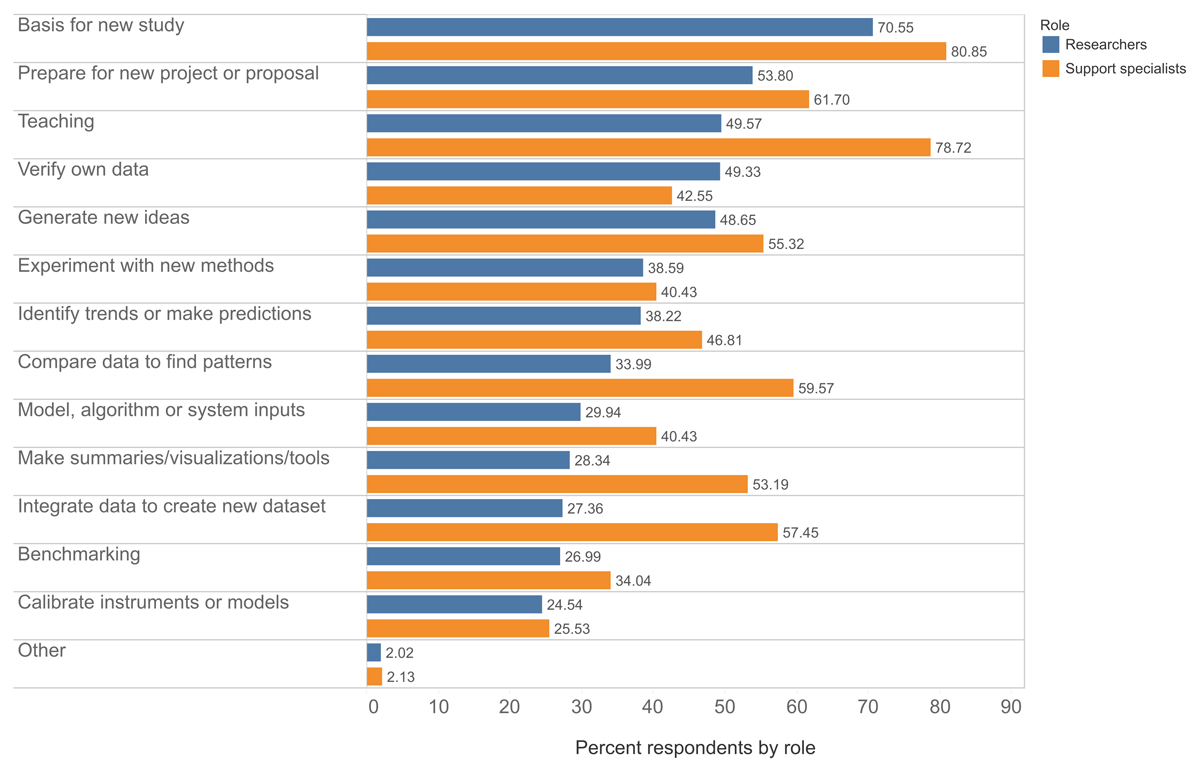
Figure 2
Purposes for using secondary data by role: researchers (n = 1630) and support specialists (n = 47). Multiple responses possible.
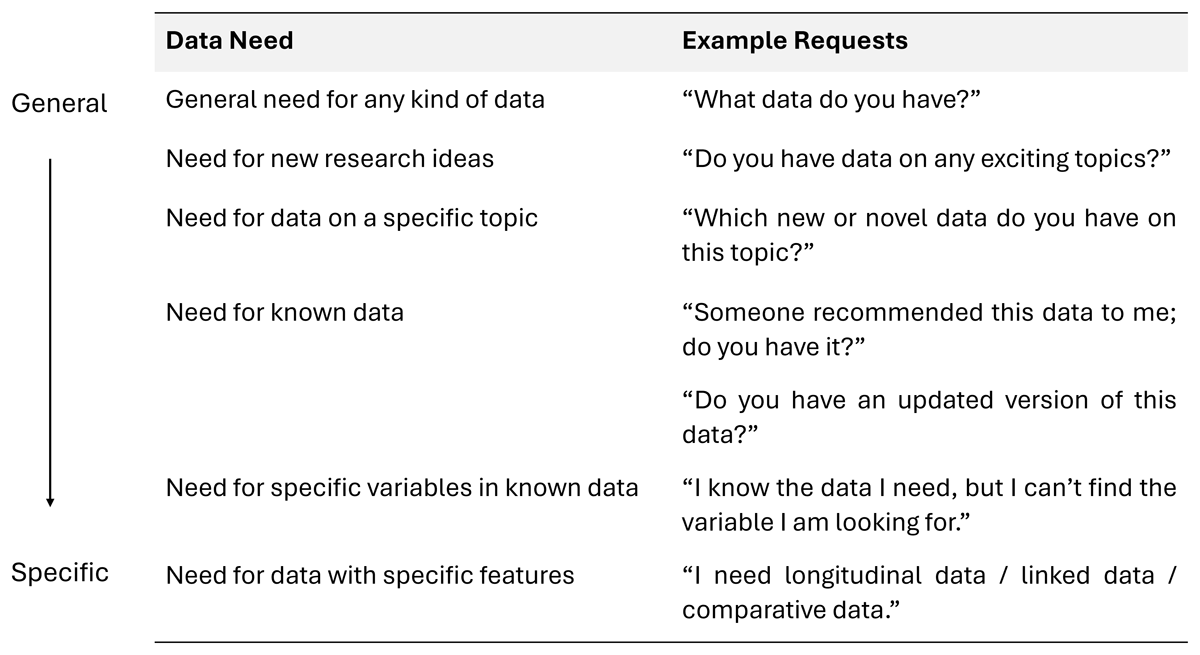
Figure 3
Data needs of users seeking survey data.
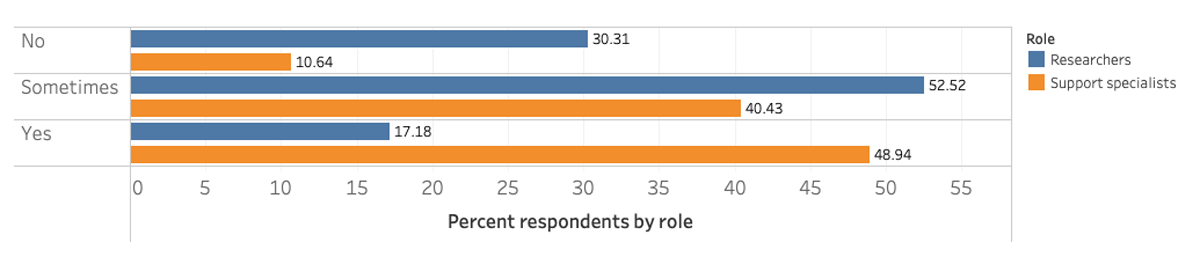
Figure 4
Responses to the question ‘Do you discover data differently than the literature?’ by role: researchers (n = 1630) and support specialists (n = 47).
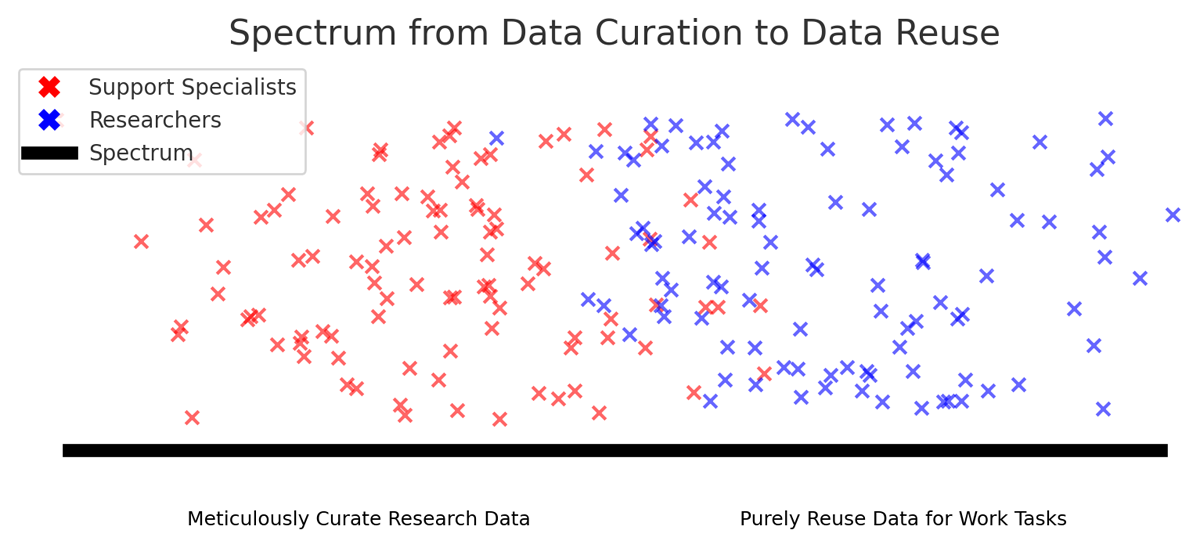
Figure 5
Conceptual illustration of role distribution in RDM. This abstract representation, not based on actual data, contrasts support specialists (red) favoring meticulous data curation with researchers (blue) inclined towards data reuse.