
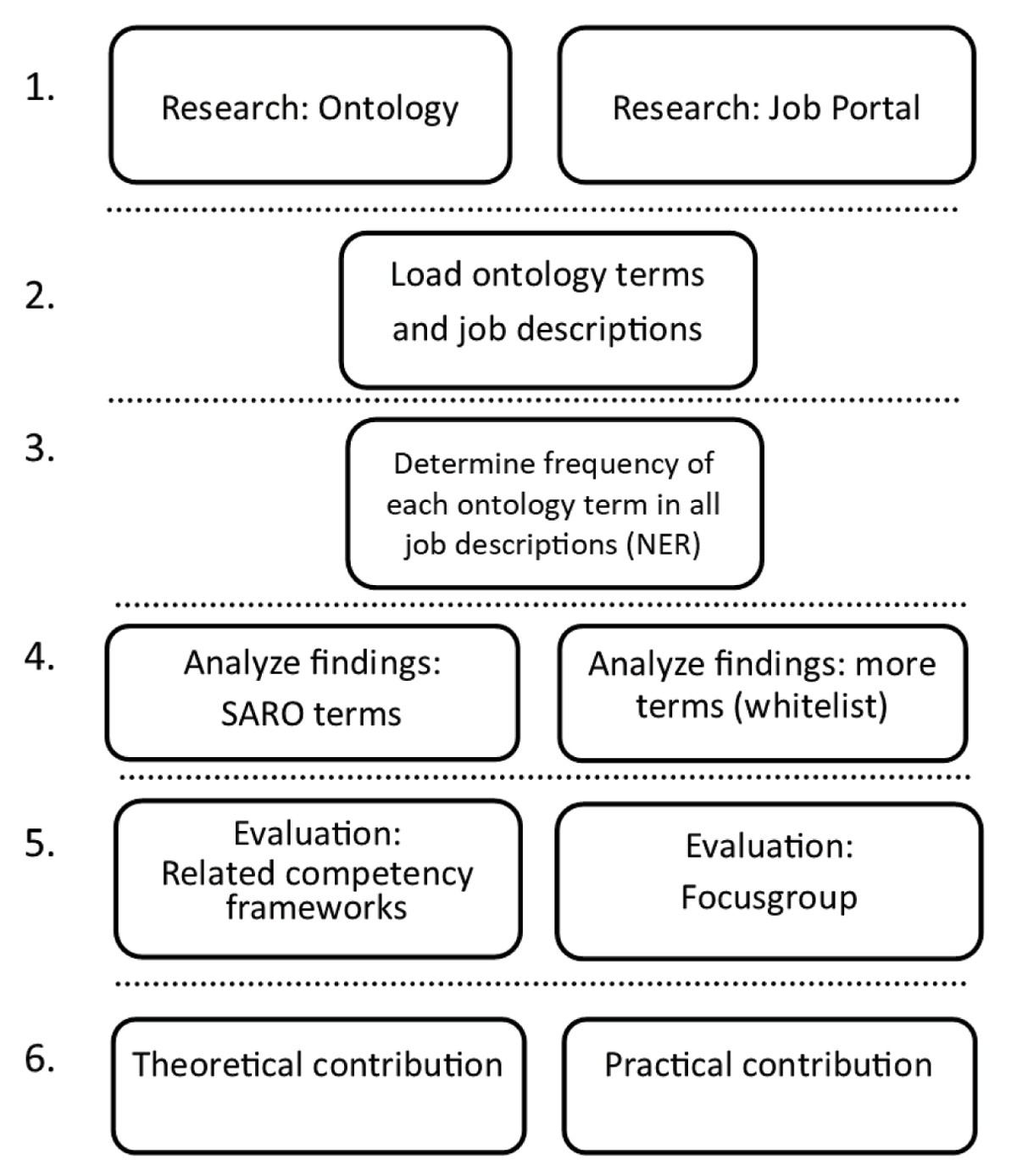
Figure 1
Structure of the research approach.
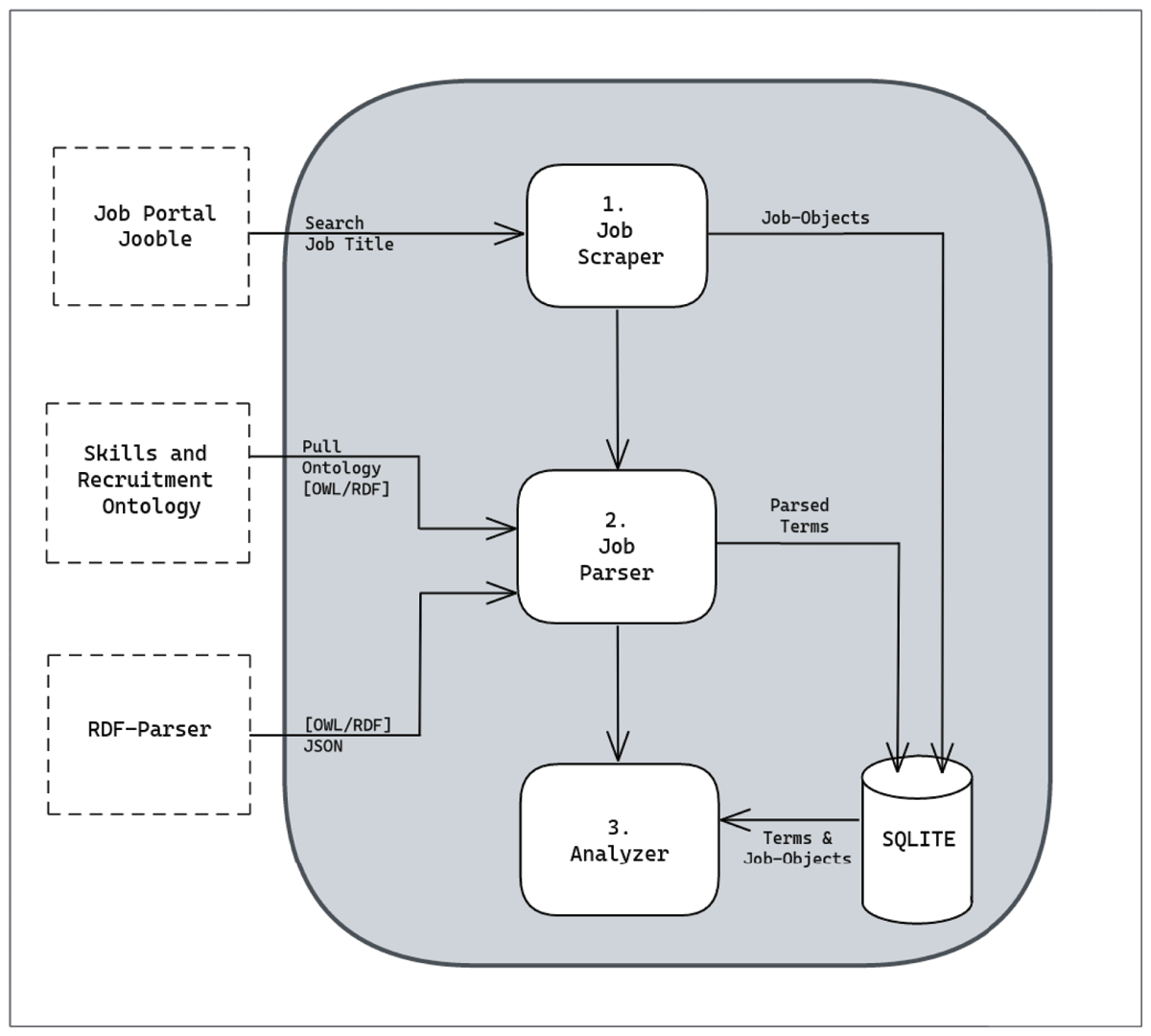
Figure 2
System architecture.
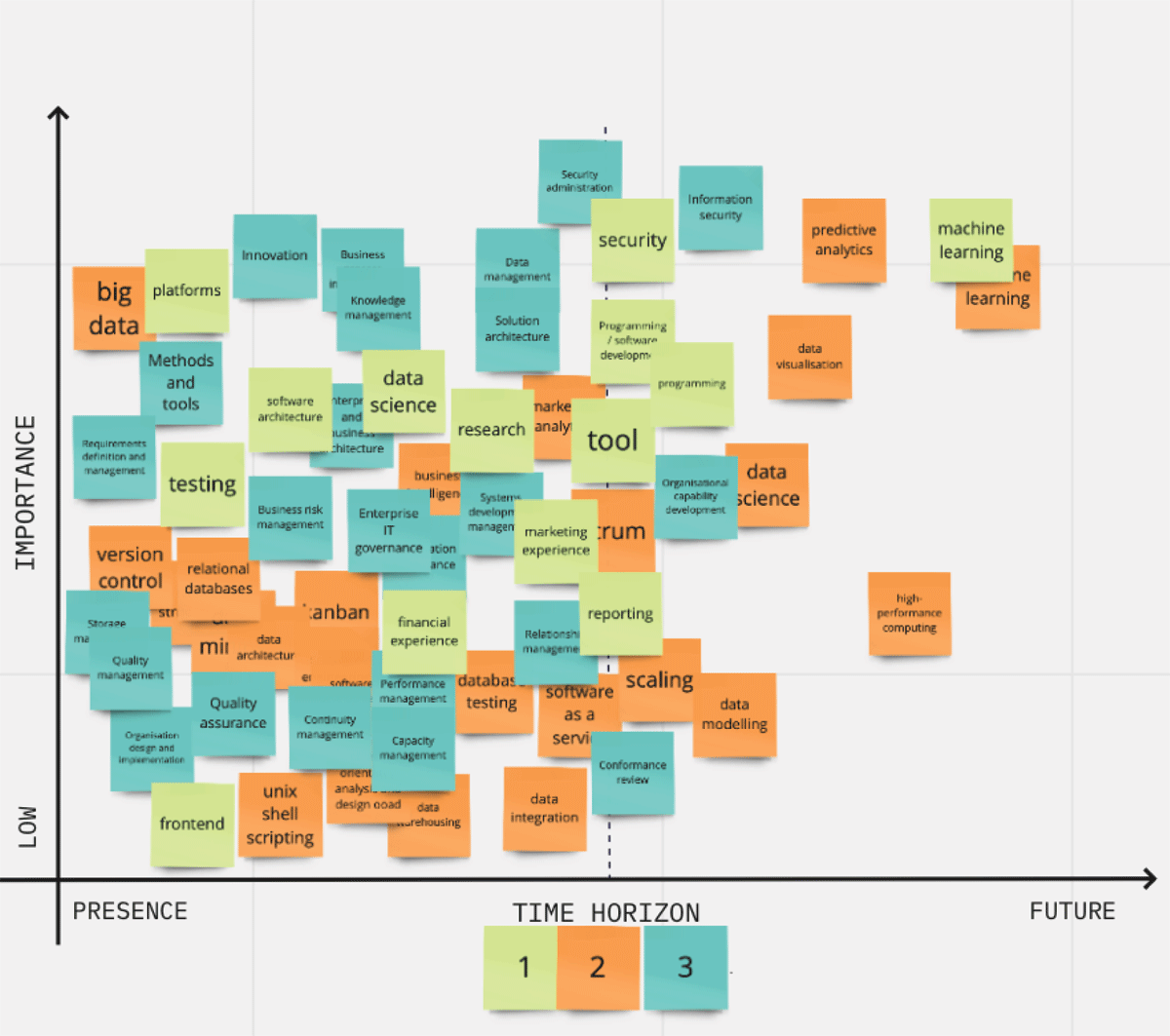
Figure 3
Experts’ rating of topics’ importance and trendiness.
Table 1
Participants of the focus group.
| NO. | DESCRIPTION OF THE PARTICIPANT |
|---|---|
| E1 | Professor in business information systems |
| E2 | Professor in artificial intelligence |
| E3 | Academic researcher, focus: positive computing |
| E4 | Academic researcher, focus: project management, digital transformation |
| E5 | Academic researcher, focus: e-commerce, competency model |
| E6 | Academic researcher, focus: makerspace, digital innovation |
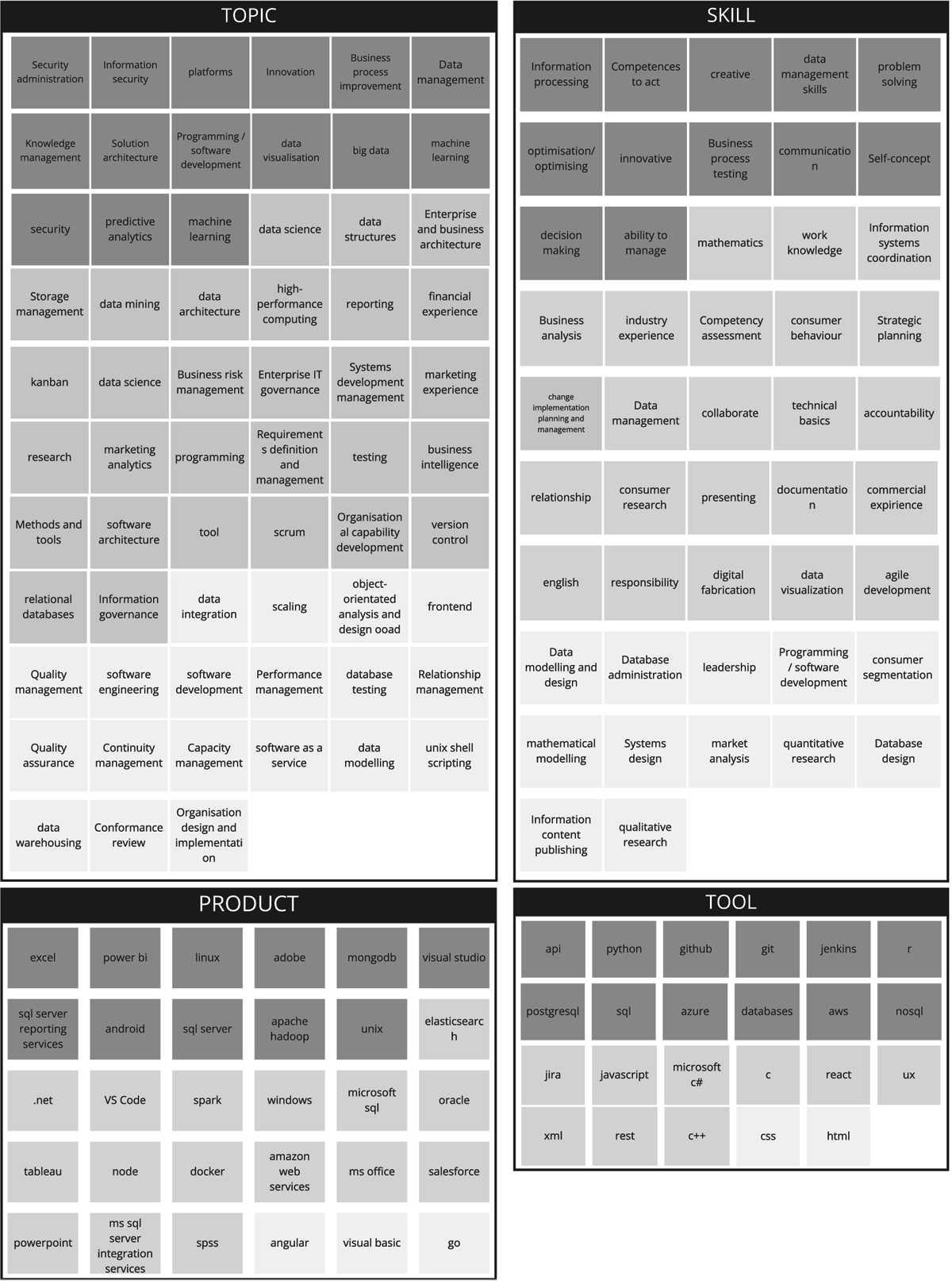
Figure 4
High, middle and low ranked relevance of competencies from focus group.
Table 3
Additional competencies found through this approach (whitelist).
| TYPE | COMPETENCY |
|---|---|
| topic | research |
| marketing experience | |
| platforms | |
| skill | developing |
| implementation | |
| problem solving | |
| innovative | |
| creative | |
| collaborate | |
| leadership | |
| responsibility | |
| english | |
| work knowledge | |
| relationship | |
| decision making | |
| industry experience | |
| accountability | |
| commercial experience | |
| ability to manage | |
| tools | databases |
| product | powerpoint |
| power bi | |
| node |