
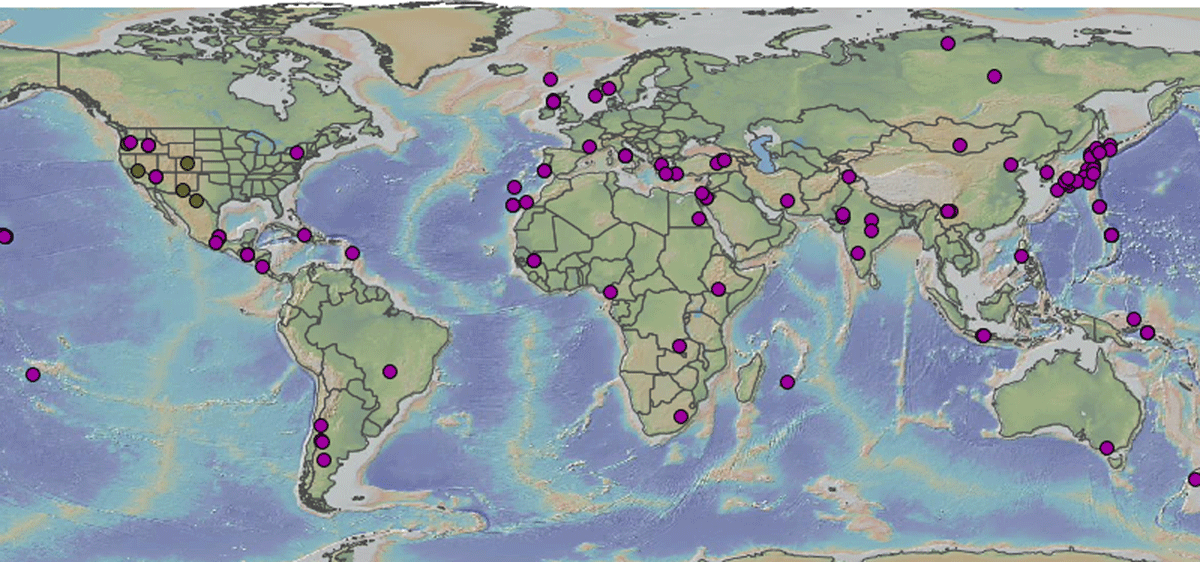
Figure 1
Locations of samples labelled “M1” in publications and collected in the EarthChem database.
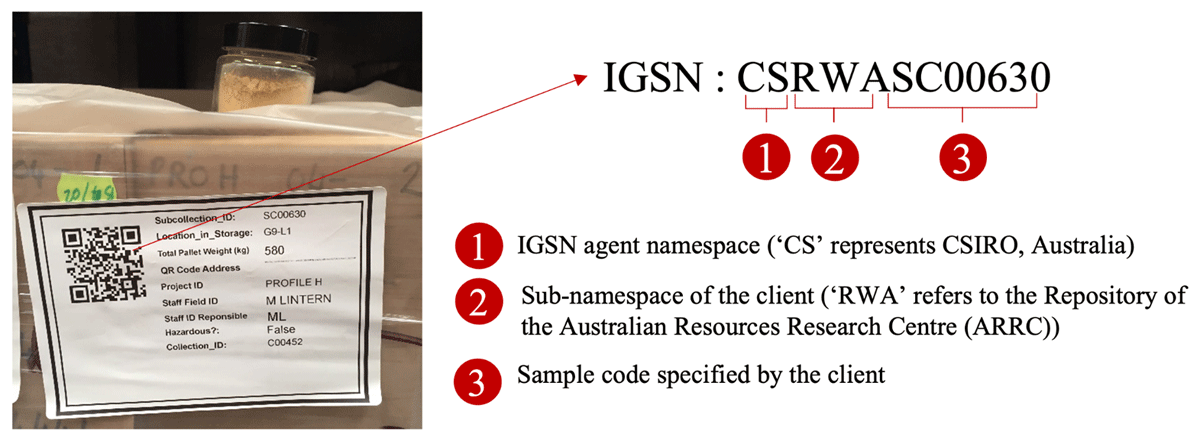
Figure 2
A rock sample collection curated at the Repository of the Australian Resources Research Centre (ARRC). Its IGSN ‘CSRWASC00630’ consists of the top-level namespace ‘CS’ administered by the IGSN agent ‘CSIRO’, the sub-namespace ‘RWA’ identifying the client (here ARRC), and the sample code ‘SC00630’. Sub-namespaces and sample codes are managed by the IGSN agent who must ensure that the combinations are unique within their system. Modified after (Devaraju et al, 2016).
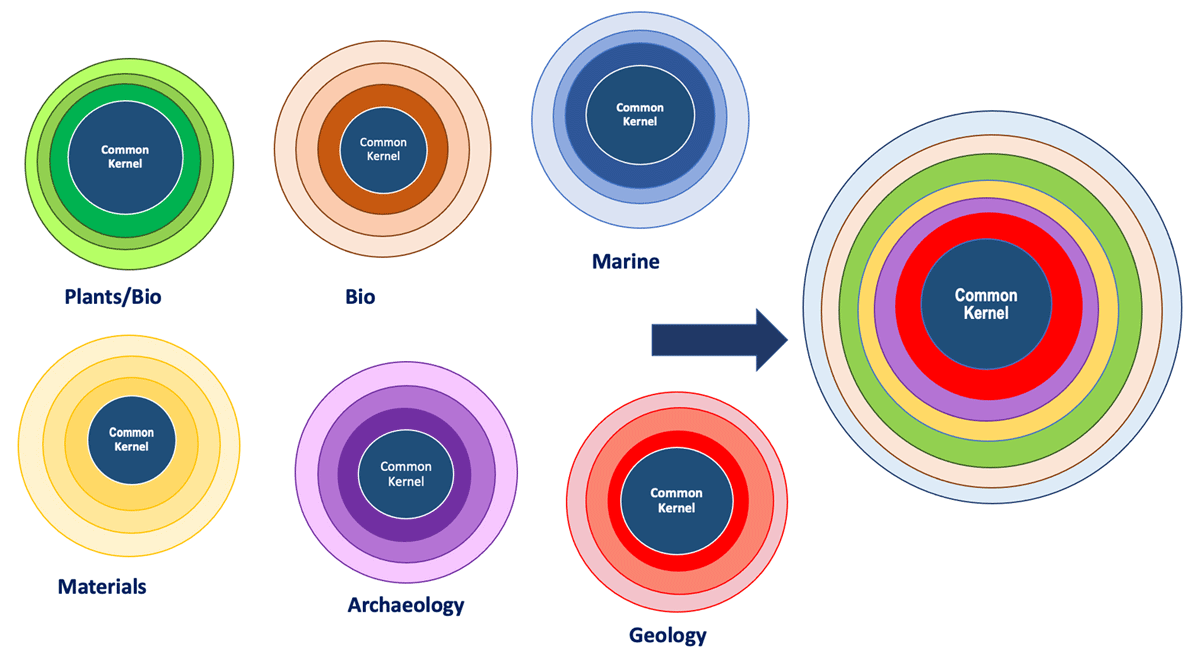
Figure 3
Some communities will need extensions around a core set of descriptive metadata, while other communities will need a separate core set of metadata elements and specific extensions to describe their samples adequately.
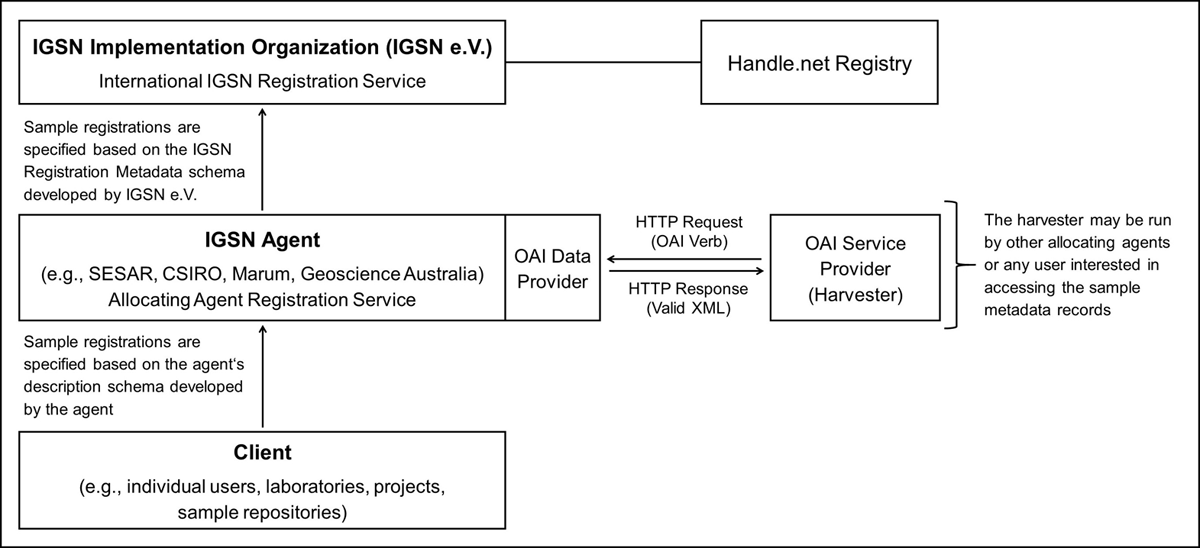
Figure 4
Schematic overview of the IGSN architecture for the minting of IGSN and metadata syndication. Modified after (Devaraju et al, 2017).
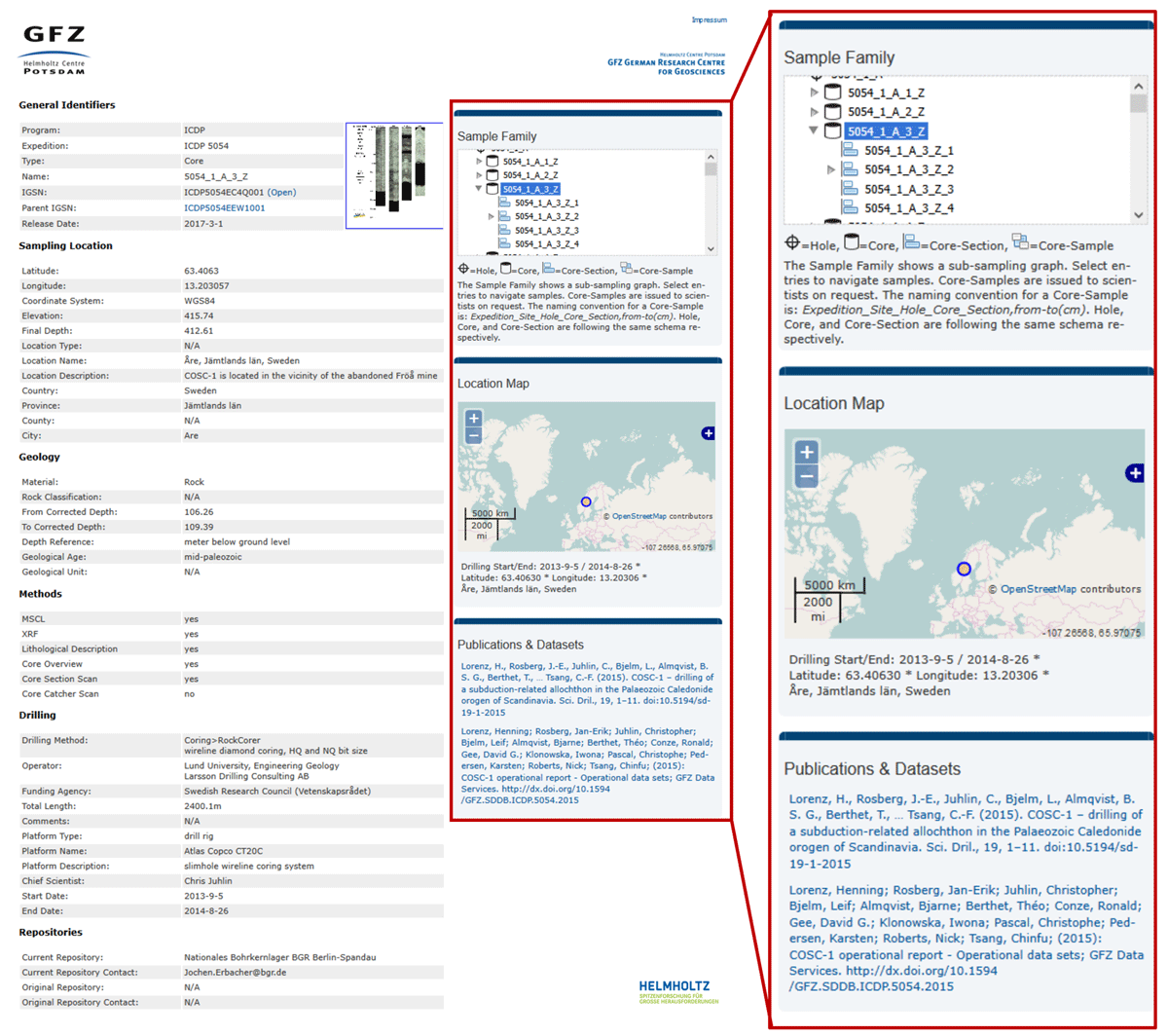
Figure 5
Example of an IGSN Landing Page published by GFZ Data Services for http://igsn.org/ICDP5054EXF4601, a core sample curated at the Core Repository for Continental Drilling of the German Federal Geological Survey in Berlin-Spandau, Germany.
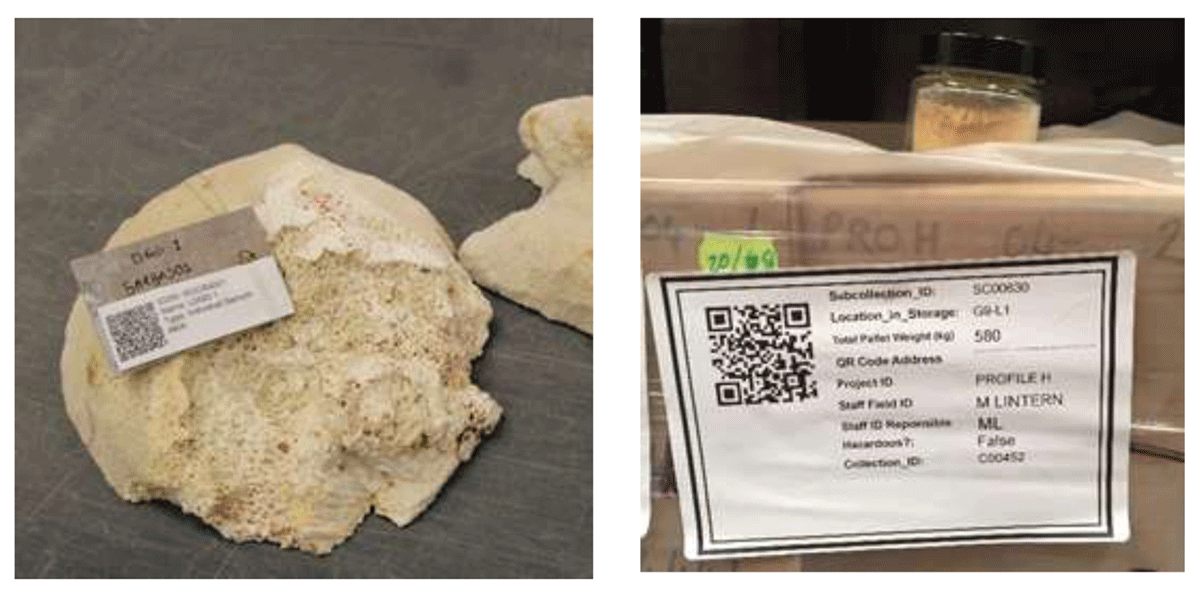
Figure 6
An example of a coral sample and a rock collection identified through IGSN at the LDEO Core Repository and the Repository of the Australian Resources Research Centre (ARRC).
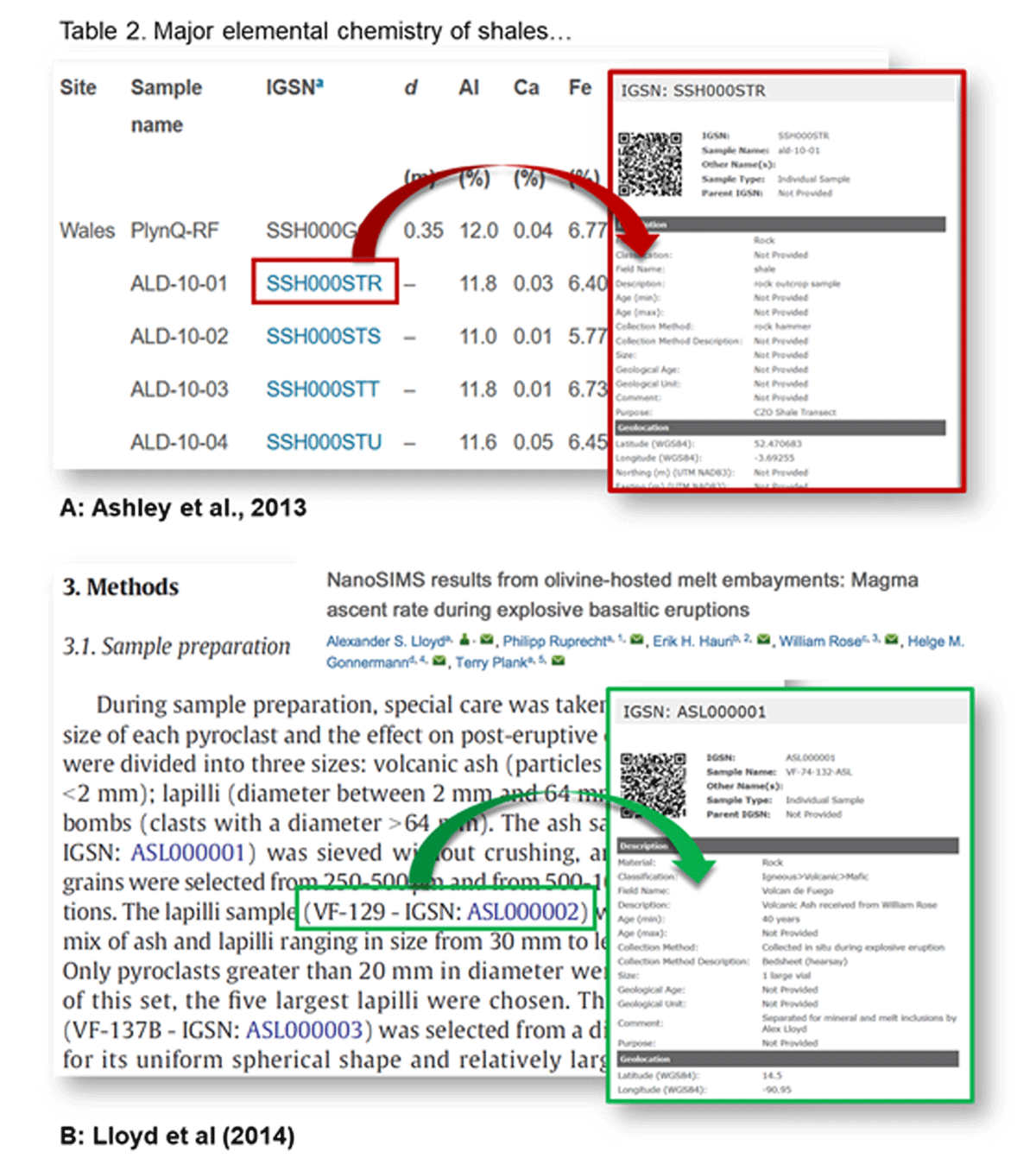
Figure 7
Referencing samples by using IGSNs in data tables (A: Dere et al, 2013) and in the body text (B: Lloyd et al, 2014) of journal articles. The executable IGSN links resolve to the online sample profiles (IGSN Landing Page).
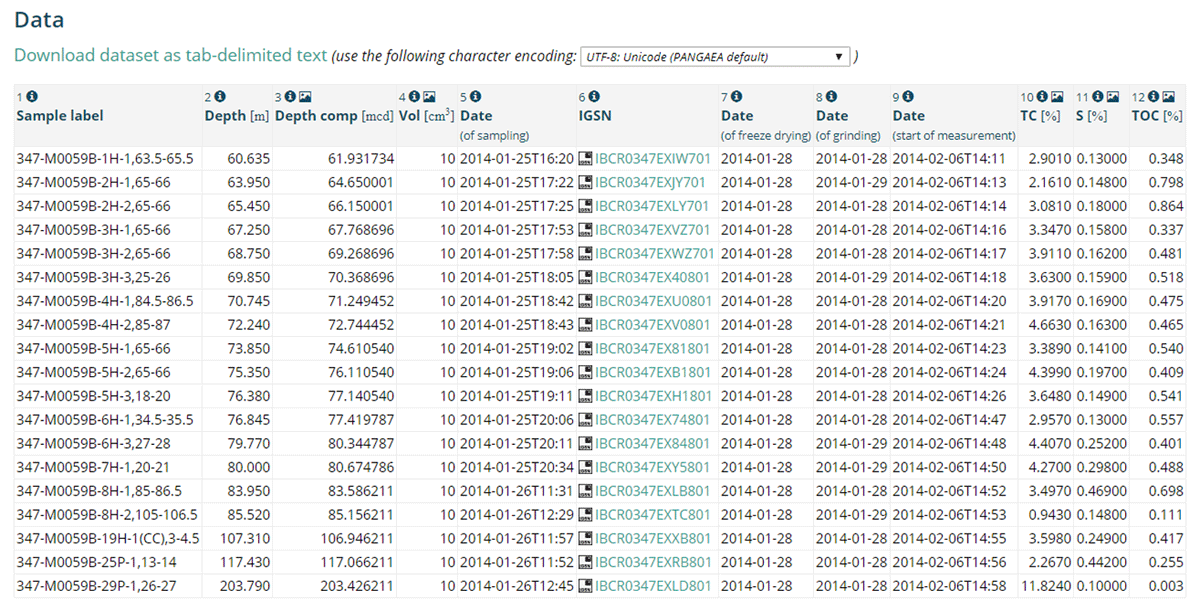
Figure 8
An example dataset with related samples published at https://doi.org/10.1594/PANGAEA.839477. The data includes the variable “International Geo Sample Number” with actionable IGSN names (in green), e.g. http://igsn.org/IBCR0347EXIW701.
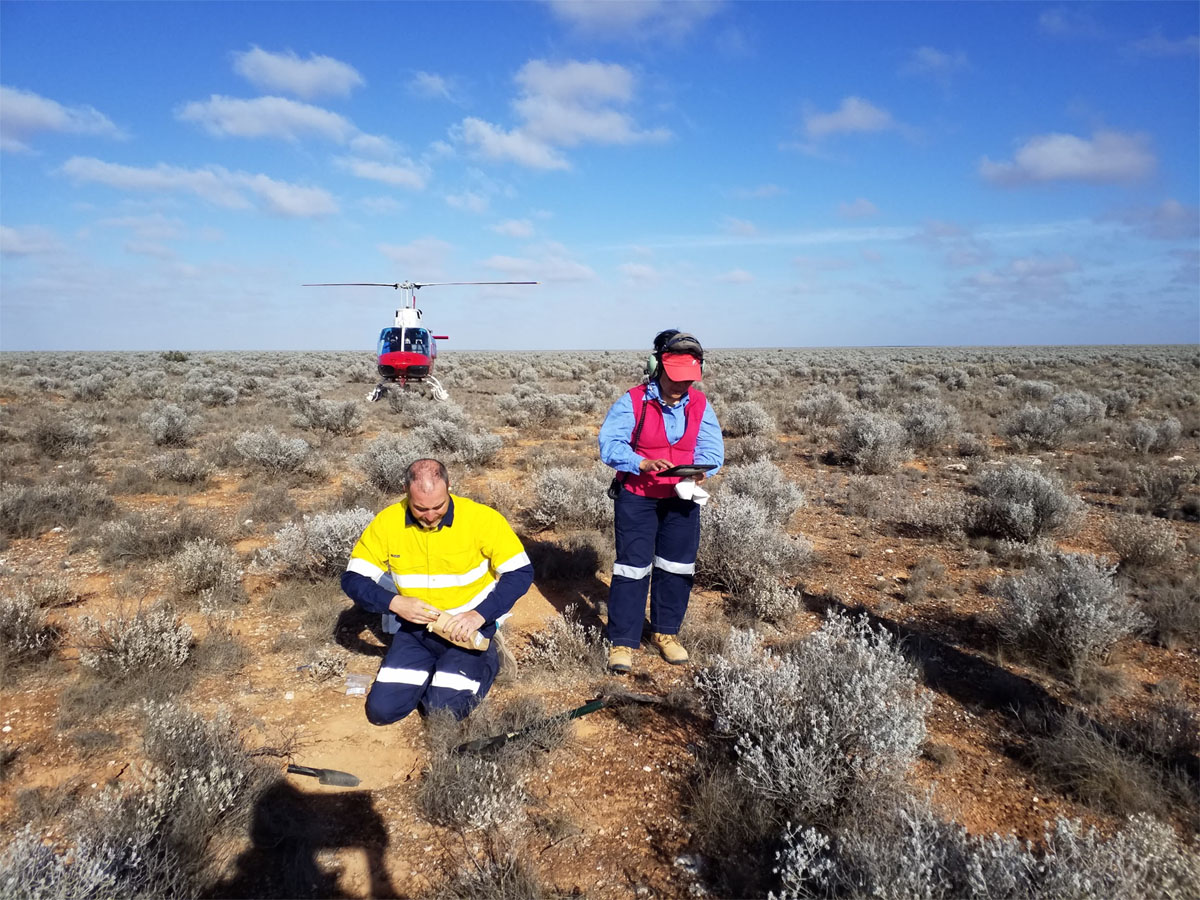
Figure 9
IGSN pre-allocation using the FAIMS electronic field notebook application (Ballsun-Stanton et al, 2018) during a geochemical soil sampling campaign in the Nullarbor Desert, South Australia (Noble et al, 2018).