
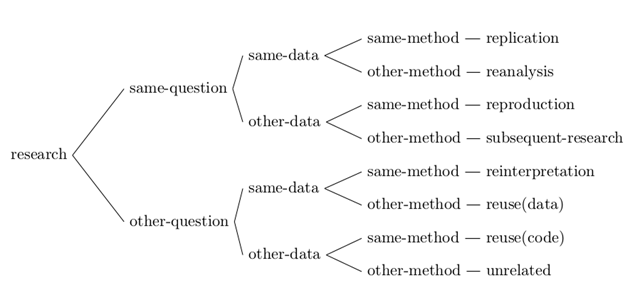
Figure 1
The concept of reusable research, adapted from Schöch (2017).
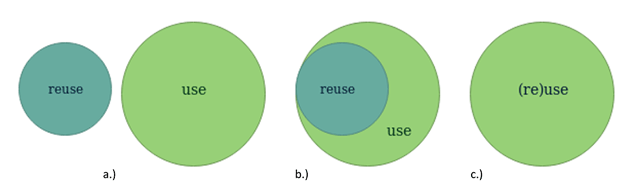
Figure 2
Reuse in relation to use.
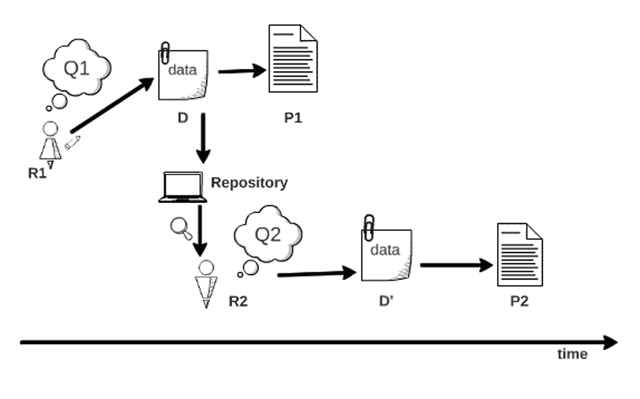
Figure 3
Linear reuse model.
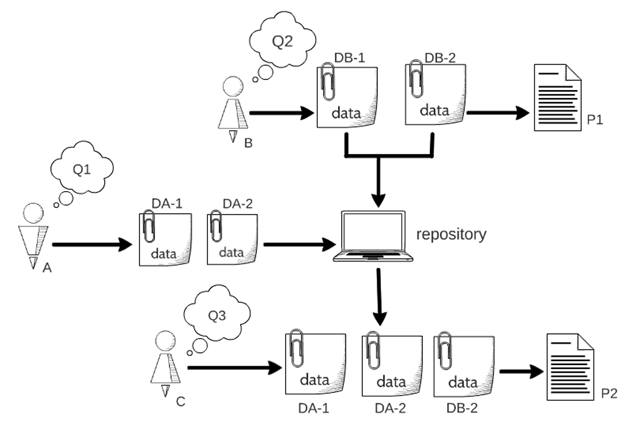
Figure 4
(Re)using multiple datasets.
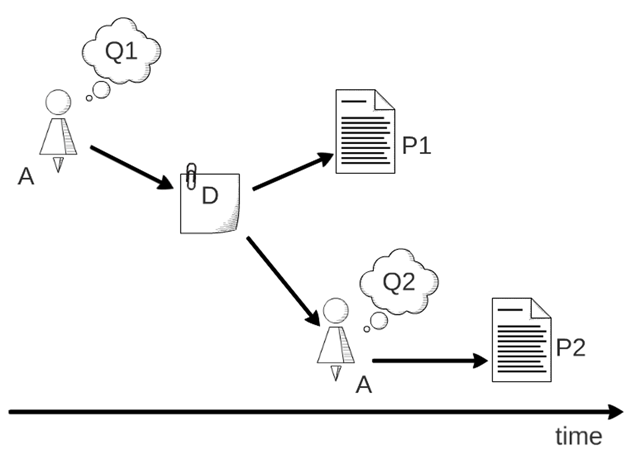
Figure 5
Data characteristics of (re)use.
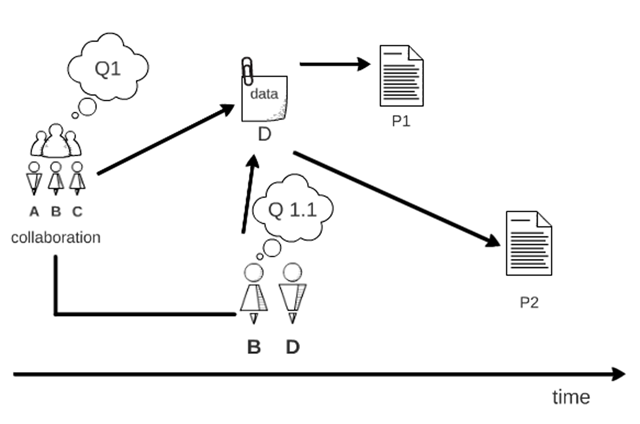
Figure 6
Involvement of collaborations in data reuse.
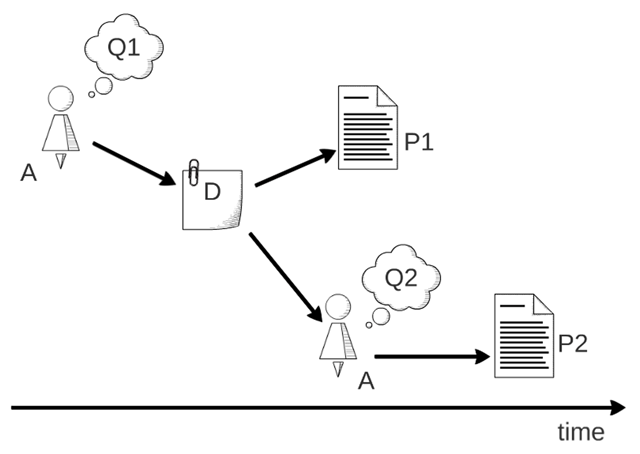
Figure 7
Extended use.
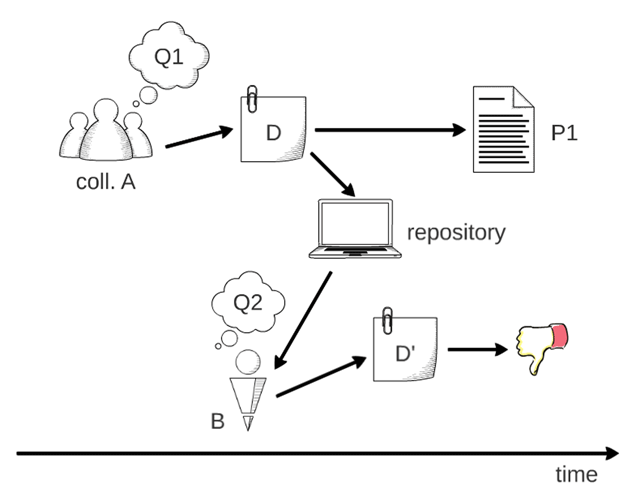
Figure 8
Failed analyses.
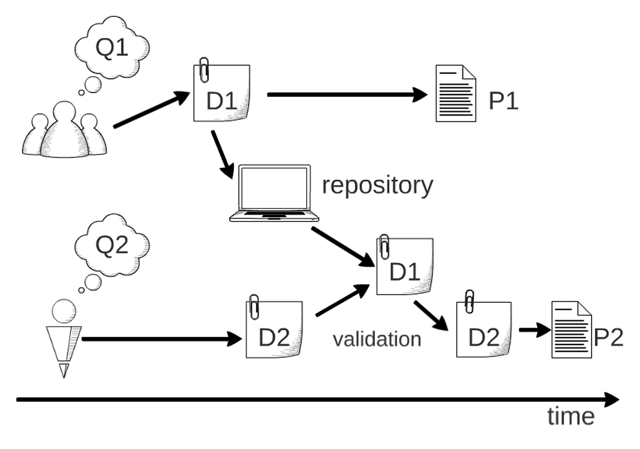
Figure 9
Usage for validation purposes only.
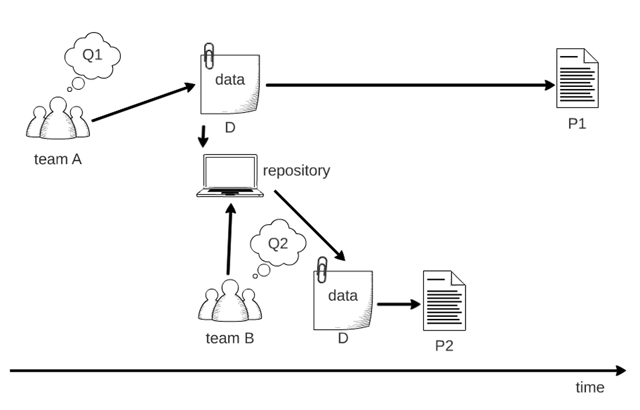
Figure 10
Non-linear usage of data with regard to time.
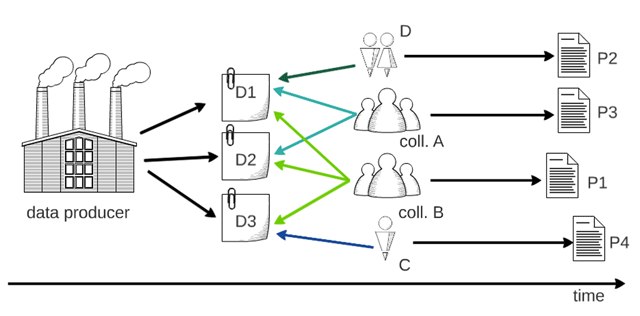
Figure 11
Data produced for several research purposes.
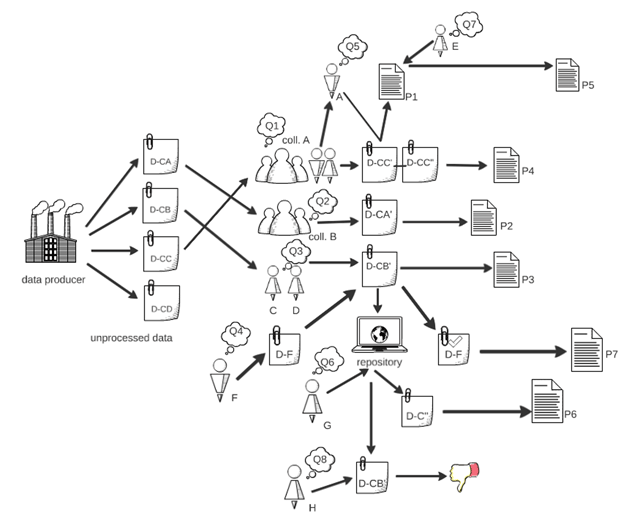
Figure 12
Complex (re)use scenario.
Table 1
Existence of a definition of reuse of research data in scholarly works.
| References | Definition given? |
|---|---|
| Castle (2003); Curty & Qin (2014); Daniels (2014); Faniel & Jacobsen (2010); Faniel et al. (2016); Fear (2013); Francis & Francis (2017); Heaton (1998); Hinds et al. (1997); Law (2005); Meystre et al. (2017); Pasquetto et al. (2017); Rolland & Lee (2013); Safran et al. (2007); Sun & Khoo (2017); Szabo & Strang (1997); Yoon (2015a); Yoon (2017a); Zimmerman (2003); Zimmerman (2008) | yes |
| Boslaugh (2007); Brakewood & Poldrack (2013); Carlson & Anderson (2007); Chao (2011); Corti & Backhouse (2005); Corti & Bishop (2005); Corti (2007); Curty (2016); Curty et al. (2016); Darby et al. (2012); Davis et al. (2011); Dwork et al. (2017); Faniel & Zimmerman (2011); Faniel et al. (2012); Faniel, Barrera-Gomez, Kriesberg & Yakel (2013); Faniel, Kansa, Whitcher Kansa, Barrera-Gomez & Yakel (2013); Farquhar & Brase (2014); Federer et al. (2015); Garnett & Edmond (2014); Gleit & Graham (1989); Howard et al. (2010); Kansa (2015); Kim & Yoon (2017); Kriesberg et al. (2013); Li et al. (2016); Missier (2016); Mooney & Newton (2012); Moore (2007); Murillo (2014); Palmer et al. (2012); Piwowar & Vision (2013); Richards (1997); Rung & Brazma (2013); Sands et al. (2013); Scaffidi et al. (2006); Shen (2016); Tenopir et al. (2015); Ullman (2017); Wallis et al. (2013); Wallis (2014); Wicherts et al. (2006); Yoon (2015b); Yoon (2016); Yoon (2017b); Zimmerman (2007) | no |