Have a personal or library account? Click to login
Young People as Researchers: Lived Experience Perspectives on Citizen Mental Health Science through Youth LIVES Cover

Young People as Researchers: Lived Experience Perspectives on Citizen Mental Health Science through Youth LIVES

Open Access
|Nov 2026
Read online

Figures & tables

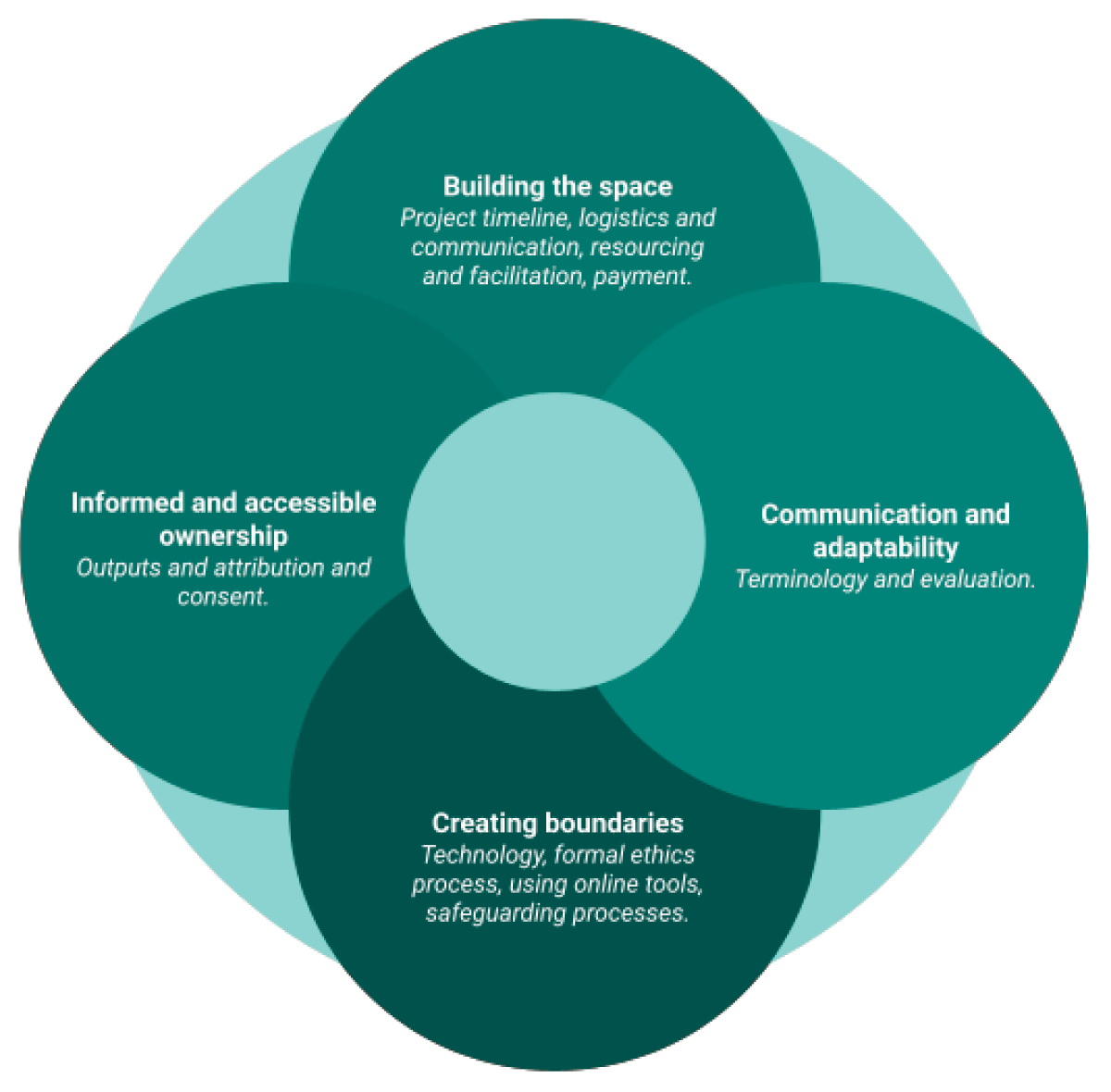
Figure 1

Four practice areas developed through collaborative reflection, grouping, and co-writing in Youth LIVES.

Table 1

Youth recommendations for future citizen mental health science projects.

AREAYOUTH RECOMMENDATIONS
Building the space
  1. Design co-creation projects with flexibility, offering recorded sessions, written summaries, and collaborative tools to accommodate collaborators’ varying schedules and engagement levels.

  2. Design flexible scheduling approaches to accommodate collaborators’ diverse schedules. Offer multiple session times if possible.

  3. Meetings should be long enough to allow meaningful discussion without feeling rushed or overly drawn out.

  4. When selecting platforms for communication, ensure they are user-friendly and suitable for both professional and casual use, while limiting the number of platforms to avoid overwhelming collaborators.

Communication and adaptability
  1. Involve collaborators in discussions about terminology. Use terms like “co-producer” and “co-researcher” to emphasise equal collaboration and active participation.

  2. Provide consistent reminders and clear communication about upcoming sessions.

  3. Provide opportunities for collaborators to connect with other project team members.

  4. Offer diverse feedback options, such as interviews and written surveys, to accommodate collaborators’ comfort levels.

Informed and accessible ownership
  1. Use engaging formats like podcasts, films, and animations to present research findings.

  2. Ensure all project outputs are designed with accessibility in mind.

  3. Implement dynamic consent to allow collaborators control over how their contributions are acknowledged and the level of visibility they’re comfortable with.

  4. Provide transparency and clear guidance on attribution, respecting personal and professional boundaries by offering flexible recognition options, such as alias, first name, or full name attribution.

Creating boundaries
  1. Adopt flexible, participatory ethical approaches; ensure fair compensation; and address the emotional and social impact of sharing personal information while encouraging ethics committees to embrace progressive methodologies.

  2. Select platforms with robust safety features suitable for sensitive discussions, ensuring privacy and security through careful monitoring.

  3. Engage trained professionals to support younger collaborators, provide adequate training for all team members, and implement pastoral care systems to ensure the well-being of both researchers and collaborators.

  4. Ensure that all parties are aware of who they can contact for safeguarding support.

DOI: https://doi.org/10.5334/cstp.969 | Journal eISSN: 2057-4991
Language: English
Page range: 42 - 42
Submitted on: Dec 16, 2025
Accepted on: Oct 9, 2026
Published on: Nov 10, 2026
Published by: Ubiquity Press
In partnership with: Paradigm Publishing Services

© 2026 Rhys Archer, Richard Barlow, Ralph Braodbent, Carys Heron, Tara Jhawer, Quinn Khan, Sarah Knowles, Ashleigh Ruth Lordi, Jasmine Salter, Md Hasibuzzaman Sarker, Deborah Tetteh, Sarah West, M Williams, published by Ubiquity Press
This work is licensed under the Creative Commons Attribution 4.0 License.