
Introduction
Galleries, libraries, archives, and museums (GLAMs) are increasingly recognized as key civic institutions whose roles are undergoing active redefinition (Aabø 2005). Recent scholarship highlights their potential to operate as social infrastructures—physical and institutional infrastructures that foster community interaction and social connections (Klinenberg 2018; Latham and Layton 2019; Gooch, Kahn, and Kugeler 2025). Combined with their intrinsic role in knowledge creation, curation, and dissemination, as well as their broad geographical distribution (Benoit III et al. 2025), GLAMs hold significant promise as partners in citizen science (CS) initiatives.
Many archives and natural history museums have long-standing traditions and established practices in crowdsourcing and citizen science. Examples include archives developing a range of crowdsourcing approaches (Mika, De Veer and Rinaldo 2017; Hansson and Dahlgren 2022; Chiquet, Felsing, and Fornaro 2023; Rinaldo et al. 2023; Graf 2024) and natural history museums leveraging their research expertise and expanding CS to new audiences (Matsunaga, Mast, and Fortes 2016; Ballard et al. 2017; Spear, Pauly, and Kaiser 2017).
In museums, cultural heritage crowdsourcing is well documented (Ridge et al. 2021; Belknap et al. 2024); meanwhile, some other museums have embraced more experimental CS approaches, such as citizen-curated exhibitions (Runnel, Aljas, and Jaanits 2024) or co-created universal design recommendations (Hedvall Per-Olof et al. 2018).
Among the GLAMs, the interaction between CS and libraries has been extensively explored, and growing attention has been devoted to understanding how public, academic, and research libraries can collaborate with CS initiatives (Liu and Liu 2023; Mumelaš and Martek 2024; Mumelaš, Matijević, and Ivanjko 2025). The literature also focuses on identifying opportunities and challenges for integrating CS within library contexts, often through surveys and interviews with librarians in different countries (Martek, Mučnjak, and Mumelaš 2022; Rammutloa 2023; Kowalska-Chrzanowska 2024; Pimentel and Esteves Gomes 2024; Filipeti and Mumelaš 2025; Nurfarawahidah et al. 2025; Silva-Aboy and Martin-Melon 2025; Svahn, Andersdotter, and Kallio 2025).
Librarians have a long tradition of advocating for crowdsourcing initiatives (e.g., Holley 2010). Cohen et al. (2015) were among the first to identify the potential roles of libraries in the widest context of CS initiatives, highlighting their capacity to foster community building, support data curation, and provide spaces, technologies, and resources. Subsequent studies have expanded on this perspective by examining stakeholder perceptions and analyzing the needed librarians skills and competencies (Nielsen et al. 2024; Tautkeviciene and Pranckute 2024; Nurfarawahidah et al. 2025). Several studies have also assessed specific library-based CS initiatives to identify the key drivers of successful collaborations (Moyle, Tonra, and Wallace 2011; Ignat et al. 2018; Overgaard and Kaarsted 2018; Ignat, Cavalier, and Nickerson 2019; Wiederkehr 2019, 2022; Cigarini et al. 2021, 2022; Fortuño et al. 2025). Svahn, Andersdotter, and Kallio (2025), moreover, recently identified and carefully detailed three key concepts underpinning CS in public libraries, based on surveys answered by librarians: People and Partnerships, Space and Facilities and Knowledge Resource and Infrastructure.
Overall, the literature converges in recognizing libraries as key partners in CS initiatives. However, the analysis of CS practices within libraries and other GLAMs remains mostly limited to single cases and to specific contexts and topics, often related to biodiversity monitoring (Ballard et al. 2017; Fortuño et al. 2025) or to the transcription and curation of library and archival collections (Moyle, Tonra, and Wallace 2011; Wiederkehr 2019). There is also, to our knowledge, a lack of documented CS-GLAM studies addressing urban sustainability challenges. Urban sustainability here refers to the application of sustainability principles in cities, encompassing cultural, societal, economic, and environmental dimensions (Finco and Nijkamp 2001; Jenks and Jones 2008; Pallathadka, Chang, and Ajibade 2023). CS can support urban sustainability and planning by actively involving residents in urban-related topics such as environmental quality, mobility, land use, and public space management (Franco and Cappa, 2021; Pitidis, Coaffee and Lima-Silva, 2024), by enhancing local knowledge and social inclusion, and by contributing to adaptive, resilient, and sustainable urban governance and planning (Arnstein 1969; Colston, Vadjunec, and Wakeford 2015; Bansard, Hickmann, and Kern 2019).
Therefore, we analyze herein five CS pilots in four European cities from Southern Europe (Barcelona, Spain), Western Europe (Delft, The Netherlands), Central Europe (Vienna, Austria), and Northern Europe (Tallinn, Estonia). Pilots addressed urban sustainability challenges by drawing on local knowledge ecosystems, including urban planning institutions and academic research institutes, and GLAMs. The pilots were implemented within the three-year Open Urban Sustainability Hubs (OPUSH) European project, which established a community of practice comprising librarians and researchers to make a significant and scalable contribution to knowledge hubs addressing urban sustainability and social inequality.
Accordingly, we address the following research questions:
RQ1: What are the commonalities and differences between the five CS pilots implemented across four European cities?
RQ2: What are the distinctive contributions of GLAMs within these CS initiatives specifically targeting urban sustainability?
RQ3: How can the CS–GLAM alliance be effectively operationalized, and what added value does this partnership have in an urban sustainability scope?
The analysis draws on desk research and data collected after the completion of the five pilots, including self-reflection exercises, collective writing processes, and interviews with both librarians and researchers. Together, these sources provide an empirical basis for answering the research questions outlined. The results are also interpreted through the lens of the three key categories outlined by Svahn, Andersdotter, and Kallio (2025).
Methods
The analysis lies at the intersection of CS, sustainable urban transformation, urban sustainability, and urban planning (Bonhoure et al. 2024, 2026a). The implementation of the pilots was based on theoretical-conceptual groundwork (Peer 2023), in-house prospective work on open science skills (Bernhardt, Yankelevich, and Peer 2024) and landscape analysis of open science related to urban sustainability practices (Peer et al. 2024). Three main dimensions, subdivided into several subdimensions, were identified: Individual Competency Development (IC), Social Learning (SL) and Inter- and Transdisciplinary Collaboration (TC) (see Supplemental File 1: Table S1 for a full description). Knowledge Infrastructures, as a transversal theme, was also considered of interest. The OPUSH partners’ staff who conceived and implemented the pilots are referred to as members of the pilot teams.
The IC dimension targets the members of the pilot teams’ skills and competences, including, for example, the acquisition of new/better digital competences (e.g., use of digital tools or platforms) (IC5). The SL dimension deals with new knowledge and practices structured and facilitated between stakeholders with different perspectives, and focuses on subdimensions such as inclusion (SL1) or urban transformation (SL4). Finally, the TC dimension encompasses the integration of knowledge from various scientific and societal bodies of knowledge, namely the use of new concepts/methodologies (TC1) or new tools (TC2).
Data collection was closely integrated with the analysis process following grounded theory methodology (Chun Tie, Birks, and Francis 2019) and an inductive approach (Rambaree 2013). Several iterative cycles of data collection and analysis were conducted (see Figure 1).
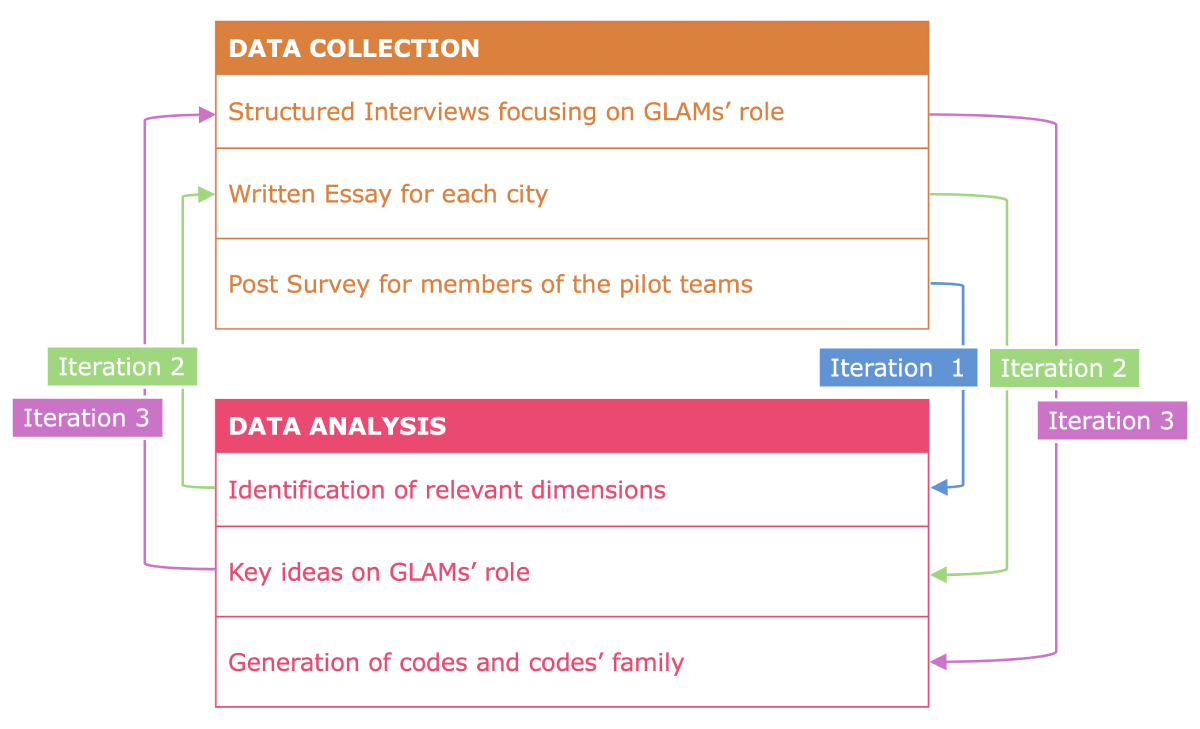
Figure 1
Data collection and analysis cycles, divided into three iterations (I1, I2, I3). Detailed protocols for each iteration are described in the Methods section.
First iteration
Members of the pilot teams were invited to complete an anonymous digital survey (see Supplemental File 2: Template 1) assessing the pilots’ outcomes according to the previously detailed dimensions (Supplemental File 1: Table S1). Respondents rated each statement using a five-point Likert scale, ranging from 1 (absolutely disagree) to 5 (absolutely agree). A total of 20 responses was received from 9 women and 11 men, and the number of respondents in each city was as follows: Barcelona, 5; Delft, 1; Tallinn: 3; Vienna: 11. The overall quantitative results, as well as those disaggregated by city, are presented in Figure 2 and give insights on RQ1 (pilots’ commonalities) and RQ3 (CS-GLAM alliance added value). As they obtained high evaluation scores in the survey and are in addition aligned with the social transformative power of GLAMs, the subdimensions SL1, SL2, and SL3—corresponding to inclusion, horizontality, and social transformation—were identified for in-depth analysis.
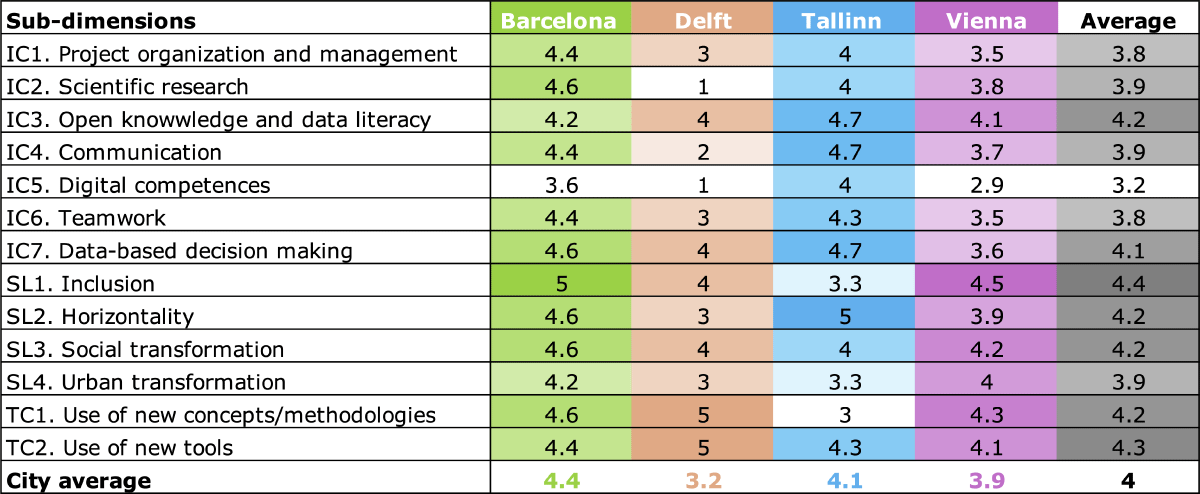
Figure 2
Results of the post-survey scores for pilot teams’ members, classified by sub-dimension and cities. Average scores were calculated by sub-dimension and city [five-point Likert scale, ranging from 1 (absolutely disagree) to 5 (absolutely agree)]. IC: Individual Competency Development, SL: Social Learning, TC: Inter- and Transdisciplinary Collaboration.
Second iteration
To ensure an unbiased approach, data collection for the subsequent cycles was led by an author (RB) who was not involved in OPUSH activities. The ten professionals engaged in this iteration were the members of the pilot teams who were most actively involved in the pilot implementations (see Supplemental File 3: Table S2). Efforts were made to ensure balance in gender (5 women, 5 men), and city representation (Barcelona, 2; Delft, 2; Tallinn, 2; Vienna, 3). Participating professionals were asked to compose an essay for each city, following a template (see Supplemental File 2: Template 2). The essays focused on the Social Learning subdimensions SL1, SL2, and SL3, alongside a discussion on Knowledge Infrastructures, as this is a transversal theme. All essays were reviewed by RB, who sought clarification from the authors when necessary, and identified the key outcomes emerging from each text, which are mainly related to RQ1 (pilots’ commonalities) and RQ3 (CS-GLAM added value).
Third iteration
To further learn about the role of GLAMs in CS initiatives (RQ2, GLAMs contributions; and RQ3, CS-GLAM alliance added value), six members of the pilot teams and a public library director were interviewed following a structured interview protocol (see Supplemental File 2: Template 3). The interview questions were derived from the key insights identified in the essays and related literature (Cigarini et al. 2021; Filipeti and Mumelaš 2025; Kaarsted et al. 2023; Kowalska-Chrzanowska 2024; Liu and Liu 2023; Mumelaš et al. 2025; Svahn et al. 2025; Tautkeviciene and Pranckute 2024).
Of the participating professionals (4 women, 3 men; 2 from Barcelona, 1 from Delft, 2 from Tallinn, and 2 from Vienna), four were affiliated with research institutions and three with public or academic libraries. The three librarians interviewed held different professional positions: Two were directors of an academic and a public library, respectively, while the third, affiliated with the academic library through the University open science program, oversaw community and civic engagement at the University. The researchers interviewed had backgrounds in architecture and urban planning (n = 3) and CS and complex systems science (n = 1). Five professionals participated in online interviews, that were transcribed verbatim, while two provided written responses. The interviewer (RB) is a native English speaker, and all interviewees but one were fluent in English. One interview was thus conducted in Spanish and subsequently translated into English.
Metrics in data analysis
Data were analyzed using ATLAS.ti software (version 25.0.1). For the four written essays, a word frequency analysis was conducted to perform an initial mapping of commonalities and differences between the pilots (RQ1). Only nouns were considered for the analysis, and the frequencies of singular and plural forms were merged when both appeared. A refined exclusion list was applied to filter non-informative nouns such as project or pilot. A total of 698 nouns were identified across all four essays and ranked in descending order according to their frequency. We define cumulative frequency as the running total of noun frequencies, obtained by summing them in descending order, from the most to the least frequent noun. Once the cumulative frequency reached 37.5%, we then applied a cut-off able to balance the identification of shared patterns with the ability to analyze each essay’s specificity while maintaining a manageable dataset. The final analysis included 32 nouns (see Figure 3). This initial word frequency analysis was complemented by a thematic analysis to get a deeper insight regarding the commonalities of the pilots (RQ1), the GLAMs’ contribution (RQ2), and the operationalization and added value of the CS-GLAM alliance (RQ3). Inductive coding was used to derive concepts and ideas from the data. We used a ground-up approach where the codes were derived from the data without preconceived notions, refined through iterations, and grouped into five thematic families. For example, quotes relating to “Community Engagement” and “Social Inclusion Strategies” were identified separately and then classified inside the thematic family “Community,” defined as community characteristics, perspectives, and approaches promoting community participation. A complete codes list and definitions are provided in Supplemental File 4: Table S5. Each thematic family represents a distinct feature: Community (C), Individual (I), Knowledge Transfer (KT), Challenges (CH), and Opportunities (O). To enhance reliability, the thematic families and codes were collaboratively established by three researchers (RB, IB, and JP). Before reaching the final version, several revisions were made through a peer debriefing process in which RB presented the emerging families and codes. The definitions of the thematic families and codes were collectively agreed upon, and specific quotations were associated with each code. All documents were ultimately coded by a single researcher (RB) to ensure consistency. However, quality checks were conducted by the other two researchers (IB and JP). A sentence or paragraph could be associated with multiple codes simultaneously. The occurrences of each code within a document (essay or interview) or a group of documents were converted into percentages based on the total number of codifications in that document or group. Normalization minimizes differences due to text length. The 479 quotes (55 codes tagged in a total of 10 documents) are openly accessible in a structured dataset (Bonhoure et al. 2026b).
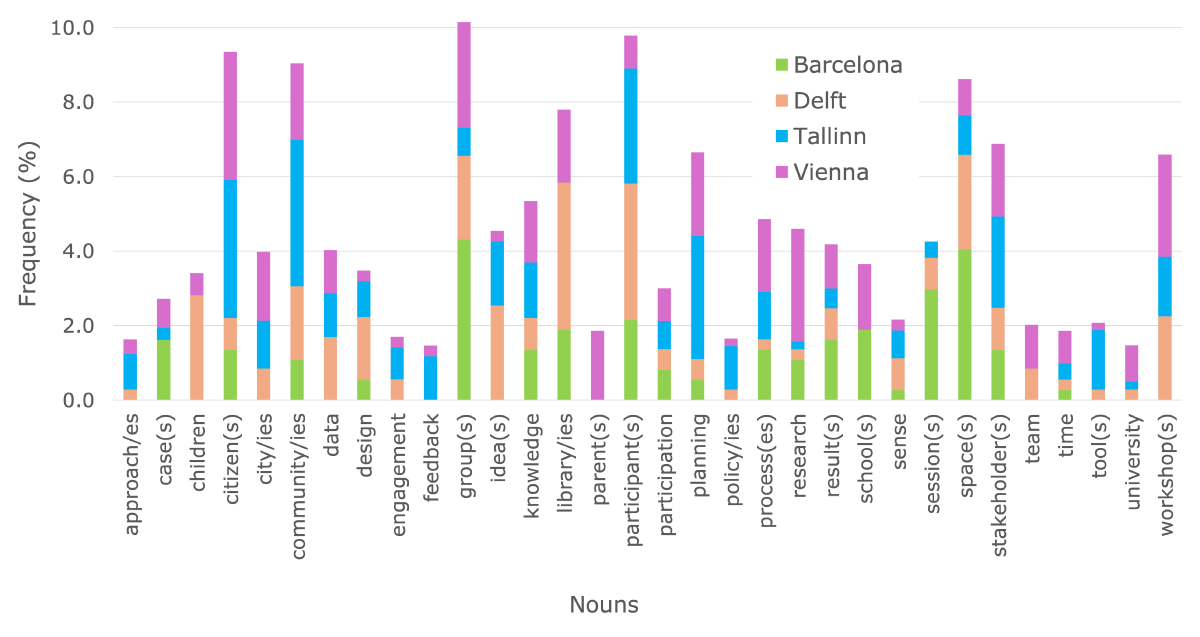
Figure 3
Frequency of nouns appearing in essays, shown for each city and ordered alphabetically.
For the essays, all codes (55) were ranked in descending order according to their total frequency across all four cities, with the combined frequency of all codes representing 100%. To facilitate analysis and comparison between cities, we use the cumulative frequency defined above. Once the cumulative frequency reached 75%, a cut-off was applied. As a result, only the 24 most frequent codes were included in the analysis, while the remaining 31 less frequent codes were excluded (see Figure 4). All 24 codes appeared in Tallinn’s essay, while 23 appeared in Barcelona and 22 in Vienna and Delft. Using a higher cut-off increased disparities between cities, whereas a lower cut-off excluded some important codes at the city level.
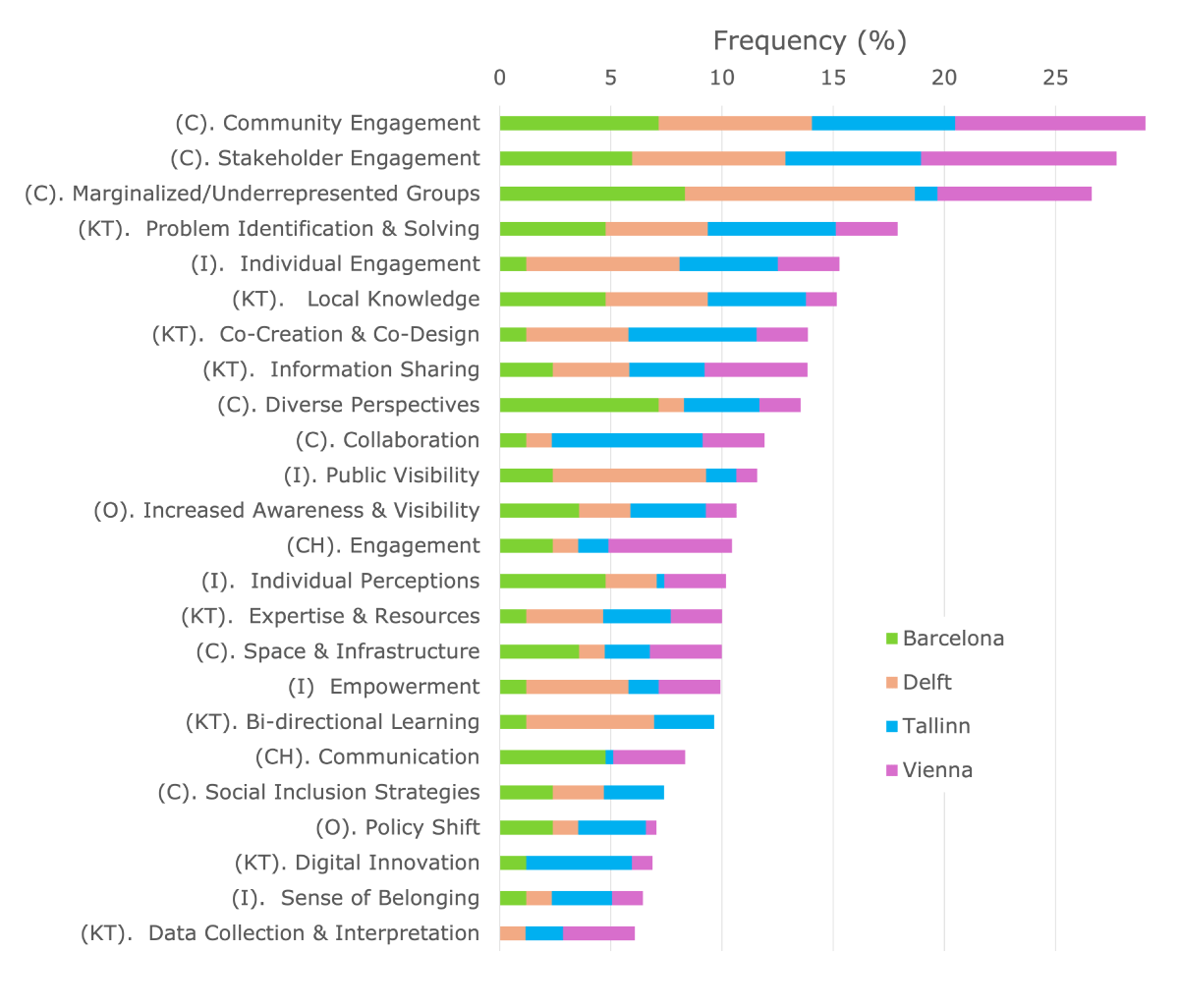
Figure 4
Frequency of codes tagged in essays, disaggregated by city. The codes are associated with their thematic code family: KT for Knowledge Transfer, C for Community, I for Individual, CH for Challenges, and O for Opportunities.
For the interviews, the same number of interviews were collected from librarians (n = 3) and from researchers (n = 3). Librarians and researchers were analyzed as two separate groups, to support more detailed outcomes for RQ2 (GLAMs’ distinctive contribution). Within each group, we again use the cumulative frequency defined above. Once the cumulative frequency reached 90%, a cut-off was applied. This is a higher percentile than in the previous analysis, with the aim to capture a wider diversity of codes. Codes with a frequency higher than 1.30% and 1.13% were included for librarians and researchers, respectively, and the codes with a lower frequency were discarded. As a result, 30 codes were included for the librarians’ interviews and 33 codes for the researchers’ interviews (see Figure 5 and Supplemental File 5: Figure S1).
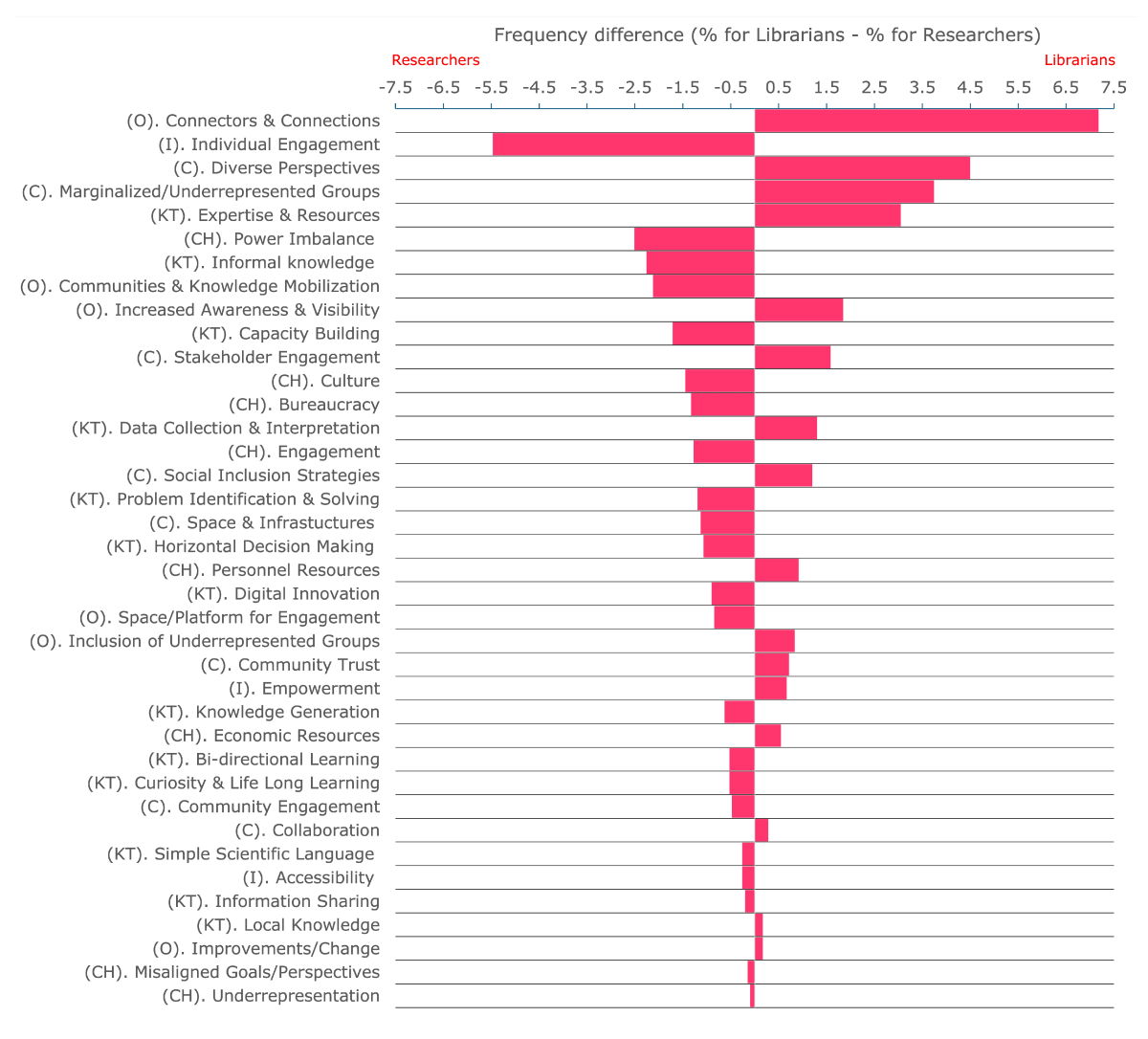
Figure 5
Differences in code frequencies between librarians and researchers, based on their respective interviews. Positive values indicate codes more frequently tagged in librarians’ interviews, while negative values indicate codes more frequently tagged in researchers’ interviews. The codes are associated with their thematic code family: KT for Knowledge Transfer, C for Community, I for Individual, CH for Challenges, and O for Opportunities.
Results
The pilot exhibited distinct characteristics in terms of the types of GLAMs involved, the communities engaged, their thematic focus, and the CS methodologies and participatory dynamics employed, as summarized in Table 1. The scope and activities of each CS pilot are described in Supplemental File 6. Figure 6 illustrates the pilots’ activities in relation to the GLAMs’ roles and the methodologies used, as specified in Table 1.
Table 1
Pilots presented in alphabetical order by city, with their original and abbreviated names and their main characteristics.
| PILOT SHORTNAME(ORIGINAL NAME) | ISSUE | LOCATION | PARTICIPANTS | GLAM (ROLE) | METHODS |
|---|---|---|---|---|---|
| Barcelona_Heat (Heat Chronicles) | Residents’ perception of urban heat in public spaces not documented | Climate-vulnerable neighborhoods in the Barcelona region | School students Young people Elderly people Etc. | Public library (connector and community hub) (Figure 6a) | Collective mapping Thermal walks (Figure 6b) Collective data interpretation |
| Delft_Design (Check out your spot) | Voices of young residents not being heard in relation to urban design | Delft city Public Library | Young residents | Public library (host and research object) | Geolocation Co-design (Figure 6c) Simulations (Figure 6d) |
| Tallinn_AI (Niine Street) | Lack of citizens’ participation in urban planning practices | Community Museum | Citizens Stakeholders in urban planning projects | Community Museum (sessions’ host) | AI visualization (UrbanistAI) (Figure 6e) Co-design (Figure 6f) |
| Vienna_Heat (Urban Heat Stories) | Lack of knowledge about the perception of heat and related social effects at the micro level | Vienna city | Senior citizens School students | Academic library (partner, provider of data visualization facility) | Community mapping (Figure 6g) Thermal walk Collective data interpretation (Figure 6h) |
| Vienna_Planning (GUMPI Research) | Marginalized groups not engaged in their neighborhood re-design | Gumpi Street (Vienna) | Single parents School students | Academic library (partner, workshop host) | Community mapping Photowalks Model-making Research cafés |
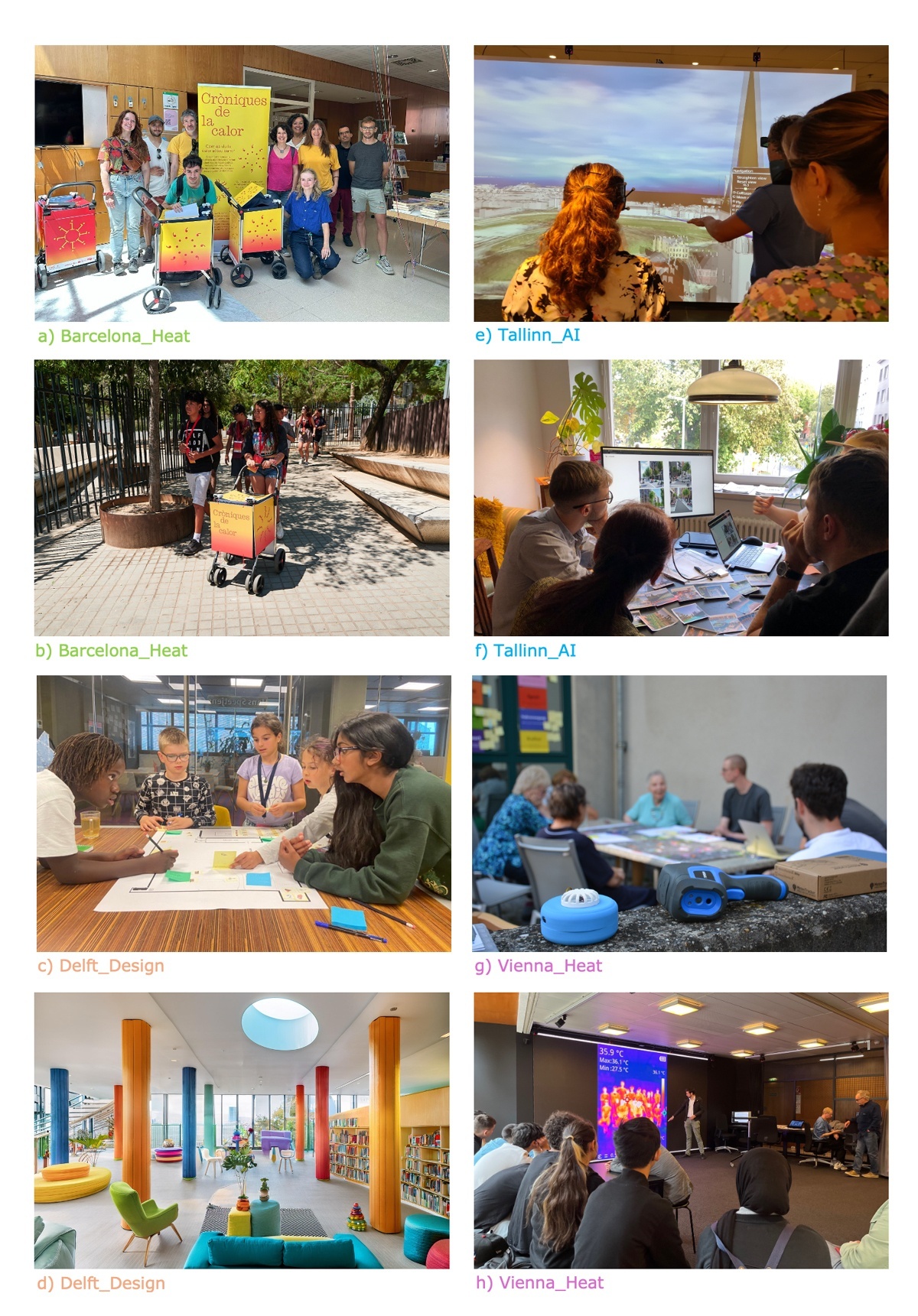
Figure 6
Representative photographs of the pilots (a–g), ordered alphabetically by city. Detailed descriptions are given in the Results section.
The pilots involved a range of stakeholders: OPUSH partners, external GLAM partners, educational institutions, social actors, and public administrations (see Supplemental File 3: Table S3). In total, six GLAM institutions participated across the pilots, with different levels of engagement. Comparative analysis of the collected data generated key insights into RQ1 (commonalities and differences across pilots) and RQ3 (the added value of CS-GLAM alliances). From an organizational perspective, two distinct pilot types emerged. The first group—Delft_Design and Tallinn_AI—featured compact organizational structures (a defining characteristic that responds to RQ3, in relation to the operationalization of the CS-GLAM alliance). They were both implemented within a GLAM (a public library and a community museum, respectively) with the help of educational institutions and social organizations, and in the case of Tallinn_AI, also with city and state administrations. Both initiatives pursued concrete, well-defined goals: the redesign of a public library (Delft_Design) and the testing of AI-based tools for participatory urban planning (Tallinn_AI).
In contrast, the other three pilots (Barcelona_Heat, Vienna_Heat, and Vienna_Planning) all displayed a higher level of organizational complexity, involving between 14 and 16 stakeholders—and in the case of Vienna, the direct link to ongoing urban planning processes. This complexity contrasts with the compact organizational structure of the other two pilots described above. In these three pilots, a diverse array of educational institutions participated, including secondary schools in all three cases, and in the case of Barcelona_Heat, also kindergartens, primary schools, and special education units. Social actors were also broadly represented, primarily through nongovernmental organizations (NGOs), self-organized citizen groups, retirement facilities, and community centers. Additionally, public administrations participated in both Vienna-based pilots.
Key dimensions and frequent words and codes
The identification of key dimensions and frequent words and codes also help to address RQ1. Twenty members of the pilot teams completed a post–self-reflection survey. The outcomes are presented in Figure 2, both disaggregated by city and as an overall average. The mean scores per city ranged from 3.2 (Delft) to 4.4 (Barcelona), indicating notable differences across the pilot teams. Moreover, the ranking of the evaluated dimensions differed markedly between cities, highlighting substantial heterogeneity among the pilots as perceived by the respondents. The highest-rated dimensions in each city corresponded to either the Social Learning (SL) dimension—specifically, SL1 (Inclusion) in Barcelona and Vienna, and SL2 (Horizontality) in Tallinn—or the Inter- and Transdisciplinary Collaboration (TC) dimension—namely, TC1 (Use of new concepts/methodologies) and TC2 (Use of New tools) in Delft.
Within the Individual Competency Development (IC) category, which evaluates the team members’ learnings, the highest-rated dimensions varied across cities. IC2 (Scientific Research) and IC4 (Communication) were the highest-rated dimensions in Barcelona and Tallin, respectively, but were rated lower in the other pilots. Conversely, there is a certain agreement on IC3 (Open Knowledge and Data Literacy) (highest rated in Delft, Tallinn, and Vienna) and IC7 (Data-Based Decision-Making) (highest rated in Barcelona, Delft, and Tallinn). On the contrary, the acquisition of competencies such as IC1 (Project Organization and Management), IC5 (Digital Competencies), and IC6 (Teamwork) were consistently among the lowest rated across all cities. On average, SL1 (Inclusion) emerged as the highest-rated dimension overall, followed by SL3 (Social Transformation) and TC2 (Use of New Tools).
Complementary insights on the pilots’ commonalities and differences (RQ1) were derived from the noun frequency analysis of the essays (Figure 3). Nouns referring to key actors in the CS pilots—such as citizen(s), group(s), participant(s), and stakeholder(s)—appeared with high (3–4%) or medium (1–3%) frequency across all cities, underscoring a shared emphasis on citizens and stakeholders’ participation as a commonality. Certain city pairs also revealed specific thematic alignments, such as a focus on (urban) planning in Tallinn and Vienna, and collaboration with schools in Barcelona and Vienna.
Differences, however, confirm the high degree of thematic heterogeneity among the pilots, as each exhibited a distinct lexical pattern. In Delft, the frequent occurrence of children, library/ies, and space(s) (all above 2.5%) reflected both the active involvement of children in the library and the fact that this space was itself the subject of study. In Barcelona, the prominence of groups and sessions indicated an organizational structure in which multiple participant groups engaged in a series of iterative sessions. In Tallinn, the frequent use of community/ies and tool(s) aligned with the testing of new digital tools (UrbanistAI) in collaboration with local communities. Finally, in Vienna research and workshops featured prominently in the noun analysis. The noun frequency analysis thus reveals the importance of citizens’ and stakeholders’ participation as a commonality while the distinct lexical pattern of each pilot highlights their thematic heterogeneity (RQ1).
Figure 4 presents the frequency of codes across the essays from the four cities. Five thematic code families are represented: Knowledge Transfer (KT), Community (C), Individual (I), Challenges (CH), and Opportunities (O). Each of the first two comprises a comparable number of specific codes within this sample (eight for KT and seven for C). In contrast, the I family was associated with a lower number of codes (five) and the CH and O families with only two codes each. The ranked frequency of codes by city is provided in Supplemental File 7: Figure S2.
In terms of overall code frequency (Figure 4), the three most prevalent codes belong to the C thematic family: Community Engagement, Stakeholder Engagement, and Marginalized/Underrepresented Groups. The first two—Community Engagement and Stakeholder Engagement—show consistently high frequencies across all cities, emphasizing the central role of engagement in the pilots as a strong commonality (RQ1). We further interpret the high frequency of the Community Engagement and Stakeholder Engagement codes across all cities as evidence of the added value of the CS-GLAM alliance (RQ3). In particular, the recurrent presence of these codes across diverse pilots and urban contexts points to a strong capacity of CS-GLAM alliances to foster such forms of engagement. In contrast, the Marginalized/Underrepresented Groups code appears with high frequency in all cities except Tallinn, which aligns with the city’s survey results indicating a lower perceived impact of the Tallinn pilot on inclusion (Figure 2) and points to another added value of the CS-GLAM partnership (RQ3).
The second code family that stands out is Knowledge Transfer (KT). Codes such as Problem Identification and Solving and Information Sharing were important across all cities, while Local Knowledge and Co-Creation & Co-Design were particularly relevant in three out of four cases, underlining the central role of knowledge sharing and production both as a commonality and an added value (RQ1 and RQ3). Barcelona emphasized C-Diverse Perspectives, Delft prioritized I-Public Visibility, Tallinn C-highlighted Collaboration and KT-Digital Innovation, and Vienna focused on KT-Data Collection and Interpretation, which resonates with the differences already identified through the word frequency analysis. The Challenges (CH) identified were Engagement, with a higher frequency for Vienna than for the other cities, and Communication, with a higher frequency for Barcelona. The Opportunities (O) spotted were Increased Awareness & Visibility and Policy Shift.
Galleries, libraries, archives, museums, and citizen science addressing urban sustainability challenges
A deeper analysis of the synergies between CS and GLAM institutions was conducted through structured interviews, to gain more detailed knowledge on the GLAMs’ contribution (RQ2) and on the CS-GLAM alliance operationalization, added value, and mutual benefits (RQ3) when addressing a variety of urban sustainability challenges.
The frequencies of the codes for all interviews are presented in Supplemental File 8: Figure S3. Summing up the code frequencies within each family, the ranking is as follows: (1) KT (27.2%), (2) C (25.6%), (3) O (21.5%), (4) CH (16.1%), and (5) I (9.6%). As observed in the essays, KT and C are the dominant thematic code families. In addition, Opportunities (O) appeared 5.4% more frequently than Challenges (CH), revealing the interviewees’ generally positive outlook. As in the previous analysis, we again interpret that the most frequent codes reflect the added values of the CS-GLAM alliance (RQ3). Since the interviews were conducted with seven professionals from different disciplinary backgrounds and cities, the codes with the highest frequencies are likely to represent a shared understanding of the benefits that the CS-GLAM alliance can provide. Among all code families, the most frequent code was C-Community Engagement, which also dominated essay analysis, thus confirming its importance within the CS-GLAMs alliances. The second most frequent code is O-Connectors and Connections. The interviews further highlight emerging opportunities for collaboration between GLAMs and CS, including Communities and Knowledge Mobilization, Inclusion of Underrepresented Groups, and Spaces or Platforms for Engagement. The most frequent challenges identified were (lack of) Engagement, Power Imbalance, as well as Underrepresentation and Bureaucracy.
The interviews further emphasized alignment between librarians and researchers within the following codes: C-Community Engagement (7.8% for librarians and 8.3% for researchers), KT-Problem Identification and Solving (5.2% and 6.4%, respectively) or O-Communities & Knowledge Mobilization (3.9% and 6.0%, respectively). These shared priorities may be related to the strong communitarian and knowledge-related added values the CS-GLAM alliances offer in the experimental context of the OPUSH project.
Differences in code frequencies between librarians and researchers provide insight into GLAMs’ specific contributions (RQ2), as illustrated in Figure 5.
A positive bar value indicates that a code appeared more frequently in interviews with librarians, whereas a negative value signifies greater frequency in the researchers’ interviews. The ranking of codes derived from the three interviews with librarians and the three interviews with researchers is provided in Supplemental File 5: Figure S1.
Librarians referred more often than researchers to O-Connectors & Connections (+7.2%), C-Diverse Perspectives (+4.5%), C-Marginalized & Underrepresented Groups (+3.8%), and KT-Expertise and Resources (+3.1%). These codes align with the library’s social mission and its role both as a connector and as knowledge and social infrastructure, pointing out the specific contribution libraries can provide (RQ2). On the contrary, researchers mentioned concepts absent from librarians’ responses—such as CH-Power Imbalance (–2.5%) and KT-Informal Knowledge (–2.3%)—and referred more frequently to I-Individual Engagement (–5.5%) and KT-Capacity Building (-1.71%). As an example, Power Imbalance was not referred to by the librarians and was referred in these terms by two different researchers: “(…) currently for example in the planning process the participation of the citizens is basically in the latest stage that it can be, which means that they actually do not have any power anymore over the decisions and decision making so all the decisions are already done like two years before the participation process even starts with the citizens.”; “As (GLAM) institutions, they tend to be far removed from the lives of the groups involved, and there is an immediate hierarchical gap between the institution and the individuals/communities that are not part of it.”
Comparative analysis of CS-GLAM partnership key concepts
Svahn, Andersdotter, and Kallio (2025) analyzed the conceptualization of CS-GLAM partnerships, following three key concepts: People and Partnerships, Space and Facilities and Knowledge Resource and Infrastructure. Below we examine the GLAM institutions’ contributions in this study following the same key concepts, bringing new insights within the context of urban transformation (RQ2) (see Supplemental File 3: Table S4).
Following Svahn, Andersdotter, and Kallio’s (2025) People and Partnerships category, public libraries in this study served as key connectors to local entities and communities (Barcelona) and engaged youth groups in research informing urban planning (Delft). In Tallinn, the community museum maintained strong ties with its surrounding neighborhood through ongoing civic engagement and hosted a CS activity in which participants contributed to an AI-based simulation of a street transformation. In Vienna, the academic library and research institute connected with local policymakers, planning authorities, and design professionals, while coordinating community engagement activities. Participation in the planning process was primarily consultative, with participants contributing to scientific research.
Regarding Svahn, Andersdotter, and Kallio’s (2025) Spaces and Facilities category, GLAM venues were used to host sessions and workshops, each contributing a distinct added value (see Supplemental File 3: Table S4). They served as the headquarters for experiments (Barcelona), functioning as the research object itself (Delft), offering a particularly welcoming, inclusive, and symbolically significant (in terms of political empowerment) environment (Tallinn), or providing access to a data visualization facility and rooms for workshops and presentations (Vienna).
Finally, within Svahn, Andersdotter, and Kallio’s (2025) Knowledge Resource and Infrastructure category, a common feature across all pilots was the active participation of GLAM staff in the workshops (see Supplemental File 3: Table S4). In Vienna, the academic library staff played an especially prominent role—not only as an OPUSH partner but also in supporting data visualization through expertise and infrastructure. In Barcelona, the library staff’s involvement extended beyond the project itself, as they had previously advocated for extended summer opening hours to ensure residents could access the library as a climate refuge.
Discussion
Our cross-case analysis indicates that GLAMs can serve as powerful allies in the development and implementation of CS initiatives addressing urban sustainability challenges, as summarized in Figure 7.
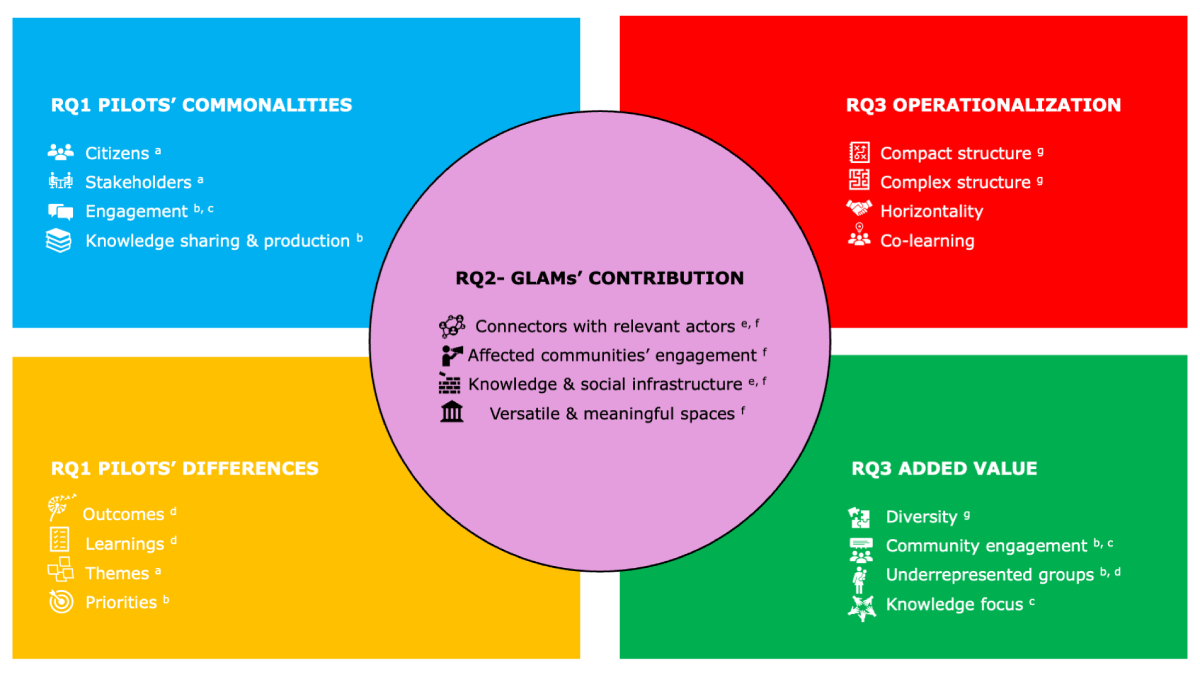
Figure 7
Summary of the results in relation to the Research Questions (RQs). Evidence related to each result follows: a) World frequency in essays, Figure 3; b) Essays coding, Figure 4; c) Interviews coding, Supplementary File 8; d) Surveys, Figure 2; e) Interviews coding, Figure 5; f) Supplementary File 3: Table S4; g) Supplementary File 3: Table S3.
The results reveal a complex and multifaceted picture of the CS pilots involving GLAM institutions. The pilots represent a diversity of focus (urban planning, public space design, and climate-related vulnerabilities) and a diversity in outcomes, learning, and priorities (RQ1).
Despite the differences observed, several commonalities emerge (RQ1). A shared emphasis on community and stakeholder engagement, the pursuit of social transformation, the operationalization of knowledge transfer, and the inclusion of underrepresented groups consistently characterized the pilots under the umbrella of the OPUSH project. In two of the pilots, digital innovation was represented through the use of artificial intelligence and a dedicated facility for data visualization.
Beyond the commonalities and differences across the pilots, we analyzed the current CS-GLAM partnerships using three key concepts proposed by Svahn, Andersdotter, and Kallio (2025) (see the Results section) to highlight the distinctive contributions of GLAMs within the pilots (RQ2). This analysis revealed that GLAMs maintain diverse and strong connections with communities and key stakeholders and that their spaces and facilities provide different forms of added value depending on the specific characteristics of each pilot. Finally, the active participation of GLAM staff in the workshops emerged as the most valued resource.
This comparative analysis also provides additional insight into more concrete distinctive contributions of GLAMs (RQ2). Their spaces and facilities can operate as decentralized research facilities (e.g., experiment headquarters), as hubs that generate new knowledge (e.g., Dataviz facilities), or can be recognized by the neighbors as especially welcoming or useful (e.g., as a community museum or climate refuge). A distinctive contribution is related to GLAMs ability to connect and engage communities concerned and affected by urban sustainability challenges and underserved groups such as children, communities in a more vulnerable situation, and the elderly. The urban sustainability challenges addressed in these pilots necessitate diverse and complex partnerships between academic research institutes, GLAMs, and broader stakeholders, including civil society organizations, educational institutions, and local government agencies. However, in most of the pilots, local government agencies and policy groups were not deeply involved. Their further participation could have facilitated more profound urban transformations at a local level.
Librarians interviewed also asserted their roles as connectors (see Figure 5), as a distinctive contribution of GLAMs (RQ2). Their knowledge of the neighborhood and close ties with local communities can help to counterbalance power asymmetries perceived by researchers (see Figure 5). These findings reinforce previous work highlighting the potential of libraries as community hubs for CS initiatives in specific projects (Ignat, Cavalier, and Nickerson 2019; Cigarini et al. 2021; Fortuño et al. 2025) and as seen in surveys and systematic literature reviews (Cohen et al. 2015; Martek, Mučnjak, and Mumelaš 2022; Liu and Liu 2023; Nurfarawahidah, Kaur, and Aspura 2023; Rammutloa 2023; Kowalska-Chrzanowska 2024; Mumelaš and Martek 2024; Nielsen et al. 2024; Pimentel and Esteves Gomes 2024; Tautkeviciene and Pranckute 2024; Filipeti and Mumelaš 2025; Mumelaš, Matijević, and Ivanjko 2025; Nurfarawahidah et al. 2025; Silva-Aboy and Martin-Melon 2025; Svahn, Andersdotter, and Kallio 2025). These findings also align with a 2024 key trend identified by the International Federation of Library Associations and Institutions (Dezuanni et al. 2024): People are seeking community connections. It suggests that librarians’ broader vision for the future is well aligned with the conditions needed to implement CS projects in libraries.
As for museums, the results highlight that open and inclusive museums such as the Kalamaja community museum in Tallinn, already tightly connected to their surrounding community, are promising new partners for CS urban sustainability projects, building on previously reported positive experiences (Hedvall Per-Olof et al. 2018; Runnel, Aljas, and Jaanits 2024).
In the interviews, librarians and researchers both recognized the critical role of community engagement and viewed the inclusion of underrepresented groups as a key opportunity for their own libraries and for their academic research. However, researchers emphasized the importance of individual engagement, informal knowledge, and capacity building, whereas librarians focused more on libraries’ social and connective roles within the community. In all cases, though, the collaboration between researchers and GLAMs in the pilots moves well beyond a mere utilitarian and unbalanced relationship—one in which GLAMs simply provide participants for initiatives and, in return, receive new CS activities. Instead, these partnerships reflect more reciprocal forms of engagement. Nevertheless, the alliances must be mindful of human resource constraints, and research goals need to be compatible with the resources available—potentially requiring additional financial and institutional support to conduct more in-depth work.
The results also show evidence that the establishment of a horizontal relationship and co-learning focus between GLAMs and CS practitioners positively influences the diversity and relevance of the pilots implemented, thus pointing out a new operationalization aspect of the CS-GLAM alliance (RQ3). Namely, long- and mid-term funding received by the OPUSH project allowed for sustained interactions for three years and a cross-city approach. The reciprocal understanding of GLAMs’ functioning and specificities, on the one hand, and the methodologies of CS pilots, on the other, allowed the pilots to be fine-tuned through several iterations before their final implementation. This aspect plays an important role in transformative learning in CS research alliances. Similar strategies with long-term collaboration might be key to deepening the mutual understanding and trust between GLAMs and researchers.
On a more conceptual side, if CS practitioners recognize GLAMs as important social infrastructures (Latham and Layton 2019), capable of generating new community-based knowledge, and GLAMs view CS initiatives as a means to diversify and enhance the societal relevance of their participatory and collaborative activities (Aabø 2005), a full range of possibilities open. Among them, urban sustainability is a relatively unexplored field despite residents’ clear interest in having a voice in urban planning and transformation. CS initiatives in which GLAMs are taking part can make unique contributions, especially when they are directly linked to urban implementation processes. They can then demonstrate effectiveness in concrete terms in different stages of the urban transformation process.
Conclusion
This cross-case study across four cities, involving five pilots and six GLAMs, provides new empirical insights into the current and potential future roles of GLAMs in urban CS initiatives. While the findings are limited to four European cities, extending the analysis to other European contexts and the Global South would be valuable, as these settings present distinct social and institutional dynamics.
In relation to the commonalities between the five CS pilots implemented (RQ1), pilots showed a strong community-oriented focus, often engaged citizens’ groups that are not usually involved or are underrepresented in urban sustainability discussions and urban planning processes, and focused on knowledge sharing and production. In terms of key differences (RQ1), the pilots represented a range of outcomes and learnings, thematic background and priorities, and organizational structures (compact versus complex).
Regarding the distinctive contributions of GLAMs (RQ2), GLAMs were shown to be powerful connectors to citizens’ groups and local socially relevant partners because of their orientation towards community care, their embedding in the community, and their physical and digital infrastructures. The alliance with GLAMs also situates CS initiatives in a more social and communitarian venue, shifting the individual perspective and power imbalance issues, democratizing scientific production, and enhancing the GLAMs’ role as social infrastructures.
In terms of more effectively operationalizing the CS–GLAM alliance (RQ3), a key finding is the need to strengthen the links between the CS academics and GLAM staff by fostering stable, long-term relationships and supporting horizontal, mutual learning. More broadly, implementing urban sustainability-focused CS initiatives represents a viable opportunity across many knowledge ecosystems, as GLAMs can offer the social infrastructure needed to develop research agendas, center community involvement, and engage diverse actors, including marginalized or underrepresented groups across different countries and cities. Integrating CS within GLAMs strengthens their role as transformative community-centered knowledge hubs and can enable community-driven action targeting urban sustainability challenges.
Supplementary Files
The supplementary files for this article can be found as follows:
Supplementary File 1
Table S1. Dimensions and sub-dimensions of the framework for the cross-case analysis. DOI: https://doi.org/10.5334/cstp.947.s1
Supplementary File 2
Template 1. Post surveys for the pilot teams’ members. Template 2. Template of the written essays in the four cities. Template 3. Questions for the structured interviews. DOI: https://doi.org/10.5334/cstp.947.s2
Supplementary File 3
Table S2. List of professionals that participated in the essays writing and were interviewed. Table S3. List of stakeholders for each pilot. Table S4. GLAMs’ role in the four cities. DOI: https://doi.org/10.5334/cstp.947.s3
Supplementary File 4
Table S5. List and definition of codes used in the Atlas.ti program, ordered by thematic families: Individual, Community, Knowledge transfer, Challenges, and Opportunities. DOI: https://doi.org/10.5334/cstp.947.s4
Supplementary File 5
Figure S1: Frequency of codes tagged in the interviews, shown for each type of interviewees (librarians or researchers). DOI: https://doi.org/10.5334/cstp.947.s5
Supplementary File 6
Full description of scope and activities for each of the five pilots. DOI: https://doi.org/10.5334/cstp.947.s6
Supplementary File 7
Figure S2: Frequency of codes tagged in the essays, shown for each city and presented in descending order. DOI: https://doi.org/10.5334/cstp.947.s7
Supplementary File 8
Figure S3: Frequency of codes tagged in the interviews, presented in descending order. DOI: https://doi.org/10.5334/cstp.947.s8
Ethics and Consent
The Universitat de Barcelona Ethics Committee (IRB00003099) approved the OPUSH project activities, and the overarching analysis activities presented in this paper. All participants that answered the survey, wrote the essays and were interviewed signed an Informed Consent.
Data Accessibility Statement
All 479 quotes corresponding to the codifications (55 codes tagged in a total of 10 documents) are openly accessible (Bonhoure et al. 2026b).
Author Contributions
Isabelle Bonhoure: Conceptualization, Methodology, Investigation, Writing-original-draft, Writing-Review & Editing Rebekah Breding: Investigation, Formal Analysis, Data Curation, Writing-Review & Editing Christian Peer: Conceptualization, Investigation, Writing-Review & Editing, Funding Acquisition Beate Guba: Investigation, Writing-Review & Editing Sebastian Harnacker: Investigation, Writing-Review & Editing Tanya Yankelevich: Investigation, Writing-Review & Editing Fabian Dembski: Investigation, Writing-Review & Editing Raquel Segura Domenech: Investigation, Writing-Review & Editing Josep Perelló: Methodology, Investigation, Validation, Writing-original-draft, Writing-Review & Editing.