
Introduction
Engaging in citizen science (CS) activities in school can give students valuable experiences of doing authentic scientific inquiry, and can support students to take action on issues they care about. Citizen science is when the public are involved with experts in research activities often, though not always, of a scientific nature (Ballard et al. 2024). The degree of public participation can range from the contributory kind, in which the public engages in mostly data collection, to the more co-created kind of project, in which people co-develop the research design and carry out the research in greater partnership with experts (Bonney et al. 2009). Citizen science holds great potential as an adaptable pedagogical approach suitable for experiential environmental education with youth, bridging science and society and engaging young people with research (Lüsse et al. 2022). As such, there is increased attention to the use of CS in schools (Schuttler et al. 2017; Kermish-Allen et al. 2019), where it is employed to learn about, for example, biodiversity (Herodotou et al. 2023), biomedicine (Tsueng et al. 2019), and environmental science (Ballard et al. 2017).
Citizen science in schools
For CS organisers, potential benefits of working with school populations include access to a broader and more representative population of young people whose perspectives might traditionally have been absent, the possibility of inspiring the next generation of scientists, and creating greater scientific literacy in the population (Soanes et al. 2020). However, it can be challenging for CS projects to be implemented in schools because they may not neatly align with curriculum learning objectives, teachers may lack the knowledge and confidence to deliver them, or the logistics to do off-campus activities may be more complicated than teachers have resources for. There is a need for greater use of an evidence base to make decisions about why, how, and when to effectively use CS in schools.
There are a range of reported effects on school students who engage in CS, including opportunities to learn how science works and to gain experience of authentic scientific investigation (Hsing et al. 2020). Interviews with 54 American secondary school students revealed increased topical knowledge, a greater sense of self-efficacy, and an interest in doing more conservation actions (Ballard et al. 2017). Aivelo and Huovelin (2020) found positive changes in perception about the scientific topic, and Hsing et al. (2020) found a greater inclination to pursue science and increased confidence to participate in environmental community initiatives. An air quality CS project with 45 Norwegian secondary school students reported improved content knowledge, yet interestingly noted declines in pro-environmental worldviews (Grossberndt et al. 2021). Findings from a larger study of UK secondary school students revealed a small decline in science identity and no change for one’s nature connectedness after engaging in a hummingbird CS project (Williams et al. 2021). Though these studies provide valuable information, all analysed experiences of only a single CS project, were conducted in Western countries, and mostly involved a small number of students. There are some studies about the effects of environmental CS projects in Asia, though Srisathan et al.’s (2024) study about values and behaviours involved Thai adults rather than students, and Yoshimura’s (2024) study with Japanese school students measured attributes related to data collection accuracy, not about environmental values, attitudes, and behaviours. While studies show that CS activities develop self-efficacy and interest in science, in environmental action, and in citizenship (Phillips et al. 2018, Smith et al. 2021, Hadjichambis et al. 2023), few studies use empirical measures to understand the effects of CS on school students (Ballard et al., 2024). This study proceeds to narrow some of these research gaps with an exploratory examination of the effects of citizen science experiences using adapted psychological frameworks applied in new settings.
Herein, we aim to contribute evidence on the outcomes of CS in schools in an Asian context. We examined the effects of a range of environmental CS projects (some contributory, some co-created), using the adapted environmental behaviour framework. Our three specific research questions were:
What changes occur in student pro-environmental values, attitudes, knowledge, and behaviour after a CS experience?
How do impacts from the CS activities differ based on CS project types, school context, and student demographics?
Which environmental behaviour psychology variables have the greatest influence on student pro-environmental behaviour after a CS experience?
Methodology
The study was conducted with students and teachers in eight local and international schools in Hong Kong. They were involved in contributory or co-created CS projects as part of their formal science or geography curricula, or informal curricula (extracurricular activities, e.g., interest club), between November 2020 and September 2021. All the student and teacher participants were provided information and consent forms via the participating teachers, which were duly signed by students, parents, teachers, and Head of Schools/principals prior to embarking on the research. Signed forms were returned to the first author by the teacher. After matching the pre- and post-survey responses, any identifiable information about students (names and email addresses) were deleted, and the data was anonymised prior to statistical analyses (see Supplemental File 1: Anonymised pre- and post-survey dataset).
Theoretical framework
The study’s conceptual framework is inspired by an environmental behaviour model by Barr and Gilg (2007). Their model, built on the foundations of social psychology’s theories of reasoned action and planned behaviour (Ajzen 2012), suggests that behaviour is a result of one’s values, and attitudes towards the desired behaviour are based on situational and psychological variables. In environmental behavioural psychology, a person’s relational values to nature, for example, one’s concern for nature or care for the natural environment, has been found to be related to pro-environmental behaviour (Stern 2000). Situational variables are those that describe personal context, in particular, a person’s experiences and knowledge as it relates to environmental issues (Barr and Gilg 2007). Knowledge of and prior experiences with environmental practices may lead to behaviour, as these support one’s capability for taking action (Derr 2020). The psychological (attitude) variables, such as where motivation comes from, feelings of having the power or capacity to affect change in society and environment, belief that one’s actions can have an impact, and how one gets influenced, have also been linked to pro-environmental behaviour (PEB) through the development of intentions to take action (Barr and Gilg 2007; Chawla and Cushing 2007). While originally designed to understand adult green consumption behaviour, an adaptation to Barr and Gilg’s (2007) model can be applied in a youth setting as the evolution of values and attitudes in adolescents and adults undergo shared developmental processes (Madera et al. 2025). Our framework was designed to suit the Hong Kong educational context and student demographic, given the social nature of learning, student’s attitudinal development about their abilities to take action, and the influence of others on students’ behaviours (see Figure 1).
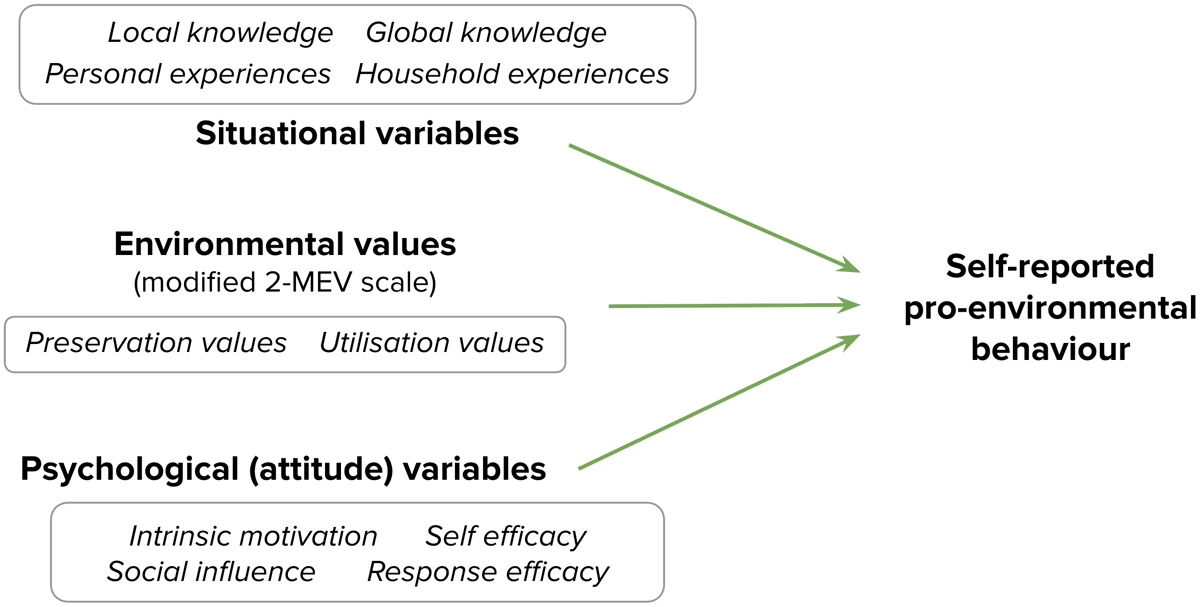
Figure 1
The environmental behaviour framework guiding this study, adapted from Barr and Gilg (2007), with a modified 2-MEV scale from Bogner and Wiseman (1999, 2006).
Research and survey design
A pretest-posttest research design was used to measure the effect of the CS experience on students’ values, attitudes, knowledge, and behaviour. Bilingual questionnaires (in English and Chinese) were designed to help researchers understand the nature of the effect on student values, attitudes, knowledge, and behaviour. Pre- and post-survey questions were identical and comprised closed-answer five-item Likert scale–type questions for agreement, likelihood, or frequency, and a few open-ended questions for students to explain their perspectives in more depth if they wanted to (see Supplemental File 2: Pre-survey and post-survey questions for students). To pair the pre- and post-surveys, students included their school-based email address. An additional question about self-efficacy development was included in the post-survey. Subjective descriptors of frequency were used rather than precise times for frequency because the items in those variables have varying degrees of effort, thus what would be considered “often” for one experience or behaviour could be at a different frequency for another (e.g., for self-reported behaviour: visiting parks and gardens versus leading a petition or forum about an environmental issue). While this may result in participants having different interpretations, it is still a valid method of understanding their frequency perspective (Tong et al. 2020).
To measure pro-environmental values, a modified 2-MEV scale (Bogner and Wiseman 1999, 2006) replaced the New Ecological Paradigm scale (Dunlap and Van Liere 1978) originally used in Barr and Gilg’s (2007) framework because it allowed respondents greater complexity of value positions (values of preservation and use of nature), as opposed to a simpler spectrum indicating binary positions of a greater or lesser environmental worldview, as noted by Boeve-de Pauw et al. (2014). Modifications were made to the validated 2-MEV scale to make the questions more appropriate for the Hong Kong context and students’ lives. For example, the items “dirty industrial smoke from chimneys makes me angry,” and “I save water by taking a shower instead of a bath” were removed as Hong Kong does not have industrial complexes that produce visible smoke, and owning bathtubs is uncommon, thus eliminating the need for such a choice. They were replaced with questions from Nisbet et al.’s (2009) validated Nature Relatedness scale about nature connection and questions from Liu and Chen (2019), who adapted the 2-MEV scale to suit Chinese students’ contexts (see Supplemental File 3: Environmental values scale development).
We developed 20 questions about the different psychological (attitude) and situational variables based on definitions created by Barr and Gilg (2007), 10 questions about self-reported behaviours, and six questions about local and global environmental knowledge. The knowledge questions were designed based on the lead author’s professional experience working with secondary school students in Hong Kong. The survey was piloted with 87 school students (aged 12–18) whose feedback refined the phrasing of the bilingual surveys. The internal reliability of the student pre- and post-surveys revealed that many of the variables had acceptable (0.7) to good (0.9) internal reliability (as per Tavakol and Dennick, 2011), (see Supplemental File 4: Cronbach’s Alpha values of pre- and post-surveys). While some variables had Cronbach’s alpha values of less than 0.7, such as for knowledge, household experiences, and response efficacy, Hussey et al. (2025) and Taber (2018) highlight that variables with lower Cronbach’s alpha may still suitable for analysis when used in exploratory studies using non-validated measures, and when variables are measuring conditions like information acquisition and experiences, which can vary from person to person, as is the case in this study.
Data collection
Teachers in each participating school were asked to select a CS project as the basis for the study, either from a list provided or their own selection. Topics included terrestrial biodiversity, coastal biodiversity, marine litter, and air quality. Most schools (75%) participated in one-off contributory CS projects, usually about observing biodiversity, with two schools embedding the CS experience into a science programme lasting many months (see Table 1).
Table 1
Characteristics of the eight participating schools in this study.
| SCHOOL | CURRICULUM TYPE | NUMBER OF STUDENTS SURVEYED | CITIZEN SCIENCE PROJECT TYPE | CITIZEN SCIENCE PROJECT TOPIC | CITIZEN SCIENCE PROJECT EXPERIENCE DURATION |
|---|---|---|---|---|---|
| 1 | International | 15 | Contributory | Terrestrial biodiversity | 1 day, <40 minutes |
| 2 | International | 134 | Contributory | Terrestrial and coastal biodiversity | 1 day, >40 minutes |
| 3 | Local | 6 | Contributory | Terrestrial and coastal biodiversity | 1 day, >40 minutes |
| 4 | Local | 8 | Contributory | Terrestrial and coastal biodiversity | 1 day, <40 minutes |
| 5 | International | 6 | Contributory | Terrestrial and coastal biodiversity | 1 day, < 40 minutes |
| 6 | International | 5 | Co-created | Coastal biodiversity and marine pollution | 2 days: > 40 minutes |
| 7 | International | 5 | Contributory (online only) | Air quality | Every week/month, > 40 minutes |
| 8 | Local | 8 | Co-created | Marine plastic pollution | Every week/month, > 40 minutes |
Online pre-surveys were completed one to two weeks before the CS activity, and the online post-surveys were done two to eight weeks after the CS activity, depending on student and teacher availability amidst COVID-19 school closures and school holidays. This short time scale was chosen to determine the extent to which any immediate post-CS changes were retained. The prevailing COVID-19 restrictions at the time meant there were almost no other experiential learning activities the students were involved in as schools shifted to online learning. While this likely created useful conditions to examine the potential effect of the CS activities, students may have ventured outdoors and into natural environments during their own personal time outside of school hours.
Students (aged 11–19) and teachers from eight secondary schools across Hong Kong participated in this study. There were three local schools delivering the curriculum aligned with the Hong Kong Diploma of Secondary Education and five international schools delivering a range of internationally accredited curricula rooted in the local Hong Kong and Asian context, especially through the lens of citizenship and experiential education. A total of 421 students completed the pre-survey and 282 students completed the post-survey, producing an attrition rate of 33.0%. There were 95 students who did the post-survey but not the pre-survey, thus resulting in 187 paired survey participants, a paired response rate of 44.4%.
Data analysis approach
Survey data analysis was carried out using techniques for descriptive and inferential statistics on the IBM SPSS programme (version 29). Survey items were grouped and summed into their respective variables into total scores, and these summations were treated as continuous data, as argued by Sullivan and Artino (2013), especially with scale items of 3–6 categories (Robitzsch 2020). Related-samples Wilcoxon signed rank tests were performed on paired survey responses to determine the impact of CS experiences on how youth feel, think, and act towards the natural environment. The test statistic (W), the p-value (p), the effect size (r), the probability of superiority (PS) statistic, and the sample size (n) are reported, as recommended by Fritz et al. (2012) and Kanyongo et al. (2007). The PS statistic, also known as the common language effect size statistic, is the likelihood of one group scoring higher than another group (Fritz et al. 2012).
Despite the non-normal nature of the survey data, regression analysis was used because Norman (2010) and Knief and Forstmeier (2021) suggest that breaking the normality assumption does not necessarily result in invalid parametric test results. They argue this is because the robustness of parametric tests reduces the risk of Type 1 (false positive) errors. Multiple linear regression analyses were carried out to reveal which variables influence PEB (see Figure 1), as this approach has been applied in other studies to determine the predictive power of variables on environmental behaviour (Ma et al. 2021). Multiple linear regression assumptions were met, as there was no perfect multicollinearity, and residuals were normal and homoscedastic (Pek et al. 2018).
Results
Of the 187 paired survey respondents, the majority (66%) were between 11 and 13 years old and attended international schools (88%), with 72% from one international school with a core educational value about local outdoor and experiential learning. The skew towards the majority of respondents being of a younger secondary school age and coming from international schools are acknowledged in the Discussion section. The 18 teachers supporting their students in this study either taught science (78%), geography (11%), or languages (11%). Most of the teachers (67%) worked in international schools. Half the teachers had no prior experience conducting CS with their students, though this did not preclude them from embedding a co-created CS project into their geography course and science club (for CS project details, see Table 1 and Supplemental File 5: School characteristics and citizen science projects details).
What changed after citizen science experiences?
Pre- and post-survey responses relating to the 14 variables in the modified environmental behavioural psychology framework (see Figure 1) were analysed. After the CS activities, there were small statistically significant negative changes in preservation values and confidence in one’s self-efficacy. There were small statistically significant positive changes in local knowledge, overall knowledge, and self-reported behaviours (see Table 2 for the statistically significant results, and see the full results in Supplemental File 6: Full Wilcoxon signed rank test measuring change between T1 (pre-survey) and T2 (post-survey)).
Table 2
A summary of variables with statistically significant results. Each cell in the table includes the pre-survey Mean (T1), post-survey Mean (T2), Test statistic (W), p-value, effect size (r), and the PS value.
| PRESERVATION VALUES | SELF-EFFICACY IMPORTANCE | SELF-EFFICACY CONFIDENCE | LOCAL KNOWLEDGE | TOTAL KNOWLEDGE | SELF-REPORTED BEHAVIOUR | |
|---|---|---|---|---|---|---|
| Overall (n = 187) | 19.91 | 21.23 | 19.19 | 1.35 | 2.27 | 27.60 |
| 19.50 | 21.00 | 18.54 | 1.62 | 2.60 | 28.70 | |
| 4061 | 4046.50 | 4386 | 4638 | 5601 | 9053.50 | |
| .013 | .356 | .022 | <.001 | <.001 | .003 | |
| 0.181 | (not stat. sig.) | 0.167 | 0.246 | 0.248 | 0.215 | |
| 60 | 59 | 64 | 64 | 62 | ||
| Local schools (n = 22) | 19.91 | 21.27 | 19.55 | 2.57 | 3.57 | 27.82 |
| 20.45 | 21.27 | 20.14 | 2.93 | 3.89 | 28.00 | |
| 54 | 36 | 40 | 22 | 47 | 78.50 | |
| .726 | .505 | .253 | .05 | .152 | .197 | |
| (not stat. sig.) | (not stat. sig.) | (not stat. sig.) | 0.418 | (not stat. sig.) | (not stat. sig.) | |
| 74 | ||||||
| International schools (n = 165) | 19.91 | 21.22 | 19.10 | 1.18 | 2.10 | 27.5 |
| 19.37 | 20.96 | 18.30 | 1.45 | 2.43 | 28.8 | |
| 3190 | 3335 | 3285 | 1830.50 | 2092.50 | 4080.50 | |
| .012 | .438 | .006 | .004 | .001 | .006 | |
| 0.196 | (not stat. sig.) | 0.215 | 0.227 | 0.248 | 0.214 | |
| 61 | 62 | 63 | 62 | 62 | ||
| Contributory projects (n = 174) | 19.84 | 21.16 | 19.23 | 1.26 | 2.15 | 27.64 |
| 19.45 | 21.05 | 18.53 | 1.53 | 2.46 | 28.67 | |
| 3769 | 3828.50 | 3757 | 1990 | 2424 | 4762.50 | |
| .037 | .674 | .019 | .002 | .002 | .012 | |
| 0.196 | (not stat. sig.) | 0.197 | 0.164 | 0.167 | 0.135 | |
| 61 | 61 | 59 | 59 | 57 | ||
| Co-created projects (n = 13) | 20.85 | 22.15 | 18.62 | 2.46 | 3.92 | 26.38 |
| 20.08 | 20.31 | 18.69 | 2.89 | 4.42 | 28.77 | |
| 2.50 | 2 | 27 | 6 | 6 | 9.50 | |
| .026 | .042 | .959 | .046 | .025 | .02 | |
| 0.436 | 0.399 | (not stat. sig.) | 0.391 | 0.438 | 0.455 | |
| 75 | 73 | 73 | 75 | 76 | ||
| Younger secondary (Gr. 6–8; n = 124) | 19.44 | 20.81 | 19.19 | 1.25 | 2.04 | 28.23 |
| 19.13 | 20.82 | 18.57 | 1.46 | 2.27 | 28.58 | |
| 2124 | 1908.50 | 1970 | 1134 | 1411.50 | 3498.50 | |
| .214 | .981 | .105 | .048 | .061 | .331 | |
| (not stat. sig.) | (not stat. sig.) | (not stat. sig.) | 0.126 | (not stat. sig.) | (not stat. sig.) | |
| 57 | ||||||
| Older secondary (Gr. 9–12; n = 63) | 20.83 | 22.05 | 19.19 | 1.53 | 2.74 | 26.22 |
| 20.22 | 21.35 | 18.48 | 1.94 | 3.25 | 28.86 | |
| 293 | 392 | 478 | 182 | 202.50 | 342 | |
| .006 | .103 | .081 | .002 | <.001 | <.001 | |
| 0.246 | (not stat. sig.) | (not stat. sig.) | 0.278 | 0.309 | 0.344 | |
| 64 | 65 | 67 | 69 | |||
| Female (n = 78) | 20.50 | 21.18 | 19.13 | 1.16 | 2.03 | |
| 19.97 | 21.13 | 18.12 | 1.58 | 2.49 | 27.90 | |
| 675 | 796 | 580.50 | 234.50 | 313.50 | 28.58 | |
| .032 | .987 | .021 | <.001 | .001 | 1080.50 | |
| 0.172 | (not stat. sig.) | 0.185 | 0.265 | 0.255 | .257 | |
| 59 | 60 | 65 | 64 | (not stat. sig.) | ||
| Male (n = 95) | 19.72 | 21.34 | 19.26 | 1.53 | 2.53 | 27.88 |
| 19.41 | 21.03 | 19.04 | 1.76 | 2.83 | 29.38 | |
| 1060 | 996 | 1431 | 737.50 | 923.50 | 1308 | |
| .146 | .370 | .362 | .035 | .038 | .010 | |
| (not stat. sig.) | (not stat. sig.) | (not stat. sig.) | 0.153 | 0.151 | 0.186 | |
| 58 | 58 | 59 |
A slight negative change (2.1%) occurred in preservation, with one of the five statements driving that decrease: “refusing to use single-use plastic items is a useful way to take action about reducing waste” (MT1 = 4.2, MT2 = 4.0, p = .015, W = 1438.50). This statement conveys judgement about how effective this specific action is and may reflect more about students’ perceptions about the magnitude of the problem, rather than about the effectiveness of the action itself. A similarly small decrease was reported for confidence in self-efficacy (MT1 = 19.19, MT2 = 18.54, p = .022, W = 4386), defined as having the belief that one has the skills to successfully take action. While local knowledge showed improvement for students at every grade/form level after their CS activities, the positive changes represent only a slight improvement of achieving an average (n = 187) score of 1.62 (out of 4 questions correct, compared with 1.35 in the pre-survey). For the overall group of students, there was a small increase (4%) in the range and frequency of self-reported PEB.
The following analysis describes comparative results of uneven sample sizes in school type, CS project type, and student age. The population is skewed towards younger students in international schools who did contributory CS, which would affect the reliability of the statistical findings after citizen science activities. Students who did contributory CS activities had greater gains in local knowledge (21.3%) and total knowledge (14.4%), compared with those in the two schools who co-created their CS projects, showing a 17.5% and 12.8% increase, respectively. While percentages may seem notable, these changes represent small improvements as there were only four local knowledge questions and six questions in total knowledge. Though percentage gains were smaller for the co-created CS students, the majority of those students (62.5%) had more accurate environmental knowledge than the students involved in contributory CS projects even before their citizen science experiences. When baseline knowledge is already high, it is less likely to see large improvements. Students involved in co-created CS projects showed a 9% increase in PEB (moderate-high effect size of 0.455) compared with the 3.7% increase reported by students doing contributory CS projects (small effect size of 0.135). The PS statistic, which represents the likelihood of a proportion of the population experiencing a change (i.e., an increase in self-reported behaviour after an environmental CS activity), suggests that 76% of students doing co-created CS projects would report an increase in PEB compared with 57% of those participating in contributory CS projects.
Younger secondary school students (aged 11–14, n = 124) had an increase in local knowledge (16.8%) after their CS experiences. No other measured variables had a statistically significant change with age. Older secondary school students (aged 15–19, n = 63) showed gains in local (26.8%) and total (18.6%) knowledge, a small decline in values to preserve nature (2.9%), and a 10.1% increase in frequency and range of self-reported PEB. Compared with male students (n = 95), female students (n = 78) showed a small decline in values to preserve nature (2.6%) and in one’s confidence in self-efficacy skills (5.3%). Female students had 36.2% and 22.7% increases in local and total knowledge, while the male students had 15.0% and 11.9%, respectively. While these knowledge gains were double for females compared to males, this did not translate to self-reported PEB; males had a 5.4% increase whereas females had a non-statistically significant slight increase. These mixed results highlight that knowing a little more about environmental issues may not necessarily lead to behaviour change, especially if one lacks confidence in their own ability to take action.
Which variables influence student pro-environmental behaviour?
Overall, the variables that were statistically significant for influencing self-reported PEB after a CS experience were (i) personal experiences in nature, (ii) one’s values about preserving nature, (iii) household experiences with pro-environmental actions, (iv) the influence of others, and (v) one’s values about using nature for human needs (see Figure 2).
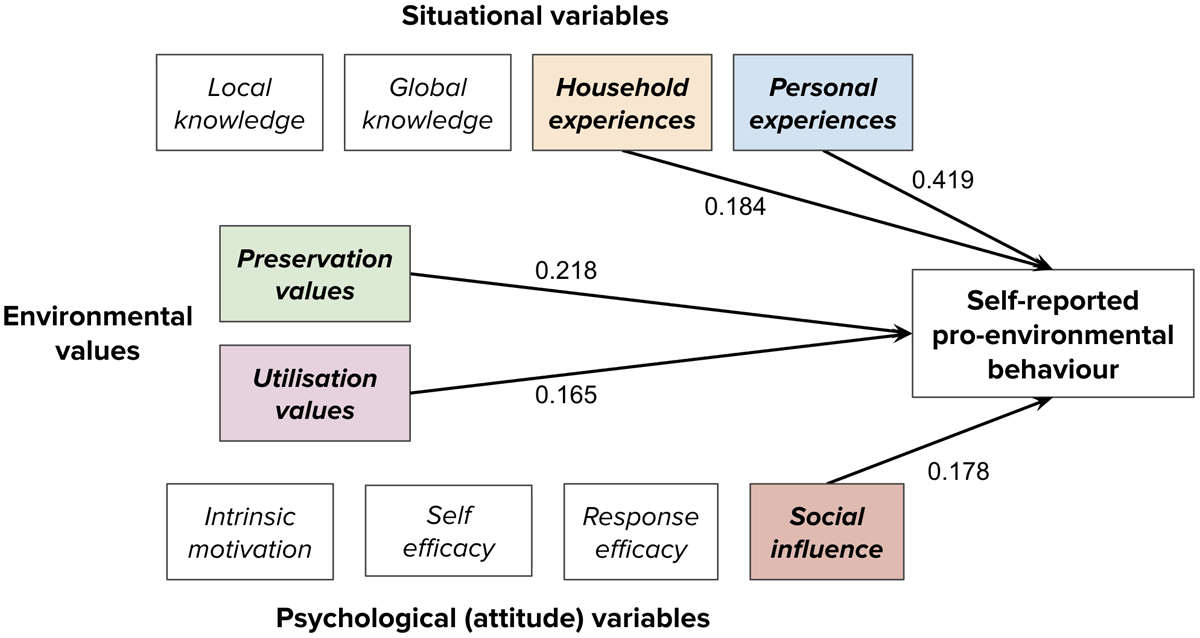
Figure 2
Framework diagram showing which variables influence pro-environmental behaviour, with the statistically-significant standardized coefficient values being the proportion of variance explained by each bolded variable.
Preservation value was slightly more influential in predicting PEB than engaging in household environmental experiences. Students were also influenced by the actions of others, specifically by the positive actions they observed others taking and by hearing stories of pro-environmental actions on social media. Observing others doing harm to nature did not have a statistically significant influence on predicting PEB. Student views on using nature as a resource (utilisation values) had the smallest proportion of predicting PEB in youth. The most consistent and most influential variable on student PEB was experience in nature, be it during school field trips or during their own personal time (see Table 3), likely because seven of the eight schools participated in CS projects where students were in natural surroundings, such as forests and beaches, or in spaces with natural elements, such as trees on their campus. This result is especially interesting given that only 9.1% of local school students reported experiencing field trips “often” or “very often,” compared with 49.7% of international school students who also reported the same levels of field trip frequency in a typical school year.
Table 3
The variables which have statistically-significant influence on pro-environmental behaviour. The variables are ranked in descending order, with the values in brackets being the standardized coefficient values, showing how much variance of self-reported behaviour can be explained by that variable. See Supplemental File 7 for additional regression output results.
| SCHOOL TYPE | CITIZEN SCIENCE PROJECT TYPE | SCHOOL LEVEL | GENDER | |||
|---|---|---|---|---|---|---|
| Local school (n = 22) | International school (n = 165) | Contributory (n = 174) | Younger secondary (ages 11–14) (n = 124) | Older secondary (ages 15–19) (n = 63) | Female (n = 78) | Male (n = 95) |
| Personal experiences (0.481) | Personal experiences (0.401) | Personal experiences (0.414) | Personal experiences (0.414) | Personal experiences (0.445) | Personal experiences (0.466) | Personal experiences (0.371) |
| – | Social influence (0.227) | Social influence (0.222) | Social influence (0.314) | Self–efficacy confidence (0.308) | Preservation values (0.251) | Household experiences (0.307) |
| – | Household experiences (0.187) | Preservation values (0.192) | Household experiences (0.218) | – | – | Utilisation values (0.186) |
| – | Preservation values (0.185) | Household experiences (0.182) | Utilisation values (0.185) | – | – | – |
| – | Utilisation values (0.178) | Utilisation values (0.165) | – | – | – | – |
While local and international school students’ PEB were most influenced by personal experiences in nature, international school students’ behaviours were also influenced by the variables of social influence, household experiences, and values to preserve and use nature. The influence of others (social influence, household experiences) is a predictive factor for behaviour in younger secondary school students (ages 11–14), while PEB in older secondary school students (ages 15–19) is more influenced by one’s confidence in self-efficacy skills to address the environmental issue (see Table 3). These differences may relate to developmental experiences as students get older. Younger secondary students have opportunities to engage in scaffolded social activities (for example, beach clean-ups as a class or part of an afterschool club), and over time, these experiences instil greater belief about their capacity to take action. There were some differences about factors predicting PEB by gender: for female students, their values to preserve nature were influential for action, whereas for male students, it was their household experiences and their values about using nature. Results based on students doing co-created CS, and gender groups of “other” and “prefer not to say” did not have any statistically significant regression results. These results were likely due to their small sample sizes of 13, 3, and 11 students, respectively.
Discussion
This study’s results show there is some positive value of doing CS in school settings, especially those projects that bring students into natural environments, as these experiences have a statistically significant influence on self-reported PEB. This positive impact may be in part due to the novelty (Dean et al. 2018) of the CS experience, as Ma (2016) found greater engagement and interest when local Hong Kong school students went to new places for their experiential environmental education. The effect of this novelty is revealed in the responses whereby local students had five times fewer field trip opportunities per year than students at international schools. This is consistent with arguments by Chawla (1999, 2009), who has written extensively about the merit of spending time in nature from a young age and in the company of trusted people for building positive experiences and developing greater environmental consciousness. Similarly, Derr’s 2020 review pointed to childhood nature-based activities with friends and family as a significant predictor of PEB as adults. Exposure to nature through CS projects requiring observation and analysis, such as monitoring biodiversity using iNaturalist, can address intellectual elements like curiosity, love of learning, and appreciation of beauty, and potentially develop students’ connection with nature (Smith et al. 2021). In our study, students’ values to preserve nature had a positive, albeit small, influence on PEB after their CS activity. Such positive associations are consistent with Tseng and Wang’s (2020) qualitative study of Taiwanese teenagers engaged in extensive experiences in nature, which showed that connection to nature was highly linked to PEB. Similar results were found in American secondary school students (Hoover 2020) and primary school students (Cheng and Monroe 2012) engaged in environmental education. Females tend to have higher levels of values about preserving nature, and this gendered characteristic is reported in various studies (Torkar and Bogner 2019; Feucht et al. 2023), as well as ours.
Another key finding is the importance of household environmental actions in influencing student PEB. This phenomenon was also highlighted by a Danish study of secondary school students and their parents, where children would be more likely to act pro-environmentally when there was greater parental PEB (Grønhøj and Thøgersen 2012). The correlation seen was between parent actions and child behaviours, rather than parent attitudes and child behaviours, suggesting that youth learn more from what they see happening in practice, rather than what they are told to do. This places parents (and by extension, other trusted adults) in very important positions as influential role models. Lee (2011) found that environmental conversations between adolescents, parents, and teachers in Hong Kong was a kind of social pressure for youth to take environmental actions. This connects with Ojala’s (2015) study with Swedish secondary school students looking at the positive relationships between hope and youth engagement in environmental issues. This supports our study findings that PEB is predicted by the beneficial actions of people known to the students and by positive stories on social media, rather than being motivated by seeing negative and environmentally harmful activities. Having a more positive and hopeful outlook is more powerfully linked to greater PEB in youth, suggesting a strong intrinsically psychological association between hope and the desire to take action.
Longer experiences during co-created CS projects resulted in students reporting a greater impact on their frequency and range of PEB than those doing contributory projects. This is supported by research by Stern et al. (2008), who found longer environmental education experiences had more lasting positive impacts on teenagers’ behaviours. The findings are also consistent with a recent synthesis of environmental education outcomes during CS projects, which revealed an overwhelmingly positive impact on environmental science content knowledge and science inquiry skills (Ballard et al. 2024). Yet, the current literature doesn’t offer clear understandings about how CS can nurture PEB in school students. While Ballard et al.’s (2024) findings drew on a range of qualitative and quantitative methods, it is not clear how many used a pretest-posttest design to evaluate impact, and only a minority of the reviewed studies occurred in secondary school settings. The topic of school-based CS effects on PEB is complex because there are a wide range of variables to consider, from the more cognitive about youth agency (Ballard et al. 2017), to the more affective about nature connection prompting PEB intention (Cheng and Monroe 2012), and the more emotional, such as the motivational power to act from a place of eco-anger as opposed to eco-anxiety (Stanley et al. 2021). Our study using a pre-post design adds evidence to support claims that contributory and co-created CS projects have a positive, albeit small, impact on knowledge. These findings point to the synergies between CS and formal education, with CS able to contribute to educational outcomes whilst creating opportunities to increase time in nature, which are important in encouraging PEB change for youth. It suggests that there are gains in terms of increased knowledge and self-reported PEB; however, CS can also be associated with decreased preservation values and a lesser sense of one’s self-efficacy skills. Further research is needed to test the hypothesis that this is a result of a more informed understanding of the scale of action needed to preserve nature after the CS experience, rather than an actual devaluing of nature.
Limitations
While the findings from this study provide some encouraging results about the merit of using environmental CS in school settings, there are elements that limit the generalisability and the validity of the results, especially related to uneven sample sizes. Teachers had the freedom to select the environmental CS project that best met their learning outcomes and contexts, so we were not able to identify the particular features of the CS project that may have brought about changes. This study was conducted during COVID-19 school closures, which created disruptions and changes to the ways students experienced learning during the 2020–2021 school year. It would have been ideal to include a control group in the research design to strengthen the validity of any changes observed; however, the Hong Kong educational context favours that all students in the same grade level/course have the same experiences at the same time. A follow-up survey a few months after the post-survey would have been useful to evaluate any evidence of longer-term changes, but the teachers were not able to support the author-student connections beyond the single academic year. While the quantitative statistical tests showed some statistically significant differences between groups, the strength of the findings is reduced because of the uneven comparative group sample sizes, as the majority (66%) of the students were 12–13 years old, 72% of students were all from one international school, only 11.8% of the students were from local schools, and only 7% of students conducted co-created CS projects. As such, caution is needed when interpreting these findings and applying them beyond this study’s context of predominantly younger international secondary school students doing contributory CS. Future studies could strive to reduce sampling bias and incorporate a quasi-experimental design to conduct more robust statistical analysis by conducting research with, for example, only eco-clubs, as student numbers in such groups tend to be even across schools, and establishing control group settings would be more likely given the less formal structure of extracurricular activities.
Conclusion
This empirical study in Hong Kong shows that environmental CS experiences impact secondary school students’ pro-environmental values, attitudes, and behaviours to a small degree, both positively and negatively. Pre- and post-surveys indicate that students exhibited small increases in local environmental knowledge, and a greater frequency and range of PEB, while having decreases in their preservation values and confidence of self-efficacy. Older secondary school students and those doing co-created CS projects had a proportionally larger increase in their self-reported PEB than younger students and those doing contributory CS, although both values showed small increases. A slight decrease in already high values for preserving nature was seen for older students, for students attending international schools, and for those doing contributory and co-created CS projects. The slight decrease is likely a reflection of student perceptions about insufficient action for the scale of an environmental issue rather than a depreciation in their care and concern for nature. There was a slight decline in confidence in one’s self efficacy skills, particularly for female students.
The most influential predictor of self-reported PEB after a CS project was time in nature (personal experience). The other variables that positively influenced self-reported PEB were behavioural intention, one’s values to preserve nature, household experiences doing pro-environmental actions, and values appreciating how nature can be used as a resource. It is especially encouraging that contributory projects, with lower demands on teacher and curriculum time for implementation, have positive impacts on PEB, and provide meaningful ways to introduce CS in educational settings. By doing so, one can use such educational pathways to encourage young people to take action on the issues they care about. Environmental CS activities can be ideal settings for students to be nurtured in nature, and in turn, where students nurture nature itself.
Implications for educators and school leadership
The findings indicate the value for educators of building nature-based experiences into sessions, even short ones, to develop students’ knowledge and behaviours towards nature. CS presents opportunities to do this in a meaningful way that contributes to knowledge beyond the school community. Support from school leaders is needed to provide space for interdisciplinary environmental education in the curriculum and school calendars. Given the greater effects on self-reported behaviour for students doing co-created CS projects, educators should be encouraged to develop longer-term or co-created CS experiences with more time and logistical support. Teachers can choose the type of CS (contributory versus co-created) consistent with what they want to achieve (knowledge or behaviour change). As household engagement with environmental issues influences student PEB, educators could consider how to encourage families to discuss environmental issues and have their own nature-based experiences, to extend environmental education outside the school setting. During any informal or formal environmental education experience, the links between the environmental issues being discussed and one’s habits of life could be made explicit through guided reflective activities and discussions, to foster greater confidence in one’s abilities to act pro-environmentally.
Implications for citizen science organisers
Designing CS projects suitable for school students provides opportunities to have an impact on a large demographic in formal education settings, made up of those who are at a formative phase for pro-environmental values and attitudes development. CS projects can be useful for building more equitable educational opportunities, in particular for those with fewer possibilities for nature-immersed learning, like students in local Hong Kong schools. From a school’s point of view, it is crucial for CS project organisers to discuss project development with teachers as early as possible to ensure alignment between project goals and educational learning objectives. If organisers can be flexible about time and location logistics, and provide prior training resources to front-load information to teachers and students, schools may be more willing to consider embedding CS activities. By making CS projects easy to engage in and aligned with curriculum objectives, it could stimulate interest in co-created projects in the future. Contributory CS could become the pathway to the more engaged co-creation research process, encourage deeper engagement in environmental issues, and influence greater PEB.
Supplementary Files
The supplementary files for this article can be found as follows:
Supplemental File 1
Anonymised pre- and post-survey dataset. DOI: https://doi.org/10.5334/cstp.941.s1
Supplemental File 2
Pre-survey and post-survey questions for students. DOI: https://doi.org/10.5334/cstp.941.s2
Supplemental File 4
Cronbach’s Alpha values of pre- and post-surveys. DOI: https://doi.org/10.5334/cstp.941.s4
Supplemental File 5
School citizen science projects details. DOI: https://doi.org/10.5334/cstp.941.s5
Supplemental File 6
Full results of Wilcoxon signed rank tests measuring change between T1 (pre-survey) and T2 (post-survey). DOI: https://doi.org/10.5334/cstp.941.s6
Data Accessibility Statement
The anonymised dataset used in this study is available as Supplemental File 1.
Ethics and Consent
We followed the Ethical Guidelines for Educational Research by the British Educational Research Association, and received institutional ethical approval from the University of York Department of Education Ethics Committee on 27th April 2020.
Acknowledgements
The authors would like to thank the students and teachers from all the participating schools for their generosity of time amidst challenging educational contexts during Hong Kong’s prevailing COVID-19 restrictions. The research presented in this paper references the lead author’s doctoral thesis obtained at the University of York.