
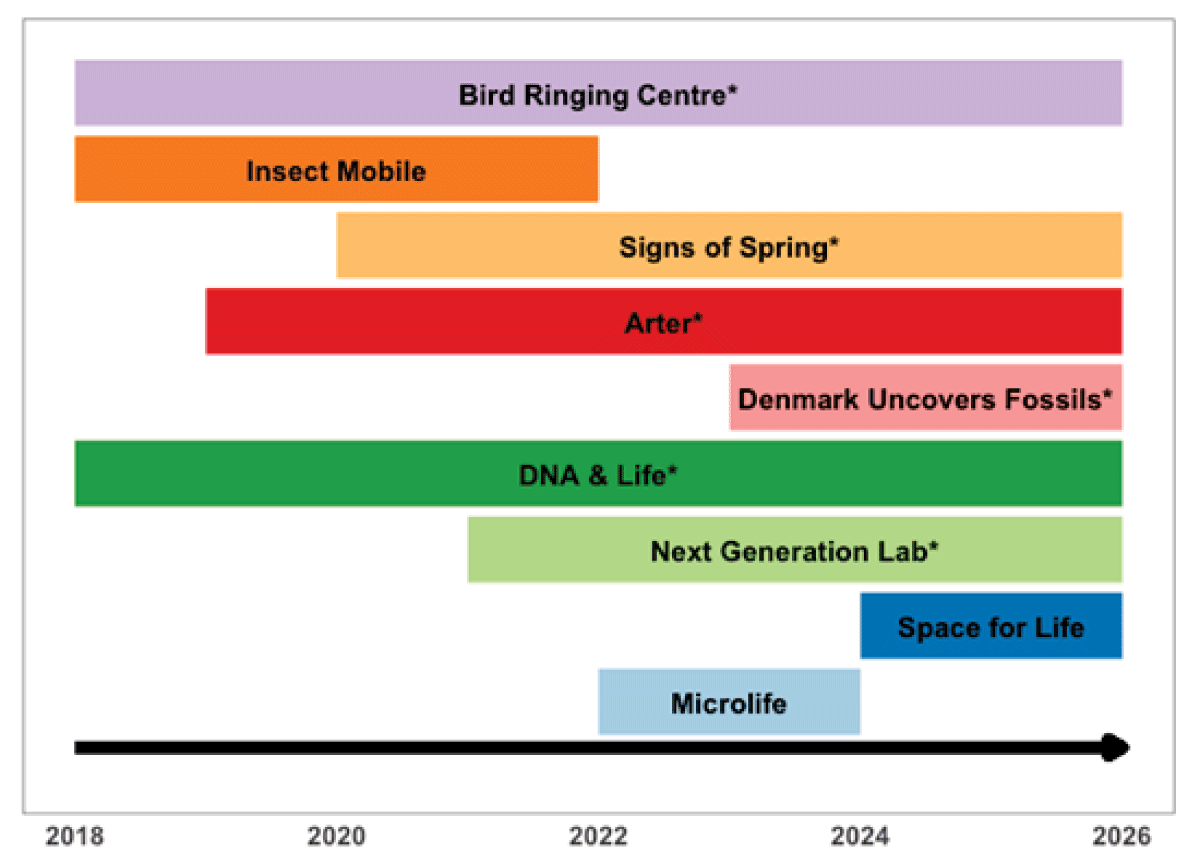
Figure 1
Timeline presenting duration the nine case projects at the Natural History Museum Denmark. Asterisk* indicates that the project is ongoing.
Table 1
Areas mandated under the Danish Museums Act (“Museumsloven”) (Kulturministeriet 2025).
| MANDATE AREA | DESCRIPTION |
|---|---|
| Collection | Safeguarding and curating physical or digital heritage items |
| Registration/documentation | Recording and cataloguing museum materials |
| Conservation/preservation | Physical upkeep and long-term care of collections |
| Research | Conducting basic and applied scholarship using collections |
| Public engagement and outreach | Sharing knowledge through exhibitions, educational programming |
Table 2
Rubric to score and map strengths for each citizen science project.
| MANDATED AREA | SCORING RUBRIC |
|---|---|
| Research | 1 = collection of research grade data, but no peer-reviewed outputs, not designed for immediate research 2 = project generates data that feeds indirectly to research (e.g., GBIF integration, student projects) 3 = direct peer-reviewed publications led by NHMD, novel methods and/or addresses research gaps related to natural history mandate |
| Collections | 1 = no physical specimen collections contribution 2 = digital data or limited specimen integration to collections 3 = significant specimen/materials added, long-term curated collections |
| Education | 1 = incidental use in teaching or outreach 2 = structured learning materials 3 = formal curriculum integration, large number of students reached, skills training |
| Public engagement | 1 = limited number of participants; short term engagement, low external visibility 2 = established engagement base, moderate participation, some public/media visibility 3 = national reach, strong volunteer networks, high visibility/media coverage |
[i] Notes: Global Biodiversity Information Facility (GBIF), Natural History Museum Denmark (NHMD).
Table 3
Results of project mapping using the 4-pillar rubric presented in Table 2.
| PROJECT | RESEARCH | COLLECTIONS | EDUCATION | PUBLIC ENGAGEMENT |
|---|---|---|---|---|
| Insect Mobile (2017–2021) | 6 peer-reviewed papers; reused in 17+ papers (3) | Bulk insect samples + DNA extracts (3) | Volunteer training, informal (2) | Hundreds of volunteers; national reach; media (3) |
| DNA & Life (year) | 3 peer-reviewed papers (3) | None (1) | High school students trained in DNA/PCR analysis (3) | National reach in schools and labs (2) |
| Microlife (Mass Experiment) (2023) | 2 peer-reviewed papers (3) | Tardigrade/moss/lichen specimens including type material (3) | 30,000+ students; Astra collaboration (3) | Nationwide participation; media; exhibitions (3) |
| Next Generation Lab (NGL) (2021-present) | 3 peer-reviewed papers (3) | No specimens (1) | Thousands of high school students; strong lab training (3) | Wide youth reach; less general public (2) |
| Denmark Uncovers Fossils (Danmark Udforsker Fossiler) (2023-present) | No research yet; fossil data in platform for research (1) | Digitizing fossil collections; citizen fossils (1) | KU university teaching (2) | FossilFestival across Denmark, MitFossil platform, fossil gallery (3) |
| Arter (Biodiversity Portal) (year) | Biodiversity data in platform used in red list & invasive monitoring; no publications yet (2) | Digital records (1) | University teaching; student field courses (2) | 43,000+ users; specialist councils (3) |
| Space for Life (Plads til liv) (year) | Biodiversity data (in Arter) (1) | No specimens (1) | Youth habitat creation and biodiversity learning (2) | Targeted youth clubs; interpretive signage for passive garden visitors (2) |
| Signs of Spring (Find Foråret) (2020–2021; 2023–2025) | 2 peer-reviewed papers (3) | No specimens (1) | Posters used as teaching tools in museums and schools (1) | Broad national participation; 5,000+ reports; media, libraries (3) |
| Bird Ringing Centre (150 years) | 5–10 papers annually; 30–50 datasets/yr; EURING (3) | ~100,000 records/yr databank; some specimens (3) | Intensive training, KU courses; nature schools (3) | 240+ volunteer ringers; public reports; media coverage (3) |
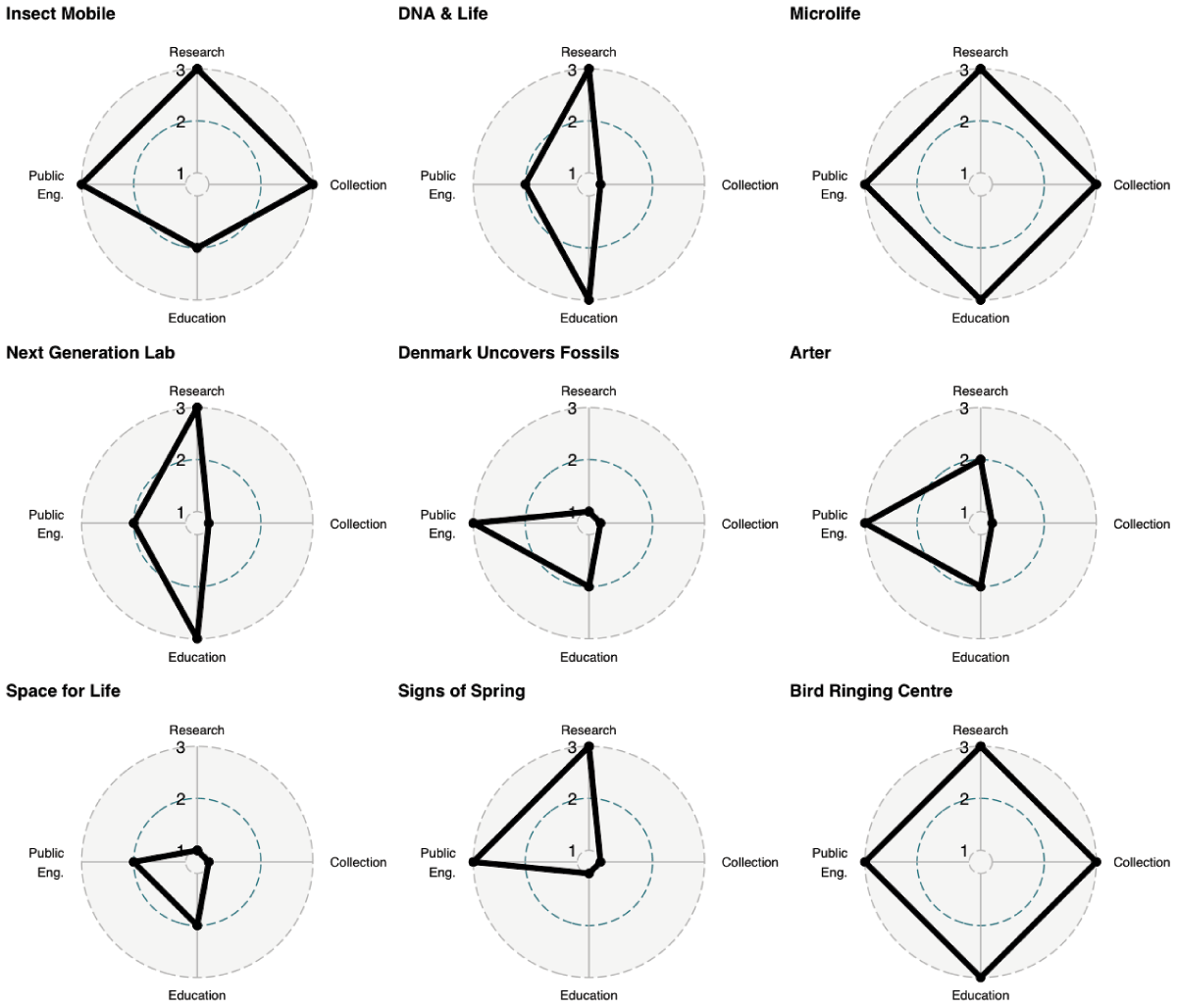
Figure 2
Nine citizen science projects and their various strengths in meeting mandated areas in research, collections, education, and public engagement (Public Eng. in figure) at the Natural History Museum Denmark.