
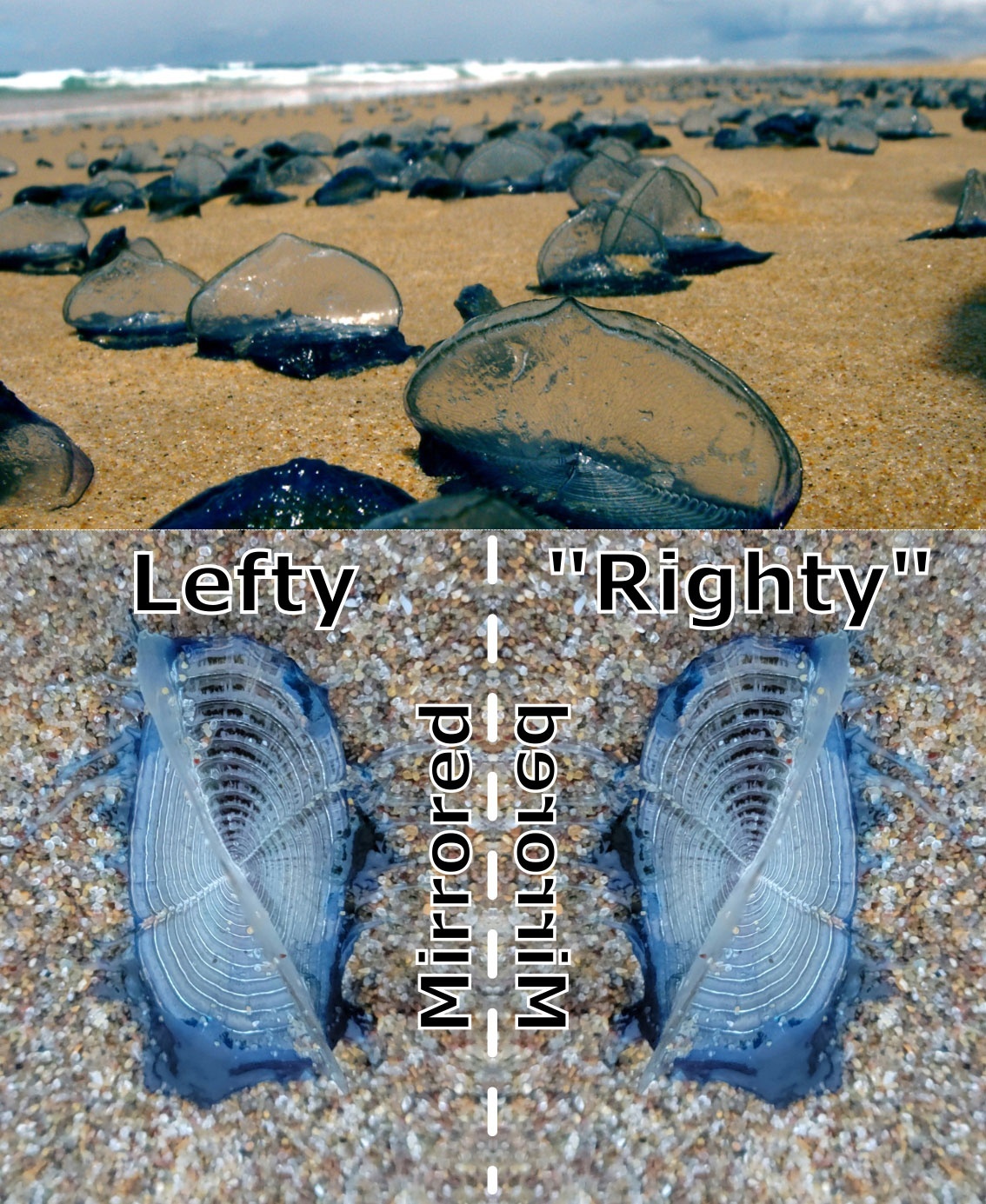
Figure 1
Upper panel: numerous by-the-wind sailors (Velella velella) stranded on the beach (photo credit: Bettina Walter). Lower panel: A left-handed by-the-wind sailor photographed from above with its digitally flipped mirror image shown to demonstrate the appearance of a right-handed sailor (photo credit: Alex Heyman).
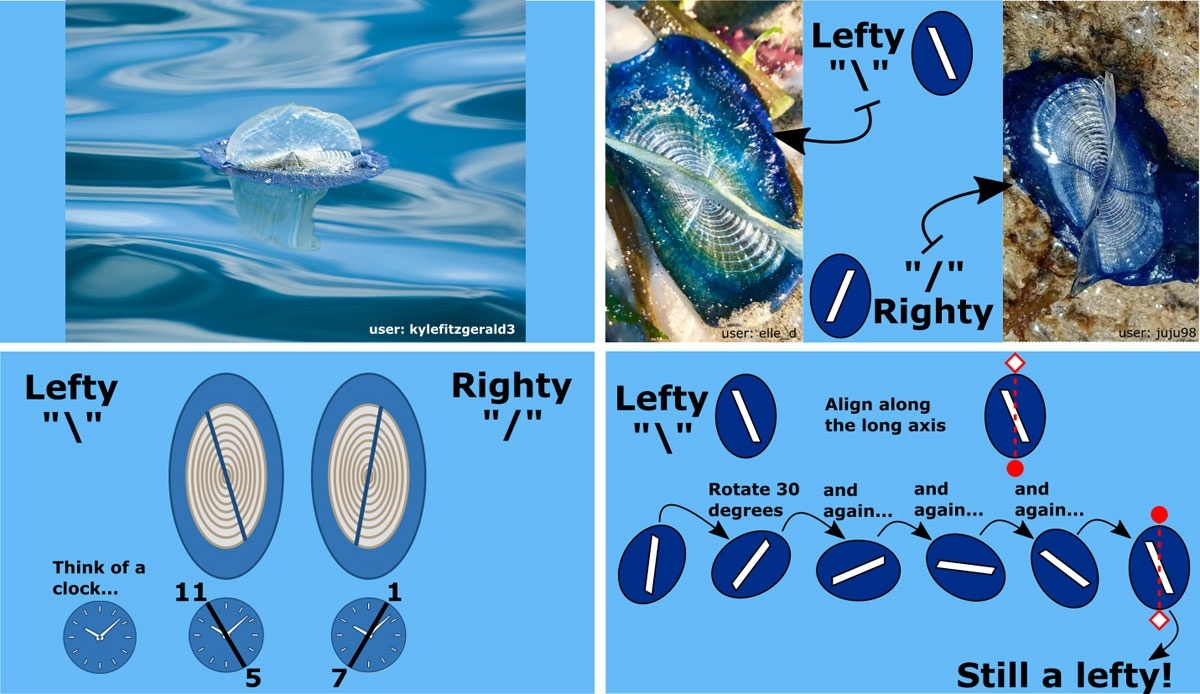
Figure 2
Examples of training material used in the tutorial and field guide of The Living Sailor Zooniverse project to demonstrate the direction of a by-the-wind sailor’s sail. Left-handed animals have a sail that tilts from left to right (lower left: if you imagine a clock face, it has a sail with one end pointing at 11, and the other end at 5). Right-handed sails tilt from right to left (on our clock face, the sail points from 1 to 7). Given their oblong shape, rotation does not limit our ability to determine the sail direction.

Figure 3
Example of a “righty” by-the-wind sailor (Velella velella) subject with hierarchical questions appearing in the panel on the right. Typeface of questions modified for legibility. Photo credit: Christopher Mark (iNaturalist user: christophermark).

Figure 4
Tutorial material used to underscore that when viewed from below, a sailor may appear to have the opposite handedness than reality.
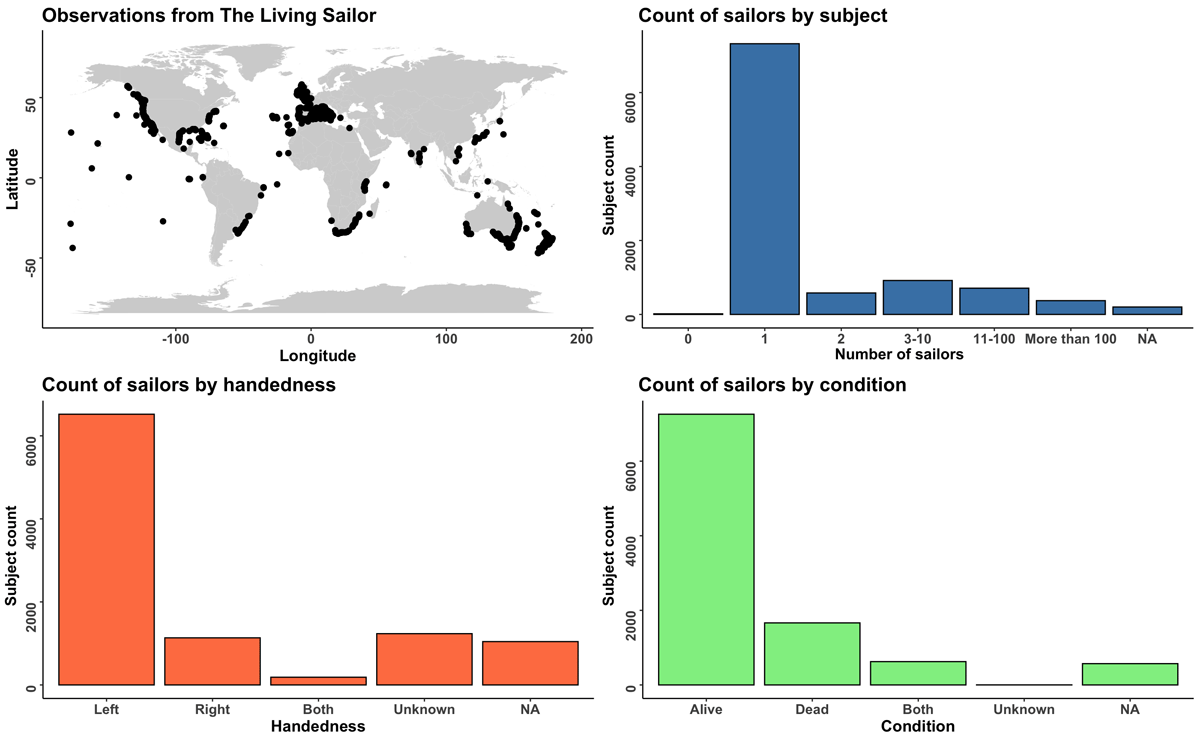
Figure 5
Summary of The Living Sailor data for subjects receiving 4 or more volunteers in agreement and including manually corrected subjects for handedness. Upper left: subjects originated for locations spanning the globe with concentrated efforts in Western North America, Europe, and Australia and New Zealand. Upper right: the vast majority of subjects were comprised of a single sailor. Bottom left: most subjects were left-handed sailors with comparatively few co-occurrences. Bottom right: most subjects were of live sailors.
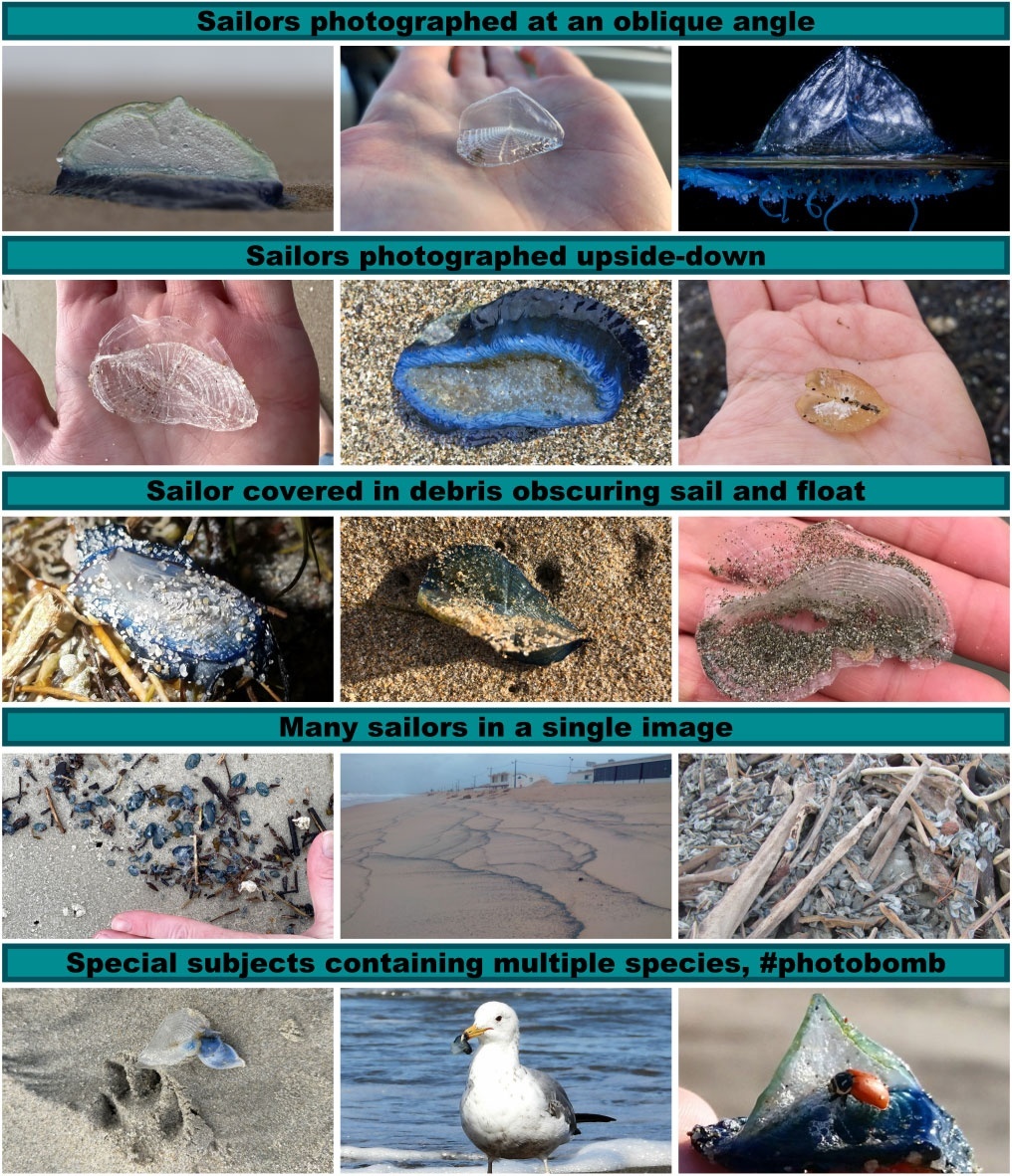
Figure 6
Select images of subjects from different categories of issues that proved challenging for volunteers to reach consensus on regarding the direction of the sail, or handedness. Additionally, several special cases are highlighted in which multiple species were observed in a single image tagged using #photobomb. Photos used under Creative Commons license hosted on www.inaturalist.org with credit to (from top, left to right) Jen Sanford, Will Kennerley, João Pedro Silva, jennykknight, Sarah, suzannewertheim, Joe MDO, martinthompson6, sooners52, Sarah-Mae Nelson, Carmen B. de los Santos, Arnim Littek jwschwend, Elizabeth Bettenhausen, and Trent Barnhart.
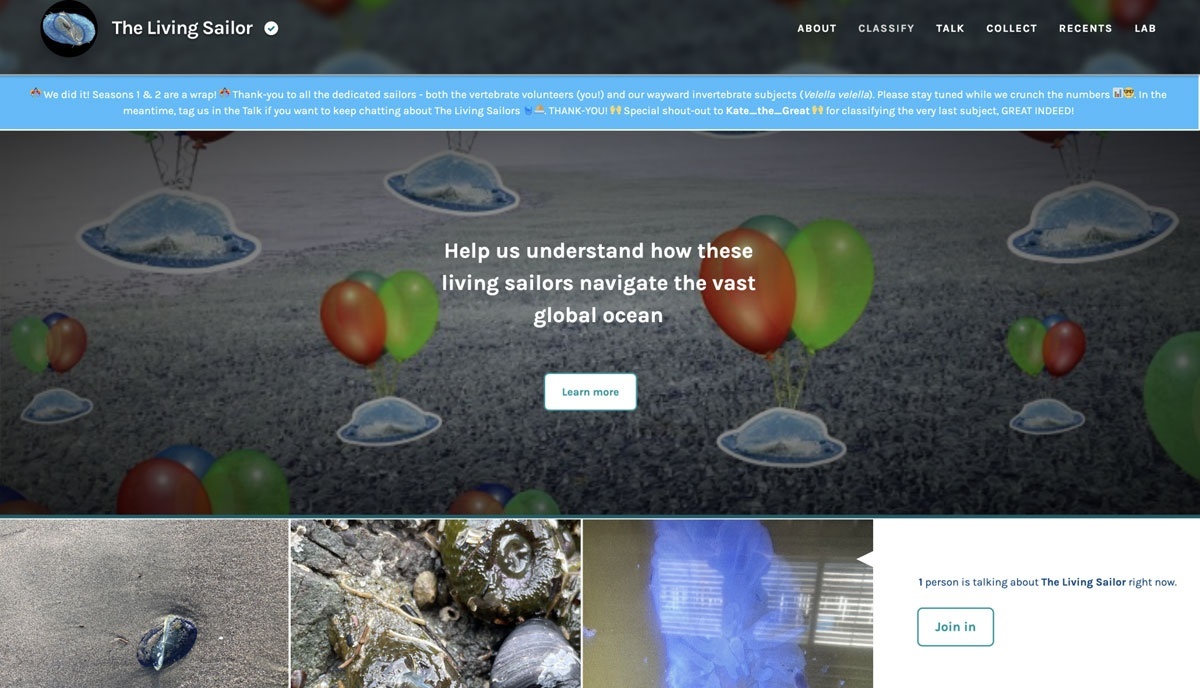
Figure 7
Homepage of The Living Sailor after the conclusion of data collection. Sailors with cartoon balloons flying were added. The homepage banner (in blue) was used to regularly update volunteers throughout the project. The update depicted celebrates the conclusion of the study and gives special recognition to user Kate_the_Great for completing the last subject.