
Introduction
The ocean’s surface is Earth’s largest continuous habitat yet we know comparatively little about it (Helm 2021). The sea surface acts like a skin for the ocean; all gas and nutrients must exchange through this single layer, resulting in drastic changes in temperature, oxygen, and light within a few meters (Hardy 1982). This zone is also disproportionately influenced by forces originating from above and below the water, including wind, currents, waves, and increasingly, human activity (Webb 2021). These conditions are quite hostile to most animals, but there is a specialized community of animals, collectively called neuston, that occur predominantly or exclusively at the sea surface. Animals may be neustonic for only a short period of their lives, for example, fish eggs and larvae will float at or just below the sea surface for refuge while they develop, while others species spend a majority of their life at the sea surface, for example, Portuguese man-o-war, violet snails, and flying fish (Hempel and Weikert 1972). Neuston supports a whole community of animals residing both above and below the sea surface, including seabirds, fishes, and turtles (Helm 2021). The open ocean is vast, many kilometers from the nearest shore, and the average person rarely interacts with this habitat. Further, the physical complexity, variability, sheer size, and remoteness of the high seas surface makes studying neuston both logistically challenging and quite expensive.
By-the-wind sailors (Velella velella) are brilliant blue jelly-like animals (hydrozoans) with a vertical fleshy sail. They are a neustonic species found globally throughout the world’s oceans. Almost two centuries ago, scientists documented the direction that the sail points (Eschscholtz 1829) with two distinct sail directions either pointing “left” or “right” (Figure 1). Scientists have long hypothesized the potential reasons for this sail direction, including predictions about neuston biogeographic patterns based on wind and ocean currents (Edwards 1966; Savilov 1956; Savilov 1969; Bieri 1959). By-the-wind sailors are normally found many hundreds of miles from nearest land, but when the ocean currents and wind are just right, these blue creatures wash ashore by the millions and offer a visually beautiful (albeit smelly) spectacle for beachgoers (Gammon 2024).
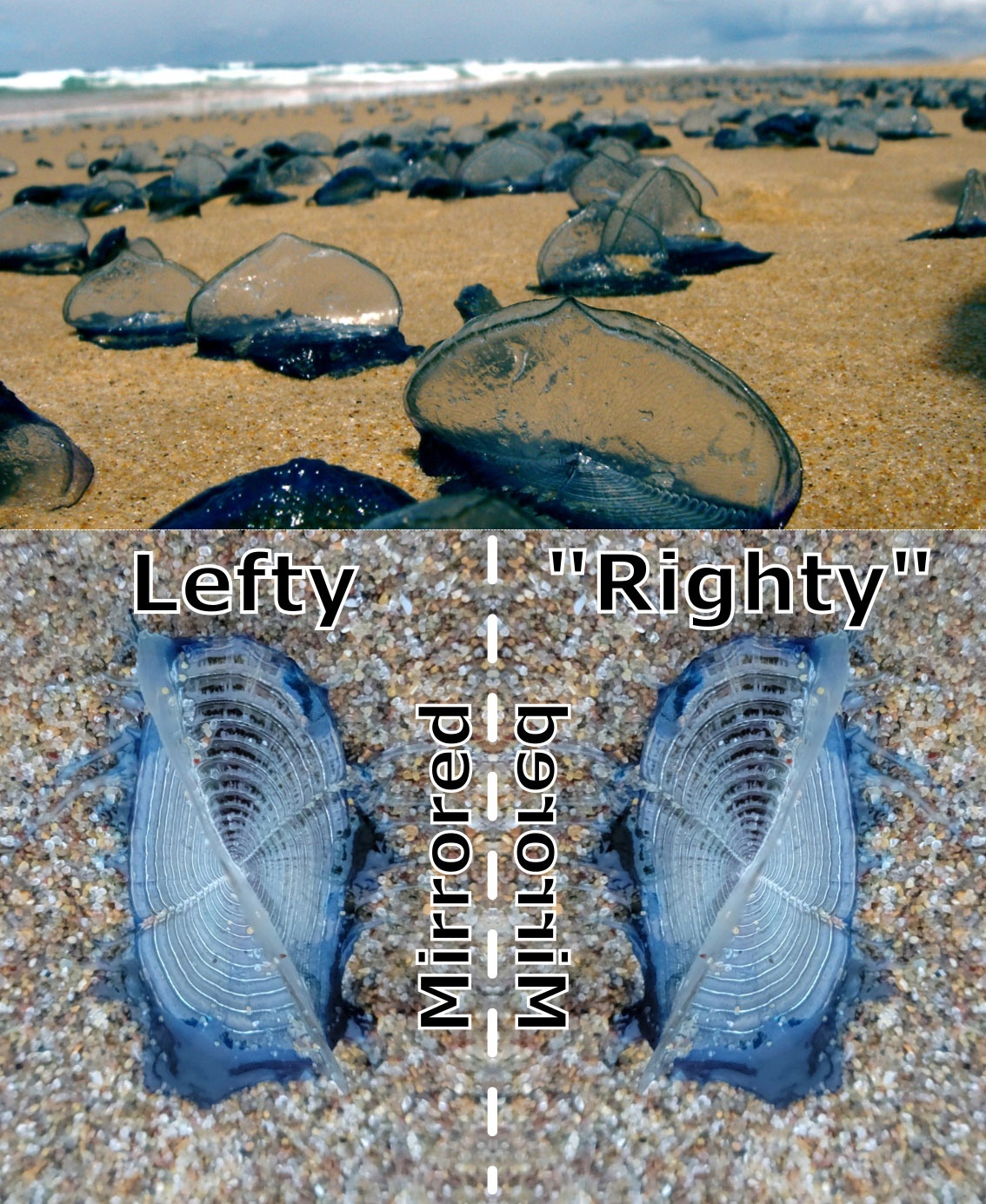
Figure 1
Upper panel: numerous by-the-wind sailors (Velella velella) stranded on the beach (photo credit: Bettina Walter). Lower panel: A left-handed by-the-wind sailor photographed from above with its digitally flipped mirror image shown to demonstrate the appearance of a right-handed sailor (photo credit: Alex Heyman).
iNaturalist is a community (citizen) science app that allows naturalists to document and share their observations. Community (citizen) science platforms like iNaturalist are an emerging resource for monitoring biodiversity. As of this writing (September 1, 2025), iNaturalist alone contains more than 270,000,000 observations from more than 3,800,000 individual observers representing almost 530,000 species (iNaturalist). Community (citizen) science offers a massive and growing dataset for guiding biodiversity studies and conservation strategies in urban wildlife (Beninde et al. 2023), national parks (Boydston et al. 2017), and marine habitats (Nordstrom et al. 2019). However, iNaturalist has its limitations related to human bias, including i) the size of specimens: the likelihood volunteers can physically see the species; ii) motility: how fast or ephemeral are the species in question; iii) accessibility: do the species occur in places or environments people regularly and safely access; and iv) aesthetics: when an observer sees the species, is it striking enough to warrant the taking of a picture (for an excellent study on bias in iNaturalist data see Di Cecco 2021). By-the-wind sailors effectively overcome many of these limitations. They are relatively large, not motile once stranded on the beach, occur in popular locations (e.g., beaches and coastal zones), and are easily identifiable and striking to look at. Chance strandings of by-the-wind sailors present a unique opportunity for community scientists to collect data on and answer questions about high seas animals normally found many hundreds of miles from the nearest shore. Even when we consider the limitations of iNaturalist data, the disaggregation of data collection using community science allows for geographically diverse sampling locations and orders of magnitude more data per unit cost relative to conventional oceanographic sampling efforts with research vessels costing tens of thousands of dollars a day to operate (UNOLS).
For the researcher, discrete iNaturalist projects can be used to categorize and subset observations and focus participants on specific locations and taxa. Rebecca R. Helm, in collaboration with researchers at the University of Hawai’i, began the Global Ocean Surface Ecosystem Alliance (GO-SEA), a NASA-funded project combining community scientists with professional biologists and oceanographers to locate hotspots of ocean surface life (see: goseascience.org). The GO-SEA iNaturalist project contains more than 12,000 observations of 1,700 species from 1,300 individual observers. Project pages can provide important information and context to aid in capturing observations for often-overlooked species, offer guidance on the quality of photographs, and provide other details that may improve downstream use of community science data. Using data from the GO-SEA program, and iNaturalist broadly, we recruited community scientists to aid in its analysis.
Crowdsourcing is an effective way to disaggregate the data collection. Zooniverse is one of the largest community science crowdsourcing platforms, with almost three million registered users. Data derived from Zooniverse has been used in projects as diverse as monitoring of wild populations of penguins (Jones et al. 2018), discovering the minimum inhibitory concentration for anti-tuberculosis medication (Fowler et al. 2022), and transcribing historical documents for digital humanities research (Blickhan et al. 2024). Using a hierarchical questionnaire hosted on Zooniverse, we can leverage the effort of hundreds of volunteers to characterize thousands of iNaturalist observations to address fundamental questions in marine science. Here we introduce The Living Sailor, a Zooniverse project that used more than 11,000 iNaturalist observations of by-the-wind sailors from around the world to tackle decades old hypotheses about the high seas. From project development, beta-testing, participant feedback, project completion, and data validation we gained new insights into how the combined Zooniverse and iNaturalist platforms can be leveraged for education and cutting-edge science.
Through The Living Sailor project on Zooniverse, we found that volunteers were able to effectively and accurately count and determine the condition and sail direction of iNaturalist observations of by-the-wind sailors. We present insights from observations that resulted in disagreement among the volunteers, and compare the quality of all iNaturalist observations to GO-SEA-generated data. Collectively we gathered data on more than 10,000 observations that we will leverage to answer fundamental questions on by-the-wind sailor biology, including how sail direction influences biogeography; whether count data can be used to ground-truth satellite imagery of sailors at sea; and we continue to develop our community science program to study the air-sea interface.
Methods
Building The Living Sailor project
We created The Living Sailor project on the Zooniverse platform in English with an additional French translation created by Louis Verhaeghe. Our workflow involved a series of multiple choice questions based on iNaturalist photographs of by-the-wind sailors that required volunteers to assess subjects for three endpoints: i) count the number of by-the-wind sailors, ii) determine the handedness of by-the-wind sailors for scoring the presence of each type, and iii) distinguish whether the by-the-wind sailors are alive, dead, or a mix of both alive and dead animals. We presented a required tutorial for every new volunteer, a Field Guide containing reference materials addressing common questions from the beta-review (Figure 2), and a Talk Board for volunteers and the research team to interact and discuss specific subjects.
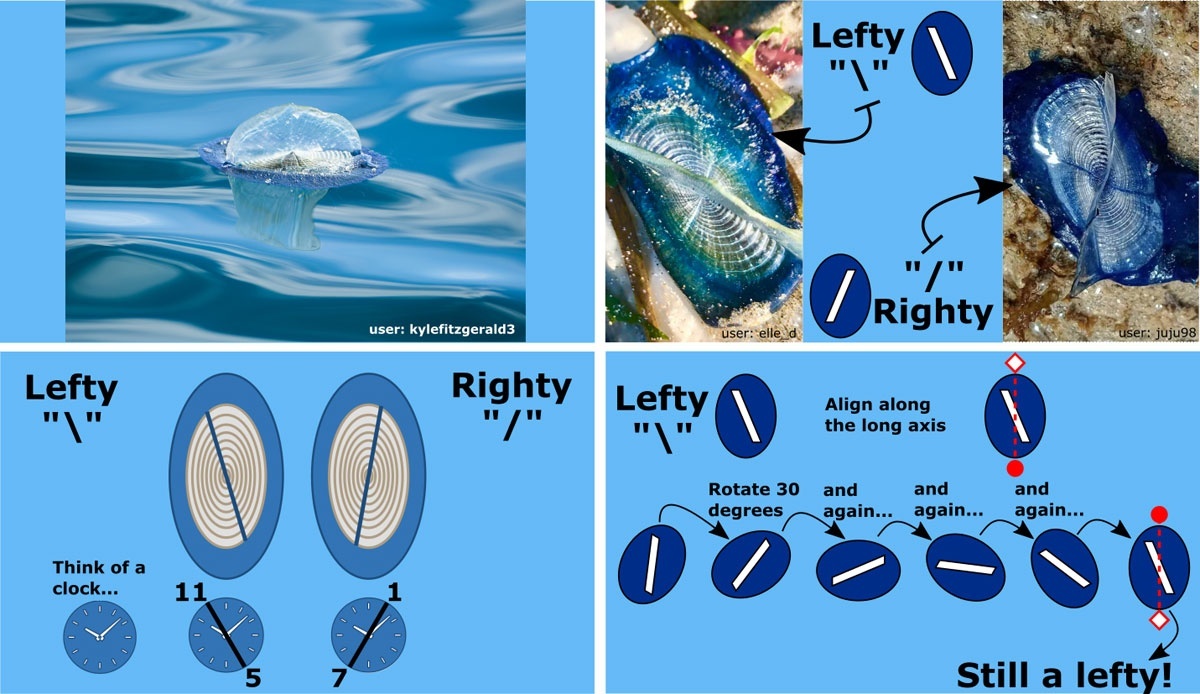
Figure 2
Examples of training material used in the tutorial and field guide of The Living Sailor Zooniverse project to demonstrate the direction of a by-the-wind sailor’s sail. Left-handed animals have a sail that tilts from left to right (lower left: if you imagine a clock face, it has a sail with one end pointing at 11, and the other end at 5). Right-handed sails tilt from right to left (on our clock face, the sail points from 1 to 7). Given their oblong shape, rotation does not limit our ability to determine the sail direction.
The Living Sailor project proceeded through three phases: beta testing and two “seasons” of data, with each season containing a randomized half of all iNaturalist observations from the time of launch. Volunteers were presented with subjects at random, and using default Zooniverse settings, we required six observations per subject before the subject was retired and considered complete. Volunteers could track each season’s progress by following a subject completion count tracker on the project home page.
To increase volunteer participation, we distributed promotional materials on social media, on newsletters, and by word of mouth. We also actively engaged with the Zooniverse community on the Talk Board, encouraged the use of tags for interesting observations (e.g., “#photobomb” for when a different species appeared alongside a by-the-wind sailor) and updated the About sections to maintain active participation among volunteers.
We used RStudio Version 2023.09.0 + 463 (2023.09.0 + 463), Python version: 3.11.4, Panoptes Client Version 1.6.1, and Panoptes Aggregation Version 4.1.0 for database manipulation and statistical analyses.
Training set and beta review
A subject set containing 814 V. velella were manually counted, and handedness and condition determined by experts from the Helm lab, which served as a training set for the Zooniverse workflow prior to full launch. The 814 subjects were originally imported from iNaturalist to the Zooniverse platform using the panoptes client on August 30, 2023 (See Supplemental File 1). The Living Sailor was disseminated to the Zooniverse beta participant community for review via an email newsletter beginning on March 19, 2024 and concluded when all 814 subjects reached retirement. The initial workflow had volunteers assess proportions of handedness and condition (e.g., “Mostly lefty,” “Mostly righty,” “In about equal proportions”) when the count was greater or equal to three sailors, but was later changed to assess presence/absence of each for the full launch. As part of the review, beta participants were encouraged to test The Living Sailor platform and complete a feedback form to assess user-friendliness, project clarity, suitability for Zooniverse, and their personal interest in the project materials and scope. Data from this training set and feedback form were used to adjust the workflow, tutorial, and the Field Guide and About sections of The Living Sailor project page.
Full launch
A total of 11,115 Research Grade V. velella subjects were imported to Zooniverse from iNaturalist using the panoptes client on May 5, 2024 (See Supplemental File 2). This data set consisted of the entirety of by-the-wind sailor observations available at the time of import. The total subject set was randomly divided in half for two separate seasons of The Living Sailor for a more manageable dataset to quality assess at the outset of the full launch. Volunteers were asked “How many velella can you see?” to count the number of V. velella contained in each subject. Available answers were: “1”, “2”, “3–10”, “11–100”, “more than 100”, and “0 or I cannot tell.” Based on our manually counted data, we predicted the vast majority of data were “1” or “2” subjects. Depending on the number of sailors counted in a given subject, volunteers were then asked questions for Handedness and Condition. Handedness: count 1, “Is it lefty or righty?”; count 2, “Are they lefty or righty?”; counts ≥ 3, “Do you see lefties or righties or both?”; Condition: count 1, “Is it alive or dead?; count 2, “Are they alive or dead?”; counts ≥ 3, “Are they alive (wet, blue) or dead (dry, white)?” See Figure 3 for a complete workflow with questions and answers. Based on the beta review, we found a retirement number of 6 to be adequate, and we used a supermajority of observers (≥ 4 of 6) in agreement as the cutoff for determining count, handedness, and condition.
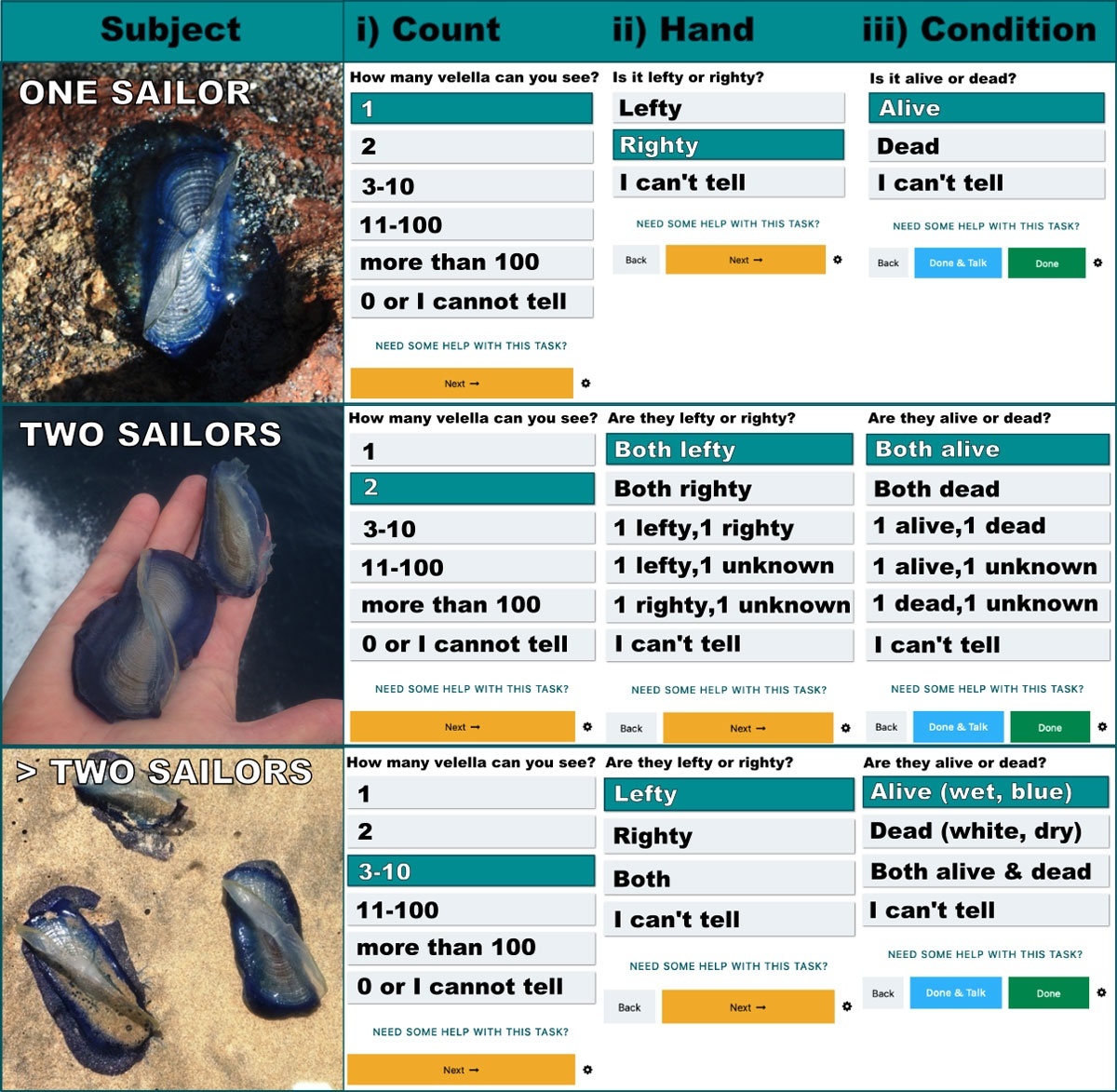
Figure 3
Example of a “righty” by-the-wind sailor (Velella velella) subject with hierarchical questions appearing in the panel on the right. Typeface of questions modified for legibility. Photo credit: Christopher Mark (iNaturalist user: christophermark).
Subjects that did not receive a supermajority of observers for handedness were revisited by the research team to qualitatively assess conflicts. After reviewing several hundred subjects, we created broad categories for issues that included both anticipated issues based on the beta review or post-hoc issues determined from the subsample. The primary issue being the position of the by-the-wind sailor in the photograph: (1) upside-down: the sailor is flipped upside-down with the tentacle side of their float facing the camera; (2) oblique: photograph perspective is of an upright sailor but from the side obscuring both sides of the float; (3) good: an upright sailor with both sides of the float are visible. Secondary issues include: (1) blurry: photos were blurry and the sail and float obscured; (2) debris: debris, which could include bubbles, sand, algae, and/or anthropogenic debris is present on or near the sailor obscuring the sail or float; (3) many: multiple sailors are photographed; (4): angle: when the sailor float and sail were clearly visible, occasionally the long axis of the sailor was perpendicular to the training material (e.g., rotated 90 degrees).
Talk Board participation
All participants were encouraged to use the Talk Board or forum to directly engage with the research team and fellow volunteers. The following boards were available: (1) “Feedback: How are we doing? If you have any problems or suggestions please let us know here.” (2) “Introduce Yourself: We would love to meet you!” (3) “Notes: General comment threads about individual subjects” and (4) “Announcements: Project news from the living sailor’s team leaders.” These boards were regularly monitored by the research team to engage with the project participants, answer questions and address challenges as they arose, and create space for spontaneous discussion on the subjects and project information. The board posts were exported at the conclusion of the project for analysis.
GO-SEA and by-the-wind sailors
We evaluated if GO-SEA iNaturalist project onboarding and information disseminated through the project pages resulted in subjects that were easier to assess relative to the rest of iNaturalist. We tested the proportion of agreement for subjects linked to the GO-SEA iNaturalist project compared with general and presumably use-agnostic iNaturalist data that was unaffiliated with GO-SEA. We performed a non-parametric Pearson’s Chi-squared test with Yates’ continuity correction (RStudio) with the alternative hypothesis that proportionally more users agreed when presented a GO-SEA subject compared with iNaturalist subjects not affiliated with the project.
Results
Training set and beta review
The beta newsletter was sent on March 19, 2024, and the training set reached completion on April 1, 2024. The training set containing 814 subjects resulted in 623 subjects (77%) with >4 volunteers in agreement for the determination of handedness. Of that total, 106 were in disagreement with the lab-verified data, with primary qualitative reasons for the disagreements being: many animals per subject (42 subjects), upside-down animals (23 subjects), and a mix of additional reasons (e.g., debris, blurry images). In response, we simplified the workflow for counting individuals, and additional educational materials were made available to describe how to determine the handedness of upside-down animals (Figure 4).
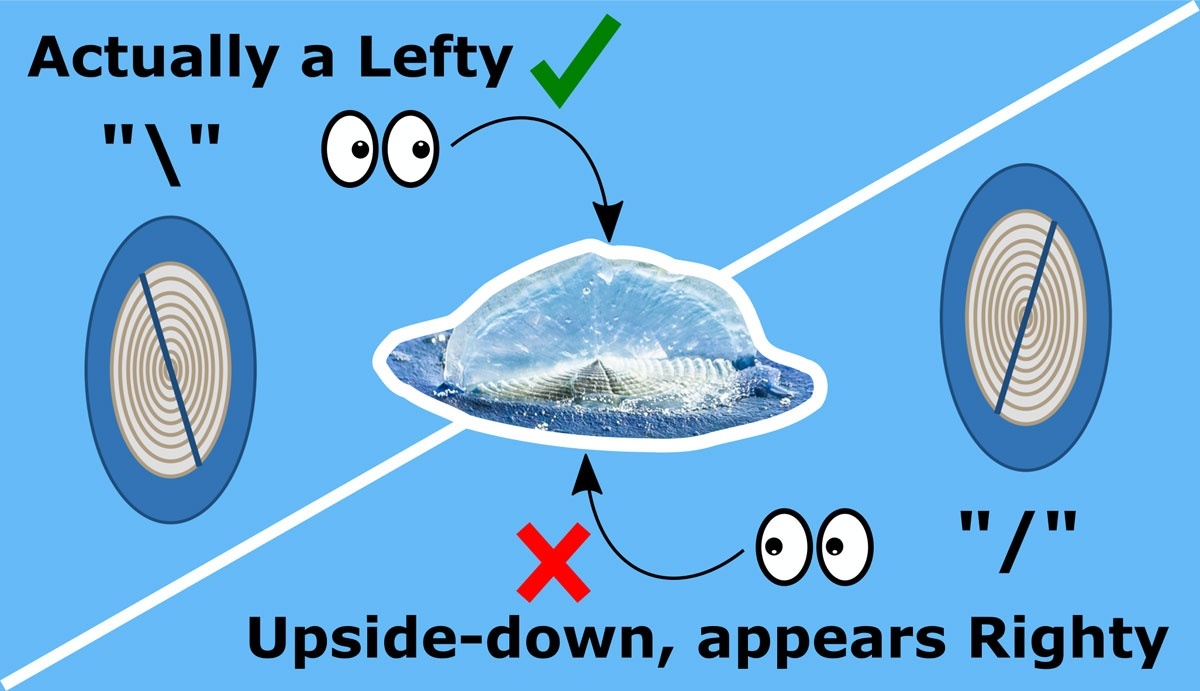
Figure 4
Tutorial material used to underscore that when viewed from below, a sailor may appear to have the opposite handedness than reality.
A total of 60 participants completed the feedback form created and disseminated by the Zooniverse team, though not all participants answered every question. Overall, 92% of respondents found the project goals and instructions were clear. A majority of reviewers found the tasks very easy (24%) or moderately easy (56%) and a few found it somewhat hard (20%) with none reporting the tasks very hard. Most respondents found the tutorial materials helpful (86%) and equal proportions either did not find it helpful (7%) or did not read the tutorial (7%). The field guide was less helpful to reviewers, with only 66% claiming it helped, 28% did not read it, and 5% said it was not helpful. Fewer than half of the reviewers read the additional material (47%), and of those that read it, (87%) found the information useful. A vast majority of reviewers (97%) said the project was suitable for the Zooniverse platform. We observed a general enthusiasm among reviewers to continue to participate with The Living Sailor project, with 50% saying they would take part in the full launch, 22% saying they would take part and bring a friend, 18% saying they were not sure if they would take part, and only 10% saying they would not take part. The feedback form left room for written suggestions and some general themes emerged. Notable issues included images counting many sailors, assigning handedness where multiple were visible, and the rotation of sailors. One respondent used the phrase “oblong,” which when incorporated into the training material appeared to have helped users struggling to understand the chirality of handedness.
Full season
The Living Sailor was launched in full on May 14, 2024 and was completed on May 24, 2024. Of the 11,115 subjects, 10,105 subjects had four or more answers in agreement for at least one of the three questions (Figure 5). For handedness, a total of 4,650 subjects were identified as lefty, 743 righty, 126 contained both lefty and righty, 858 were deemed unidentifiable, and 3,728 did not receive a super majority of observers in agreement. Of the 3,728 subjects in disagreement, 2,743 were manually corrected by our research team, including every subject that was determined by volunteers to contain only 1 sailor, and the reasons for disagreement were qualitatively determined.
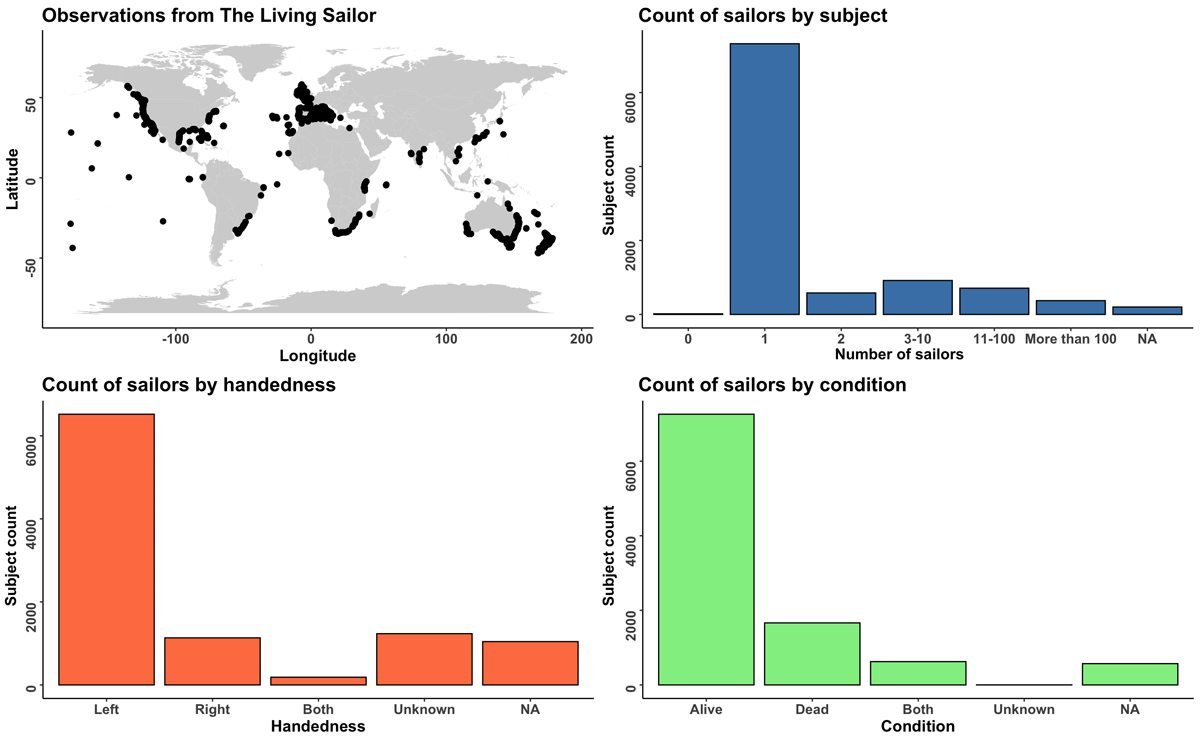
Figure 5
Summary of The Living Sailor data for subjects receiving 4 or more volunteers in agreement and including manually corrected subjects for handedness. Upper left: subjects originated for locations spanning the globe with concentrated efforts in Western North America, Europe, and Australia and New Zealand. Upper right: the vast majority of subjects were comprised of a single sailor. Bottom left: most subjects were left-handed sailors with comparatively few co-occurrences. Bottom right: most subjects were of live sailors.
Of the subjects that did not receive a super-majority of volunteers in agreement for handedness, the most common issue was sailors photographed at oblique angles (38%) or upside-down (31%), with secondary issues resulting from many sailors in one photograph (8%), debris (4%), and blurry pictures (4%) obscuring the determination of handedness (Figure 6). Of the subjects deemed by the research team as good (15%), approximately half were photographed at an angle perpendicular to the majority of the training material.
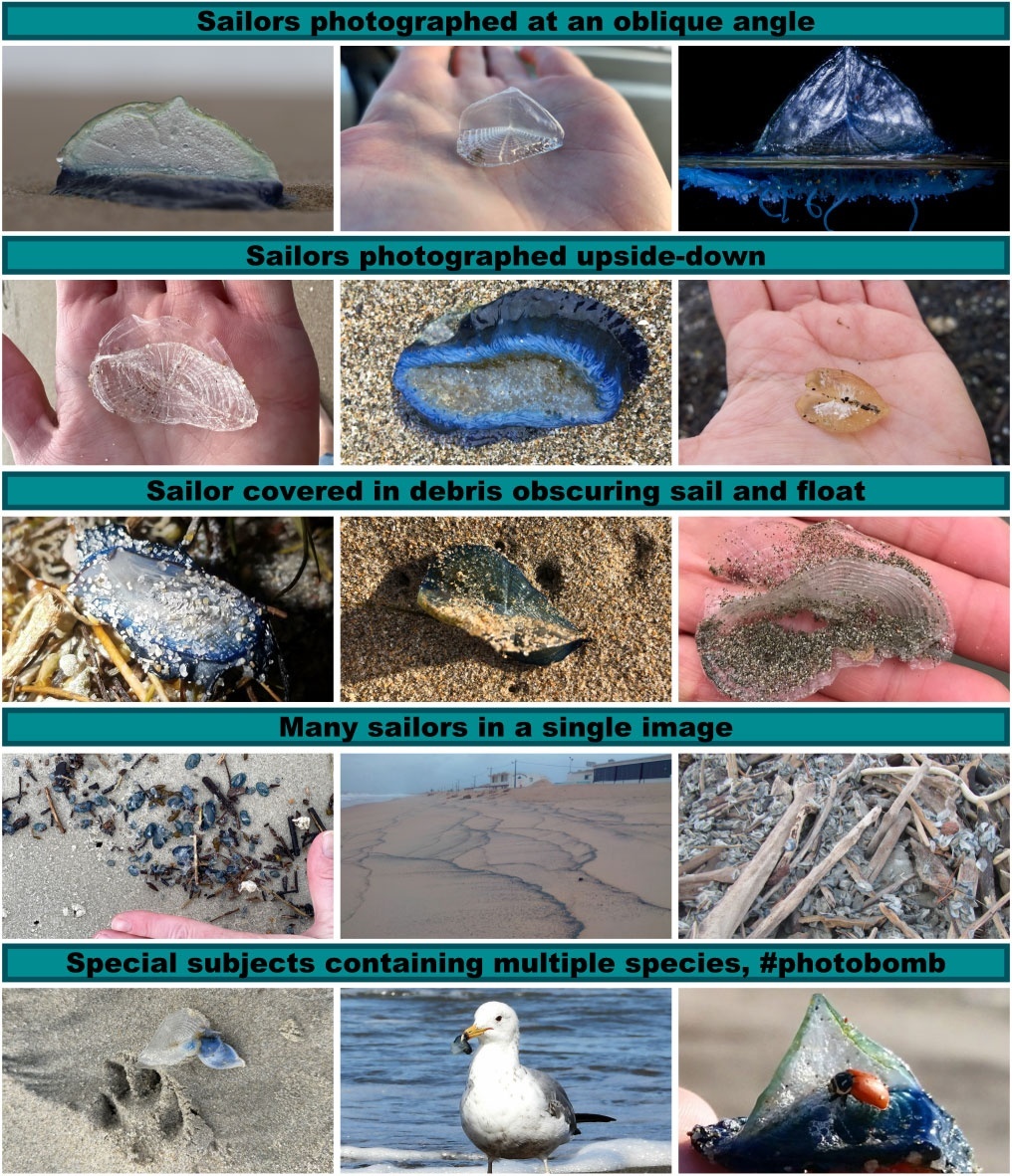
Figure 6
Select images of subjects from different categories of issues that proved challenging for volunteers to reach consensus on regarding the direction of the sail, or handedness. Additionally, several special cases are highlighted in which multiple species were observed in a single image tagged using #photobomb. Photos used under Creative Commons license hosted on www.inaturalist.org with credit to (from top, left to right) Jen Sanford, Will Kennerley, João Pedro Silva, jennykknight, Sarah, suzannewertheim, Joe MDO, martinthompson6, sooners52, Sarah-Mae Nelson, Carmen B. de los Santos, Arnim Littek jwschwend, Elizabeth Bettenhausen, and Trent Barnhart.
User stats
The number of subjects classified per unique user varied (minimum = 1, maximum = 2283, median = 8, average = 26) with a subset of highly engaged users completing a majority of classifications. A total of 89 users comprised more than 50% of the classifications, and the 98th percentile for subjects classified per user was 192 subjects.
Full season quality and accuracy assessment
Using the original training set curated by experts, 511 subjects that were verified to contain a single left or right sailor were cross-checked with volunteer data using an agreement of four or more volunteers as the benchmark. In a marked improvement in accuracy from the original beta test, 323 subjects had four or more volunteers in agreement with only 2 subjects (<1%) incorrectly identified.
Talk Board participation and communication
The Talk Board received 486 comments total. The most active board was the Notes board with 68 Participants, 231 Discussions, and 428 Comments. Relatively few participated in the Introduce Yourself board, which had 11 Participants, 11 Discussions, and 24 Comments, with 5 of the Discussions originating from the research team. Tags (e.g., #photobomb, #upside-down) were a helpful way to encourage participation on the Talk Board and were useful when cross-referencing observations and making corrections in real time. The #photobomb tag in particular offered an unforeseen dataset of species interactions, including sailors being consumed by various animals including gulls and insects, and the co-occurrence of sailors with other neuston species. Talk Board participation does not necessarily correlate with participation in subject classification. Only 2 of the top 10 users based on the number of classified subjects posted on the Talk Board. Several users noted their preferred means of communication was via live updates on the homepage banner (Figure 7). Nearing the project’s end, we used the banner to provide a countdown and had an ad hoc competition to see which user would complete the final subject, an honor awarded to user Kate_the_Great.
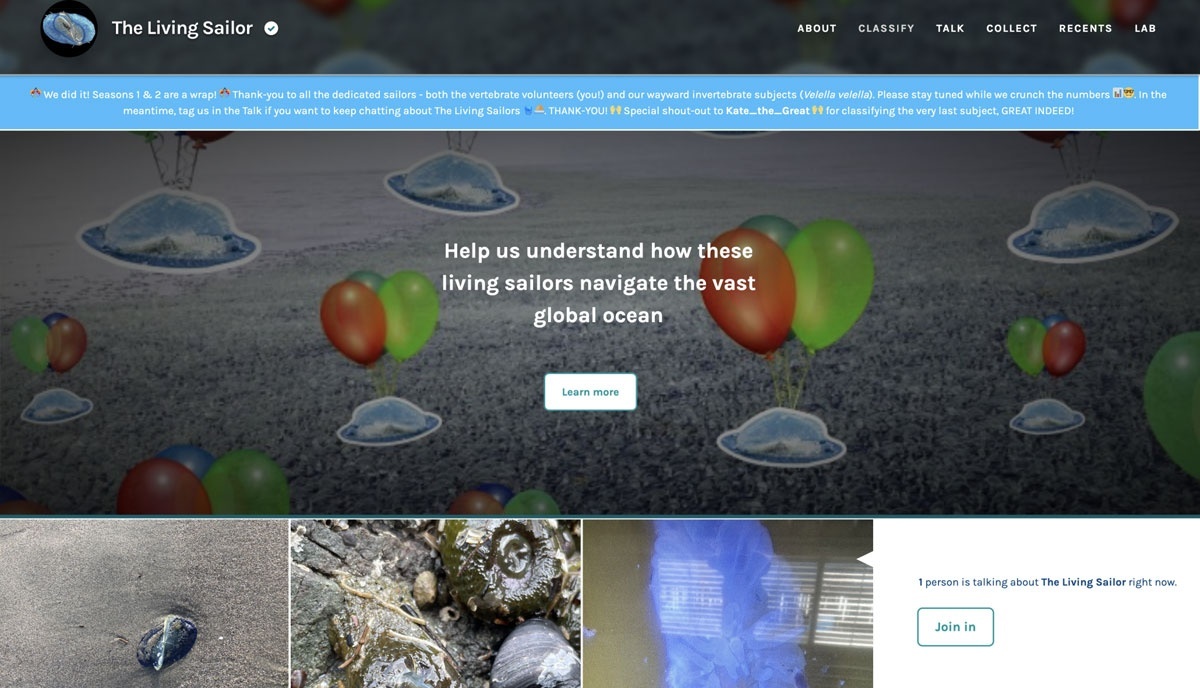
Figure 7
Homepage of The Living Sailor after the conclusion of data collection. Sailors with cartoon balloons flying were added. The homepage banner (in blue) was used to regularly update volunteers throughout the project. The update depicted celebrates the conclusion of the study and gives special recognition to user Kate_the_Great for completing the last subject.
GO-SEA subject outcomes and accuracy
GO-SEA contained 828 observations covering the V. velella geographical range, and 68 of these were also in the Helm Lab training set. GO-SEA produced marginally better subject data for determining handedness. Volunteers were able to positively identify 55% of subjects from all iNaturalist observations and 59% of GO-SEA linked subjects, but this difference was not significant (X-squared = 1.7395, df = 1, p = 0.1872). Ergo, iNaturalist observers that are, generally speaking, agnostic to the intention of downstream use, perform well compared to GO-SEA observers. GO-SEA also had participants collect presence-absence data, which is not available for all iNaturalist observations, and can be useful in determining abundance and neuston hotspots.
Discussion
Through The Living Sailor project, we successfully reached more than one thousand Zooniverse volunteers, making high seas science more accessible for a wider audience, and we compiled a large amount of data useful for testing numerous hypotheses fundamental to marine science. The project received a large number of volunteers in a short period of time, and accurately and rapidly assigned by-the-wind sailor count, condition, and sail direction to more than 10,000 iNaturalist observations. Globally, we gathered data from every major ocean basin where by-the-wind sailors commonly occur, with most iNaturalist observations coming from the west coast of North America, the Mediterranean, and the coasts of Southern Australia and New Zealand. Although we captured a global distribution, the concentrated effort to a few select regions underscores the importance of outreach for new users for studies involving a globally distributed species.
The Zooniverse platform is multifunctional with features useful for data generation, education, and community building, notably via the Talk Board, direct messages, and the homepage banner for live updates on the project. Over half the data came from 89 highly active users, and several users completed more than 1,000 classifications individually. The Talk Board was an active and valuable space to engage directly with volunteers, and the use of tags was helpful in secondarily categorizing subjects for further investigation. For example, many by-the-wind sailors were photographed upside-down, complicating sail direction determination, and the #upside-down tag enabled the research team to manually correct those subjects as they were flagged by volunteers. The #photobomb tag created a subset of interesting observations of species interactions, including sailors being consumed by birds and insects and co-occurrence with other neustonic species. The most vocal volunteers on the Talk Board were not necessarily the most active in classifying subjects; the user with the most subjects completed did not comment on the Talk Board, underscoring the heterogeneity of user experiences.
Given the crowdsourced nature of iNaturalist, we can expect the quality of observations to vary, and inevitably some low-quality images may be difficult for Zooniverse volunteers to classify. We investigated subjects for which volunteers did not reach the agreement threshold, and discovered several general trends in photography that lead to disagreements. Here we highlight disagreement for the hand phenotype, as it was the most complex of the three endpoints. For a majority of challenging subjects (69%), the issue was related to the direction or angle of photography used to capture the by-the-wind sailor. Oblique photos (38%) that did not show the float on both sides of the sail proved challenging, although with expert knowledge we were able to manually assign the correct hand phenotype. Upside-down sailors (31%) were a persistent issue from the beta-test through the full launch; however, training materials that emphasized how to correctly assign the hand phenotype on upside-down sailors improved outcomes in the full season. If salient features of the float (e.g., hand, size, ring count) are to be measured, additional onboarding for observers may prove beneficial. We made an interesting observation among subjects that were deemed as “good” (15%), wherein the sailor was upright and both sides of the float were visible for clear determination of the hand phenotype. In these cases, approximately half of the sailors were photographed at a 90-degree angle relative to most of the training material. The simple rotation of the by-the-wind sailor appears to have made this task difficult, despite the training material demonstrating how rotation does not influence the hand direction.
Despite disagreements, a majority of subjects were assessed with a high degree of accuracy. Using a subset of data that was curated by the Helm lab to confirm subject sail direction, we found that the supermajority threshold resulted in data with a high degree of accuracy (<1% error rate). These results are comparable to other image-based community science studies (Hsing et al. 2018; Clare et al. 2019) and lend confidence for downstream applications of the data. The dataset may also be leveraged for machine learning to acquire additional data (Langenkämper et al. 2019). We assessed the proportion of subjects in agreement between use-agnostic iNaturalist observers and participants in the GO-SEA project. We found observers with GO-SEA contributed subjects that performed marginally better than the average iNaturalist observer, but overall, both sets of observations performed well. It is possible to quality assess iNaturalist observations for taxonomy, distribution, and image quality (Billotte 2022); however, additional context for project on-boarding regarding the position of a subject could improve downstream applications.
Here we demonstrate a novel approach for high seas education and generating scientifically rigorous data on a species that normally exists well beyond any one nation’s jurisdictional boundaries. By-the-wind sailors are but one species among many in a biodiverse community of animals that float on the sea surface (Helm 2021). The Living Sailor project raised awareness for sea surface animals at an opportune time for conservation. The United Nations High Seas Treaty (or BBNJ) was signed in 2023 (United Nations 2023), ratified on September 19, 2025, and will enter into force in January 2026. Once implemented, the BBNJ will govern all activities on the high seas. The implementation of scientifically informed policy that protects animals living on the sea surface through the BBNJ process will require public support and transmission of science to decision-makers.
Conclusion
The combination of iNaturalist observations from around the world and the multifunctional Zooniverse platform made it possible to conduct cutting-edge high seas science with a global community. The iNaturalist GO-SEA Project made it possible to train at-shore volunteers. Zooniverse data proved to be high quality, and the built-in Zooniverse features make recruitment of volunteers and execution of projects comparatively easy compared with building an in-house project. Through The Living Sailor, we reached more than 1,000 volunteers, had an active Talk Board and informational pages, and collected research-quality data from thousands of by-the-wind sailors globally. None of this would be possible without the iNaturalist and Zooniverse platforms, and The Living Sailor offers a novel case study that combines these two participatory science platforms for high seas research and education. We discovered several patterns in observation quality, namely the position of subjects during photography, and offered guidance for future projects. The data generated from The Living Sailor will help unlock mysteries in high seas science; from using count data to guide satellite imagery to measure global hotspots to understanding how the sail direction guides by-the-wind sailors across vast oceanic distance. Community science is a powerful tool for making the open ocean more accessible to both a general audience and professionals alike.
Supplementary Files
The supplementary files for this article can be found as follows:
Supplemental File 1
Metadata for iNaturalist subjects used in beta-testing The Living Sailor workflow for accuracy. DOI: https://doi.org/10.5334/cstp.847.s1
Supplemental File 2
Metadata for all iNaturalist subjects imported to Zooniverse used in “full season” of The Living Sailor project. DOI: https://doi.org/10.5334/cstp.847.s2
Acknowledgements
Thanks to Gabrielle Ellis, Matthew Carvalho, Ethan Barkalow, Vikram Venkatram, Charvee Dua, Delfina Bell, Emily Sweeney, Dora Pisula-Litoff, Solange Camacho, Matt Gardiner, Aaron Magtoto, Kate Satterfield, Jonah Owens for their technical support on this project. Special thanks to Zooniverse volunteers Larry Jensen, Zane Warden, Ashleigh Swett, and Amanda Cogan Barber for their contributions to the project and thoughtful feedback.
Competing Interests
The authors have no competing interests to declare.
Author Contributions
Tom Iwanicki: conceptualization; data curation (lead); formal analysis (lead); methodology (lead); writing – original draft, review, and editing (lead). Rebecca R. Helm: conceptualization (lead); data curation; formal analysis; writing – original draft, review, and editing; supervision; funding (lead).