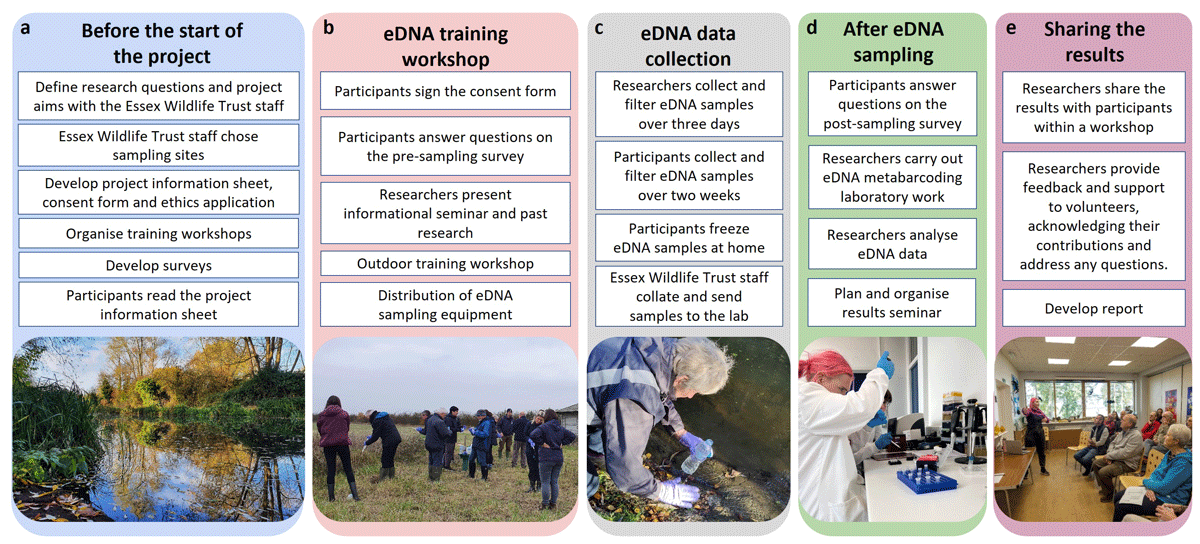
Figure 1
Workflow of the scientific process.
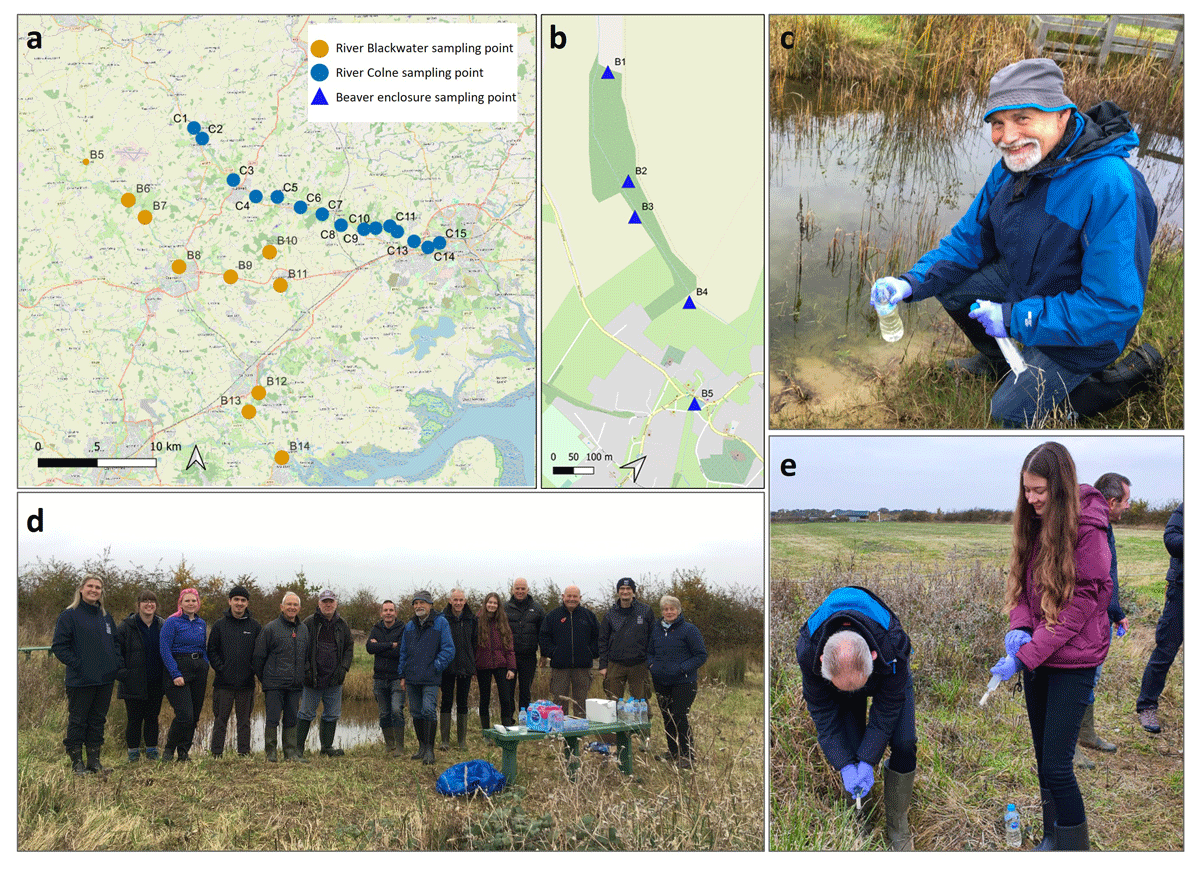
Figure 2
(a) Environmental DNA (eDNA) sampling locations in Essex along the river Colne (C1–C15), river Blackwater (B6–B14) and (b) inside and downstream of the beaver enclosure (B1 – B5). (d) The volunteers, Essex Wildlife Trust (EWT) staff and researchers attending the environmental DNA (eDNA) training workshop at Abberton Reservoir in November 2021. Volunteers were trained in eDNA water sample collection (c) and filtration (e).
Table 1
Citizen scientists’ information.
| CHARACTERISTIC | FREQUENCY | |
|---|---|---|
| Gender | Female | 3 |
| Male | 7 | |
| Ethnicity | White/British | 10 |
| Age | 18–24 years | 1 |
| 25–34 years | 1 | |
| 55–64 years | 3 | |
| 65–74 years | 4 | |
| 75+ years | 1 | |
| Level of education | A-levels | 4 |
| Apprenticeship | 1 | |
| Certificate of Higher Education (CertHE) | 1 | |
| Postgraduate Certificate in Education (PGCE) | 1 | |
| Degree with Honours | 1 | |
| Master’s degree | 1 | |
| Doctorate | 1 | |
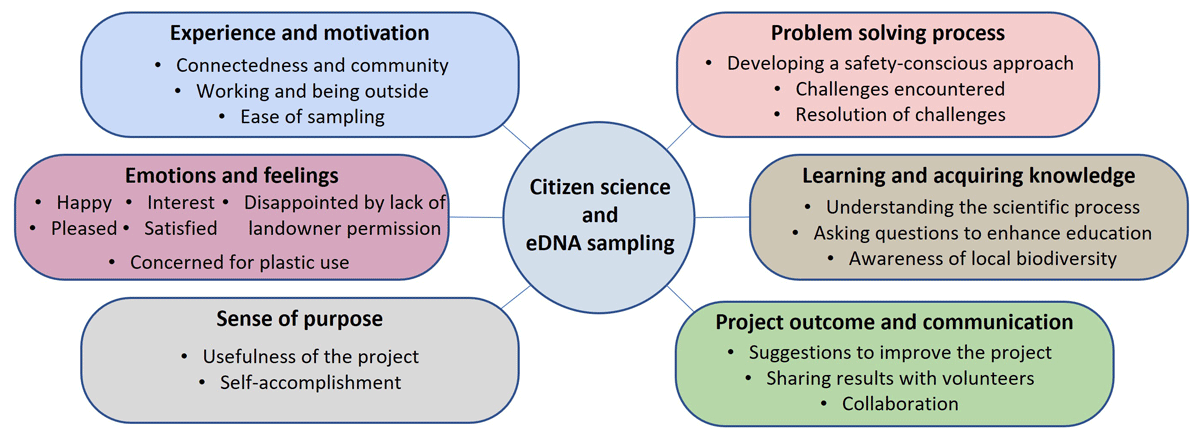
Figure 3
An illustration of the main themes identified through thematic analysis.
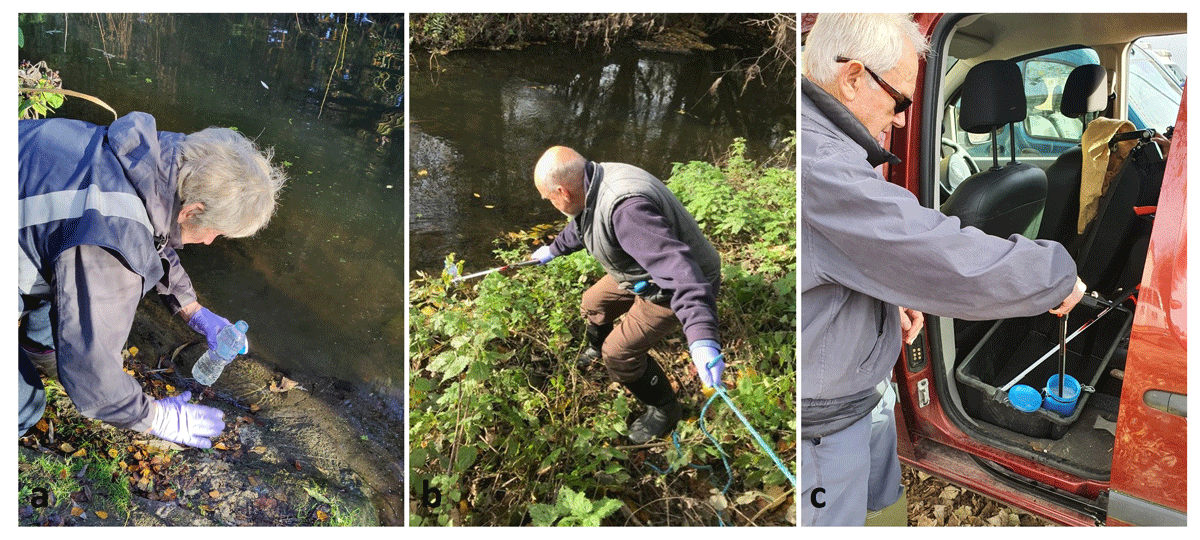
Figure 4
Citizen scientists carrying out the environmental DNA (eDNA) sampling. (a) Collecting eDNA water samples from the rivers’ edge with a water bottle and (b) using a long-reach litter pick to collect the water sample, then (c) sterilizing the litter pick.
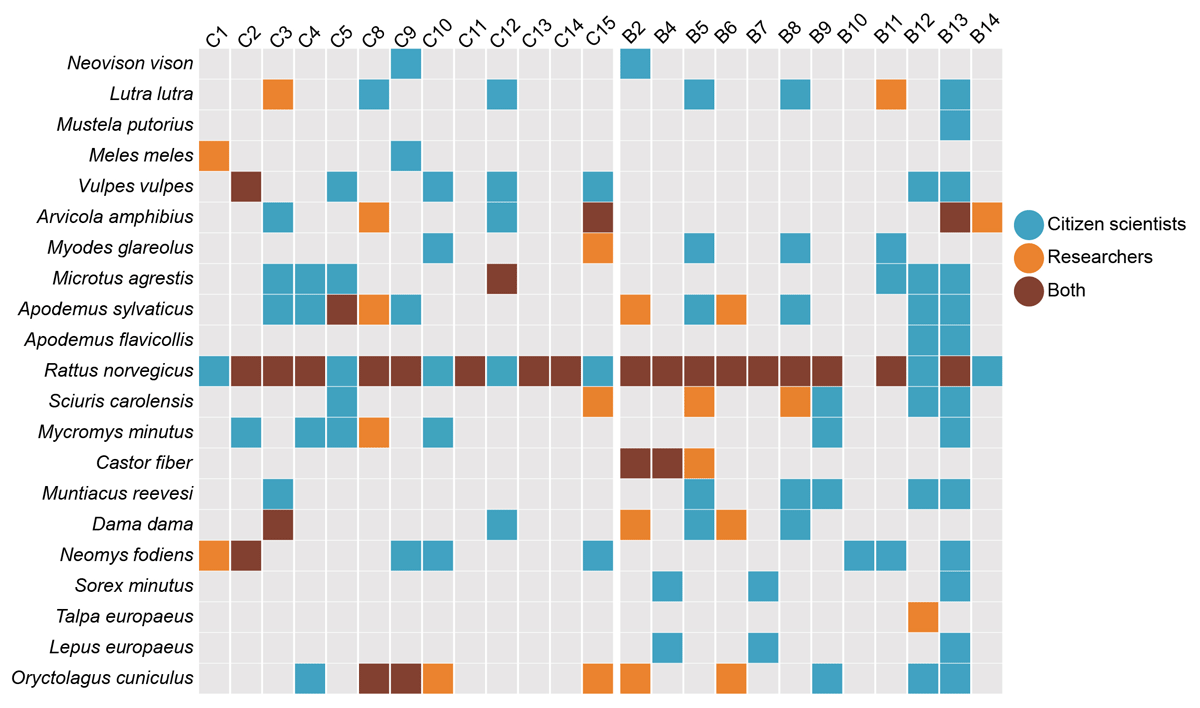
Figure 5
Mammal species detected using eDNA metabarcoding along the river Colne (C1–C15), the river Blackwater (B6–B12) and inside and downstream from the beaver enclosure (B2, B4, B5). Sites C6 and C7 were not included here because of discrepancies in the labelled sample bags.
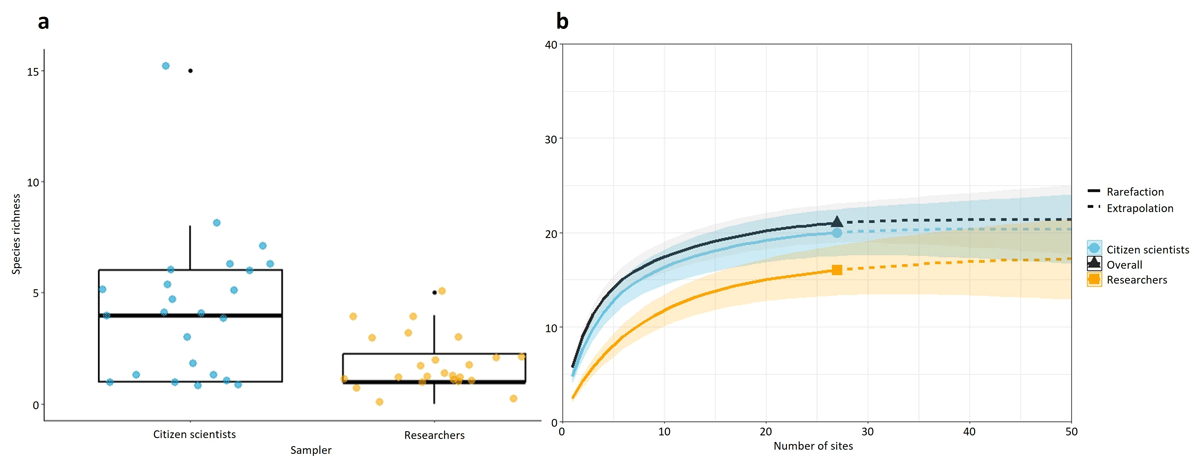
Figure 6
(a) Box plot of the overall species richness for the samples collected along the rivers Colne (C1–C15) and Blackwater (B2, B4–B14) by the citizen scientists and researchers. (b) Accumulation curve of species detected according to the number of sampled sites along the rivers Colne (C1–C15) and Blackwater (B2, B4–B14). Shaded area for each solid line shows the 95% confidence interval.
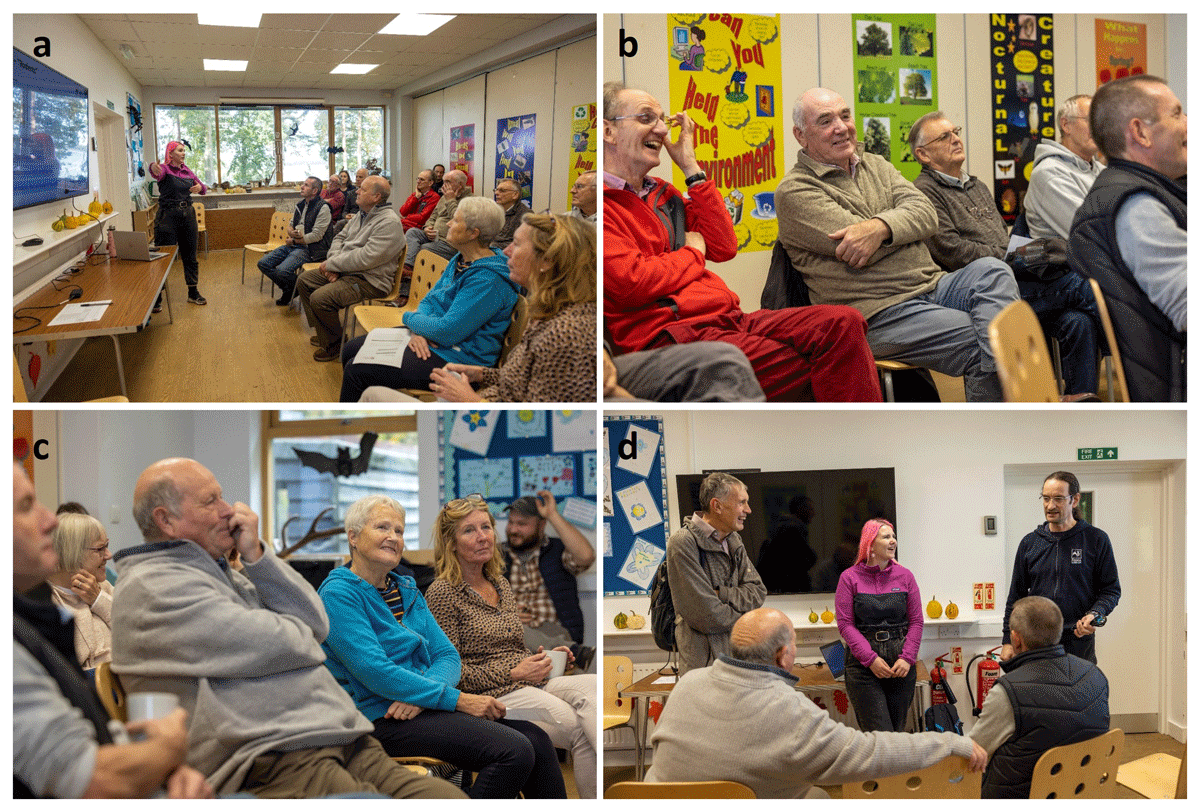
Figure 7
Citizen scientists, researchers, and the Essex Wildlife Trust (EWT) collaborating during the results workshop. Photo credit: Laura Bennetto (bennettophotography.co.uk).