Introduction
Citizen science is a practice by which people outside universities or research institutes participate in scientific research (Kimura and Kinchy 2019). In the environmental sciences, citizen science can help to collect data at a spatial and temporal resolution that would otherwise not be feasible. Scientist-led environmental citizen science projects therefore often focus on data collection for scientific purposes or increasing environmental awareness and literacy. In contrast, community-based water monitoring groups usually focus on data collection for local decision-making (Buytaert et al. 2014; San Llorente Capdevila et al. 2020). Most community-based water monitoring groups in Latin America, for example, were established in response to environmental struggles, such as surface and groundwater pollution and water scarcity (Himley 2014; Flores Rojas and Huamantinco Araujo 2017; Pareja et al. 2018; Vázquez 2019; Ulloa et al. 2020).
The conditions and motivations for the participants of citizen science projects in the Global North and the participants of the community-based monitoring projects in the Global South differ greatly. The former tend to join these projects because they are interested in the topic, enjoy being outdoors, or want to contribute to science or the protection of the environment (Phillips et al. 2019; West, Dyke, and Pateman 2021; Etter et al. 2023). The participants also tend to be formally educated and have access to technology or resources for monitoring equipment (Walker, Smigaj, and Tani 2020; Pateman, Dyke, and West 2021; Benyei et al. 2023). In contrast, participants of community-based water monitoring projects in the Global South join because of a specific environmental issue and often lack economic resources, familiarity with technology, access to equipment and scientific data, and technical support (Himley 2014; Ulloa et al. 2020; Ureta, et al. 2022). Furthermore, they live in more economically and politically unstable countries (Benyei et al. 2023).
The increasing development of digital technologies has resulted in smartphone applications (apps) that facilitate data collection for citizen science projects. For example, there are now several apps to document surface water quantity and quality (Lowry and Fienen 2013; Seibert et al. 2019; Costa et al. 2020; Malthus, Ohmsen, and van der Woerd 2020; North et al. 2023). While citizen science technologies (e.g., apps to collect data) can offer valuable support for community-based monitoring, the impacts of implementing them in areas in the Global South are not well documented (Walker, Smigaj, and Tani 2020; Benyei et al. 2023). Instead, evaluations of citizen science tools often focus on data quality (Etter et al. 2020; Blanco-Ramírez, van Meerveld, and Seibert 2023) or highlight the benefits and outcomes of citizen science for science, policy-making, and society (Miller-Rushing, Primack, and Bonney 2012; Fritz et al. 2019; Fraisl et al. 2020). However, the broader environmental, social, and political context influences the development of citizen science and its impacts (Kimura and Kinchy 2019; Blake, Rhanor, and Pajic 2020; Grigoletto et al. 2023). Thus, there is an increasing recognition of the importance to critically evaluate the implementation of tools from global citizen science projects in the Global South.
Walker, Smigaj, and Tani (2020) highlight the importance of studying the negative impacts and experiences of participants in water-related citizen science initiatives. Citizen science projects can directly negatively impact the livelihood of participants when they add burden to people whose life is already difficult or because the monitoring activities provoke health and safety risks. They can also disempower participants (e.g., due to the dependence on the use of technology developed and maintained by others) (Walker, Smigaj, and Tani 2020). The use of digital technologies in rural or Indigenous communities in the Global South may further reinforce inequalities as technology literacy may lead to exclusion (Walker, Smigaj, and Tani 2020; Benyei et al. 2021, 2023; Johnson et al. 2021). Even in citizen science programs that allow people to monitor their local environment, it is possible that the researchers who developed the methods promote what is known as “helicopter science” and are more interested in getting the data than making the methods and data useful for the communities (Adame 2021; Liboiron 2021; Gewin 2023). Cohen et al. (2021) point out that in the context of Indigenous communities, citizen science monitoring programs could reproduce extractive practices by accessing land (sites) for merely large-scale data collection. Data privacy and ownership are other essential aspects. Especially in areas with socio-environmental conflicts, protecting sensitive environmental and personal data is very important, and this may not align well with the aim of open data promoted by many citizen science projects (Benyei et al. 2023).
It is important for global citizen science projects to acknowledge power dynamics and to evaluate their approaches to not reproduce extractivist and colonial practices when their tools are implemented in socio-economic disadvantaged communities (Cohen et al. 2021). Some studies have focused on social and technical challenges, such as the technological and digital divide, recognition of different knowledge systems, and data sovereignty when implementing and using digital tools such as mobile apps (e.g., Johnson et al. 2021; Eyng et al. 2022; Grigoletto et al. 2023; Rangecroft et al. 2024), or have given recommendations for working with Indigenous people and communities in remote or rural areas (e.g., Cohen et al. 2021; Eyng et al. 2022; Benyei et al. 2023). This paper adds to this existing literature and aims to critically evaluate the use of the CrowdWater app in the context of community-based water monitoring in Latin America, with the objective to discuss the benefits and challenges when a global citizen science app is used in such a context. Drawing upon qualitative methods, we do a systematization of experiences (Falkembach and Carillo 2017; Jara 2018) for four on-site and four virtual workshops with community-based monitoring groups in Brazil, Chile, Costa Rica, El Salvador, and Guatemala. The literature mainly refers to workshops as a training and quality-control strategy in citizen science projects to improve data quality (San Llorente Capdevila et al. 2020; Thiel et al. 2023). The workshops indeed increased the understanding of the users on how to use the CrowdWater app (beyond online tutorials and instructional material) but equally important, highlighted difficulties in using the app and helped us to rethink how we demonstrate and can implement the app in these context (cf. Eyng et al. 2022). We relate our lessons learned to the current debate on citizen science outside North America and Europe (Johnson et al. 2021; Eyng et al. 2022; Benyei et al. 2023; Grigoletto et al. 2023). More specifically, we seek to generate a critical reflection on methodological considerations that go beyond technical aspects (e.g., replicability, data accuracy, or the scientific value of the data) to highlight the importance of recognizing power relations and the local socio-environmental context when implementing smartphone apps in community-based water monitoring (Kimura and Kinchy 2019; Cohen et al. 2021; Grigoletto et al. 2023; Rangecroft et al. 2024). In particular, we reflect on the following questions:
What are the benefits and challenges of using a smartphone app originally developed for a global citizen science project for community-based water monitoring in Latin America?
Which considerations must be taken when implementing a citizen science app and engaging with community groups in disadvantaged areas in Latin America?
CrowdWater: Citizen Science Project and Smartphone App
CrowdWater is a global citizen science project and app to collect hydrological data, based at the University of Zurich in Switzerland. The project and app were designed by scientists; participants are mainly involved in data collection. Thus, it is a contributory citizen science project (Shirk et al. 2012). The scientific goals of CrowdWater are to determine the quality of hydrological citizen science data and its value for hydrological modelling (Seibert et al. 2019; Etter et al. 2020). The methods have been tested mainly in Switzerland, Germany, and Austria, where traditional hydrological data are available and can be used to determine the quality of the citizen science data. However, the project’s goal is to develop methods for data collection that can be used in areas where hydrological data are scarce. Except for some specific case studies (e.g., Clerc et al. in review), the data are not yet used in hydrological models.
The CrowdWater project designed a smartphone app that enables participants to record hydrological observations on surface water bodies. Because CrowdWater aims for data collection by anyone and for any location, no physical measurement equipment other than a smartphone is needed for the observations. Observations are, therefore, mainly qualitative and recorded by answering specific questions and taking a photo of the water body. The photo is voluntary and used primarily for documentation and data quality checks. It is possible to submit the answers with the app directly or to use the app offline and upload the data and photos at a later time when internet access is available again. The CrowdWater app has been available for Android and iOS phones since 2016 and is currently available in ten languages, including Spanish and Portuguese. Although most of the data (>85%) have been collected in Europe, the app is used worldwide, including in Latin America (Figure 1).
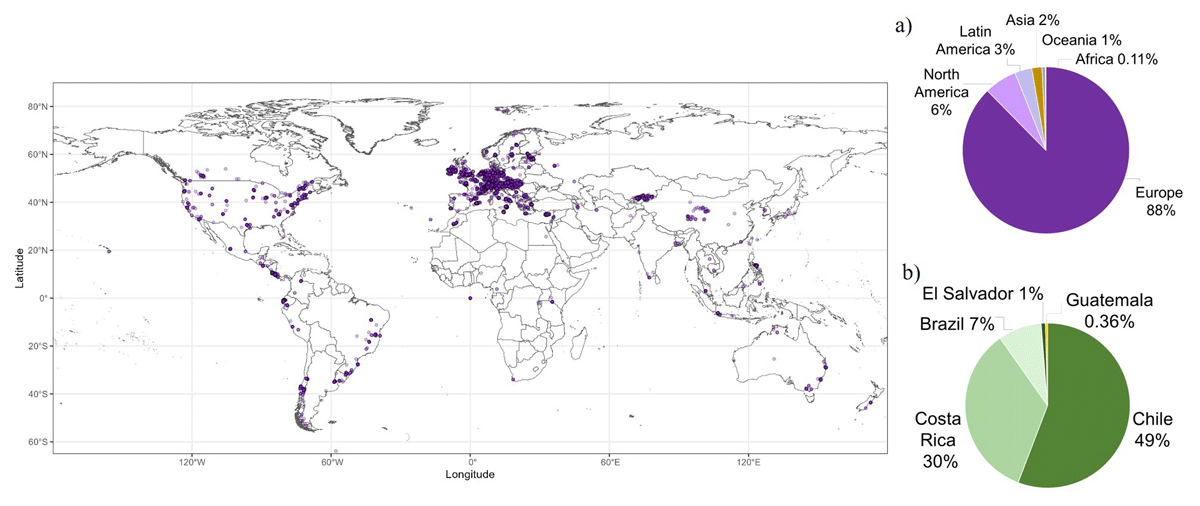
Figure 1
Geographic distribution of the >58,000 observations for 9,830 locations submitted via the CrowdWater app by 03-12-2024, and pie charts depicting the distribution of the observations (a) globally and (b) in Latin America. A darker color in the map indicates more observations for that location. Note that many symbols in the map overlap.
The app contains six different categories that enable participants to monitor stream water levels (using physical or virtual staff gauges), soil moisture, the state of temporary (i.e., non-perennial) streams, and plastic pollution. There is also a category to provide general information on the stream type. The virtual staff gauge category is one of the most frequently used categories. Here, app users document the relative changes in stream water levels based on the virtual staff gauge approach (Seibert et al. 2019; Etter et al. 2020) (Figure 2a). Qualitative information on surface water quality can be given in the stream type category. Here, users answer a set of questions related to visual water quality aspects and local knowledge of the selected stream (Figure 2b).
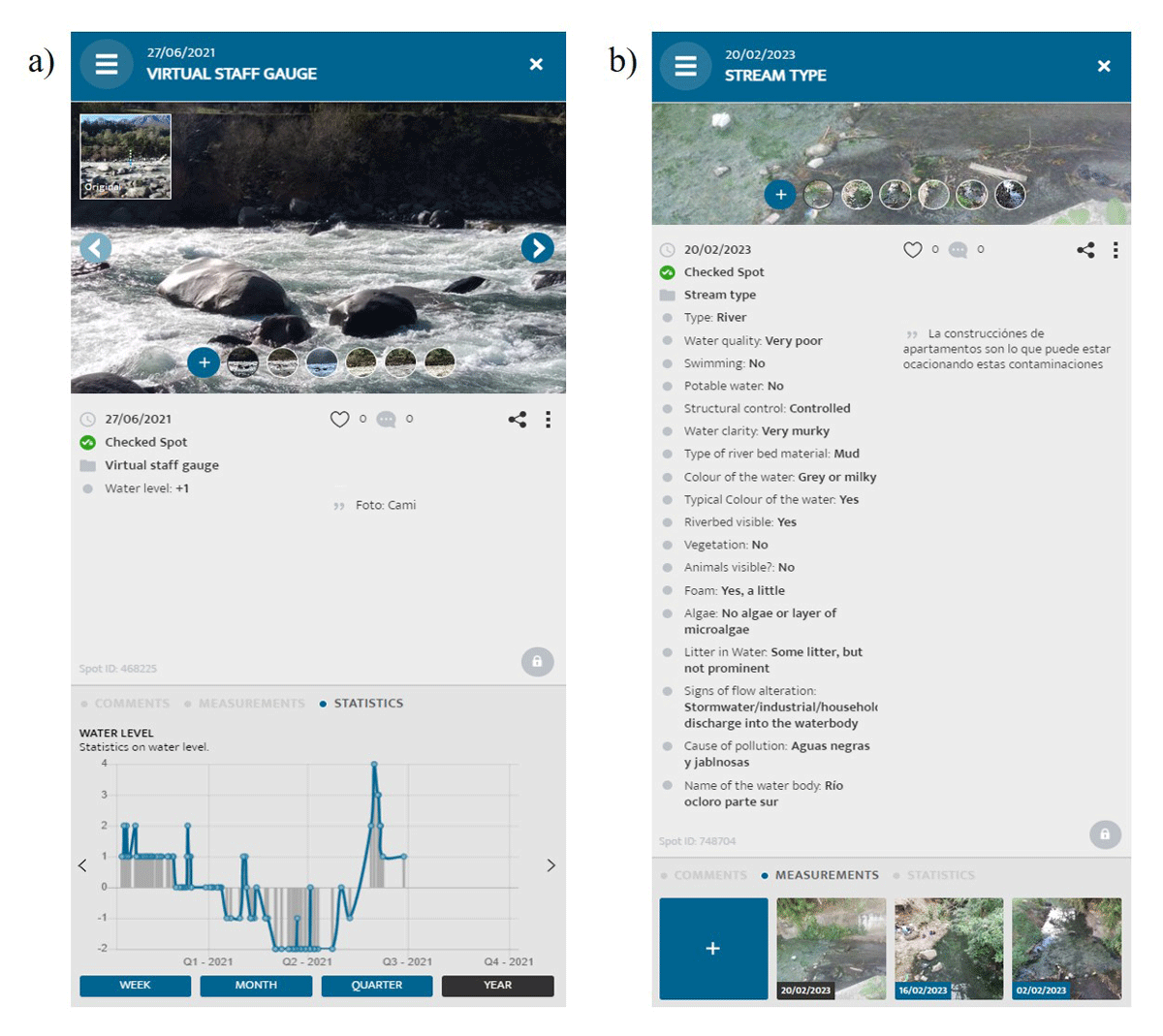
Figure 2
Screenshots of the CrowdWater app for (a) the virtual staff gauge category to report changes in the water level, and (b) the stream type category to report visual observations and local knowledge on water quality. In the virtual staff gauge category, the citizen scientists compare the water level in the stream (shown in the photo) to that of a photo of the stream taken at an earlier time and a sticker of a ruler (i.e., virtual staff gauge; shown in the insert). Repeated measurements lead to a time series of the relative water level (classes). In the stream type category, the citizen scientists answer a series of questions on the conditions of the water and provide local knowledge of the stream. The time series of the answers and photos can be used to document changes in visual water quality. The translation of the comment shown in b) is “The construction of apartments is what may be causing this contamination.”
CrowdWater Workshops in Latin America
Community engagement: getting in touch with community-based water monitoring groups in Latin America
CrowdWater has collaborated with different community-based water monitoring groups in Latin America since 2020. The collaborations were mainly initiated by the community groups because they were interested in using the app for their monitoring activities. Most groups contacted us (i.e., the CrowdWater team) directly (e.g., by email) asking for more information or for a meeting to introduce the project and the app in more detail. Other groups were contacted by us because we noticed that they had started to use the app and we wanted to learn about their goals and experiences. In all cases, we first had an initial online meeting (30–60 minutes), where we introduced ourselves and learned about the community monitoring group, their interests and motivations. Furthermore, we clarified general questions regarding the app, determined which categories of the app would be most useful for the community group, and set up a workshop plan to introduce the app to the members of the community-based monitoring group.
CrowdWater workshops: app introduction and implementation
The eight ~3-hour workshops took place between 2021 and 2023 (Table 1). Each group promoted the workshop independently (Figure 3). In some cases, the workshops were open to anyone, but all workshops were part of the regular training activities of the monitoring groups. The workshops were held on site, except for Brazil where two workshops were held online due to the COVID-19 restrictions (Table 1). In Chile and Costa Rica, an additional online workshop was conducted after the on-site one.
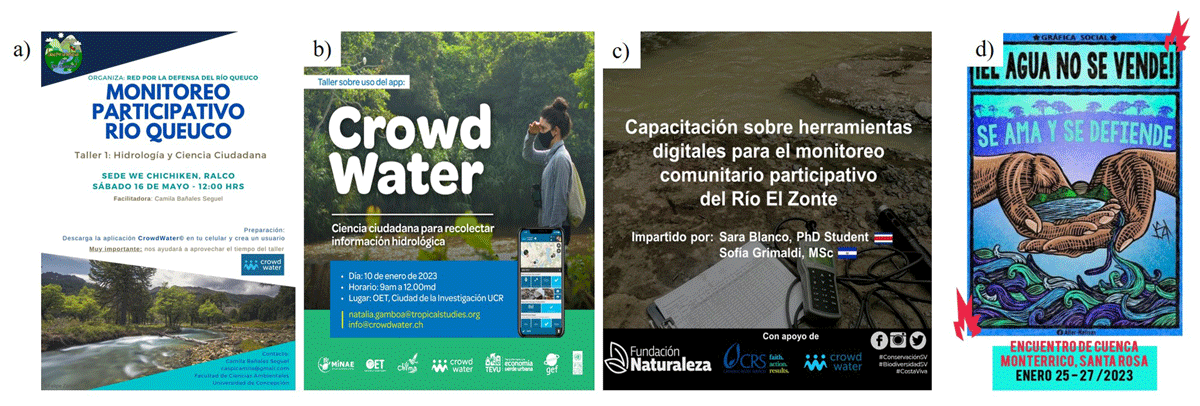
Figure 3
Flyers for the workshops: (a) Chile, (b) Costa Rica, (c) El Salvador, and (d) Guatemala.
Table 1
Overview of the CrowdWater workshops, the background of the participants, and the main water-related concern in each community. NGO: nongovernmental organization.
| LOCATION (RIVER) | INITIAL CONTACT BY | PARTICIPANTS | MAIN CONCERN | # PARTICIPANTS | DATE | FORMAT |
|---|---|---|---|---|---|---|
| Brazil (Pardo River, Minas Gerais) | Group | Community leaders of rural communities, technicians and group leaders from NGOs | Hydropower, Pollution from Agriculture | 20 | Sept 2020 Nov 2020 | Online (2x) |
| Chile (Queuco River, Alto Biobio region) | Group | Collective of Indigenous peoples (Mapuche), academic | Hydropower/water transfers | 20 | May 2020 Apr 2021 | On-site Online |
| Costa Rica (Interurban Biological Corridor Maria Aguilar, San José) | Group | NGOs, group leaders, municipalities, technicians and local monitoring groups | Pollution from sewage | 162 | Jan 2023 Mar 2023 | On-site Online |
| El Salvador (El Zonte) | CrowdWater | Community-monitoring groups, community members, NGOs and municipality | Pollution from sewage | 15 | Jan 2023 | On-site |
| Guatemala (Los Esclavos River) | CrowdWater | Collective of Indigenous peoples (Xinka) | Pollution from mining | 25 | Jan 2023 | On-site |
The 15 to 162 participants (Table 1) at each workshop were largely unfamiliar with the app prior to the workshops. Thus, the first part of the workshop consisted of an introduction by the community group, where they presented their monitoring activities, followed by an introduction to the CrowdWater project and app (Figure 4a–c), where we gave a detailed explanation on how to use the app, described previous research about the value of the data collected with the app, and offered further information on our research projects. As defined during the preparation meetings, we focused on two of the six categories: virtual staff gauge and stream type. The workshops also included time for participants to ask questions. As the workshops in Chile were part of the PhD project of Camila Bañales-Seguel, participants were also introduced to basic hydrological concepts during one of the workshops.
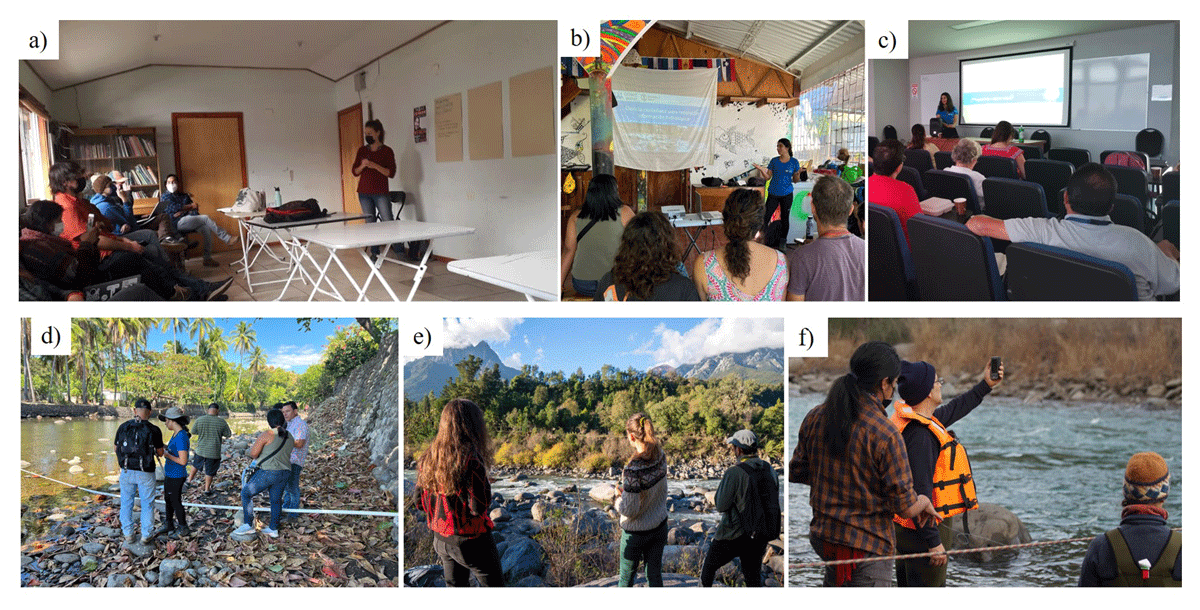
Figure 4
Photos of the on-site workshops. CrowdWater introduction in (a) Chile by Camila Bañales-Seguel, (b) El Salvador by Sara Blanco-Ramírez, (c) Costa Rica by Sara Blanco-Ramírez; and (d) workshop participants at the El Zonte River (El Salvador), (e) at a river visit in Chile, and (f) at the Queuco River (Chile).
The workshops included practical exercises. In the virtual workshops, participants were encouraged to go to a nearby waterbody to try out the app whenever possible after the app introduction and get feedback via the app. In contrast, the on-site workshops included a visit to a nearby river where the participants used the app (Figure 4d–f). After this short exercise, the participants returned to the meeting room and were able to ask questions and exchange their experiences with the app. Additionally, there was feedback on some of the observations that were submitted via the app to encourage good practices when using the app and to correct common mistakes (e.g., how to turn on the GPS location, change the location, or change the size of the virtual staff gauge). After each workshop, we wrote down notes on the workshops, our experiences, and lessons learned.
There was regular communication and follow-up with the group leaders (i.e., the initial contact person or the coordinator of the community-based monitoring groups) after the workshop, and participants received feedback via the comments section in the app. The additional workshops in Chile and Costa Rica consisted of a follow-up for previous participants and an introduction to the app for new participants.
Systematization of experiences
Inspired by Latin American critical and participatory methodologies, we adapted the methodology of systematization of experiences (SE) (Falkembach and Carillo 2017; Jara 2018) to interpret and critically reflect on our observations and experiences at the workshops (Figure 5). The aim was to learn from these experiences and to identify the benefits and challenges of using the app in local Latin American contexts. The insights gathered by active participation and participant observations at the workshops can be used to improve the co-production of knowledge for CrowdWater and similar citizen science projects (López-Garay and Pérez-Perdomo 2024). The findings from the workshops were cross-checked with semi-structured interviews with the leaders of the community-based water monitoring groups. Where possible, we also tried to compare them with published results from other studies to place our findings in a wider context (Denzin 2017) (Figure 5).
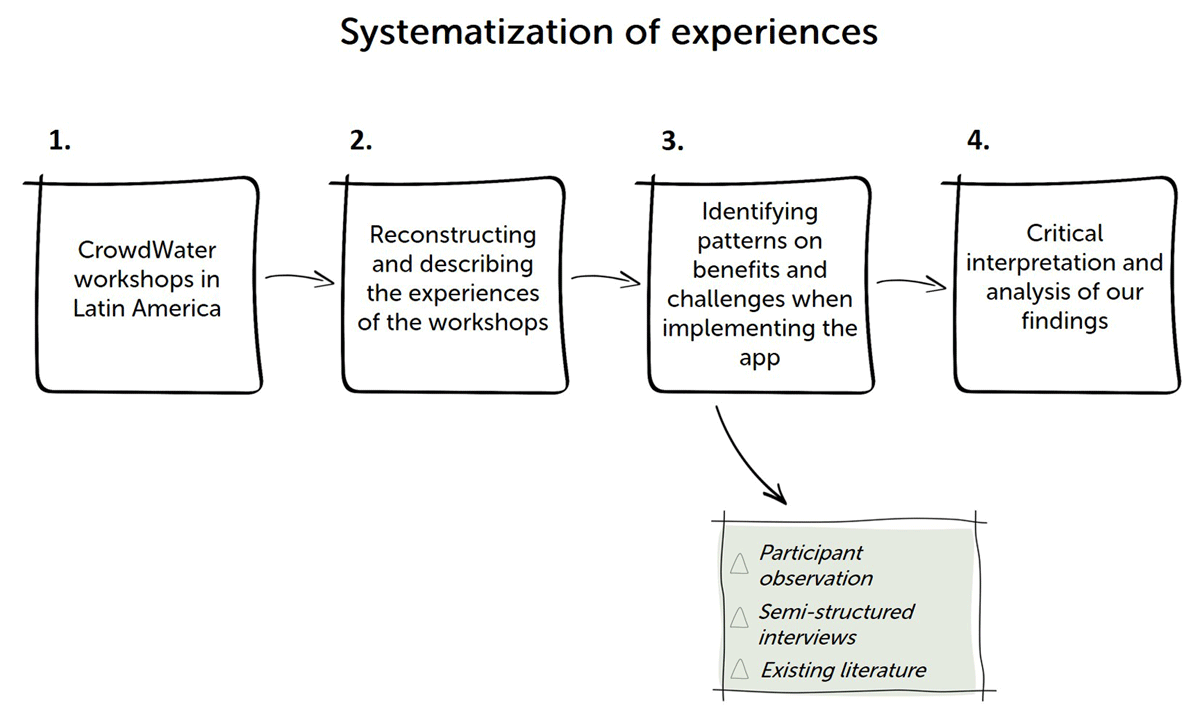
Figure 5
Systematization of experiences of the CrowdWater workshops in Latin America. The triangulation method (Denzin 2017) based on participant observations during the workshops, semi-structured interviews, and literature review, was used to validate the identified benefits and challenges of the use of the CrowdWater app in community-based water monitoring in Latin America.
The semi-structured interviews (see Appendix A) were held with a leader from each community-based water monitoring group (five interviews in total, one for each location/community) nine months after the last workshops, that is, when the SE started. This allowed each community monitoring group ample time to use and become familiar with the app. Each interview lasted 30–40 minutes and included questions regarding the effectiveness of the workshop, its relevance in terms of content and format, and the usefulness of the app for the community-based monitoring, as well as the challenges and barriers faced when using the app (see Appendix A). The interviews were recorded after the informed consent of each participant and were partially transcribed. Direct quotes from these post-workshop interviews are referenced as GLx, where GL stands for group leader and × is an identifier used to report the anonymized information. Note that these interviews were mainly used to support our interpretations of the observations and experiences at the workshops. According to principles of qualitative research, we aim to understand how specific groups use and have given meaning to the app, processes, and power relations concerning knowledge, benefits, and the challenges of using the app in these contexts.
Lessons Learned Regarding the Benefits and Challenges in Implementing a Global Citizen Science App in a Local Water Monitoring Context
Communication and community engagement
Long-term participation in citizen science projects requires an engagement strategy that builds and maintains collaborations, and communication that actively engages the participants (Benyei et al. 2023; North et al. 2023; Thiel et al. 2023). As a global citizen science project, communication in CrowdWater is mainly digital (e.g., messages in the app, online meet-the-team events, and personal emails to the participants when they reach out to us). Thus, there is limited direct exchange between the CrowdWater team and app users. The workshops were an opportunity for us to interact directly with potential app users. More specifically, they allowed us to interact with people living in places where hydrological data are scarce (i.e., the locations for which the methods are being developed and evaluated) and to evaluate how the CrowdWater app could be used in these contexts.
Contacting established community-based monitoring groups often facilitates the recruitment of participants in citizen science projects (San Llorente Capdevila et al. 2020). As other studies found, working with community groups that are in direct contact with interested participants is an opportunity to scale-up the use of the app (Collins et al. 2023). The use of the app increased considerably after the workshops because local NGOs incorporated the app in their monitoring. For example, the number of observations in Costa Rica increased from 27 in the six months before the workshop to 251 in the six months after the workshop. The five community groups reported 1,677 observations by December 2024, and three of them continue using the app (Table 2). Furthermore, the community group leaders tracked the use of the app and were able to give direct feedback to the participants to improve data quality. Some NGOs also organized additional workshops to introduce the app without the involvement of the CrowdWater team.
Table 2
Overview of the use of the CrowdWater app in all five countries and whether the collaboration is ongoing or not (as of 03-12-2024).
| LOCATION (RIVER) | NUMBER OF CROWDWATER OBSERVATIONS | NUMBER OF VIRTUAL STAFF GAUGE OBSERVATIONS | NUMBER OF STREAM TYPE OBSERVATIONS | COLLABORATION |
|---|---|---|---|---|
| Brazil (Pardo River, Minas Gerais) | 143 | 56 | 24 | Ongoing |
| Chile (Queuco River, Alto Biobio region) | 936 | 790 | 9 | Finished |
| Costa Rica (Interurban Biological Corridor Maria Aguilar, San José) | 577 | 146 | 268 | Ongoing |
| El Salvador (El Zonte) | 14 | 7 | 3 | Ongoing |
| Guatemala (Los Esclavos River) | 7 | 1 | 2 | Finished |
Although partnering with local groups, especially NGOs, positively influences long-term collaborations and monitoring (Deutsch, Lhotka, and Ruiz-Córdova 2009; Flores et al. 2013; Deutsch and Ruiz-Córdova 2015), it also requires time to establish these collaborations, as building trust is essential when collaborating with local groups (Weeser et al. 2018; San Llorente Capdevila et al. 2020; Rangecroft et al. 2024). Particularly in areas with socio-environmental conflicts, this trust, especially with respect to who produces and has access to knowledge, is important (Himley 2014; Vázquez 2019). As noticed in the workshops and confirmed in the interviews afterwards, participants were sometimes reluctant or had “a distrust that the data generated might be used against the communities” [GL2].
Motivations of community-based water monitoring groups
Expectations and motivations of participants play a central role in citizen science (Phillips et al. 2019). Especially in scientist-led projects there is a potential “mismatch of goals” (Walker, Smigaj, and Tani 2020). The community groups that contacted CrowdWater were interested in the app as a tool for data collection to complement their monitoring. There are benefits to using existing citizen science apps for local monitoring. The group leaders often mentioned in the first meeting that they were interested in the CrowdWater app because it had already been developed and scientifically tested (e.g., Etter et al. 2020; Strobl et al. 2019; van Emmerik et al. 2020). Community groups and other monitoring agencies benefit from this because it avoids the time and financial investments required to develop new tools. As one interviewee said: “we do not have the resources to set up our own platform (…) we are aware that the resource is there, so we must use it” [GL3]. Thus, the lack of financial and technical resources and access to monitoring equipment made the CrowdWater app a relevant tool for community-based monitoring purposes in the areas where the workshops took place. The post-workshop interviews also highlighted the benefits of the app for systematic data collection. Four of the five group leaders rated the app as very helpful (9 or 10 out of 10 on a Likert scale) to complement their ongoing monitoring: “We have practically no effective tools for monitoring with the participation of the communities. It is all very informal, spontaneous, not systematic, and the app gives exactly this possibility in a simple way and it would allow for the data to be regularly acquired” [GL2].
Nonetheless, app functionalities must match local interests (Skarlatidou and Haklay 2021; Eyng et al. 2022). In Costa Rica, workshop participants used mainly the stream type category because it allowed them to report causes of pollution and signs of flow alterations (e.g., industrial/household discharge into the waterbody). Although open questions or qualitative observations in a citizen science app can be challenging for data systematization (Eyng et al. 2022), the app allowed participants to record additional relevant information. The post-workshop interviews revealed that the use of this category in the app contributes to the monitoring of river cleanup activities by “documenting and validating the different actions that the project is developing regarding river restoration” [GL4].
The classes and questions in the CrowdWater app were not developed in collaboration with local communities. This meant that they were not the most suitable for all cases. For example, in Guatemala, mining activities affect water quality, and the lack of government action motivated the community-based monitoring. The qualitative information on the smell or color of the water or the presence of litter in the stream type category was not what the participants needed. Their need for quantitative data on water quality meant that the app did not fit the monitoring needs of the community. Therefore, the app was not used beyond the workshop (Table 2). In some other cases, the classes used in a category may require adjustment to local conditions. For example, Rinderer et al. (2015) noted that the classes used for qualitative soil moisture monitoring needed to be changed so that they were better aligned with farmers’ experiences and knowledge of seeding and irrigation practices.
Technology access and literacy
Internet and technological developments have increased the availability of digital tools for environmental monitoring and have transformed monitoring activities. In particular, the ability to determine the location, send data, and upload photos easily with a smartphone has facilitated in-situ and real-time data collection in citizen science. Although most of the literature focuses on the benefits of these digital developments, some studies have stressed the need for the tools to be user-friendly and cost-effective (San Llorente Capdevila et al. 2020; Benyei et al. 2023). Only a few studies have explored the positive and negative impacts of new technologies on citizen science (Walker, Smigaj, and Tani 2020; Johnson et al. 2021). Digital technologies may cause inequalities and exclusion when working with older people, indigenous people, or in rural areas because the use of these technologies may be a challenge or barrier to participation (Benyei et al. 2023). This consideration applies to the CrowdWater app as well, especially as its purpose is to provide a monitoring tool for places where resources for traditional hydrological monitoring are limited. Projects with similar goals should consider that, in these places, there may also be limited internet access and a lack of familiarity with smartphones and apps. Eyng et al. (2022) highlight, therefore, the need to identify access and use of specific technologies beforehand to not impose a workflow that is not familiar to the participants.
Although most of the workshop participants had a smartphone and could test the app during the river visits, we noticed that there was a learning curve for most participants and that the use of the app was not so intuitive for everyone. Some participants did not have an email address, which is needed to create a user account for the app. Other participants were unfamiliar with the GPS on their phone or did not know how to upload a picture. Although all group leaders considered the app very easy to use, they also agreed that the low familiarity with mobile phone apps is a barrier for people to use the CrowdWater app. For example, participants in Chile took photos of the river to report water level changes but even after the workshop often asked the group leader to upload these in the app. In El Salvador, several participants had issues with their smartphone or internet access due to a lack of familiarity with using apps. The interviews with group leaders confirmed that technology is one of the main challenges when implementing and using an app in their groups. The lack of formal education was another barrier. Although a person “is motivated to defend the water but there is no technical capacity to use the app (…), there is a certain degree of difficulty, yes, for people with less formal education, and we have many” [GL3]. Another interviewee mentioned: “there is not enough awareness to use smartphones as a resource to support these initiatives” [GL2]. In addition, three group leaders mentioned the limited access to internet in rural communities as another barrier. These examples highlight the educational and technological barriers when implementing an existing app in certain contexts (Benyei et al. 2023). Although some of these barriers also exist for some participants of citizen science projects in the Global North, this is an issue for a much larger fraction of the rural population in the Global South. In rural areas in Latin America and the Caribbean, only 43% of the population has internet access (versus 79% for urban areas) (Ziegler and Arias-Segura 2022).
Data accessibility
Open access to data is a desired (or even a required) practice in current academic research as it allows for a broader use of the data. Leaders of citizen science projects with an academic view of open data will likely see it as the obvious choice because it promotes the use of data within and beyond the scientific community. However, open data can be problematic where communities have been exposed to extraction and inequalities regarding knowledge production and access (Cooper, Rasmussen, and Jones 2021). Open data in citizen science implies that we do not only question who has access to the data but also for what purpose it is accessible (Cooper, Rasmussen, and Jones 2021). Particularly in Indigenous territories or conflict areas, data ownership and sovereignty of sensitive environmental and personal data are important (Johnson et al. 2021; Benyei et al. 2023). Previous studies have discussed the different perspectives on open access data in citizen science and their ethical implications (e.g., Lynn et al. 2019; Cooper, Rasmussen and Jones 2021; Johnson et al. 2021; Benyei et al. 2023; Pateman and West 2023).
Community-based monitoring often responds to a lack of data or restricted access to scientific data for a concrete environmental issue, and would thus benefit from open data. Tools, such as the CrowdWater app, have the potential to gather valuable data to strengthen community river protection efforts but might also cause danger or disempowerment to the communities (Walker, Smigaj, and Tani 2020). Where there are conflicts (e.g., concerning water pollution), the collected data may reveal information about polluters and personal information about participants, and open data may, thus, not be a suitable practice (Walker, Smigaj, and Tani 2020; Cooper, Rasmussen, and Jones 2021). The workshop participants often asked about data privacy and data access. Most participants were interested in the app because the data are directly visible and can be downloaded from a website. For other participants, data management was important due to their dangerous environment. One of the group leaders mentioned that “there is some resistance to use the app due to fear of land dispossession” [GL2]. While there still might be advantages for open data policies, it is important to take these concerns seriously when implementing tools such as the CrowdWater app in community-monitoring groups.
There are various approaches to improve data privacy, including aggregating datasets or removing personal information from the observations when the data are publicly available, or using specific protocols for data access and download (e.g., a password) (Lynn et al. 2019; Johnson et al. 2021). Although an email address is required to use the CrowdWater app, the username that is publicly displayed does not have to be the name of the person making the observations. Another suggestion would be to use the option of the Null Island (coordinates: 0°N 0°E) when uploading sensitive data. This location is often used as a placeholder in geospatial datasets because there is no landmass at this location (Juhász and Mooney 2022).
One of the group leaders mentioned that they do not download the data but rather “use screenshots of the app to show the changes in conditions over time” [GL1]. While this is useful for them, it also highlights that access to data does not only refer to access to the data via an online platform but also to the tools and knowledge to interpret and use the data for analyses and decision-making. The water level class data are useful to document changes in the water level but do not provide any information on the amount of streamflow. For this, the data need to be used in a hydrological model (Etter et al. 2020). Although the amount of water was particularly important for the participants in Brazil, Chile, and El Salvador, the group leaders and the groups themselves lacked the technical capacity to use such a model. The group leaders mentioned that participants were not aware of this step and none of them had the intention to use the data in hydrological applications (e.g., hydrological modeling). When asked about recommendations to improve the workshop format and contents, four of the five group leaders suggested having more than one workshop to have more time to explain specific uses of the data. This shows that there is still a hierarchical relationship between those who collect data and those who can use it. Engaging more ethically with marginalized communities requires a willingness to find ways in which participants can learn how to use the data and benefit from it (Cooper, Rasmussen, and Jones 2021). Thus, in addition to explaining the tools and research related to the CrowdWater app, we should give locally relevant examples of how the data can be used and provide training to help project leaders and participants interpret the data and benefit from it.
Concluding Remarks: Implementing a Global Citizen Science App in Community-Based Monitoring
The CrowdWater workshops in Latin America highlighted the benefits of collaborating directly with local community-based monitoring groups, and several challenges of doing so (Figure 6). The organizational capacities of the monitoring groups facilitated direct communication with participants, which was a key aspect in scaling-up the use of the CrowdWater app in the region. The community groups benefited from the ability to use an existing and well-tested tool for their monitoring.
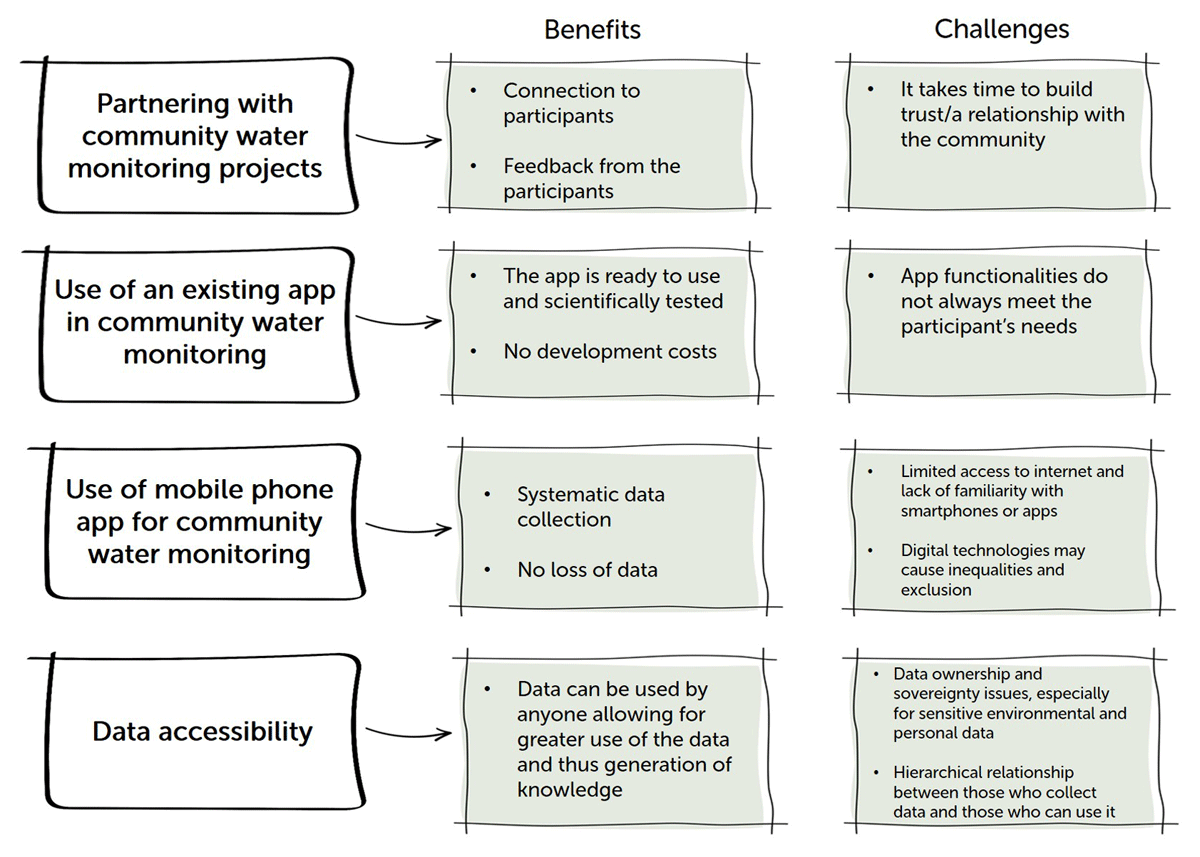
Figure 6
Summary of the lessons learned from the CrowdWater workshops in Latin America.
The workshops and follow-up interviews also highlighted challenges in engaging with the communities ethically (e.g., to not reproduce or reinforce colonial and extractive practices), the importance of critically evaluating the implementation of citizen science tools for local community-based monitoring, and the importance of acknowledging the motivations and struggles of the community groups. Contrary to the idea that science is “neutral”, the use of digital monitoring tools within community water monitoring contexts is political (Himley 2014; Kimura and Kinchy 2016; Vázquez 2019; Ulloa et al. 2020; Cohen et al. 2021). In addition to enhancing scientific literacy (a benefit of citizen science perceived and reported for projects in the Global North), the app becomes a tool and opportunity to contribute to the co-production of knowledge or collection of evidence that is needed to demand action to address environmental inequalities or land protection. In addition, the workshops and interviews demonstrated the need to ensure data management and accessibility that benefit the communities and enable an effective use of the data by the participants or group leaders.
The collaboration with bottom-up monitoring projects and subsequent critical reflections on the workshops and interviews changed our perspectives of CrowdWater as a scientist-led and contributory citizen science project and made us aware of the need to evaluate its global approach before it can be applied in local contexts where hydrological data are scarce. Moreover, it highlighted the need to consider the broader social and environmental contexts of communities before implementing digital technologies from international citizen science projects in local community-based monitoring in the Global South to ensure active, ethical, and inclusive participation. This is particularly important when working in Indigenous communities, rural areas, or areas where there are socio-environmental conflicts. This requires that leaders of citizen science projects evaluate the socio-economic context, suitability of the digital technologies, and participants’ motivations (Skarlatidou and Haklay 2021). Our lessons learned highlight also that there is not one single strategy to implement citizen science tools in community-based monitoring groups. Rather, it needs to be appropriate for the community and local context.
Supplementary File
The supplementary file for this article can be found as follows:
Ethics and Consent
According to University of Zurich regulations, we did not require ethical approval for the workshops, nor for the post-workshop interviews. However, we asked the post-workshop interviewees for their consent to record the interviews and to use the data. They also provided their informed consent to use their anonymized quotes in the paper.
Acknowledgements
We thank Articulação Rio Pardo BA-MG Brazil, Malen Leubü from Alto Biobio Chile, TEVU project Costa Rica, Fundación Naturaleza El Salvador and Observatorio de Industrias Extractivas Guatemala, who supported us in the co-organization of the workshops. We are grateful to the group leaders and all workshop participants for sharing their ideas, concerns, and thoughts with us.
Competing Interests
The CrowdWater app was developed by the Hydrology and Climate group at the Department of Geography at the University of Zurich, in collaboration with Spotteron GmbH, Austria. The CrowdWater app was developed as part of the CrowdWater project, which is funded by the Swiss National Science Foundation (projects 163008 and 192125). The CrowdWater app is free to use and the data are freely available as well (https://crowdwater.ch/en/data/). Although the authors are involved in the CrowdWater project, there are no competing interests to declare.
Author Contributions
The workshops were organized by Sara Blanco-Ramírez (SBR) (Brazil, Costa Rica, El Salvador), in collaboration with Clara Guardado-Torrez (Guatemala) and Camila Bañales-Seguel (Chile). The systematization of experiences and semi-structured interviews with the leaders from each community-based water monitoring group were conducted by SBR. The lessons learned were discussed with all co-authors. SBR wrote the first draft of the manuscript and created all figures. All co-authors provided feedback on the manuscript and were involved in the review and editing of the manuscript.