
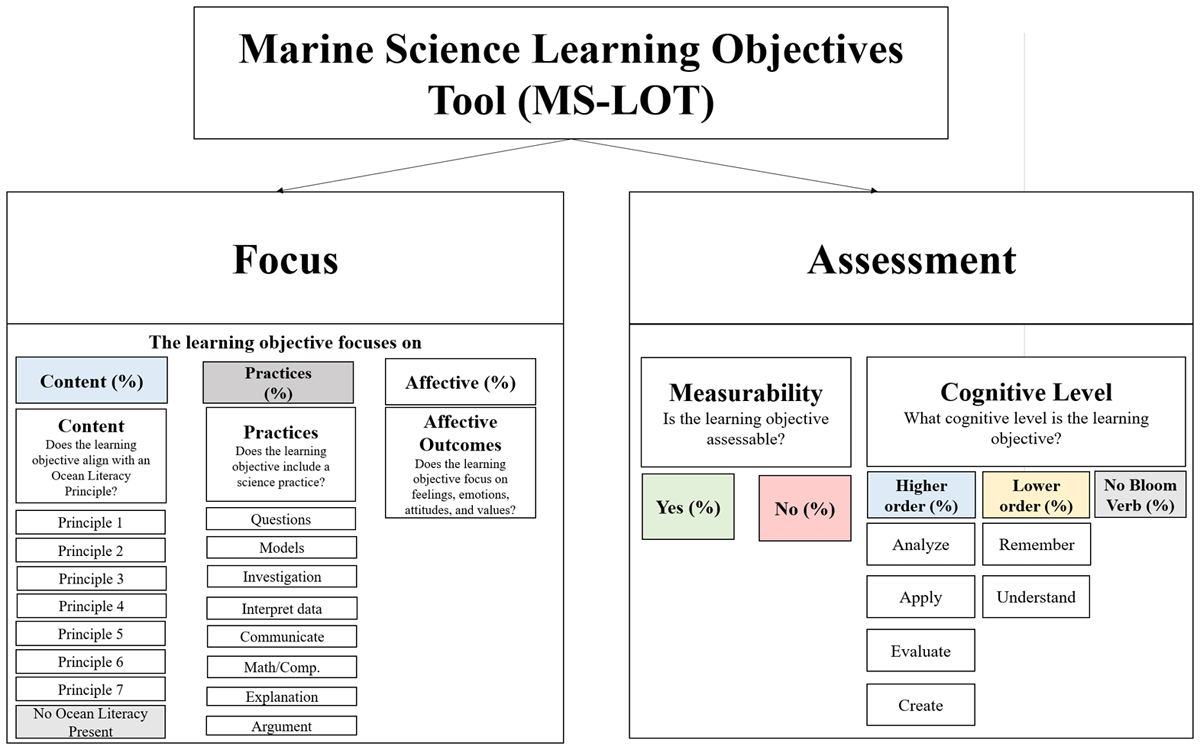
Figure 1
The Marine Science Learning Objectives Tool (MS-LOT) created to analyze learning objectives in marine science education.
Table 1
Next Generation Science Standards (NGSS) Science and Engineering Practices used to characterize learning objectives in the MS-LOT.
| NGSS SCIENCE AND ENGINEERING PRACTICES (SEPS) |
|---|
| Asking Questions and Defining Problems |
| Developing and Using Models |
| Planning and Carrying Out Investigations |
| Analyzing and Interpreting Data |
| Using Mathematical and Computational Thinking |
| Constructing Explanations and Designing Solutions |
| Obtaining, Evaluating and Communicating Information |
| Engaging in Argument from Evidence |
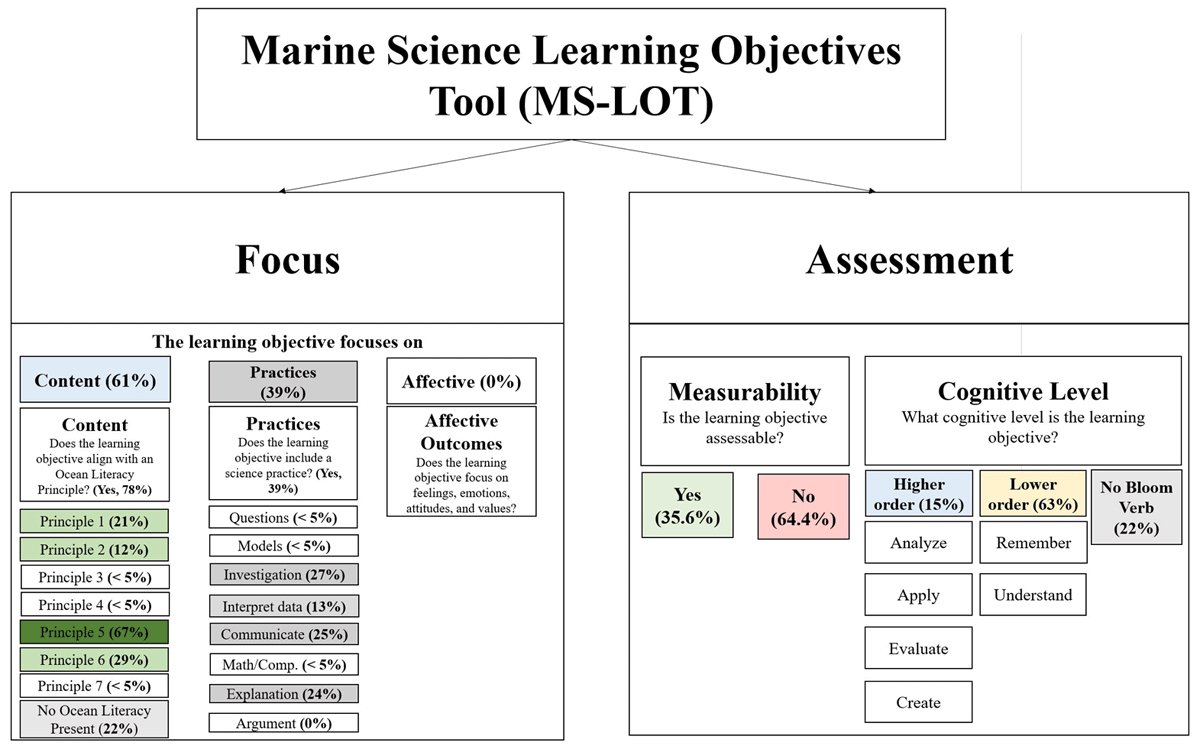
Figure 2
Results from the case study evaluating our own learning objectives.
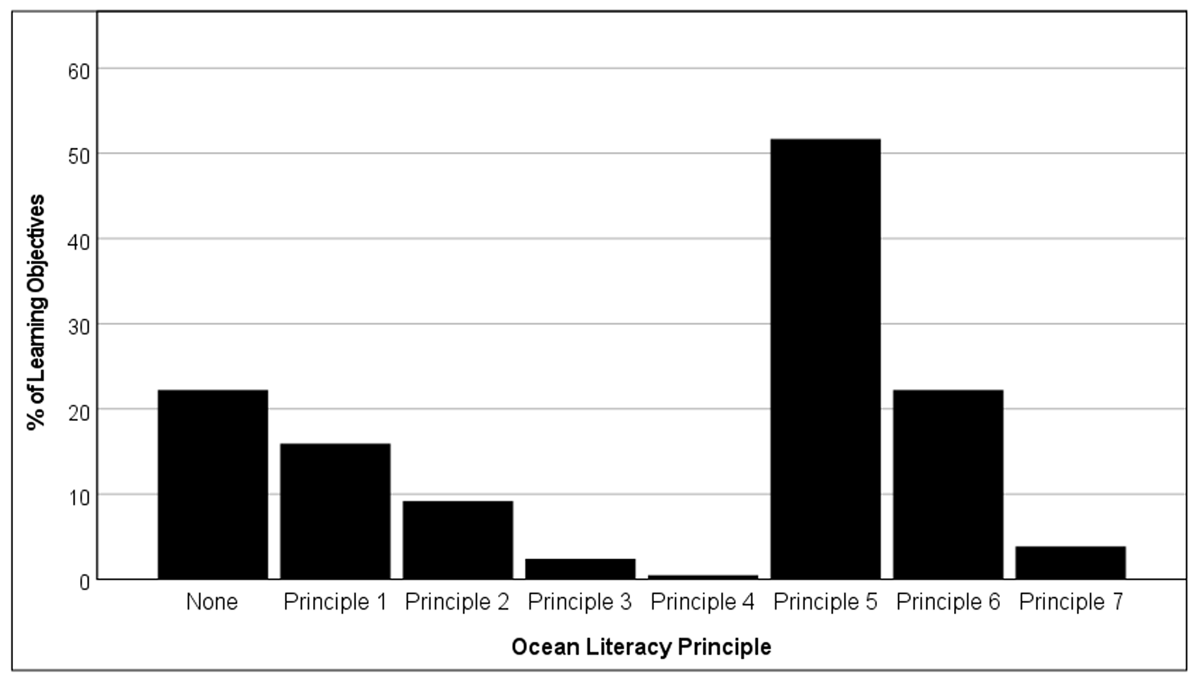
Figure 3
Percentage of learning objectives aligned with the seven Ocean Literacy Principles.
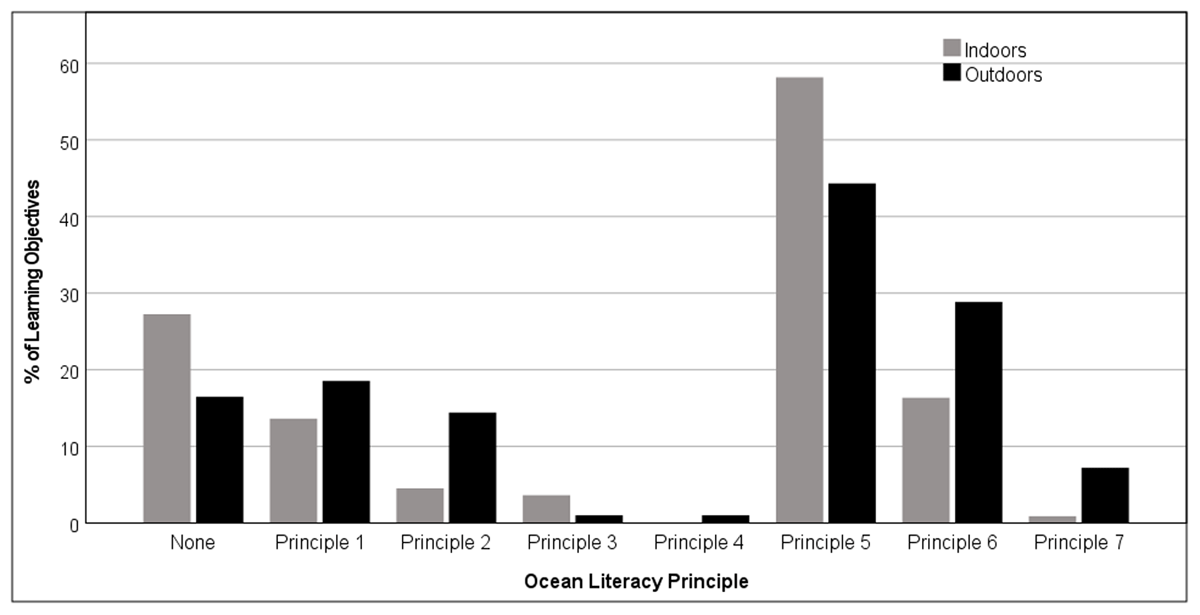
Figure 4
Percentage of indoor and outdoor learning objectives aligned with the seven Ocean Literacy Principles.
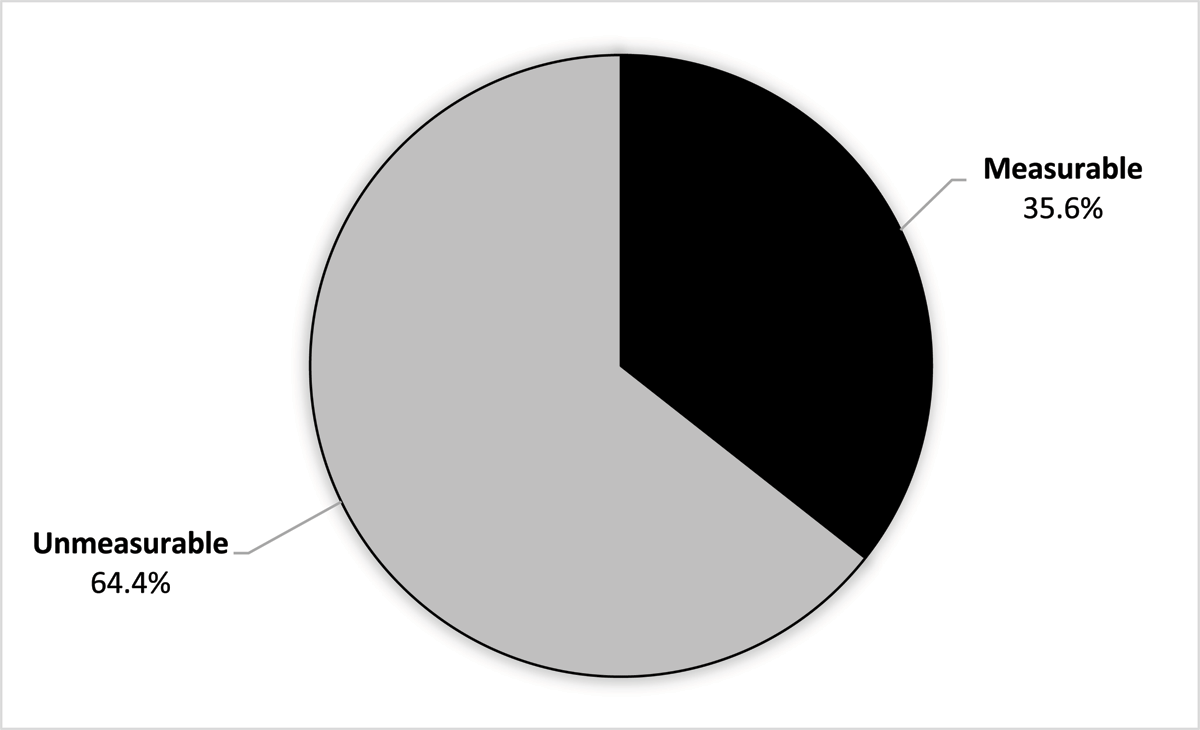
Figure 5
Percentage of unmeasurable learning objectives.
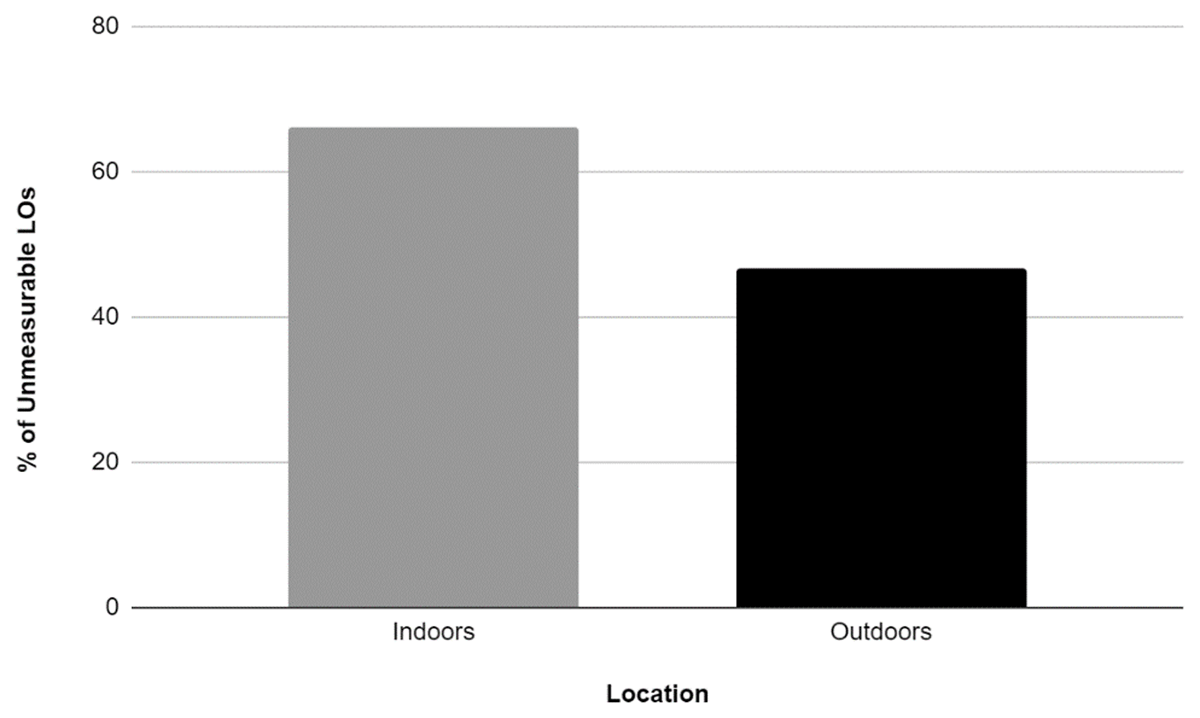
Figure 6
Percentage of unmeasurable learning objectives across location.
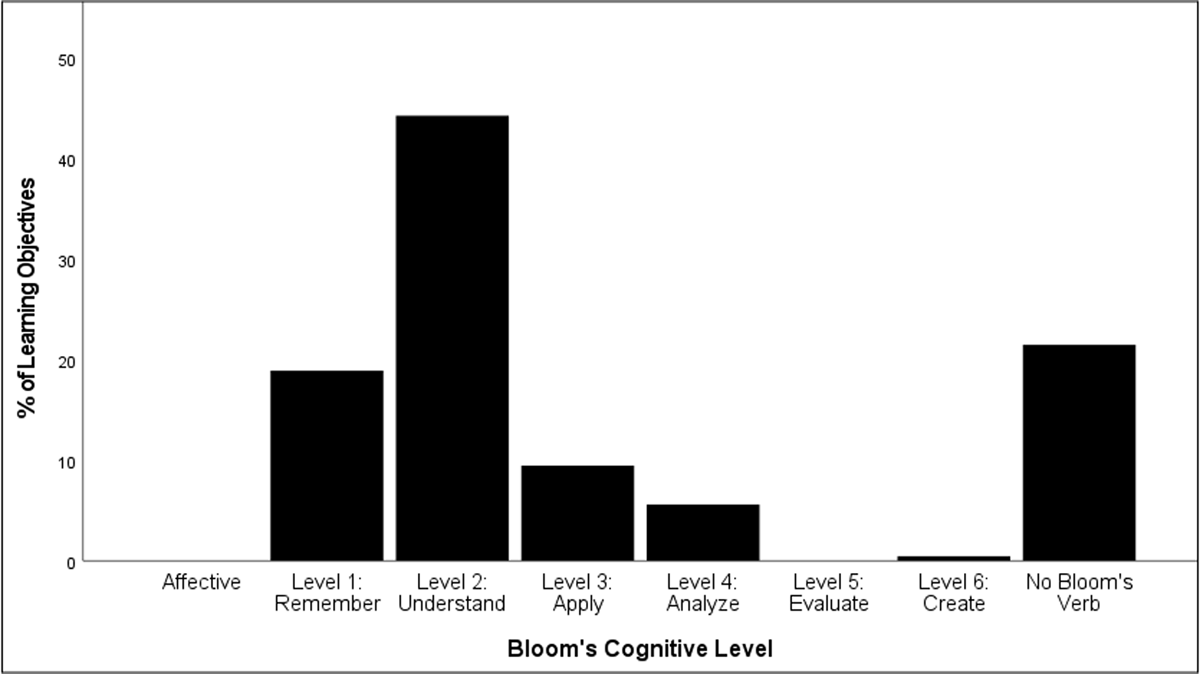
Figure 7
Bloom’s cognitive level of all learning objectives.
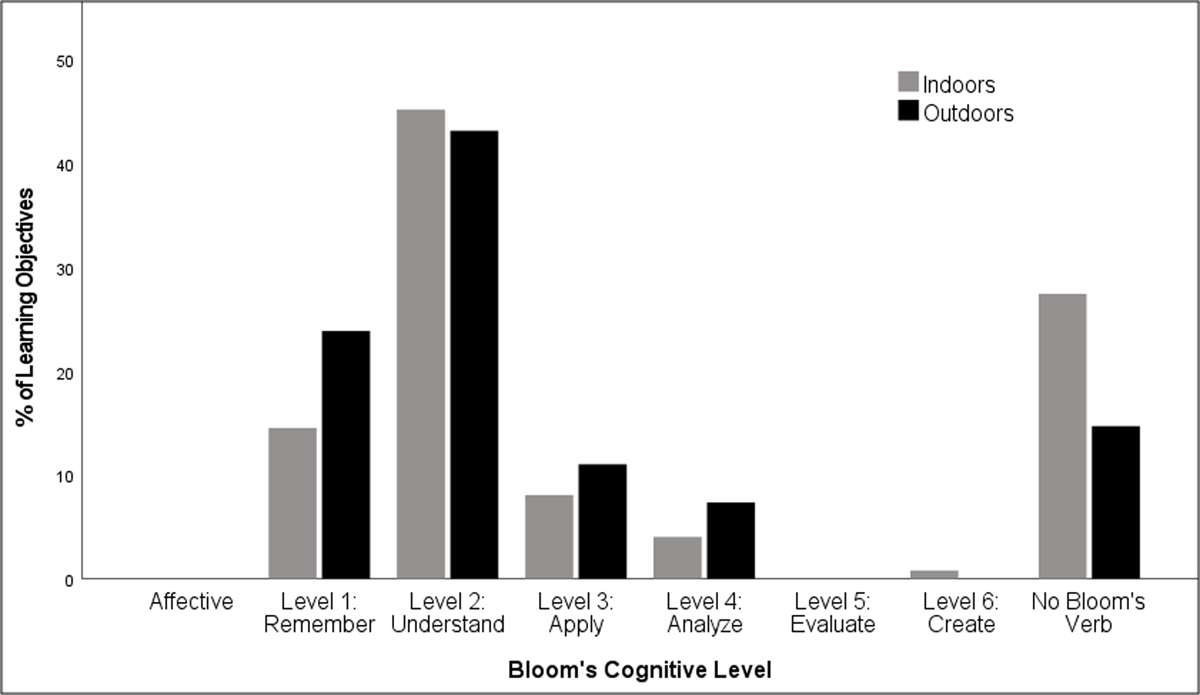
Figure 8
Bloom’s cognitive level of indoor and outdoor learning objectives.