
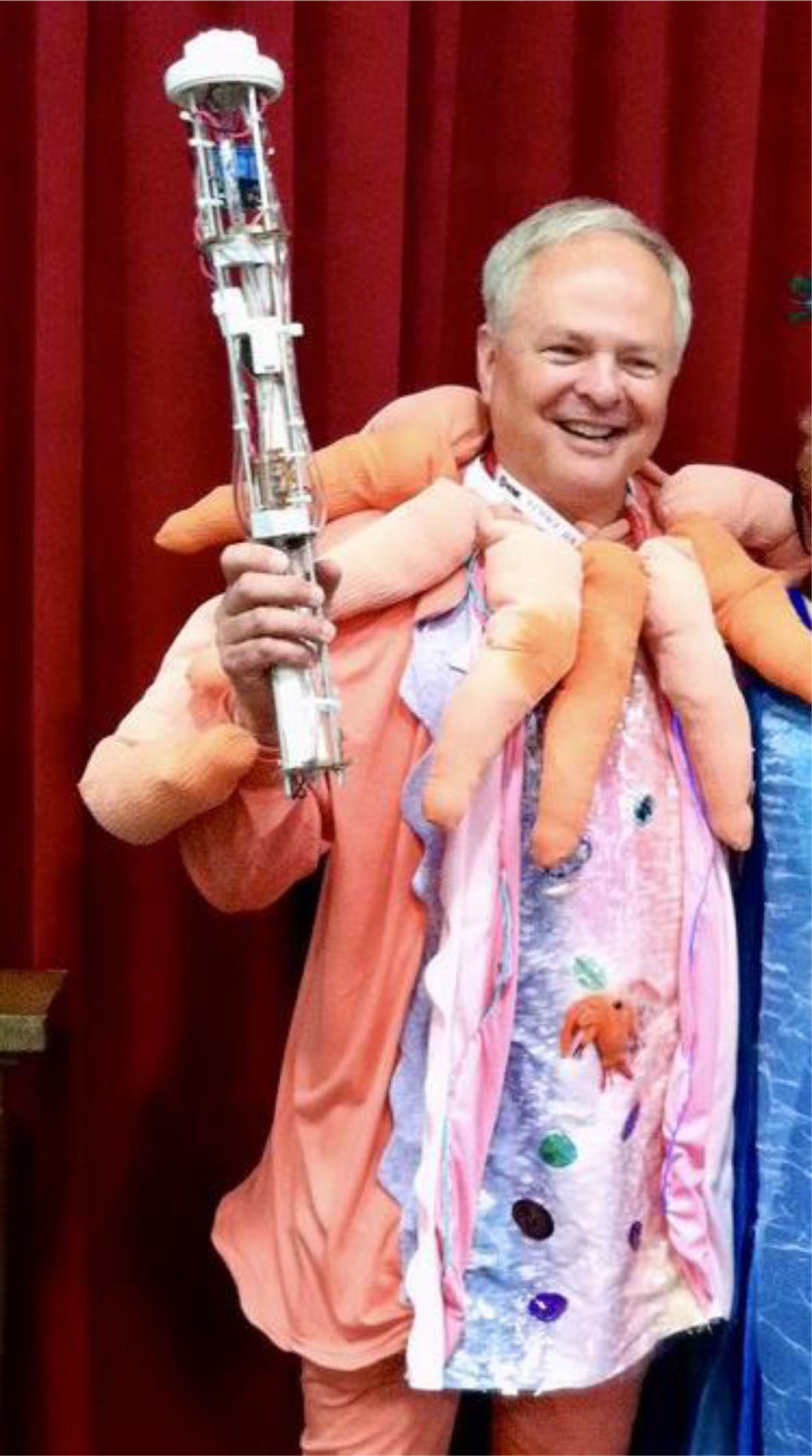
Figure 1
Co-author M. Patterson in coral polyp costume, with microplastics detection instrument as an accessory, at a major cosplay convention to conduct informal science outreach.
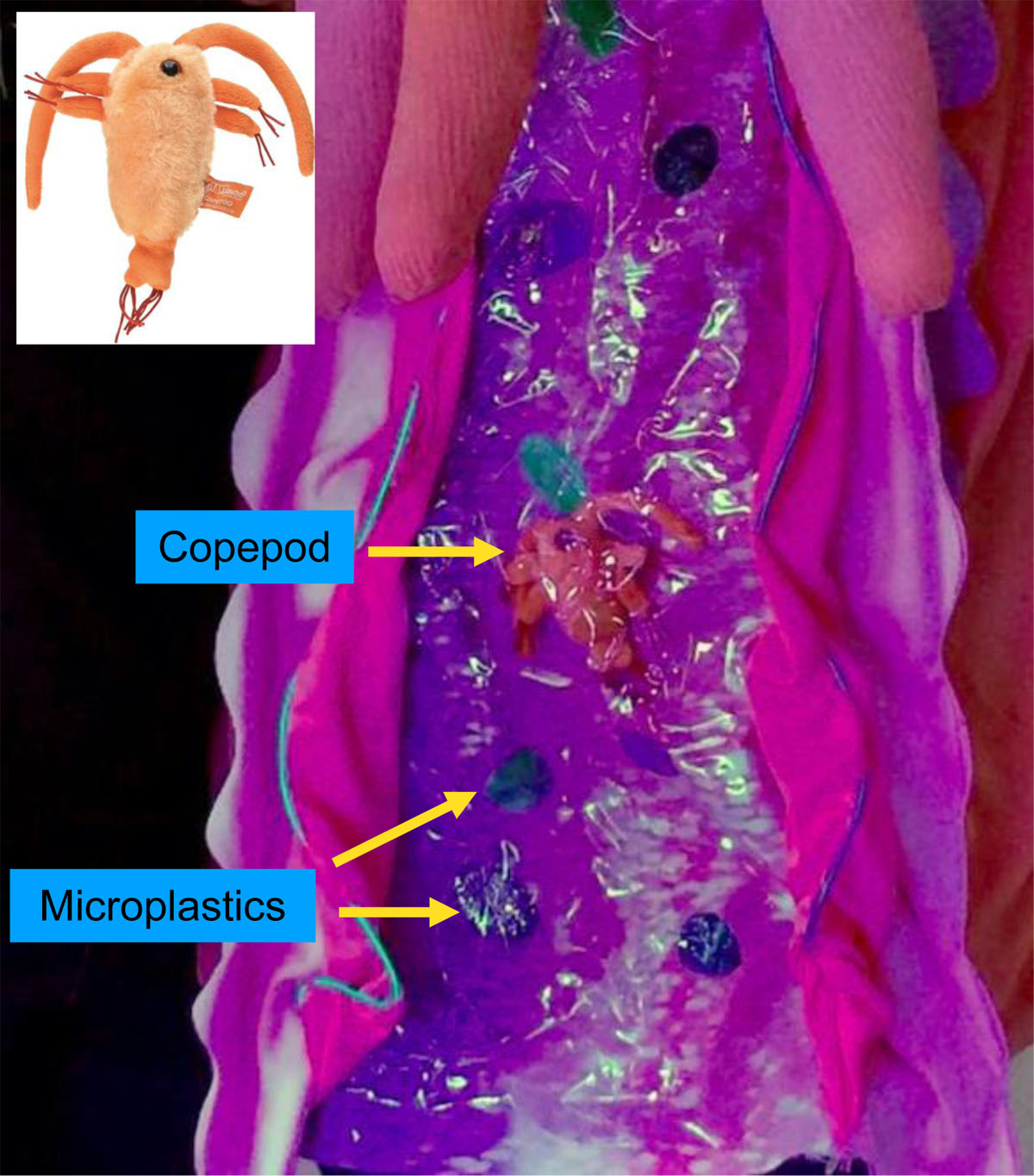
Figure 2
Close up of coral polyp costume showing microplastics and zooplankton (copepod) trapped in the digestive system (gastrovascular cavity). Inset: Commercially available stuffed toy representing the copepod Centropages hamatus.
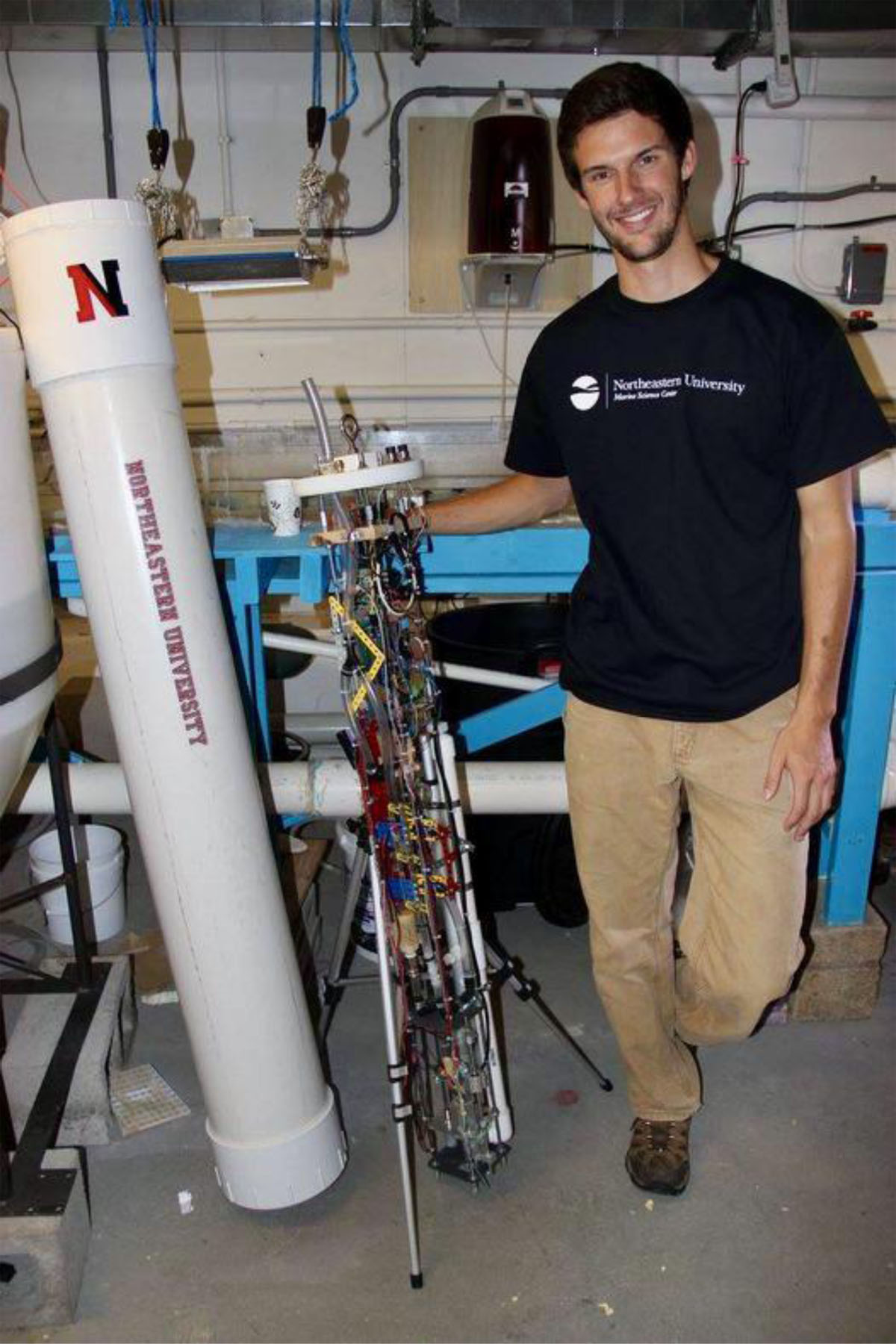
Figure 3
Prototype of microplastics detection instrument (‘MantaRay’) developed by co-author Edson, shown with its deployment housing. The accessory for the polyp costume was based on this instrument, and a diagram of the instrument was silk-screened on the back of the polyp costume (Figure 4), and included in the informational flyer (Appendix A).
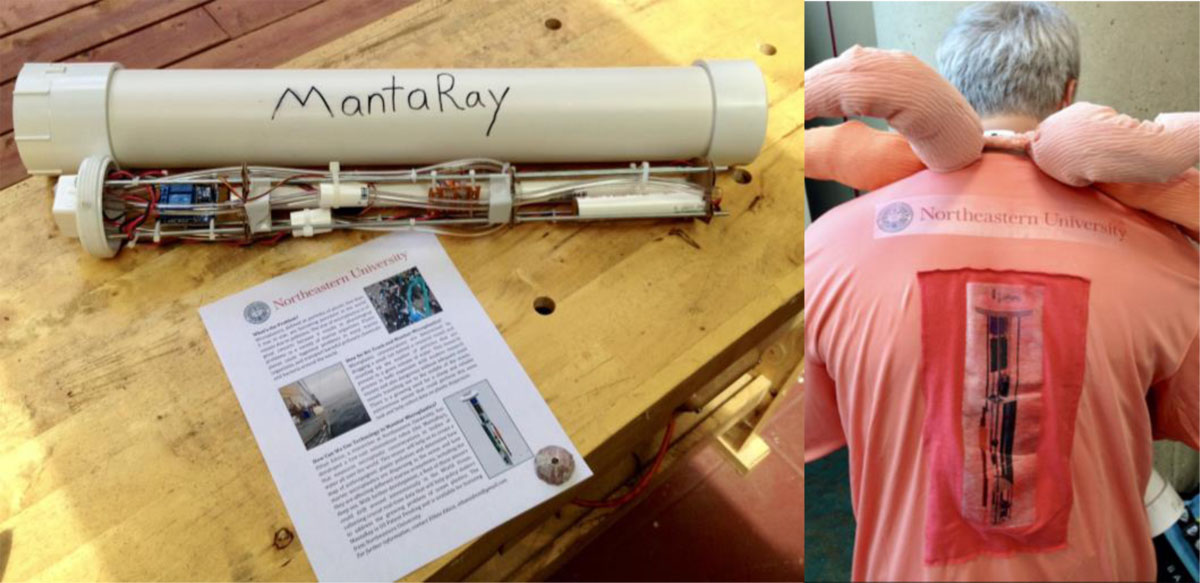
Figure 4
Left: Costume accessory (‘MantaRay’ microplastics sampler) alongside the informational flyer (Appendix A). Right: Silk-screen diagram of the instrument on the back of coral polyp costume.
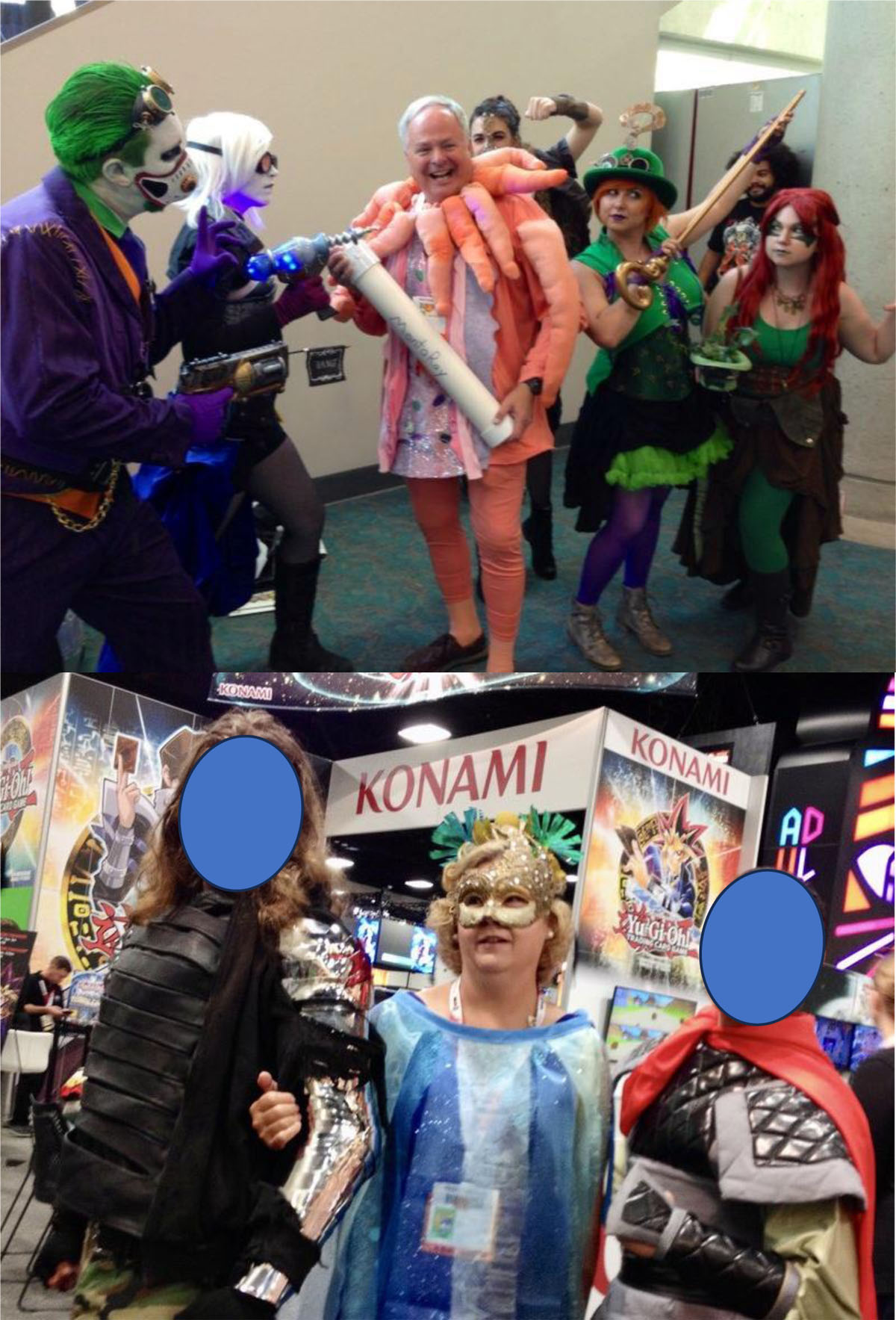
Figure 5
The novelty factor of unknown costumes at a cosplay convention attracts attention and facilitate outreach. Top: Coral polyp character being ‘attacked’ by cosplayers. Bottom: Cosplayers with co-author S. Patterson in the Amphitrite costume representing the scope of the microplastics pollution problem in the world ocean. Note the plastic pieces throughout her crown and dress material.
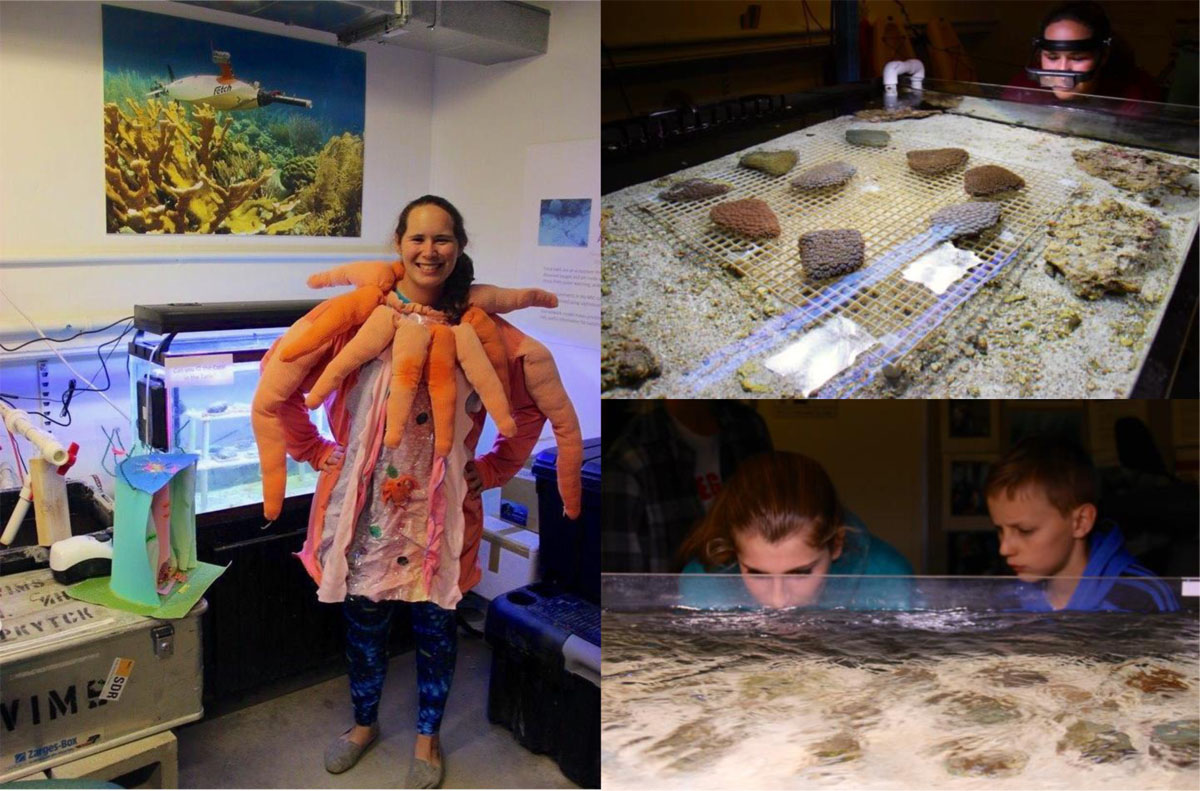
Figure 6
A well-designed costume can be used repeatedly in non-cosplay settings. Left: Co-author Williams using the coral polyp costume during the Annual Open House, Marine Science Center, Northeastern University, to conduct outreach on threats posed to corals by global change. Right top: Coral mesocosm with colonies of Montastrea cavernosa that served as the target species for the costume, providing a living example of coral anatomy and physiology to > 800 attendees. Right lower: Visitors inspect the coral colonies up close after engaging with Williams in costume.