
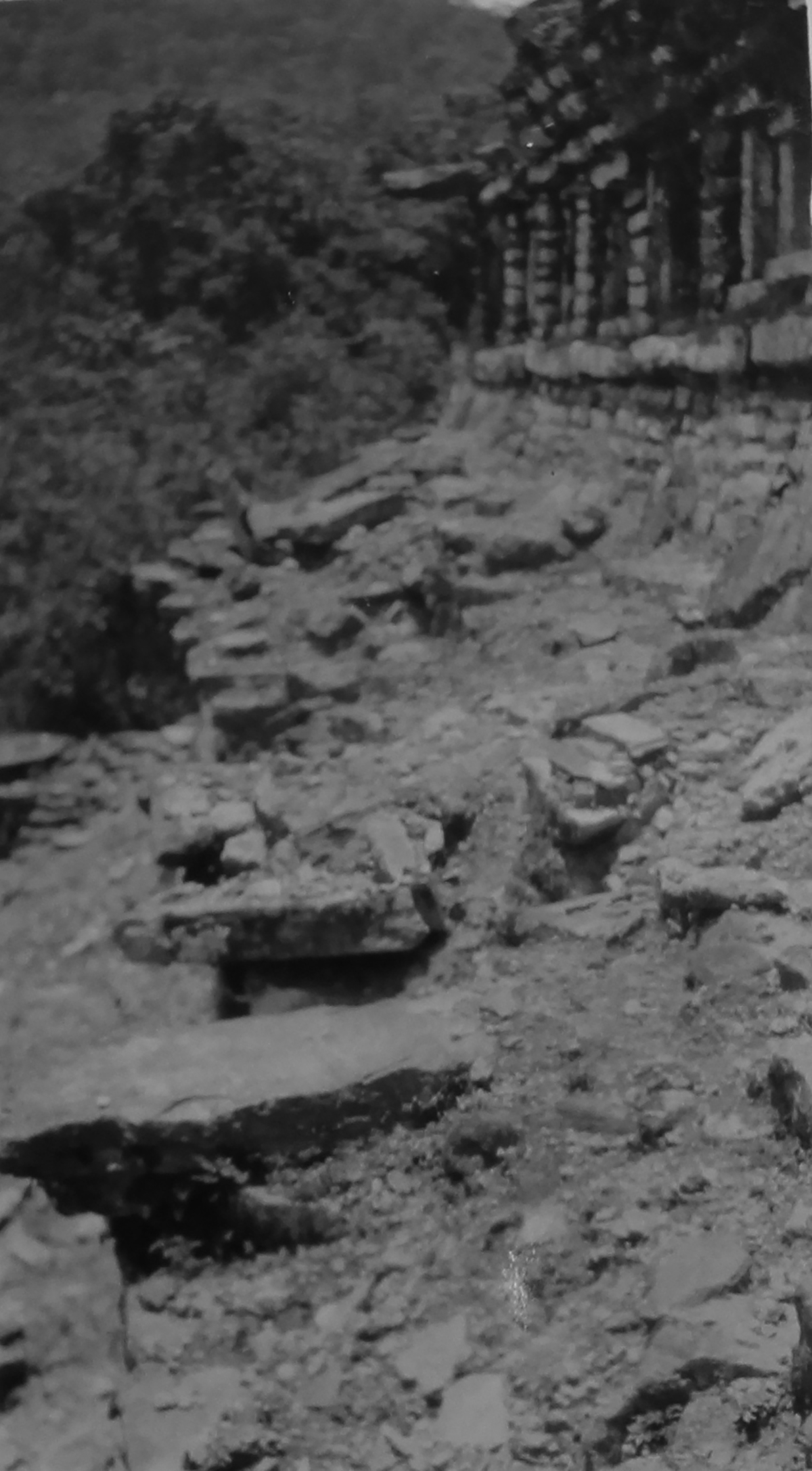
Figure 1
Corridor of the second tier on the south side of the pyramid. Gabriel Velázquez, “Informe sobre el estado de conservación de la pirámide del Tajín (Papantla,” Foto No. 5,” July 4, 1924, ATINAH, vol. 1 (1924–1935), tomo 125, Tajín, Estado de Veracruz.
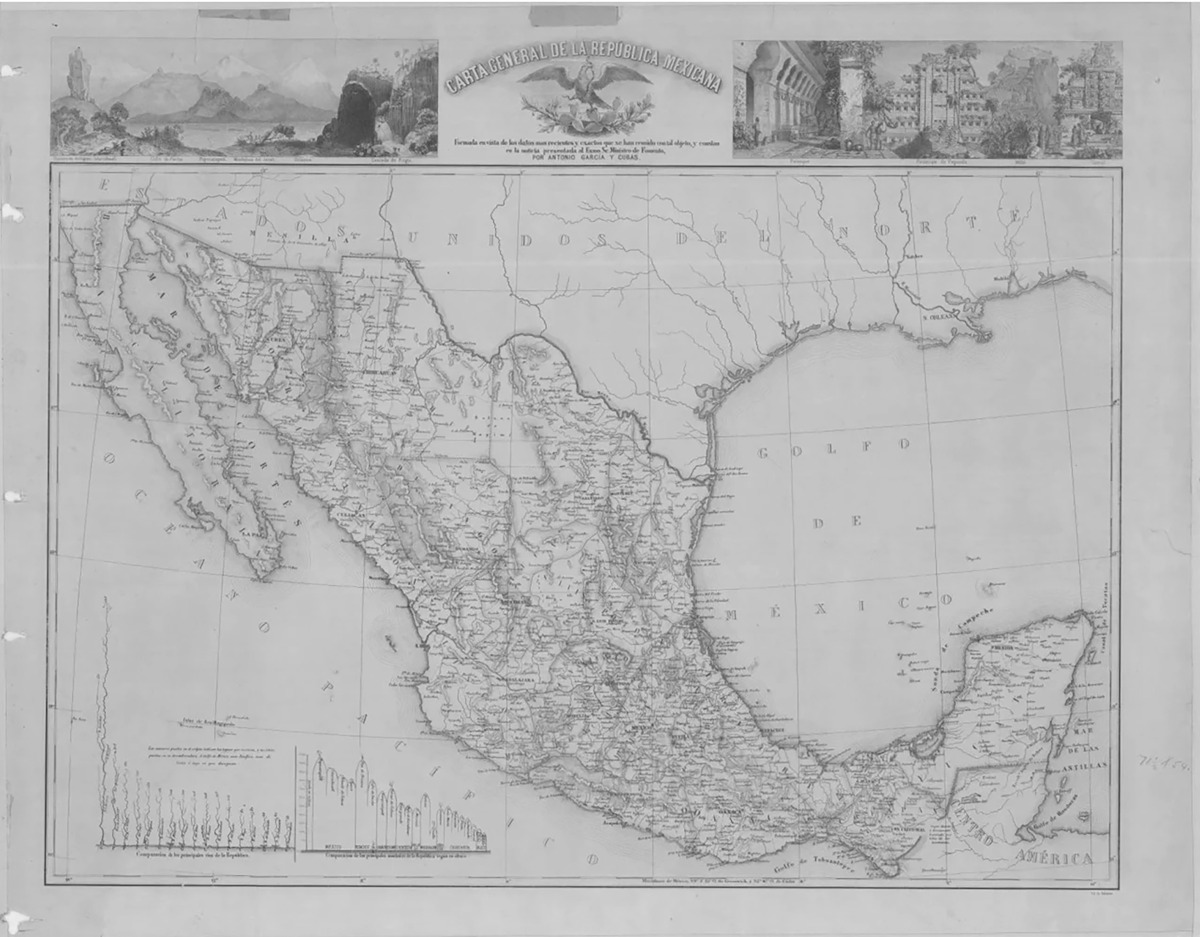
Figure 2
Antonio García Cubas, La Carta General de la República Mexicana. Mapoteca “Manuel Orozco y Berra” del Servicio de Información Agroalimentaria y Pesquera.
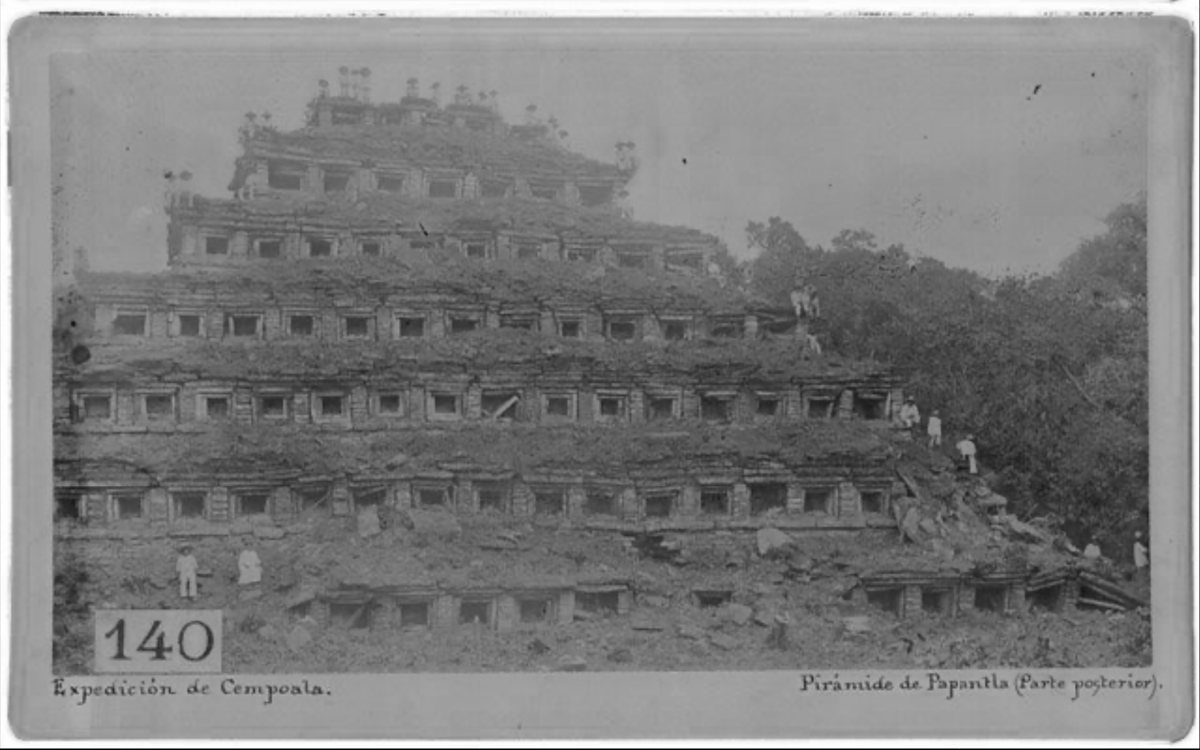
Figure 3
Cempoala Expedition. Pirámide de Papantla. Sistema Nacional de Fototecas- Instituto Nacional de Antropología e Historia, Mexico City, Inv. 419151.
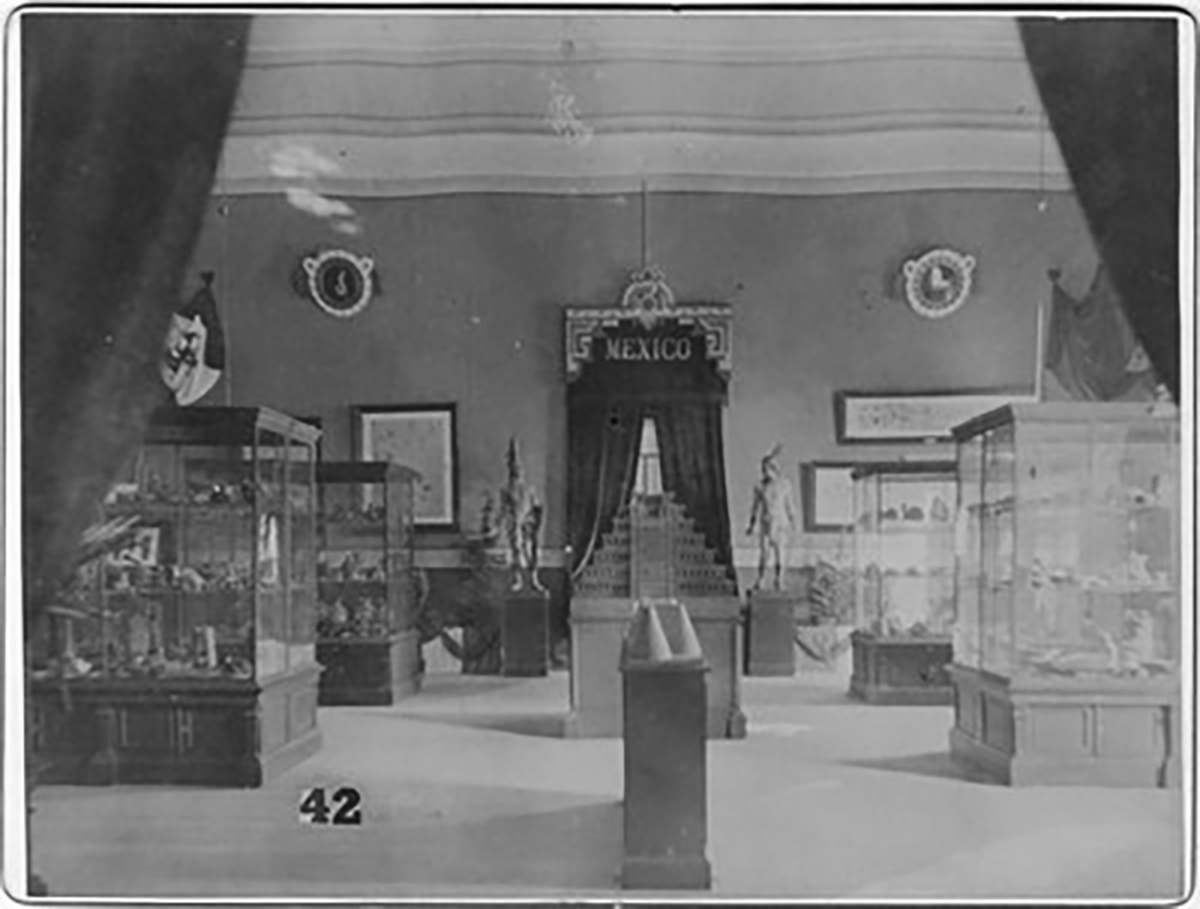
Figure 4
View of the ‘tercer salon’ at the Exposición Histórico-Americana in Madrid. Sistema Nacional de Fototecas- Instituto Nacional de Antropología e Historia, Mexico City, Inv. 425045.
Figure 5
“Northeast corner of the upper floor (collapsed).” Foto No. 6, July 4, 1924, ATINAH, vol. 1 (1924–1935), tomo 125, Tajín, Estado de Veracruz.
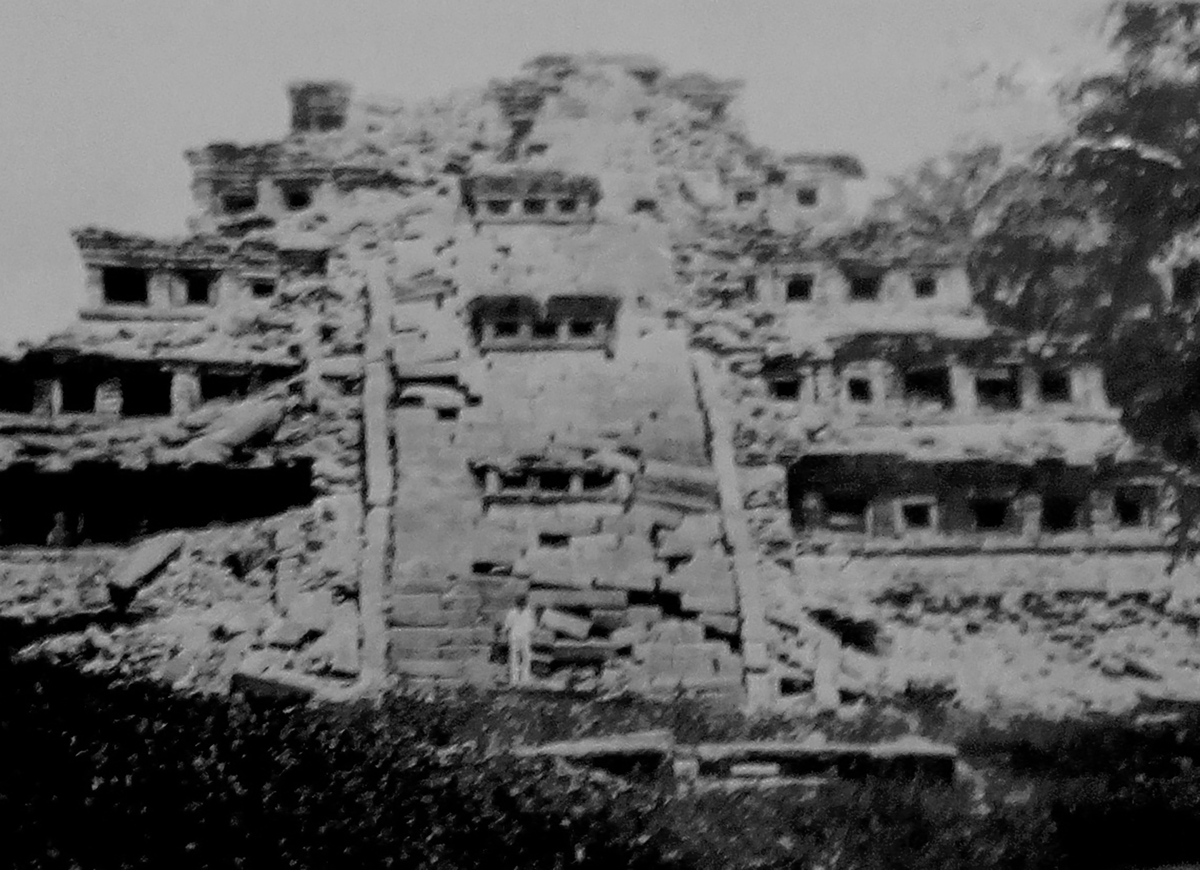
Figure 6
“Main facade that looks to the East.” Gabriel Velázquez, “Informe sobre el estado de conservación de la pirámide del Tajín, Papantla,” Photo No. 1, July 4, 1924, ATINAH, vol. 1 (1924–1935), tomo 125, Tajín, Estado de Veracruz.
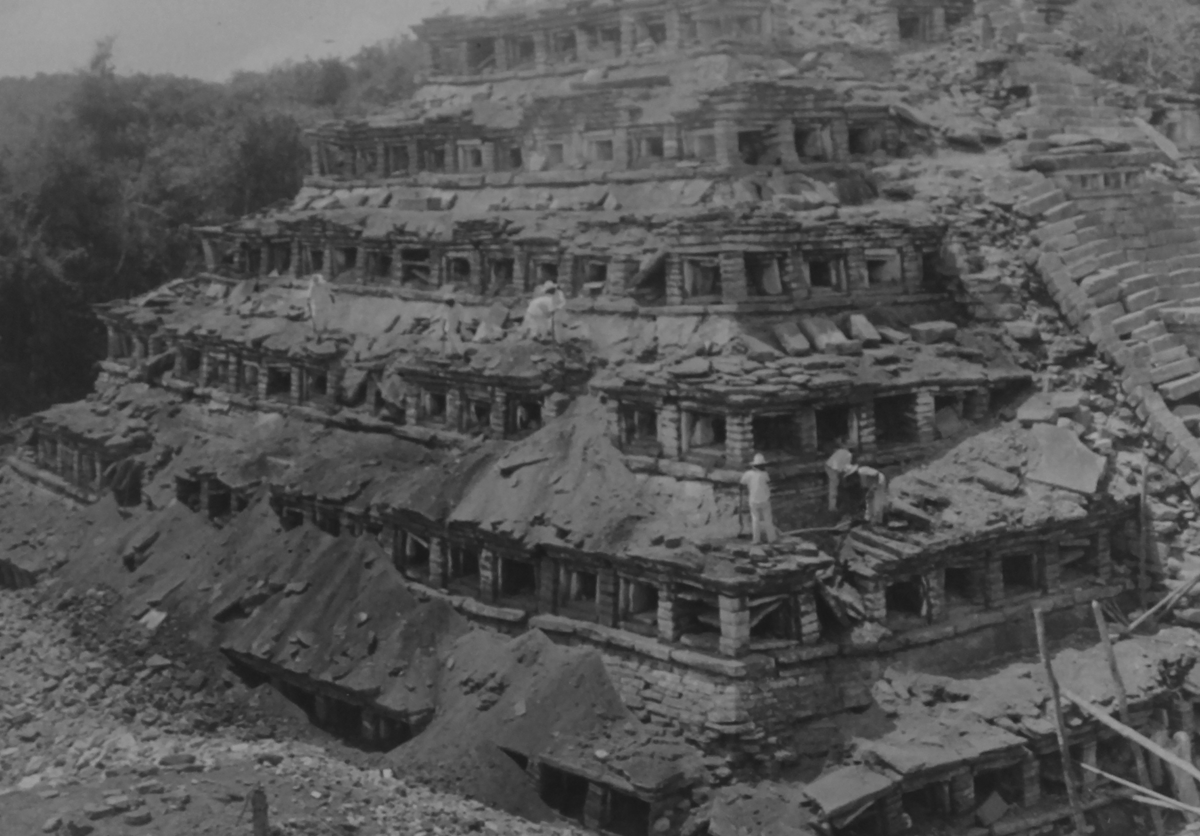
Figure 7
Perilous conditions during the restoration of the pyramid’s southeast corner amidst conservation efforts. “Southeast angle during the conservation work.” García Vega, Agustín. “Informe de los trabajos de conservación de la Pirámide del Tajín, en Papantla, Ver,” 16/89 Photos, June 22, 1934, ATINAH, vol. 1 (1924–1935), tomo 125, Tajín, Estado de Veracruz.
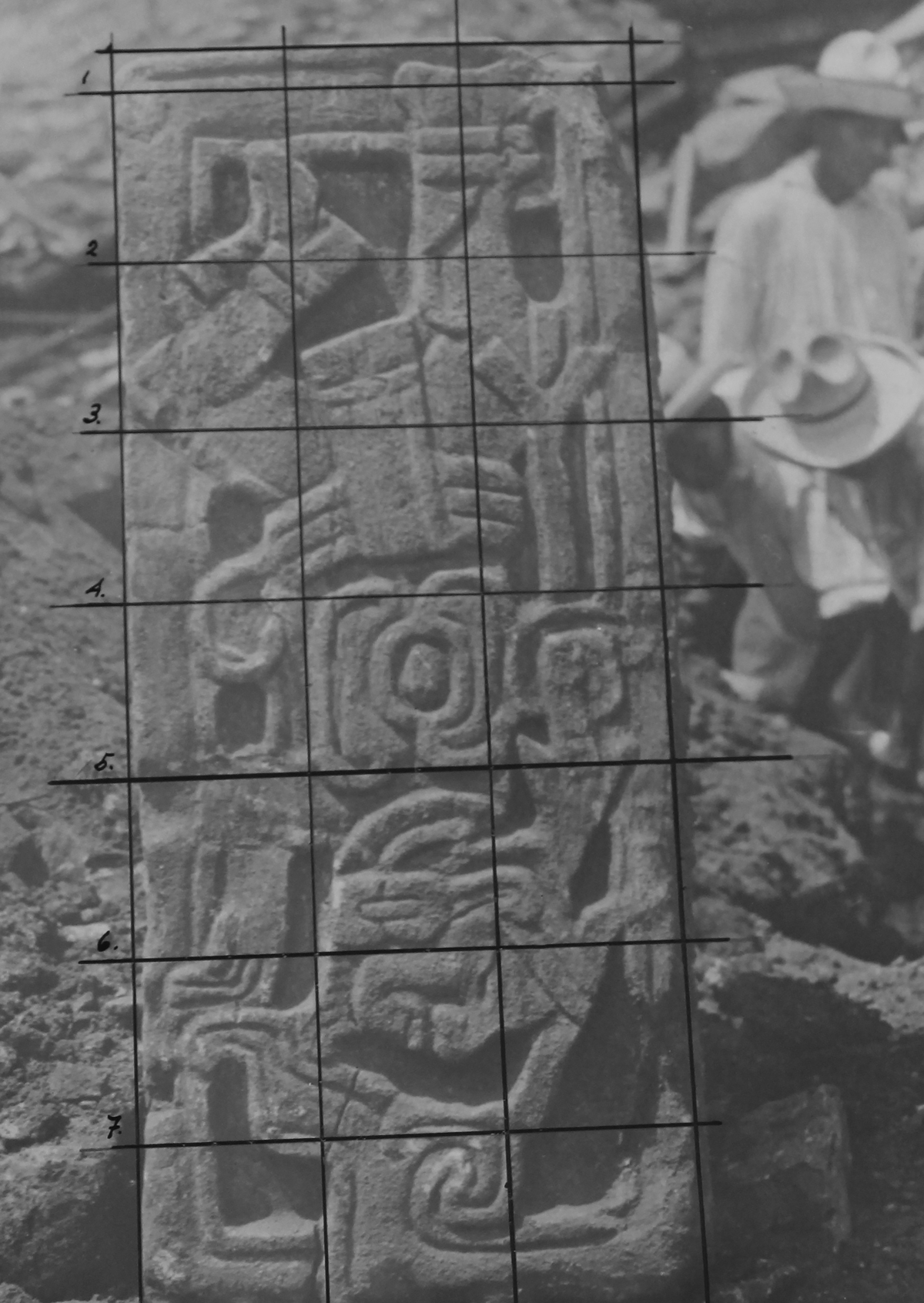
Figure 8
Totonac workers extract stones with reliefs from the debris. “Stones with reliefs taken from the rubble. On one of them, there is a skull.” García Vega, Agustín. “Informe de los trabajos de conservación de la Pirámide del Tajín, en Papantla, Ver,” 23/89 Photos, June 22, 1934, ATINAH, vol. 1 (1924–1935), tomo 125, Tajín, Estado de Veracruz.
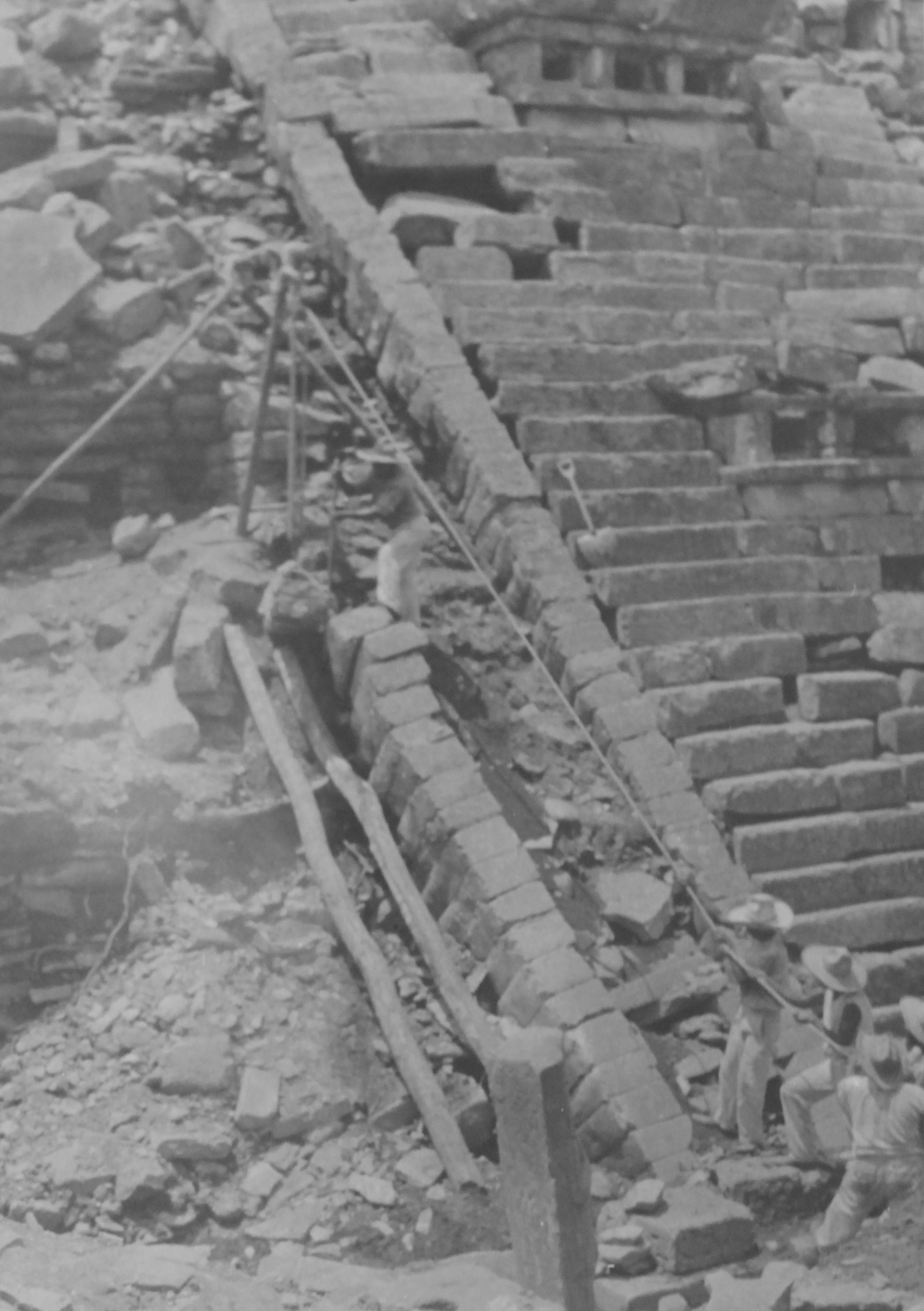
Figure 9
A team of masons uses a rope to move stone fragments, while another member of the ‘cuadrilla’ carefully assembles them. “Another aspect of the same.” García Vega, Agustín. “Informe de los trabajos de conservación de la Pirámide del Tajín, en Papantla, Ver,” 43/89 Photos, June 22, 1934, ATINAH, vol. 1 (1924–1935), tomo 125, Tajín, Estado de Veracruz.
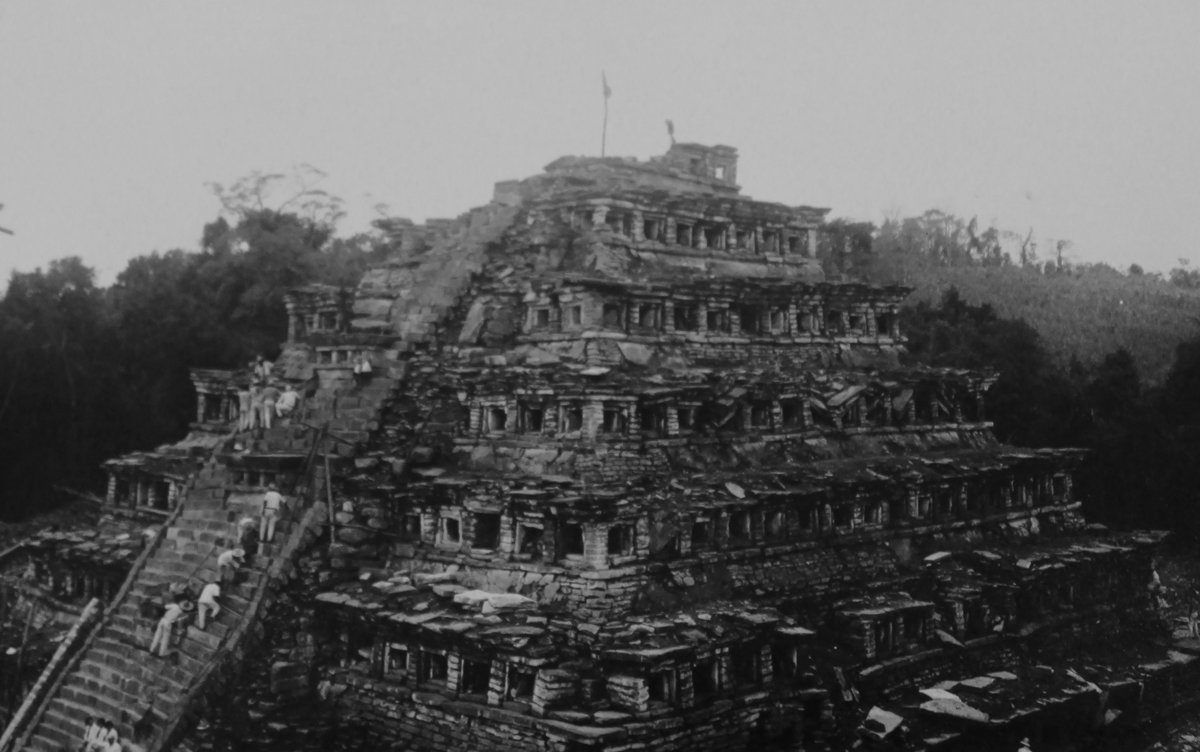
Figure 10
In this image, around ten laborers, including masons and conservadores, are diligently working on the main stairway. Notably, local women are seen seated on the stabilized lower steps in the photograph’s bottom left corner. Although technical reports do not mention these women, they played an essential role in nourishing the workers by providing food. “Northeast angle during the work.” García Vega, Agustín. “Informe de los trabajos de conservación de la Pirámide del Tajín, en Papantla, Ver,” 45/89 Photos, June 22, 1934, ATINAH, vol. 1 (1924–1935), tomo 125, Tajín, Estado de Veracruz.
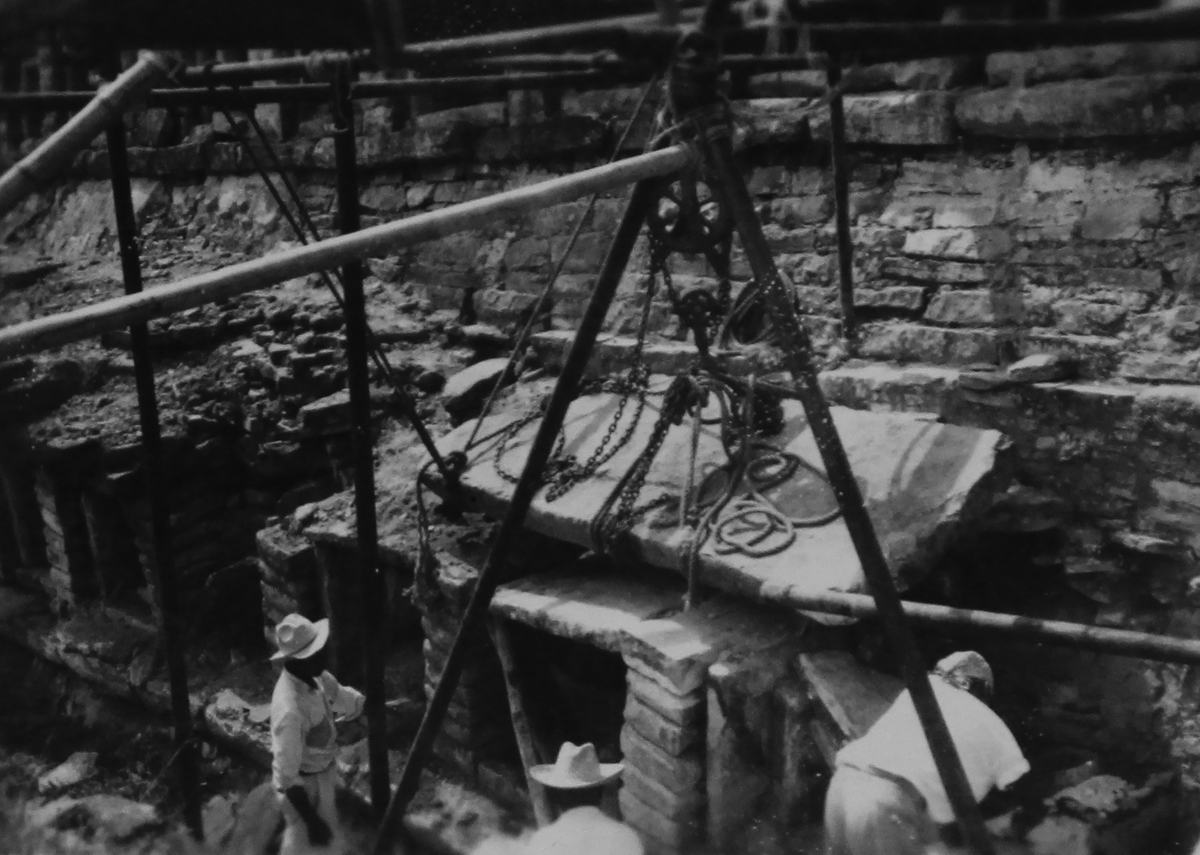
Figure 11
Masons skillfully handle the stone fragments that once covered the pyramid’s niches. “Tile that covers the niches of the Tajín Pyramid.” García Payón, José. “Segunda Temporada de Exploraciones en el Totonacapan Septentrional y Meridional en el Tajin y Misantla, 1940,” Photo 11/111, ATINAH, vol. III (1940–1953), tomo 126, Tajín, Estado de Veracruz.
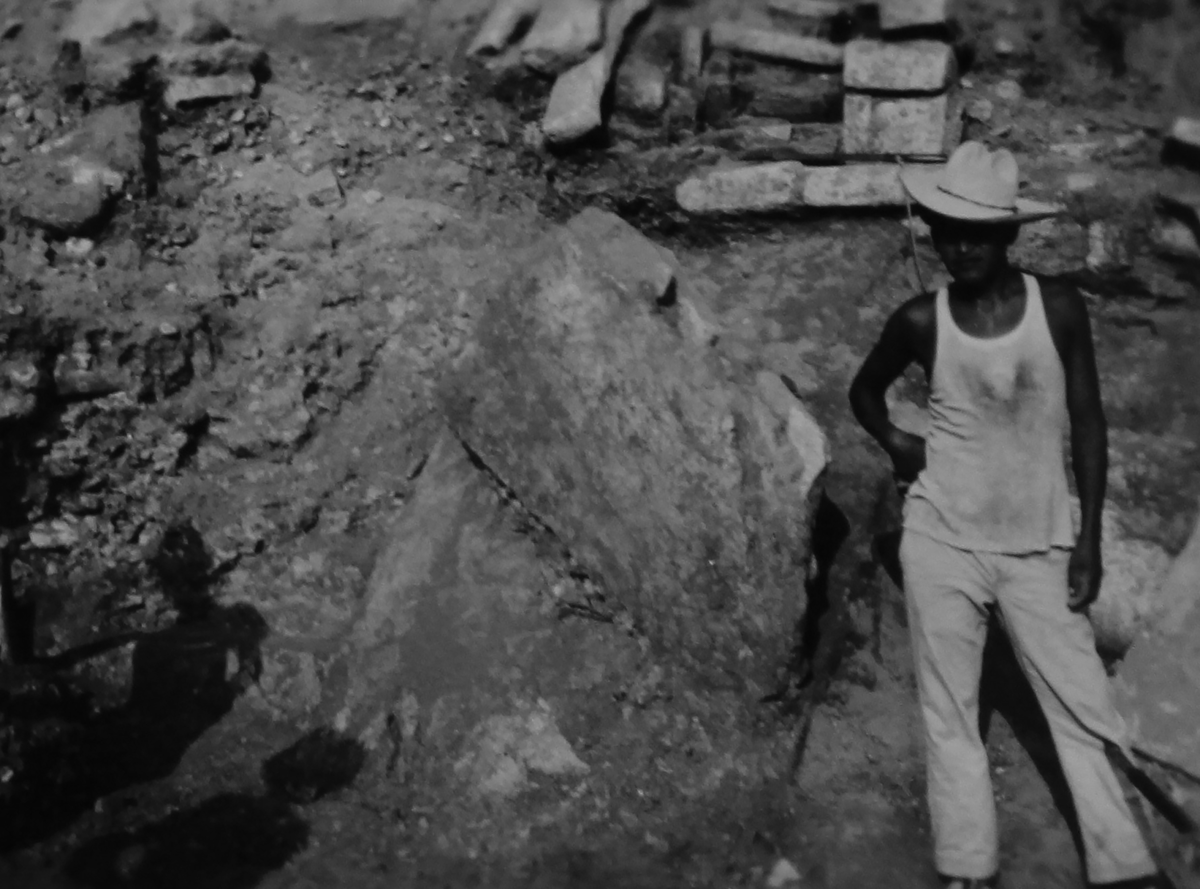
Figure 12
A worker pauses briefly, posing for the camera amidst his work. “Pieces of stucco from the cornice of the first section, Building No. 5.” García Payón, José. “Segunda Temporada de Exploraciones en el Totonacapan Septentrional y Meridional en el Tajin y Misantla, 1940,” Photo 42/111, ATINAH, vol. III (1940–1953), tomo 126, Tajín, Estado de Veracruz.
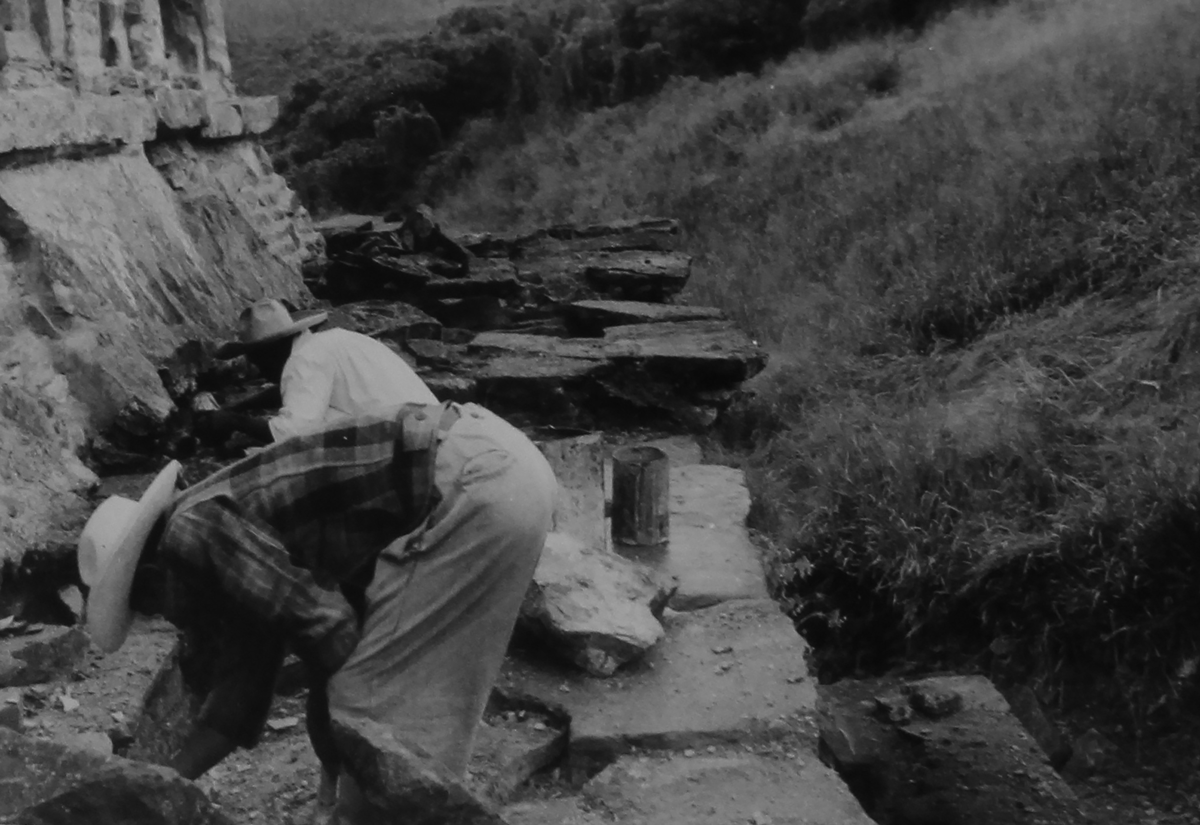
Figure 13
Workers strived to restore the pyramid while also advocating for improved working conditions and better salaries. “Repairing the pyramid floor, North Side.” García Payón, José. “Informe de los trabajos en la zona Arquelogíca del Tajín durante la temporada de 1958,” Photo 2/19 ATINAH, vol. 5 (1956–1958), tomo 129, Tajín, Estado de Veracruz.
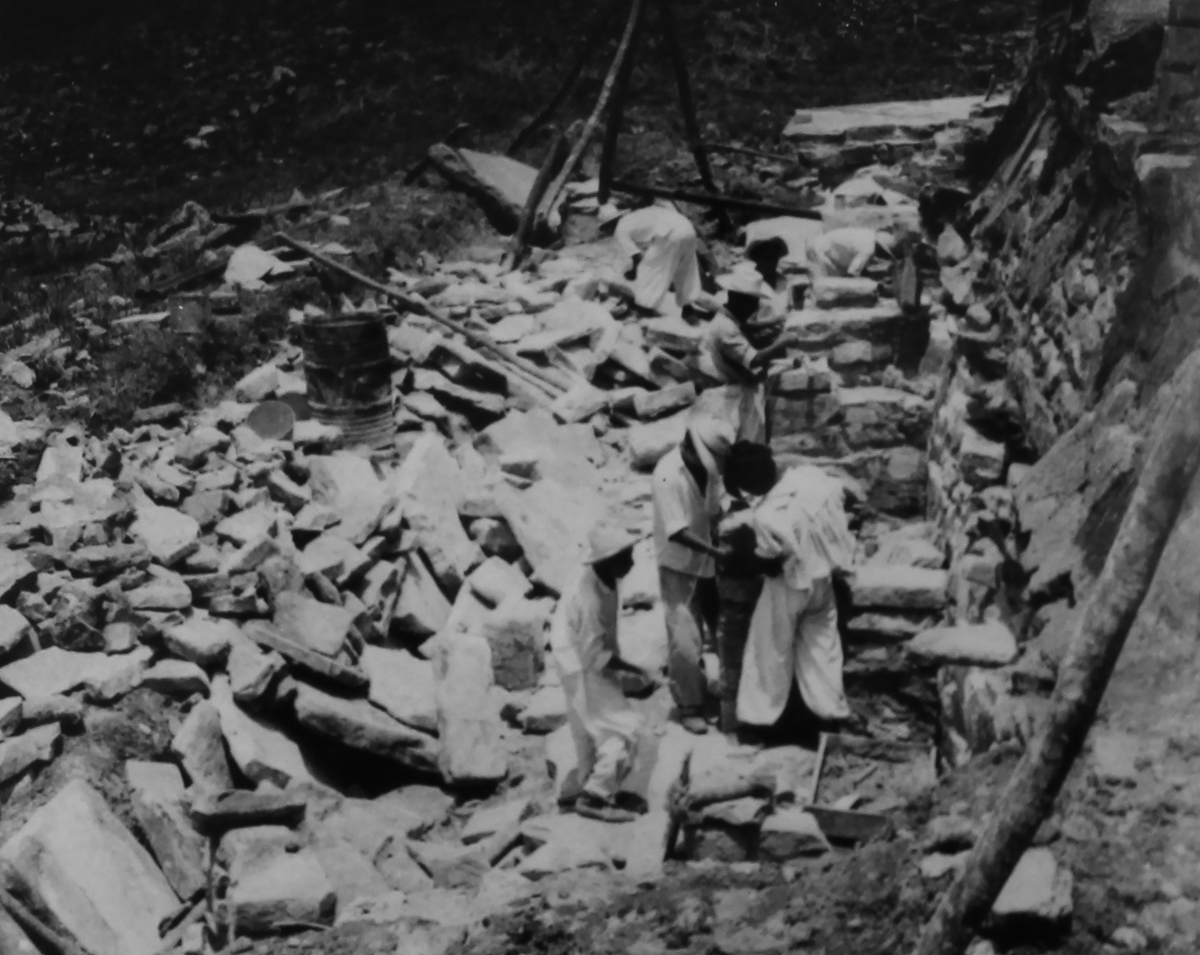
Figure 14
A team of seven dedicated workers meticulously reconstructs the pyramid’s niches, handling the fragments with utmost care. Yet, the excavation of an exploration tunnel, aimed at giving García Payón insight into the pyramid’s original construction, led to an internal collapse. This compromised the pyramid’s stability and posed a considerable risk to the workers. “Reconstructing the ten dismantled niches.” García Payón, José. “Informe de los trabajos desarrollados en la Zona arquelogica del Tajin, Ver., durante la temporada del año de 1959,” Photo 4/30 ATINAH, vol. 6 (1959–1962), tomo 130, Tajín, Estado de Veracruz.
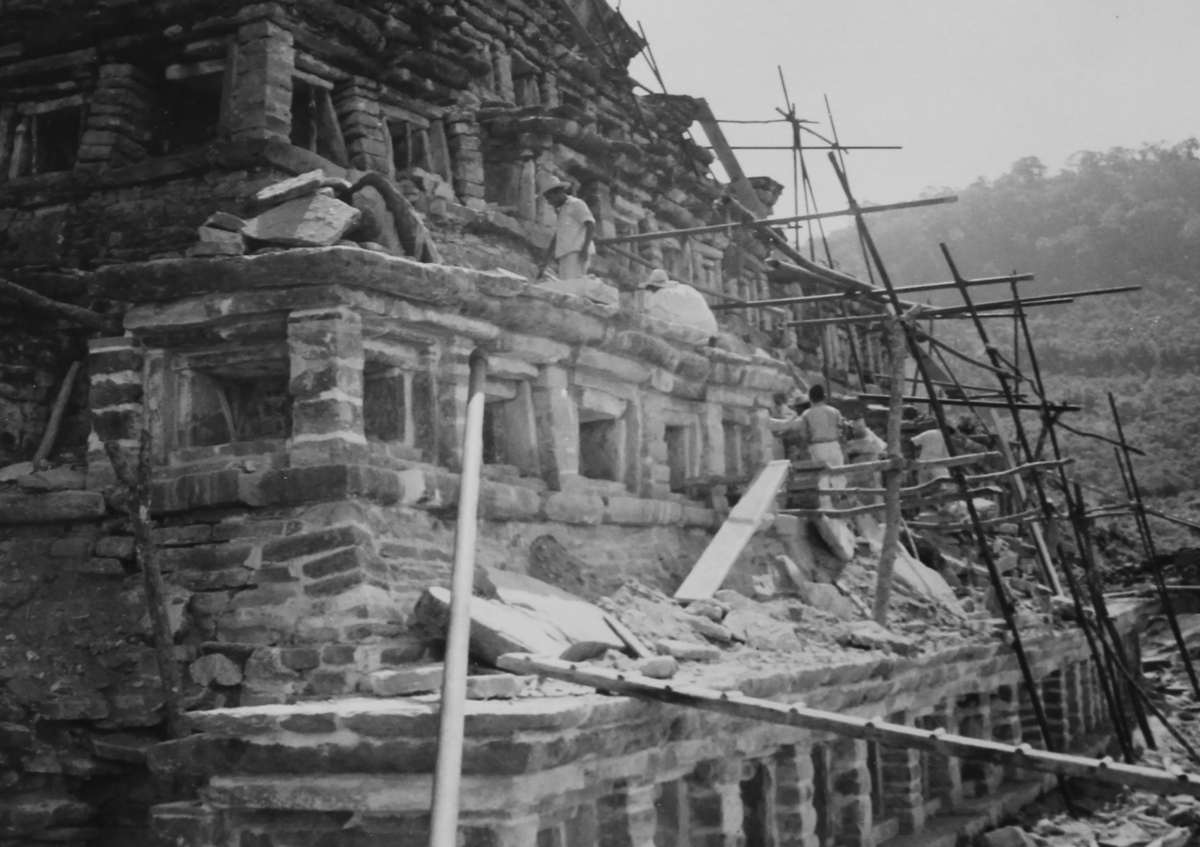
Figure 15
Workers used cement to restore the pyramid’s niches. Intriguingly, García Payón also selected cement to rebuild signposts intended to direct potential tourists to the site. This choice of a sturdy material for the signposts was in response to earlier incidents where workers had intentionally toppled the signs, protesting against poor working conditions and land dispossession. “Reconstructed niches” García Payón, José. “Informe de los trabajos desarrollados en la Zona arquelogica del Tajin, Ver., durante la temporada del año de 1959,” Photo 11/30 ATINAH, vol. 6 (1959–1962), tomo 130, Tajín, Estado de Veracruz.
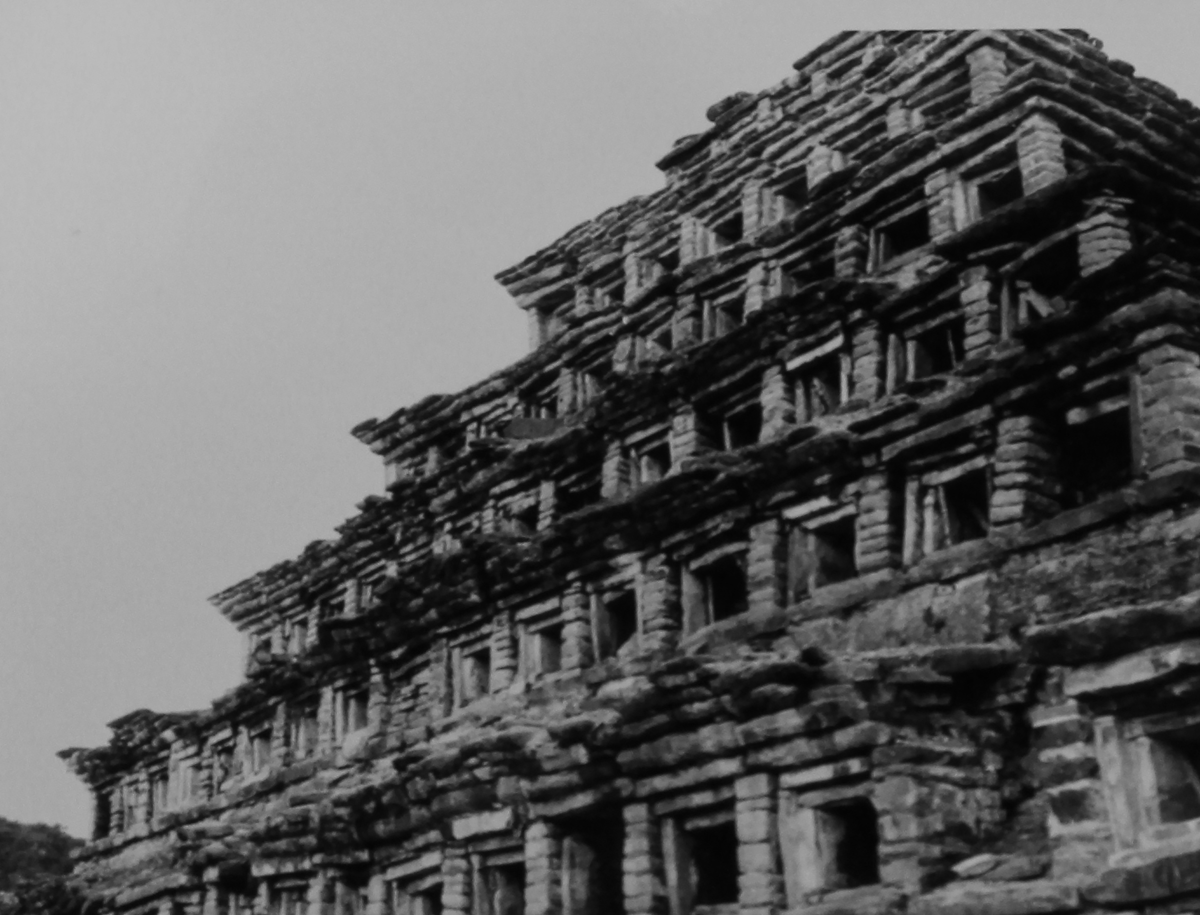
Figure 16
The remains of the pre-Hispanic past, once concealed and shattered, became visible and monumental through the labor of native workers. “Current Conditions” García Payón, José. “Informe de los trabajos desarrollados en la Zona arqulogica del Tajin, Ver., durante la temporada del año de 1959,” Photo 11/30 ATINAH, vol. 6 (1959–1962), tomo 130, Tajín, Estado de Veracruz.