
The Camera in the Field: Tajín 1924
In the summer of 1924, Gabriel Velázquez, a technical assistant in the Office of Pre-Hispanic Monuments, arrived at pyramid of Tajín to assess its condition.1 This ancient ruin, located in the lowlands of northern Veracruz, was of significant importance to state officials and intellectuals committed to forging a unified nation following Mexico’s Revolution of 1910–1920.2 The value attributed to antiquity and its remnants had already been well-established during the Porfiriato (1876–1911). In this era, the government, with the help of the emerging field of archaeology, began to prioritize the preservation and exhibition of ancient objects and buildings, recognizing their importance.3 Nevertheless, in the post-revolutionary period, ‘the allure of antiquity’ gained even greater prominence, particularly as ancient monuments like the Tajín pyramid played a pivotal role in affirming the idea of a modern nation with prestigious and ancient roots.4 However, to further solidify this understanding of an official history rooted in pre-Hispanic antiquity, these ancient structures first needed to undergo reconstruction due to their fragile condition.
Velázquez’s report indeed reveals the extent of the Tajín pyramid’s deterioration, underscoring the urgent need for repairs to preserve what remained of this historical monument.5 According to his findings, the main staircase had completely collapsed, alongside the pyramid’s cornices, resulting in a significant accumulation of debris that posed a serious threat to its stability.6 Velázquez attributed this extensive damage to the region’s intense rainfall, the historical neglect that allowed the pyramid to become completely overgrown, and the actions of ‘uneducated or ill-intentioned locals’ who compromised the monument by removing its foundational stones.7 Implicit in Velázquez’s statement regarding locals was the well-established notion among Mexican archaeologists and intellectuals that the population residing in the neighboring communities, often Indigenous, lacked the capacity to value and thus preserve the remains of the ancient past. In essence, Velázquez’s statement exemplifies ‘a process of appropriation and dissociation,’ whereby pre-Hispanic ruins are deemed significant yet simultaneously disconnected from contemporary Indigenous peoples.8 Consequently, state intervention and funding were necessary to safeguard Mexico’s ancient heritage, not only from the ravages of time and harsh weather conditions but also from those living closest to it.9
Recognizing the monument’s critical state and its cultural significance, Velázquez advocated for its preservation in his written report. He emphasized that abandoning such a ‘beautiful, unique, and valuable’ relic of the ancient Totonac civilization to total destruction would be ‘deplorable.’10 Yet, his compelling account alone wasn’t sufficient. To bolster his case, substantiate his evaluation, and justify his proposed budget of MX$30,000 to cover the restoration of the structure, Velázquez included seven photographs with his report (Figure 1).11 These images—close-ups of the damaged areas—not only capture the pyramid’s deteriorated state but also offer views of the destruction from various angles, spotlighting remarkable stone fragments found within the debris. More broadly, they underscore an important trend in archaeological practice. By the turn of the century, photography had become deeply integrated into Mexico’s nationalist archaeology, serving as both a practical tool and a testament to the discipline’s evolving methods, epistemic priorities, and particular ways of seeing.
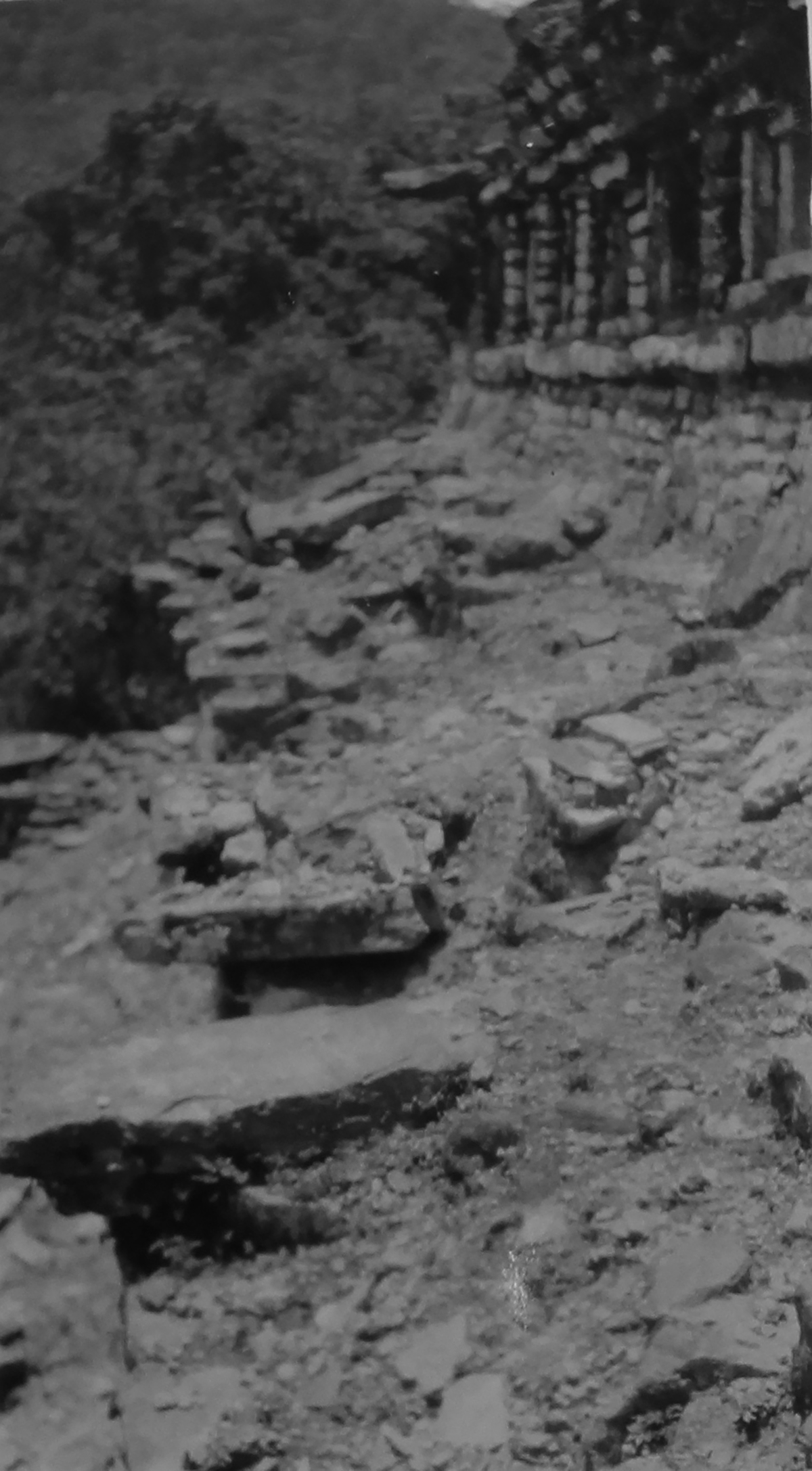
Figure 1
Corridor of the second tier on the south side of the pyramid. Gabriel Velázquez, “Informe sobre el estado de conservación de la pirámide del Tajín (Papantla,” Foto No. 5,” July 4, 1924, ATINAH, vol. 1 (1924–1935), tomo 125, Tajín, Estado de Veracruz.
Despite its importance, photography has largely remained an unrecognized source in the study of the production of archaeological patrimony in twentieth-century Mexico.12 These visual traces, which capture not only pre-Columbian monuments but, as will become clear, also the labor behind their reconstruction, possess the potential to unveil the obscured presence of indigenous laborers: their faces, skills, and the working conditions they endured. This visual essay aims to illuminate this subject by delving deeper into the intertwined histories of photography, labor, and archaeology in Mexico.
Photography, Archaeology, and the (In)Visibility of Labor
The connection between photography and archaeology in Mexico, as well as in other places, gradually developed throughout the nineteenth century.13 In 1839, two years after the invention of the daguerreotype, cameras began making their way to Mexico, becoming a means of archaeological documentation for both explorers and students of antiquity.14 Aligned with the emergence of Mexican antiquarianism, the early photographers in Mexico focused largely on capturing images of pre-Hispanic ruins and artifacts, as argued by Adam T. Sellen.15 However, the limited reproducibility and fragility of daguerreotypes hindered the widespread dissemination of expedition results. As a result, drawings and lithographs continued to be the primary visual representation methods for artifacts and monuments discovered in collections or during field explorations.16 Nonetheless, the advancements in photography during the mid-nineteenth century, including the development of albumen prints, brought about a new era in the documentation and study of pre-Hispanic monuments. These advancements made it more feasible to utilize photography in the field and marked the early attempts to integrate photography into a broader ‘scientific’ research practice.17 Notable figures like Alice and Augustus Le Plongeon, Désiré Charnay, Abel Briquet, and others embarked on documenting the ‘lost cities’ of the Americas using early photography techniques.18
It is crucial to recognize the significance of this collection of images, which its creators considered to be more objective compared to earlier forms of visual representation. Christina Riggs highlights that field photography at this time embodied notions of reliability and rigor, providing scientific credibility to archaeology during a period when the discipline aimed to distinguish itself from earlier antiquarian practices.19 However, for Mexican scientists, field photography posed challenges due to limited access to photographic chemicals and supplies.20 The uneven global distribution of the medium played a role in explaining why the majority of efforts to photograph ancient pre-Hispanic monuments were carried out by a select group of US and European explorers and scholars of antiquity.21 This unequal access to tools and equipment also contributed to Mexican experts, equally dedicated to the scientific study and circulation of knowledge and imagery about the pre-Hispanic past, expressing a clear preference for drawings and lithographic representations over photography.22
For example, Antonio García Cubas’ lithographic depiction of the Tajín Pyramid, known then as the Pyramid of Papantla, appeared in his widely circulated 1857 national map, the Carta General (Figure 2). This artistic representation symmetrically arranges each of the pyramid’s seven levels, aligns its characteristic niches perfectly, and highlights an imposing main stairway with all its constitutive blocks.23 Consequently, the pyramid is portrayed with a solidity and integrity it lacked materially, imbuing it with a sense of stability, historical precedent, and grandeur.24 Robert Kett observes that the favoring of ‘interpretive images,’ such as García Cubas’ creations and those by scholars of antiquity, over mechanically produced photographs, played a crucial role in the efforts to foster and solidify a Mexican scientific community. This preference underscores the community’s dedication to blending artistic interpretation with scientific inquiry, setting a foundation distinct from that of its Euro-American counterparts.25
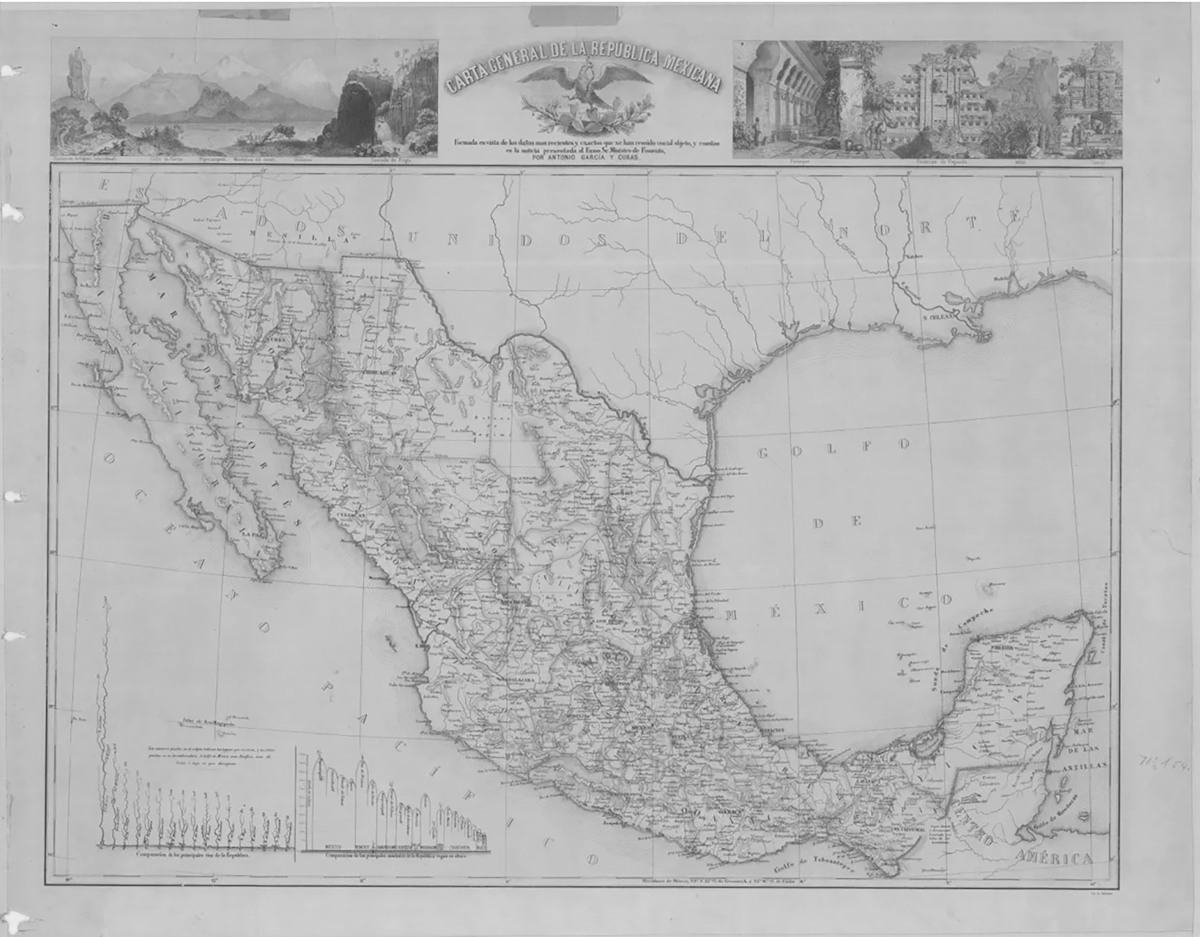
Figure 2
Antonio García Cubas, La Carta General de la República Mexicana. Mapoteca “Manuel Orozco y Berra” del Servicio de Información Agroalimentaria y Pesquera.
It wasn’t until the turn of the twentieth century that Mexico’s scientific community began to integrate portable photographic cameras into the exploration of archaeological sites. A significant example of this occurred in the lead-up to the 1892 Historical-American Exhibition in Madrid. Francisco del Paso y Troncoso, director of Mexico’s National Museum and native of Veracruz, led the Comisión Científica, or the Scientific Expedition, to this southern state, equipped with a large-format camera. Photographer Rafael García and several military personnel were part of his team. Their journey started at the port of Veracruz and took them to the ancient city of Cempoala, where they documented and mapped key sites and archaeological ruins, including the Pyramid of Tajín (Figure 3). 26 These photographs were likely used to create the reproduction of the monument displayed in Mexico’s ‘tercer salón’ at the Madrid exhibition (Figure 4).
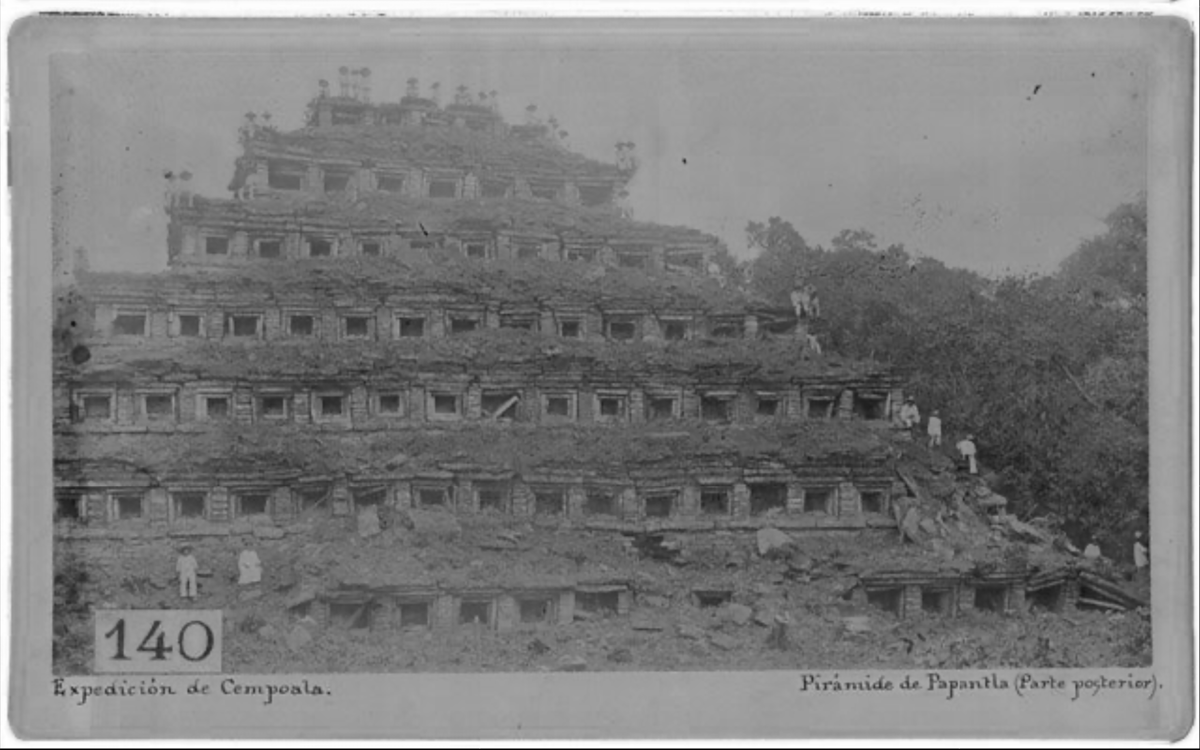
Figure 3
Cempoala Expedition. Pirámide de Papantla. Sistema Nacional de Fototecas- Instituto Nacional de Antropología e Historia, Mexico City, Inv. 419151.
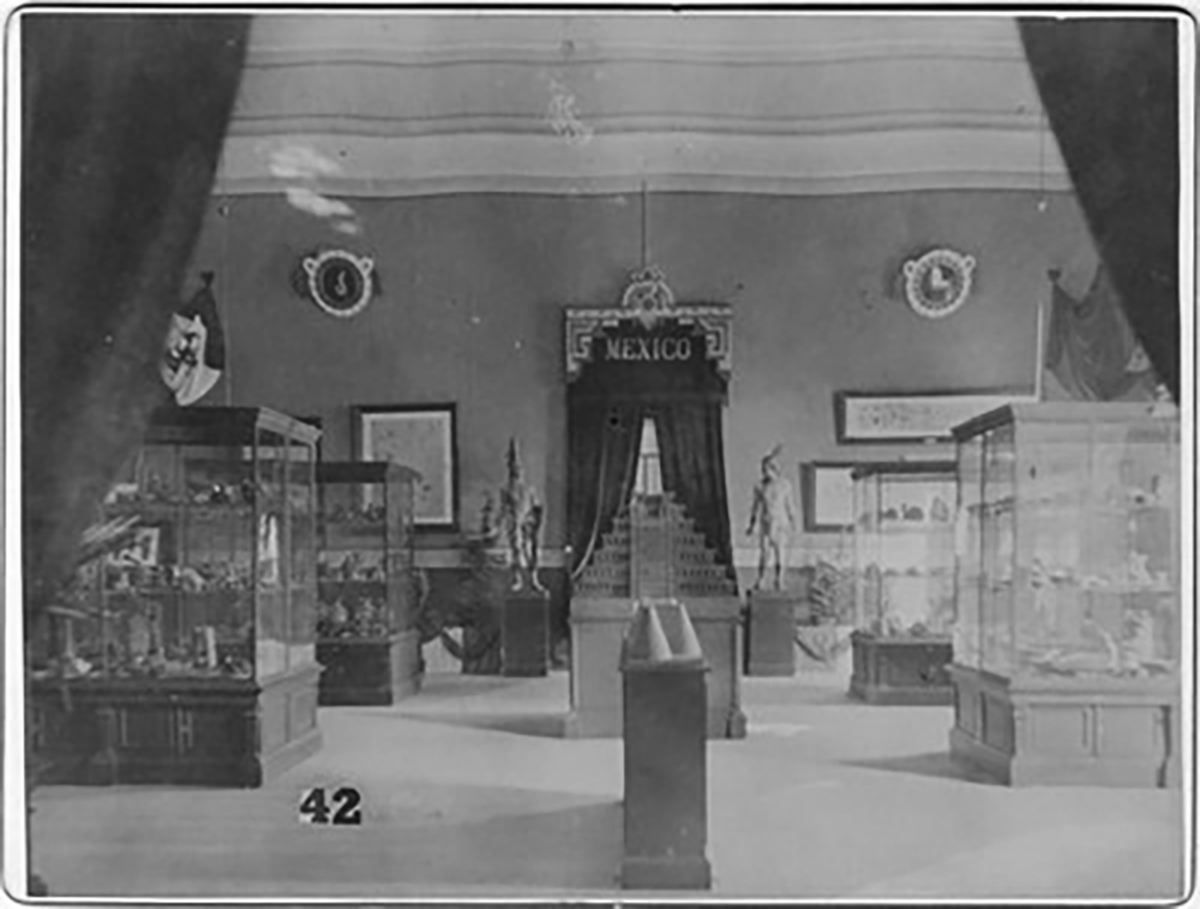
Figure 4
View of the ‘tercer salon’ at the Exposición Histórico-Americana in Madrid. Sistema Nacional de Fototecas- Instituto Nacional de Antropología e Historia, Mexico City, Inv. 425045.
Three decades and a revolution later, as Gabriel Velázquez’s report indicates, the camera continued to be employed on-site to document the condition of deteriorating monuments, identify their key features, and create technical aids for future restoration efforts. In essence, photography had come to be highly valued for its supposedly evidential nature, as it was believed to eliminate human intervention between objects and representation.27 It provided Mexican archaeologists with the ability to produce what they perceived as a more realistic, objective, and scientifically grounded visual representation of the material remnants of the pre-Hispanic past.
Contrary to these claims, on-site photography did not, however, replace preexisting ways of seeing and representing ancient monuments and artifacts. These images, like earlier forms of inscription such as drawn illustrations, chromolithographic prints, and expeditionary photographs, continued to represent monuments and artifacts in a state of ‘splendid isolation,’ devoid of other material traces and contemporary human presence.28 As argued by Dan Hicks, this specific framing has resulted in the ‘monumentalization of sites, where any evidence of human presence and the clutter of the archaeological process is purposefully eliminated before capturing the image.’29 However, despite efforts to exclude of the social and physical dimensions of archaeological work, such attempts were never fully successful.30 Even in the hands of experts like García or Velázquez, the camera had an extraordinary ability to capture unexpected elements, including people.31
In Velázquez’s site photographs, which are my focus here, the presence of Totonac workers from the nearby community of Tajín is unmistakable, even if it’s glossed over. They can be observed in the background, in profile—holding machetes—or at a distance, dressed in what has come to be identified as their traditional attire (Figure 5). These images serve as compelling evidence that residents of Tajín started engaging in wage labor positions at the decaying archaeological site by the mid-1920s, as a way to supplement their income from subsistence farming. Velázquez’s photographs, in short, offer a valuable opportunity to address the overlooked issue of native labor in archaeology, which has often been marginalized in historical narratives.32
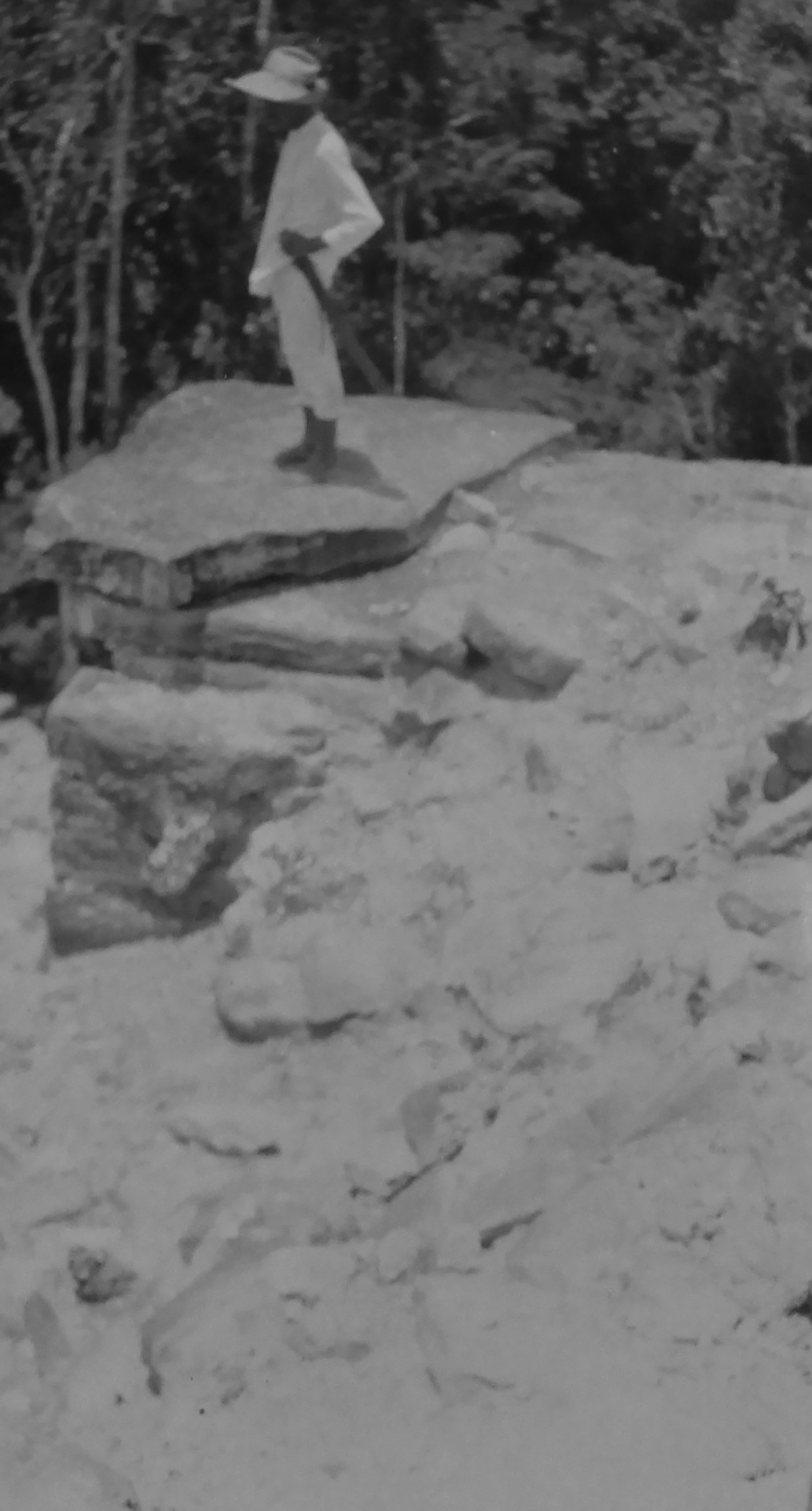
Figure 5
“Northeast corner of the upper floor (collapsed).” Foto No. 6, July 4, 1924, ATINAH, vol. 1 (1924–1935), tomo 125, Tajín, Estado de Veracruz.
As Christina Bueno asserts, archaeologists have often ‘silenced’ the voices of native laborers, despite their indispensable contributions to the discipline’s advancement. The fact that workers rarely surface in historical documents, in her view, explains why their voices are not prevalent in the literature.33 According to Bueno, the elision of native perspectives in historical records serves as a poignant reminder that archaeology originated ‘as a discipline rooted in cultural appropriation, one that distanced local communities, often indigenous, from archaeology’s field practices and other aspects of the discipline.’34 This situation is partly attributed to the problematic foundation of indigenismo, the social and cultural movement that revered the pre-Hispanic past, which archaeology aimed to unearth, study, and safeguard, yet it inherently assumed the inferiority of living indigenous populations.35
In contrast to the textual absence of workers mentioned by Bueno, the photographs taken by Velázquez appear to address this gap. His images provide insight into the demanding tasks performed by Indigenous laborers, encompassing site and artifact location, ground clearing, lifting heavy stone fragments, carrying construction materials, and the excavation, handling, and stabilization of fragile elements of deteriorating pyramids. However, these images and their captions also mirror unequal power dynamics, practices of subordination, and hazardous, exploitative working conditions. Notably, the legends accompanying Velázquez’s visual records conspicuously fail to identify the individuals by name or recognize their contributions and skills. Even collective terms like ‘cuadrillas’ (work crews) were often deemed unnecessary in the description of the images’ content.
Furthermore, these textual representations, which erased the individual identities of the workers, were complemented by visual practices that objectified them or depicted them in subordinate positions to the expert. As illustrated in Figure 6, Velázquez had workers pose as human scales or ‘ethnic markers’ beside buildings and artifacts.36 This widespread practice in both colonial and postcolonial archaeological settings effectively reduced native workers to mere passive accessories or nondescript props in the photographs, resulting in a ‘double inscription.’37 As Ashish Chadha points out, this process superimposes the past onto indigenous subjects, suggesting their supposed ignorance of it and implying a need for their enlightenment and ‘civilization.’ Simultaneously, archaeological projects employ these indigenous individuals to add authenticity and endorse the patronizing undertakings of colonial, or in this context, state initiatives.38
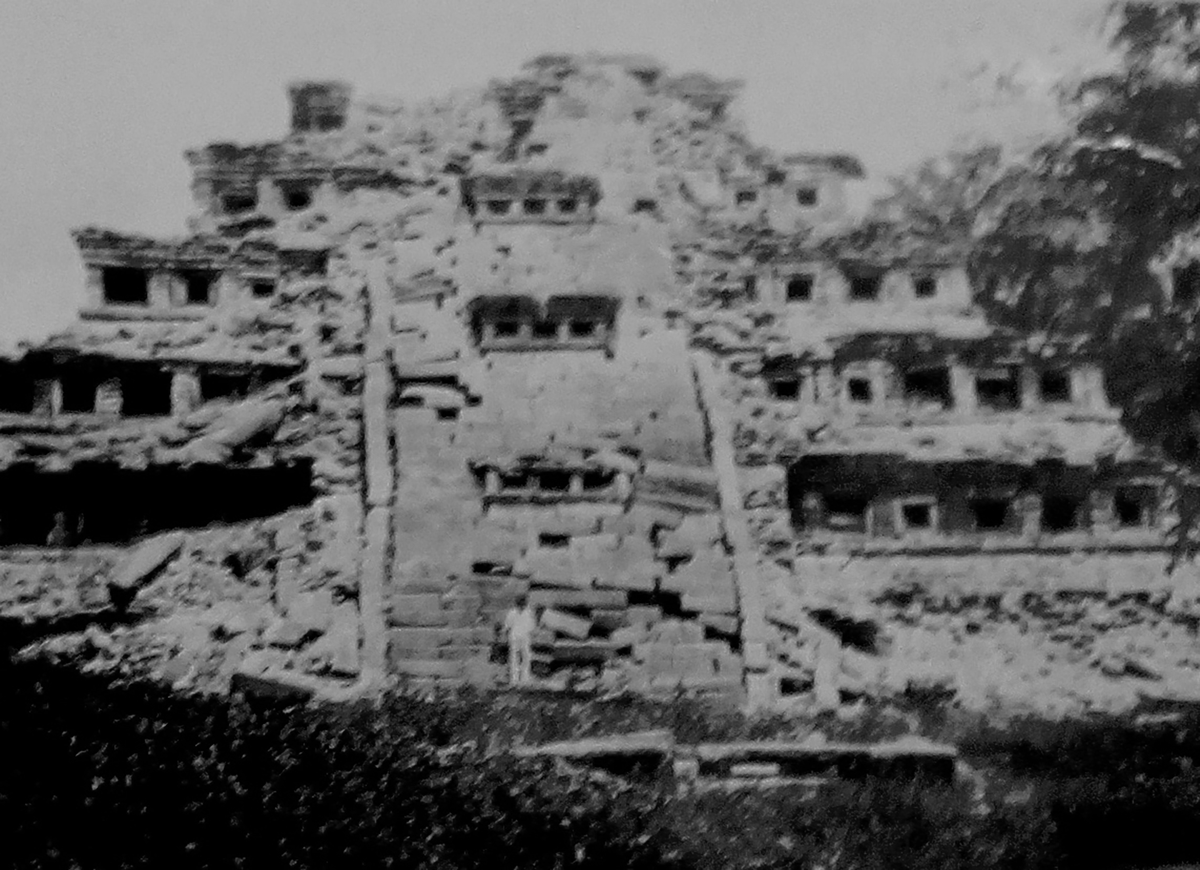
Figure 6
“Main facade that looks to the East.” Gabriel Velázquez, “Informe sobre el estado de conservación de la pirámide del Tajín, Papantla,” Photo No. 1, July 4, 1924, ATINAH, vol. 1 (1924–1935), tomo 125, Tajín, Estado de Veracruz.
Lastly, it is worth noting that Velázquez’s images depicting Totonac men ‘at work’ have been kept in the archives and have remained unseen.39 As a result, these labor-related images are absent from the prevailing ‘visual economy,’ which tends to prioritize and celebrate grandiose representations of monumental ruins while overlooking the process of their physical reconstruction. In other words, while archival images of the reconstructed main pyramid of Tajín have been exhibited, extensively circulated, and replicated to promote the tourism industry and a grandiose past, images showcasing the labor involved in its process of reconstruction remain out of view. As a consequence, Totonac workers, despite being included in the visual record of Velázquez (and others), have remained overlooked, overshadowed by the monumental structure itself.40
In essence, much like an actual underexposed photograph where unwanted details are obscured and lost, Velázquez’s visual records, although not technically underexposed, resulted in a murky and indistinct representation of labor that could nevertheless be modified. Photography, after all, offers deliberate creative choices for adjusting the overall brightness of an image to highlight specific details and manipulate it even after capture. Building upon this foundational understanding of the medium, the purpose of this photo-essay is to address the prevalent ‘underexposure’ of workers and their significant contributions, as depicted in the visual documentation of the reconstruction of the main pyramid at the archaeological site of Tajín, particularly during the 1930s and 1970s. Following a brief discussion of this historical context, the subsequent section will delve into the methodology employed to achieve this effect.
Context and Method
The photographic record of the archaeological reconstruction of Tajín, originally consisting of Velázquez’s images, expanded significantly between the late 1930s and the 1970s. This expansion occurred first during the high tide of social reform under Cardenismo (1934–1940) and then during the subsequent shift toward state-led industrialization from the 1940s to the 1970s. During this period, amid an unprecedented expansion of the middle classes, the rise of mass communication and travel, and a harmonious relationship with the United States, the Mexican post-revolutionary state actively supported and funded the monumental reconstruction of the Tajín pyramid, as well as numerous other pre-Hispanic structures throughout Mexico. This support was driven by shared goals of reclaiming national pride and promoting mass tourism as a developmental strategy.41
In the context of Tajín, the reconstruction of the main pyramid during this period was overseen first by topographer Agustín García Vega and then by archaeologist José García Payón, with labor carried out by the Totonac residents of El Tajín, as had been the case since the mid-1920s. Although there was an increase in wage-labor opportunities at the site as reconstruction unfolded, their availability was contingent upon funding and the progress of archaeological work, resulting in seasonal employment and a variable schedule. It is crucial to recognize the profound impact of providing wage-labor positions to Indigenous subsistence farmers, particularly within a broader framework of land dispossession caused by state-backed activities in the region, such as cattle-ranching, oil extraction, and road construction.42 In fact, Sam Holley-Kline’s analysis of payroll records suggests that between 1936 and 1974, approximately one-fifth to one-third of the nearby community of El Tajín was engaged in archaeological wage labor.
To uncover the labor experiences of the residents, I have contextualized and reinterpreted a selection of archival photographs. These photographs, which are attached to reports by García Vega and García Payón, reside in the Technical Archive of the National Institute of Anthropology and History (INAH). Viewed collectively, these images afford valuable insights into the skills and creativity exhibited by the workers, even when their presence is unacknowledged in the image captions. Additionally, they highlight the risks and challenges the workers faced during their tasks. In this way, these recovered images transcend their initial purpose of documenting the physical transformation of the monument, providing a broader and more comprehensive view of archaeological practice. To enhance their impact, I have modified these photographs, incorporating my own descriptions alongside the original captions.43 My textual intervention hinges on my own reading of the images, as well as insights from technical reports that, while limited, provide valuable information about labor conditions at the site.
This approach serves a dual purpose. Firstly, it aims to highlight the significant role that Totonac workers played in the process of nation-building by reconstructing, in the most literal sense, Mexico’s ancient patrimony. Secondly, it seeks to draw attention to the persistent inequalities that the discipline of archaeology perpetuated, reinforced, and obscured throughout this construction process. Through this textual and visual ‘exposure,’ we can achieve a more comprehensive understanding of archaeology that does not hide the underlying the social and material conditions and relations upon which the discipline depends.
Exposing Labor: Tajín, 1929–1938
In 1929, following Velázquez’s recommendation, the office of Pre-Hispanic Monuments assigned topographer Agustín García Vega with the challenging task of reconstructing the Tajín pyramid.44 Similar to his predecessor, García Vega noted the deteriorated condition of the structure, which included collapsed niches, missing balustrades along the stairway, and severely damaged outward-projecting cornices.45 Despite his view on the local workforce as ‘inadequate and unprofessional,’ workers carried out the restoration process.46 They began by clearing the grounds and removing accumulated debris.47 Then, they climbed the unstable and crumbling structure to painstakingly reassemble, straighten, and level the remaining decorative elements, using ropes and logs creatively to secure the massive stones with reliefs discovered in the rubble (Figures 7, 8, 9, 10).48
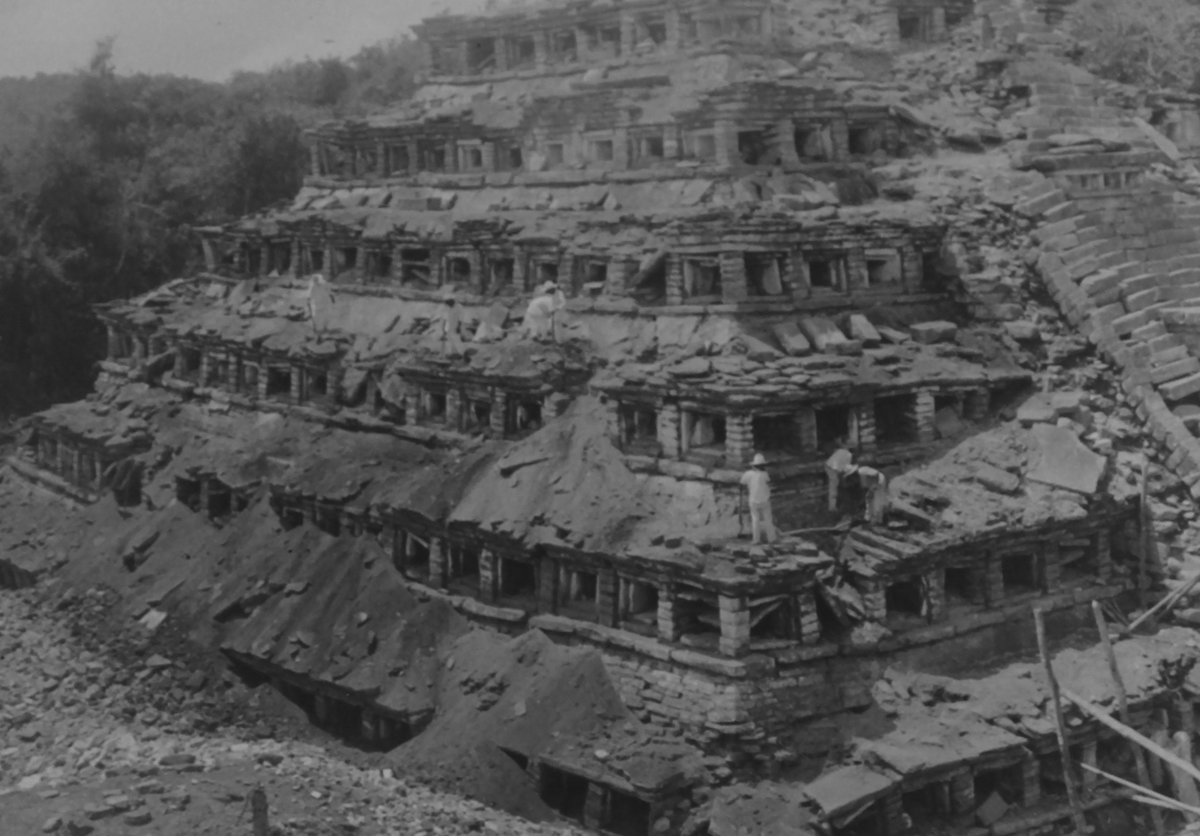
Figure 7
Perilous conditions during the restoration of the pyramid’s southeast corner amidst conservation efforts. “Southeast angle during the conservation work.” García Vega, Agustín. “Informe de los trabajos de conservación de la Pirámide del Tajín, en Papantla, Ver,” 16/89 Photos, June 22, 1934, ATINAH, vol. 1 (1924–1935), tomo 125, Tajín, Estado de Veracruz.
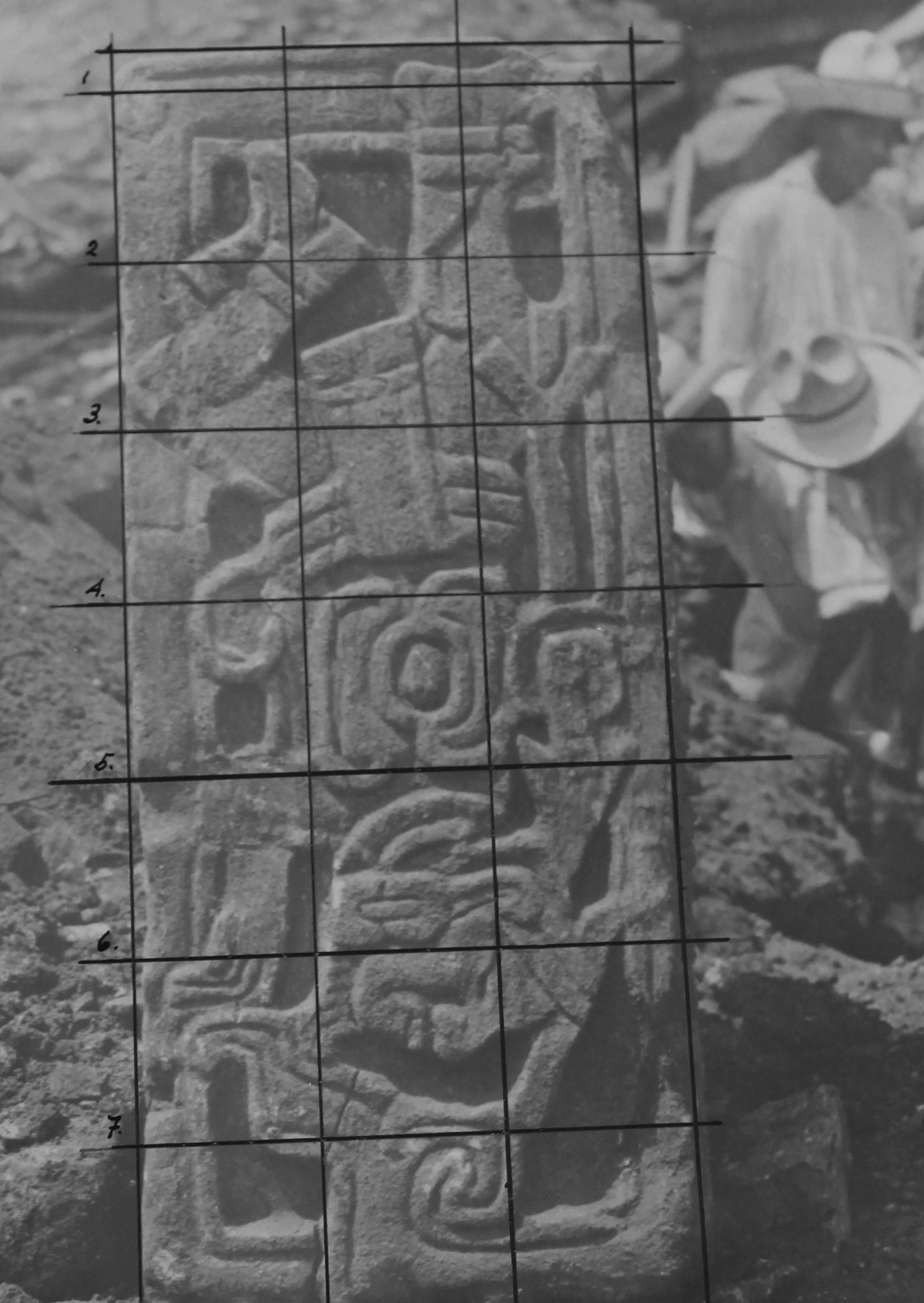
Figure 8
Totonac workers extract stones with reliefs from the debris. “Stones with reliefs taken from the rubble. On one of them, there is a skull.” García Vega, Agustín. “Informe de los trabajos de conservación de la Pirámide del Tajín, en Papantla, Ver,” 23/89 Photos, June 22, 1934, ATINAH, vol. 1 (1924–1935), tomo 125, Tajín, Estado de Veracruz.
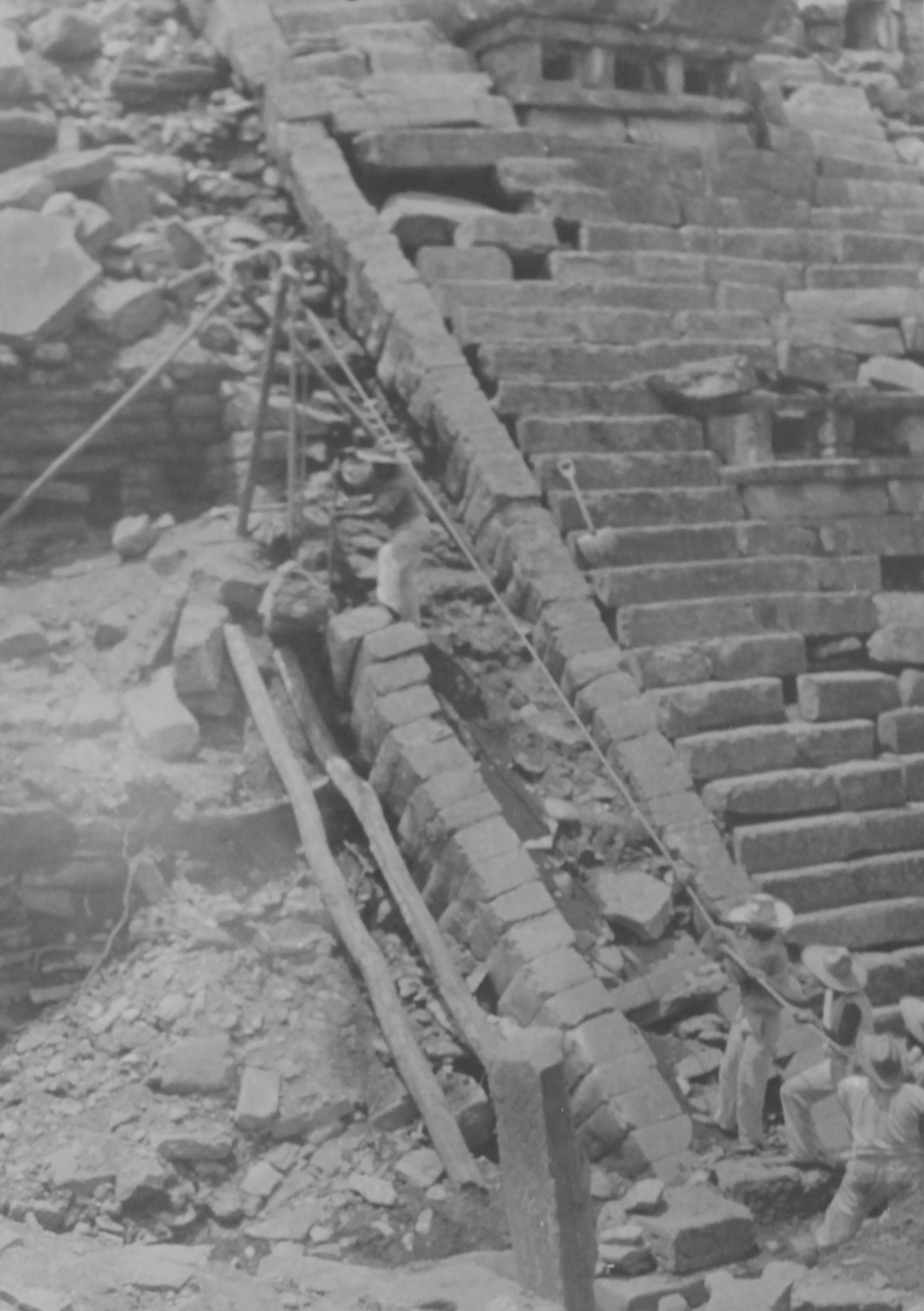
Figure 9
A team of masons uses a rope to move stone fragments, while another member of the ‘cuadrilla’ carefully assembles them. “Another aspect of the same.” García Vega, Agustín. “Informe de los trabajos de conservación de la Pirámide del Tajín, en Papantla, Ver,” 43/89 Photos, June 22, 1934, ATINAH, vol. 1 (1924–1935), tomo 125, Tajín, Estado de Veracruz.
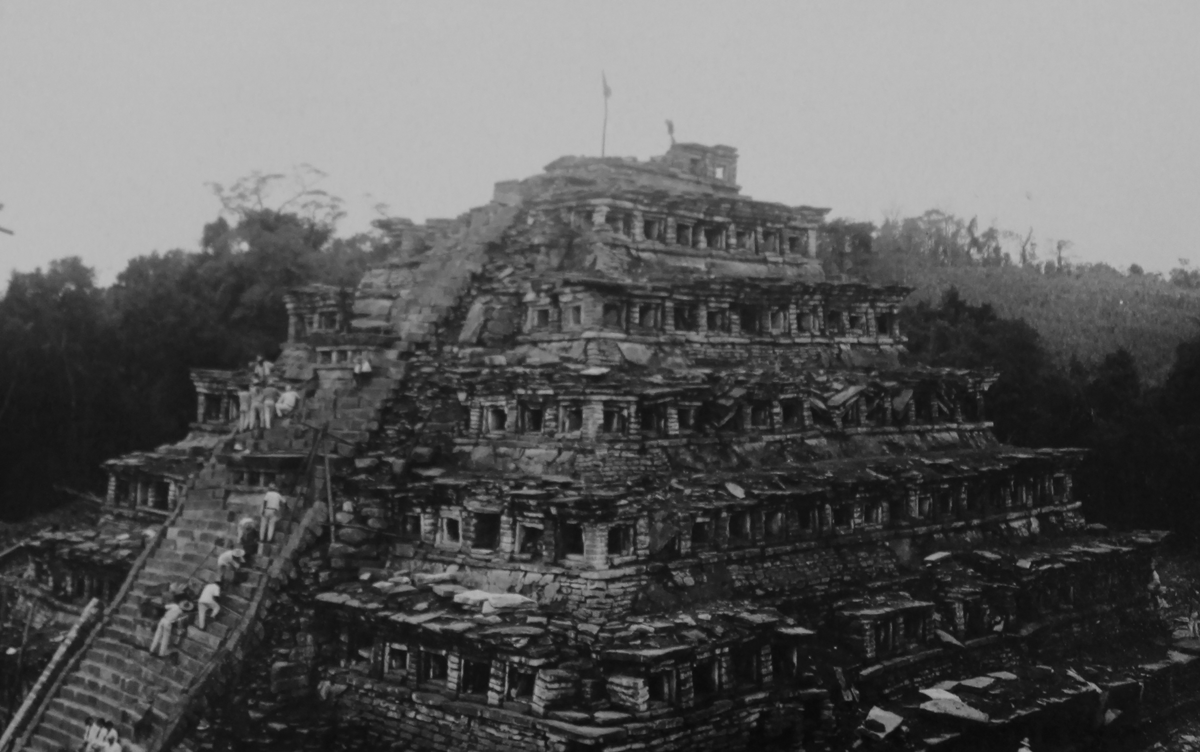
Figure 10
In this image, around ten laborers, including masons and conservadores, are diligently working on the main stairway. Notably, local women are seen seated on the stabilized lower steps in the photograph’s bottom left corner. Although technical reports do not mention these women, they played an essential role in nourishing the workers by providing food. “Northeast angle during the work.” García Vega, Agustín. “Informe de los trabajos de conservación de la Pirámide del Tajín, en Papantla, Ver,” 45/89 Photos, June 22, 1934, ATINAH, vol. 1 (1924–1935), tomo 125, Tajín, Estado de Veracruz.
While García Vega’s images effectively conveyed the labor, effort, and skill involved in the making of monumentality, his reports revealed that the workers were not merely compliant subjects obedient to García Vega’s commands. For instance, they persisted in gathering wood from the monument’s surroundings for personal use, despite García Vega’s objections.49 Their actions compelled García Vega to contemplate the necessity of expropriating at least 32 hectares of land, as mandated by the Law on Archaeological Monuments of 1897.50 He believed such measures were essential to protect the ruins from potential damage caused by local residents living in close proximity—a paradoxical situation considering that it was precisely these local residents who were actively working to restore the pyramid to what García Vega envisioned as its original appearance.
However, despite García Vega’s vision and the diligent work of locals, managing the pyramid’s architectural components proved more challenging than anticipated. The more García Vega and the teams of Totonac men reconstructed, the more damage they encountered and unintentionally created. After four field seasons, García Vega completed his work and submitted the final report in 1938.51 However, the project of reconstruction did not halt there. In the subsequent year, the newly-established INAH appointed José García Payón to continue the project, taking over from García Vega’s previous involvement.52
Exposing Labor: Tajín 1939–1970
Upon José García Payón’s arrival at Tajín on March 23, 1939, he was confronted with the deteriorated state of the pyramid and the urgent need to clear the overgrown vegetation.53 Recognizing the critical importance of stabilization to prevent collapse, the initial focus of the work on-site was on removing the accumulated rubble. Once this task was completed, the next step involved the ‘injection’ of a concrete mixture into the structure, chosen by Payón for its durability and its ability to evoke an ancient aesthetic.54 In the subsequent seasons, teams of skilled masons continued the reconstruction efforts, utilizing concrete in combination with iron to fabricate ‘artificial stones.’55 These stones were then used to rebuild the incomplete niches that lacked their original stucco covering. Following Payón’s ‘simple and practical approach,’ his workforce successfully reconstructed the second level of the southeaster facade, as well as the first three levels of each side of the pyramid, including a significant portion of the main stairway.56 The reconstruction of other monuments like Buildings C and 5, for example, also begun.57 Through their labor, in short, workers contributed to realizing the state’s vision of transforming the archaeological site of Tajín into prominent tourist destination.
However, García Payón’s ambitions extended beyond merely reconstructing the pyramid to attract tourism, as the Mexican state desired. His focus was also scientific: outlining the evolutionary framework of Mexico’s pre-Hispanic cultures.58 Additionally, García Payón sought to understand the construction techniques used during the pyramid’s initial creation and to establish a chronology of its construction.59 This endeavor presented considerable risks to the workers assigned to dig an ‘exploration tunnel’ on the pyramid’s western side. This excavation indeed resulted in an internal collapse, further destabilizing the pyramid and presenting a severe danger to the workers who risked being buried alive (Figures 11, 12, 13).60
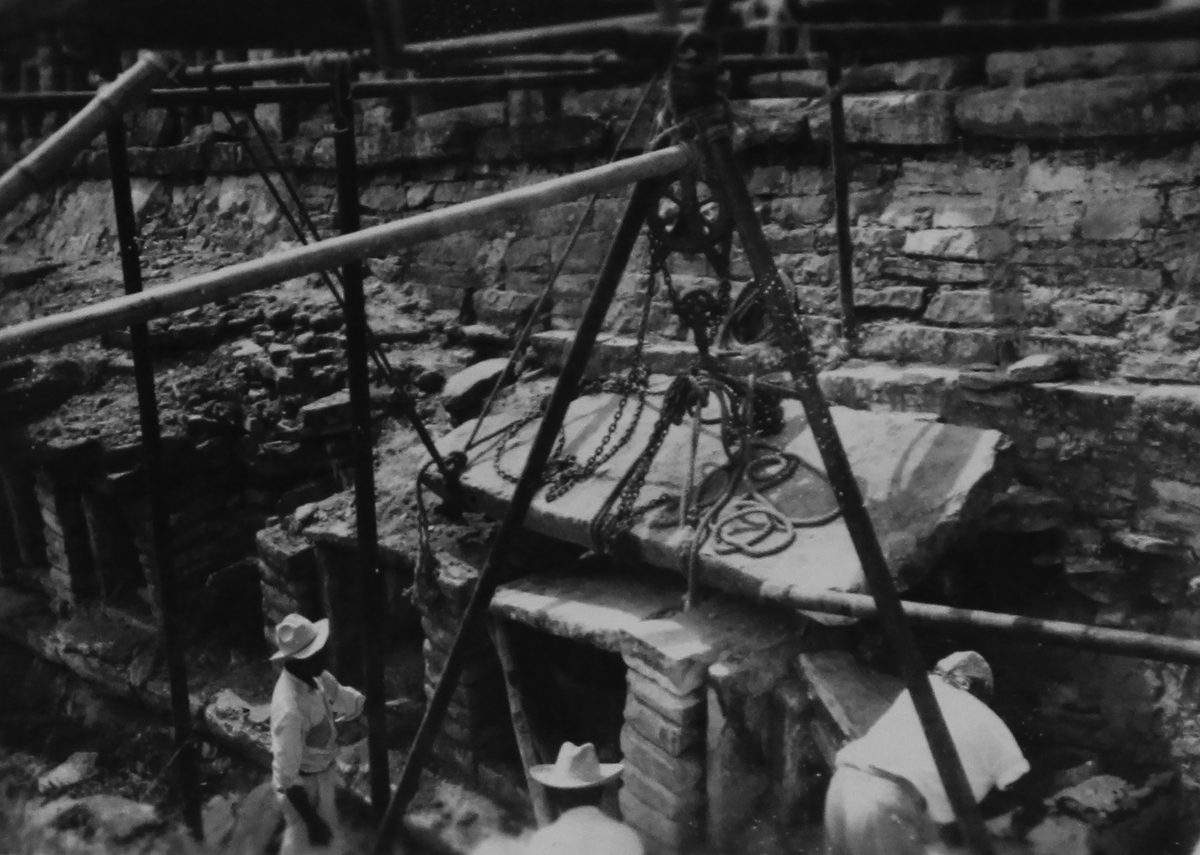
Figure 11
Masons skillfully handle the stone fragments that once covered the pyramid’s niches. “Tile that covers the niches of the Tajín Pyramid.” García Payón, José. “Segunda Temporada de Exploraciones en el Totonacapan Septentrional y Meridional en el Tajin y Misantla, 1940,” Photo 11/111, ATINAH, vol. III (1940–1953), tomo 126, Tajín, Estado de Veracruz.
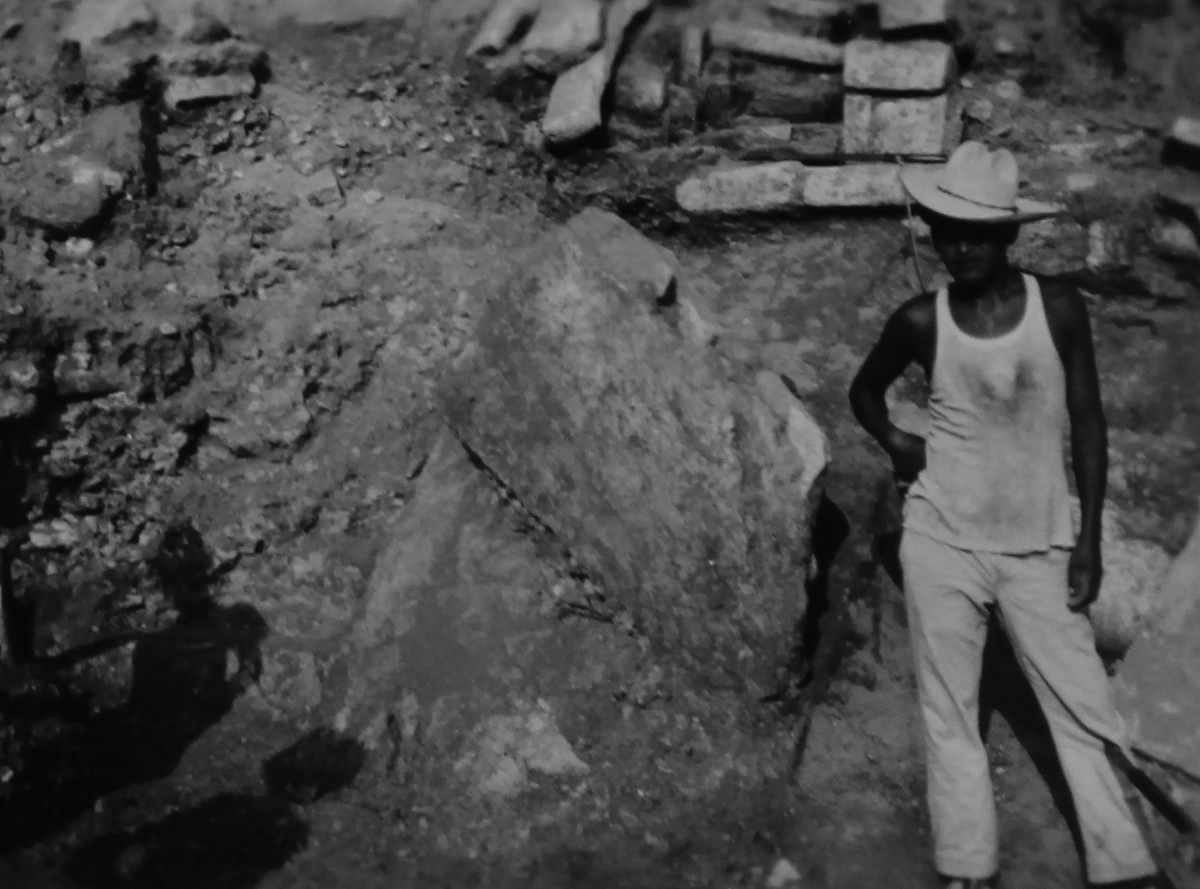
Figure 12
A worker pauses briefly, posing for the camera amidst his work. “Pieces of stucco from the cornice of the first section, Building No. 5.” García Payón, José. “Segunda Temporada de Exploraciones en el Totonacapan Septentrional y Meridional en el Tajin y Misantla, 1940,” Photo 42/111, ATINAH, vol. III (1940–1953), tomo 126, Tajín, Estado de Veracruz.
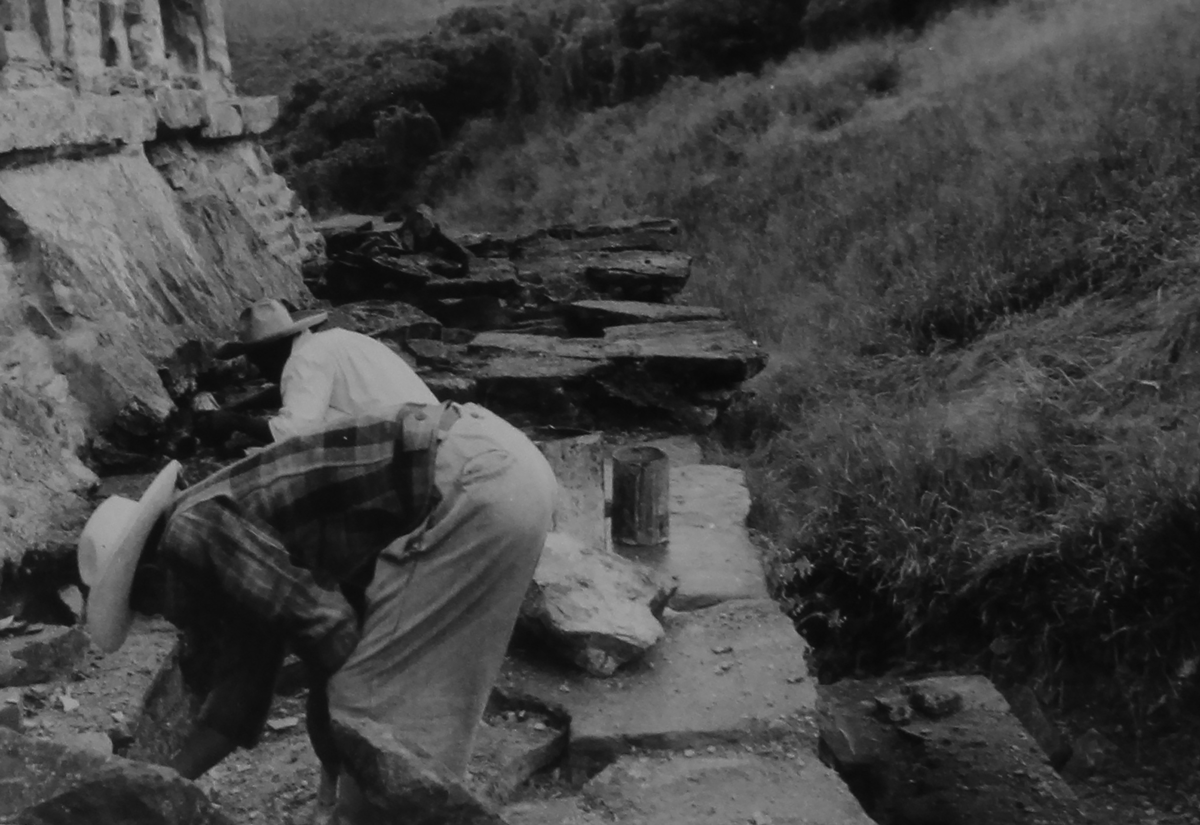
Figure 13
Workers strived to restore the pyramid while also advocating for improved working conditions and better salaries. “Repairing the pyramid floor, North Side.” García Payón, José. “Informe de los trabajos en la zona Arquelogíca del Tajín durante la temporada de 1958,” Photo 2/19 ATINAH, vol. 5 (1956–1958), tomo 129, Tajín, Estado de Veracruz.
Given the physically demanding nature of the job and the associated risks, it was not surprising that dissatisfaction with the poor working conditions on the site arose. García Payón’s field reports from the late 1940s shed light on ongoing and unresolved social conflicts centered around fair wages.61 The workers openly expressed their frustrations by demanding higher salaries, as they were being paid only Mex$4.35, whereas the legally established minimum wage in the region was Mex$6.62 These complaints were fueled by comparisons with the wages offered by other employers in the region, such as vanilla farmers who paid Mex$4.50 plus meals.63 Although the workers’ salaries at the site were eventually increased, they still remained below what was legally mandated.64
The changes in land tenure, marked by the site’s expanding borders which further restricted local residents’ access to resources, aggravated their already tenuous economic situation, culminating in growing frustration.65 This unrest became evident when locals intentionally destroyed road signs pointing to the site’s existence and location. In reaction, García Payón employed his favored material, cement, to safeguard the signs and deter further sabotage.66
By the 1960s, a few years after the sabotage incident, it became evident that the fragmentation in Tajín was not solely social. Multiple teams persevered in the labor-intensive task of salvaging and reassembling fragments from collapsed niches, columns, and relief sculptures (Figure 14, 15, 16). Despite these efforts, the accumulation of fragments continued, leading to a mound of almost 2,800 cubic meters of rubble. This accumulation, a byproduct of the pursuit of monumentality, explains why García Payón’s intermittent efforts towards consolidation and restoration persisted for nearly two more decades, until his passing in 1977. García Payón’s contributions to the site’s reconstruction are well-recognized. However, it’s important to acknowledge the contributions of the workers as well, whose photographs and labor have been overshadowed and forgotten for too long. The visual and textual interventions I present in this essay seek to address and rectify the long-standing underexposure that archaeological observations, descriptions, and a commitment to monumentality have historically produced and sustained.
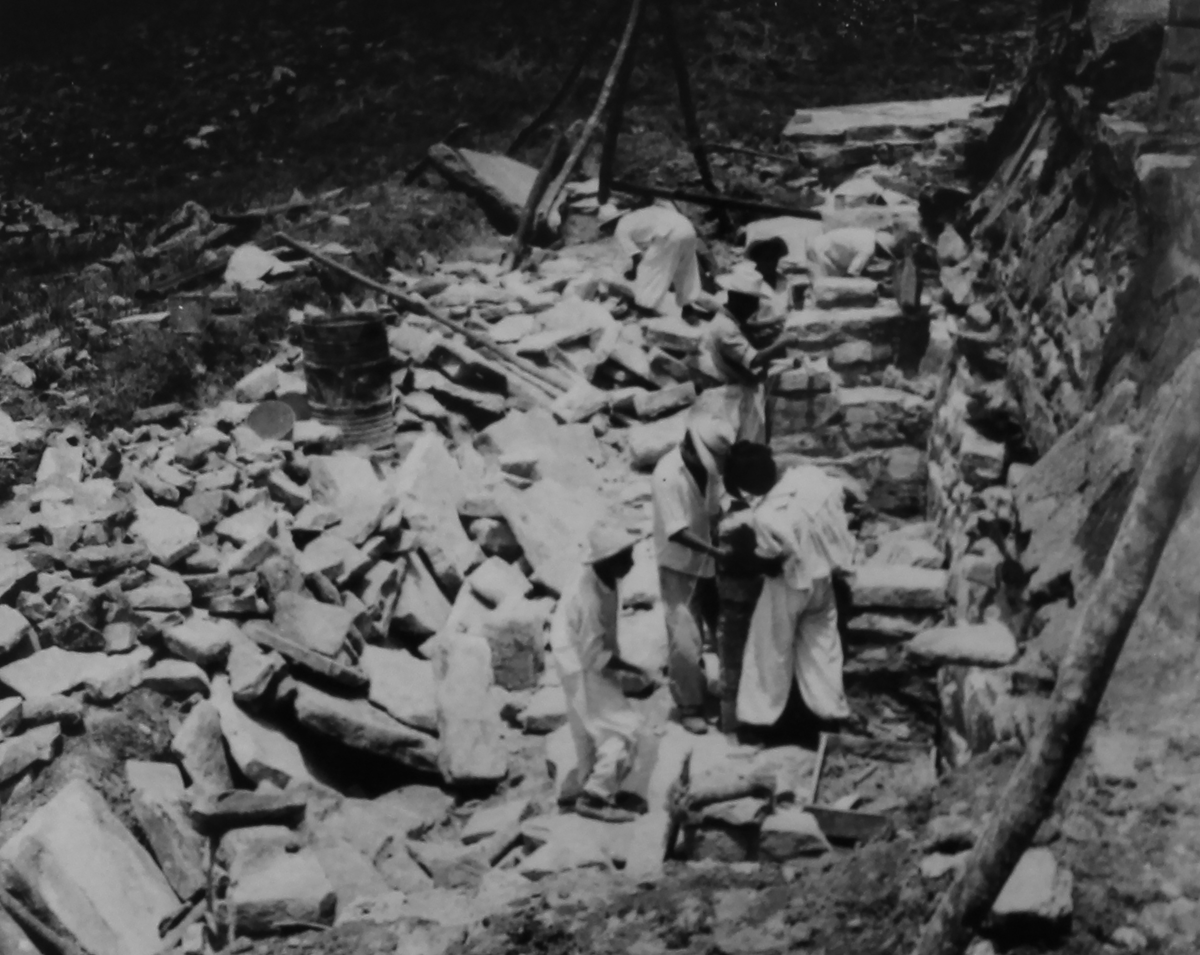
Figure 14
A team of seven dedicated workers meticulously reconstructs the pyramid’s niches, handling the fragments with utmost care. Yet, the excavation of an exploration tunnel, aimed at giving García Payón insight into the pyramid’s original construction, led to an internal collapse. This compromised the pyramid’s stability and posed a considerable risk to the workers. “Reconstructing the ten dismantled niches.” García Payón, José. “Informe de los trabajos desarrollados en la Zona arquelogica del Tajin, Ver., durante la temporada del año de 1959,” Photo 4/30 ATINAH, vol. 6 (1959–1962), tomo 130, Tajín, Estado de Veracruz.
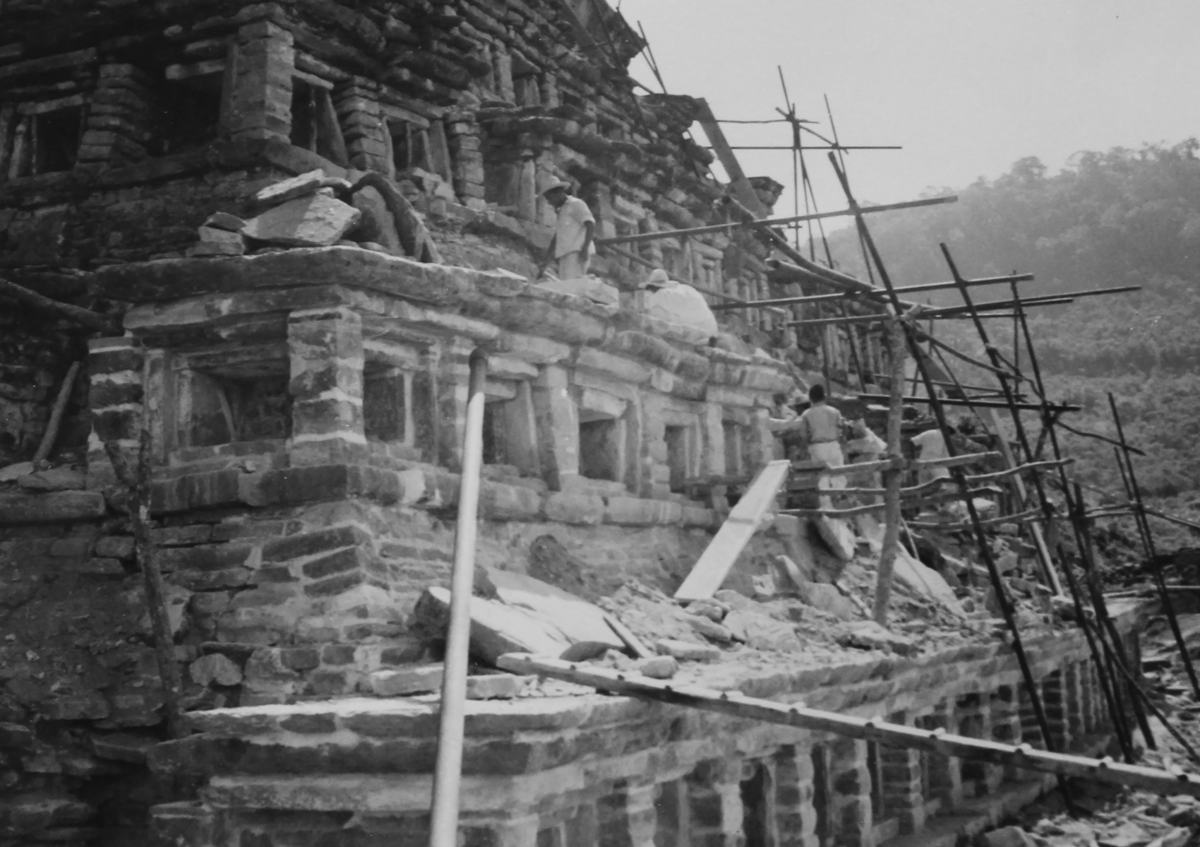
Figure 15
Workers used cement to restore the pyramid’s niches. Intriguingly, García Payón also selected cement to rebuild signposts intended to direct potential tourists to the site. This choice of a sturdy material for the signposts was in response to earlier incidents where workers had intentionally toppled the signs, protesting against poor working conditions and land dispossession. “Reconstructed niches” García Payón, José. “Informe de los trabajos desarrollados en la Zona arquelogica del Tajin, Ver., durante la temporada del año de 1959,” Photo 11/30 ATINAH, vol. 6 (1959–1962), tomo 130, Tajín, Estado de Veracruz.
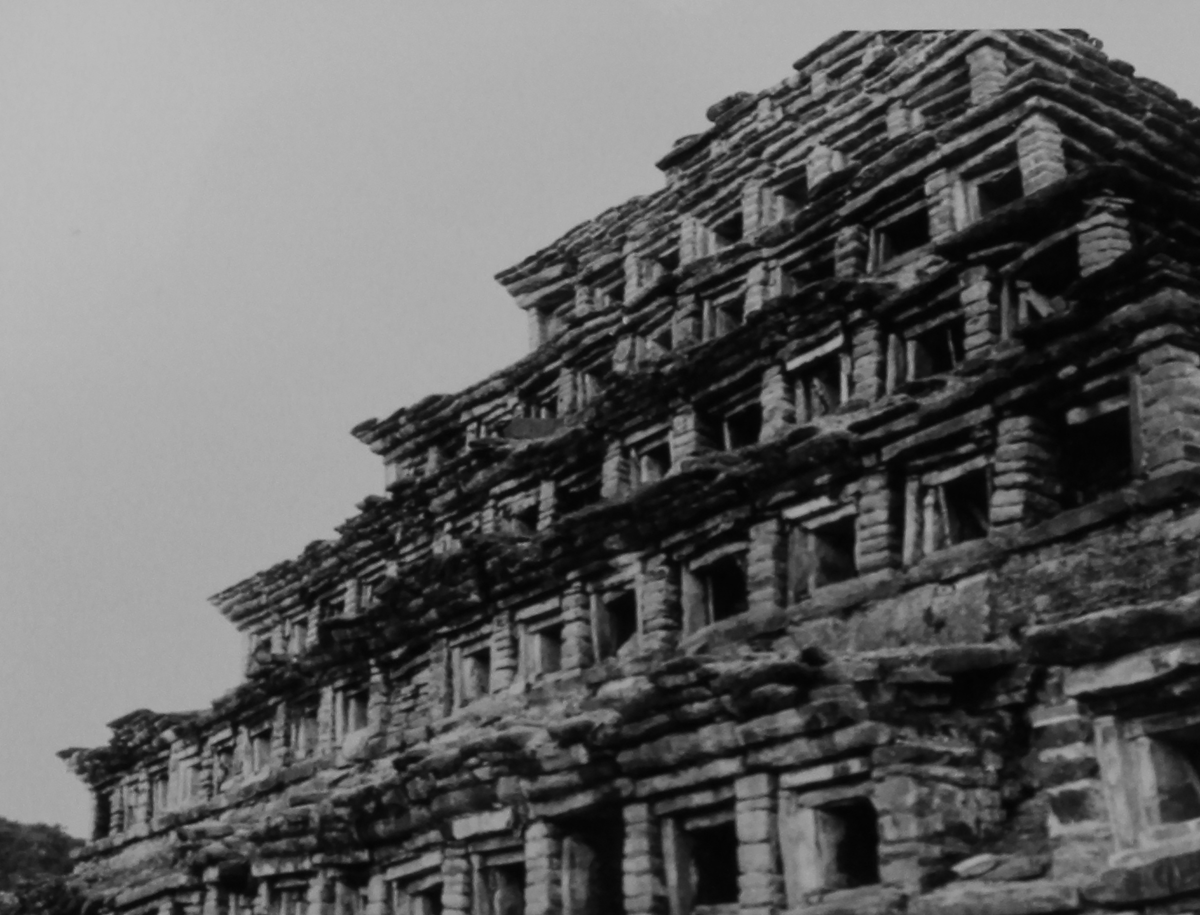
Figure 16
The remains of the pre-Hispanic past, once concealed and shattered, became visible and monumental through the labor of native workers. “Current Conditions” García Payón, José. “Informe de los trabajos desarrollados en la Zona arqulogica del Tajin, Ver., durante la temporada del año de 1959,” Photo 11/30 ATINAH, vol. 6 (1959–1962), tomo 130, Tajín, Estado de Veracruz.
Notes
[1] Gabriel Velázquez, “Informe sobre el estado de conservación de la pirámide del Tajín (Papantla)” July 4, 1924, Archivo Técnico del Instituto Nacional de Antropología e Historia (hereafter ATINAH), vol. 1 (1924–1935), tomo 125, Tajín, Estado de Veracruz. Archaeologists believe that the pre-Hispanic city Tajín was developed between AD 800 and 1200 following the Classic period in Mesoamerican chronology, a period characterized by the development of urban centers. See Annick Daneels, “Developmental Cycles in the Gulf Lowlands,” in The Oxford Handbook of Mesoamerican Archaeology, ed. Deborah L Nichols and Christopher A Pool (Oxford: Oxford University Press, 2012), 348–71, https://doi.org/10.1093/oxfordhb/9780195390933.013.0025; Jürgen K. Brüggemann, “La zona del Golfo en el Clásico,” in Historia antigua de México, ed. Linda Manzanilla and Leonardo López Luján, vol. 2 (Mexico City: Miguel Ángel Porrúa, 1995), 11–40; Sara Ladrón de Guevara, El Tajín: la urbe que representa al orbe (Mexico, D.F.: Fondo de Cultura Económica, 2010).
[2] Haydeé López Hernández, En busca del alma nacional. La arqueología y la construcción del origen de la historia nacional en México (1867–1942) (Ciudad de México: INAH, 2018); Lisa Breglia, Monumental Ambivalence: The Politics of Heritage (Austin: University of Texas Press, 2006); Sandra Rozental, “Stone Replicas: The Iteration and Itinerancy of Mexican Patrimonio,” Journal of Latin American and Caribbean Anthropology 19, no. 2 (2014): 331–56; Mónica Salas Landa, “(In)Visible Ruins: The Politics of Monumental Reconstruction in Postrevolutionary Mexico,” Hispanic American Historical Review 97, no. 1 (2018): 43–76, https://doi.org/10.1215/00182168–4294456.”
[3] Christina Bueno, The Pursuit of Ruins: Archaeology, History, and the Making of Modern Mexico (Albuquerque: University of New Mexico Press, 2016); Mechthild Rutsch, Entre el campo y el gabinete: Nacionales y extranjeros en la profesionalización de la antropología mexicana (1877–1920) (INAH/UNAM-IIA, 2007); Larissa Kennedy Kelly, “Waking the Gods: Archaeology and State Power in Porfirian Mexico” (PhD diss, University of California, Berkeley, 2011); López Hernández, En busca del alma nacional.
[4] Christina Bueno, “The Allure of Antiquity: Archaeology and Museums in the Americas,” Latin American Research Review 56, no. 1 (2021): 242–50, https://doi.org/10.25222/larr.1439.
[5] Gabriel Velázquez, “Informe sobre el estado de conservación de la pirámide del Tajín (Papantla)” July 4, 1924, ATINAH, vol. 1 (1924–1935), tomo 125, Tajín, Estado de Veracruz.
[6] Gabriel Velázquez, “Informe sobre el estado de conservación de la pirámide del Tajín (Papantla).”
[7] Gabriel Velázquez, “Informe sobre el estado de conservación de la pirámide del Tajín (Papantla).”
[8] Rebecca Earle, The Return of the Native: Indians and Myth-Making in Spanish America, 1810–1930 (Durham: Duke University Press, 2007), 134; see also David A Brading, “Manuel Gamio and Official Indigenismo in Mexico,” Bulletin of Latin American Research 7, no. 1 (1988): 75–89; Alan Knight, “Racism, Revolution, and Indigenismo: Mexico, 1910–1940,” in The Idea of Race in Latin America, 1870–1840, ed. Richard Graham (Austin: University of Texas Press, 1990), 71–113.
[9] Ashish Chadha views the need for state intervention to alter locals’ practices concerning archaeological remains as a part of archaeology’s ‘civilizing mission.’ Ashish Chadha, “Visions of Discipline: Sir Mortimer Wheeler and the Archaeological Method in India (1944–1948),” Journal of Social Archaeology 2, no. 3 (2001): 378–401. In this piece, Chadha demonstrates that it’s not only the field that transforms through archaeological interventions into a location of knowledge production, or in this instance, of monumental reconstruction, but also the bodies of the locals who must be disciplined and their behavior transformed.
[10] Gabriel Velázquez, “Informe sobre el estado de conservación de la pirámide del Tajín (Papantla).”
[11] Gabriel Velázquez, “Informe sobre el estado de conservación de la pirámide del Tajín (Papantla).”
[12] An exception to this is the work of Sandra Rozental, “Los fragmentos de un traslado: los desbordes de las imágenes,” Encartes 5, no. 9 (2022): 86–115. The focus of Rozental’s piece, however, is the extraction and transportation of the pre-Hispanic monolith known as Tláloc from San Miguel Coatlinchan to the National Museum of Anthropology in 1964. See also Quetzil E Castañeda, “The Aura of Ruins,” in Fragments of a Golden Age: The Politics of Culture in Mexico Since 1940, ed. Gilbert M Joseph, Anne Rubenstein, and Eric Zolov (Durham: Duke University Press, 2001), 452–67. For broader insights into photography and archaeology, refer to works such as Michael Shanks and Connie Svabo, “Photography and Archaeology: A Pragmatology,” in Reclaiming Archaeology: Beyond the Tropes of Modernity, ed. Alfredo González Ruibal (New York: Routledge, 2013), 73–108; Nick Shepherd, “‘When the Hand That Holds the Trowel Is Black…’ Disciplinary Practices of Self-Representation and the Issue of ‘Native’ Labour in Archaeology,” Journal of Social Archaeology 3, no. 3 (2003): 334–52, https://doi.org/10.1177/14696053030033003; Lesley McFadyen and Dan Hicks, Archaeology and Photography: Time, Objectivity and Archive (London: Bloomsbury, 2020); Frederick N. Bohrer, Photography and Archaeology (London: Reaktion Books, 2011); Sudeshna Guha, “Visual Histories, Photography, and Archaeology Knowledge,” in Depth of Field: Photography as Art and Practice in India, ed. R. Allana (New Delhi: Lalit Kala Akademi, 2012), 29–39; Chadha, “Visions of Discipline”; J.A. Baird, “Photographing Dura-Europos, 1928–1937. An Archaeology of the Archive,” American Journal of Archaeology 115, no. 3 (2011): 427–46; Yannis Hamilakis, “Monumental Visions: Bonfils, Classical Antiquity and Nineteenth-Century Athenian Society,” History of Photography 25, no. 1 (2001): 291–305; Yannis Hamilakis, “Monumentalising Place: Archaeologists, Photographers, and the Athenian Acropolis from the Eighteen Century to the Present,” in Monuments in the Landscape, ed. Paul Rainbird (Stroud: Tempus Publishing, 2008), 190–98; Amy Cox Hall, Framing a Lost City: Science, Photography, and the Making of Machu Picchu (Austin: University of Texas Press, 2017); Christina Riggs, “Archaeology and Photography,” in The Handbook of Photography Studies, ed. Gil Pasternak (New York: Routledge, 2020), 187–205; Christina Riggs, “Shouldering the Past: Photography, Archaeology, and Collective Effort at the Tomb of Tutankhamun,” History of Science 55, no. 3 (2017): 336–63, https://doi.org/10.1177/0073275316676282.”
[13] Olivier Debroise, Mexican Suite: A History of Photography in Mexico (Austin: The University of Texas Press, 1994); Robert J. Kett, “Monuments in Print and Photography: Inscribing the Ancient in Nineteenth-Century Mexico,” Getty Research Journal 9 (2017): 201–10, https://doi.org/10.1086/691296; Adam T. Sellen, “Nineteenth-Century Photographs of Archaeological Collections from Mexico,” in Past Presented: Archaeological Illustration and the Ancient Americas, ed. Joanne Pillsbury (Washington, DC: Dumbarton Oaks, 2012), 207–30; Sarah Kurnick, “Photographic Insights from Engaged Archaeology: Yucatan and Beyond,” Cambridge Archaeological Journal 33, no. 1 (2023): 39–53. DOI: https://doi.org/10.1017/S0959774322000166.
[14] Sellen, “Nineteenth-Century Photographs of Archaeological Collections from Mexico,” 213; Debroise, Mexican Suite, 88.
[15] Sellen, “Nineteenth-Century Photographs of Archaeological Collections from Mexico.” On the emergence of Mexican antiquarianism see Miruna Achim, From Idols to Antiquity: Forging the National Museum of Mexico (Lincoln: University of Nebraska Press, 2017), 1–20; 95–130; 131–71.
[16] Sellen, “Nineteenth-Century Photographs of Archaeological Collections from Mexico”; Achim, From Idols to Antiquity, 131–71.
[19] Riggs, “Archaeology and Photography,” 191. On objectivity see Lorraine Daston and Peter Galison, “The Image of Objectivity,” Representations 40 (1992): 81–128.
[22] See for example, Peñafiel, Monumentos del arte mexicano antiguo: Ornamentación, mitología, tributos y monumentos, cited in Kett, 204–5.
[23] On García Cubas see Raymond B Craib, Cartographic Mexico: A History of State Fixations and Fugitive Landscapes (Durham: Duke University Press, 2004), 32–33; Magali M. Carrera, Traveling from New Spain to Mexico: Mapping Practices of Nineteenth-Century Mexico (Durham, NC: Duke University Press, 2011), 17–18, 156. García Cubas’ visual representation of the pyramid would have entailed an examination of Diego Ruíz’s report in the Gaceta de México of his discovery of the monument in 1785. See Anonymous, “La pirámide de Papantla,” 349–51. This piece became the basis of Pietro Márquez, Due antichi monumenti di architettura messicana (Roma: Presso il Salomoni, 1804). Similarly, García Cubas had to have examined Alexander von Humboldt, Essai politique sur le royaume de la Nouvelle-Espagne (Paris: J. H. Stone, 1811)., as well as Karl Nebel’s series of drawings included in his Charles Nebel, Voyage pittoresque et archéologique dans la partie la plus intéressante du Mexique (Paris: M. Moench – M. Gau, 1836). Finally, an important and familiar source that García Cubas may have consulted—even as it was in preparation—was José M. Bausa, “Bosquejo geográfico y estadístico del partido de Papantla,” in Boletín de la Sociedad Mexicana de Geografía y Estadística (Mexico, D.F.: Imprenta de Vicente G. Torres, 1857), 374–426.
[24] Here, my reading differs slightly from the one offered by Raymond Craib who argues that the ruins, as “crumbling structures,” evoked fragility. See Craib, Cartographic Mexico, 38. In my reading, it is their imagined stability and structural integrity that García Cubas sought to emphasize. Monumentality, in this regard, became an important component of the emerging ‘scopic regime’ that García Cubas fabricated in the period. See Carrera, Traveling from New Spain to Mexico, 17–18.
[26] Carlos Maltes, “El explorador en la selva. Fotografía y paisaje en la construcción de una identidad académica,” in Identidad, paisaje y patrimonio, ed. Stanisław Iwaniszewski and Silvina Vigliani (Mexico: Instituto Nacional de Antropología e Historia, 2011), 238–47; Rosa Casanova, “La fotografía en el Museo Nacional y la expedición científica de Cempoala,” Dimensión Antropológica 42 (2008): 55–92.
[28] Yannis Hamilakis, Aris Anagnostopoulos, and Fotis Ifantidis, “Postcards from the Edge of Time: Archaeology, Photography, Archaeological Ethnography (A Photo-Essay),” Public Archaeology 8, no. 2–3 (2009): 286, https://doi.org/10.1179/175355309X457295; Hamilakis, “Monumental Visions,” 5–12; Hamilakis, “Monumentalising Place.”
[29] McFadyen and Hicks, Archaeology and Photography, 5; Bohrer, Photography and Archaeology; Yanni Hamilakis and Fotis Ifantidis, “The Other Acropolises: Multi-Temporality and the Persistence of the Past,” in The Oxford Handbook of the Archaeology of the Contemporary World, ed. P. Graves-Brown, R. Harrison, and A. Piccini (Oxford: Oxford University Press, 2013), 758–81.
[30] As Ariella Aïsha Azoulay argues, the camera shutter, beyond just capturing a precise image, can distance, suppress, or even eliminate elements from our view during both the photograph’s capture and its subsequent analysis. In other words, the power of the camera shutter lies not only in its ability to make things legible but also in its capacity to exclude and obscure. Ariella Aïsha Azoulay, Potential History: Unlearning Imperialism (London: Verso, 2019), 2.
[31] For Azoulay, the inherent ability of photography to capture more than what is purposefully intended renders the medium intrinsically unruly; Azoulay, 235. See also Elizabeth Edwards, Raw Histories: Photographs, Anthropology and Museums (Oxford: Berg, 2001) for an alternative approach to account for this ‘excess’ or ‘rawness.’
[33] On archaeology and labor in Mexico see; Bueno, The Pursuit of Ruins; Salas Landa, “(In)Visible Ruins”; Sam Holley-Kline, “Archaeology, Wage Labor, and Kinship in Rural Mexico, 1934–1974,” Ethnohistory 69, no. 2 (2022): 197–221, https://doi.org/10.1215/00141801–9522189. For other contexts see Allison Mickel, “Essential Excavation Experts: Alienation and Agency in the History of Archaeological Labor,” Archaeologies 15, no. 2 (2019): 181–205, https://doi.org/10.1007/s11759-019-09356-9; Allison Mickel, Why Those Who Shovel Are Silent: A History of Local Archaeological Knowledge and Labor (Boulder: University Press of Colorado, 2021).
[35] Bueno, The Pursuit of Ruins; Earle, The Return of the Native; Brading, “Manuel Gamio and Official Indigenismo in Mexico”; Knight, “Racism, Revolution, and Indigenismo.”
[36] Chadha, “Visions of Discipline,” 390–96. See also Christopher Pinney, Camera Indica: The Social Life of Indian Photographs (Chicago: University of Chicago Press, 1997), 53–57.
[40] A similar process of occlusion unfolded in the construction of Mexico’s National Museum of Anthropology in 1964, where the labor of artisans and albañiles, who were needed to give the museum a “Mexican patina,” has remained overshadowed by the museum itself and the work of curators, designers, and architects. See Sandra Rozental, “‘La pátina de lo mexicano:’ albañiles y artesanos en el Museo Nacional de Antropología,” in Object notes: extraño y cercano / Strange and Close, ed. Santiago da Silva and Malte Roloff (Museo Carrillo Gil, México: Labor ipse voluptas, 2019), 103–8.
[41] Brading, “Manuel Gamio and Official Indigenismo in Mexico,” 78; For a detailed account of how state-led reforms affected the region see Mónica Salas Landa, Visible Ruins: The Politics of Perception and the Legacies of Mexico’s Revolution (Austin: University of Texas Press, 2024). On monumental reconstruction see Augusto Molina-Montes, “Archaeological Buildings: Restoration or Misrepresentation,” in Falsifications and Misreconstructions of Pre-Columbian Art, ed. Elizabeth Hill Boone (Washington, DC: Dumbarton Oaks Research Library & Collection, 1982), 129.
[43] This strategy, which seeks to ‘amend’ what is and is not recorded, draws from the academic and curatorial work of Ariella Aïsha Azoulay. See Azoulay, Potential History, and Errata. https://fundaciotapies.org/en/exposicio/ariella-aisha-azoulay-errata/.
[44] Agustín García Vega, “Informe de los trabajos ejecutados en la zona del Tajín,” Mexico City, 1938, ATINAH, Mexico City, vol. 2, (1936–1940), tomo 126, Tajín, Estado de Veracruz.
[50] García Vega to Marquina, Mexico City, June 22, 1934, ATINAH, vol. 1, tomo 125, Tajín, Estado de Veracruz.
[51] Agustín García Vega, Informe de los trabajos ejecutados en la zona del Tajín, Mexico City, 1938, ATINAH, Mexico City, vol. 2, (1936–1940), tomo 126, Tajín, Estado de Veracruz.
[52] In line with President Lázaro Cardenas’s social program to conserve patrimonial resources, the INAH was established on the basis of the Ley Orgánica del Instituto Nacional de Antropología e Historia passed in 1938 to ensure the research, protection, and dissemination of archaeological, anthropological, and historical patrimony. On the patrimony and legislation see Julio César Olivé Negrete, Antropología mexicana (Mexico City: Instituto Nacional de Anthropología e Historia, 1981), 245–319, 357–69; Luis Vázquez León, El Leviatán arqueológico: Antropología de una tradición cientifica en México (Mexico, D.F.: CIESAS, 2003), 129–42; Bolfy Cottom, Nación, patrimonio cultural y legislación: Los debates parlamentarios y la construcción del marco jurídico federal sobre monumentos en México, siglo XX (Mexico City: Miguel Ángel Porrúa, 2008).
[53] García Payón, “Exploraciones en el Totonacapan Septentrional y Meridional (en el Tajín y Misantla), Temporada de 1939,” Xalapa, Oct. 1939, ATINAH, vol. 2, tomo 126, Tajín, Estado de Veracruz.
[54] García Payón, “Informe de los trabajos de conservacíon efectuados en el Tajín en la temporada de 1951,” Xalapa, Oct. 1951, ATINAH, vol. 3 (1940–53), tomo 127, Tajín, Estado de Veracruz.
[55] García Payón, “Estado actual de la exploración y de los trabajos de conservación de la zona arqueológica de Tajín (1942–1944),” Xalapa, Aug. 1945, ATINAH, vol. 3, tomo 126, Tajín, Estado de Veracruz.
[59] García Payón, “Exploraciones en el Totonacapan septentrional,” Xalapa, Oct. 1939, ATINAH, vol. 2, tomo 126, Tajín Estado de Veracruz.
[61] García Payón, “Informe de las labores efectuadas en la zona arqueológia del Tajín, municipio de Papantla, Ver., del 12 de abril al 22 de mayo y 3 a 5 de junio del año de 1948,” Xalapa, 22 June 1948, ATINAH, file 8–1 (311[726-1]), Tajín, Estado de Veracruz.
Acknowledgements
I would like to express my gratitude to the staff of the National Institute of Anthropology and History for granting me access to their archives and allowing me to use their historical images. This article is dedicated to Basilio Valencia García, Bonifacio Juárez Jiménez, Jaime Juárez Jiménez, Alejandro Santes Hernández, Epifanía Xochihua García, María Luisa Xochihua Santes, María Luisa García Morales, Marcela Simbrón García. These individuals are conservation and restoration technicians who collaborated with Benjamin Blaisot, to whom this article is also dedicated, on the latest conservation project for the main pyramid of Tajín.
Funding Information
Research for this project was made possible by a Dissertation Fieldwork Grant from the Wenner-Gren Foundation.
Competing Interests
The author has no competing interests to declare.