
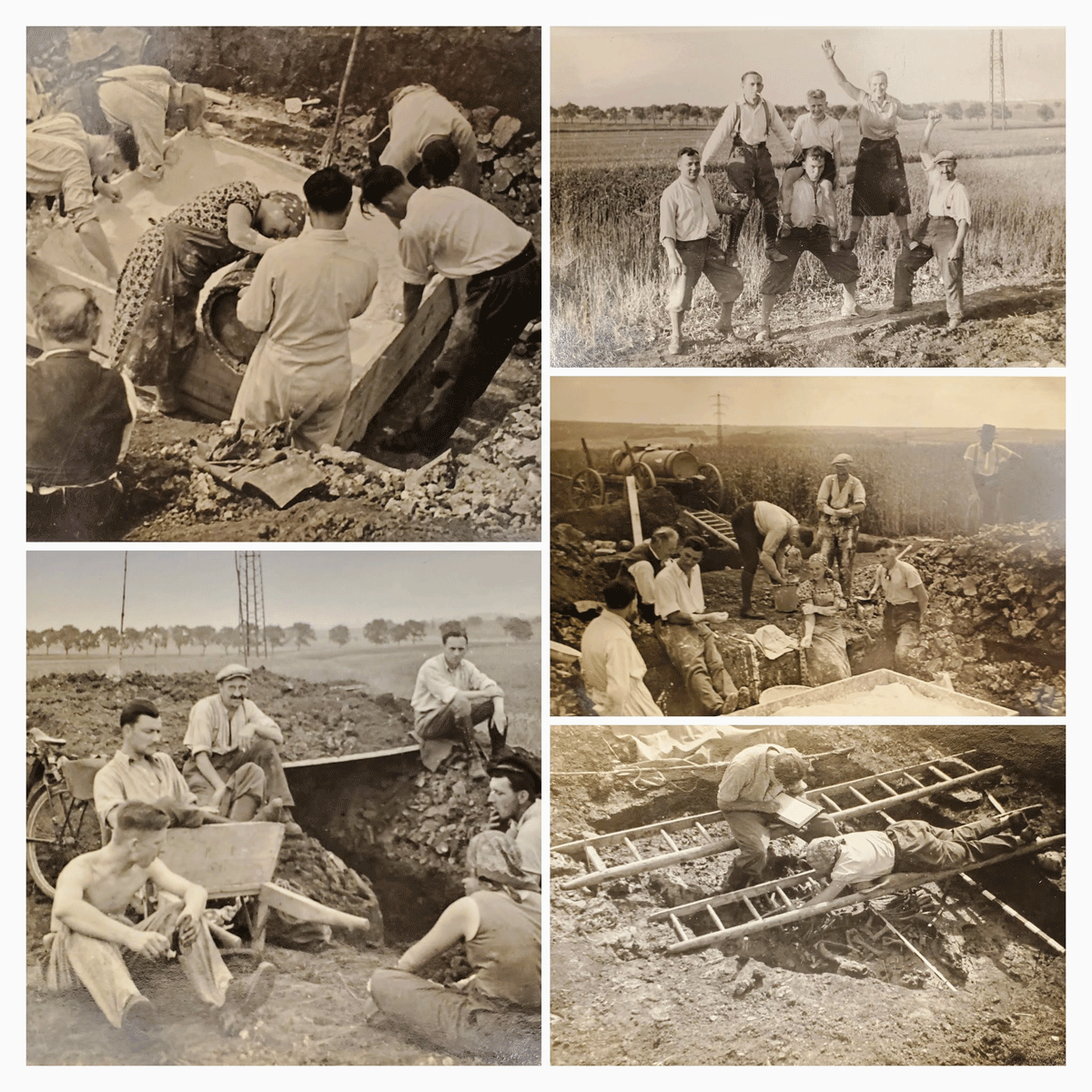
Figure 1
Excavation pictures from the University of Jena 1930s to 1940.
Reproduced with permission of Universität Jena, Institut für Ur- und Frühgeschichte Sammlung, Sammlungsschriftgut Grabungsfotos P-S, Stobra, Lkr. Weimar, auf dem Hügel. 1935/36; photos: unknown.
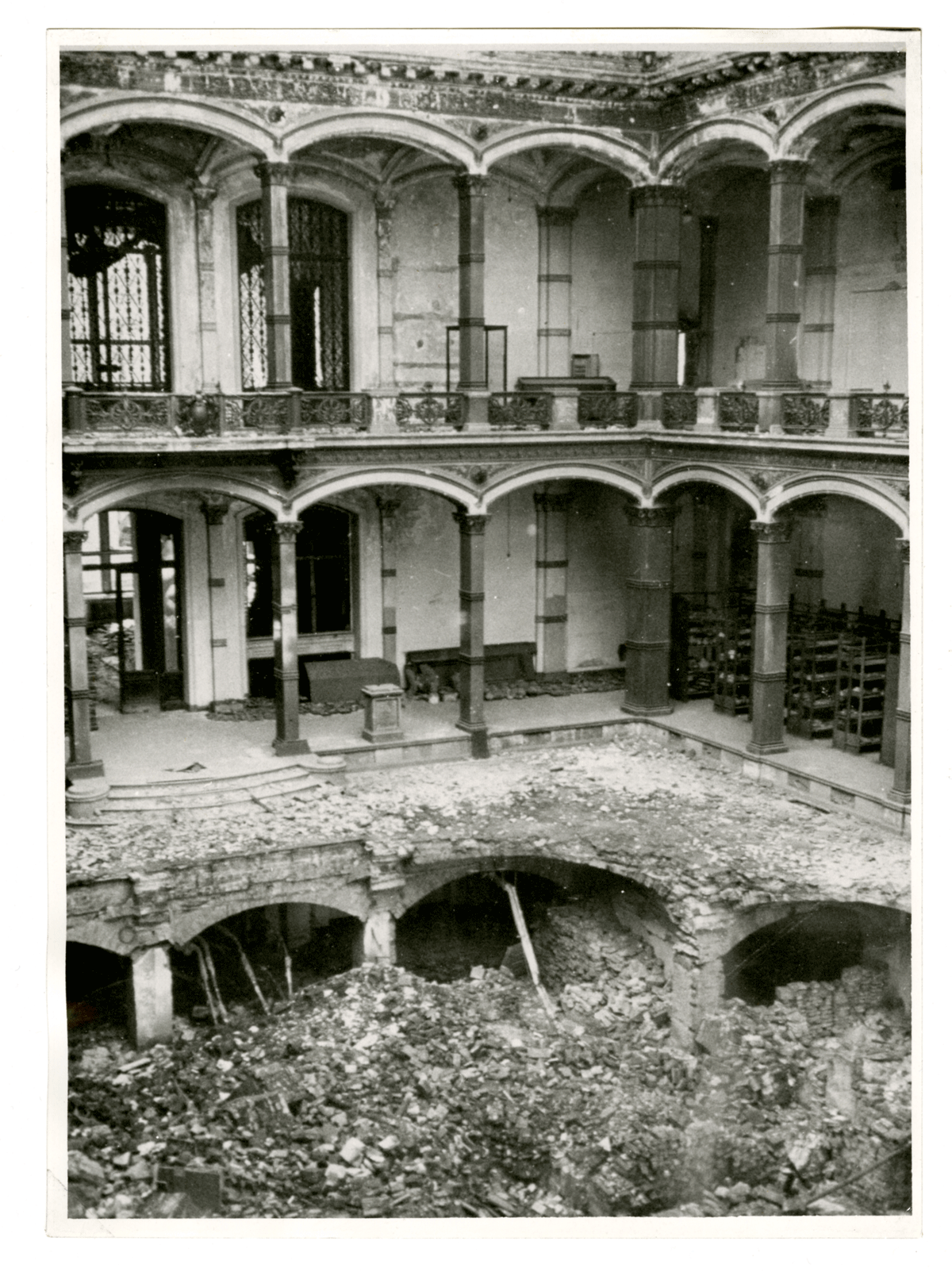
Figure 2
What was left of the Museum für Vor- und Frühgeschichte after evacuation was mostly destroyed in February 1945. About 3,000 artifact boxes stored for safekeeping in the Museum’s basement were obliterated. After the war, objects salvaged from the rubble were stored haphazardly on the ground floor. Gertrud Dorka, a politically untainted prehistoric archaeologist and former teacher, defied gender norms when she was appointed as the first post-war director of the Berlin Museum für Vor- und Frühgeschichte in 1947. She literally dug the museum out of its ruins.61
Reproduced with permission of Museum für Vor- und Frühgeschichte Berlin, Dorka Album F-5003, photo: unknown
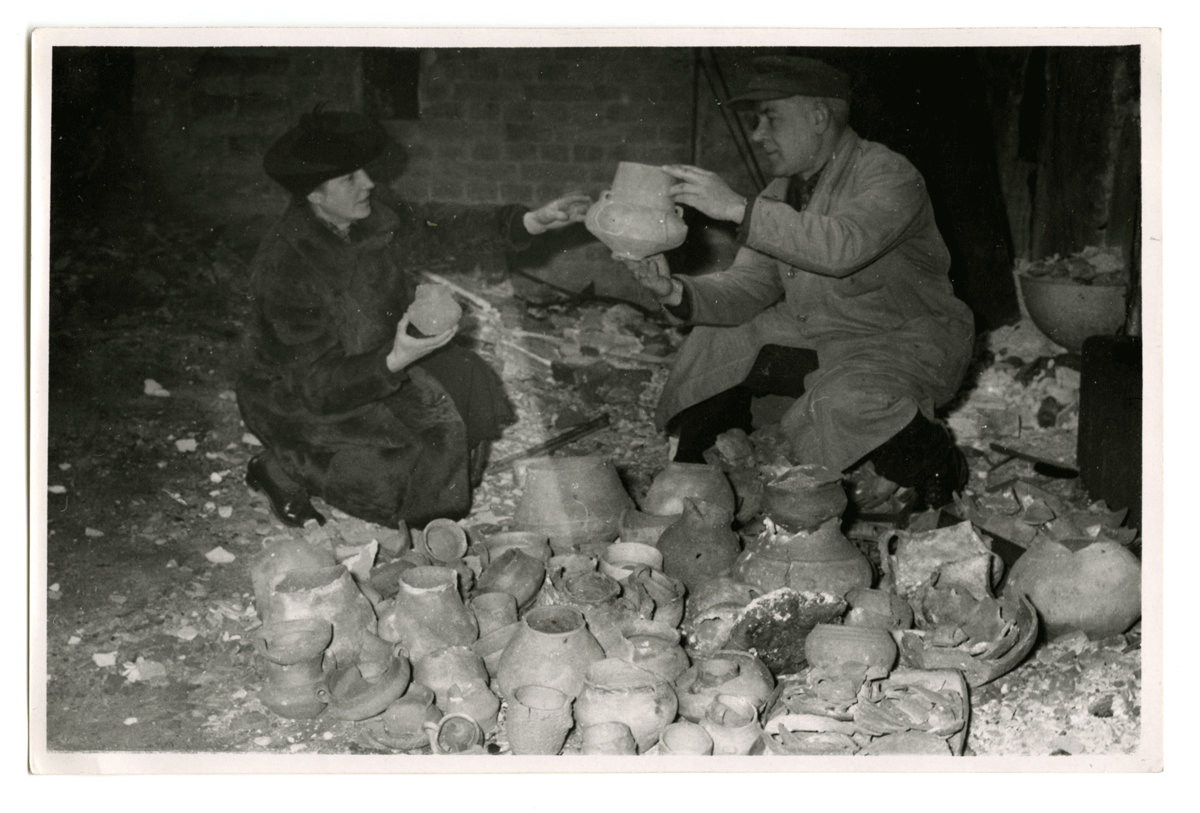
Figure 3
In January 1949, Gertrud Dorka, accompanied by her assistant restorer, retrieved artefacts while clad in a warm coat and hat. Reproduced with permission of Museum für Vor- und Frühgeschichte Berlin, Dorka-Album F-5012, photo: unknown.
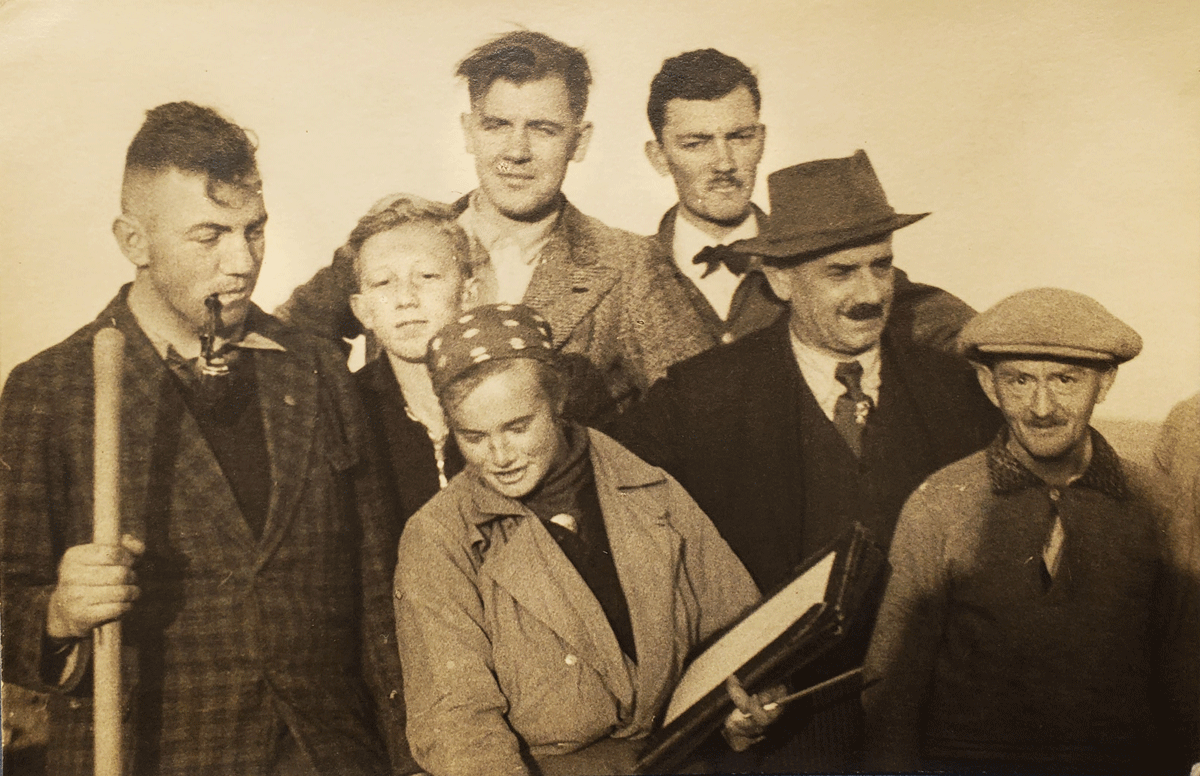
Figure 4
The photo was titled ‘Company of Shovellers.’ We identified research assistant Gudrun Loewe, technician Rudolf Keil and Professor Gotthard Neumann. Reproduced with permission of Universität Jena, Institut für Ur- und Frühgeschichte Sammlung, Sammlungsschriftgut Grabungsfotos D-E Schipperkompanie; photo: unknown.
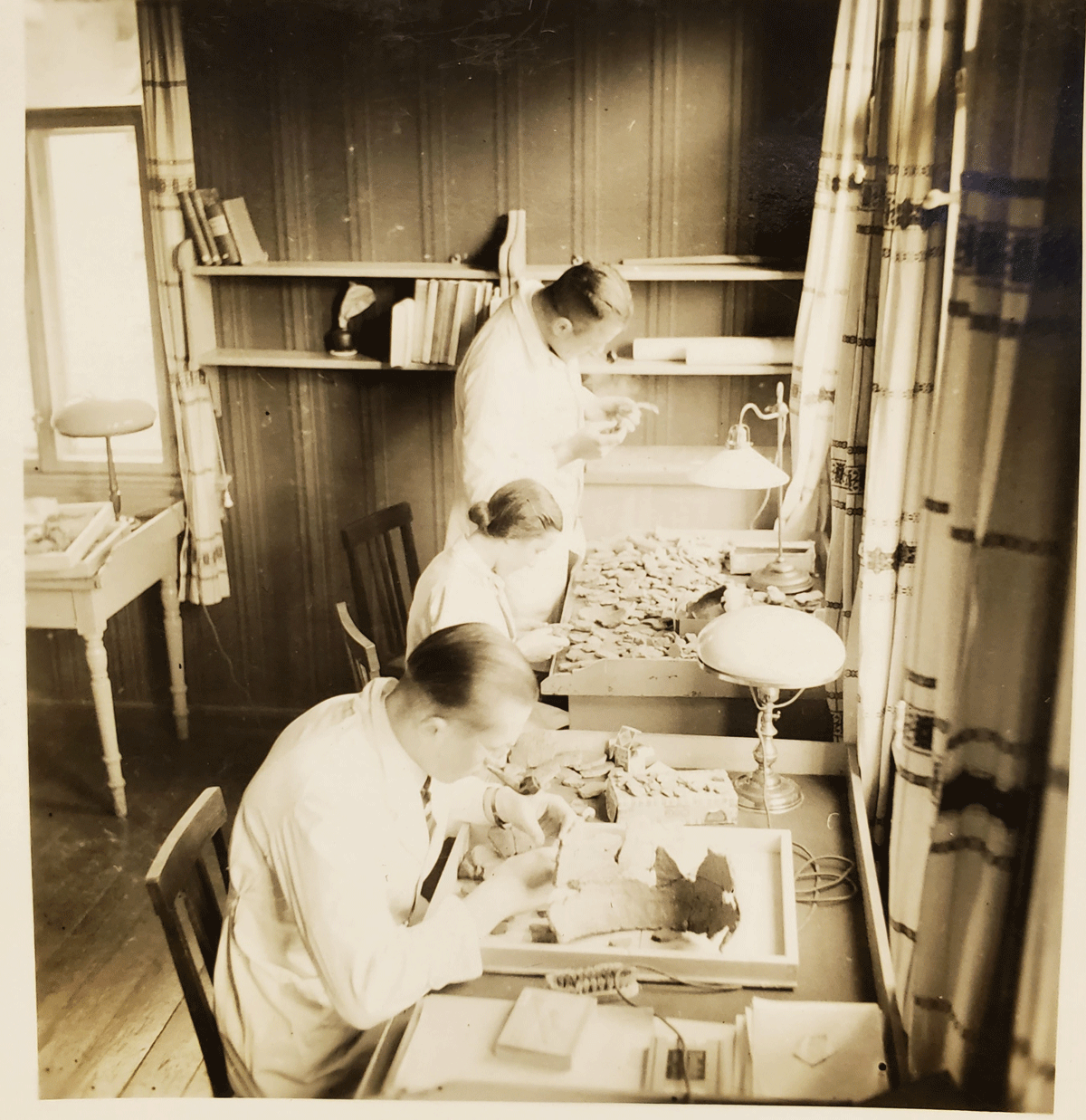
Figure 5
The photograph depicts two male university students from Jena and a female office employee engaged in the sorting and adhesive reconstruction of sherds from excavations conducted at the medieval castle complex on the Kyffhäuser between 1934 and 1938, pointing to women’s encounters with post-excavation responsibilities, such as transporting, cleaning, assembling finds, and preserving artefacts. Reproduced with permission of Universität Jena, Institut für Ur- und Frühgeschichte Sammlung, Sammlungsschriftgut, Ordner: Museum, photo: Rudolf Keil.