
Table 1
Case study details.
| CASE STUDY | LOCATION | BUILDING AGE AND DESIGNATION | DESCRIPTION | HEATING SYSTEM | HOUSEHOLD |
|---|---|---|---|---|---|
| CS1 | Hamlet, Eden | 1820s with earlier elements Grade II Listed. Semi-detached | Georgian squire’s house | Oil central heating | Two adults, retired |
| CS2 | Rural, Lake District | 1740s. Grade II* Listed curtilage. Detached | Miller’s cottage | Storage heaters with hydropower | Two adults, working |
| CS3 | Town, Eden | 1928. Conservation area. Semi-detached | Stately home in miniature | Gas central heating | Two adults, working. Three at university |
| CS5 | Village, South Lakeland | 1897 with earlier elements. Undesignated. Detached | Late Victorian house, former chapel | Gas central heating | Two adults retired |
| CS6 | Village, Carlisle | Early 1700s with a Victorian extension. Conservation area. Detached | Large, detached former farmhouse | Gas central heating | Two adults, semi-retired |
| CS7 | Hamlet, South Lakeland | 1789. Undesignated. Detached | Large Georgian farmhouse | Oil central heating | Two adults, semi-retired |
| CS8 | Town, South Lakeland | 1871. Conservation area. Mid-terrace | Four-storey Victorian townhouse | Gas central heating | Two adults, retired |
| CS9 | Large village, Lake District | 1896. Conservation area. Mid-terrace | Small late Victorian house | Gas central heating | Two adults, working |
| CS11 | Hamlet, Lake District | 1760s. Undesignated. Mid-terrace | Small cottage | Wood stove in living room | One adult, working |
| CS13 | Coastal town, Allerdale | 1834. Grade II listed. Semi-detached | Georgian, former courthouse | Gas central heating | Two adults, working |
| CS14 | Rural Allerdale | 1770s. Undesignated. Semi-detached | Georgian farmhouse | Gas central heating | Two adults, working. Two children under 10 years of age |
| CS15 | Small town, South Lakeland | 1850s, Conservation area. Semi-detached | Victorian town house | Gas central heating | One adult, retired |
[i] Note: Case study numbers are not sequential because CS4, CS10 and CS12 were postponed due to the Covid-19 pandemic.
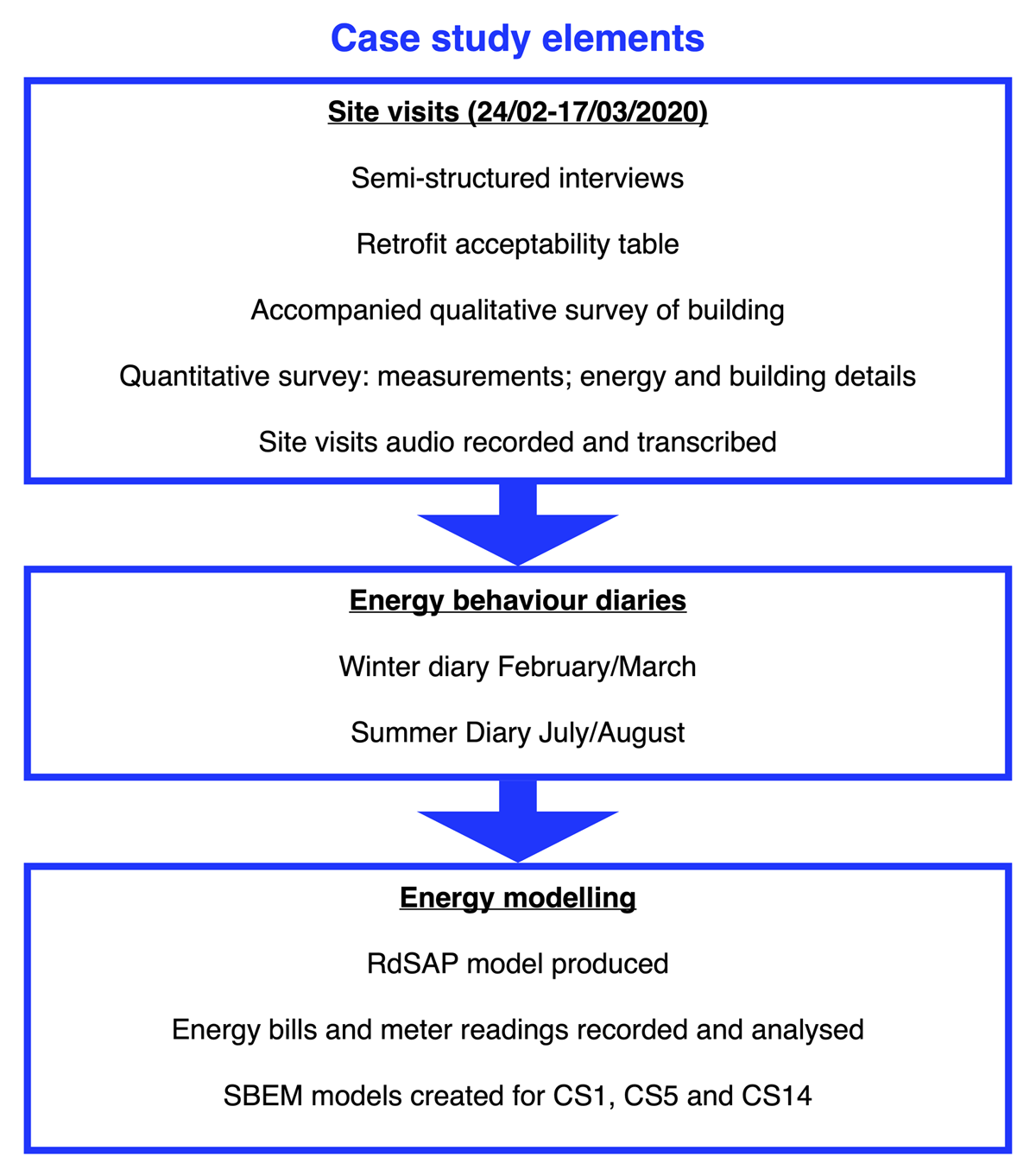
Figure 1
Details of the case study elements.
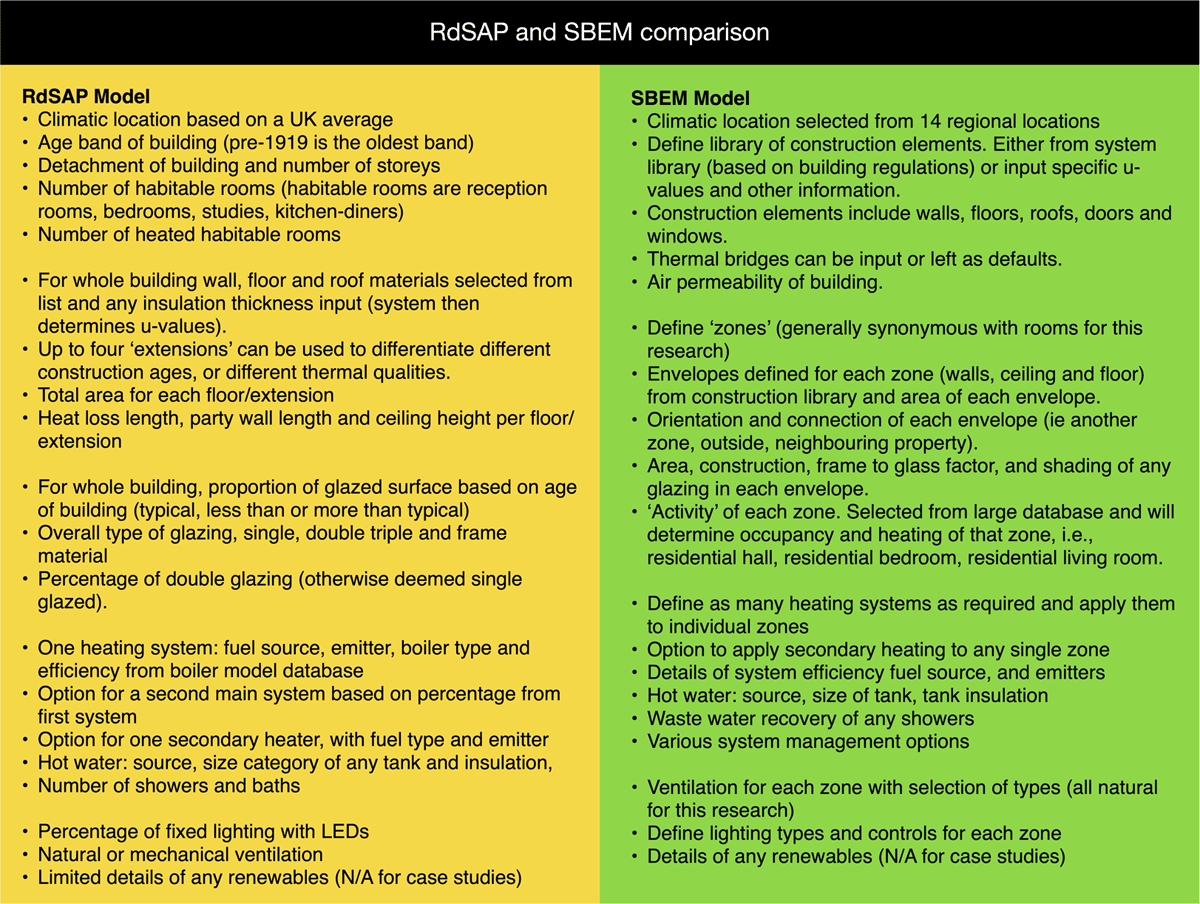
Figure 2
Comparison of Reduced data Standard Assessment Procedure (RdSAP) with Simplified Building Energy Model (SBEM).
Table 2
Details of retrofits modelled in the Simplified Building Energy Model (SBEM).
| DESCRIPTION OF MEASURE | VARIATIONS |
|---|---|
| Baseline | See Appendix A for baseline models and Appendix B for retrofit assumptions in the supplemental data online |
| Thermal curtains for all windows | |
| Interior shutters for all windows | |
| Secondary glazing for single-glazed windows | |
| Secondary glazing (where not already) and curtains | |
| Floor insulation for any suspended floors | |
| Wall hangings to one external wall in each reception room | |
| No heating for bedrooms | Modelled for CS5 and CS14 only. CS1 currently do not heat their bedrooms |
| Retrofitting of external doors with 10 mm aerogel blanket | |
| Double-glazing for all windows to current building regulations | |
| Replace the old boiler with an efficient modern one | Modelled for CS1, who only have an old, inefficient boiler. CS5 and CS14 already have efficient modern boilers |
| Additional loft insulation | CS1 currently have 100 mm and CS5 and CS14 150 mm; these were increased to 250 mm in all cases |
| Combination of measures: interior shutters to all windows; floor insulation; wall hangings; door retrofitted; additional loft insulation; and air infiltration improvement | Retrofit package included an improved boiler for CS1 and no heated bedrooms for CS5 and CS14. Air infiltration improvement was considered a result of the combined measures |
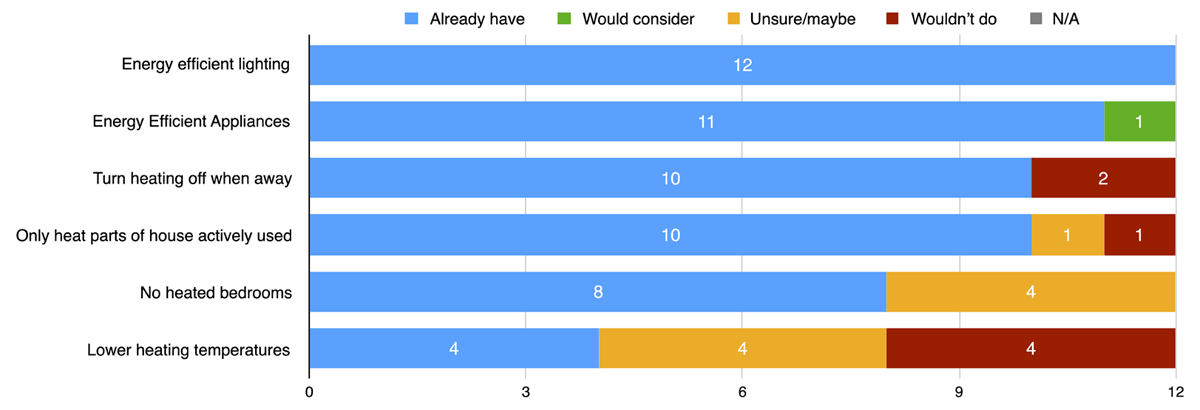
Figure 3
Energy behaviours from the retrofit matrix.
Table 3
Winter heating regimes and occupancy.
| CASE STUDY | DAILY HEATING SETTINGS | OCCUPATION |
|---|---|---|
| CS1 | 18°C in hall continuous | Mostly in, retired |
| CS2 | 11 h at 21°C downstairs and 18°C upstairs | Mostly in, both WFH |
| CS5 | Twice daily 19°C | Mostly in, retired |
| CS6 | Twice daily 18°C | Often out, semi-retired |
| CS7 | 11 h at 21°C, 13 h at 10°C | Mostly in, retired and WFH |
| CS8 | Overnight 17°C, daytime 18°C, evening 19.5°C | Mostly in, retired |
| CS9 | Various, higher morning and evening | One WFH, one out for work |
| CS11 | Wood stove 5–6 h every evening. | Mix of WFH and external work |
| CS14 | 40 min in morning, 2.5 h in evening at 19°C | Mix of WFH and external work |
[i] Note: WFH = work from home.
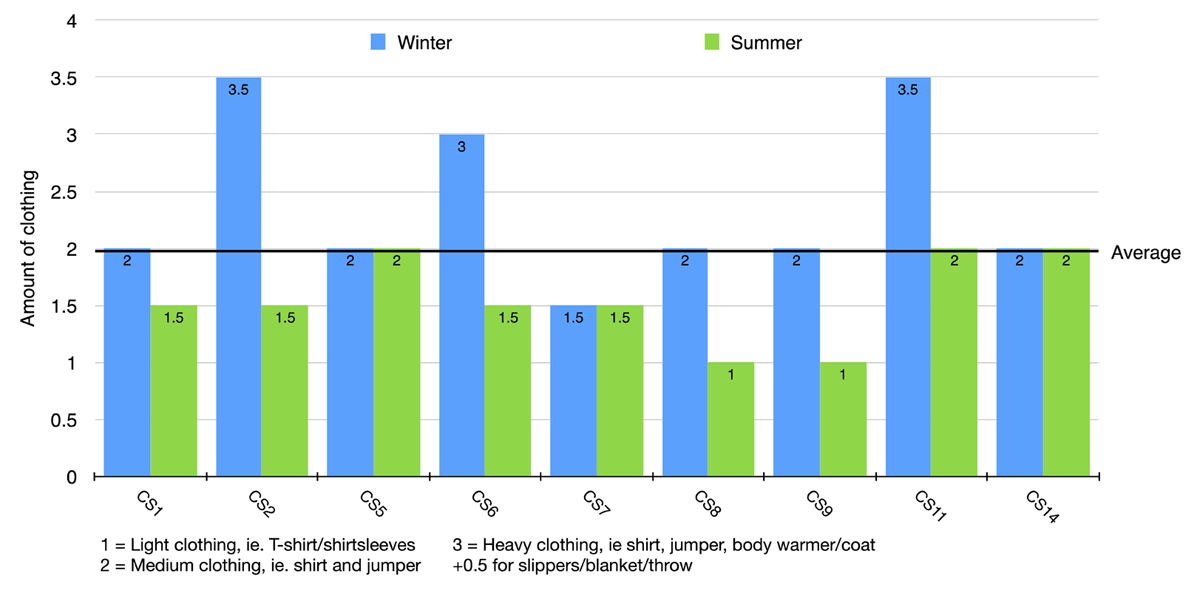
Figure 4
Level of clothing.
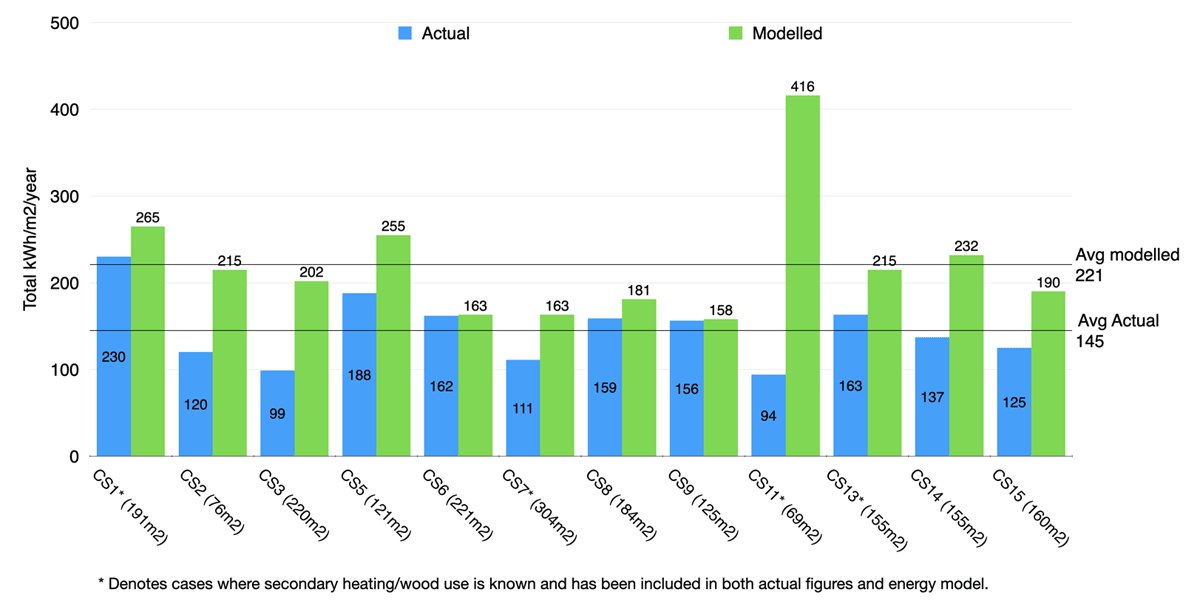
Figure 5
Actual versus modelled energy use based on floor area.
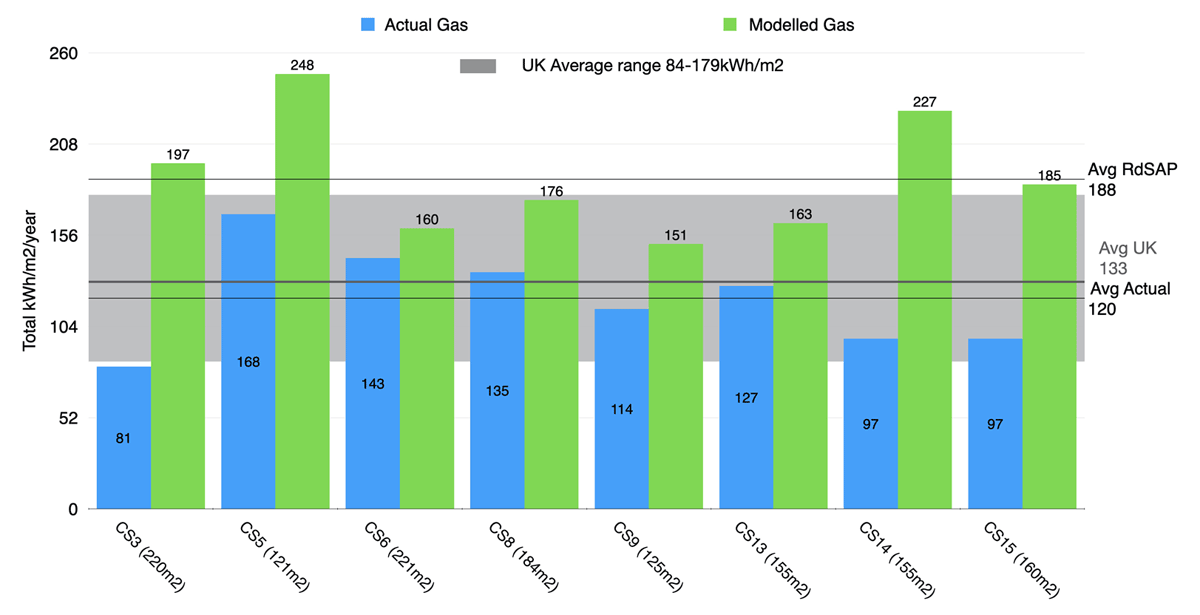
Figure 6
Actual versus modelled gas use and comparison with average UK data, based on floor area.
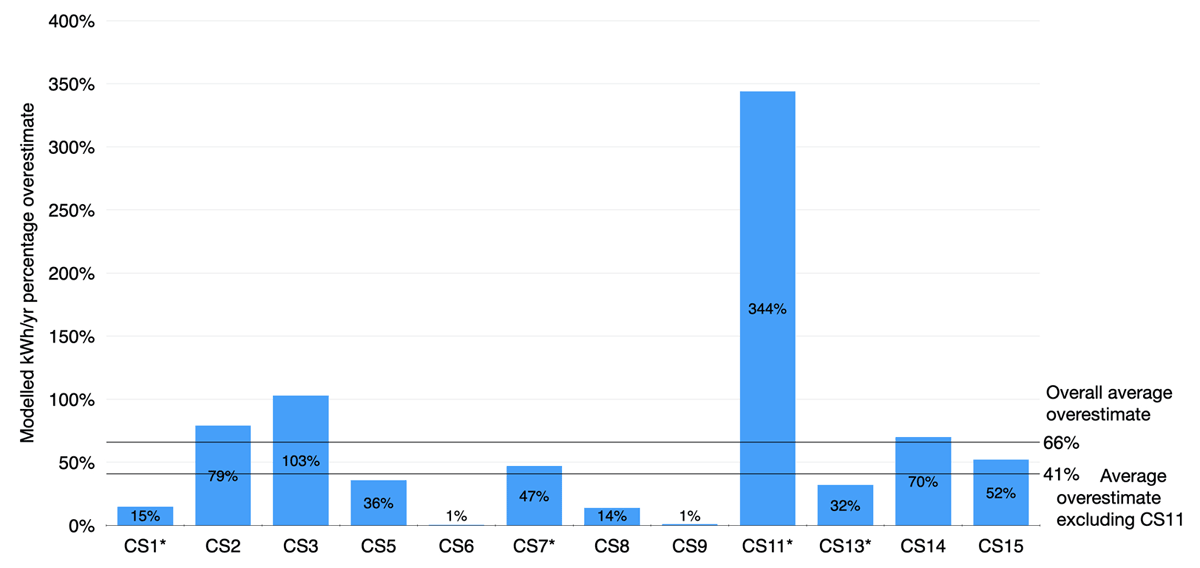
Figure 7
Percentage overestimate between modelled and actual energy use.
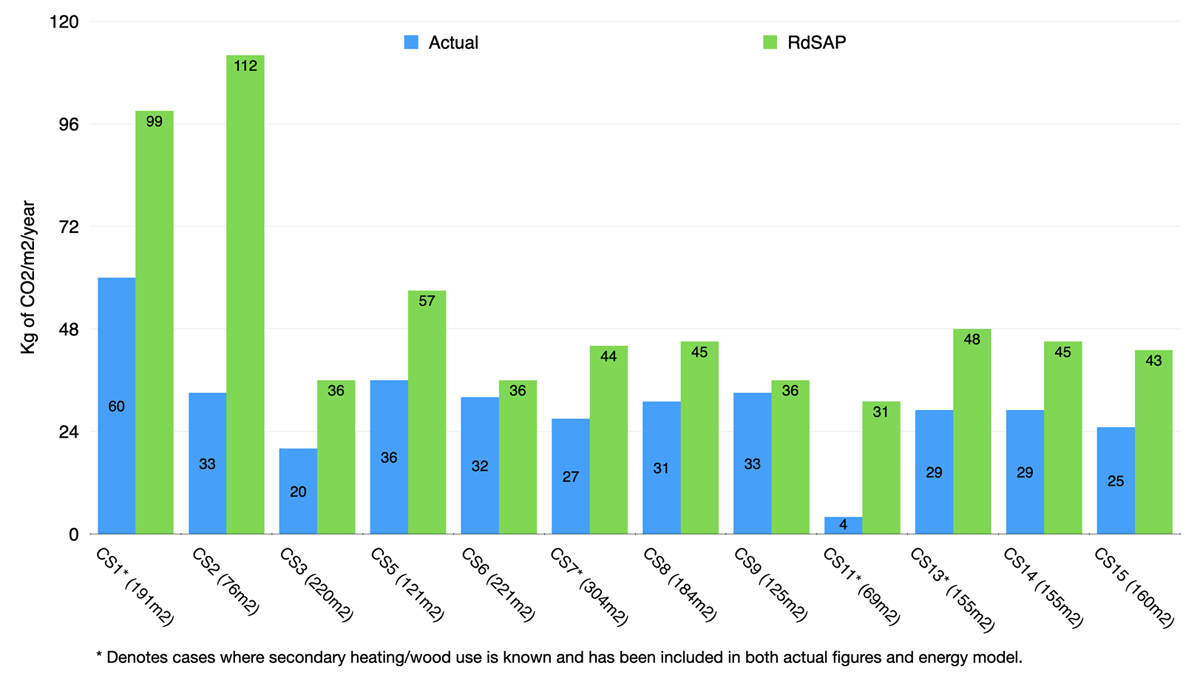
Figure 8
Actual versus modelled carbon emissions based on floor area.
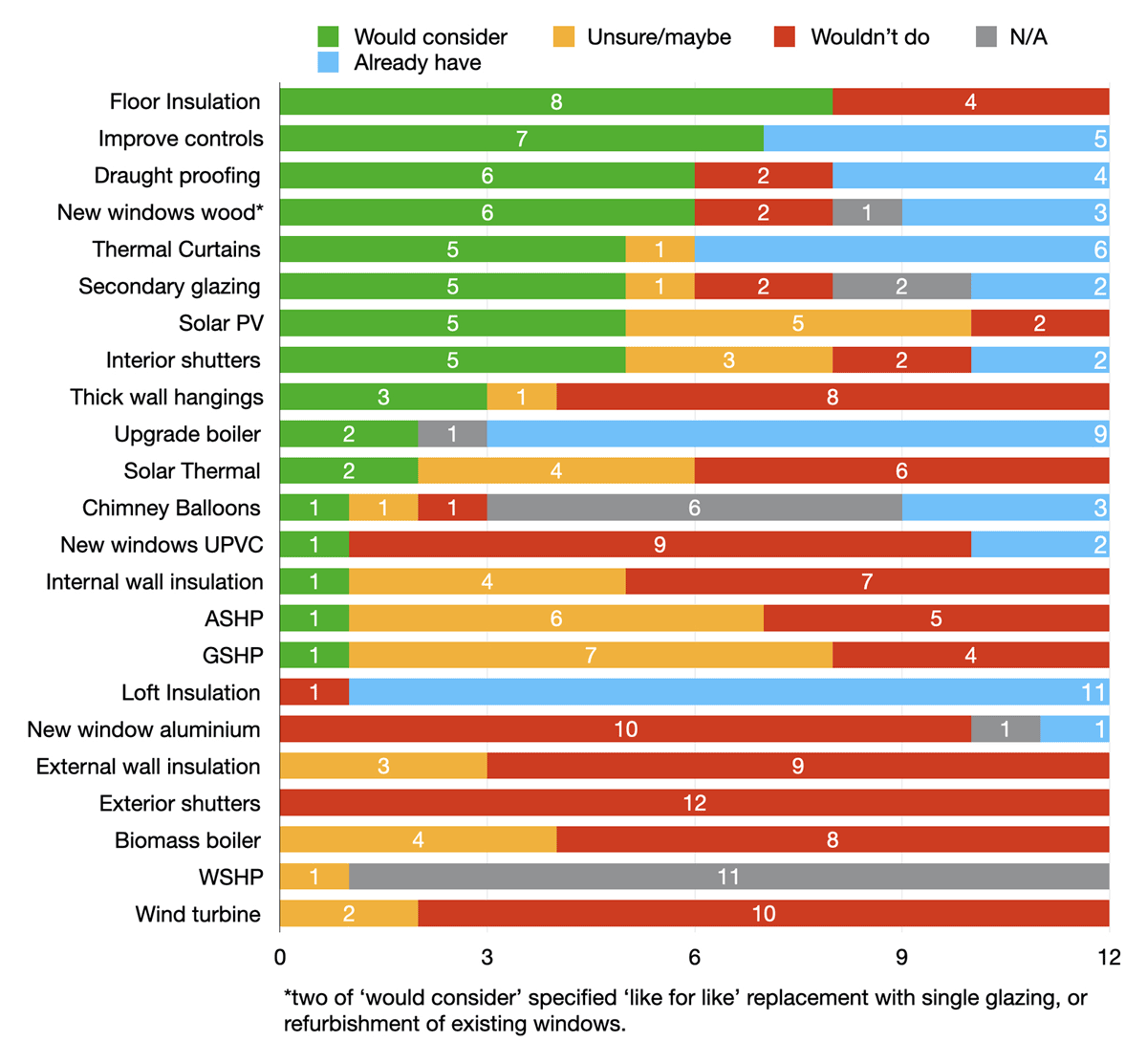
Figure 9
Acceptability of different retrofit measures to case study participants.
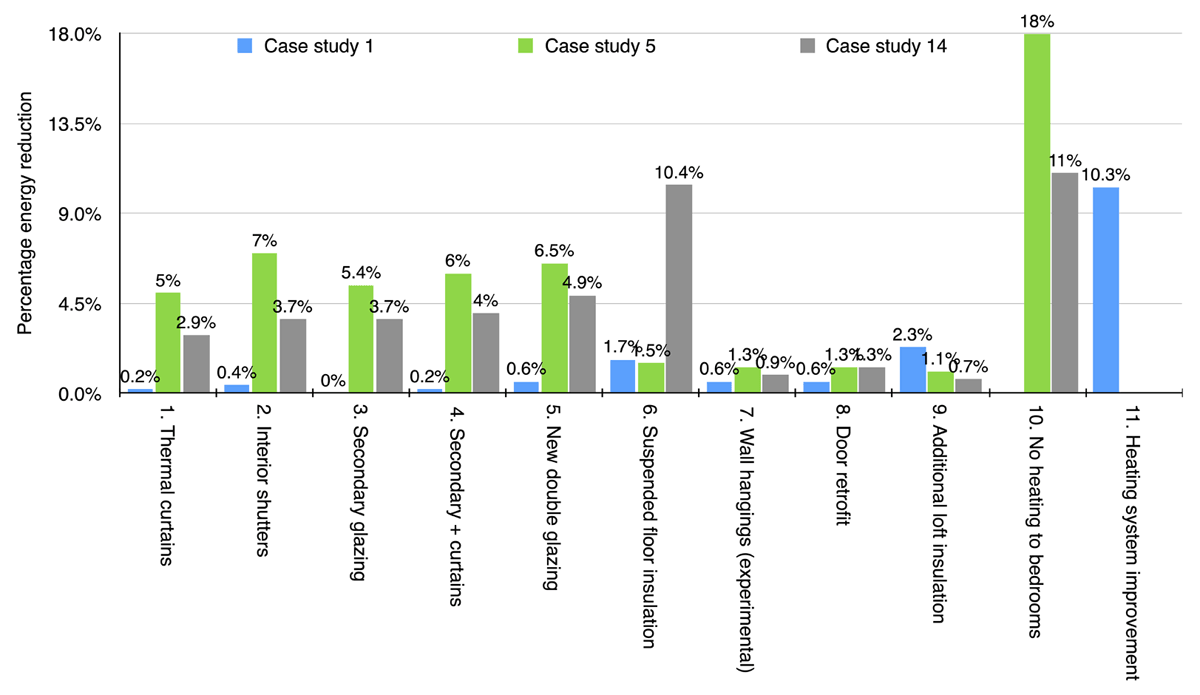
Figure 10
Percentage reduction in the energy use of different retrofit options.
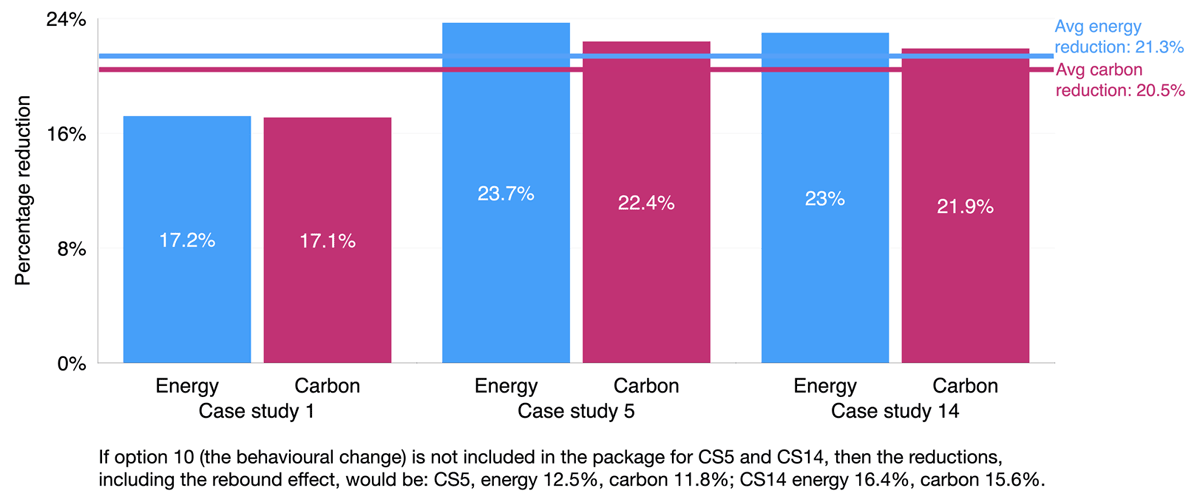
Figure 11
Percentage energy and carbon reduction of retrofit packages per year.