
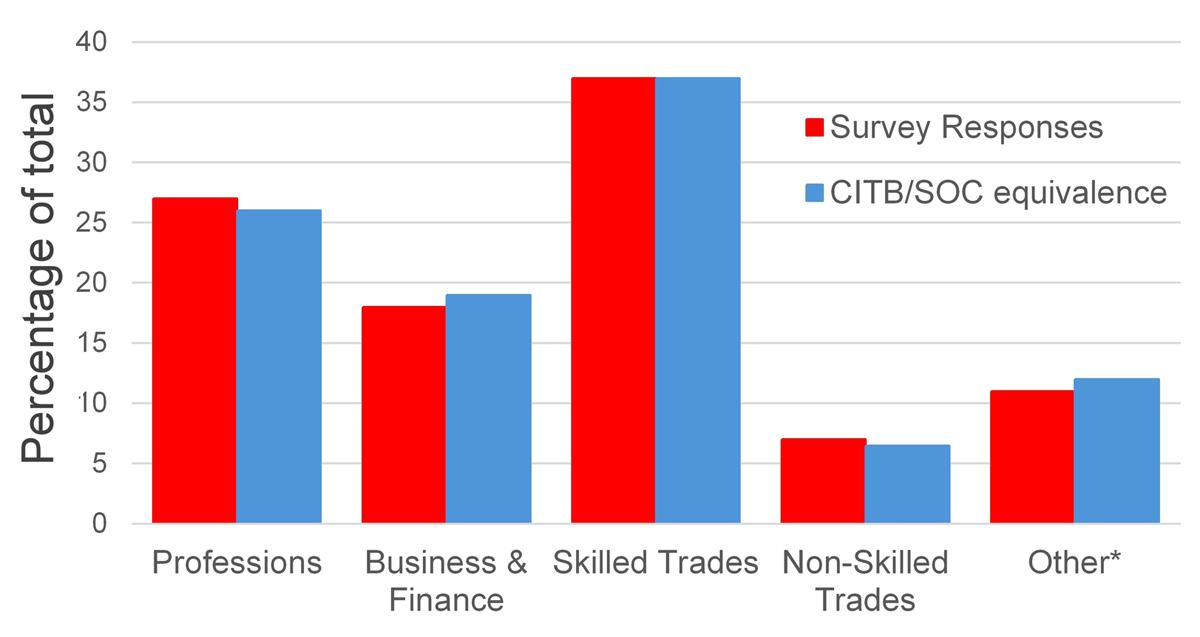
Figure 1
Survey respondents against Standard Occupational Classification (SOC) sector equivalence.
Note: *A 3.5% allowance for SOC’s ‘other’ roles is not recorded within the Construction Industry Training Board’s (CITB) data.
Source: CITB (2025).
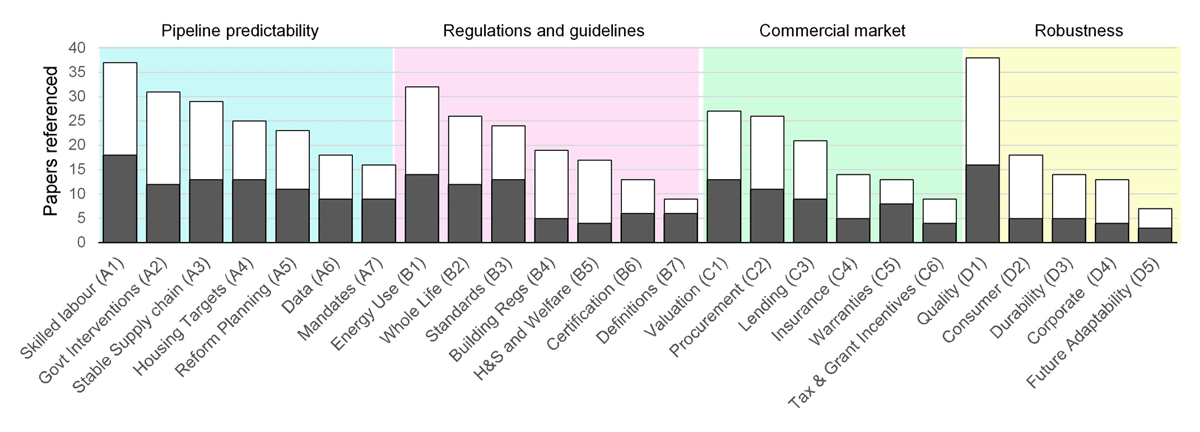
Figure 2
Policy areas referenced within the white (shown in white) and grey (shown in grey) literature review.
Source: Morgan et al. (2025).
Table 1
Policy purpose clusters and the 25 policy areas.
| POLICY PURPOSE CLUSTER AND DESCRIPTION | POLICY AREA | POLICY AREA ABBREVIATION | POLICY AREA DESCRIPTION |
|---|---|---|---|
| Pipeline predictability: Policies that enable a predictable demand and supply of homes for housebuilders in England | 1 | Skilled labour | Provision of appropriately skilled labour to the sector |
| 2 | Interventions | Government interventions for research, capital funding and land release | |
| 3 | Stable supply chain | Creation of a stable supply chain for MMC sector | |
| 4 | Targets | Setting of clear housing targets | |
| 5 | Reform planning | Reforming the planning system | |
| 6 | Data | Collection, publication and use of high-quality data | |
| 7 | Mandates | Enforced mandates for MMC use in social housing | |
| Regulations and guidelines: Policies that create the regulations and guidelines to which housebuilders work | 8 | Energy use | Policies directed at reducing energy use in new houses |
| 9 | Whole life | Introduction of whole-life assessments for new houses | |
| 10 | Standards | Establishment of specific standards for MMC components and systems | |
| 11 | Building regulations | Building regulations revised to address MMC systems | |
| 12 | H&S and welfare | Enhanced health, safety and welfare standards for housebuilders | |
| 13 | Certification | Adoption of certification systems for MMC components and systems | |
| 14 | Definitions | Clearer use of the MMC definitions within targets and standards | |
| Commercial market: Policies that shape the commercial and business environment in which housebuilders work | 15 | Valuation | Full valuation of MMC systems for purposes of grants and mortgages |
| 16 | Procurement | Legal and commercial procurement practices to suit MMC stages | |
| 17 | Lending | Provision of competitive lending for houses using MMC systems | |
| 18 | Insurance | Provision of competitive insurance for MMC products and companies | |
| 19 | Warranties | Access to warranties for houses using MMC systems | |
| 20 | Tax and grants incentives | Government incentives for the MMC sector through tax and grants | |
| Robustness: Policies that require housebuilders to focus on quality, value and durability | 21 | Quality | Establishment of quality standards for completed houses |
| 22 | Consumer | Data collection and publication on consumer experiences of MMC | |
| 23 | Durability | Requirement to publish records of the durability of housebuilding systems | |
| 24 | Corporate | Establishment of sector-wide key performance indicators (KPIs) for use in corporate environmental, social and governance (ESG) investment | |
| 25 | Adaptability | Requirements for future adaptability to MMC-built houses |
[i] Note: MMC = modern methods of construction.
Source: Adapted from Morgan et al. (2025) and used for the survey questionnaire.
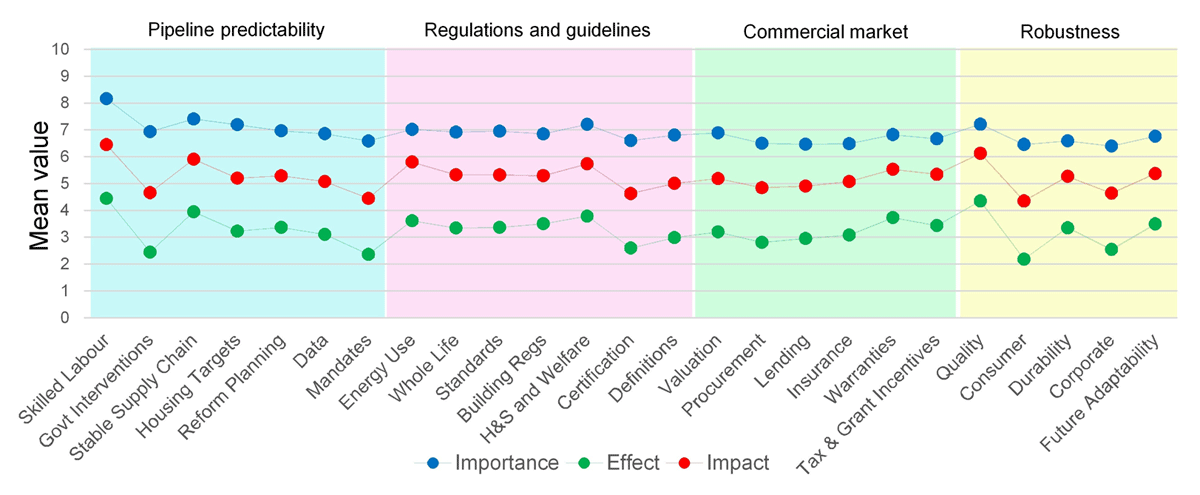
Figure 3
Respondents’ means for each policy area by its importance (blue), effect (green) and impact (red) on modern methods of construction (MMC) use for housebuilding in England.
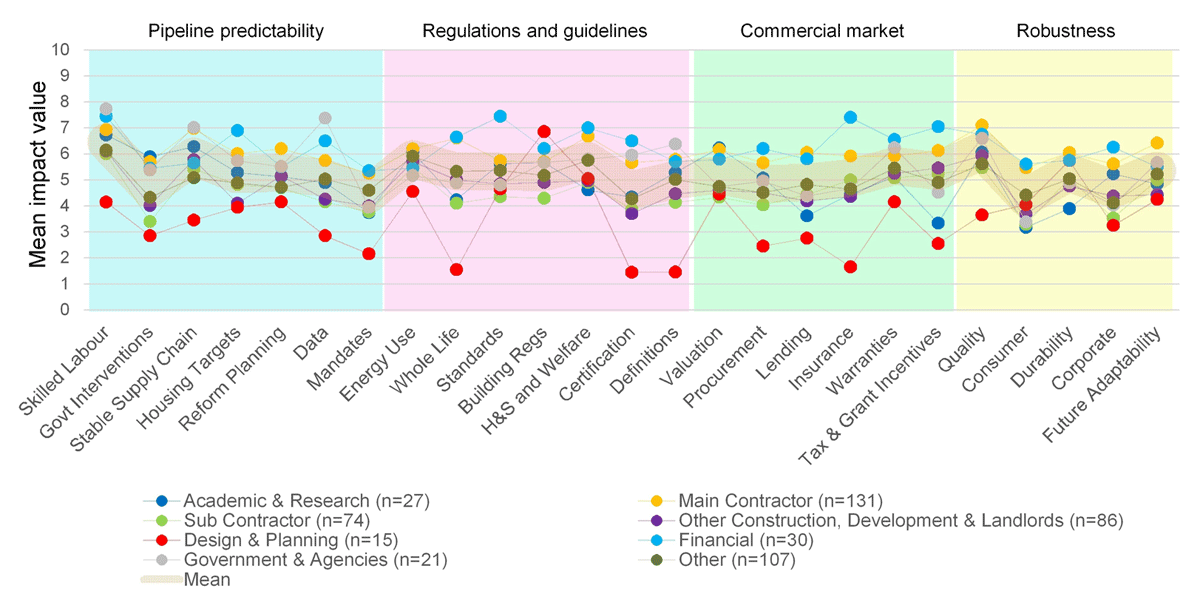
Figure 4
Employer type: means for each policy area by its impact on modern methods of construction (MMC) use for housebuilding in England.
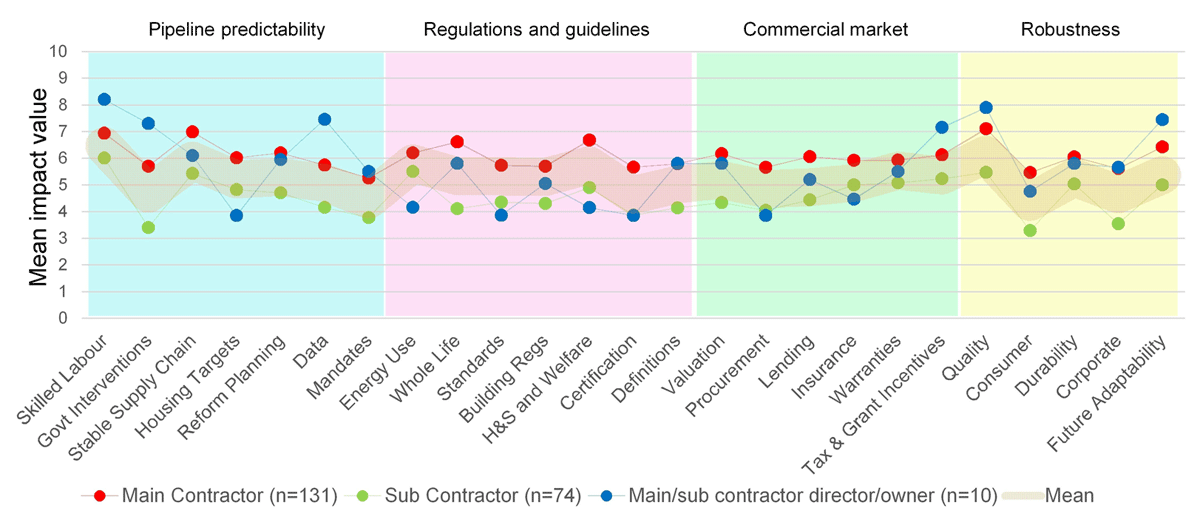
Figure 5
Contractors and their directors/owners: means for each policy area by its impact on modern methods of construction (MMC) use for housebuilding in England.
Table 2
Comparison of the literature review policy references, and survey rankings, by importance, effect and impact on the use of modern methods of construction (MMC) in housebuilding in England.
| LITERATURE REVIEW AREAS REFERENCED | SURVEY RESPONSES | |||
|---|---|---|---|---|
| BY IMPORTANCE | BY EFFECT | BY IMPACT | ||
| 1 | Quality | Skilled labour | Skilled labour | Skilled labour |
| 2 | Skilled labour | Stable supply chain | Quality | Quality |
| 3 | Energy use | Quality | Stable supply chain | Stable supply chain |
| 4 | Government interventions | Housing targets | H&S and welfare | H&S and welfare |
| 5 | Stable supply chain | H&S and welfare | Warranties | Energy use |
[i] Note: H&S = health and safety.
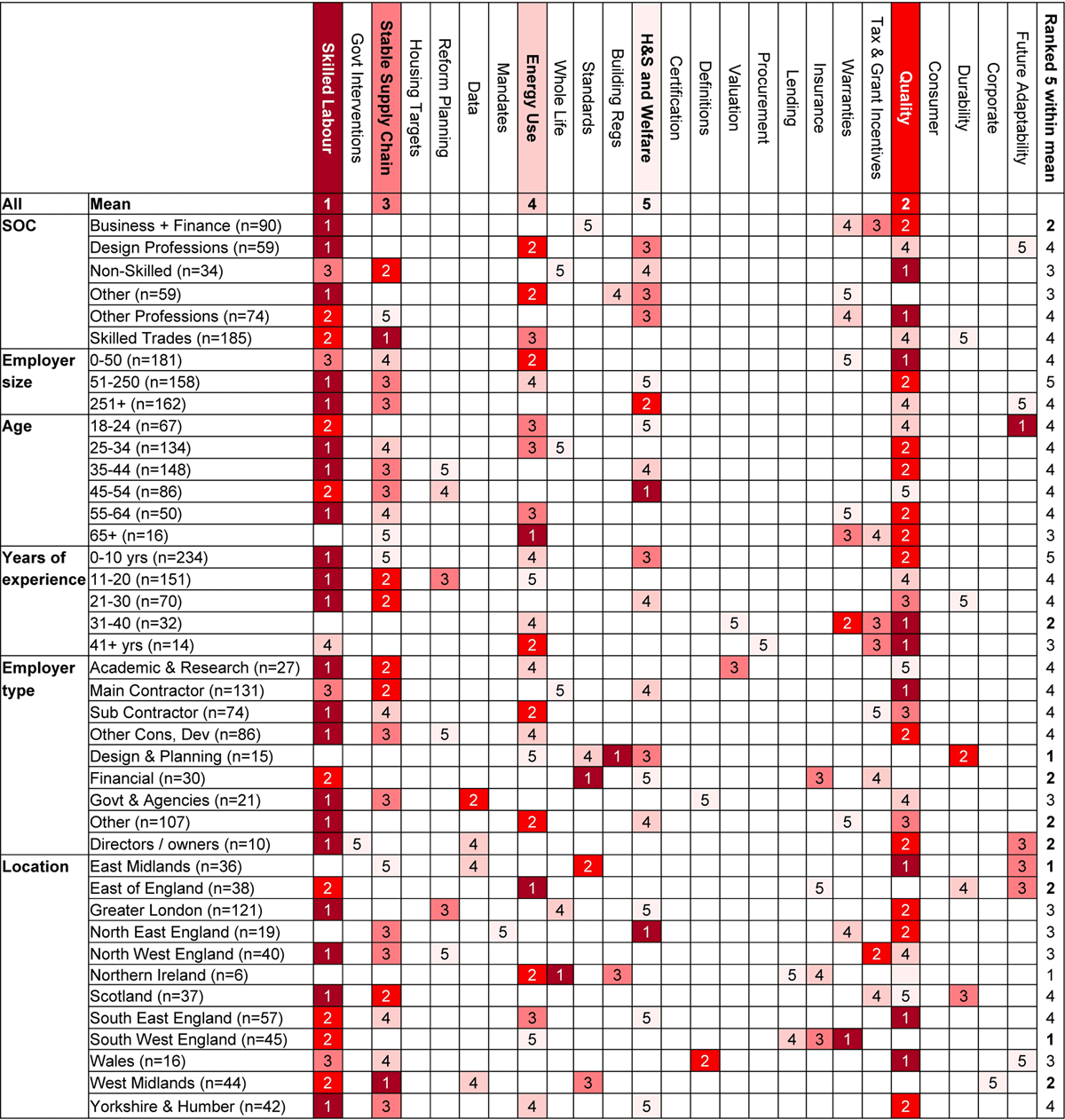
Figure 6
Disaggregated group heat map of five key policy areas ranked 1–5 by their impact on modern methods of construction (MMC) use for housebuilding in England.
Note: 1 = first choice, 5 = last choice.
Table 3
Summary of the correlations between employer type and knowledge of: housebuilding sector, modern methods of construction (MMC), and policy and housebuilding.
| SPEARMAN’S RHO | CORRELATION COEFFICIENT | SIGNIFICANCE (TWO-TAILED) |
|---|---|---|
| Knowledge of the housebuilding sector | –0.212** | p < 0.001 |
| Knowledge of MMC | –0.248** | p < 0.001 |
| Knowledge of policy and housebuilding | –0.094* | p = 0.036 |
[i] Note: Correlation significant at the **0.01 and *0.05 levels (two-tailed).
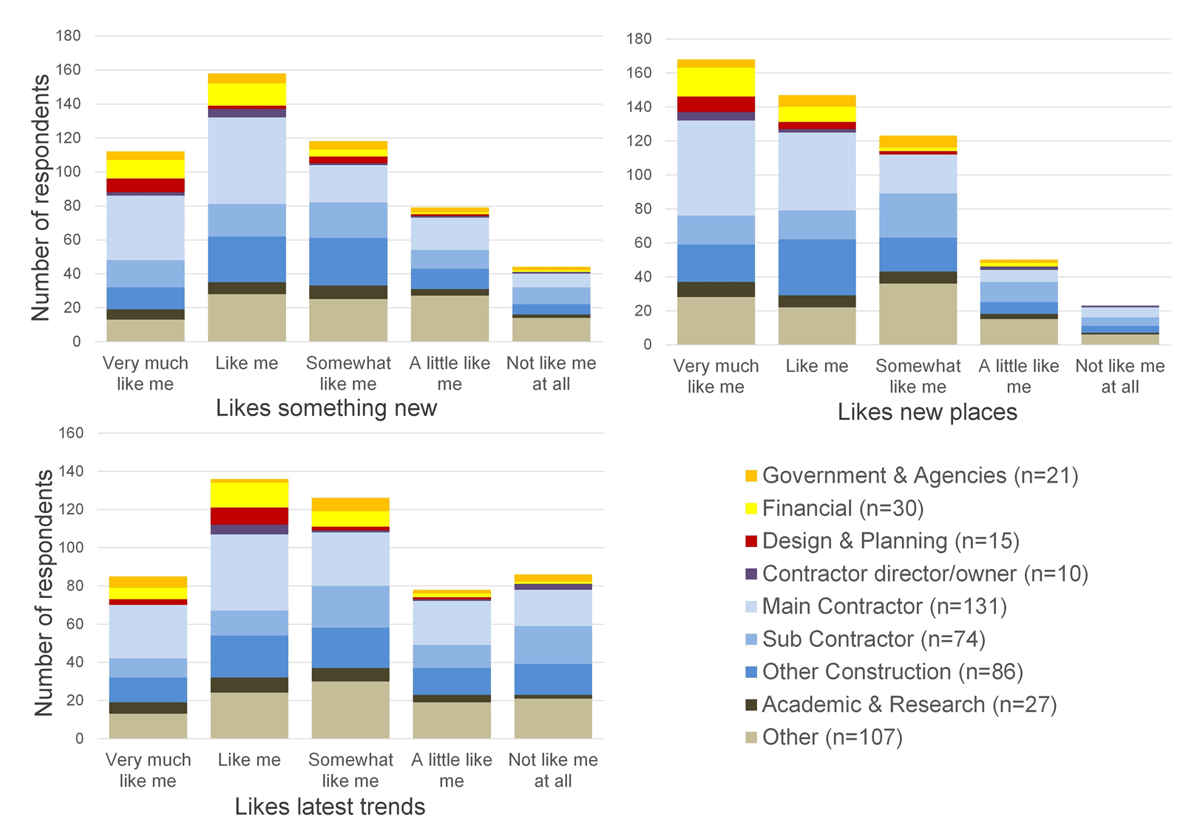
Figure 7
Respondent’s self-assessed personal values in relation to innovation, by employer type.
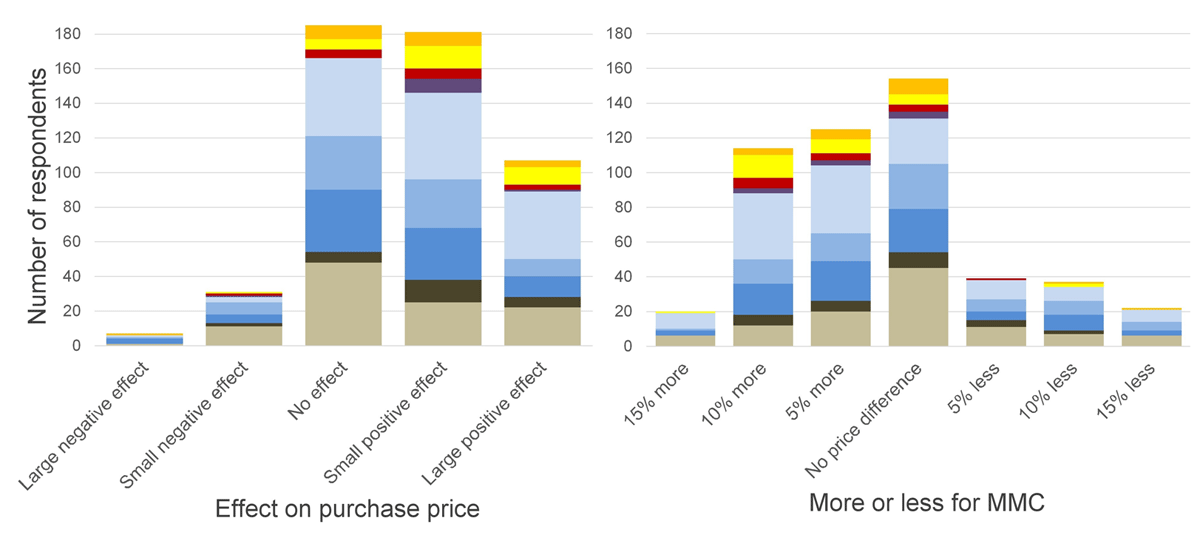
Figure 8
Effect on the decision to purchase a new house built using modern methods of construction (MMC), and the expectation of purchase cost compared with a house built traditionally, by employer type.
Note: See the key to Figure 7.
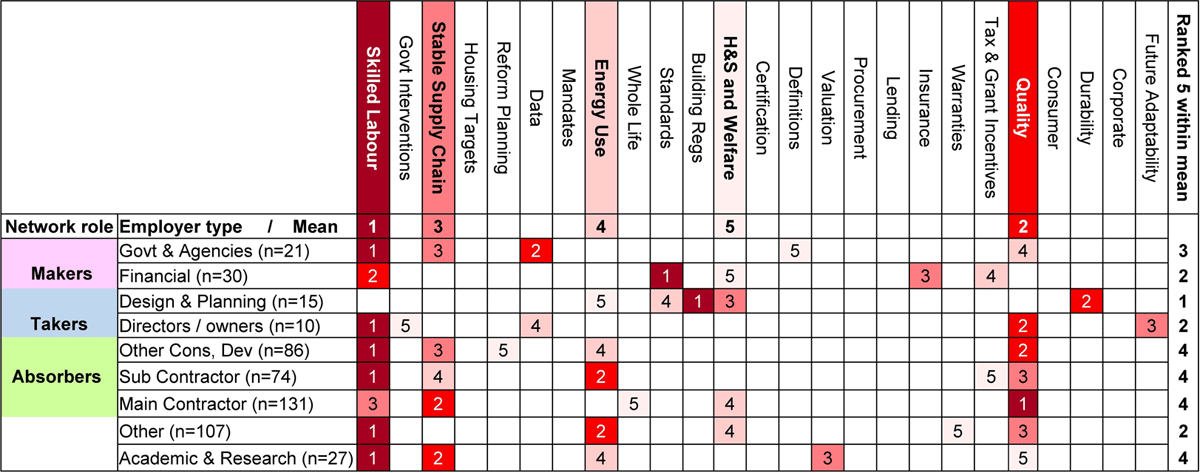
Figure 9
Employer-type heat map of the five key policy areas ranked 1–5 by their impact on modern methods of construction (MMC) use for housebuilding in England.