
1. Introduction
Climate change is increasing average temperatures and triggering more frequent and intense heat stress conditions globally, but especially in the Global South (Engelbrecht et al. 2015; IPCC 2023; Boafo et al. 2025). Despite forecasts warning about deadly heat and its dysfunctional impacts on the infrastructure, health and wellbeing of vulnerable populations in Sub-Saharan Africa (Codjoe et al. 2020; Gough et al. 2019; Wilby et al. 2021), classroom environments remain under-examined. There is a pressing need for interventions to improve the physical fabric of classrooms, as extreme heat threatens student thermal comfort, health, wellbeing and learning (Marin et al. 2024). Research to date has focused on temperate climates and residential buildings (Shortridge et al. 2022; Wargocki et al. 2019; Watkins et al. 2021). Consequently, the specific impacts of roofing materials on classroom temperatures in tropical environments are not well understood, despite their significance in shaping indoor thermal conditions.
This paper hypothesises that school classrooms with uninsulated metal roofs exhibit higher indoor temperatures and incidences of overheating than those with concrete roofs, metal roofs with plywood ceilings, or asbestos roofs. The paper contributes to the scholarship on climate change, buildings and education in tropical climates by presenting data on the temperatures experienced in schools in Accra, Ghana, and by analysing how these vary by building material type. Such knowledge is essential for understanding heat-resilient school design principles when constructing or retrofitting schools to create safer, healthier classroom environments that are conducive to learning.
Extreme heat vulnerability results from exposure to a combination of natural systems (sunlight intensity and rising temperatures), social factors (internal heat gains, overcrowding and classroom arrangements) and the built environment (building design, orientation and ventilation; Roberts et al. 2023a), leading to diverse outcomes and adaptation strategies (Cheng & Sha 2024; Watkins et al. 2021). Environmental conditions in schools vary widely and many buildings are not climate resilient, with classroom conditions often unsuitable for safe and comfortable learning (Baafi 2020). School walls, roofing, ceiling insulation and ventilation all affect the indoor temperatures experienced by pupils and teachers alike (Bidassey-Manilal et al. 2016). As children spend a significant amount of time in school, classrooms that support thermal comfort, children’s health and positive learning outcomes are required (Munonye & Ji 2021; WHO 2004). This need is recognised in the United Nations’ Sustainable Development Goal (SDG) 4 on Quality Education, which emphasises the importance of safe, healthy learning environments.
Indoor classroom temperatures that exceed 23.9°C have been shown to disrupt learning (Lala & Hagishima 2023; Wargocki et al. 2019) and can trigger heat-related illnesses, such as vomiting, headaches, lethargy, dizziness, heavy sweating, tiredness and increased skin rashes (Lala & Hagishima 2023; Mangus & Canares 2019). Overheating results in fatigue, irritability and general malaise, affecting schoolchildren’s behaviour, mood and learning ability. Impaired cognitive development and concentration span negatively impact memory, retention and academic performance, especially concerning complex syllabi (Newsome et al. 2023; Piil et al. 2020). Learners’ performance increases on average by 20% when classroom temperatures are lowered from 30 to 20°C (Wargocki et al. 2019). In a US context, ideal classroom conditions conducive to learning were found to fall within a narrow temperature band of 20–22°C and a maximum relative humidity of 50% (Earthman 2002). While this provides a useful reference point, such standards may not directly apply to Ghana as studies in tropical, hot and humid environments reveal varying comfort tolerance levels. For instance, the 2017 ASHRAE Handbook (2017) recommends 19–26°C for classrooms, whereas Saleem et al. (2012) found 25.5–29.5°C acceptable in Egyptian primary schools, and Mohammadpourkarbasi et al. (2022) recorded 27.4–30.3°C as acceptable in library buildings in Kumasi, Ghana. These studies suggest occupants in tropical climates may develop higher thermal tolerance compared with temperate regions. As the recent UNICEF (2024) report indicates, extreme heat in classrooms is set to rise substantially, with eight times more children projected to be exposed to extreme heat in the 2050s compared with the 2000s. Given these trends, integrating climate resilience into local planning and infrastructure, including schools, is essential to safeguarding students’ health and academic performance.
Due to uncoordinated planning, limited funding and haphazard infrastructure provision in Sub-Saharan Africa (Fagbamigbe et al. 2022; Mosi et al. 2021; Oteng-Ababio et al. 2017), most public schools are not designed with suitable physical environments. Schools are often roofed with light metal sheets without ceiling insulation and rely on natural ventilation by keeping windows and doors open. Even where ceiling fans are available, power disruptions, usage costs and lack of maintenance restrict their use. Such construction choices contribute to substantial thermal discomfort in tropical Africa, with many classrooms becoming extremely hot during school hours (Dapi et al. 2010). While some materials such as concrete are perceived to offer better thermal performance, it is important to note that without addressing ventilation and humidity, classrooms may still remain uncomfortably warm despite the use of heavier materials. Schools with healthy physical environments are therefore needed to provide more energy efficient, liveable and conducive learning spaces (Lala & Hagishima 2023).
In Ghana, the School Establishment and Inspection Policy emphasises the importance of creating high-quality learning environments with sufficient daylight, natural ventilation, appropriate temperatures, adequate space and good acoustics to maximise young pupils’ concentration levels. However, while the Ghana Building Code broadly advocates for climate-resilient buildings, it lacks a specific framework for integrating climate-sensitive design principles to improve the thermal comfort of children in schools. Given the extent of extreme heat exposure in classrooms and its documented impacts on learning and health (Marin et al. 2024), there is an urgent need for research that explores practical and affordable interventions, including the choice of roofing materials. This paper responds to this critical gap by providing evidence-based recommendations on how different roofing materials influence classroom temperatures, acknowledging that temperature alone does not fully capture the complexity of indoor thermal comfort, especially in humid conditions with limited air movement.
Three key contributions to the literature are made. First, classroom temperatures in hot–humid tropical climates, exemplified by the city of Accra, are presented. School buildings differ from residential structures, which have been more widely studied, in terms of size, occupancy, usage duration, location and design features. Second, by collecting data for over one year (389 days) in multiple schools, temperature variations across different seasons, weather conditions and classroom characteristics are highlighted. This study is thus the longest of its kind undertaken in West Africa and covers a greater number of schools.1 Third, practical solutions to reduce extreme heat in school classrooms in tropical climates similar to those of urban Ghana are proposed. While previous studies have addressed general building characteristics (Appah-Dankyi & Koranteng 2012), this paper focuses specifically on the comparative effectiveness of concrete, metal, plywood and asbestos roofing materials, providing nuanced evidence that can guide future school construction and retrofitting projects. Notably, while concrete roofs demonstrate some reduction in peak indoor temperatures compared with lighter materials, they should not be overstated as providing ‘cool’ or thermally comfortable environments, given the complex interplay of humidity, ventilation and occupant load (Cheng & Sha 2024). Incorporating these insights into policymaking could catalyse the development of targeted strategies that improve school design, enhancing the wellbeing and academic performance of schoolchildren in tropical cities.
2. Climatic conditions and school academic calendar in Ghana
Africa remains the continent most affected by climate change, with average warming rates increasing from +0.2°C/decade (1961–90) to +0.3°C/decade (1991–2022), slightly exceeding global averages (IPCC 2023; Wright et al. 2024). Ghana, like many African nations, has experienced a 1°C rise in mean annual temperature since 1960, with projections suggesting increases between 1.7 and 3.7°C by 2080 (Kompas et al. 2018; Wilby et al. 2021).
This study was conducted in Accra, Ghana’s capital and largest city, home to over 5 million residents and a daily mobile population of approximately 2.5 million. Accra’s proximity to the Equator results in consistently warm temperatures throughout the year. The climate is characterised as hot, humid and tropical, with distinct wet and dry seasons influenced by the West African Monsoon (Bessah et al. 2022). Daily average air temperatures typically range from 22 to 25°C in the coolest season, and from 25 to 28°C in the warmest period (Amankwaa & Gough 2023). The hottest period occurs between mid-February and May (the dry season), with peak temperatures coinciding with the school term, thus exposing pupils to prolonged heat during classroom hours. The coolest months are June and July, marking the onset of the main rainy season, which runs until September. A secondary, shorter rainy season occurs in October and November, followed by the Harmattan period (December–early February), bringing dry and dusty winds from the Sahara and occasional drops in morning temperatures.
Ghana’s academic year generally starts in January and ends in December, divided into three terms with short breaks in April, August and December. The longest term (January–April) coincides with the hot, dry season, increasing heat exposure for students and staff. Mid-year (June–August) offers relatively cooler conditions, though schools remain in session until the August break. The final term (September–December) covers both the latter part of the rainy season and the Harmattan period. Consequently, schools are occupied during periods of peak heat, highlighting the importance of climate-resilient infrastructure and effective thermal comfort strategies.
Public school buildings in Ghana are generally old, poorly insulated and inadequately ventilated, with limited consideration for thermal comfort. Most schools are roofed with metal (such as corrugated iron) or asbestos sheets, lack operable windows and shades, and rely on natural ventilation for cooling (Appah-Dankyi & Koranteng 2012). Traditional designs, such as the use of courtyards, and building materials, including brick, earth blocks and slate, which improve internal thermal conditions while minimising energy consumption, are rarely used. Moreover, high occupancy rates (about 35–60 children per classroom) exceed the ASHRAE standard of 50 persons/100 m2 (Toyinbo 2019) and add to the indoor heat. Teachers’ productivity is also affected.
3. Methods
3.1 Study area and sample
Two settlements within Accra were studied—Alajo and Agbogbloshie—and selected to represent densely populated inner-city neighbourhoods of low- and mixed-income groups residing in formal and informal dwellings, which experience extreme heat (Figure 1). Eight schools were selected within the study settlements based on the willingness of school leaders to participate, hence two schools in Alajo and six in Agbogbloshie. Depending on each school’s preference, between one and three classrooms were selected for the study, resulting in a total of 16 classrooms. In schools where three classrooms were studied, one classroom each from lower primary, upper primary and junior high school (spanning grades 1–9) was selected.
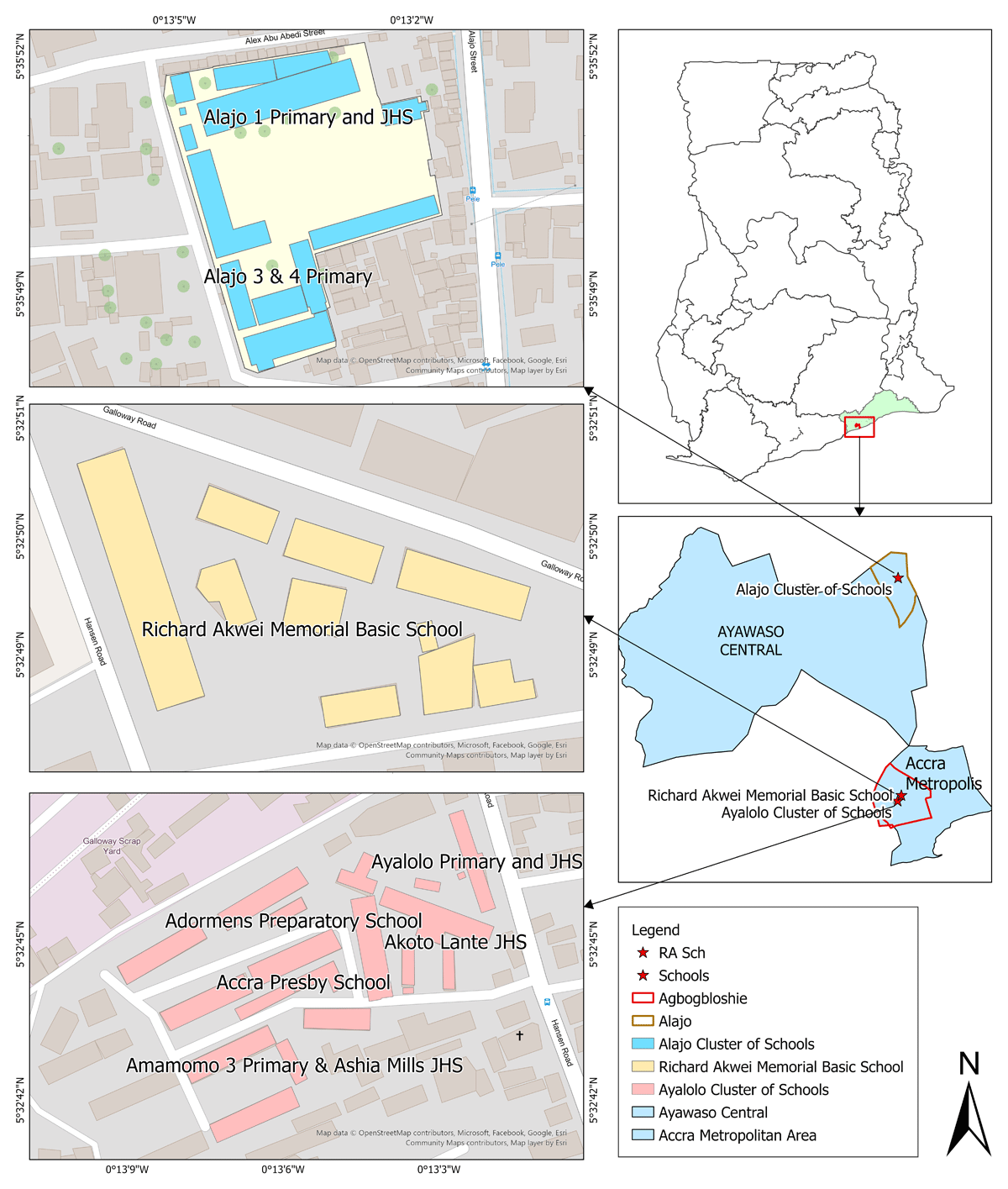
Figure 1
Map showing the schools selected for the study.
3.2 Temperature measurements
Wall-mounted temperature sensors and data loggers were used to measure indoor temperatures in the selected classrooms and outdoor temperatures, with an accuracy of ±0.4°C. One sensor per classroom was mounted on a wall at the front or back of the classroom at a height as close as possible to 2 m above the floor level to capture accurately the conditions within the students’ seating area, while avoiding windows and direct sunlight. This height was also deemed to increase the safety of the instruments and prevent tampering. The outdoor sensors were carefully positioned to capture ambient conditions while avoiding direct solar radiation and localised heat sources. One sensor was installed at the Alajo cluster of schools, and the other at the Ayalolo cluster of schools. Both sensors were placed on the north-facing wall of the staff common room buildings at approximately 2.5 m above ground level at shaded, yet open, locations, which ensured representative outdoor temperature measurements. The loggers were set to record every 10 min, and data were downloaded monthly.
The temperature data from each classroom were quality assured to check for suspected false readings; data from any sensors that were unreasonably high or low were removed. Further data cleaning was conducted to detect data gaps. While data were downloaded from the sensors or batteries were changed, gaps of around 10 min (i.e. one missing datum point) occurred, which were filled via interpolation using the last recorded reading. In the two cases where longer gaps arose due to sensor failure, the data from that classroom were removed from the dataset and not included in subsequent analyses. After quality assurance and cleaning, data were available for two outdoor sensors and 16 indoor sensors in Accra over a period of 389 days (from 00:00 on 1 October 2022 to 23:50 on 24 October 2023).
3.3 Data analysis
Data were analysed during occupied periods only. The occupied period of a classroom was determined using the school day (08:00–15:00), including the lunch break, as many schoolchildren remain indoors during this time. For occupied hours, descriptive statistics of the temperatures were calculated. The number of disrupted learning days when temperatures exceeded 23.9°C was also counted (Lala & Hagishima 2023; Wargocki et al. 2019). Inferential statistics were used to detect significant differences between roof types. Two-sample t-tests (assuming unequal variance) were used to detect difference in means between two groups of data, e.g. comparing mean temperatures in grouped concrete-roofed classrooms and grouped metal-roofed classrooms.
To assess thermal comfort, the number of hours measured above the BS EN 16798 standard (BSI 2019) threshold was calculated. This adaptive temperature threshold is suitable for naturally ventilated buildings and defines a thermally acceptable dry-bulb temperature as a function of the outdoor running mean temperature between > 10 and < 30°C. The application of the BS EN 16798 overheating thresholds to tropical climates can be challenging because the exponentially weighted running mean of outdoor temperature often exceeds 30°C in the tropics (Roberts et al. 2023b). In this dataset, however, the outdoor temperature of 30°C was only exceeded for 4.9% of days during monitoring. The outdoor running mean was calculated using the previous 21 days. Each of the six 10-min temperature readings within the hour (e.g. 00:00–00:50) was averaged and labelled to the corresponding start hour (e.g. 00:00 contains readings up to and including 00:50). The number of hours above the threshold was divided by the number of occupied hours to determine the incidence of overheating. The temperature statistics and number of overheating-hours were compared for different school classroom constructions. Two-sample t-tests (assuming unequal variance) were used to detect significant differences between roof types.
3.4 School and classroom description
All the classrooms had concrete block walls and concrete floors (Table 1). The main difference between the classrooms was roof type, which was either asbestos, metal without a ceiling, metal with a plywood ceiling or concrete. Seven classrooms had asbestos roofs, one was metal with a plywood ceiling below, six were metal without a ceiling and two were concrete (Figure 2 and Table 1). The concrete roofs were substantially thicker than the metal or asbestos roofs and had different thermal properties (Table 2). Concrete roofs have low thermal conductivity and high thermal mass. Metals roofs have very high thermal conductivity and (at these thicknesses) lower thermal mass (Table 2).2 Asbestos roofs have very low thermal conductivity and low thermal mass. Plywood (for ceilings) has very low thermal conductivity and similar thermal mass to asbestos. Asbestos is primarily only found in older buildings due to associated health concerns. Classrooms had windows positioned either opposite or perpendicular to each other, the latter potentially reducing cross-ventilation effectiveness. Ventilation openings included operable wooden louvres or concrete box-like openings in one wall section. These characteristics matter given that ventilation type and placement influence airflow, indoor temperatures and overall thermal comfort for occupants (Table 1). Half of the classrooms had no electric lighting and only a quarter had fans. Schoolchildren sit two or three per wooden desk, arranged in four to six columns. Most school playgrounds were dusty, with only two having concrete floors (Table 1), influencing the microclimate and urban heat island (UHI) effect.
Table 1
School descriptions and construction materials.
| VARIABLE | SCHOOL A | SCHOOL B | SCHOOL C | SCHOOL D | SCHOOL E | SCHOOL F | SCHOOL G | SCHOOL H |
|---|---|---|---|---|---|---|---|---|
| Classroom code | A1 | B2–B3 | C4 | D5–D7 | E8–E9 | F10–F11 | G12–G13 | H14–H16 |
| School environment | ||||||||
| Playground | Dusty | Dusty | Concrete | Dusty | Dusty | Dusty | Dusty | Concrete |
| Greenery (trees, n) | Yes (2) | Yes (1) | Yes (2) | Yes (2) | No | Yes (1) | Yes (2) | Yes (1) |
| Building materials | ||||||||
| Wall | Concrete block | Concrete block | Concrete block | Concrete block | Concrete block | Concrete block | Concrete block | Concrete block |
| Roofing | Metal | Metal | Concrete | Metal or asbestos | Asbestos | Metal or asbestos | Asbestos | Metal or concrete |
| Classroom floor | Concrete | Concrete | Concrete | Concrete | Concrete | Concrete | Concrete | Concrete |
| Ceiling | Wood (plywood) | None | Concrete | None | None | None | None | Concrete or none |
| Overcrowding | ||||||||
| Occupancy | 46 | 30 | 50 | 35 | 35 | 25 | 47 | 26 |
| Overcrowding (%)a | 53.3% | 0% | 66.7% | 16.7% | 16.7% | –16.6% | 56.7% | –13.3% |
| Ventilation | ||||||||
| Windows | Box-like openings in walls | Box-like openings in walls | Operable wooden louvres | Box-like openings in walls | Operable wooden louvres | Box-like openings in walls and operable wooden louvres | Box-like openings in walls | Box-like openings in walls |
| Fans (n) | 4 | 6 | None | None | None | None | None | None |
| Heat source | ||||||||
| Electric lighting | Yes | Yes | Yes | No | No | No | Yes | No |
[i] Note and source: aThe Ghana Education Service’s (GES) acceptable classroom size is 30 pupils per classroom; https://www.graphic.com.gh/news/education/government-tasked-to-cut-down-class-size-to-30-students.html/.
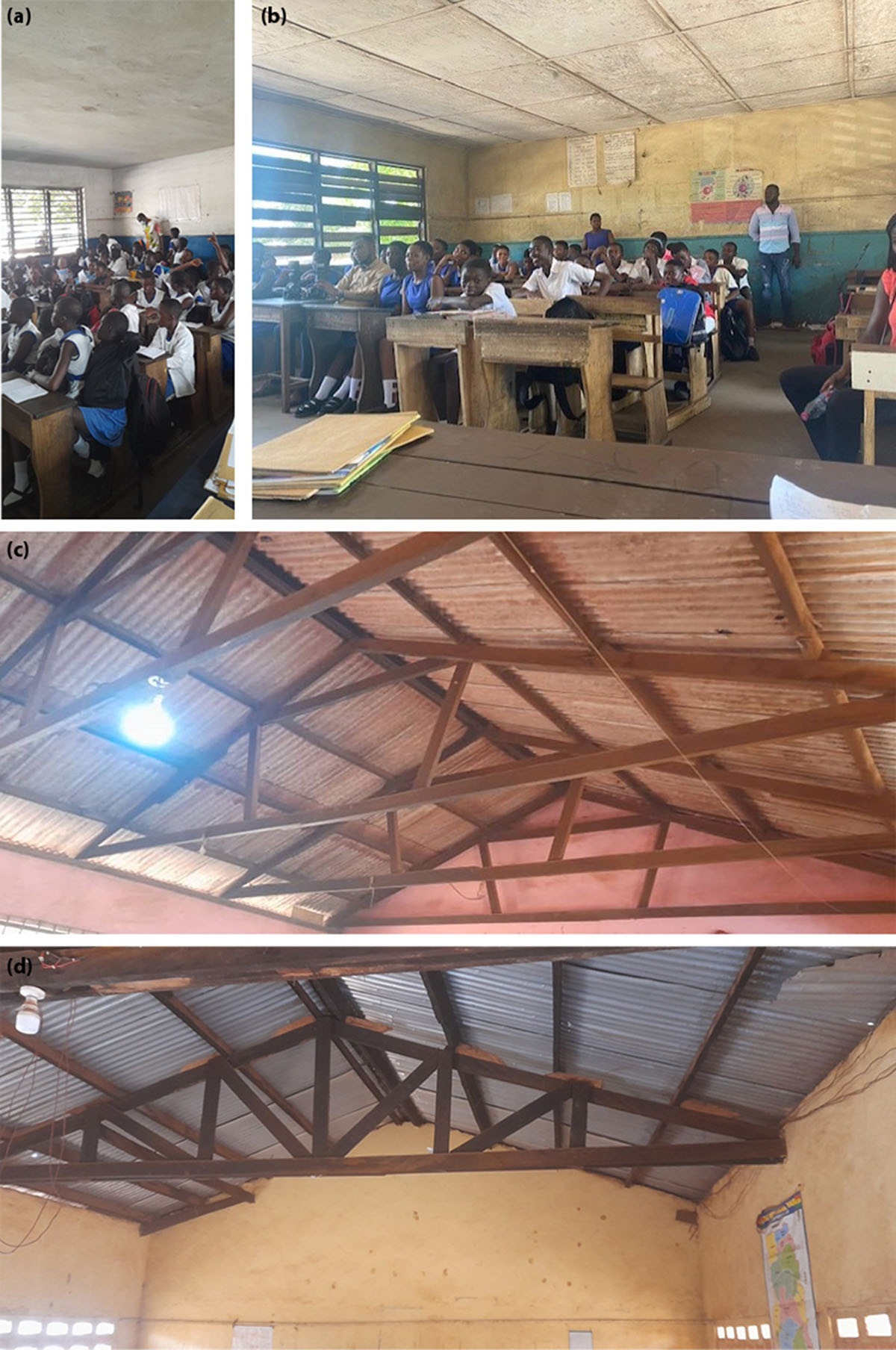
Figure 2
Different roof and window types of classrooms studied. (a) Concrete ceiling (below concrete roof) and operable wooden louvres. (b) Plywood ceiling (below metal roof) and operable wooden louvres. (c) Asbestos roof with ventilated eaves and box-like openings. (d) Metal roof and box-like windows.
4. Comparison of indoor temperature between different classroom roof types
4.1 Descriptive and inferential statistics
During occupied hours, the indoor classroom temperatures ranged from a minimum of 23.9 to a maximum of 39.8°C, while the outdoor temperature ranged from a minimum of 22.7 to a maximum of 34.9°C (Figure 3 and Table 3). The impact of classroom building characteristics on indoor temperatures was assessed by considering the roofing and ceiling materials. The mean and maximum indoor temperatures were lowest in the concrete-roofed classrooms and highest in the metal-roofed classrooms (Figure 3 and Table 3). Mean temperatures in concrete-roofed classrooms were significantly cooler (p < 0.01) than both asbestos- (1.8°C) and metal-roofed classrooms (2.7°C). Minimum temperatures were generally similar across all classrooms, but the temperature range in metal-roofed classrooms was almost double that of concrete-roofed ones: 16.1 compared with 8.4°C. Extremely high temperatures of up to 39.8°C were recorded in a metal-roofed classroom, whereas the highest temperature in a concrete-roofed classroom was 34.4°C, making the maximum temperature 5.4°C lower (Table 3).
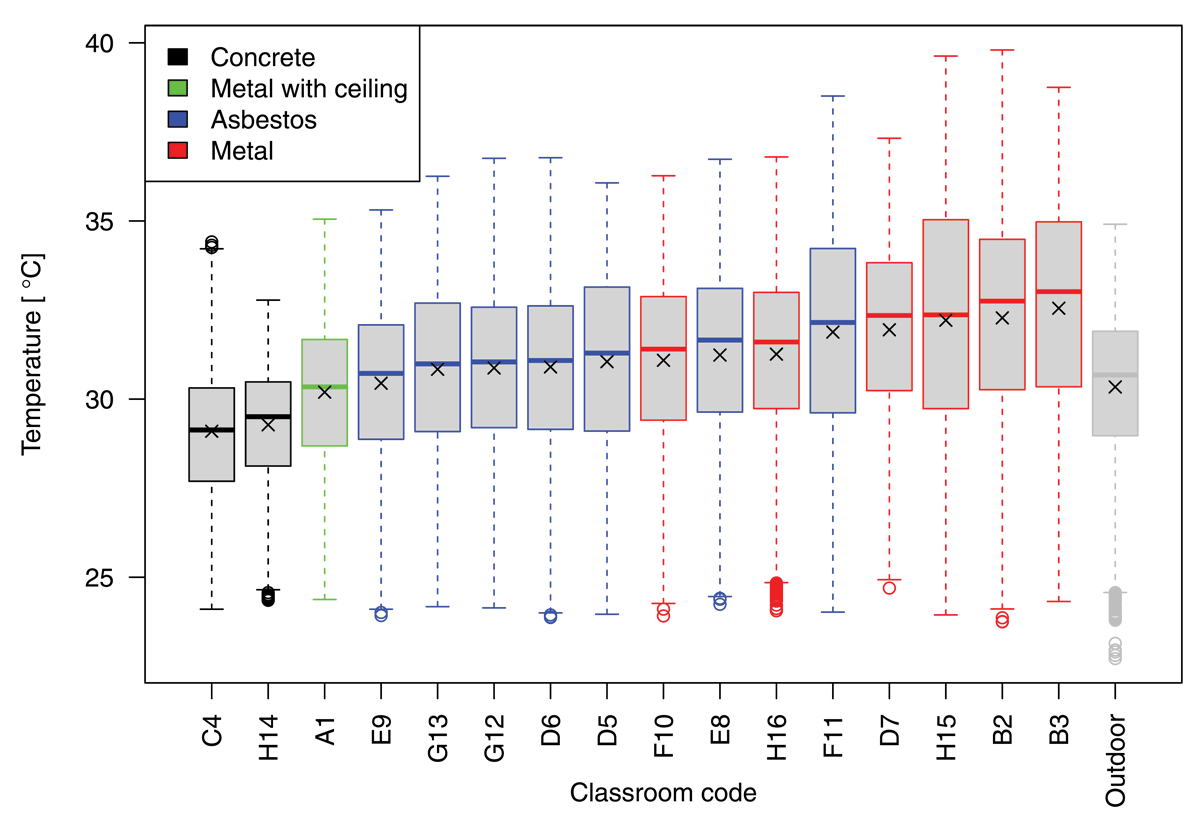
Figure 3
Box plot of indoor and outdoor temperatures during occupied hours arranged in order of ascending mean indoor temperature (outdoor temperature placed last) across the full 389-day monitoring period.
Table 3
Descriptive statistics of the temperatures recorded in each classroom during all occupied hours across the full 389-day monitoring period.
| CLASSROOM CODE | ROOF TYPE | TEMPERATURE (°C) DURING OCCUPIED PERIODS | DISRUPTED LEARNING DAYS (> 23.9°C) | |||||
|---|---|---|---|---|---|---|---|---|
| MEAN | SD | MINIMUM | MEDIAN | MAXIMUM | RANGE | (%) | ||
| C4 | Concrete | 29.1 | 1.8 | 24.1 | 29.2 | 34.4 | 10.3 | 100% |
| H14 | Concrete | 29.3 | 1.5 | 24.4 | 29.5 | 32.8 | 8.4 | 100% |
| A1 | Metal with ceiling | 30.2 | 2.0 | 24.4 | 30.3 | 35.1 | 10.7 | 100% |
| E9 | Asbestos | 30.4 | 2.3 | 23.9 | 30.8 | 35.3 | 11.4 | 100% |
| G13 | Asbestos | 30.8 | 2.3 | 24.2 | 31.0 | 36.3 | 12.1 | 100% |
| G12 | Asbestos | 30.9 | 2.4 | 24.1 | 31.1 | 36.8 | 12.6 | 100% |
| D6 | Asbestos | 30.9 | 2.2 | 23.9 | 31.1 | 36.8 | 12.9 | 100% |
| D5 | Asbestos | 31.0 | 2.4 | 24.0 | 31.4 | 36.1 | 12.1 | 100% |
| F10 | Metal | 31.1 | 2.3 | 23.9 | 31.5 | 36.3 | 12.4 | 100% |
| E8 | Asbestos | 31.2 | 2.4 | 24.2 | 31.7 | 36.7 | 12.5 | 100% |
| H16 | Metal | 31.3 | 2.3 | 24.1 | 31.7 | 36.8 | 12.7 | 100% |
| F11 | Asbestos | 31.9 | 2.8 | 24.0 | 32.2 | 38.5 | 14.5 | 100% |
| D7 | Metal | 31.9 | 2.4 | 24.7 | 32.4 | 37.3 | 12.6 | 100% |
| H15 | Metal | 32.2 | 3.2 | 23.9 | 32.4 | 39.6 | 15.7 | 100% |
| B2 | Metal | 32.3 | 2.8 | 23.7 | 32.7 | 39.8 | 16.1 | 100% |
| B3 | Metal | 32.6 | 3.0 | 24.3 | 33.0 | 38.8 | 14.4 | 100% |
| Outdoor | n.a. | 30.3 | 2.1 | 22.7 | 30.7 | 34.9 | 12.2 | n.a. |
4.2 Overheating hours
The effect of classroom roofs on the number of overheating-hours was calculated (Figure 4). Classrooms with concrete roofs had significantly (p < 0.01) fewer overheating-hours than metal- and asbestos-roofed classrooms (mean of 57 and 45 percentage points fewer, respectively). Notably, a metal-roofed classroom with a plywood ceiling overheated for half as long as those without ceilings (30.7% hours with ceiling versus mean 62% without ceilings). Even with a plywood ceiling installed there was, however, still a greater number of overheating-hours than in the concrete-roofed classrooms (Figure 4).
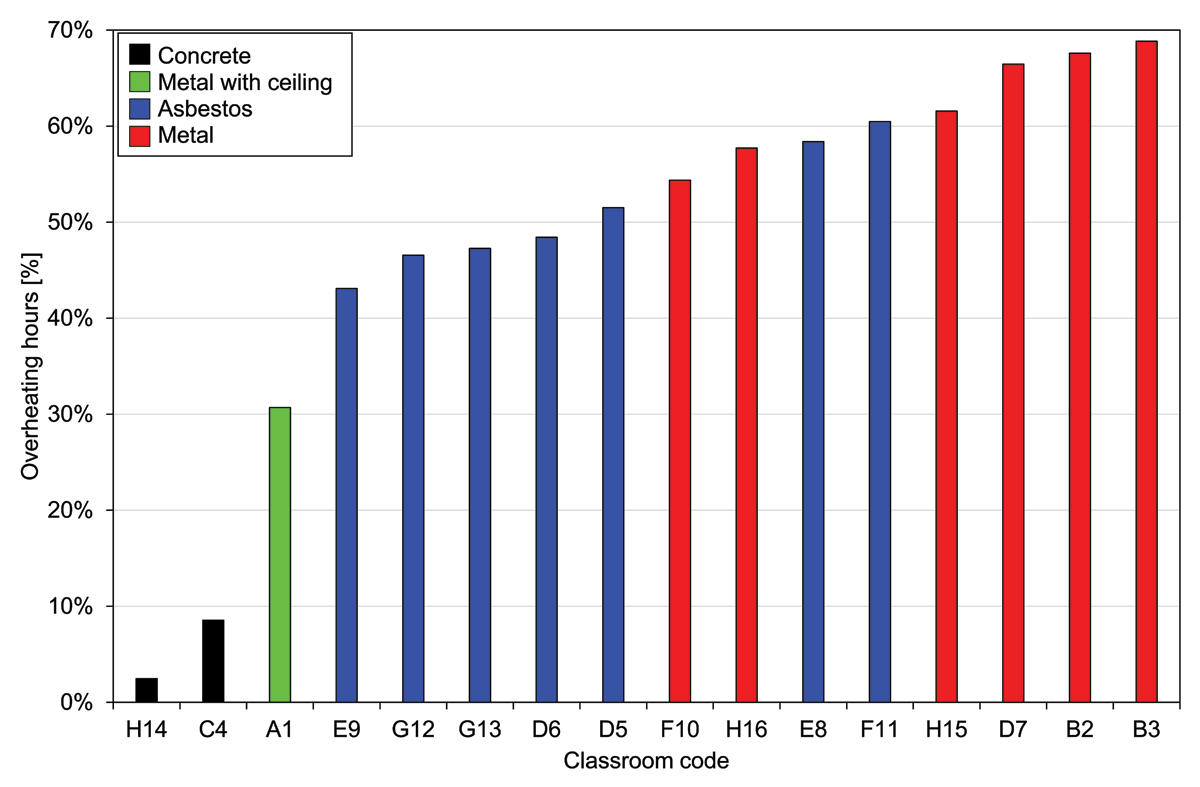
Figure 4
BS EN 16798 overheating-hours in Accra, Ghana, during all occupied hours across the full 389-day monitoring period.
Source: BSI (2019).
4.3 Relationship between indoor and outdoor temperatures with different roof types
By comparing the mean daily outdoor temperature with the corresponding mean daily indoor temperature for each classroom on every monitoring day, several trends emerge (Figure 5). First, the indoor temperature of all classrooms, regardless of roof type, positively correlates with the outdoor temperature. Second, three distinct groups of data points are evident. At the same outdoor temperature, classrooms with metal and asbestos roofs generally have the highest indoor temperature, while those with concrete roofs have the lowest. Third, classrooms with metal roofs and plywood ceilings fall between these groups, generally aligning with the line of equality. The indoor temperature was close to the outdoor temperature during occupied periods in such instances. Finally, concrete roofs provide a cooling benefit over other roof types, particularly when outdoor temperatures exceed 32°C. During these times, which is when a cooler indoor environment is most needed, only the concrete-roofed classrooms remain cooler than the outdoor temperature (Figure 5).3
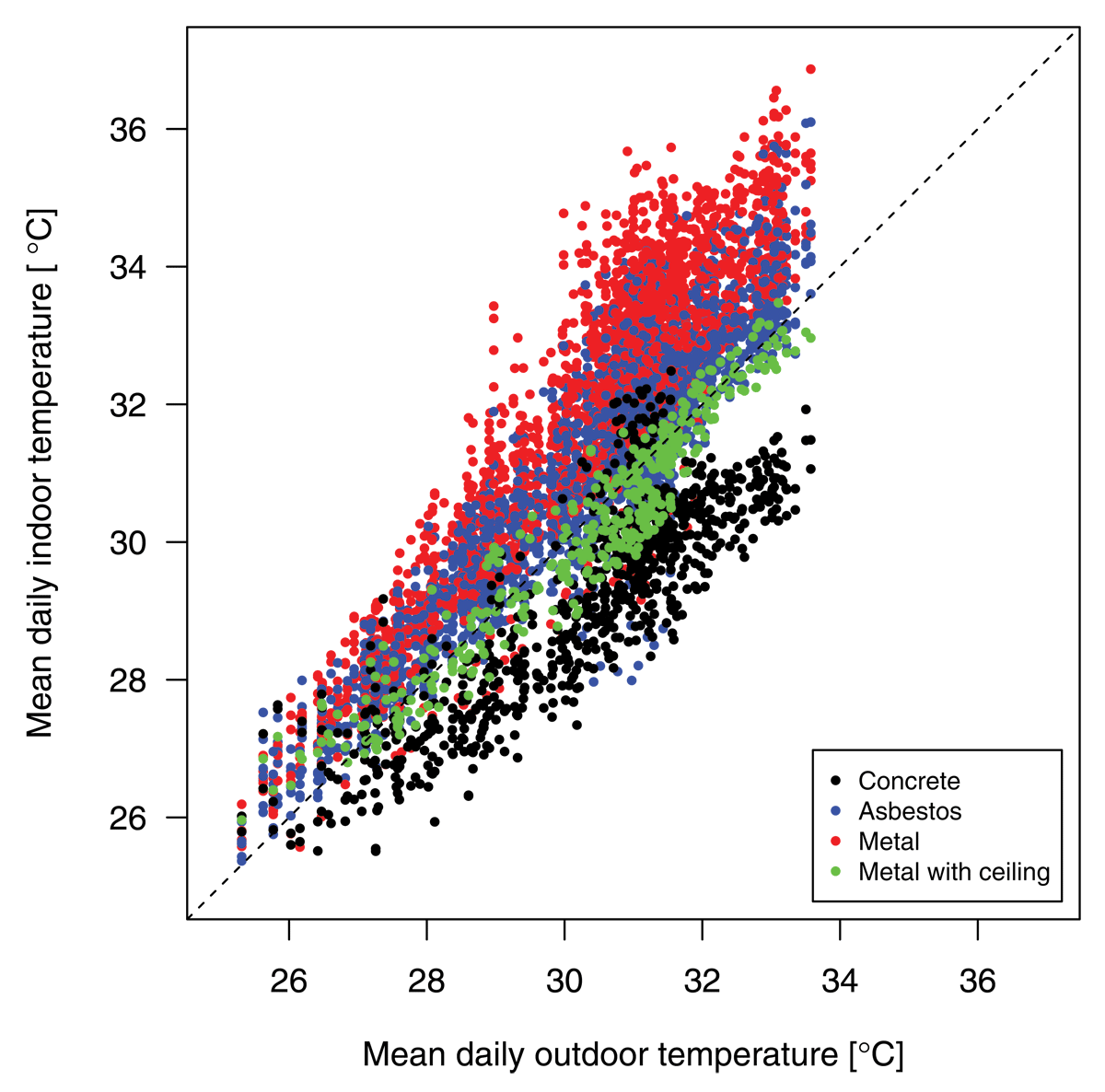
Figure 5
Mean daily outdoor temperature compared against mean daily indoor temperature for each classroom across the full 389-day monitoring period (pooled by roof type).
Note: Dot colours denote roof type. The dashed line is the line of equality (1:1).
By comparing the mean and maximum indoor–outdoor temperature differences, it becomes evident that concrete roofs and plywood ceilings help maintain cooler indoor temperatures than outdoors during occupied periods (Figure 6). Concrete roofs provide significant protection from outdoor heat, keeping indoor temperatures over 1°C cooler than outdoor temperatures on average (–1.1 and –1.2°C). Plywood ceilings offer a small amount of protection, with indoor temperatures averaging 0.2°C cooler. In contrast, classrooms with asbestos and metal roofs without ceilings are generally warmer indoors than outdoors by 0.1 and 2.2°C on average (Figure 6).
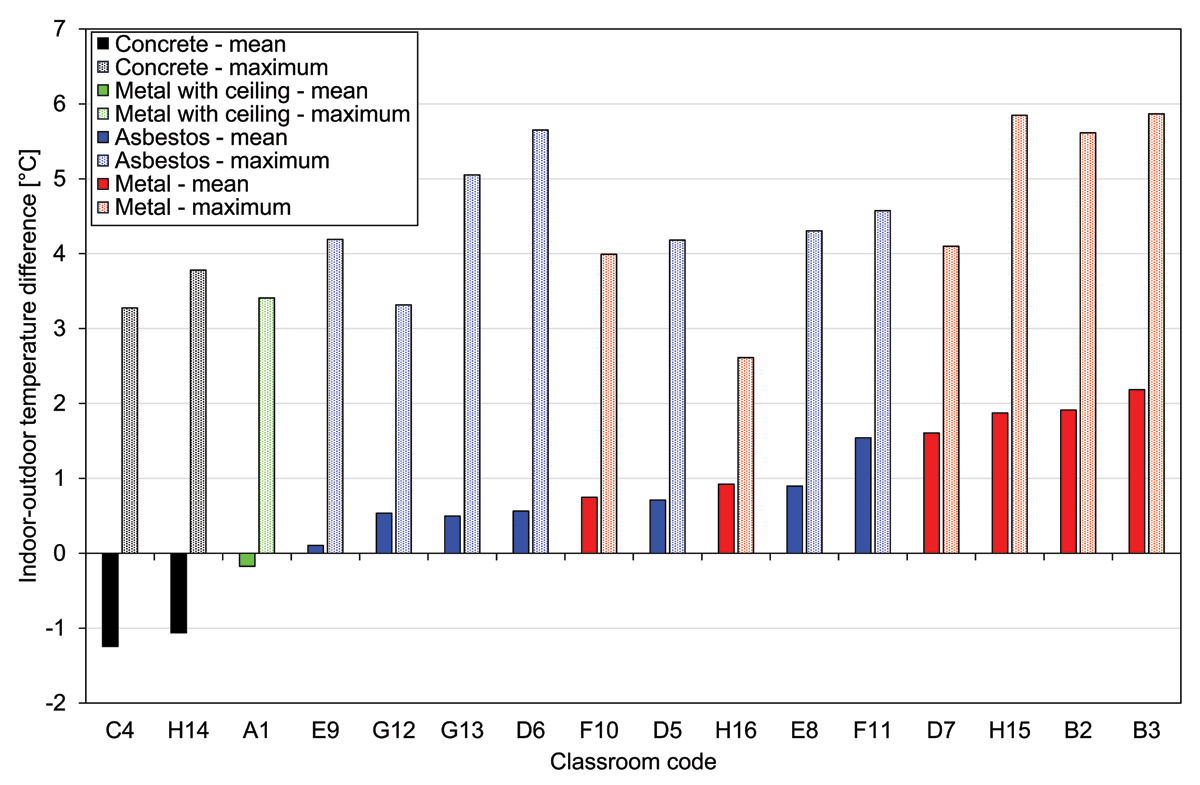
Figure 6
Mean and maximum difference between indoor and outdoor temperature in each classroom during occupied times across the full 389-day monitoring period, arranged in ascending order of mean temperature difference.
The maximum temperature differences may initially appear to present a different picture. At peak temperatures, all classrooms, regardless of roof type, are warmer indoors than outdoors, with metal-roofed classrooms being up to 5.9°C warmer. The time that concrete-roofed classrooms were warmer indoors than out, however, was at the point when outdoor temperatures were coolest across the entire 389-day monitoring period. In contrast, this occurred during the hottest periods in the metal- and asbestos-roofed classrooms.
4.4 Temporal variations in temperature over one year and on a single day
Temporal changes in indoor and outdoor temperatures were examined on the hottest day4 during monitoring (Figure 7) and over the entire 389-day period (Figure 8). To visualise this, the mean temperature for all classrooms with the same roof type was calculated for each time step (pooled by roof type).
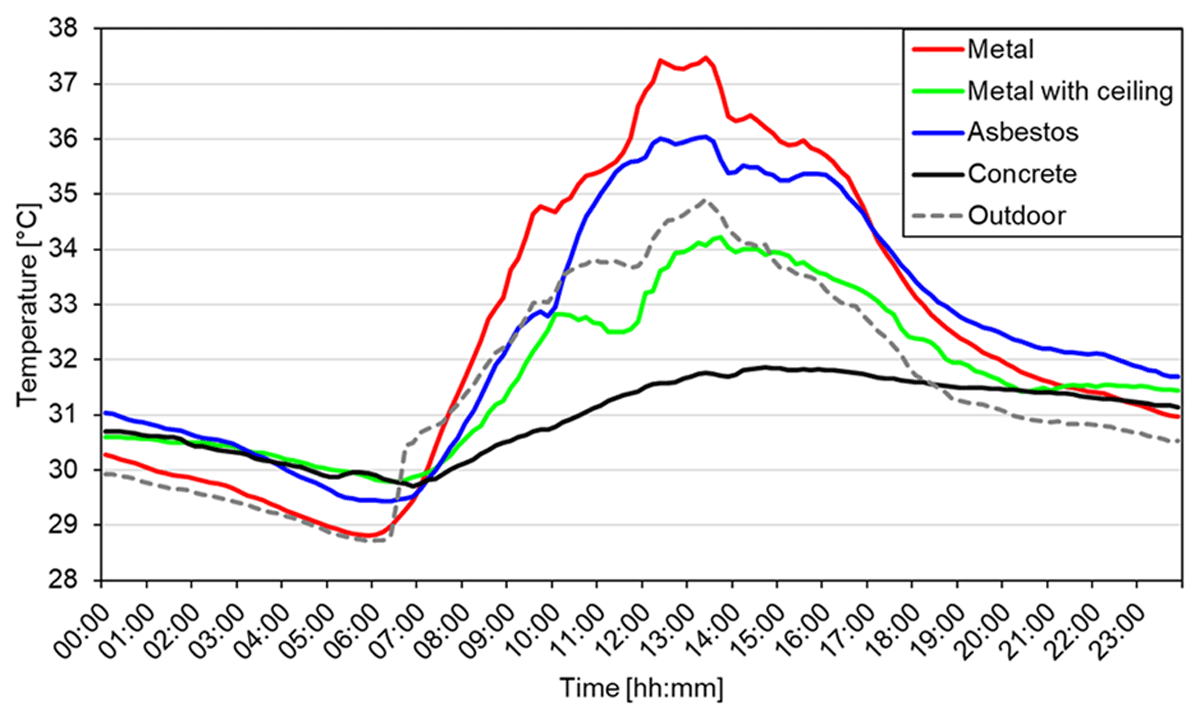
Figure 7
Temperature time-series with the mean 10-minute value for each roof type (classrooms pooled by roof type) on the 24-h day with the highest maximum outdoor temperature (9 May 2023).
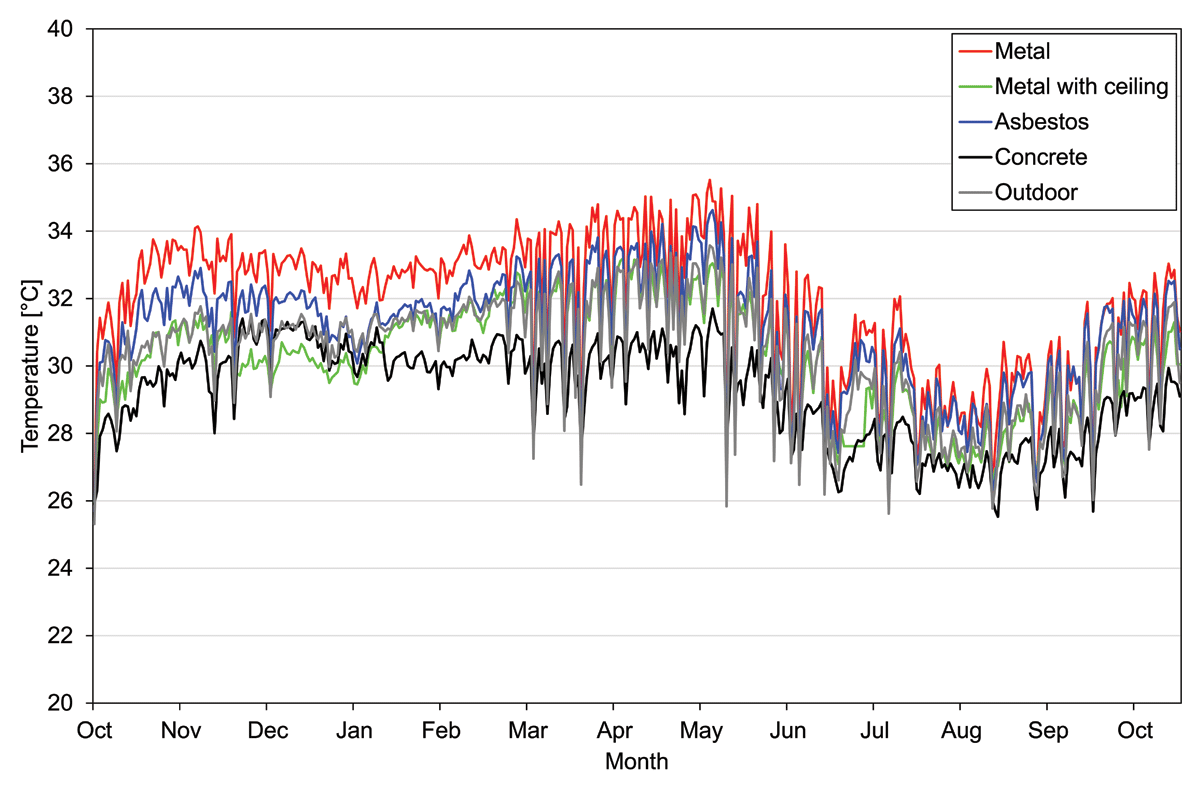
Figure 8
Temperature time-series with the mean daily value for each roof type (mean for classrooms pooled by roof type) over the entire 389-day monitoring period.
First, examining the hottest day. Occupancy commenced at 08:00 and by this time classrooms with concrete roofs were the coolest and remained so throughout the occupied period, which ended at 15:00. During the hottest part of the day, around 13:00, concrete-roofed classrooms were on average 3.0°C cooler than outdoor temperatures. Turning to classrooms with metal or asbestos roofs, these classrooms experienced a rapid temperature increase from around 06:00, peaking around 13:00. Initially, their indoor temperatures rose in tandem with the outdoor temperature, but after 10:00 the temperature in these classrooms exceeded the outdoor temperature by up to 3.0 and 2.1°C in metal- and asbestos-roofed classrooms, respectively. The classrooms with a plywood ceiling (under a metal roof) remained close to, but slightly below, the outdoor temperature during the occupied period. The greatest temperature difference between the coolest concrete- and hottest metal-roofed classrooms on this day was 5.8°C, occurring at 12:20 (Figure 7).5
Second, an examination of the full 389-day monitoring period (Figure 8) reveals that all indoor temperatures follow the seasonal trend of outdoor temperatures. These are highest in mid-February–May (the dry season) and lowest in June–July (the rainy season) irrespective of roof type. This indicates a high degree of indoor–outdoor coupling in classrooms of all roof types.
5. Discussion
To date, data on indoor classroom temperatures in tropical Africa remain limited. To the best of the authors’ knowledge, this study represents the longest time series of classroom temperatures recorded in Ghanaian schools and examines the effect of roofing materials on indoor temperatures. Such data are particularly important due to climate change predictions for Ghana, which expect higher temperatures and increased extreme heat conditions (Wilby et al. 2021). Measurement of indoor temperature in 16 school classrooms in Accra revealed that those with concrete roofs are considerably cooler during occupied hours than those with metal or asbestos roofs. This means that pupils in concrete-roofed classrooms are exposed to fewer hours of uncomfortably hot temperatures, with the associated beneficial learning environments. The cooling benefit of a concrete roof relative to other roof types is particularly apparent at higher outdoor temperatures. While placing a plywood ceiling under a metal roof reduced indoor temperatures, it did not match the cooling effect of concrete roofs. Yet, plywood ceilings halved the number of overheating-hours compared with metal roofs without ceilings, hence these present a useful and cost-effective retrofit for heat mitigation.
Overall, it is important to note that indoor conditions in classrooms, including those with concrete roofs, remain above recommended comfort levels for learning environments in tropical equatorial settings. Thus, the cooling benefits of concrete roofs should not be overstated, as conditions still pose risks to health and learning outcomes. Thermal comfort standards suitable for equatorial tropical cities typically suggest operative temperatures below 28°C for learning environments (ASHRAE 2017; Lala & Hagishima 2023). In this study, classroom temperatures regularly exceeded this threshold, reaching as high as 39.8°C in some cases, especially those with metal roofs. Such temperatures, particularly when coupled with high humidity, can significantly impair cognitive function and lead to heat-related illnesses, highlighting the urgency for intervention. As children are particularly susceptible to the negative health effects of exposure to extreme heat, these findings underscore the importance of improving classroom environments. Without infrastructural interventions, daily heat exposure in classrooms is likely to increase with climate change. Similar findings have been reported in other African countries, where high classroom temperatures have led to fatigue, headaches, heat distress and absenteeism (Pule et al. 2021). For example, indoor classroom temperatures in South Africa ranged between 21 and 34°C, with 47.5°C being reached in a converted shipping container classroom (Bidassey-Manilal et al. 2016). Children with pre-existing health conditions may experience worsened symptoms and greater side effects of extreme heat (Amankwaa & Ampomah 2024).
The most striking results are the stark contrast in temperatures and overheating-hours between different roof types. Even the coolest asbestos-roofed classroom overheated for 1075 more hours than the warmest concrete-roofed classroom, amounting to 39.5% of the occupied hours over the 389-day data-collection period. The most extreme comparison showed the hottest metal-roofed classroom with 2054 overheating-hours and the coolest concrete-roofed classroom with 77 overheating-hours, resulting in the former experiencing an additional estimated 282 days of overheating due to high indoor temperatures, representing approximately 72.5% of the occupied hours. However, even the concrete-roofed classrooms recorded significant hours above comfort thresholds, indicating that roofing material alone is insufficient to guarantee thermally healthy learning conditions. Currently, there are no temperature threshold guidelines set for educational/classroom settings, which are especially needed in tropical climates. Compared with ASHRAE’s (2017) temperature thresholds (19–26°C), indoor classroom temperatures in Ghana are notably higher. In the present study, temperatures in every classroom during all the occupied hours exceeded 23.9°C, indicating that schoolchildren’s learning is continually disrupted regardless of roof type (Lala & Hagishima 2023; Wargocki et al. 2019), even if they are not classed as overheated according to the BS EN 16798 criterion (BSI 2019). This suggests that additional measures beyond selecting roof materials are essential to safeguard children’s wellbeing and improve learning conditions.
Rooms with metal roofs have been shown to cool more rapidly at night (Wilby et al. 2021). Although this was similarly observed in the classrooms studied, the benefit is minimal in schools since they are only occupied during the day. More importantly, the thermal properties of concrete and its thickness reduce the rate of heat transmittance through to internal surfaces in classrooms. A plywood ceiling below a metal roof has a similar, albeit lesser, effect. The absence of ceilings or roof insulation leads to heat radiating from roof surfaces (Toyinbo et al. 2019), which worsens schoolchildren’s experiences of extreme temperatures (Appah-Dankyi & Koranteng 2012). Studies have highlighted the significance of asbestos roofing in increasing classroom temperatures (Bidassey-Manilal et al. 2016; Pule et al. 2021).
The rapid increase in indoor temperatures in metal- and asbestos-roofed classrooms from around sunrise is clear evidence of the effect of roof types, with indoor temperatures ultimately exceeding outdoor temperatures. Consequently, these classrooms offer no protection from the heat of the day and even exacerbate indoor temperatures. Concrete-roofed classrooms provide some protection from the high outdoor temperatures during the day, but even so, the temperatures in these classrooms are still uncomfortably high. While previous research has demonstrated the cooling benefits of high thermal mass walls (Amos-Abanyie et al. 2013; Hema et al. 2021; Roberts et al. 2023b; Wilby et al. 2021), this study highlights the importance of roofing materials. Concrete roofs exhibit superior thermal performance compared with metal due to their thickness and lower thermal conductivity. Asbestos has lower thermal conductivity and higher thermal mass than concrete but is installed in very thin roofing sheets compared with the thick concrete slabs. This enables concrete to absorb more heat during the day and release it slowly at night, thereby stabilising indoor temperatures. This characteristic helps maintain cooler indoor conditions during occupied hours, as observed in this study. In contrast, metal roofs, often made of corrugated iron, are thin and highly conductive. They heat up quickly under solar radiation and transfer heat into building interiors, resulting in higher indoor temperatures during the day. Asbestos roofs, while slightly better than metal in terms of thermal conductivity and thermal mass (from a heat protection perspective), do not match the thermal performance of concrete due to the thickness of the material. Plywood ceilings are highly insulating due to very low thermal conductivity and provide protection from heat radiating or conducting through from the roof surface above.
These findings highlight practical and cost-effective solutions for both retrofitting existing schools and designing new ones in tropical climates. Retrofitting with plywood ceilings under metal roofs, for instance, halved the number of overheating-hours, making it a highly feasible intervention given the widespread use of metal roofing in Ghana. The role of the ceiling cavity in enhancing insulation effects warrants further exploration. Local industries could support the production and installation of flat or raked ceilings, with minimal structural modifications needed. Plywood is generally accessible and affordable, making this intervention a ‘low-hanging fruit’ for heat mitigation in schools. Alternative options, such as heat-reflective coatings to metal roofs, could also offer relatively simple and cost-effective cooling solutions (Hugo 2023; Yuliani et al. 2020). New school builds should use materials with low thermal conductivity and high thermal mass, balancing thermal benefits with sustainability. While concrete roofs offer daytime cooling, they have high embodied carbon and retain heat at night. Alternatives with lower environmental impact should be explored. Vegetation around schools can also reduce ambient temperatures and mitigate the UHI effect. Exploring the long-term economic and environmental benefits of different roofing and cooling materials can help balance initial costs with potential energy savings and improved health outcomes (Mano & Thongtha 2021).
This study benefitted from having classrooms that were similar in design, apart from roof type, which enabled isolating the effect of roofing materials and conducting direct comparisons between classrooms under the same weather conditions and occupancy. This methodological strength enhances the validity of the findings regarding the influence of roofing materials on indoor temperatures.
Several limitations exist for this study. First, to further compare the effects of roof construction, future studies should incorporate other thermal comfort parameters such as relative humidity and radiant temperature, which influence heat stress and occupant comfort. As humidity modifies the latent cooling rate via sweat evaporation from the skin surface, any future heat-health research should measure relative humidity (Cheng & Sha 2024). The radiant effects of a metal roof heated by the sun may make a thick concrete roof even more preferable.
Second, the potential influence of adaptive behaviours, such as changes in clothing and the use of personal cooling devices such as fans, was not examined.
Third, whilst the classrooms were located within Accra’s UHI, finer controls were not placed on the local environment or occupants’ activities, as the study design was a non-interventionist observation. More rigorous data could be generated by using a series of identical, matched experimental buildings to isolate the effect of roof material on indoor temperature during school hours.
Lastly, although the difference between the concrete-roofed classrooms and those with other roof types is stark, the study included only two concrete-roofed classrooms. Increasing the sample size in future research would strengthen the validity and robustness of the conclusions.
Further research on passive cooling strategies and their integration into school designs can contribute to generating sustainable solutions for maintaining comfortable indoor environments without relying on mechanical cooling systems (Munonye & Ji 2021). Furthermore, investigating the direct impact of improved thermal comfort on students’ cognitive performance, attendance and overall wellbeing would provide valuable insights for policymakers and educators. Understanding these connections has the potential to drive more informed decisions in designing and retrofitting school infrastructure to foster optimal learning conditions in tropical climates (Pule et al. 2021). These insights further emphasise the need for developing an applied extreme heat vulnerability index utilising socio-economic and environmental data (Johnson et al. 2012). By addressing these aspects and expanding the scope of future research, a more nuanced understanding of how to create thermally comfortable, healthy and conducive learning environments in tropical regions would be developed. This will not only enhance educational outcomes but also contribute to the broader goal of building climate-resilient communities, ensuring that interventions are inclusive, practical and scalable across diverse educational settings.
6. Conclusions
The measurement of indoor temperature in school classrooms in urban Ghana has revealed that schoolchildren are exposed to extreme heat in classrooms. Schools with concrete roofs are considerably cooler during occupied hours than those with metal or asbestos roofs. A pupil studying in a classroom with a concrete roof will thus be exposed to fewer hours of uncomfortably hot temperatures, especially as these classrooms are generally cooler than outdoors during occupied periods. The cooling benefit of a roof with high thermal mass relative to other roof types is particularly pronounced at higher outdoor temperatures. While placing a plywood ceiling under a metal roof also reduces indoor temperatures, it does not achieve the same extent of cooling as a concrete-roofed classroom. For retrofit scenarios, however, a plywood ceiling is a cost-effective solution, which could halve the number of overheating-hours compared with a bare metal roof.
By highlighting the urgent need to address thermal comfort in schools as a core element of educational infrastructure, these findings have critical implications for Ghana’s school building policies, such as the ‘School Establishment and Inspection Policy’ and the ‘Ghana Building Code’. This study emphasises that high classroom temperatures, primarily driven by unsuitable building characteristics such as roofing materials, directly impact the well-being and academic performance of children. The Ghana Education Service (GES), in collaboration with the Ministry of Education and the Ghana Standards Authority, should integrate heat-resistant and climate-sensitive design principles into school infrastructure planning. Specifically, the study recommends revising the ‘School Establishment and Inspection Policy’ to provide detailed guidelines for incorporating climate-appropriate materials, such as roofs with high thermal mass and alternative solutions such as insulated metal roofs or reflective coatings, into school building standards. Although concrete roofs offer cooling benefits, they are not a one-size-fits-all solution. Material choices should be context-specific, considering factors such as cost, environmental impact, structural feasibility, and cultural preferences.
Additionally, the ‘Ghana Building Code’ should be updated to include specific frameworks for designing school buildings that are adaptive to extreme heat, ensuring that classrooms remain conducive to learning and wellbeing. In particular, roof materials with low thermal transmittance that protect school classrooms from the heat of the day are required. Policymakers and regulators must promote material standardisation that balances cultural sensitivity, affordability, and durability. Institutions, such as the Ministry of Works and Housing and the Ghana Standards Authority, alongside metropolitan and municipal assemblies, should drive the implementation of these standards and oversee retrofitting projects to upgrade existing school structures.
These insights hold broader relevance for similar tropical contexts in Africa and the global South more broadly, where rapid urbanisation and rising temperatures present shared challenges for educational infrastructure. By adopting these recommendations, Ghana can serve as a model for other countries with tropical climates in creating sustainable, climate-resilient schools that safeguard the wellbeing and future of children. This study thus underscores the importance of multisectoral collaboration and evidence-based policymaking to address the growing threat of extreme heat in educational settings. Implementing climate-resilient designs in school classrooms is essential to achieve SDG 4 and ensure safe, healthy environments that promote quality education.
Notes
[3] For studies with a shorter timeframe, see Munonye & Ji (2021) for schools in Nigeria; and Appah-Dankyi & Koranteng (2012) for a school and Mohammadpourkarbasi et al. (2022) for a university in Ghana.
[4] Considering the material alone, metal has higher thermal mass than concrete or asbestos roofs. This is due to the higher density of metal in combination with a similar specific heat capacity to concrete or asbestos cement which therefore yields a higher volumetric heat capacity. Yet, due to the very thin metal roofs versus concrete or asbestos cement, the actual thermal mass of the metal roof would be lower.
[7] Comparing the metal and concrete roofs, the maximum temperature difference at the same timestep was 5.8°C, which is slightly higher than the 5.6°C difference calculated when taking the maximum temperatures recorded at any point in the day. Because mean classroom temperatures grouped by roof type were used, the numbers differ from those in Table 3, which display the individual temperatures for each classroom.
Acknowledgements
The authors are greatly indebted to all the schools that allowed them into their classrooms to undertake this research. They thank Simon Dagbanja of Remote Sensing and Geographic Information Systems (RS/GIS lab), University of Ghana, for preparing Figure 1.
Competing interests
The authors have no competing interests to declare.
Author contributions
E.F.A.: conceptualisation; data curation; funding acquisition; investigation; methodology; project administration; resources; supervision; writing – original draft; writing – review and editing.
B.M.R.: data curation; formal analysis; funding acquisition; methodology; software; validation; visualisation; writing – original draft; writing – review and editing.
P.M.: data curation; investigation; methodology.
K.V.G.: conceptualisation; writing - review and editing.
Data accessibility
The data are available from the authors upon request.
Ethical approval
Research ethics clearance was granted by the University of Ghana’s Ethics Committee for Humanities (ECH 129/22-23). Permission was also obtained from the Ayawaso Central and Accra Metropolitan Assembly Metro Directorate of Education of the Ghana Education Service (GES).