
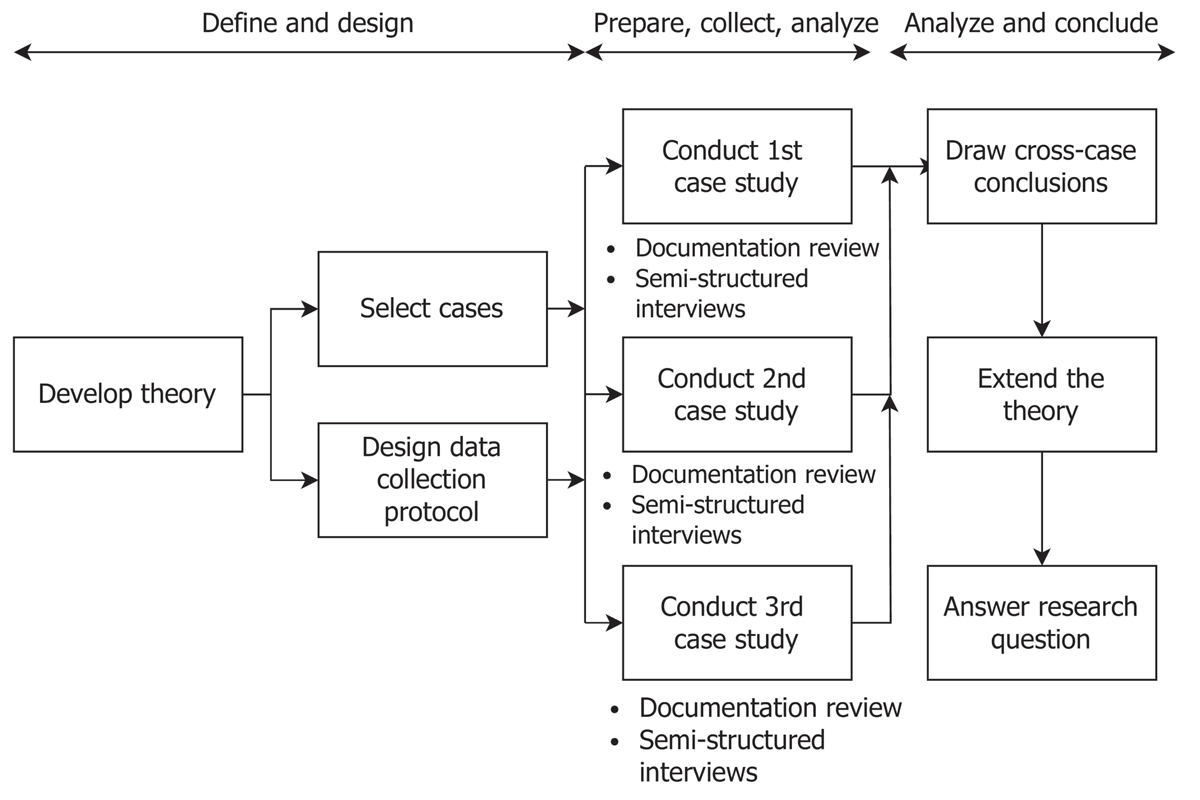
Figure 1
Multiple-case study design.
Source: Adapted from Yin (2009).
Table 1
Summaries of the three case studies in New Brunswick, Canada.
| CASE STUDY 1: MONCTON | CASE STUDY 2: FREDERICTON | CASE STUDY 3: SAINT JOHN | |
|---|---|---|---|
| Company/organisation | Botsford Station Creative Commons | Picaroons Brewing | Saint John Theatre Company |
| Building(s) | Botsford Station | Former Gibson Roundhouse | Motor car and equipment garageSydney Street Courthouse |
| Street(s) | Botsford Street | Union Street | Princess StreetSydney Street |
| Construction year(s) | 1913 | 1885 | 19111829 |
| Original use(s) | Manufacturing | Railway roundhouse | Automobile garageCourthouse |
| Renovation year/period | 2011–current | 2015 | 20112019–current |
| Current use | Retail and offices | Brewery | Theatre studio |
| Status(es) | Continuous renovation while occupied | Renovated and occupied | Renovated and occupiedPlanning stage |
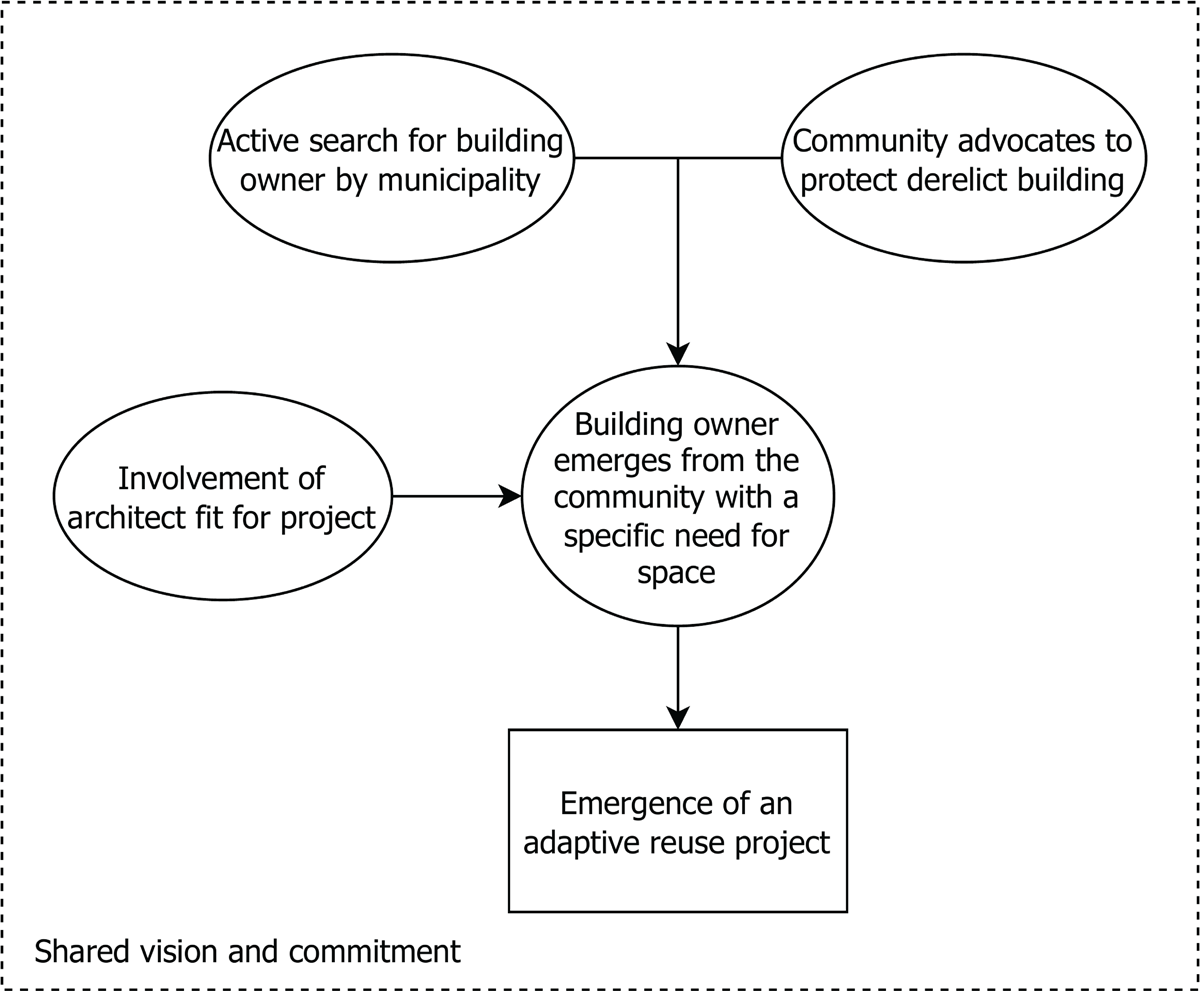
Figure 2
Stakeholder collaboration in the emergence of adaptive reuse projects.
Table 2
Roles and strategies to overcome challenges to adaptive reuse.
| ROLE | KEY ELEMENT | DESCRIPTION |
|---|---|---|
| Architect | In-depth building inspection | Conduct thorough assessments to understand the level of renovation required |
| Architect, owner, municipality | Shared values and commitments | All stakeholders sharing common values and a unified goal |
| Architect, owner, municipality | Community involvement and collaborative governance | Implement an equal-level decision-making process and involve the community in the planning and design phase |
| Architect, owner, municipality | Understanding codes, regulations and involving government agencies | Navigate regulatory processes, obtain necessary approvals and ensure compliance with regulatory requirements |
| Architect, owner, municipality | Plan for phased construction | Extend the project timeline for gradual implementation to manage resources efficiently |
| Architect, owner, municipality | Use participatory renovation | Integrate local perspectives and promote collective ownership of historical preservation and redevelopment efforts |
| Owner | Vision and specific spatial needs | Develop a clear vision to fulfil a specific purpose for the building’s intended use |
| Owner | Obtain diversified financing | Use various funding sources |
| Owner, architect | Engage heritage experts | Preserve historical integrity and ensure compliance with heritage preservation guidelines |
| Owner, architect | Use-value engineering | Strategically prioritise renovation components to optimise profitability and reduce project costs |
| Owner, architect | Effective management of hazardous materials | Ensure healthy and sustainable renovation of existing buildings |
| Owner, architect | Reuse building materials and furniture | Promote sustainability by reducing waste and optimising resource use |