

Figure 1
Adjustable housing combines (from left to right): joinable/divisible dwellings that can be connected vertically as well as horizontally; alternating tenures to encourage downsizing; and shared infrastructure for spill over (e.g. shared outdoor spaces and amenities such as storage and guest rooms).
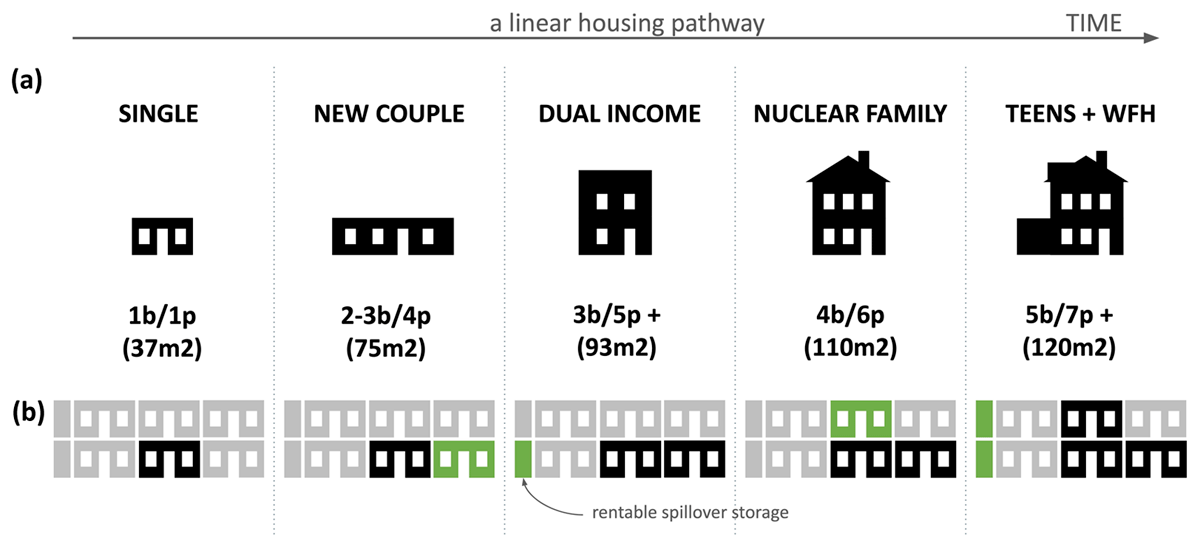
Figure 2
(a) A possible housing pathway where the upward house moves and home extensions are the normal response to life-stage events and employment changes such as working from home; and (b) the same events accommodated by connecting units of adjustable housing modules.
Note: Dwelling sizes reflect UK space standards, where 1b/2p = one-bedroom apartment for two people, etc.
Source: DLUHC (2015).
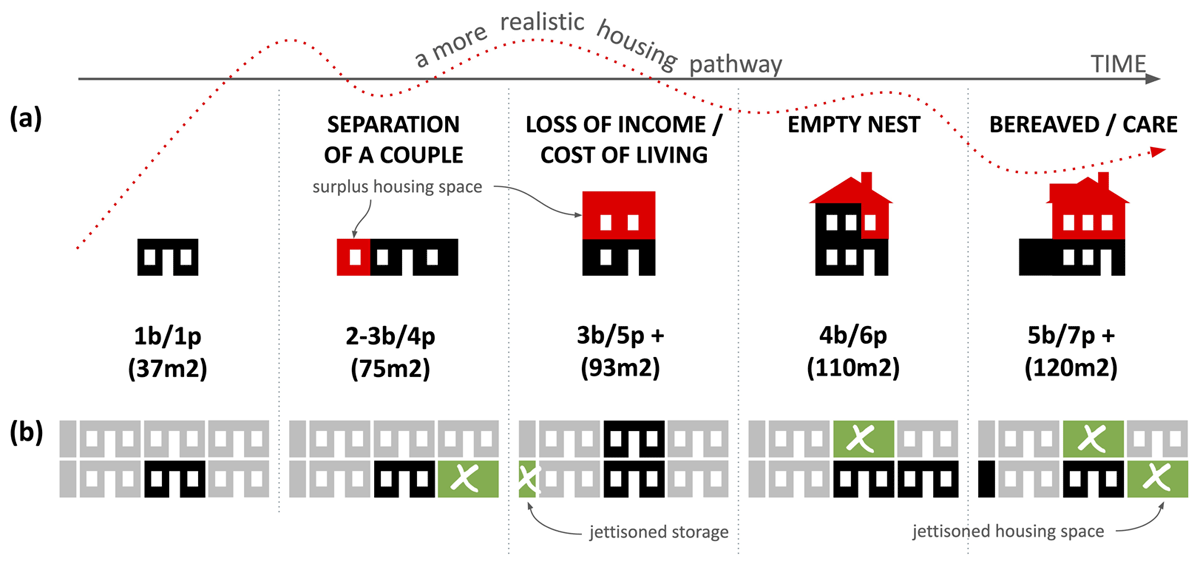
Figure 3
(a) What may seem like sufficient space can become excess, unwanted or under-used space (red), given certain life-cycle events; and (b) in contrast, a continuously adjustable alternative is shown where the potential to rightsize is achieved by discarding surplus space (green).
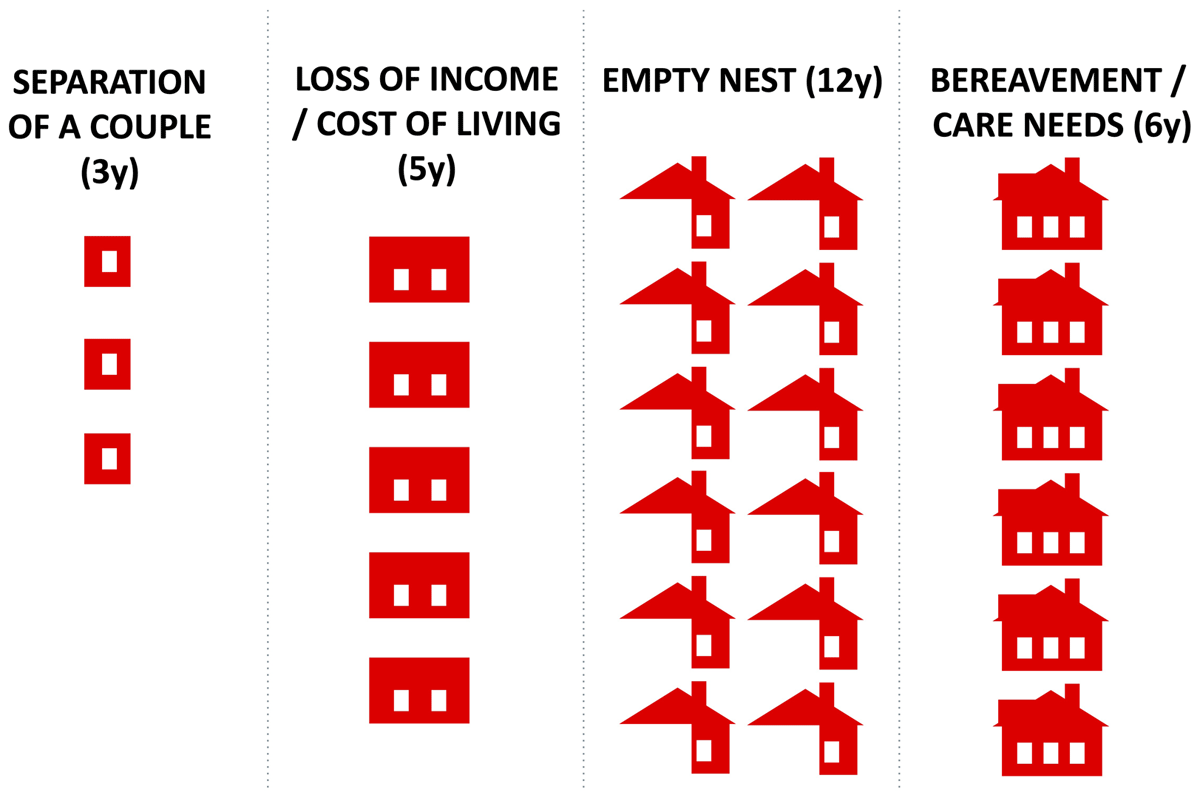
Figure 4
The excess housing space illustrated in Figure 3 can be expected to have significant energy costs when aggregated over time. It is assumed here that the period of under-occupancy following a couple’s separation might last for three years, a loss of income for five years, an ‘empty nest’ for 12 years and bereavement for six years.
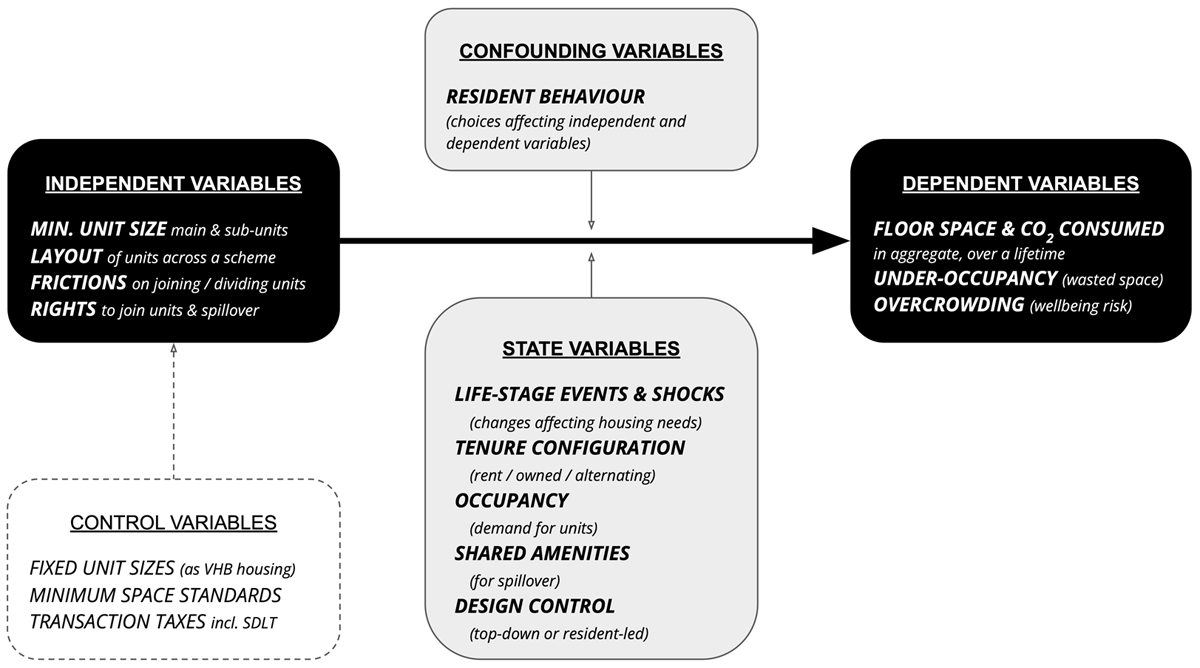
Figure 5
Conceptual framework of the adjustable housing proposition.
Note: SDLT = UK’s Stamp Duty Land Tax, payable on property transactions; VHB = volume house builder.
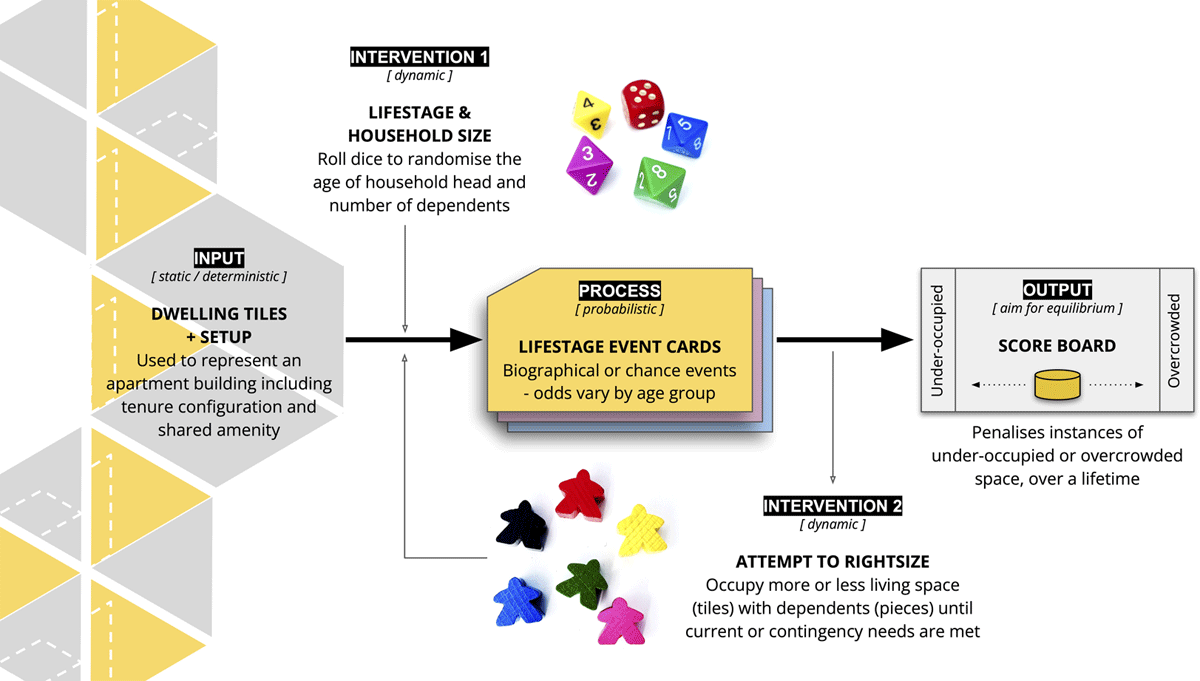
Figure 6
Overview of the design game that builds on the conceptual framework shown in Figure 5.
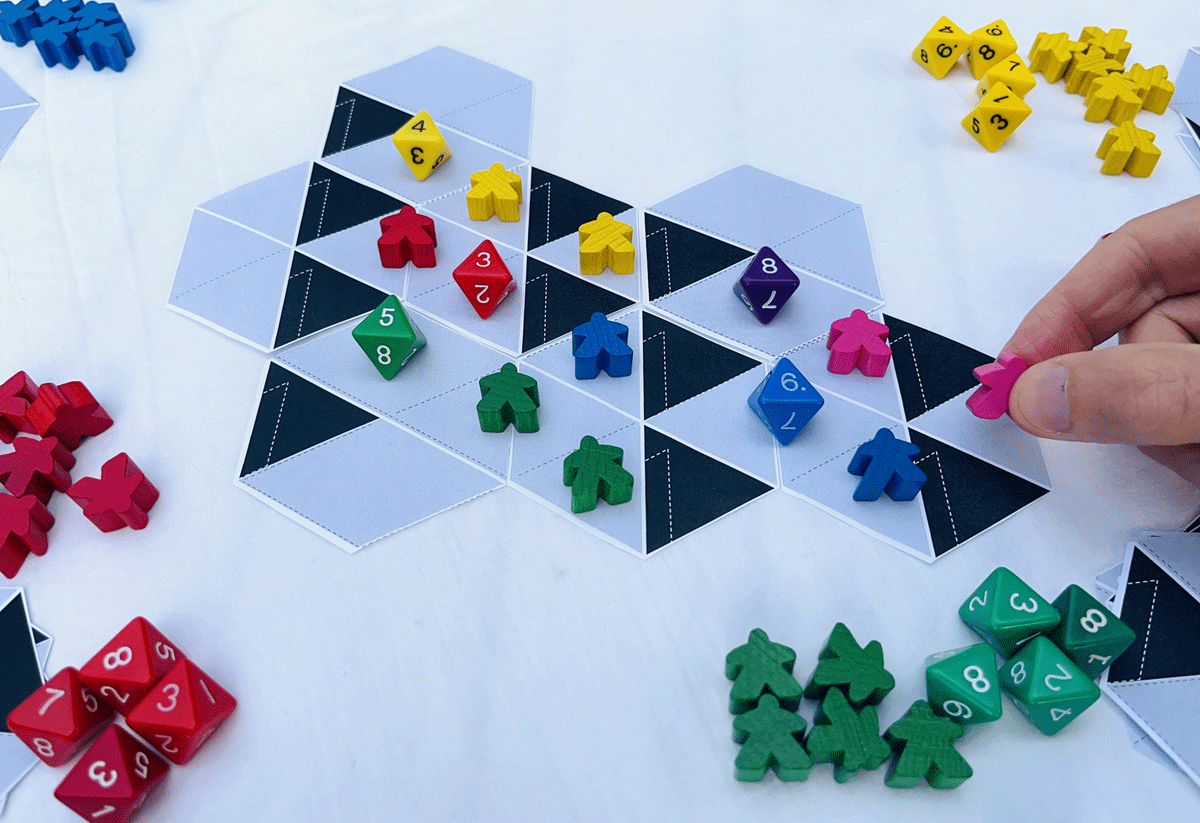
Figure 7
Playing a beta version of ‘Rightsize’ using printed dwelling tiles and pieces gathered from other games.