
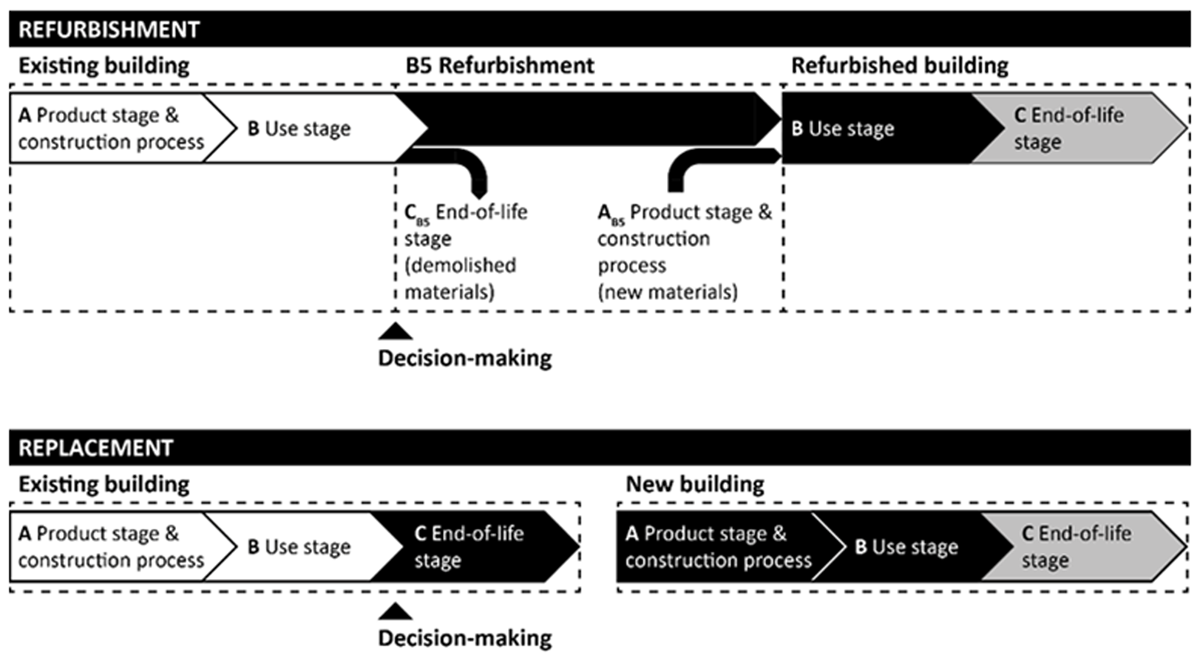
Figure 1
The basic scope of life cycle assessment (LCA) used in consequential replacement framework (CRF) for buildings (for life cycle modules, see EN 15978; CEN 2011).
Note: White modules are excluded; black and grey modules are included; the C module is grey because it situates so far in the future that it has little relevance; and the time boundary can also be kept open-ended (see the next section).
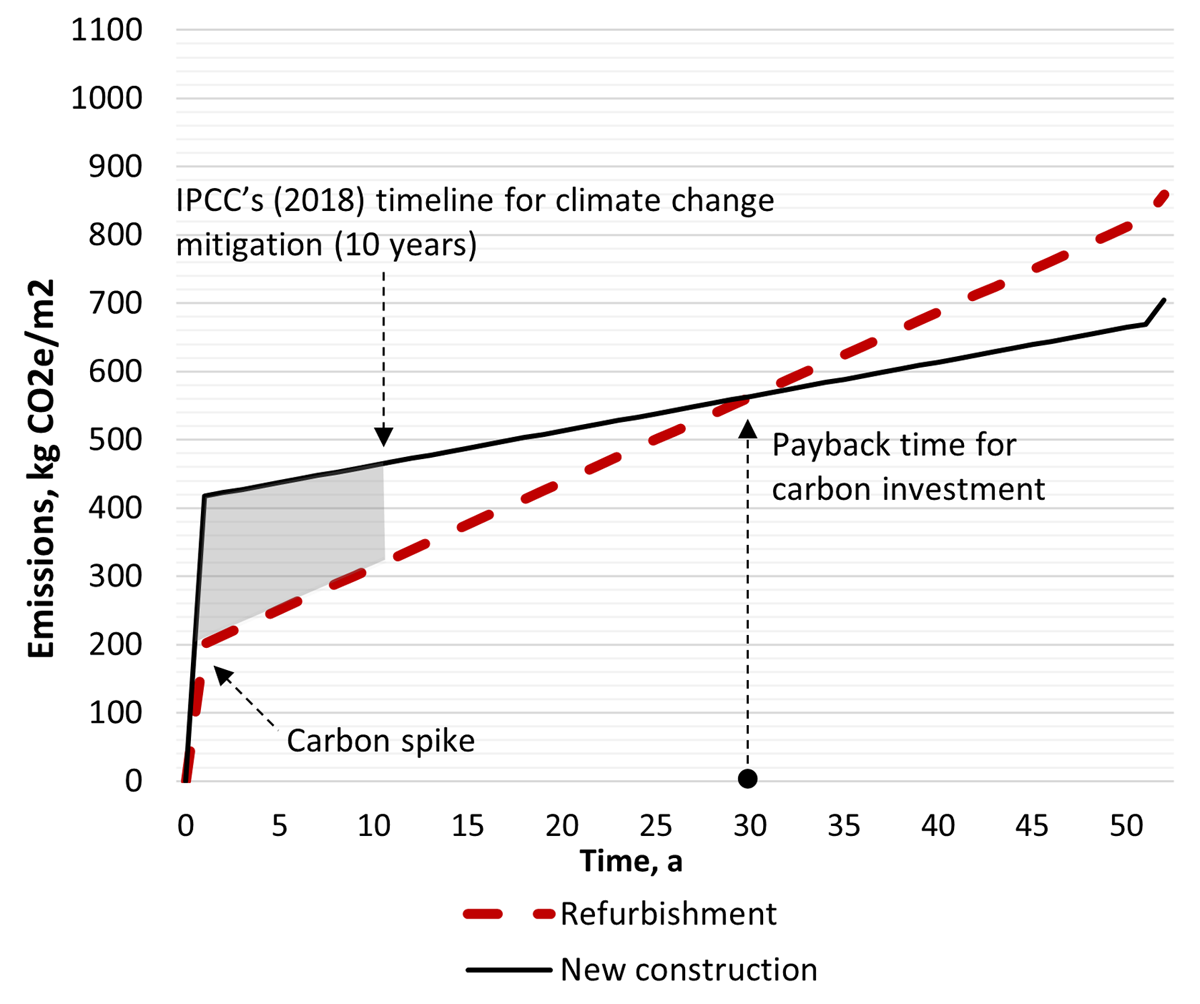
Figure 2
Principle of CO2 accumulation for refurbished and new buildings, and some focal concepts.
Note: This is a theoretical case to illustrate the principles; other kinds of patterns are also possible (Salmio 2022).
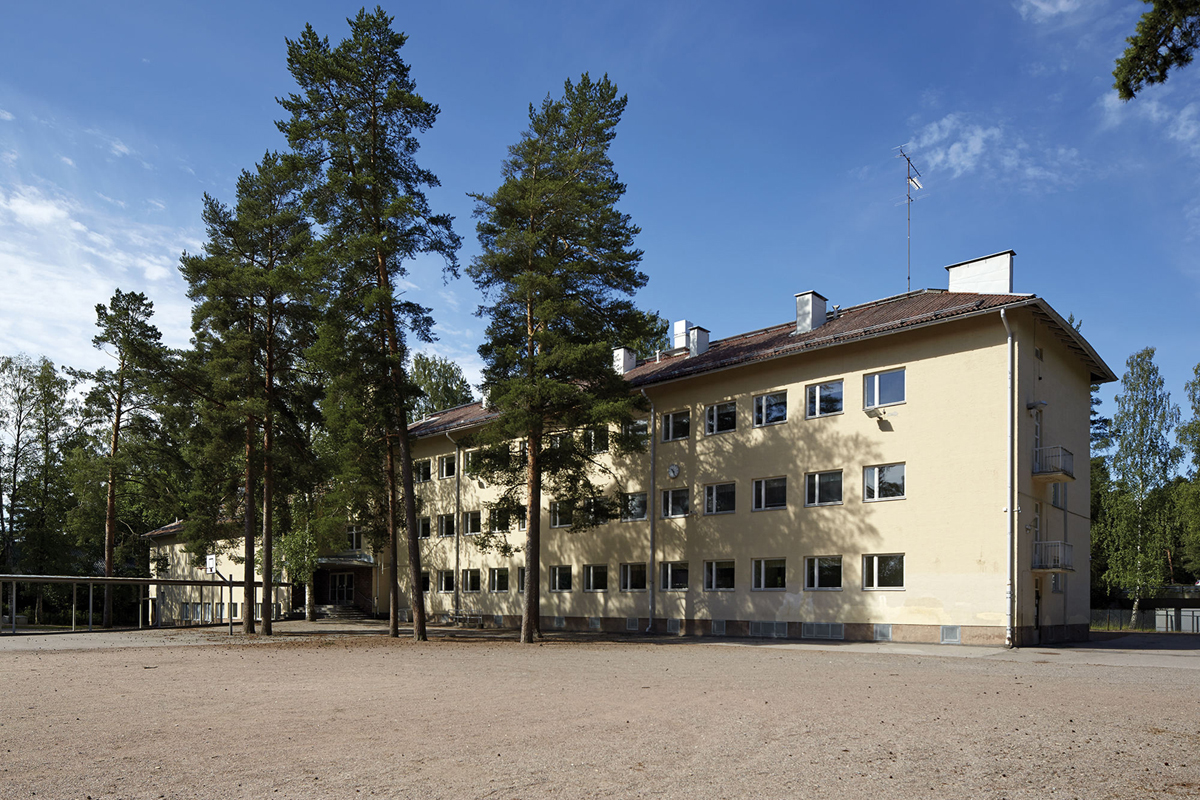
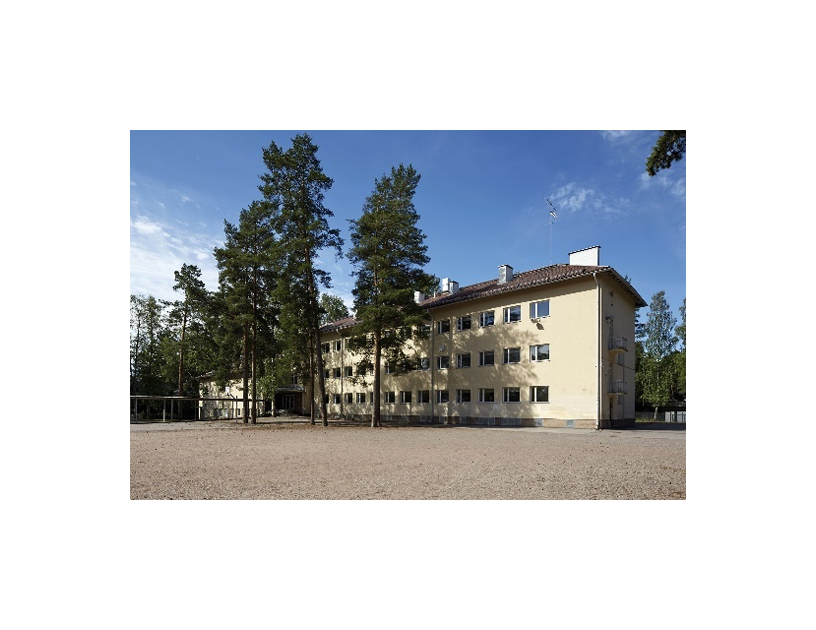
Figure 3
Heteniitty school.
Source: City of Helsinki Media Bank, Mikael Lindén.
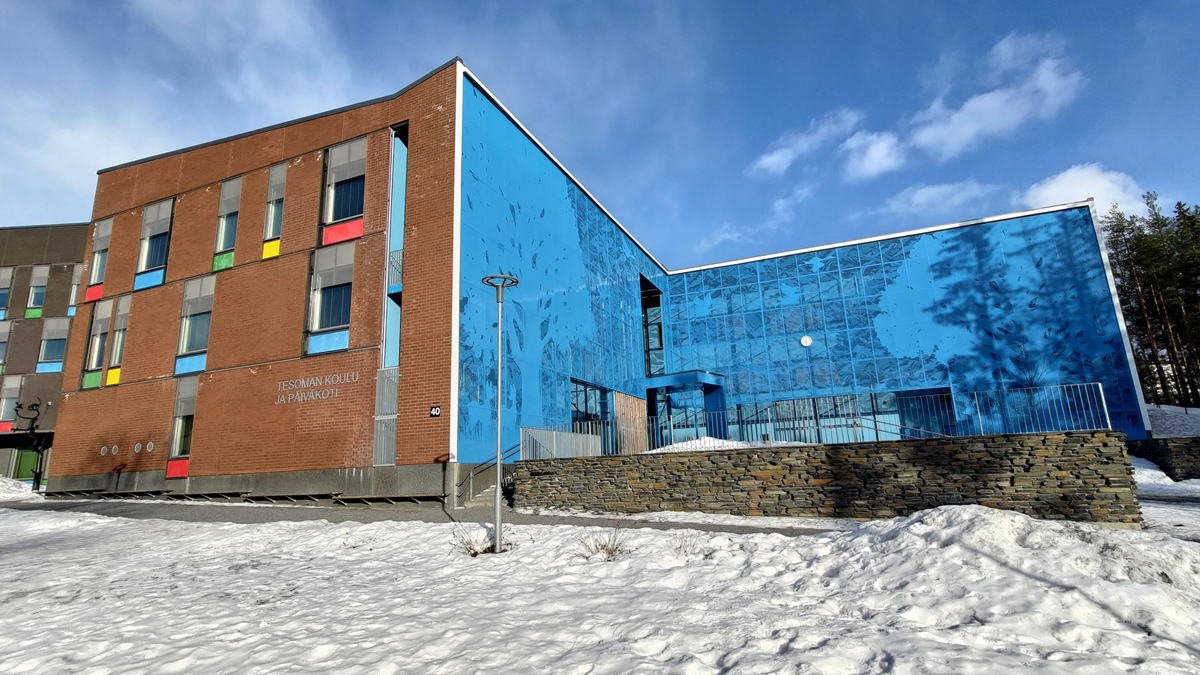
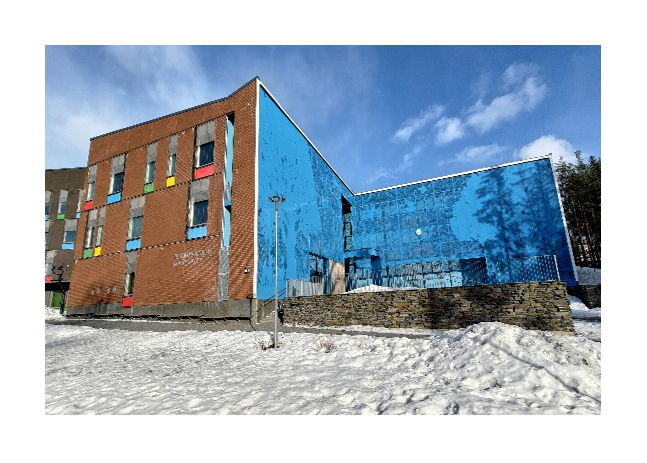
Figure 4
Tesoma school.
Source: Authors.
Table 1
Refurbishment, extension and new construction scenarios.
| Existing case building | O1: Original 1950s school | O2: Original 2010s school building | ||
 |  | |||
| Small school options 2,412 m2 200 students | Refurbishment scenarios | Replacement (demolition and new-build) scenarios | ||
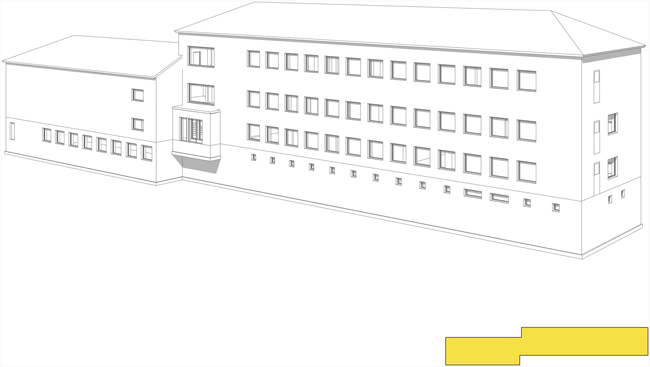 | 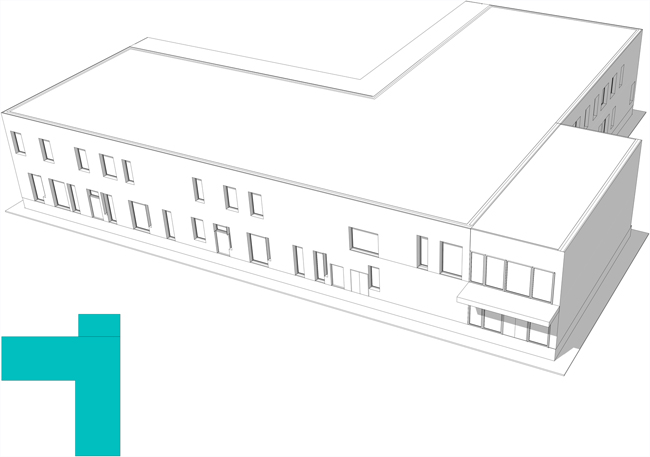 | |||
| R1: Refurbishment Comprehensive refurbishment of the existing school R1×4: Refurbishment of four separate existing schools | N1: New small concrete school Demolition of the existing school and building a new school out of concrete | N2: New small wooden school Demolition of the existing school and building a new school out of wood | ||
| Large school options 9,648 m2 800 students | Refurbishment and extension scenarios | Demolition and new large school scenarios | ||
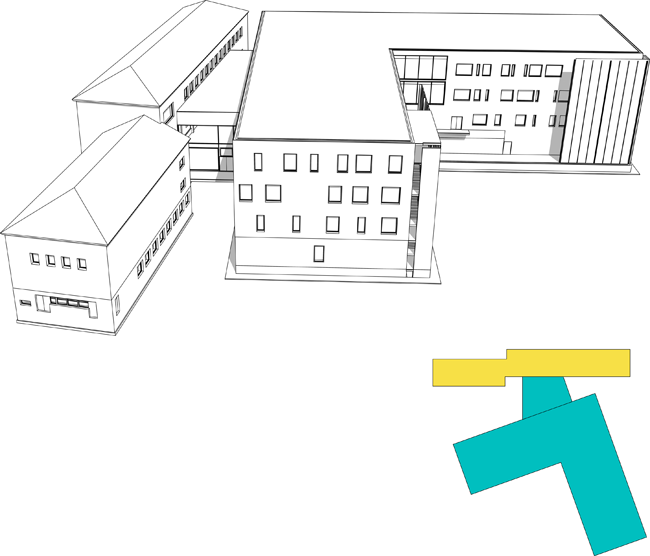 | 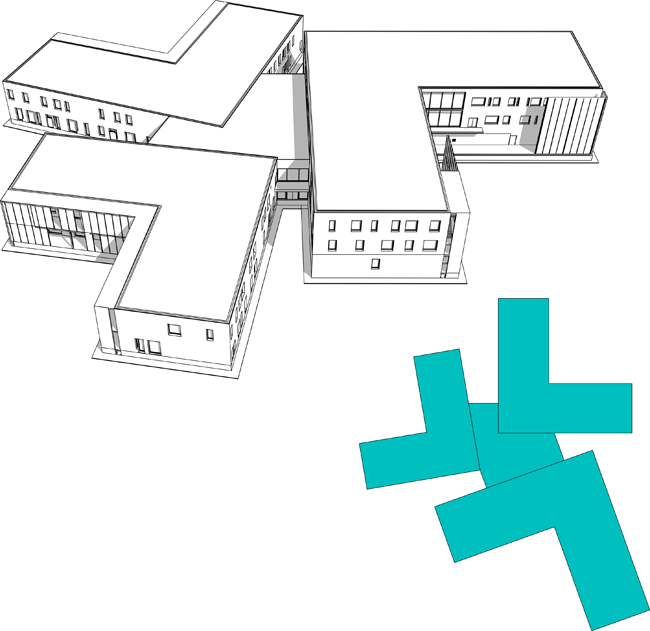 | |||
| RE1: Refurbishment and concrete extension Comprehensive refurbishment of the existing school and building an extension out of concrete | RE2: Refurbishment and wooden extension Comprehensive refurbishment of the existing school and building an extension out of wood | N3: New large concrete school Demolition of the existing school and building a larger new school out of concrete | N4: New large wooden school Demolition of the existing school and building a larger new school out of wood | |
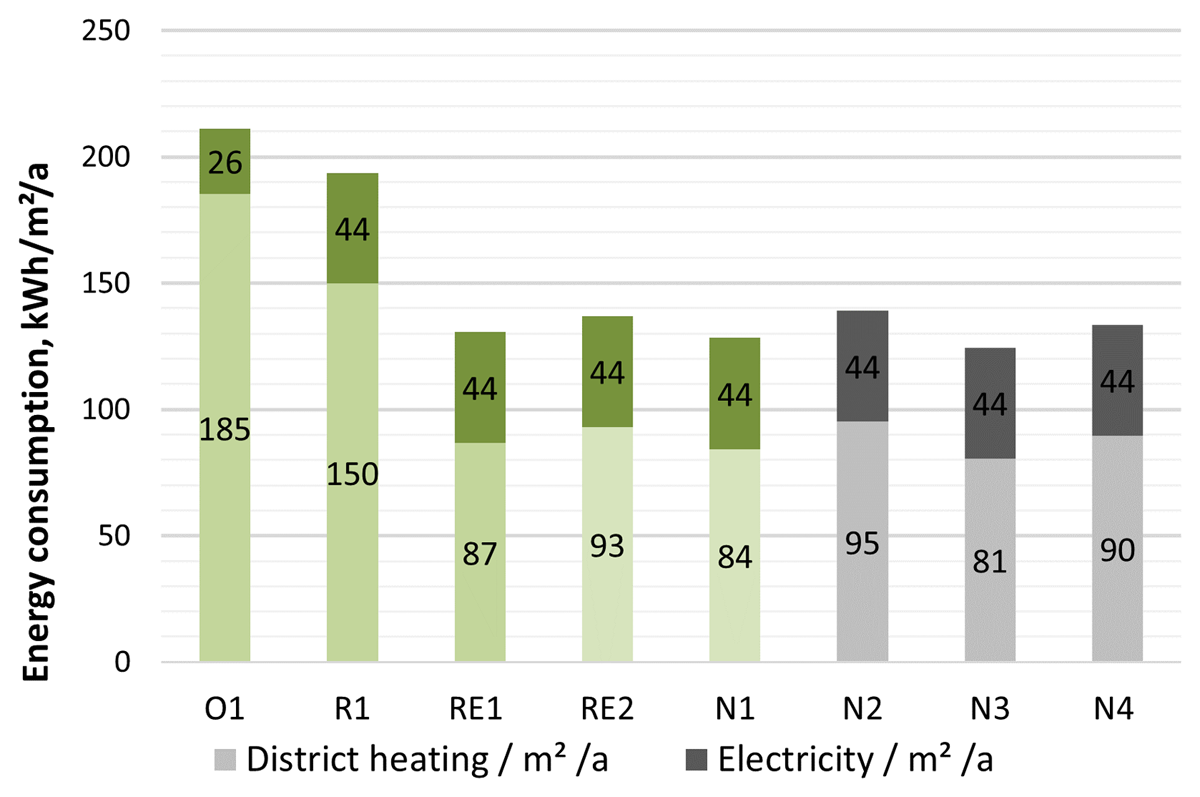
Figure 5
Energy simulation results: input for operational CO2 calculation.
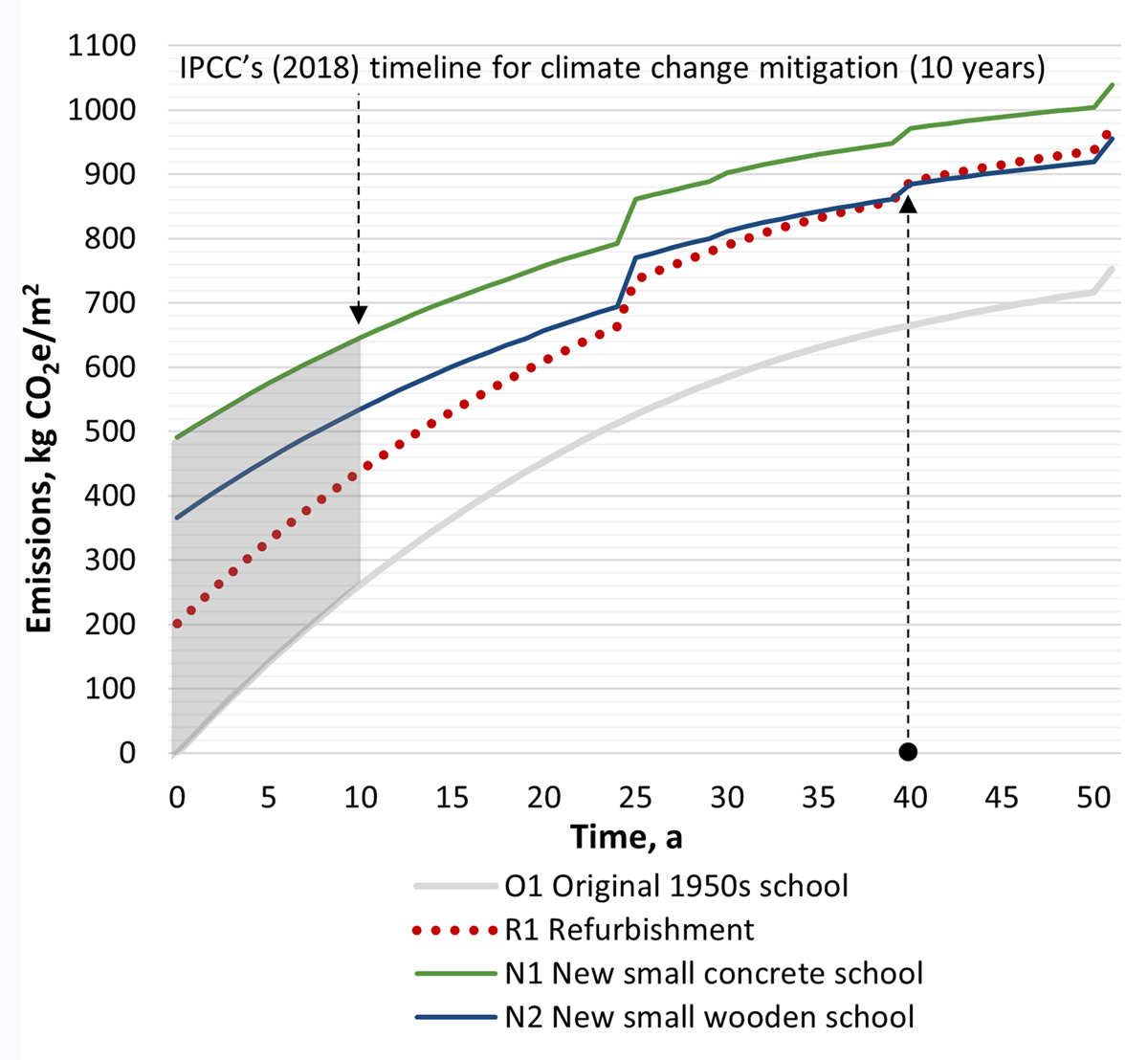
Figure 6
Accumulation of CO2 for the ‘renovate or replace’ scenarios (small schools R1, N1 and N2).
Note: O1 (continued use, no refurbishment) is given only for reference because it is not a realistic scenario. The use of a close-ended time boundary can be seen as the small elevation caused by the C phase for all scenarios at 50 years. It can be omitted for an open-ended time boundary. The energy decarbonisation scenarios are visible in that instead of being straight lines, the curves ‘bend’ downwards. For a sensitivity analysis, see the supplemental data online.
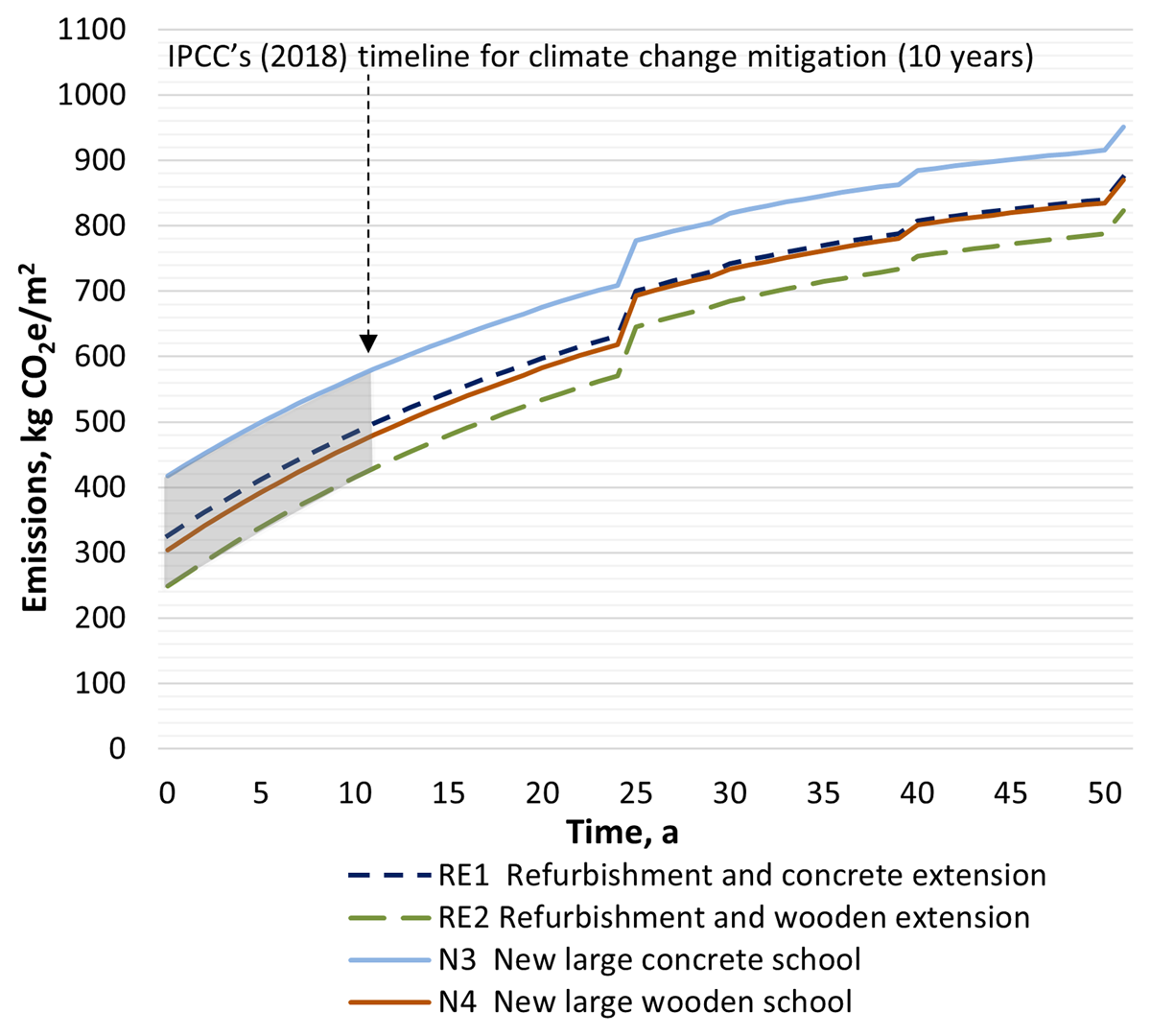
Figure 7
Accumulation of CO2 for the ‘extend or replace’ scenarios (large schools RE1, RE2, N3 and N4).
Note: The carbon spikes during the operation are from building services renewal at year 25 and window and door renewal at year 40, as in the previous case. For a sensitivity analysis, see the supplemental data online.
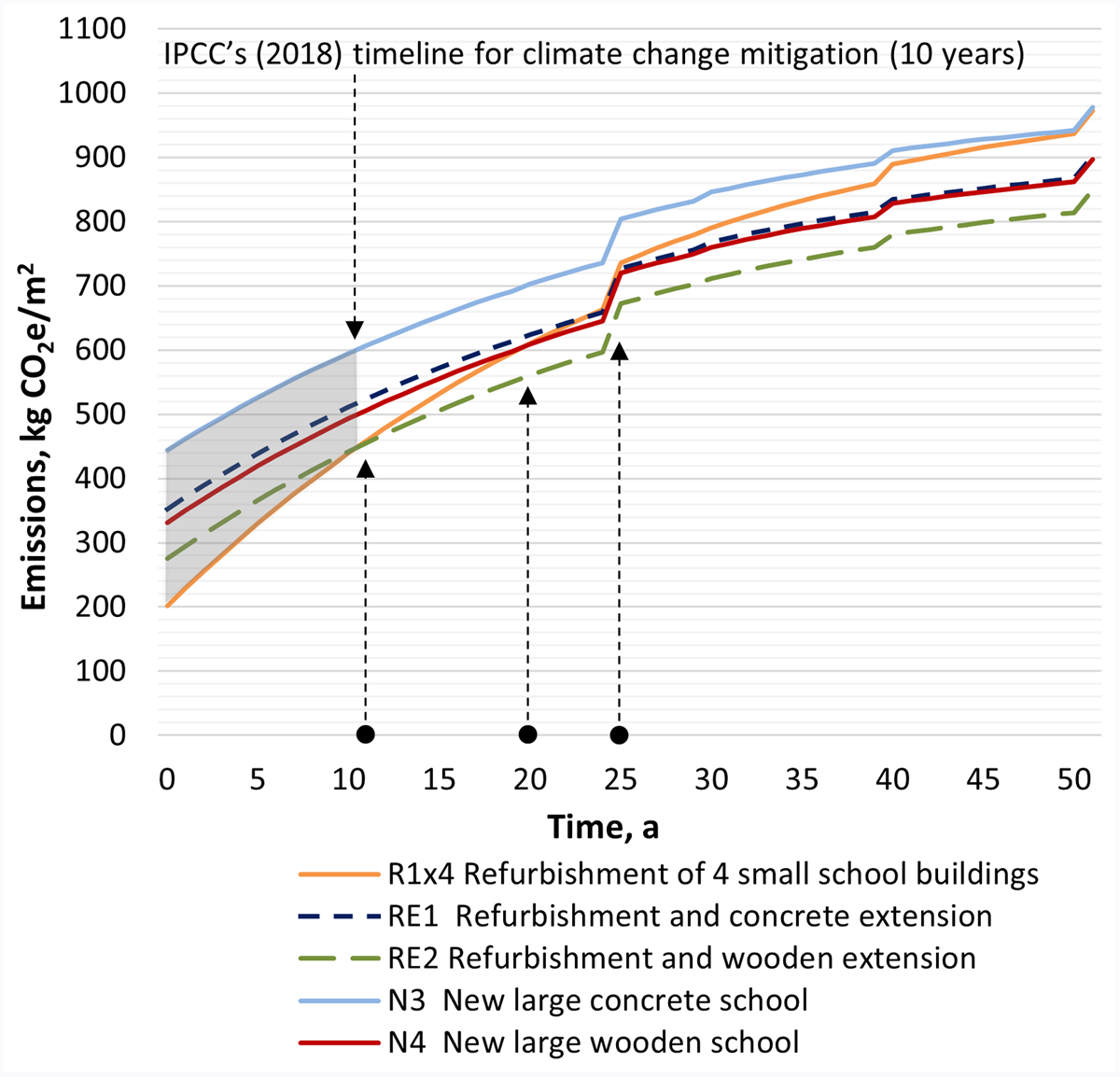
Figure 8
Accumulation of CO2 for the ‘renovate multiple units or combine into one large unit’ scenarios.
Note: In comparison with Figure 6, the scenario of four renovated small schools (R1×4) is new. In addition, CO2 emissions from demolishing four small schools (O1×4) have been added to the new-build scenarios (N3, N4). Respectively, CO2 emissions from demolishing three small schools (O1×3) have been added to the extension scenarios (RE1, RE2). For a sensitivity analysis, see the supplemental data online.