
Figure 1
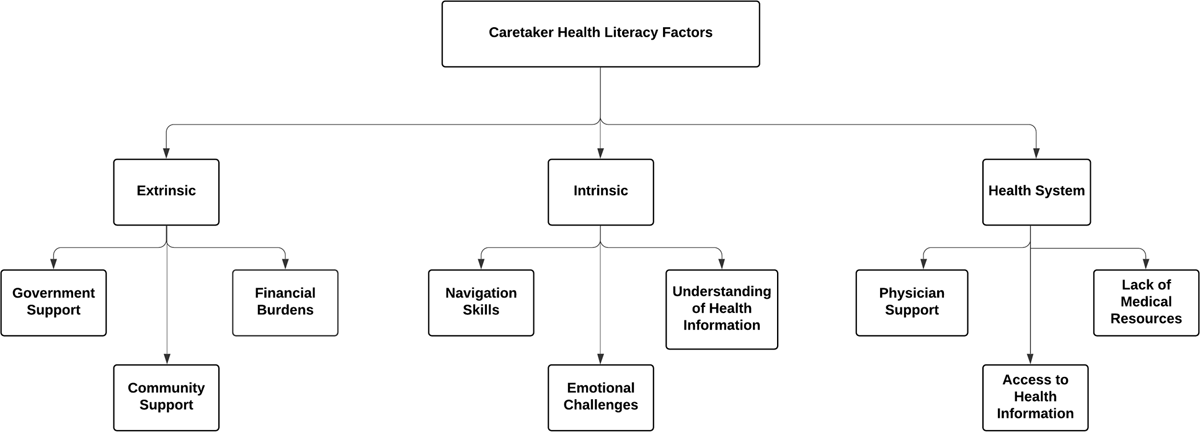
Caretaker health literacy main themes and sub-themes. Overview of all caretaker health literacy factors and their overarching themes. These were analyzed within each of the three delays to care.
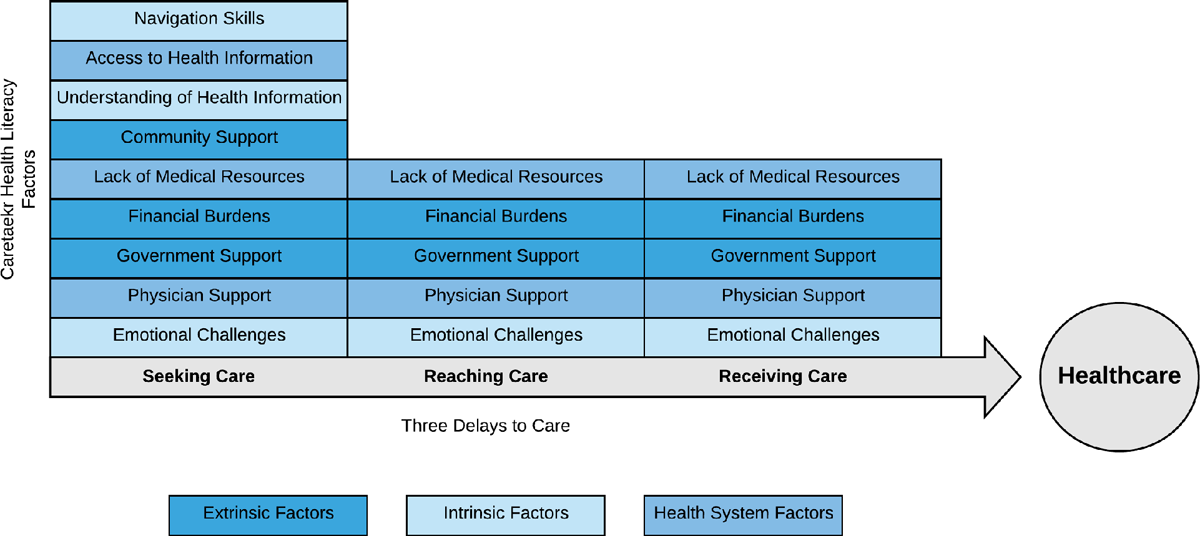
Figure 2
Conceptual framework of the three delays to care and caretaker health literacy factors.
Table 1
Health literacy themes and sub-themes related to seeking care.
| Main Theme | Sub-Theme | Key Examples | % of Caretakers Identifying Sub-Theme* |
|---|---|---|---|
| Extrinsic | Financial Burdens | Buying fuel to transport patient in private cars or ambulances | 33.3 |
| Cost of public transportation | |||
| Initial cost of care in clinics and hospitals | |||
| Community Support | Relying on community members to seek care on behalf of caretakers | 25.9 | |
| Assistance with fundraising for transport | |||
| Government Support | Providing medical services such as ambulances and medical tests at lower costs | 18.5 | |
| Bettering roads and the public transportation system | |||
| Intrinsic | Emotional Challenges | Feeling overwhelmed, scared, tired, and/or confused | 25.9 |
| Navigation Skills | Looking for the hospitals or clinics after the injury | 18.5 | |
| Many referrals from clinic to clinic | |||
| Understanding of Health Information | Patient and caretaker did not know the severity of illness | 0.04 | |
| Health Systems | Access to Information | Lack of knowledge on the injury or patient’s condition | 25.9 |
| Uncertainty regarding where to get help | |||
| Lack of medical personnel to assist and provide information | |||
| Lack of Medical Resources | Poor access to medical facilities and supplies to support caretakers | 22.2 | |
| Physician Support | Physicians did not advise caretakers properly on steps to take | 14.8 | |
| Poor interactions with physicians, e.g., a “trial and error” method of diagnosis |
[i] * Percentage of caretakers shows the number of interviewed participants that mentioned the specific health literacy factors when asked about their experiences when seeking care.
Table 2
Health literacy themes and sub-themes related to reaching care.
| Main Theme | Sub-Theme | Key Examples | % of Caretakers Identifying Sub-Theme* |
|---|---|---|---|
| Extrinsic | Financial Burden | Cost of CT scans, lab tests, and medications | 37.0 |
| Government Support | Subsidized cost of healthcare | 25.9 | |
| Intrinsic | Emotional Challenges | Feeling anxious due to patient’s condition | 0.04 |
| Health Systems | Lack of Medical Resources | Lack of pre-hospital emergency transport | 59.2 |
| Few specialist hospitals | |||
| Physician Support | Poor communication between physicians and caretakers | 22.2 | |
| Physicians urgently attending to patients’ needs | |||
| The need to save a life first before demanding money |
[i] * Percentage of caretakers shows the number of interviewed participants that mentioned the specific health literacy factors when asked about their experiences when reaching care.
Table 3
Health literacy themes and sub-themes related to receiving care.
| Main Theme | Sub-Theme | Key Examples | % of Caretakers Identifying Sub-Theme* |
|---|---|---|---|
| Extrinsic | Financial Burdens | Buying medications and paying hospital bills | 66.6 |
| Lack of medication, surgical equipment and scanning machines in hospitals, which requires transfers and referrals | |||
| Government Support | Need for affordable healthcare | 22.2 | |
| Use taxes paid by citizens to provide adequate healthcare | |||
| Intrinsic | Emotional Challenges | Stress from raising money and navigating the healthcare system | 11.1 |
| Physician Support | Putting the patient first before medical bills | 11.1 | |
| Prescribing expensive drugs and supplies | |||
| Health System | Lack of Medical Resources | Lack of scanning machines, beds and inconvenient visits to pharmacies to buy drugs | 44.4 |
| Physicians don’t have medical resources to work with | |||
| Power outages in operating room |
[i] * Percentage of caretakers shows the number of interviewed participants that mentioned the specific health literacy factors when asked about their experiences when receiving care.