
The excessive weight, defined as accumulation of excess adipose tissue, has been linked to cognitive impairment. The anthropometric tool used to determine normal body weight - Body Mass Index (BMI) is in the range of 18.5 to 25 kg/m2 for normal-weight individuals. Individuals considered to be overweight have the value BMI above 25 kg/m2. The BMI value larger than 30 kg/m2 indicates obesity [1]. Several lines of evidence indicate that increased body weight (above 25 kg/m2) may be associated with decreased cognitive performance levels in learning, memory and executive functions [2–4]. Obesity is also described as one of the factors predisposing to development of dementia and neurodegenerative diseases (e.g. Alzheimer’s disease) [5,6]. The majority of research in humans focuses on the groups of elderly subjects. Cognition impairment in older adults has a variety of possible causes associated prominently with structural and functional changes in the brain (neuronal loss, synaptic degeneration) [7]. The level of cognitive functions decreases as a result of normal ageing process. At the same time, however, there is a negative correlation between BMI and cognitive performance levels observed [8–12]. Relatively limited number of studies addresses the problem of body weight and cognitive function in young people. Previously published data indicate that increases in body weight may be associated with reduced cognitive performance also in young people. For example, it was demonstrated that obese adolescents had slower cognitive processing speeds (compared with normal weight peers) for functions depending on the frontal lobe [13]. Other studies reported that overweight and obese adolescents performed poorly on tests for inhibition, flexibility and decision-making - functions depending on the prefrontal cortex and the anterior cingulate [14]. At the same time, there is very limited research focusing on the impact of body weight on the cognitive performance related to the function of hippocampus in adolescents. The hippocampus is of particular interest because this is a part of the brain where the process of neurogenesis takes place throughout the individual lifetime, but the rate of the process decreases with age. Also, the proliferation and incorporation of local hippocampal stem cells was experimentally related to hippocamp-dependent cognitive functions [15]. In young mammals (including humans) proliferation of precursors and survival of new neuronal cell is maintained at a relatively high level [16]. Therefore, it is of interest to determine whether the excessive body weight in young people is (as in older individuals) associated with the weakened cognitive efficiency, or the possible weight-related cognitive decline is masked by robustness of neurogenesis in cognition-related structures.
The potential mechanism for the effect of increased body mass on the central nervous system is unclear but a growing body of research suggests that being overweight or obese is related to atrophy of certain areas of the brain. Structures of the brain that are particularly sensitive to increases in body weight include temporal and frontal lobes, parietal cortex, hippocampus, cerebellum and midbrain. In obese people, reduction in grey matter volume was observed in these areas [17–19]. Mechanism of obesity-related cognitive dysfunction may be also related to reduced synaptic plasticity in the hippocampus and cerebral cortex [20] or increased neuronal apoptosis in the hippocampus and hypothalamus [21]. Currently, it is accepted that higher levels of adipose tissue lead to increased circulating levels of proinflammatory cytokines such as tumour necrosis factor, C-reactive protein, interleukin 1β, and interleukin-6. These factors may contribute to chronic systematic inflammation and - as a result - accelerate the cognitive decline [22].
The study was conducted in accordance with the Declaration of Helsinki for Human Studies. The study protocol was approved by a local Ethics Committee.
Volunteers (45 males) were recruited from the local high school in Bydgoszcz. The volunteers were divided into two groups, differentiated by body mass index (BMI): overweight (18 males; aged 17 ± 0.18; BMI 26.12 ±0.91), and normal body weight group (27 male; aged 17.12 ± 0.14; BMI 21.55 ± 1.12). Based on surveys, the selected males who lead sedentary lifestyle and did not participate in any sporting activities except physical education lessons. In order to limit the influence of hormonal factors, only boys were qualified for this study. In order to limit the influence of differences in the level of education and socioeconomic background, all volunteers were students from the same school. The selected volunteers were healthy and did not suffer from any chronic conditions.
Body weight status was assessed based on BMI calculated according to the standard formula (weight in kilograms divided by height in square meters). BMI was categorized according to the National Institutes of Health obesity standard: BMI 18.5-24.9 normal weight, BMI 25-29.9 overweigh, BMI 30-34.9 class I obesity [1].
Evaluation of cognitive skills was based on scores from face/name association test. The detailed experimental protocols for these tests were described previously [23]. Shortly, in the acquisition phase of the face/name association test, subjects were exposed to 100 faces -each associated with a single name on a computer screen. Each face/name pair was presented for 2 seconds. After 10 min from the end of acquisition phase the retrieval phase began. During this phase test subjects were presented with the same faces as in acquisition phase but each face was associated with two names, one of which was the same name as in acquisition phase. The task of the subject was to indicate the name associated with the face during acquisition phase. No time limits for retrieval phase were imposed. The percent of correctly associated names, and the duration of the retrieval phase were recorded for each subject.
Statistical significance of the differences between the two groups was assessed using two-tailed T-Test. The results are presented as means with standard deviation. p<0.05 was considered statistically significant.
In the normal body mass group, the average score of face/name association test was 73.53 ± 6.19%. In the overweight group the average score was 66.05 ± 6.7% (Fig. 1A). The difference in the scores between overweight and the normal weight subject was statistically significant, with p<0.005. No statistically significant difference (p<0.5) was observed between the two groups in the duration of the retrieval phase of the test. In the normal weight group, mean retrieval duration equalled 259.82 ± 75.58 seconds and in the overweight group the retrieval duration was 261.87 ± 77.7 (Fig. 1B). We observed a negative relationship between BMI and the scores of face/name association test (p<0.005) (Fig. 2A, 2A).
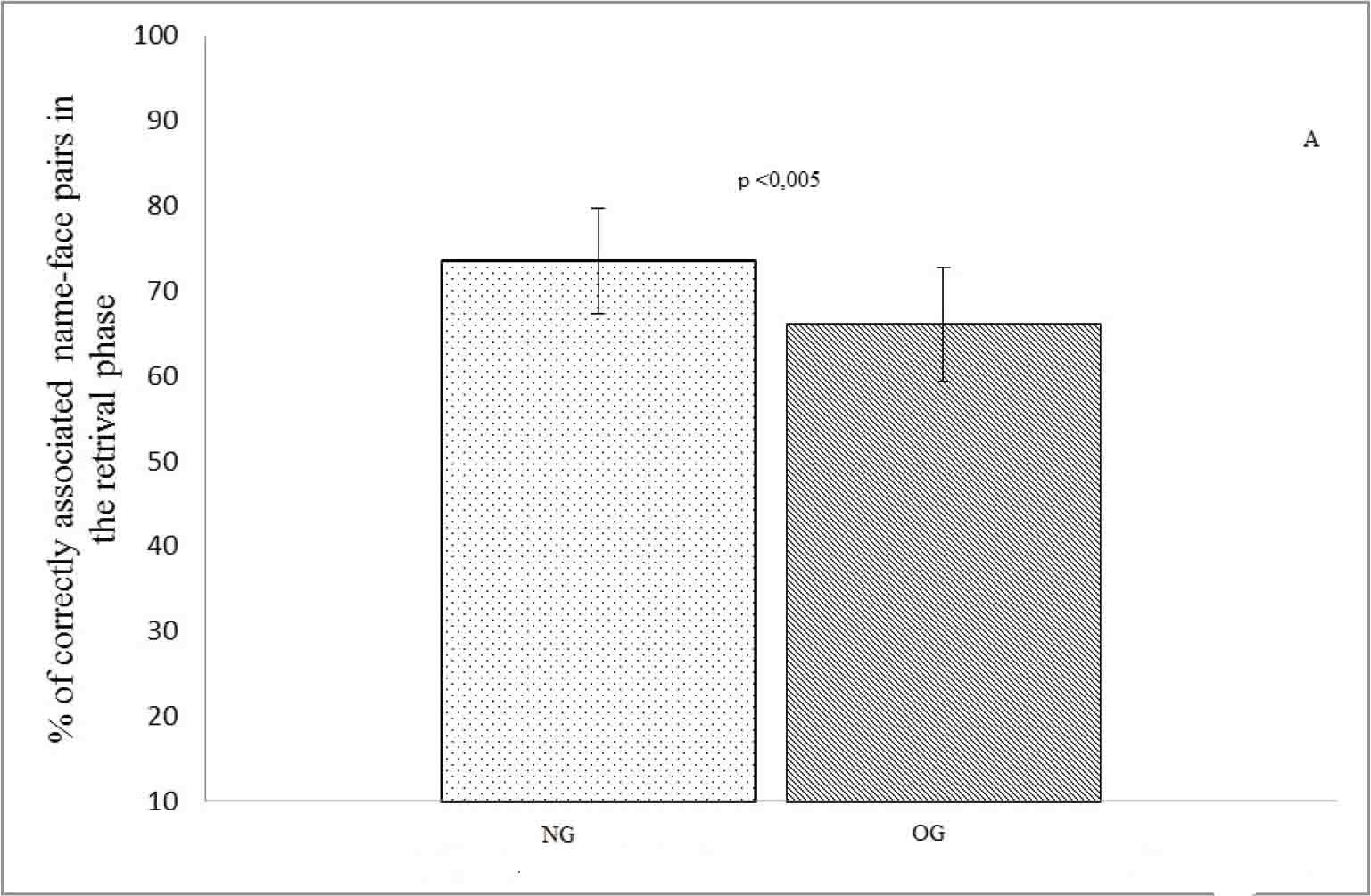
Face/name association test scores in normal weight (NG) and overweight groups (OG). The average percent of correctly associated name-face pairs (± SD), in the retrieval phase
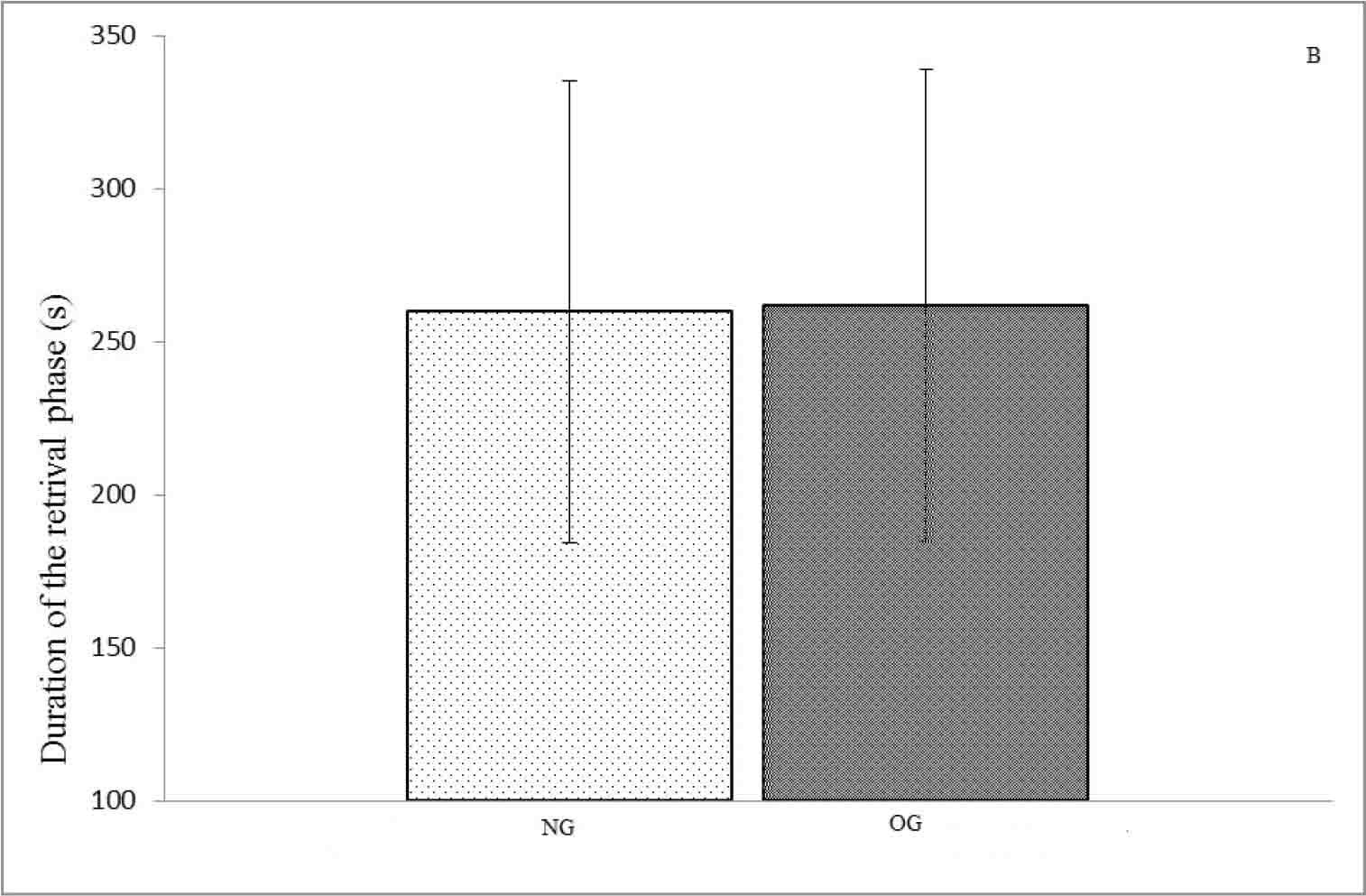
Face/name association test scores in normal weight (NG) and overweight groups (OG). The average duration of the retrieval phase (± SD)
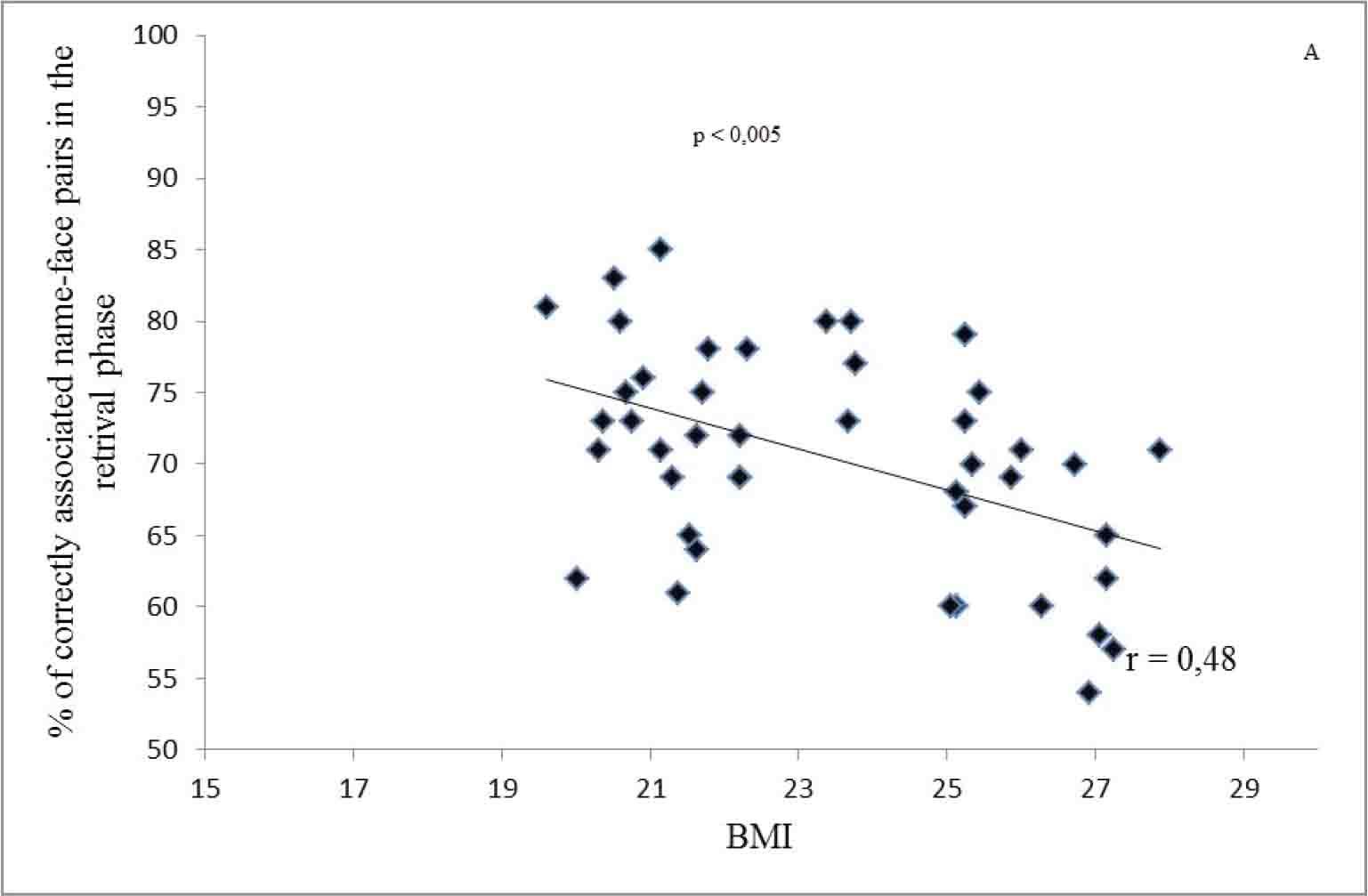
Correlation between BMI and the face/name association test results in normal weight (NG) and overweight group (OG). The % of correctly associated name-face pairs in the retrieval phase
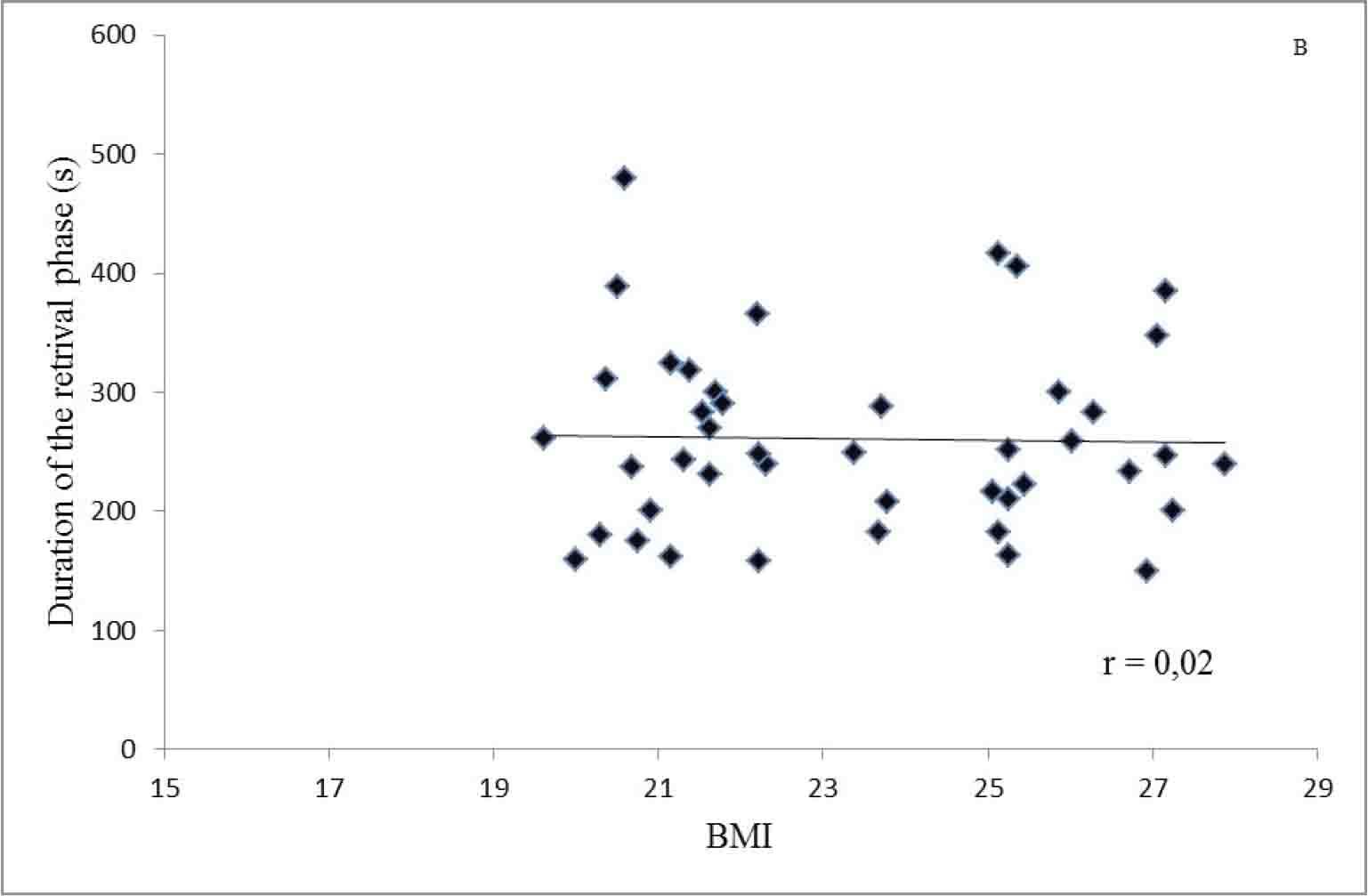
Correlation between BMI and the face/name association test results in normal weight (NG) and overweight group (OG). The duration of the retrieval phase are plotted against individual BMI values
The data presented in this report indicate that there is a dependence between body weight and the efficiency of declarative memory. Our study revealed that people with normal body weight scored higher in the face/name test compared with the overweight subject (p < 0.005). The increased body mass impacted negatively the percent of names correctly associated with faces (r =0.48; p<0.005) but did not result in prolongation of the retrieval phase of the test. The subjects in the experimental group were overweight but not obese. Previous studies have shown only a minor progression of cognitive impairment between overweight and obese subjects (9). These observations suggest that the association between body mass and cognitive performance may be a threshold phenomenon. Even the low levels of excessive body weight may result in significant cognitive decline without significant additional decline associated with further increase in body weight. The distribution of data points in Figure 2A seem to support such a notion but more data is needed in order to reach a conclusive opinion in that matter.
Currently, the relationship between body weight and cognitive function is not fully understood. An increased BMI is associated with many pathophysiological changes with the potential to negatively impact cognitive functioning. For example, in obese people vascular changes, impaired insulin regulation, chronic systemic inflammation are observed [24,25,26]. Furthermore, effect of body weight on cognitive skills may be associated with other factors such as gender, hormone levels, topological distribution of body fat, lifestyle and diet [27]. Participants of this study were young and healthy and therefore we can exclude impact of co-existing illnesses such as hypertension or diabetes on cognitive function [28]. The physical activity of all volunteers was limited to participation in physical education classes at school. Therefore, overweight among some of the participants of the research was not the result of the lack of physical activity. Also, better results in face/name test in the normal weight group could not result just from a positive impact of physical activity on the central nervous system. The observed differences in short-term memory test performance between normal-weight and overweight groups indicated the potential impact of increased body mass on the hippocampus. The main functions of hippocampus are related to the processes controlling learning and memory. Importantly, the MRI studies have demonstrated that the hippocampus is the structure with increased activity during the face-name association test [33,34]. Moreover, hippocampus is indicated as a regulatory part for food motivation, intake and weight regulation [29]. Several lines of evidence indicate that hippocampus is strongly influenced by the level of adiposity. Brain scanning techniques showed that a greater BMI is related to reduced hippocampal in obese male subject [30]. Furthermore, hippocampus is sensitive to adipose-tissue-derived inflammatory cytokines. These cytokines were found to impair synaptic plasticity in the dentate gyrus and CA regions of the hippocampus [31,32].
Our results may be limited in several ways. Firstly, we determined overweight status only by using body mass index measurement. We did not have any background knowledge about fat content and muscle mass, and information regarding obesity duration. Our findings are consistent with the results from other studies which demonstrated lower levels of cognitive performance in overweight and obese young people. The findings are also consistent with limited studies indicating that obesity is associated with memory impairments in young people [12,35,36,37,38]. Similarly, negative hippocampal effects were observed as a result of so-called western diet (high saturated fat foods). It was demonstrated that sustained western diet could lead to alterations in hippocampal functioning. High fat diet may lead to neuroinflammation, reduced neurogenesis and synaptic function impairment in the hippocampus. It also contributes to memory loss and cognitive impairment [39].
Our data demonstrate that the link between increased BMI and the decrease of cognitive performance is prominent even in young individuals. Excessive body mass may be an important factor in the early stages of cognitive dysfunction development. However, more research is needed to elucidate the underlying mechanism for such a relationship.