
Introduction
Sacred groves (SGs) are small forest patches protected by local communities for religious or cultural reasons, often dedicated to deities or spirits, where activities like tree cutting or hunting are traditionally forbidden. These are revered and protected across cultures and continents for centuries, embodying a unique blend of biodiversity conservation, cultural heritage, and spiritual significance. They have been acknowledged by the International Union for the Conservation of Nature as Indigenous and Community Conserved Areas (ICCAs) (IUCN 2009). Usually located around a centre of devotion, the SGs are run by local people e.g., indigenous organizations or local communities who are the guardians of the surrounding forest (Dudley et al., 2010). SGs’ conferred biodiversity protection can thus help to supplement efforts at biodiversity conservation in formally identified protected areas more usually under government or NGO management (Klepeis et al., 2016).
SGs have been reported in diverse regions such as West Africa (Nigeria, Ghana), Southeast Asia (Thailand, Cambodia), and Japan (Shinto forests), in addition to their widespread presence across India. This highlights the global significance of sacred groves as both biodiversity hotspots and cultural landmarks. Sacred groves have often been preserved due to their role in maintaining plant diversity and cultural heritage (Gokhale, 2007; Kufuor & Omari, 2015). Sacred groves in India are most concentrated in regions such as the Western Ghats (Southern zone), the Northeast (e.g., Meghalaya), the Himalayas (North), and Rajasthan (West). This information provides a better understanding of the regional significance of sacred groves across the country (Bawa et al., 2004; Das & Ratha, 2013).
The SGs provide several advantages for nature conservation, such as the preservation of up to 85% of native species richness as refuges for rare and endemic species (Rösch et al., 2015). Other than this, local people can preserve their biodiversity for a long time because of cultural value that lasts for generations (Manna & Roy, 2021). They are also home to variety of medicinal plants (Ma et al., 2022), act as wildlife corridors or buffer zones for protected areas (Ishii et al., 2010), seed dispersal and pollination (Rajasri et al., 2017), erosion control and water resources (Ma et al., 2022).
Some SGs represent remnants of ancient, continuous forests (Scull et al., 2017), whereas others appear to be regenerated forests (Bhagwat et al., 2014). People are diverse and dynamic, and their religions and practices affect management of SGs (Dove et al., 2011). Such as the most widespread historical sites of Eurasian steppes are ‘kurgans’ (ancient burial mounds) which embody important historical, spiritual, cultural, and conservational values (Deák et al., 2019). Thus, SGs represent how humans and environment interact dynamically and are essential for preserving cultural values along with ecological assets across cultures and regions. Other than this, firewood, medicinal or ceremonial plants, and nontimber forest products including fruits and seeds can be found in SGs. They also host prayer, ceremonial, and ancestor worship (Lynch et al., 2018). Stewards of SGs can maintain high habitat quality, limit chronic and acute forest disturbance and facilitate passive restoration (Bhagwat et al., 2014). In India, SGs hold profound ecological and socio-cultural importance, often serving as repositories of traditional knowledge and biological diversity. These groves can range in size from small areas with a few trees to extensive hectares of greenery preserved due to their association with specific deity.
The present study focused on sacred groves (SGs) in Western Haryana, a semi-arid region in northern India with a sub-tropical climate, where forest cover is limited to only 3.53% of the total geographical area (ISFR, 2021). Although SGs are traditionally regarded as well-protected ecosystems, those in this region are increasingly vulnerable to anthropogenic pressures such as urbanization, land-use changes, overharvesting, pollution from religious activities, and expansion of villages into grove areas. The absence of tribal communities, who historically played a key role in safeguarding these groves, has further intensified these threats. Compounding the issue is a decline in traditional conservation practices and cultural values, leading to erosion of local stewardship over these ecologically valuable sites.
Despite their cultural and ecological significance, there is a lack of comprehensive prior ecological assessments. To address this critical gap, a preliminary survey was conducted to create an inventory of sacred groves across the region. Study sites were selected based on their ecological uniqueness, cultural relevance, and accessibility, with the objective of generating data that could inform targeted conservation strategies and support the long-term sustainability of these threatened ecosystems. Hence, the current study was conducted to investigate a total of four SGs from the four different forest ranges of western Haryana for a comprehensive ecological assessment to understand the phytodiversity and soil nutrient profile dynamics.
Materials and methods
Study site
A preliminary survey was conducted across Western Haryana to create an inventory of SGs, marking the first systematic documentation of these ecosystems in the region. Based on the preliminary survey across Western Haryana, four SGs—Bidola, Makrana Johra, Sultanpur, and Dhingsara—were randomly selected, one from each of the Tosham (Bhiwani), Behal (Bhiwani), Hansi (Hisar), and Fatehabad forest ranges, respectively, for in-depth ecological study (Figure 1). This selection method ensured a representative spatial distribution, enabling the generation of region-specific ecological insights while facilitating thorough field investigations.
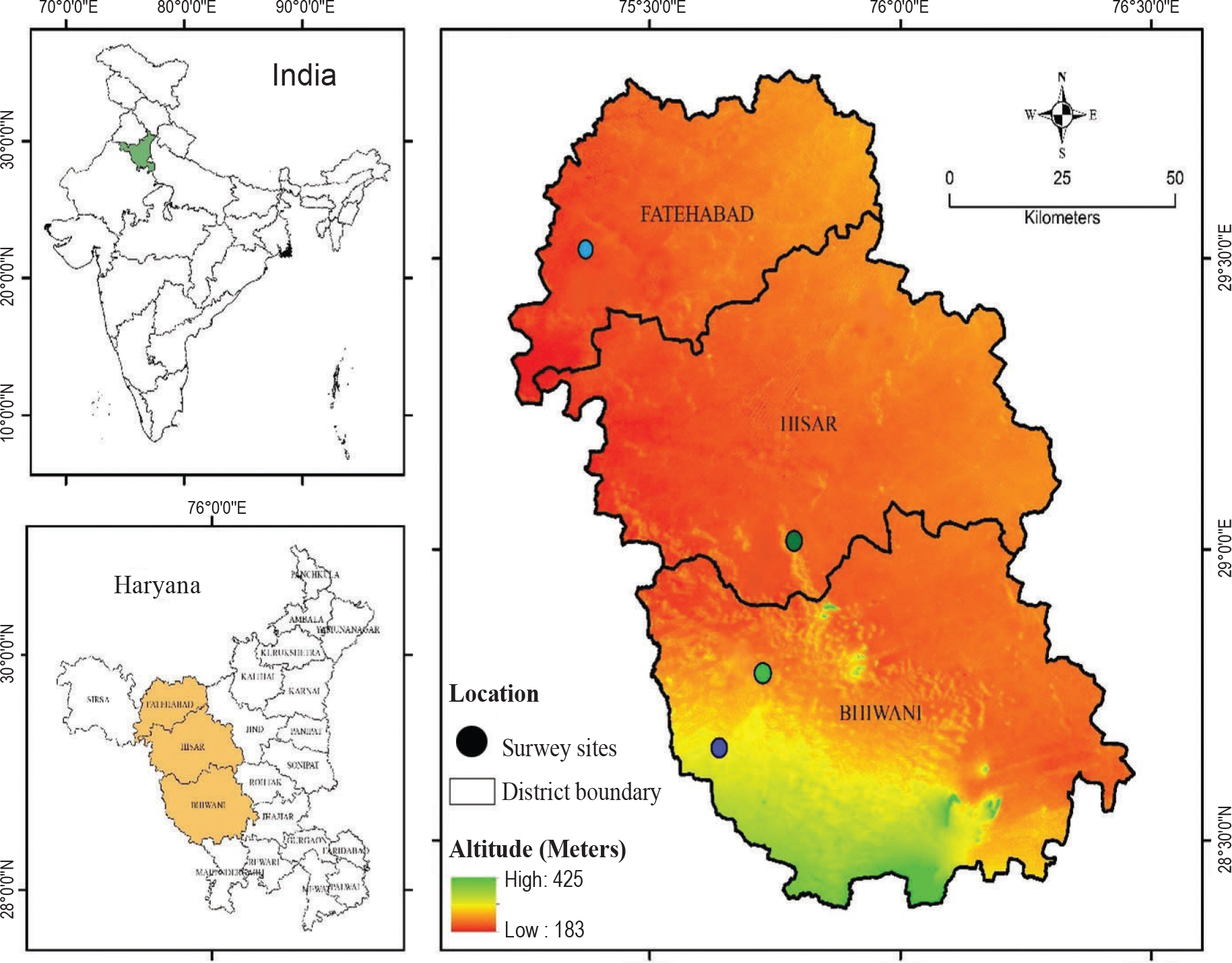
Figure 1:
Map showing the location of Haryana in India and the SGs selected for the present study.
The study focused on sacred groves in the semi-arid region of Western Haryana, characterized by undulating sandy plains and bagar. The Thar Desert, which is situated in close vicinity, significantly influences the semiarid and dry climate of the region. The monsoon season is the one in which most of the annual rainfall in the research region is received. The map of study site and the climograph, are shown in Figure 1 and Figure 2.
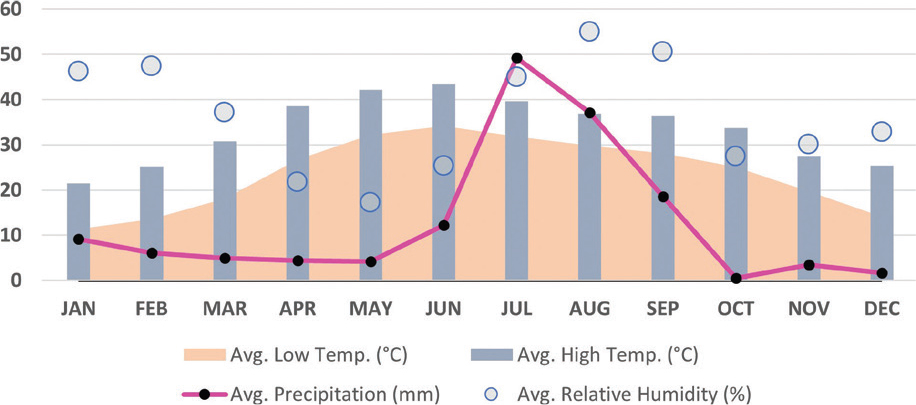
Figure 2:
Climograph of the selected districts of Western Haryana showing mean average temperature, precipitation, and humidity (www.worldweatheronline.com).
Sampling of vegetation and data analysis
For the evaluation of distribution and quantification of phytodiversity, in-depth analyses were required in the study area, so several field visits were performed in the selected SGs. The study specifically utilized the widely recognized and important random quadrate sampling method (Hill, 2005). A total of 60 quadrats were plotted in the selected SGs i.e., 15 quadrats on each SG. Enumeration of trees and climbers was done in the quadrats of size 20×20 m whereas for shrubs and herbs, quadrats of size 5×5m and 1×1 m were used respectively (Cottam & Curtis, 1956). To measure the Circumference at Breast Height during sampling, the tree species girth was noted at 1.37 meters from the ground using measuring tape. For shrubs and climbers, the circumferences were taken at 5 cm from the ground. Whereas the diameter of the herbs was measured just above the ground using Vernier callipers.
Subsequently, the vegetational data was analysed using the phytosociological parameters viz., density (D), frequency (F), abundance (A) and basal area (B.A.) following Misra (1968). The relative values of F, D, and B.A. were calculated after that to obtain the IVI (Important Value Index) value for the encountered plant species following Phillips (1959) and Curtis (1959), using the formula: Important Value Index (IVI) = RF% + RD% + RDo%.
Other than this, to understand the distribution pattern of plant species, Abundance to Frequency ratio (A/F) was estimated following Cottam & Curtis (1956) for each species viz., regular (less than 0.025), random (0.025 to 0.05) and contiguous (more than 0.05). The frequency class distribution pattern was also obtained for the selected SGs to understand the nature (Homogenous or heterogenous) of plant communities occurring in them (Raunkiaer, 1918). Other than this, values of different vegetation indices were calculated for the diversity analysis of the four SGs. For this diversity index (Shannon & Wiener, 1963), dominance index (Simpson, 1949), index of evenness (Pielou, 1966) for species equitability and index for species richness (Margelef, 1958) were deliberated.
The soil samples were collected in the 4 SGs from each quadrat, taken at a depth of 0–30 cm. After removing any big stones, the soil samples were brought to the lab where they were first air dried and sieved (pore size – 2 mm). Using a conductivity meter, the electrical conductivity (EC) and soil pH of a saturated soil paste extract were measured (Rhoades, 1996; Thomas, 1996). Organic Carbon (OC) content of the soil samples was determined following Nelson & Sommers (1996). Soil Nitrogen content (N), Phosphorus content (P), and Potassium content (K) were analysed according to Jackson (1973), Olsen et al. (1954), and Pratt (1965), respectively.
Statistical analysis
Tukey post-hoc analysis was performed on the soil data and a box plot was formed using R program (R 4.4.1). Additionally, the two-tailed Carl-Pearson Coefficient was computed between the various floristic and soil parameters that were determined during the investigation and a heatmap was generated to facilitate comprehension of the correlation using R program (R 4.4.1).
Results and discussion
Phytodiversity
A total of 130 plant species were documented in this study, comprising 21 trees, 12 shrubs, 86 herbs, and 11 climbers, classified across 31 families. The Sultanpur SG exhibited the highest diversity of tree species (13), followed by Makrana Johra (11), Bidola (9), and Dhingsara (8). In terms of herbaceous species, Sultanpur SG also demonstrated the greatest richness, with 47 species recorded, while Makrana Johra SG led in the diversity of shrub (12) and climber species (8). These findings suggest a substantial degree of plant diversity within the region, attributable to the interplay of topographic, edaphic, and physiographic conditions.
The analysis revealed an uneven distribution of species across the encountered families, where approximately half of the species belonged to merely five families, with the remaining species distributed among 26 families. Notably, a significant number of families were represented by only a single species (Figure 3). The family Poaceae was identified as the most dominant, followed in succession by Apocynaceae, Fabaceae, Malvaceae, among others. The predominance of Poaceae aligns with findings by Dhiman et al. (2024) in the lower altitudinal ranges of Morni Hills, Haryana, and in the SG of Midnapore (West Bengal) as reported by Sen & Bhakat (2020), along with Harikesh et al. (2020) in the community forests of Haryana and Garg et al. (2020) in the semi-arid forests of Aravali Hills.
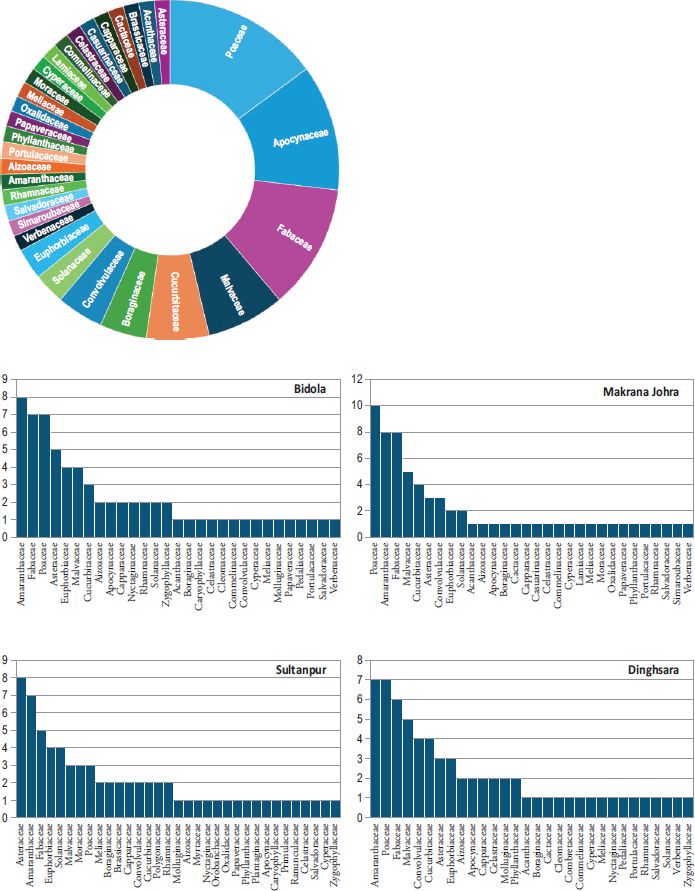
Figure 3:
Proportion of families covering encountered plant species during the present study (left) and graphs comparing the species-family richness in the four SGs (right).
Species-family richness analysis (Figure 3) indicated that Poaceae, Amaranthaceae, and Fabaceae were the most species-rich families in Bidola, Makrana Johra, and Dhingsara SG. Conversely, Sultanpur exhibited a maximum number of species within the Asteraceae family, followed by Amaranthaceae and Fabaceae. The dominance of Asteraceae has been corroborated in studies by Rashid et al. (2021), Dhiman et al. (2021), and Waheed et al. (2022), while Amaranthaceae’s prominence was highlighted by Prakash et al. (2022). This is because of the prevailing disturbances in these ecosystems as the endurance of Asteraceae family to tropical disturbance regimes places plant species belonging to this in an advantageous position to potentially dominate the disturbed ecosystems, also supported by Neto et al. (2017) and Arora et al. (2024).
The Poaceae family is arguably the most successful group of plants, characterized by their widespread presence in angiosperm habitats, ecological dominance, and notable species diversity. Their success can be attributed to several factors: their remarkable ability to colonize and persist in various environments, their effective long-distance dispersal mechanisms, and their ecological adaptability. Additionally, they exhibit tolerance to disturbances and have the capacity to modify ecosystems through processes such as fire and mammalian herbivory (Linder et al., 2017).
The prevalence of Fabaceae plants, following Poaceae, is characterized by their symbiotic nodulated roots and rhizobacteria, which contribute to the enrichment of soil with biologically accessible nitrogen through N2 fixation in the SGs (Singh et al., 2019; Joshi & Garkoti, 2020). Processes such as direct nutrient fixation, the deposition of organic matter from litter fall, root exudation, and rhizosphere aeration foster the activity of mutualistic aerobic microorganisms, thereby enhancing nutrient cycling and expanding the soil nutrient pool (Tang et al., 2018). Nutrient-rich soils facilitate the germination of seeds and saplings, while taxa that are unable to generate their own nutrient islands beneath their canopies rely on nutrients from other nutrient-fixing plants (Joshi & Garkoti, 2020).
The highest frequency of Acacia tortilis was recorded in Bidola, Makrana Johra, and Dhingsara within the tree stratum, while Acacia nilotica was predominantly observed in Sultanpur SG. This variation highlights their distinct niche preferences and ability to establish a presence across different geographic areas. While Bidola, Makrana Johra, and Dhingsara are situated in drier, higher elevations with sandy to loamy soils and lower moisture availability, Sultanpur is situated in a relatively low-lying area with finer alluvial soils and significantly higher soil moisture. The distribution and dominance of tree species are probably influenced by these site-specific differences in edaphic and microclimatic circumstances. Conversely, Capparis decidua exhibited the greatest frequency in Bidola, Sultanpur, and Dhingsara among shrubs, whereas Abutilon indicum was found most frequently in Makrana Johra (Table 1–4). These genera are prevalent in semi-arid zones and have been documented in numerous studies, such as those by Habib et al. (2016), Harikesh et al. (2020), Norman et al. (2024), Adoum (2024), and Arshad et al. (2024).
Additionally, the species distribution curve for the selected sacred groves (SGs) was analyzed using frequency classes (Raunkiaer, 1918; McIntosh, 1962). According to Raunkiaer’s law, species within a community can be classified as either common or rare. Any deviation from the typical J-shaped trajectory of a normal frequency distribution suggests an ecosystem disturbance. Raunkiaer’s normal species occurrence ratio (A > B > C >= D < E) indicates a homogeneous plant community when the frequency aligns with the J-shaped curve. The analysis demonstrates that the sacred groves of Bidola and Dhingsara conformed to Raunkiaer’s law, exhibiting a J-shaped species distribution curve indicative of a homogeneous plant community. In contrast, Makrana Johra and Sultanpur did not follow this pattern, suggesting greater heterogeneity (Figure 4). This observation is supported by Deil et al. (2021), who noted that in their study of the SGs in NW-Morocco, the proximity of sacred sites to intensively used agricultural landscapes in lowland areas correlates with a diminished conservation propensity, thereby indicating ecosystem disturbance.
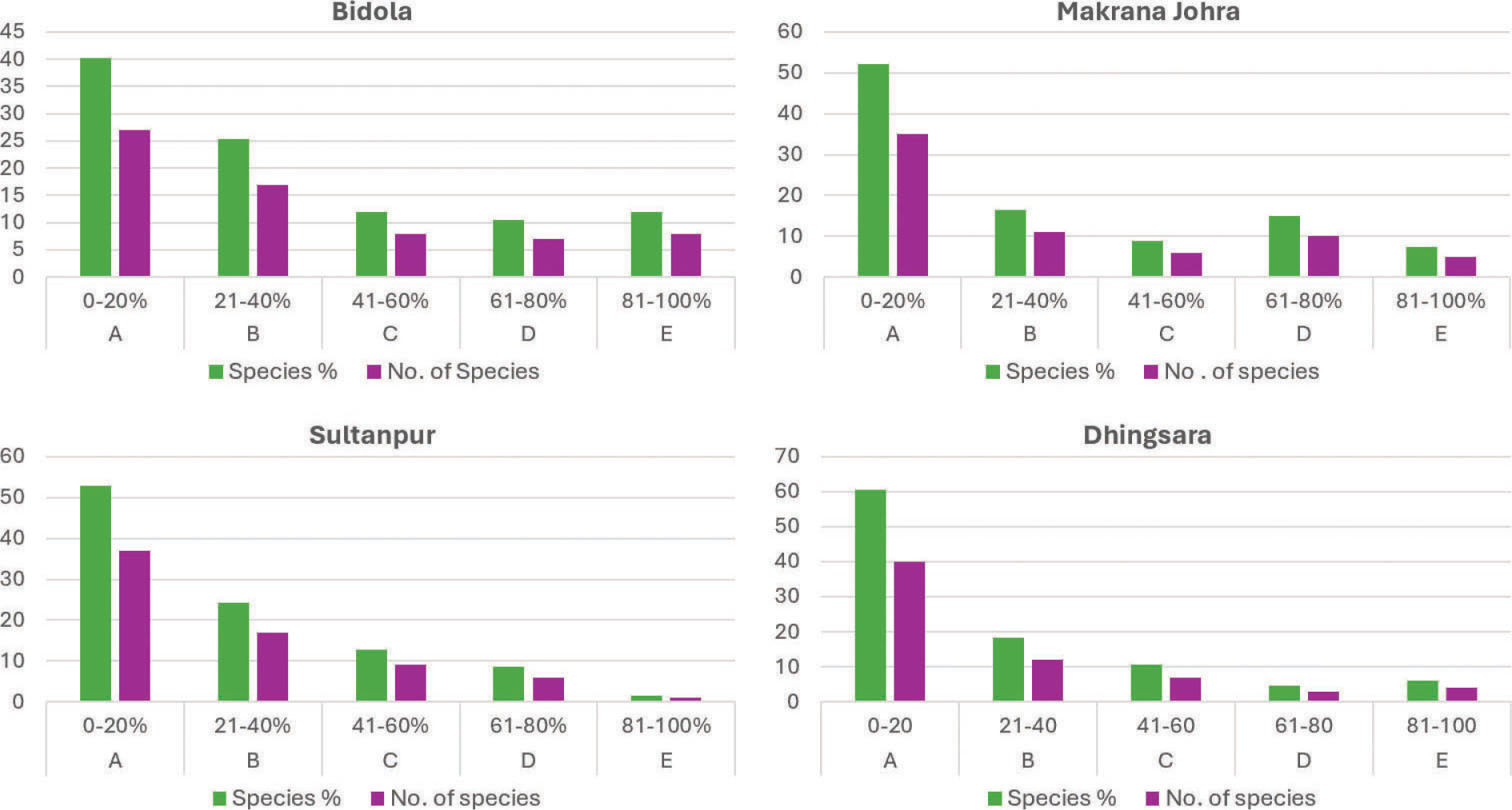
Figure 4:
Frequency class distribution of plant species across the selected SGs.
In the four surveyed study groups (SGs), a considerable variation in species density was observed among trees, shrubs, herbs, and climbers (Figure 5). Notably, Bidola SG demonstrated the highest density across trees, shrubs, and herbs, while Makrana Johra exhibited the greatest stand density for climbers (Tables 1-4, Figure 5). The individual density of tree species ranged from 5 to 432 individuals per hectare (Ind./ha), 5 to 296.7 Ind./ha, 3.33 to 185 Ind./ha, and 3.33 to 743.33 Ind./ha in Bidola, Makrana Johra, Sultanpur, and Dhingsara SGs, respectively. Both Bidola and Dhingsara displayed higher tree densities (1115 Ind./ha and 881.67 Ind./ha, respectively) compared to Makrana Johra and Sultanpur SGs (503.3 Ind./ha and 533.3 Ind./ha, respectively). A higher tree density in Bidola indicates better habitat quality, while reduced densities in other SGs suggest ecological stress or degradation due to the influence of human pressures, such as lopping, trampling, and scraping, also supported by Aakash et al. (2019).
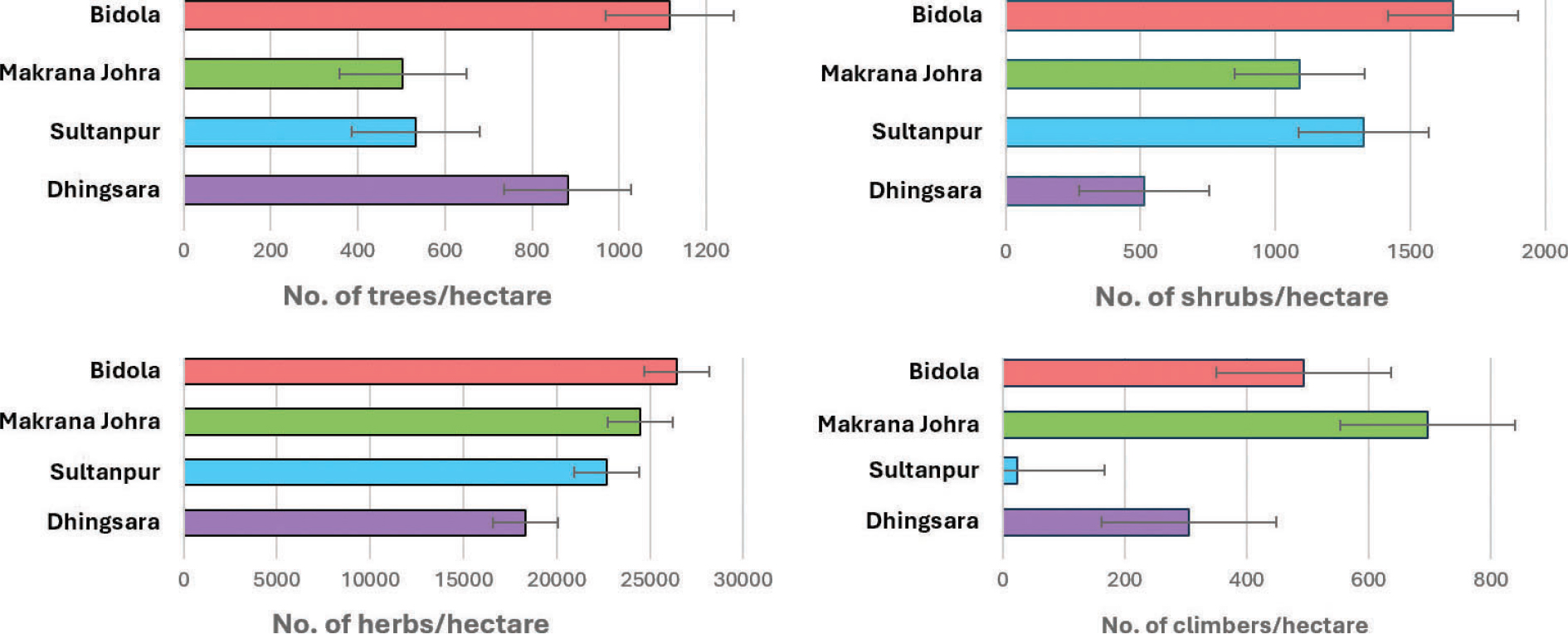
Figure 5:
Stand density (per hectare) of trees, shrubs, herbs and climbers in the four SGs.
In addition to the aforementioned analyses, abundance-to-frequency (A/F) values were calculated for each species across the four study groups (SGs). The present investigation revealed that all plant species conformed to a contiguous distribution pattern, as indicated by an A/F ratio surpassing 0.05. This contiguous distribution of plant species is frequently observed in natural forest ecosystems and has been documented in numerous studies (Kittur et al., 2013; Dhiman et al., 2020; Kumar & Verma, 2024).
Basal area (B.A.) analysis indicated that Sultanpur and Dhingsara exhibit significantly higher tree B.A. values (19.772 m2/ha and 15.507 m2/ha, respectively) compared to Bidola and Makrana Johra SG, which recorded a notably lower B.A. of 7.693 m2/ha (495). The elevated B.A. observed in Sultanpur can be attributed to the presence of tree species characterized by substantial girth classes, including Salvadora oleoides, Ficus benghalensis, and Ficus religiosa, among others. These findings are comparable to those reported by Meena et al. (2016), who observed a B.A. of 26.74 m2/ha in a similar semi-arid forest ecosystem in Delhi, indicating comparable vegetation structure and dominance of large-canopy species. Similarly, Yatar et al. (2024) documented a B.A. of 16.47 m2/ha in a semiarid landscape of Thailand, highlighting the influence of regional climatic conditions and species composition on basal area. The similarity in B.A. values across these studies suggests that structural parameters in semi-arid tree-dominated ecosystems are influenced by common ecological factors such as species traits, anthropogenic pressures, and edaphic conditions.
The Importance Value Index (IVI) is pivotal for understanding the ecological significance of various species, as a high IVI value indicates a species’ dominance within a community (Kashian et al., 2003). This metric serves to quantify the degree of dominance and assess the role and functionality of a species within the plant community structure. In the study area of Bidola, Acacia tortilis emerged as the most prevalent tree species, recording an IVI of 89.096. Conversely, in Makrana Johra and Sultanpur, Salvadora oleoides dominated with IVI values of 132.39 and 98.991, respectively. Additionally, Prosopis juliflora was identified as the most prevalent tree species in Dhingsara SG, with an IVI of 124.94.
Among shrub species, Capparis decidua was prominent across Bidola (131.46), Makrana Johra (105.76), and Dhingsara (135.65), showcasing the highest IVI values. In contrast, Parthenium hysterophorus attained the highest IVI in Sultanpur SG, with a value of 96.392. When examining herbaceous plants, Peristrophe bicalyculata was the most prevalent in Bidola (44.834), Makrana Johra (95.544), and Dhingsara (97.599), whereas Polygonum aviculare contributed to the dominance in Sultanpur SG with an IVI of 27.269. Furthermore, Cucumis callosus exhibited the highest IVI in Bidola (126.08), Makrana Johra (129.65), and Dhingsara (175.72), while Momordica dioca recorded a notable dominance as the climber species in Sultanpur SG, with an IVI of 209.45 (see Table 1–4).
Diversity indices
The selected study sites demonstrated a significant diversity of plant species, as evidenced by the H’ values for the identified vegetation in various study groups (SGs), which ranged from 1.26 to 1.935 for trees, 1.625 to 1.971 for shrubs, and 2.625 to 3.262 for herbaceous plants. Consequently, Sultanpur exhibited the highest level of species diversity. According to Kent & Coker (1992), the H’ value typically ranges between 1.5 and 3.5, seldom exceeding 4.5. An H’ index greater than 3.0 is categorized as high; values between 2.0 and 3.0 are considered medium; those ranging from 1.0 to 2.0 are classified as low; and values below 1.0 are designated as extremely low. Diverse ecosystems are also characterized by a broad spectrum of species populations, each possessing a variety of functional traits that contribute to the sustainability of ecosystem services throughout their lifespans (Himanshi et al., 2021).
Furthermore, Dhingsara SG exhibited the highest mean species dominance (0.142–0.385), suggesting a relatively uneven distribution of a few dominant species compared to other groves in the study. These values are higher than those reported by Dhiman et al. (2020) (0.085–0.252), indicating a potential shift in community structure, possibly due to site-specific disturbances or microclimatic factors. Nevertheless, the values still fall within the broader range observed across subtropical Indian forests (0.03–0.92; Malik & Bhatt, 2016; Singh et al., 2016; Saikia et al., 2017), suggesting that the groves retain natural heterogeneity despite anthropogenic pressures. A lower dominance value typically implies higher diversity, and this was reflected in other groves such as Sultanpur, which also showed greater evenness.
Evenness values, a measure of how evenly individuals are distributed among species, were highest in Sultanpur SG (0.755–0.883). These values are comparable to or slightly higher than those reported in other natural forests – for instance, Sarkar (2016) (0.73–0.85), Dhiman et al. (2020) (0.835-0.944), and Sherafu et al. (2024) (0.87). This high evenness suggests a stable and resilient community structure in Sultanpur SG, where no single species is overly dominant. In contrast, managed or degraded forests often show lower evenness due to dominance by a few stress-tolerant species. Thus, the observed evenness values reaffirm the ecological integrity and conservation value of these groves.
Sultanpur exhibited the highest species richness (0.317 to 4.586) among the selected sacred groves (SGs) in our study. But the Margalef Index values observed are lower than those reported in several other SG studies. For instance, in the sacred groves of Mahendergarh district, Haryana, Margalef Index values ranged between 5.78 and 8.61, indicating higher species richness (Choudhary et al., 2015). In contrast, our findings align more closely with those from community forests in southwest Haryana, where Harikesh et al. (2022) reported Margalef Index values ranging from 0.740 to 3.0146, suggesting comparable species richness under similar semi-arid conditions. The relatively lower species richness in our sites may be due to semi-arid conditions and anthropogenic pressures. However, species-rich groves like Sultanpur enhance regeneration, stabilize microclimate, and improve resilience. These findings underscore the ecological importance of SGs and the need for conservation strategies suited to semi-arid landscapes.
Soil nutrient profile
The selected SGs exhibited a substantial variation in soil nutrient profile, including pH, BD, EC, N, P K and OC (Tukey post-hoc analysis—p < 0.05). The value of soil pH varied from 6 to 6.72, EC – 0.14 to 0.326 dS/m, BD – 1.29 to 1.65 g/cm3, OC – 0.53 to 0.91%, N – 172.1 to 222.5 mg/g and P – 13.25 to 18.8 mg/g and K – 115.2 to 139 mg/g (Figure 7). The soil sample analysis revealed that Makrana Johra contained comparatively high levels of EC, N, P, K and OC. In contrast, Dhingsara SG exhibited elevated pH and soil BD (Figure 7). Whereas Bidola showed least amount of BD and EC. Minimum value of soil pH was observed in Makrana Johra SG. While Dhingsara SG had least amount of N, P, K and OC, as shown in Figure 7. Soil pH affects nutrient uptake as well as plant growth. It measures the acidity and alkalinity of soil samples along with controlling availability of numerous plant nutrients (Singh et al., 2023).
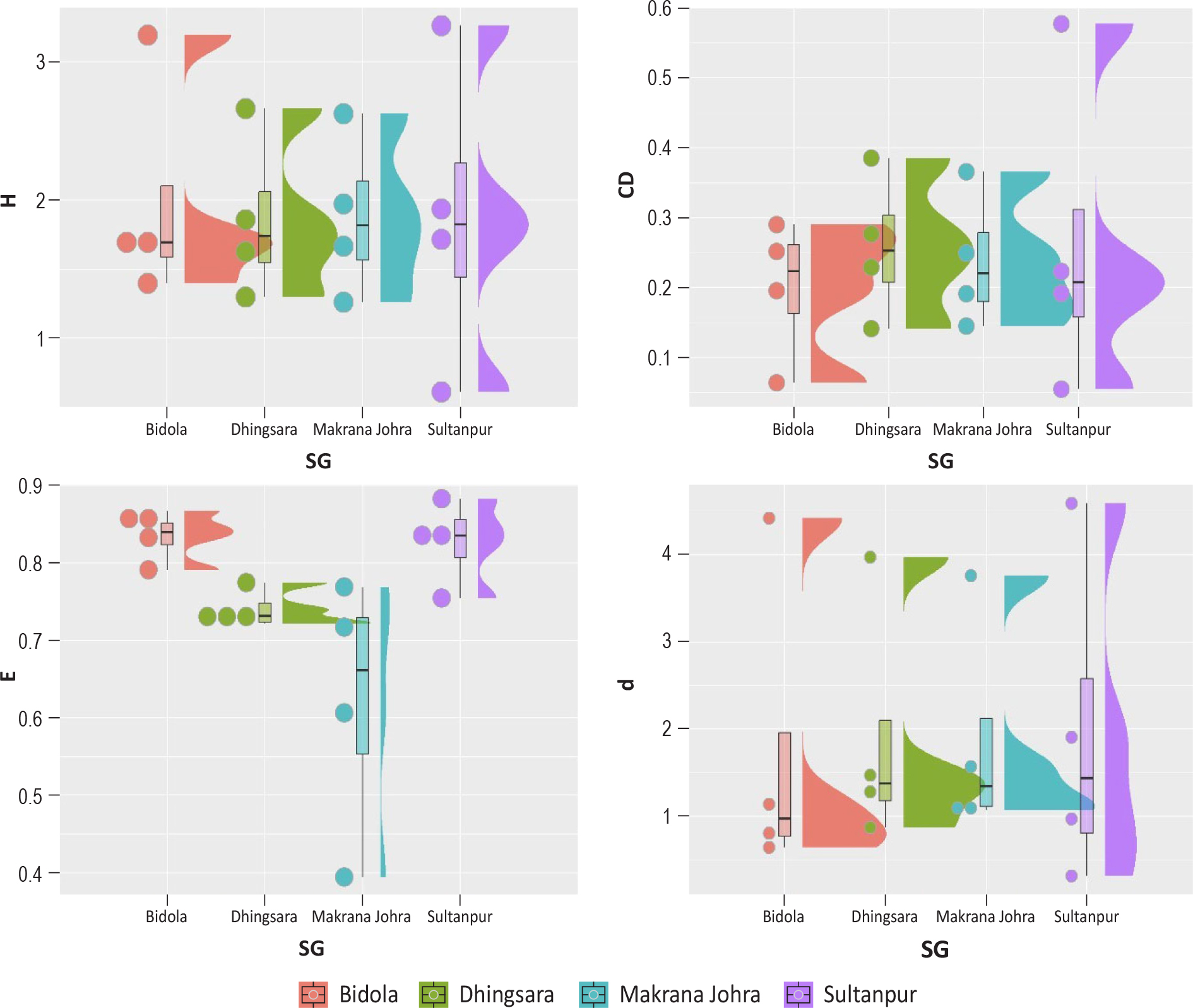
Figure 6:
Raincloud plots representing the values of diversity indices i.e., Shannon Weiner diversity index (H’), Simpson’s concentration of dominance (CD), Pielou index of evenness (E) and Margalef index of species richness (d) in the four SGs.
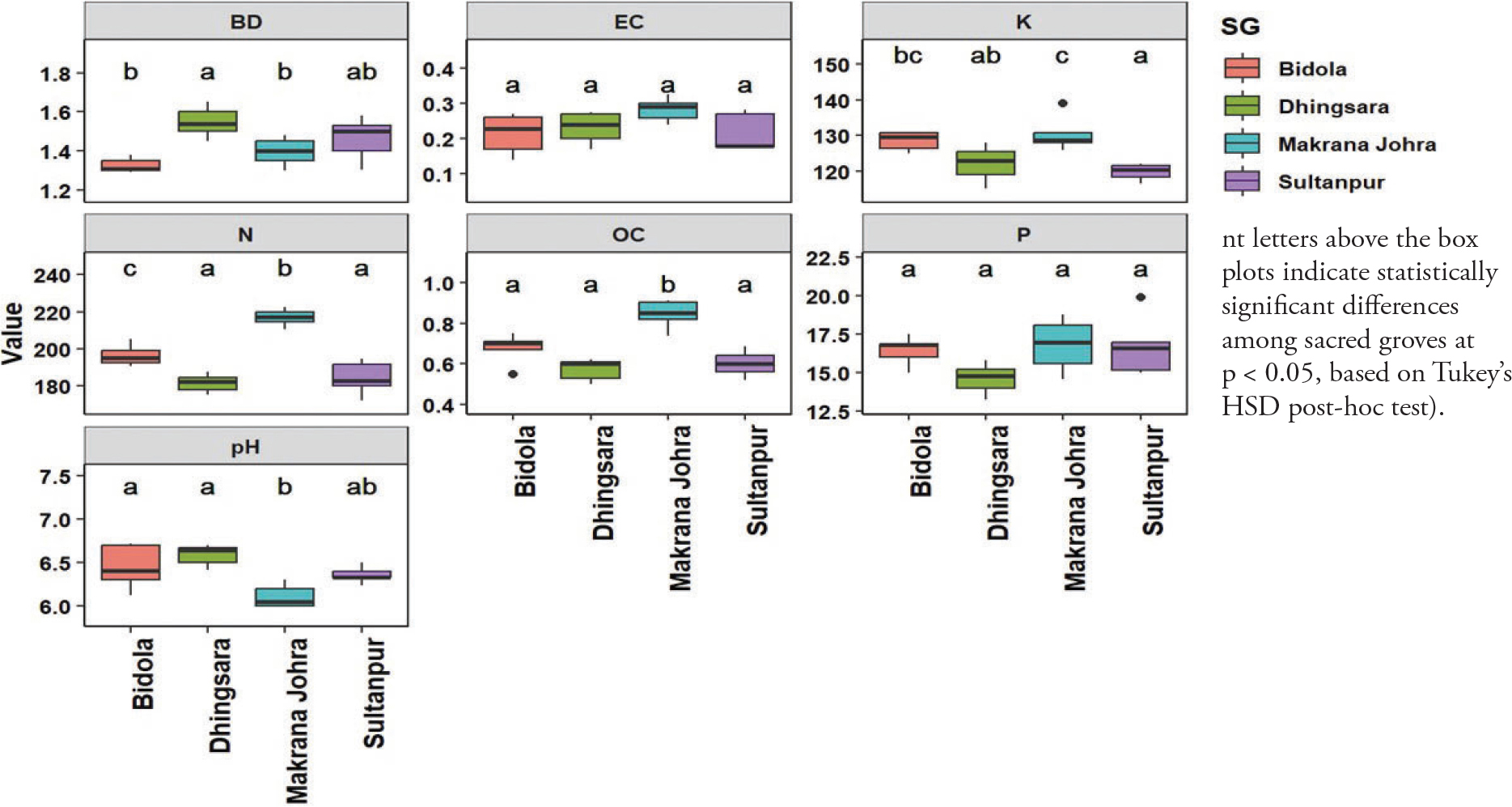
Figure 7:
Boxplot (Tukey post-hoc analysis) showing the comparative analysis of soil properties in selected SGs. Different letters above the box plots indicate statistically significant differences among sacred groves at p < 0.05, based on Tukey’s HSD post-hoc test.
Additionally, the two-tailed Carl-Pearson Coefficient was computed between the various floristic and soil parameters that were determined during the investigation. A heatmap was generated to facilitate comprehension of the correlation using R (Figure 8). The value of species dominance (CD) was negatively correlated with all these parameters, whereas a positive correlation was observed between Frequency (F), Density (D), Abundance (A), Shannon diversity value (H’), Margalef species richness (d), and electrical conductivity (EC). The value of soil Nitrogen (N) was also positively correlated with soil Organic Carbon (OC), Potassium (K), CD, Phosphorus (P), and EC, while it was negatively correlated with species evenness (E), pH, and bulk density (BD). A very small but positive correlation was observed between H’ and K. Akindele et al., (2021) also observed H’ to be positively correlated with K but available P, N contents, pH and OC were not correlated with any of the biodiversity variables. The positive correlation between H’ and EC is also supported by Malik & Haq (2022). But the negative correlation of H’ with OC and N, contrasts with Malik & Haq (2022) who observed it to be positive.
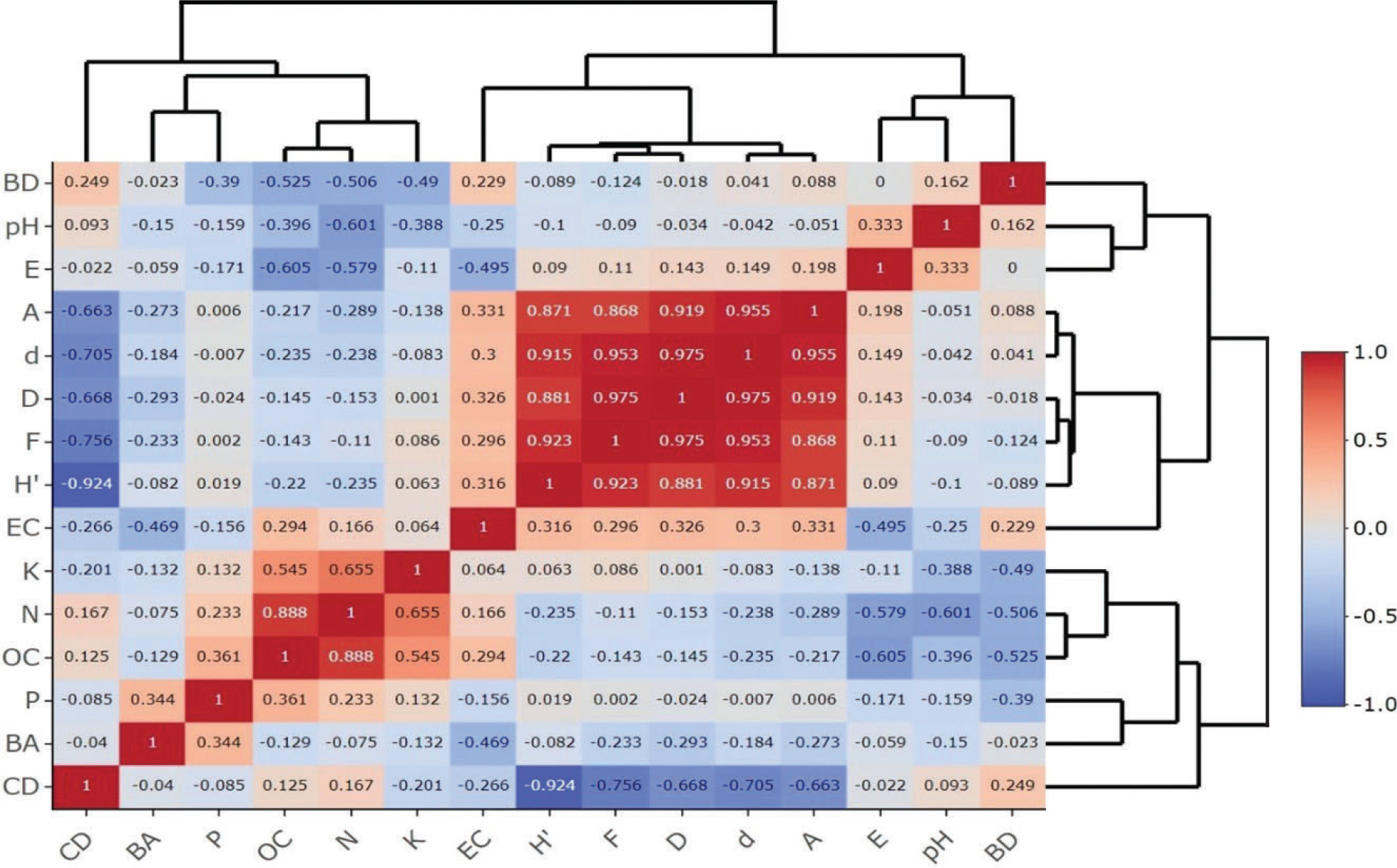
Figure 8:
Correlation of the selected parameters (floristic and edaphic) in the study. F = Frequency; D = Density; A = Abundance, BA = Basal Area; H’ = Shannon Wiener Index; CD = Simpson Index; E = Pielou Index, d = Margalef index, EC = Electrical conductivity, BD = Bulk density, N = Soil Nitrogen content, P = Soil Phosphorus content, K = Soil Potassium content, OC = Soil Organic Carbon.
Previous research has demonstrated that SGs, akin to forest fragments, exhibit high biodiversity and contribute significantly to ecosystem functions such as carbon sequestration (Parthasarathy & Naveen Babu, 2021), nutrient-rich soils (Dar et al., 2019b), improved water quality (Oliveira et al., 2017), groundwater recharge (Iftikhar Hussain et al., 2019), pathogen resistance (Quijas et al., 2010), and control of invasive species (Mace et al., 2019). Our findings support this view, as groves like Sultanpur showed notably high species richness, greater basal area values, and the presence of large-girthed native species such as Salvadora oleoides and Ficus benghalensis, indicating their ecological maturity and carbon storage potential. Additionally, the recorded diversity includes several native, medicinal, and potentially rare or regionally significant species, highlighting the groves’ role as in-situ conservation sites. A decline in floral diversity and species richness, as observed in degraded groves like Makrana Johra, can compromise ecosystem stability and services (Edrisi et al., 2020). Therefore, integrating scientific documentation of such sites with government-led conservation strategies and enhancing public awareness of their ecological and cultural significance is essential for long-term sustainability.
Conclusions
The lack of data on sacred groves (SGs) across various study sites significantly hampers our understanding of their biodiversity-protecting benefits. The findings of the current study reveal that sacred groves in semi-arid Haryana possess rich floristic diversity, with species occupying varied ecological niches and exhibiting wide ecological amplitude, enabling deeper insights into ecosystem dynamics beyond what forest cover alone can provide. However, these ecosystems are vulnerable to biotic disturbances and the impacts of global climate change. Haryana’s sacred groves face significant challenges, including habitat fragmentation, declining conservation practices, loss of local knowledge and inadequate management. They are threatened by encroachment, lack of legal protection, and youth disconnection from cultural traditions.
To ensure their viability, future conservation efforts must include awareness campaigns, legal protections, and biodiversity registers, with active community involvement in decision-making and management. While some sacred groves (SGs) are already under legal protection— either as deemed forests, community-managed lands, or recognized conservation sites—these provisions are often fragmented and inconsistently enforced. In many regions, the current legal status does not adequately prevent encroachment, resource exploitation, or ecological degradation. Moreover, a notable number of sacred groves across the country remain undocumented or lack formal recognition, further increasing their vulnerability. Therefore, it is crucial to initiate systematic identification and documentation of these groves and consider their designation as conservation reserves or community reserves under the Wildlife (Protection) Act, 1972 (Amended 2022). This enhanced legal status would offer structured protection while fostering community stewardship, supporting awareness initiatives, and promoting a conservation model that harmonizes ecological integrity with the preservation of cultural and spiritual values.
Acknowledgements
The authors would like to acknowledge CSIR, New Delhi, for providing financial support (Junior Research Fellowship) to Aman Mahla and the Department of Botany, Maharishi Dayanand University, Rohtak, for providing resources that made this research possible.
Notes
[1] Contributed by Author contributions
Conceptualization, Writing – original draft, methodology, Formal analysis and investigation, Writing – review and editing: [Aman Mahla]; Writing – review and editing, Formal analysis: [Himanshi Dhiman]; Writing - review and editing: [Harikesh Saharan]; Writing – review and editing, Supervision, Validation: [Anita R Sehrawat]
[2] Declarations
[3] Conflicts of interest Conflict of interest: The authors declare that there are no conflicts of interest.
[4] Ethical approval: Not applicable
[5] Informed consent: Not applicable
[6] Research data availability
This material is the authors’ own original work, which has not been previously published elsewhere and has no conflict of interest. The data generated and/or analyzed during the current study are available from the corresponding author upon reasonable request.
Appendix
Table 1:
Analytical characteristics of plant species encountered in Bidola SG.
| S. N. | Name of Plant species | D | F | A | A/F | BA | IVI |
|---|---|---|---|---|---|---|---|
| Trees | |||||||
| 1 | Acacia nilotica | 5 | 10 | 2 | 0.2 | 0.158 | 7.19 |
| 2 | Acacia tortilis | 432.5 | 100 | 17.3 | 0.173 | 0.845 | 89.1 |
| 3 | Azadirachta indica | 5 | 10 | 2 | 0.2 | 0.025 | 4.31 |
| 4 | Balenites aegyptiaca | 17.5 | 10 | 7 | 0.7 | 0.034 | 5.58 |
| 5 | Dalbergia sissoo | 5 | 10 | 2 | 0.2 | 0.195 | 7.99 |
| 6 | Prosopis cineraria | 132.5 | 50 | 10.6 | 0.212 | 1.796 | 67.08 |
| 7 | Prosopis juliflora | 367.5 | 30 | 49 | 1.633 | 0.869 | 60.65 |
| 8 | Salvadora oleoides | 130 | 40 | 13 | 0.325 | 0.361 | 32.41 |
| 9 | Ziziphus jujuba | 20 | 30 | 2.667 | 0.089 | 0.212 | 16.33 |
| Total | 1115 | 105.6 | 4.495 | 300 | |||
| Shrubs | |||||||
| 1 | Abutilon indicum | 332.5 | 60 | 22.17 | 0.369 | 0.0103 | 36.90 |
| 2 | Calotropis procera | 187.5 | 60 | 12.5 | 0.208 | 0.00172 | 26.62 |
| 3 | Capparis decidua | 350 | 90 | 15.56 | 0.173 | 0.49046 | 131.46 |
| 4 | Capparis sepiaria | 32.5 | 20 | 6.5 | 0.325 | 0.01268 | 9.23 |
| 5 | Maytenus emarginata | 82.5 | 70 | 4.714 | 0.067 | 0.00369 | 23.14 |
| 6 | Parthenium hysterophorus | 500 | 40 | 50 | 1.25 | 0.01043 | 42.03 |
| 7 | Ziziphus nummularia | 172.5 | 60 | 11.5 | 0.192 | 0.02906 | 30.61 |
| Total | 1657.5 | 122.9 | 0.55833 | 300 | |||
| Herbs | |||||||
| 1 | Achyranthes aspera | 837.5 | 100 | 33.5 | 0.335 | 0.01478 | 20.52625 |
| 2 | Alternanthera sessilis | 70 | 20 | 14 | 0.7 | 0.00025 | 1.56365 |
| 3 | Alysicarpus vaginalis | 177.5 | 20 | 35.5 | 1.775 | 0.00197 | 3.35079 |
| 4 | Amaranthus palmeri | 17.5 | 20 | 3.5 | 0.175 | 0.00108 | 2.03256 |
| 5 | Amaranthus roxburghianus | 175 | 30 | 23.33 | 0.778 | 0.00168 | 3.65783 |
| 6 | Argemone maxicana | 35 | 20 | 7 | 0.35 | 0.00042 | 1.56828 |
| 7 | Boerhavia diffusa | 412.5 | 90 | 18.33 | 0.204 | 0.00226 | 8.31589 |
| 8 | Boerhavia erecta | 50 | 20 | 10 | 0.5 | 0.00018 | 1.43202 |
| 9 | Cenchrus ciliaris | 350 | 40 | 35 | 0.875 | 0.00105 | 4.36089 |
| 10 | Chenopodium album | 12.5 | 10 | 5 | 0.5 | 0.00014 | 0.70905 |
| 11 | Chenopodium murale | 585 | 80 | 29.25 | 0.366 | 0.00073 | 7.18756 |
| 12 | Cleome viscosa | 5 | 10 | 2 | 0.2 | 0.00014 | 0.68078 |
| 13 | Commelina benghalensis | 622.5 | 90 | 27.67 | 0.307 | 0.0054 | 11.63029 |
| 14 | Corchorus aestuans | 82.5 | 20 | 16.5 | 0.825 | 0.00164 | 2.72751 |
| 15 | Corchorus olitorius | 65 | 30 | 8.667 | 0.289 | 0.00119 | 2.84946 |
| 16 | Croton bonplandianus | 350 | 30 | 46.67 | 1.556 | 0.00146 | 4.14083 |
| 17 | Cyanthillium cinereum | 277.5 | 70 | 15.86 | 0.227 | 0.00712 | 10.61259 |
| 18 | Cynodon dactylon | 8160 | 100 | 326.4 | 3.264 | 0.00453 | 39.89737 |
| 19 | Cyperus rotundus | 1125 | 40 | 112.5 | 2.813 | 0.00069 | 6.99343 |
| 20 | Dactyloctenium aegyptium | 752.5 | 50 | 60.2 | 1.204 | 0.00072 | 6.16265 |
| 21 | Digera muricata | 180 | 40 | 18 | 0.45 | 0.00008 | 2.94068 |
| 22 | Digitaris ciliaris | 52.5 | 10 | 21 | 2.1 | 0.00005 | 0.78755 |
| 23 | Eragrostis tenella | 1697.5 | 90 | 75.44 | 0.838 | 0.00083 | 12.01151 |
| 24 | Euphorbia granulata | 412.5 | 50 | 33 | 0.66 | 0.00004 | 4.33453 |
| 25 | Euphorbia hirta | 232.5 | 30 | 31 | 1.033 | 0.00028 | 2.74984 |
| 26 | Euphorbia prostata | 70 | 20 | 14 | 0.7 | 0.00093 | 2.10997 |
| 27 | Evolvulus alsinoides | 105 | 20 | 21 | 1.05 | 0.00002 | 1.51082 |
| 28 | Heliotropium strigosum | 102.5 | 20 | 20.5 | 1.025 | 0.00005 | 1.5255 |
| 29 | Indigofera linnaei | 47.5 | 20 | 9.5 | 0.475 | 0.00015 | 1.39849 |
| 30 | Launaea nudicaulis | 17.5 | 20 | 3.5 | 0.175 | 0.00005 | 1.20505 |
| 31 | Mollugo nudicaulis | 12.5 | 10 | 5 | 0.5 | 0.00001 | 0.60461 |
| 32 | Pedalium murex | 57.5 | 10 | 23 | 2.3 | 0.00157 | 2.02758 |
| 33 | Peristrophe bicalyculata | 2985 | 70 | 170.6 | 2.437 | 0.03687 | 44.72128 |
| 34 | Physalis minima | 30 | 20 | 6 | 0.3 | 0.00014 | 1.32448 |
| 35 | Poa annua | 427.5 | 50 | 34.2 | 0.684 | 0.00207 | 6.02199 |
| 36 | Portulaca pilosa | 105 | 20 | 21 | 1.05 | 0.00029 | 1.72774 |
| 37 | Pupalia lappacia | 712.5 | 80 | 35.63 | 0.445 | 0.01222 | 16.89938 |
| 38 | Setaria viridis | 3810 | 90 | 169.3 | 1.881 | 0.00121 | 20.28098 |
| 39 | Sida cordifolia | 125 | 30 | 16.67 | 0.556 | 0.00044 | 2.4731 |
| 40 | Spergula arvensis | 250 | 20 | 50 | 2.5 | 0.00042 | 2.37884 |
| 41 | Trianthema portulacastrum | 10 | 10 | 4 | 0.4 | 0.00002 | 0.60322 |
| 42 | Tribulus terrestris | 60 | 30 | 8 | 0.267 | 0.00007 | 1.93079 |
| 43 | Verbena officinalis | 185 | 30 | 24.67 | 0.822 | 0.00009 | 2.41811 |
| 44 | Verbesina encelioides | 267.5 | 40 | 26.75 | 0.669 | 0.00956 | 10.88685 |
| 45 | Withania somnifera | 10 | 10 | 4 | 0.4 | 0.00026 | 0.79604 |
| 46 | Xanthium strumarium | 312.5 | 50 | 25 | 0.5 | 0.00779 | 10.18392 |
| 47 | Zaleya pentandra | 85 | 40 | 8.5 | 0.213 | 0.00153 | 3.74747 |
| Total | 26525 | 1710.1 | 0.12447 | 300 | |||
| Climbers | |||||||
| 1 | Cucumis callosus | 145 | 70 | 8.286 | 0.118 | 0.00101 | 137.4887 |
| 2 | Momordica charantia | 55 | 40 | 5.5 | 0.138 | 0.00005 | 35.26089 |
| 3 | Mukia maderspatana | 207.5 | 80 | 10.38 | 0.13 | 0.00019 | 99.35883 |
| 4 | Pergularia daemia | 25 | 20 | 5 | 0.25 | 0.00018 | 27.89157 |
| Total | 432.5 | 29.166 | 0.00143 | 300 |
Table 2:
Analytical characteristics of plant species encountered in Makrana Johra SG.
| S. N. | Name of Plant species | D | F | A | A/F | BA | IVI |
|---|---|---|---|---|---|---|---|
| Trees | |||||||
| 1 | Acacia nilotica | 5 | 6.67 | 3 | 0.45 | 0.274 | 7.4994 |
| 2 | Acacia senegal | 8.33 | 13.3 | 2.5 | 0.19 | 0.738 | 17.137 |
| 3 | Acacia tortilis | 296.7 | 100 | 11.867 | 0.12 | 1.474 | 122.22 |
| 4 | Anogeissus pendula | 3.33 | 6.67 | 2 | 0.3 | 0.174 | 5.8668 |
| 5 | Azadirachta indica | 5 | 6.67 | 3 | 0.45 | 0.0223 | 4.2244 |
| 6 | Pongamia pinnata | 3.33 | 6.67 | 2 | 0.3 | 0.00008 | 3.6046 |
| 7 | Prosopis cineraria | 3.33 | 6.67 | 2 | 0.3 | 0.265 | 7.0532 |
| 8 | Salvadora oleoides | 178.3 | 80 | 8.9167 | 0.11 | 4.744 | 132.39 |
| Total | 503.3 | 35.283 | 7.693 | 300 | |||
| Shrubs | |||||||
| 1 | Abutilon indicum | 255 | 80 | 12.75 | 0.16 | 0.005 | 42.82 |
| 2 | Calotropis procera | 103.3 | 73.3 | 5.6364 | 0.08 | 0.005 | 27.328 |
| 3 | Capparis decidua | 155 | 66.7 | 9.3 | 0.14 | 1.086 | 105.76 |
| 4 | Capparis sepiaria | 10 | 6.67 | 6 | 0.9 | 0.128 | 11.453 |
| 5 | Grewia tenax | 3.333 | 6.67 | 2 | 0.3 | 0.007 | 2.3968 |
| 6 | Gymnosporia senegalensis | 23.33 | 26.7 | 3.5 | 0.13 | 0.119 | 16.814 |
| 7 | Maytenus emarginata | 71.67 | 53.3 | 5.375 | 0.1 | 0.011 | 20.057 |
| 8 | Opuntia dillenii | 15 | 6.67 | 9 | 1.35 | 0.048 | 6.2927 |
| 9 | Parthenium hysterophorus | 408.3 | 46.7 | 35 | 0.75 | 0.024 | 50.285 |
| 10 | Phyllanthus reticulatus | 20 | 20 | 4 | 0.2 | 0.00074 | 6.651 |
| 11 | Solanum incanum | 11.67 | 20 | 2.3333 | 0.12 | 0.00057 | 5.8734 |
| 12 | Ziziphus nummularia | 11.67 | 13.3 | 3.5 | 0.26 | 0.00032 | 4.2688 |
| Total | 1088 | 98.395 | 1.436 | 300 | |||
| Herbs | |||||||
| 1 | Achyranthes aspera | 518.3 | 86.7 | 23.923 | 0.27593 | 0.0043 | 11.09814 |
| 2 | Aerva javanica | 68.33 | 20 | 13.667 | 0.68335 | 0.0019 | 2.89221 |
| 3 | Alternanthera sessilis | 71.67 | 13.3 | 21.5 | 1.61654 | 0.0002 | 1.38994 |
| 4 | Amaranthus spinosus | 51.67 | 26.7 | 7.75 | 0.29026 | 0.0043 | 4.78379 |
| 5 | Boerhavia diffusa | 260 | 80 | 13 | 0.16250 | 0.0018 | 8.04561 |
| 6 | Chenopodium album | 11.67 | 6.67 | 7 | 1.04948 | 0.0002 | 0.67410 |
| 7 | Cleome viscosa | 3.333 | 6.67 | 2 | 0.29985 | 0.0001 | 0.54906 |
| 8 | Commelina benghalensis | 656.7 | 80 | 32.833 | 0.41041 | 0.0050 | 11.64586 |
| 9 | Corchorus olitorius | 356.7 | 73.3 | 19.455 | 0.26542 | 0.0050 | 9.88787 |
| 10 | Croton bonplandianus | 38.33 | 13.3 | 11.5 | 0.86466 | 0.0003 | 1.30901 |
| 11 | Cynodon dactylon | 9065 | 100 | 362.6 | 3.62600 | 0.0055 | 47.59270 |
| 12 | Cyperus rotundus | 165 | 26.7 | 24.75 | 0.92697 | 0.0001 | 2.71134 |
| 13 | Dactyloctenium aegyptium | 281.7 | 26.7 | 42.25 | 1.58240 | 0.0011 | 3.79964 |
| 14 | Digera muricata | 30 | 13.3 | 9 | 0.67669 | 0.0014 | 1.94341 |
| 15 | Digitaria ciliaris | 256.7 | 33.3 | 30.8 | 0.92492 | 0.0003 | 3.69364 |
| 16 | Eragrostis tenella | 1123 | 53.3 | 84.25 | 1.58068 | 0.0002 | 8.61657 |
| 17 | Erigeron bonariensis | 20 | 20 | 4 | 0.20000 | 0.0001 | 1.60290 |
| 18 | Euphorbia granulata | 105 | 20 | 21 | 1.05000 | 0.0000 | 1.91009 |
| 19 | Euphorbia hirta | 48.33 | 13.3 | 14.5 | 1.09023 | 0.0002 | 1.27070 |
| 20 | Evolvulus alsinoides | 11.67 | 6.67 | 7 | 1.04948 | 0.0002 | 0.68625 |
| 21 | Evolvulus nummularius | 35 | 6.67 | 21 | 3.14843 | 0.0000 | 0.64220 |
| 22 | Glinus lotoides | 541.7 | 20 | 108.33 | 5.41650 | 0.0016 | 4.65364 |
| 23 | Heliotropium strigosum | 55 | 13.3 | 16.5 | 1.24060 | 0.0001 | 1.26424 |
| 24 | Indigofera linnaei | 50 | 26.7 | 7.5 | 0.28090 | 0.0001 | 2.24357 |
| 25 | Mollugo nudicaulis | 63.33 | 33.3 | 7.6 | 0.22823 | 0.0003 | 2.88887 |
| 26 | Pedalium murex | 6.667 | 13.3 | 2 | 0.15038 | 0.0003 | 1.19237 |
| 27 | Peristrophe bicalycualta | 4153 | 100 | 166.13 | 1.66130 | 0.1165 | 95.08587 |
| 28 | Perotis indica | 448.3 | 33.3 | 53.8 | 1.61562 | 0.0002 | 4.40616 |
| 29 | Phyllanthus fraternus | 63.33 | 46.7 | 5.4286 | 0.11624 | 0.0003 | 3.86710 |
| 30 | Poa annua | 333.3 | 53.3 | 25 | 0.46904 | 0.0016 | 6.29142 |
| 31 | Portulaca pilosa | 56.67 | 20 | 11.333 | 0.56665 | 0.0002 | 1.79981 |
| 32 | Pupalia lappacia | 433.3 | 80 | 21.667 | 0.27084 | 0.0018 | 8.78697 |
| 33 | Setaria viridis | 5037 | 80 | 251.83 | 3.14788 | 0.0026 | 27.96850 |
| 34 | Sida cordifolia | 10 | 13.3 | 3 | 0.22556 | 0.0001 | 1.06030 |
| 35 | Trianthema portulacastrum | 6.667 | 6.67 | 4 | 0.59970 | 0.00002 | 0.53182 |
| 36 | Tribulus terrestris | 105 | 40 | 10.5 | 0.26250 | 0.0004 | 3.60216 |
| 37 | Triumfetta rhomboidea | 6.667 | 13.3 | 2 | 0.15038 | 0.0001 | 1.07693 |
| 38 | Verbesina encelioides | 11.67 | 6.67 | 7 | 1.04948 | 0.0022 | 1.85880 |
| 39 | Xanthium strumarium | 18.33 | 13.3 | 5.5 | 0.41353 | 0.0042 | 3.60920 |
| 40 | Zaleya pentandra | 6.667 | 13.3 | 2 | 0.15038 | 0.0001 | 1.06709 |
| Total | 24584.7 | 1484.897 | 0.1646 | 300 | |||
| Climbers | |||||||
| 1 | Citrullus colocynthis | 6.667 | 13.3 | 2 | 0.15038 | 0.0001 | 2.150 |
| 2 | Coccinia grandis | 76.67 | 40 | 7.6667 | 0.19167 | 0.0005 | 7.859 |
| 3 | Cucumis callosus | 191.7 | 93.3 | 8.2143 | 0.08804 | 0.0068 | 8.309 |
| 4 | Ipomoea pes-tigridis | 165 | 46.7 | 14.143 | 0.30285 | 0.0008 | 14.447 |
| 5 | Ipomoea triloba | 3.333 | 6.67 | 2 | 0.29985 | 0.0000 | 2.300 |
| 6 | Mukia maderspatana | 95 | 66.7 | 5.7 | 0.08546 | 0.0002 | 5.786 |
| 7 | Pergularia daemia | 53.33 | 33.3 | 6.4 | 0.19219 | 0.0003 | 6.593 |
| Total | 591.7 | 46.124 | 0.0088 | 300 |
Table 3:
Analytical characteristics of plant species encountered in Sultanpur SG.
| S. N. | Name of Plant species | D | F | A | A/F | BA | IVI |
|---|---|---|---|---|---|---|---|
| Trees | |||||||
| 1 | Acacia nilotica | 120 | 80 | 6 | 0.075 | 1.52866 | 50.57 |
| 2 | Acacia tortilis | 185 | 73.333 | 10.1 | 0.138 | 0.30968 | 54.898 |
| 3 | Azadirachta indica | 3.33 | 6.6667 | 2 | 0.3 | 0.00006 | 2.3202 |
| 4 | Ficus beghalensis | 3.33 | 6.6667 | 2 | 0.3 | 0.76699 | 6.199 |
| 5 | Ficus religiosa | 3.33 | 13.333 | 1 | 0.075 | 0.64173 | 7.2604 |
| 6 | Melia azedarach | 6.67 | 13.333 | 2 | 0.15 | 0.0104 | 4.6925 |
| 7 | Mimosa hamata | 11.67 | 6.6667 | 7 | 1.05 | 0.01338 | 3.9501 |
| 8 | Morus alba | 10 | 33.333 | 1.2 | 0.036 | 0.0005 | 10.352 |
| 9 | Prosopis cineraria | 55 | 33.333 | 6.6 | 0.198 | 0.44841 | 21.055 |
| 10 | Prosopis juliflora | 100 | 60 | 6.67 | 0.111 | 0.20382 | 35.035 |
| 11 | Salvadora oleoides | 28.33 | 53.333 | 2.13 | 0.04 | 15.8416 | 98.991 |
| 12 | Syzygium cumini | 3.33 | 6.6667 | 2 | 0.3 | 0.00679 | 2.3543 |
| 13 | Ziziphus jujuba | 3.33 | 6.6667 | 2 | 0.3 | 0.00042 | 2.3221 |
| Total | 533.3 | 50.7 | 19.7725 | 300 | |||
| Shrubs | |||||||
| 1 | Abutilon indicum | 105 | 46.667 | 9 | 0.193 | 0.01554 | 34.855 |
| 2 | Calotropis procera | 121.7 | 46.667 | 10.4 | 0.223 | 0.00139 | 25.132 |
| 3 | Capparis decidua | 113.3 | 66.667 | 6.8 | 0.102 | 0.07721 | 89.714 |
| 4 | Capparis sepiaria | 30 | 26.667 | 4.5 | 0.169 | 0.01074 | 19.106 |
| 5 | Maytenus emarginata | 10 | 6.6667 | 6 | 0.9 | 0.00049 | 3.2597 |
| 6 | Parthenium hysterophorus | 823.3 | 66.667 | 49.4 | 0.741 | 0.01693 | 96.392 |
| 7 | Phyllanthus reticulatus | 73.33 | 13.333 | 22 | 1.65 | 0.00218 | 11.471 |
| 8 | Ziziphus nummularia | 51.67 | 40 | 5.17 | 0.129 | 0.0044 | 20.069 |
| Total | 1328 | 113 | 0.129 | 300 | |||
| Herbs | |||||||
| 1 | Achyranthes aspera | 455 | 73.333 | 24.8 | 0.338 | 0.0326 | 26.339 |
| 2 | Aerva javanica | 105 | 26.667 | 15.8 | 0.591 | 0.00085 | 3.1068 |
| 3 | Alternanthera sessilis | 210 | 13.333 | 63 | 4.725 | 0.00085 | 2.4833 |
| 4 | Amaranthus viridis | 15 | 13.333 | 4.5 | 0.338 | 0.00003 | 1.164 |
| 5 | Anagallis arvensis | 96.67 | 13.333 | 29 | 2.175 | 0.00005 | 1.5344 |
| 6 | Argemone maxicana | 125 | 40 | 12.5 | 0.313 | 0.00375 | 5.9076 |
| 7 | Arnebia hispidissima | 3.333 | 6.6667 | 2 | 0.3 | 0.00031 | 0.7283 |
| 8 | Boerhavia diffusa | 236.7 | 20 | 47.3 | 2.367 | 0.00214 | 3.8685 |
| 9 | Cenchrus ciliaris | 166.7 | 20 | 33.3 | 1.667 | 0.00026 | 2.5006 |
| 10 | Centaurea sp. | 248.3 | 40 | 24.8 | 0.621 | 0.0006 | 4.6741 |
| 11 | Chenopodium album | 195 | 20 | 39 | 1.95 | 0.0003 | 2.6476 |
| 12 | Chenopodium murale | 381.7 | 40 | 38.2 | 0.954 | 0.00394 | 7.1473 |
| 13 | Convolvulus arvensis | 363.3 | 53.333 | 27.3 | 0.511 | 0.00489 | 8.6822 |
| 14 | Coronopus didymus | 1548 | 33.333 | 186 | 5.574 | 0.02425 | 23.201 |
| 15 | Croton bonplandianus | 380 | 66.667 | 22.8 | 0.342 | 0.00503 | 9.9146 |
| 16 | Cyanthillium cinereum | 111.7 | 40 | 11.2 | 0.279 | 0.00029 | 3.8966 |
| 17 | Cynodon dactylon | 4088 | 100 | 164 | 1.635 | 0.00209 | 27.301 |
| 18 | Cyperus rotundus | 483.3 | 26.667 | 72.5 | 2.719 | 0.00098 | 4.8464 |
| 19 | Datura innoxia | 61.67 | 13.333 | 18.5 | 1.388 | 0.00104 | 1.938 |
| 20 | Eclipta alba | 91.67 | 6.6667 | 55 | 8.25 | 0.00033 | 1.1303 |
| 21 | Erigeron canadensis | 188.3 | 20 | 37.7 | 1.883 | 0.00128 | 3.1721 |
| 22 | Euphorbia dracunculoides | 18.33 | 6.6667 | 11 | 1.65 | 0.00015 | 0.7079 |
| 23 | Euphorbia granulata | 518.3 | 60 | 34.6 | 0.576 | 0.00086 | 7.6311 |
| 24 | Euphorbia prostrata | 148.3 | 13.333 | 44.5 | 3.338 | 0.00029 | 1.8965 |
| 25 | Evolvulus nummularius | 308.3 | 6.6667 | 185 | 27.75 | 0.00006 | 1.9332 |
| 26 | Fagonia indica | 6.667 | 6.6667 | 4 | 0.6 | 0.00009 | 0.6205 |
| 27 | Glinus lotoides | 1695 | 46.667 | 145 | 3.113 | 0.01602 | 20.288 |
| 28 | Gnaphalium purpureum | 158.3 | 40 | 15.8 | 0.396 | 0.00107 | 4.5426 |
| 29 | Heliotropium strigosum | 113.3 | 13.333 | 34 | 2.55 | 0.00047 | 1.8482 |
| 30 | Launaea nudicaulis | 121.7 | 46.667 | 10.4 | 0.223 | 0.00141 | 5.1151 |
| 31 | Malvastrum coromandelianum | 141.7 | 6.6667 | 85 | 12.75 | 0.00092 | 1.6861 |
| 32 | Orobanche aegyptiaca | 6.667 | 6.6667 | 4 | 0.6 | 0.00008 | 0.6173 |
| 33 | Oxalis corniculata | 168.3 | 6.6667 | 101 | 15.15 | 0.00101 | 1.8513 |
| 34 | Paspalidium dilatatum | 65 | 6.6667 | 39 | 5.85 | 0.00015 | 0.9104 |
| 35 | Polygonum aviculare | 4282 | 40 | 428 | 10.7 | 0.00915 | 27.269 |
| 36 | Pupalia lappacea | 6.667 | 6.6667 | 4 | 0.6 | 0.0001 | 0.6286 |
| 37 | Ranunculus sceleratus | 3480 | 33.333 | 418 | 12.53 | 0.02525 | 32.274 |
| 38 | Rumex dentatus | 258.3 | 20 | 51.7 | 2.583 | 0.00224 | 4.0205 |
| 39 | Sida cordifolia | 25 | 6.6667 | 15 | 2.25 | 0.00094 | 1.1832 |
| 40 | Sissymbrium irio | 651.7 | 53.333 | 48.9 | 0.916 | 0.00048 | 7.467 |
| 41 | Solanum nigrum | 3.333 | 6.6667 | 2 | 0.3 | 0.00046 | 0.8171 |
| 42 | Solanum virginianum | 88.33 | 20 | 17.7 | 0.883 | 0.00828 | 6.6828 |
| 43 | Sonchus oleraceus | 3.333 | 6.6667 | 2 | 0.3 | 0.00006 | 0.5908 |
| 44 | Spergula arvensis | 233.3 | 26.667 | 35 | 1.313 | 0.00022 | 3.313 |
| 45 | Vernonica anagallis-aquatica | 378.3 | 6.6667 | 227 | 34.05 | 0.0026 | 3.675 |
| 46 | Withania somnifera | 85 | 20 | 17 | 0.85 | 0.01593 | 10.979 |
| 47 | Zaleya pentandra | 176.7 | 33.333 | 21.2 | 0.636 | 0.00317 | 5.2682 |
| Total | 22697 | 2929 | 0.17731 | 300 | |||
| Climbers | |||||||
| 1 | Citrullus colocynthis | 8.333 | 6.6667 | 5 | 0.75 | 0.00005 | 90.886 |
| 2 | Momordica dioica | 15 | 13.333 | 4.5 | 0.338 | 0.00019 | 209.45 |
| Total | 23.333 | 9.5 | 0.00024 | 300 |
Table 4:
Analytical characteristics of plant species encountered in Dhingsara SG.
| S. N. | Name of Plant species | D | F | A | A/F | BA | IVI |
|---|---|---|---|---|---|---|---|
| Trees | |||||||
| 1 | Ailanthus excelsa | 11.667 | 13.33 | 3.5 | 0.26 | 0.703 | 10.735 |
| 2 | Acacia leucophloea | 10 | 6.667 | 6 | 0.9 | 0.686 | 7.9981 |
| 3 | Acacia nilotica | 21.667 | 46.67 | 1.857 | 0.04 | 0.748 | 24.354 |
| 4 | Acacia tortilis | 58.333 | 53.33 | 4.375 | 0.08 | 1.875 | 38.222 |
| 5 | Azadirachta indica | 6.6667 | 20 | 1.333 | 0.07 | 0.599 | 11.937 |
| 6 | Casuarina equisetifolia | 3.3333 | 6.667 | 2 | 0.3 | 0.357 | 5.1201 |
| 7 | Dalbergia sissoo | 3.3333 | 6.667 | 2 | 0.3 | 0.363 | 5.1599 |
| 8 | Ficus religiosa | 6.6667 | 13.33 | 2 | 0.15 | 1.802 | 17.254 |
| 9 | Prosopis cineraria | 3.3333 | 13.33 | 1 | 0.08 | 0.25 | 6.8664 |
| 10 | Prosopis juliflora | 743.33 | 60 | 49.56 | 0.83 | 2.891 | 124.94 |
| 11 | Salvadora oleoides | 13.333 | 33.33 | 1.6 | 0.05 | 5.226 | 47.409 |
| Total | 881.67 | 75.22 | 15.507 | 300 | |||
| Shrubs | |||||||
| 1 | Abutilon indicum | 61.667 | 40 | 6.167 | 0.15 | 0.00359 | 32.573 |
| 2 | Calotropis procera | 6.6667 | 13.33 | 2 | 0.15 | 0.00089 | 8.0534 |
| 3 | Capparis decidua | 118.33 | 60 | 7.889 | 0.13 | 0.24119 | 135.65 |
| 4 | Grewia tenax | 3.3333 | 6.667 | 2 | 0.3 | 0.00767 | 6.5329 |
| 5 | Maytenus emarginata | 21.667 | 20 | 4.333 | 0.22 | 0.00138 | 14.363 |
| 6 | Opuntia dillenii | 23.333 | 6.667 | 14 | 2.1 | 0.01189 | 11.88 |
| 7 | Parthenium hysterophorus | 248.33 | 26.67 | 37.25 | 1.4 | 0.01951 | 67.891 |
| 8 | Phyllanthus reticulatus | 28.333 | 26.67 | 4.25 | 0.16 | 0.00009 | 18.436 |
| 9 | Ziziphus nummularia | 3.3333 | 6.667 | 2 | 0.3 | 0.00215 | 4.6186 |
| Total | 515 | 79.89 | 0.28836 | 300 | |||
| Herbs | |||||||
| 1 | Achyranthes aspera | 548.33 | 73.33 | 29.91 | 0.41 | 0.00256 | 11.194 |
| 2 | Aerva javanica | 46.667 | 33.33 | 5.6 | 0.17 | 0.00317 | 5.5104 |
| 3 | Alternanthera pungens | 5 | 6.667 | 3 | 0.45 | 0.00007 | 0.6483 |
| 4 | Alternanthera sessilis | 41.667 | 6.667 | 25 | 3.75 | 0.00024 | 0.9805 |
| 5 | Anisomeles indica | 16.667 | 13.33 | 5 | 0.38 | 0.00026 | 1.4229 |
| 6 | Argemone maxicana | 5 | 6.667 | 3 | 0.45 | 0.00021 | 0.7525 |
| 7 | Cenchrus biflorus | 118.33 | 26.67 | 17.75 | 0.67 | 0.00114 | 3.7877 |
| 8 | Cenchrus ciliarias | 41.667 | 6.667 | 25 | 3.75 | 0.00006 | 0.8407 |
| 9 | Chenopodium album | 75 | 33.33 | 9 | 0.27 | 0.00022 | 3.4147 |
| 10 | Chenopodium murale | 60 | 13.33 | 18 | 1.35 | 0.00005 | 1.5024 |
| 11 | Commelina benghalensis | 435 | 33.33 | 52.2 | 1.57 | 0.01063 | 13.312 |
| 12 | Convolvulus prostratus | 16.667 | 13.33 | 5 | 0.38 | 0.00003 | 1.2536 |
| 13 | Corchorus aestuans | 15 | 13.33 | 4.5 | 0.34 | 0.00012 | 1.3111 |
| 14 | Croton bonplandianus | 601.67 | 73.33 | 32.82 | 0.45 | 0.01054 | 17.568 |
| 15 | Cynodon dactylon | 5651.7 | 100 | 226.1 | 2.26 | 0.00321 | 41.852 |
| 16 | Cyperus rotundus | 88.333 | 13.33 | 26.5 | 1.99 | 0.00043 | 1.9458 |
| 17 | Dactyloctenium aegyptium | 1153.3 | 86.67 | 53.23 | 0.61 | 0.00419 | 16.882 |
| 18 | Digera muricata | 523.33 | 80 | 26.17 | 0.33 | 0.00119 | 10.584 |
| 19 | Digitaria ciliaris | 465 | 53.33 | 34.88 | 0.65 | 0.00053 | 7.4898 |
| 20 | Echinochloa crus-galli | 251.67 | 40 | 25.17 | 0.63 | 0.00705 | 10.158 |
| 21 | Eragrostis tenella | 731.67 | 53.33 | 54.88 | 1.03 | 0.0003 | 8.7709 |
| 22 | Erigeron bonariensis | 18.333 | 6.667 | 11 | 1.65 | 0.00007 | 0.7235 |
| 23 | Euphorbia granualata | 240 | 26.67 | 36 | 1.35 | 0.00002 | 3.6018 |
| 24 | Heliotropium strigosum | 23.333 | 13.33 | 7 | 0.53 | 0.00013 | 1.3665 |
| 25 | Indigofera linnaei | 16.667 | 6.667 | 10 | 1.5 | 0.00008 | 0.7168 |
| 26 | Oxalis corniculata | 38.333 | 6.667 | 23 | 3.45 | 0.00001 | 0.7808 |
| 27 | Paspalidium flavidum | 21.667 | 6.667 | 13 | 1.95 | 0.00003 | 0.7065 |
| 28 | Peristrophe bicalyculata | 6293.3 | 86.67 | 290.5 | 3.35 | 0.07328 | 97.599 |
| 29 | Physalis minima | 46.667 | 20 | 9.333 | 0.47 | 0.00253 | 3.8854 |
| 30 | Poa annua | 16.667 | 6.667 | 10 | 1.5 | 0.0001 | 0.7331 |
| 31 | Portulaca pilosa | 5 | 6.667 | 3 | 0.45 | 0.00001 | 0.6049 |
| 32 | Pupalia lappacea | 190 | 40 | 19 | 0.48 | 0.00108 | 5.271 |
| 33 | Setaria viridis | 130 | 20 | 26 | 1.3 | 0.00009 | 2.4867 |
| 34 | Sida cordifolia | 196.67 | 46.67 | 16.86 | 0.36 | 0.00434 | 8.3613 |
| 35 | Solanum xanthocarpum | 36.667 | 13.33 | 11 | 0.83 | 0.00131 | 2.3375 |
| 36 | Tephrosia purpurea | 68.333 | 20 | 13.67 | 0.68 | 0.00018 | 2.2165 |
| 37 | Trianthema portulacastrum | 15 | 20 | 3 | 0.15 | 0.00022 | 1.9576 |
| 38 | Triumfetta rhomboidea | 31.667 | 20 | 6.333 | 0.32 | 0.00075 | 2.4473 |
| 39 | Verbesina encelioides | 11.667 | 6.667 | 7 | 1.05 | 0.00077 | 1.22 |
| 40 | Xanthium strumarium | 8.3333 | 20 | 1.667 | 0.08 | 0.00007 | 1.8015 |
| Total | 18300 | 1200 | 0.13128 | 300 | |||
| Climbers | |||||||
| 1 | Citrullus colocynthis | 10 | 13.33 | 3 | 0.23 | 0.00044 | 44.47 |
| 2 | Cucumis callosus | 223.33 | 93.33 | 9.571 | 0.1 | 0.00064 | 175.72 |
| 3 | Ipomoea pes-tigridis | 26.667 | 20 | 5.333 | 0.27 | 0.00012 | 29.301 |
| 4 | Merremia aegyptia | 8.3333 | 13.33 | 2.5 | 0.19 | 0.00006 | 15.207 |
| 5 | Momordica diocia | 13.333 | 6.667 | 8 | 1.2 | 0.00003 | 10.231 |
| 6 | Mukia maderspatana | 23.333 | 26.67 | 3.5 | 0.13 | 0.00003 | 25.075 |
| Total | 305 | 31.9 | 0.00132 | 300 |