
Introduction
Differences in altitude are an important factor for biodiversity. They create different ecological zones in which unique flora and fauna develop. In the Himalayas, altitude influences temperature, precipitation and habitat structure, leading to significant differences in species composition and diversity (Bhat et al., 2020). For example, lowland zones (300–500 m) are characterised by warmer temperatures and greater habitat heterogeneity, which favours greater species richness, while mid-altitude zones (500–700 m) have transitional ecosystems with moderate diversity. In contrast, higher altitudes are characterised by harsher climatic conditions and less habitat complexity, resulting in lower species richness (Sharma et al., 2023; Suyal et al., 2021).
Habitat differentiation reinforces these patterns. In Dehradun (India), habitats such as forests, agricultural land, mango plantations and market gardens differ significantly in terms of vegetation structure, microclimate and resource availability, which affect the distribution and abundance of insects. For example, agricultural areas and orchards often have higher insect diversity due to abundant prey and favourable microclimates, whereas forests may have lower diversity due to dense tree canopies and limited understory vegetation (Kunwar et al., 2021). However, urbanisation and habitat fragmentation threaten these ecosystems and lead to a decline in biodiversity, especially for specialised insect species (Hassan et al., 2023). Understanding the interplay between altitude, habitat type and biodiversity is crucial for conservation efforts in this ecologically important region.
The Coccinellidae, commonly known as ladybirds, are a diverse and ecologically important insect family. Nearly 6,000 species have been documented worldwide (Kundoo & Khan, 2017), with 510 species in 79 genera reported in India, including 261 predatory species from 57 genera (Pervez, 2011). Despite this diversity, many Indian species of Coccinellidae are still undescribed, probably due to zoogeographic and climatic differences. Coccinellidae are small beetles (0.8–18 mm) with a wide distribution in habitats such as freshwater, coastal areas, foliage, flowers, roots and decaying material (Honek et al., 2017). Their polymorphic nature makes species identification difficult, but their role in biological control programmes is well documented, especially in the control of pests such as aphids, scale insects and mealybugs (Rondoni et al., 2021). Coccinellidae are important natural predators of agricultural pests, contributing to biological control and reducing the need for chemical pesticides (Obrycki & Kring, 1998). They occupy a key position in food webs, serving as both predators and prey, and their presence is often an indicator of a healthy ecosystem. Their diversity and abundance are influenced by habitat type, altitude and climatic conditions, making them a valuable subject for ecological studies (Hodek & Honek, 1996). However, habitat loss, climate change and pesticide use are increasingly threatening their populations, emphasising the need for research into their distribution and conservation. There is a crucial gap in understanding the diversity of Coccinellidae in the different altitudes and habitats of the Dehradun region.
Dehradun in northern India is globally recognised for its diverse ecosystems, rich biodiversity and unique ethnic communities. The region is home to indigenous groups such as the Vann Gujjars and Pahari, whose traditional ecological knowledge is still under-researched. The Gujjars, a transhumant pastoralist community, migrate seasonally between the Terai Bhabar and the Bugyals in the Himalayas and subsist on buffalo herding (Hassan et al., 2022a). The Pahari, who are mainly engaged in agriculture, have deeply rooted cultural practises and traditional medicinal knowledge (Hassan et al., 2021). Despite their close relationship with the environment, their ethnobiological knowledge, particularly in relation to insect fauna, has not been systematically documented, representing a significant research gap.
To fill these gaps, the present study aims to:
to make a comprehensive assessment of the diversity of Coccinellidae at different altitudes and habitats in the Dehradun region,
to document and analyse the ethnobiological knowledge and practices of the Vann Gujjar and Pahari communities in relation to insects.
By integrating ecological and ethnobiological approaches, this study seeks to improve our understanding of the diversity of the Coccinellidae and its cultural significance, while contributing to the conservation of biodiversity and traditional knowledge in the region.
Materials and Methods
Study area
The present study was conducted in the administrative district of Dehradun in the Indian state of Uttarakhand (Figure 1). Geographically, the region is nestled between the Lesser Himalayas in the north and the Shiwalik Hills in the south, creating a diverse and ecologically rich landscape. Administratively, Dehradun is divided into 8 tehsils (sub-districts) and covers a total area of about 2000 km2 (Gairola, 2022). According to the Indian Forest Department, the forested area of the district covers 1608 km2 and thus makes up a significant part of the region’s land area (Gairola, 2022; Khan, 2013). The climate of Dehradun is classified as humid subtropical and is characterised by pronounced seasonal fluctuations. Winters are cool and dry with temperatures ranging from 3 °C to 20 °C, making them a pleasant time of the year. Summers, on the other hand, are hot and intense with temperatures of up to 42 °C. The monsoon season, which lasts from July to September, brings heavy rainfall to the region and transforms the landscape into a lush, green paradise. These seasonal climatic fluctuations favour rich biodiversity and influence the distribution of species in the different habitats (Malik et al., 2021). The unique geographical and climatic conditions of the region make it an ideal location for biodiversity. The interplay between the Lesser Himalayas, the Shiwalik Hills and the Doon Valley creates a mosaic of habitats, including forests, agricultural land, orchards and urban areas, each harbouring distinct ecological community.
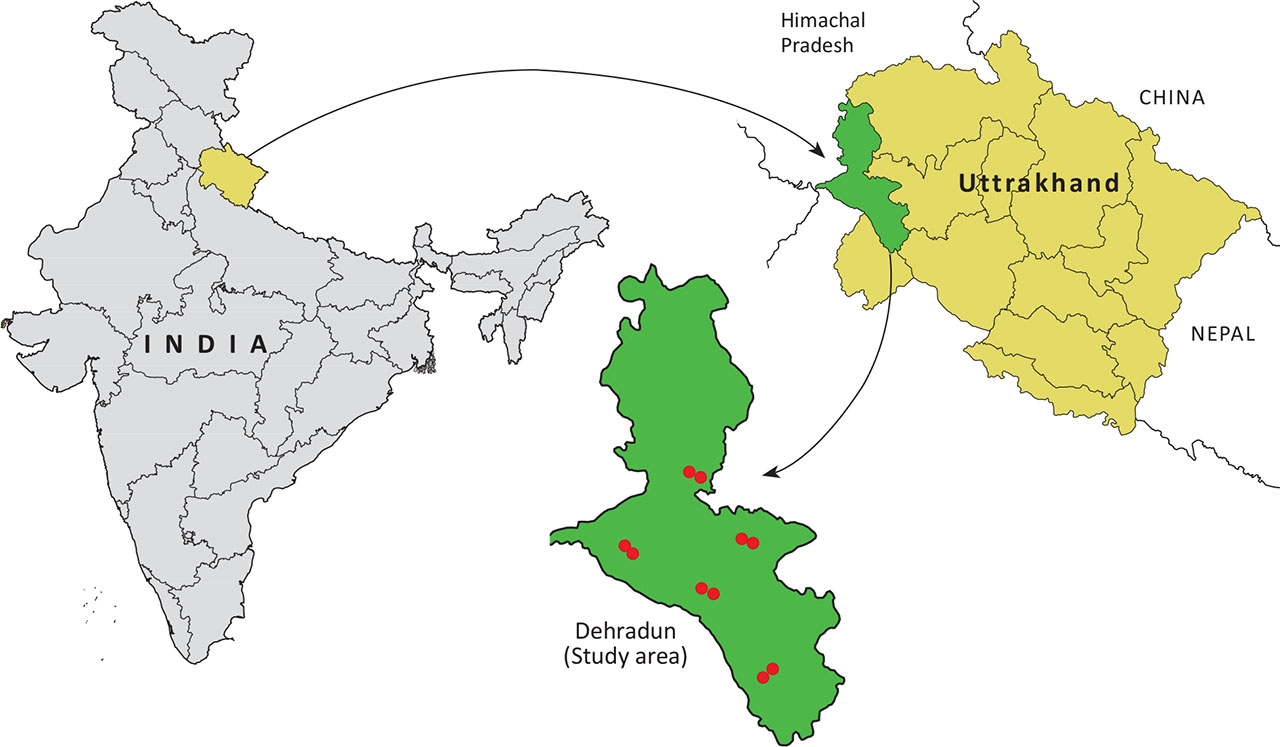
Figure 1:
Map of the study area and points (red dots) with sampling sites in Dehradun (Uttarakhand, India).
Slika 1: Zemljevid raziskovanega območja in točke (rdeče pike) z lokacijami vzorčenja v regiji z Dehradun (Uttarakhand, India).
Sampling of coccinellids
The altitudinal and habitat variations of the family Coccinellidae were studied in five altitudinal zones (300 m, 400 m, 500 m, 600 m and 700 m) in the Dehradun district of Uttarakhand. These altitudinal zones were categorised into lowland (300–500 m) and mid-mountain (500–700 m) zones based on ecological and topographical features. Two sites were selected at each altitude to ensure a comprehensive survey of habitat diversity in the region. The selected sites are shown on the map (Figure 1). The different habitat types, including forests, mango plantations, flower gardens and agricultural areas, were surveyed for the Coccinellidae family at an altitude of 400 m (Figure 2). The collection period was from April to September 2021, using landing nets for vegetation-dwelling species, tapping arches for trees and shrubs and suction cups for small or sensitive species. Larger beetles were collected by hand, while light traps were used to attract nocturnal species. Visual surveys were conducted to ensure comprehensive sampling of all habitats (Achumi et al., 2012). To ensure systematic sampling, an area of 3 ha was randomly selected in each study area, which was divided into 100 squares of 10×10 m2. The collected taxa were transferred to glass vials containing ethyl acetate and brought to the laboratory for identification. For preservation, the specimens were dried in an oven at 60 °C for 72 hours. Identification was based on taxonomic keys (Kapur et al., 1956; Kapur, 1963, 1967; Kuznetsov, 1997, Wang et al., 2015) and grey literature. The nomenclature was confirmed using the Global Biodiversity Information Facility (GBIF, 2022).
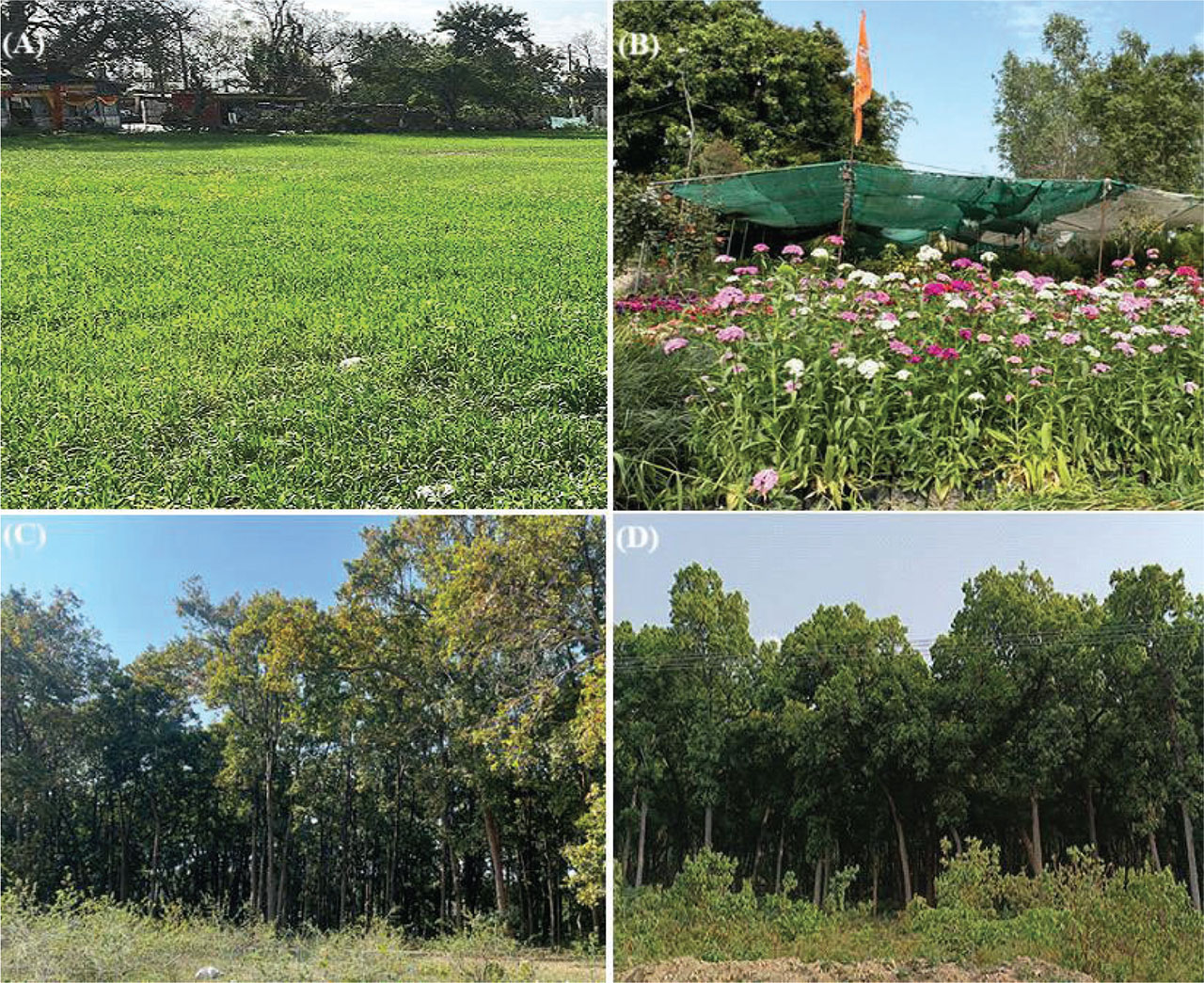
Figure 2:
Different selected habitats: (A) Agricultural areas; (B) Flower gardens; (C) Forests; (D) Mango orchards (Photo: Shafkat Jabbar Mir, 2021).
Slika 2: Različni izbrani habitati: (A) kmetijske površine; (B) cvetlični vrtovi; (C) gozdovi; (D) nasadi manga (foto: Shafkat Jabbar Mir, 2021).
Ethnozoological data collection
From April to September 2022, we interviewed members of the Vann Gujjar and Pahari ethnic groups to participate in the study. Prior to data collection, an exploratory survey was conducted to assess all options and necessary measures. Informants were selected using the snowball method, and only those who showed potential knowledge of beetles were selected for the final interviews. We adhered to the code of ethics of ISE (ISE, 2022), and with prior verbal consent from informants, we collected endemic knowledge through semi-structured interviews followed by group discussions (Hamid et al., 2021; Hassan et al., 2022). A total of 153 informants were selected, including 63 Gujjar and 90 Pahari (Table 1). All these informants belonged to different age groups. Before data collection, the informants were informed about the objectives of the present study and were able to understand them. Gujjar and Pahari are the languages spoken by Gujjari and Pahari people, respectively (Ethnologue, 2022).
Table 1:
Demographic data of respondents from the Vann Gujjar and Pahari communities of Dehradun, India.
Tabela 1: Demografski podatki intervjuvancev iz skupnosti Vann Gujjar in Pahari iz območja Dehradun (India).
| Demographic features | Total Percentage | Ethnic Communities | |
|---|---|---|---|
| Vann Gujjar | Pahari | ||
| Respondents | 153 | 63 (41.17%) | 90 (58.82%) |
| Male | 87 (56.86%) | 29 | 58 |
| Female | 66 (43.13%) | 34 | 32 |
| Original Language | Gujjari | Pahari | |
| Socio linguistic characteristics | Monolingual (Elder community) Bilingual (Youngest community | Monolingual (Elder community) Bilingual (Youngest community | |
| Age range (27–75) | 27–75 | 27–75 | |
| Profession | Sheppard, Housewives | Farmer, Sheppard, Housewives, Craftsmen, Shopkeeper | |
| Livelihood source | Pastoralism | Agriculture | |
Data Analysis
A chord diagram with the circle package was used to visualise the distribution of species across the respective families and their altitudinal differences (Hamid et al., 2021; Hassan et al., 2022). The association analysis between habitat and Coccinellidae fauna was performed using a chord diagram in OriginPro (Haq et al., 2021). A Venn diagram was created using the Bioinformatics and Evolutionary Genomics tool (available at http://bioinformatics.psb.ugent.be/cgi-bin/liste/Venn/calculate_venn.htpl).
To quantify species diversity, PAST 4.1 was used to calculate the following diversity indices (Kumar et al., 2022)
Shannon-Wiener index (H’): Measures species richness and evenness.
Simpson’s Diversity Index (1-D): Assesses dominance and diversity.
Margalef’s Index (D): Estimates species richness.
Pielou’s Evenness index (J’): Assesses the evenness of species distribution.
Fisher’s Alpha (α): Provides a measure of species richness.
Use Value (UV)
To evaluate the proportional value of the species, we employed Use value (UV) indices using the formula provided below (Haq et al., 2021).
Ur represents the number of use reports for a particular species, and N reveals the total number of respondents.
Results and Discussions
Taxonomic Inventory
A total of 32 species of coccinellids were recorded (Table 2;Figure 3). The documented species were categorised into 19 genera. The distribution of species among genera was very uneven, with most genera containing only one species (Y = 0.0035x + 1.8246, R2 = 0.0002). The genus Coccinella was the most abundant with five species (n = 7), followed by Harmonia (n = 4) and Miscraspis (n = 3). Each of the remaining genera contained a single species (Figure 3). It is important to note that varieties of species were identified for the genera Coccinella and Cheilomenes, which are shown in Figure 3.
Table 2:
Zootherapy and cultural uses of the collected Coccinellidae fauna across the Vann Gujjar and Pahari ethnic groups in Dehradun, Uttarakhand, India. (** Varieties of the species are written in bold)
Tabela 2: Zooterapija in kulturna uporaba vzorčene favne družine Coccinellidae v etničnih skupnostih Vann Gujjar in Pahari v območju Dehradun, Uttarakhand, Indija. (** varietete vrst so napisane krepko).
| Scientific Name | Local name | Abb | Genus | Zootherapy | Cultural Use | Ethnic Groups | Use Value | Use reports |
|---|---|---|---|---|---|---|---|---|
| Adalia decempunctata (Linnaeus, 1758) | Gupillu | Ada.dec | Adalia | – – – – – | Be kept in a pot placed in front of patients suffering from an evil spirit disease, and then both are bewitched for some time | Gujjar | 0.1 | 16 |
| Angelis cardoni (Weise, 1990) | Bhundia | Ang.car | Angelis | – – – – – | Black magic | Gujjar | 0.1 | 16 |
| Brumoides suturalis (Fabricius, 1789) | Pillu | Bru.sat | Brumoides | – – – – – | Enchanted and eaten for 40 days to gain magical powers. | Gujjar | 0.1 | 16 |
| Cheilomenes sexmaculata (Fabricius, 1781) | Gudbinia | Che.sex | Cheilomenes | Sundried, made into powder, added to honey and with walnuts, to treat infertility in both males and females. | People also believe that the frequent occurrence of this species in the home garden is a sign of good luck. | Pahari | 0.11 | 17 |
| Cheilomenes sexmaculata var. undulata (Fabricius, 1781) ** | Bahv | Che.und | Cheilomenes | Sundried, made into powder, added to honey and with walnuts, to treat infertility in both males and females. | Dried, powdered and applied topically to treat skin diseases, believed to attract the opposite sex. | Gujjar | 0.11 | 17 |
| Chilocorus nigritus (Fabricius, 1798) | Kala Bhundia | Chi.nig | Chilocorus | The whole body is dried and mixed with spider webs to stop bleeding from minor injuries. | This species is made into garlands together with other beetles. | Gujjar | 0.11 | 18 |
| Coccinella hieroglyphica (Linnaeus, 1759) | Kisari | Coc.hie | Coccinella | The whole body is sundried and consumed with honey to treat cough and asthma. | The beetle is dried and burned to produce smoke, which is used against evil spirits. | Gujjar | 0.26 | 41 |
| Coccinella leonine (Fabricius, 1775) | Sursui | Coc.leo | Coccinella | The whole body is dried in the sun and eaten with honey to treat asthma. | Gujjar | 0.22 | 35 | |
| They are collected and kept overnight in traditional houses to avoid spiders. | Pahari | 0.25 | 39 | |||||
| Coccinella quinquepunctata (Linnaeus, 1785) | Pissu | Coc.qui | Coccinella | The whole body is dried and consumed with lemon and honey to treat infertility. | Gujjar | 0.18 | 28 | |
| Coccinella septempunctata (Linnaeus, 1758) | Quleela | Coc.sep | Coccinella | The whole body is dried in the sun and eaten with honey to treat asthma. | These are collected and kept overnight in traditional houses to avoid spiders. Because of their seven tips, locals believe that they have the potential to cure various problems with evil spirits. | Gujjar | 0.4 | 62 |
| Coccinella septempunctata var. divaricata (Olvier, 1808) ** | Cheechad | Coc.div | Coccinella | – – – – – | Placed in a pot in front of patients suffering spiritual disease and then enchanted for ome time | Gujjar | 0.12 | 19 |
| Coccinella transversalis (Fabricius, 1781) | Mugari | Coc.tra | Coccinella | Species are dried, made into powder, mixed with turmeric, added with fresh running, and applied on the skin to avoid sunburns. | Considered a friend of local farmers because she hunts pests such as aphids. | Pahari | 0.12 | 19 |
| Coccinella undecimpunctata (Linnaeus, 1758) | Bugi | Coc.axy | Coccinella | Species are dried, made into powder, mixed with turmeric, added with fresh running, and applied on the skin to avoid sunburns. | These are placed on the belly of a pregnant woman, as they are said to produce male children. | Gujjar | 0.2 | 32 |
| Henosepilachna vigintioctopunctata (Fabricius, 1775) | Chotha | Epi.vig | Epilachna | – – – – – | Used for the practice of black magic | Gujjar | 0.1 | 16 |
| Halmus chalybeus (Boisduval, 1835) | Saamp ki moasi | Hal.cha | Halmus | – – – – – | Used for the practice of black magic | Gujjar | 0.1 | 16 |
| Halyzia sanscrita (Mulsant, 1846) | Behoor | Hal.san | Halyzia | The whole body is dried and made into a paste by adding egg white and applied topically to treat skin wrinkles. | Gujjar | 0.1 | 16 | |
| Harmonia axyridis (Pallas, 1773) | Teetad | Har.axy | Harmonia | – – – – – | Used for the practice of black magic | Gujjar | 0.1 | 16 |
| Harmonia conformis (Boisduval, 1835) | Patbijena | Har.con | Harmonia | – – – – – | Used for the practice of black magic | Gujjar | 0.1 | 16 |
| Harmonia dimidiata (Fabricius, 1781) | Doh | Har.dim | Harmonia | – – – – – | Used for the practice of black magic | Gujjar | 0.1 | 16 |
| Harmonia octomaculata (Fabricius, 1781) | Mokada | Har.oct | Harmonia | – – – – – | Dead specimens are placed in freshwater early in the morning for some time, then the same water is used for bathing to improve spirituality. | Gujjar | 0.1 | 16 |
| Harmonia dimidiata (Fabricius, 1775) | Trak | Hen.vig | Harmonia | – – – – – | Sundried specimens are made in powder and applied on the walls of the home to avoid evil-eye. | Pahari | 0.1 | 16 |
| Hippodamia convergens (Guerin-Meneville, 1842) | Drakcheeda | Hip.con | Hippodamia | – – – – – | Used for the practice of black magic. | Pahari | 0.1 | 16 |
| Hippodamia variegata (Goeze, 1777) | Dora | Hip.var | Hippodamia | – – – – – | Used for the practice of black magic. | Pahari | 0.1 | 16 |
| Illeis cincta (Fabricius,1798) | Ghun | Ill.cin | Illeis | – – – – – | Used for the practice of black magic. | Gujjar | 0.1 | 16 |
| Megalocaria dilatata (Fabricius, 1775) | Bigu | Meg.dil | Megalocaria | – – – – – | Used for the practice of black magic. | Gujjar | 0.1 | 16 |
| Micraspis discolor (Fabricius, 1798) | Sooree | Mic.dis | Micraspis | The whole insect is dried and mixed with turmeric and the resin from Cedrus deodara (Roxb. ex. D.Don) G.Don to treat wounds. | Used for the practice of black magic. | Gujjar | 0.15 | 23 |
| Micraspis vincta (Gorham, 1895) | Teej | Mis.vin | Micraspis | The whole body is dried and mixed with turmeric and the resin from Cedrus deodara (Roxb. ex. D.Don) G.Don to treat wounds. | Used for the practice of black magic. | Pahari | 0.1 | 16 |
| Micraspis allardi (Mulsant, 1866) | Kalikesari | Mic.all | Micraspis | – – – – – | Used for the practice of black magic. | Gujjar | 0.1 | 16 |
| Oenopia sauzeti (Mulsant, 1866) | Mirgachda | Oen.sau | Oenopia | – – – – – | Used for the practice of black magic. | Gujjar | 0.1 | 16 |
| Propylea dissecta (Mulsant, 1846) | Goguu | Pro.dis | Propylaea | The whole in-sects are dried and mixed with turmeric and olive oil to treat sunburns. | Used for the practice of black magic. | Gujjar | 0.11 | 18 |
| Propylea quatuordecimpunctata (Linnaeus, 1758) | Deeraa | Pro.qua | Propylaea | The whole in-sects are dried and mixed with turmeric and olive oil to treat sunburns. | Used for the practice of black magic. | Pahari | 0.1 | 16 |
| Psyllobora bisoctonotata (Mulsant, 1850) | Keedee | Psy.bis | Psyllobora | – – – – – | Used for the practice of black magic. | Gujjar | 0.1 | 16 |
| Rodolia sexnotata (Muslant, 1850) | Bambeeree | Rod.sex | Rodolia | – – – – – | Used for the practice of black magic. | Gujjar | 0.1 | 16 |
| Rodolia sp. (Mulsant, 1850) | Beendh | Rod.sp | Rodolia | – – – – – | Used for the practice of black magic. | Gujjar | 0.1 | 16 |
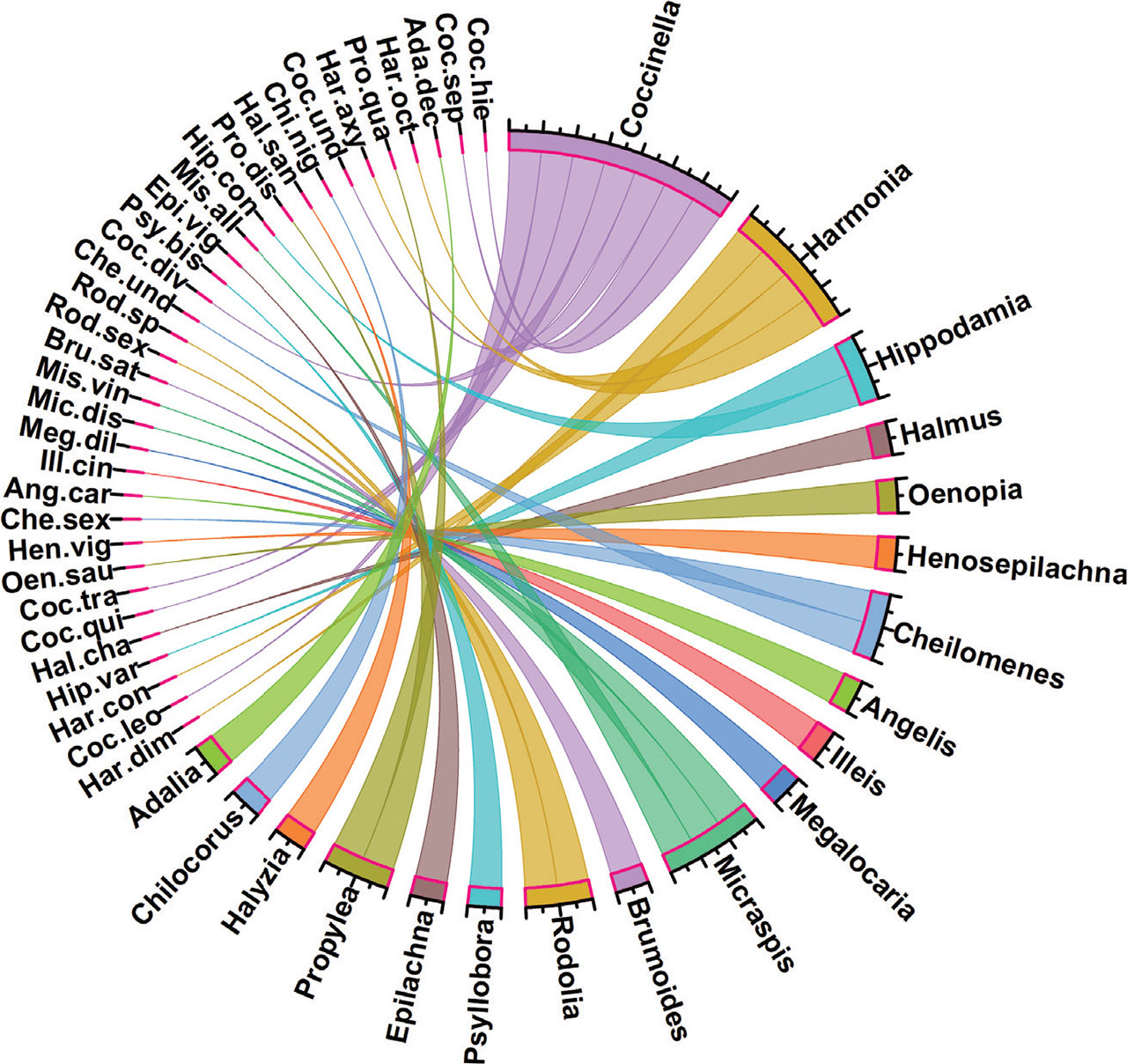
Figure 3:
The chord diagram reveals the number of documented species classified into different genera from the Dehradun district of Uttarakhand. The complete names of the species are provided in Table 2.
Slika 3: Tetivni diagram prikazuje število dokumentiranih vrst, uvrščenih v različne rodove v območju Dehradun (Uttarakhand). Celotna imena vrst so prikazana v Tabeli 2.
The highest occurrence of the genus Coccinella can be explained by the fact that species of this genus are common in a variety of habitats, e.g. orchards, vegetable gardens and agricultural fields (Obrycki & Kring, 1998). The major species of this genus from the present study include Coccinella septempunctata, C. transversalis, Cheilomenes sexmaculata, Hippodamia variegata and Henosepilachna vigintioctopunctata. Earlier studies by Joshi et al. (2010) documented the common occurrence of the genus Coccinella in various habitats in Haridwar region of Uttarakhand. Maqbool et al. (2018) emphasised the role of Coccinella species from the Kashmir Himalayan region in ecosystem functioning, while Rawat (2011) reported the same species in the Garhwal Himalayan region.
Prior to our study, various fragmentary studies had reported the occurrence of different species of Coccinellidae in the Dehradun region (Kapur, 1963, 1967; Arya & Tamta, 2016; Ahmad & Moin, 2019; Goswami et al., 2023). However, our study documents the diversity of Coccinellidae in the entire Dehradun region.
Altitudinal variation
The pooled data from the monthly insect collections yielded a total of 5,873 specimens, with 45.51% of the individuals belonging to only seven species: Coccinella septempunctata, Coccinella transversalis, Cheilomenes sexmaculata, Hippodamia variegata, Henosepilachna vigintioctopunctata, Oenopia sauzeti and Propylea dissecta.
The dominance of these species is consistent with previous studies. For example, Sharma et al. (2022) reported the wide distribution of C. septempunctata and C. transversalis in agricultural ecosystems in the Doiwala region of Dehradun, Uttarakhand, while Mishra et al. (2018) documented the occurrence of several Coccinellidae genera in Uttarakhand.
The distribution of species across the different altitudinal zones is shown in Figure 4. The study area, which covered the lowlands (300–500 m) and the medium altitude (500–700 m), showed the highest species richness at 300 m with 29 species, followed by 400 m with 24 species, 500 m with 18 species, 600 m with 12 species and the lowest at 700 m with 9 species. This pattern reflects typical trends in species richness at high altitudes, where higher species richness at lower altitudes is due to favourable climatic conditions and greater habitat diversity, while the decreasing number of species at higher altitudes is related to harsher environmental conditions and lower habitat complexity.
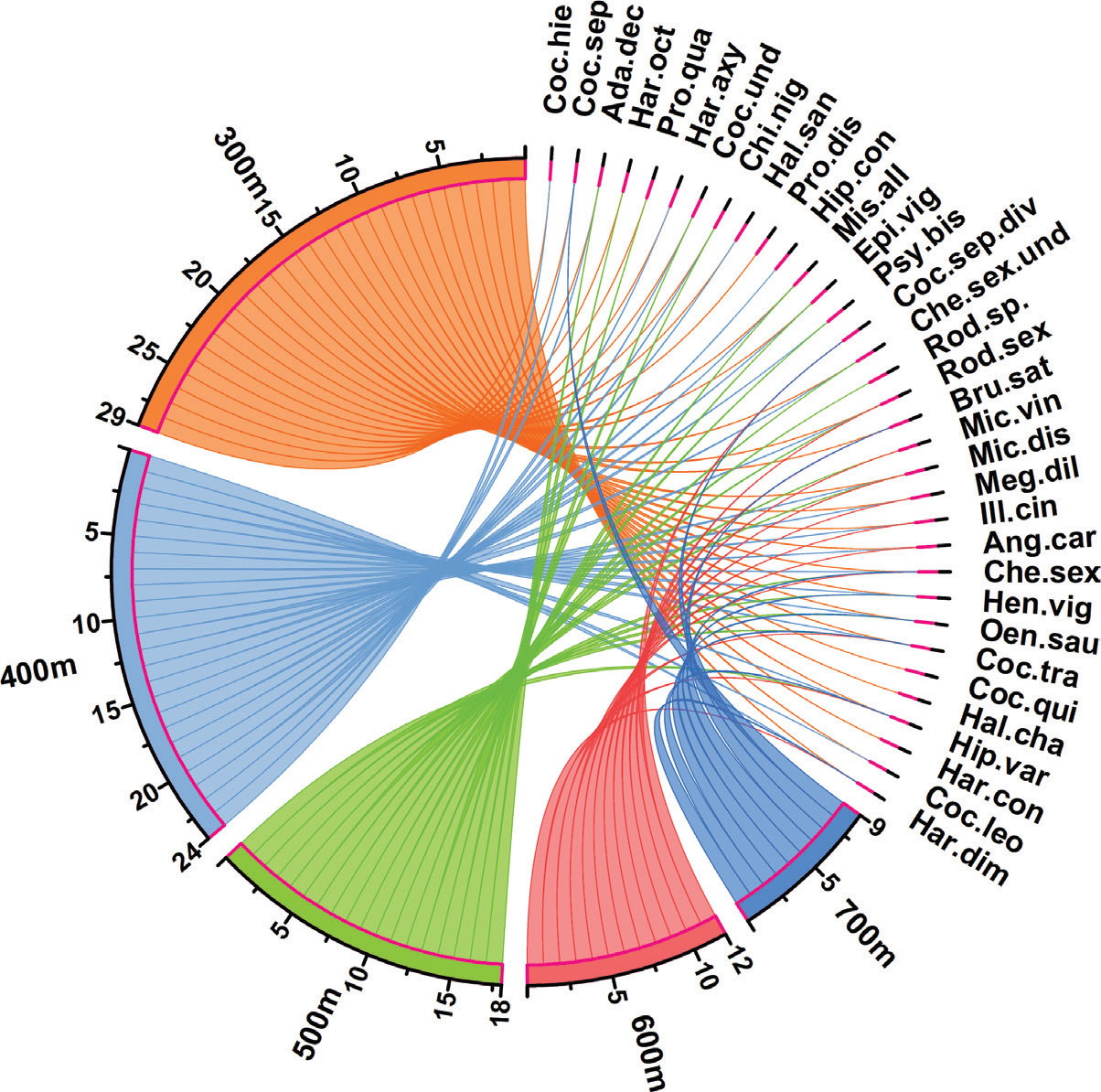
Figure 4:
Chord diagram showing the identified insect species at different altitudes of Dehradun (Uttarakhand, India). (“N” is number of species). The full names of the species are given in Table 2.
Slika 4: Tetivni diagram prikazuje vrste žuželk na različnih nadmorskih višinah v območju Dehradun (Uttarakhand, India). (“N” je število vrst). Celotna imena vrst so prikazana v Tabeli 2.
The present results show that species diversity is highest at the lowest elevation of 300 m with a Shannon index of 3.209 and a Simpson index of 0.9535. In contrast, the highest elevation of 700 m showed the lowest diversity with a Shannon index of 2.125 and a Simpson index of 0.8721. The calculated diversity indices for all selected elevations are summarised in Table 3. We observed the lowest number of individuals (291) at an altitude of 600 m, which we attribute to a combination of environmental, ecological and biological factors. Higher altitudes often have harsher conditions, such as lower temperatures and lower oxygen levels, which can limit the survival and reproduction of many species. In addition, the habitat at 600 m altitude may have a lower carrying capacity and harbour fewer individuals. Despite the low number of individuals, the high evenness (0.9245) shows that the few individuals present are evenly distributed among the species. However, the low species richness (as reflected in the Margalef and Fisher_alpha indices; Table 3) leads to a lower overall diversity compared to lower elevations. Future studies could investigate the specific factors limiting population size and species richness at this altitude.
Table 3:
Species diversity at various selected altitudes of Dehradun (Uttarakhand, India).
Tabela 3: Vrstna pestrost na različnih nadmorskih višinah na območju Dehradun (Uttarakhand, Indija).
| Altitude | 300 m | 400 m | 500 m | 600 m | 700 m | |
|---|---|---|---|---|---|---|
| Individuals | 2160 | 1142 | 990 | 291 | 970 | |
| Diversity Indices | Dominance (D) | 0.04651 | 0.05743 | 0.07067 | 0.0971 | 0.1280 |
| Simpson (1-D) | 0.9532 | 0.9421 | 0.9290 | 0.9030 | 0.8720 | |
| Shannon (H) | 3.208 | 2.976 | 2.731 | 2.402 | 2.124 | |
| Evenness (e^H/S) | 0.8531 | 0.8182 | 0.8543 | 0.9245 | 0.9301 | |
| Margalef (D) | 3.641 | 3.21 | 2.460 | 1.930 | 1.160 | |
| Fisher_alpha (α) | 4.731 | 4.270 | 3.120 | 2.502 | 1.369 |
This pattern of decreasing diversity with increasing altitude is consistent with previous studies. For example, Arya & Tamta (2016) reported a decline in the diversity of Coccinellidae at higher altitudes in the Kumaon region of Uttarakhand. Similarly, several studies have documented an overall decline in insect diversity with increasing altitude (Joshi & Sharma, 2008; Joshi et al., 2016; Raghavendra et al., 2022; Schowalter, 2022). In particular, species such as Coccinella transversalis and Hippodamia variegata were found at all altitudes, demonstrating their adaptability to different environmental conditions. The distribution of C. transversalis at different altitudes in Garhwal district of Uttarakhand was also reported by Joshi et al. (2010). Other studies documenting the distribution of insect species at different altitudes are Gurung & Ponnusamy (2019), Saeed et al. (2016), Sharma et al. (2017) and Sajan et al. (2018).
Habitat selection
The diversity of Coccinellidae was studied in different habitats at an altitude of 400 metres. The greatest diversity was found in agricultural areas (25 species), followed by flower gardens (19 species), mango orchards (16 species) and forests (8 species). The complete list of species and their assignment to habitats can be found in Figure 5. Agricultural areas (Figure 2) have the highest Coccinellidae diversity, which is due to the abundant prey (e.g. aphids, scale insects), the heterogeneity of the habitat due to different crops and marginal vegetation. The open canopy and favourable microclimate favour their dispersal, while human interventions, such as the introduction of beneficial species, encourage their populations. Taken together, these factors make agricultural areas ideal habitats for Coccinellidae compared to flower gardens, mango orchards or forests. The present results are in line with Obrycki & Kring (1998) and Hodek & Honek (1996).
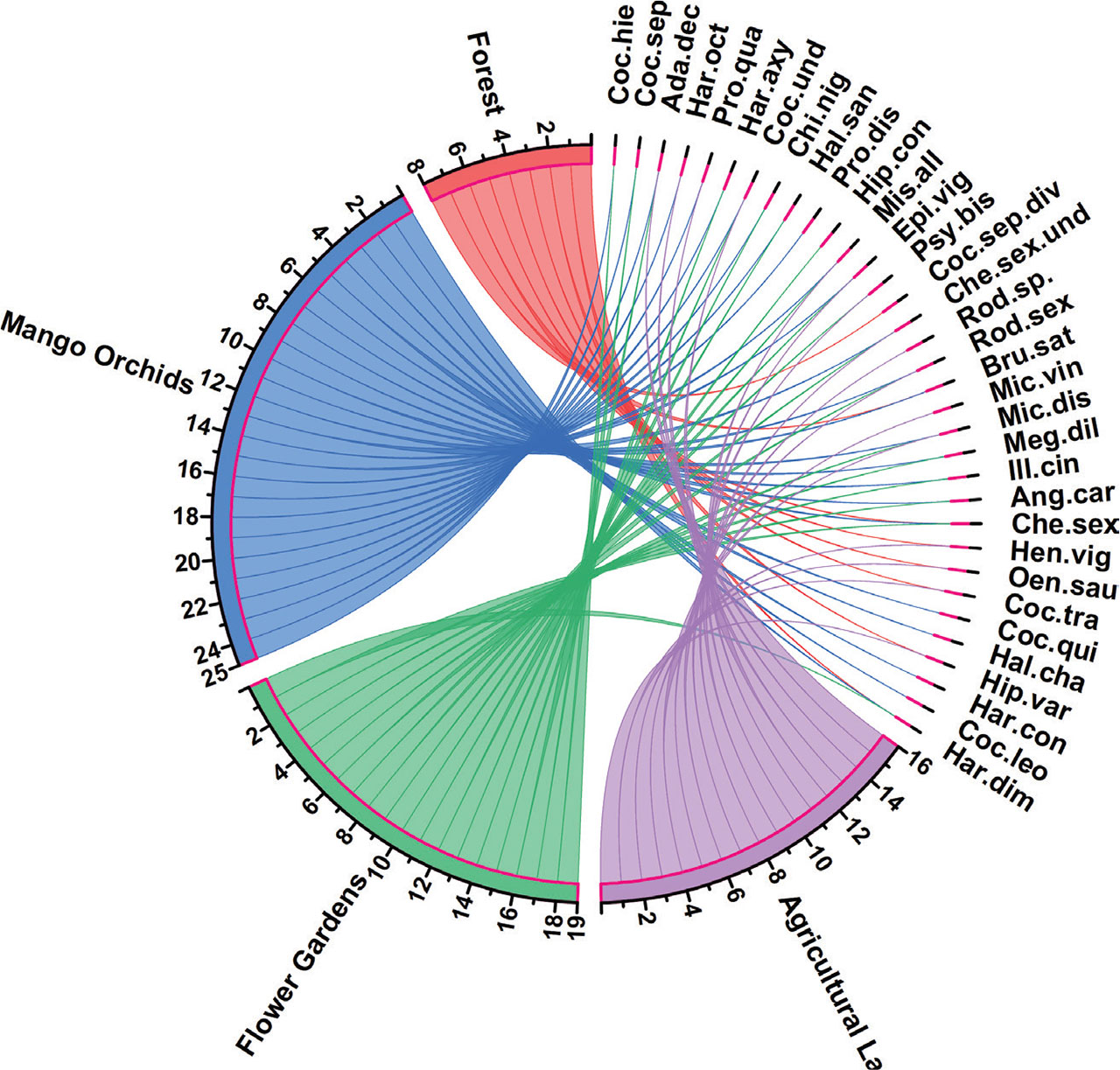
Figure 5:
Chord diagram showing the documented Coccinellids fauna in different habitats. The full names of the species are given in Table 2.
Slika 5: Tetivni diagram prikazuje vrste družine Coccinellidae v različnih habitatih. Celotna imena vrst so prikazana v Tabeli 2.
From the Venn diagram (Figure 6a), Coccinella quinquepunctata, Halmus chalybeus, Harmonia conformis and Propylea dissecta occurred only in agricultural fields, while Micraspis vincta and Rodolia sp. occurred only in mango orchards, Coccinella septempunctata occurred only in forests, and Hippodamia convergens occurred only in flower plantations. In India, Coccinellidae are mainly found in agricultural areas, orchards, forests and urban areas (Obrycki & Kring, 1998).
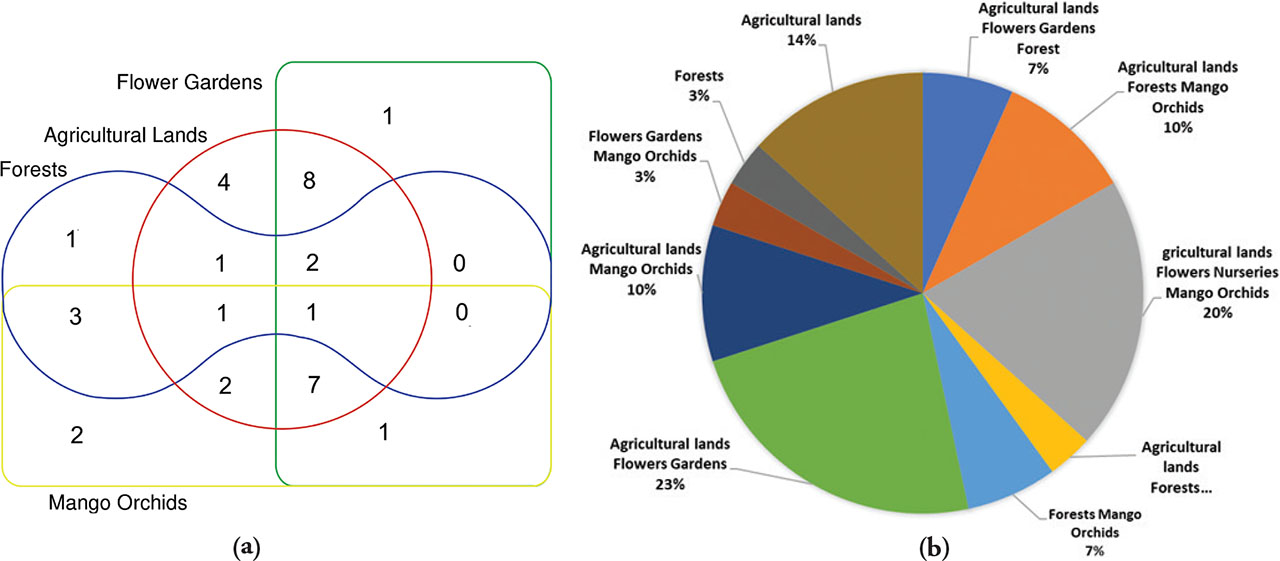
Figure 6:
(a) Venn diagram showing the number of unique and common species in different selected habitats (b) Percentage similarity between different habitats based on the occurrence of identified insect species in Dehradun (Uttarakhand, India).
Figure 6: (a) Vennov diagram specifičnih in skupnih vrst v različnih izbranih habitatih (b) odstotek podobnosti med različnimi habitati na osnovi pojavljanja vrst žuželk v območju Dehradun (Uttarakhand, Indija).
Species such as Illeis cincta, Halyzia sanscrita, Coccinella septempunctata, C. leonina, Chilocorus nigritus, Angelis cardoni, Megalocaria dilatata and Harmonia axyridis were found in agricultural areas and flower gardens (Figure 6b). The frequent occurrence of these species in both habitats can be attributed to the vegetation, which provides an ideal environment for Coccinellidae due to the abundance of prey, nectar, pollen, shelter and favourable microclimate. In addition, nursery owners in Dehradun cultivate a variety of plant species (e.g. cucumbers, gourds, aubergines, tomatoes and flowers) for commercial purposes, which are later cultivated by local farmers on agricultural land. The distribution and composition of Coccinellidae species in different habitats is influenced by various environmental factors such as vegetation type, temperature and pH. Taheri & Reyes (2015) reported that vegetation composition plays an important role in determining the distribution of Coccinellidae species.
Zootherapy
Zootherapy, the use of animals for medicinal purposes, has a significant cultural and therapeutic value in traditional practises. In this study, we have documented the ethnozoological use of insect fauna by the Gujjar and Pahari communities in Uttarakhand. A total of six diseases (minor injuries, cough, asthma, infertility, skin folds and sunburn) were treated with ten Coccinellidae species (Chilocorus nigritus, Coccinella hieroglyphica, C. leonina, C. quinquepunctata, C. septempunctata, C. undecimpunctata, Halyzia sanscrita, Micraspis discolour, Propylea dissecta and Cheilomenes sexmaculata) in the Gujjar community. Among these, asthma was the most common ailment treated by three species (Coccinella septempunctata, C. hieroglyphica and C. leonina) (Figure 7a).
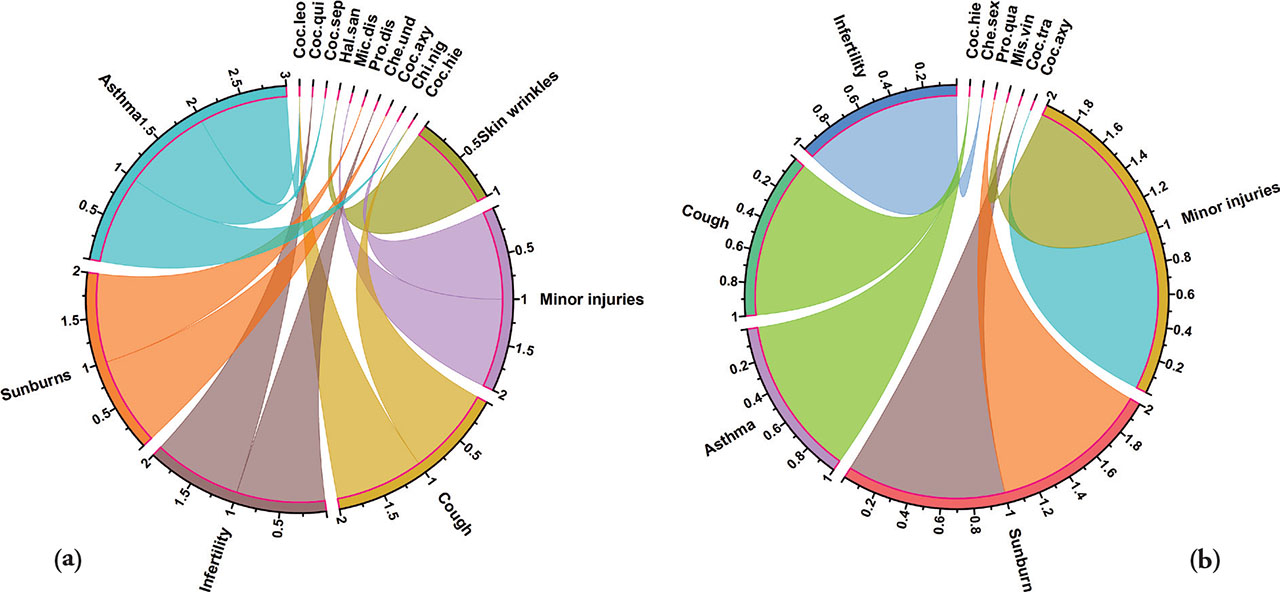
Figure 7:
(a) Chord diagram showing species used in the Gujjar community for a variety of diseases; (b) Chord diagram showing species used in the Pahari community for a variety of diseases. The full names of the species are listed in Table 2.
Slika 7: (a) tetivni diagram vrst, ki jih uporabljajo v skupnosti Gujjar za različne bolezni; (b) tetivni diagram vrst, ki jih uporabljajo v skupnosti Pahari za različne bolezni. Celotna imena vrst so prikazana v Tabeli 2.
In the Pahari community, five ailments (asthma, cough, infertility, sunburn and minor injuries) were treated by six species (Coccinella transversalis, C. undecimpunctata, C. hieroglyphica, Micraspis vincta, Propylea quatuordecimpunctata and Cheilomenes sexmaculata). Asthma was treated by Coccinella undecimpunctata and C. hieroglyphica (Figure 7b). These findings are in agreement with Hassan et al. (2023) who reported similar ethnozoological practises among ethnic communities in Jammu and Kashmir, India. A comprehensive overview of the ethnic use of the documented species can be found in Table 2.
Cross-culture
The chord diagram shows the species used by the Gujjar and Pahari communities and illustrates the predominance of the Gujjar over the Pahari in the use of Coccinellids species for daily cultural practices (Figure 8a). A total of (N=21), 62% species (i.e., Chilocorus nigritus, Coccinella undecimpunctata, Halmus chalybeus, Halyzia sanscrita, Micraspis discolor, Propylea dissecta and Adalia decempunctata) are typical of the Gujjar, while only (N=8), 23% species (i.e., Cheilomenes sexmaculata, Coccinella transversalis, Hippodamia variegate, Micraspis discolor, Harmonia dimidiate, Propylea quatuordecimpunctata, Micraspis vincta, Hippodamia convergens) are typical of the Pahari (Figure 8a). The idiosyncratic species use by the Gujjar is due to non-urbanization, total dependence on nature, especially for food and medicine, and other cultural practices.
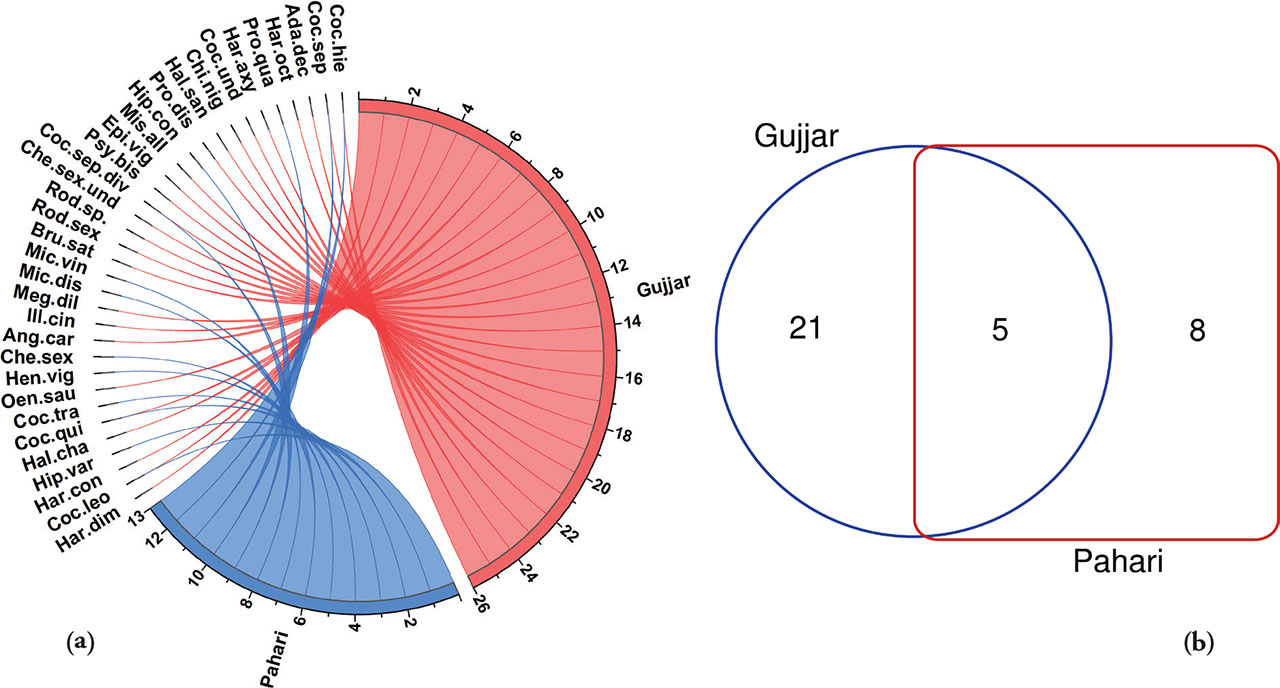
Figure 8:
(a) Chord diagram showing the species used by the ethnic communities (Gujjar, Pahari); (b) Venn diagram showing the number of unique and common species among Gujjar and Pahari in Dehradun (Uttarakhand, India). The complete names of the species are given in Table 2.
Slika 8: (a) tetivni diagram vrst, ki jih uporabljajo v etničnih skupnostih (Gujjar, Pahari); (b) Vennov diagram števila specifičnih in skupnih vrst v skupnostih Gujjar in Pahari v območju Dehradun (Uttarakhand, Indija). Celotna imena vrst so prikazana v Tabeli 2.
A cross-cultural comparison of the documented species showed that there was an overlap between the two selected ethnic communities only in five species (Coccinella hieroglyphica, C. leonine, C. septempunctata, Coccinella quinquepunctata, and Coccinella septempunctata) which constitute 15% of the documented species (Figure 8b). This can be explained by the fact that these species are commonly used in both ethnic communities due to the prevailing cultural myths and lack of education. Coccinella septempunctata, for example, is collected and kept overnight in traditional houses to avoid spiders, and because of its seven spots, locals believe it has the potential to cure various psychological diseases and problems with evil spirits. Similarly, C. hieroglyphica is dried and burned to produce smoke that is used against evil spirits. A complete assignment of insect species to ethnic groups can be found in Table 2. Mishra & Tiwari (2012) reported on the traditional use of Coccinellidae by tribal communities in Odisha for medicinal purposes.
The use value (UV) was used to assess the relative importance of the documented species to the local communities, with higher UV indicating greater cultural or practical importance. Seven ethnocultural use categories were identified based on traditional practises: protection from evil spirits, good luck charms, garland making, insecticides, sex determination, black magic and promotion of spirituality. A complete list of UV values for the documented species used by the Gujjar and Pahari communities can be found in Table 2. The highest UV value was found for Coccinella septempunctata (0.4), followed by C. hieroglyphica (0.26) and C. leonina (0.25). These results are in agreement with studies from nearby regions, such as Hassan et al. (2023) and Altaf et al. (2020), which also emphasise the cultural importance of Coccinellidae in traditional practises.
Conclusions
To summarise, the present study found a significant decline in diversity with increasing elevation, with agricultural land proving to be the predominant habitat for the Coccinellidae family. In particular, agricultural land and flower gardens were found to be common habitats for several species, including Illeis cincta, Halyzia sanscrita and Coccinella septempunctata, with the genus Coccinella having the upper hand in the region. Remarkably, many of these species have a traditional medicinal value, a practise known as zootherapy, and a deep cultural significance within the Vann Gujjar and Pahari communities. These tiny creatures not only contribute to the intricate balance of our ecosystem but also play a central role in traditional healthcare and cultural rituals. Furthermore, research into the therapeutic potential of these species could yield new medicinal compounds, offering exciting prospects in the field of biodiversity research and potentially leading to a new economic and cultural recognition of these seemingly inconspicuous organisms. In addition, it is important to conduct further cultural studies to understand the role of coccinellids in the lives of local ethnic communities, which play a central role in maintaining the delicate balance of the local ecosystem.
Acknowledgements
The authors are grateful to the Gujjar and Pahari communities for disclosing the important ethnozoological knowledge and thank the esteemed reviewers who contributed significantly to improve the quality of the manuscript.
Notes
[2] Contributed by Author Contributions:
Conceptualization: MH; Methodology: MH, MSA; Data collection: SJM; Data analysis: MH; Supervision: MH, MSA; Initial draft: SJM; Reviewing and revision: MSA, IVK, MMJ, RWB.
[3] Institutional Review Board Statement:
This research is based on field surveys; no human or human subject’s experiments were conducted. The ethical code of the International Society of Ethnobiology was followed (https://www.ethnobiology.net/what-we-do/core-programs/ise-ethics-program/code-of-ethics/).