
1. Introduction
Cardiovascular disorders, such as stroke, are the leading cause of death, illness, and permanent disability [1,2]. Particularly important consequences of a stroke include gait disturbance, which significantly limits patients’ activity and reduces their quality of life [3]. The ability to walk is fundamental for functional independence, which is why gait recovery is seen as the primary goal for stroke survivors. The most common gait pattern post-stroke is characterized by reduced speed, impaired balance, step length asymmetry, and phase asymmetry [4,5]. Typically, asymmetry in gait pattern is associated with an increase in stance time on the unaffected limb, accompanied by an increase in step length on the affected limb. By reducing the asymmetry between affected and unaffected leg in step length and stance time, it may be possible to increase walking speed and reduce the risk of losing balance and falling [6].
Numerous studies have shown that the best improvement in motor function, including gait, occurs within the first 3 months after a stroke, but it has also been demonstrated that functional improvement is possible in the later period, 6 months after a stroke [7].
Individuals with subacute and chronic stroke use assistive devices to facilitate postural control, reduce gait asymmetry, compensate for sensory-motor deficits, and improve mobility, walking speed, and independence [8].
Walking canes are widely used to assist or support patients in learning and improving their gait. They help maintain balance and postural stability during the weight-bearing phase on the affected lower limb. This allows patients with hemiplegia to walk independently with a sense of stability. A cane provides a sense of stability, but a significant lateral shift in the body’s center of pressure towards the stronger lower limb is often observed. Using a standard cane may lead to reduced muscle activity on the affected side and increased energy expenditure [9,10].
Post-stroke rehabilitation requires a high level of intensity, and the patient must receive all necessary information and a variety of changing tasks designed to stimulate the brain’s neuroplasticity, thereby making it possible for the patient to restore or re-acquire lost functions.
A therapy program where overground gait training is combined with gait training assisted by electromechanical devices may lead to improvement in walking ability.
Robots designed to support gait, exoskeletons, treadmills with body-weight-support systems, and force plates with feedback are now widely used in rehabilitation. These are supplementary methods used in combination with physiotherapy. However, there is a need for solutions, other than such stationary devices that would provide assistance during gait training. Generally, gait training involves repetition of the activity in the most effective manner. The patient is expected to engage in and perform the activity on his/her own. It seems that a simple device that both protects the patient against loss of balance and provides personalized information about their gait could be an effective solution. Standard rehabilitation methods, based on the principles of motor learning, provide non-continuous feedback from the therapist during therapy. Traditional procedures are subject to limitations related to the duration of treatment, costs, and availability [11,12].
Portable sensor systems that provide feedback to the patient during gait training focus on collecting and processing data from walking aids such as canes, or from body-worn monitoring devices.
External sensory feedback aids motor control of gait. Errors in performance, or differences between the normal and the actual gait pattern, are easily detected and used to make corrections in one’s performance. Auditory or visual feedback from a pressure sensor during gait training produces a repeatable, precise, and goal-oriented stimulus. This strengthens the information necessary for learning by eliminating errors in individuals with sensory impairments, such as stroke survivors [13,14].
In their study focusing on gait rehabilitation in patients with stroke, Yung et al. used a cane equipped with a pressure sensor and an auditory feedback system designed to alert the user when a preset pressure threshold was exceeded. The feedback was defined individually based on the pressure values recorded during the baseline gait assessment, and the pressure threshold was then gradually reduced. The randomized study demonstrated a significant reduction in the pressure applied to the cane, an increase in gluteus medius muscle activity on the affected side, and an increase in walking speed. The improvement was significantly greater in the experimental group of patients participating in gait training with a cane and auditory feedback [15].
It has been shown that wearable feedback systems are an easy-to-use and highly practical tool enabling biomechanical assessment and motor improvement, particularly in gait analysis and in rehabilitation [16,17]. Pang et al. investigated the feasibility and perception of inertial measurement unit (IMU)-based sonification system designed to provide real-time gait feedback. The system, with IMU sensor built into a piece of clothing, combined real-time gait analysis with auditory signals. It was shown that gait training with this system was acceptable for the study participants and it beneficially impacted their motivation [18].
A design for and preliminary observations concerning sensors attached to a cane and the body were reported by Afzal. The device with a tactile cane provided kinesthetic information, while the device with vibrotactile feedback delivered tactile prompting to the affected leg, enabling gait modification. It was shown that stance phase symmetry index was improved when the tactile prompting was used, alone or in combination with kinesthetic information [19].
The solution proposed by us applies two methods for providing feedback to the patient. Sensors built into the cane provide information about the current pressure applied to the cane and about the position of the device when it is used for support. Clinical observations have shown that patients develop compensatory mechanisms, particularly at the later stages after the onset of the disease. This disrupts the symmetry of the gait phases; more specifically the duration of the stance phase on the affected limb is decreased while step length on the same limb is increased. The cane is positioned at an oblique angle to the ground. This compensatory mechanism may allow the patient to increase their walking speed; however, the gait pattern is incorrect. The solution presented here applies additional sensors located in the shoe insole and on the patient’s body. The sensor signals are designed to provide information on the temporal and spatial parameters of gait, step length, gait cycle length, walking speed, cadence, and the duration of gait phases. The device also provides patients with real-time auditory and visual feedback during gait training. The proposed solution provides a tool for a new approach to gait therapy. The aim of this study is to present and assess the effect of the innovative diagnostic and therapeutic device on the gait of individuals with hemiplegia after a stroke.
2. Material and methods
The main purpose of this device is to enhance kinesthetic perception during overground gait training by providing visual, auditory, and vibrational feedback, prompting for gait modifications. The integrated sensor system, as well as components and application of the device are shown in Figure 1.
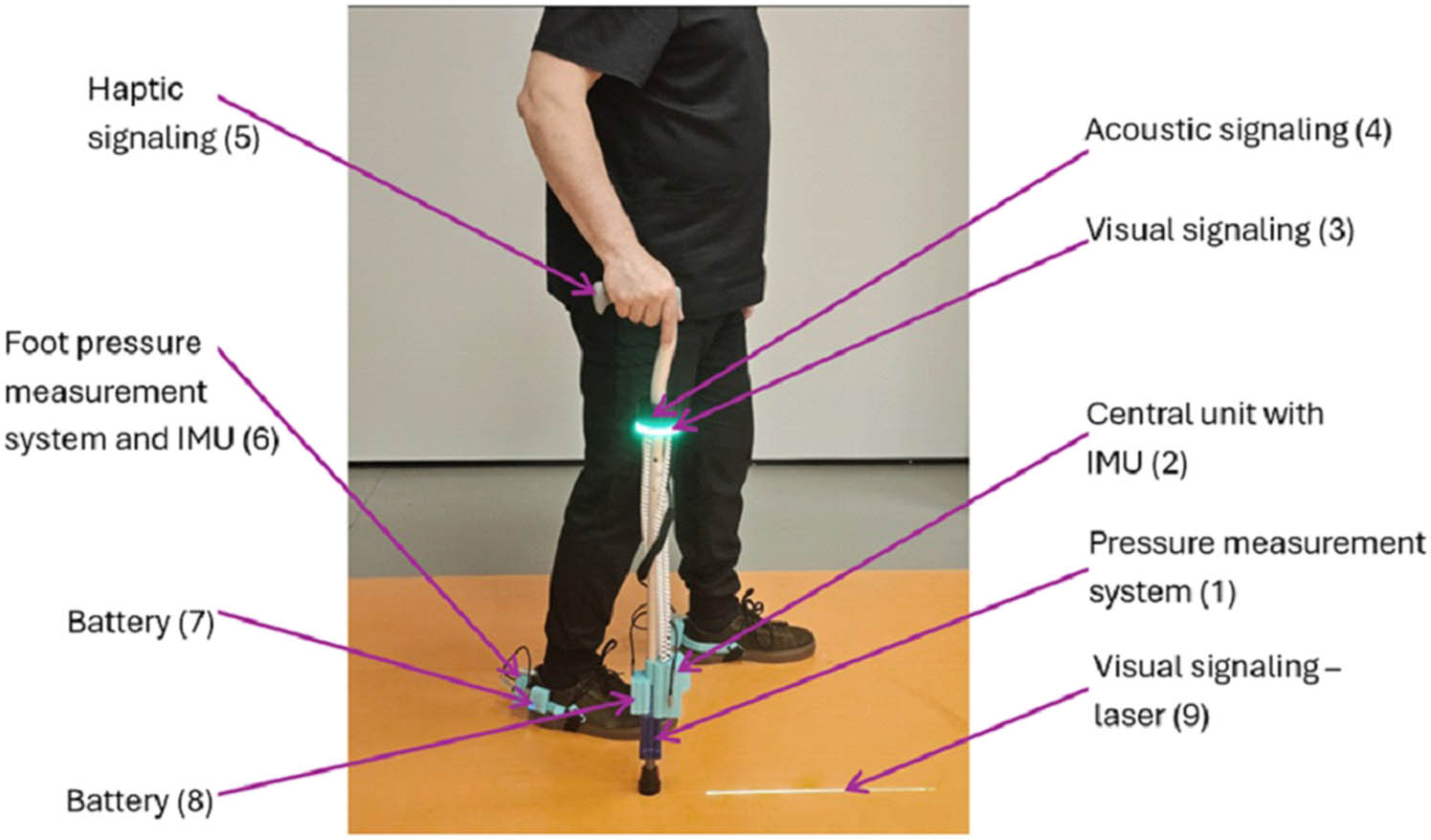
Figure 1
A proposed device with an integrated feedback system used by the user while walking.
Elbow crutches, quad walkers, or canes, typically used in gait re-education, help individuals with hemiplegia post-stroke to walk independently; however, those using such devices frequently develop abnormal gait patterns. The patients tend to put excessive weight on the orthotic device during the stance phase on the affected leg. This exacerbates the asymmetry in step length, weight-bearing, and in the use of both limbs.
The integrated information system is designed to monitor the weight placed on the cane and the position of the cane during stance on the affected leg (auditory or vibration or visual information about exceeding the defined threshold), and to monitor step length symmetry and duration of weight bearing on the affected and the unaffected limb via a graphic visualization. The system alerts the patient and encourages them to engage the affected leg more during the stance phase, without losing stable support in case of a loss of balance.
The developed rehabilitation device consists of a main component in the form of an intelligent rehabilitation cane and wireless modules worn on the patient’s body that cooperate with it. In the lower part of the cane, a pressure measurement system is integrated into a specially designed module with plain bearings (1). The applied mechanical design limits the influence of moments and parasitic forces on the measurement path, which increases the accuracy of determining the load transferred through the cane. The central element of the system is an electronic module based on a microcontroller and equipped with a Wi-Fi wireless interface (2). It enables communication both with the therapist’s computer and with an external telemedicine module. The central unit is additionally equipped with an IMU and a visual signaling system based, among other elements, on a laser indicator. In the upper part of the cane, LED signaling elements are installed, and their color changes smoothly depending on the pressure force value relative to the level set by the therapist (3). The user interface is complemented by an acoustic signaling device (4) and vibration elements integrated into the handle (5), which serve as a haptic feedback system for the patient. The device is powered by a replaceable battery charged via a Universal Serial Bus Type-C connector (8). The system has also been extended with two additional modules worn on the patient’s body. Each of them contains an IMU, a haptic signaling unit, and a multi-sensor system intended for foot pressure measurement (6). These modules cooperate with the cane and the central unit, creating an integrated system for monitoring rehabilitation parameters. All system components communicate wirelessly with the therapist’s computer using dedicated software for configuration, visualization, and data analysis. Alternatively, data transmission may be carried out via a telemedicine module, enabling data recording on a server, data archiving, and real-time remote rehabilitation supervision.
2.1. Participants
Effectiveness of the proposed device in gait training was assessed in a study involving stroke survivors. Patients recruited for the study were at an early stage post-stroke and were receiving treatment in a rehabilitation unit. The eligibility criteria included hemiplegia post-stroke, ability to walk independently, and a consent to participate in the study. Individuals with cognitive impairments adversely affecting their ability to understand the tasks or process feedback, as well as those with coexisting motor dysfunction affecting gait, were excluded from the study. The demographic characteristics of the participants are shown in Table 1. All the participants were patients of the Rehabilitation Ward at the Clinical Provincial Hospital in Rzeszów, Poland. Gait training, strength, and endurance exercises, as well as balance training were incorporated into the patients’ current rehabilitation program. All those enrolled for the study provided their consent in writing (before the start of the study), which was approved by the local Bioethics Commission at the University of Rzeszów.
2.2. Protocol
Each participant first received instructions about the system and its functions. Participants could take a walk to get acquainted with the cane or the quad cane without activating the diagnostic or therapy functions or the feedback feature. Their gait was then assessed using the diagnostic function of the device. The measurements were recorded during a 10 m walk test and in a standing position. The following values were recorded during the walking test: weight placed on the orthopedic walking aids during a 10 m walk, the position of the cane relative to the ground, gait cycle length (cm) for the affected and unaffected leg, step length (cm), and the duration of the stance phase on the affected and unaffected leg (s). During the unassisted standing test, the following values were recorded: weight (kg) placed on the affected and unaffected lower limbs, as well as the weight placed on the cane. These data were taken into account to calculate the average maximum weight placed on the cane, walking speed, average step length of the lower limbs, average cane angle, and average duration of the stance phase on the affected and unaffected legs.
The gait therapy aimed to reduce weight placed on the assistive devices, decrease the asymmetry in step length between the affected and unaffected legs, and reduce the asymmetry in the duration of the stance phase. Before the first gait training session with the device, a maximum limit for the weight placed on the walking aid was defined for each participant. Acoustic feedback was set for each patient based on a value calculated by dividing the peak stress applied to the cane by the participant’s body weight. During the first session, the threshold was set at 60% of the calculated value. The threshold was then reduced by no more than 10% before each session. The threshold was reduced if the patient had effectively adapted to walking with lower weight placed on the cane and was further decreased by 10% every week [15]. The adopted threshold value was 10% lower than the average value identified in the assessment. During the gait training, auditory and visual prompting was activated when the threshold value was exceeded.
Based on the step length values for the affected leg and the unaffected leg, the step length symmetry index (Ws) was calculated by dividing the larger value by the smaller one [20]. It was assumed that the normal value corresponded to the results ranging between 1.0 and 1.15. When 1.15 was exceeded, the participant received feedback.
The participants completed the program of gait training with the device providing auditory and visual feedback. The 30-min training sessions took place five times per week and continued for a duration of 2 weeks. During each training session, the participants were supervised by a physiotherapist, and they walked with self-selected speed. Participants were wearing their own comfortable shoes with removable insoles, which could be replaced with pressure-sensing inserts. Before and after each session, the participant received a report about the gait training progress relative to earlier sessions. In addition to gait training with the device, each participant followed their own rehabilitation program. The daily exercises continued for 150 min and included individual exercises, occupational therapy, and gait and balance training.
2.3. Data analysis
In this prospective observational study, the participants’ gait and balance were assessed twice. The first assessment was performed before the program began, and the second immediately after it ended. A 3D gait analysis was carried out using a Theia Markerless system (2025.1.6. version, Theia Markerless Inc., Kingston, ON, Canada) [21]. Before a video recording of gait was taken, the system was calibrated. During the trials, the participants walked unassisted using their own orthotic devices (during both the baseline and final assessments) and wearing their own shoes; they were instructed to walk at a self-selected speed. The analyses took into account the following parameters: stance phase duration, swing phase duration, double support phase duration (s), proportional duration of gait phases and the proportional duration of double support phase in the gait cycle (%), walking speed (m/s), and cadence (steps/min). Body balance was assessed using a force plate (Alfa Technomeks, Poland). The measurement was taken while the patient was standing with their eyes open, for 15 s. The analyses also took into account the distribution of weight placed on each leg (kg) and center of pressure sway area (mm2).
Before each gait training session with the aid of the device, data from the sensors were recorded to determine the threshold for feedback. Figure 2 illustrates the communication interface applied in the system.
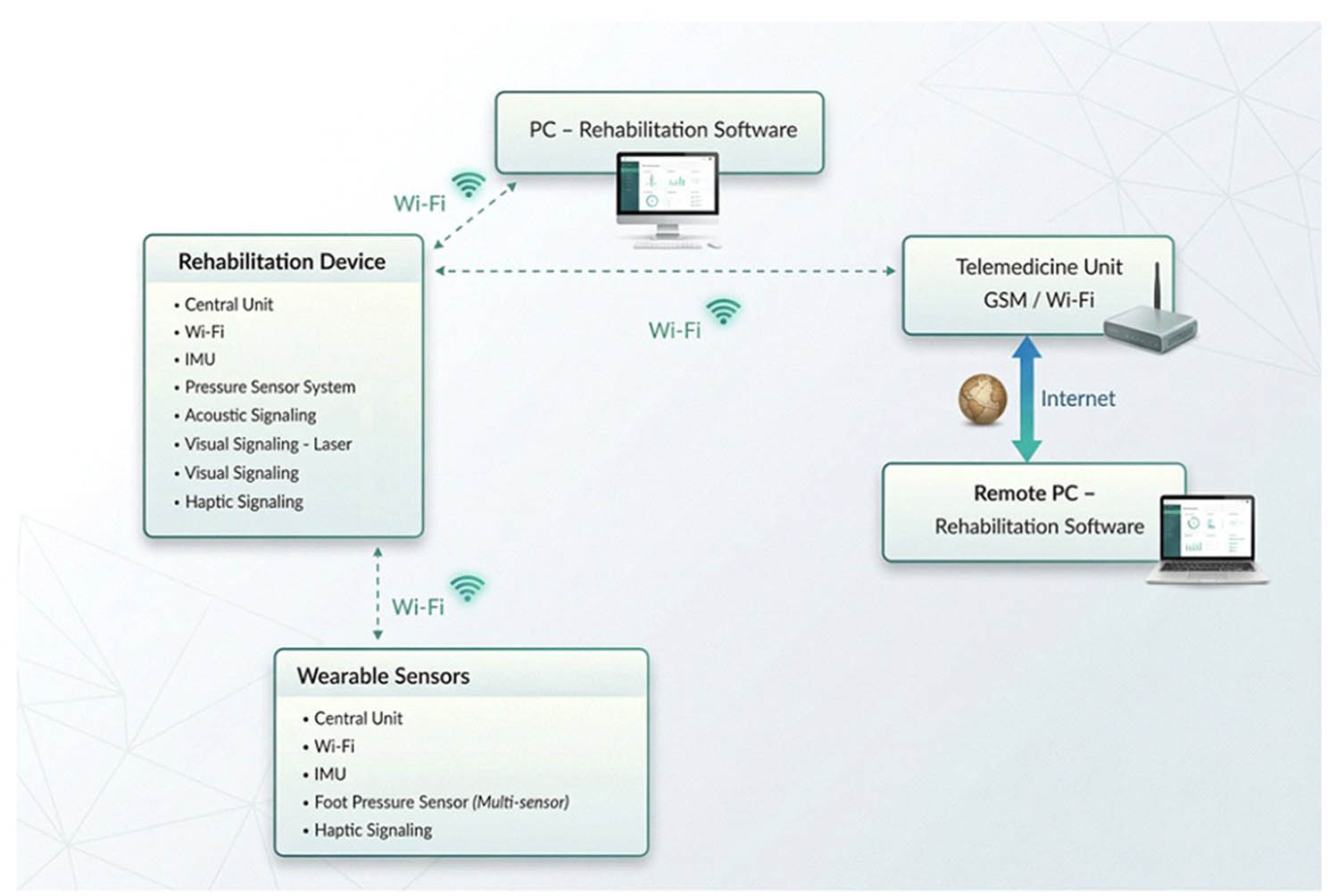
Figure 2
Block diagram showing the device communication.
The device was controlled via Wi-Fi from a personal computer on which software designed to operate the device had been installed and launched. The software was designed to personalize assessments and training parameters, to support Wi-Fi communication, and record weight-bearing and step length data. The software controlled both auditory and visual feedback provided to the patient. The basic features are shown in Figure 3.
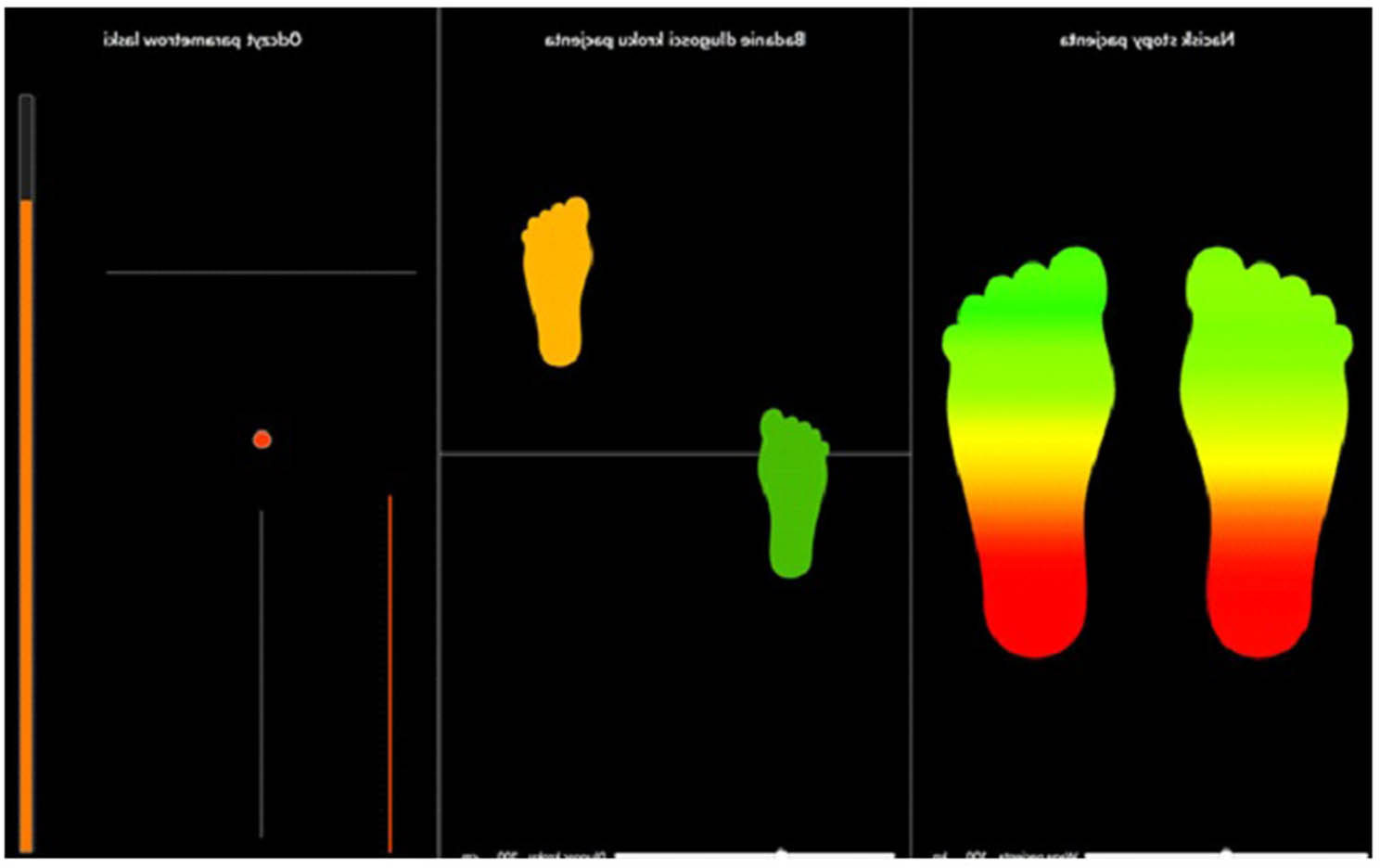
Figure 3
Visual feedback for the patient – stride length and symmetry.
The software automatically computed mean weight-bearing data from the orthopedic devices during walking. We calculated the lower-limb weight-bearing symmetry index in a standing position and the step length symmetry index. Symmetry indices and walking speed were used as the main markers to describe improvement in the study participants’ gait. A decrease in the value of Ws down to 1.0 with a simultaneous increase in the self-selected walking speed was considered an improvement.
All statistical analyses were performed using Statistica software (StatSoft ver. 13.1, Poland). Basic descriptive statistics for the analyzed parameters are presented. To compare changes in the mean values of the analyzed parameters between the baseline and final assessments, a Wilcoxon nonparametric test was performed. Statistical significance was set at p ≤ 0.05.
3. Results
Changes in gait and balance parameters were assessed based on data obtained from measurements taken without the device investigated in the study. Comparative analyses took into account the data acquired from 3D gait recording as well as balance data obtained from assessments on force plates.
The participants’ walking speed during the baseline and final assessments is presented in Table 2. The step length for the right and left legs is presented in Table 3. The step length for the affected leg was greater compared to the step length for the unaffected leg in all the study participants. The stride length symmetry index decreased significantly after the program ended.
Table 2
Step length, walking speed, and step length symmetry index in the study participants at baseline and the final assessment
| Participant | Sl dex 1(cm) | Sl sin 1(cm) | Sl dex 2(cm) | Sl sin 2(cm) | Ws1 | Ws2 | V1 | V2 |
|---|---|---|---|---|---|---|---|---|
| CR | 0.43 | 0.52 | 0.58 | 0.61 | 1.21 | 1.05 | 0.69 | 1.1 |
| SM | 0.81 | 0.57 | 0.72 | 0.67 | 1.42 | 1.07 | 0.84 | 1.2 |
| AW | 0.23 | 0.38 | 0.26 | 0.29 | 1.65 | 1.16 | 0.3 | 0.35 |
| RW | 0.41 | 0.63 | 0.6 | 0.56 | 1.53 | 1.07 | 0.71 | 0.87 |
| BB | 0.49 | 0.73 | 0.67 | 0.56 | 1.49 | 1.19 | 1.07 | 1.02 |
| SA | 0.4 | 0.7 | 0.45 | 0.5 | 1.75 | 1.11 | 0.55 | 0.9 |
| MN | 0.3 | 0.6 | 0.4 | 0.5 | 2 | 1.25 | 0.72 | 0.88 |
| DK | 0.35 | 0.65 | 0.5 | 0.55 | 1.85 | 1.11 | 0.45 | 0.8 |
| ZZ | 0.4 | 0.5 | 0.5 | 0.5 | 1.25 | 1 | 0.75 | 1.12 |
Sl – step length, 1 – baseline assessment, 2 – final assessment, dex – right, sin – left, Ws – symmetry index, V – walking speed.
Table 3
Mean step length, mean step length symmetry index, mean walking speed, and statistical test results
| V (m/s) | Sl dex (cm) | Sl sin (cm) | Ws Sl | |
|---|---|---|---|---|
| Assessment 1 | 0.68 ± 0.12 | 0.42 ± 0.15 | 0.59 ± 0.1 | 1.57 ± 0.13 |
| Assessment 2 | 0.92 ± 0.17 | 0.52 ± 0.13 | 0.53 ± 0.09 | 1.11 ± 0.15 |
| p - value | p = 0.002 | p = 0.003 | p = 0.004 | p = 0.002 |
V – walking speed, Sl – step length, dex – right, sin – left, Ws symmetry index.
Mean step length, mean step length symmetry index, and mean walking speed are shown in Table 3.
The participants’ walking speed increased by 0.24 m/s at the end of the study; the difference was statistically significant (p = 0.002). There was also improvement in step length symmetry. At the end of the program, the mean step length for the right and the left legs was 0.53 cm and 0.52 cm, respectively. The step length symmetry index of 1.11 was acquired at the end of the program (Table 3). The decrease in step length asymmetry was statistically significant.
The parameters describing body balance, distribution of lower limb weight-bearing, and the center of pressure sway area are shown in Table 4. The changes in all these parameters were statistically significant (Table 4).
Table 4
Mean distribution of weight placed on lower limbs in a standing position at baseline and in the final assessment and the center of pressure sway area as well as lower limb weight-bearing symmetry index
| W dex (kg) | W sin (kg) | Ws W | F (mm2) | |
|---|---|---|---|---|
| Assessment 1 | 41 ± 10.1 | 36.89 ± 6.3 | 1.88 ± 0.15 | 541.2 ± 88.2 |
| Assessment 2 | 40.1 ± 8.9 | 38.89 ± 7.8 | 1.21 ± 0.1 | 427.4 ± 78.3 |
| p - value | p = 0.03 | p = 0.004 | p = 0.0001 | p = 0.04 |
W – weight-bearing, dex – right, sin – left, Ws – symmetry index, F – sway.
4. Discussion
The study assessed the effect of using a cane equipped with a pressure sensor measuring the vertical force applied to the cane, as well as motion sensors, on gait pattern modification in stroke survivors. The proposed system enables gait training under natural conditions while providing continuous feedback on gait patterns. It fulfills its primary function by reducing the load on the unaffected arm during weight-bearing on the paretic lower limb, thereby increasing its activity during the stance phase.
The device provides continuous auditory, visual, and haptic stimuli to support motor control during walking. Haptic stimuli are delivered via vibrators embedded in the cane’s handle, while visual cues – such as a modulated light signal along the cane’s shaft and an image projected onto the floor in front of the user – facilitate gait modification through afferent feedback indicating that the load on the cane exceeds a predefined threshold. The device also integrates data from sensors placed on the body.
IMU sensors and foot pressure sensors embedded in shoe insoles provide real-time feedback on stride length and any asymmetry between strides. The device can alert the user when the acceptable level of asymmetry is exceeded, for example, through haptic (vibration) feedback. In this study, we integrated previously used individual stimuli into a single feedback system to support the control of lower limb loading and step length symmetry during walking. The results obtained from the participants indicate promising potential for further research and for the application of this device in stroke rehabilitation.
A stroke impairs the ability to maintain posture and balance during walking [22]. The use of pressure sensors on a cane, combined with feedback on the applied force, can facilitate improvement of the stance phase on the paretic limb. Weight-bearing on the paretic limb also provides proprioceptive stimulation, which contributes to enhanced postural stability [23].
The concept behind our device is based on the widely used method of biofeedback. The use of auditory feedback in gait training has been shown to improve stability control. Continuous auditory stimulation provided during gait training facilitates postural control, balance, and trunk stability. In a randomized study, Jung provided participants with an acoustic signal delivered via headphones while they walked using a cane equipped with a pressure sensor, which was triggered when a predefined pressure threshold was exceeded. The results demonstrated that gait training with auditory feedback improved trunk control and muscle activation in stroke patients with hemiplegia [24,25].
In our device, the vertical pressure sensor has been relocated from the upper to the lower part of the cane. In addition, we supplemented the afferent feedback with haptic sensors integrated into the cane handle, similar to the device developed by Lee. Importantly, our system is also intended for home-based gait training. We emphasize that equipping a patient with a device incorporating an advanced feedback system should not compromise the cane’s primary function, which is to provide support and ensure safe ambulation.
The presented device fulfills both functions and may be considered in the future as a component of telerehabilitation. The results obtained from the participants indicate a reduction in the asymmetry of lower limb load distribution compared to the baseline assessment. During the first walking session, an individual threshold value for cane load was established for each participant, at which vibrational and visual feedback were activated. The threshold was calculated as the participant’s body weight divided by the average cane load recorded during a 10 m walk.
In each subsequent walking training session, the threshold was reduced by 10%, depending on task performance. At the end of the program, the lower limb load symmetry index during standing was 1.11, which was significantly lower than the baseline value. Alongside the improvement in limb load distribution in the study group, a reduction in the area of medial displacement of the center of pressure within the base of support was observed. This finding indicates increased engagement of the paretic lower limb during standing, accompanied by improved postural stability.
Gait speed is a sensitive indicator of functional independence in stroke patients and is commonly used to assess both the level of independence and rehabilitation progress. In the subacute phase after stroke, an increase in gait speed of 0.16 m/s following a period of rehabilitation is considered clinically significant [28].
The aim of the systematic review and meta-analysis conducted by Wang was to synthesize the existing evidence on the effects of real-time biofeedback gait training on gait parameters, including walking speed and functional abilities, in stroke survivors. The findings demonstrated that portable devices for real-time biofeedback gait training have a positive effect on improving walking speed [29].
In a randomized study, Jung used a cane equipped with a pressure sensor during gait training and compared the outcomes with those of a control group undergoing conventional gait training. The results showed significantly greater improvement in the experimental group, including reduced reliance on the cane and increased walking speed [15].
The biofeedback system described above is based on kinetic parameters provided in real time by the cane. Our device features a kinematic sensor module (IMU sensors) used to assess and train temporal and spatial gait parameters. We assumed that while walking with a cane and receiving information about the force applied to the cane, the patient would reduce the load on the cane without controlling and reducing step length asymmetry. The device uses sensors positioned at ankle height.
Data from the sensors allow for the assessment of stride length in both the right and left lower limbs. All participants exhibited step length asymmetry, both during walking without the device and when using body-mounted sensors. An individual asymmetry threshold was established for each patient, above which biofeedback could be activated in the form of visual cues (e.g., foot or line visualizations displayed in front of the patient) or haptic feedback (vibration applied near the ankle). Not all feedback modalities were used simultaneously.
Initially, during each session, patients practiced walking while avoiding excessive loading on the cane. Once the cane load was reduced, step length biofeedback functions were activated via the computer system. As a result of the training, participants showed a significant reduction in step length asymmetry, which exceeded 1.15 in the initial assessment for all individuals.
The subsequent stage of therapy involved walking with active sensor modules on both the cane and the body. By controlling cane load and step length symmetry during walking, patients reinforced a newly acquired, more physiological gait pattern.
Porciuncula indicated that wearable sensors can enable stroke survivors to receive biofeedback through portable, non-invasive, unobtrusive, and user-friendly sensor systems [30]. The presented device provides users with guidance on their current gait patterns through vibratory, visual, or auditory signals delivered by compact sensors worn on or attached to the body.
We propose that the device may serve as a versatile biofeedback toolkit for clinical settings, offering multiple configurable feedback modalities. In addition, it is suitable for use in the patient’s home environment. The accompanying software enables remote monitoring and adjustment of device parameters.
The results of our study are inconclusive. Although the study has several limitations, the observed positive trends suggest promising potential outcomes. The primary limitations relate to the small sample size and the lack of group homogeneity. Future research should adopt a randomized, placebo-controlled design, which appears to be feasible.
Additionally, extending the duration of cane-based training and biofeedback interventions should be considered. The software responsible for synchronizing feedback from the cane and body-mounted sensors also requires further refinement. In particular, it should prioritize signals indicating that the cane load threshold has been exceeded over signals from body and insole sensors related to step length asymmetry.
5. Conclusion
The aim of this study was to present a device and evaluate the potential benefits of combining auditory, visual, and haptic cues during overground walking in individuals with post-stroke hemiplegia.
The device and its functionality were well accepted by the participants.
In the study group, gait training using the proposed device was shown to be effective in improving walking speed, step length symmetry, and lower limb load distribution.
The findings indicate that biofeedback incorporating haptic and visual cues can be beneficial in post-stroke gait rehabilitation, leading to concurrent improvements in gait symmetry and walking speed.
Acknowledgments
The authors gratefully acknowledge all participants for their contribution to this study.
Funding information
This research was funded by the Podkarpackie Innovation Center (PCI) (Grant No. N4_54). The project was carried out within the regional program “European Funds for Podkarpacie,” Call IV, Competition No. 1/2024. Funding was provided by PCI in 2025.
Author contributions
MD – study conception and design, funding acquisition, methodology, manuscript drafting and review and editing; AK – investigation, data acquisition, software and analysis; DK – investigation, data acquisition, software and supervision; AG – study conception and design, methodology, manuscript drafting, All authors approved the final version of the manuscript and accept responsibility for the work.
Conflict of interest statement
Authors declare no competing interests.
Consent to publication
All participants provided written informed consent for data processing as part of the study and agreed to the publication of anonymized data and results.