
1. Introduction
Artificial intelligence (AI) tools have been among the most disruptive innovations in the economy in recent years (Forradellas and Gallastegui 2021), and in public administration, particularly within the courts (Reiling 2020; Barysė and Sarel 2024). Beyond enhancing judicial performance by expediting processes, AI boosts productivity and enables more efficient resource allocation (Medaglia, Gil-Garcia, and Pardo 2023). However, the adoption and implementation of AI practices have advanced faster than scientific and theoretical developments (Criado et al. 2020), making constant research updates necessary as new AI-based systems emerge (Drakokhrust and Martsenko 2022).
Most AI research has concentrated on technical issues and applications in the private sector, with only 3.5% of studies focusing on the use of AI in the public sector, and an even smaller share addressing its application in the judiciary; therefore, it is imperative to undertake a comprehensive examination of AI within the judicial context (Valle-Cruz et al. 2019; Sousa et al. 2019; Pi 2021). From this perspective, numerous studies suggest which AI tools should be built or fully deployed in public services (Dwivedi et al. 2021; Finck 2020; Medaglia, Gil-Garcia, and Pardo 2023; Sun and Medaglia 2019; Martinho 2024). However, a gap remains regarding the tools’ end users. While much has been discussed about the techniques and algorithms behind AI systems, a disconnect persists between customers and the actual users of the technology (Gong and Park 2023; Mosqueira-Rey et al. 2023). Another challenge lies in the conceptual difficulties of determining what to measure and how to measure innovations in the public sector (Kattel et al. 2018; 2013; Carneiro, Isidro Filho, and Criado 2023).
In this scenario, understanding the current use of AI in the courts requires examining the perceptions of information technology managers and judges involved in AI projects (Atkinson, Bench-Capon, and Bollegala 2020). Accordingly, this study posed the following research questions: Q1) How has AI impacted court work? Q2) What are judicial professionals’ perceptions of the future of their roles in the face of the transformations brought about by AI? Q3) Is there a strategic alignment between the court and the application of AI? Finally, the central question was: Q4) What is the level of AI effectiveness in the courts?
Given this context, this study aimed to assess the effectiveness of AI in Brazilian Courts of Justice by proposing a framework that encompasses key dimensions, along with insights from the literature review and survey responses. The findings are intended to assist managers in adopting AI technologies and in designing strategies to enhance awareness and promote their effective use within the judiciary.
1.1. AI in the judiciary and public sector innovation
AI enables machines to autonomously reason, learn, and make decisions without human intervention, with applications rapidly expanding across various domains (Laptev and Feyzrakhmanova 2021; Russell and Norvig 2021). The interaction drives the increasing demand for machine-human growth (Mosqueira-Rey et al. 2023). In the judicial context, AI integration has been examined as a form of public sector innovation, addressing conceptualizations of innovation as well as the challenges and indicators identified in the literature (Kattel et al. 2018; 2013; Houtgraaf 2023).
Innovation in the public sector is understood as creating public value through new ideas that enhance efficiency and quality (Carneiro, Isidro Filho, and Criado 2023). It often entails disruptive organizational changes (Hendriksen 2023; Di Giulio and Vecchi 2023) or transformations in relationships and environments (Carneiro, Isidro Filho, and Criado 2023). Unlike in the private sector, where innovation is primarily driven by profit, public sector innovation is oriented toward transparency, equity, and accountability (Agrawal, Gans, and Goldfarb 2019; Hjelmar 2021; Kattel et al. 2013; 2018).
Studies on AI in the judiciary have predominantly focused on productivity and judicial performance, with little attention to its broader impacts (Deeks 2019; Martinho 2024). In this sense, this study proposes a model for evaluating AI in courts through a systemic approach, encompassing complex dimensions such as environment, reliability, autonomy, techniques, and results.
From a public-sector perspective, the main challenges and impacts of innovation involve the integration of technology, governance, and social implications (Sun and Medaglia 2019; Wirtz, Weyerer, and Geyer 2019). Human, financial, and technological resources are the main ‘inputs’, with human resources encompassing aspects such as promotion, training, skills, job satisfaction, and knowledge sharing. Factors influencing performance are classified as ‘process’ components, while certain indicators, ‘outputs’ and ‘impacts’, are interconnected. Nevertheless, measuring broader impacts of innovation, such as effectiveness, remains a significant challenge (Bekkers and Tummers 2018; Pollitt 2011). The model proposed in this study is based on the indicators and challenges in the literature and is further informed by the interviewees’ perceptions.
1.2. Proposed framework
Based on studies that mapped potential indicators or models for measuring innovation in the public sector from a systemic perspective (Kattel et al. 2018; 2013), this study adopted a framework to assess the effectiveness of AI in the courts (Figure 1). The dimensions, subdimensions, and possible variables – highlighted in parentheses in the following sections, such as ‘(vn)’ – are presented as propositions; that is, they represent constructs or the result of deductions and interpretations derived from the literature.
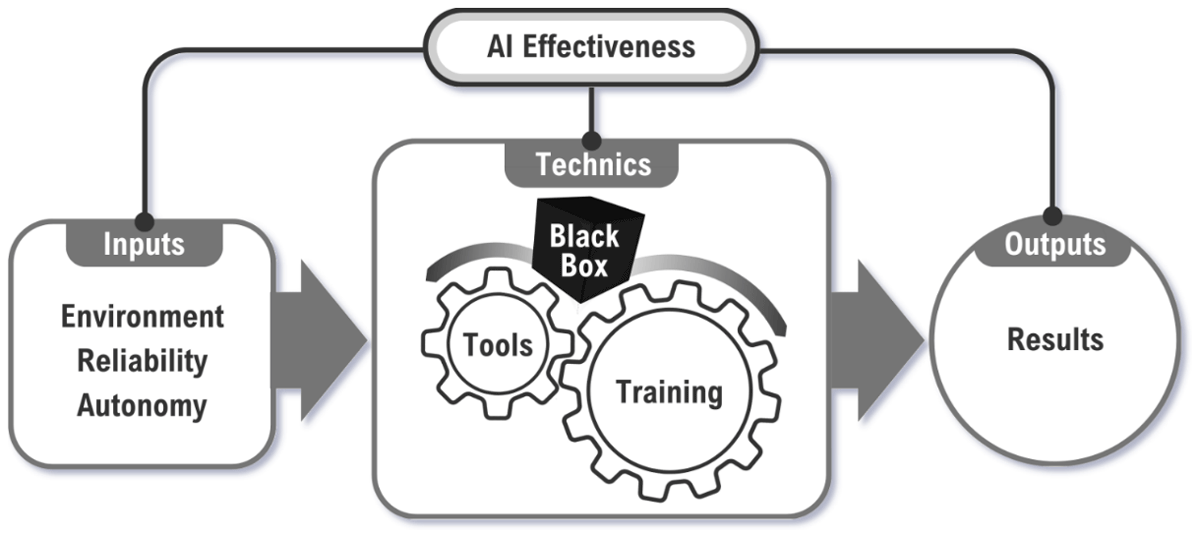
Figure 1
AI effectiveness framework.
1.2.1. Inputs
The initial part of the framework comprises the environment, reliability, and autonomy dimensions, which are contextual variables that precede the very application of AI and shape the expectations regarding productivity results. These dimensions are regarded as inputs or antecedents. Antecedents refer to factors that drive or facilitate innovation, as well as those that hinder it or act as barriers to its innovation (Hollebeek and Andreassen 2018; Souza Neto et al. 2019; Maqdliyan and Setiawan 2023; Balasubramanian, Kakani, and Danish 2024).
By adopting the environmental dimension as an input, this study examines how the organizational and interpersonal context may influence judges and information technology (IT) managers to adopt AI tools (Procopiuck 2018; Re and Solow-Niederman 2019; Shrestha, Ben-Menahem, and von Krogh 2019; Sourdin 2018). Within the internal environment subdimension, court employees and staff members will provide their knowledge, often derived from ‘individual academic research’ (v7) or from specialized services, towards the development and maintenance of AI systems (Brennan-Marquez and Henderson 2018; Procopiuck 2018).
One possible category of AI solutions developed within the court is ‘endogenous solutions’ (v6), created without the involvement of external actors (Atkinson, Bench-Capon, and Bollegala 2020). These may arise from ‘internal events’ (v5), such as seminars, hackathons, and workshops designed to foster the creation of AI systems; or from ‘innovation laboratories’ (v8), which currently serve as drivers or motivators of new technologies in the judiciary (Bochenek and Zanoni 2021; Kim, Shi, and Verdi 2023). For this study, the variable referring to Innovation Laboratories (v8) was considered to be normative, as it stems from a strategic guideline of the National Council of Justice (Conselho Nacional de Justiça – CNJ), the administrative and oversight body of the Brazilian judiciary (Bochenek and Zanoni 2021; Kim, Shi, and Verdi 2023).1,2
In turn, the sharing of ‘experiences between courts’ (v3) is treated as an external environmental variable, given the diversity in performance, jurisdictional scope, and geographic location across the judiciary.4 Additionally, AI system proposals may originate from external actors, constituting ‘exogenous solutions’ (v2). For this purpose, partnerships with ‘private sector companies and startups’ (v4), as well as contracts or cooperation agreements with ‘universities’ (v1) and ‘private IT consultancies, are regarded as key external contributors to AI development in the courts (Dwivedi et al. 2021; Medaglia, Gil-Garcia, and Pardo 2023; Pi 2021; Valle-Cruz et al. 2019).
Assuming that the reliability dimension precedes the expected results of technological innovation, it can be considered an antecedent in the framework, encompassing subdimensions related to ethics, transparency, and data management. First, a cautious stance toward new technologies is required, questioning the extent to which AI should replace judges (Sourdin 2018). The fact is that the use of AI inevitably raises reflections on the ‘future of work’ (v9), making it fundamental for public administration not only to foster acceptance of AI among citizens and court staff (Sun and Medaglia 2019; Pi 2021; Di Vaio, Hassan, and Alavoine 2022), but also to prepare and train these users for the advent and integration of technologies. The implementation of AI systems in public services can free valuable cognitive resources, enabling employees to be reallocated to ‘more intellectual tasks’ (v10) and higher value-added activities, while repetitive processes are delegated to AI (Dwivedi et al. 2021; Sun and Medaglia 2019).
For the transparency subdimension, the debate extends beyond merely disclosing or sharing actions to ensuring that these acts are fair (Chiao 2019; Coglianese and Lehr 2019; Sourdin 2018; Amariles and Baquero 2023; Zafarullah and Siddiquee 2021; Samaratunge and Alam 2021). This fairness enables human oversight, as autonomous machines or systems cannot bear the full scope of conduct and responsibility assigned to public agents (Brożek and Jakubiec 2017). That is, transparency is crucial for ‘accountability’ (v11) and for the sharing of results, as it allows processes to be traced and responsibilities to be identified when failures occur (Deeks 2019; Procopiuck 2018; Sourdin 2018).
A challenge within the reliability subdimension is data management, which seeks to ensure integrity and organization in data use (Hayashi and Wakabayashi 2017; Sun and Medaglia 2019). Properly training algorithms with accurate and reliable datasets is essential for AI tools to provide trustworthy information for decision-making (Sourdin 2018; Zeleznikow 2002; Gong and Park 2023). However, many of these algorithms remain opaque or poorly understood, and may replicate or amplify social biases embedded in the training data (Amariles and Baquero 2023), thereby undermining both the perception of justice and, consequently, the reliability of judicial decisions (Deeks 2019). This underscores the importance of ‘problem definition’ (v12) through ‘data accuracy’ (v13) supported by specific data treatments prior to AI deployment.
An additional variable raised by the interviewees, but not yet explored in the literature, is ‘more automation than AI’ (v13), which concerns the intended purpose of the planned AI system. For the purposes of effectiveness analysis, this variable was excluded, as it is not directly related to AI development. Instead, it functions as an indicator for distinguishing whether a project truly involves AI or merely automates procedural routines.
Lastly, regarding the inputs or antecedents of the autonomy dimension, and considering that the ‘competencies’ (v16) and responsibilities of judges and court staff members are closely linked (Brożek and Jakubiec 2017; Chiao 2019; Deeks 2019; Dwivedi et al. 2021). A critical question is the ‘responsibility’ (v15) for judicial acts and decisions made autonomously by AI systems (Martinho 2024). The challenge extends beyond ethical and legal responsibility concerns to encompass the political and regulatory accountability of public administration (Dwivedi et al. 2021; Sun and Medaglia 2019). In other words, who will citizens turn to when an AI system renders an incorrect decision?
1.2.2. Process
The technique dimension occupies the central part of the framework, corresponding to the process, and comprises three subdimensions: tools, training, and black box. Among the various AI applications considered as tools, the most frequently mentioned by respondents were ‘initial thematic screening’ (v17), which primarily involves the procedural thematic classification and clustering of cases. These AI systems are designed to assist court staff and judges in preparing decisions, votes, and legal documents by referencing previous rulings. For example, ‘other AI applications’ (v18) include tools for tax enforcement, especially for online asset attachment actions and the automatic collection of taxes pending payment. Within the training subdimension, the emphasis is on enabling court staff and judges to use AI tools more effectively. Thus, ‘training practices’ (v19) of staff members and judges were considered to ensure AI efficiency and effectiveness.
A critical challenge in the technical dimension is the ‘black box’ (v20), which refers to the opaque nature of the calculations, algorithms, and various techniques involved in building and maintaining AI tools. Frequently, systems have little to no knowledge of the processes underlying the system’s outputs (Dwivedi et al. 2021; Haenlein and Kaplan 2019; Zuiderwijk, Chen, and Salem 2021; Russell and Norvig 2021; Brożek et al. 2023). Addressing this requires judges to understand the reasoning pathway by which an AI system arrives at its final goal: the decision (Deeks 2019). Consequently, the judiciary is merely managers overseeing technical teams or external contractors (Deeks 2019); they must be capable of engaging with the logic and structure of AI decision-making itself.
1.2.3. Outputs
The final part of the framework addresses outputs or results, organized into three subdimensions: efficiency, efficacy, and impacts. This dimension stands out as a consequent variable, reflecting the relationship between IT investments, professional training and qualifications, and the achievement of productivity gains and procedural efficiency (Procopiuck 2018; Yeung and Azevedo 2011). It also encompasses the courts’ effort to build or adapt AI systems and to define strategies aimed at ensuring strategic alignment.
Efficacy, effectiveness, and efficiency were analyzed separately (Checkland and Poulter 2010). The concepts of efficiency and effectiveness were closely tied to the results and the overall transformation process, given that the design and execution of a project are critical to the success or failure of the proposed AI solution. Regarding the temporal scope of effectiveness, some authors recommend assessing results first and only then assessing effectiveness (Carmona and Sieh 2004), while other studies propose conducting assessments before, during, and after implementation (Gault, Arundel, and Kraemer-Mbula 2023; Maqdliyan and Setiawan 2023). In this research, effectiveness was treated as a continuous process, with inputs (antecedents), processes, actions, and results evaluated together to determine the extent to which intended outcomes were achieved.
From the interviewees’ perspectives, combined with insights from the literature, aspects related to ‘measurement’ (v21) and result presentation emerged as key elements of efficiency, particularly in terms of cost-effectiveness, productivity, and speed. In practice, this entails comparing the expected return on results with the financial, human, and cognitive values and resources invested in AI systems in the courts. Effectiveness, in turn, was assessed concerning the objectives and goals defined by higher bodies, such as the CNJ, and the degree of ‘strategic alignment’ (v22) in the courts adopting AI. Finally, under the impacts subdimension, whether AI systems were examined in terms of ‘sharing’ actions (v23) among courts, as evidenced in the interviewees’ comments, particularly regarding the platform implemented by the CNJ.3,4
2. Methods and techniques
The study is characterized as theoretical-empirical, adopting a robust approach that integrates theoretical foundations with the proposal of a framework to be tested empirically. It employs a qualitative method based on interviews with judges and IT managers in Brazilian courts, resulting in an exploratory-descriptive investigation. This design enables the in-depth examination of the topic and the construction of a foundation for future research, while ensuring the validity and reliability of the findings.
Based on thirty courts identified with AI projects (FGV 2021; Silva et al. 2021), potential interviewees were selected intentionally through non-probability sampling, ensuring direct involvement of these professionals in AI-related initiatives. A semi-structured interview script was developed to explore participants’ thoughts, perceptions, feelings, and experiences (DeJonckheere and Vaughn 2019). This instrument comprised nine questions aligned with the study’s dimensions.
Data triangulation was conducted in three stages: (1) identification of dimensions, subdimensions, and variables through a literature review; (2) analysis of primary data from interviews with judges and IT managers, mapping the presence or absence of variables in the participants’ statements; and (3) examination of normative data from AI project documentation, legislation, and judicial guidelines. The integration of these three sources supported the evaluation of AI systems’ effectiveness in the courts through the Effectiveness Index (i – Eff), developed to strengthen the analysis and discussion of results. Given the large volume of qualitative data from the interviews, the use of this index provided a synthesized yet reliable representation of the interviewees’ contributions (Gault, Arundel, and Kraemer-Mbula 2023).
The variables identified in the participants’ statements serve as indicators for constructing and measuring the i – Eff. Effectiveness was calculated based on the dimensions and subdimensions of the i – Eff model, by summing the scores of the five dimensions and dividing the result by a maximum of 100 points (Eq. 1).
Where 0 ≤ di ≤ 20, for all i:
d1: environment dimension value.
d2: reliability dimension value.
d3: autonomy dimension value.
d4: technique dimension value.
d5: results dimension value.
Each dimension had a maximum score of 20 points. As all dimensions reflect systemic aspects, they were weighted equally, and their values were calculated uniformly (see Table 1).
Table 1
Score assigned to variables.
| DIMENSIONS (di) | SUBDIMENSIONS | VARIABLES (vn) | SCORE |
|---|---|---|---|
| Environment | • External | (v1) Universities | 2.5 |
| (v2) Exogenous solution | 2.5 | ||
| (v3) Inter-courts experience | 2.5 | ||
| (v4) Private companies | 2.5 | ||
| • Internal | (v5) Internal events | 2.0 | |
| (v6) Endogenous solution | 2.0 | ||
| (v7) Individual research | 2.0 | ||
| (v8) Innovation laboratories | 4.0 | ||
| d1 | 20.0 | ||
| Reliability | • Ethic | (v9) Future of work | 3.5 |
| (v10) Intellectual activities | 3.5 | ||
| • Transparency | (v11) Accountability | 6.0 | |
| • Data management | (v12) Problem definition | 3.5 | |
| (v13) Data accuracy | 3.5 | ||
| (v14) More automation than AI | 0 | ||
| d2 | 20.0 | ||
| Autonomy | • Responsibilities | (v15) Suggestions for legal acts | 10.0 |
| • Skills | (v16) Autonomous resolution | 10.0 | |
| d3 | 20.0 | ||
| Technics | • Tools | (v17) Initial thematic screening | 5.0 |
| (v18) Other AI applications | 5.0 | ||
| • Training | (v19) Training | 5.0 | |
| • Black box | (v20) Algorithm knowledge | 5.0 | |
| d4 | 20.0 | ||
| Results | • Efficiency | (v21) Measurement | 5.0 |
| • Efficacy | (v22) Strategic alignment | 5.0 | |
| • Impacts | (v23) Sharing | 10.0 | |
| d5 | 20.0 | ||
| 100.0 |
A rating scale was applied to assess the degree of i – Eff, measuring effectiveness based on the scores assigned to each court (Table 2). The i – Eff was calculated by identifying the presence or absence of variables related to each dimension in the interviewees’ statements, multiplying these by the score assigned to each variable, and determining the percentage for each variable within the court. Final grades were then assigned according to the rating scale.
Table 2
The i – Eff valuation scale.
| NOTE | DESCRIPTION | CRITERION |
|---|---|---|
| A | Highly effectiveness | i – Eff ≥ 90% |
| B | Very effectiveness | 75% ≤ i – Eff < 90% |
| C | Medium effectiveness | 50% ≤ i – Eff < 75% |
| D | Lower effectiveness | 25% ≤ i – Eff < 50% |
| E | No effectiveness | i – Eff < 25% |
2.1. Data collection
Due to physical restrictions imposed by the COVID-19 pandemic, the interviews were conducted virtually via videoconference between September and November 2021. Sixteen interviews were held with judges, systems analysts, data scientists, and IT managers, all of whom provided consent for recording. In total, the sessions amounted to 12 hours and 28 minutes of data, with an average duration of 44 minutes per interview, yielding 87,794 transcribed words.
The interview participants represented nine State Courts, three Federal Regional Courts, two Regional Labor Courts, and two Superior Courts. Despite efforts, it was not possible to include participants from electoral or military courts. The participants were based in various Brazilian states and the Federal District, including Brasília, Alagoas, Bahia, Goiás, Pernambuco, Paraná, Rio de Janeiro, Rio Grande do Norte, Rondônia, Roraima, Rio Grande do Sul, and São Paulo.
2.2. Data analysis procedures
The data collected were analyzed at three stages. Initially, transcripts from the sixteen interviews were compiled into a textual corpus and processed using the IRaMuTeQ software (http://www.iramuteq.org/). This software offers statistical analysis based on the ALCESTE algorithm and contextual word retrieval (Abric 1993; Soares et al. 2022; Souza et al. 2018). The corpus analysis generated the following textual statistics: (a) 16 texts (interviews), (b) 87,758 total word-occurrences, (c) 4,069 distinct word-forms, and (d) 1,666 hapax-legomena (words occurring only once).
Thematic content analysis was conducted using a three-step approach (Bardin 2018). First, in the pre-analysis step, the data were organized into 16 files. Second, in the coding step, responses were coded with the letter ‘N’ followed by interview numbers and categorized into five worksheets corresponding to the framework dimensions. Finally, in the interpretation step, responses were examined in detail to identify subdimensions and variables. This analysis revealed the presence or absence of specific variables in the interviewees’ statements, leading to the identification of the i – Eff.
3. Results and discussion
Given that the analysis results are grounded in the interviewees’ statements, it is important to stress that lexical analysis software, combined with content analysis, is not an end in itself. Instead, it serves as an instrument for exploring the primary data obtained from the interviews to better capture the participants’ perceptions of the topic (Camargo and Justo 2013; Soares et al. 2022).
3.1. Lexical analysis
Using a minimum threshold of ≥80 occurrences as the main criterion, a word cloud was generated with the 66 most cited terms by the interviewees, where font size reflects word frequency in the textual corpus (Figure 2). The most cited words and their frequency are highlighted: “people” (1,267), “be” (884), “artificial intelligence” (576), “tribunal” (530), “process” (372), and “system ” (334). Although the central portion of the cloud highlights the most recurrent terms, several adjacent words are also relevant to the AI theme, including “automation”, “technology”, “innovation”, “laboratory”, “demand”, “result”, and “execution”.
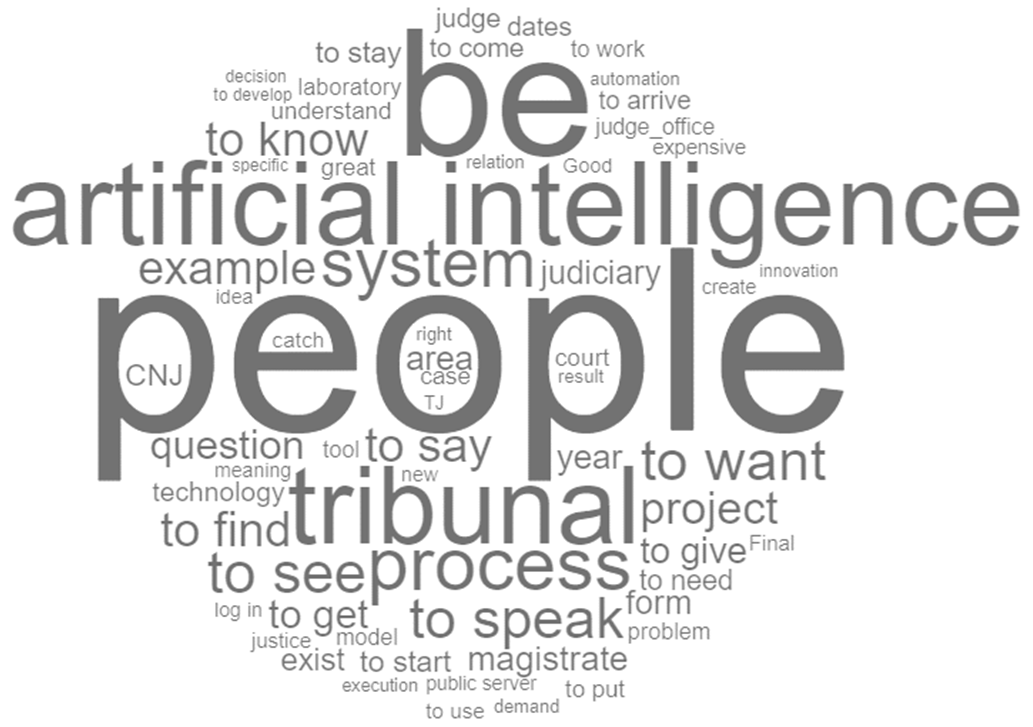
Figure 2
Word cloud of the textual corpus.
A correspondence factor analysis was then conducted to explore relationships of dependence and independence among concepts mentioned by the interviewees (Camargo and Justo 2013). In this type of analysis, proximity on the Cartesian plane indicates thematic affinity, while greater distance suggests opposition or divergence (Camargo and Justo 2013; Soares et al. 2022) (Figure 3).
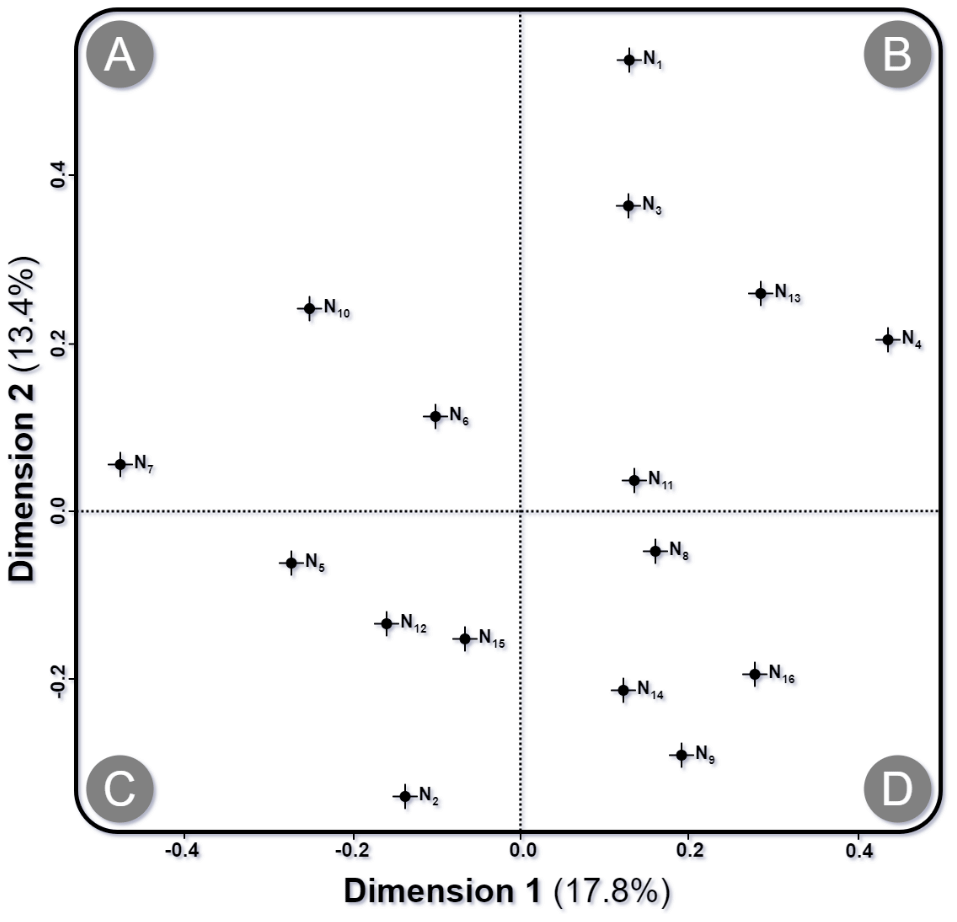
Figure 3
Correlation relationship of concepts.
To better contextualize correspondence factor analysis (Abric 1993; Soares et al. 2022), it is worth noting its link with central nucleus theory and social representation theory, whereby certain words may form part of a potential central nucleus, depending on their meaning and internal organization. Although the central nucleus typically reflects a consensual function, in this study (Figure 3), no such nucleus was evident; interviewees’ statements were dispersed across divergent quadrants, revealing a lack of convergence and, instead, a diversity of arguments.
About the central nucleus, the peripheral system fulfills three functions: (i) concretization, anchoring the representation in reality; (ii) regulation, adapting the representation to contextual changes; and (iii) defense, protecting the central core of representation (Abric 1993; Soares et al. 2022). Based on the regulatory role of the peripheral system, it can be inferred that, as AI is a recent topic within the courts, it is likely to undergo significant updates, transformations, and developments in the coming years.
3.2. AI effectiveness assessment
To assess the effectiveness of AI in courtrooms in a practical manner, the following sections address each dimension, emphasizing interviewees’ comments and the data related to each variable according to the scoring criteria described in the Methods section. Subsequently, two tables are presented: one summarizing the sum of the scores and another detailing individual scores.
3.2.1. Environment
Starting with the External Environment subdimension, regarding the formal and direct relationship with the ‘universities’ (v1) through agreements or contracts, the interviewees mentioned efforts to establish closer ties between the court and some laboratories and institutes. These partnerships were considered particularly valuable during the AI systems’ development phase. However, only three courts reported having universities as active partners, indicating limited effectiveness in this regard, as exemplified by N1: “there was the hiring of professors, masters, doctors, interns, and laboratories for software development; the court has the capacity, but it does not have the skill; it lacks the technique.”
Two courts also cited partnership and the exchange of ‘experiences between courts’ (v3) as a collaborative approach to developing AI systems, sharing and diagnosing specific needs, then adapting solutions, as stated by N4: “we took everything we had in our system and the system of the other courts in partnership.”
In this context, interviewees described effective initiatives such as offering a cloud repository, catalog, or library of properly developed AI systems for use from court to court.2 This approach requires only minimal adaptations to align the system with the specific needs or contexts of each court. Perceptions regarding the CNJ’s role in ensuring accountability are further explored in the transparency dimension.
Solutions proposed by ‘companies, startups, external consultancies’ (v4), that is, ‘exogenous AI solutions’ (v2), were mentioned by only one court. This reflects a generally low demand for such partnerships, as courts tend to prioritize transparency, cost efficiency, and project feasibility by opting for internally developed solutions, using the AI platform provided by the CNJ, or sharing solutions between courts. Only one interviewee reported hiring a private-sector company specifically to develop an AI system, but the initiative was discontinued. As explained by N2: “relying a lot on a third party/company needs to make an investment for each cycle is expensive and takes a lot out of the freedom of the people.”
From the perspective of the Internal Environment, most AI projects in the courts originated as internal demands, referred to by interviewees as ‘endogenous solutions’ (v6), driven by pain points, bottlenecks, and other internal and operational demands. This aligns with the literature, which notes that AI systems are restricted and often developed by dedicated teams within the court’s staff (Procopiuck 2018; Re and Solow-Niederman 2019; Shrestha, Ben-Menahem, and von Krogh 2019; Sourdin 2018). Several interviewees reinforced this point: N1, “the diagnosis was made internally, an endogenous process”; N3, “the project came up internally, without any consultancy, only among the civil staff servants and magistrates”; and N9, “it was made by our team at home, the need arose from everyday life.”
Understanding these internal demands occurred through different pathways. In some cases, it was the result of ‘individual academic research’ (v7) by court staff pursuing master’s or doctoral studies, an indirect link with universities, since no formal agreements, contracts, or partnerships were involved with the court. As noted by interviewees: N1, “The diagnosis of pain was born after a doctorate”, and N8, “started with my studies after I entered the doctoral program.”
In other instances, demands were identified through workshops, hackathons, or other ‘internal events’ (v5) designed to encourage the creation of targeted solutions, focused on a specific problem. As described by N4, “it started in a creative thinking planning design workshop”, and N6, “before the hackathon took place, they did a pain survey.”
A widely cited initiative for addressing internal demands was the creation of ‘innovation laboratories’ (v8) within the courts, an effort designed and coordinated by the CNJ to promote a shared path toward innovation and technological development (Bochenek and Zanoni 2021; Kim, Shi, and Verdi 2023).2 The interviewees made several comments: N3 stated, “We created a laboratory with a group of staff and judges who like the topic”, and N12 noted, “We started the AI initiative in an innovation laboratory.”
However, some interviewees expressed concerns about staffing and technical capacity in these innovative laboratories, which remain a relatively new initiative. Many lack dedicated personnel, leading to tensions when IT staff are diverted from their core responsibilities to support innovation projects, often resulting in skill gaps or underperformance. As N5 remarked: “I sometimes see a little wear and tear between the laboratory looking for these IT people, because these IT people are so focused on IT projects and not on innovation projects.”
A summary of the variables identified in the interviewees’ statements, along with their respective scores, is presented in Table 3.
Table 3
Environmental dimension data.
| SUB-DIMENSION | VARIABLES | COURTS | |||||||||||||||
|---|---|---|---|---|---|---|---|---|---|---|---|---|---|---|---|---|---|
| 1 | 2 | 3 | 4 | 5 | 6 | 7 | 8 | 9 | 10 | 11 | 12 | 13 | 14 | 15 | 16 | ||
| • External | (v1) Universities | 2.5 | 0 | 0 | 0 | 0 | 0 | 2.5 | 0 | 0 | 2.5 | 0 | 0 | 0 | 0 | 0 | 0 |
| (v2) Exogenous solution | 0 | 2.5 | 0 | 0 | 0 | 0 | 0 | 0 | 0 | 0 | 0 | 0 | 0 | 0 | 0 | 0 | |
| (v3) Inter-court experience | 0 | 0 | 0 | 2.5 | 0 | 0 | 0 | 0 | 0 | 0 | 0 | 0 | 0 | 0 | 0 | 2.5 | |
| (v4) Private companies | 0 | 2.5 | 0 | 0 | 0 | 0 | 0 | 0 | 0 | 0 | 0 | 0 | 0 | 0 | 0 | 0 | |
| • Internal | (v5) Internal events | 0 | 0 | 0 | 2.0 | 0 | 2.0 | 0 | 0 | 0 | 0 | 0 | 0 | 2.0 | 0 | 0 | 0 |
| (v6) Endogenous solution | 2 | 0 | 2.0 | 0 | 0 | 0 | 0 | 0 | 2.0 | 0 | 2.0 | 0 | 0 | 2.0 | 0 | 2.0 | |
| (v7) Individual research | 2.0 | 0 | 0 | 0 | 2.0 | 2.0 | 2.0 | 2.0 | 2.0 | 0 | 0 | 0 | 0 | 0 | 2.0 | 0 | |
| (v8) Innovation laboratories | 0 | 0 | 4.0 | 0 | 0 | 0 | 4.0 | 0 | 0 | 4.0 | 0 | 4.0 | 0 | 0 | 4.0 | 0 | |
| d1 | 6.5 | 5.0 | 6.0 | 4.5 | 2.0 | 4.0 | 8.5 | 2.0 | 4.0 | 6.5 | 2.0 | 4.0 | 2.0 | 2.0 | 6.0 | 4.5 | |
3.2.2. Reliability
Within the ethics subdimension, interviewees raised several important points, particularly regarding the ‘future of work’ (v9) (Hayashi and Wakabayashi 2017; Valle-Cruz et al. 2019; Wright, Silva, and Spers 2010; Zuiderwijk, Chen, and Salem 2021; Hossain et al. 2020). A recurring sentiment was apprehension toward technological change. As N3 observed: “Many magistrates have not yet taken an interest in fear of the unknown.” Similarly, N5 noted that resistance often stems from the perception of AI as a threat: “the magistrates find it an affront to try to replace their work, but when you say you will help, it is different.”
Regarding the possible replacement of the human factor by AI systems (Bresnahan, Brynjolfsson, and Hitt 2002; Brynjolfsson and Mitchell 2017; Hayashi and Wakabayashi 2017), there was no consensus among respondents. While most participants emphasized the importance of maintaining human involvement in AI processing stages, acknowledging that full automation remains a distant prospect (Mosqueira-Rey et al. 2023), some saw replacement as inevitable. For example, N1 states, “I believe there will be a replacement in these legal careers,” whereas N3 offers a contrasting view, “I do not think it replaces, I think it will just be an automation tool to help the magistrate”.
Even in scenarios involving automation, courts tend to reallocate staff from less repetitive or manual activities to ‘more intellectual’ (v10) and cognitive demanding work (Dwivedi et al. 2021; Ingrams, Kaufmann, and Jacobs 2022; Pi 2021; Sourdin 2018). As N9 stated, “the future is one of support so that people can be free so that their work is more intellectual,” and similarly N16 argues that “the function of AI is exactly to take this time away from repetitive activities and let these people focus on producing quality knowledge.”
In the transparency subdimension, issues related to institutional ethics1,2,3 and the judicial accountability were prominent (Chiao 2019; Coglianese and Lehr 2019; Felzmann et al. 2019; Walmsley 2021; Günther and Kasirzadeh 2022). Courts face certain restrictions on contracting or partnering with private companies due to data confidentiality and high costs involved, despite acknowledging the expertise and capacity of private sector specialists. As N7 remarked, “the ability to update systems by the court is less than the capacity of systems development by market technicians.”
Regarding ‘accountability’ (v11), the CNJ’s strategic guidelines and normative acts call for the public disclosure of AI systems on the CNJ platform entitled SINAPSE.2 However, interviewees reported a lack of consensus on this requirement. While some see SINAPSE as a valuable transparency and collaboration tool, others expressed reservations. For example: N11 says: “the SINAPSE initiative, as a tool for the production of AI and the CNJ resolution that deals with the ethics of A.I. give a direction for what the judiciary should do” and N12 mentions: “The CNJ is making a big effort to centralize the tools and share the tools. This is very important for encouraging collaboration between the courts.”
To close this section of the reliability dimension, in the data management subdimension (Chiao 2019; Coglianese and Lehr 2019; Holzinger et al. 2019; Pi 2021), with the organization or ‘data accuracy’ (v13), before implementing AI systems emerged as a key challenge. Given the high caseload and vast amount of procedural data, interviewees stressed the need for precise data handling: N1, “We receive an exorbitant number of processes, we need to know what goes into the collection” and N14, “AI requires us to have reliable information within the procedural system, lack of correct inputs to train the models.”
Ensuring data accuracy in AI systems requires constant testing and monitoring (Walmsley 2021; Finck 2020). However, for specific tools still in the early implementation phase, performance evaluation remains limited. As N3 explained, “We are testing an accuracy percentage close to 90% within the laboratory.”
Aligned with the principle of organizing data before AI development (Hayashi and Wakabayashi 2017; Sun and Medaglia 2019), an effective AI solution depends on identifying the court’s real problem—that is, the ‘problem definition’ (v12) (Chanda 2018; Deeks 2019). The most frequently cited problem areas were tax execution, warrant execution, identification of judicial deposits, and particularly in initial screening of cases for effective distribution, as exemplified by N8, “The largest volumes of similar and built clusters apply to public farm areas”, and by N12, “the largest number of processes in the bottleneck was tax enforcement.”
A recurring dilemma found in several courts and noted in the interviews, concerns whether a given tool constitutes ‘AI or just automation’ (v14) (Araujo et al. 2020). Many solutions marketed as AI are, in practice, automation; something that does not diminish their purpose or value but require clear communication. As noted by N10, “we start by thinking more about automation than AI itself,” N11, “similarities between decisions and resources, for structured data I do not need AI, but an automation”, and by N16, “AI will always need automation when I say automation people end up confusing it with AI.”
All findings for the reliability dimension and the scores for the respective variables are summarized in Table 4.
Table 4
Reliability dimension data.
| SUB-DIMENSION | VARIABLES | COURTS | |||||||||||||||
|---|---|---|---|---|---|---|---|---|---|---|---|---|---|---|---|---|---|
| 1 | 2 | 3 | 4 | 5 | 6 | 7 | 8 | 9 | 10 | 11 | 12 | 13 | 14 | 15 | 16 | ||
| • Ethic | (v9) Future of work | 3.5 | 3.5 | 3.5 | 0 | 3.5 | 0 | 0 | 0 | 0 | 0 | 0 | 3.5 | 0 | 3.5 | 0 | 3.5 |
| (v10) Intellectual activities | 3.5 | 0 | 0 | 0 | 3.5 | 3.5 | 0 | 3.5 | 3.5 | 0 | 3.5 | 0 | 0 | 0 | 0 | 0 | |
| • Transparency | (v11) Accounta-bility | 6.0 | 0 | 6.0 | 6.0 | 6.0 | 6.0 | 6.0 | 0 | 6.0 | 0 | 6.0 | 6.0 | 0 | 0 | 6.0 | 6.0 |
| • Data management | (v12) Internal events | 0 | 3.5 | 0 | 0 | 0 | 0 | 0 | 0 | 3.5 | 3.5 | 3.5 | 0 | 3.5 | 3.5 | 0 | 3.5 |
| (v13) Endogenous solution | 3.5 | 0 | 0 | 3.5 | 3.5 | 0 | 3.5 | 0 | 3.5 | 3.5 | 0 | 0 | 0 | 3.5 | 0 | 0 | |
| (v14) More auto-mation than AI | 0 | 0 | 0 | 0 | 0 | 0 | 0 | 0 | 0 | 0 | 0 | 0 | 0 | 0 | 0 | 0 | |
| d2 | 16.5 | 7.0 | 9.5 | 9.5 | 16.5 | 9.5 | 9.5 | 10.5 | 16.5 | 3.5 | 9.5 | 13.0 | 7.0 | 10.5 | 6.0 | 13.0 | |
3.2.3. Autonomy
The first criterion for evaluating the effectiveness of the autonomy dimension was to combine the responsibility results and competence subdimensions, rather than treating them separately, since these are intrinsically linked to the concept of autonomy. The findings indicate that AI systems operating in Brazilian courts cannot be classified as fully autonomous (v16). Instead, they are mostly associated with tasks closer to automation, such as online asset attachment or seizure, and activities related to tax enforcement – areas characterized by repetitive, procedurally standardized demands. Regarding the generation of suggestions of judicial acts (v15), including decisions, votes, minutes, and decrees, eight courts reported using such systems. However, in all cases, the final decision remains with the judge, who decides whether to accept the AI’s suggestion, which confirms that these AI systems lack genuine autonomy.
This section aligns with the concept of autonomy (Brożek and Jakubiec 2017; Dwivedi et al. 2021; Hengstler, Enkel, and Duelli 2016), given the expectations that AI could automate specific judicial routines, particularly the drafting of judicial acts (Langbroek 2019; Sobrino-García 2021; Sourdin 2018). Nevertheless, interviewees’ statements confirm that ‘fully autonomous systems’ (v16) were not a reality in Brazilian courts (when this study was conducted), as mentioned by N1, “are suggestions, the magistrates decide whether to use them or not,” N2, “it is the competence of the judge, the AI still does not learn and execute by itself”, and N14, “focusing on suggesting, [the output] always goes through a validation by the human being.”
Thus, according to the interviewee’s arguments, the use of AI in Brazilian courts is still developing, and despite ongoing model development and algorithm testing, the final decision to use AI-generated documents lies with a civil servant staff or a judge (Conrad and Zeleznikow 2015; Finck 2020; Günther and Kasirzadeh 2022; Pi 2021; Sourdin 2018; Zeleznikow 2002).
While fully autonomous AI systems have yet to materialize, the ability of AI to propose normative acts for judicial consideration represents a step toward greater autonomy in the future. The scores for the autonomy dimension are summarized in Table 5.
3.2.4. Technics
In examining the technical dimension, specifically in terms of tools, interviewees consistently indicated that AI systems were primarily developed to address challenges related to the ‘initial screening’ (v17) of cases, using clustering or thematic grouping techniques in addition to ‘other applications’ (v18), such as the treatment of the excessive procedural backlog of the courts linked to tax enforcement. As exemplified by N1, “the pains were discovered with sorting and grouping of similar ones,” and N2 added, “departed for a bottleneck that every court has, which is the tax enforcement court.”
For AI and automation systems to operate effectively and be shared across courts, an ongoing ‘training and qualification’ (v19) routine of primary users is necessary to improve (Dwivedi et al. 2021; Walmsley 2021). Interviewees described a range of strategies to promote AI literacy among the judiciary, including workshops, seminars, targeted events, manuals, videoconferencing, and tutorials.
A recurrent topic in the literature on AI is the black box concept (Dwivedi et al. 2021; Haenlein and Kaplan 2019; Zuiderwijk, Chen, and Salem 2021; Russell and Norvig 2021). In this study, while a few magistrates and court staff expressed interest in understanding the algorithms (v20) to develop an AI-based system, most of these users focused primarily on practical results, leaving the IT staff team and AI specialists to manage the technical complexities. The following statements illustrate this issue: N1 explained, “The path taken will not be shown, but he will be asked to give an opinion, based on the advisors’ experience when looking at the draft selected by the robot,” N2 observed, “The judges are only interested in the final result”, and N6 remarked, “Only a specific magistrate more used to technology that we realize that he understands knows part of the way.”
The interview data reveal a persistent gap in understanding the ‘black box’ issue in AI development for the judiciary application, highlighting the disconnect between end users and the technology’s development process. This also raises concern about the professional alienation of justice officials, who increasingly depend on AI experts without fully grasping the underlying technology (Re and Solow-Niederman 2019). The findings reinforce the importance of fostering closer collaboration between justice professionals and AI developers during the development and implementation stages (Dwivedi et al. 2021; Procopiuck 2018; Zuiderwijk, Chen, and Salem 2021; Brożek et al. 2023).
Overall, AI systems in the judiciary are predominantly applied for thematic clustering to expedite the processing of legal cases. While courts remain focused on achieving practical results, they also recognize the necessity of continuous training for AI professionals. The results for the technical dimension are summarized in Table 6.
Table 6
Technical dimension data.
| SUB-DIMENSION | VARIABLES | COURTS | |||||||||||||||
|---|---|---|---|---|---|---|---|---|---|---|---|---|---|---|---|---|---|
| 1 | 2 | 3 | 4 | 5 | 6 | 7 | 8 | 9 | 10 | 11 | 12 | 13 | 14 | 15 | 16 | ||
| • Tools | (v17) Initial thematic screening | 5.0 | 0 | 5.0 | 5.0 | 0 | 5.0 | 0 | 5.0 | 5.0 | 0 | 5.0 | 0 | 5.0 | 0 | 0 | 5.0 |
| (v18) Other AI applications | 0 | 5.0 | 0 | 0 | 5.0 | 0 | 5.0 | 0 | 0 | 5.0 | 0 | 5.0 | 0 | 5.0 | 5.0 | 0 | |
| • Training | (v19) Training | 5.0 | 5.0 | 5.0 | 5.0 | 5.0 | 0 | 0 | 5.0 | 5.0 | 0 | 5.0 | 5.0 | 0 | 0 | 5.0 | 5.0 |
| • Black box | (v20) Algorithm knowledge | 5.0 | 5.0 | 0 | 0 | 0 | 0 | 0 | 0 | 0 | 0 | 5.0 | 0 | 0 | 0 | 0 | 0 |
| d4 | 15.0 | 15.0 | 10.0 | 10.0 | 10.0 | 5.0 | 5.0 | 10.0 | 10.0 | 5.0 | 15.0 | 10.0 | 5.0 | 5.0 | 10.0 | 10.0 | |
3.2.5. Results dimension effectiveness
The evaluation of the results dimension effectiveness considered three aspects: (i) the efficiency subdimensions, related to measuring and presenting the results already achieved or projected to be achieved by the IA-based systems; (ii) the effectiveness subdimension, linked to the strategic alignment with the goals and actions defined by the CNJ; and (iii) the impacts generated by sharing of AI-based systems between courts.
As the results dimension is mainly associated with judicial performance in terms of practical results (Zuiderwijk, Chen, and Salem 2021). Initially, it concerns the efficiency subdimension, which was connected to the variable ‘measurement and presentation of results’ (v21). Most respondents noted that not all AI tools are fully operational, making it challenging to assess and demonstrate results – whether in terms of cost savings relative to investment or gains in speed and productivity. This includes evaluating whether AI reduced the time spent on procedural routines or increased productivity in areas where it is applied. For courts with AI systems already validated and in production, considerable results were reported. However, others, such as N1, stressed that it is still premature to measure impact: “There is no way to assess whether there has been an increase in efficiency because it is still in the production phase; it is under development; we will only know after the tests.”
In addressing persistent bottlenecks, such as tax enforcement, for example, some interviewees argued that it is not enough for the judiciary to seek solutions for automation and AI-based applications. Achieving broader results requires collaboration with executive branch agencies and other government powers, such as the executive, particularly in standardizing documents and forms to build a more robust database (Dwivedi et al. 2021). As N9 explained, “each taxing entity (State and Municipality) has a model of active debt, and they read this model of certificate of active debt, standardization is necessary.”
For the efficacy subdimension, which is understood as the evaluation of AI projects concerning CNJ’s strategic goals and guidelines, interviewees recognized the importance of ‘strategic alignment’ (v22) across all courts. Despite the CNJ’s effort to encourage hosting AI systems in a shared “shelf” or catalog.2 Some courts reported difficulties in adapting these systems to their local and specific contexts. In the interviewee’s speech, it is evident that it is not just about making the systems available on the platform. However, it is necessary to adapt to the reality of each court, as exemplified by N15: “What is on the shelf has to be customized for your court, the CNJ has an important role, and this role at the beginning is, unfortunately, a demanding role.”
Going to an extreme, some interviewees agree on the difficulties of adapting AI systems to meet the CNJ’s sharing policy and disagree with how this institution has implemented these strategic alignment policies. N13 expressed criticism, “the way the CNJ did; I think it makes the courts more difficult, you must stop what you are doing to include the form of imposition is what bother.”
The variable ‘results sharing’ (v23) examined the impacts caused by the courts (Valle-Cruz et al. 2019; Zuiderwijk, Chen, and Salem 2021), with a focus on collaboration and partnership relationships between the courts, while allowing for the specificities of each institution. According to the interviewees’ statements, there is an effort to make these AI tools available on the CNJ platform.2 So that other courts can also use technology well, subject to the appropriate adaptations to each court’s context; as mentioned in N1, “Development is collaborative, everything belongs to the judiciary. You can develop and, after the solution is ready, put it on the CNJ platform,” and N5, “the CNJ’s strategy is perfect. For you to create a catalog that all courts will serve, they will seek solutions in that catalog.”
Finally, interviewees cautioned against unrealistic expectations regarding AI’s role in solving judicial challenges. In the face of numerous judicial problems, AI is sometimes mistakenly perceived as a miracle, a magic solution, or even a revolution. As N13 remarked, “they always say that artificial intelligence will solve all problems, it does not exist,” and N9 added, “People have the impression that AI is a more generic thing, and magic will come out on the other side.”
The court’s scores regarding the results dimension were summarized (Table 7).
Table 7
Results dimension data.
| SUB-DIMENSION | VARIABLES | COURTS | |||||||||||||||
|---|---|---|---|---|---|---|---|---|---|---|---|---|---|---|---|---|---|
| 1 | 2 | 3 | 4 | 5 | 6 | 7 | 8 | 9 | 10 | 11 | 12 | 13 | 14 | 15 | 16 | ||
| • Efficiency | (v21) Measurement | 0 | 5.0 | 0 | 0 | 0 | 0 | 0 | 0 | 0 | 0 | 0 | 5.0 | 5.0 | 0 | 0 | 0 |
| • Efficacy | (v22) Strategic alignment | 0 | 0 | 0 | 0 | 0 | 5.0 | 0 | 0 | 5.0 | 0 | 0 | 5.0 | 0 | 0 | 5.0 | 0 |
| • Impacts | (v23) Sharing | 10.0 | 10.0 | 0 | 10.0 | 10.0 | 0 | 0 | 0 | 0 | 10.0 | 10.0 | 0 | 0 | 0 | 0 | 10.0 |
| d5 | 10.0 | 15.0 | 0 | 10.0 | 10.0 | 5.0 | 0 | 0 | 5.0 | 10.0 | 10.0 | 10.0 | 5.0 | 0 | 5.0 | 10.0 | |
3.2.6. Effectiveness index
The data presented in the tables is categorized by the respective dimensions, showing the subtotals and their corresponding i – Eff scores (Table 8). Analysis indicates that among the 16 evaluated courts, only three achieved a grade C, classified as ‘medium effectiveness’. Ten courts received grade D, indicating ‘lower effectiveness’, and three were assigned a grade E, reflecting ‘no effectiveness’. These results reveal that, according to the five dimensions highlighted in the proposed model, most of the AI-based systems fell predominantly within the ‘lower effectiveness’ category.
Table 8
Effectiveness index data.
| DIMENSION | COURTS | |||||||||||||||
|---|---|---|---|---|---|---|---|---|---|---|---|---|---|---|---|---|
| 1 | 2 | 3 | 4 | 5 | 6 | 7 | 8 | 9 | 10 | 11 | 12 | 13 | 14 | 15 | 16 | |
| Environment | 6.5 | 5.0 | 6.0 | 4.5 | 2.0 | 8.5 | 8.5 | 2.0 | 4.0 | 6.5 | 2.0 | 4.0 | 2.0 | 2.0 | 6.0 | 4.5 |
| Reliability | 16.5 | 7.0 | 9.5 | 9.5 | 16.5 | 9.5 | 9.5 | 10.5 | 16.5 | 3.5 | 9.5 | 13.0 | 7.0 | 10.5 | 6.0 | 13.0 |
| Autonomy | 10.0 | 10.0 | 0 | 10.0 | 0 | 10.0 | 0 | 0 | 20.0 | 10.0 | 0 | 10.0 | 0 | 10.0 | 20.0 | 0 |
| Technics | 15.0 | 15.0 | 10.0 | 10.0 | 10.0 | 5.0 | 5.0 | 10.0 | 10.0 | 5.0 | 15.0 | 10.0 | 5.0 | 5.0 | 10.0 | 10.0 |
| Results | 10.0 | 15.0 | 0 | 10.0 | 10.0 | 5.0 | 0 | 0 | 5.0 | 10.0 | 10.0 | 10.0 | 5.0 | 0 | 5.0 | 10.0 |
| Total | 58.0 | 52.0 | 25.5 | 44.0 | 38.5 | 33.5 | 23.0 | 22.5 | 55.5 | 35.0 | 36.5 | 47.0 | 19.0 | 27.5 | 47.0 | 37.5 |
| i – Eff | 58% | 52% | 26% | 44% | 39% | 34% | 23% | 23% | 56% | 35% | 37% | 47% | 19% | 28% | 47% | 38% |
| Grade | C | C | D | D | D | D | E | E | C | D | D | D | E | D | D | D |
3.3. Study strengths and limitations
This research presents several innovative features in its method that add value. First, it offers one of the first empirically grounded frameworks to assess AI perceptions in courts, coupled with an operational metric (i – Eff) for comparative benchmarking. Second, the triangulation of evidence – drawing on literature-driven constructs, interview data, and normative/administrative documents – enhances construct validity. Third, the heterogeneous court approach (state, federal, labor, and superior), spanning multiple regions, improves analytical breadth. Lastly, the use of a mixed qualitative strategy (lexical analysis combined with content analysis) preserves nuance while enabling synthesis at scale.
On the other hand, as with any study, there are limitations. Interviews were conducted exclusively online during the COVID-19 pandemic, which may have affected rapport and depth. Adoption levels have evolved since data collection, meaning that some findings may no longer fully reflect the current context of AI implementation in courts. Additionally, the measures relied on reported presence/absence of variables rather than audited performance logs, and several AI tools were still in pilot phases, constraining effectiveness measurement. Moreover, considering the long timeline involved in the peer-review process and other factors affecting the article’s acceptance, certain aspects addressed may not capture today’s reality. Nonetheless, the methodological approach and the proposed framework remain relevant in themselves, offering a replicable tool for benchmarking and longitudinal tracking.
4. Conclusion
The study assessed AI effectiveness in courts from the perspectives of IT managers and judges. The results revealed a lack of consensus, indicating AI remains an exploratory topic in the courts, particularly in the Brazilian context. The proposed framework revealed that most courts operate with less effective AI-based systems, primarily applied to initial screening in tax enforcement cases. These findings highlight AI’s supportive rather than disruptive role in court operations, in line with literature emphasizing the need for human-centered justice. Although the CNJ has played a key role in promoting AI, challenges related to standardization persist, and AI in Brazilian courts was classified as being less effective.
4.1. Addendum – current scenario for AI use in courts (2022–2025)
Since 2022, the international landscape for AI adoption in the judiciary has expanded rapidly. Three main fronts can be highlighted: (i) case screening and management systems (thematic classification, prioritization, data extraction), (ii) drafting and analytical support tools (summaries, drafts, assisted legal research), and (iii) experiments with Large Language Models (LLMs) under strict human supervision. Evidence from case studies indicates that actual implementation follows the human-in-the-loop model, in which judges retain the final decision and AI is applied more intensively to repetitive tasks. An emblematic study reported the complete cycle of development and socio-technical tensions (“Justitia ex machina”), reinforcing that effective gains depend on governance, qualification, and institutional alignment (Kolkman et al. 2024).
In the Brazilian Supreme Court, recent research analyzed the VitorIA system (for screening and linking precedents), mapped its operationalization, limits, and opportunities, confirming its logic of supporting rather than replacing magistrates (Resck et al. 2025). In parallel, the CNJ expanded the SINAPSE ecosystem, encouraging the sharing and cataloging of solutions among courts, in line with the findings of this study.
Recent opinion polls have investigated public perceptions of the use of AI in bail and sentencing scenarios. The results indicate that acceptability increases when AI is presented as a support tool, with transparency and human review, and decreases when suggested as a substitute for judicial expertise. Studies conducted with members of the judiciary in the United Kingdom, for example, show distinct perceptions across court levels and roles, reinforcing the need for ongoing training and guidelines tailored to the forensic context (Fine et al. 2025; Solovey et al. 2025).
Recent literature also emphasizes persistent challenges, such as data and model biases, explainability, auditing, and “hallucinations” in LLMs. Field reports and critical analyses highlight that sustainable adoption depends on continuous monitoring of accuracy/error, accountability trails, and model documentation standards. International evidence consolidates governance and bias mitigation priorities, in line with the need for standardized efficiency and effectiveness metrics (NCJI 2025; Krištofík 2025) – a gap that the i – Eff metric proposed by this study has the potential to help fill.
The main lessons for Brazil (and beyond) include: (a) data and interoperability – standardizing registries (such as tax enforcement) and procedural metadata is a prerequisite for scaling AI systems with contextualized training and reliable evaluation of results; (b) transparency and accountability – developing standardized performance models and reports by task/court, with limits on use and human review, will enable more accurate measurement of results and resource allocation; (c) continuous training – train judges and civil servants on the capabilities and limitations of LLMs and encourage critical reading of AI-generated outputs; (d) applied evaluation – combine i – Eff with observational metrics (processing times, queues, decision stability) and quasi-experimental methods, updating historical series to capture post-2022 developments; (e) catalogs and responsible reuse – strengthen initiatives such as SINAPSE, accompanied by local adaptation guides, regression tests, and periodic audits to ensure reliability and consistency.
Finally, the current scenario shows that, although significant progress has been made since the data for this study was collected, many of the dilemmas identified remain. This confirms the relevance of our study not only as a historical record but also as a methodological basis for comparative and prospective analyses: the framework and i – Eff metric offers valuable tools for monitoring the evolution of AI in the judiciary and supporting the design of more responsible, transparent, and effective institutional policies.
Additional File
The additional file for this article can be found as follows:
Supplementary Material 1
Semi-structured Interview Schedule. DOI: https://doi.org/10.36745/ijca.647.s1
Notes
[1] CNJ. 2016. “Resolution No. 235, on July 13, 2016, Provides for the Standardization of Administrative Procedures Arising from Judgments of General Repercussion, of Repetitive Cases.” 2016. https://atos.cnj.jus.br/atos/detalhar/2312.
[2] CNJ. 2020a. “Ordinance No. 271, on December 4, 2020, Regulates the Use of Artificial Intelligence within the Judiciary.” 2020. https://atos.cnj.jus.br/atos/detalhar/3613.
[3] CNJ. 2020b. “Resolution No. 332, on August 21, 2020, Provides for Ethics, Transparency and Governance in the Production and Use of Artificial Intelligence in the Judiciary.” 2020. https://atos.cnj.jus.br/atos/detalhar/3429.
[4] CNJ. 2021. “Resolution No. 395, on June 7, 2021, Institutes the Innovation Management Policy within the Judiciary.” 2021. https://atos.cnj.jus.br/atos/detalhar/3973.
Competing Interests
The authors have no competing interests to declare.