Table 1
Demographic Data.
| RESPONDENTS’ DEMOGRAPHIC DATA (N = 353) | ||||
|---|---|---|---|---|
| SN | VARIABLE | FREQUENCY | % | |
| 1 | Age | 20–30 years | – | – |
| 31–40 years | 203 | 57.5 | ||
| 41–50 years | 101 | 28.6 | ||
| 51–60 years | 30 | 8.5 | ||
| 61–70 years | 14 | 4 | ||
| 71 years above | 5 | 1.4 | ||
| 2 | Gender | Male | 207 | 58.6 |
| Female | 146 | 41.4 | ||
| 3 | Year of Call | 1–5 years | 130 | 36.8 |
| 6–10 years | 89 | 25.2 | ||
| 11–15 years | 76 | 21.5 | ||
| 16–20 years | 37 | 10.5 | ||
| 20 years above | 18 | 5.1 | ||
| No response | 3 | 0.8 | ||
| 4 | Area of Practice | Lagos | 186 | 52.7 |
| FCT | 164 | 46.5 | ||
| 5 | Have you participated in any virtual court proceeding in Nigeria? | Yes | 164 | 46.5 |
| No | 181 | 51.3 | ||
| No response | 8 | 2.3 | ||
Table 2
Preference and Acceptability of VCP.
| S/N | STATEMENTS FOR CONSIDERATION | SD | D | I | A | SA | MEAN | STANDARD DEVIATION |
|---|---|---|---|---|---|---|---|---|
| 1 | More legal practitioners are appearing for virtual court proceedings in Nigeria | 26 (7.4%) | 118 (33.4%) | 79 (22.4%) | 95 (26.9%) | 28 (7.9%) | 2.95 | 1.11 |
| 2 | More litigants will prefer to attend court virtually | 18 (5.1%) | 72 (20.4%) | 73 (20.7%) | 158 (44.8%) | 25 (7.1%) | 3.29 | 1.04 |
| 3 | Judges and legal practitioners are avoiding the virtual court proceedings because of its challenges | 21 (5.9%) | 46 (13.0%) | 72 (20.4%) | 171 (48.4%) | 36 (10.2%) | 3.45 | 1.04 |
| 4 | Nigeria is not ripe for virtual court proceedings | 45 (12.7%) | 95 (26.9%) | 56 (15.9%) | 99 (28.0%) | 49 (13.9%) | 3.03 | 1.29 |
| 5 | Virtual court proceedings has been a success in Nigeria | 70 (19.8%) | 123 (34.8%) | 99 (28.0%) | 40 (11.3%) | 11 (3.1%) | 2.41 | 1.04 |
| 6 | Virtual courts can improve the efficiency of the court system in Nigeria | 10 (2.8%) | 27 (7.6%) | 31 (8.8%) | 172 (48.7%) | 104 (29.5%) | 3.97 | 0.98 |
| 7 | Virtual court can be included in the Nigerian adjudicatory system at this time. | 11 (3.1%) | 21 (5.9%) | 20 (5.7%) | 184 (52.1%) | 110 (31.2%) | 4.04 | 0.95 |
| Weighted Mean = 3.306 (66.1%), Std. Dev. = 1.003 | ||||||||
Table 3
Challenges of VCP.
| S/N | STATEMENTS FOR CONSIDERATION | SD | D | I | A | SA | MEAN | STANDARD DEVIATION |
|---|---|---|---|---|---|---|---|---|
| 1 | Virtual court hearing as presently constituted is unconstitutional | 133 (32.0%) | 109 (30.9%) | 67 (19.0%) | 33 (9.3%) | 8 (2.3%) | 2.13 | 1.07 |
| 2 | Judges do not have the technological skill to use virtual court proceedings effectively | 60 (17.0%) | 113 (32.0%) | 40 (11.3%) | 110 (31.2%) | 24 (6.8%) | 2.78 | 1.25 |
| 3 | The judiciary lacks the infrastructure to adopt virtual court hearing in Nigeria | 59 (16.7%) | 71 (20.1%) | 33 (9.3%) | 129 (36.5%) | 58 (16.4%) | 3.16 | 1.37 |
| 4 | Practicing lawyers do not have the technological skill to conduct virtual court hearing | 97 (27.5%) | 127 (36.0%) | 50 (14.2%) | 62 (17.6%) | 12 (3.4%) | 2.32 | 1.16 |
| 5 | Virtual court hearing will not deliver fair trial | 135 (38.2%) | 141 (39.9%) | 35 (9.9%) | 24 (6.8%) | 9 (2.5%) | 1.93 | 1 |
| 6 | Lack of privacy is never a challenge with the virtual court hearing | 21 (5.9%) | 52 (14.7%) | 79 (22.4%) | 120 (34.0%) | 63 (17.8%) | 3.45 | 1.45 |
| 7 | Lack of internet connectivity is a challenge to virtual court hearing in Nigeria | 16 (4.5%) | 9 (2.5%) | 22 (6.2%) | 150 (42.5%) | 153 (43.3%) | 4.18 | 0.991 |
| 8 | Lack of electric power supply is a challenge to virtual court proceedings | 11 (3.1%) | 27 (7.6%) | 11 (3.1%) | 148 (41.9%) | 153 (43.3%) | 4.16 | 1.02 |
| 9 | Noise, improper dressing and lack of etiquette amongst stakeholders is a huge challenge for virtual court | 32 (9.1%) | 105 (29.7%) | 83 (23.5%) | 87 (24.6%) | 43 (12.2%) | 3.01 | 1.19 |
| 10 | Virtual court proceeding will hamper lawyer – client confidentiality | 66 (18.7%) | 147 (41.6%) | 82 (23.2%) | 42 (11.9%) | 13 (3.7%) | 2.4 | 1.04 |
| 11 | Lawyers and parties will be unable to maintain decorum in a virtual court | 70 (19.8%) | 147 (41.6%) | 77 (21.8%) | 38 (10.8%) | 18 (5.1%) | 2.39 | 1.08 |
| 12 | Judges will not be able to assess the credibility of witnesses in a virtual court | 37 (10.5%) | 148 (41.9%) | 61 (17.3%) | 74 (21.0%) | 30 (8.5%) | 2.75 | 1.16 |
| 13 | Inability to tender and admit documents is a big challenge for virtual court hearing | 58 (16.4%) | 101 (28.6%) | 67 (19.0%) | 89 (25.2%) | 33 (9.3%) | 2.82 | 1.25 |
| 14 | Some lawyers and judicial officers shy away from virtual court hearing because they are afraid of technology | 47 (13.3%) | 103 (29.2%) | 64 (18.1%) | 113 (32.0%) | 23 (6.5%) | 2.89 | 1.19 |
| Weighted Mean = 2.884 (57.7%), Std. Dev. = .988 | ||||||||
Table 4
Four Challenges to VCP to watch out for in Nigeria.
| SN | IDENTIFIED CHALLENGES | YES (%) |
|---|---|---|
| 1 | Lack of infrastructure in the judiciary and nation at large | 232 (65.7) |
| 2 | Fear of new technology | 160 (45.5) |
| 3 | Lack of Technological Skill of Lawyers | 123 (34.9) |
| 4 | Difficulty in admitting documents | 101 (28.6) |
| 5 | Unconstitutionality of the virtual court e.g. lack of publicity and fair hearing | 86 (24.4) |
| 6 | Difficulty in evaluating the credibility of witnesses | 86 (24.4) |
| 7 | Problem with maintaining proper etiquette of the legal profession | 79 (22.4) |
| 8 | No lawyer –Client communication during remote court proceedings | 51 (14.4) |
| 9 | Breach of Privacy of participants | 48 (13.6) |
| 10 | Problem of self – representation by litigants | 47 (13.3) |
| 11 | Lack of Control in virtual courtroom | 46 (13.0) |
| 12 | Access to justice | 38 (10.8) |
| 13 | Absence of dock and witness boxes | 34 (9.6) |
Table 5
Statistical Result on Item 1.
| RESPONSE | WEIGHT (X) | FREQUENCY (F) | FX |
|---|---|---|---|
| Strongly Disagree | 1 | 8 | 8 |
| Disagree | 2 | 39 | 78 |
| Indifferent | 3 | 110 | 330 |
| Agree | 4 | 167 | 668 |
| Strongly Agree | 5 | 22 | 110 |
| Total | 346 | 1194 | |
| Sample mean (∑fx/∑f) | 3.451 | ||
| Standard deviation | 0.86085 | ||
| Z-Tab | 1.645 | ||
| Confidence Level | 95% | ||
| Tail test | One–tail | ||
| Level of significance | 5% | ||
| Z-Score | –0.52375 |
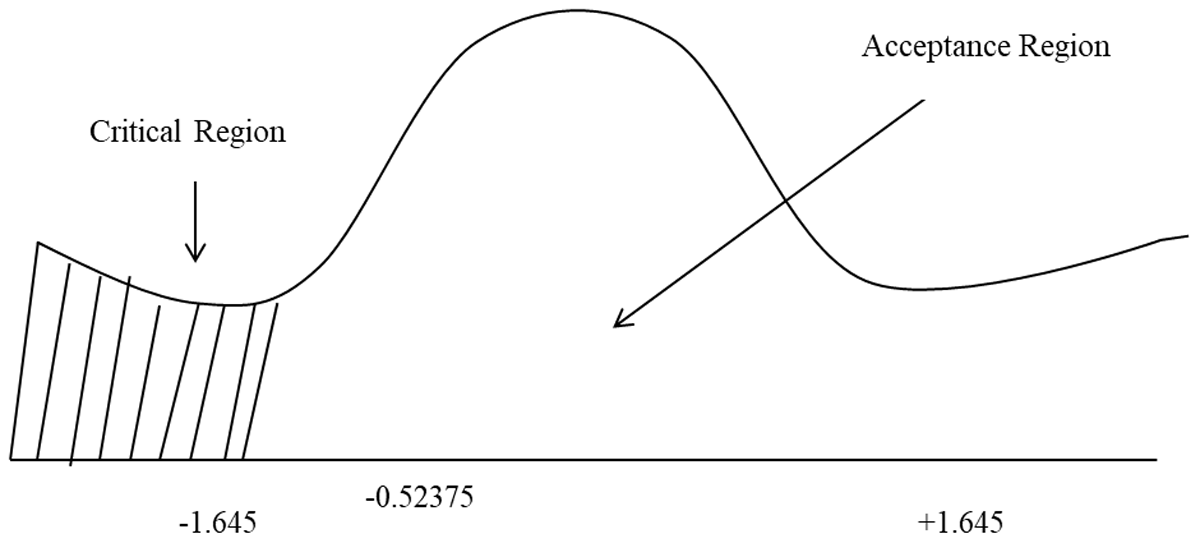
Table 6
Statistical Results for Item 2.
| RESPONSE | WEIGHT (X) | FREQUENCY (F) | FX |
|---|---|---|---|
| Strongly Disagree | 1 | 7 | 7 |
| Disagree | 2 | 38 | 76 |
| Indifferent | 3 | 60 | 180 |
| Agree | 4 | 150 | 600 |
| Strongly Agree | 5 | 88 | 440 |
| Total | 343 | 1303 | |
| Sample mean (∑fx/∑f) | 3.799 | ||
| Standard deviation | 1.01036 | ||
| Z-Tab | 1.645 | ||
| Confidence Level | 95% | ||
| Tail test | One–tail | ||
| Level of significance | 5% | ||
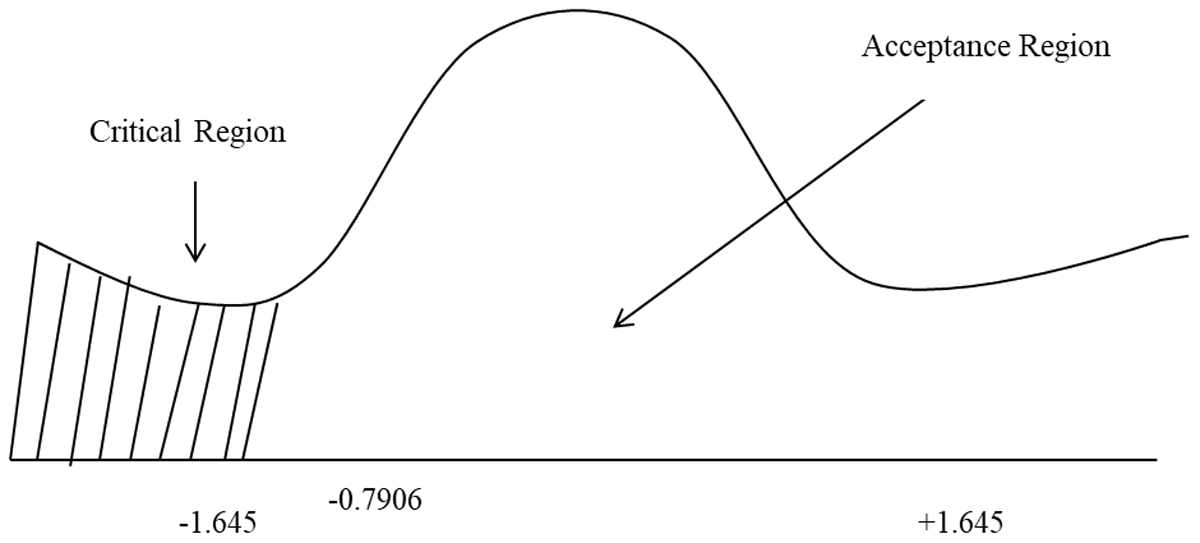
| Z Score | –0.79064 |