Have a personal or library account? Click to login
Use of Fibrin Glue in the Treatment of Persistent Pneumothorax in Premature Infants at the Limit of Viability: Ethical Issues and Two and A Half Years Follow-Up Cover

Use of Fibrin Glue in the Treatment of Persistent Pneumothorax in Premature Infants at the Limit of Viability: Ethical Issues and Two and A Half Years Follow-Up

Open Access
|Nov 2023

Figures & Tables

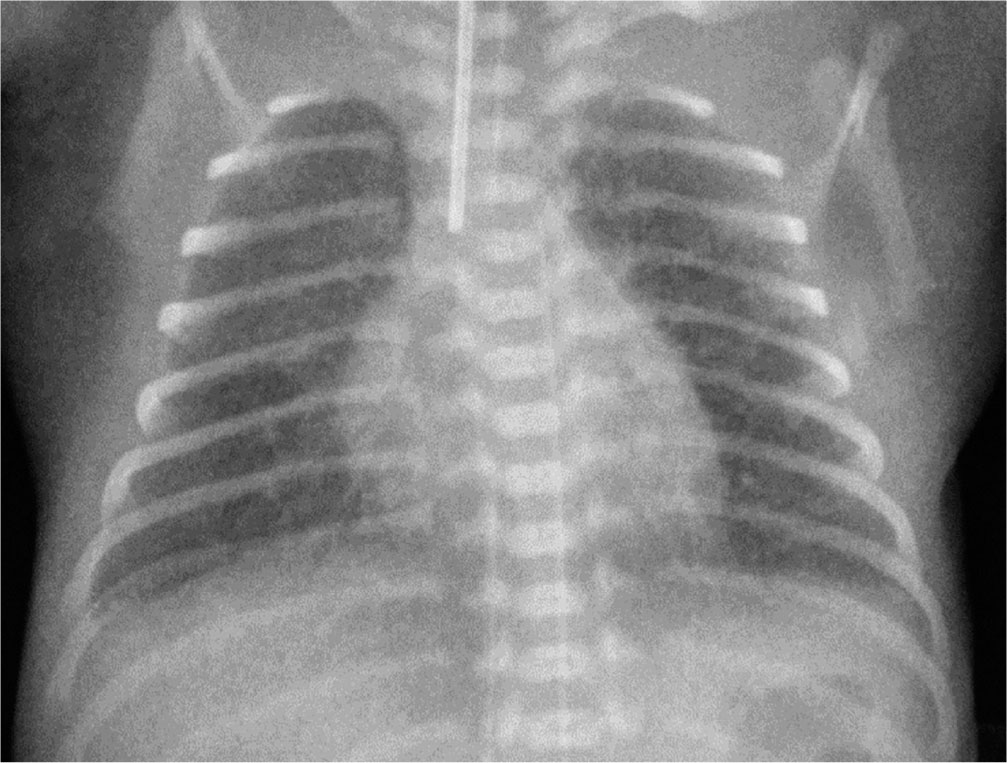
Figure 1.

Anteroposterior radiograph shows an intubated 23-week premature infant at the 5th hour of life with respiratory distress syndrome (RDS) showing pulmonary hypoventilation and granular densities bilaterally. Note the incorrect position of the tip of the arterial catheter.
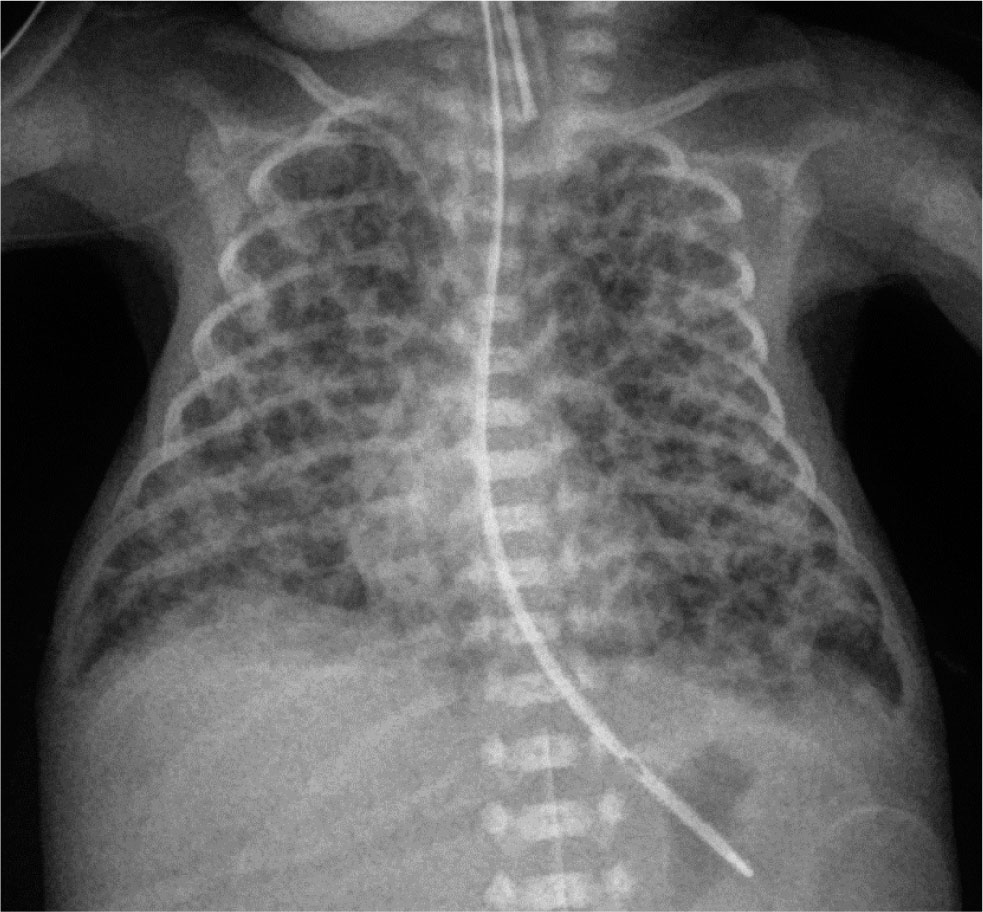

Figure 2.

AP chest radiograph 8 days later shows bubbly lucencies in the interstitium throughout both lungs with hazy background opacities. These findings are typical of diffuse bilateral PIE (pulmonary interstitial emphysema) in the setting of RDS.
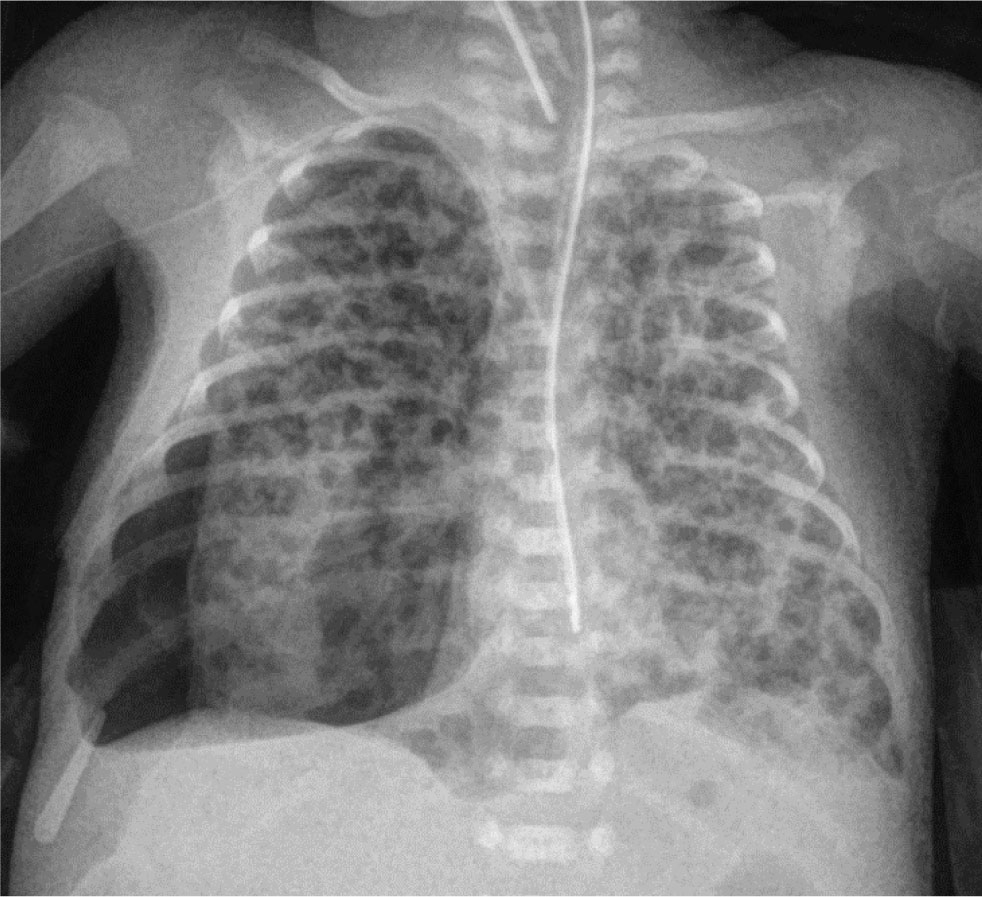

Figure 3.

Supine chest radiograph on the 14th day of life shows a lucent right hemithorax, depression of the right diaphragm and leftward mediastinal shift, consistent with a right mild tension pneumothorax.
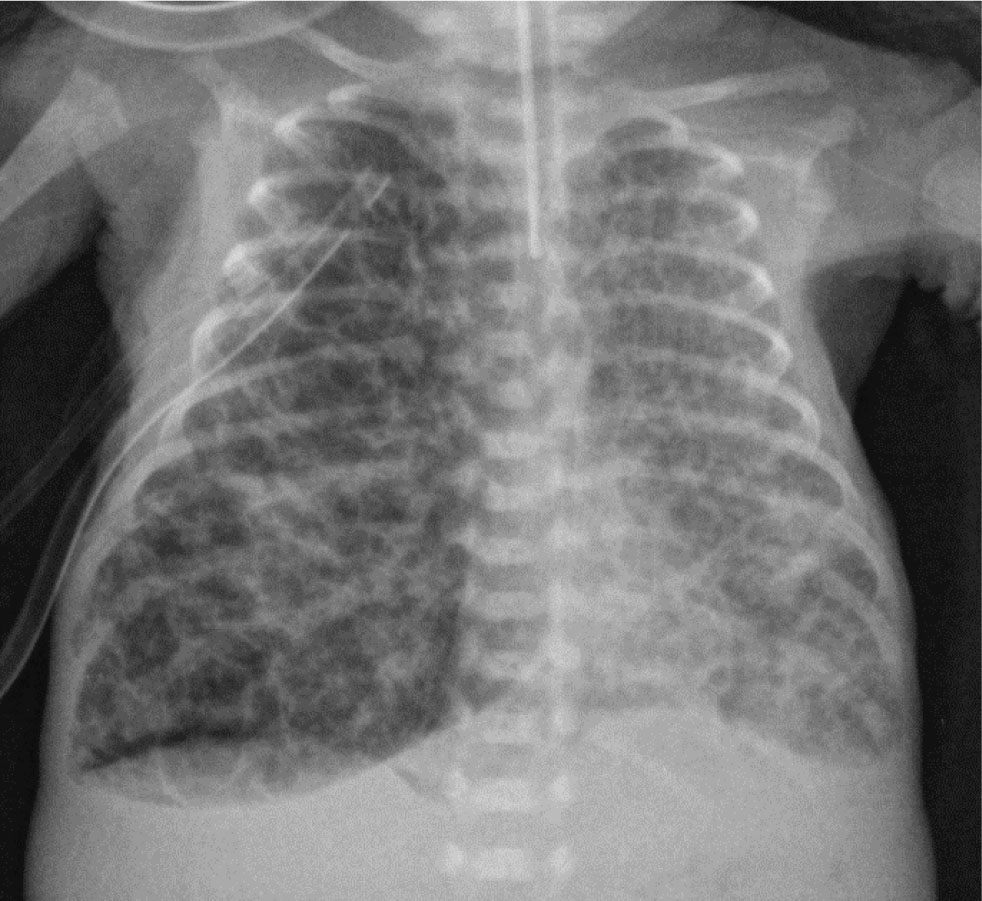

Figure 4.

Supine chest radiograph at 25 days of age with chest tubes placement shows persistent extensive bubbly lucencies in both lung (PIE) and resolution of the most of right pneumothorax (slight shift of the heart leftward pressing the left lung and the depression of the right hemidiaphragm is still visible).
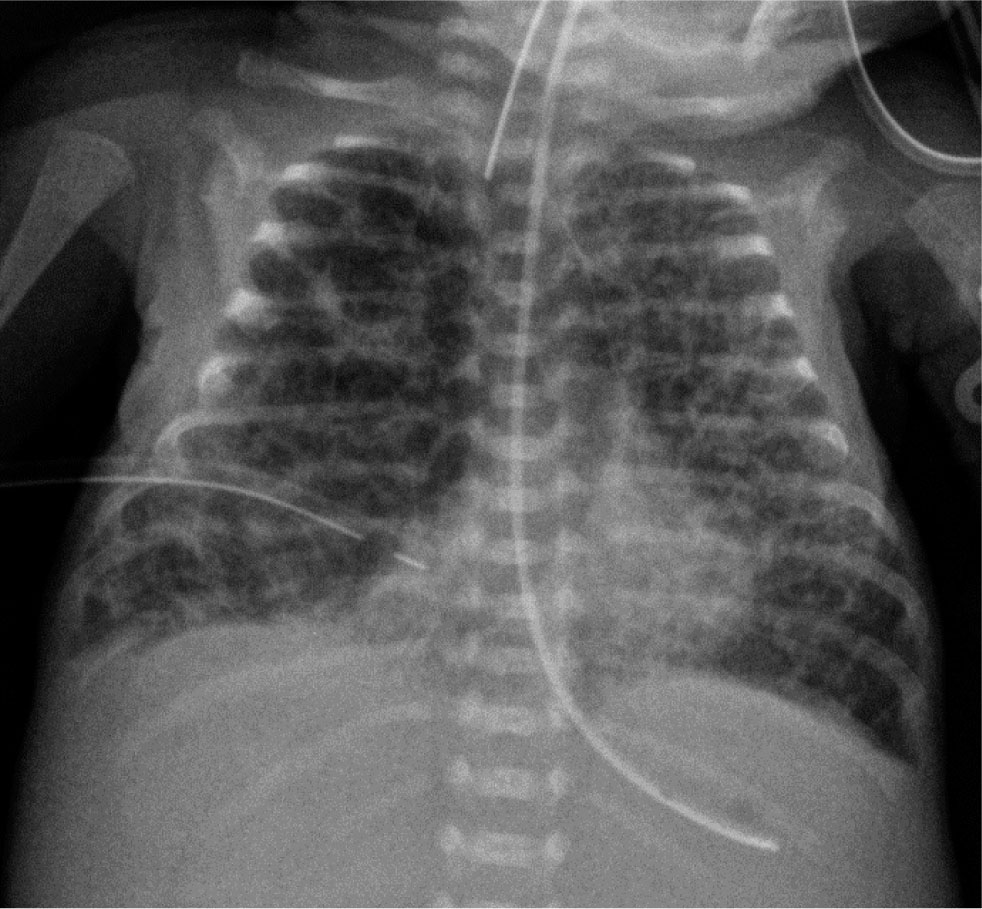

Figure 5.

AP chest radiograph 1 hour after fibrin glue application via drain shows resolution of right pneumothorax. Persistent diffuse bilateral PIE. The left lung is better aerated than previously. A fibrin glue clot at the tip of the drain is observed.
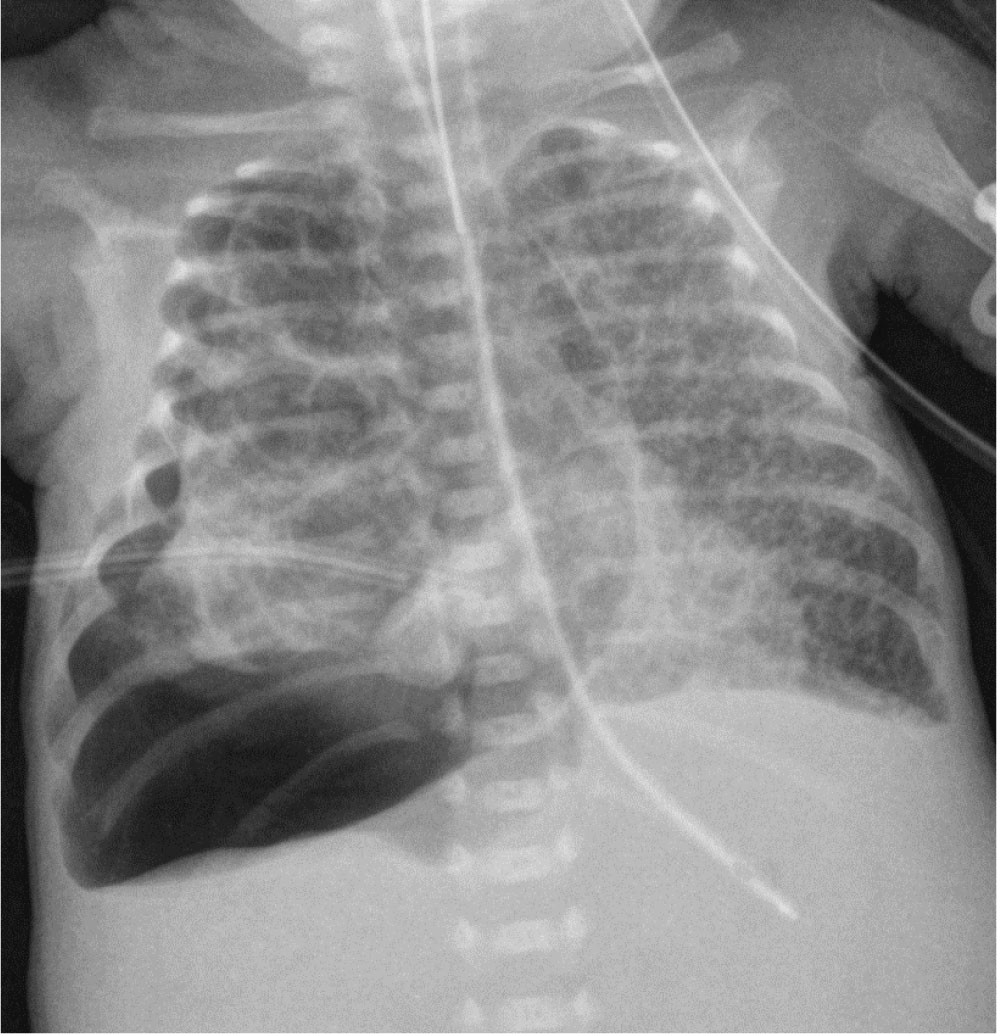

Figure 6.

AP chest radiograph 2 days after fibrin glue application shows recurrence of tension right pneumothorax.
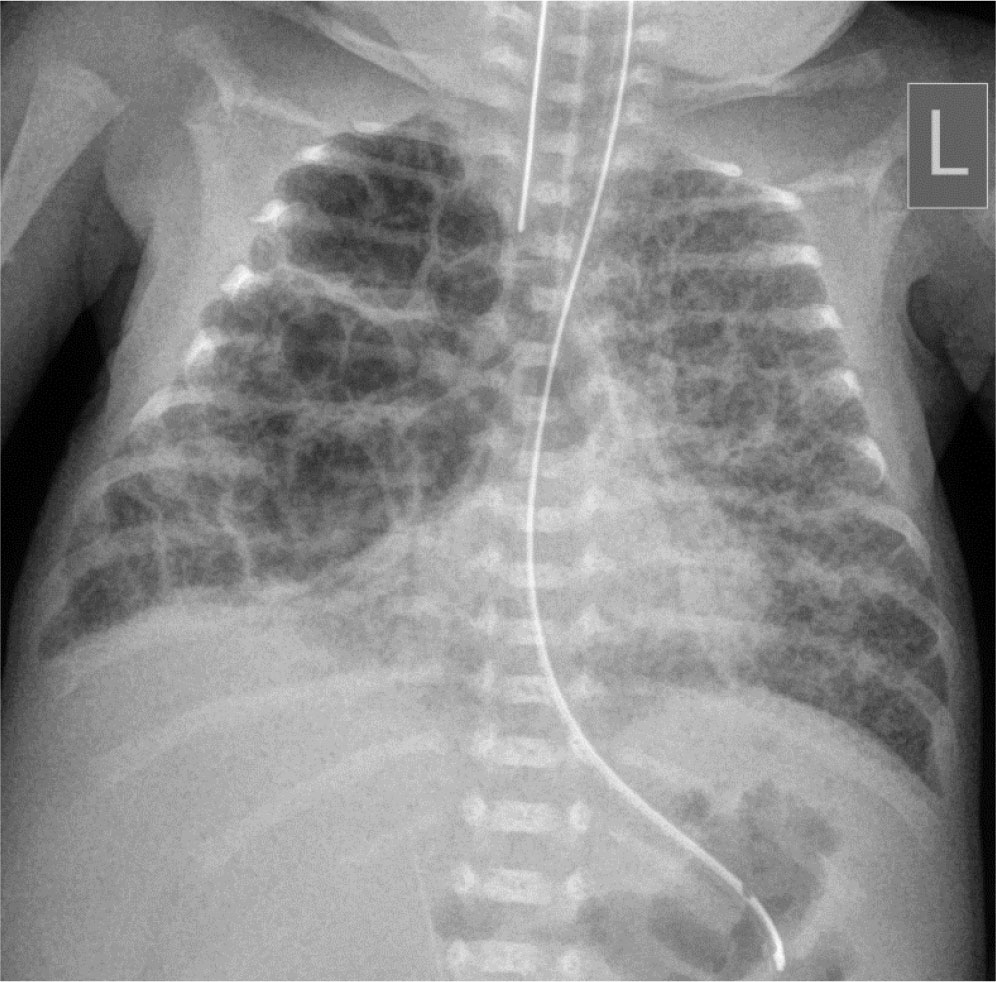

Figure 7.

AP chest radiograph on the 46th day of life (8 days after fibrin glue application) shows resolution of right pneumothorax (drain was removed). Marked hyperinflation with coarse interstitial markings and cystic changes in the right lung; signs of PIE in the left lung.
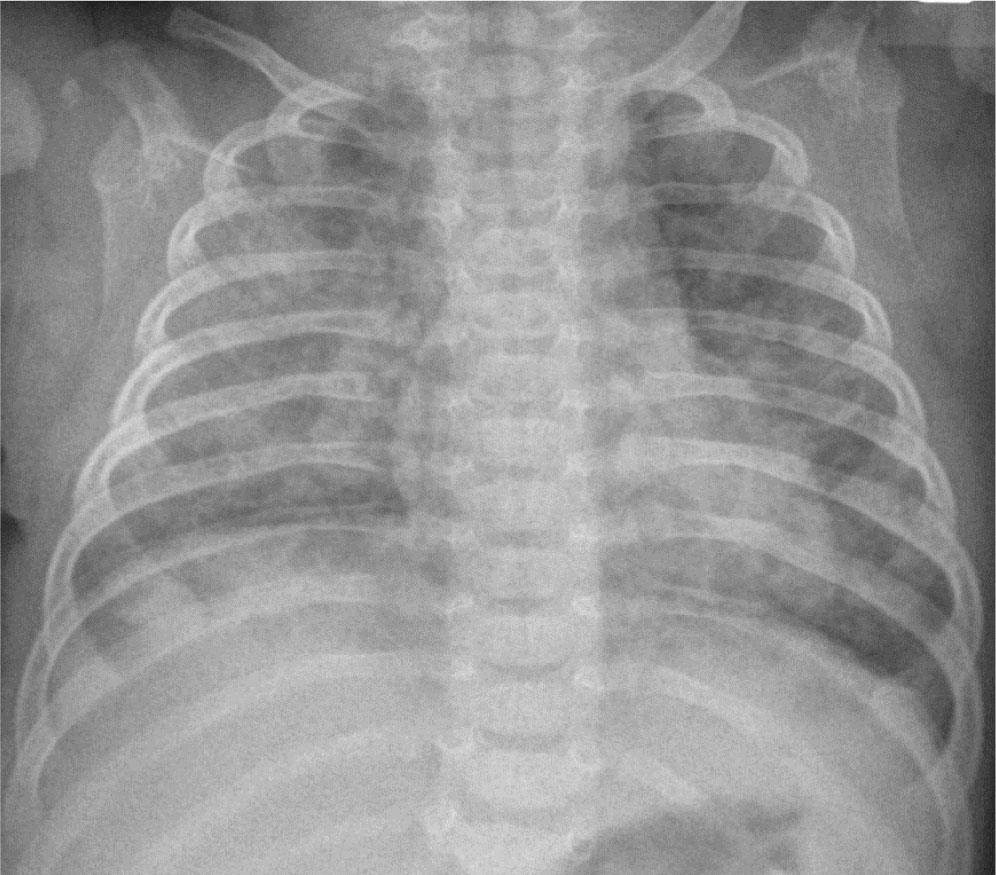

Figure 8.

AP chest radiograph at the age of 7 months, before discharge home from the hospital. Generalized diffuse, hazy opacities and coarse interstitial markings with a small degree of hyperinflation – signs of bronchopulmonary dysplasia (BPD). Fibrin glue clot disappeared.
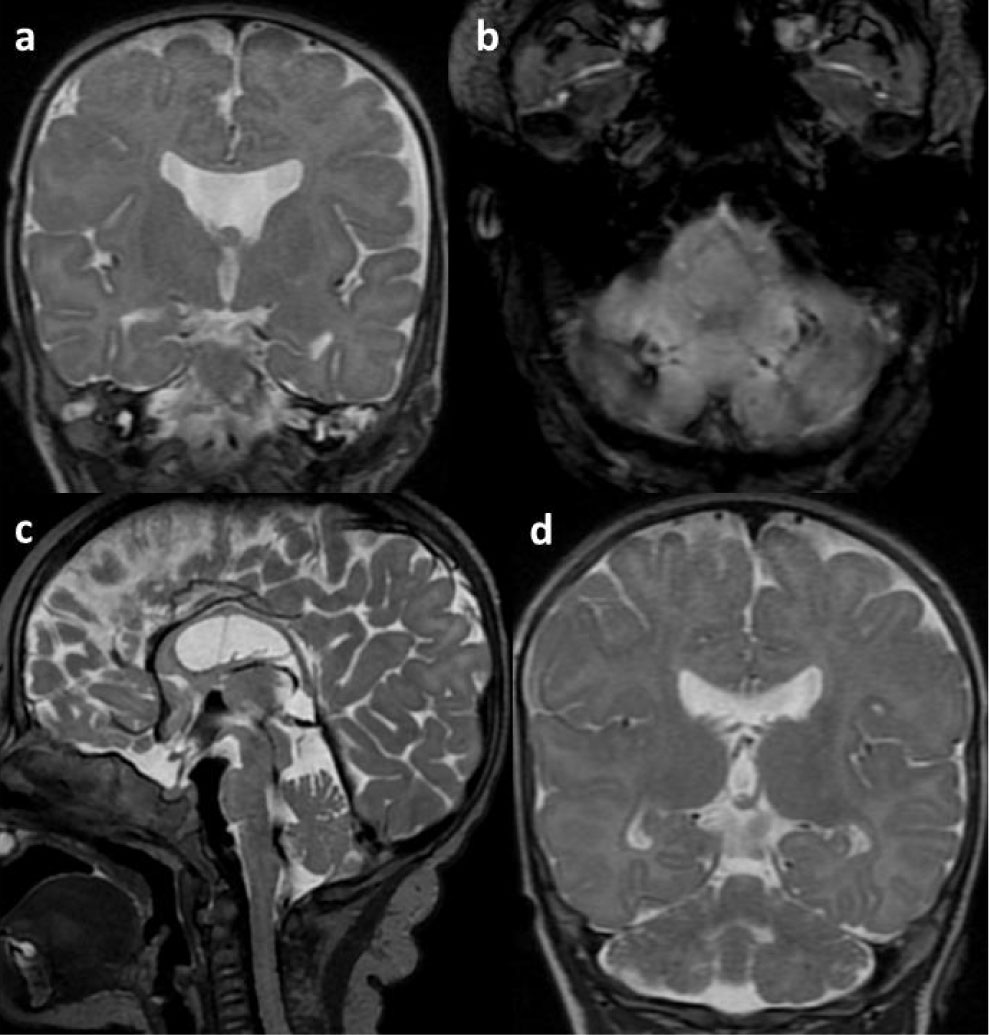

Figure 9.

MRI of the brain at 14 weeks of corrected age. Lack of the septum pellucidum (a). Posthaemorrhagic haemosiderin deposits – black dots – in both cerebellar hemispheres on SWI sequence (b). Abnormal proportions of the cerebrum and cerebellum with decreased cerebellar volume on sagittal (c) and coronal (d) T2-weighted images.
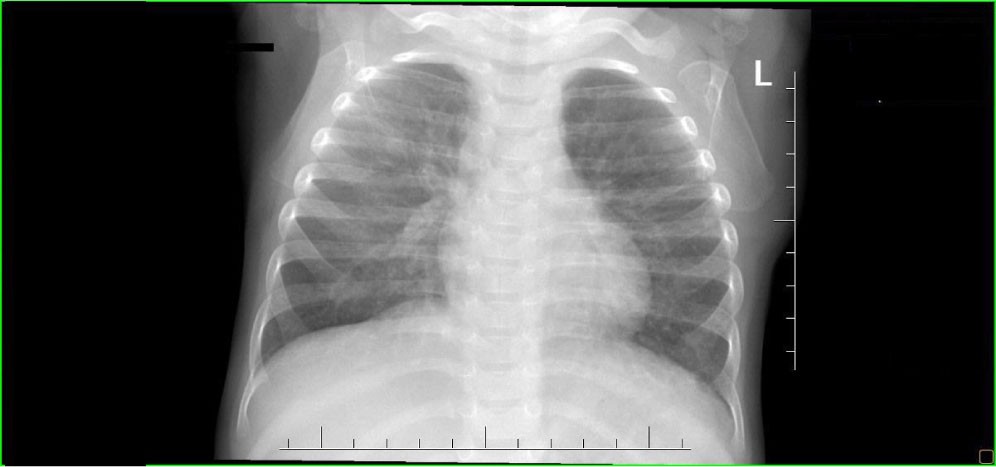

Figure 10.

At 11 months of age, AP chest radiograph shows an improvement of lungs condition, which are mildly hyperinflated with only sparse linear interstitial markings bilaterally.
DOI: https://doi.org/10.34763/jmotherandchild.20232701.d-23-00061 | Journal eISSN: 2719-535X | Journal ISSN: 2719-6488
Language: English
Page range: 190 - 197
Submitted on: Jul 5, 2023
Accepted on: Sep 15, 2023
Published on: Nov 22, 2023
Published by: Institute of Mother and Child
In partnership with: Paradigm Publishing Services
Publication frequency: 1 issue per year

© 2023 Magdalena Rutkowska, Martyna Woynarowska, Iwona Terczyńska, Małgorzata Seroczyńska, Dariusz Mydlak, Jarosław Mądzik, Ewa Nowakowska, Katarzyna Niepokój, Sławomir Szczepaniak, Krystyna Polak, published by Institute of Mother and Child
This work is licensed under the Creative Commons Attribution 4.0 License.