
Introduction
This paper describes qualitative action research findings from a project that aimed to increase disability inclusion and equity in locality emergency preparedness planning through capacity-building activities. With increased capacity, disability organizations would be able to conduct greater outreach to their local emergency management and public health preparedness planners- the two entities that share responsibility for local preparedness planning. The project’s theory of change built on previous research that identified readiness for change, capacity-building, and capacity-extending factors related to building disability inclusion in different public health contexts (Eisenberg et al., 2021; Griffen et al., 2020; Griffen & Havercamp, 2021).
Prepared4ALL was funded by the Centers for Disease Control and Prevention to facilitate knowledge sharing across local disability organizations. To better understand how disability organizational professionals exchange knowledge, this paper describes outcomes from Action Learning groups.
Background
Emergencies, disasters, and pandemics (EDP) disproportionately impact people with disabilities. Factors such as increased functional needs, lack of accessible emergency communication, and limited resources all contribute to worse outcomes post-event (Wisner et al., 2003; FEMA, 2016). People with disabilities are more likely to sustain a critical injury or die during a disaster (Quaill et al., 2018), more likely to experience major life disruptions (Stough et al., 2010), are often left behind in emergency evacuations (Dominey-Howes et al., 2018; Howard et al., 2017), and are more likely to experience civil rights violations during an EDP (Hensel & Wolf, 2011; Sabatello et al., 2020; Weibgen, 2015).
Emergency-related impacts on people with disabilities are not distributed evenly. People of color, including but not limited to Black, Latino/a, and Indigenous communities, bear a higher burden of negative outcomes during and after EDP (Fjord, 2007). Individuals without access to healthcare also experience worse impacts during EDP (Honoré, 2008).
In particular, the COVID-19 pandemic has demonstrated how pandemics disproportionately impact people with disabilities (Landes et al., 2020; Lebrasseur et al., 2020; Turk & McDermott, 2020). COVID-19 incidence was higher among people with disabilities who are Black, Asian, Hispanic and Native American, or under 18 or female (Chakraborty, 2021). Along with other evidence that communities of color overall have been more impacted by COVID-19 (Fortuna et al., 2020; Sequist, 2020), these findings indicate the need for continued COVID-19 response and recovery efforts that address the multiple intersecting systems of oppression that people with disabilities, particularly people of color, experience (Lund et al., 2020; Ryan & El Ayadi, 2020; Verduzco-Gutierrez et al., 2021).
In the aftermath of EDP, recovery efforts may reassert social and environmental barriers if those efforts do not intentionally address disability inclusion (Stough et al., 2016; Zayas et al., 2017). For instance, there is some evidence that during disaster-caused displacement, people with disabilities may experience discrimination in relocation policies and practices (Kett & Twigg, 2007). Using a health equity framework, people with disabilities should also be at the center of decision-making, planning, and program execution, as they are highly impacted by EDP (van Roode et al., 2020).
Yet this is not typically the case. In addition to recovery and response phases excluding people with disabilities, the preparedness planning phase does not often facilitate the full inclusion of people with disabilities. Preparedness planners often have little knowledge about the needs of people with disabilities and may not understand localities’ obligations under the Americans with Disabilities Act of 1990 (ADA) (Gershon et al., 2021). Local emergency preparedness plans may not fully include people with disabilities, as was the case for many communities along the Gulf Coast that were impacted by Hurricane Katrina (Njelesani et al., 2012). Further, planners may not acknowledge or apply the knowledge and skills that people with disabilities offer related to preparedness planning (Engelman, 2012). Even when policies encourage disability inclusion, people with disabilities and disability organizations remain underrepresented in local emergency preparedness planning (Carby et al., 2018).
Disability, equity, and inclusion
We use the term “disability” in this article to capture the experience of a collection of functional impairments, such as mobility challenges, sensory impairments, intellectual and/or developmental disabilities, and mental health or chronic health conditions. In using the umbrella term of “disability,” we rely on the legal understanding of people with disabilities as a diverse group that shares the experience of discrimination and oppression based on disability and is entitled to legal protection under the Americans with Disabilities Act of 1990.
By “disability inclusion and equity,” we mean that people with disabilities have what they need to participate fairly and justly in the same way as people without disabilities. Equity also implies working to change preventable health inequities, such as the negative outcomes experienced by people with disabilities in EDP (Braveman et al., 2018). By drawing on both disability inclusion and equity, we emphasize not only people with disabilities “getting a seat” at the emergency planning table, but ensuring that the planning table is focused on sustainable social change. Understanding, anticipating, and responding to the needs of people with disabilities must be at the heart of local preparedness planning so that outcomes for the whole community may improve (Njelesani et al., 2012). Facets of inclusion related to local emergency preparedness planning include prioritizing accessibility, decision-making by people with disabilities, and increasing awareness about issues facing people with disabilities.
Recent years brought efforts in drawing attention to the needs of people with disabilities during EDP. In 2010, the Federal Emergency Management Agency (FEMA) created the Office of Disability Inclusion and Coordination to facilitate greater programmatic and policy development related to concerns of people with disabilities. FEMA also supported the “whole community” approach to local preparedness planning, which emphasizes maximizing stakeholder input and establishing community stakeholder roles to identify existing assets and plan for community resilience (Grimm, 2014). While whole community planning does not solely emphasize disability inclusion, it does create space for people with disabilities as vital contributors within local planning.
Another framework, the Sendai Framework for Disaster Risk Reduction and Persons with Disabilities, emphasizes disability inclusion in all aspects of disaster risk reduction, including accessibility (Stough & Kang, 2015; United Nations, 2015). Global case studies spurred by the Sendai Framework reveal that when people with disabilities and disability organizations are included in local emergency planning, outcomes improve (Bennett, 2020). In addition, people with disabilities demonstrate resilience when recounting their experiences during emergencies and disasters (Calgaro et al., 2020; Finkelstein & Finkelstein, 2020; Fox et al., 2010; Hemingway & Priestley, 2006). These accounts demonstrate that people with disabilities are valuable contributors to increasing community resilience during local preparedness planning.
Other authors also suggest that inclusive emergency planning can improve outcomes for people with disabilities (Bennett, 2020; Bongo et al., 2019; Castro et al., 2017; Gray, 2017; Maini et al., 2017). Much of this literature has detailed the barriers and failures related to the lack of inclusive emergency planning but concludes that inclusive planning would benefit people with disabilities. Concrete evidence of improved outcomes for people with disabilities as a result of inclusive emergency planning is rare, but the example of Washington State’s Coalition on Inclusive Emergency Planning (CIEP) is instructive. CIEP, as part of the Washington State Independent Living Council, has been instrumental in including people with disabilities in post-disaster after-action reports and urging Washington state localities to increase accessibility related to emergency preparedness. For instance, in an after-action report on Pierce County’s upgraded outdoor warning system, CIEP carefully laid out how the upgraded system had improved access by including both verbal and light-based warnings (CIEP, 2020). Yet CIEP’s report also detailed accessibility challenges, such as explaining that blue warning lights could be difficult to see against a blue sky, especially for people with low vision.
CIEP’s work embodies Bennett’s urging that “moving…to a targeted engagement and partnership would ensure that policymakers and future practices would be developed (at least in part) by people with disabilities” (Bennett, 2020, pg. 159). Strong partnerships between local emergency management/public health preparedness staff and disability organizations are a crucial step in moving towards whole community planning (Maini et al., 2017).
Critical Need for Partnerships
Despite growing awareness and progress made in including people with disabilities in local preparedness planning, it has been difficult to create and sustain partnerships among disability organizations and emergency preparedness planners at the local level. During disasters, communication between local governments and non-governmental organizations often fail (Palttala et al., 2012; White & Fu, 2012). For instance, the D/deaf community has identified both lack of access and lack of trust as disability inclusion inhibitors in emergency contexts (Calgaro et al., 2021).
Knowledge silos are also common in the realm of emergency preparedness and response (Ton et al., 2019; Wolf-Fordham, 2020). Such silos can lead to the reproduction of similar knowledge bases and can slow innovation (Mergel, 2011). For instance, Haiti’s government formed an “Inclusion Working Group” to address the impact of the 2010 earthquake, but it was subsumed under a health-related task force, and over a year went by before group members realized there was a separate working group focused on “Injury, Rehabilitation, and Disability.” Once the groups united, they were able to accomplish more because of the broader awareness of the disaster-related needs facing people with disabilities (Njelesani et al., 2012).
Strong partnerships may lead to more inclusive local preparedness planning, which in turn could directly reduce negative impacts on people with disabilities when disasters strike (Bennett, 2020; Calgaro et al., 2020). However, factors that facilitate strong partnerships are less understood in the context of local emergency planning. Thus, we draw on related work in the context of disability inclusion in other public health realms (Eisenberg et al., 2021; Griffen et al., 2020; Lutz & Bruder, 2019) to better understand factors related to disability inclusion and equity, including how partnerships are facilitated and what strategies and tactics disability organizations can use to expand disability inclusion in local emergency planning.
Conceptual Frameworks: Adaptive Challenges and Action Research
Because the need to increase disability inclusion and equity is a complex problem, we conceptualize it as an adaptive challenge (Heifetz et al., 2009; Heifetz & Heifetz, 1994). This concept acknowledges the gap between what ought to be and what reality currently exists (Leary, 2012). Drawing on disability rights and culture, we envision disability inclusion as the process of ensuring that disability is recognized and valued as a way of life (Couser, 2013), but also as a set of operationalized outcomes, such as every locality having disability representation in their emergency planning process.
Adaptive challenges, as opposed to technical fixes, are problems that cannot be solved easily, are often difficult to recognize, require participation by people most impacted, and require sweeping cultural changes (Heifetz et al., 2009). Solving adaptive challenges, also known as adaptive thinking, must be based on experimentation and often take a long time to implement (Heifetz & Laurie, 1997). Addressing “disability inclusion and equity in local emergency planning” as an adaptive challenge led us to action research.
Action research is a practice-based inquiry approach that seeks to solve problems through “trial and error” collaboration and participation (Clark et al., 2020). Action research is useful in approaching the adaptive challenge of disability inclusion and equity because adaptive challenges must be solved by the people who have the most at stake (here, people with disabilities and disability organizations) and require multiple iterations that build towards cultural change. Additionally, action research has been used to build organizational capacity with positive outcomes (Cairns et al., 2005; Israel et al., 2010; Marsick & Gephart, 2003).
Method
Action Learning Groups
We received IRB exemption approval from IntegReview IRB in October 2020. The research team included three researchers who were employed by a nonprofit member organization. All researchers identified as White cisgender women. One identified as a person with a chronic illness and one identified as a partner of a person with a disability. One team member has a background in disability studies, and two team members have backgrounds in public health and health coaching and education. To center capacity-building as a locus of change for disability inclusion and equity, we facilitated seven monthly Action Learning (AL) group virtual sessions (from January-June 2021) to develop resource-sharing and strength-based problem-solving among members. The Action Learning process includes a continuous cycle of taking action, dedicated reflection, documenting learnings, and planning to link learning and future action (Marquardt, 2011). AL groups are a method well-suited for contexts where silos or understanding gaps exist (Fung-Kee-Fung et al., 2014). Though local efforts to increase disability inclusion in local emergency planning have increased over the last 15 years, there is little knowledge transfer across communities, leading to the need for each locality to “recreate the wheel.” AL groups have also been used to facilitate leadership development that demonstrates community-level impact (Braun et al., 2011; Drath & Palus, 1994; Miller et al., 2007).
AL group recruitment and participants
AL participants were recruited via email through the authors’ professional networks of disability organizations where individuals, workgroups, or initiatives were focused on disability-inclusive emergency planning. AL group participants represented organizations such as local or state health departments; local, state, regional, and national emergency preparedness organizations; or disability organizations. All participants were engaged in organization-based and/or personal work related to disability-inclusive emergency planning. Participants were not required to disclose disability status but about 40% of regularly attending participants (attendees who participated in 5 or more sessions) disclosed that they identified as a person with a disability or were a family member of a person with a disability. An average of 38 AL participants attended each session, with a little over half the attendees attending 5 or more sessions (20 regular attendees or 52%). Based on optional zip code and email provision during registration, participants represented 40 states, the District of Columbia, and the U.S. Commonwealth of the Northern Mariana Islands.
The AL group sessions, which took place via Zoom, were video and audio recorded and transcribed. Transcriptions were stripped of participants’ identifiable information. Zoom chat contributions were also included in the transcriptions. Participants were encouraged but not required to attend every session, echoing Action Learning theorists’ assertion that voluntary participation strengthens outcomes (McGill & Beaty, 2001; Pedler, 2011). Each AL group session included time for introductions, a skill-building component related to the online training modules, and a coaching inquiry utilizing motivational interview techniques. Throughout each session, participants also had time to ask questions about resources, models, or programs or ask for help related to an ongoing emergent issue. While no formal assignments were given between sessions, participants were encouraged to share problems, questions, or successes with the group for mutual learning and support.
Research Questions
Two research questions guided the AL session structure and AL transcript analysis:
How do AL group participants understand partnership-building elements, community or organizational-level development, and interests and values related to increasing disability inclusion and equity in local emergency planning?
How do AL group participants express adaptive thinking related to increasing disability inclusion and equity in local emergency planning?
Analysis
We used Directed Qualitative Content Analysis (DQCA) to analyze the AL group transcripts. DQCA was appropriate for this study because it allows for unexpected or new findings while also ensuring that the concept is captured thoroughly using prior literature and conceptual frameworks (Hsieh & Shannon, 2005; Schreier, 2012). DQCA is also well-suited to extend an existing framework or theory in a new direction (Hsieh & Shannon, 2005; Kibiswa, 2019), which was our approach in building from the Inclusion Wheel approach developed by Griffen and colleagues (2020).
Before data analysis, we developed a codebook using conceptual frameworks including the inclusion wheel (Griffen et al., 2020), adaptive challenge response (Heifetz et al., 2009; Heifetz & Laurie, 1997), and the research questions above. Because the codebook did not fully capture concepts within the data, we developed several data-driven codes (see Table 1).
Table 1
Codes and Exemplar Quotes.
| CAPACITY-BUILDING CODES | ||
|---|---|---|
| CODE NAME | CODE DEFINITION | EXEMPLAR QUOTE |
| Partnership | Describes the process of creating new partnerships or maintaining existing partnerships in efforts to create more inclusive local emergency planning. Includes recognition of the need for coordination. | “We developed relationships with shelter operations, who wanted training on how to interact with people with autism. The partnership just kind of developed. Really, it was the connective tissue that we all have together, including the voices of people with disabilities saying, hey, we have a right to be safe too” (AL group participant, 2/24/21). |
| Engage | References connections, outreach, or other involvement with potential partners. Includes descriptions of contact that may not rise to the level of established partnerships. May also include persuasion or methods of getting new partners on board with disability inclusion and equity. | “Keep going…Because it’s not going to take one time or two times or five, it’s going to take 20 times before you get their attention…Get them engaged, make your friendships and your partnerships, share what you do. Ask them, share with me a little bit more of what you do. Can I be a shadow when you’re doing your training exercise?” (AL group participant, 3/24/21) |
| Relate | References the “how” of finding NEW partners. Includes details about finding and engaging new partners that share your values and goals. Also captures identifying shared topics and priorities to work on. | “Check out your local Area Agency on Aging, and Centers for Independent Living need to be on that list [of potential partners]. CILs are a tremendous resource and a tremendous bridge between Emergency Management, Health Departments and the Red Cross.” (AL group participant, 2/24/21) |
| Resource Sharing | Refers to resource-sharing as a way to offer ideas and practices for others to build partnerships and keep moving forward. Relates to building a shared knowledge base and acting upon the latest knowledge. | “We will be recording a workshop video on emergency preparedness, including all types of disabilities and, and then some individuals need a one-on-one planning. We will also provide personalized workshop training for multiple types of disabilities in our emergency planning which will include developing a plan, registering for alerts, and building a kit. We’ll share these materials with you all.” (AL group participant, 6/16/21) |
| Organizational Development | This set of codes references within-organizational capacity in the form of future commitments. Includes further training and education, dedicated staff capacity and/or effort, and plans for receiving and providing ongoing support. Also includes explanations of previous development efforts. | “At our hospital we have a program called Safety Together. So every aspect of the healthcare system, in order to become a high reliability organization. There are several tools that, whether that be creating an SBAR, or stopping the line, or doing a cross check, that terminology and the practices have become so natural and a part of all that we do, but it really did start from the very top and it’s every day, depending on the department, depends on how often we have the safety meetings. But we really talk about these things as a natural part of things we do every day.” (AL group participant, 4/21/21) |
| Critical reflection | Describing taking time to reflect and adapt to what’s going on. References to “not getting stuck”. May include descriptions of organizational recalibrations, and quality improvement. Not an after-action report, a “during-action” report. May include questions about what action to take next. | “So, if there’s one thing we learned from Hurricane Harvey, it’s that we really have a lot of work to do, and our city is so big that it’s really challenging, because everyone wants their voice to be heard the loudest. And we want everyone with disabilities to be included in that voice. And we all joined their call as they tried to organize for the city, but they needed so much help.” (AL group participant, 5/19/21) |
| Staff capacity/effort | Describing key staff dedicated to this work and trainings related to disability inclusion and/or local emergency planning | “We wanted to make sure that the staff at those testing sites were trained in disability etiquette disability awareness, wanted to make sure that they had accessible and inclusive communication materials and products.” (AL group participant, 5/19/21) |
| Interests and Values | References the individual-level knowledge, interest, commitment, and ongoing reflection needed for disability inclusion and equity work. | “We have a lot on our plate, we have so many opportunities to do so much in 18 months but that’s why I’m here today is really to enjoy this conversation and really kind of share. I’m also a parent of an adult child with autism and I also have a physical disability so kind of coming into it with a lot of different ways.” (AL group participant, 2/24/21) |
| Disability Experience | Described an experiential knowledge of disability. This is either through a lived experience, familial experience, or professional experience. | “We brought in the disability perspective to their work…they were just grasping at straws because they didn’t know and so we brought in ASL interpreters whenever there’s a major news conference being held.” (AL group participant, 3/24/21) |
| Emergency/disaster experience | This is a novel code generated in response to the AL group transcripts where experiential knowledge of EDP was cited as a motivation for this work. | “I have a long history professionally of emergency preparedness and response. I am a former elected official, and had to evacuate our beach communities in 2003. So I have first-hand knowledge of all things of emergency response related.” (AL group participant, 2/24/21) |
| Forward Motion | References any actions that move the work forward. Includes references to “next steps,” including actions, planning, and testing ideas out. Related to growth mindset. | “The silver lining is that people with intellectual and developmental disabilities are thought of now, whereas as I can tell you prior to that they were not at the forefront of any thinking and emergency planning. There’s a national model of resource that I think can be developed to be better used for a more diverse population, the Health Care Coalition. And so we’ve been trying to work within our state to expand. My strategy is to just join them and start talking all of the different types of people and that need coordination during an emergency preparedness situation.” (AL group participant, 2/24/21) |
| Pinpoint | Identifying problems or factors that may impact forward motion. | “The hardest part was making sure that the vaccine teams understood the challenges inherent in working with this population. Transportation was an issue, and so we had to get them to understand, you know when you’re scheduling a time and a date to be at this Center for Independent Living, they need an exact time because of transportation reasons. So many of the CIL’s clients were transportation disadvantaged. And so the CIL had to provide that transportation. So, having to coordinate that got a little tricky. And it was definitely a challenge, but I mean, they worked it out.” (AL group participant, 5/19/21) |
| Advance | References planning efforts to move the work forward. | “We sent our Board of County Commissioners a letter highlighting it [need for better communication about COVID-19 vaccines], and that really lit the fire. And we partnered, emergency management got involved.” (AL group participant, 3/24/21) |
| Deploy | References to trying something out and evaluating it. | “They put the phone number on all of the county buses, and they went to all the libraries and trained the staff there, how to maneuver the online registration process so that if somebody came in there, and didn’t know how to didn’t have any idea how to work the system, there was help there. So we’re pretty excited about this.” (AL group participant, 3/24/21) |
| BRIDGING CODES | ||
| Network exchange | Describing efforts to seek or provide support, how being part of a larger network helped them accomplish goals and move work forward, and identifying instances in which partnership has led to success. | “I’ll share some info about the Red Cross. The Red Cross is supposed to use the CMIST framework and ensure that shelters are accessible, working with the Red Cross closely to ensure accessibility with one of our staff. We have established a corporate account with some hotel chains. One of our barriers is the backup batteries are not ADA compliant, including the instruction manuals videos and buttons feedback audio and screen displays are not accessible. If anyone has any ideas about that, please let me know.” (AL group participant, 6/16/21) |
| Envision what’s next | References to planning and designing solutions. | “I think what’s really important is to build authentic partnerships. Not just partnerships for the sake of alliances and for the sake of connection. We’re really building those authentic bridges there. So if you can have those, not just as brokers for the intent of the research initiative or the intervention or even the good goals, but to look at building true, true authentic partnerships that will be sustained.” (AL group participant, 6/16/21) |
| Systematic reflection | References an analysis or synthesis of previous knowledge or experience related to disability and emergencies/disasters/pandemics. | It’s interesting to kind of look at the differences between Florida and DC, we don’t have that many natural disasters in the DC area. So this, you know, Gallaudet and the DC deaf and hard of hearing community hasn’t really looked at this in terms of how we should be involved. A lot of that has always gone to FEMA. And when we needed to, we’ve partnered with FEMA, but I think now we’re starting to see the importance of having that engagement within our community, and really training people in our community. So hopefully, we will start engaging more in this discussion. And that’s why I’m grateful for this group, because it’s really helping to guide how we should start thinking about things and where gaps are. We don’t know what we don’t know. So this group is helpful for that.” (AL group participant, 3/24/21) |
| Valuing partnership | Describing positive feelings or outcomes related to collaboration or partnership, identifying partnership as a way to make progress. | “I’d have to say that one of the resources that we’ve had is one of the agencies we’ve really worked hard with and well with during this latest pandemic is the Area Agency on Aging, in getting information and services to our senior community. We’re a coastal community. So we’re always working on emergency preparedness, that’s something that everybody is always aware of. But this was an area agency that really got into the mental health support, to combat the isolation early on with activity kits and whatnot, and we’re doing the distribution. So there’s that—the Area Agency on Aging in your area, are a very good partner to have in sunshine and in dark times.” (AL group participant, 2/24/21) |
One coder (the first author) completed the initial round of coding for all transcripts for Research Questions one and two. The second coder (the third author) audited the initial codes, adding new codes if needed. Disagreements or clarifications were resolved by consulting the second author. After two rounds of coding, the first author used the research questions to combine certain codes. For instance, inter-organizational contact and networking were combined to form one new code, interorg/network contact.
The first author also drew on the Inclusion Wheel model and action learning conceptual models to develop a visual representation of how the four capacity-building components related to the four adaptive leadership components. All co-authors provided input on this data map.
Results: Research Questions 1 and 2
This section describes the results from the following research question: How do AL group participants understand partnership-building elements, community or organizational-level development, and interests and values related to increasing disability inclusion and equity in local emergency planning?
Partnership
The Partnership theme captured participants’ explanations of how they engage in the process of creating new partnerships or maintaining existing partnerships in efforts to create more inclusive local emergency planning. This code also relates to subcodes that emphasize how stakeholders value partnership as a strategy to accomplish their goals and how they see the need for partnership. All subcodes and exemplar quotes are listed in Table 1. Participants described strategies they used to engage with external partners, including the use of persuasive communication and identifying shared priorities between partners. To strengthen new partnerships, participants described resource sharing as a way to build reciprocity and social capital. For instance, one regular participant, Lena, described how her long history of relationship-building contributed to her current work, which was developing disability-inclusive training for first responders:
“I have been presenting to various agencies and organizations for many years. The history of what we had been doing has now brought everybody together and we were able to hit the ground running when we received this grant, because we had these established relationships that have been brewing for many years” (AL group participant, 2/24/21).
Lena’s comments speak to the significant role that she saw partnerships playing in her work, and how such partnerships could yield rich progress related to disability inclusion.
Organizational development
The second crucial element of building capacity to increase disability inclusion and equity in local emergency planning is organizational or community-level growth, expansion, or improvement. AL group participants described critical reflection and staff capacity/effort as ways they took on this element. As participants described building connections outside their organizations, they also reported investing in their own organization or community-level entity with the goal of increasing disability inclusion and equity. Similar to resource sharing, participants sought and provided support to one another during the AL group sessions, increasing the knowledge base and uptake related to disability inclusion. Participants also reported increasing staff capacity and effort so that they could continue doing the work of disability inclusion. Finally, participants reported the use of critical reflection, which we define as “in-the-moment” reflections that lead to small improvements or changes. One participant, Liam, reflected on the need to center people with disabilities in local emergency planning for equitable outcomes, but also shared how his work supporting refugees with disabilities in a large Midwestern city had influenced how he talked about preparedness. For some refugees, or immigrants without documentation, their immigration status may make them reluctant to rely on government support during an emergency. For Liam, this realization meant that he stressed to refugees that they were safe in such settings. This critical reflection identifies new opportunities for future organizational and community development focused on anti-oppression work, rooted in reflections about how anti-oppression may not be currently prioritized.
Interests and values
Throughout the AL group sessions, participants shared how they brought their background experiences, interests, and values to bear in the work of increasing disability inclusion in local emergency planning. Specifically, they cited their personal and professional experience with disability and experience with emergencies as ways they engaged with this element.
AL group participants reported personal and professional investments in the work of disability inclusion. Some participants cited their identity as a person with a disability, or family member of a person with a disability, as part of their motivation to do the work of disability inclusion, while others emphasized their previous experiences with emergencies, including natural disasters. Experiences with disability and emergencies often intersected to provide unique insight on the challenge of building disability inclusion and equity, such as in the case of the following participant, Sophia:
“I am a caregiver for my 16-year-old, who has both physical and developmental disabilities. I want to be part of this training to create awareness in my community. I’m CERT, which stands for Community Emergency Responders Team. But I still feel like the disability community isn’t covered much. I joined the [CERT] team to learn how I can be prepared for my teen and an emergency but got nothing much” (AL group participant, 1/27/21).
Another participant, Susanna, emphasized the importance of recognizing different identity factors in the context of EDP:
“I think recognizing people’s identity—Yes, they’re all individuals when they’re impacted by a natural disaster in the same position, right, but it’s the support staff, it’s the organizations that hold problematic issues. So you can go into these spaces and they might not be separated based on identity, but it’s the support staff and the organizations that replicate ableism or racism in the settings. Because they hold a position of power, right, because at the end of the day they get to leave that situation. So I think that’s, my focus on this—how do we make sure that organizations that are meant to be helping people are recognizing their own actions” (AL group participant, 6/16/21).
For Susanna, ensuring that unequal power dynamics were not reproduced in the context of EDP was an important component of bringing her own motivation to the work.
Forward motion
This family of codes describes participants’ efforts to keep the work moving forward even where challenges exist, including the codes pinpoint, advance, and deploy. In order to respond to disability inclusion as an adaptive challenge, pinpointing what needs to be changed or where change is possible is crucial. Participants reported pinpointing as a key way of keeping the work moving forward. One participant pointed to the gap in language between public health preparedness professionals and emergency management professionals as a potential future focus area. As in this example, pinpointing may lead to filling those identified gaps. Another participant, Stacy, emphasized how keeping the work moving forward may require approaching a partner from a positive perspective.
“When I work with an emergency manager, instead of pointing the finger and saying you need ASL interpretation because you’re leaving a whole group of people out, which is true, that automatically might put that individual on the defensive. I try to reframe that by saying, imagine the significantly increased amount of people that could access what you’re offering if you did offer ASL interpretation.”
Here, Stacy’s approach is focused on moving the work forward, and to do that, she needs to anticipate how her partner will react to a certain approach. She has incorporated the subcodes pinpoint, advance and deploy to do this.
Bridging codes: Leadership for adaptive challenges
The second research question, “How do AL group participants express adaptive thinking related to increasing disability inclusion and equity in local emergency planning?” is answered through additional themes demonstrating adaptive leadership elements.
In addition to the four factors needed for building disability inclusion and equity, these adaptive leadership themes “bridged” the inclusion and equity building blocks, strengthening each capacity-building component by linking the components together (see Figure 1). Because adaptive leadership elements require flexibility, normative reframing, and adjustments, they are well-suited to connecting the other components of disability inclusion and equity (Corazzini et al., 2015). The first bridging code identified was Interorganizational/Network/Support Exchange (bridging COD and partnership).
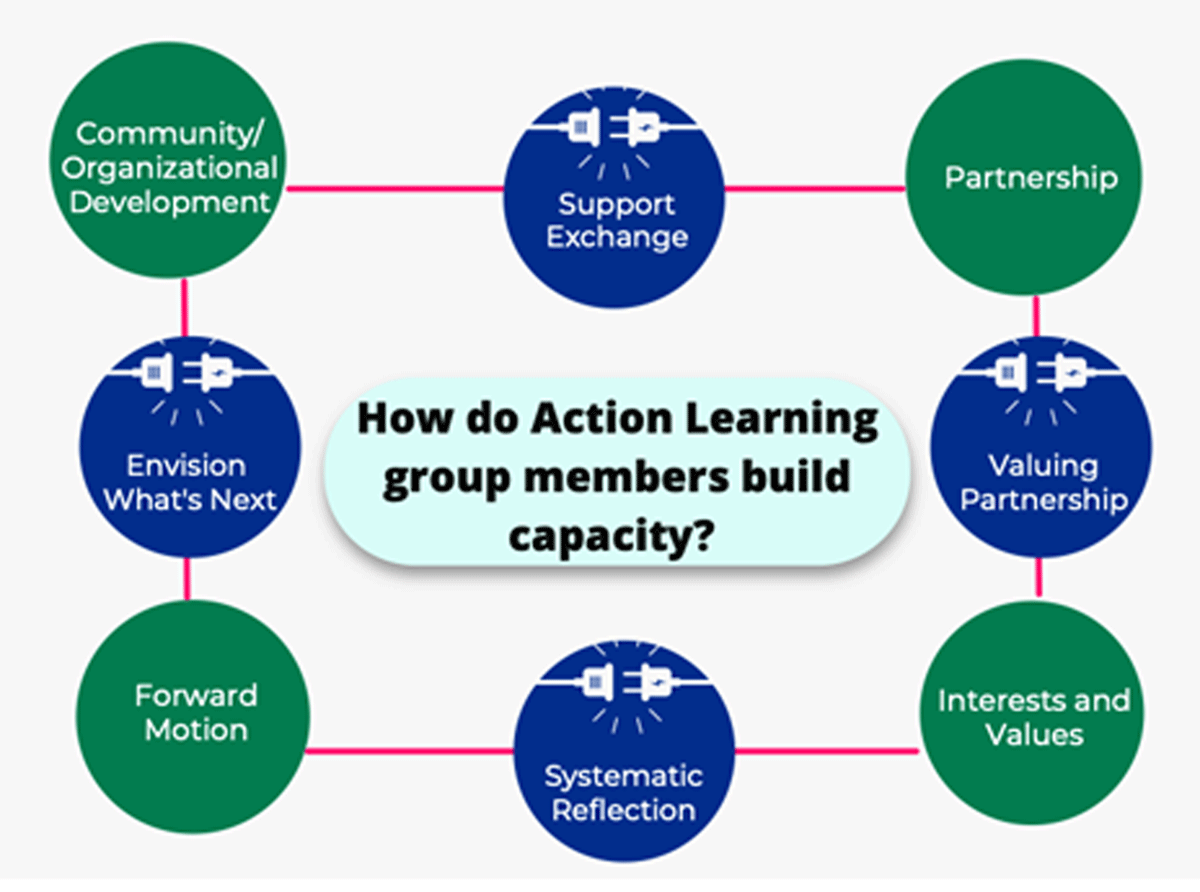
Figure 1
Adaptive Leadership within Capacity-Building: Increasing Disability Inclusion in Emergency Preparedness Planning.
Here, participants described their current partnerships and the outputs of those partnerships, demonstrating how partnerships can catalyze change. In particular, participants cited inter-organizational contact and engagement in a local, regional or national network as being crucial to their partnership work. For instance, one participant, Corinne, shared her experience attempting to de-silo emergency preparedness work:
“There are so many siloed conversations. And not to say that these folks don’t have good intent, because they’re doing good work. But the issue is that these conversations are happening in house, and they’re just not transferring across. One of the things we were planning on having in our facility is having a cross panel discussion, some of our self-advocates with disabilities are actually going to be speaking with healthcare providers. And that’s just one way that we can just advance the conversation and take it out of silos and talking across issues and discussing it collaboratively in the open.”
Corinne, in emphasizing the need to break down silos, was strategic in facilitating conversations between people with different knowledge bases and perspectives.
The second bridging code was Envision what’s next (bridging COD and forward motion), which demonstrates a growth orientation while reporting concrete practices, such as goal-setting. One participant, Amina, expressed frustration that she could not get her local health department to call her back about prioritizing COVID-19 vaccines for people with disabilities. Another participant, Melissa, urged her to “keep going,” emphasizing the persistence required in this work. In giving this exhortation, Melissa provided a vision for the next steps, offering concrete strategies that Amina could use.
Third, Systematic reflection (bridging forward motion and interests and values) captured the way that participants used reflection to connect issues that had not been previously related. For instance, one participant, Luis, recalled how he worked with university engineering departments at the beginning of the COVID-19 pandemic:
“We worked with schools that had access to 3D printers and they provided 3D printed surgical masks and face shields for us to distribute to Centers for Independent Living, group homes for those with intellectual disabilities, and special education schools in the state. That was huge—within a very short amount of time we were able to leverage some new partners and bring them into this work.” (AL group participant, 5/27/21)
Finally, Valuing partnership (bridging partnership and interests and values) highlighted more experienced participants’ ability to effectively communicate how and why the partnership was important to their overall goal of increasing disability inclusion and equity.
Several participants highlighted the ethos of valuing partnership. For instance, Tyler offered this reflection:
“Connecting with communities and building a ‘whole community’ is a process or journey. And that’s helped me see it as every day is one more step, you know—trying to see the diversity, the nuance, and the differences. And connecting with groups and networks and organizations that are not part of my immediate circle” (AL group participant, 6/26/21).
Another participant, Rachel, reminded the AL group about the importance of authenticity:
“I think what’s really important is to build authentic partnerships. Not just partnerships for the sake of alliances and connection. We’re really building those authentic bridges there. So if you can have those, not just as brokers for the intent of the research initiative or the intervention or even the good goals, but to look at building true, true authentic partnerships that will be sustained” (AL group participant, 6/26/21).
These moments of wisdom, delivered by AL group participants, demonstrated how adaptive leadership could raise the stakes of the group dynamic, leading to deeper conversations.
Discussion
The problem of disability inclusion and equity in local emergency preparedness planning has only become more urgent during the COVID-19 pandemic. Solving the adaptive challenge of increasing disability inclusion and equity requires ongoing trial-and-error approaches. Building on previous research that explored capacity-building factors related to disability inclusion in public health, we used AL group sessions to facilitate knowledge sharing and better understand how AL group members utilized capacity-building strategies.
We found that participants used partnership, community/organizational development, shared interests and values, and forward motion to increase disability inclusion in local emergency preparedness planning. They also, however, demonstrated adaptive leadership through network exchange, valuing partnership, envisioning what’s next, and systematic reflection. These themes link the capacity-building elements and strengthen the organizations’ capacity-building work.
In recognizing the relationship between these themes, disability organizations may apply these findings as a kind of road map to address the challenge of improving disability inclusion and equity in local emergency preparedness planning. Given the documented lack of trust and mutual knowledge between disability organizations and emergency management/public health preparedness entities, it is crucial to locate avenues for mutual communication flows (Gershon et al., 2021; Wolf-Fordham, 2020). The previously identified knowledge silos in the realm of emergency management and preparedness (Ton et al., 2019; Njelesani et al., 2012) also indicate attitudinal barriers that require sustained partnerships. Building usable frameworks to address disability inclusion and equity through partnerships may help address the ongoing challenge of raising awareness of disability-related concerns through repeated small changes at the individual, organizational, and community levels. For instance, the Prepared4ALL Playbook, a resource we developed for disability organizations, outlines similar successful strategies in a short and usable format. The Playbook adapted the “pocket reference” approach that is often used in emergency preparedness planning, response, and mitigation guides.
Like other Action Learning group approaches, by building a repository of not only shared knowledge but shared understanding, the Prepared4ALL approach may help reduce siloed work in the area of inclusive emergency preparedness. For instance, Gershon and colleagues have suggested that staff from emergency management offices often overestimate their ability to accommodate and include community members with disabilities (Gershon et al., 2021). In an unpublished dissertation, Davis (2014) found that emergency managers valued relationships instead of emergency plan content. These findings suggest that there is potential for expanded partnerships between disability organizations and emergency management/preparedness personnel, but that the work that needs to be done is relational, not only information-based or policy-based change. By centering the qualities of successful partnerships, our study contributes to this path forward. Here, we focused on capacity-building strategies for disability organizations, but to move this work forward, the next steps must include emergency managers and public health preparedness personnel with the expressed purpose of building relational partnerships. The benefits of strong cross-perspective partnerships are clear, with research indicating that it may improve outcomes for people with disabilities, but the findings of this study also suggest that partnerships are good in and of themselves.
In emphasizing partnerships as a goal of community collaboration, this study’s findings also contribute to the recent calls for understanding social inclusion and equity as relational, where power dynamics, networks, and interdependencies are accounted for (Connon & Hall, 2021), and as cultural, where meanings and interpretations of what it means to be a person with a disability matter (Goodley, 2016; Stough & Kelman, 2018). For instance, if a county includes people with disabilities in its emergency planning process, that may lead to increasing inclusion by including a description of how many people with disabilities live in the county in the emergency plan document. Yet the full meaning of being “at the table” also extends to the county emergency management and public health departments’ realization of issues such as if the meeting space chosen is too small to accommodate three wheelchairs and a scooter, making it inaccessible. This knowledge could come from in-person discussions with a person who uses a wheelchair, alerting the emergency manager to a perspective they had not previously considered. Or perhaps the emergency manager decides to partner with the local university to ensure that the county has a list of qualified American Sign Language interpreters to be contacted when evacuations are ordered. The elements of capacity-building we have outlined here offer space and opportunities to increase reciprocal exchange among community members, which remains one of the biggest obstacles to increased disability inclusion and equity in local emergency preparedness planning (Kruger et al., 2018). In a report detailing outcomes from a similar initiative, Villeneuve and colleagues describe disability-inclusive emergency preparedness as “developing local knowledge through interactive discussions about disaster risk and understanding local community strengths, challenges and resources” (Villenueve et al., 2019). When relational partnerships occur, new shared knowledge is created, which may multiply positive impacts on outcomes for people with disabilities during emergencies, disasters, and pandemics.
Limitations
This action research study relied on purposive convenience sampling, which meant that geographic and demographic representation was not always reflective of the broader population. Future research could include the completion of the Prepared4ALL online training as a variable, comparing between groups who completed the training and who did not. This study explored self-reports of both past and emerging strategies used but did not include a follow-up component to check whether and how AL group participation impacted future actions. Future research should include follow-up to measure AL group impact and to further support local disability organizations and AL group members in their communities.
Conclusion
This project described facilitators related to increasing disability inclusion and equity in local emergency preparedness planning. Action Learning groups could be replicated in their current context, local emergency planning, but could also be expanded to other public health practice domains. The results of this study demonstrate the need to expand work related to building community capacity for disability inclusion in local emergency preparedness planning. The next steps for future research projects could include a multisite intervention to strengthen partnerships between disability organizations and emergency management and public health preparedness practitioners. Different support mechanisms, including providing financial support, mentorship and technical assistance could be used as variables to test the effectiveness of different mechanisms on partnership process and outcomes. In addition, to better understand the role partnership plays in disability inclusion, future work should include additional methods such as observation, pre-and post-self-report surveys, and interviews. Practice and policy next steps could include requiring a certain number of people with disabilities on community taskforces as well as ensuring locality budgets for meeting accessibility.
As partnership is a central node for increased capacity, our task was to understand more about how AL group members valued and utilized partnership strategies to increase inclusion in their local preparedness planning contexts. We learned that bringing partners together requires examining gaps in understanding. Bridging those gaps requires conceptualizing disability inclusion in public health as an adaptive challenge, not just a series of technical fixes. Disability organizations should be included in community partnerships because they bring needed knowledge, skills, and resources. By increasing disability inclusion and equity through including people with disabilities, and acting on their recommendations, local governments may be able to improve public health outcomes for the whole community.
Competing Interests
The authors have no competing interests to declare.