
Table 1
Overview of UM boys and UM girls whose residency provides grounds for sponsoring family reunification applications and number and percentage of all applications, approved applications and rejected applications for family reunification (January 2010–September 2018).5,6
| UM BOYS | UM GIRLS | |
|---|---|---|
| Total number of sponsor-eligible UMs | N = 4638 | N = 757 |
| Total number of applications | N = 666 (14.35%) | N = 274 (36.19%) |
| Applications approved | N = 489 (73.42%) | N = 184 (67.15%) |
| Applications rejected | N = 177 (26.57%) | N = 90 (32.84%) |
Table 2
UM girls.
| ‘NAME’ | ‘ABEBA’ | ‘HIRUT’ | ‘MARIA’ | ‘ALMAZ’ | ‘AMAAL’ | ‘SEBLE’ | ‘SAMIRA’ |
|---|---|---|---|---|---|---|---|
| AGE (YEARS) | 18 | 18 | 23 | 17 | 22 | 18 | 20 |
| NATIONALITY | Eritrea | Eritrea | Congo | Eritrea | Somalia | Somalia | Somalia |
| YEARS IN NORWAY | 3 | 3 | 5 | 2 | 5 | 3 | 4 |
| FAMILY REUNIFICATION | Yes | No | No | No | Yes | No | No |
| WISH FOR FAMILY REUNIFICATION | – | Yes (has tried) | Yes | Yes | – | No | Yes (has applied) |
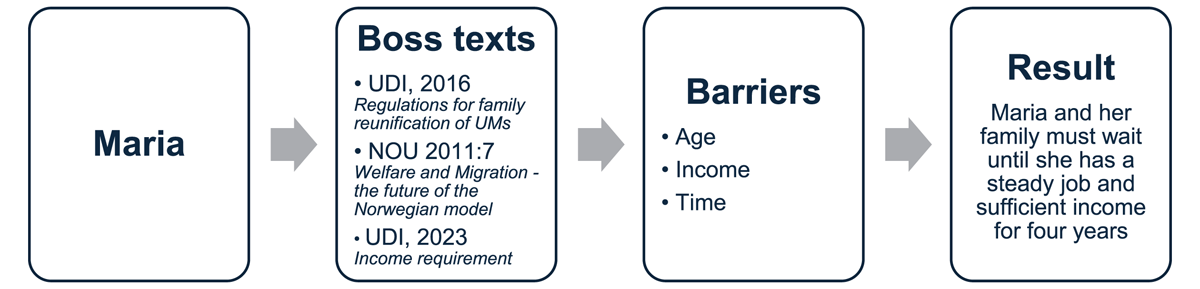
Figure 1
Barriers to family reunification (age and income).
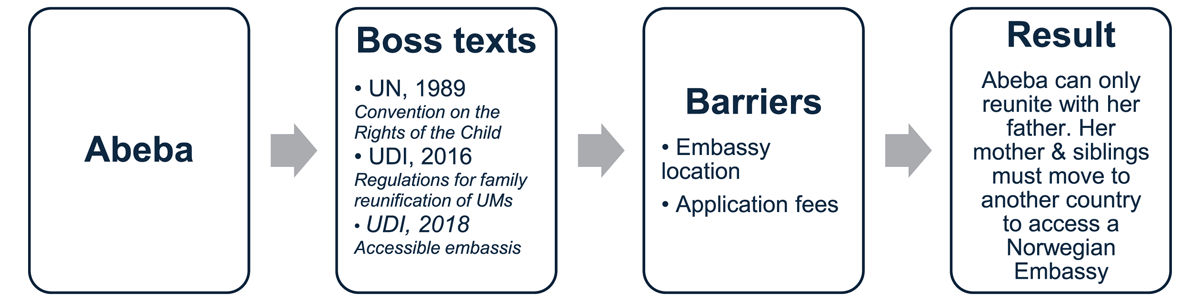
Figure 2
Barriers to family reunification (accessible embassies and finances).
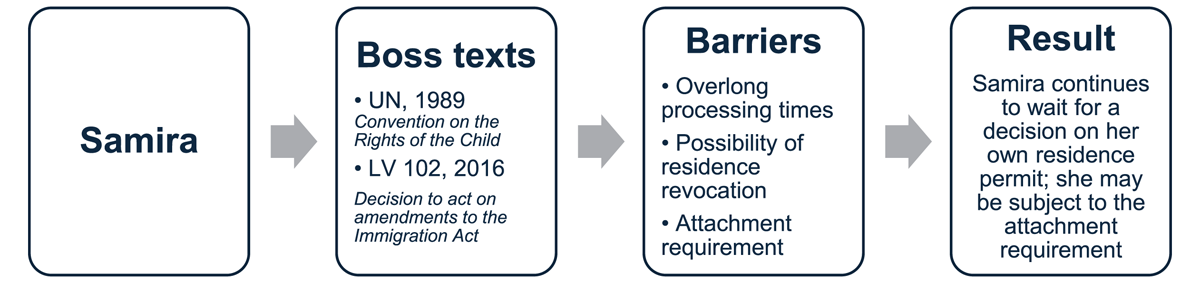
Figure 3
Barriers to family reunification (attachment requirements and restrictions on residence permits).