
Introduction
Pseudomonas aeruginosa is an opportunistic pathogen with multidrug resistance, causing severe problems in healthcare settings and among immunocompromised patients. Its persistence in hospital environments is due to its wide range of intrinsic resistance mechanisms and metabolic versatility (de Sales et al. 2020). Strains belonging to high-risk clonal complexes, due to their enhanced resistance, represent a major threat to public health worldwide (Benzaarate et al. 2026)
P. aeruginosa has a large genome. Although traditionally, multilocus sequence typing (MLST) has been used to detect bacterial strains relying on a limited number of housekeeping genes, it offers a standard and reliable approach to evaluating isolates globally and allocating their lineage (Xavier et al. 2025). MLST has been used extensively to detect high-risk clones and significant sequence types. In contrast to clinical and outbreak circumstances, MLST’s limited resolution can render it insufficient for differentiating closely related strains or for resolving fine-scale genetic relationships (Castañeda-Montes et al. 2018).
Whole genome sequencing-based approaches, including core-genome multilocus sequence typing (cg-MLST) and single-nucleotide polymorphism (SNP) analysis, offer a detailed evaluation of genomic relatedness with substantially enhanced discriminatory power (Blanc et al. 2020; Uelze et al. 2020)
Core-genome MLST uses the whole genome for typing, a method that extends beyond traditional MLST, which analyzes only a few housekeeping genes. Instead, cgMLST examines hundreds to thousands of conserved core genes shared among strains of the same species in a gene-by-gene framework. (Miller et al. 2025) This extended group of loci, in which their allelic profiles are compared, makes cgMLST succeed in analyzing standardized, high-resolution assessment of genomic relatedness and population structures, supporting long-term epidemiological monitoring and making it highly effective for outbreak investigations (Maiden et al. 2013; Ruppitsch et al. 2015).
In spite of its great resolution, cgMLST is a gene by gene allelic based analyses that does not apply evolutionary relationships based on single nucleotide as (SNP)-based phylogenetic analysis does, the latter investigates phylogenetic approaches at individual nucleotide level among the whole genome, making it possible to create evolutionary lineage between isolates, SNP-based phylogenies are significantly valuable for detecting relationships among isolates that may share similar allelic profiles but differ at the nucleotide level (Didelot et al. 2012; Schürch et al. 2018). However, in some conditions, cgMLST serves as a practical alternative to SNP–based approaches by minimizing reliance on reference genomes and complex bioinformatic workflows, making it more attainable for routine use in clinical and public health microbiological laboratories (Uelze et al. 2020)
Accordingly, a structural and integrative framework for genomic epidemiology can be obtained by the combined use of MLST, cgMLST, and SNP-based phylogenetic analysis. SNP-based phylogenetic analysis refines such relationships by capturing evolutionary divergence at the single-nucleotide scale, whereas MLST offers lineage-level context, and cgMLST provides a high-resolution assessment of genomic relatedness across the core genome (Yan et al. 2023). By combining various techniques, population structure can be accurately interpreted despite relying only on one strategy (Blanc et al. 2020).
Although WGS is extensively used globally for genomic epidemiology of pathogenic bacteria, actual data from WGS of P. aeruginosa is not available in the Kurdistan region of Iraq; the studies in this region have mainly focused on phenotypic and conventional typing approaches, which do not give enough resolution to assess genetic relatedness and the dynamics of transmission. In particular, recognition and diversity of high-risk clones such as ST235 using SNP-based whole-genome approaches in local healthcare settings in this geographic area have not been documented, although these clones have been reported internationally.
This study aimed to analyze the population structure, assess genetic relatedness among clinical P. aeruginosa isolates in Kurdistan region hospitals, and determine whether the observed patterns reflected clonal transmission or the presence of genetically diverse and unrelated strains within the clinical setting.
Experimental
Materials and Methods
Bacterial isolates. A total of 93 clinical P. aeruginosa isolates were collected from various specimens of hospitalized patients at healthcare facilities in the Kurdistan region of Iraq between March and July 2025. The bacterial isolates were obtained from different clinical specimens, including wound swabs, urine, blood, sputum, and burn infections. Initial identification of these isolates was performed under standard micro-biological procedures including culturing on selective and differential media, followed by morphological identification based on pigment formation and colony morphology, biochemical and molecular techniques using 16S rRNA to ensure accurate species level identification, through polymerase chain reaction using 16SrRNA primers F: 5′-TACGGGAGGCAGCAG-3′, R: 5′-AGGATTAGACCCT-3′ (Xiong et al. 2022) running the PCR product on gel for final confirmation.
Among these, thirteen multidrug-resistant P. aeruginosa were selected based on their resistance profiles for whole-genome sequencing. MDR was defined as resistance to at least one agent in three or more antimicrobial classes. Before genomic analysis, isolates were processed and kept in line with standard laboratory procedures.
Whole-Genome Sequencing. Genomic DNA was extracted from overnight bacterial cultures according to the manufacturer’s guidelines using the AddPrep Genomic DNA Extraction Kit (for blood, tissue, and plant samples). The quality and purity of the DNA were assessed with the NanoDrop ND-1000 spectrophotometer. The extracted DNA was sent for Whole-genome sequencing (WGS) to Macrogen (South Korea). Illumina short-read sequencing technology was used, and sequencing libraries were prepared using the TruSeq Nano DNA Library Preparation Kit with an insert size of 350 bp according to the manufacturer’s protocols. Whole-genome resequencing was conducted using paired-end sequencing with a read length of 151 bp. Before downstream analysis, raw sequencing reads had to pass through quality control to assess read quality, sequencing coverage, and overall sequencing quality.
Bioinformatic analysis and genome characterization. Whole-genome sequence analyses were performed using publicly available bioinformatics platforms. Genome assemblies and comparative analyses were conducted using the Bacterial and Viral Bioinformatics Resource Center (BV-BRC) (Nosková et al. 2023). In silico MLST was performed using tools provided by the Center for Genomic Epidemiology (Larsen Mette V. et al. 2012). Core-genome SNP-based phylogenetic trees were visualized and annotated using the Interactive Tree of Life (iTOL) (Letunic and Bork 2021).
Genome assembly and quality assessment. Assessment of the quality of the sequenced genome was determined by the composition of the genome, total sequencing output, and base quality scores (Q30). By using the expected genome size of P. aeruginosa, which is nearly 6.3 Mb, the estimated genome coverage was calculated based on the total bases for each isolate. (Stover et al. 2000). The two reads were assembled into draft genomes, using the BV-BRC genome assembly feature. The quality of the assembled genome was checked depending on some features, including the size of the genome and the number of contigs.
Multilocus Sequence Typing (MLST). MLST was performed in silico using whole-genome sequence data. Using both the NCBI and the Center for Genomic Epidemiology databases, sequence types (STs) of all thirteen isolates were identified based on the allelic profiles of seven housekeeping genes in P. aeruginosa, according to the MLST scheme available in public genomic databases. By determining the sequence types of the clinical isolates, high-risk clones were also detected (Curran et al. 2004).
Core-Genome Multilocus Sequence Typing (cg-MLST). To determine the Core-genome multilocus sequence typing (cgMLST), the BV-BRC platform was used to perform a gene-by-gene analysis with the cgMLST service, grouping assembled genomes into a single genome group. Schemas with fixed sets of species-specific loci, involving both core and additional genes, are implemented. A heatmap was used to display patterns of genetic similarity and divergence in the resulting allelic distance matrix.
Single-Nucleotide Polymorphism (SNP) analysis. Whole-genome sequence data were used to identify Core-genome SNPs and examine nucleotide-level variation among isolates. The BV-BRC platform service for whole genome SNP analysis was used to identify single nucleotide polymorphism relative to a reference Genome. This service uses kSNP4 software that can identify SNPs through a k-mer-based analysis and upon which it generates phylogenetic trees (Hall and Nisbet 2023). The recombination-filtered core-genome SNP alignment was applied to create pairwise SNP distances, which were displayed as a heatmap to evaluate the genetic relatedness of isolates.
SNP-Based phylogenetic analysis. Based on core- genome (SNPs) of the whole genome sequencing data of the isolates, phylogenetic lineage was estimated, and the visualization and annotation of the phylogenetic tree were performed by using the Interactive Tree Of Life (iTOL) software, with incorporation of several P. aeruginosa genome FASTA data from different neighbors and global countries to provide a global context. The clinical isolates’ genetic relatedness and clustering patterns were evaluated in relation to global reference strains (Muthukumarasamy et al. 2020).
Correlation analysis between cgMLST and SNP distances. Correlation analysis using Spearman’s rank correlation coefficient and a scatter plot was performed to determine the correlation between allele-based cgMLST allelic distances and nucleotide-based SNP distances among all isolates. This study evaluated the SNP-based genomic divergence and cgMLST-derived genomic relatedness.
Results
Isolate characteristics and source distribution. The demographic and clinical data for the 13 multi-drug-resistant P. aeruginosa isolates are summarized in Table I. The isolates were obtained from various hospitals across the Kurdistan region of Iraq using different clinical specimens. This diversity in specimen origins supports the various infections caused by these bacteria and aligns with the genomic diversity among the isolates observed in the subsequent analysis.
Table I
Demographic and clinical characteristics of Pseudomonas aeruginosa isolates.
| Isolate ID | Age (years) | Gender | Source of isolate | Genome ID |
|---|---|---|---|---|
| 11A | 45 | M | wound swab | 287.4547 |
| 19 | 60 | F | urine | 2994495.16 |
| 23 | 34 | M | sputum | 287.45476 |
| 26 | 50 | F | wound swab | 287.45471 |
| 29 | 28 | M | blood | 287.45464 |
| 2A | 40 | F | urine | 287.45472 |
| 32 | 55 | M | burn infection | 287.45473 |
| 37 | 63 | F | sputum | 287.45474 |
| 3A | 30 | M | urine | 287.45475 |
| 44 | 48 | F | wound swab | 287.45482 |
| 7A | 52 | M | blood | 287.45477 |
| 80 | 36 | F | burn infection | 287.45478 |
| 92 | 41 | M | wound swab | 287.45479 |
Whole-Genome Sequencing quality and data characteristics. All 13 P. aeruginosa isolates were sequenced to high-quality data, with yields ranging from 2.0 to 3.5 Gb and an estimated coverage of 300× to 530×, as indicated in Table II. More than 96% of the bases received a quality score over Q30, and the GC content (66.6–67.5%) remained similar to the genomic composition of P. aeruginosa. None of the isolates were excluded since all achieved sufficient sequencing quality.
Table II
Whole-genome sequencing quality metrics for the 13 Pseudomonas aeruginosa isolates.
| Isolate ID | Total bases (Gb) | Estimated coverage (×) | % Bases ≥ Q30 | GC (%) | AT (%) |
|---|---|---|---|---|---|
| 11A | 2.2 | ~333× | 97.4 | 67.1 | 32.9 |
| 19 | 3.5 | ~530× | 96.4 | 67.5 | 32.5 |
| 23 | 2.7 | ~409× | 97.2 | 67.1 | 32.9 |
| 26 | 2.4 | ~364× | 97.4 | 66.7 | 33.3 |
| 29 | 2.9 | ~439× | 97.3 | 66.9 | 33.1 |
| 2A | 2.5 | ~379× | 97.2 | 67.3 | 32.7 |
| 32 | 2.0 | ~303× | 97.1 | 67.2 | 32.8 |
| 37 | 2.1 | ~318× | 97.2 | 66.8 | 33.2 |
| 3A | 2.4 | ~364× | 97.2 | 67.1 | 32.9 |
| 44 | 3.5 | ~530× | 96.6 | 67.1 | 32.9 |
| 7A | 2.6 | ~394× | 97.3 | 67.1 | 32.9 |
| 80 | 2.3 | ~348× | 96.9 | 67.0 | 33.0 |
| 92 | 2.3 | ~348× | 97.3 | 66.6 | 33.4 |
MLST distribution. In silico MLST analysis of the 13 P. aeruginosa isolates revealed eight distinct sequence types (STs), indicating substantial genetic diversity within the collection (Table III). The most frequently identified sequence type was ST235 (n=3), followed by ST260 (n=2) and ST664 (n=2); the remaining sequence types were represented by single isolates (Fig. 1). This indicates a basic classification lineage without detecting fine-scale genetic relationships among them.
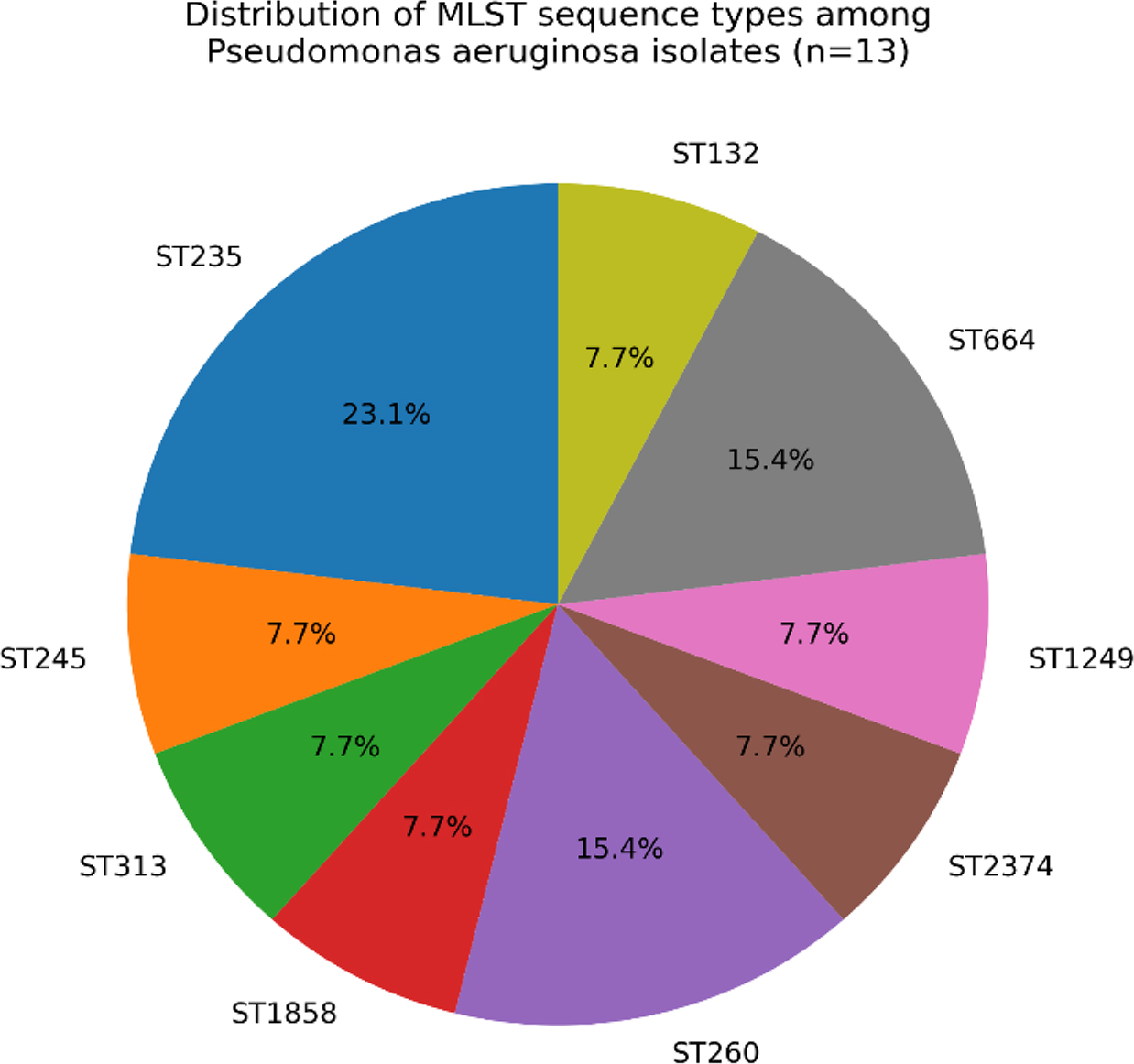
Fig. 1.
The distribution of MLST sequence types among Pseudomonas aeruginosa isolates (n=13).
cgMLST allelic distance analysis. Pairwise allelic distances ranged widely, ranging from 0 to 3,300 allelic differences, according to cgMLST analysis (Fig. 2). Visualization of pairwise allelic distances as a cgMLST heatmap was illustrated; most of the isolates showed high allelic divergence, although there was no evidence of a dominant cgMLST cluster that had a consistently low allelic distance. This suggests that the isolates show multiple genetically unrelated lineages rather than a single outbreak strain. While isolate pairs with very low allelic distances were detected in a small number of the isolates, proving their close genetic relatedness. However, these interactions were limited and did not extend into broader clusters.
Table III
In silico multilocus sequence typing (MLST) profiles of Pseudomonas aeruginosa isolates based on whole-genome sequencing.
| Isolate ID | Genome ID | acsA | AroE | guaA | mutL | nuoD | ppsA | trpE | ST |
|---|---|---|---|---|---|---|---|---|---|
| 11A | 287.4547 | 38 | 11 | 3 | 13 | 1 | 2 | 4 | 235 |
| 19 | 2994495.16 | 39 | 6 | 12 | 11 | 3 | 15 | 2 | 245 |
| 23 | 287.45476 | 47 | 8 | 7 | 6 | 8 | 11 | 40 | 313 |
| 26 | 287.45471 | 38 | 11 | 3 | 13 | 1 | 2 | 4 | 235 |
| 29 | 287.45464 | 17 | 2 | 11 | 3 | 81 | 38 | 3 | 1858 |
| 2A | 287.45472 | 14 | 5 | 10 | 7 | 4 | 13 | 7 | 260 |
| 32 | 287.45473 | 17 | 5 | 26 | 3 | 4 | 4 | 7 | 2374 |
| 37 | 287.45474 | 23 | 13 | 109 | 5 | 1 | 1 | 47 | 1249 |
| 3A | 287.45475 | 14 | 5 | 10 | 7 | 4 | 13 | 7 | 260 |
| 44 | 287.45482 | 9 | 5 | 11 | 3 | 4 | 40 | 18 | 664 |
| 7A | 287.45477 | 6 | 20 | 1 | 3 | 4 | 4 | 2 | 132 |
| 80 | 287.45478 | 38 | 11 | 3 | 13 | 1 | 2 | 4 | 235 |
| 92 | 287.45479 | 9 | 5 | 11 | 3 | 4 | 40 | 18 | 664 |
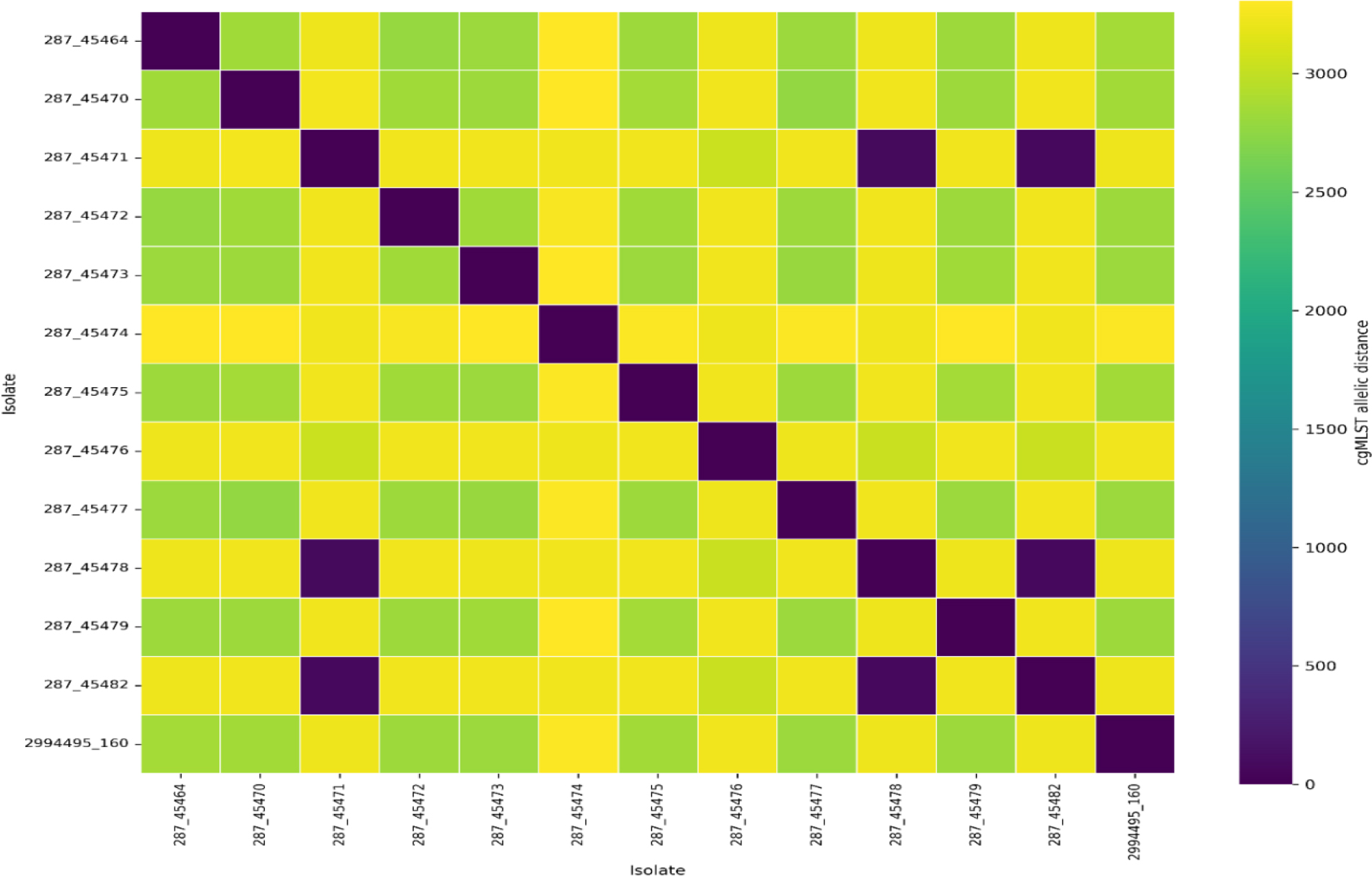
Fig. 2.
cgMLST allelic distances heatmap of the 13 clinical Pseudomonas aeruginosa isolates pairwise. Rows and columns (each cell) represent individual isolates, and the colors indicate the number of allelic differences across the core genome. Darker colors correspond to lower allelic distances (higher genetic similarity), whereas lighter colors indicate greater allelic distances (higher genetic divergence). The diagonal of the heatmap represents self-comparisons with zero allelic differences.
SNP-based phylogenetic analysis. The evolutionary relationships within 13 clinical P. aeruginosa strains were determined using core genome SNP analysis. Based on this approach, a maximum likelihood phylogenetic tree has been generated and visualized via the Interactive Tree of Life (iTOL) software. Remarkable genetic variation within the isolates was demonstrated by the resultant phylogeny, which clearly divided them into multiple distinct lineages. The SNP-based phylogenetic tree showed a high relationship between the in silico MLST strain types (STs) and the clustering pattern of the isolates in the visualized tree; for example, the isolates with similar strain types were grouped together on branches that are close to each other. This proves the strength of classification by MLST at the lineage level. For instance, isolates belonging to ST235 grouped at the same lineage, while others (ST260 and ST664) were in separate, well-defined branches, which indicated distinct evolutionary lineages (Fig. 3).
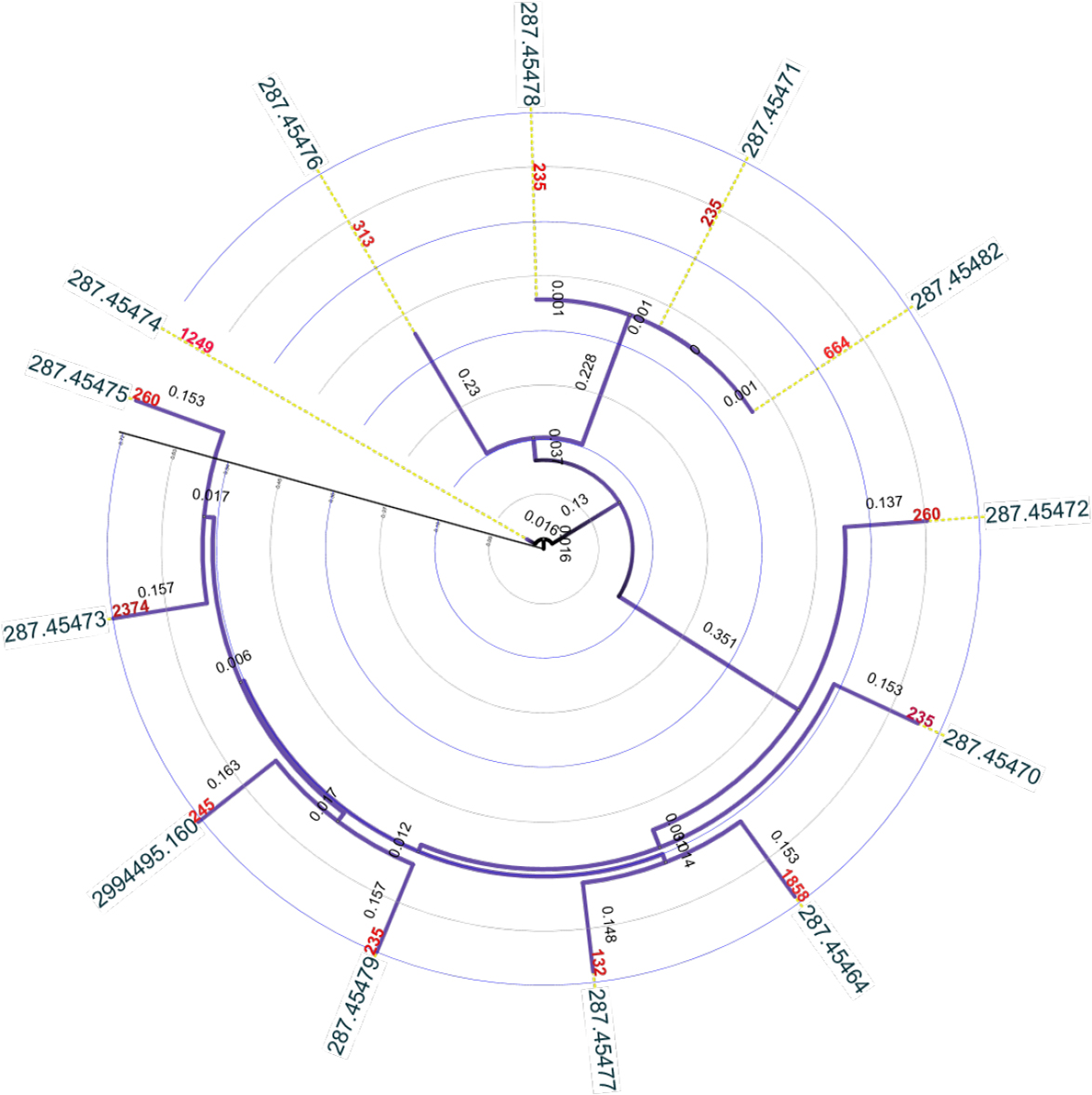
Fig. 3.
Core-genome SNP-based phylogenetic analysis of clinical Pseudomonas aeruginosa isolates. Maximum-likelihood phylogenetic tree inferred from core-genome single-nucleotide polymorphisms (SNPs) among 13 clinical Pseudomonas aeruginosa isolates. The tree was visualized using the Interactive Tree of Life (iTOL). Tip labels indicate genome ID, and corresponding MLST sequence types (STs). Branch lengths correspond to nucleotide substitutions per site. The phylogeny reveals substantial genetic diversity supporting the presence of multiple, genetically distinct lineages.
Regardless of this overall similarity, the SNP phylogeny provides higher-resolution differentiation among the STs. Different branch lengths were observed among isolates sharing the same strain type or a closely related MLST profile, indicating differences in nucleotide substitutions among the core genomes. This fine-scale resolution demonstrates that SNP-based approaches may detect evolutionary divergence that allele-based methods alone cannot accurately capture. The phylogenetic structure suggests that P. aeruginosa strains, which are genetically diverse yet unrelated, are found in clinical settings.
Core genome SNP based heatmap. Using a distance heatmap, core-genome SNP distances were analyzed and visualized for all 13 P. aeruginosa isolates; each cell represents the SNP distance. Lower distances indicate fewer differences, thus proving closer genetic relatedness. Although a limited number of the isolate pairs showed (<100 SNPs), which is a low distance SNP, most of the isolates showed consistent with closer large SNP distances (>500 SNPs)which are large SNP distances. This indicates that there is no recent clonal expansion or outbreak within these collected samples (Fig. 4).
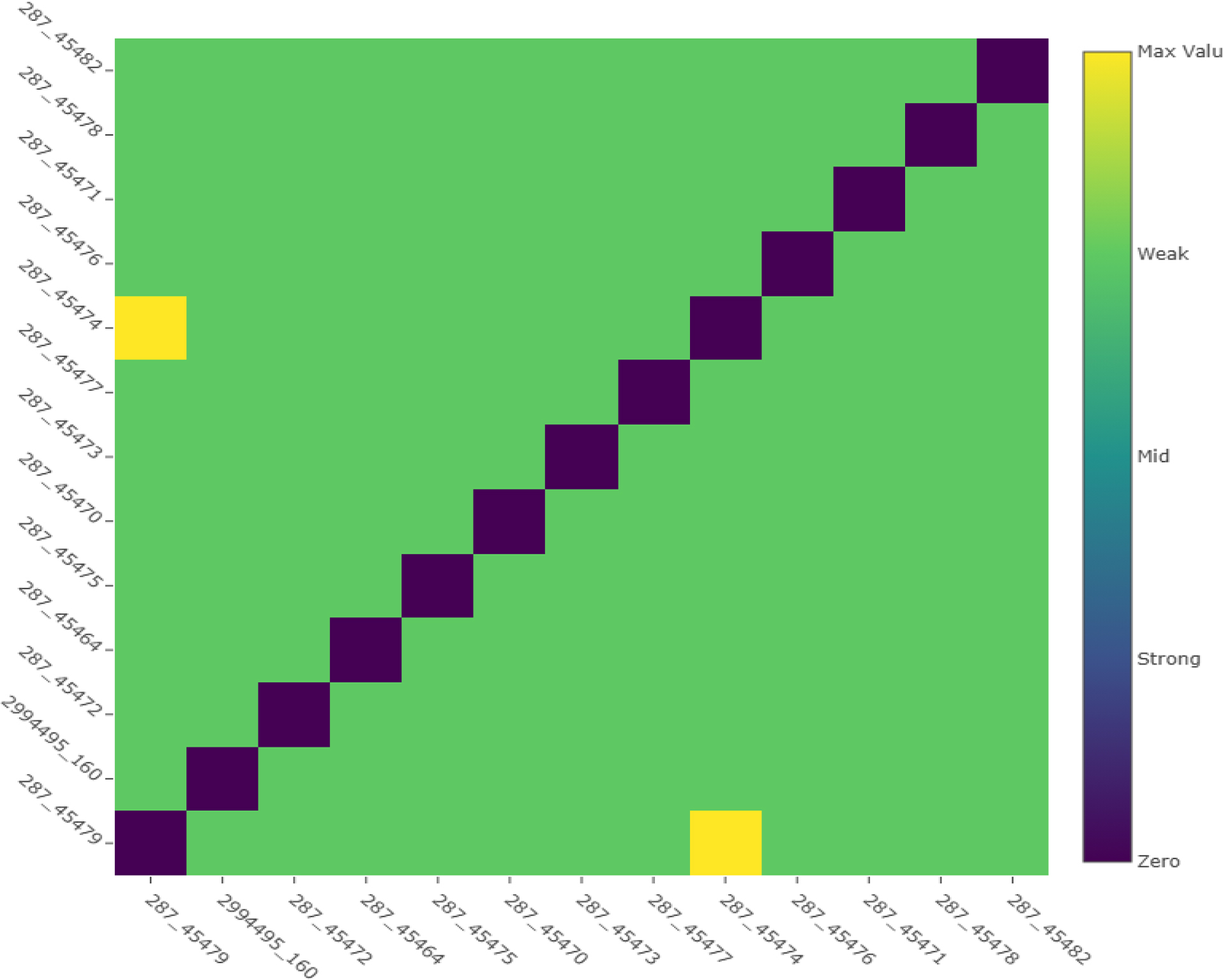
Fig. 4.
Heatmap of pairwise core-genome SNP distances among 13 Pseudomonas aeruginosa isolates. Each cell represents the number of single-nucleotide polymorphism (SNP) differences between isolate pairs, with lower values indicating closer genomic relatedness and higher values reflecting increased genetic divergence. The absence of low SNP-distance clusters consistent with recent transmission supports the presence of a genetically heterogeneous population.
Global phylogenetic context of P. aeruginosa isolates. A SNP-based phylogenetic tree of publicly available global P. aeruginosa genomes was created to place the study isolates within a broader genomic framework. Significant genetic diversity within the dataset was evident in the geographic distribution of study isolates across multiple branches of the worldwide phylogeny (Fig. 5). Rather than forming a single clustered group, the Iraqi clinical isolates were spread throughout the tree. Several Iraqi isolates were grouped alongside reference genomes from various geographic regions, including Europe, Asia, and Africa. According to the geographical annotation, isolates from the same country did not typically cluster together. On the other hand, genetically related isolates have been identified in different countries and on different continents. Different isolates had varying branch lengths, indicating differences in SNP distances and levels of genomic diversity. Thus, the clinical isolates from this study did not all belong to a single clade.
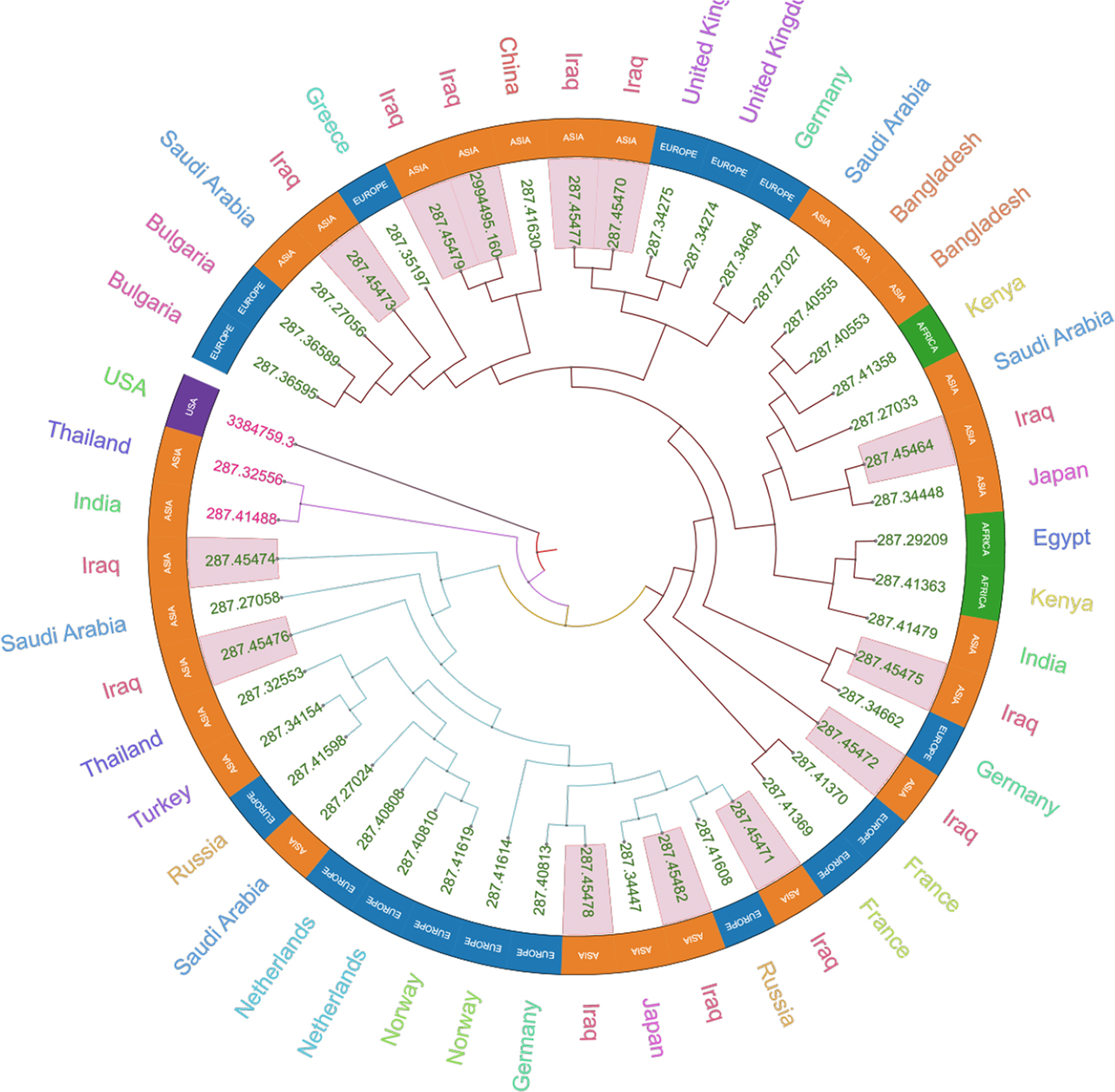
Fig. 5.
Core-genome SNP-based phylogenetic tree of Pseudomonas aeruginosa isolates with geographic annotation. The circular phylogenetic tree was constructed from core-genome single-nucleotide polymorphisms (SNPs) and visualized with iTOL, with branch lengths representing nucleotide substitutions per site. Genomic IDs are shown at the tips, while colored labels and outer rings indicate the country and continent of isolation for each strain.
cgMLST–SNP distance correlation analysis. The cgMLST and MLST approaches in phylogenetic analysis are consistent with SNP-based phylogenetic approaches. This lineage-level relationship verifies the resolution of genomic divergence; thus, the compliance and correlation findings between cgMLST and the SNP-based phylogenetic approach complement the cgMLST and MLST findings, demonstrating concordance between allele-based and nucleotide-based genomic analyses (Fig. 6). Overall, these results suggest that clinical isolates represent multiple separate evolutionary lineages.
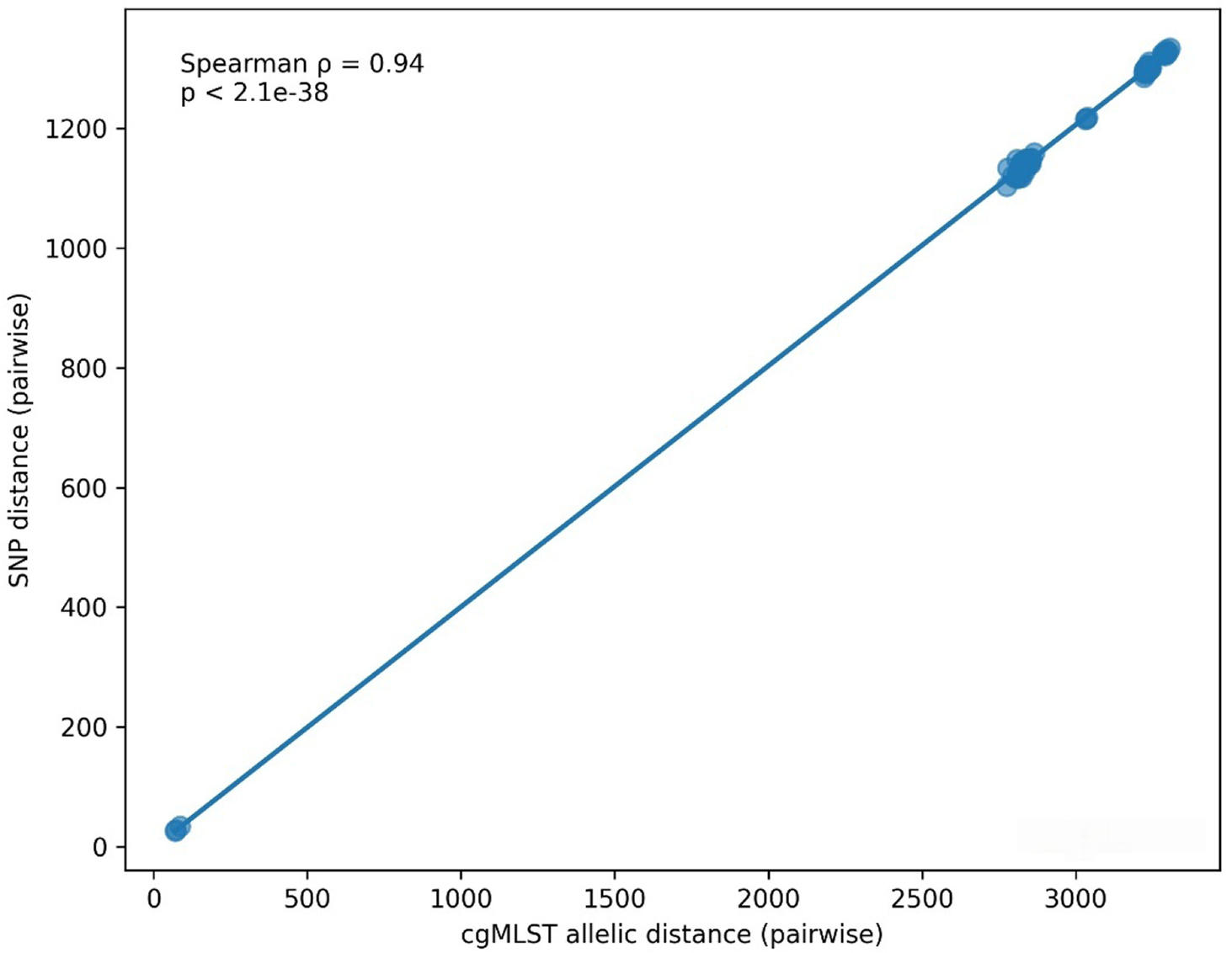
Fig. 6.
Correlation between pairwise cgMLST allelic distances and SNP distances among 13 clinical Pseudomonas aeruginosa isolates. Each point represents a pairwise comparison between two isolates. A strong positive correlation was observed (Spearman’s ρ = 0.94, p < 2.1 × 10−38), indicating high concordance between allele-base d and nucleotide-based measures of genomic relatedness. The solid line represents the linear regression fit.
Discussion
In this study, clinical isolates were obtained from a variety of clinical specimen types, including blood, wound, and sputum samples, as well as wound swabs and burn-related infections, providing crucial context for observing and analyzing their genetic diversity. This broad distribution shows P. aeruginosa nature of being an opportunistic pathogen that can cause infection in different anatomical sites (Qin et al. 2022). The variety of specimen origins and sites of infection suggests that these infections do not share the same transmission pathway or a single clinical niche within clinical settings, and this observation supports the absence of a single clonal heredity of the isolates in the population structure.
Different age-grouped patients of both genders enrolled reflect the variety of the studied population; this indicates that there is no grouping in the demographic characteristics of the isolates. This has been noted in previous studies, indicating that ecological adaptability and hospital-acquired infections are more closely related to Pseudomonas aeruginosa infections than to demographic factors (Reynolds and Kollef 2021).
Due to the widespread occurrence of this pathogen, the typing methods used must be of high resolution types to identify the source of possible outbreaks or route of transmission within a specific setting, previously, pulsed field gel electrophoresis was used as a gold standard method for the typing method of this pathogen and other bacteria, However, currently technological advances of next generation sequencing by using whole genome sequencing (WGS) typing techniques is considered as the gold standard (Tönnies et al. 2021).
The whole-genome sequencing approach in this study, which combined MLST, cgMLST, and core-genome SNP analyses, revealed the genetic relatedness and population structure of P. aeruginosa isolated from hospitals in Erbil, Kurdistan-Iraq, across the globe. The findings provide insight into the broad genomic diversity of P. aeruginosa within and beyond the geographical region and indicate considerable genetic variation among the studied isolates. This study shows the absence of whole-genome sequencing data for P. aeruginosa in the Kurdistan region, as well as the lack of genome-based epidemiological data for the integrated analysis of MLST, cgMLST, and SNP-based analyses of clinical isolates. Thus, this study is the first study on this analysis in this region.
The MLST analysis detected that all the isolates were from globally known and recorded sequence types, among which high-risk clones were found, such as ST235, which is mostly associated with hospital-acquired infections and multi-drug resistance, which has been previously widely reported as a dominant high-risk clone in Middle Eastern countries, parts of Europe, and North Africa (Brüggemann et al. 2018; Doumith et al. 2022) The presence of these specific lineages in Iraqi isolates underscores the importance of genetic surveillance at global and local levels and the interconnectedness of P. aeruginosa populations across medical facilities.
According to the SNP-based phylogenetic analysis, rather than forming a single-lineage cluster, the Iraqi isolates dispersed across several distinct lineages. This result is consistent with studies from surrounding Middle Eastern and Asian countries, which state that P. aeruginosa clinical samples comprise genetically distinct lineages from different evolutionary backgrounds, rather than a single location and specific clonal expansion (Mathlouthi et al. 2015; Treepong et al. 2018). Studies from Iran, Saudi Arabia, and Turkey demonstrate similarities, with WGS studies showing several unrelated lineages circulating simultaneously in hospital settings (Khalili et al. 2022; Al-Asady 2025).
Since the SNP phylogeny shows no strong geographical clustering, this further supports the global prevalence of P. aeruginosa isolates. The clinical isolates in this study clustered with distinct strains from Europe, Asia, and Africa, indicating the pathogen’s global distribution. Similar results have been reported in a variety of genomic studies from Southeast Asia and Europe, in which genetically related P. aeruginosa strains were found across different geographic areas, indicating that geographical location alone has minimal effect on population structure (Freschi et al. 2019; Matsumara et al. 2025).
The cgMLST allelic distance analysis corroborates the SNP-based results, demonstrating high levels of genomic diversity across the core genome. Although cgMLST can provide a uniform and portable framework for analyzing genetic relatedness, SNP-based approaches offer additional resolution at the nucleotide level. The SNP distance heatmap also confirmed the absence of closely related isolated pairs, supporting independent introductions rather than recent transmission within the study setting. This enables a better differentiation among the clinical isolates. This is complementary to prior studies on this combined approach, in which they state that cgMLST and SNP-based phylogenies have a high discriminatory power for overall population structure, highlighting the strong ability of SNP analysis for resolving fine-scale evolutionary relationships (Ruppitsch et al. 2015; Uelze et al. 2020).
In this study, the concordance between SNP- and allele-based methods was statistically evaluated using Spearman’s correlation coefficients and simple linear regression (Leeper et al. 2025). The results showed a direct, quantitative, and linear relation between these two approaches.
Overall, the combined approaches of MLST, cgMLST, and SNP-based phylogenetic analysis provide a comprehensive framework for assessing P. aeruginosa genetic diversity and population structure. The concept that P. aeruginosa population dynamics are shaped by global dissemination rather than localized transmissions alone supports the observed variation among Iraqi clinical isolates, which is consistent with patterns described in neighboring and distant countries. These results highlight the significance of WGS-based methods for the surveillance of this clinically important pathogen, comparative epidemiology, and the guidance of infection prevention and control plans.
Conclusions
This study provides new insights into the first whole-genome sequence-based assessment of genetic diversity and population structure of P. aeruginosa isolates in the Kurdistan Region of Iraq. The integrated approaches of combined whole-genome-based MLST, cgMLST, and core-genome SNP analyses revealed wide genomic heterogeneity, along with the broad distribution of isolates across distinct linages rather than a single dominant clone. The lack of clustering at both clinical and genomic levels of these isolates indicates their widespread distribution and ecological adaptability in healthcare settings. The compatibility between cgMLST and SNP-based analyses highlights the importance of combining complementary genomic techniques for robust evaluation of population structure and relatedness. To date, there are no published reports specifically detailing WGS-derived phylogenetic analyses and high-resolution genomic diversity of clinicalP. aeruginosa from Kurdistan, Iraq. Overall, these findings provide an underlying genomic framework for P. aeruginosa in this area and underscore the necessity of ongoing genomic surveillance alongside clinical data to better understand transmission dynamics and inform targeted efforts to prevent infection.
Notes
[1] Limitation
The study is limited by the relatively small number of isolates analyzed and the restricted geographic and temporal sampling, which may not fully represent the diversity of P. aeruginosa circulating more broadly. In addition, there is a lack of research and data on whole-genome sequencing of P. aeruginosa samples in Kurdistan and Iraq.
[2] Ethical statement
The research proposal was submitted to the ethics committee of the College of Dentistry, Hawler Medical University, and official permission was obtained from the General Directorate of Health-Erbil for sample collection from the microbiology department of the city hospitals. The study was conducted using bacterial isolates obtained as part of routine clinical diagnostics. No patient-identifiable information was collected or analyzed.
[3] Author contribution
Salah Tofik Jalal Balaky designed the study; Hozan Salahadin Mahdi and Salah Tofik Jalal Balaky performed genomic analyses, drafted the manuscript, designed the methodology, and conducted the investigation. All authors read and approved of the final manuscript.
[4] Data availability
Whole-genome sequencing data generated in this study have been deposited in the National Center for Biotechnology Information GenBank database under BioProject accession number PRJNA1444488. The assembled genome sequences will be publicly available upon acceptance of the manuscript.