
Introduction
Antibiotics have revolutionized medicine, markedly reducing morbidity and mortality from infectious diseases. However, their extensive and often inappropriate use has become one of the major drivers of antimicrobial resistance (AMR), a growing global health concern associated with treatment failures, prolonged hospital stays, and increased healthcare costs (GBD 2019 Antimicrobial Resistance Collaborators 2022). Numerous studies have demonstrated a clear link between antibiotic consumption and the emergence and spread of resistance (Olczak-Pienkowska and Hryniewicz 2021; Hou et al. 2023; Rahman et al. 2023). Inappropriate antibiotic selection, prolonged duration of therapy, and unnecessary use in viral infections – particularly acute upper respiratory tract infections (URTIs) – contribute substantially to this problem (Sur and Plesa 2022; Lin et al. 2023). To address this challenge, continuous monitoring of antibiotic consumption through standardized surveillance systems is essential (Bruyndonckx et al. 2021). In Europe, data on antimicrobial use are systematically collected by the European Surveillance of Antimicrobial Consumption Network (ESAC-Net), supporting evidence-based stewardship initiatives at both national and EU levels (WHO 2023; ECDC 2024).
Antibiotic consumption in the European Union/European Economic Area (EU/EEA) remained relatively stable from the late 1990s to the late 2010s (Klein et al. 2018). However, substantial variations between countries have persisted over the years and continue to do so today. For example, in 2017, the highest-consuming country (Greece) reported community antibiotic use 3.6 times higher than the lowest (the Netherlands) (Bruyndonckx et al. 2021). These disparities reflect differences in healthcare systems, drug reimbursement policy, prescribing practices, and implementation of stewardship programs. Poland has consistently ranked among the EU countries with high antibiotic consumption. In Poland, previous analyses have regularly identified high community antibiotic consumption, dominated by broad-spectrum agents such as amoxicillin-clavulanic acid and macrolides, and a small use of narrow-spectrum penicillins (Chlabicz et al. 2014; Olczak-Pienkowska and Hryniewicz 2021). In 2017, community antibiotic consumption in Poland was 22.6 defined daily doses (DDD) per 1,000 inhabitants per day – considerably above the EU/EEA average of approximately 17 DDD per 1,000 inhabitants per day – and penicillins accounted for only about 28% of total antibiotic use (compared with over 60% in some other countries) (Bruyndonckx et al. 2021). Such patterns – high overall use combined with a predominance of broad-spectrum agents – underscore the need for targeted stewardship interventions.
In response to these challenges, EU policymakers have set ambitious goals to reduce antimicrobial consumption (AMC) within a One Health framework (2023/C 220/01). The Council Recommendation of June 2023 calls for a 20% reduction in total antibiotic consumption (community and hospital combined) by 2030 relative to 2019 levels (WHO 2023; Ooms 2025). This objective reflects increasing concern that current consumption patterns continue to drive antimicrobial resistance. Approximately 90% of all antibiotics in the EU (including in Poland) are consumed in the community sector (Dyar et al. 2016; Olczak-Pienkowska and Hryniewicz 2021), making outpatient prescribing practices central to achieving these reductions. Additionally, the Recommendation highlights the need for national measures to ensure that by 2030, at least 65% of total human antibiotic consumption consists of agents from the WHO Access group, as defined in the AWaRe classification. The WHO AWaRe frame-work (Access, Watch, Reserve) categorizes antibiotics according to their stewardship priority, with the expectation that the majority of use should derive from Access antibiotics, which are narrower in spectrum and associated with a lower risk of driving resistance (WHO 2023; Mendelson et al. 2024; Moja et al. 2024; Ooms 2025).
Within this context, the present study analyzes community (outpatient) antibiotic consumption in Poland between 2019 and 2024, focusing on temporal trends and shifts in use relative to EU/EEA patterns. The study aims to assess whether current trajectories in Poland align with the EU’s 2030 target of a 20% reduction in total antibiotic consumption compared to 2019. By examining both the overall level and the structure of antibiotic use, this analysis provides evidence to support national efforts to promote prudent prescribing in primary care and to monitor Poland’s progress toward achieving the 2030 antimicrobial stewardship targets.
Experimental
Material and Methods
This study focuses on AMC in the community sector, encompassing ambulatory care settings such as general practice and outpatient clinics.
Data Sources
The raw data on antibiotic consumption from 2019 to 2024 were provided by IQVIA Poland, a company that monitors pharmaceutical sales. Since the dataset reflects aggregated pharmaceutical sales in the outpatient sector, it encompasses the entire population and does not allow stratification by age or other patient-level characteristics. Initially, the data were analyzed within the framework of the National Programme for the Protection of Antibiotics, followed by the National Health Programme of the Ministry of Health.
Data Processing
All antimicrobial products were assigned international nonproprietary names (INNs), ATC codes, routes of administration, and defined daily doses (DDD). A consistent methodology for calculating consumption was applied for each year. The analysis covered antibacterials for systemic use (ATC group J01), including the following major subgroups: tetracyclines (J01A), β-lactam antibacterials (penicillins, J01C; cephalosporins and other β-lactams, J01D), sulfonamides and trimethoprim (J01E), macrolides, lincosamides, and streptogramins (J01F), aminoglycosides (J01G), quinolones (J01M), and other antibacterials (J01X), including nitrofurantoin and “other” agents not in the preceding classes (ECDC 2024).
Antibiotic consumption, based on sales data, was converted into weight units and expressed as DDD per 1,000 inhabitants per day (DID), following the WHO Anatomical Therapeutic Chemical (ATC)/Defined Daily Dose (DDD) methodology (Norwegian Institute of Public Health 2025). These data reflect the volume of antibiotics dispensed in the community (primary care) sector and exclude hospital use. The surveillance approach follows the ESAC-Net, to which Poland submits annual national consumption data, allowing comparison with EU/EEA averages and individual countries (ECDC 2024). This analysis relies solely on sales data and does not include information from prescription or reimbursement databases. Consequently, the results represent the volume of antibiotics distributed in outpatient settings rather than actual patient-level prescribing practices.
Trends in consumption were assessed by comparing annual DDD rates and calculating percentage changes over time, highlighting the 2019 (pre-COVID) baseline, the decline in 2020, and subsequent recovery through 2024. No formal statistical trend tests were performed for this descriptive analysis; EU-level interpretations are referenced where relevant (e.g., significant trends reported by ECDC) (ECDC 2024). Comparative data on antimicrobial consumption (AMC) in EU/EEA countries were obtained from the publicly available ESAC-Net database (ECDC 2025).
Surveillance Indicator. WHO AWaRe Classification
Consumption was also analyzed according to the WHO AWaRe classification, evaluating the proportion of total use accounted for by Access, Watch, and Reserve antibiotics. Based on the 2023 AWaRe update, the Access group includes first- or second-line agents for common infections, with a narrower spectrum and lower resistance potential. The Watch group comprises broader-spectrum agents or those associated with higher resistance risk, while the Reserve group contains last-resort antibiotics for multidrug-resistant infections (WHO 2023; Ooms 2025).
Results and Discussion
Temporal Changes in Outpatient Antibiotic Consumption (2019–2024)
Outpatient antibiotic consumption in Poland declined sharply in 2020, followed by a rebound in subsequent years, ultimately reaching a level in 2024 that exceeded the 2019 baseline (Fig. 1A). In 2019, the year before the COVID-19 pandemic, total community consumption of systemic antibiotics was 22.2 DID. This was considerably higher than the EU/EEA average in 2019, which was 18.3 DID, and one of the highest national rates in Europe. The COVID-19 pandemic had a profound and immediate effect on antibiotic use. With the onset of the pandemic in 2020, in Poland, a marked drop occurred, with antimicrobial consumption falling to 17.1 DID (EU/EEA: 15.0 DID), corresponding to a 23% reduction compared with 2019 – an unprecedented drop attributed to reduced healthcare visits and fewer respiratory infections during lock-downs (Ventura-Gabarro et al. 2023). However, this reduction proved temporary: by 2022, antibiotic use had returned mainly to pre-pandemic levels across the EU (Ventura-Gabarro et al. 2023; ECDC 2024). In Poland, antibiotic use increased to 19.2 DID in 2021 and peaked at 22.7 DID in 2022, slightly surpassing the pre-pandemic level. A similar pattern was reported across several European countries, where the COVID-19 pandemic led to an initial sharp decline in outpatient antibiotic prescribing in 2020, followed by a rebound in 2021–2022. The post-pandemic increase was particularly evident for macrolides and broad-spectrum β-lactams, mirroring the trends observed in Poland (Kostev et al. 2025). These recent trends should also be interpreted in the context of Poland’s historically high outpatient antibiotic consumption before the pandemic, because the country had already exhibited one of the highest national antibiotic use rates in Europe as early as 2015 (Olczak-Pienkowska and Hryniewicz 2021). Between 2023 and 2024, a modest decrease was observed in Poland, from 21.8 to 21.2 DID, whereas in the EU/EEA, a slight increase was recorded, from 18.5 to 18.8 DID, respectively. Notably, 13 of 27 EU/EEA countries, including Poland, reported higher community antibiotic consumption in 2022 than in 2019 (Tomczyk et al. 2021; Ventura-Gabarro et al. 2023). This “missed opportunity” for sustained reduction highlights the need for renewed commitment to antimicrobial stewardship in Europe (Ventura-Gabarro et al. 2023). By 2024, community antibiotic consumption in Poland reached 21.2 DID, ranked seventh among EU/EEA countries with the highest outpatient antibiotic use (Fig. 1B) (ECDC 2025).
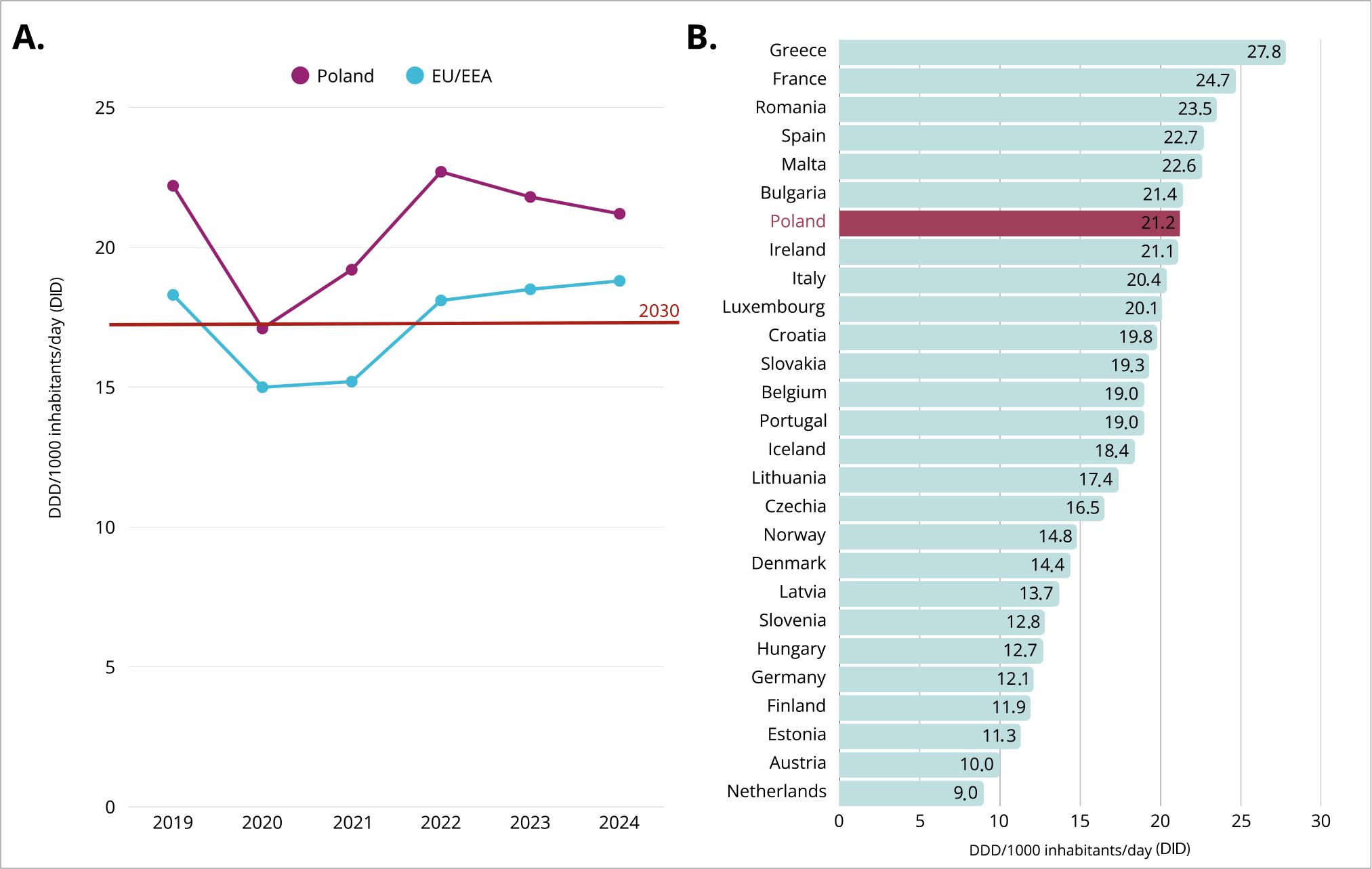
Fig. 1.
Community consumption of systemic antibacterials (ATC J01) in Poland compared with the EU/EEA average over time, and the 2030 target for Poland (A) and overall antibacterial use in the EU/EEA in 2024 (B).
Community antibiotic consumption in Poland during 2019–2024 consistently exceeded the EU/EEA average, with relative differences ranging from 13% to 26%. Although the decline in 2020 was significant, it was followed by an increase, and by 2024, antibiotic consumption remained approximately 5% lower than in 2019. As shown in Fig. 1A, the gap between Poland and the EU/EEA average narrowed in 2020. However, it widened again in 2022, indicating that the post-pandemic rise in antibiotic use was more pronounced in Poland. This suggests that the temporary reduction in antibiotic consumption observed in 2020 was not sustained and that additional measures are necessary to meet the EU’s 2030 target. According to the Council Recommendation of June 2023, by 2030, total antibiotic consumption in Poland (community and hospital sectors combined) should be reduced to 17.3 DDD per 1,000 inhabitants per day (ECDC 2024). By 2024, total consumption of the J01 group had declined by approximately 4.2%, indicating some progress toward the target; however, the reduction remains modest, underscoring the need for continued, coordinated national efforts to achieve the 2030 goal.
Antibiotic Consumption by ATC J01 Subgroups (2019–2024)
Across the analyzed ATC J01 subgroups, beta-lactam antibacterials – penicillins (J01C) consistently represented the largest share of outpatient antibiotic consumption in Poland during 2019–2024. In 2019, their use amounted to approximately 6.40 DID, representing about 29% of total antibacterial consumption. A sharp decline was observed in 2020, down to 4.42 DID, reflecting the immediate impact of the COVID-19 pandemic. A gradual increase followed, with penicillins use rising to 7.09 DID in 2022, peaking at 7.66 DID in 2023, and slightly declining to 6.55 DID in 2024, representing approximately 31% of total community consumption (Fig. 2). Within J01C subgroup, in 2019 (before the pandemic), extended-spectrum penicillins (J01CA) were predominant within the J01C subgroup; however, since 2021, a gradual shift has been observed toward increased use of penicillin combinations with beta-lactamase inhibitors (Fig. 3).
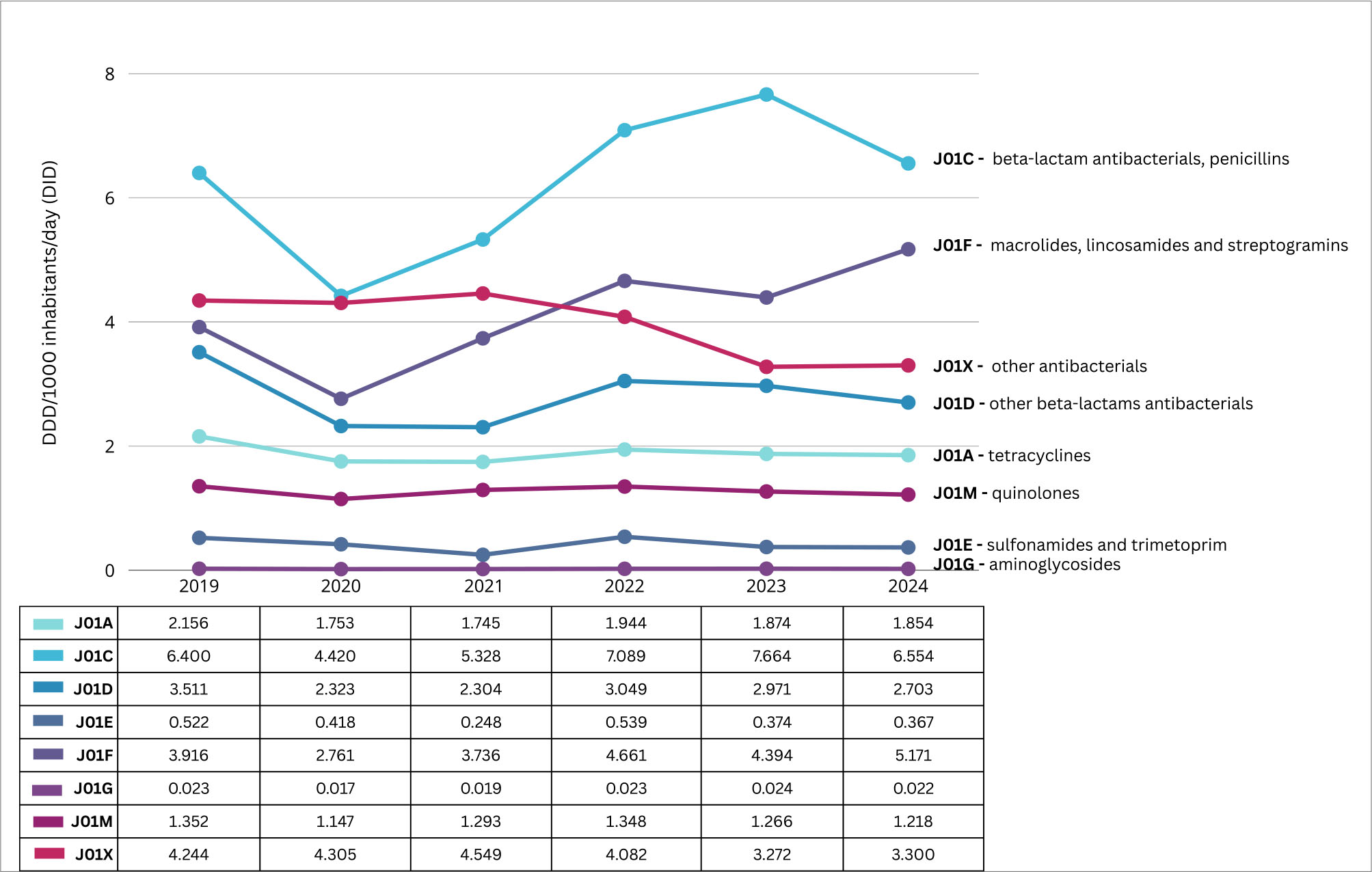
Fig. 2.
Temporal changes in antibiotic consumption across major J01 subgroups in the community sector in Poland, 2019–2024.
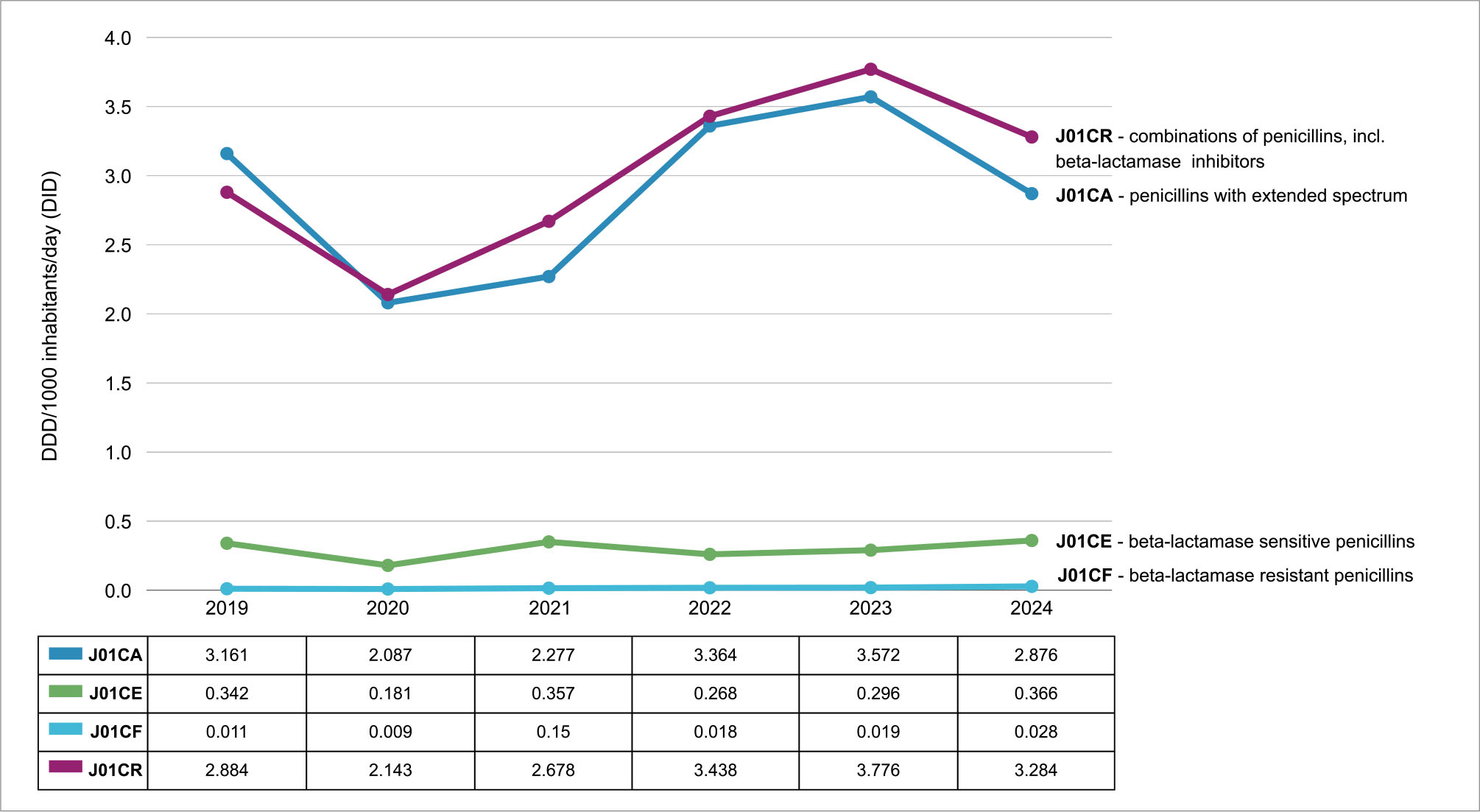
Fig. 3.
Temporal changes in antibiotics consumption across J01C subgroup in the community sector in Poland, 2019–2024.
This trend was also reflected in changes in the use of individual penicillin agents. Among the three most frequently consumed antibiotics in 2024, two belonged to the J01C group. The highest outpatient consumption was recorded for amoxicillin–clavulanic acid (J01CR02, 3.30 DID), followed by furazidin (J01XE03, 3.18 DID) and amoxicillin (J01CA04, 2.87 DID) (Table I). Previous AMC analyses have shown that the limited use of narrow-spectrum penicillins, such as phenoxymethylpenicillin (J01CE02), has been a long-standing issue in Poland (Olczak-Pienkowska and Hryniewicz 2021). In 2023, the consumption of phenoxymethylpenicillin – the first-line antibiotic for streptococcal tonsillitis (Hryniewicz et al. 2016) remained very low (0.28 DID). However, in 2024, its use increased by approximately 22%, reaching 0.36 DID in outpatient antibiotic consumption in Poland. Several factors may explain this change. It may be linked to the overall rise in infectious disease incidence reported in 2024 compared with the previous year, particularly for respiratory tract infections. This increase has been attributed to the so-called “immunity gap” following the COVID-19 period, when limited exposure to pathogens reduced population-level immunity, especially among children. Consequently, a higher incidence of bacterial infections likely contributed to increased antibiotic prescribing (Munro and House 2024). At the same time, growing awareness of the need to avoid the overuse of broad-spectrum antibiotics may have led to more frequent prescribing of narrow-spectrum penicillins in primary care, as well as to the substitution of amoxicillin with phenoxymethylpenicillin for the treatment of acute tonsillopharyngitis. This pattern aligns with WHO and ECDC recommendations promoting greater use of Access group antibiotics, such as phenoxymethylpenicillin. In Poland, this trend was likely reinforced by the introduction of reimbursed rapid antigen detection tests for group A streptococcal pharyngitis in primary care in July 2022 (according to the National Health Fund (NFZ) Ordinance No. 79/2022/DSOZ), which allowed differentiation between bacterial and viral pharyngitis in outpatient settings (NFZ 2022).
Table I
Ten antibacterials for systemic use (ATC J01) with the highest consumption in the community sector in Poland, 2024.
| WHO ATC | Antibacterials | DID | % of total | AWaRe | ||
|---|---|---|---|---|---|---|
| 1. | J01C | J01CR02 | amoxicillin-clavulanic-acid | 3.30 | 15.5 | Access |
| 2. | J01X | J01XE03 | furazidin | 3.18 | 15.0 | Access |
| 3. | J01C | J01CA04 | amoxicillin | 2.87 | 13.5 | Access |
| 4. | J01D | J01DC02 | cefuroxime | 2.40 | 11.3 | Watch |
| 5. | J01F | J01FA10 | azithromycin | 2.33 | 10.1 | Watch |
| 6. | J01F | J01FA09 | clarithromycin | 1.97 | 9.3 | Watch |
| 7. | J01A | J01AA02 | doxycycline | 1.39 | 6.5 | Access |
| 8. | J01F | J01FF01 | clindamycin | 0.83 | 3.9 | Access |
| 9. | J01M | J01MA02 | ciprofloxacin | 0.61 | 2.8 | Watch |
| 10. | J01M | J01MA12 | levofloxacin | 0.44 | 2.1 | Watch |
A similar dynamic was observed for macrolides, lincosamides, and streptogramins (J01F). In 2019, their combined consumption was 3.91 DID (18% of total use). This value declined by more than half in 2020 (2.76 DID), followed by a gradual recovery: by 2021, usage had returned to pre-pandemic level (3.73 DID), and by 2024 it reached 5.17 DID, accounting for approximately 24% of overall community antibiotic consumption (Fig. 2). This represents a marked increase in the relative share of J01F antibiotics between 2019 and 2024, indicating an upward trend in the use of macrolides and related agents in outpatient settings. The observed rise in macrolide consumption in Poland after 2020 corresponds with post-pandemic increases reported in other European countries, particularly in southern and central Europe, where azithromycin (J01FA01) and clarithromycin (J01FA09) use returned to or exceeded pre-COVID levels (Kostev et al. 2025). This may reflect renewed circulation of respiratory pathogens and a return to pre-pandemic prescribing behaviors. In Poland in 2024, azithromycin (2.33 DID) and clarithromycin (1.97 DID) ranked fifth and sixth, respectively, in outpatient consumption among all systemic antibacterials (ATC J01) (Table I). The marked increase in macrolide use, particularly clarithromycin (J01FA09, Watch group), coincided with a sharp rise in pertussis incidence. According to the National Institute of Public Health - National Institute of Hygiene (NIPH-NIH), 32.430 cases of pertussis were reported in Poland in 2024, compared with only 922 in 2023, representing nearly a 35-fold increase (Wojtyniak and Smaga 2025). As macrolides remain the first-line drugs in pertussis treatment, this changed epidemiological situation likely contributed to the overall rise in macrolide consumption and reflects the broader post-pandemic resurgence of bacterial respiratory infections. Between 2019 and 2024, the consumptionof lincosamides remained stable, in contrast to that of macrolides (Fig. 4).
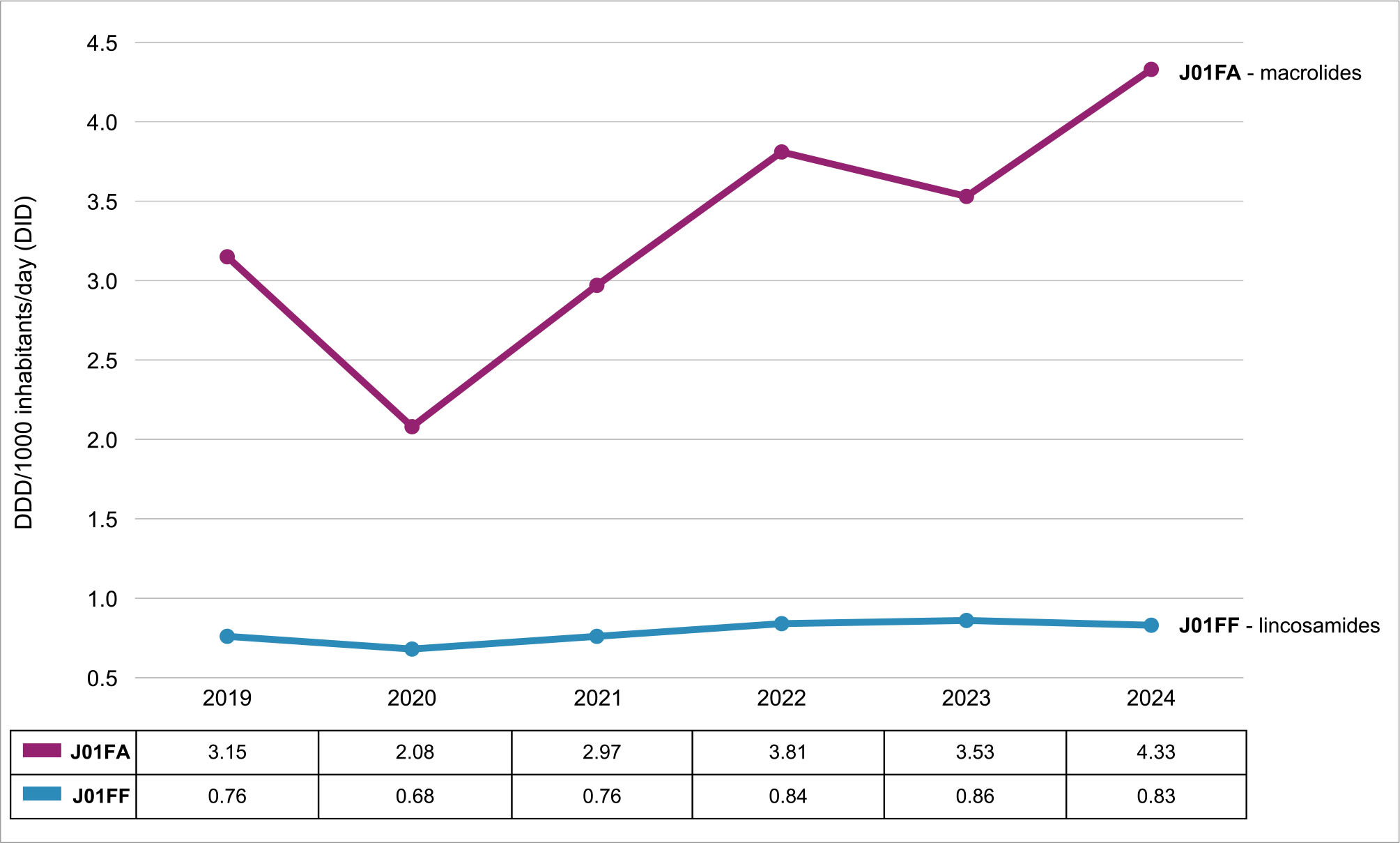
Fig. 4.
Temporal changes in antibiotics consumption across J01F subgroup in the community sector in Poland, 2019–2024.
The “other antibacterials” subgroup (J01X) was the third-most consumed class in community settings in recent years. In 2019, this group accounted for 4.24 DID (19%), remaining relatively stable through 2021 (4.55 DID). From 2022 onward, however, a downward trend emerged, with consumption dropping to 3.30 DID in 2024 (15.6%) (Fig. 2). This pattern largely reflects changes in the use of furazidin (J01XE03), the primary contributor to the overall volume of the J01X subgroup. Moreover, furazidin remained among the most frequently consumed antibacterials in Poland and ranked second in 2024 (3.18 DID), accounting for approximately 15% of total outpatient antibiotic consumption (Table I). The persistently high consumption of furazidin reflects a combination of clinical, regulatory, and behavioral factors. This compound, due to the unavailability of nitrofurantoin in Poland, is firmly established in national guidelines as a first-line treatment for uncomplicated urinary tract infections (UTIs) in both adult and pediatric populations (Olczak-Pienkowska and Hryniewicz 2021). Unlike nitrofurantoin, furazidin has become the “default” therapeutic choice in ambulatory care for cystitis. Its widespread use has been further reinforced by easy access – until recently, over the counter – and by the public perception that it is a “milder” or “non-antibiotic” urinary drug, promoting self-medication and incomplete courses of therapy.
According to the National Health Program report, furazidin accounts for over 95% of all nitrofuran consumption in the outpatient sector, corresponding to approximately 3.1 DID and more than 12 tons of active substance used annually (Mroczkowska et al. 2024; ECDC 2025). This widespread, largely uncontrolled use helps explain its disproportionately high contribution to national antibiotic consumption statistics and the observed levels of resistance among urinary pathogens (Stefaniuk et al. 2016). Similar concerns have been raised by ECDC, which noted that Poland was the only ESAC-Net country reporting furazidin use initially. However, since the substance was not included in the official ATC/DDD classification, these data were listed only in a footnote and could not be compared with data from other countries. Later, the ECDC decided to include furazidin in ESAC-Net reporting, allowing for more accurate cross-country comparisons (ECDC 2014).
Cephalosporins and other β-lactams (J01D) also accounted for an essential share of outpatient use. In Poland in 2019, this subgroup reached 3.51 DID (16%), decreased to 2.32 DID in 2020, and subsequently increased again to 3.05 DID in 2022. Despite a modest decline thereafter, consumption in 2024 (2.70 DID, 13%) remained marginally below the pre-pandemic level (Fig. 2). Within the cephalosporin subgroup, second-generation cephalosporins, particularly cefuroxime axetil (J01DC02), which reached 2.4 DID in 2024 (91% of J01D group), were the most commonly used antibiotics in ambulatory care. Among third-generation cephalosporins, cefixime (J01DD08) showed the highest outpatient use, at 0.17 DID. Notably, all oral cephalosporins are listed in the WHO AWaRe “Watch” category, reflecting their broader spectrum and greater resistance potential.
In Poland, tetracyclines (J01A), mainly doxycycline, accounted for around 9–10% of outpatient antibiotic use in 2019 (2.16 DID). Their use declined in 2020 (1.75 DID) and remained relatively stable thereafter; in 2024, tetracyclines accounted for approximately 7% of total community consumption (1.85 DID), a level comparable to the EU average (9%). Consumption within this subgroup is almost entirely tetracyclines from the Access group (tetracycline and doxycycline) and has remained stable in recent years. However, this trend may change in the coming years, given the significant increase in Lyme borreliosis incidence observed in Poland in recent years (Zbrzezniak and Paradowska-Stankiewicz 2024).
Fluoroquinolone (J01M) consumption showed a modest downward trend, declining from 1.35 DID in 2019 (6.1%) to 1.22 DID in 2024 (5.7%). Sulfonamides and trimethoprim (J01E) had a minor, overall decreasing share, ranging from 0.52 DID in 2019 to 0.25 DID in 2021, then temporarily increasing to 0.54 DID in 2022 before stabilizing at 0.37 DID in 2024 (2%). Aminoglycoside (J01G) use remained negligible through-out the entire period (<0.023 DID annually, <0.1% of total).
WHO AWaRe Classification
Between 2019 and 2024, the structure of outpatient antibiotic consumption in Poland was dominated by agents from the Access group, although their share fluctuated over time (Fig. 5A). The percentage of Access antibiotics ranged from 57.3% to 64.4%, reaching the most desirable high value in 2020 and subsequently declining to 57.3% in 2024 (Fig. 5B). In contrast, antibiotics from the Watch group demonstrated a gradual upward trend, rising from 38.6% in 2019 to 42.5% in 2024. The Reserve group of antibiotics consistently accounted for less than 0.02% of total outpatient consumption throughout the study period, with a slight decrease from 0.011% in 2019 to 0.009% in 2024 (Fig. 5A). This very limited use can be attributed mainly to their intravenous formulations and high price. The COVID-19 pandemic likely influenced the transient rise in the percentage of Access antibiotics observed in 2020. However, this improvement was not sustained: from 2021 onward, the percentage of Access antibiotics gradually decreased, reaching its lowest level in 2022 and 2024 (57.3% for both years). After 2021, several European countries reported similar declines in the use of Access antibiotics, as prescribing practices shifted back toward Watch agent, especially macrolides and broad-spectrum β-lactams, following the pandemic (Kostev et al. 2025). Despite temporary progress, the overall proportion of Access antibiotics in Poland showed no consistent upward trend and by 2024 remained below the EU’s 2030 target of 65%. Meanwhile, the progressive increase in Watch antibiotic use suggests a shift toward broader-spectrum prescribing. This pattern underscores the need to strengthen antimicrobial stewardship in primary care, particularly through initiatives that support appropriate first-line therapy, such as reimbursement of rapid antigen detection tests introduced in mid-2022, and to ensure that future prescribing trends move closer to the EU and WHO targets for prudent antibiotic use.
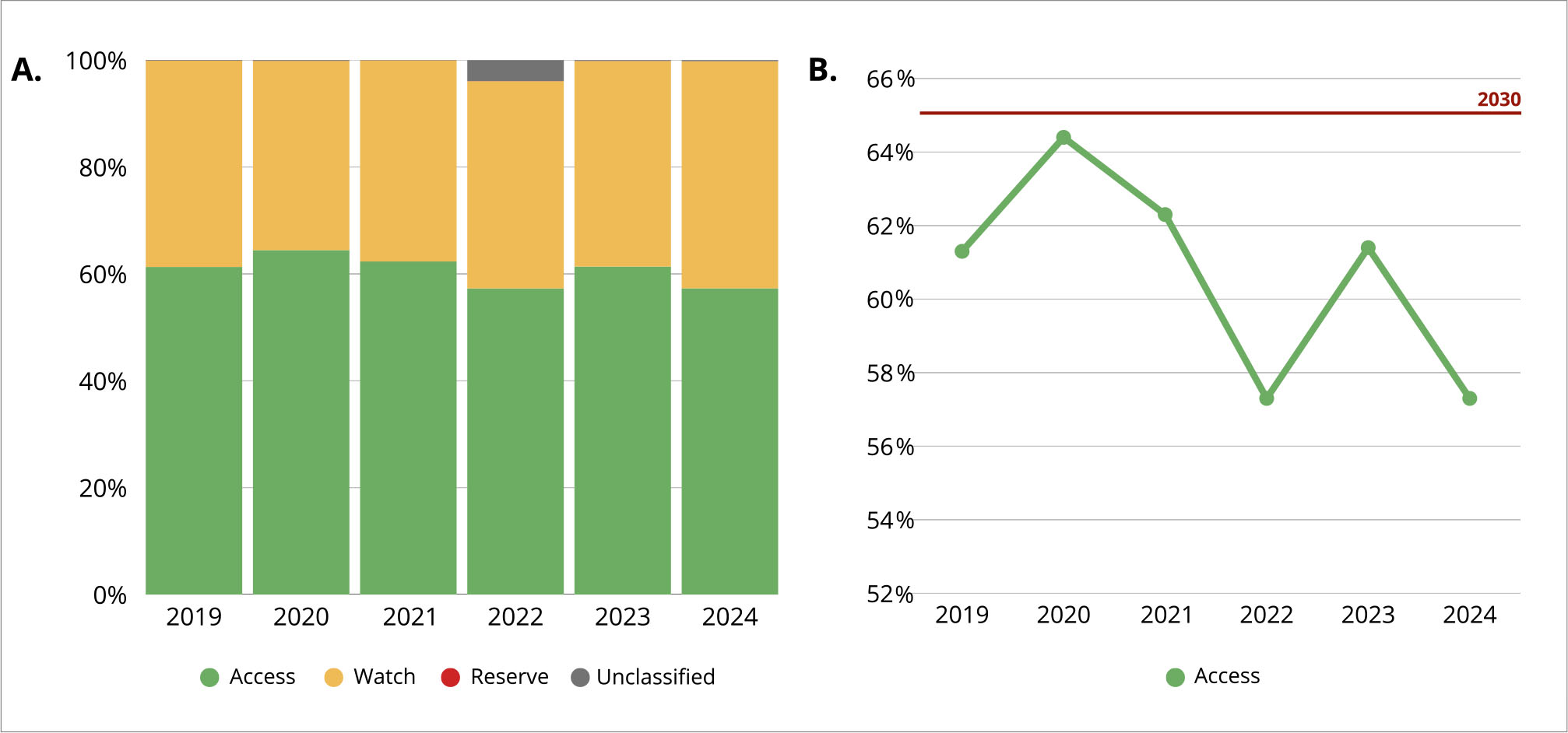
Fig. 5.
Community antibiotic consumption in Poland according to the WHO AWaRe classification (2019–2024). A. Distribution of antibiotic consumption by AWaRe categories in the community sector; B. Temporal trend in the percentage of Access group antibiotics in total community consumption, with the 2030 EU target (≥65%) indicated by the reference line.
Conclusion
In conclusion, the analysis of outpatient antibiotic consumption in Poland between 2019 and 2024 reveals persistent challenges in the rational use of antimicrobials. The temporary pandemic-related decline demonstrated that large-scale reductions in antibiotic prescribing are achievable, but the subsequent rebound emphasizes the difficulty of maintaining such improvements. Sustained improvement will require continuous national stewardship programs and ongoing education of healthcare professionals and the public. Key components in reducing antibiotic consumption are enduring broad access to rapid diagnostic tests in outpatient care, including inflammatory markers, which enable precise identification of the infection’s etiology and antibiotic susceptibility, thereby guiding appropriate treatment choices. Equally important is the implementation and strict adherence to hand and respiratory hygiene practices, which remain a cornerstone of infection prevention and antimicrobial stewardship. Furthermore, systematic surveillance of antibiotic consumption, supported by targeted policy interventions, is essential to monitor progress and guide corrective actions. In addition, prescription monitoring by the national payer (NFZ) can play a crucial role in promoting rational antibiotic use. By systematically analyzing prescription and reimbursement data, the payer can identify deviations from guidelines, detect overuse patterns, and implement corrective measures, such as providing prescribers with feedback or conducting targeted audits. Recent European forecasts indicate that, without significant acceleration of national efforts, Poland, like many other EU countries, is unlikely to meet the 2030 target of a 20% reduction in total antibiotic consumption compared with 2019 (Bindel and Seifert 2025). Coordinated and sustained action will therefore be required for Poland to make meaningful progress toward the EU and WHO 2030 goals and to curb the rise of antimicrobial resistance effectively.
Acknowledgments
The authors would like to thank IQVIA Poland for annually providing antimicrobial sales data, which form the basis for estimating and monitoring community antibiotic consumption in Poland.
Notes
[1] Conflicts of interest Conflict of interest
The authors do not report any financial or personal connections with other persons or organizations, which might negatively affect the contents of this publication and/or claim authorship rights to this publication.