
Introduction
Candida species are commonly found in the human body, particularly in the oral cavity. They are also the most prevalent opportunistic human fungal pathogens, causing infections that range from superficial to life-threatening (Li et al. 2022). A healthy immune system and normal bacterial flora typically prevent Candida overgrowth. Immunocompromised patients and those with diabetes who have a dental prosthesis, and long-term use of antibiotics or immunosuppressive medications are among the risk factors for candidiasis (Hato et al. 2022). Denture use can significantly impact the composition of oral microflora and the body’s immune response, particularly in elderly individuals or those with poor dental health. Dentures can frequently disrupt the normal balance of bacteria in the oral cavity, leading to dysbiosis, which may in turn contribute to oral candidiasis (Nwaokorie et al. 2024). It has been demonstrated that the presence of prosthetic materials, like dentures, heightens the risk of fungi such as Candida development due to limited saliva flow, moisture retention, and nutrient availability on the denture surface, particularly in those with underlying conditions. The combination of immunological factors and physical factors contributes to the high vulnerability of people wearing dentures to develop candidiasis (Kawanishi et al. 2021; Venante et al. 2021).
The surface characteristics of the denture base, including its roughness and topographic features, are paramount in determining microbial adhesion and subsequent biofilm accumulation (Stevens et al. 2018). Yeasts and other microbes adhere to surfaces and form structured biofilms that offer a barrier to antifungal agents and mechanical cleaning, particularly in the small crevices of the denture base and lining materials. These biofilms provide protected niches where yeast cells can grow. Within denture-associated biofilms, Candida species play a central role; among them, Candida albicans, C. tropicalis, Nakaseomyces glabratus, and Pichia kudriavzevii (formerly C. krusei) are the yeast species isolated from the oral cavities of denture-wearing patients. Moreover, C. albicans is the most frequent among all yeast isolates (Atriwal et al. 2021). Pichia ethanolica (formerly known as Candida ethanolica) is a rare yeast species that was initially isolated from fermented products and environments rich in ethanol, such as alcoholic beverages, fruit surfaces, and soil polluted with organic matter (Štornik et al. 2016).
There is no evidence that P. ethanolica is a frequent or widespread colonizer of the human body. It is not recognized as a typical member of the human oral, gastrointestinal, or vaginal microbiota. In this locality, there is few studies on this concept; therefore, this study aimed to overcome the challenges associated with misidentification of yeast species in dentin patients who wear dentures by using polymerase chain reaction (PCR)-based methods that amplify the internal transcribed spacer (ITS)-1-5.8S-ITS2 region of ribosomal DNA (rDNA) using universal (ITS1 and ITS4) primers, followed by DNA sequencing for confirmation. These processes allow for accurate identification and understanding of the diversity and prevalence of yeast species on dentures.
Experimental
Materials and Methods
Study design and setting
Oral swabs were collected from 100 participants at the Peramerd Dental Center, Sulaimaniyah Governorate, Iraq, from September to November 2024.
Inclusion/exclusion criteria
Enrolled participants included adult individuals aged 39–78 years (35% males and 65% females) who had worn dentures for <6 months (27%) or >6 months (73%), as well as asymptomatic denture wearers without clinical evidence of oral inflammation or infection upon examination. Also, 7% of participants were smokers and 93% were non-smokers, while 31% had diabetes and 69% were non-diabetic. However, participants with active oral infections, those who had recently extracted teeth, and those undergoing chemotherapy or major oral surgery were excluded.
Sampling, culturing, and isolating of yeast species
Before sampling, participants’ sociodemographic and clinical data were collected, including age, gender, smoking status, duration of denture wearing, and history of diabetes. The authors then collected samples using sterile swabs and placed them in sterile tubes. Each participant provided a single swab from the intaglio surfaces of their dentures. To avoid overlooking any species due to similar colony morphology on Sabouraud Dextrose Agar (SDA), swabs were cultured on HiCrome Candida Differential Agar (Mumbai, India) and incubated at 37°C for 48 hours. After that, the distinct colonies were sub-cultured on SDA (Mumbai, India) containing chloramphenicol (0.5 mg/ml, Sina Darou, Tehran, Iran) and incubated at 37°C for 48 hours.
Molecular identification of yeast species
PCR was conducted to amplify the ITS of the 5.8S rDNA gene utilizing the forward primer ITS1-F (5’-TCCGTAGGTGAACCTGCG-3’) and the reverse primer ITS4-R (5′-TCCTCCGCTTATTGATATGC-3′) (Gutiérrez et al. 2024). To streamline the process, colony PCR was performed on the selected colony from a fresh culture that was suspended in 40 μl of ddH2O and heated at 95°C/20 min to lyse cells and release DNA. After centrifugation at 12,000 rpm for 2 min, the supernatant with the DNA was used as the PCR template (Lau et al. 2008). The PCR reaction was carried out using Taq master mix (2×, AddBio, South Korea) according to the manufacturer’s instructions. The thermal cycling conditions consisted of 5 min of initial denaturation at 95°C, followed by 40 cycles of denaturation (95°C for 30 sec), annealing (57°C for 30 sec), and extension (72°C for 40 sec), and finally, 5 min of final extension at 72°C. Ethidium bromide staining was used to visualize the amplicons after separation on a 2% agarose gel.
Sequencing and bioinformatics analysis
Based on the cultivation results on chromogenic media and PCR amplification of the ITS region, 27 samples were selected for sequencing. These samples were amplified using the universal primers ITS1-F (forward) and ITS4-R (reverse), each at a concentration of 5 pmol. Sanger sequencing was performed using an ABI 3500 Genetic Analyzer (Thermo Fisher Scientific, Waltham, MA, USA). The obtained sequences were analyzed using Chromas software (v2.6.6). For comparative analysis, the sequences of the isolates were aligned with those of reference strains available in the National Centre for Biotechnology Information (NCBI) database. Subsequently, accession numbers were obtained for all 27 isolates and deposited in the NCBI.
Phylogenetic analysis
The Neighbour-Joining approach was used to infer the evolutionary history (Saitou and Nei 1987), and the optimum tree was presented. The percentage of replicate trees with the relevant taxa clustered together in the bootstrap test (1,000 replicates) was displayed next to the branches (Felsenstein 1985). The evolutionary distances were calculated using the Maximum Composite Likelihood technique (Tamura et al. 2004) and expressed in terms of the number of base substitutions per site. This analysis included 45 nucleotide sequences; each sequence pair had all ambiguous positions eliminated (using the pairwise deletion option). The final dataset contained 936 locations. MEGA11 was used to undertake evolutionary analysis (Tamura et al. 2021).
Data analysis
Yeast species isolated from oral samples were initially identified based on colony color and morphology on HiChrome agar plates, according to the manufacturer’s guidelines. Each isolate’s pigmentation was recorded, then molecular confirmation was performed by PCR amplification of the ITS1-ITS4 region, followed by gel electrophoresis. The resulting amplicon sizes were compared to known fragment sizes for yeast species (Lau et al. 2008), allowing accurate species-level identification. A match in both color profile and PCR product size was considered confirmatory.
Results and Discussion
The prevalence of opportunistic oral fungal infections has increased, particularly among individuals who wear dentures. The oral cavity harbors a complex microbiome, including commensal fungi such as Candida species, which are part of the normal flora. Under healthy conditions, these organisms coexist without causing disease; however, disturbances in the oral environment, such as denture-associated irregularities, can promote colonization and overgrowth, leading to infection (Manikandan et al. 2022). The study group comprised 100 asymptomatic denture wearers, of whom most of them were females (65%), were aged ≥60 years (54%), had used dentures for >6 months (73%), were smokers (93%), and had no diabetes (69%) (Table I).
Table I
Demographic characteristics of study participants.
| Variable | Category | Number | Percentage |
|---|---|---|---|
| Gender | male | 35 | 35 |
| female | 65 | 65 | |
| Age group (years) | ≤40 | 5 | 5 |
| 41–59 | 41 | 41 | |
| ≥60 | 54 | 54 | |
| Denture wearing duration (months) | <6 | 27 | 27 |
| >6 | 73 | 73 | |
| Smoking status | yes | 7 | 7 |
| no | 93 | 93 | |
| Diabetic | yes | 31 | 31 |
| no | 69 | 69 |
A higher percentage of female participants (65%), showing that women are more likely to seek dental care (Rajeh 2022). The mean age of participants was 61 years, which aligns with previous findings that denture use is more common among older individuals, mainly due to age-related tooth loss. This trend can be attributed to several risk factors in this age group, including moderate physical activity, access to dental care, education, personal determinants, and health-related behaviors and service utilization (Gutiérrez et al. 2024). Regarding denture-wearing duration, most (73%) had used it for >6 months. Nevertheless, prolonged denture use has been associated with increased microbial biofilm accumulation, particularly when coupled with poor hygiene practices (Fig. 1). This is supported by the study’s results, which, despite the absence of inflammation or infection, revealed visible microbial buildup on the denture surfaces of long-term users (Hahnel et al. 2009).
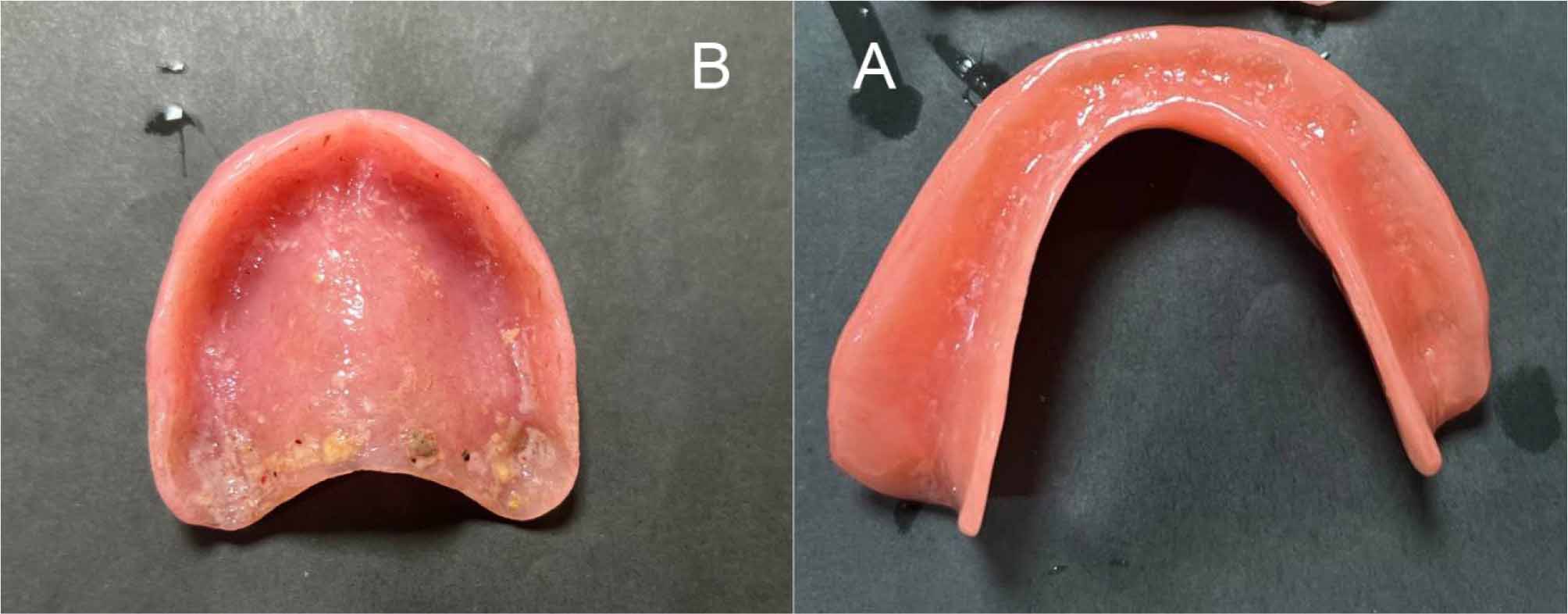
Fig. 1.
Comparison of denture bases shows a clean denture without visible biofilm (A: lower jaw) and biofilm on a denture from a patient with poor dental care habits and prolonged denture use (B: upper jaw).
Species identification
There are several techniques available for identifying Candida species. Among these, the most commonly used method is chromogenic media. Theoretically, each Candida species produces a distinct colony color, corresponding to its species-specific biochemical profile, enabling rapid identification. Nevertheless, this approach has certain limitations, as some species may display similar phenotypes on these media, potentially leading to misidentification (de Jong et al. 2021). In contrast, PCR-based techniques provide a more accurate alternative for detecting and identifying Candida species. By employing universal primers such as ITS1 and ITS4, these methods can amplify the ITS1-5.8S-ITS2 region of rDNA, which encodes ribosomal RNA genes, and the resulting amplicon can subsequently be confirmed by DNA sequencing.
Among the 100 denture-wearing patients, 50% were found to be positive for yeast species (colonization). Among the identified species, C. albicans was the most prevalent (n = 23, 46%), while another 9 (16%) isolates were also C. albicans in combination with other species (Table II). This result is higher than the findings of Madar et al. (2024), who reported Candida yeast colonies (34.8%) on the surfaces of patient-worn dentures. This outcome indicates the well-established role of C. albicans as the most common opportunistic pathogen in denture-worn patients (Prakash et al. 2015; Sharafuddin et al. 2024). The high prevalence of C. albicans can be attributed to its robust adhesion capabilities to acrylic surfaces, biofilm formation, and adaptability to different environmental stresses in the oral cavity (Mothibe and Patel 2017). The difference between studies might arise from the participants’ oral hygiene habits.
Table II
Frequency of Candida species on the surface of complete dentures used by patients.
| Candida Species | Patient number | Percentage |
|---|---|---|
| Candida albicans | 23 | 46 |
| Kluyveromyces marxianus | 4 | 8 |
| Candida tropicalis | 4 | 8 |
| Nakaseomyces glabratus | 3 | 6 |
| Meyerozyma. guilliermondii | 2 | 4 |
| Pichia kudriavzevii | 1 | 2 |
| Candida dubliniensis | 1 | 2 |
| Pichia ethanolica | 1 | 2 |
| C. albicans and N. glabratus | 3 | 6 |
| C. albicans and K. marxianus | 1 | 2 |
| C. albicans and C. dubliniensis | 1 | 2 |
| C. albicans and C. tropicalis | 1 | 2 |
| C. albicans and P. ethanolica | 1 | 2 |
| C. albicans and C. parapsilosis | 1 | 2 |
| C. dubliniensis and C. tropicalis | 1 | 2 |
| C. tropicalis and N. glabratus | 1 | 2 |
| C. albicans, C. tropicalis, and M. guilliermondii | 1 | 2 |
| Total | 50 | 100 |
The mycobiota profile also demonstrated non-albicans species, including N. glabratus (6%), K. marxianus and C. tropicalis (8% each). Lower prevalence was observed for Meyerozyma guilliermondii (4%), P. kudriavzevii, and C. dubliniensis (2% each) (Table III). These outcomes were also confirmed by a molecular study (Fig. 2 and Table III). Numerous non-albicans Candida (NAC) and non-Candida yeast species have been identified as emerging pathogens in recent studies, especially in older and immunocompromised individuals (Rivera et al. 2019; Mendes et al. 2023). For instance, a study by Rivera et al. (2023) found that 48% of oral yeast isolates from denture wearers were NAC species, highlighting a shift towards greater species diversity in oral candidiasis. The fact that NAC species (including co-infections) made up about 54% of isolates in this study illustrates a similar trend. Notably, current results showed that polymicrobial yeast colonization was prevalent, with dual or triple-species co-infections in 24% of patients. This condition presents significant treatment challenges, as antifungal efficacy varies significantly between species. Fluconazole, for instance, was successful against the majority of C. albicans isolates, but N. glabratus is known to be resistant to it. This makes treating infections caused by the cohabitation of N. glabrata and C. albicans difficult (Elnahriry et al. 2022; Yazdanpanah et al. 2024).
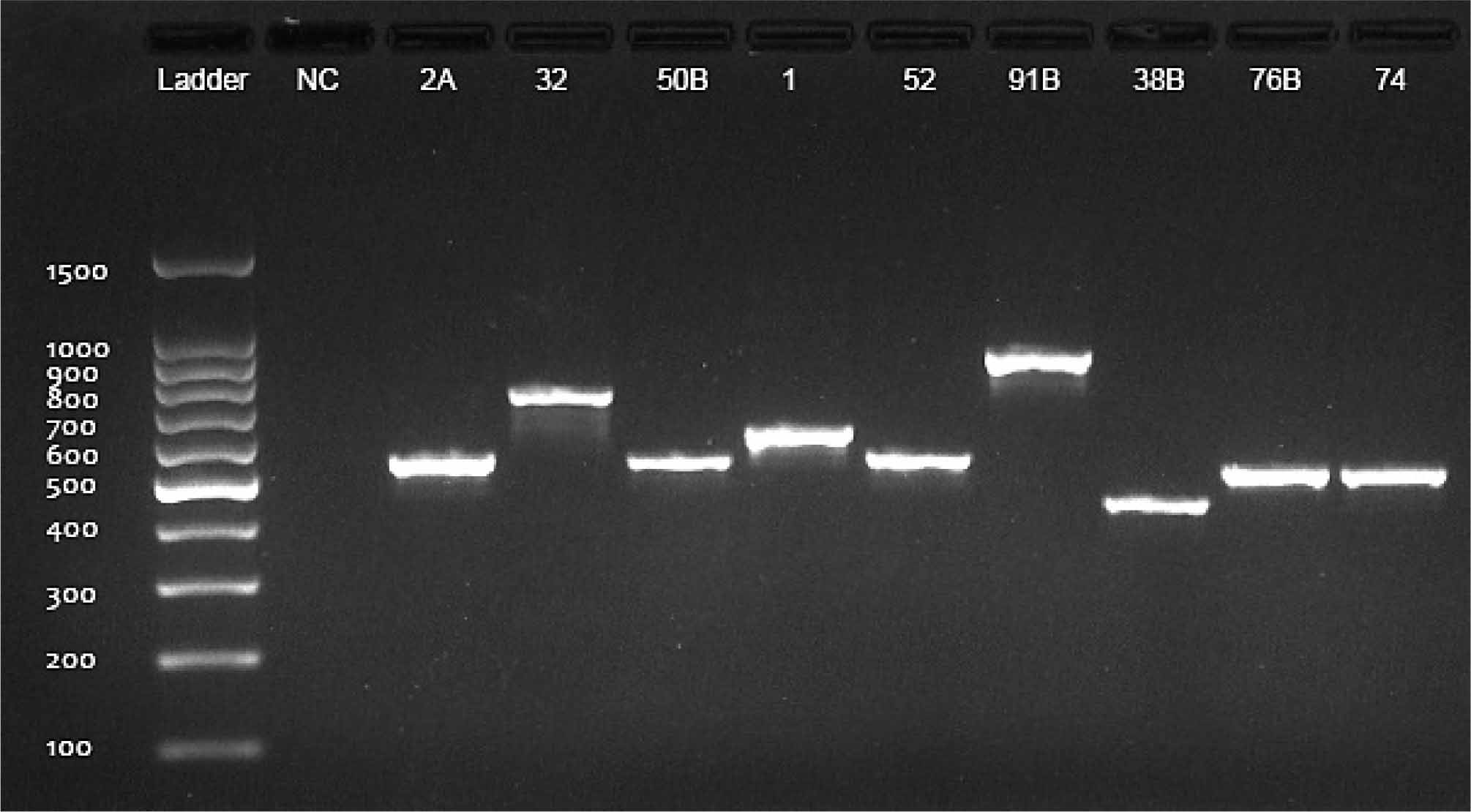
Fig. 2.
PCR-based identification of yeast isolates using ITS primers. From left: the DNA ladder (100 bp), negative control (NC), Candida albicans (532 bp), Kluyveromyces marxianus (722 bp), Candida tropicalis (521 bp), Meyerozyma guilliermondii (600 bp), Candida dubliniensis (540 bp), Nakaseomyces glabratus (874 bp), Pichia ethanolica (~450 bp), Candida parapsilosis (516 bp), and Pichia kudriavzevii (500 bp).
Table III
Identification of Candida species isolated from the surface of complete dentures using PCR with ITS1-ITS4 primers.
| Candida species | Color on HiCrome agar | Fragment size (bp) |
|---|---|---|
| Candida albicans | light green | 532 |
| Kluyveromyces marxianus | light pink | 722 |
| Candida tropicalis | blue | 521 |
| Nakaseomyces glabratus | cream to white | 874 |
| Meyerozyma. guilliermondii | mauve | 600 |
| Pichia kudriavzevii | purple, fuzzy | 500 |
| Candida dubliniensis | pale green | 540 |
| Pichia ethanolica | pink | ~ 450 |
| Candida. parapsilosis | cream to white | 516 |
Remarkably, this study documents the first reported isolation of P. ethanolica from two cases (4%), including one case with co-detection with C. albicans. The colonies exhibited distinctive morphological characteristics: moderate-sized, creamy-white, with smooth, moist textures and convex elevations, and displayed pink pigmentation on HiCrome Candida Differential Agar. Previously, C. ethanolica was used for this species; however, it was subsequently reclassified as P. ethanolica, primarily based on phylogenetic analysis of molecular data, including ribosomal RNA gene sequences. Kurtzman and Robnett (1998) demonstrated that C. ethanolica clustered more closely with species of the genus Pichia than with the core Candida species, which led to a taxonomic revision. P. ethanolica is characterized by several unique traits, including its specific metabolic capabilities. These physiological properties that uniquely utilize ethanol as its sole carbon source, unlike many other normal human yeast flora that primarily ferment sugars, and do not assimilate nitrate. It exhibits facultative anaerobic growth, allowing it to thrive in both aerobic and anaerobic conditions, and is resistant to salt (4.5 to 5%) (Kiryukhina 2022). This novel detection of P. ethanolica suggests that its existence could be due to environmental contamination, as it is not part of the usual oral commensal community; organisms that reside as part of the normal microbiome without causing harm. Furthermore, it does not qualify as an opportunistic pathogen, which refers to microorganisms that are usually harmless but can cause disease under conditions of impaired host defenses, nor as a true pathogen, which is inherently capable of causing disease regardless of host status. Alternatively, signal expansion of the oral mycobiome is facilitated by denture-related ecological shifts. The species’ metabolic flexibility (ethanol utilization and halotolerance) and observed co-colonization with C. albicans provide tentative support for potential niche adaptation. However, definitive classification as a rare commensal versus a transient contaminant requires investigation.
Phylogenetic analysis
A phylogenetic tree was constructed using the ITS1-5.8S-ITS2 region of rDNA, encompassing sequences from diverse Candida species and related yeasts (Fig. 3). Neighbour-Joining in MEGA11 was used to construct the tree, and bootstrap values were calculated from 1,000 replicates to assess the reliability of each clade. Several yeast species isolated from Iraq were subjected to phylogenetic analysis and compared to reference sequences from the NCBI. The tree reveals evolutionary relationships among various strains and species of Candida and related non-Candida taxa (Meyerozyma, Kluyveromyces, Pichia, and Saccharomyces) across different geographical regions. Furthermore, S. cerevisiae was used as the outgroup, confirming the tree’s correct rooting and the evolutionary separation between the Candida species and Saccharomyces.
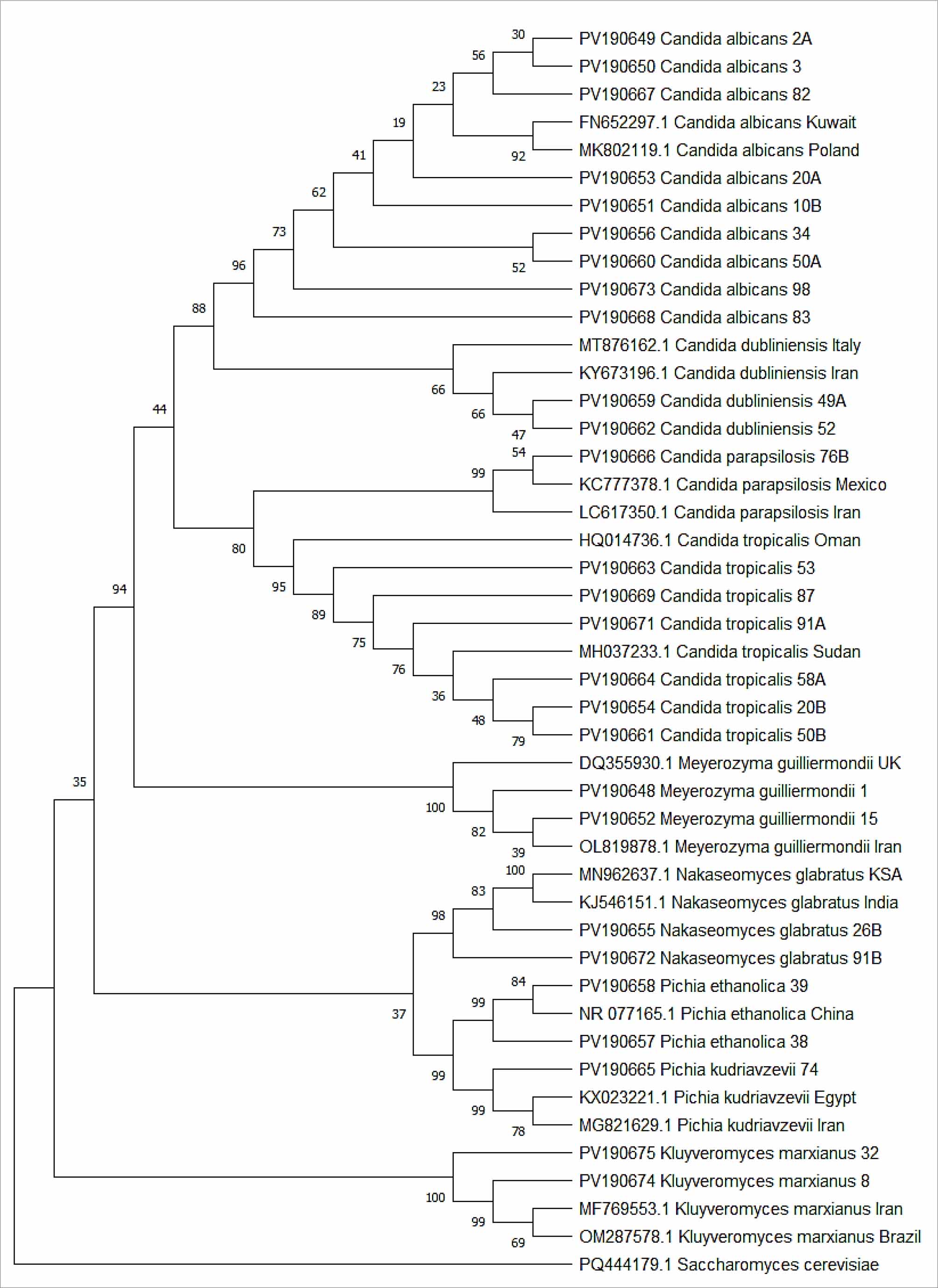
Fig. 3.
Phylogenetic analyses of isolated yeast species using the Neighbor-Joining Method in MEGA11 software.
Before Kurtzman’s study, researchers mostly relied on sexual-reproduction analysis and morphological and physiological characteristics for yeast classification. For instance, N. glabratus was mistakenly classified as C. glabrata due to its small, haploid cells, which resemble those of other Candida species, and its ability to undergo sexual growth without a teleomorph (sexual stage). Kurtzman and colleagues developed D1/D2 domains of the large-subunit ribosomal RNA (26S rDNA) gene sequences as a molecular marker for yeast classification, using sequences from approximately 500 species of Ascomycetous yeasts, including members of Candida and other anamorphic genera. This method gave phylogenetic relationships and species delineation with previously unheard-of resolution (Kurtzman and Robnett 1998). The phylogenetic tree delineates the CTG clade of yeast species, including C. albicans, C. dubliniensis, C. parapsilosis, C. tropicalis, and M. guilliermondii, with strong bootstrap support (94%), reflecting their shared evolutionary history and the unique molecular trait of translating the CTG codon as serine rather than leucine. In contrast, non-CTG clade species such as Pichia, Kluyveromyces, and Saccharomyces form distinct lineages, highlighting greater genetic divergence due to their use of the standard genetic code (Mancera et al. 2019).
Multiple C. albicans strains from diverse geographic regions (Poland, Kuwait, and Iraq) cluster closely together with relatively high bootstrap support (up to 96%), sharing high sequence similarity with isolates from geographically diverse regions, though lower internal branch values (19–23%) that suggest minor genetic variations among isolates. Furthermore, C. dubliniensis isolates form a distinct clade, demonstrating significant divergence from C. albicans despite phenotypic similarities. C. parapsilosis isolates from Mexico, Iran, and the current study exhibit a highly supported monophyletic grouping (bootstrap up to 99%), indicating strong species-specific cohesion. Additionally, C. tropicalis strains from Oman, Sudan, and this study cluster together but with moderate bootstrap support (36–95%), suggesting greater intra-species genetic diversity, possibly due to environmental adaptation or regional diversification. Finally, M. guilliermondii, another member of the CTG clade, including the study strain and reference sequences, forms an exceptionally well-supported clade (100% bootstrap), reinforcing the genetic homogeneity within this species. Regarding the non-Candida yeasts, N. glabratus, P. kudriavzevii, and K. marxianus developed unique clades separate from the CTG clade (bootstrap of 35%), confirming that the species inside the CTG clade form a relatively cohesive group within the broader Saccharomycetales order (Mancera et al. 2019). These three clades (non-Candida yeasts) had well-supported bootstrap (98, 99, and 100%, respectively), supporting their monophyly and close relationship despite geographic separation.
Nonetheless, this study has certain limitations that should be acknowledged, including the sampling method. Usually, yeasts on dentures are not free or isolated cells, but rather are arranged in structured biofilms. Swabbing may not accurately reflect the deeper, more protected yeast populations within the biofilm matrix, as it primarily collects microorganisms from the surface. As a result, the actual microbial load and diversity on denture surfaces may have been underestimated. Alternative sampling techniques that enable dislodging the entire biofilm, such as denture surface scraping or sonication, could provide a more representative assessment of the colonizing microbial community and should be considered in future investigations.
Conclusions
A significant number of asymptomatic denture wearers had oral yeast colonization, with C. albicans being the most common species. Notably, the prevalence of polymicrobial colonization and the high level of other yeast species indicate a shifting mycobiome landscape that could make antifungal treatment more challenging due to species-specific resistance patterns. The novel identification of P. ethanolica in human oral samples further suggests denture-associated ecological changes, emphasizing the need for continued surveillance and further research to clarify its clinical significance. Thus, molecular identification using PCR and ITS sequencing provided higher resolution and accuracy than chromogenic media. At the same time, phylogenetic analysis reinforced the evolutionary distinction between CTG clade species and non-CTG yeasts, with strong genetic cohesion within the C. parapsilosis and M. guilliermondii clades, while C. albicans and C. tropicalis exhibited higher intra-species diversity, possibly reflecting regional adaptations.
Acknowledgment
The authors express sincere gratitude to the staff of College of Science, University of Sulaimani, Sulaimaniyah, Iraq for their invaluable assistance in the execution of this study.
Notes
[1] Ethical statement
Ethical approval for the study was obtained from the Research Protocol Ethics Committee of the Biology Department, College of Science, University of Sulaimani (No. Uos-Sci-Bio-0020 on August 13, 2024). Informed consent was secured from all participants before their inclusion in the study.
[2] Contributed by Authors contributions
SAM: Data collection, data analysis, study registration, resources, and manuscript drafting and writing. KAS: Conceptualization, supervision, methodology, with manuscript edition and revision.
[3] Data availability
The raw data of this study are available from the corresponding author and can be provided upon request.
[4] Conflicts of interest Conflict of interest
The authors do not report any financial or personal connections with other persons or organizations, which might negatively affect the contents of this publication and/or claim authorship rights to this publication.