
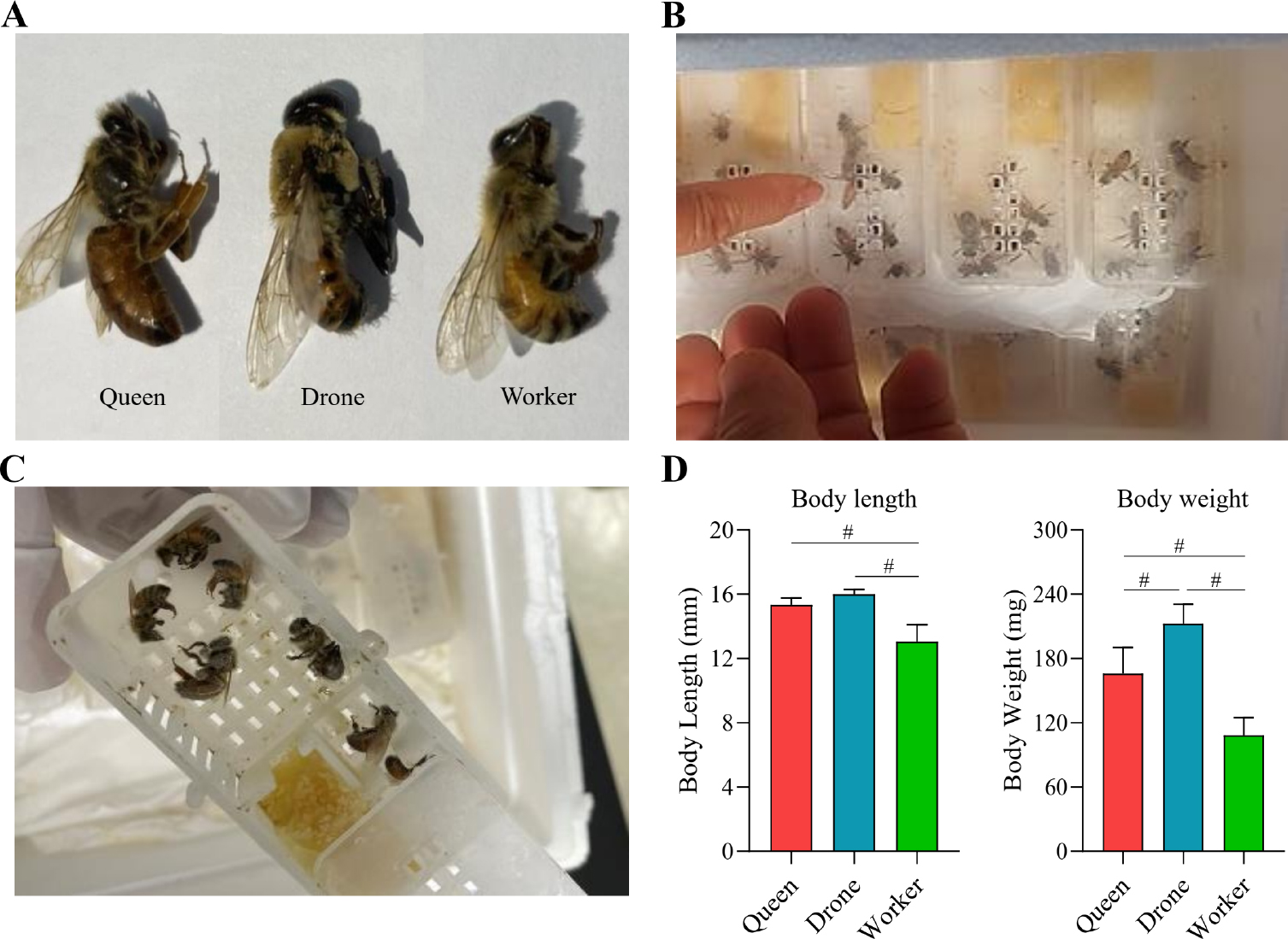
Fig. 1.
Baseline characteristics of the honey bee population studied.
A)Queen bees, worker bees, and drone bees were collected from the Chungnam region of Korea; B) live bees were collected in boxes; C) samples were stored at –80°C; D) body length and weight were manually measured prior to gut extraction. Distinct morphological differences were evident among the castes: drone bees had the most considerable body length and weight, worker bees were the smallest, and queen bees were intermediate in size. Significance among groups was analyzed using one-way ANOVA in GraphPad Prism v9.1.1 (GraphPad Software, USA, www.graphpad.com) (# – p < 0.0001).
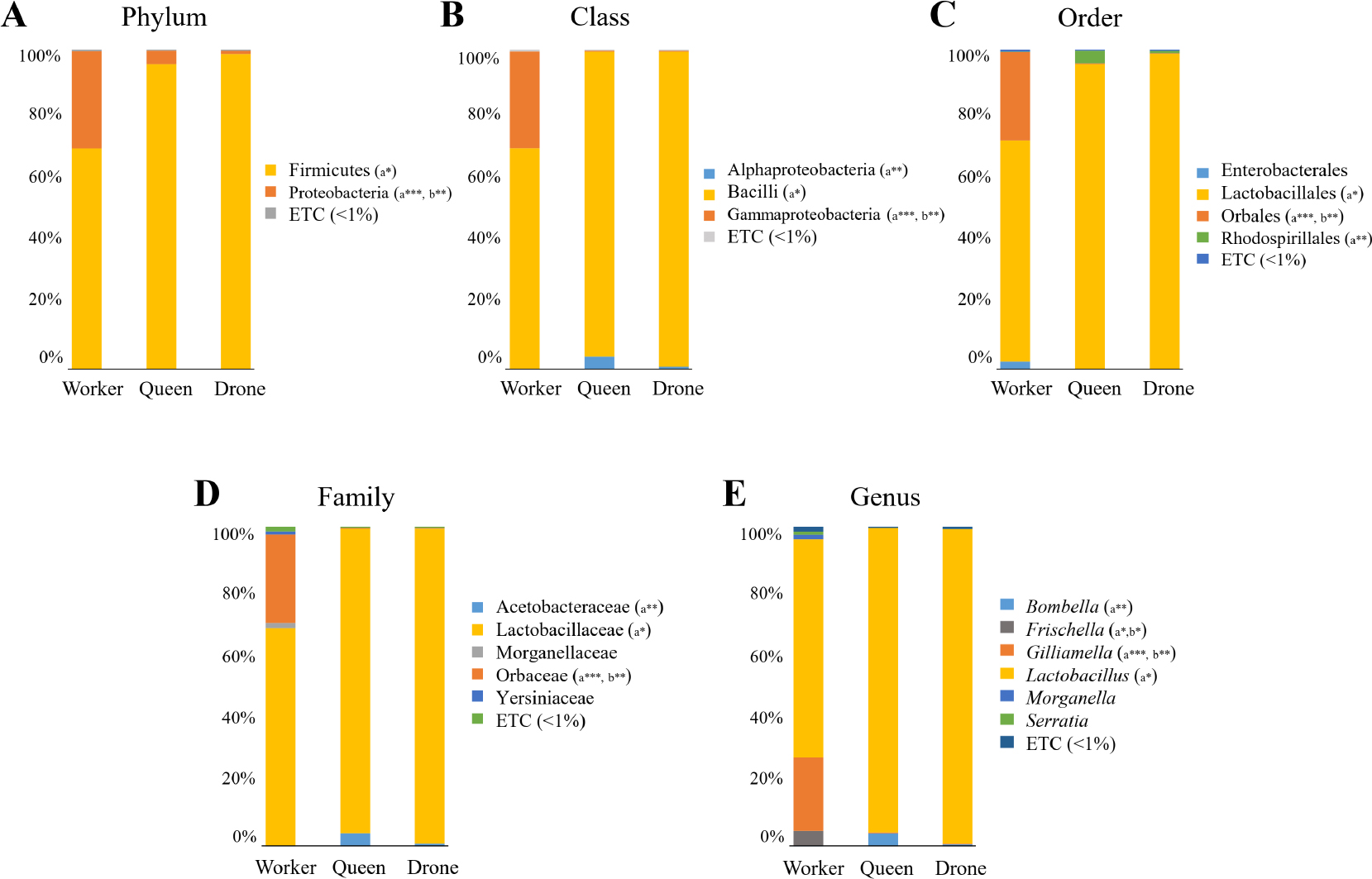
Fig. 2.
Mean taxonomic composition of the honey bee gut microbiome.
The taxonomic relative abundances across bee castes were classified at multiple levels: A) phylum, B) class, C) order, D) family, E) genus. Statistical significance among groups (*p < 0.05; **p < 0.01; ***p < 0.001) was analyzed using the Wilcoxon rank-sum test, and relative abundances below 1% are represented as “ETC”. Overall, drone and queen bees exhibited similar levels of taxonomic diversity, with no significant taxa identified between them. In contrast, worker bees showed greater taxonomic diversity compared to the other two castes, with several significant taxa identified. Significant differences compared to worker bees are indicated as “a” for queen bees and “b” for drone bees.
Table I
Average taxonomic composition of significantly different taxa among worker, queen, and drone bees.
| Phylum | W (%) | Q (%) | D (%) | Class | W (%) | Q (%) | D (%) | Order | W (%) | Q (%) | D (%) | Family | W (%) | Q (%) | D (%) | Genus | W (%) | Q (%) | D (%) |
| Firmicutes | 69.0 | 95.4 a* | 98.6 | Bacilli | 69.0 | 95.4 a* | 98.6 | Lactobacillales | 69.0 | 95.4 a* | 98.6 | Lactobacillaceae | 68.3 | 95.4 a* | 98.6 | Lactobacillus | 68.3 | 95.4 a* | 98.6 |
| Proteobacteria | 30.4 | 4.3 a*** | 1.0 b** | Gammaproteobacteria | 30.3 | 0.3 a*** | 0.3 b** | Orbales | 27.7 | 0.3 a*** | 0.2 b** | Orbaceae | 27.7 | 0.3 a*** | 0.2 b** | Gilliamella | 23.0 | 0.2 a*** | 0.2 b** |
| Frischella | 4.7 | 0.1 a* | 0.0 b* | ||||||||||||||||
| Alphaproteobacteria | 0.1 | 4.0 a** | 0.8 | Rhodospirillales | 0.1 | 4.0 a** | 0.8 | Acetobacteraceae | 0.1 | 4.0 a** | 0.8 | Bombella | 0.1 | 4.0 a** | 0.5 |
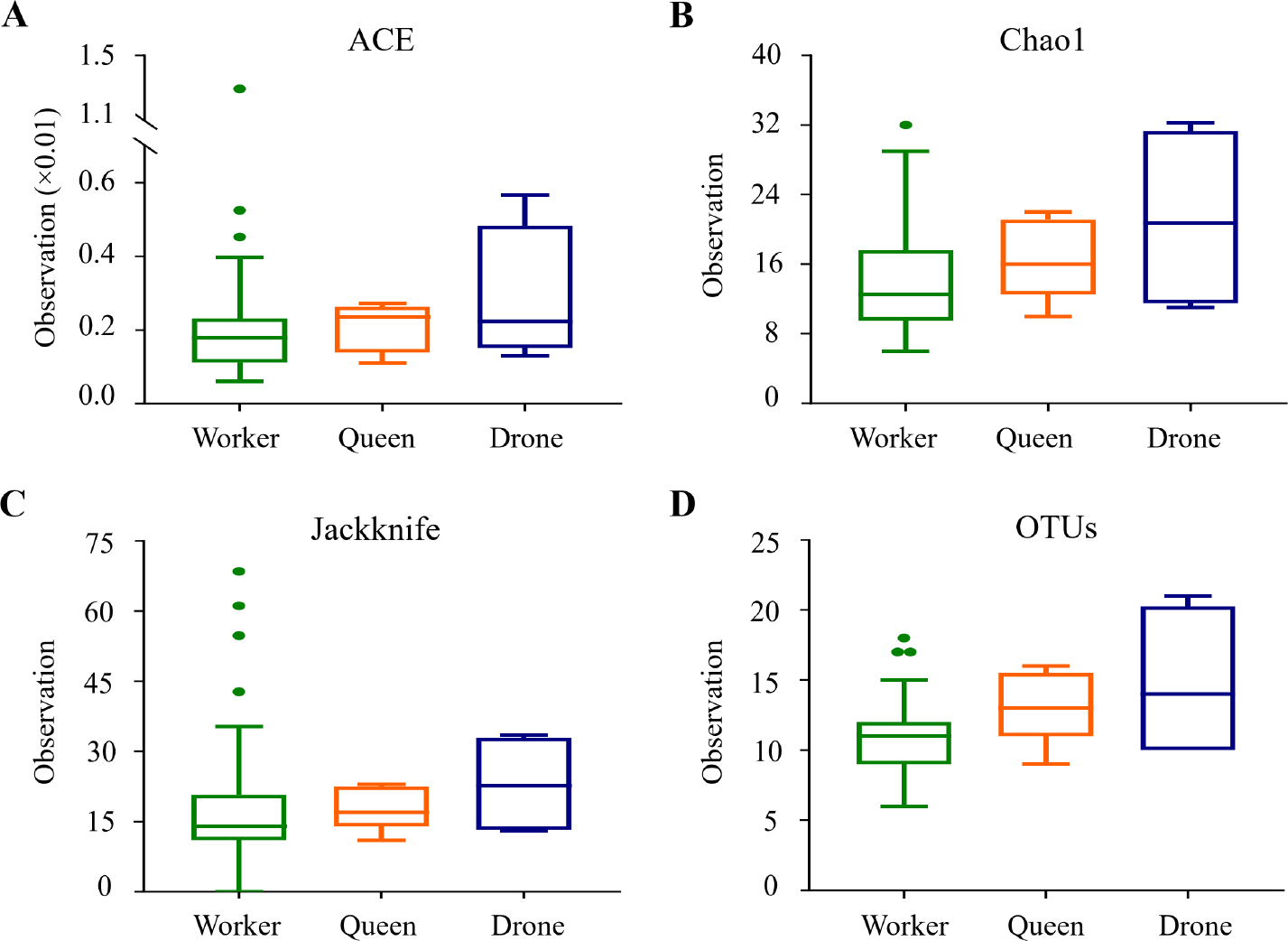
Fig. 3.
Box plots of species richness indices among honey bee groups.
Species richness was analyzed using A) Ace, B) Chao1, C) Jackknife indices, D) OTUs (Operational Taxonomic Units) counts. The bars represent the median values, while the hinges indicate the lower and upper quartiles. No statistically significant differences were observed among the three bee castes.
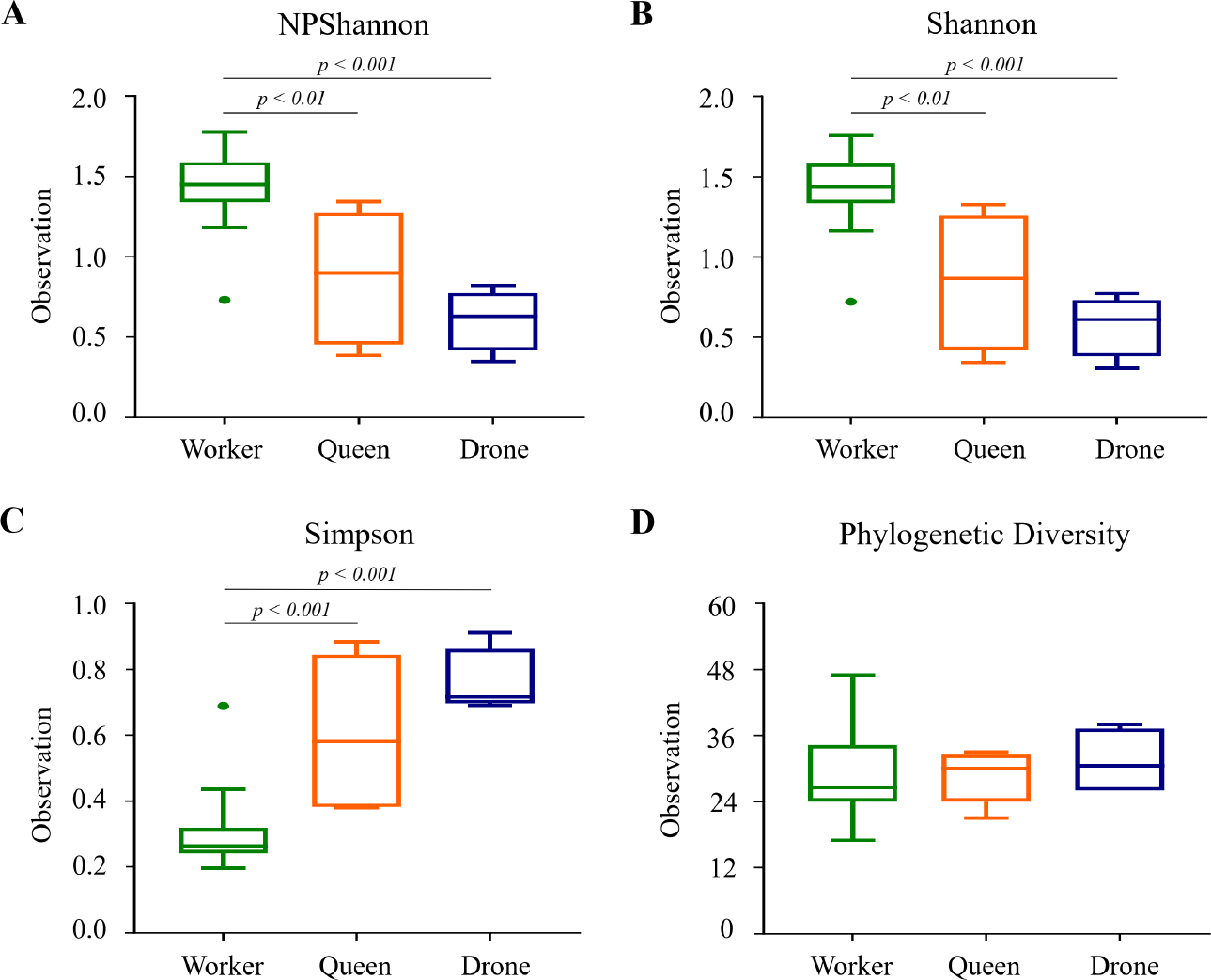
Fig. 4.
Box plots of species diversity indices among honey bee groups.
Species diversity was analyzed using A) NPShannon, B) Shannon, C) Simpson, and D) Faith’s phylogenetic diversity indices. The results indicate that worker bees exhibited significantly higher species diversity compared to queen and drone bees in the NPShannon, Shannon, and Simpson analyses. No differences were observed between queen and drone bees. The bars represent the median values, while the hinges indicate the lower and upper quartiles.
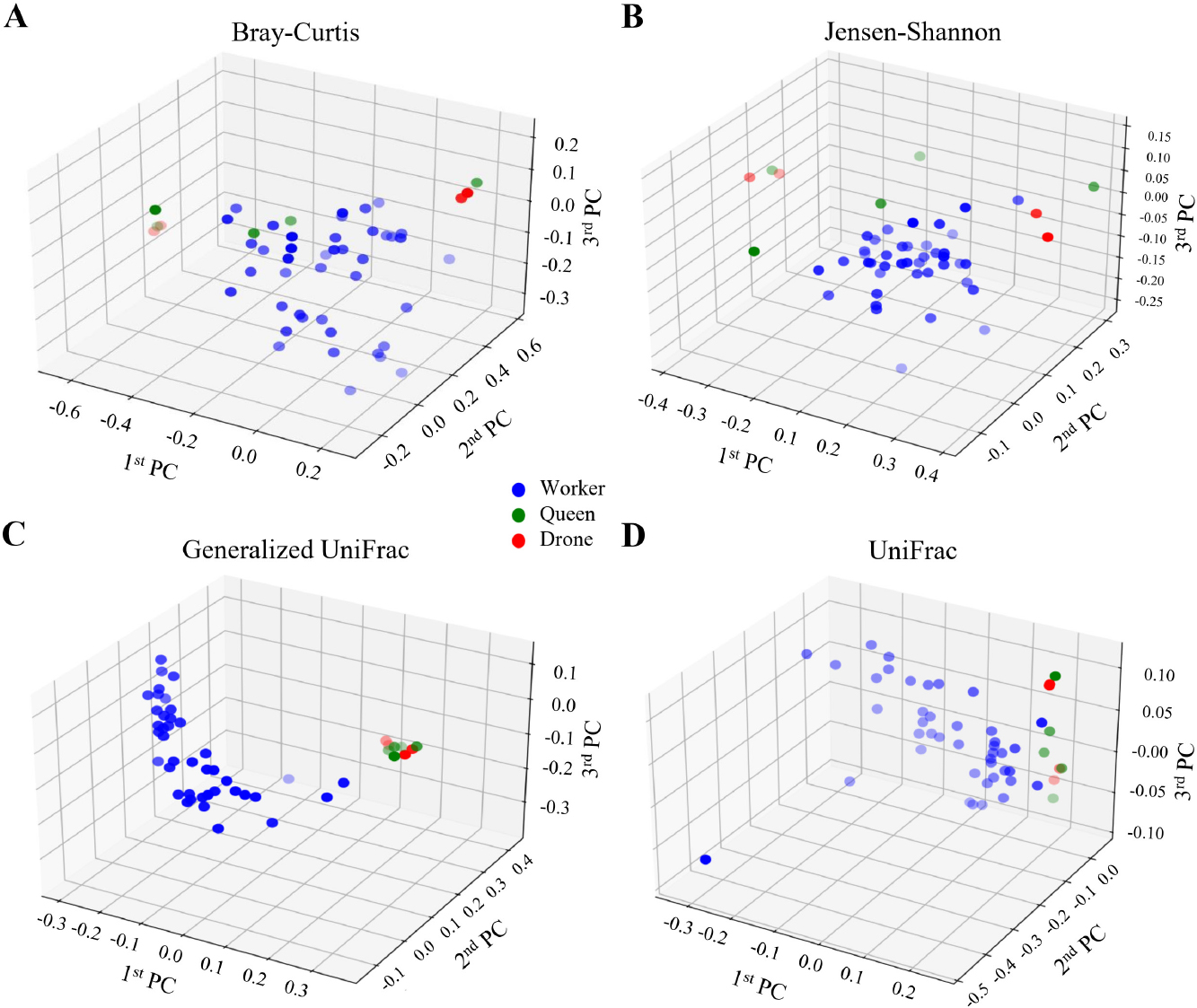
Fig. 5.
Principal coordinate analysis (PCoA) of the gut microbiome across bee castes.
PCoA was conducted using four distance metrics to investigate the microbial community structure among bee castes: A) Bray–Curtis, B) Jensen–Shannon divergence, C) Generalized UniFrac, D) UniFrac. The results are visualized in 3D plots, with blue, green, and red circles representing the worker, queen, and drone bee groups, respectively. The scatter of points illustrates the dissimilarities in microbial community composition among the castes. The analysis reveals that the microbial communities of worker bees are distinct from those of queen and drone bees.
Table II
Beta diversity index among the honey bee castes.
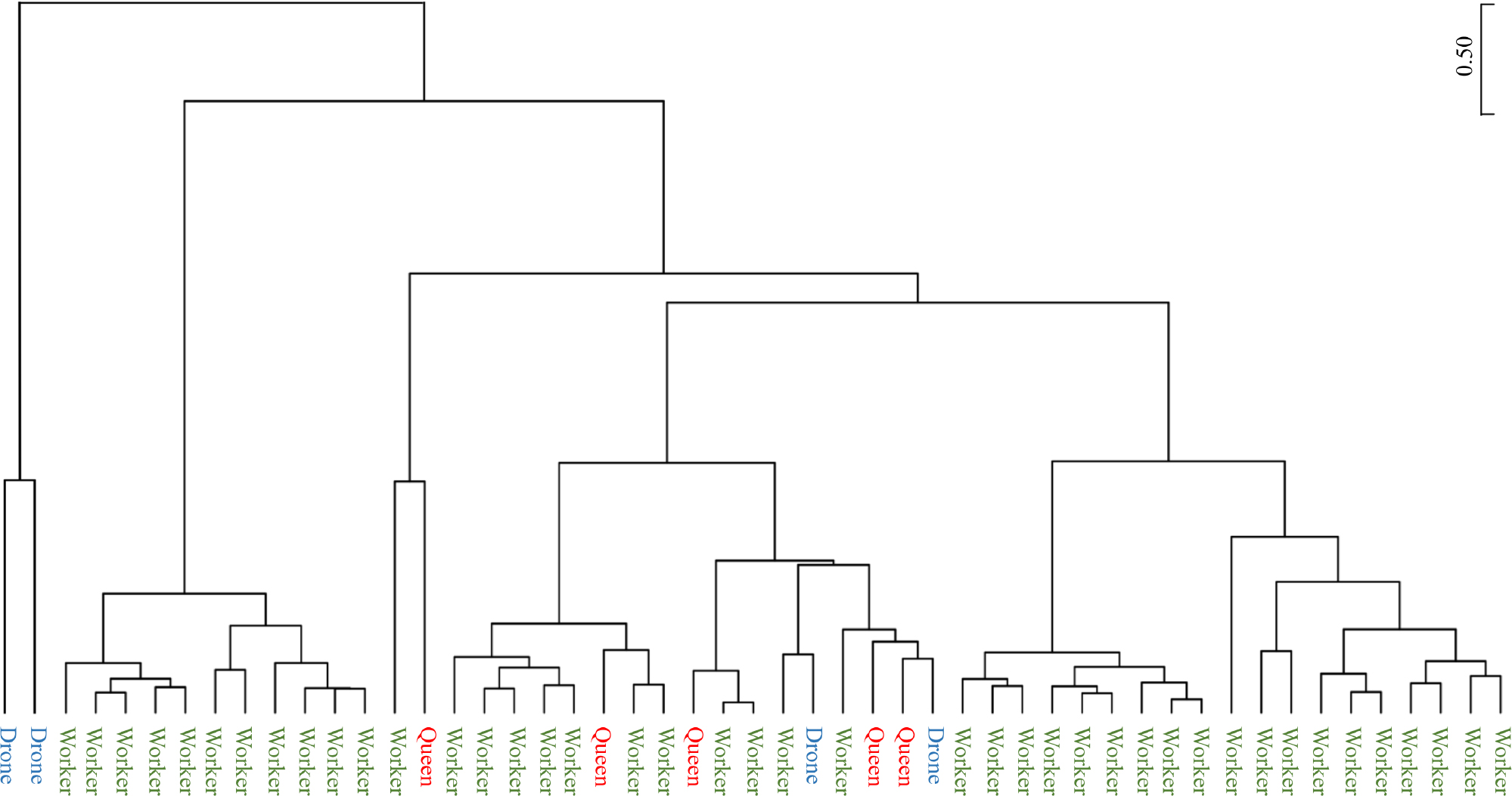
Fig. 6.
UPGMA clustering analysis of gut microbiome profiles among honey bee castes.
The UPGMA (Unweighted Pair Group Method with Arithmetic Mean) clustering method was used to analyze the gut microbiome profiles of the three honey bee castes: worker, queen, and drone. The dendrogram illustrates the hierarchical grouping of these castes based on the similarity of their gut microbiome compositions. The results highlight the distinctiveness of workers and the relative similarity and closer grouping of queens and drones.
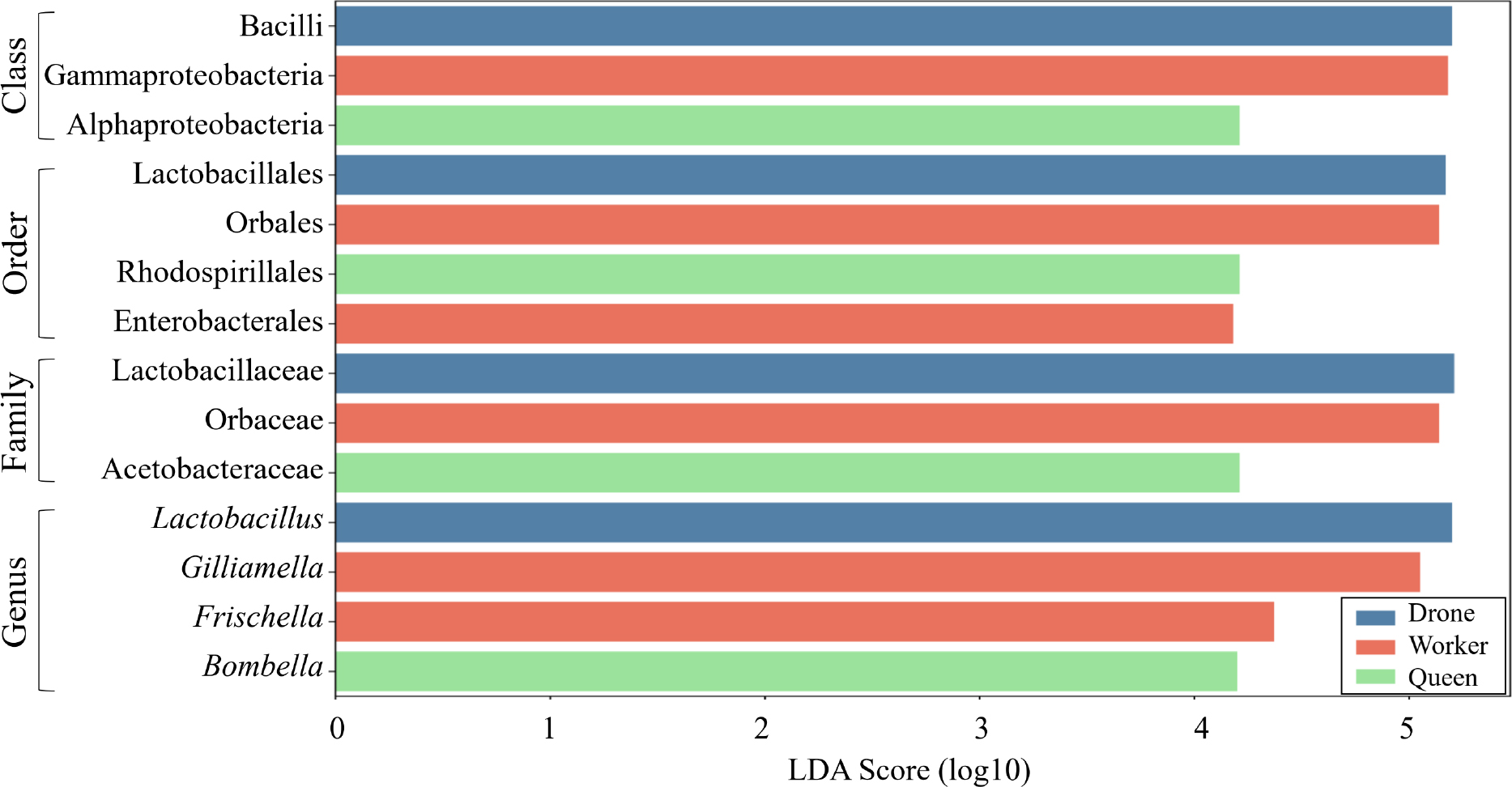
Fig. 7.
Taxonomic biomarker analysis of gut microbiome differences among bee castes using LEfSe (LDA Effect Size).
Based on LEfSe analysis, taxonomic cladograms highlight significant biomarkers among bee castes with a Kruskal–Wallis p-value < 0.05 and an LDA score > 4. The analysis identified distinct microbial features for each caste: Lactobacillus as a biomarker for drones, Gilliamella and Frischella as biomarkers for workers, and Bombella as a biomarker for queens. The taxa presented represent key microbial markers that differentiate the bee groups, providing insights into caste-specific microbial community compositions.
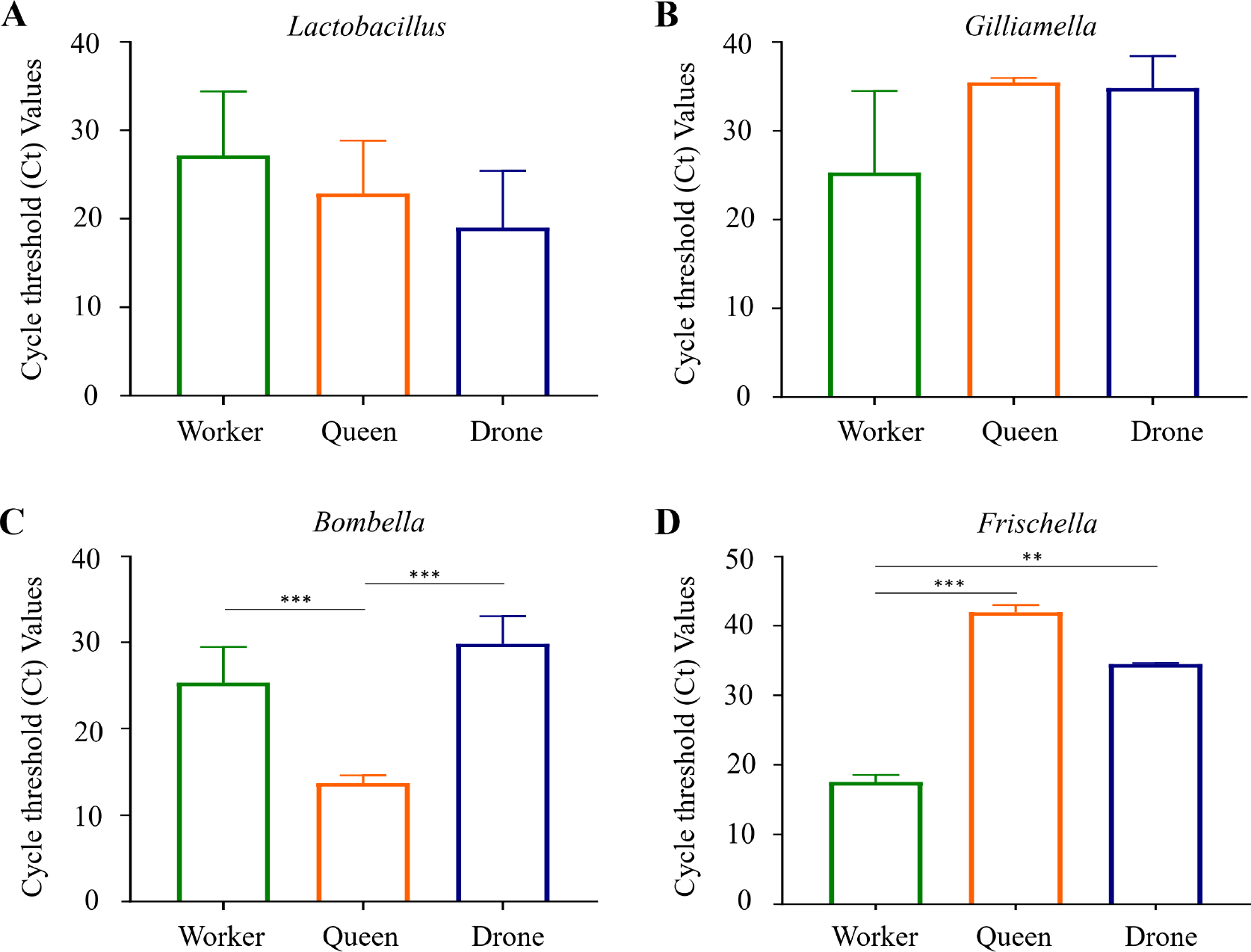
Fig. 8.
PCR validation of biomarker strains across the three honey bee castes.
The bacterial load of A) Lactobacillus, B) Gilliamella, C) Bombella, D) Frischella in the samples was quantified using qRT-PCR. The results confirmed the biomarker status of each strain: Lactobacillus had the lowest Ct values in drones, Gilliamella and Frischella in workers, and Bombella in queens. Statistical significance among groups was determined using one-way ANOVA (**p < 0.01; ***p < 0.001).
Table III
Prediction of functional biomarkers for the three honey bee castes.
| Ortholog | Definition | LDA effect size | p-value | Worker (%) | Queen (%) | Drone (%) | |
|---|---|---|---|---|---|---|---|
| Orthology | K11904 | Type VI secretion system secreted protein VgrG | 3.1 | 0.000 | 0.2 | 0.0 | 0.0 |
| K15580 | Oligopeptide transport system substrate-binding protein | 2.9 | 0.007 | 0.1 | 0.2 | 0.2 | |
| K07052 | Uncharacterized protein | 2.9 | 0.000 | 0.2 | 0.3 | 0.3 | |
| K01439 | Succinyl-diaminopimelate desuccinylase | 2.9 | 0.042 | 0.1 | 0.2 | 0.2 | |
| K10947 | PadR family transcriptional regulator, regulatory protein PadR | 2.9 | 0.002 | 0.1 | 0.3 | 0.2 | |
| Module (PICRUSt) | K02945 | Ribosome, bacteria | 3.7 | 0.042 | 5.7 | 6.8 | 6.6 |
| K11904 | Type VI secretion system | 3.6 | 0.000 | 0.8 | 0.0 | 0.0 | |
| K02035, K02031, K02032 | Peptides/nickel transport system | 3.4 | 0.000 | 0.9 | 1.3 | 1.3 | |
| K00798, K02226 | Cobalamin biosynthesis, cobinamide => cobalamin | 3.3 | 0.060 | 0.4 | 0.8 | 0.7 | |
| K15580 | Oligopeptide transport system | 3.3 | 0.002 | 0.3 | 0.7 | 0.6 | |
| Module (MinPath) | K17204 | Erythritol transport system | 3.2 | 0.000 | 0.3 | 0.5 | 0.6 |
| K02052 | Putative spermidine/putrescine transport system | 3.2 | 0.000 | 0.3 | 0.6 | 0.6 | |
| K20491, K20492 | Lantibiotic transport system | 3.1 | 0.000 | 0.2 | 0.5 | 0.5 | |
| K11195 | PTS system, fructose-specific II component | 3.1 | 0.000 | 0.3 | 0.6 | 0.6 | |
| K12536 | Hemophore/metalloprotease transport system | 3.1 | 0.000 | 0.2 | 0.4 | 0.4 | |
| Pathway (PICRUSt) | K00010, K00011, K00015, K00016 | Metabolic pathways | 3.7 | 0.001 | 15.9 | 16.7 | 16.7 |
| K01995, K02031, K02032, K02035 | Quorum sensing | 3.3 | 0.000 | 1.6 | 2.1 | 2.1 | |
| Flagellar assembly | 3.3 | 0.000 | 0.4 | 0.1 | 0.0 | ||
| K02945 | Ribosome | 3.2 | 0.006 | 2.0 | 2.4 | 2.3 | |
| K00010, K00015, K00016, K00033 | Microbial metabolism in diverse environments | 3.2 | 0.000 | 4.8 | 5.1 | 5.1 | |
| Pathway (MinPath) | K00466 | Tryptophan metabolism | 3.6 | 0.000 | 0.8 | 1.5 | 1.6 |
| K00965, K01198, K02790, K02791 | Amino sugar and nucleotide sugar metabolism | 3.5 | 0.000 | 1.0 | 1.5 | 1.6 | |
| K01259 | Arginine and proline metabolism | 3.5 | 0.000 | 1.1 | 1.8 | 1.8 | |
| K00011, K00965, K01785, K02744 | Galactose metabolism | 3.5 | 0.000 | 0.7 | 0.1 | 0.1 | |
| K13993 | Protein processing in endoplasmic reticulum | 3.4 | 0.000 | 1.2 | 1.7 | 1.7 | |
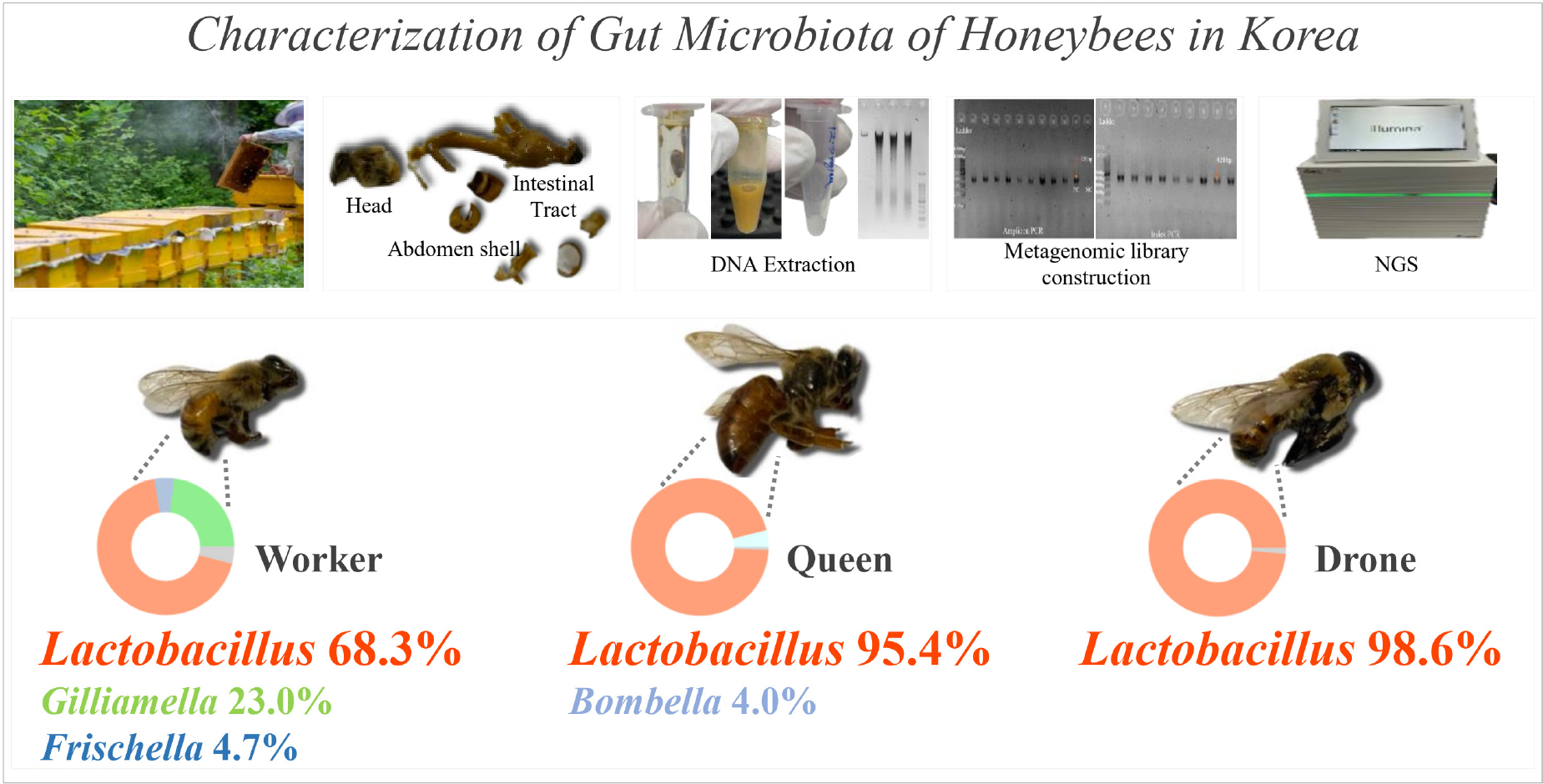
Fig. 9.
Summary of the characterization of caste-specific gut microbiota in honey bees from Korea.
This figure summarizes the study investigating the gut microbiota of honey bees collected in Korea, focusing on worker, queen, and drone castes. The top section outlines a standardized protocol for honey bee microbiome analysis, which includes bee collection, gut dissection, DNA extraction, metagenomic library preparation, and next-generation sequencing (NGS). The bottom section highlights the microbiota composition of the three castes: worker bees exhibit a diverse composition with Lactobacillus (68.3%), Gilliamella (23.0%), and Frischella (4.7%); queen bees are dominated by Lactobacillus (95.4%) with Bombella (4.0%); and drone bees are almost entirely composed of Lactobacillus (98.6%). These results highlight the distinct microbial communities associated with each caste and provide insights into their physiological roles and colony health.