
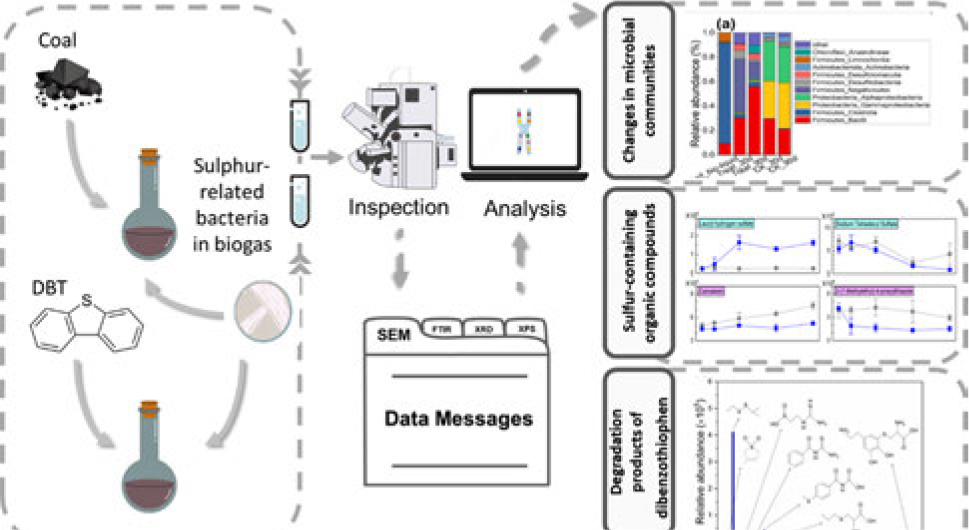
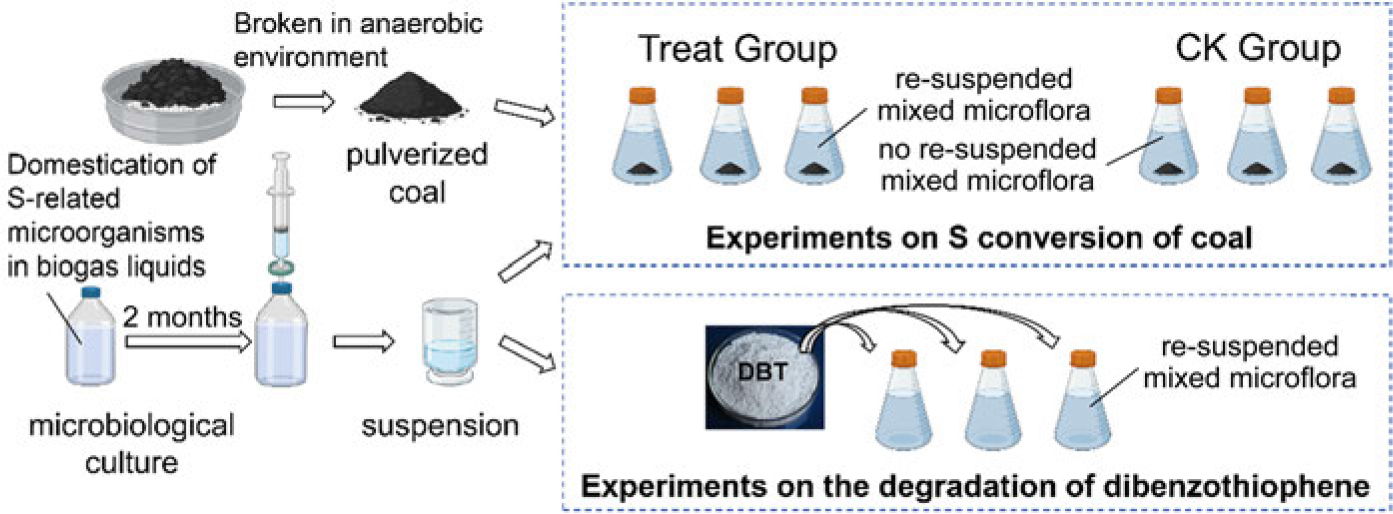
Fig. 1.
Flow chart for experimental studies.
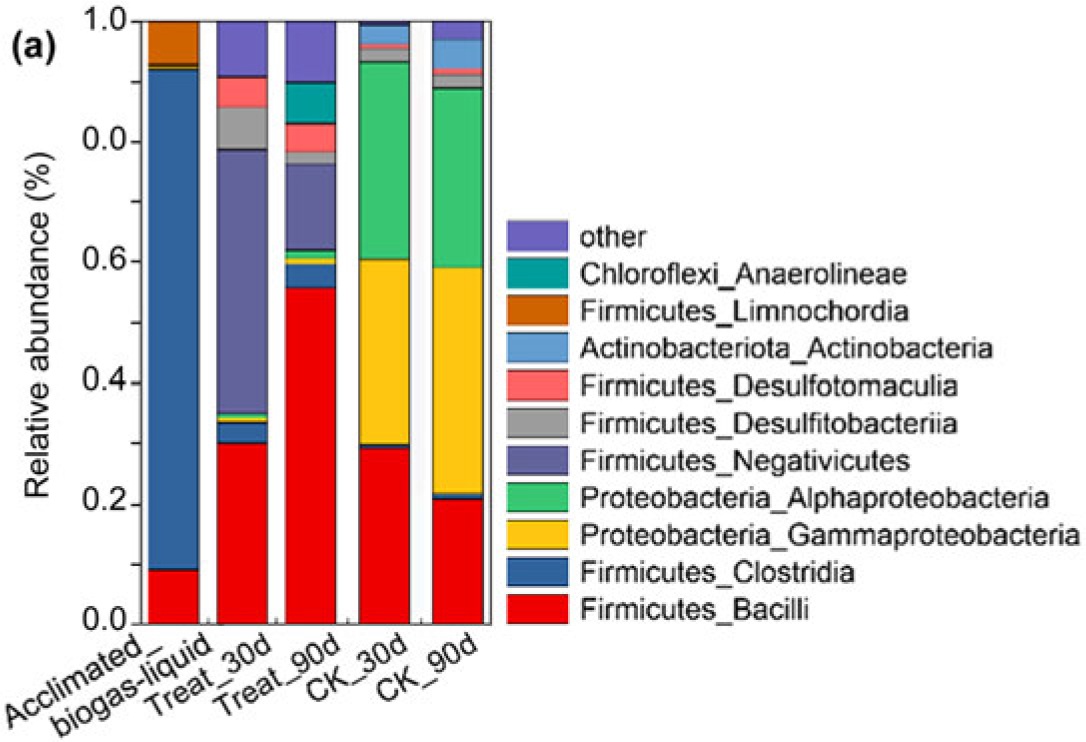
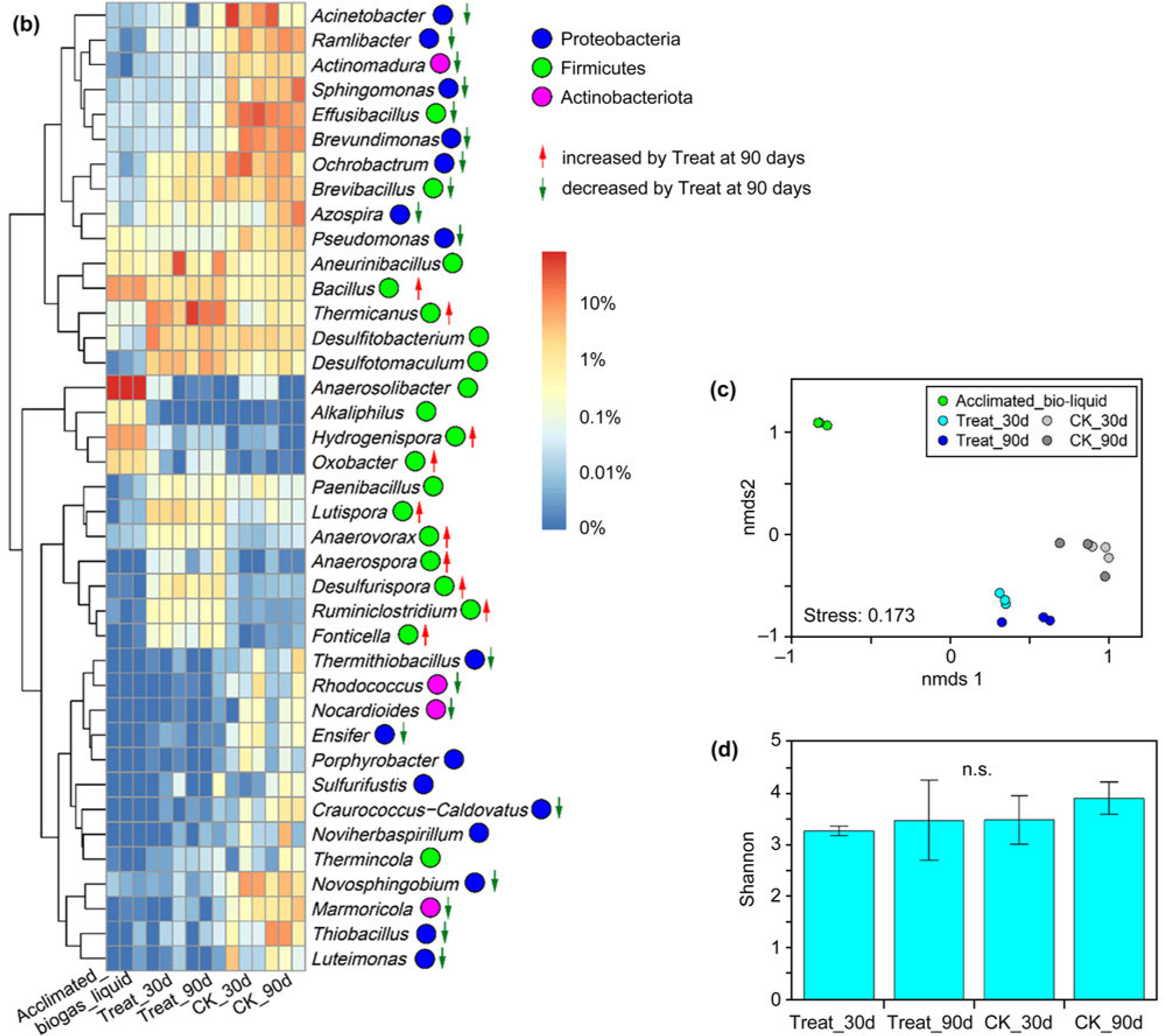
Fig. 2
Changes in microbial diversity in samples. a) Relative abundance of major bacterial phyla in biogas liquid (relative abundance > 1%). b) heatmap for relative abundance of major microbial genera in samples (relative abundance > 0.05%), and red and green arrows indicated significant differences between Treat and CK groups at 90 days (t-text, p < 0.05); c) ordering of microbial community composition by nonmetric multidimensional scaling (NMDS) using the Bray-Curtis distance; d) Shannon diversity among samples, n.s. indicates no significant difference (ANOVA with Tukey’s post hoc test, p < 0.05) among treatments.
Table I
The relative abundance of dominant phyla (> 1%) in the samples, different lowercase letters indicate a significant difference (ANOVA with Tukey’s post hoc test, p < 0.05) among samples.
| Acclimated biogas liquid | CK_30d | CK_90d | Treat_30d | Treat_90d | |
|---|---|---|---|---|---|
| Firmicutes | 99.23 ± 0.18% a | 32.75 ± 19.80% b | 25.11 ± 3.87% b | 98.32 ± 0.31% a | 90.65 ± 5.36% a |
| Proteobacteria | 0.61 ± 0.12% b | 63.55 ± 20.87% a | 67.22 ± 1.41% a | 1.47 ± 0.38% b | 2.32 ± 0.69% b |
| Actinobacteriota | 0.03 ± 0.02% c | 3.14 ± 0.95% b | 5.71 ± 1.51% a | 0.03 ± 0.02% c | 0.12 ± 0.06% c |
| Chloroflexi | 0.00 ± 0.00% b | 0.09 ± 0.03% ab | 0.92 ± 0.85% ab | 0.09 ± 0.10% ab | 6.81 ± 5.56% a |
| Bacteroidota | 0.07 ± 0.03% a | 0.37 ± 0.36% a | 0.42 ± 0.27% a | 0.04 ± 0.02% a | 0.03 ± 0.01% a |
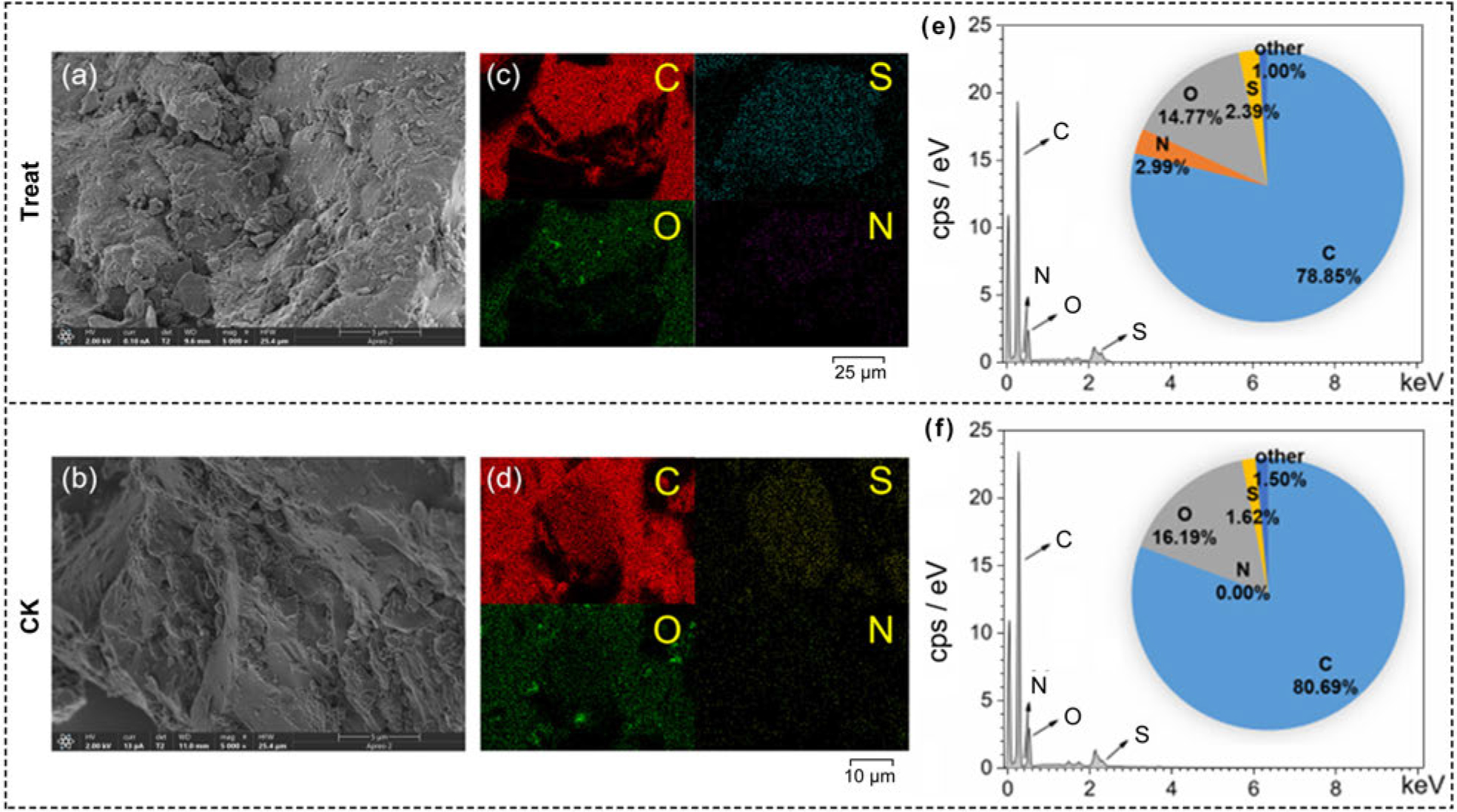
Fig. 3.
Images of SEM, EDS energy spectra, and count per second (cps) data of coal samples from different treatment groups.
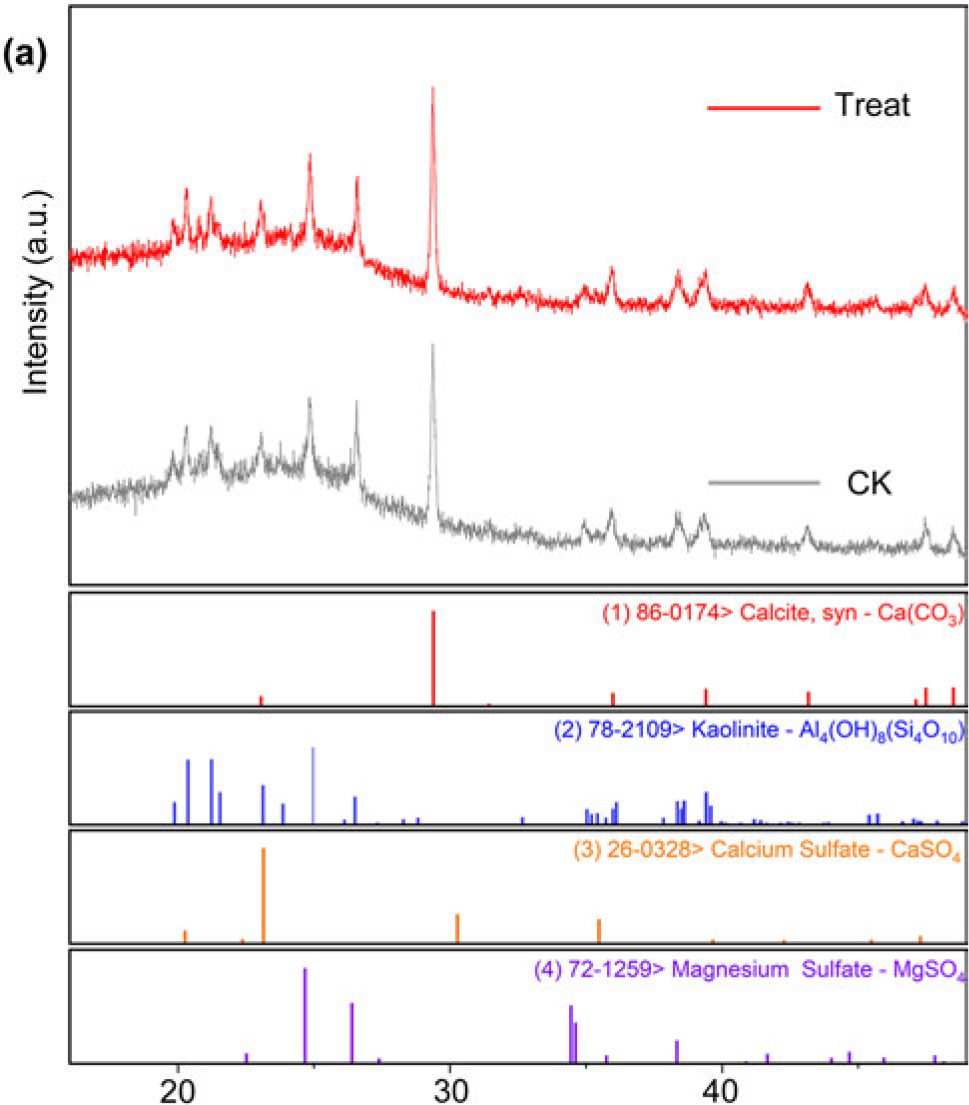
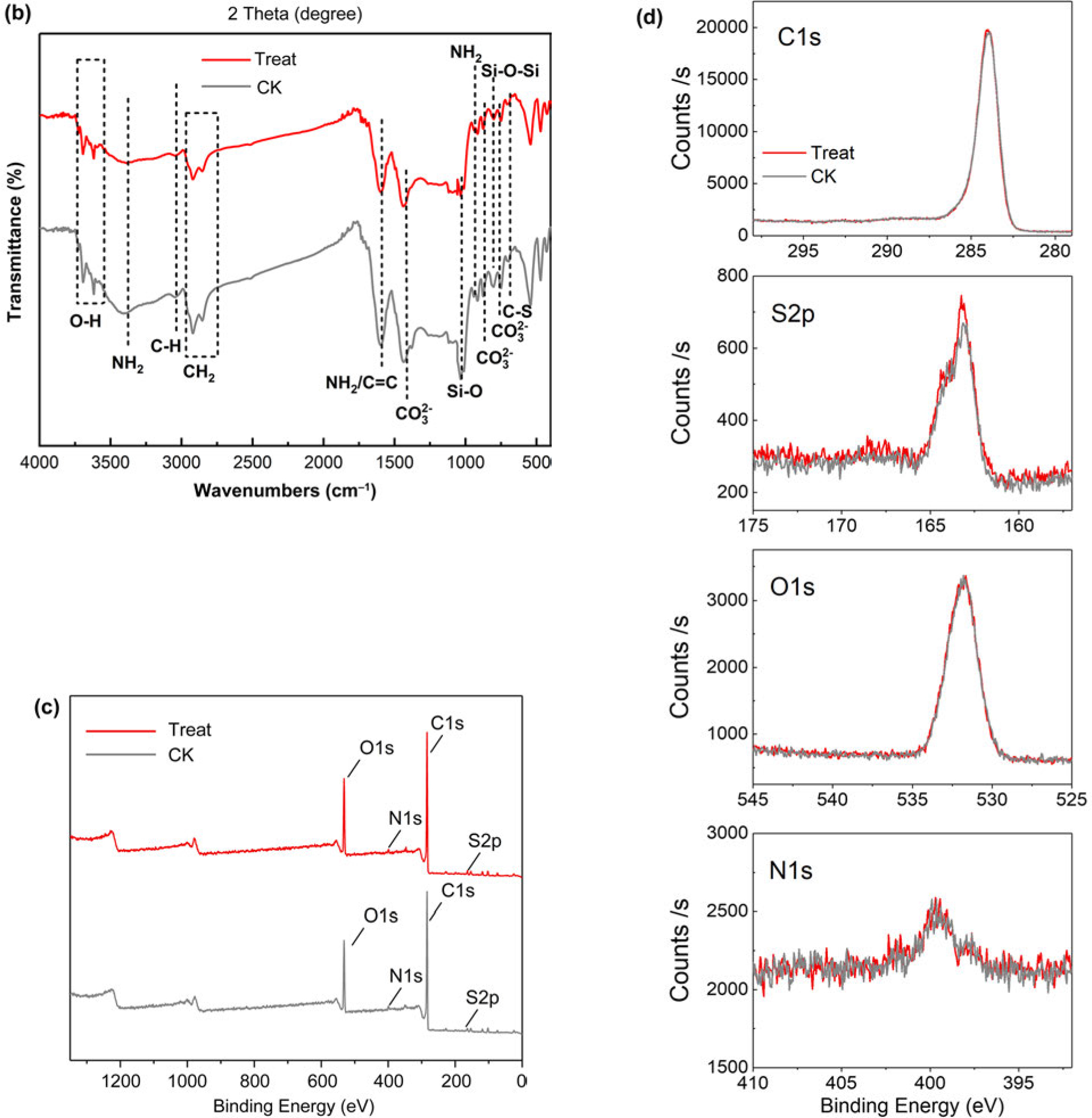
Fig. 4.
XRD, FTIR, and XPS spectra of coal samples. a) XRD spectra. b) FTIR spectra. c) XPS spectra. d) XPS spectra of C, N, O, and S, respectively.
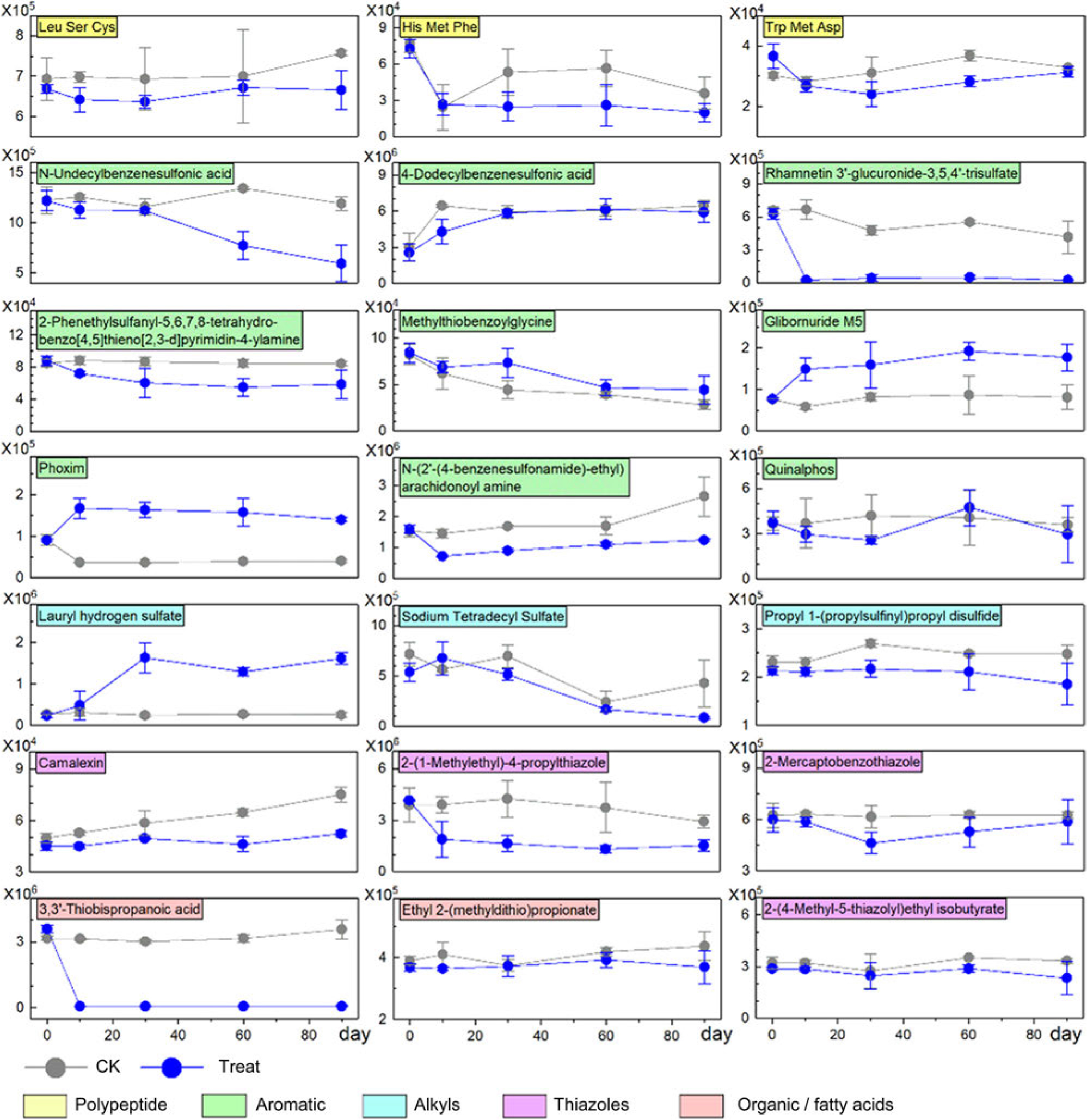
Fig. 5.
Main sulfur-containing organic compounds in coal samples.
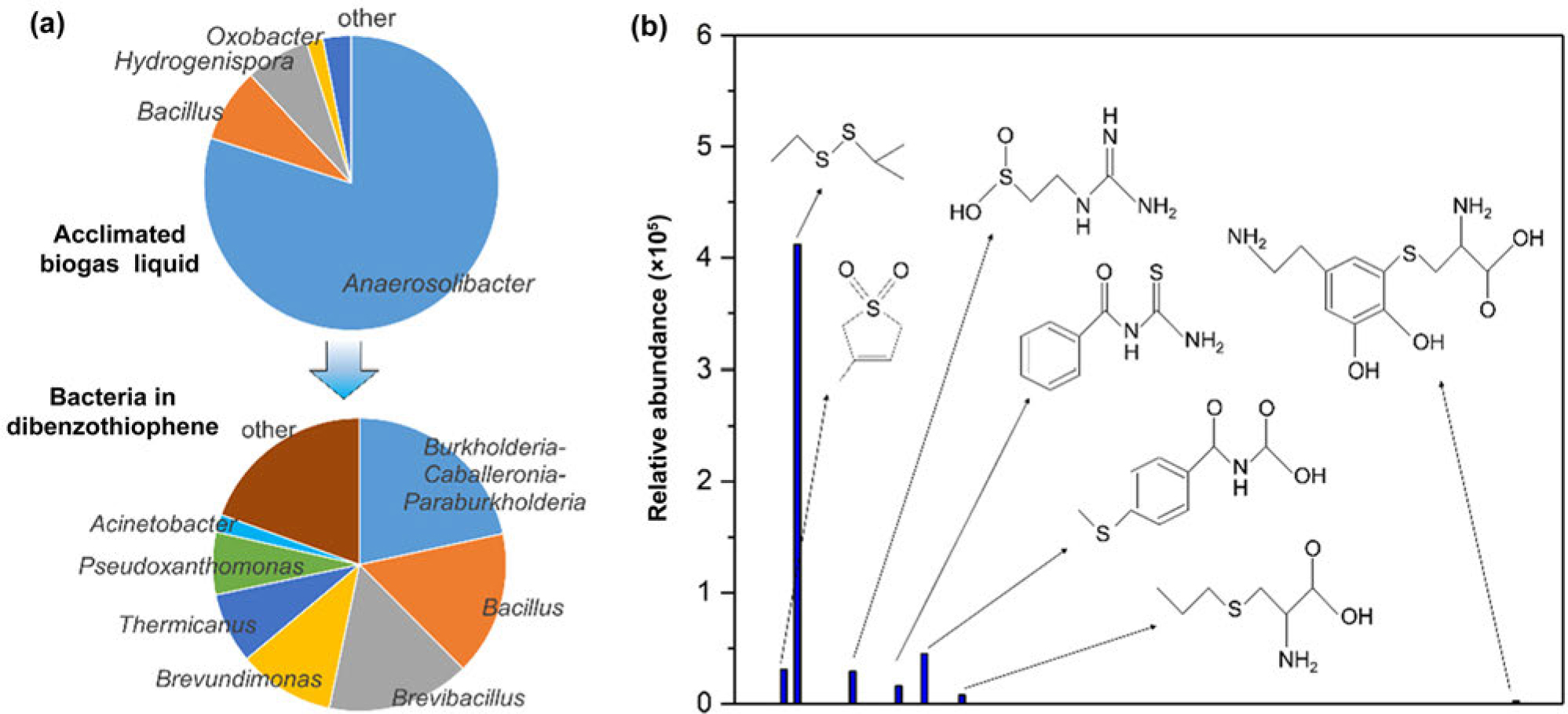
Fig. 6.
a) Bacteria in acclimated biogas liquid and functional classes related to DBT degradation; b) sulfur-related intermediates produced by DBT degradation.
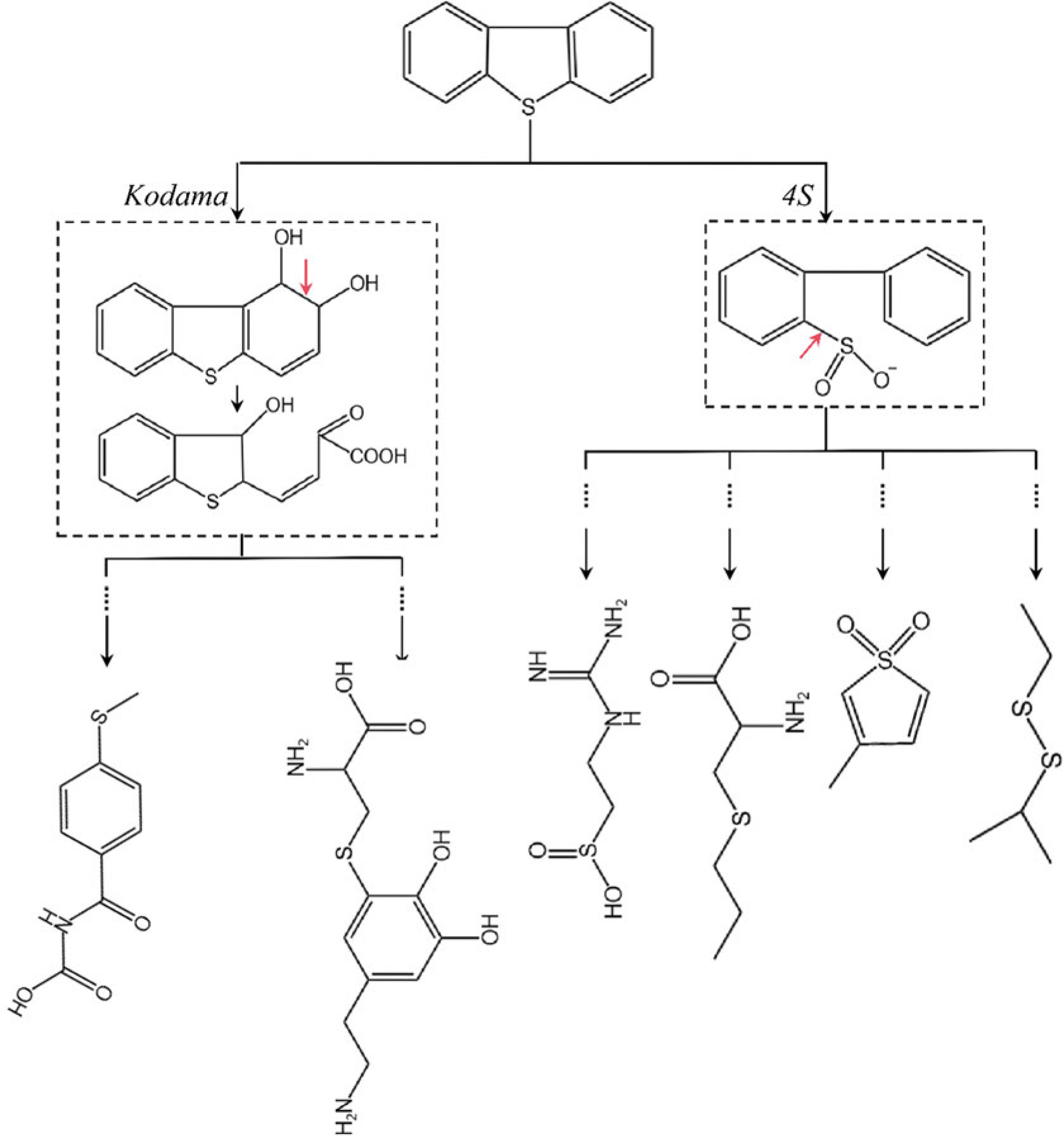
Fig. 7.
Predicted degradation pathways of dibenzothiophene (DBT).