Introduction
Since the industrial revolution, new ecological niches have emerged following the release of toxic industrial wastes, which often consist of a mixture of heavy metals, organic compounds, and hydrocarbons, into the environment. Environmental pollution is a significant problem, affecting many environments in a negative and almost irreversible way (Filali et al. 2000). In particular, heavy metal contamination of surface waters directly impacts both the environment and public health (Chihomvu et al. 2015). Environmental bacteria that are resistant to heavy metals, as well as multiple antibiotics, are of great concern in many areas of the world.
Bacteria-heavy metal interactions have been studied in many and extreme environments. Some metals are essential cofactors of specific proteins; others cause oxidative stress because of their redox potential. Heavy metals are naturally occurring, but with excessive anthropogenic activities, they are shown in large quantities, then become toxic at high concentration. Soil, water, and air are the major environmental compartments, which are affected by heavy metals pollution leading to many adverse impacts (Tchounwou et al. 2012).
In this study, we focused on copper, silver, and mercury. These heavy metals are more and more used in many applications and are also found in different areas worldwide (Kerfoot et al. 2002; 2004).
Copper is an essential element that is toxic at high concentrations (Chihomvu et al. 2015). High cytoplasmic copper concentrations can lead to dysfunctional proteins (Kershaw et al. 2005), or damage lipids, DNA, and other molecules (Harrison et al. 2000). Microorganisms have developed several copper resistance mechanisms to survive in contaminated environments.
Silver is used as an antimicrobial agent in various medical products, such as catheters, and for burns wound treatments (Silver and Phung 1996; Klasen 2000; Jung et al. 2008). Bacteria can develop resistance to silver via efflux mechanisms encoded by the sil- or pco/cop-genes (Gupta et al. 1999).
The mercury ion has been known to be effective against a broad range of microorganisms. It has no beneficial functions in living organisms, and this toxic compound can accumulate in the food chain (Jan et al. 2009). The mercury resistance system is encoded by the mer operon, which reduces Hg2+ into elemental mercury via the mercuric reductase enzyme (MerA) (Boyd and Barkay 2012; Fatimawali et al. 2014).
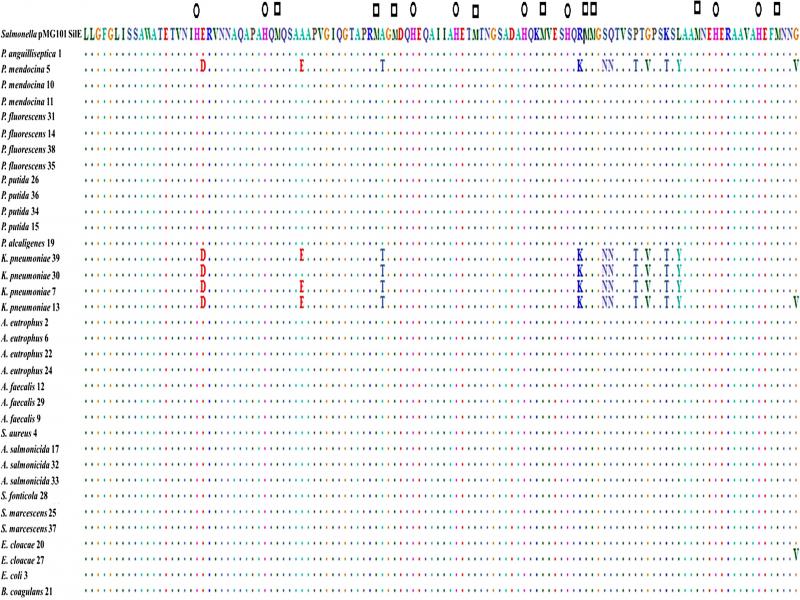
Furthermore, many reports suggested that heavy metal contamination could directly or indirectly impact the maintenance and proliferation of antibiotic resistance (Summers 2002). Several studies reported the co-occurrence of heavy metal and antibiotic resistance. It has been proven that heavy metals in environmental reservoirs, water, wastewater, and soil, may contribute to the selection of antibiotic-resistant strains through co-resistance and cross-resistance mechanisms (Nguyen et al. 2019). It is important to underline that co-resistance occurs when genes coding for the resistance phenotypes are present on the same mobile genetic elements (i.e., plasmids, transposons, and integrons) (Mandal et al. 2016). Mercury, copper, and silver resistance genes are located on mobile genetic elements, e.g., on class II transposons with various antibiotic resistance genes. For instance, Salmonella plasmid pMG101 carries silver, mercury, and tellurite resistance genes and genes conferring resistance against chloramphenicol, ampicillin, tetracycline, streptomycin, and sulphonamide. Plasmid-encoded mercury resistance operons are frequently associated with class II transposons. In addition, P-type ATPases are indispensable for the transport of ions, such as copper and silver from cells, acting as a resistance mechanism to actively efflux heavy metal cations. These PIB-type ATPase genes have been found to occur on plasmids and transposons in both Gram-positive and Gram-negative bacteria and be prone to horizontal gene transfer (HGT) (Aminov 2011).
In this report, we were interested in studying the contamination of ten sites in Tunisia by silver, copper, and mercury and detecting a cross-resistance between them and antibiotics in water environmental isolates. It was done to understand better whether heavy metal contamination could contribute to the proliferation and the spread of antibiotic resistance.
Experimental
Materials and Methods
Sampling sites. Samples were collected from ten different geographic areas from the north to the south of Tunisia (Table I). Sampling sites were chosen because of their geographic situation near urban, industrial, and agricultural areas. Sample locations were based on a previous study that determined the degree of pollution (2020).
Table I
Sampling sites characteristics, locations, and their corresponding geographic coordinates.
| Sites/numeration | Geographic coordinates | Location | Characteristics | |||
|---|---|---|---|---|---|---|
| Menzel Jemil, Bizerte: Site I | 37°14′19″N, 9°54′59″E | Industrial area | Waste and contamination from the textile industry and wiring throwing inside the Bizerte lagoon | |||
| Menzel Bourguiba, Bizerte: Site II | 37°09′N, 9°47′E | Unit manufacturing printed circuits. In the Iron factory | Contamination by HM from the iron factory in the Bizerte lagoon. Urban and agricultural pollution | |||
| Tinjah wedi, Bizerte: Site III | 37°10′N, 9°45′E | Near the lagoon of Bizerte | Agricultural pollution and compost contamination. | |||
| Beja: Site IV | 36°43′30″N, 9°10′55″E | Southwest of the city of Tunis Near the CWTP* | Urban and industrial area, the most known are wastewater and yeast factory | |||
| Essijoumi Lagoon: Site V | 36°45′52″N, 10°08′49″E | Contribution in the Gulf of Tunis | Lagoon receiving contamination from wastewater contamination and wastes from the capital Tunis. | |||
| Rades Milian River: Site VI | 36°46′N, 10°17′E | Industrial zone of Rades | High load alluvial estimated at 25 grams per liter. Receiving wastewater from two towns Rades and Ezzahra. | |||
| Majerda River: Site VII | 37°7′0″N, 10°13′0″E | A peninsula in far north-eastern Tunisia | Used for irrigation of the region’s agriculture | |||
| Lebna River: Site VIII | 36°45′N, 10°54′E | Inlet manifold sewage treatment plant | Agricultural coastal Plans can be found in the area of Cap Bon | |||
| Om Larayes, Gafsa: Site IX | 34°28′59″N, 8°16′01″E | The industrial platforms of phosphgyps activity | One of the known mining towns in Gafsa | |||
| Gulf of Gabes: Site X | 34°05′37″N, 10°26′13″E | The junction between the Eastern and Central Basin | Known by industry for the transformation of merchantable phosphate into Phosphoric Acid (H3PO4) and Chemical Fertilizers |
| Multiplex | Target | Primers sequences (5′–3′) | Size (pb) | Concentration (pmol/µl) | Volume (µl) | Amplification conditions |
|---|---|---|---|---|---|---|
| 1 | TEM | MultiTSO-T_F CATTTCCGTGTCGCCCTTATTC | 800 | 0.4 | 0.4 | 94°C 10 min 94°C 40 sec 60°C 40 sec 30 cycles 72°C 1 min 72°C 7 min |
| MultiTSO-T_R CGTTCATCCATAGTTGCCTGAC | 0.4 | 0.4 | ||||
| SHV | MultiTSO-S_F AGCCGCTTGAGCAAATTAAAC | 713 | 0.4 | 0.4 | ||
| MultiTSO-S_R ATCCCGCAGATAAATCACCAC | 0.4 | 0.4 | ||||
| OXA-1-like | MultiTSO-O_F GGCACCAGATTCAACTTTCAAG | 564 | 0.4 | 0.4 | ||
| MultiTSO-O_R GACCCCAAGTTTCCTGTAAGTG | 0.4 | 0.4 | ||||
| 2 | CTX-M group 1 | MultiCTXMGp1_F TTAGGAARTGTGCCGCTGTA | 688 | 0.4 | 0.4 | |
| MultiCTXMGp1_R CGATATCGTTGGTGGTCCCAT | 0.2 | 0.2 | ||||
| CTX-M group 2 | MultiCTXMGp2_F CGTTAACGGCACGATGAC | 404 | 0.2 | 0.2 | ||
| MultiCTXMGp1_R CGATATCGTTGGTGGTTCCAT | 0.2 | 0.2 | ||||
| CTX-M group 9 | MultiCTXMGp9_F TCAAGCCTGCCGATCTGGT | 561 | 0.4 | 0.4 | ||
| MultiCTXMGp9_R TGATTCTCGCCGCTGAAG | 0.4 | 0.4 | ||||
| CTX-M group 8 | CTX-Mg8/25_F AACTCCCAGACGCTCTAC | 326 | 0.4 | 0.4 | ||
| CTX-Mg8/25_R TCGAGCCGGAASGTGTAAT | 0.4 | 0.4 |
| Simplex | Target | Primers sequences (5′– 3′) | Size (pb) | Concentration (pmol/µl) | Volume (µl) | Amplification conditions |
|---|---|---|---|---|---|---|
| 1 | OXA-48 | MultiOXA-48_F GCTTGATCGCCCTCGATT | 281 | 0.4 | 0.4 | 94°C 10 min 94°C 40 sec 57°C 40 sec 30 cycles 72°C 1 min 72°C 7 min |
| MultiOXA-48_R GATTTGCTCCGTGGCCGAAA | 0.4 | 0.4 |
Table III
Primers, expected fragment size, and conditions of PCR experiments used for quinolones resistance encoding genes.
| Multiplex | Target | Sequence of primer (5′–3′) | Size (bp) | Amplification conditions | |
|---|---|---|---|---|---|
| 3 | qnrA | qnrA_FCAGCAAGAGGATTTCTCACG | 630 | 95°C 15 min 94°C 30 sec 63°C 40 sec 30 cycles 72°C 90 sec 72°C 10 min | |
| qnrA_RAATCCGGCAGCACTATTACTC | |||||
| qnrB | qnrB_FGGCTGTCAGTTCTATGATCG | 488 | |||
| qnrB_RGAGCAACGATGCCTGGTAG | |||||
| qnrC | qnrC_FGCAGAATTCAGGGGTGTGAT | 118 | |||
| qnrC_RAACTGCTCCAAAAGCTGCTC | |||||
| qnrD | qnrD_FCGAGATCAATTTACGGGGAATA | 581 | |||
| qnrD_RAACAAGCTGAAGCGCCTG | |||||
| qnrS | qnrS_FGCAAGTTCATTGAACAGGGT | 428 | |||
| qnrS_RTCTAAACCGTCGAGTTCGGCG |
| Strains | Sites | MICs of HM (µg/ml) Ag2+ Cu2+ Hg2+ | HM resistance genes | AB resistance profile | AB resistance genes |
|---|---|---|---|---|---|
| Pseudomonas anguilliseptica 1 | MJ. Bizerte | 0.064 (R) 0.625(S) 0.08 (R) | silE, merA | AMP, ATM, FOS | blaTEM |
| Alcaligenes eutrophus 2 | MJ. Bizerte | 0.064 (R) 3 (R) 0.005 (S) | silE, cusA | AMP, CAZ | blaTEM |
| Escherichia coli. 3 | MJ. Bizerte | 0.064 (R) 6 (R) 0.0025 (S) | silE, cusA | AMP, TIC, PIP, CXM, CFM, CAZ, ATM, GMN, NET, TOB, CTX | blaTEM, blaCTX-M-1, qnrB |
| Staphylococcus aureus 4 | MJ. Bizerte | 0.064 (R) 3(R) 0.08 (R) | silE, cusA, merA | AMP, ATM, FOS, CIP, LEV | blaTEM |
| Pseudomonas mendocina 5 | IF of Bizerte MB | 0.032 (R) 3(R) 0.08 (R) | silE, cusA, merA | AMP, ATM, FOS | blaTEM |
| Alcaligenes eutrophus 6 | IF of Bizerte MB | 0.064 (R) 6(R) 0.005 (S) | silE, cusA | AMP, CAZ, SXT, CHL | blaTEM |
| Klebsiella pneumoniae 7 | IF of Bizerte MB | 0.064 (R) 3(R) 0.08 (R) | silE, cusA, merA | AMP, TIC, FOX, FEP, ETP, AMC, CAZ, IMP, SXT, CTX, FOS, CLS, NOR, CIP, GMN, AKN, NET, TOB, NFE, MNO, TET | blaTEM, blaSHV, blaCTX-M-1, blaOX48, qnrB |
| Pseudomonas putida 8 | IF of Bizerte MB | 0.064 (R) 1.5 (S) 0.005 (S) | silE | AMP, TIC, TCC, PIP, FEP, CAZ, ATM, FOS | blaTEM |
| Alcaligenes faecalis 9 | IF of Bizerte MB | 0.064 (R) 3 (R) 0.005 (S) | silE, cusA | AMP, CAZ | blaTEM |
| Pseudomonas mendocina 10 | Tinjah wedi, Bizerte | 0.064 (R) 1.5 (S) 0.08 (R) | silE, cusA, merA | AMP, ATM, FOS | blaTEM |
| Pseudomonas mendocina 11 | Tinjah wedi, Bizerte | 0.032 (R) 3 (R) 0.005 (S) | silE, cusA | AMP, TCC, FOS | blaTEM |
| Alcaligenes faecalis 12 | Tinjah wedi, Bizerte | 0.064 (R) 3 (R) 0.005 (S) | silE, cusA | AMP, CAZ, CHL | blaTEM |
| Klebsiella pneumoniae 13 | Tinjah wedi, Bizerte | 0.032 (R) 3 (R) 0.04 (R) | silE, cusA, merA | AMP, TIC, AMC, NAL, NOR, CHL, TGC, MNO, TET | blaTEM, blaSHV |
| Pseudomonas fluorescens 14 | CWTP of Beja | 0.064 (R) 3 (R) 0.005 (S) | silE, cusA | AMP, TIC, ATM, FOS, IMP, MEM, | blaTEM |
| Pseudomonas putida 15 | CWTP of Beja | 0.064 (R) 1.5 (S) 0.08 (R) | silE, merA | AMP, TIC, TCC | blaTEM |
| Pseudomonas putida 16 | CWTP of Beja | 0.008 (S) 3 (R) 0.04 (R) | cusA, merA | AMP, TIC, TCC, PIP, FEP, CAZ, ATM, FOS | blaTEM |
| Aeromonas salmonicida 17 | Marsh Sejoumi | 0.032 (R) 1.5 (S) 0.08 (R) | silE, merA | AMP, TIC | blaTEM |
| Alcaligenes eutrophus 18 | Marsh Sejoumi | 0.008 (S) 0.625 (S) 0.08 (R) | merA | AMP, CAZ | blaTEM |
| Pseudomonas alcaligenes 19 | Marsh Sejoumi | 0.0064(R) 3 (R) 0.08 (R) | silE, cusA, merA | AMP, TIC, PIP, TCC, FOS | blaTEM |
| Enterobacter cloacae 20 | Marsh Sejoumi | 0.064 (R) 6 (R) 0.08 (R) | silE, cusA, merA | AMP, TIC, FOX, AMC, CTX | blaTEM, blaOXA-1, blaSHV, blaCTX-M-9 |
| Bacillus coagulans 21 | Milian Rades Wedi | 0.064 (R) 3 (R) 0.02 (R) | silE, cusA, merA | AMP, TIC, TCC, PIP, FEP, CAZ, ATM, FOS | blaTEM |
| Alcaligenes eutrophus 22 | Milian Rades Wedi | 0.064 (R) 0.625 (S) 0.08 (R) | silE, merA | AMP, CAZ, SXT, CHL | blaTEM |
| Pseudomonas putida 23 | Milian Rades Wedi | 0.004 (S) 0.625 (S) 0.005 (S) | – | AMP, ATM, FOS | blaTEM, blaSHV |
| Alcaligenes eutrophus 24 | Majerda River | 0.064 (R) 1.5 (S) 0.005 (S) | silE | AMP, CAZ | blaTEM |
| Serratia marcescens 25 | Majerda River | 0.064 (R) 1.5 (S) 0.02 (R) | silE, merA | AMP, TIC, FOX, AMC | blaTEM, blaOXA-1, blaSHV |
| Pseudomonas putida 26 | Majerda River | 0.032 (R) 0.75 (S) 0.02 (R) | silE, merA | AMP, FOS, ATM, LEV | blaTEM |
| Enterobacter cloacae 27 | Lebna wedi C.B | 0.064 (R) 3 (R) 0.005 (S) | silE, cusA | AMP, TIC, FOX, AMC, TGC, MNO, TET | blaTEM, blaOXA-1 |
| Serratia fonticola 28 | Lebna wedi C.B | 0.064 (R) 1.5 (S) 0.005 (S) | silE | AMP, TIC, AMC, CTX, CLS | blaTEM, blaCTX-M-9 |
| Alcaligenes faecalis 29 | Lebna wedi C.B | 0.032 (R) 3 (R) 0.005 (S) | silE, cusA | AMP, CAZ | blaTEM |
| Klebsiella pneumoniae 30 | Lebna wedi C.B | 0.064 (R) 6 (R) 0.005 (S) | silE, cusA | AMP, TIC, AMC | blaTEM, blaSHV |
| Pseudomonas fluorescens 31 | Om Larayes, Gafsa | 0.064 (R) 3 (R) 0.08 (R) | silE, cusA, merA | AMP, TIC, TCC, PIP, FEP, ATM, IMP, MEM, FOS | blaTEM |
| Aeromonas salmonicida 32 | Om Larayes, Gafsa | 0.064 (R) 0.625(S) 0.005 (S) | silE | AMP | blaTEM |
| Aeromonas salmonicida 33 | Om Larayes, Gafsa | 0.064 (R) 1.5 (S) 0.08 (R) | silE, merA | AMP, TIC, FEP, CAZ, ATM | blaTEM |
| Pseudomonas putida 34 | Om Larayes, Gafsa | 0.032 (R) 1.5 (S) 0.08 (R) | silE, merA | AMP, TIC, TCC, PIP, TZP, CAZ, ATM | blaTEM |
| Pseudomonas fluorescens 35 | Om Larayes, Gafsa | 0.0064 (R) 0.75 (S) 0.005 (S) | silE | AMP, TIC, TCC, ATM, MEM | blaTEM |
| Pseudomonas putida 36 | Gulf of Gabes | 0.064 (R) 3 (R) 0.008 (S) | silE, cusA | AMP, TIC, TCC, PIP, TZP, ATM, MEM | blaTEM |
| Serratia marcescens 37 | Gulf of Gabes | 0.064 (R) 1.5 (S) 0.005 (S) | silE | AMP, FOX, AMC, TGC, MNO, TET | blaTEM |
| Pseudomonas fluorescens 38 | Gulf of Gabes | 0.0064 (R) 6 (R) 0.08 (R) | silE, cusA, merA | AMP, TIC, TCC, PIP, TZP, FEP, CAZ, ATM, MEM, LEV, FOS | blaTEM |
| Klebsiella pneumoniae 39 | Gulf of Gabes | 0.032 (R) 3 (R) 0.0025 (S) | silE, cusA | AMP, TIC, TCC, PIP, CFN, CXM, CFM, CAZ, FEP, ATM, GMN, NET, TOB | blaSHV, blaCTX-M-1, qnrB |