
Introduction
Women engaged in maritime security in the Atlantic states abutting the Gulf of Guinea (GoG) – here including the West African nation of Senegal and the littoral nations extending to Angola, some 6,000 km to the south – constitute a critical yet insufficiently integrated component of the region’s maritime governance and security architecture. While their meaningful participation across operational, strategic and policy-making domains holds significant potential, the global maritime sector remains male-centered, rendering women vulnerable, marginalized, and disadvantaged. Although maritime security scholarship has expanded in scope, analyses remain largely state-centric and militarized in orientation; traditional approaches focus on naval capacity building, surveillance technologies and counter-piracy operations, often subsuming broader issues of governance, gender equity and inclusiveness. As a result, security discourses reproduce what is described as a “gender blind” framework which assumes security to be a neutral, theoretical, domain overlooking the gendered structures that shape participation, authority and vulnerability within maritime institutions (Chapsos & Norman, 2023, p. 1).
This marginalization of gender perspectives is especially concerning given the expanding global recognition of the United Nations’ Women, Peace and Security (WPS) agenda, which calls for the meaningful participation of women in peace and security governance. Though WPS literature increasingly advocates for the gendered dimensions of conflict, peacebuilding, and security sector reform, the maritime domain remains underexplored, notwithstanding the depth to which women are both embedded in maritime political economies across the GoG and occupy roles directly affected by maritime security. Growing literature in fisheries governance documents how women’s participation enhances institutional legitimacy, sustainability outcomes and community resilience (Bennett, 2005; Chambon et al., 2024). The underrepresentation of women from formal maritime security institutions represents not only an equity gap but a missed opportunity for more inclusive and sustainable governance; women remain underrepresented in operational, administrative and decision-making roles.
Research shows the overwhelming influence of gender stereotypes on the ability of women to progress within male-dominated sectors and the prevalence of gender-based placement within maritime roles (Grimett, 2024, p. 1). This imbalance mirrors broader patterns in the global maritime sector where women account for a small proportion of seafarers and port authority personnel, highlighting cultural and institutional barriers. The occupational culture of seafaring often reflects masculine norms and values, which could affect women seafarers’ behaviour and attitudes (Kitada, 2013, p. 213). While peer-reviewed research on women at sea, specifically in the Gulf of Guinea, is limited, emerging scholarship and regional practices provide important insights. Contemporary work critiques the gender-blind nature of maritime security scholarship, arguing that threats such as piracy, smuggling and illegal, unreported and unregulated fishing (IUU) are framed in masculine terms, thereby rendering women invisible as actors, victims and contributors (Chapsos & Norman, 2023, pp. 1–8).
Also emphasized is the fact that global governance instruments such as UNSCR 1325 on WPS have not yet been operationalized in maritime security contexts, leaving women largely excluded from decision-making and leadership (Pappa, 2021, pp. 168–169). Additional scholarship demonstrates that women have historically been active in maritime spaces and coastal economies, challenging assumptions that the sea is a male-dominated space (Streiffert Eikeland, 2023, p. 156). Further policy papers, reports, practitioner work and media stories from the GoG show women to be underrepresented in formal maritime security roles. Reports from IMO and WISTA reveal that women account for a very small percentage of the maritime workforce and hold few senior positions in maritime agencies such as the naval forces, ports and harbours, and related agencies (IMO & WISTA, 2024).
A number of international and regional organizations are beginning to foreground gender within maritime security agendas. Key among them are the International Maritime Organization (IMO), through its interventions supporting women in maritime; the Global Maritime Crime Programme (GMCP) of the United Nations Office on Drugs and Crime (UNODC), which integrates the WPS agenda into its training; and the Kofi Annan International Peacekeeping Training Centre (KAIPTC), whose interventions create space for women in the maritime sector across the GoG. The KAIPTC has convened consultative meetings and symposia that bring together women, practitioners, academics and policy makers from the GoG to discuss barriers and pathways for women’s engagement in maritime governance. A significant innovation is the Code of Practice on Women Peace and Security in the Maritime Space, launched by the KAIPTC and partners, which builds on the UN’s WPS agenda. This is in addition to regional frameworks such as the action plans of the Economic Community of West African States (ECOWAS) and the Economic Community of Central African States (ECCAS), and is a milestone in operationalizing gender inclusion in maritime governance (KAIPTC, 2023).
In sum, while academic studies specifically focusing on women in maritime security in the GoG is nascent, policy practice offers rich empirical ground for new research that can deepen understandings of gender inclusive maritime governance and security. In this context, we argue here that sustainable maritime security in the GoG must move beyond narrow militarized paradigms towards gender-inclusive governance frameworks; the paper integrates insights from maritime security studies, gender norms and the WPS agenda, highlighting both the structural barriers that limit women’s participation and the potential for change in institutional reform. Overall, it contributes to debates on how equity and security intersect in maritime spaces and advances pathways for embedding gender responsiveness within regional maritime strategies.
The paper is structured as follows. Following a discussion of the WPS Agenda and maritime security is a section discussing gender norms and women’s representation in the maritime sector; after findings and discussions, we conclude with suggestions to policy-makers.
Analytical Approach
The study adopted a predominantly qualitative research analysis of interviews and survey data from 55 maritime security stakeholders across 9 countries (Benin, Cameroon, Congo, Ivory Coast, Gabon, Ghana, Liberia, Nigeria and Togo) in the GoG region. Participants’ profiles broadly reflect naval officers and operational personnel, maritime administration and port authority staff, fisheries enforcement units and maritime educators and trainers. Interview areas included recruitment, experiences of operational and administrative roles, training opportunities, harassment, safety and WPS-aligned programmes.
Purposive sampling ensured representation across operational and administrative roles, leadership and entry-level positions and countries with varying gender inclusion practices. This approach prioritized participants with direct maritime experience. Interview transcripts were analysed using manual thematic analysis, where key statements were coded and grouped into themes aligned with the WPS pillars of participation, prevention, protection and relief and recovery, supported by illustrative quotes. Gender norm theory, maritime security studies and the WPS framework were integrated to allow for a multi-layered analysis of cultural and institutional norms shaping gendered experiences, operational and strategic structures of maritime security and implementation gaps and progress in WPS-aligned practices. The analysis identifies patterns across institutions and national contexts. Figure 1 below shows the GoG area and the countries of the respondents. The next section discusses the WPS agenda and maritime security to give some background context to the paper’s main arguments.
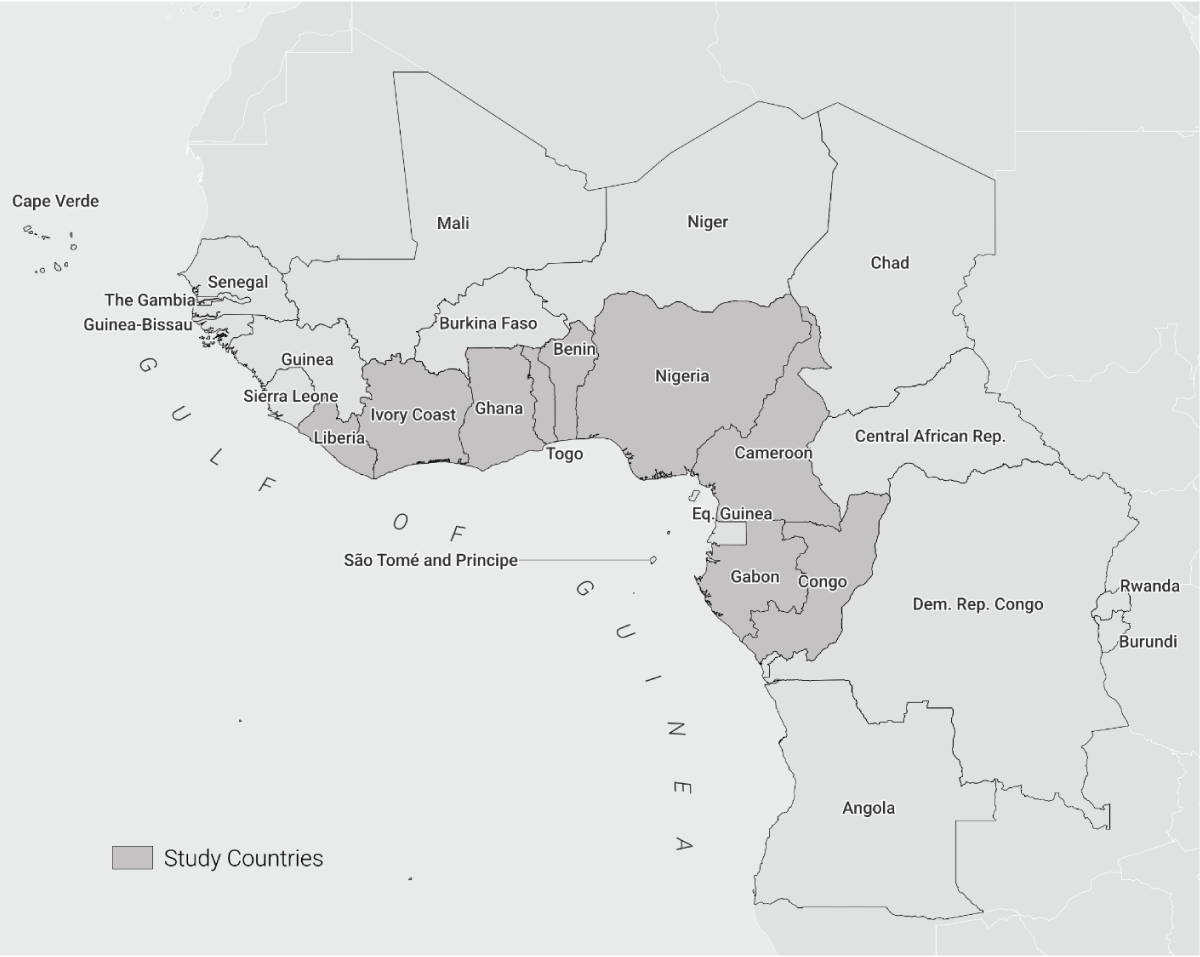
Figure 1
Gulf of Guinea Region and Countries of Respondents.
The Women, Peace and Security Agenda and Maritime Security in the Gulf of Guinea
The WPS Agenda is a framework to promote and realise women’s human rights in times of armed conflict and post-conflict situations and gender equality in all matters that pertain to peace and security. The Agenda, the first international instrument to link gender equality and women’s participation to international peace and security, was internationally launched with the adoption of UNSCR 1325 on 31 October 2000 (United Nations Security Council, 2000).
Resolution 1325 recognizes that gender affects the experience of individuals in armed conflict: with women and girls suffering more adverse effects of conflict than men and boys, special and targeted human rights and humanitarian interventions are required on their behalf. Advocating for women’s “equal and full participation” in “conflict prevention,” mediation, management, and “resolution”, Resolution 1325 underscored the significant historical, present, and potential contributions of women, both formal and informal, to national and global stability, highlighting that women’s experiences, concerns, protection, perspectives, and agency are critical for achieving the Security Council’s primary responsibility for the maintenance of international peace and security (United Nations Security Council, 2000).
The resolution provides the basis for the development of the four pillars: increasing women’s participation in decision making at all levels of peace processes and post conflict reconstruction (participation); protecting women and girls from sexual and gender-based violence (protection); addressing the structural causes of conflict including gender inequality (prevention); and ensuring women’s needs are integrated into humanitarian assistance, reconstruction and recovery (relief and recovery).
In the two decades following UNSCR 1325, the WPS agenda expanded through subsequent resolutions that addressed gaps and emerging challenges. Member states are expected to implement UNSCR 1325 through the development of National Action Plans (NAPs) or other frameworks. Most states have developed WPS NAPs, with some states having produced more than one NAP over the years due to elapsed timelines. Despite significant progress, scholarship notes consistently persistent gaps in implementation where women remain underrepresented in peace negotiations and security institutions, while gender perspectives are often absent from security and policy frameworks (Chapsos & Norman, 2023; Shepherd, 2016). Of the 26 signatory countries to the Yaoundé Code of Conduct (2013) in the GoG region, 19 have developed at least one NAP. A further nine countries have developed their second NAP and three countries have produced their third NAP, as of 20 March 2025 (UN Women, 2025).
Some scholars argue that while the WPS agenda promotes women’s involvement in peace and security processes, it frequently neglects the ways this participation may reinforce post-conflict patriarchal and militarized norms (Hendricks, 2017, p. 73). But despite challenges such as these, the United Nations, certain member states, civil society (particularly women’s organizations), feminist scholars, and other advocates continue to champion the cause of the Agenda, believing that without it there would be no internationally agreed framework solely dedicated to securing women’s human rights in times of conflict and recovery – and nor would there be any global measure, monitor, comparison mechanism, or system for reporting to the UN Security Council wholly focused on gender equality and women’s empowerment in matters of peace and security.
The WPS agenda fulfils the necessity of a continual mechanism to highlight women’s security concerns and perspectives from the grassroots up to the UN Security Council, in terms of addressing emerging and evolving threats to peace and security. So, while the agenda has its shortcomings, it remains an indispensable and powerful tool for advancing women’s security, women’s pacifist movement and women’s agency in critical issues on peace and security. Thus, as it celebrates its 25th anniversary, there would, no doubt, be several deliberations on how it could be enhanced to make a stronger impact on the global stage and in the lives of individual women and girls. As Pappa emphasizes, it is wholly necessary to extend the WPS agenda to maritime security. Integrating WPS principles into maritime security in the GoG both promotes gender equity and enhances the effectiveness and legitimacy of security and governance interventions in complex maritime environments (Pappa, 2021, p. 169).
While the WPS Agenda has created normative and policy frameworks for women’s inclusion, its application has remained largely land-centric, leaving significant gaps in maritime governance and security (Pappa, 2021, p. 169). In this context, maritime security denotes the protection of states’ and coastal communities’ interests at sea from threats such as piracy, trafficking, illegal fishing, environmental damage, and human-security risks through governance, law enforcement, and inclusive participation (Bueger, 2015; Bueger & Edmunds, 2024; Siebels, 2020).
The maritime domain in the GoG is a critical and strategic corridor for shipping with vast hydrocarbon deposits and one of the world’s richest fisheries (Ahorsu et al., 2024; Okafor-Yarwood et al., 2020). It contributes heavily to coastal states’ revenue and underpins coastal trade and commerce for the 26 GoG countries, including their landlocked neighbours, through nearly 20 seaports along the West and Central African littoral. Despite its significance, maritime security is not overtly reflected in the WPS Agenda or given the same prominence as terrorism and violent extremism. Although aspects of maritime security such as women in the navy and in peace operations, “human trafficking”, and “illicit trade in natural resources” appear in the Agenda, the lack of a specific focus on maritime security itself has led to its omission in the implementation of the WPS Agenda and inconsistent integration of the Agenda’s provisions within maritime security frameworks. While WPS ideals are not reflected in the United Nations Convention on the Law of the Sea (UNCLOS), instituted in 1982, and the Yaoundé Code of Conduct, they are recognised in the ECOWAS Maritime Strategy (EIMS) of 2014 (KAIPTC, 2023). Therefore, the pacifism and human security-centeredness of the Agenda have little practical influence in the world’s conflicts and crimes at sea.
However, women do play major roles in the safety and security of the seas. The WPS Agenda acknowledges the roles played by women navy peacekeepers, such as preventing a return to conflict, facilitating access to justice for women and girl survivors of sexual violence and other crimes, and exemplifying women’s empowerment and gender parity in post-conflict security sector reform. The pacifist work of the navies, arguably, goes beyond peacekeeping. Aside from navies, women contribute to maritime governance structures, which ensure inter- and intra-state communication and cooperation and the dissemination and enforcement of guidelines and protocols in the maritime space. In the context of peacekeeping, the WPS Agenda advocates for gender equality in national armed forces, in both numbers and promotion, which in turn supports greater gender representation in the peacekeeping troops contributed by UN member states and regional bodies.
The Agenda does not, however, explicitly recognise women’s roles in other sectors of the maritime domain. Women in these sectors face entrenched patriarchal barriers that similarly constrain their engagement and progression to decision-making levels. They therefore require comparable efforts to improve their recruitment, retention, and advancement, and to recognise their contributions to stable seas and secure coastlines. Equally important, the experiences, perspectives, and community knowledge of women in the maritime sector and in coastal communities should be brought into policy-making on maritime security and governance.
Although the definition of maritime security now extends beyond questions of state security to encompass facets of human security more widely, it appears not to have fully embraced the gendered differences when state security or human security are compromised. These differences may not be exposed if a framework does not lay out the guidelines for more gender-based or women-focused research. Likewise, this research (and women’s stories in general) would unveil other security issues that may not be central to maritime security discourses and policies such as sexual and gender-based violence in coastal communities, in marine-related workplaces, and in combination with other crimes in the maritime space, such as trafficking of people, smuggling of goods, illicit trade, armed robbery at sea, and piracy. The incorporation of the WPS Agenda would emphasize the importance of uncovering and addressing women’s security concerns and abuses within maritime security strategies, as well as analysing the impact of violations of women’s security on the overall stability of the maritime domain.
The maritime domain projects another category of women with minimal representation in the WPS Agenda – women who disturb peace and security. While the Agenda highlights the peaceful roles of women, it acknowledges that they are not intrinsically peaceful actors; women can be coerced into violence, and are capable of being both instigator and perpetrator in conflict (Chapsos & Norman, 2023). In maritime security situations, women engage in violent and illicit activities, including piracy, where they may operate as spies, communicators, or supporting logistics, enhancing operational networks crucial to piracy and maritime crime (Allotey-Pappoe & Salihu, 2023; Okafor-Yarwood & Van Den Berg, 2023).
This acknowledgement contests the dominant narratives within the WPS framework and necessitates a more nuanced understanding of women’s responsibilities as multifaceted agents in maritime security contexts, including both peacebuilding and conflict disruption functions.
In the pursuit of this nuance, a brief consideration of theoretical understandings of gender norms is, perhaps, a good place to start.
Gender Norms Theory and Female Representation in Maritime Security in the Gulf of Guinea
Gender norms theory provides a critical lens for understanding the persistent marginalization of women in the maritime sector. Early feminist foundations established gender roles to be socially constructed, performative and reproduced through institutions rather than biologically determined, (Beauvoir, 2012; Butler, 2002). Following from this, the concept of hegemonic masculinity captures how dominant masculine norms become entrenched in organizational hierarchies, shaping expectations of authority, competence and belonging (Connell & Messerschmidt, 2005).
Enloe’s (2014, p. 2) incisive question “Where are the women?” further disrupts assumptions of neutrality by revealing the gendered logics that structure organizations commonly treated as objective, including militaries and globalized economic sectors. Applied to maritime discourse, this question exposes how seafaring, naval defence and maritime security governance have historically been constructed as masculine domains.
Gender norms play a critical role in shaping both participation in the sector and the framing of “maritime” security. Where women are represented in maritime domains, it is disproportionately in shore-based roles such as fish processing, marketing, and tourism; seafaring and naval defence have been culturally coded as male domains (Creighton & Norling, 1996; Kitada, 2013). Maritime security in the GoG has been defined through a state-centric and militarized lens, emphasizing piracy, oil theft, trafficking, and IUU fishing. This reflects broader gender norms that position men as protectors and women as supporters, serving to limit women’s access to training, leadership, and operational positions in ports, navies, and coast guards (Chapsos & Norman, 2023; Grimett, 2024; Pike et al., 2021).
West and Zimmerman further argue that “gender is not a set of traits, nor a variable, nor a role, but the product of social doings of some sort” (West & Zimmerman, 1987, p. 129). In other words, gender is enacted through everyday practices. And within maritime security, these practices routinely reproduce expectations of male command and female subordination – a dynamic largely echoed in the responses from participants engaged for this article. Connell’s framework on gender and power also illuminates how state institutions, including the military, are organized around masculinized authority and power (Connell, 2013, p. 107–110). He discusses how bureaucracies and command hierarchies reproduce gendered power relations, privilege masculine traits, and marginalize or altogether exclude women. In the maritime security domain, reflections are observed in institutionalized norms that reinforce male dominance in naval command structures and international maritime organizations.
Again, Butler’s concept of gender performativity helps to explain why women at sea often face pressure to outperform their male counterparts or to conform to masculine behaviours if they are to be accepted as legitimate security actors. Competence and authority are associated with masculine behaviours, and women are expected to perform masculinity to gain legitimacy. Each action, whether navigating a vessel, leading a security operation or participating in anti-piracy missions, becomes a performance that can either reinforce or subvert existing norms. Evidence on women seafarers reveals their gender-related problems to have been brought about by the working environment, which reflects the occupational culture embracing masculine norms and values (Kitada, 2013, p. 226). Consequently, it is observed that when women conform to masculine-coded behaviours, the underlying norms remain unchallenged, and any acceptance is provisional; when they assert alternative forms of leadership, they may be marginalized.
Restrictive gender norms can hinder the integration of women into maritime security, from anti-piracy operations to port security, where their under-representation narrows operational perspectives (IMO & WISTA, 2024; Ridgeway & Correll, 2004). In this sense, gender norms do not simply reproduce inequality: they shape how security threats and responses are defined, influencing whose knowledge counts in maritime governance. Institutionally, women in the GoG are underrepresented in maritime governance in key bodies such as port authorities, national maritime administrations, and regional task forces. The absence of women in decision-making undermines the ECOWAS Plan of Action on UNSCR 1325 (2020–2024), which explicitly calls for gender inclusivity across peace and security sectors. The Yaoundé Code of Conduct of 2013 signed by ECOWAS, ECCAS, and the Gulf of Guinea Commission (GGC), provides a cooperative framework against piracy and maritime crime, but it does not explicitly integrate gender considerations and remains male-dominated. Thus the need remains for a more structured and sustained effort to integrate the welfare and advancement of women in maritime security in the GoG.
Having set out the theoretical principles explaining the role played by gender norms in constraining the participation of women in maritime security, the next section will discuss the study’s findings and analysis.
Findings
The interviews identify evidence of structural, institutional and normative barriers that shape women’s participation in maritime security institutions across the GoG. Also observed were tensions between formal equality commitments and persistent gendered practices. These are discussed under participation, prevention, protection, relief and recovery.
Participation
The WPS pillar on participation emphasizes women’s inclusion in decision-making, operational roles, and leadership positions. Interview respondents consistently noted the underrepresentation of women in maritime security institutions, describing the sector as “male-dominated” and “traditionally for men,” with some institutions reporting gender ratios as skewed as 98% male to 2% female. This framing, apart from being descriptive, reflects embedded assumptions about appropriate gender roles within security institutions. Globally, women make up 1.2% of the seafaring workforce, reinforcing the structural balance in operational maritime roles (BIMCO, 2021). Women are also disproportionately concentrated in administrative functions, while offshore enforcement, naval patrol and security missions remain predominantly male domains.
These figures corroborate the conceptualization of occupational gender segregation, rooted in socially constructed expectations of masculinity and femininity, as set out in gender norms theory. Maritime security is culturally framed as “physically demanding, combat-oriented, and risk-intensive” – attributes historically associated with masculine identity. This limits women’s substantive participation and undermines the participation pillar of the WPS agenda.
The historical marginalization of women from operational roles such as ship inspections, crisis command posts and maritime patrols was a recurring theme. Although some respondents report progress since 2019, referring to participation in multinational exercises and crisis coordination such as the Obangame exercises (U.S.-led sea exercises for Africans), the prevailing observation was that women are more frequently assigned to shore-based administrative roles. This offshore/onshore divide reflects institutionalized gender norms that assign public, risk-oriented labour to men while consigning women bureaucratic and support functions.
Maritime security roles – anti-piracy operations, boarding inspections, and offshore patrols – are framed as physically demanding and combative, which sustains informal cultural barriers even where recruitment rules are formally gender-neutral. This suggests that access does not necessarily equate to integration, and that organizational culture continues to reproduce male dominance in operational spaces independent of policy. The scale of underrepresentation is illustrated by the proportion of women in national navies: approximately 22% in Ghana, 20% in Nigeria, 16.5% in Benin, and 3% in Côte d’Ivoire (interview notes, October 2024). Several respondents linked low female representation to societal expectations, which reinforces entrenched gender norms. Women’s representation and decision-making roles remain low across the institutions surveyed, although respondents cited examples of women serving as ministers, deputy directors, naval commanders and ship inspectors. But these were the exception: while the presence of individual female leaders may signal symbolic inclusion, the overall pattern reflects glass ceiling dynamics; informal male networks, biases regarding leadership capability, and masculinized conceptions of authority were found to limit women’s upward mobility. The persistent gaps between representation and substantive transformation here further illustrates the incomplete localization of the WPS principles within maritime security governance.
A number of respondents emphasized that recruitment occurred through open competition and that “men and women” have equal opportunities. This narrative, however, frequently co-existed with evidence of skewed gender ratios and unequal role allocation, highlighting a key implementation gap where formal equality frameworks coexist with entrenched gender norms. Though gender mainstreaming efforts and awareness campaigns are increasing, enforcement mechanisms remain weak. In such cases, norm adoption, such as the UNSCR frameworks, is espoused but without full institutional transformation. These findings demonstrate underrepresentation to be numerical and also rooted in gendered institutional identity. Maritime security is constructed as a space of competence and physicality, limiting the realization of the WPS participation pillar in practice.
Prevention
The prevention pillar of the WPS emphasizes proactive measures to reduce discrimination, harassment and exclusion of women. In maritime security, prevention is implemented through awareness campaigns, policy reform and training programmes; emerging data shows uneven effectiveness. Participants noted awareness campaigns and training initiatives are usually supported by international partners in efforts to increase women’s participation. Training programmes such as Obangame Express, Grand African Nemo and Search and Rescue include women in operational simulation and risk management courses. These programmes enhance participation on a symbolic level alone, with operational assignment and career advancement remaining male-dominated in practice. Despite awareness efforts, persistent gender tropes and operational exclusion undermine effectiveness.
Cultural norms continue to reproduce exclusion, and prevention is focused on maritime threats rather than internal equity. Participants revealed that “women are sometimes restricted due to their natural role as mothers” and “women are perceived as unable to perform operational duties”: statements showing how masculinized assumptions about endurance and physical capability shape organizational norms.
Gender norms theory explains that such beliefs structurally enforce exclusion even when formal equality policies exist. These beliefs are not confined to the maritime space alone but reflect the beliefs of the wider society. For instance, participants noted that “few women apply” to maritime academies, that parents may discourage daughters from pursuing seafaring careers, and that maritime work is perceived to be incompatible with femininity. Such narratives suggest that exclusion begins before institutional entry, seen in broader social norms about gender and security. Where women were present within maritime institutions, they were frequently concentrated in administrative, logistics, legal or communications roles; as one respondent noted, “women are rarely scheduled for security missions.” A number of respondents indicated that women were more likely to serve in shore-based positions rather than operational units.
The interviews demonstrate that prevention is influenced by broader gender norms that characterize maritime security as a masculine domain. Respondents shared the belief that maritime labour is hard and dangerous, and frequently thought to be better for men, making it harder for women to get into operational jobs and inhibiting their movement into such areas. This means that halting harassment or exclusion is not enough: as noted by another respondent, “we also need to change the societal ideas that keep them going.” Some responses showed that early impediments, such as family discouragement, social norms about women’s caring obligations, and the idea that marine occupations are not feminine, to be problems. Gender norms theory would assert these attitudes to illustrate how women are excluded from the institution even before their arrival: prevention, in other words, needs to go beyond initiatives to raise awareness and address the greater cultural beliefs that affect hiring and career choices.
Again, even when they possessed equivalent qualifications, deployment patterns differed. This reflects a gendered division of labour within maritime institutions where such segmentation limits women’s access to career-enhancing experiences (operational deployments, for example, often serve as prerequisites for promotion and leadership eligibility). The pattern is visible early, with respondents describing naval academy cohorts with disproportionately low female representation. Women entering the sector are more likely to be placed in non-combat positions such as logistics or maritime administration, which reduces their exposure to operational tracks and compounds over time into a widening promotion gap.
Language used by respondents further illustrates the masculinized identity of maritime security. Descriptions such as “tough life,” “hard environment’, and “not for everyone” implicitly invoked ideals of endurance and resilience aligned with masculine stereotypes. Even when not overtly exclusionary, such discourse reinforces a cultural boundary around who “belongs” at sea. The dominance of English in maritime operations creates an additional barrier for francophone women, limiting their access to training programmes and initiatives conducted primarily in English – a structural form of exclusion that compounds the broader constraints on women’s participation in maritime security governance.
Protection
Protection focuses on safeguarding women against violence, harassment and exploitation. In the maritime security context, male-dominated operational teams and a high-risk environment at sea render it critical.
The prevalence of sexual exploitation, harassment, and gender-based discrimination feature prominently in the transcript. Participants described inappropriate comments, hostile on-board environments, exclusion from training and biased promotion systems. Some respondents indicated that a staff member may be asked for some sexual favour in exchange for promotion at the job site. This both highlights the fact that protection mechanisms may be insufficient or poorly understood and undermines participation and the WPS protection pillar. Where reporting systems are weak, victims may fear retaliation or reputational damage. In some cases, participants indicated that complaints were handled informally or that perpetrators face limited consequences. Harassment within a hierarchical, male-dominated environment reinforces women’s marginalization and may contribute to attrition. Paternalistic assumptions such as the idea that it was desirable to keep women in administrative roles for their safety may inadvertently reinforce vulnerability and limit participation. Such findings support arguments that organizational structure is gendered – seemingly neutral structures embed masculine standards of competence and authority.
From the interview responses, protection of women is still a significant issue for maritime security entities all around the Gulf of Guinea; as we have seen, harassment, improper conduct, unfair promotion methods, and ineffective complaint processes indicate that women are inadequately protected on entering the field and that official inclusion is insufficient if the workplace remains hazardous or unfair. Women may not report bad conduct because of anxiety over retaliation that could hurt their careers. In this way, protection requires not only physical safety but also institutional accountability, dignity, and fair treatment. These examples illustrate how male-dominated structures can perpetuate women’s insecurities while ostensibly advocating for equality. The normalization of male dominance creates environments where women’s presence is scrutinized and their advancement contested (Acker, 1990, p. 139). It highlights that protection mechanisms are insufficient or poorly enforced.
Relief and Recovery
The relief and recovery pillar addresses structural support for women to advance and remain in the sector. Findings indicate significant gaps in mentorship, career paths and work-life balance. Key among them are barriers to career advancement, with respondents noting limited career progression due to male-dominated networks and that the majority of women performed administrative work, with few in operational branches. Long deployments at sea or in remote operational contexts disproportionately affect women with family responsibilities; the care burden and structural constraints on women with extended absences from home intersect with socially constructed expectations of women as primary caregivers and organizational culture, reinforcing exclusion from high-status operational roles.
Following gender norms theory, we might understand this as a public-private divide in which security work is structured around the model of a male breadwinner. Without supportive infrastructure such as daycare centres, parental leave, childcare policies or flexible deployment structures, women’s participation remains structurally constrained. Indeed, the interviews highlight that the retention and advancement of women are not supported by strong institutional structures; limited mentorship, weak career pathways, and the demands of long deployments all create pressures that make it harder for women to remain and progress in the sector – that is, a broader problem of sustainability, not simply entry. The interview material also indicates women’s careers to be shaped by unequal access to operational experience and informal networks, both of which matter for promotion. Where women are repeatedly channelled into support roles, their progression into leadership becomes slower and more difficult. Through a WPS lens, recovery, therefore, requires participation in training as well as the conditions that allow women to build long-term careers on equal terms.
While some women have had access to international training programmes such as the Interregional Maritime Security Institute (ISMI) in Abidjan or regional naval exercises, formal mentorship and structured career support systems are limited, reducing retention and long-term representation in operational and leadership roles. Operational pathways are not designed for gender responsiveness, and long offshore deployments and risk-intensive assignments remain male-coded criteria for promotion. Institutions frequently lack the supporting infrastructure that would allow women to advance without disproportionate personal cost: mentorship programmes, parental leave policies, and flexible deployment schedules are inconsistently available or absent altogether.
Discussion
Overall, the findings indicate that maritime security institutions in the GoG are undergoing a gradual and uneven transformation. While formal policies and WPS-aligned initiatives exist, cultural norms, institutional practices and operational structures continue to limit substantive gender equality.
Using the lens of gender norm theory, maritime security studies and the WPS agenda, several key discussion points emerge. Despite formal mechanisms that provide women with access to maritime structures, operational participation remains limited. It is possible to observe a symbolic inclusion in which women may enter administrative roles or attend some form of training, while substantive participation in operational and enforcement missions remains male-dominated; women, are involved in ways that are more formal than meaningful, where the access they enjoy is no guarantee of equivalent power or leadership. Further, women are often viewed as physically or socially unsuited for operational assignments, while the operational environment is further securitized and risk-intensive, serving to institutionalize male dominance. Token leadership appointments, while encouraging, do not reflect systemic transformation, as operational roles continue to be overwhelmingly male. Persistent stereotypes also limit the effectiveness of awareness campaigns that seek to increase women’s participation: insufficient to counter deeply embedded cultural norms, the perception of female fragility or unsuitability continues to influence recruitment, assignment, and promotion decisions.
The findings suggest that prevention measures are more effective in administrative and training contexts than in operational, high-risk environments – institutions tend to prioritize external maritime threats such as piracy and IUU fishing over internal gender equity, leaving structural barriers largely unaddressed. The most significant gap lies in the protection pillar, where the framing of women as “unsuited” and “fragile” limits participation and entrenches hierarchy. Purely administrative roles provide formal employment but reinforce gendered occupational segregation, undermining the WPS objective of substantive rather than nominal empowerment. While some institutions have made efforts (encouraging female enrolment in exercises such as Obangame Express, Grand African Nemo, and search and rescue training, for example), these interventions do not adequately address the structural barriers to career advancement and retention.
The findings also point to intersecting barriers where gendered norms interact with operational responsibilities and cultural expectations to shape women’s experiences in ways that vary by context. In Liberia, for instance, some women reportedly perceive security work as socially demeaning, discouraging enlistment; in Gabon, while women have reached positions as pilots and commanders in the national navy, operational deployment remains male-centred and few women occupy enforcement roles.
Structural reform must therefore address not only formal recruitment practices but the cultural, operational, and organizational norms that shape gendered experience within institutions. The WPS participation pillar reinforces this: women’s involvement in maritime governance must move beyond token representation toward substantive, practical engagement. Achieving functional gender equality in maritime security requires institutionalizing women’s effective participation across both operational and administrative roles. The KAIPTC’s maritime code of practice offers a framework through which this can be pursued.
Overall, the interviews reveal the need to strengthen protection mechanisms to prevent harassment and exploitation, address cultural norms and gendered stereotypes through prevention strategies, and support relief and recovery through mentorship, career pathways and work-life balance policies.
Conclusion: Pathways to Equity for Women in Maritime Security
This article has examined the limitations of the WPS Agenda as a guiding framework for women in the maritime security domain, identified the structural barriers to women’s integration into the maritime sector, and proposed pathways toward gender equality through the four WPS pillars. The findings indicate meaningful inclusion to require the integration of maritime governance into national WPS frameworks. Although national action plans developed under UNSCR 1325 provide normative commitments across the four pillars, maritime institutions in the GoG remain largely outside their operational scope. As the preceding analysis has shown, women are concentrated in administrative roles. They lack transparent promotion pathways and often work within weak institutional support structures.
To address these gaps, maritime agencies must be explicitly incorporated into WPS planning and reporting mechanisms. This requires the development of sector-specific, gender-responsive maritime frameworks; the institutionalization of confidential grievance procedures; and the establishment of mentorship and leadership programmes for women in operational and command positions. These reforms would directly advance the participation and protection pillars of the WPS agenda while strengthening accountability within maritime governance.
Integrating gender components into regional maritime capacity-building and national maritime strategies would further ensure that reforms are embedded within ongoing security cooperation rather than treated as peripheral commitments.
Aligning WPS obligations with maritime security is not merely a symbolic extension of the agenda – it is a necessary condition for building inclusive, legitimate, and effective maritime governance in the Gulf of Guinea.
While West and Central African maritime security institutions have made notable progress, significant challenges remain. In a region where maritime stability underpins economic resilience and regional security, symbolic representation must give way to substantive equality – ensuring that women can fully participate, receive institutional protection, and advance into operational and leadership roles across all four pillars of the WPS agenda.