
1. Introduction
Freshwater ecosystems are of great importance not only because they harbor high biological diversity but also because they provide numerous ecosystem services such as drinking water supply, agricultural irrigation, and recreational activities (Wetzel, 2001). However, lakes are highly sensitive ecosystems to anthropogenic pressures within their catchments, and pollutants resulting particularly from population growth, urban development, and agricultural activities can negatively affect the physicochemical structure and biological integrity of lake ecosystems (Dodds & Whiles, 2010).
Benthic macroinvertebrates are among the biological quality elements widely used in the assessment of the ecological status of freshwater ecosystems due to their life forms that are directly associated with sediments, relatively long life cycles, and different tolerance levels to environmental changes (Rosenberg & Resh, 1993). The species diversity, abundance, and distribution of these organisms are closely related to physicochemical parameters, such as water temperature (WT), dissolved oxygen (DO), pH, conductivity, and nutrient salts (Allan & Castillo, 2007). Therefore, the study of benthic macroinvertebrate communities is considered an effective tool for determining the trophic status of lakes and identifying environmental stress factors (Hellawell, 1986).
Sapanca Lake is one of the important freshwater resources in the Marmara Region and holds a strategic position for both drinking water supply and recreational uses. The first limnological studies conducted on the lake revealed that Sapanca Lake is oligotrophic (Numan, 1958). However, in recent years, increasing human activities throughout the basin have created potential pressures that may cause changes in the lake’s water quality and ecological structure. This situation necessitates the evaluation of the ecological status of the lake ecosystem using biological and physicochemical indicators.
Although several studies have been conducted in the region by different researchers in various years focusing on a single benthic macroinvertebrate group and fish communities (Akıner & Akıner, 2021; Altınsaçlı, 1997; Gaygusuz et al., 2025; Koşal-Şahin & Yıldırım, 2007; Lhan et al., 2024; Ozdemir et al., 2025; Temur & Uzun, 2023; Uzun, 2010), a comprehensive long-term study covering all benthic macroinvertebrate communities together with the physicochemical parameters of the water has not yet been reported in the literature. The periodic continuation of ecological and biological studies is important for monitoring the water quality of the system and detecting potential ecological changes over time. Therefore, this study was conducted to address this gap.
This study aims to determine the species composition and distribution of the benthic macroinvertebrate fauna of Sapanca Lake. In addition, the relationship between this distribution and several physicochemical parameters was also examined. The seasonal variation of the water’s nutrient pollution index (NPI) values was determined. Finally, the biological status of the lake was evaluated by applying various biological indices based on benthic macroinvertebrates. The findings obtained at the end of the study are expected to contribute in determining the ecological status of the lake and providing a scientific basis for sustainable water management and monitoring studies.
2. Materials and methods
2.1. Study area
Sapanca Lake is located in the Marmara Region (latitude 40° 41′–40° 44′ N, longitude 30° 09′–30° 20′ E), at approximately 30 m above sea level, and is the second largest lake in the region. The lake has a surface area of 46.8 km2 and a maximum depth of 55 m. It is used primarily for drinking water supply as well as for recreational purposes.
The first limnological studies in the lake were conducted by Numan (1958), who reported that the lake has an oligotrophic character. The main submerged macrophytes found in the lake ecosystem include Chara sp., Myriophyllum sp., Ceratophyllum sp., Potamogeton spp., Najas sp., and Nuphar sp. (Koşal-Şahin & Yıldırım, 2007).
Benthic macroinvertebrate and physicochemical parameter sampling in Sapanca Lake was carried out at five stations selected to represent different ecological characteristics of the lake (Fig. 1).
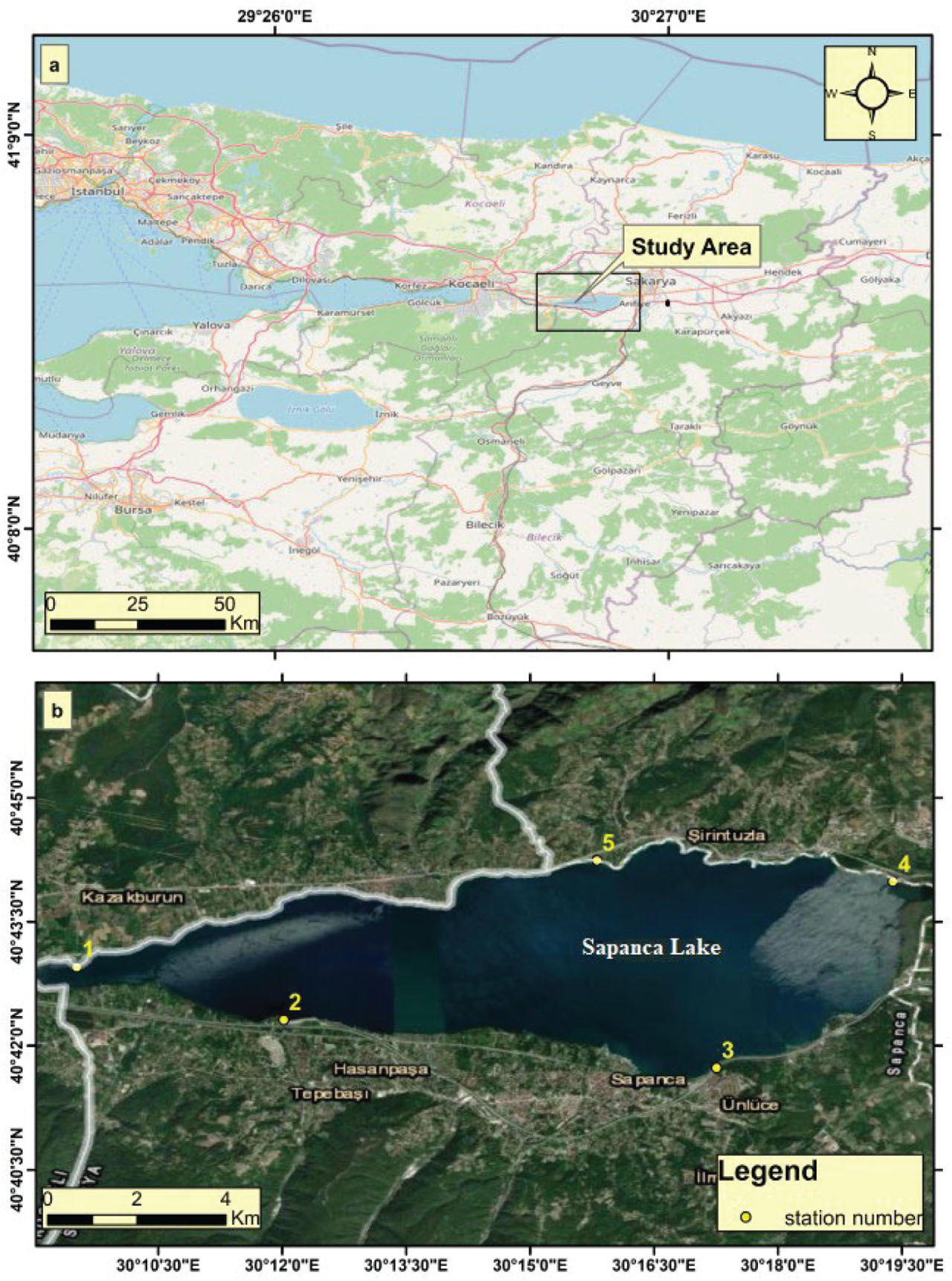
Figure 1
Map of Sapanca Lake and the locations of the sampling stations.
The stations were selected to include both littoral and deeper areas and were distributed in a way that reflects the heterogeneous structure of the lake. This approach allows a more accurate interpretation of the relationships between the distribution of benthic macroinvertebrate communities and the physicochemical characteristics of the lake. Some characteristics of the selected stations in the lake are summarized below:
Station 1: Located at 40° 42′ 57.14″N, 30° 09′ 30.92″E. There are residential areas and factories around the station. The sediment is dark gray mud with abundant plant remains. Samples were collected using a Surber net at a depth of 0.5–1 m, approximately 2 m from the shore.
Station 2: Located at 40° 42′ 18.77″N, 30° 12′ 1.20″E. The surrounding area is densely populated with residential settlements. The sediment is brown and slippery. Maden Stream flows into the lake at this location. Benthic samples were collected using a Surber net at a depth of 1–1.5 m, approximately 2–3 m from the shore.
Station 3: Located at 40° 41′ 44.01″N, 30° 17′ 15.35″E, in the southern part of the lake. Sampling was carried out at the point where Mahmudiye and Kuruçay streams discharge into the lake. The sediment is sandy and brown. Samples were collected using a Surber net approximately 3–4 m from the shore.
Station 4: Located at 40° 43′ 59.14″N, 30° 19′ 23.40″E. This area is the richest part of the lake in terms of aquatic vegetation. The surroundings are highly developed with residential settlements. The sediment is brown mud. Samples were collected using a Surber net at a depth of 1–1.5 m.
Station 5: Located at 40° 44′ 14.51″N, 30° 15′ 48.52″E and represents the station with the least surrounding settlement. Samples were collected approximately 150 m from the shore using an Ekman grab. The sediment is black mud.
2.2. Sampling
This study was conducted in Sapanca Lake during 2020–2021 at five stations selected seasonally. Stations that best represent the lake were determined, and both benthic macroinvertebrates and water samples were collected from these locations. Water samples were taken using a Ruttner water sampler and transferred into dark-colored 2-L glass bottles. During sampling, the depths of the stations were measured using a measuring tape.
The bottom sediment of the sampling area was surveyed against the direction of water movement. Benthic macroinvertebrates were collected from Station 5 using an Ekman grab (15 cm × 15 cm) with two replicates, while samples from the other stations were collected using a Surber net (32 cm × 32 cm). The bottom sediment samples were transferred into jars and fixed with 75% ethyl alcohol. Each sampling jar contained a special label indicating the station number, coordinates, station name, sampling date, and the name of the collector.
The sediment samples brought to the laboratory were washed under pressurized water through a calibrated sieve (0.5 mm mesh size). Macroinvertebrates retained on the sieve and visible to the naked eye were collected using forceps, and the remaining sediment was preserved in 75% ethyl alcohol for fixation.
Simultaneously with the benthic sampling, several physicochemical parameters of the water were measured. Among these parameters, WT (°C), pH, DO (mg · L−1), and electrical conductivity (EC) (μS · cm−1) were measured in situ during sampling using a Multi 340i portable multiparameter device (WTW, Xylem Analytics Germany Sales GmbH, Weilheim, Germany) portable multiparameter device.
In order to determine other physicochemical parameters [TP (μg · L−1), PO4 (μg · L−1), NO2-N (μg · L−1), and NO3-N (mg · L−1)], water samples were collected from each station and transported to the laboratory in a cold storage container. The analyses were carried out without delay by following the standard methods specified for these parameters (APHA et al., 1985).
The NPI values of the lake were calculated using the NO3 and PO4 parameters in surface water sources. These values were calculated using the following formula. The obtained value categorizes the pollution levels as follows (Lai et al., 2013; Isiuku and Enyoh, 2020). The NO3-N maximum limit (mg/L−1) is referred to as MACN, and the PO4-P maximum limit (mg · L−1) is referred to as MACP, with values taken criteria (TSWQR, 2016). NPI values were determined based on the following formula (Eq. 1).
The values obtained from the calculations were reported as follows: NPI <1: No pollution; NPI 1–3: Moderately polluted; NPI 3–6: Considerably polluted; NPI >6: Highly polluted (Larrea-Murrell et al., 2022).
Benthic macroinvertebrate samples brought to the laboratory were sorted under a Nikon SMZ18 binocular stereozoom microscope (Nikon Instruments Inc., Melville, NY, USA) and identified to the lowest possible taxonomic level (usually genus or species) and grouped accordingly. The macroinvertebrates were counted to determine the number of individuals · m−2.
Identification was performed using taxonomic keys from Sperber (1950); Birstein (1951); Zhadin (1952); Schutt (1965); Macan (1969, 1977); Bryce and Hobart (1972); Askew (1988); Şahin (1991); Merritt and Cummins (1996); Nilsson (1996, 1997); Glöer (2002); Oscoz et al. (2011); Zhang (2011); Bouchard (2004, 2012); Brinkhurst and Jamieson (1971); Brinkhurst and Parrish (1975); Brinkhurst (1986); Kathman and Brinkhurst (1998); Timm (2009), and Wetzel et al. (2000), allowing identification to the smallest possible taxonomic category.
2.3. Statistical analyses
Within the scope of statistical analyses, relationships among the physicochemical parameters of the water were evaluated using Spearman correlation analysis. Seasonal similarity levels of the physicochemical parameters were calculated using the Bray–Curtis similarity index, and the results were visualized with a dendrogram. The relationships between benthic macroinvertebrate communities and physicochemical variables of the water were assessed using canonical correspondence analysis (CCA) in PAST Version 3.14 (Øyvind Hammer, Natural History Museum, University of Oslo, Oslo, Norway) (Hammer et al., 2001).
Macroinvertebrate data were analyzed to determine biological water quality using AsTeRICS 3.1 (AQEM Consortium, Germany), and Margalef software (manufacturer/developer details). (AQEM Consortium, 2002). Additionally, various versions of the BMWP (Spanish version) and Margalef software programs were applied to assess water quality.
3. Results and discussion
3.1. Water quality of Lake Sapanca
In the seasonal study conducted in Sapanca Lake during 2020–2021, data on selected physicochemical parameters of the lake water are presented in Table 1.
Table 1
Selected physicochemical parameters measured in Sapanca Lake and their average values.
| Seasons | Parameters | WT. | DO | pH | EC | Depth | NO2-N | NO3-N | PO4-P | TP |
|---|---|---|---|---|---|---|---|---|---|---|
| Spring 2020 | Unit | (°C) | (mg · L−1) | (µS · cm−1) | (m) | mg · L−1 | mg · L−1 | mg · L−1 | mg · L−1 | |
| St 1 | 9.7 | 6.03 | 7.85 | 274 | 14 | 0.0112 | 0.0243 | 0.0035 | 0.0085 | |
| St 2 | 13 | 7.91 | 6.99 | 235 | 15 | 0.0223 | 0.0285 | 0.0062 | 0.0053 | |
| St 3 | 9.9 | 8.25 | 8.01 | 122 | 52 | 0.0133 | 0.0188 | 0.0111 | 0.0103 | |
| St 4 | 11.8 | 7.09 | 7.83 | 259 | 17 | 0.0064 | 0.0181 | 0.0027 | 0.0077 | |
| St 5 | 8.3 | 0.18 | 7.94 | 146 | 16 | 0.016 | 0.0255 | 0.0194 | 0.0053 | |
| Average | 10.54 | 5.89 | 7.72 | 207.2 | 22.8 | 0.01384 | 0.02304 | 0.00858 | 0.00742 | |
| SKKY (2004) | I | II | I | I | I | I | I | I | ||
| Summer 2020 | St 1 | 15.4 | 10.95 | 7.74 | 310 | 14 | 0.0015 | 0.0364 | 0.0038 | 0.0086 |
| St 2 | 18.8 | 9.17 | 7.85 | 325 | 15 | 0.0005 | 0.0305 | 0.0132 | 0.0157 | |
| St 3 | 19.4 | 10.29 | 8.03 | 336 | 52 | 0.0088 | 0.0106 | 0.0041 | 0.0031 | |
| St 4 | 16.5 | 7.52 | 7.34 | 386 | 17 | 0.0052 | 0.0104 | 0.0034 | 0.0029 | |
| St 5 | 17.8 | 10.9 | 7.65 | 244 | 16 | 0.008 | 0.0021 | 0.0087 | 0.0031 | |
| Average | 17.58 | 9.76 | 7.72 | 320.2 | 22.8 | 0.0048 | 0.018 | 0.00664 | 0.00668 | |
| SKKY (2004) | I | I | I | I | I | I | I | I | ||
| Autumn 2020 | St 1 | 15.5 | 11.93 | 7.38 | 330 | 14 | 0.0178 | 0.0417 | 0.0056 | 0.0103 |
| St 2 | 20.9 | 2.35 | 7.04 | 374 | 16 | 0.0139 | 0.0101 | 0.0114 | 0.0114 | |
| St 3 | 18.5 | 13.32 | 8.08 | 370 | 52 | 0.0068 | 0.0141 | 0.0078 | 0.0083 | |
| St 4 | 16.3 | 10.77 | 7.11 | 366 | 17 | 0.0017 | 0.0836 | 0.0001 | 0.0072 | |
| St 5 | 16.1 | 12.5 | 7.22 | 280 | 16 | 0.0049 | 0.0268 | 0.0003 | 0.0093 | |
| Average | 17.46 | 10.17 | 7.37 | 344 | 23 | 0.00902 | 0.03526 | 0.00504 | 0.0093 | |
| SKKY (2004) | I | I | I | I | I | I | I | I | ||
| Winter 2021 | St 1 | 8.7 | 7.72 | 7.35 | 269 | 14 | 0.0011 | 0.1331 | 0.0007 | 0.0178 |
| St 2 | 8.8 | 8.27 | 7.56 | 283 | 17 | 0.0163 | 0.1121 | 0.0011 | 0.0089 | |
| St 3 | 7.6 | 8.14 | 8.28 | 221 | 52 | 0.0241 | 0.0668 | 0.0014 | 0.0124 | |
| St 4 | 7.7 | 8.71 | 7.29 | 227 | 17 | 0.0167 | 0.0996 | 0.0011 | 0.0222 | |
| St 5 | 8.33 | 8.39 | 7.38 | 207 | 16 | 0.009 | 0.0541 | 0.0002 | 0.0032 | |
| Average | 8.22 | 8.24 | 7.57 | 241.4 | 23.2 | 0.01344 | 0.09314 | 0.0009 | 0.0129 | |
| SKKY (2004) | I | I | I | I | I | I | I | I |
WT is one of the most important factors affecting the distribution of aquatic organisms (Durhasan, 2006). The temperature of surface waters varies depending on geographic location, altitude, season, time of day, depth, and pollutant sources (Durhasan, 2006). In Sapanca Lake, the average maximum WT was found to be 17.58°C, while the minimum temperature during winter was 8.22°C (Table 1). This result is expected, indicating that WT exhibits seasonal variation. In terms of WT, Sapanca Lake was classified as Class I water quality (SKKY, 2004).
DO concentration, a critical parameter for aquatic organisms and water quality, provides information on the pollution status, organic matter content, and the self-purification capacity of the water (Tanyolaç, 2000). The amount of DO in water is one of the factors influencing the distribution of benthic macroinvertebrates (Tanyolaç, 2000). The DO concentration in Sapanca Lake was classified as Class II water quality during spring, and as Class I water quality at other stations and seasons (SKKY, 2004).
The seasonal variations of WT and DO values at the different stations of the lake are presented in Fig. 2.
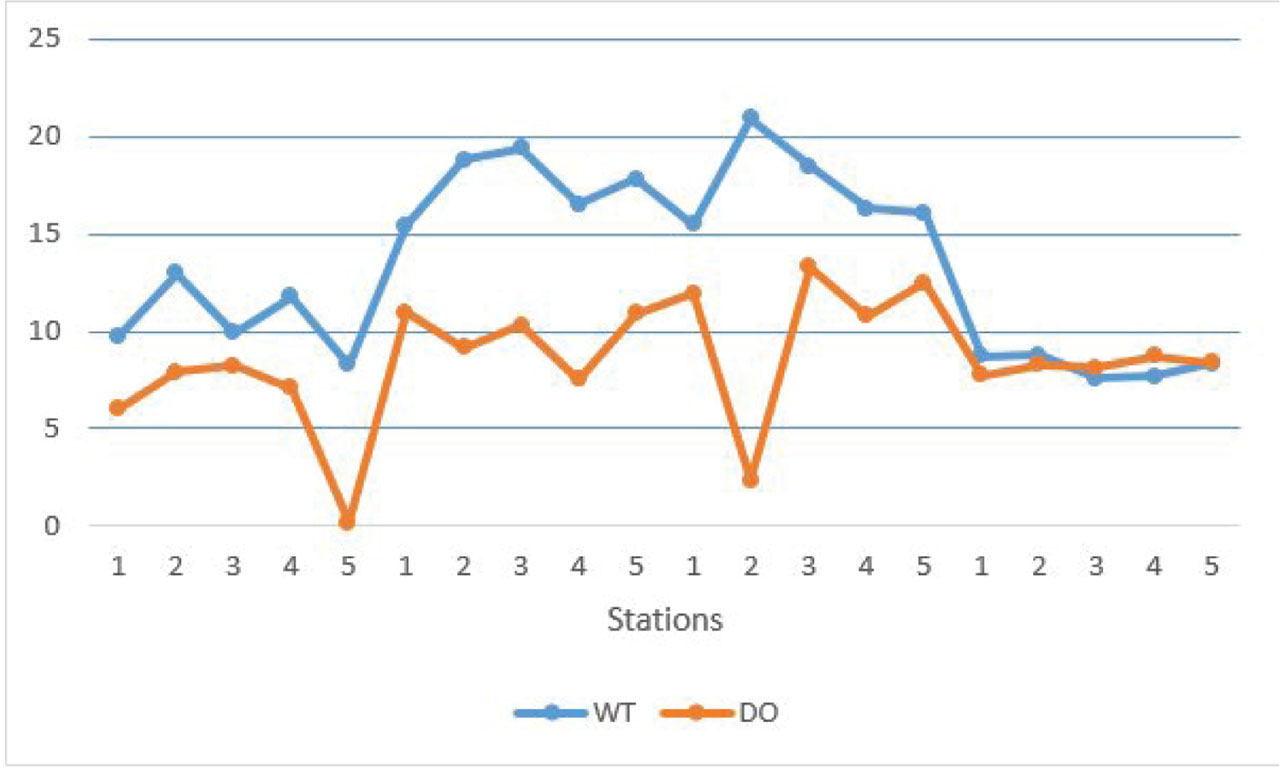
Figure 2
Seasonal distribution of WT and DO values in Sapanca Lake. DO, dissolved oxygen; WT, water temperature.
pH, an indicator of the acidity of water, is one of the most important parameters affecting aquatic life (Wetzel, 1983). It is a critical factor for chemical reactions in water and biological processes (Wetzel, 1983). During the study, pH values at all stations in the lake showed little variation, and no seasonal changes were observed (Table 1). The pH values of the lake were found to correspond to Class I water quality throughout all seasons (SKKY, 2004).
EC, a measure of the water’s capacity to conduct electricity, reflects changes in the concentration of dissolved solids in water (Kara & Çölekçioğlu, 2004). EC can be influenced by both the geological composition of the area and pollution (Barlas, 1988). As temperature increases, evaporation causes the concentration of dissolved ions to rise, leading to higher EC values (Durhasan, 2006). In Sapanca Lake, the highest EC value was 374 μS · cm−1 at Station 2 during autumn, while the lowest was 122 μS · cm−1 at Station 3 during spring. When average EC values were considered, the highest was 344 μS · cm−1 in autumn and the lowest was 207.2 μS · cm−1 in spring (Table 1). The EC values of the lake were classified as Class I water quality for all seasons (YSKKY, 2015).
Depth in lakes is a critical factor for both ecological and physicochemical processes. Deep lakes typically exhibit distinct thermal stratification (thermocline) in the water column due to variations in temperature and density, which can lead to the accumulation of oxygen and nutrients at different depths (Wetzel, 2001). In shallow lakes, such stratification is generally absent, resulting in a more homogeneous distribution of oxygen and nutrients throughout the water column.
Depth also has significant effects on ecosystem diversity, as different depths provide varying light and temperature conditions, creating habitats for diverse plankton, fish, and benthic macroinvertebrates. Moreover, deep lakes allow organic matter and sediments to remain in the system for longer periods, which is important for long-term productivity and ecological balance. From a human-use perspective, deep lakes offer advantages for drinking water supply, hydroelectric power generation, and irrigation, as water levels remain more stable and the risk of drying is lower compared to shallow lakes. For these reasons, lake depth is an important parameter for both natural ecosystem health and human resource management planning (Wetzel, 2001).
In Sapanca Lake, the deepest station was Station 3, while the shallowest was Station 1. The average depth of the lake was 22.8 m during spring and summer, 23 m in autumn, and 23.2 m in winter. The slightly higher winter depth may be attributed to rainfall and snowmelt increasing the lake’s water level.
Nitrite nitrogen (NO2-N) concentration in lakes is an important water quality parameter, representing an intermediate stage of the nitrogen cycle. Nitrite is a transient form of nitrogen formed during the oxidation of ammonium in nitrification and is subsequently converted to nitrate (NO3). In natural and healthy lake ecosystems, NO2-N is usually present at low concentrations because it is rapidly oxidized to nitrate. Elevated nitrite levels often indicate organic pollution, insufficient oxygen conditions, or imbalances in the nitrification process. Accumulation of nitrite is particularly likely under low DO conditions, which can be toxic to aquatic organisms. Therefore, NO2-N measurements are an important indicator for evaluating biochemical processes and water quality in lakes (Wetzel, 2001). In Sapanca Lake, NO2-N values were within Class I water quality limits at all stations and during all seasons (YSKKY, 2015).
Nitrate nitrogen (NO3-N) in lakes is an important parameter for determining the nitrogen nutrient status and overall water quality of aquatic ecosystems. NO3-N represents a bioavailable form of nitrogen for plants and plankton, supporting primary production in the lake. Elevated NO3-N concentrations often indicate nitrogen inputs from agricultural fertilizers, domestic wastewater, or industrial effluents and can contribute to lake eutrophication. Conversely, low NO3-N levels may signal nitrogen limitation, which can restrict primary productivity. Therefore, NO3-N measurements are a critical parameter for monitoring nutrient balance and pollution levels in lake ecosystems (Wetzel, 2001). In this study, NO3-N concentrations measured at all stations and during all seasons indicated that the lake maintains Class I water quality (YSKKY, 2015).
Total phosphorus (TP) is a key parameter for assessing nutrient status and ecological health in lakes, as phosphorus acts as a limiting nutrient for plankton and aquatic plant growth. TP concentrations largely determine whether a lake is oligotrophic, mesotrophic, or eutrophic, with low values indicating oligotrophic conditions, moderate values mesotrophic, and high values eutrophic. Elevated phosphorus levels can trigger algal blooms, oxygen depletion, and overall deterioration of water quality, making TP an essential indicator for monitoring nutrient status, pollution, and guiding management strategies in lake ecosystems (Wetzel, 2001). In this study, TP values remained within Class I water quality limits both spatially and seasonally (YSKKY, 2015). Specifically, TP was found to be highest in the winter of 2021, with an average concentration of 0.0129 mg · L−1. Supporting these findings, Ozdemir et al. (2025) reported that areas of the lake with dense forest cover exhibited the lowest nutrient loads, while the highest TP levels (0.53 mg · L−1) were recorded in highly urbanized sub-basins and the lowest (0.004 mg · L−1) in the least urbanized areas. These results clearly demonstrate the enhancing effect of urban and agricultural activities on nutrient loads and the protective role of forested areas in phosphorus retention. The observed seasonal and spatial variations in TP represent a critical factor directly influencing the eutrophication risk and overall ecological status of Lake Sapanca.
3.2. NPI data of Lake Sapanca
Examination of the nutrient pollution index (NPI) data indicated values below 1 across all seasons and stations, suggesting that the lake does not experience pollution resulting from nutrient enrichment. The seasonal NPI values for the stations are presented in Table 2.
3.3. Benthic macroinvertebrate data of Lake Sapanca
When the benthic macroinvertebrate fauna of Sapanca Lake was examined, a total of 31 taxa were identified, including 3 taxa of Ephemeroptera, 2 species of Coleoptera, 2 taxa of Isopoda, 12 species of Gastropoda, 3 species of Oligochaeta, and 9 taxa of Chironomidae. The taxa identified in the lake and their seasonal distribution are presented in Table 3.
Table 3
Benthic macroinvertebrate fauna of Sapanca Lake and its seasonal distribution.
| Spring (2020) | Summer (2020) | Autumn (2020) | Winter (2021) | |||||||||||||||||||
|---|---|---|---|---|---|---|---|---|---|---|---|---|---|---|---|---|---|---|---|---|---|---|
| Ephemeroptera | 1 | 2 | 3 | 4 | 5 | 1 | 2 | 3 | 4 | 5 | 1 | 2 | 3 | 4 | 5 | 1 | 2 | 3 | 4 | 5 | Total | Abundance |
| Baetis sp. | 68 | 215 | a | a | 215 | 146 | a | 156 | 800 | 2.90 | ||||||||||||
| Caenis sp. | 146 | 215 | 68 | a | a | 1191 | 283 | 430 | 68 | a | 1000 | 3401 | 11.95 | |||||||||
| Ephemera danica | 146 | 68 | a | a | 146 | 430 | a | 790 | 2.84 | |||||||||||||
| Coleoptera | a | a | a | 0 | ||||||||||||||||||
| Agabus adpressus | 68 | 68 | 361 | a | a | 68 | a | 565 | 1.99 | |||||||||||||
| Hygrobia hermanni | 215 | 68 | a | a | 361 | a | 644 | 2.26 | ||||||||||||||
| Isopoda | a | a | a | 0 | ||||||||||||||||||
| Asellus sp. | 430 | a | a | 68 | a | 498 | 1.75 | |||||||||||||||
| Gammarus sp. | 869 | 283 | a | a | 215 | 791 | a | 2158 | 7.58 | |||||||||||||
| Gastropoda | a | a | a | 0 | ||||||||||||||||||
| Borysthenia naticina | 68 | 215 | 10 | 156 | 215 | a | a | a | 664 | 2.33 | ||||||||||||
| Theodoxus fluviatilis fluviatilis | 215 | 68 | a | a | a | 283 | 1 | |||||||||||||||
| Viviparus viviparus | 49 | a | a | 20 | 166 | 29 | 10 | a | 274 | 0.96 | ||||||||||||
| Fagotia esperi | 68 | 29 | 20 | a | a | a | 117 | 0.41 | ||||||||||||||
| Radix labiata | 29 | a | a | a | 29 | 0.1 | ||||||||||||||||
| Planorbis intermixtus | 430 | 88 | 49 | a | a | 10 | 10 | a | 587 | 2.06 | ||||||||||||
| Lithoglyphus naticoides | 20 | 29 | a | a | a | 49 | 0.18 | |||||||||||||||
| Lymnaea stagnalis | 68 | 10 | a | a | a | 78 | 0.30 | |||||||||||||||
| Physella acuta | 137 | 49 | 20 | 117 | a | a | 313 | 20 | a | 656 | 2.30 | |||||||||||
| Unio pictorum | 49 | a | a | a | 49 | 0.17 | ||||||||||||||||
| Anodonta cygnea | 20 | 29 | a | a | 10 | a | 59 | 0.02 | ||||||||||||||
| Dreissena polymorpha | 166 | a | a | 127 | a | 293 | 1.02 | |||||||||||||||
| Oligochaeta | ||||||||||||||||||||||
| Potamothrix hammoniensis | 68 | 39 | a | a | 127 | a | 234 | 0.82 | ||||||||||||||
| Limnodrilus udekemianus | a | a | 107 | 88 | 67 | a | 133 | 395 | 1.40 | |||||||||||||
| Limnodrilus hoffmeisteri | 10 | 89 | 20 | a | a | 146 | 68 | 39 | a | 372 | 1.30 | |||||||||||
| Chironomidae | ||||||||||||||||||||||
| Chironomus tentans | 68 | a | a | 1016 | 822 | 1514 | a | 1311 | 4731 | 16.63 | ||||||||||||
| Chironomus plumosus | 68 | a | a | 146 | 576 | a | 790 | 2.8 | ||||||||||||||
| Chironomus reductus | 215 | a | a | 68 | a | 283 | 1 | |||||||||||||||
| Chironomus halophilus | 430 | a | a | 68 | a | 489 | 987 | 3.46 | ||||||||||||||
| Procladius (Holotanypus) sp | 68 | 333 | a | a | 146 | a | 3111 | 3658 | 12.90 | |||||||||||||
| Dicrotendipes nervosus | a | a | a | 489 | 489 | 1.71 | ||||||||||||||||
| Polypedilum bicrenatum | a | a | a | 2133 | 2133 | 7.50 | ||||||||||||||||
| Polypedilum convictum | a | a | 214 | 1582 | a | 1796 | 6.31 | |||||||||||||||
| Polypedilum scalaenum | a | a | 429 | a | 156 | 585 | 2.05 | |||||||||||||||
| Total organisms | 3368 | 68 | 1348 | 127 | 422 | 1385 | 20 | 381 | a | a | 3202 | 371 | 322 | 68 | 889 | 5067 | 2352 | 79 | a | 8978 | 28 447 | 100 |
When the number of individuals per square meter at the stations was evaluated, the highest density was observed at Station 1 (3255 individuals · m−2), followed by Station 5 (2572 individuals · m−2). In contrast, Station 2 had 703 individuals · m−2, Station 3 had 532 individuals · m−2, and Station 4 had only 48 individuals · m−2. Considering the overall average, Sapanca Lake was found to have approximately 1422 individuals · m−2. Examining the seasonal distribution, no organisms were observed at Stations 4 and 5 during summer, and at Station 4 during winter (Table 3).
During the sampling period from spring 2020 to winter 2021, a total of 28 447 individuals were recorded. The highest total number of organisms was recorded in winter 2021 (8978 individuals), followed by autumn 2020. In spring, the total number of individuals was 3368, while fluctuations were observed among stations during summer. Overall, benthic macroinvertebrate density was found to increase noticeably during autumn and winter.
Within the Ephemeroptera group, Caenis sp. was identified as the dominant species with 3401 individuals (11.95%), followed by Baetis sp. (800; 2.80%) and E. danica (790; 2.84%). This group showed higher abundance, particularly during spring and summer.
From the Coleoptera group, A. adpressus (565; 1.99%) and H. hermanni (644; 2.26%) were recorded, mostly observed in the spring-summer period.
Within Crustacea, Gammarus sp. (2158; 7.58%) held a prominent role, while Asellus sp. (498; 1.75%) was recorded at lower abundances. Notably, Gammarus sp. exhibited particularly high density during spring.
The Gastropoda group was found to be the most diverse in terms of species richness. The highest abundances were recorded for B. naticina (664; 2.33%), P. acuta (656; 2.30%), and P. intermixtus (587; 2.06%). Additionally, V. viviparus, T. fluviatilis, F. esperi, R. labiata, L. naticoides, and L. stagnalis were recorded at lower densities.
In the Bivalvia group, D. polymorpha (293; 1.02%) showed relatively higher abundance compared to other species, while U. pictorum (49) and A. cygnea (59) were recorded in limited numbers (Table 3).
Within the Oligochaeta group, L. udekemianus (395; 1.40%), L. hoffmeisteri (372; 1.30%), and P. hammoniensis (234; 0.82%) showed increased abundance, particularly during autumn and winter.
Diptera (Chironomidae) was the dominant group of the community. The highest abundance was recorded for C. tentans (4731; 16.63%), followed by Procladius (Holotanypus) sp. (3658; 12.90%), P. bicrenatum (2133; 7.50%), and P. convictum (1796; 6.31%). Other important representatives included C. halophilus (987), C. plumosus (790), P. scalaenum (585), and D. nervosus (489) (Table 3). Diptera species showed a marked increase, especially during the autumn and winter seasons.
The seasonal increase in the abundance of Chironomidae and Oligochaeta observed in our study is consistent with the well-known response patterns exhibited by benthic invertebrate communities to changes in organic matter loading and DO levels. In the literature, these two taxonomic groups are frequently regarded as biological indicators of eutrophication, given their tolerance to increasing organic matter accumulation in sediments and declining oxygen conditions (Milbrink, 1983; Wiederholm, 1980). In particular, the dominance of tolerant genera such as Chironomus and Oligochaeta species belonging to the family Tubificidae is considered one of the early warning signals of the transition from an oligotrophic to a mesotrophic/eutrophic state in lakes (Saether, 1979). In this context, it is considered that the change observed in Lake Sapanca may not be explained solely by natural seasonal fluctuations, and that anthropogenic pressures across the basin may also have contributed to this process. The intensification of settlements around the lake, agricultural activities, and possible domestic wastewater inputs may increase nutrient (nitrogen and phosphorus) and organic matter loading into the lake; this, in turn, accelerates organic matter accumulation in the sediment, increases local oxygen consumption, and creates conditions favorable for tolerant taxa (Dodds & Whiles, 2010; Wetzel, 2001).
Indeed, recent review studies on fish communities in Lake Sapanca also support this process of anthropogenic pressure (Gaygusuz et al., 2025). This study reveals that the lake has undergone significant changes in species composition over time, with some native fish species disappearing while some new species have been recorded in recent years. These changes are reported to be associated with eutrophication, habitat degradation, overfishing, and the introduction of non-native species (Gaygusuz et al., 2025). In particular, the establishment of certain invasive species in vegetated areas and slow-flowing streams constitutes an additional pressure factor on the lake’s biodiversity and food web. Similarly, despite the ban on commercial fishing in the late 1990s and the further restriction of fishing activities following the designation of the lake as a drinking water basin in 2003, the persistence of illegal fishing and the dominance of certain species (particularly cyprinids) benefiting from the lake’s changing trophic status demonstrate that the system is under both direct and indirect anthropogenic impacts (Gaygusuz et al., 2025).
Therefore, the shift of Lake Sapanca from a semi-oligotrophic to a mesotrophic character is biologically supported not only by changes in benthic community structure (the increase in Chironomidae and Oligochaeta abundance) but also by changes in fish fauna species composition. Taken together, these findings indicate that basin-scale anthropogenic pressure sources (urbanization, agricultural runoff, wastewater discharge, and fishing pressure) should be taken into account in monitoring the lake’s water quality and ecological integrity, and that long-term, multidisciplinary monitoring studies should be prioritized (Gaygusuz et al., 2025).
Overall, the findings indicate that the benthic macroinvertebrate community exhibited seasonal variations, with Ephemeroptera, Gastropoda, and Crustacea groups being dominant during spring and summer, while Diptera and Oligochaeta dominated in autumn and winter. This pattern demonstrates that the structure of the benthic community changes substantially in response to seasonal environmental conditions.
3.4. Statistical data of Lake Sapanca
In this study, a normality test was applied to the examined physicochemical parameters, and it was found that the parameters did not follow a normal distribution. For the non-normally distributed parameters, Spearman correlation analysis was performed. The correlations between the parameters, along with their correlation coefficients, are presented in Table 4.
Table 4
Spearman correlation analysis of physicochemical parameters in Sapanca Lake.
| WT | pH | EC | NO3-N | PO4-P | |
|---|---|---|---|---|---|
| WT | 1,000 | ||||
| pH | −0, 111 | 1,000 | |||
| EC | 0,770** | 0,212 | 1,000 | ||
| NO3-N | −0,630** | −0,195 | −0,262 | 1,000 | |
| PO4-P | 0,388 | 0,353 | 0,020 | −0,596** | 1,000 |
According to the results of the Spearman correlation analysis, a strong and statistically significant positive relationship was observed between WT and EC (Table 4). It is well known that increases in WT enhance the mobility of dissolved ions, thereby raising EC. In addition, higher temperatures can affect the solubility and degree of ionization of dissolved substances, leading to increased conductivity values. This finding is consistent with other studies reporting a positive relationship between temperature and conductivity in aquatic ecosystems (Dodds & Whiles, 2010; Wetzel, 2001).
The strong negative relationship identified between NO3-N and WT can be explained by the accelerated biological activity at higher temperatures, which promotes faster uptake of nitrate by phytoplankton and other aquatic organisms. Furthermore, microbial processes, particularly denitrification, are enhanced under elevated temperature conditions, contributing to a reduction in nitrate concentrations. This observation aligns with studies highlighting the regulatory effect of temperature on nitrogen cycling in aquatic ecosystems (Dodds & Whiles, 2010; Wetzel, 2001).
Similarly, the strong negative relationship observed between NO3-N and PO4-P can be interpreted within the context of nutrient limitation and trophic interactions in aquatic environments. The nitrogen-to-phosphorus ratio is one of the key indicators for determining phytoplankton growth and nutrient limitation. When one nutrient is limiting in the environment, relative increases or decreases in the concentration of the other nutrient can be observed. This reflects the interactive dynamics of nutrient elements, particularly in systems with variable trophic levels (Reynolds, 2006).
In conclusion, the correlation results highlight a strong interaction between WT and nutrient concentrations, suggesting that these relationships are directly linked to biochemical processes and trophic structure in aquatic ecosystems.
The seasonal similarity of the lake’s physicochemical parameters was analyzed using the Bray-Curtis similarity dendrogram. The Bray-Curtis dendrogram is presented in Fig. 3.
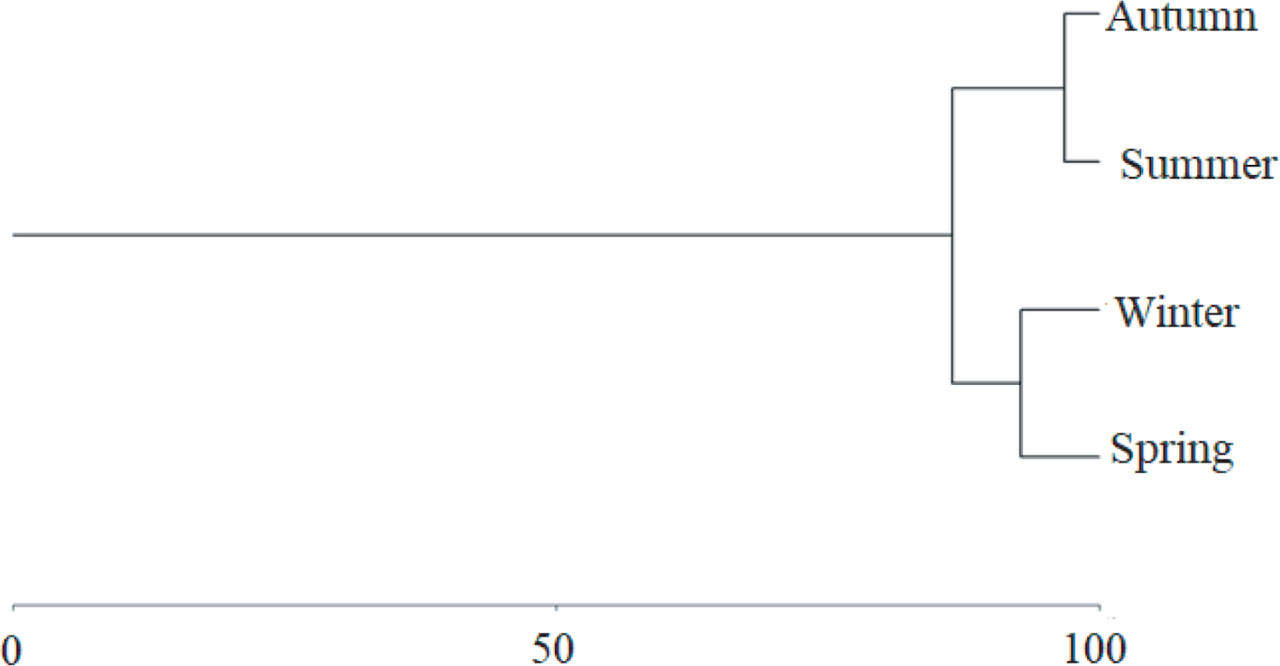
Figure 3
Seasonal Bray-Curtis similarity dendrogram of Lake Sapanca.
According to the results of the Bray-Curtis cluster analysis, the highest similarity between seasons was observed between summer and autumn, with a value of 96.80%, followed by spring and winter with a similarity of 92.72%. This pattern can be explained by the seasonal physicochemical regime and biological productivity dynamics of the lake. In temperate lakes, thermal stratification develops during the summer, creating pronounced changes in temperature and nutrient levels within the water column. However, by late summer to early autumn, surface waters begin to cool, weakening the stratification and initiating mixing. During this transitional period, water column characteristics and biological productivity largely reflect the continuing influence of summer conditions (Dodds & Whiles, 2010). Therefore, it is expected that summer and autumn cluster together with a high degree of similarity.
On the other hand, during spring and winter, lower temperatures, increased water column mixing, and more homogeneous oxygen distribution create similar environmental conditions, leading to closer community structures. Additionally, plankton succession models indicate that seasonal environmental filters play a key role in determining species composition, and under similar physical conditions, similar community structures can emerge (Reynolds, 2006). Consequently, the seasonal clustering pattern observed in this study appears consistent with the thermal and trophic dynamics of the lake.
The relationship between benthic macroinvertebrates and the physicochemical parameters of the water was analyzed using CCA. The diagram resulting from the CCA analysis is presented in Fig. 4.
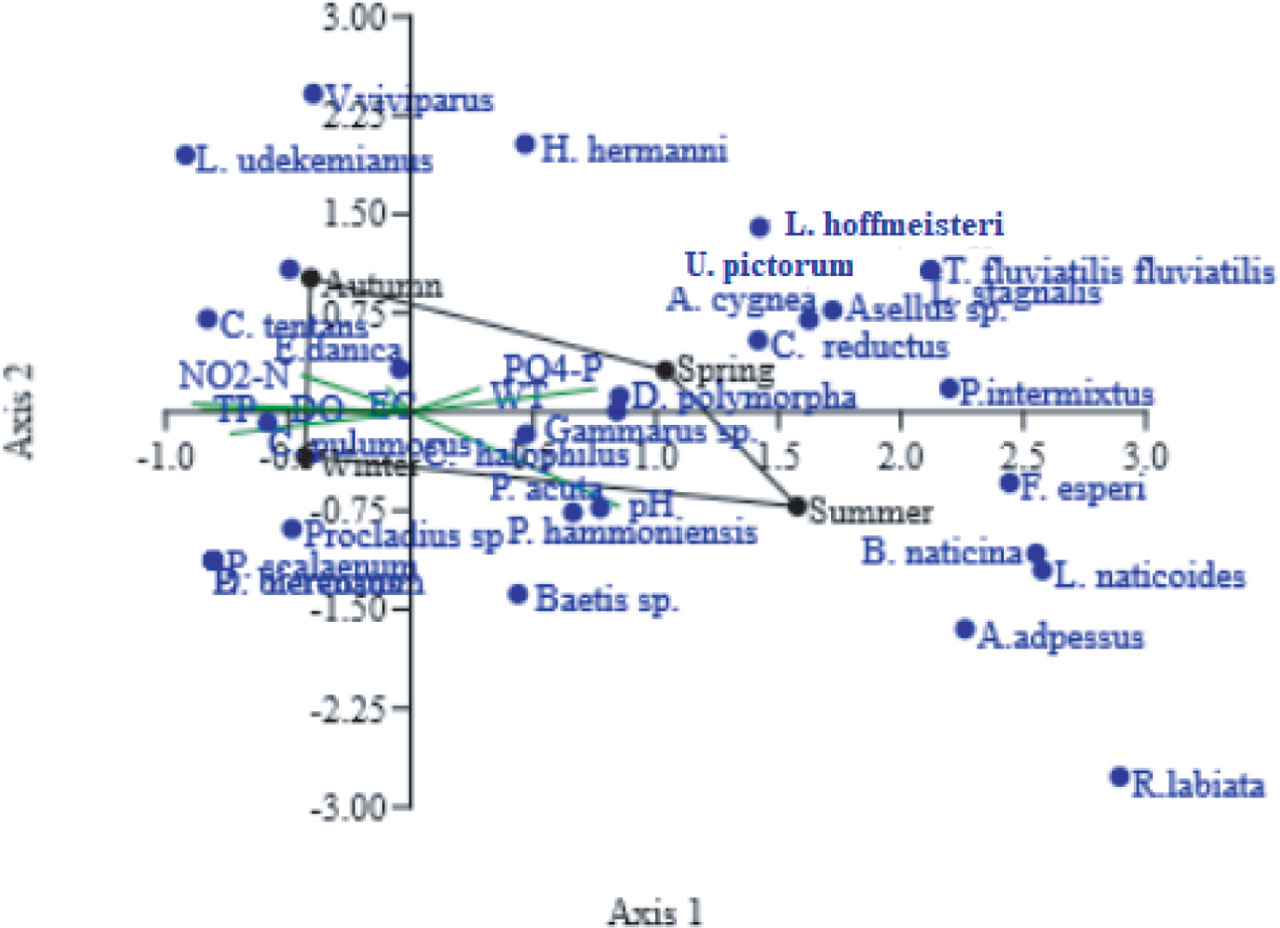
Figure 4
CCA diagram of benthic macroinvertebrates and water parameters in Sapanca Lake. CCA, canonical correspondence analysis.
The first axis explained 48.65% of the total variance, the second axis 29.06%, and the third axis 22.29%. When the first two axes were considered together, they accounted for 77.71% of the total variance. This indicates that the distribution of the macroinvertebrate community is structured along a strong environmental gradient, and the two-dimensional ordination plane represents the data to a large extent. In particular, the first axis explains a significant portion of the variation in species composition.
In the CCA diagram, it was observed that species and sampling periods were clearly separated along the axes. Examination of the seasonal distribution showed that the summer period was particularly distinct from the other seasons, and some species were positioned in alignment with specific environmental variables. The direction and length of the environmental variable vectors indicate that species distributions are associated with factors, such as nutrient concentrations, pH, WT, and similar parameters. These results demonstrate that species composition in the studied area is sensitive to environmental conditions.
By considering the positions of the seasonal points (such as Spring, Summer, Autumn, and Winter) together with the directions of the environmental vectors, the species-environment relationships can be summarized seasonally as follows:
The summer season is positioned along the positive direction of the first axis, particularly aligned with the pH vector and, to a lesser extent, the PO4-P vector. Species located in this region, such as P. intermixtus, F. esperi, B. naticina, L. naticoides, R. labiata, and A. adpressus, are associated with higher pH and summer conditions. Additionally, species, such as D. polymorpha, Gammarus sp., Asellus sp., A. cygnea, and U. pictorum are positioned closer to the spring–summer transition, indicating a relationship with moderate temperatures and increased nutrient concentrations (Fig. 4).
In contrast, the autumn and winter seasons are primarily located in the negative direction of the first axis, associated with NO2-N, other nitrogenous nutrients, and higher EC. Species such as C. tentans, C. plumosus, L. udekemianus, P. hammoniensis, and Procladius sp. are linked to periods characterized by increased nutrient levels and lower temperature conditions (Fig. 4).
The spring season occupies an intermediate position on the ordination plane, showing transitional characteristics associated with both nutrient levels and increasing temperature and DO conditions. These findings indicate that the distribution of macroinvertebrate species is sensitive to seasonal environmental changes.
3.5. BMWP Index values of Lake Sapanca
The metrics used to assess water quality based on benthic macroinvertebrates were developed internationally and are primarily designed for their specific geographic regions (Italian modification EBI; Ghetti, 1997; Spanish modification BMWP-Sp; Alba-Tercedor & Sánchez-Ortega, 1988; Thai modification BMWP-THAI; Mustow, 2002). In Turkey, only the Yeşilırmak-BMWP version developed by Kazancı et al. (2013) exists. However, due to factors such as diverse geographic regions, the variety of stream types and high endemism, it is considered impossible to create a single index that represents all of Turkey (Kazancı et al., 2013). Akay et al. (2008) also emphasized the need for developing indices specific to Turkey.
In this study, the BMWP score was calculated for Sapanca Lake, and the values for each station are presented in Table 5.
Table 5
BMWP Index values of Sapanca Lake by sampling stations.
| St 1 | St 2 | St 3 | St 4 | St 5 | |
|---|---|---|---|---|---|
| BMWP score (Spanish version) | 60 | 27 | 24 | 23 | 17 |
| Standard | 0.11 | 0.85 | 0.19 | 0.26 | 0.34 |
| Margalef diversity | 3.8 | 1.7 | 2.8 | 1.9 | 2.18 |
| Standard | 0.21 | 0.26 | 0.34 | 0.27 | 0.16 |
| ECO (Index value) | 0.61 | 0.56 | 0.72 | 0.8 | 0.34 |
| EQR | Moderate | Moderate | Good | Good | Moderate |
BMWP (Spanish version), Margalef Diversity Index, and ecological quality ratio (EQR) values were calculated for five different stations in Sapanca Lake.
The BMWP scores showed notable differences among stations (Table 5). The highest score was recorded at Station 1 (60), while the lowest was at Station 5 (17). The other stations ranged between 23 and 27, indicating that Station 1 represents better biological water quality compared to the others.
The Margalef diversity index was highest at Station 1 (3.8) and lowest at Station 2 (1.7). Stations 3, 4, and 5 exhibited moderate diversity levels, ranging from 1.9 to 2.8. In terms of species richness, Station 1 is distinctly higher than the other stations.
EQR values varied between 0.34 and 0.80. Stations 3 (0.72) and 4 (0.80) were classified as “good” ecological quality, whereas Stations 1, 2, and 5 fell into the “moderate” quality class. The lowest EQR was recorded at Station 5, indicating relatively lower ecological quality in that area. The results indicate clear differences in ecological quality among the stations in Sapanca Lake.
Station 1 shows the highest values for both BMWP and Margalef diversity index, suggesting relatively good water quality and the presence of sensitive taxa. The presence of aquatic vegetation in the substrate may have provided suitable habitat for these more sensitive species. However, the EQR value for Station 1 remaining in the “moderate” class implies that full ecological recovery relative to reference conditions has not yet been achieved.
Interestingly, Stations 1 and 4 are classified as “good” by EQR, yet their BMWP scores are relatively low. This indicates that while species composition may be close to reference conditions, the total number of sensitive taxa may be limited. Conversely, Station 5, with the lowest BMWP and EQR, may be experiencing higher organic loading, pollution pressure, or habitat degradation, likely influenced by surrounding settlements and industrial activity.
Station 4, in contrast, benefits from being the most vegetated area of the lake, which likely supports higher ecological quality. The high EQR at Station 3 could be attributed to it being the deepest point in the lake, where benthic macroinvertebrates are less affected by pollution. Station 2 may be impacted by inflow from the Maden stream, whereas Station 5, being distant from settlements, reflects different ecological influences.
Overall, a positive relationship is observed between BMWP and Margalef indices, as higher species richness generally corresponds with higher BMWP scores. However, EQR values at some stations deviate from this trend, highlighting that relying on a single biological index can be misleading, and using multiple indices provides a more robust assessment of ecological quality.
Comparison of previous studies conducted in Lake Sapanca with benthic macroinvertebrate data from the 2020–2021 period provides important insights into the lake’s biological diversity and seasonal dynamics. Earlier research indicated that the lake possesses a rich biological structure across various taxonomic groups (Altınsaçlı, 1997; Koşal-Şahin & Yıldırım, 2007). In the present study, a total of 31 taxa were identified, with Diptera (Chironomidae) and Gastropoda groups being particularly dominant in terms of abundance and species diversity. The species richness and seasonal distribution of Gastropods are consistent with previous Mollusca studies (Koşal-Şahin & Yıldırım, 2007).
Ecological quality assessments, supported by BMWP, Margalef diversity index, and EQR values, revealed significant spatial differences among the stations. Particularly, vegetated and deeper areas provide suitable habitats for sensitive taxa. However, anthropogenic pressures, including proximity to settlements and the inflow of certain tributaries, may increase organic load and habitat degradation in some stations (Gaygusuz et al., 2025). Overall, the results confirm that the ecological status of Lake Sapanca is shaped by both natural factors and human-induced pressures, highlighting the importance of considering this heterogeneity in ecosystem management strategies.
In addition, DO concentration and eutrophication risk in Lake Sapanca were predicted using an artificial neural network (ANN) model. The ANN model provided more accurate results compared to traditional multiple linear regression analysis, demonstrating its potential for filling missing data and supporting decision-making processes aimed at pollution mitigation. Model outputs revealed that the lake is under eutrophication threat and highlighted the impacts of rapid urbanization on water quality (Akıner & Akıner, 2021).
Non-point source pollution analyses indicated that urban and agricultural areas contribute to increased nutrient loads, whereas forested and natural areas protect the lake from nutrient enrichment and improve water quality. The highest TN and TP concentrations were observed in highly urbanized sub-basins, while the lowest values were recorded in forested and less urbanized regions. These findings emphasize the need to establish a careful balance between protective measures and utilization policies to ensure sustainable water quality (Ozdemir et al., 2025).
Overall, previous studies indicate that Lake Sapanca generally maintains moderate to good ecological conditions, while benthic macroinvertebrate communities and water quality parameters are sensitive to local environmental gradients and anthropogenic pressures. These results clearly highlight the importance of integrated monitoring of biological and physicochemical parameters, as well as the conservation of forested areas, for the effective management and protection of the lake ecosystem.
In conclusion, this study conducted in Lake Sapanca demonstrated that the seasonal and spatial distribution of benthic macroinvertebrate communities is closely associated with physicochemical parameters. The identification of a total of 31 taxa and the calculation of an average density of 1422 individuals · m−2 provide up-to-date and comprehensive data on the lake’s benthic ecosystem structure. The NPI results indicated that there is no significant pollution pressure from nutrient enrichment in the lake. The Bray-Curtis similarity analysis revealed high similarity between summer and autumn, suggesting seasonal continuity in community composition. Spearman correlation and CCA analyses further highlighted that WT, EC, and nutrient concentrations are key environmental variables influencing benthic distribution.
The BMWP (Spanish version), Margalef diversity index, and EQR results showed clear differences among stations, with some stations classified as “good” and others as “moderate” in terms of ecological quality. These findings indicate that the lake generally maintains a moderate-to-good ecological status, although localized pressures may influence ecological conditions at specific sites.
For the sustainable management of the lake ecosystem, monitoring programs should not rely solely on benthic macroinvertebrates; instead, they should adopt a holistic and multi-component approach that includes physicochemical parameters, fish communities, and water birds at the top of the trophic network. In addition, it is crucial to prevent illegal hunting, strengthen environmental control mechanisms, and effectively regulate wastewater discharges from settlements and industrial facilities around the lake. Within this framework, the periodic continuation of similar studies is considered a fundamental requirement for preserving the ecological integrity of the lake and ensuring its long-term sustainable use.
Acknowledgements
This study was supported by İstanbul University Scientific Research Project Unit’s Project Number 39540. We would like to express our sincere thanks to Dr. Rutkay ATUN, a faculty member of the Department of Surveying Engineering, Faculty of Engineering at Sivas Cumhuriyet University, for his valuable assistance in creating the map in the article.
Notes
[9] Contributed by Author contributions
Conceptualization: Serap Koşal Şahin, Menekşe Taş Divrik; Methodology: Serap Koşal Şahin, Menekşe Taş Divrik; Formal analysis and investigation: Serap Koşal Şahin; Writing-original draft preparation: Menekşe Taş Divrik; Writing-review and editing: Serap Koşal Şahin, Menekşe Taş Divrik; Statistic: Menekşe Taş Divrik, Funding acquisition: İstanbul University Scientific Research Project Unit’s Project Number 39540, Supervision: Serap Koşal Şahin, Menekşe Taş Divrik.