
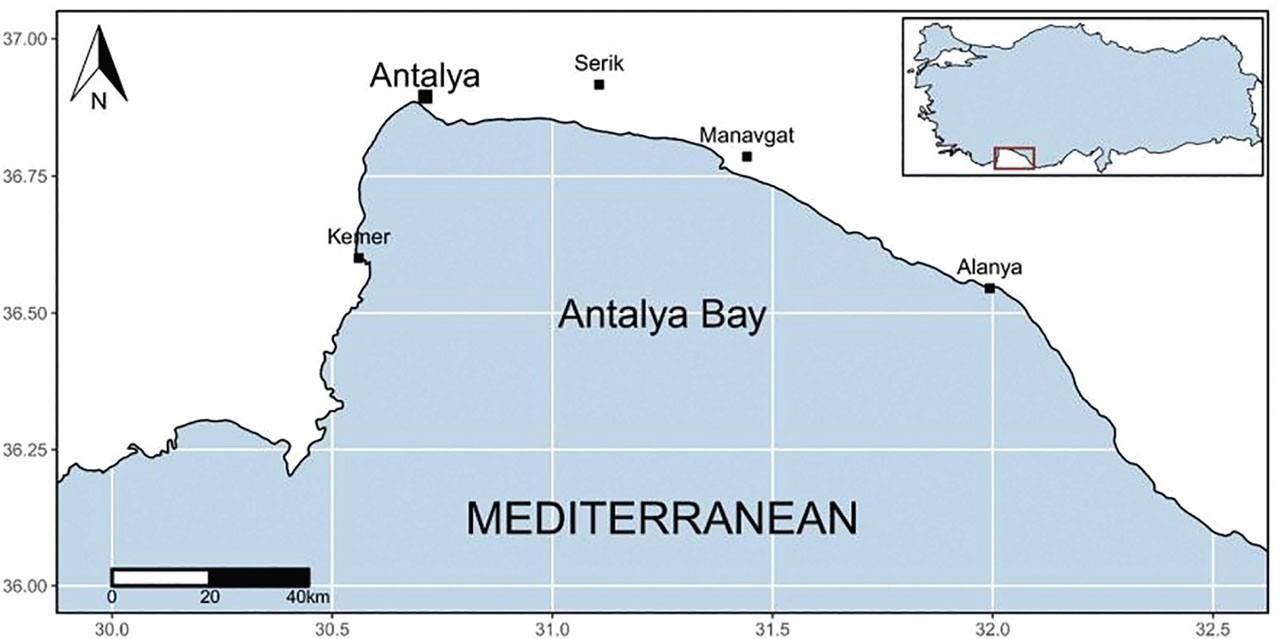
Figure 1
Map showing the location of fish samples collection from the Antalya Bay, Mediterranean coast of Türkiye.
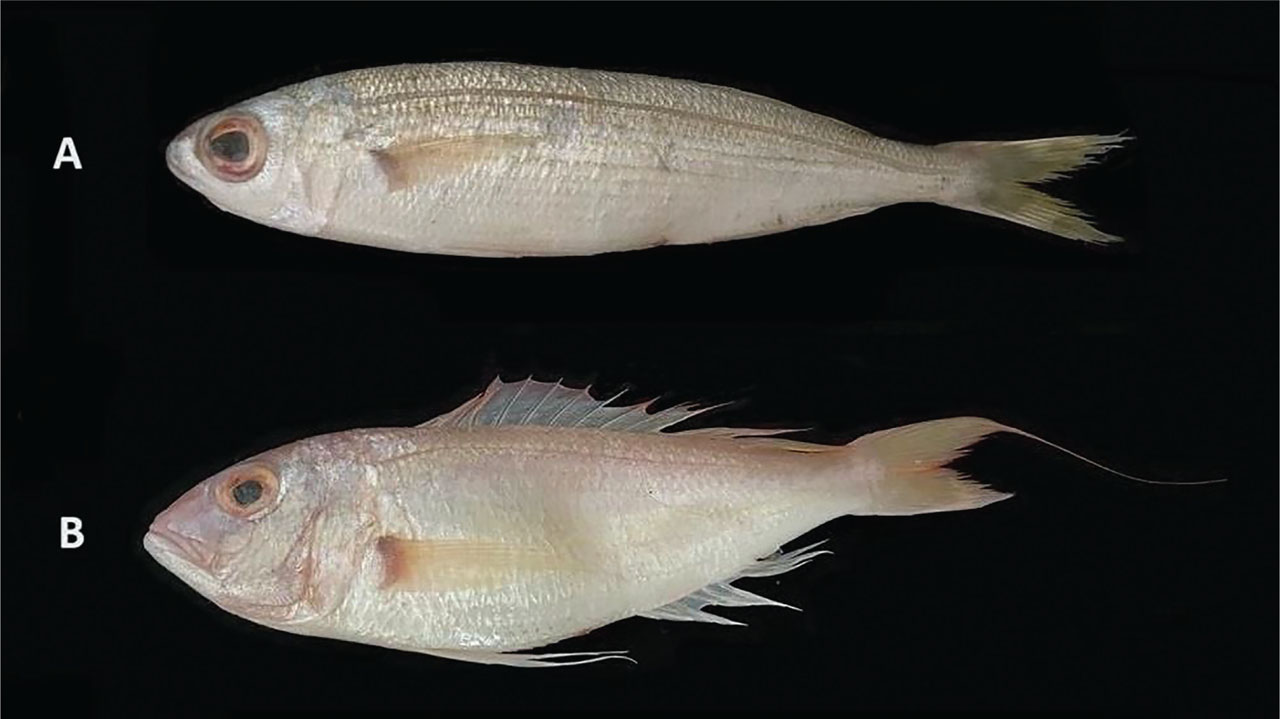
Figure 2
Images of (A) B. boops, 161 mm TL; (B) N. randalli, 231 mm TL. TL, total length.
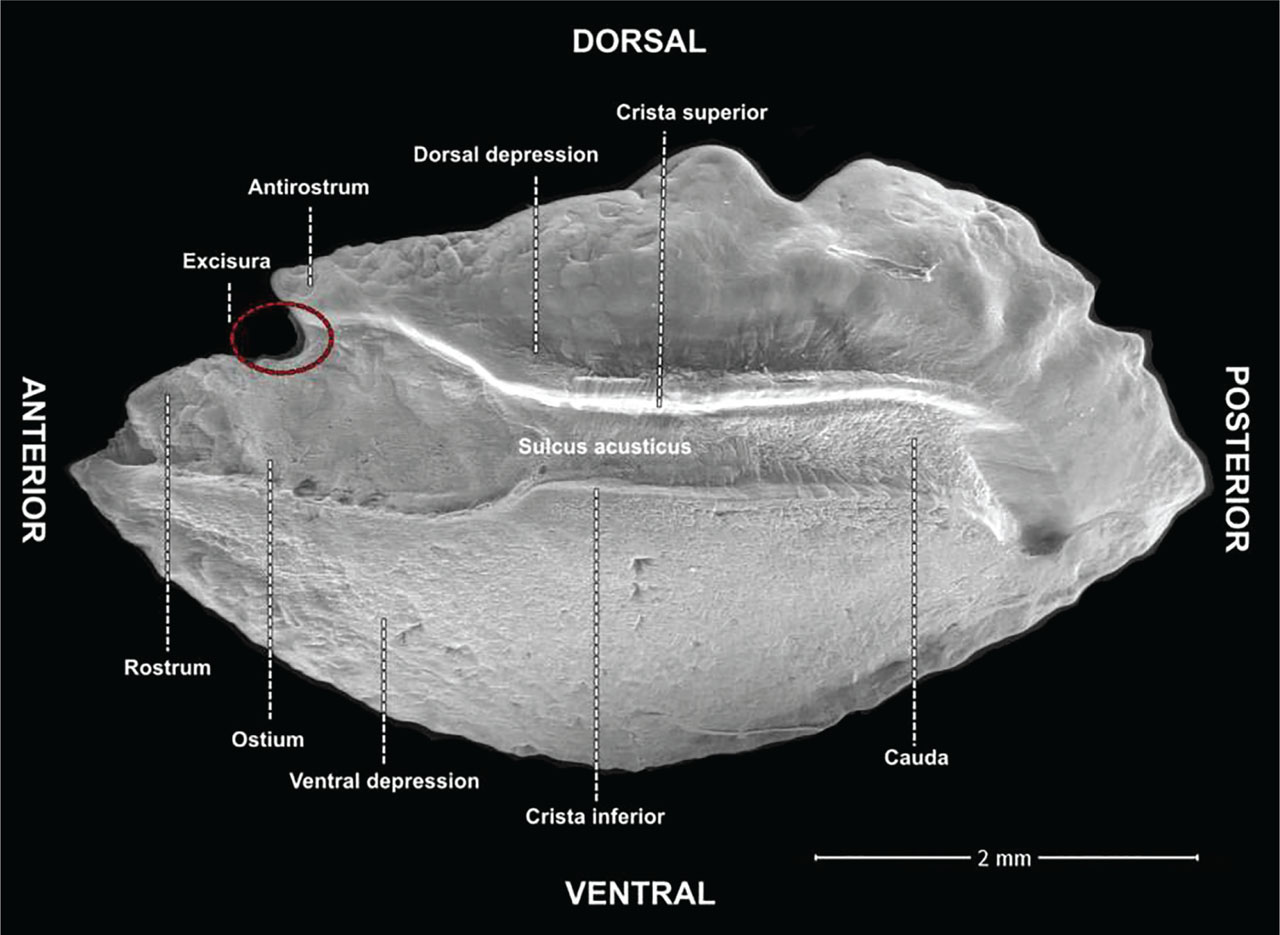
Figure 3
Right otolith of B. boops specimen with 175 mm TL male showing the terminology used in the text for the anatomical features in the morphological descriptions of the otolith. TL, total length.
Table 1
Otolith characteristics of five size classes of B. boops collected from the Antalya Bay, Mediterranean coast of Türkiye.
| Characters | A | B | C | D | E |
|---|---|---|---|---|---|
| Otolith shape | Oblong, rectangular, elliptical | Elongated, elliptical, oblong, rectangular | Elliptical, hexagonal, oblong, rectangular | Elliptical, elongated, oblong, rectangular | Elliptical, hexagonal, oblong, rectangular |
| Otolith width | Wide | Wide | Wide | Wide | Wide |
| Otolith thickness | Thick | Thick | Thick | Thick | Thick |
| Mesial surface | Convex | Convex | Convex | Convex | Convex |
| Lateral surface | Concave | Concave | Concave | Concave | Concave |
| Shape of the dorsal margin | Coarsely lobate posteriorly, high, finely wavy posteriorly, low | Raised posteriorly, smooth anteriorly, irregular anteriorly, coarsely irregular anteriorly | Irregularly or smoothly raised posteriorly, irregular or smooth anteriorly | Irregularly raised posteriorly, irregular or smooth anteriorly | Irregularly or smoothly raised posteriorly, smooth or irregular anteriorly |
| Shape of the ventral margin | Finely serrated, smooth | Smooth, finely serrated | Smooth or finely serrated | Smooth or finely serrated | Smooth or finely serrated |
| Shape of the posterior margin | Short, long, uniformly rounded, irregular | Irregular, short, long, smoothly rounded, broadly pointed | Long or short, irregular, smooth, pointed, rounded | Long or short, broadly or finely pointed, irregular | Long or short, irregular, finely pointed, irregularly rounded |
| Sulcus acusticus | Heterosulcoid, ostial | Heterosulcoid, ostial | Heterosulcoid, ostial | Heterosulcoid, ostial | Heterosulcoid, ostial |
| Ostio-caudal differentiation | Absent | Absent | Absent | Absent | Absent |
| Ostium | Deep, shallow, long, short | Deep, shallow, long, short | Long or short, deep or shallow | Long or short, deep or shallow, flared or narrow anteriorly | Flared or narrow anteriorly, deep or shallow |
| Cauda | Deep, shallow, deep or shallow posteriorly | Deep, shallow, long posteriorly, short posteriorly | Deep or shallow, straight anteriorly, constricted anteriorly, deep or shallow posteriorly | Deep or shallow, straight or curved, deep or shallow posteriorly | Deep or shallow, straight, deep or shallow posteriorly |
| Crista superior | Well-developed thick or thin | Well-developed thick or thin, absent | Absent, well-developed thick or thin | Well-developed thick or thin | Well-developed thick or thin |
| Crista inferior | Well-developed thick or thin | Well-developed thick or thin, absent | Absent, well-developed thick or thin | Well-developed thick or thin | Absent, poorly developed |
| Shape of the dorsal depression | Narrow, deep, or shallow | Narrow, shallow, deep | Narrow, deep, oval shape, elongated, curved posteriorly | Narrow, deep or shallow, elongated, curved downward | Narrow or wide, irregular, shallow, oval shape |
| Shape of the ventral depression | Broad and shallow | Broad and shallow | Broad and shallow | Broad and shallow | Broad and shallow |
| Shape of the rostrum | Broadly or finely pointed | Broadly or finely pointed | Broadly or finely pointed, straight or upward curved tip | Broadly or finely pointed, straight or curved upward | Broadly or finely pointed, straight or curved upward |
| Size of the rostrum | Long or short | Long or short | Long or short | Long or short | Long or short |
| Thickness of the rostrum | Thick | Thick | Thick | Thick | Thick |
| Antirostrum | Long, short, absent, pointed, rounded | Poorly developed, short or long, absent | Absent, poorly developed, long and rounded. Long and pointed | Absent, poorly developed, small broad or rounded | Small, or large, pointed or rounded |
| Excisura | Absent, Shallow, notch wide or narrow, deep, | Absent, narrow or wide, notch shallow or deep | Absent, wide or narrow, notch deep or shallow | Absent, wide or narrow, notch deep or shallow | Narrow or wide, notch shallow or deep |
Table 2
Otolith characteristics of four size classes of N. randalli collected from Antalya Bay, Mediterranean coast of Türkiye.
| Characters | A | B | C | D |
|---|---|---|---|---|
| Otolith shape | Elliptical, hexagonal | Elliptical, hexagonal, rectangular | Elliptical or hexagonal | Elliptical |
| Otolith width | Wide | Wide | Wide | Wide |
| Otolith thickness | Thick | Thick | Thick | Thick |
| Mesial surface | Convex | Convex | Convex | Convex |
| Lateral surface | Concave | Concave | Concave | Concave |
| Shape of the dorsal margin | Slightly irregularly raised posteriorly, coarsely irregular anteriorly | Irregularly raised at middle, irregular low, coarsely lobulated | Curved, coarsely lobulated, irregular | Raised, coarsely lobulated |
| Shape of the ventral margin | Smooth, serrated, finely irregular | Finely serrated, smooth, irregular | Smooth or finely serrated | Smooth or finely serrated |
| Shape of the posterior margin | Irregularly rounded, produced irregularly, finely pointed, short and irregular | Long or short, irregularly or smoothly rounded | Broadly or finely pointed, irregular | Broadly pointed, long or short |
| Sulcus acusticus | Heterosulcoid, ostial | Heterosulcoid, ostial | Heterosulcoid, ostial | Heterosulcoid, ostial |
| Ostio-caudal differentiation | Absent | Absent | Absent | Absent |
| Ostium | Short, deep or shallow, flared or narrow | Long or short, deep or shallow | Deep or shallow, straight or curved upward | Deep or shallow, flared |
| Cauda | Straight, constricted at the middle, deep posteriorly, deep or shallow | Straight or slightly constricted at middle, deep or shallow | Straight or constricted at middle, short posteriorly, deep or shallow, filled with calcium carbonate secretions | Deep, straight or constricted at middle |
| Crista superior | Well-developed thick or thin | Well-developed and thin | Well-developed, thin or thick, curved downward | Well-developed, thick, curved downward |
| Crista inferior | Well-developed, thin | Poorly or well-developed | Well-developed, thin, curved upward | Well or poorly developed, thin |
| Shape of the dorsal depression | Broad, elongated, deep or shallow | Broad or narrow, deep or shallow, oval shape or elongated | Wide, oval shape, deep or shallow, elongated shape | Wide, oval shape, shallow |
| Shape of the ventral depression | Wide and shallow | Wide and shallow | Wide and shallow | Wide and shallow |
| Shape of the rostrum | Broadly or finely pointed, straight or curved upward | Broadly or finely pointed, blunt | Broadly or finely pointed, blunt | Broadly or finely pointed |
| Size of the rostrum | Long or short, blunt | Long or short | Long or short, or slightly curved upward | Long or short |
| Thickness of the rostrum | Thick | Thick | Thick | Thick |
| Antirostrum | Absent, poorly developed, short, rounded | Absent, poorly developed, short, rounded | Absent, poorly developed, short, rounded | Absent, long or short, rounded |
| Excisura | Absent, deep or shallow, notch narrow or wide | Absent, deep or shallow, notch narrow or wide | Absent, deep or shallow, notch narrow or wide | Absent, deep or shallow, notch narrow or wide |
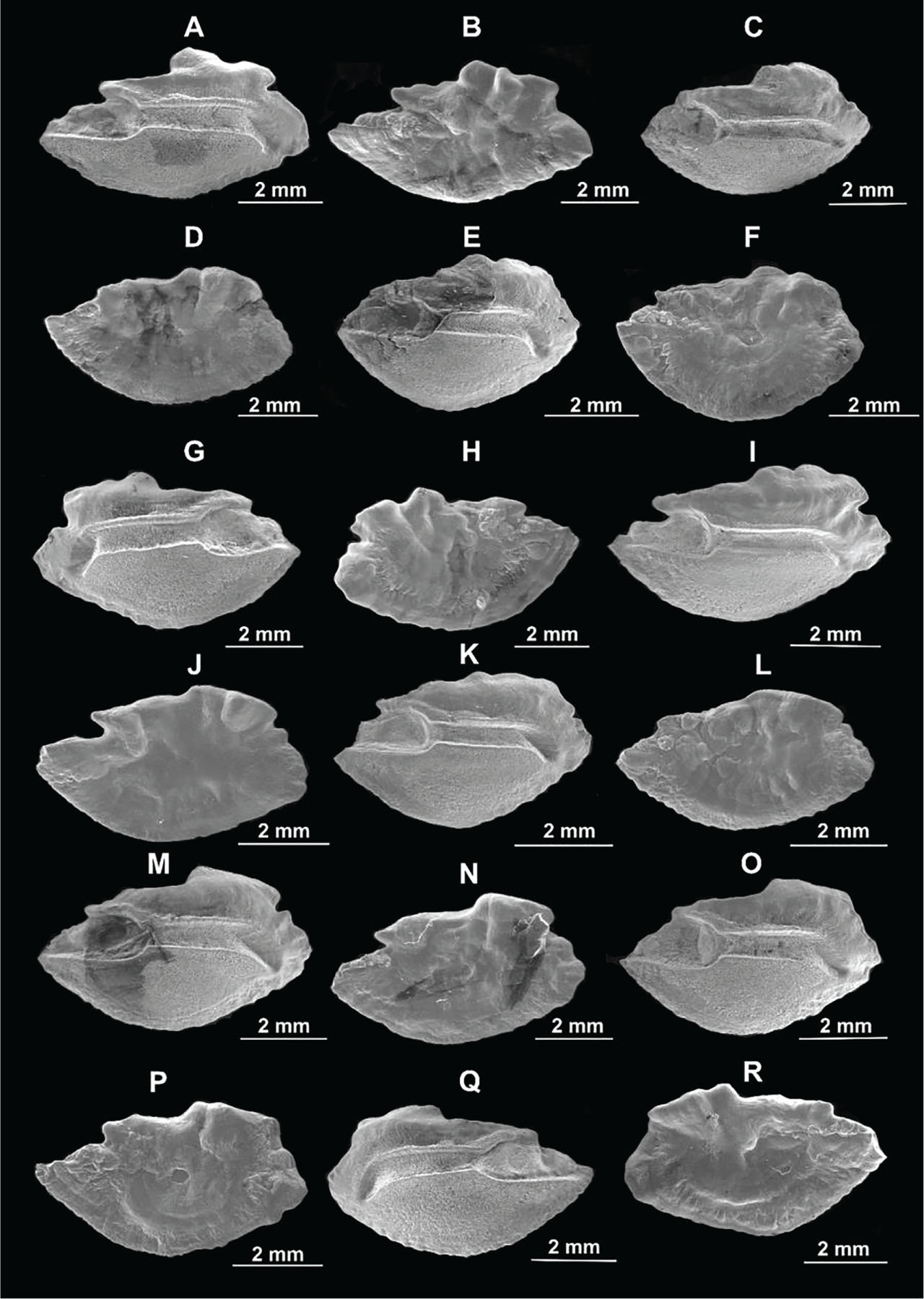
Figure 4
SEM images showing the lateral and the mesial sides of the otolith of B. boops from the Antalya Bay, Mediterranean coast of Türkiye. (A) Right otolith of a specimen with 138 mm TL male showing mesial side; (B) Left otolith of a specimen with 138 mm TL male showing lateral side; (C) Right otolith of a specimen with 140 mm TL male showing mesial side; (D) Left otolith of a specimen with 140 mm TL male showing lateral side; (E) Right otolith of a specimen with 140 mm TL female showing mesial side; (F) Left otolith of a specimen with 140 mm TL female showing lateral side; (G) Right otolith of a specimen with 142 mm TL male showing mesial side; (H) Left otolith of a specimen with 142 mm TL male showing lateral side; (I) Right otolith of a specimen with 145 mm TL female showing mesial side; (J) Left otolith of a specimen with 145 mm TL female showing lateral side; (K) Right otolith of a specimen with 149 mm TL male showing mesial side; (L) Left otolith of a specimen with 149 mm TL male showing lateral side; (M) Right otolith of a specimen with 150 mm TL male showing mesial side; (N) Left otolith of a specimen with 150 mm TL male showing lateral side; (O) Right otolith of a specimen with 155 mm TL male showing mesial side; (P) Left otolith of a specimen with 155 mm TL male showing lateral side; (Q) Left otolith of a specimen with 157 mm TL female showing mesial side; (R) Right otolith of a specimen with 157 mm TL female showing lateral side. SEM, scanning electron microscopy; TL, total length.
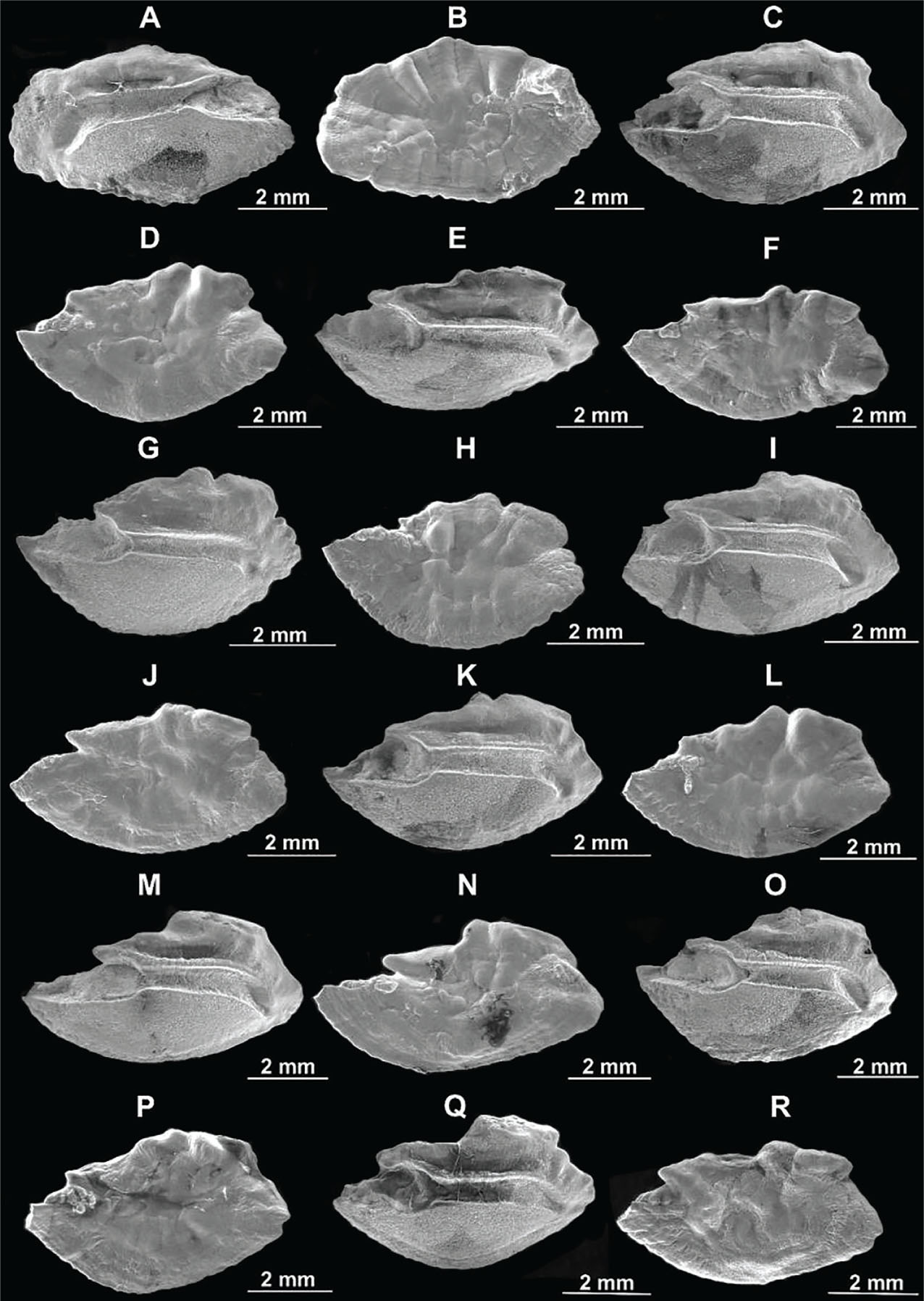
Figure 5
SEM images showing the lateral and the mesial sides of the otolith of B. boops from the Antalya Bay, Mediterranean coast of Türkiye. (A) Left otolith of a specimen with 162 mm TL male showing mesial side; (B) Right otolith of a specimen with 162 mm TL male showing lateral side; (C) Right otolith of a specimen with 163 mm TL female showing mesial side; (D) Left otolith of a specimen with 163 mm TL female showing lateral side; (E) Right otolith of a specimen with 165 mm TL male showing mesial side; (F) Left otolith of a specimen with 165 mm TL male showing lateral side; (G) Right otolith of a specimen with 165 mm TL female showing mesial side; (H) Left otolith of a specimen with 165 mm TL female showing lateral side; (I) Right otolith of a specimen with 166 mm TL female showing mesial side; (J) Left otolith of a specimen with 166 mm TL female showing lateral side; (K) Right otolith of a specimen with 166 mm TL female showing mesial side; (L) Left otolith of a specimen with 166 mm TL female showing lateral side; (M) Right otolith of a specimen with 166 mm TL male showing mesial side; (N) Left otolith of a specimen with 166 mm TL male showing lateral side; (O) Right otolith of a specimen with 167 mm TL male showing mesial side; (P) Left otolith of a specimen with 167 mm TL male showing lateral side; (Q) Right otolith of a specimen with 170 mm TL male showing mesial side; (R) Left otolith of a specimen with 170 mm TL male showing lateral side. SEM, scanning electron microscopy; TL, total length.
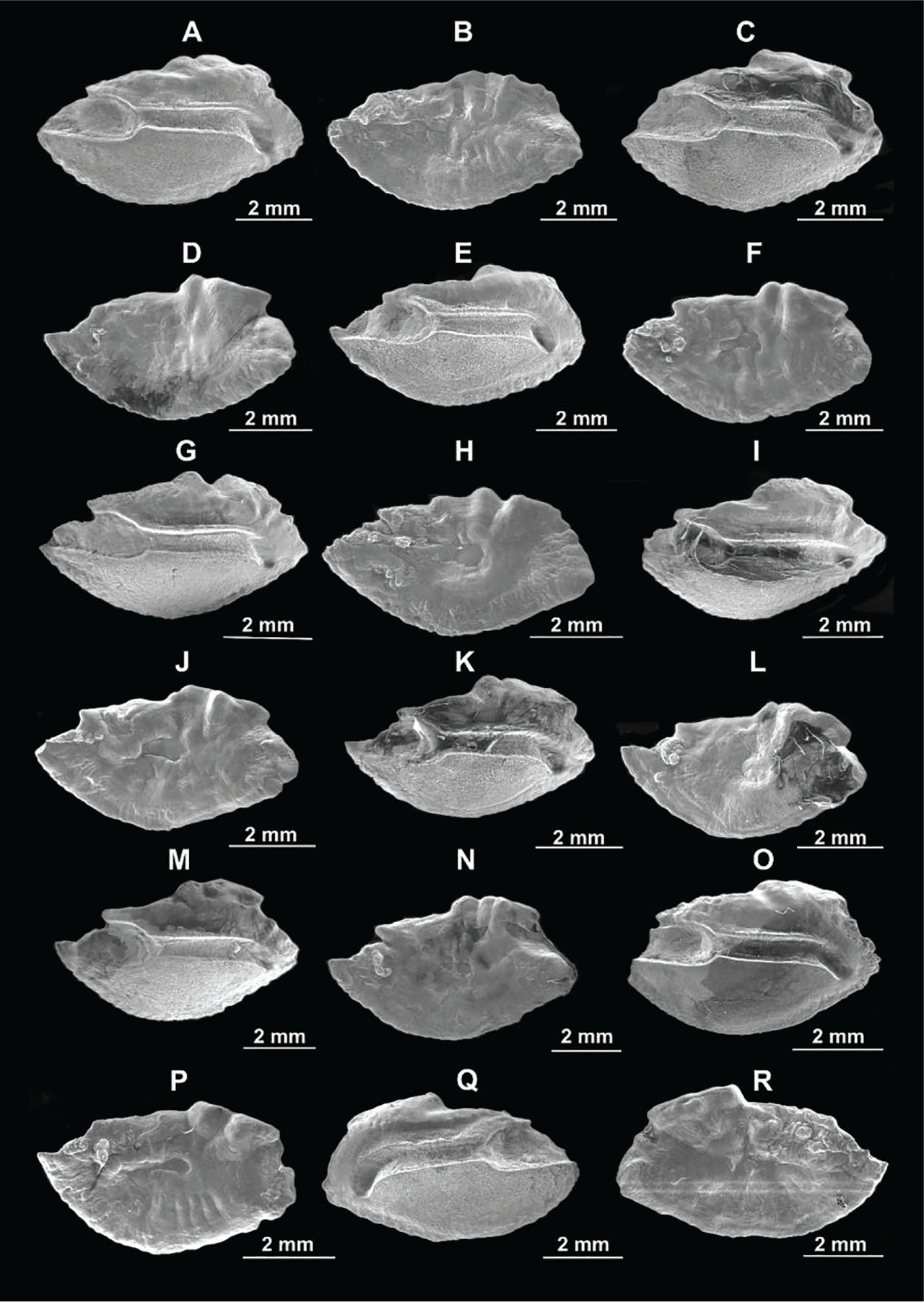
Figure 6
SEM images showing the lateral and the mesial sides of the otolith of B. boops from the Antalya Bay, Mediterranean coast of Türkiye. (A) Right otolith of a specimen with 172 mm TL female showing mesial side; (B) Left otolith of a specimen with 172 mm TL female showing lateral side; (C) Right otolith of a specimen with 172 mm TL male showing mesial side; (D) Left otolith of a specimen with 172 mm TL male showing lateral side; (E) Right otolith of a specimen with 175 mm TL female showing mesial side; (F) Left otolith of a specimen with 175 mm TL female showing lateral side; (G) Right otolith of a specimen with 175 mm TL male showing mesial side; (H) Left otolith of a specimen with 175 mm TL male showing lateral side; (I) Right otolith of a specimen with 175 mm TL male showing mesial side; (J) Left otolith of a specimen with 175 mm TL male showing lateral side; (K) Right otolith of a specimen with 178 mm TL female showing mesial side; (L) Left otolith of a specimen with 178 mm TL female showing lateral side; (M) Right otolith of a specimen with 180 mm TL male showing mesial side; (N) Right otolith of a specimen with 180 mm TL male showing lateral side; (O), Right otolith of a specimen with 180 mm TL male showing mesial side; (P) Left otolith of a specimen with 180 mm TL male showing lateral side; (Q) Left otolith of a specimen with 188 mm TL male showing mesial side; (R) Right otolith of a specimen with 188 mm TL male showing lateral side. SEM, scanning electron microscopy; TL, total length.
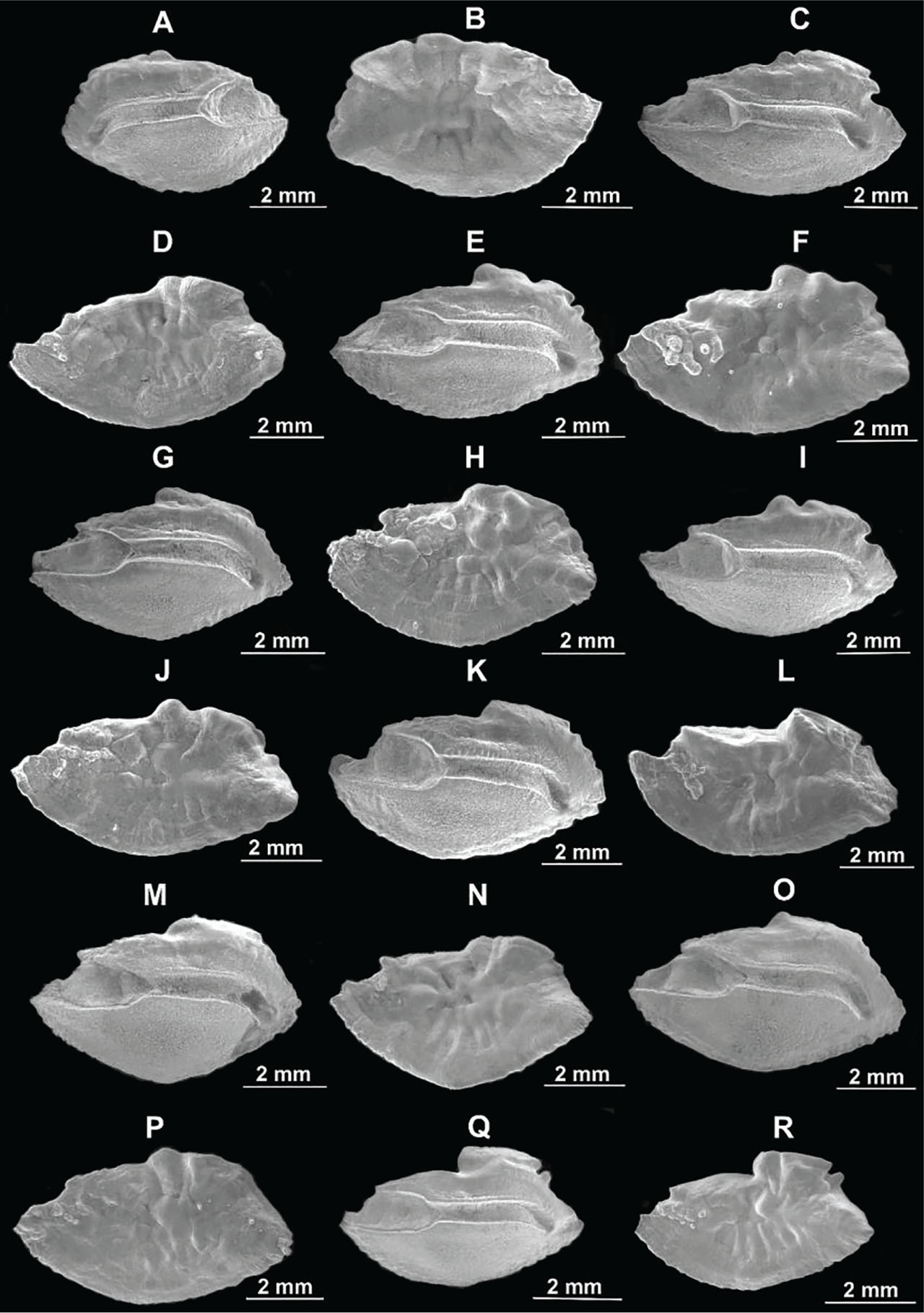
Figure 7
SEM images showing the lateral and the mesial sides of the otolith of B. boops from the Antalya Bay, Mediterranean coast of Türkiye. (A) Left otolith of a specimen with 191 mm TL male showing mesial side; (B) Right otolith of a specimen with 191 mm TL male showing lateral side; (C) Right otolith of a specimen with 195 mm TL male showing mesial side; (D) Left otolith of a specimen with 195 mm TL male showing lateral side; (E) Right otolith of a specimen with 195 mm TL female showing mesial side; (F) Left otolith of a specimen with 195 mm TL female showing lateral side; (G) Right otolith of a specimen with 197 mm TL female showing mesial side; (H) Left otolith of a specimen with 197 mm TL female showing lateral side; (I) Right otolith of a specimen with 202 mm TL male showing mesial side; (J) Left otolith of a specimen with 202 mm TL male showing lateral side; (K) Right otolith of a specimen with 203 mm TL female showing mesial side; (L) Left otolith of a specimen with 203 mm TL female showing lateral side; (M) Right otolith of a specimen with 203 mm TL male showing mesial side; (N) Left otolith of a specimen with 203 mm TL male showing lateral side; (O) Right otolith of a specimen with 204 mm TL male showing mesial side; (P) Left otolith of a specimen with 204 mm TL male showing lateral side; (Q) Right otolith of a specimen with 206 mm TL female showing mesial side; (R) Left otolith of a specimen with 206 mm TL female showing lateral side. SEM, scanning electron microscopy; TL, total length.
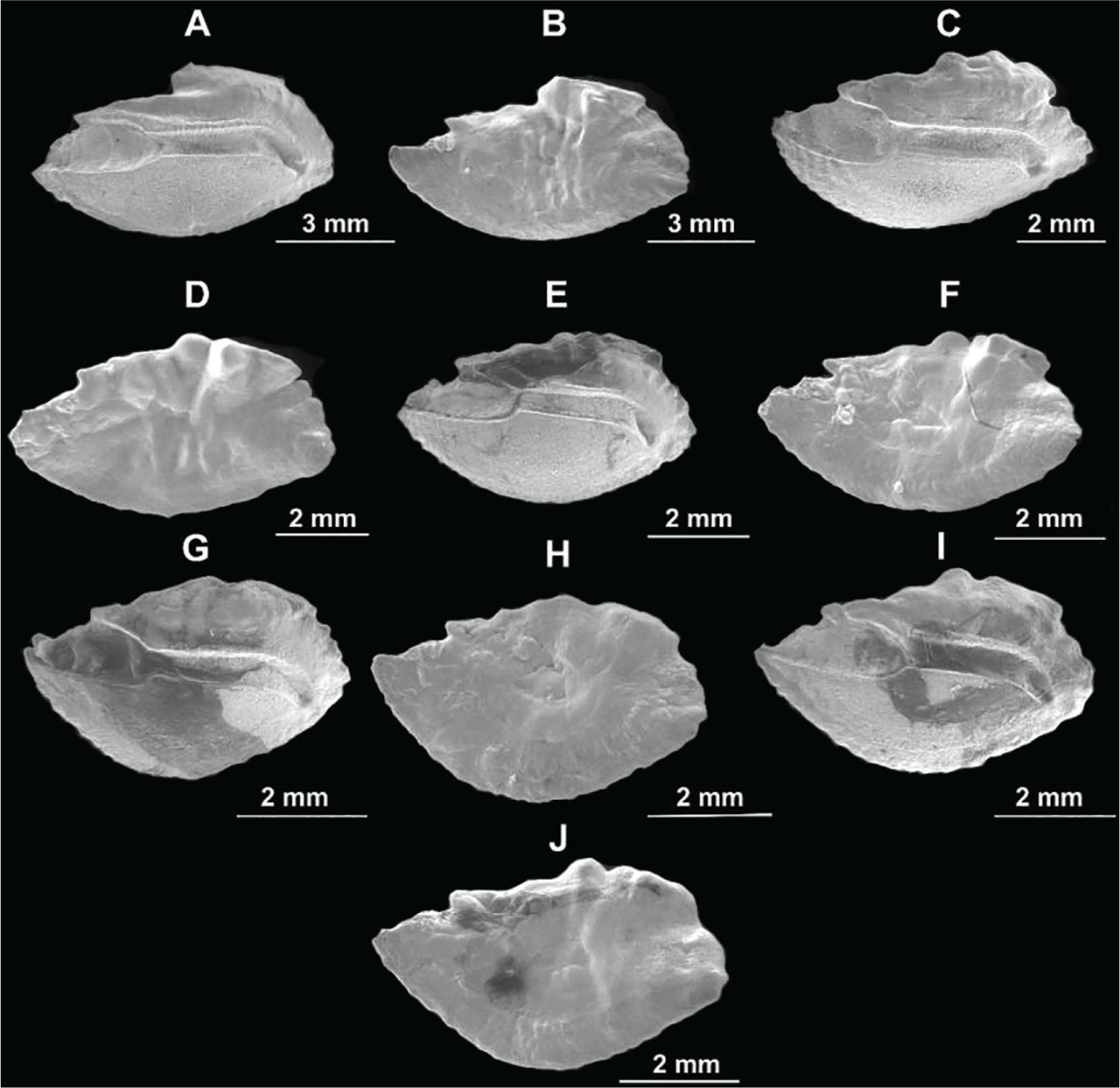
Figure 8
SEM images showing the lateral and the mesial sides of the otolith of B. boops from the Antalya Bay, Mediterranean coast of Türkiye. (A) Right otolith of a specimen with 215 mm TL female showing mesial side; (B) Left otolith of a specimen with 215 mm TL female showing lateral side; (C) Right otolith of a specimen with 215 mm TL female showing mesial side; (D) Left otolith of a specimen with 215 mm TL female showing lateral side; (E) Right otolith of a specimen with 217 mm TL female showing mesial side; (F) Left otolith of a specimen with 217 mm TL female showing lateral side; (G) Right otolith of a specimen with 223 mm TL female showing mesial side; (H) Left otolith of a specimen with 223 mm TL female showing lateral side; (I) Right otolith of a specimen with 225 mm TL female showing mesial side; (J) Left otolith of a specimen with 225 mm TL female showing lateral side. SEM, scanning electron microscopy; TL, total length.
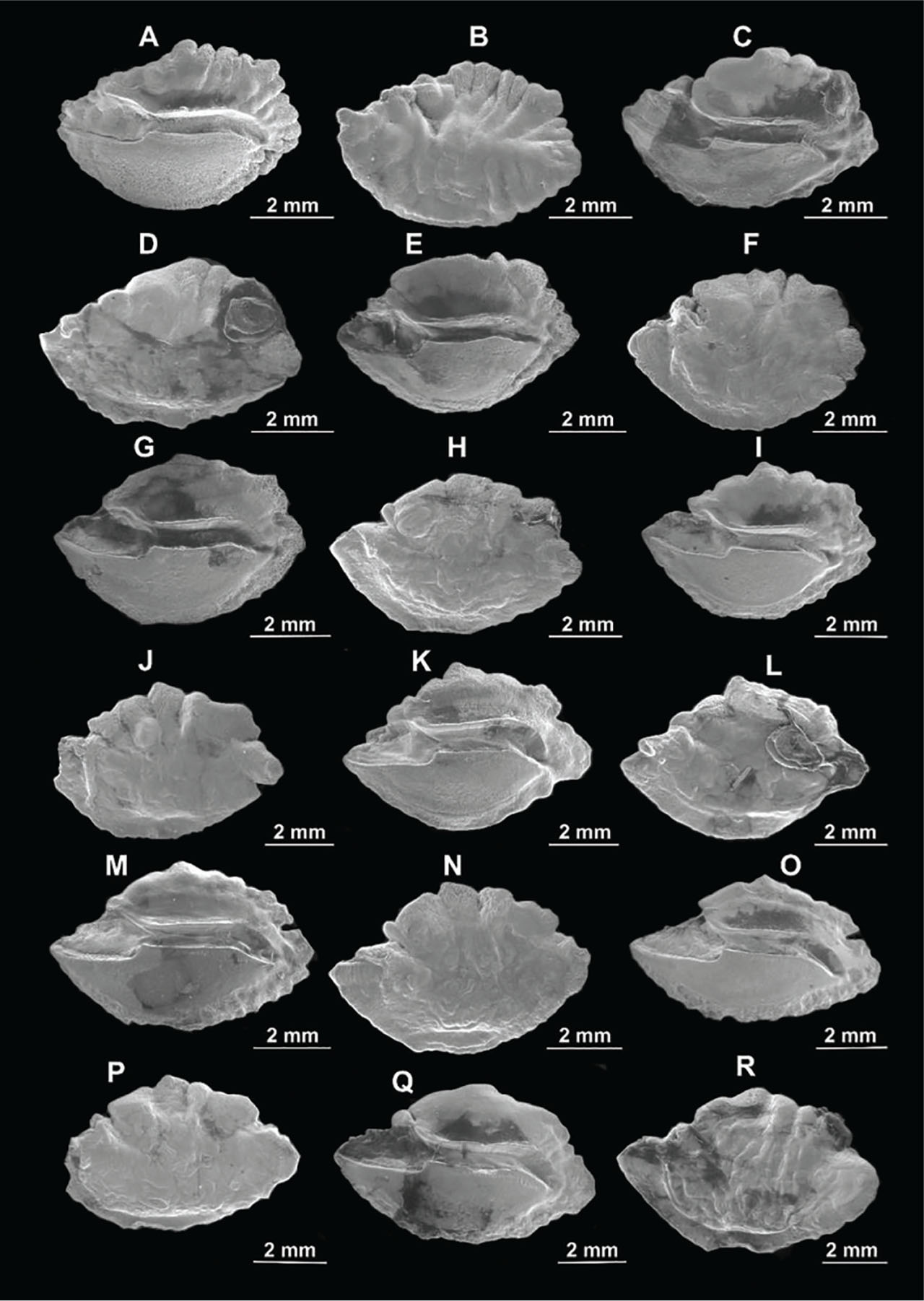
Figure 9
SEM images showing the lateral and the mesial sides of the otolith of N. randalli from the Antalya Bay, Mediterranean coast of Türkiye. (A) Right otolith of a specimen with 126 mm TL female showing mesial side; (B) Left otolith of a specimen with 126 mm TL female showing lateral side; (C) Right otolith of a specimen with 130 mm TL male showing mesial side; (D) Left otolith of a specimen with 130 mm TL male showing lateral side; (E) Right otolith of a specimen with 139 mm TL female showing mesial side; (F) Left otolith of a specimen with 139 mm TL female showing lateral side; (G) Right otolith of a specimen with 144 mm TL female showing mesial side; (H) Left otolith of a specimen with 144 mm TL female showing lateral side; (I) Right otolith of a specimen with 145 mm TL female showing mesial side; (J) Left otolith of a specimen with 145 mm TL female showing lateral side; (K) Right otolith of a specimen with 145 mm TL male showing mesial side; (L) Left otolith of a specimen with 145 mm TL male showing lateral side; (M) Right otolith of a specimen with 147 mm TL male showing mesial side; (N) Left otolith of a specimen with 147 mm TL male showing lateral side; (O) Right otolith of a specimen with 150 mm TL male showing mesial side; (P) Left otolith of a specimen with 155 mm TL male showing lateral side; (Q) Right otolith of a specimen with 155 mm TL male showing mesial side; (R) Left otolith of a specimen with 150 mm TL male showing lateral side. SEM, scanning electron microscopy; TL, total length.
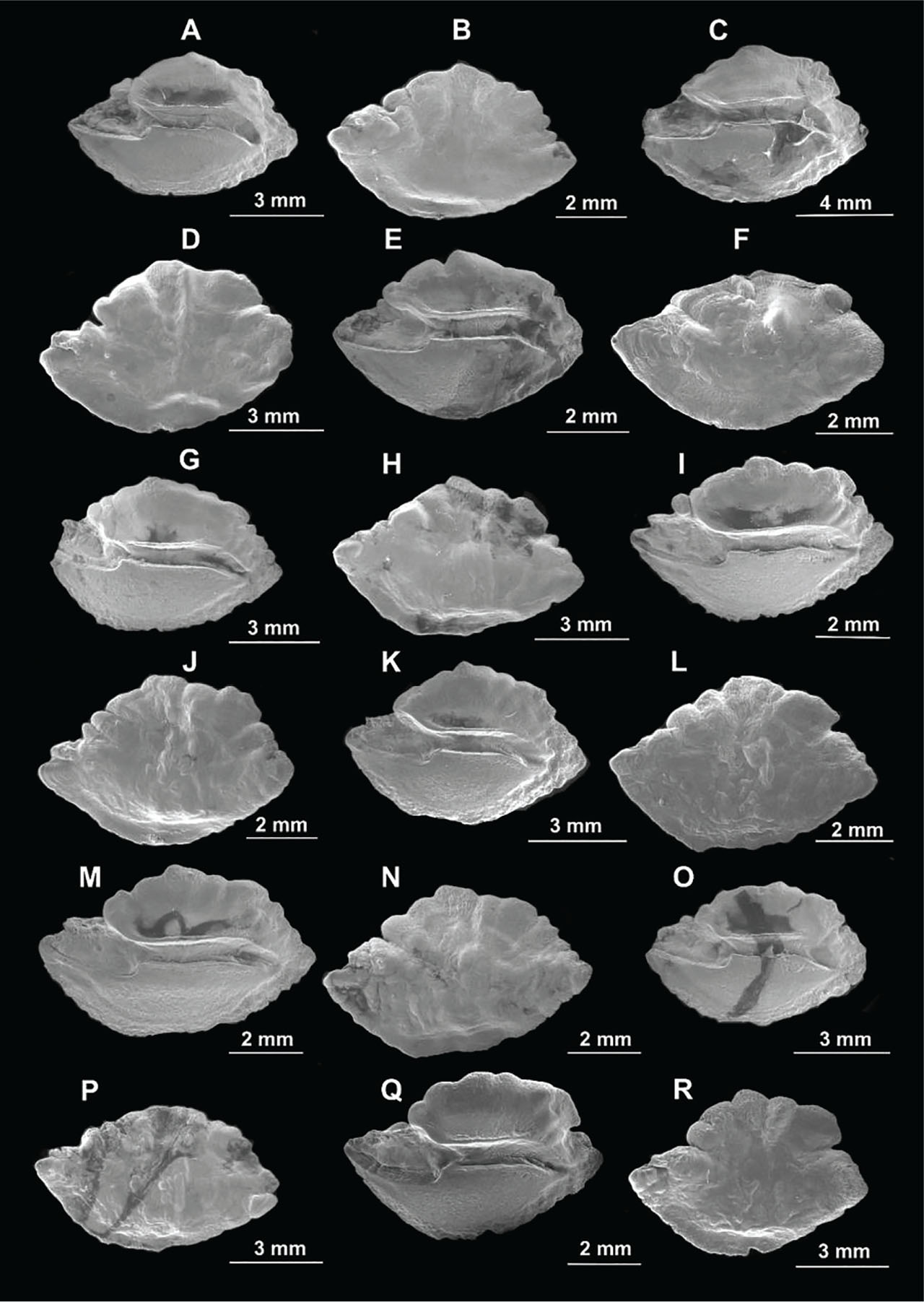
Figure 10
SEM images showing the lateral and the mesial sides of the otolith of N. randalli from the Antalya Bay, Mediterranean coast of Türkiye. (A) Right otolith of a specimen with 160 mm TL male showing mesial side; (B) Left otolith of a specimen with 160 mm TL male showing lateral side; (C) Right otolith of a specimen with 162 mm TL male showing mesial side; (D) Left otolith of a specimen with 162 mm TL male showing lateral side; (E) Right otolith of a specimen with 165 mm TL female showing mesial side; (F) Left otolith of a specimen with 165 mm TL female showing lateral side; (G) Right otolith of a specimen with 166 mm TL male showing mesial side; (H) Left otolith of a specimen with 166 mm TL male showing lateral side; (I) Right otolith of a specimen with 166 mm TL female showing mesial side; (J) Left otolith of a specimen with 166 mm TL female showing lateral side; (K) Right otolith of a specimen with 168 mm TL female showing mesial side; (L) Left otolith of a specimen with 168 mm TL female showing lateral side; (M) Right otolith of a specimen with 171 mm TL female showing mesial side; (N) Left otolith of a specimen with 171 mm TL female showing lateral side; (O) Right otolith of a specimen with 175 mm TL female showing mesial side; (P) Left otolith of a specimen with 175 mm TL female showing lateral side; (Q) Right otolith of a specimen with 175 mm TL female showing mesial side; (R) Left otolith of a specimen with 175 mm TL female showing lateral side. SEM, scanning electron microscopy; TL, total length.
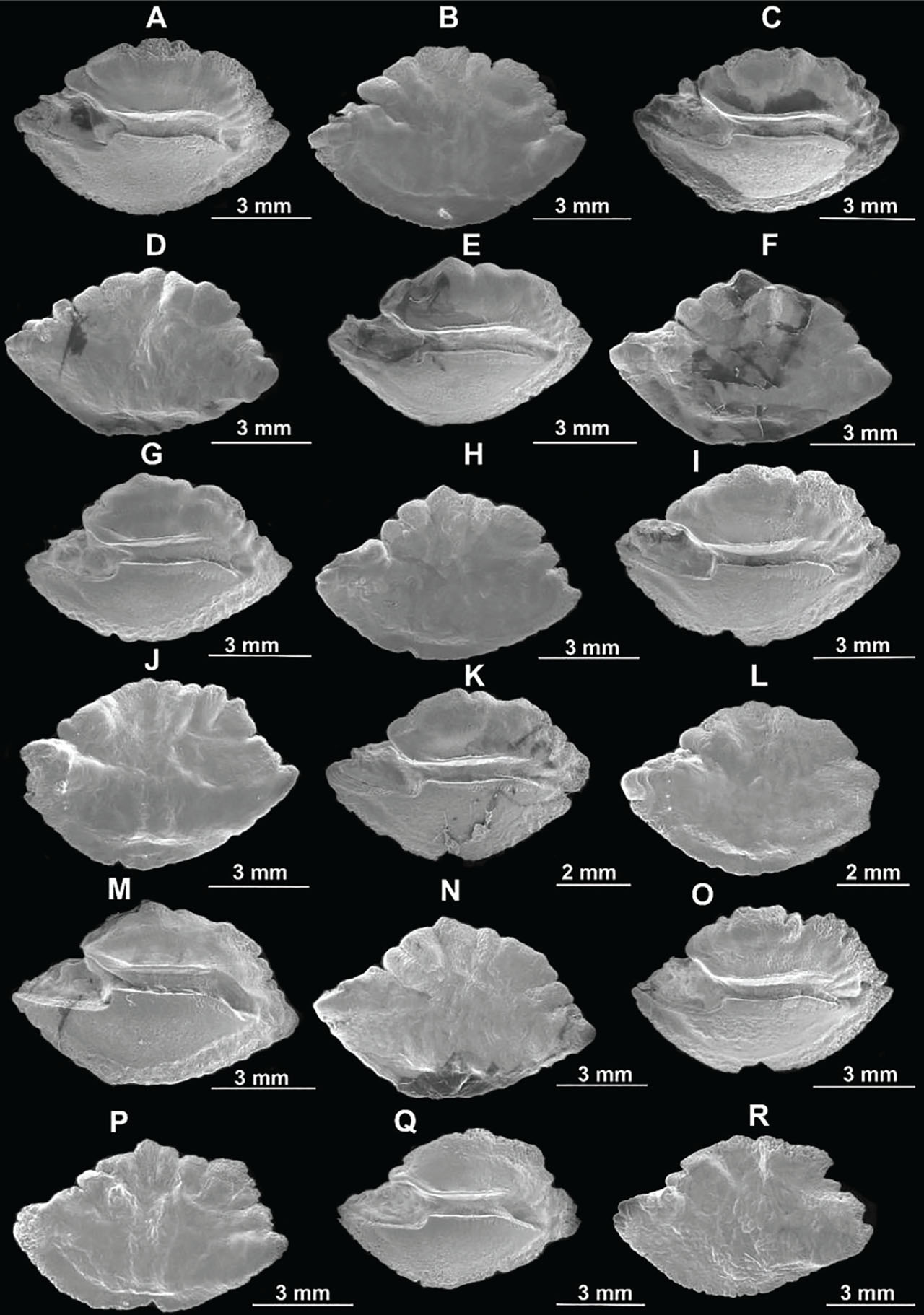
Figure 11
SEM images showing the lateral and the mesial sides of the otolith of N. randalli from the Antalya Bay, Mediterranean coast of Türkiye. (A) Right otolith of a specimen with 183 mm TL male showing mesial side; (B) Left otolith of a specimen with 183 mm TL male showing lateral side; (C) Right otolith of a specimen with 184 mm TL male showing mesial side; (D) Left otolith of a specimen with 184 mm TL male showing lateral side; (E) Right otolith of a specimen with 185 mm TL male showing mesial side; (F) Left otolith of a specimen with 185 mm TL male showing lateral side; (G) Right otolith of a specimen with 185 mm TL female showing mesial side; (H) Left otolith of a specimen with 185 mm TL female showing lateral side; (I) Right otolith of a specimen with 188 mm TL male showing mesial side; (J) Left otolith of a specimen with 188 mm TL male showing lateral side; (K) Right otolith of a specimen with 190 mm TL male showing mesial side; (L) Left otolith of a specimen with 190 mm TL male showing lateral side; (M) Right otolith of a specimen with 190 mm TL female showing mesial side; (N) Left otolith of a specimen with 190 mm TL female showing lateral side; (O) Right otolith of a specimen with 195 mm TL female showing mesial side; (P) Left otolith of a specimen with 195 mm TL female showing lateral side; (Q) Right otolith of a specimen with 197 mm TL female showing mesial side; (R) Left otolith of a specimen with 197 mm TL female showing lateral side. SEM, scanning electron microscopy; TL, total length.
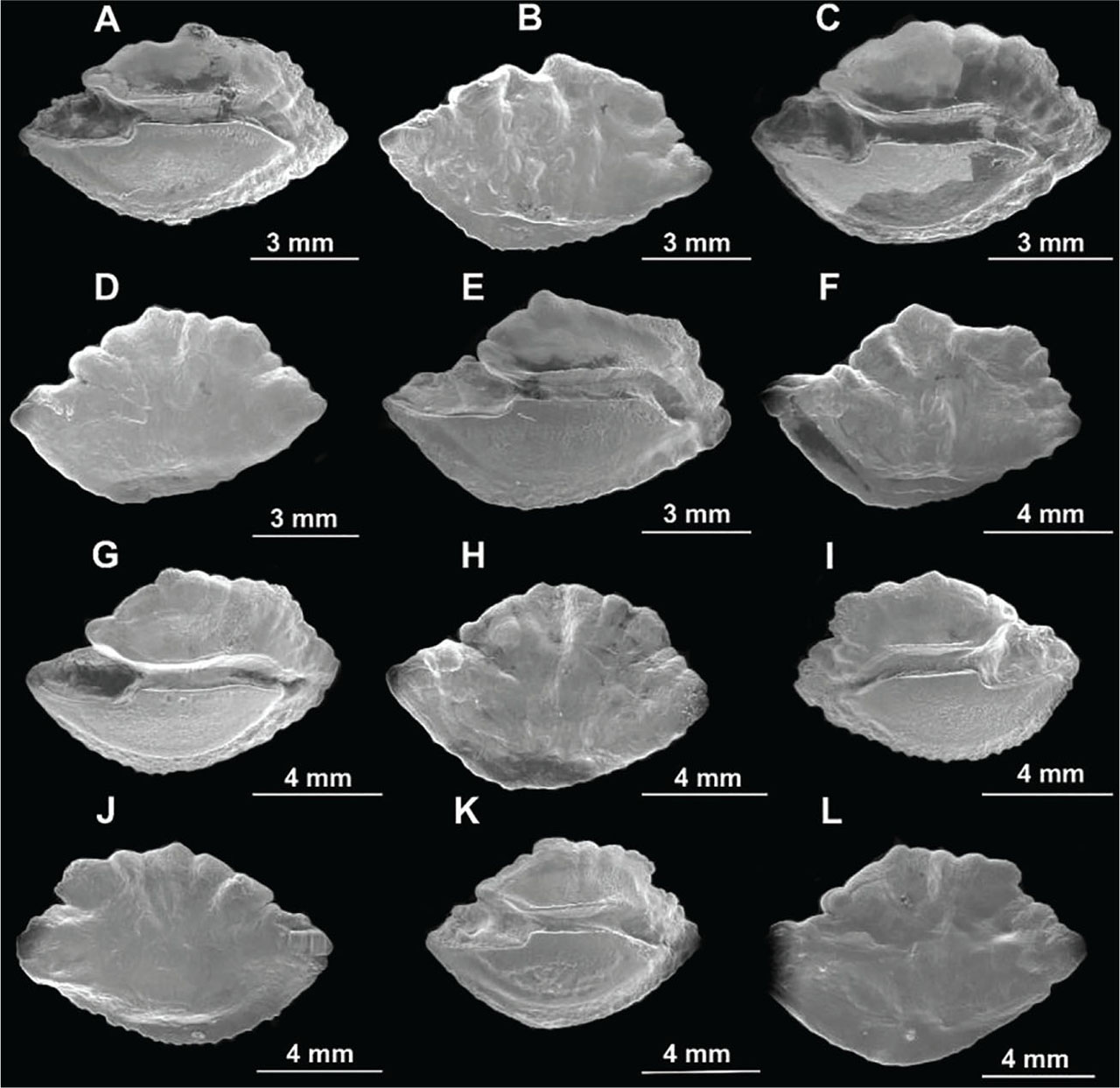
Figure 12
SEM images showing the lateral and the mesial sides of the otolith of N. randalli from the Antalya Bay, Mediterranean coast of Türkiye. (A) Right otolith of a specimen with 203 mm TL male showing mesial side; (B) Left otolith of a specimen with 203 mm TL male showing lateral side; (C) Right otolith of a specimen with 204 mm TL male showing mesial side; (D) Left otolith of a specimen with 204 mm TL male showing lateral side; (E) Right otolith of a specimen with 210 mm TL male showing mesial side; (F) Left otolith of a specimen with 210 mm TL male showing lateral side; (G) Right otolith of a specimen with 222 mm TL male showing mesial side; (H) Left otolith of a specimen with 222 mm TL male showing lateral side; (I) Left otolith of a specimen with 227 mm TL male showing mesial side; (J) Right otolith of a specimen with 227 mm TL male showing lateral side; (K) Right otolith of a specimen with 240 mm TL male showing mesial side; (L) Left otolith of a specimen with 240 mm TL male showing lateral side. SEM, scanning electron microscopy; TL, total length.
Table 3
Comparison of the surface morphology of the otolith between female and male specimens of B. boops collected from the Antalya Bay, Mediterranean coast of Türkiye.
| Fish TL (mm) | Sex | Morphological characters | Fish size (mm) | Sex | Morphological characters |
|---|---|---|---|---|---|
| 140 | Female | Otolith with pentagonal shape, posterior margin slightly produced, posterior part of dorsal margin slightly raised, cauda curved vertically posteriorly, antirostrum absent, lateral side, with coarse lobes at posterior margin. | 140 | Male | Otolith with oblong shape, posterior margin broadly pointed, posterior part of dorsal margin with a pronounced broad projection, cauda straight posteriorly, antirostrum small, lateral side with five lobes at posterior dorsal margin. |
| 145 | Female | Posterior margin produced, dorsal depression broad, ostium shallow, cauda straight posteriorly, antirostrum long, excisura shallow and notch narrow, lateral side is mainly smooth. | 142 | Male | Posterior margin short and straight, dorsal depression narrow, ostium deep, cauda curved posteriorly, antirostrum poorly developed, excisura shallow and notch absent, lateral side is covered with coarse lobes. |
| 157 | Female | Posterior margin with no notch, dorsal depression narrow and deep, cauda deep, excisura shallow and notch narrow, lateral side waved, with no lobulations. | 155 | Male | Posterior margin with notch, dorsal depression broad and shallow, cauda shallow posteriorly, excisura absent, lateral side covered with coarse lobes. |
| 163 | Female | Otolith with elliptic shape, posterior margin broadly pointed, dorsal depression wide, ventral depression shallow, antirostrum small, but well developed, excisura shallow and notch narrow, the dorsal region of the lateral side covered with coarse lobulation. | 162 | Male | Otolith with oblong shape, posterior margin straight, dorsal depression narrow, ventral depression deep, antirostrum absent, excisura absent, the surface of the lateral side covered with fine wavy lobulation. |
| 165 | Female | Otolith with oblong shape, posterior margin finely lobulated, with irregular posterior end, dorsal depression wide, ostium and cauda shallow, rostrum with a pointed tip, antirostrum short. | 165 | Male | Otolith with elliptic shape, posterior margin broadly pointed, with coarsely lobulated posterior end, dorsal depression narrow, ostium and cauda deep, rostrum with a broadly pointed tip, antirostrum long. |
| 166 | Female | Otolith with elliptic shape, posterior margin pointed, dorsal depression shallow, ostium long and shallow, the surface of the lateral side is covered with coarse lobulation. | 166 | Male | Otolith with oblong shape, posterior margin broadly pointed, dorsal depression deep, ostium short and deep, the surface of the lateral side is covered with fine lobulation. |
| 172 | Female | Otolith with oblong shape, posterior margin produced, dorsal depression shallow, antirostrum small, lateral side is covered with fine lobulation mainly in the middle. | 172 | Male | Otolith with elliptical shape, posterior margin broadly pointed, dorsal depression deep, antirostrum absent, lateral side is covered with coarse lobulation mainly in the middle. |
| 175 | Female | Otolith with oblong shape, posterior margin rounded, dorsal depression narrow, rostrum with a pointed tip, antirostrum poorly developed, excisura absent. | 175 | Male | Otolith with elliptical shape, posterior margin broadly pointed, dorsal depression wide, rostrum with a broadly pointed, antirostrum long, excisura wide and notch deep. |
| 178 | Female | Otolith with elliptical shape, posterior margin nearly smooth, dorsal depression deep, ostium and cauda deep, antirostrum small, excisura absent, the surface of the lateral side is covered with coarsely lobulations near the posterior margin. | 180 | Male | Otolith with hexagonal shape, posterior margin wavy, dorsal depression narrow and deep, ostium and cauda shallow, antirostrum long, excisura wide and notch deep, the surface of the lateral side is entirely covered with fine lobulations. |
| 195 | Female | Dorsal side of the posterior margin irregular, dorsal depression narrow and shallow, ostium shallow, antirostrum absent, the surface of the lateral side is entirely covered with coarse lobulations mainly at the center. | 195 | Male | Dorsal side of the posterior margin with a notch, dorsal depression wide and deep, ostium deep, antirostrum developed but small, the surface of the lateral side is entirely covered with fine lobulations mainly at the centre. |
| 203 | Female | Otolith with oblong shape, dorsal and posterior margins with no notch, dorsal depression wide, rostrum with a broadly pointed tip and curved dorsally, ostium and cauda deep, antirostrum absent. | 202 | Male | Otolith with elliptical shape, dorsal and posterior margins with notch, dorsal depression narrow, rostrum with a pointed and straight tip, ostium and cauda shallow, antirostrum developed, but small. |
| 206 | Female | Otolith with spindle shape, dorsal margin with conspicuous projection, posterior margin finely pointed, rostrum with a pointed tip, antirostrum absent, excisura absent, cauda deep and straight, lateral side is covered evenly distributed lobulations. | 204 | Male | Otolith with elliptical shape, dorsal margin straight and raised, posterior margin broadly pointed, rostrum with a broad tip, antirostrum absent, excisura developed, but small, cauda shallow and slightly curved posteriorly, lateral side is covered with coarse lobes at the center. |
Table 4
Comparison of the surface morphology of the otolith between female and male specimens of N. randalli collected from the Antalya Bay, Mediterranean coast of Türkiye.
| Fish TL (mm) | Sex | Morphological characters | Fish size (mm) | Sex | Morphological characters |
|---|---|---|---|---|---|
| 126 | Female | Posterior part of the ventral margin coarsely lobulated, dorsal depression narrow and deep, ventral depression shallow, rostrum with straight tip, cauda curved posteriorly, ostium shallow, the surface of the lateral side is covered with small lobulations. | 130 | Male | Posterior part of the ventral margin irregular, dorsal depression wide and shallow, ventral depression deep, rostrum with broadly pointed tip, cauda straight posteriorly, ostium deep, the surface of the lateral side is waved and covered with small lobulations. |
| 145 | Female | Posterior margin with notch, antirostrum small, excisura wide and notch shallow, ostium and cauda narrow and shallow, cauda slightly curved posteriorly, in the lateral side, a few coarse lobes are present on the dorsal margin. | 145 | Male | Posterior margin with no notch and produced, antirostrum absent, excisura absent, ostium and cauda wide and deep, cauda strongly curved posteriorly, on the lateral side, the anterior and the posterior ends are covered with coarse lobes. |
| 165 | Female | Otolith with oval shape, dorsal margin with two prominent lobes anteriorly, ventral margin smooth, posterior margin slightly produced and rounded, dorsal depression deep, ostium and cauda are broad and deep, rostrum broad and well developed, the surface of the lateral side is evenly covered with coarsely lobes. | 166 | Male | Otolith with elliptical shape, dorsal margin finely emarginated, ventral margin finely serrated, posterior margin short and broadly pointed, dorsal depression shallow, ostium and cauda are narrow and shallow, rostrum short and poorly developed, the surface of the lateral side covered with coarsely lobes mainly on the dorsal margin. |
| 175 | Female | Otolith with broad rectangular shape, dorsal margin emarginated, ventral margin dentate. | 183 | Male | Otolith with elliptical shape, dorsal margin irregular, ventral margin smooth. |
| 185 | Female | Posterior margin produced and finely pointed, ventral margin slightly notched at center, posterior part of the dorsal margin with coarse lobes, dorsal depression shallow, ostium and cauda shallow, the surface of the lateral side is covered with coarsely lobes mainly on dorsal margin. | 185 | Male | Posterior margin short and finely pointed, ventral margin smooth, posterior part of the dorsal margin with fine lobes, dorsal depression deep, ostium and cauda deep, the surface of the lateral side is covered evenly with coarse lobes. |
| 190 | Female | Posterior margin broadly pointed, ventral margin smooth, rostrum with pointed tip, ostium and cauda deep, cauda sharply curved posteriorly, excisura narrow and notch deep, antirostrum well developed and broadly pointed, the surface of the lateral side is covered with irregular lobes mainly on dorsal margin. | 190 | Male | Posterior margin notched, ventral margin notched, rostrum with rounded tip, ostium and cauda shallow, cauda slightly curved posteriorly, excisura wide and notch shallow, antirostrum well developed, but small, the surface of the lateral side is covered with evenly distributed lobes. |
| 197 | Female | Posterior margin irregular, dorsal margin wavy and irregular posteriorly, dorsal depression shallow, antirostrum short and poorly developed. | 203 | Male | Posterior margin broadly pointed, dorsal margin coarsely wrinkelled, dorsal depression deep, antirostrum long and well developed. |