
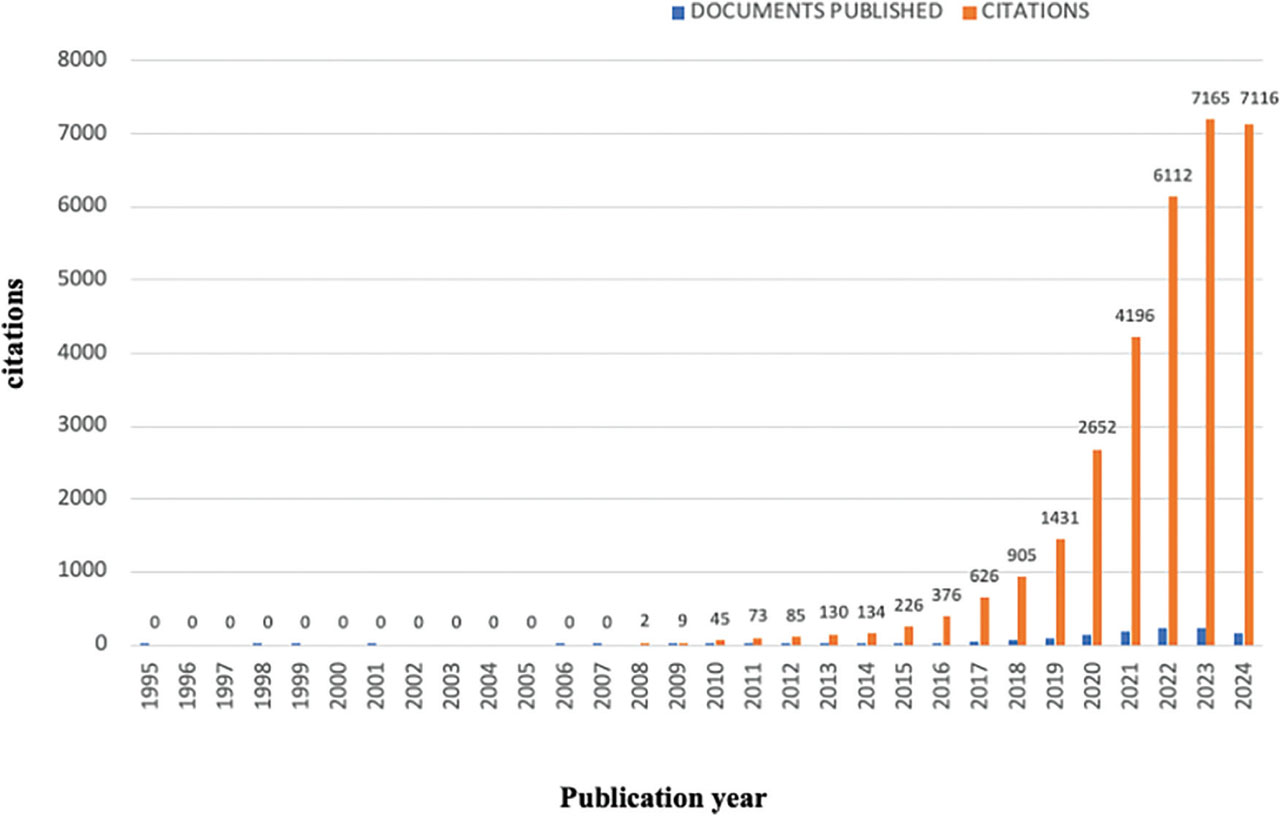
Figure 1
Year-wise publications and citations on the theme marine microalgae for sustainable aquafeeds.
Source: Scopus, (2024).
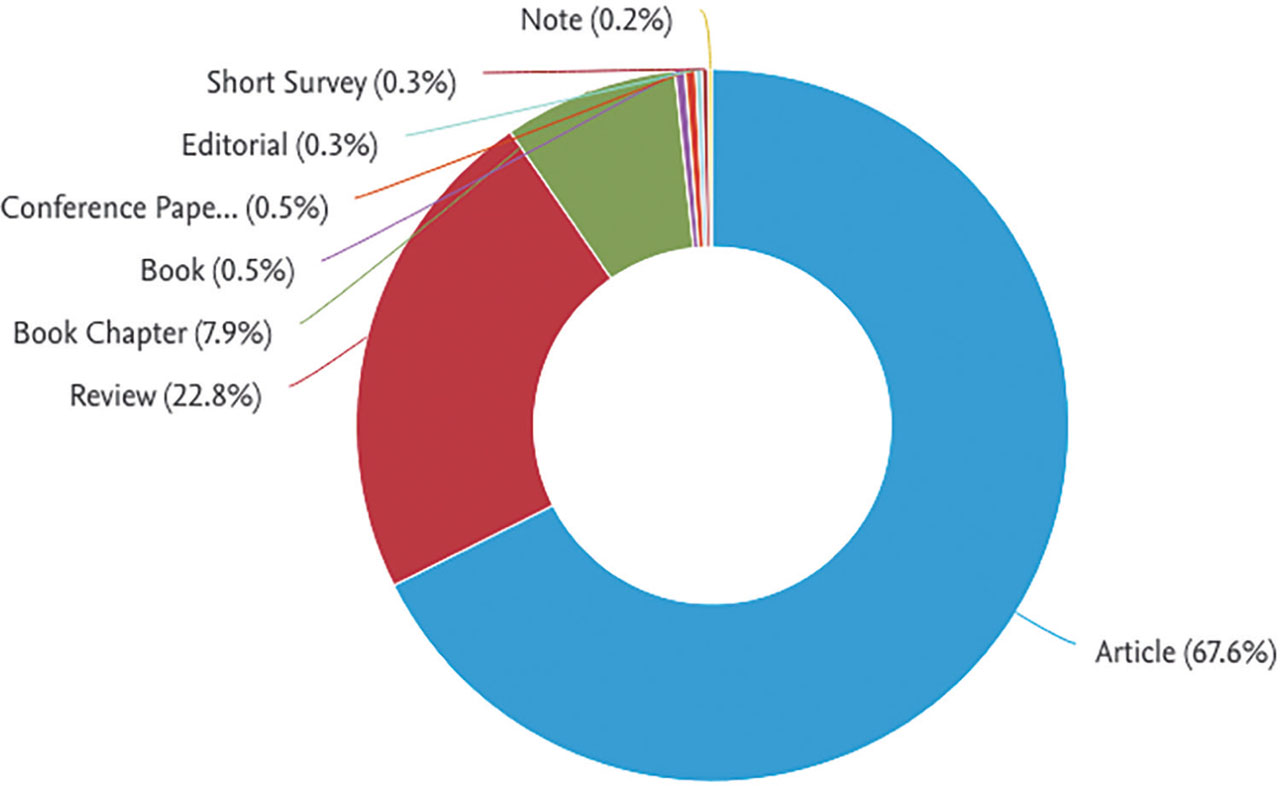
Figure 2
Document category on the theme marine microalgae for sustainable aquafeeds.
Source: Scopus (2024).
Table 1
Documents supported by individual funding sponsor for the theme.
| Funding Sponsor | Publications |
|---|---|
| European Commission | 83 |
| Horizon 2020 framework program (EU) | 53 |
| National Natural Science Foundation of China | 52 |
| Fundacao para a Ciencia e a Tecnologia (Portugal) | 47 |
| European Regional development fund (EU) | 45 |
[i] Source: Scopus (2024). EU, European Union.
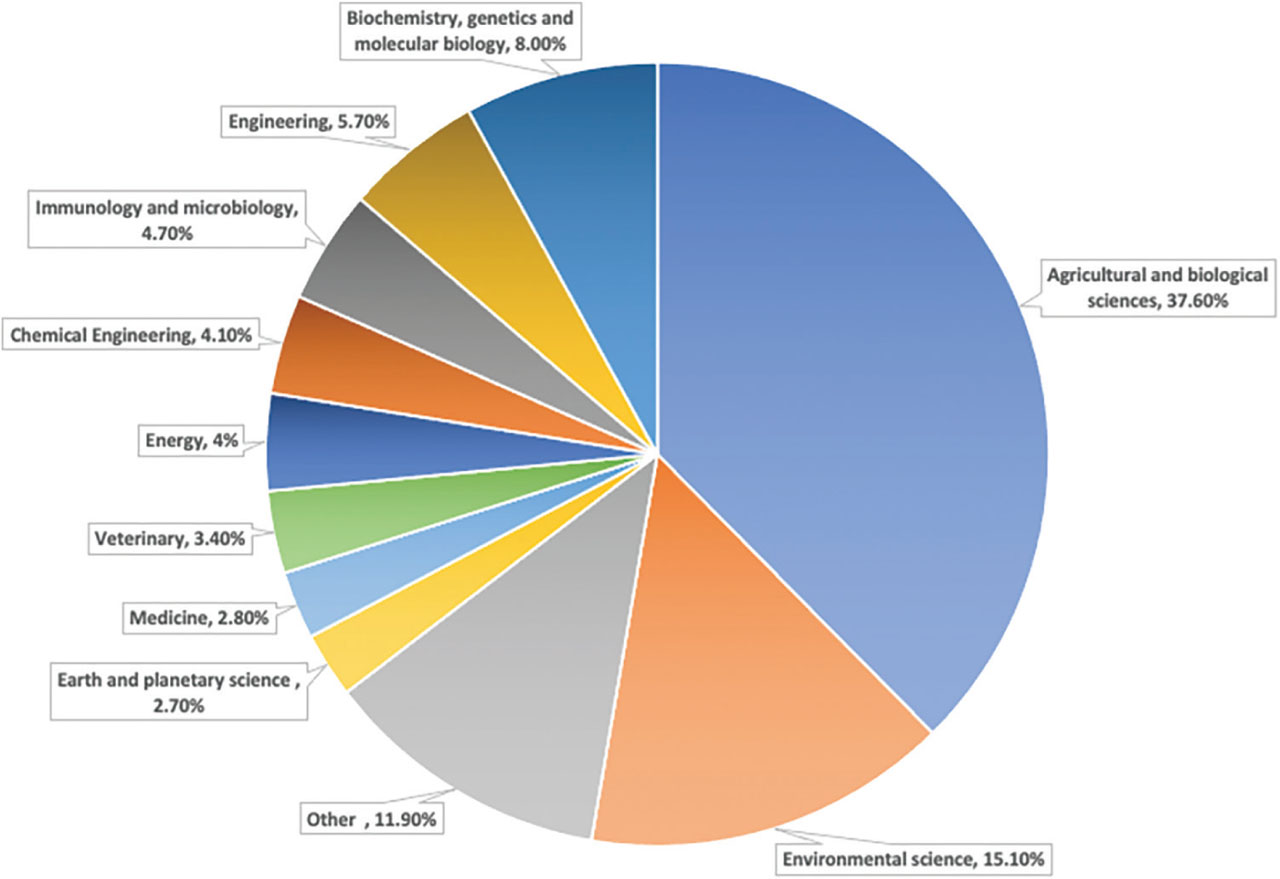
Figure 3
Publications as per focus area.
Source: Scopus (2024).
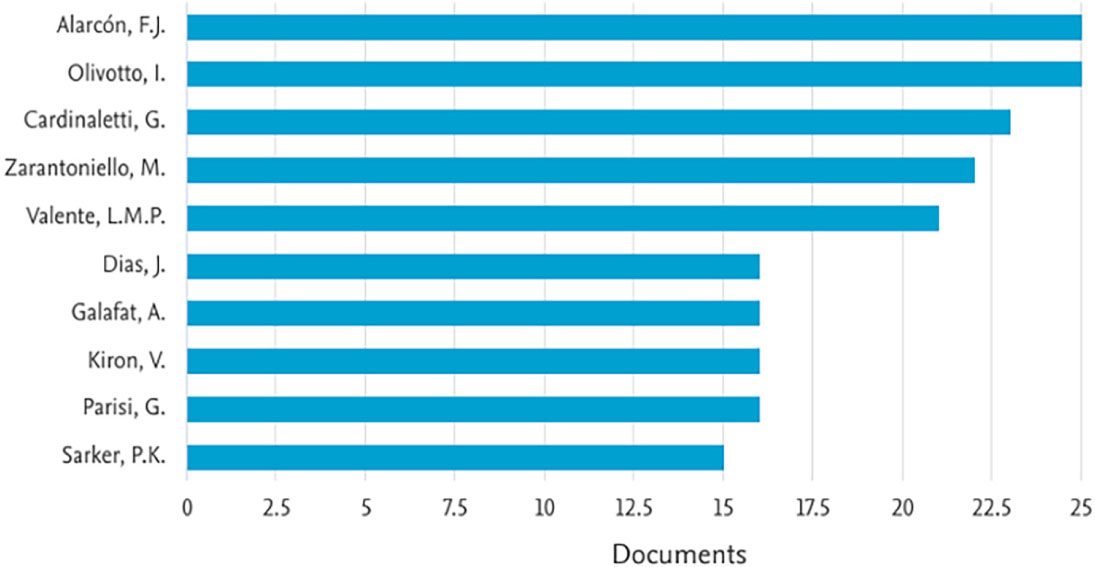
Figure 4
Top10 most documented authors on the theme marine microalgae for sustainable aquafeeds.
Source: Scopus (2024).
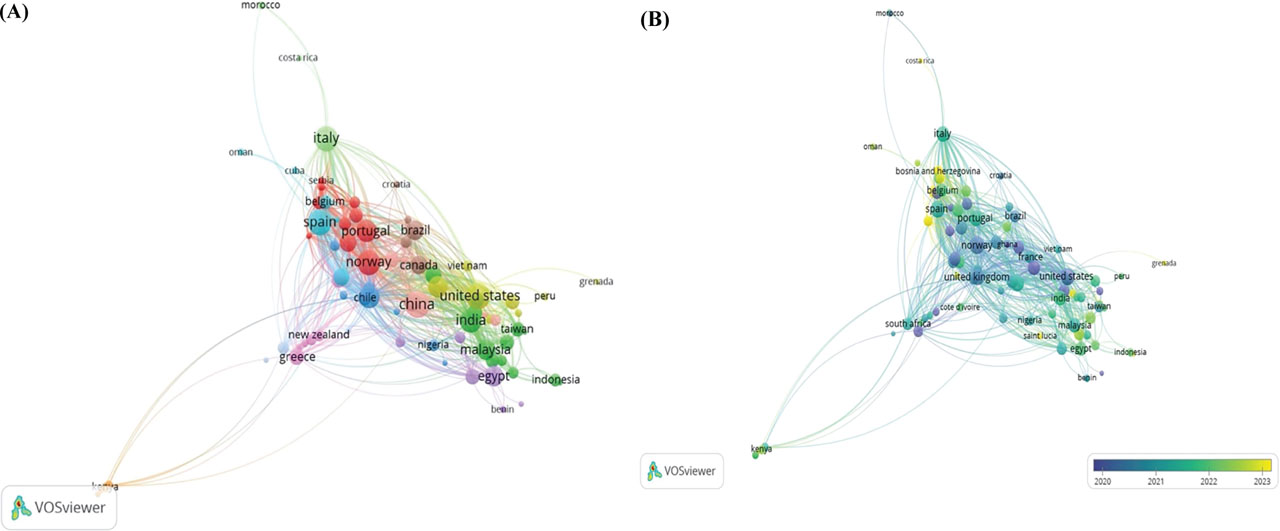
Figure 5
(A) Network, (B) An overlay visualization of country based co-authorships on marine microalgae for sustainable aquafeeds.
Source: Scopus (2024).
Table 2
Ranking top 15 countries as per co-authorship linkage strength among country cluster
| Country Clusters | No. of countries in cluster | Top 15 countries as per TLS | Citations of top 15 as per TLS | Documents of top 15 as per TLS | Rank as per TLS |
|---|---|---|---|---|---|
| Cluster 1 | 15 | Norway | 6274 | 109 | 1 (209) |
| Portugal | 1532 | 80 | 7 (121) | ||
| Germany | 753 | 39 | 12 (74) | ||
| Cluster 2 | 14 | India | 1747 | 91 | 9 (84) |
| Malaysia | 2185 | 59 | 10 (82) | ||
| Cluster 3 | 8 | UK | 5520 | 71 | 4 (166) |
| Cluster 4 | 8 | US | 6643 | 134 | 2 (194) |
| Australia | 4785 | 62 | 8 (98) | ||
| Cluster 5 | 7 | Egypt | 1726 | 58 | 13 (63) |
| Cluster 6 | 6 | Belgium | 694 | 15 | 15 (52) |
| Spain | 3527 | 130 | 3 (175) | ||
| Netherlands | 1124 | 35 | 11 (78) | ||
| Cluster 9 | 6 | Ireland | 873 | 30 | 14 (61) |
| Cluster 10 | 5 | China | 4106 | 150 | 5 (139) |
| Cluster 11 | 4 | Italy | 3484 | 107 | 6 (132) |
[ii] Source: Scopus (2024). TLS, total link strength.
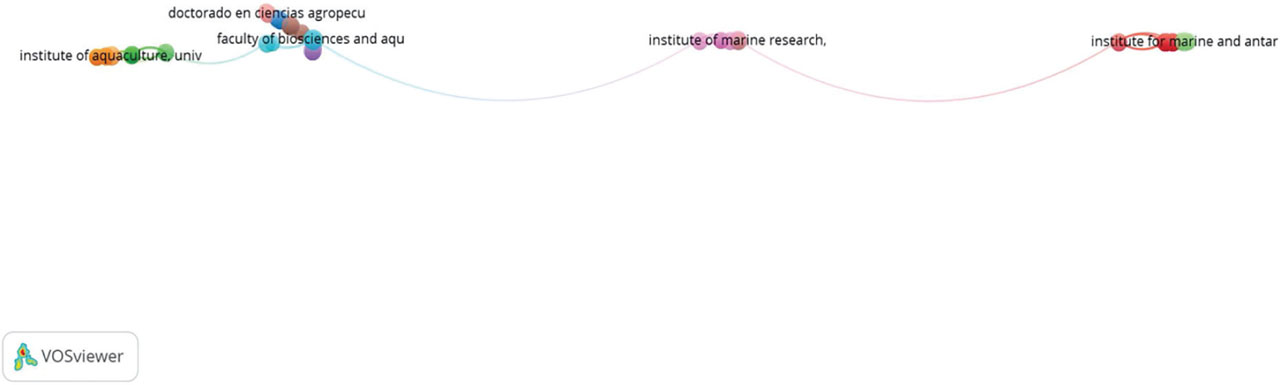
Figure 6
Co-authorships among organizations on the basis of strength of total linkages.
Source: Scopus (2024).
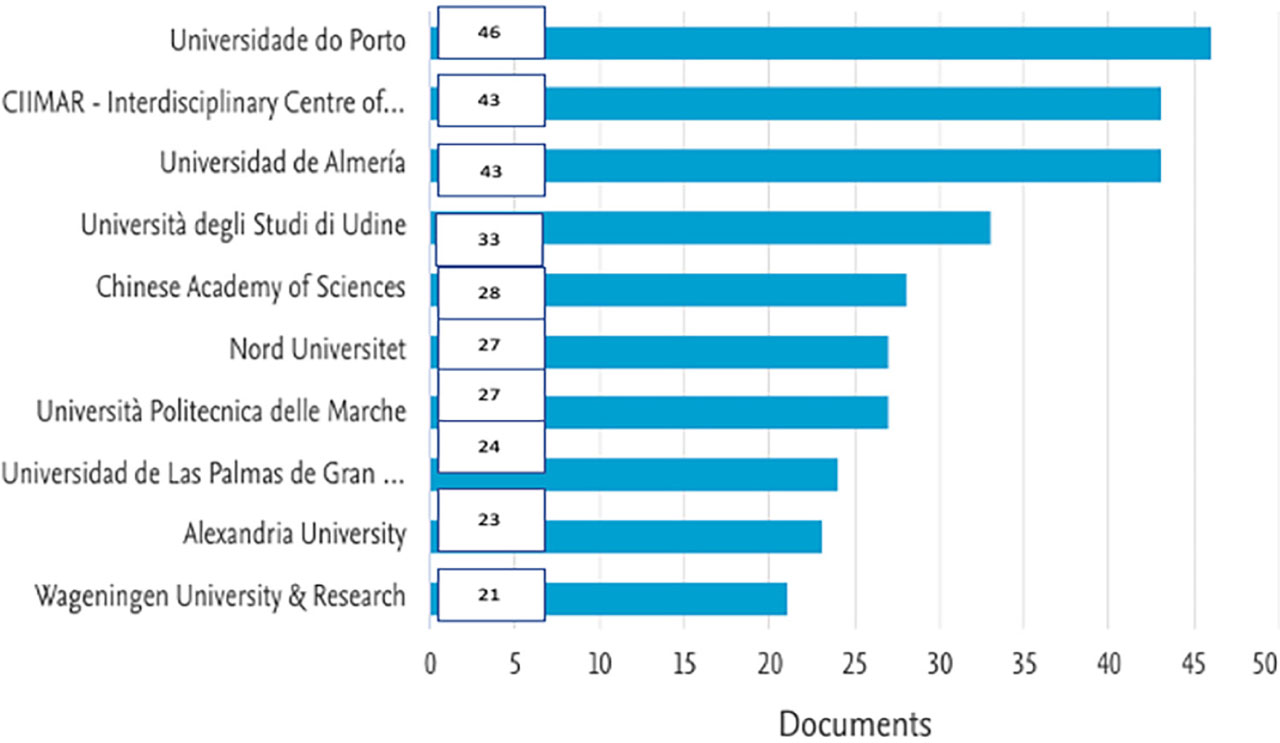
Figure 7
Top 10 affiliations as per documents published on the subject.
Source: Scopus (2024).
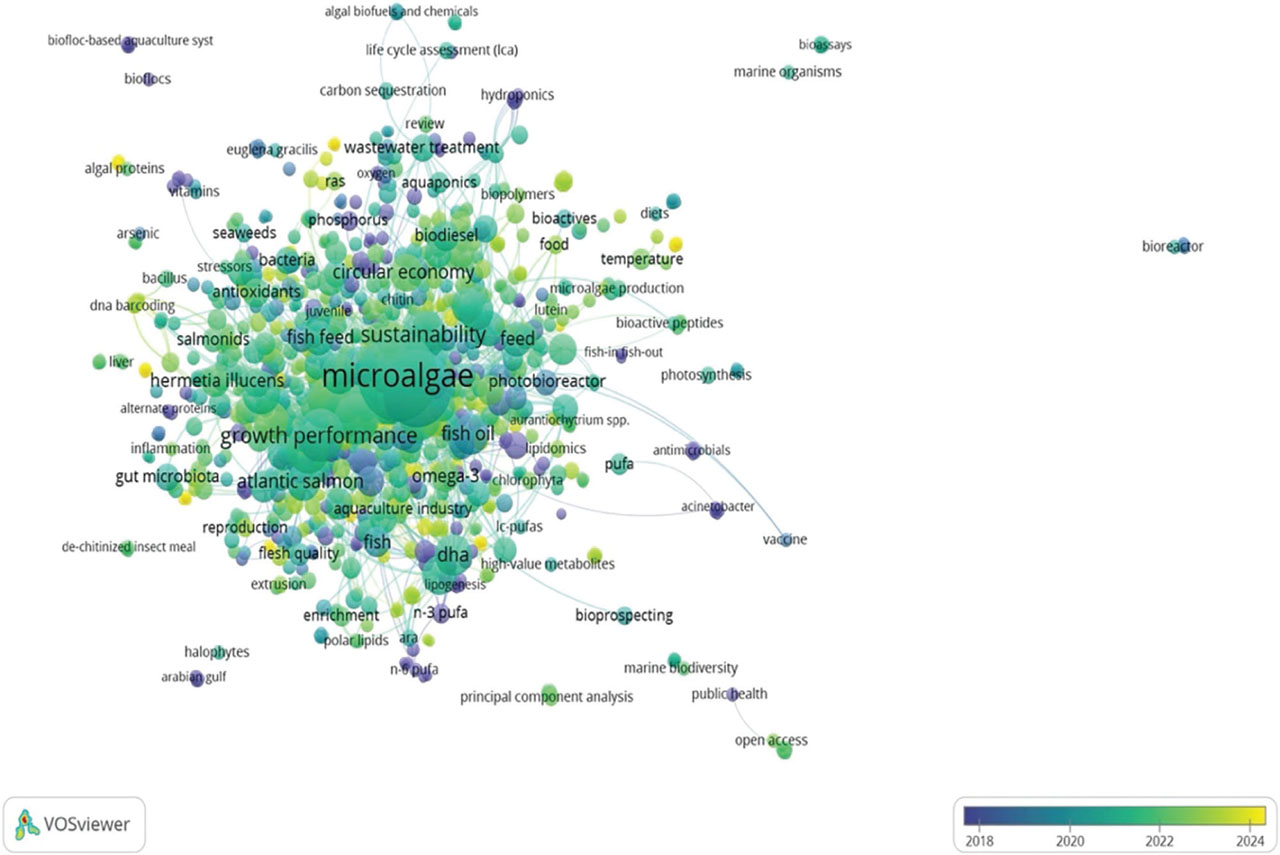
Figure 8
Author keyword co-occurrence: An overlay visualization of the theme marine microalgae for sustainable aquafeeds.
Source: Scopus (2024).
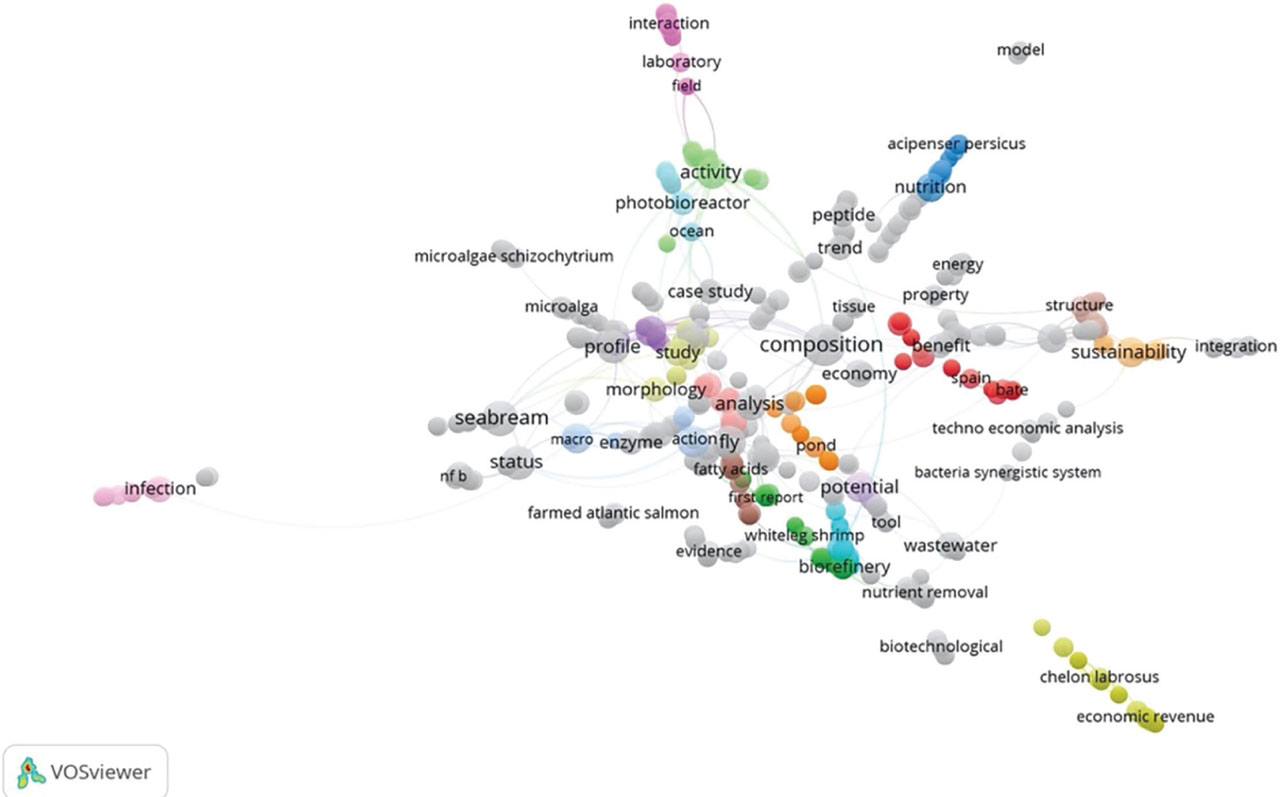
Figure 9
Title field analysis on the topic marine microalgae for sustainable aquafeeds.
Source: Scopus (2024).
Table 3
Top 15 author keywords as per occurrence and cumulative link strength on the topic marine microalgae for sustainable aquafeeds
| Top 15 Author Keywords | Occurrences | Cumulative link strength |
|---|---|---|
| Microalgae | 226 | 797 |
| Aquaculture | 157 | 651 |
| Sustainability | 45 | 215 |
| Fatty acids | 49 | 179 |
| Growth performance | 56 | 177 |
| Fish oil | 27 | 162 |
| Rainbow trout | 35 | 158 |
| Nutrition | 33 | 157 |
| Aquafeed | 43 | 152 |
| Growth | 45 | 146 |
| Fishmeal | 30 | 136 |
| Dha | 30 | 130 |
| Fish meal | 26 | 125 |
| Digestibility | 24 | 116 |
| Epa | 25 | 116 |
[i] Source: Scopus (2024).
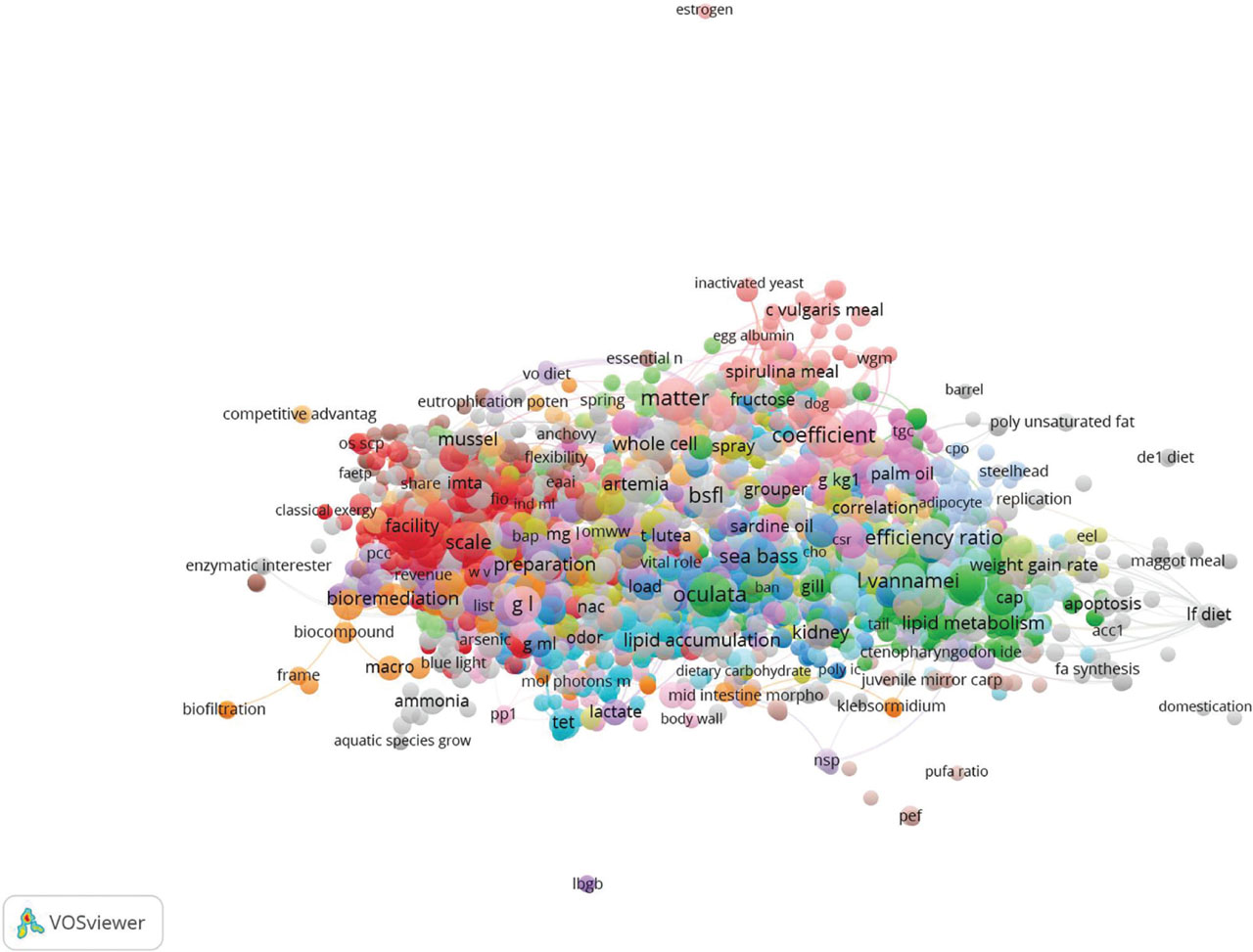
Figure 10
Abstract field analysis on the topic marine microalgae for sustainable aquafeeds.
Source: Scopus (2024).