

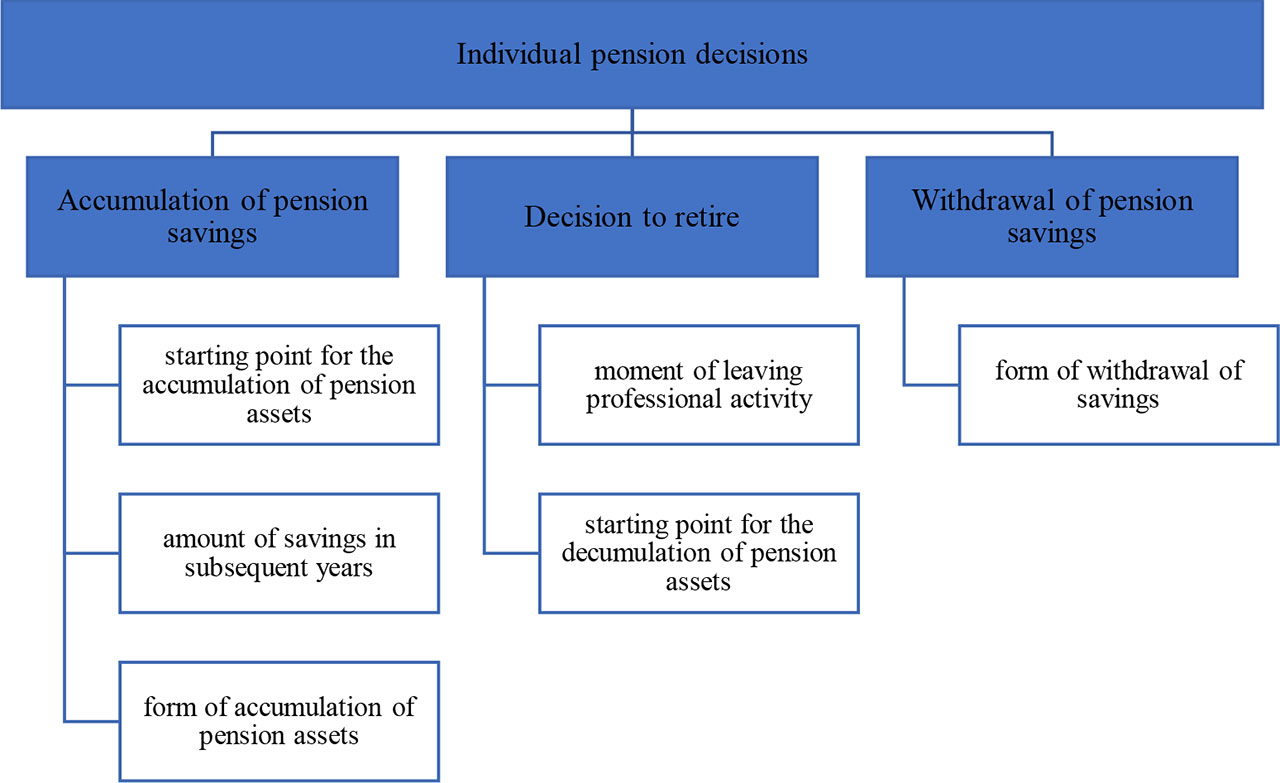
Figure 1:
Areas of individual pension decisions
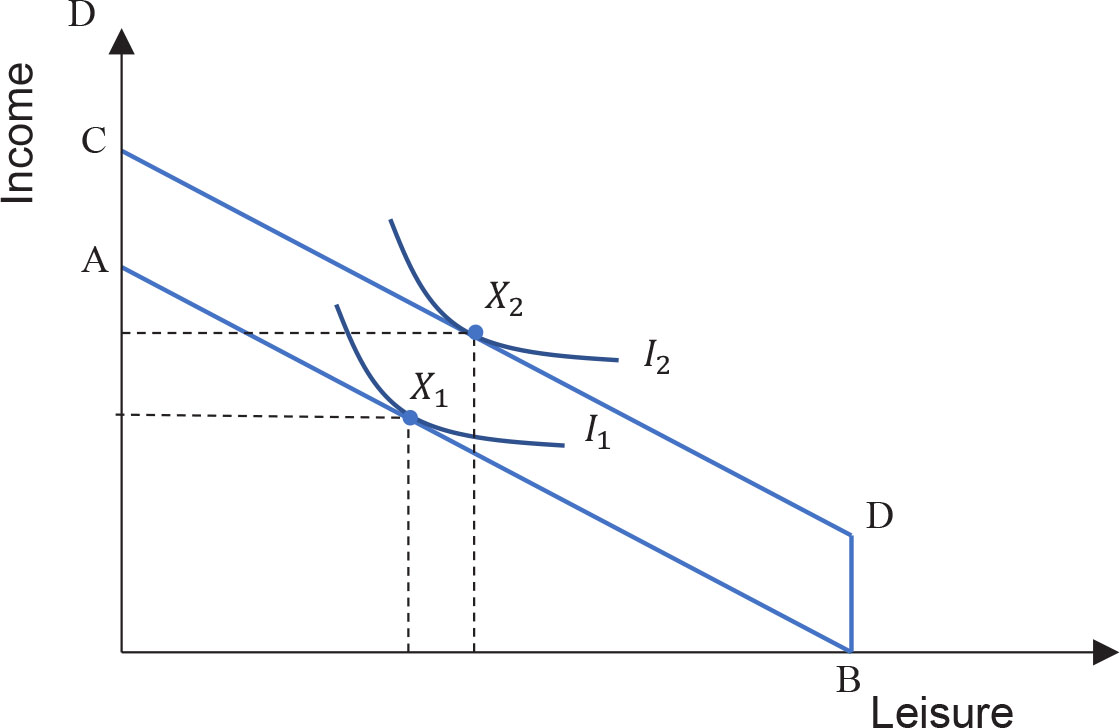
Figure 2:
Model of optimal choice between income (work) and leisure (retirement)
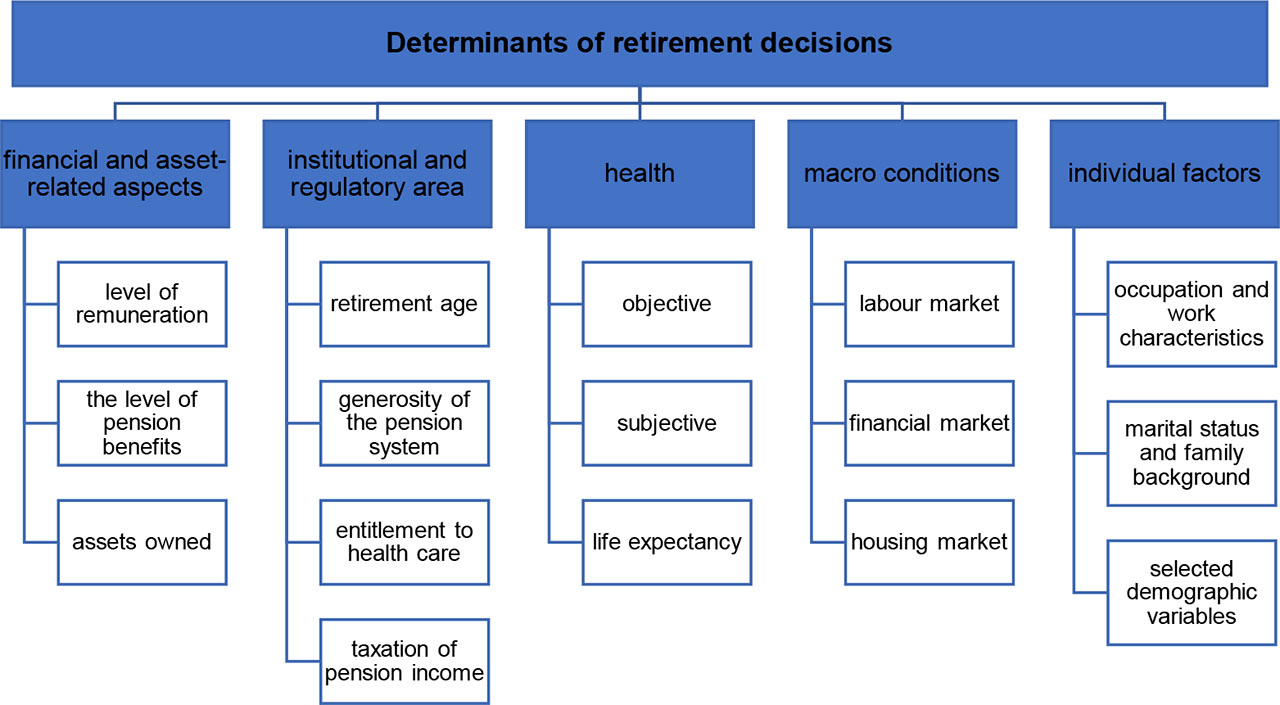
Rysunek 3:
Factors influencing retirement decisions according to the neoclassical approach
Source: (Jedynak 2022)
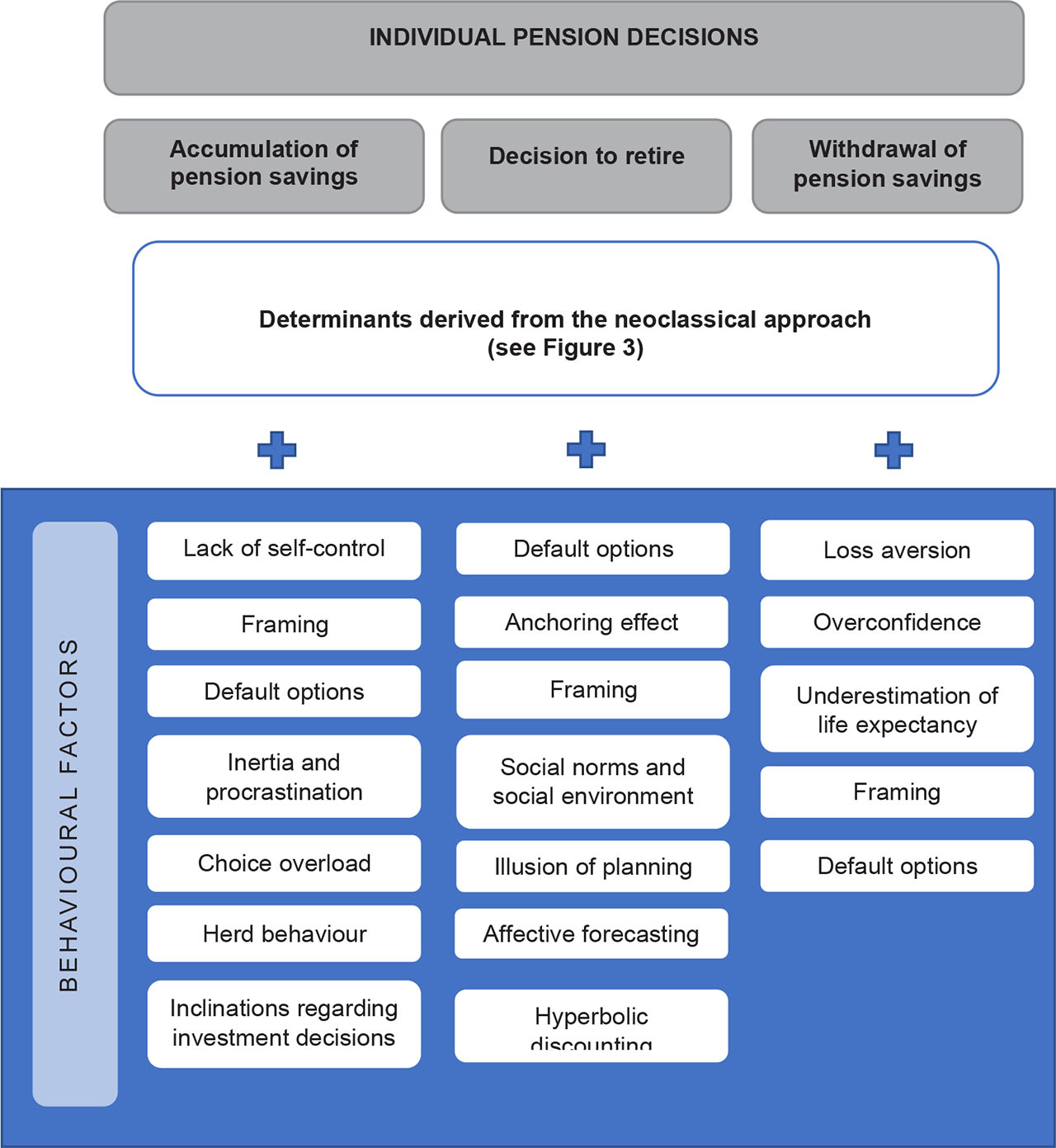
Figure 4:
Conceptual diagram of the behavioural model of pension decision-making
Table 1:
Characteristics of behavioural factors influencing individual retirement decisions
| Behavioural factor | Characteristics |
|---|---|
| Behavioural inclinations in the accumulation phase | |
| Lack of self-control | People are trying to save for retirement, but due to limitations in their abilities and willingness to realise these intentions, they are unable to do so. |
| Framing and default options | The way in which the decision problem and related information is presented influences the savings decisions made. |
| Inertia and procrastination | When deciding whether to participate in pension schemes, people make the easiest decision (generally doing nothing) rather than the best one. |
| Choice overload | As a result of the aversion to ambiguity and the availability heuristic advocated by neoclassical economics, a greater number of choices is not always beneficial to the decision-maker as it can lead to oversimplification of the decision-making process or postponement of decisions. |
| Herd behaviour | Instead of turning to experts, people generally ask for help from those around them, which results in them relying not so much on expert knowledge but on the beliefs of their ‚advisors’ when making decisions. |
| Behavioural inclinations related to retiring | |
| Default options | The default option is a standard choice for which no additional action is required. As a result of the propensity to choose the default option, people do not make the intellectual effort to analyse the factors that need to be taken into account when deciding whether to retire, but retire at the universal retirement age. |
| Anchoring effect | When making decisions, people rely on values that are deeply rooted in their minds and are relevant to retirement. Such values are, in particular, minimum or universal retirement age. |
| Framing | The way in which the decision situation is presented (e.g. in terms of gains or in terms of losses) influences decision-makers’ choices regarding the age of retirement. |
| Social norms and social environment | When making decisions, people are guided by social norms about retirement (e.g. the usual age for ending working life) and by the opinions, beliefs and experiences of others. |
| Illusion of planning | Incorrect anticipation of future events as a result of unrealistic (overly optimistic) construction of scenarios for future life in retirement. |
| Affective forecasting | People tend to imagine that an event in the future will be much better (or worse) than it later turns out to be, due to the influence of current emotional state on future decisions. As a result, people prefer to retire early because they imagine that retirement will bring them more satisfaction than it actually does |
| Hyperbolic discounting | People perceive future benefits below their actual value and overestimate the value of benefits offered immediately. As a result, people who initially plan to retire later actually retire close to the universal retirement age. |
| Behavioural inclinations in the consumption phase | |
| Loss aversion | When deciding how to pay out retirement savings, people are concerned about the potential losses their heirs will experience if they take out an annuity and die prematurely. |
| Overconfidence | The tendency to underestimate the amount of funds needed to maintain the current standard of living after retirement. One effect can be to use accumulated pension assets too early. |
| Underestimation of life expectancy | People tend to underestimate how long they will live in retirement, which influences their retirement decisions. |
| Lack of self-control | The tendency to spend all or the vast majority of retirement savings within a few years after retirement. |
| Framing and default options | The way in which different pension products (e.g. annuities) are presented to retirees influences their decisions. |