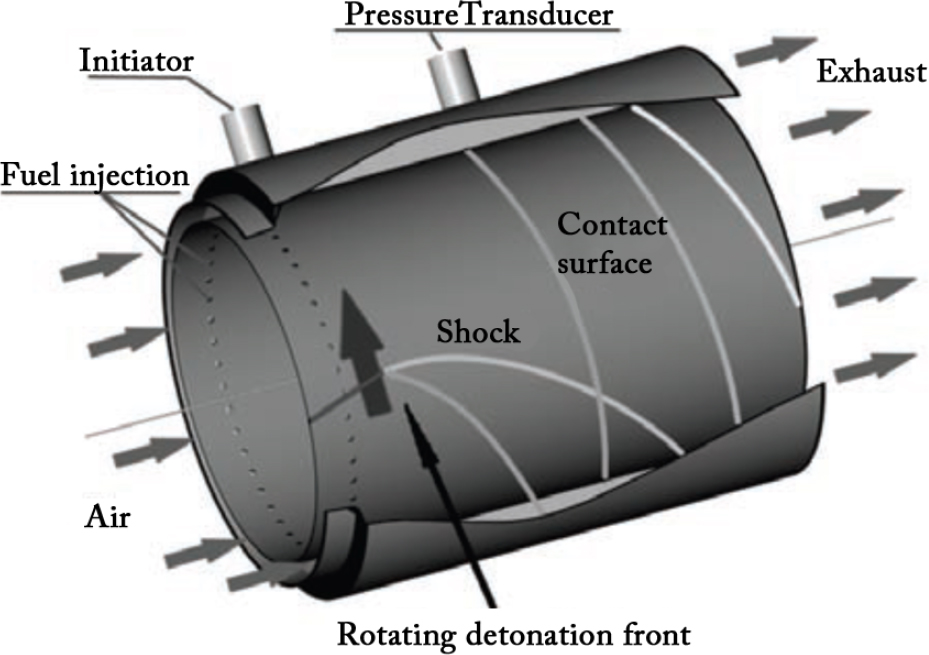
Fig. 1.
Diagram of an annular combustion chamber [1].
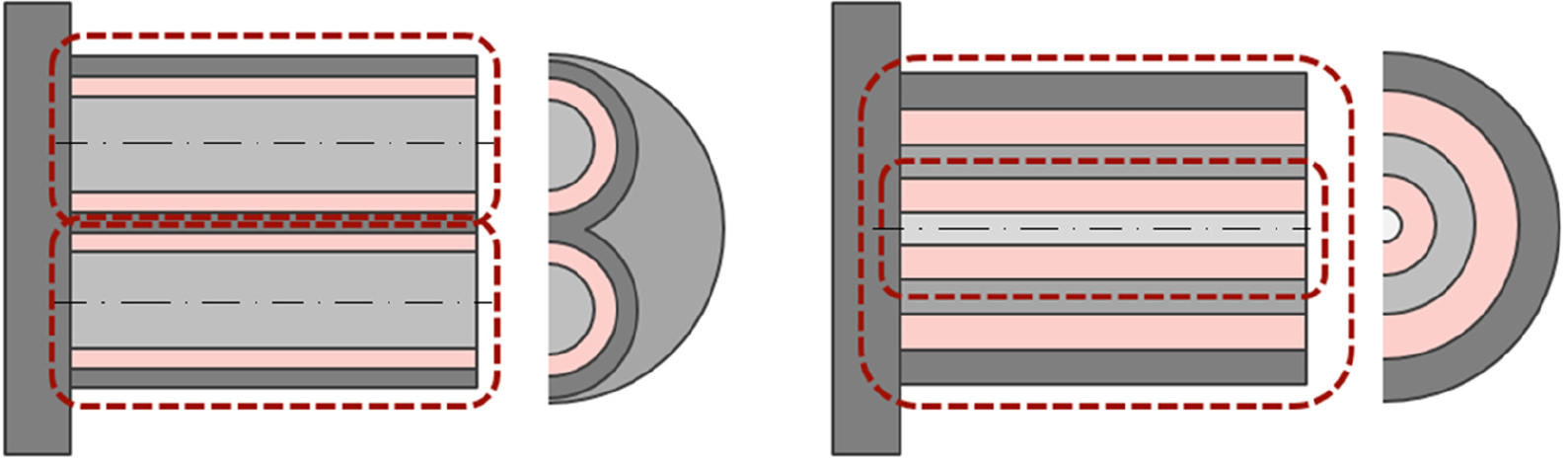
Fig. 2.
Diagram of a conventional dual-chamber engine (left) and a nested engine (right).
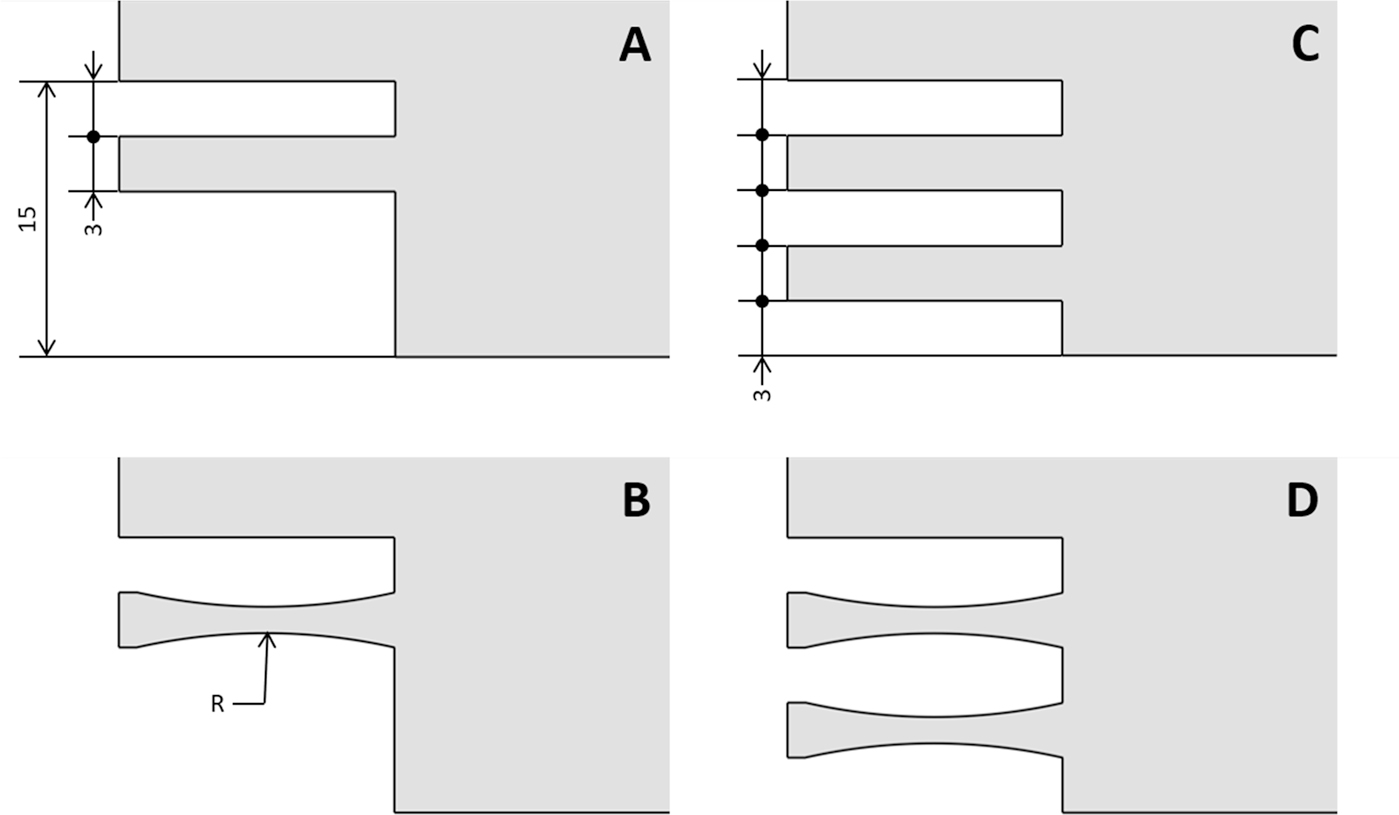
Fig. 3.
Diagram of a conventional dual-chamber engine (left) and a nested engine (right).
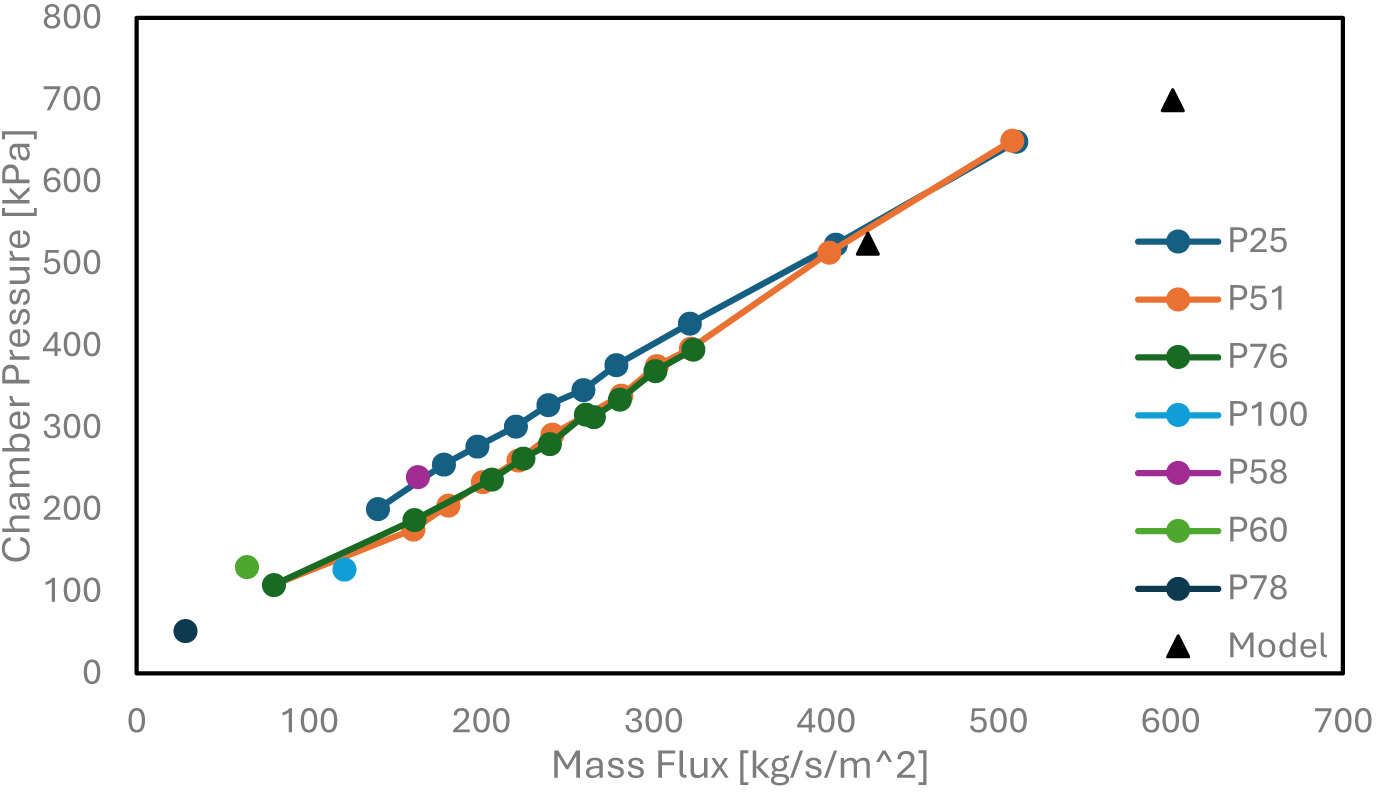
Fig. 4.
Relationship between chamber pressure and mass flux.
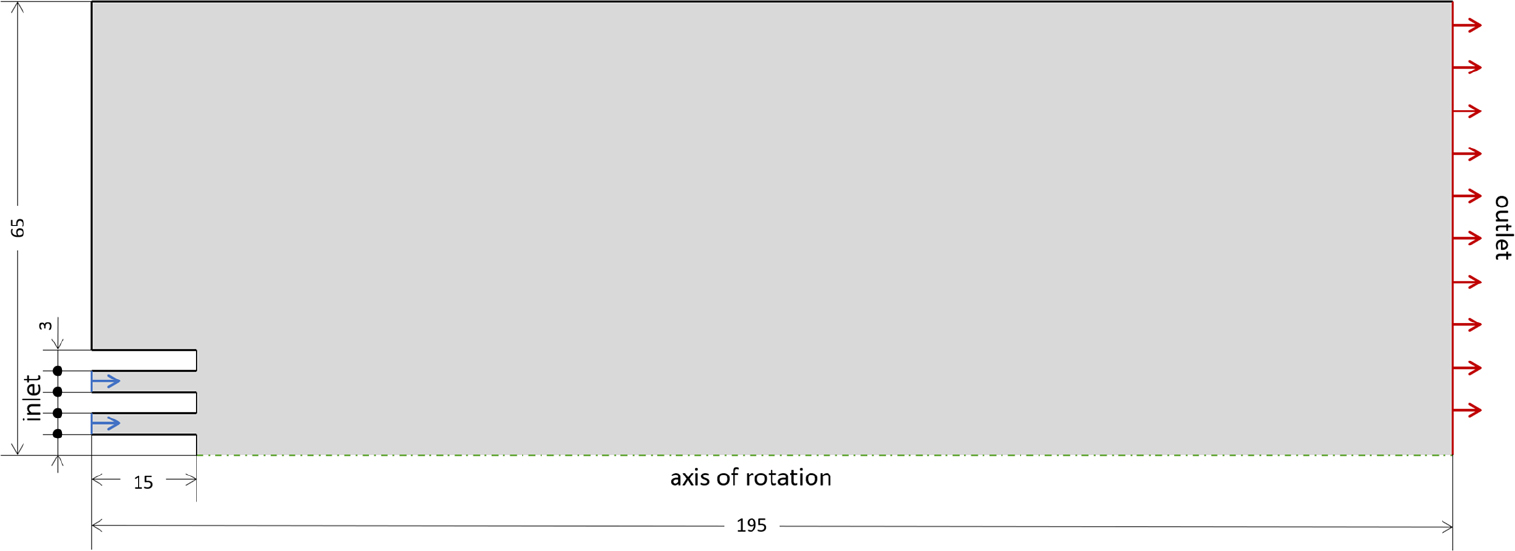
Fig. 5.
Two-dimensional computational fluid domain for Model C.

Fig. 6.
Mesh for Model C.
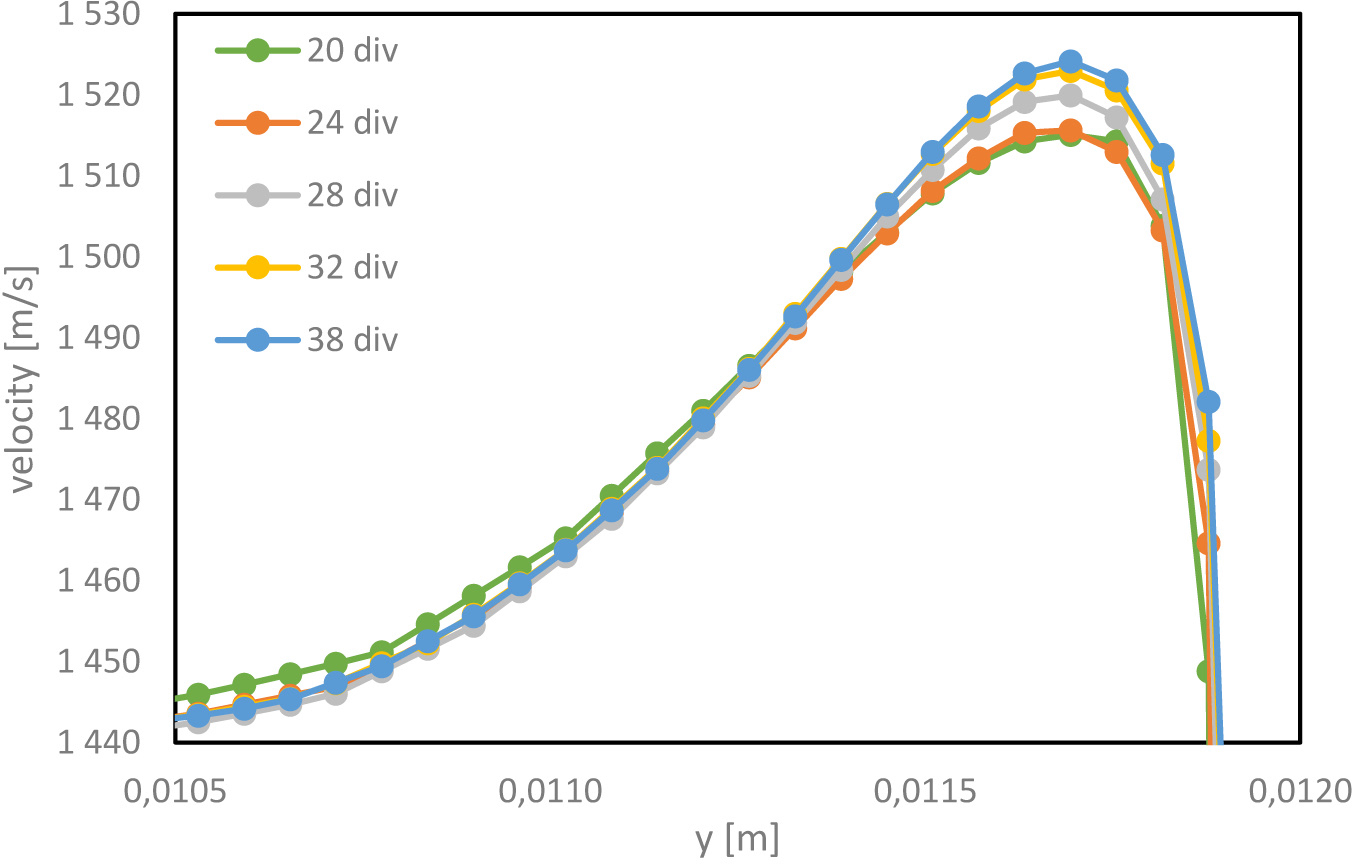
Fig. 7.
Velocity at the nozzle exit with varying cell sizes.
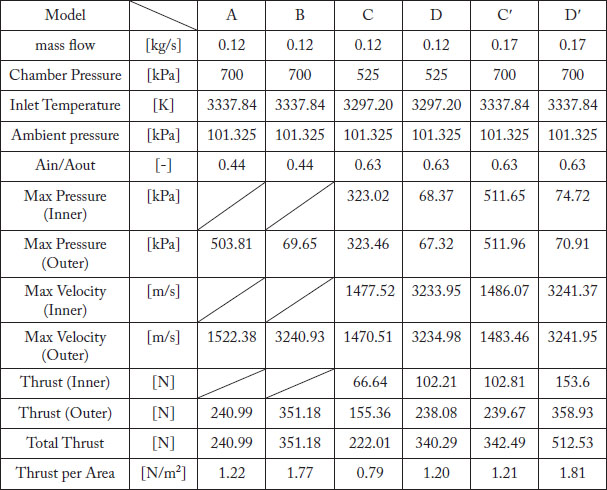
Table 1.
Initial Conditions.
| turbulence model | realizable k-ε | ||||
|---|---|---|---|---|---|
| material | water vapor (ideal gas) | ||||
| steel | |||||
| inlet | A, B | C, D | Cʹ, Dʹ | ||
| mass flow rate | [kg/s] | 0.12 | 0.12 | 0.17 | |
| temperature | [K] | 3337.84 | 3297.20 | 3337.84 | |
| pressure | [kPa] | 700 | 525 | 700 | |
| outlet | temperature | [K] | 300 | ||
| pressure | [kPa] | 101.325 | |||
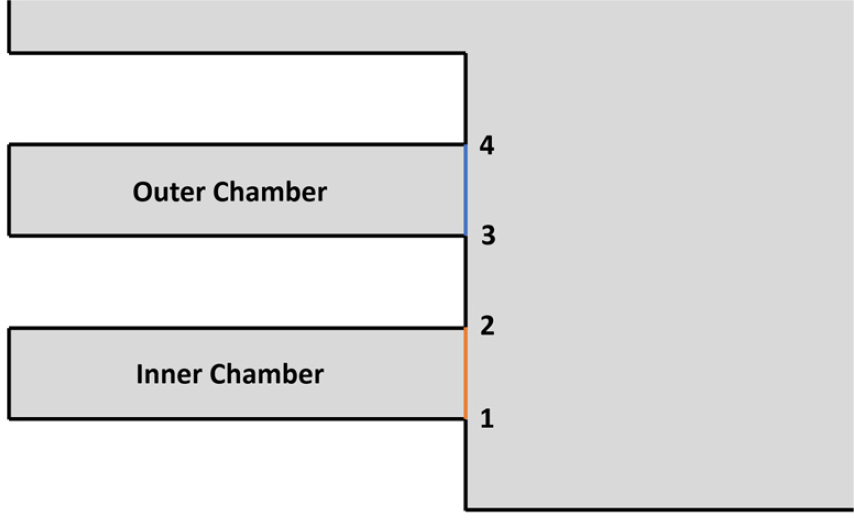
Fig. 8.
Combustion chamber data collection points represented with two lines.
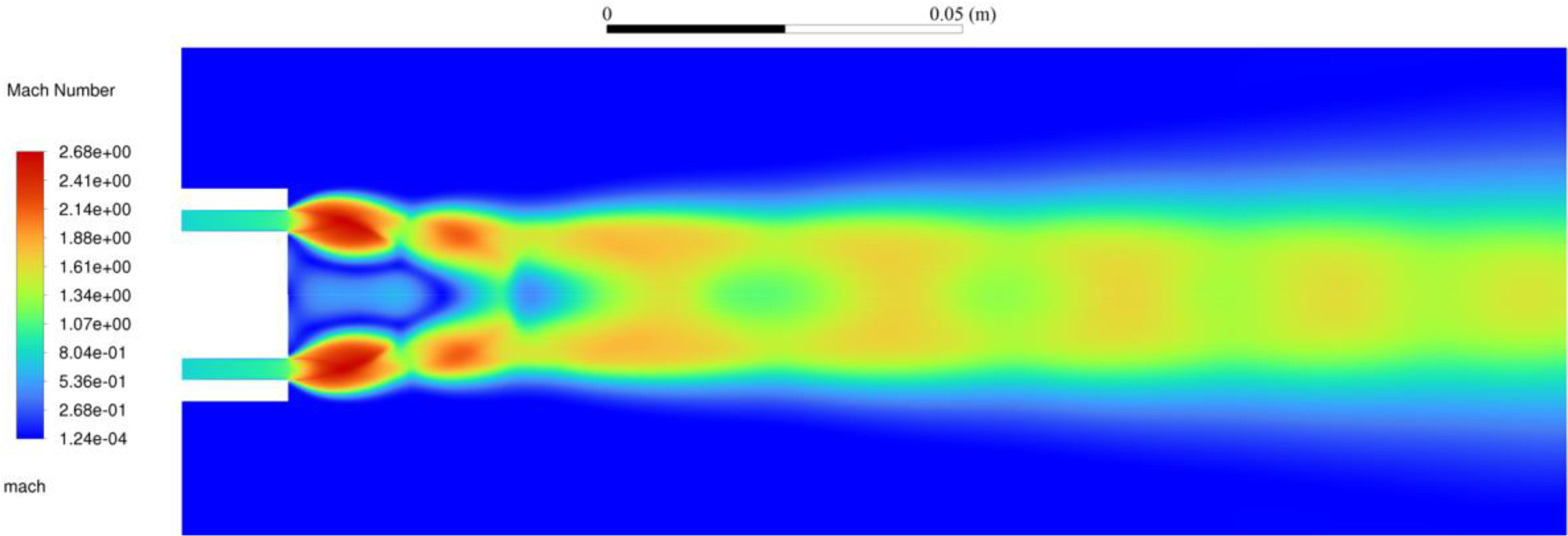
Fig. 9.
Mach distribution of Model A.
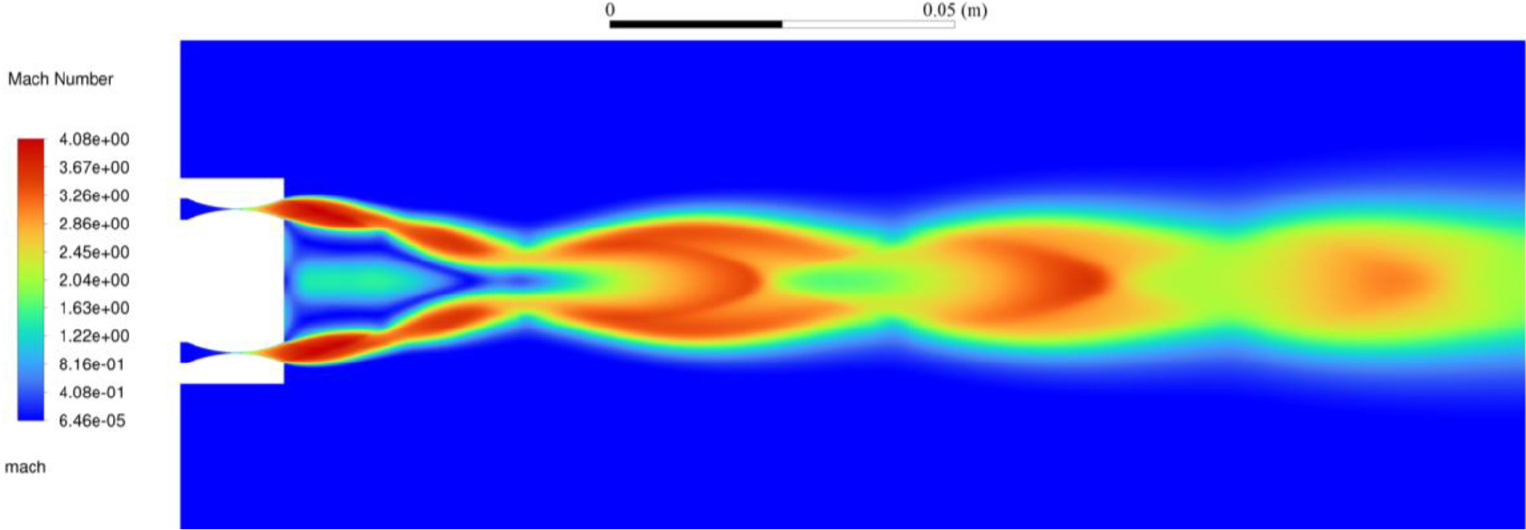
Fig. 10.
Mach distribution of Model B.
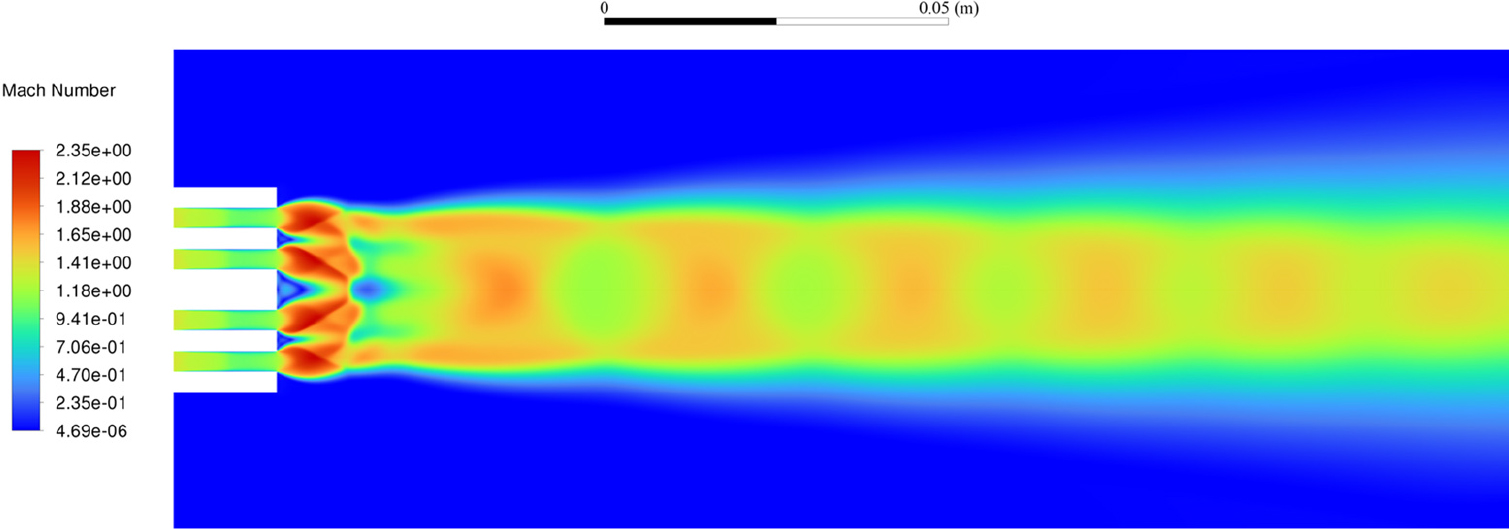
Fig. 11.
Mach distribution of Model C.
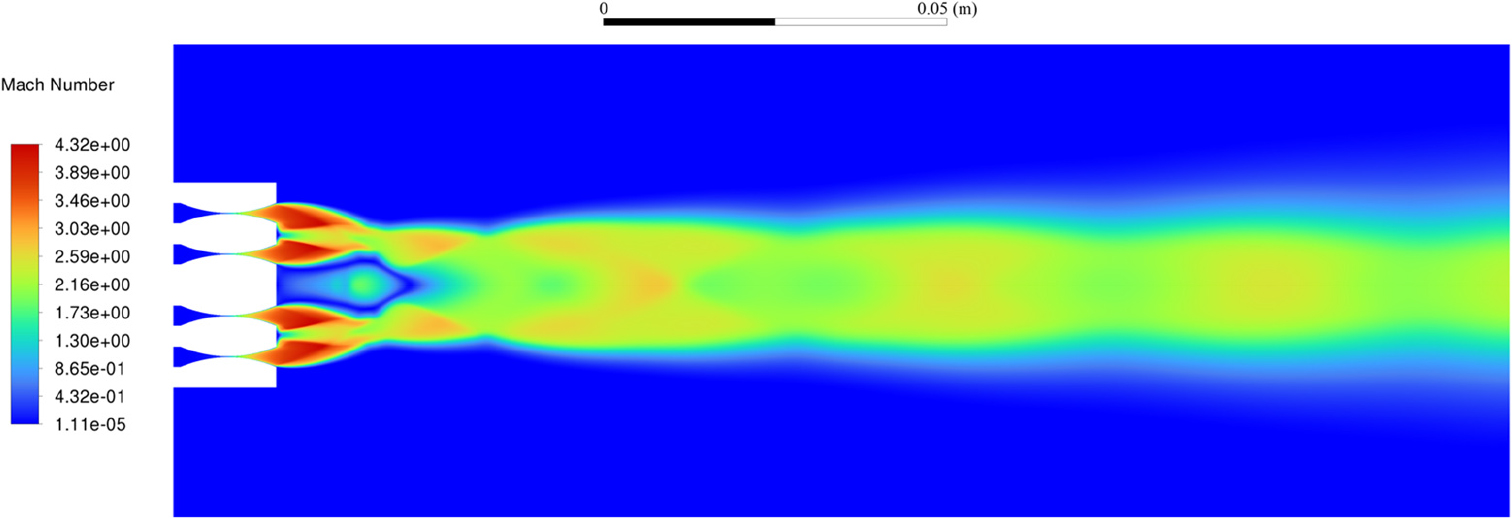
Fig. 12.
Mach distribution of Model D.
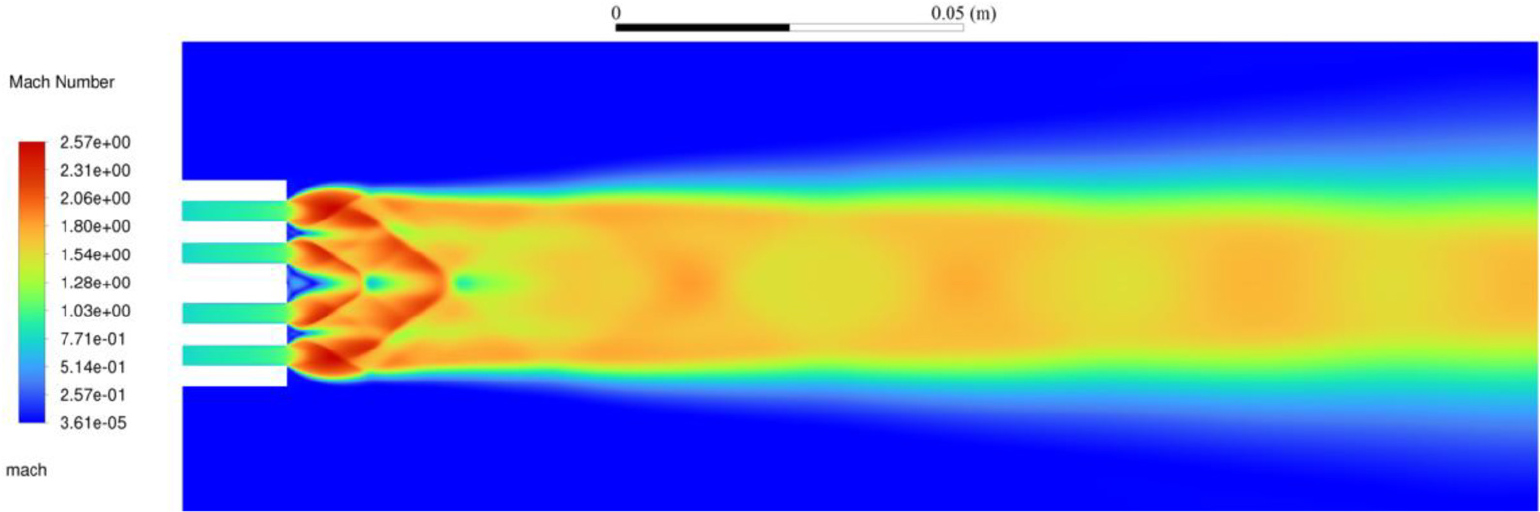
Fig. 13.
Mach distribution of Model C'.
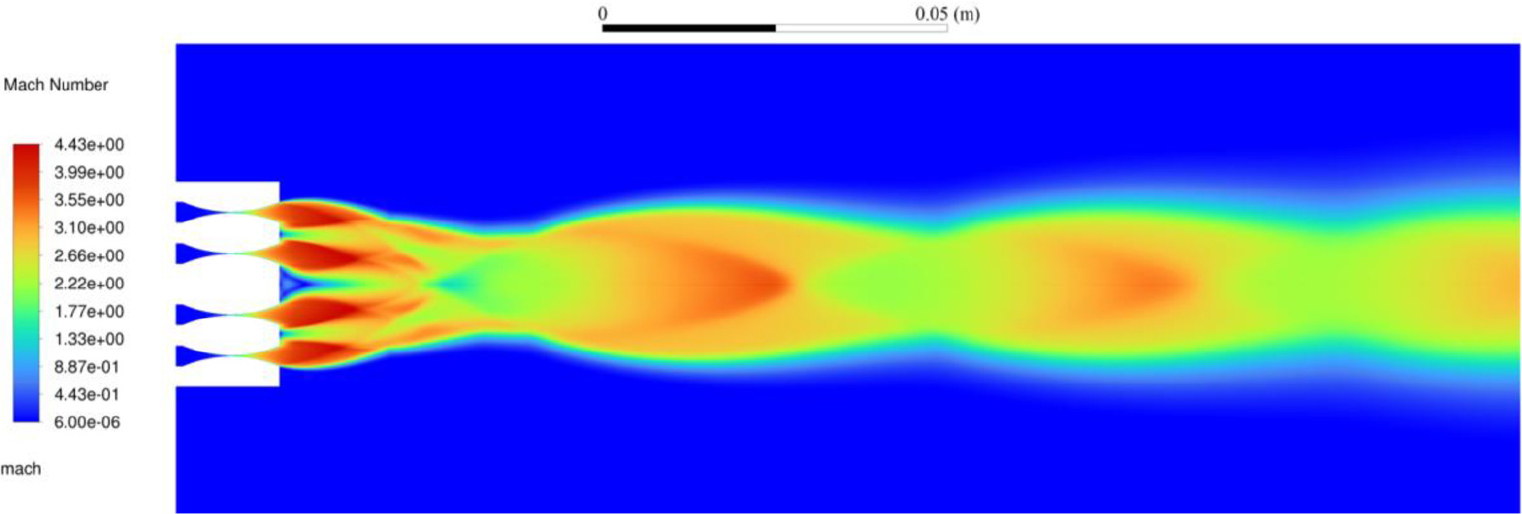
Fig. 14.
Mach distribution of Model D'.