
1. INTRODUCTION
Detonation engines are a new class of propulsion systems that use detonation as the primary combustion process. Because detonation is a pressure-gain combustion process it offers a thermodynamic cycle (known as the Fickett–Jacobs cycle) that is theoretically up to 15% more efficient than the Brayton cycle used in conventional jet engines, which rely on constant pressure combustion. In addition, detonation engines can achieve a higher specific impulse than conventional engines while maintaining a compact design [1]. Among the three main types of detonation engines – Pulse Detonation Engine (PDE), Oblique Detonation Wave Engine (ODWE), and Rotating Detonation Engine (RDE) – the RDE stands out due to its ability to provide continuous thrust and operate over a wide range of velocities [2].
The present study focuses on a specific RDE configuration known as the annular RDE, which offers a relatively small exit area compared to its overall occupied volume. A nested engine design is proposed, which increases the effective output volume while preserving compactness, thereby enabling a reduced engine footprint for future rocket applications. Computational fluid dynamics (CFD) is used to analyze an annular RDE with a double-chamber configuration, in which one chamber is embedded within the inner wall of another. This approach provides insight into the performance and flow characteristics of the proposed configuration, aiming to achieve higher thrust density and more compact packaging compared to a conventional annular RDE.
2. BACKGROUND
Rotating Detonation Engines (RDEs) are a type of continuous detonation combustion engine in which one or more detonation waves rotate circumferentially around the engine axis. The expanding gases generated by the detonation process produce thrust. This continuous and uninterrupted thrust generation through detonation results in significantly higher performance compared to Pulse Detonation Engines (PDEs) [2]. The first experimental demonstration of Continuous Rotating Detonation (CRD) was performed by Voytsekhovskiy in 1960, using an annular groove supplied with an acetylene–oxygen mixture [3]. Since then, numerous numerical and experimental investigations have been carried out in countries including China, France, Japan, Poland, Russia, and the United States [4–10]. Despite considerable progress in the field, several challenges remain, particularly related to engine cooling, as well as the stability and controllability of detonation waves, including control over the number of waves and their direction of propagation [11].
Various detonation chamber geometries have been proposed, among which the annular configuration is one of the most prominent. The geometry and flow field structure are illustrated in Fig. 1: the fuel and oxidizer are injected into an annular combustor and ignited, producing one or more rotating detonation waves. Although the inner wall of the combustor restricts the axial flow of reactants and helps ensure that most of the propellants undergo detonation – by preventing them from dispersing toward the engine center [12] – it also increases structural mass, complicates thermal management, and creates a central dead space.
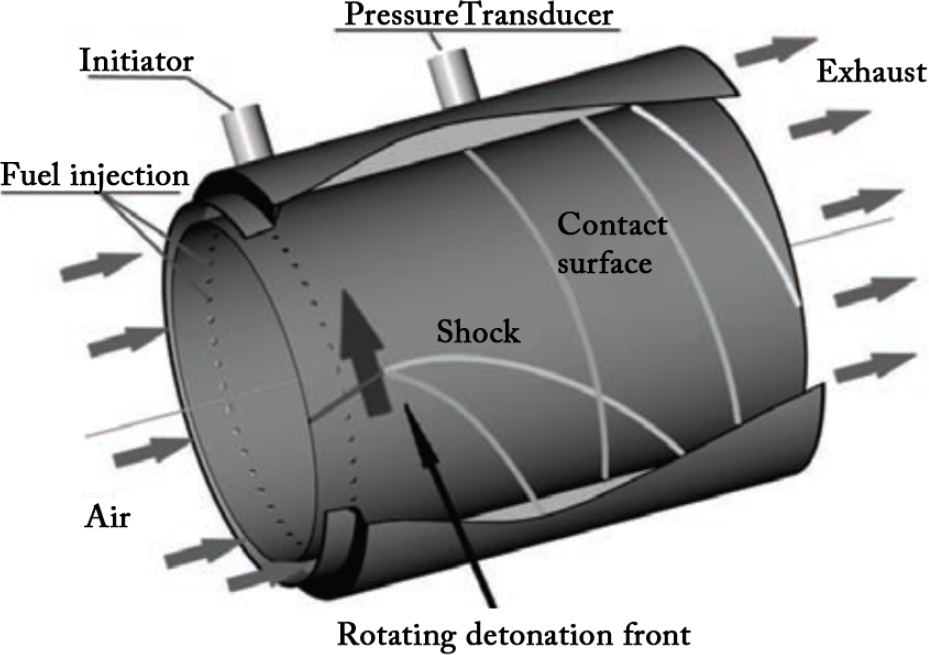
Fig. 1.
Diagram of an annular combustion chamber [1].
The operational stability of an RDE strongly depends on the mass flow rate of the propellant mixture, with instability and mode transitions occurring at different flow conditions [13]. Due to its narrow combustion chamber, the annular RDE has limited flow capacity. Increasing the chamber width can lead to instability and weaker detonation waves, making it difficult to achieve a wide operating range with this configuration [14]. To address this limitation, Zifei Ji et al. [15] proposed a multi-annular RDE concept, in which multiple combustion chambers and their on–off capability allow for a broader optimal operating range. In the present research, we propose a nested engine approach that reduces the overall engine footprint while increasing performance density, while still retaining the advantage of multiple combustion chambers to expand the operational margin.
This study focuses on a double annular chamber RDE design and investigates the impact of nozzle geometry on thrust performance using computational fluid dynamics simulations in Ansys Fluent (Fig. 2, right). A half-domain model is employed to improve computational efficiency, taking advantage of axial symmetry to reduce computational cost while maintaining solution accuracy.
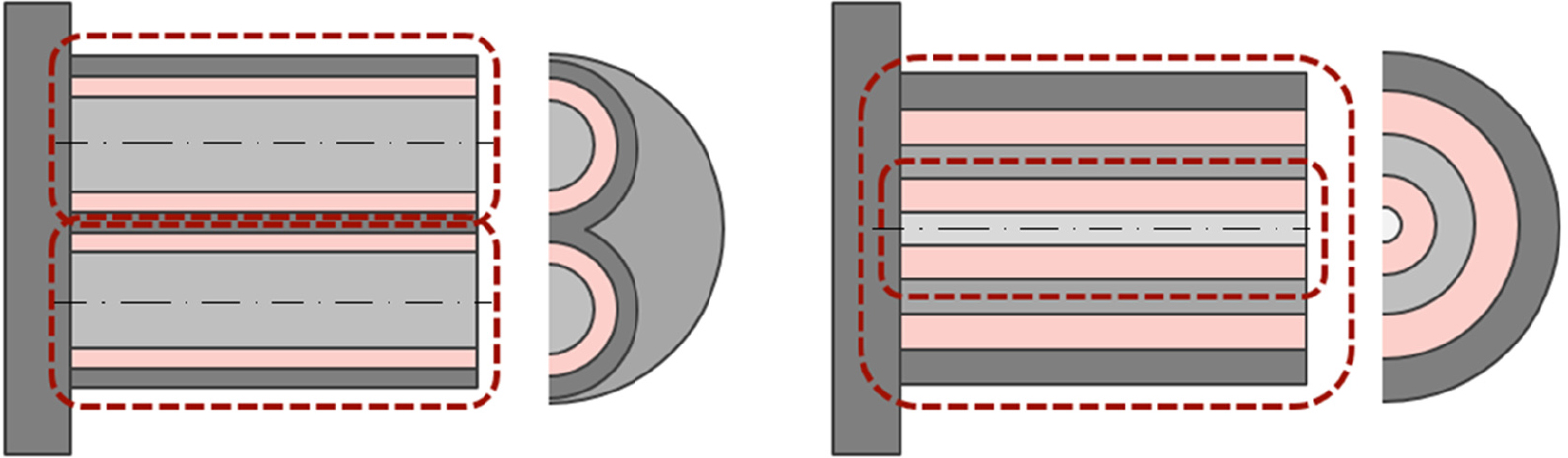
Fig. 2.
Diagram of a conventional dual-chamber engine (left) and a nested engine (right).
3. METHODOLOGY AND SCOPE
This study explores the impact of the nozzle section on flame dynamics in Rotating Detonation Engines (RDEs) using density-based 2D CFD simulations in ANSYS Fluent. With particular focus on shock interactions, boundary layer development, and thermal gradients, the analysis captures the key flow structures that influence engine performance. A half-domain axisymmetric approach is employed to improve computational efficiency. This simplification is justified by the geometric symmetry of the nozzle and the assumed uniformity of the flow, while still preserving the essential flow physics.
Four double-chamber configurations were developed to examine the influence of nozzle geometry on RDE performance. As shown in Fig. 3, the two models on the left – Model A and Model B – serve as baseline single-chamber configurations for comparison. Model A features a straight nozzle, whereas Model B incorporates a converging–diverging (CD) nozzle. The two models on the right – Models C and D – represent nested double-chamber RDE configurations. Model C uses straight nozzles, while Model D adopts converging–diverging nozzles, following the concepts introduced in Models A and B. The comparative analysis of these four models aims to evaluate how geometric differences affect flow behavior and thrust performance, providing insight into further optimization of the nested RDE nozzle design.
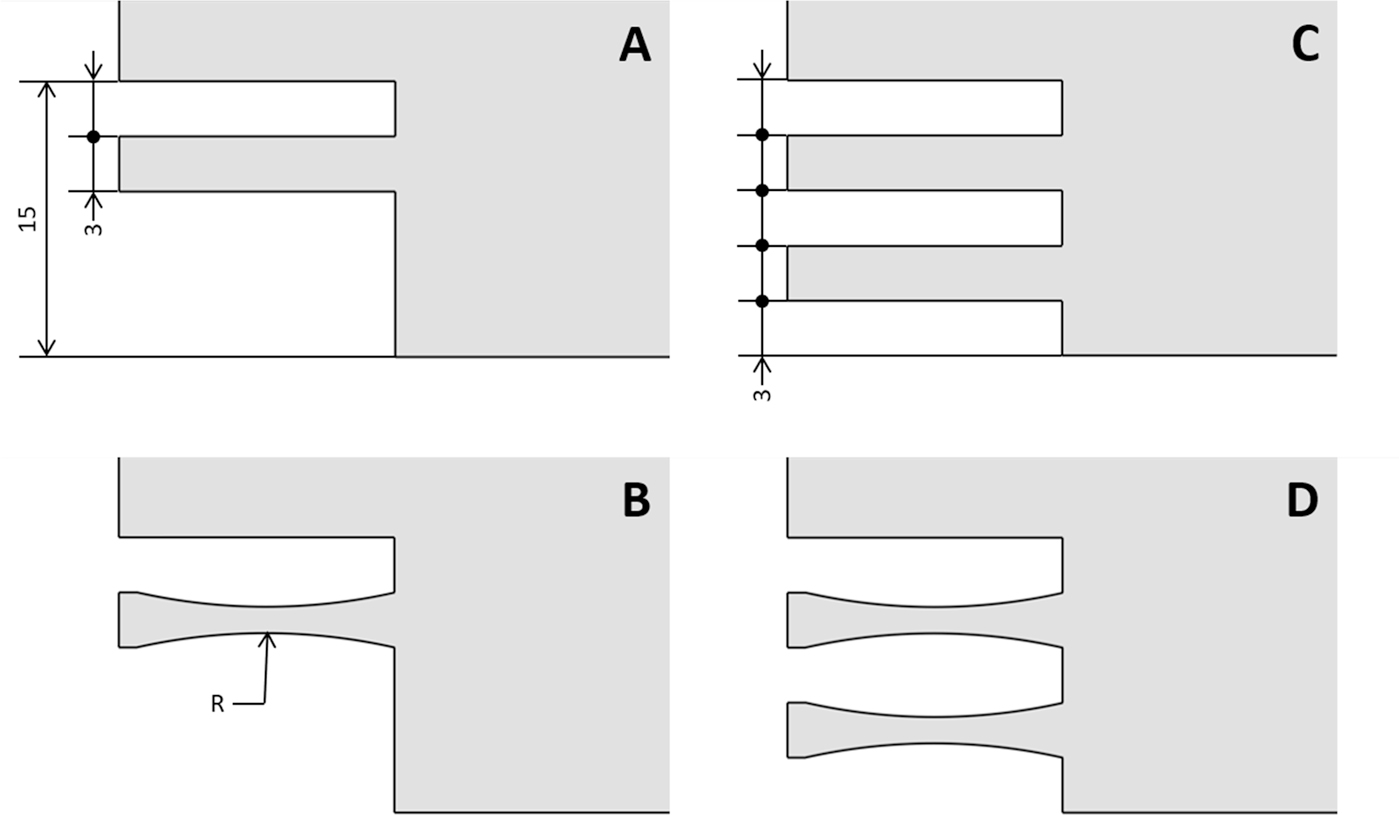
Fig. 3.
Diagram of a conventional dual-chamber engine (left) and a nested engine (right).
A simple arc was used to define the converging–diverging nozzle geometry in Models B and D. The CD nozzle was introduced to enhance flow compression and expansion. The throat area was determined using isentropic flow relations, resulting in the following expression:
Here, the throat area, At is determined by mass flow rate, , pressure and temperature at the throat, p0 and T0, with γ being the specific heat ratio and R representing the gas constant. The nozzle radius of 18.02 mm was used for Models A, B, Cʹ, and Dʹ, while Models C and D used a nozzle radius of 17.95 mm to achieve optimal throat area.
The chamber pressures were determined using experimental data from past studies [16–20]. Plotting the chamber pressures as a function of the mass flux of the engine (Fig. 4) shows that the chamber pressure falls within a linear band in relation to the mass flux. Based on this correlation, a chamber pressure of 700 kPa was selected for Models A, B, Cʹ and Dʹ, while 525 kPa was used for models C and D.
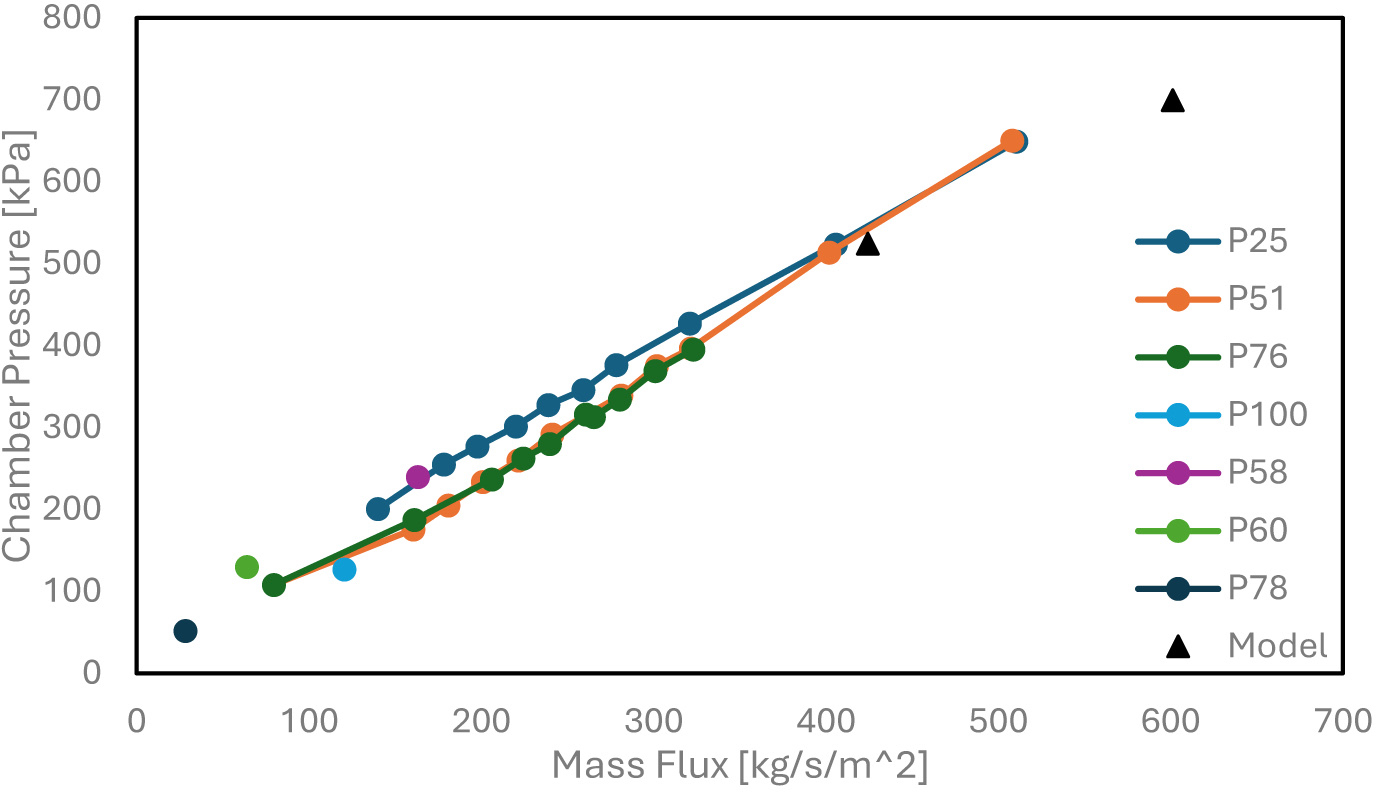
Fig. 4.
Relationship between chamber pressure and mass flux.
To identify the most effective design for thrust optimization and future three-dimensional modeling, two single-chamber configurations and four nested double-chamber configurations were developed and analyzed. The computational domain includes an engine positioned in the lower-left corner, with a base radius of 15 mm. The overall domain dimensions are 195 mm × 65 mm, extending 180 mm in the x-direction and 50 mm in the y-direction to allow detailed evaluation of the exhaust flow structure. The entire domain is defined with an axis of rotation along the bottom x-axis and is simulated as axisymmetric flow, consistent with the expected symmetry of the RDE exhaust downstream.
All engine configurations share the same fundamental dimensions: a 15 mm chamber radius, 15 mm nozzle length, and 3 mm wall thickness. Models B, D, and Dʹ incorporate a predefined curvature in the nozzle contour following a 1 mm straight inlet section.
The computational domain was carefully designed to accurately represent the nozzle geometry and associated flow characteristics, while maintaining a balance between computational efficiency and solution accuracy. Figure 5 illustrates the computational domain, and Fig. 6 presents the mesh configuration for Model C, where mesh refinement was applied in critical regions. These critical regions include the nozzle section and the engine walls, where strong flow–wall interactions occur. In these areas, the mesh was refined to a cell width of 0.01 mm, compared to 1.0 mm in the surrounding regions. With a mesh growth rate of 1.02 and targeted local refinement, a highly accurate yet computationally efficient mesh was achieved.
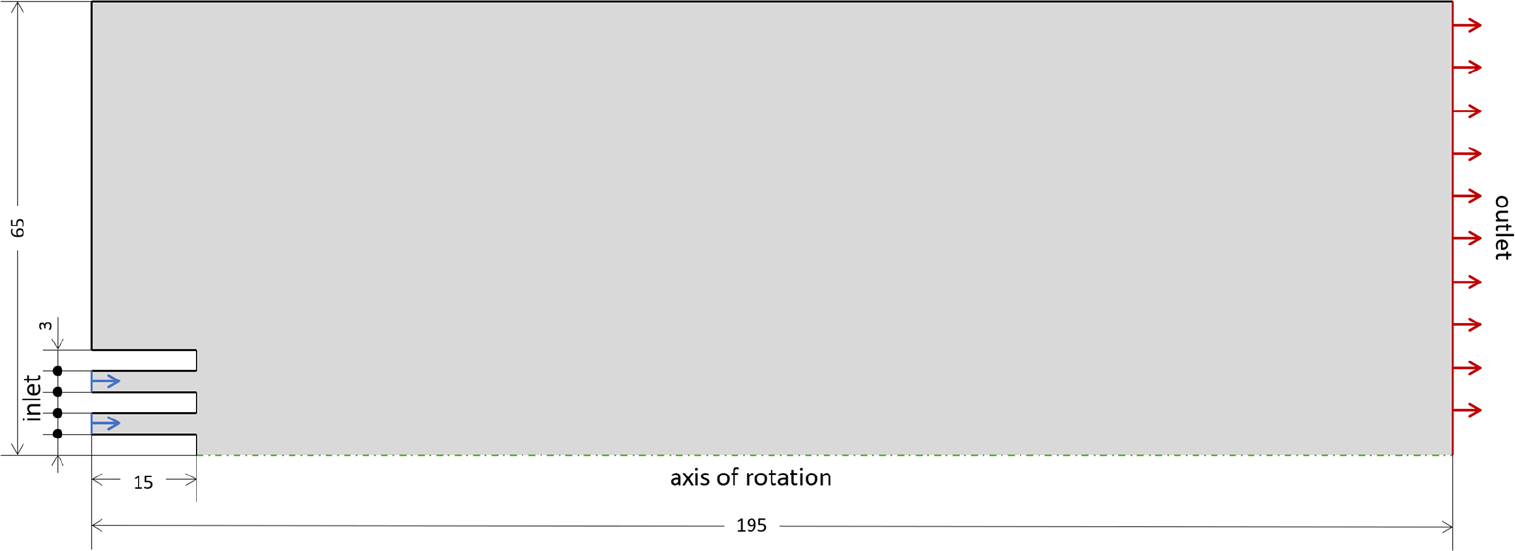
Fig. 5.
Two-dimensional computational fluid domain for Model C.

Fig. 6.
Mesh for Model C.
Figure 7 presents the mesh independence study, using velocity samples taken at the nozzle exit. The results show that differences between solutions decrease as the mesh is refined, particularly between the 32-division and 38-division cases. The 32-division mesh includes a minimum wall cell size of 0.01 mm. Since the variation between the 32- and 38-division meshes is minimal, the 32-division configuration was deemed sufficiently accurate. It was therefore selected for the study, providing an appropriate balance between computational accuracy and computational cost.
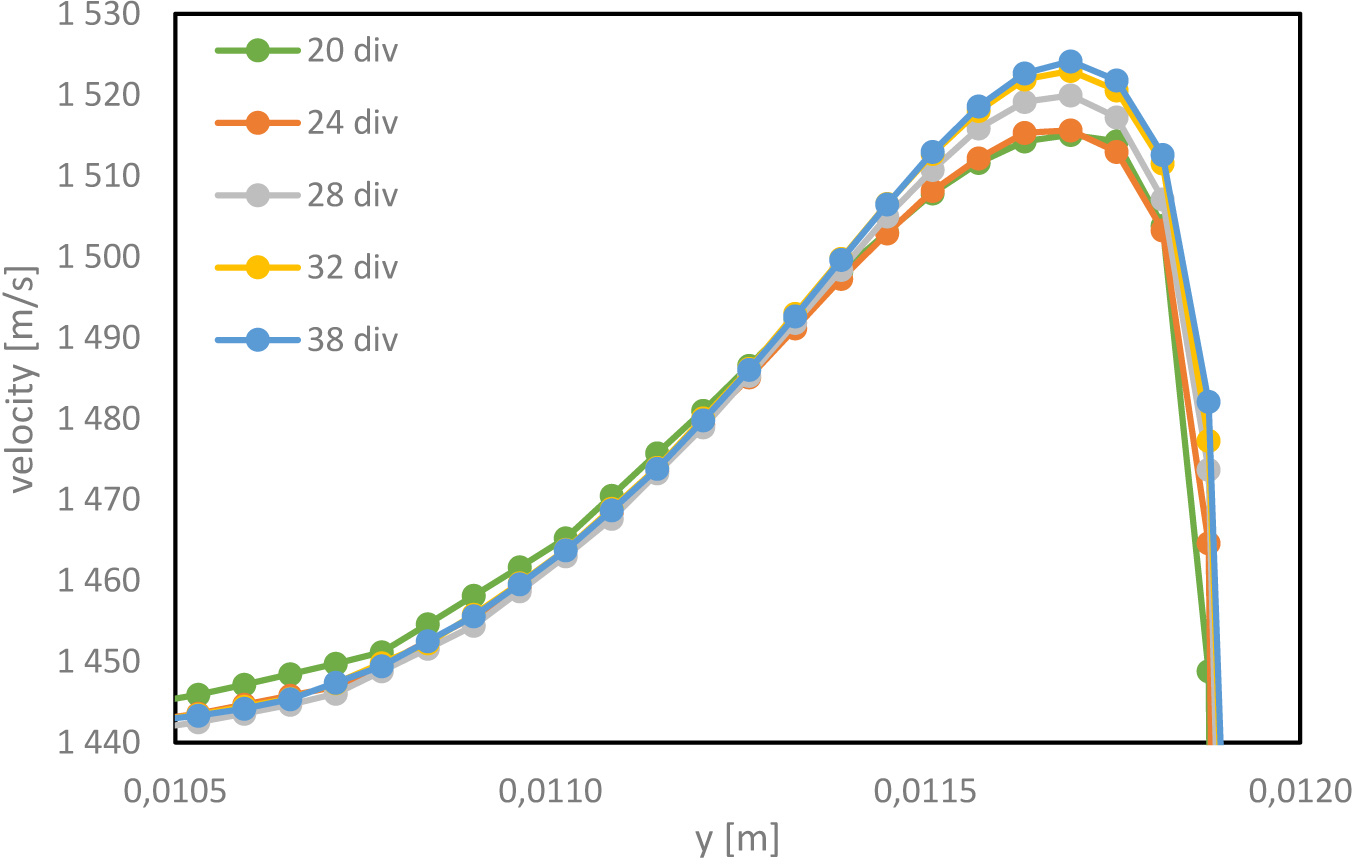
Fig. 7.
Velocity at the nozzle exit with varying cell sizes.
The simulations were conducted in ANSYS Fluent using the k–ε turbulence model with enhanced wall treatment. Water vapor was defined as the working fluid, and the engine walls were modeled as steel. The k−ε model was selected due to its numerical stability and reliable convergence behavior, while still providing high accuracy, especially since the flow does not involve highly complex turbulence phenomena that typically challenge two-equation models. To further improve accuracy in the near-wall regions within the nozzle, enhanced wall treatment was applied. Water vapor was chosen as the working fluid under the assumption that combustion is complete at the nozzle inlet; it therefore represents the post-combustion products of hydrogen and oxygen. Steel was used for the wall material to realistically approximate the thermal boundary conditions of practical engine components.
The inlet temperature was set to 3337.84 K or 3297.20 K, depending on the model configuration, based on NASA CEA calculations. The baseline mass flow rate was 0.12 kg/s. Additional simulations were performed at 0.17 kg/s for Models C and D (denoted as Models Cʹ and Dʹ) to enable comparison between configurations operating at equivalent mass flux. The 0.17 kg/s value accounts for the difference in total chamber area between the single-chamber and double-chamber configurations. The outlet pressure was fixed at 101.325 kPa to represent realistic ground test stand exhaust conditions.
Table 1 summarizes the simulation setup parameters.
4. RESULTS
To ensure accurate thrust calculations, a systematic data acquisition strategy was implemented following the numerical simulations. Flow parameters such as density, static pressure, and velocity were recorded at the combustion chamber exits using two sampling lines: 1-2 (inner chamber) and 3-4 (outer chamber), as shown in Fig. 8. Each line was divided into 50 equally spaced points across the 3 mm chamber width, resulting in a 0.06 mm resolution, ensuring high-resolution measurements of local flow. This standardized sampling method was applied to all model variants, enabling direct performance comparisons.
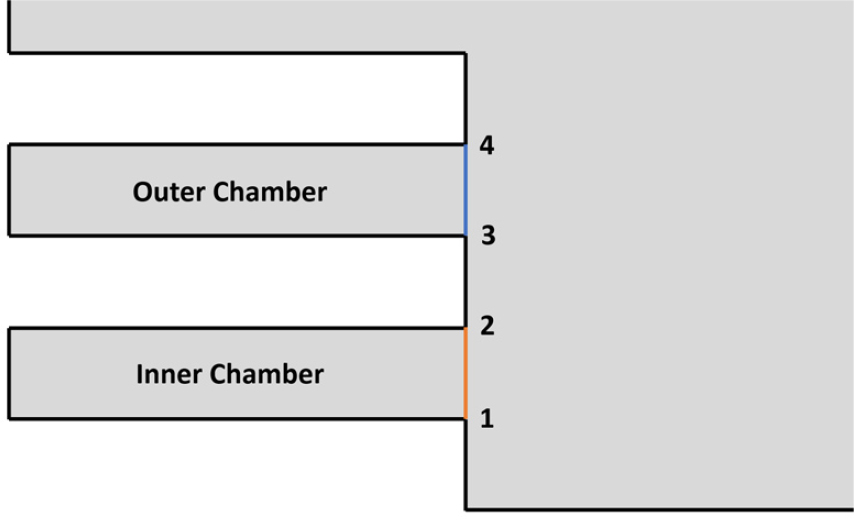
Fig. 8.
Combustion chamber data collection points represented with two lines.
The recorded data were integrated using the following relation [21], which accounts for both momentum and pressure contributions in evaluating overall engine thrust:
Figures 9 and 10 present the Mach number distributions for Models A and B, respectively. The converging–diverging nozzle in Model B increases the maximum exhaust velocity by more effectively converting thermal (potential) energy into kinetic energy. This is further supported by the lower exhaust pressure observed in Model B compared to Model A, attributable to the increased distance between shock regions within the exhaust plume. In both configurations, an underutilized central region within the annular chamber is evident. This area exhibits lower pressure relative to the surrounding flow, contributing to performance losses. In conventional designs, this region is often occupied by an aerospike to improve thrust. However, incorporating an aerospike introduces additional structural mass and imposes more demanding thermal management requirements.
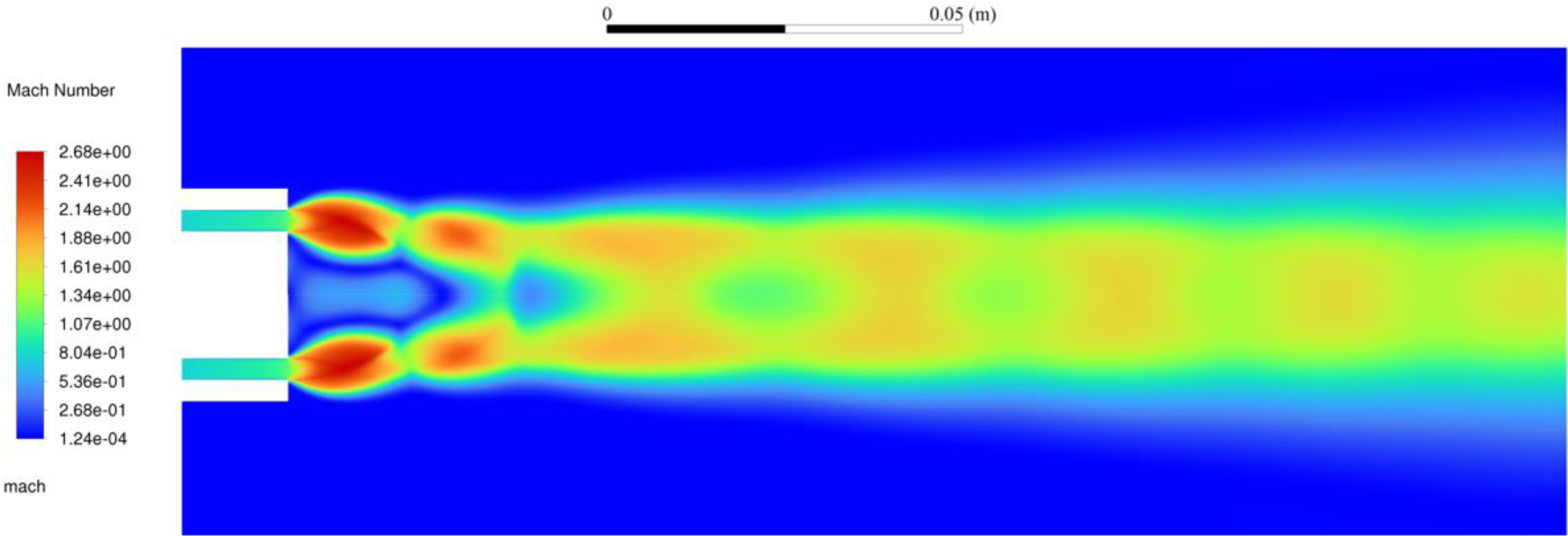
Fig. 9.
Mach distribution of Model A.
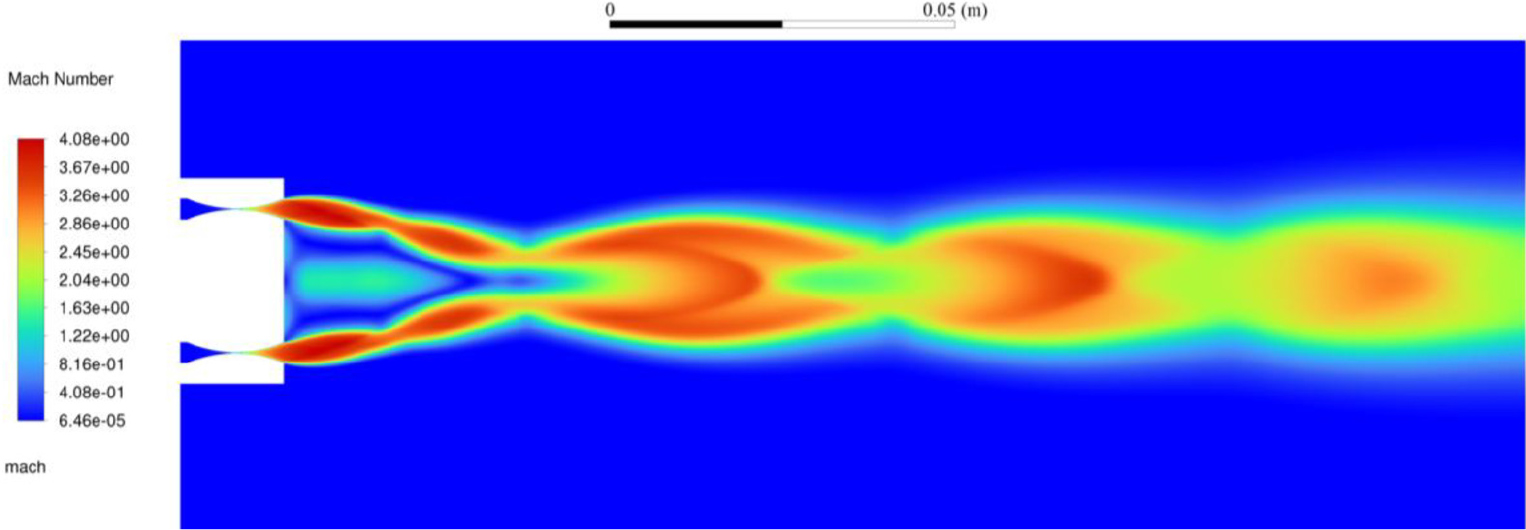
Fig. 10.
Mach distribution of Model B.
Figures 11 and 12 present the Mach number distributions for Models C and D, respectively. Due to the larger total chamber area and the correspondingly lower mass flux, both the exhaust velocity and pressure are reduced compared to the single-chamber (Models A and B). As a result, the exhaust plumes are less pronounced as well, with wider mixing layers, leading to reduced overall efficiency in generating thrust. Although the internal stagnation volume is reduced in the nested configuration, the addition of a converging–diverging nozzle in Model D significantly alters the flow structure. In Model D, the exhaust is directed outward, merging with the outer plume and generating a larger recirculation zone compared to Model C. Despite this, the converging–diverging nozzle produces a more clearly defined exhaust plume structure. The narrower mixing layer and increased exhaust velocity contribute to substantially improved performance relative to the straight-nozzle configuration.
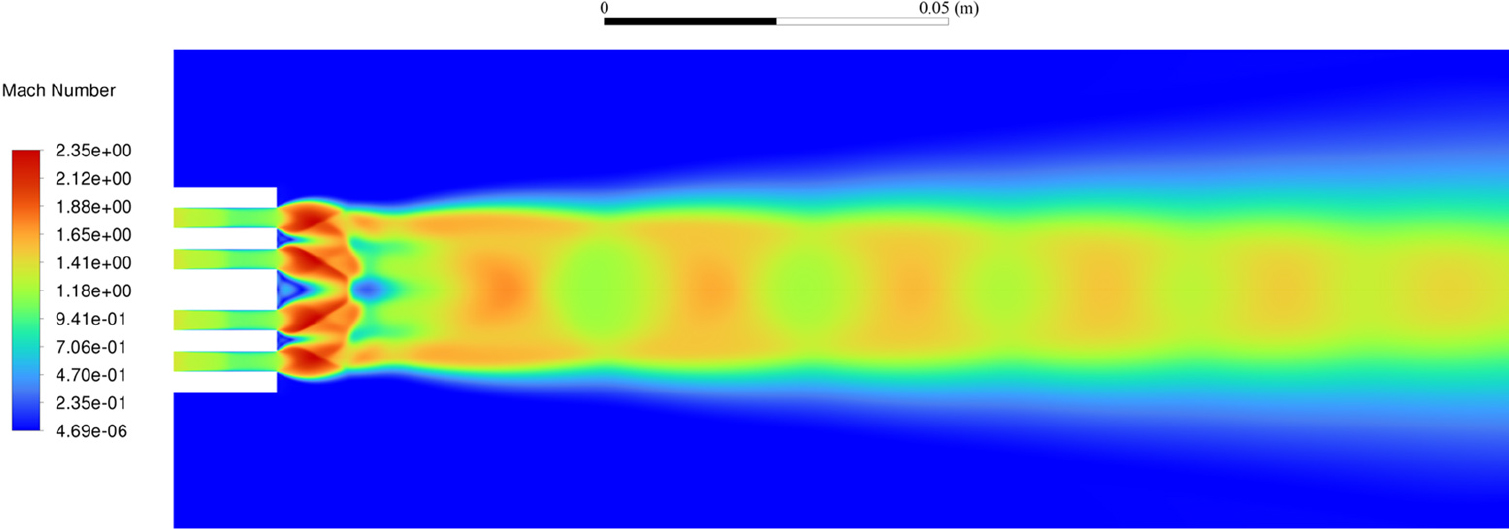
Fig. 11.
Mach distribution of Model C.
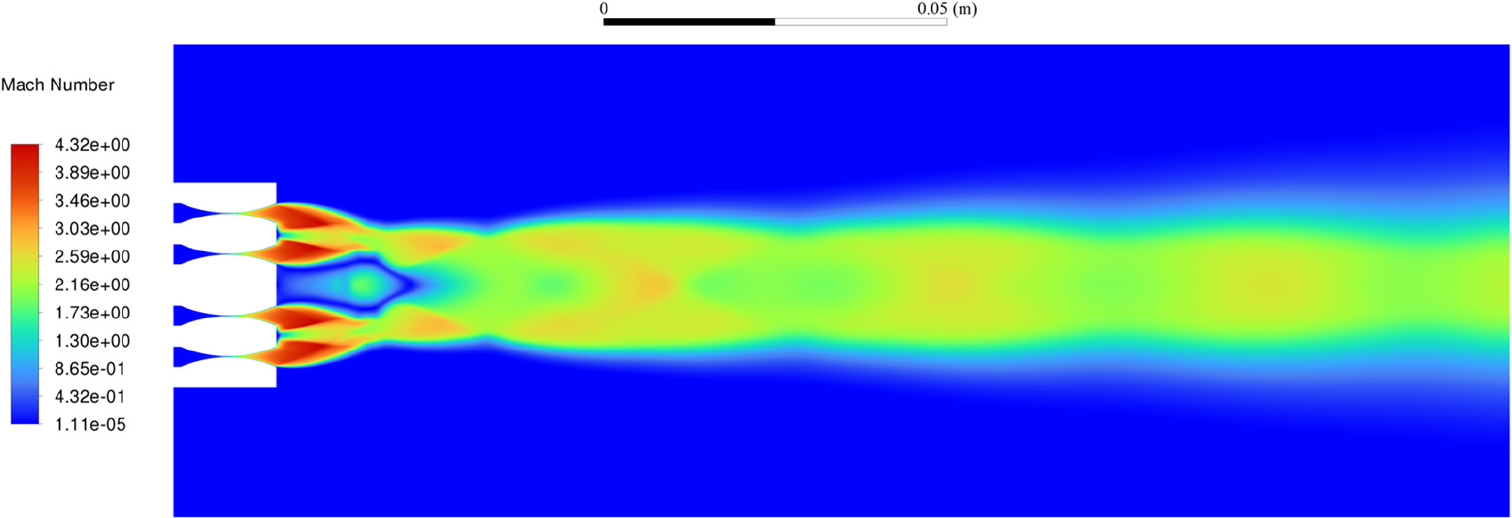
Fig. 12.
Mach distribution of Model D.
Figures 13 and 14 show the Mach number distributions for Models Cʹ and Dʹ. With a higher mass flow rate than Models C and D, each exhaust plume exhibits a stronger and more defined structure, leading to complex interactions in the merging region. The increased exit flow strength results in lower pressure at the center and between the chambers, causing the plumes to expand further downstream of the nozzle exit. Consequently, a smaller recirculation zone is observed in Model D' (Fig. 14). As expected, the plume structure is more pronounced than in Model D, and it transitions to a conventional exhaust structure earlier than in Model B.
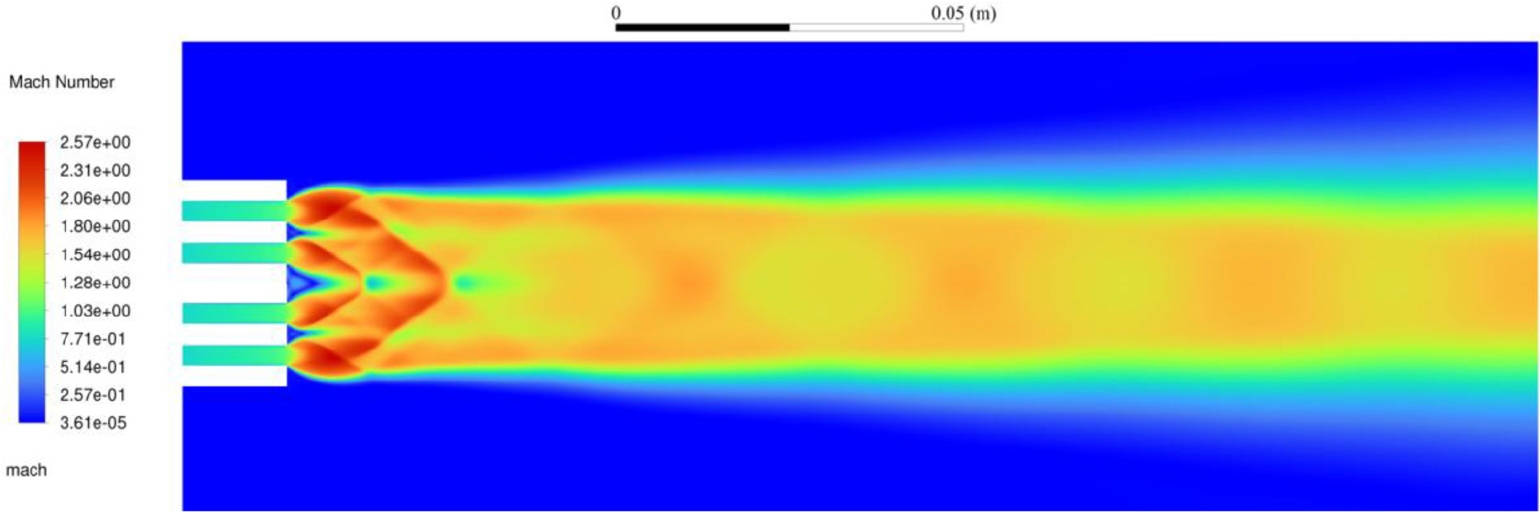
Fig. 13.
Mach distribution of Model C'.
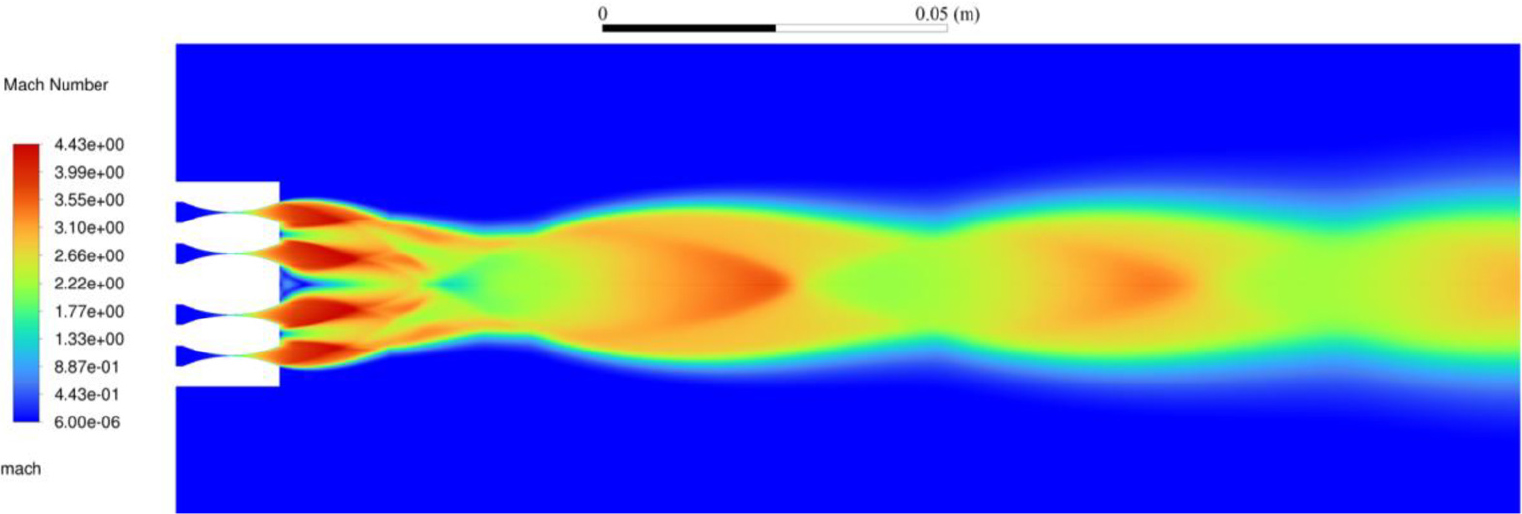
Fig. 14.
Mach distribution of Model D'.
The various initial conditions and resulting performance metrics are summarized in Table 2. The results again confirm that the converging–diverging nozzle effectively converts thermal energy into kinetic energy, as Models B and D exhibit lower exit pressure and higher exit velocity compared to Models A and C. When comparing the single-chamber and double-chamber configurations operating at the same total mass flow rate, the single-chamber model produces higher total thrust. Considering Models C and D specifically, the inner chamber contributes approximately 30% of the total thrust, which corresponds directly to the chamber area ratio between the inner and outer chambers. This suggests that engine thrust is strongly influenced by mass flux.
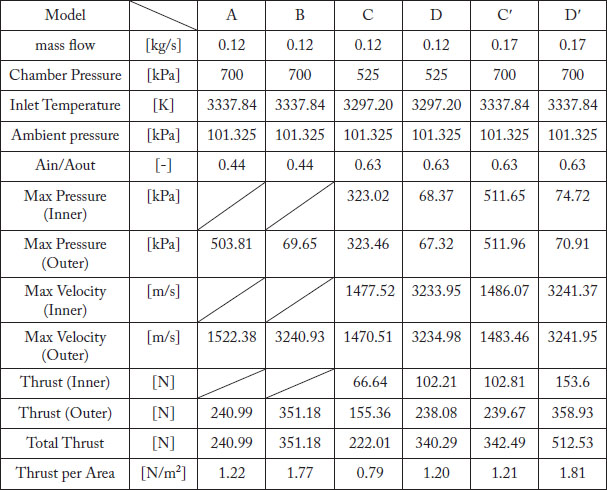
When the mass flux is kept constant – as in Models A, B, Cʹ, and Dʹ – the maximum pressure and velocity values converge to similar levels. Although the thrust ratio between the outer and inner chambers remains approximately 7:3, the outer chamber thrust is comparable to that of the single-chamber configuration. When normalizing total thrust by combustion chamber area, Models A and Cʹ yield nearly identical thrust-per-area values, while Model D' shows a slightly higher value than Model B. This performance difference is likely due to exhaust plume interaction effects, a reduced recirculation zone, and significantly lower local pressure near the nozzle exit generated by the interaction of the two jets.
The area used for the Thrust per Area parameter in Table 2 corrsponds to the torus defined by lines 1–2 and 3–4 shown in Fig. 8.
5. CONCLUSIONS
This study investigated a double annular chamber configuration for a Rotating Detonation Engine (RDE) using 2D axisymmetric models in ANSYS Fluent. Baseline single-chamber models with both straight and converging–diverging nozzles were developed and compared with the double-chamber configuration under identical mass flow rate and mass flux conditions.
The addition of converging–diverging nozzles, in place of straight nozzles, was found to result in a performance increase of 45.72–53.16% in total thrust across all configurations. When operating at the same total mass flow rate, the double-chamber configuration exhibited reduced inner chamber pressure or exit velocity, leading to a 3.10–7.88% decrease in overall thrust. However, when the mass flux was maintained at the same level, the differences in maximum exit pressure and velocity became minimal. Under these conditions, the total thrust per chamber area ranged from 0.82% lower to 2.26% higher than that of the single-chamber configuration. The double-chamber design with a converging–diverging nozzle demonstrated superior performance, likely due to multiple factors associated with the specific traits of the engine configuration.
Despite several challenges associated with implementing a dual-chamber RDE in practical applications – particularly with respect to cooling and thermal management – the configuration shows strong potential. Further research is required in advanced thermal management strategies and high-temperature-resistant materials to address these concerns. Nevertheless, the dual-chamber system offers advantages in reducing unused internal area without sacrificing thrust performance, resulting in a more compact and higher-density propulsion package. Additional investigation is needed to determine the optimal configuration of this engine concept. Future work should include detailed studies of nozzle geometry and flow interaction, as well as validation through three-dimensional numerical simulations and experimental testing. Overall, the dual- or multi-chamber nested annular RDE configuration shows promise as an advanced propulsion approach, offering comparable or improved performance at equal mass flux while enabling more compact and mass-efficient engine designs.