
1. INTRODUCTION
Accurate weight-and-balance (W&B) assessment is one of the most fundamental elements of safe aircraft operation. In general aviation (GA), however, many pilots underestimate its importance or neglect to perform the required calculations before flight. Between 2008 and 2016, 136 GA accidents were attributed to pilots either improperly performing or entirely omitting W&B calculations, and approximately one-third of those accidents resulted in fatalities. These events demonstrate that even experienced pilots may rely on informal estimation rather than verified data, placing their aircraft outside allowable weight or center-of-gravity (CG) limits and significantly increasing the risk of loss of control, aerodynamic stall, or structural overstress.
Although weight-and-balance verification is essential, current practices in GA do not always support consistent compliance. Unlike EASA, the FAA does not require W&B calculations before every flight for operations conducted under Part 91. As pilots become more familiar with their aircraft, many view the process as time-consuming and unnecessary, especially when relying on personal judgment accumulated during training. Existing W&B methods – computational, graph-based, or table-based – can be accurate but often require multiple steps, manual moment calculations, or the use of a calculator. Under time pressure, this leads to shortcuts, omissions, or errors that compromise flight safety.
To address these operational challenges, this study introduces a new weight-and- balance performance control method developed for the Cessna 172/R. The method eliminates the need to compute individual moments or total moments and significantly reduces the time required to verify the aircraft’s CG. By providing an intuitive, fast, and calculator-free procedure, the approach is designed to increase the likelihood that GA pilots will consistently perform W&B checks before each flight. Preliminary results show that the method reduces preflight calculation time by 43.83% while maintaining a high level of accuracy.
The objective of this study, therefore, is to implement a new weight-and-balance performance control method that reduces preflight preparation time and enhances safety in general aviation.
2. BACKGROUND
Accurate determination of an aircraft’s center of gravity (CG) can be understood not only as an operational requirement but also as a geometric problem involving proportional relationships between loading points. In everyday experience, physical space is isotropic – no direction is inherently preferred – and this symmetry permits the use of linear supporting elements and reference points to model how incremental mass affects an aircraft’s CG. In mathematical terms, a one-dimensional Finsler space with a single metric exhibits analogous properties: linear elements display proportionality, and shortest paths can be uniquely extended within a compact space equipped with an intrinsic metric.
In this study, we consider a finite, compact space with an intrinsic metric in which shortest paths are locally uniquely extendable. Two conditions are required:
Existence of Extensions: For each reference point, there exists a neighborhood U such that for any shortest paths (1):
Local Homeomorphism (2): A mapping f: xjCG → Σ(mjxj) (2) defines a local homeomorphism from the real line (3) X → M ~ XCG (3) into the plane (4) T = mjxj (4).
A conformal mapping preserves the shapes of infinitesimally small figures and ensures that proportional relationships are maintained when transferring information from a linear axis into a planar grid. Using these principles, the W&B problem can be reformulated as a geometric transformation in which the aircraft’s CG behavior is embedded into a planar system of homeomorphic structures. In practice, this enables the construction of planar grids for different aircraft types, where determining the CG reduces to “sliding” along nodal reference points representing seats, baggage areas, and fuel locations. Figures 1 and 2 illustrate how proportional mass changes and structural development can be visualized within such a framework.
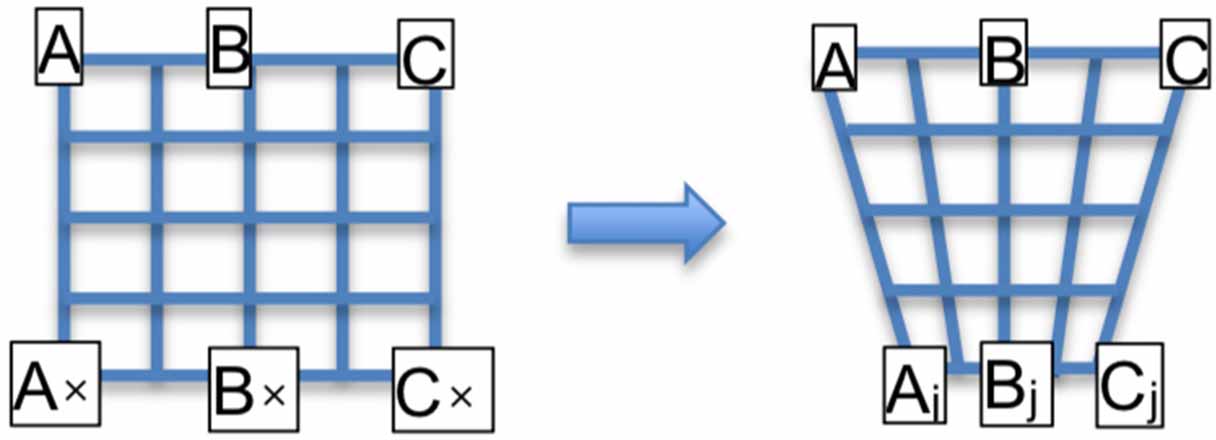
Fig. 1.
Proportional Increase in Mass.
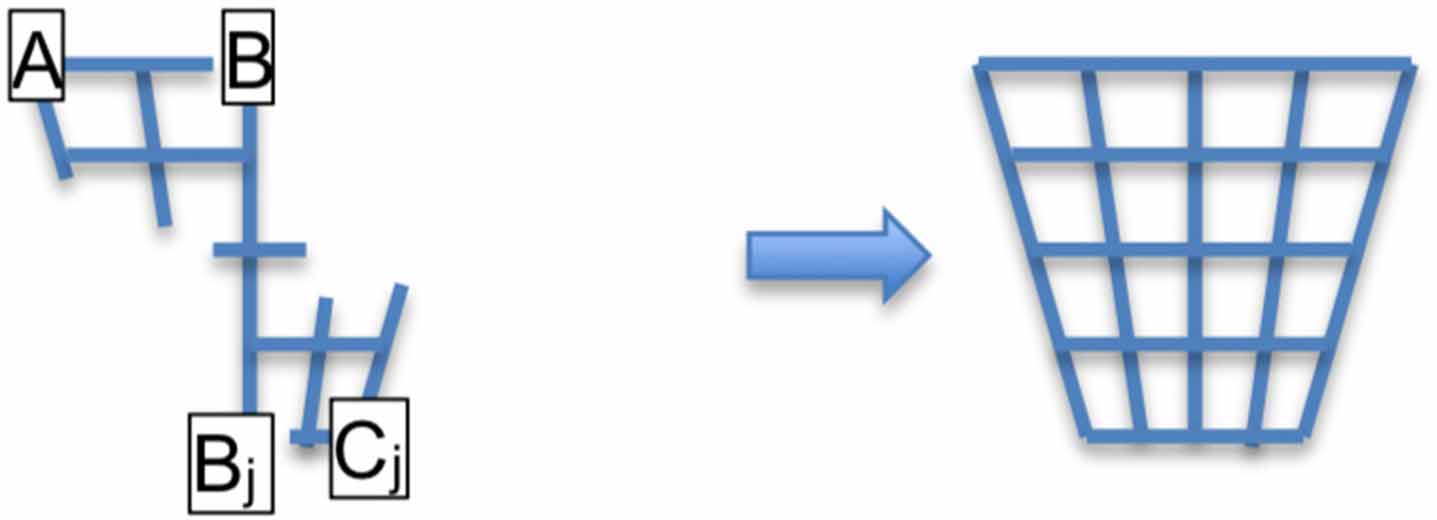
Fig. 2.
Structural Development.
While this geometric interpretation motivates the method developed in this study, the operational context further underscores the need for a simplified approach.
Human error remains the leading cause of aviation accidents, and weight-and- balance miscalculations constitute a recurring factor. Between 2008 and 2016, 136 general aviation (GA) accidents were directly linked to improperly performed or entirely omitted W&B calculations [1]. Approximately one-third of these events resulted in fatalities. Pilots operating an aircraft above its certificated maximum takeoff weight, or with a CG outside approved limits, face significantly elevated risks, including degraded handling qualities, increased stall susceptibility, and potential loss of control – especially during takeoff or landing. Atmospheric conditions such as high temperature, wind, or high-density altitude can further diminish aircraft performance, compounding the dangers of improper loading [2].
Despite these risks, regulatory and behavioral factors contribute to inconsistent W&B compliance. Under FAA Part 91, there is no requirement for weight-and- balance calculations before every flight, whereas EASA mandates them. As pilots accumulate experience, many no longer view W&B calculations as essential to routine preflight preparation. Instead, they rely on personal familiarity with the aircraft – what they believe to be “reasonable estimation” – rather than precise data. This informal approach, however, can be highly inaccurate. An aircraft operating outside its approved CG envelope may behave unpredictably, diverging from the pilot’s expectations and creating circumstances in which safe recovery is no longer possible.
3. METHOD
The development of the new weight-and-balance (W&B) performance control method for the Cessna 172/R was based on a combination of statistical, diagnostic, qualitative, and quantitative analytical procedures. The approach involved constructing a planar grid representation of the aircraft’s center-of-gravity (CG) behavior, allowing pilots to determine CG without calculating individual or total moments. This method removes the need for a calculator, thereby encouraging pilots to complete the required verification before each flight. A corresponding reduction in accident rates is anticipated (see Fig. 3). A similar simplified approach is already used in selected Airbus [3] and Antonov [4] aircraft models.
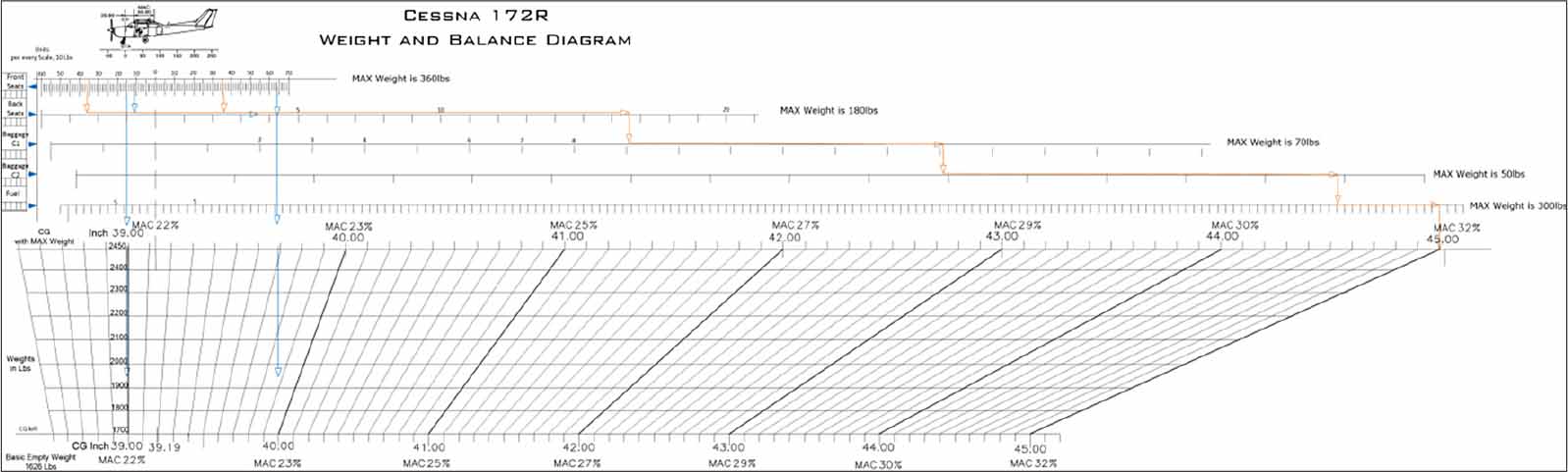
Fig. 3.
Computer Second Paper Operation (C2PO).
This method helps reduce pilot workload during weight-and-balance calculations, by eliminating the need to use formulas to determine the aircraft’s Center of Gravity (CG). Furthermore, the method decreases preflight calculation time by 43.83%. On average, the standard computational method for the Cessna 172 requires 2 minutes and 42 seconds, whereas the Computer Second Paper Operation (C2PO) graph requires only 1 minute and 31 seconds – making it nearly 1.78 times faster than the traditional approach. In practical terms, the C2PO method performs the task in approximately 56% of the time normally required, demonstrating a substantial improvement in efficiency.
Using the weight-and-balance sheet, the pilot does not need to compute total moments or use a calculator. The only required arithmetic is determining the total takeoff and landing weights. This simplifies preflight preparation, reduces the time needed, and increases the likelihood that pilots will consistently perform weight-and-balance checks before every flight.
The sheet was constructed in Excel and Visio using multiple complex formulas. As a result, every possible weight-and-balance combination was calculated, allowing a precise scale to be developed.
Each mark on the chart represents 10-pound increments and includes five stations: front seats, rear seats, baggage compartment 1, baggage compartment 2, and usable fuel. To determine the current CG, the pilot counts marks to the left for the front-seat station. For all other stations, movement is counted to the right. A vertical line is drawn at the final weight mark, and a horizontal line corresponds to the total takeoff or landing weight. The intersection of these lines gives the updated Center of Gravity (CG).
To construct this diagram, the change in CG relative to the aircraft’s empty-weight CG had to be determined: ΔCG for a 10-pound increase at the basic empty weight and the maximum station weight (5) and (6), which allowed an appropriate scale to be established for each station (7) and (8). The same procedure was repeated for the maximum weight, where weight was decreased by 10 pounds and reduced to zero as required. Based on these data, CG increments were calculated for both the minimum and maximum values at each station (9) (see Fig. 4).
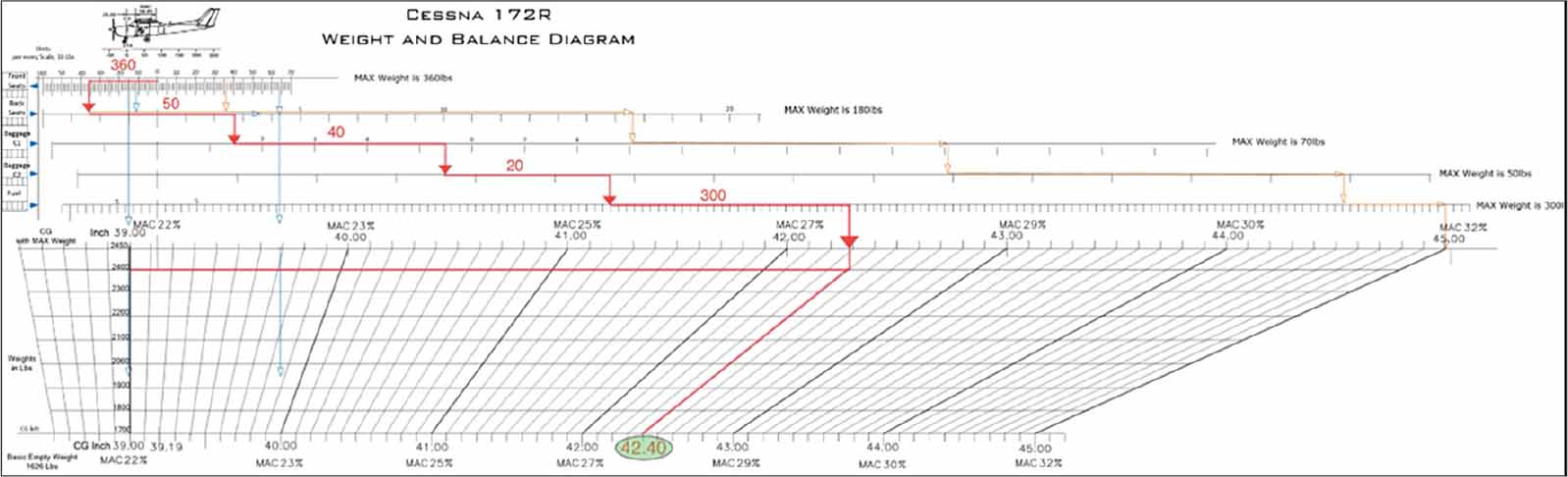
Fig. 4.
CG Calculation Process.
The accuracy of this method ranges from 0 to 0.15 inches. Currently, there are three common approaches for calculating weight-and-balance CG: the computational method (see Tab. 1), the graph-based method (see Fig. 5), and the table-based method (see Fig. 6). The method described in this study does not fit neatly into any of these categories, although it is most closely related to the graph-based approach. While it is often assumed that the computational method offers the highest precision, it typically requires more time than the graph-based method and less than the table-based method.
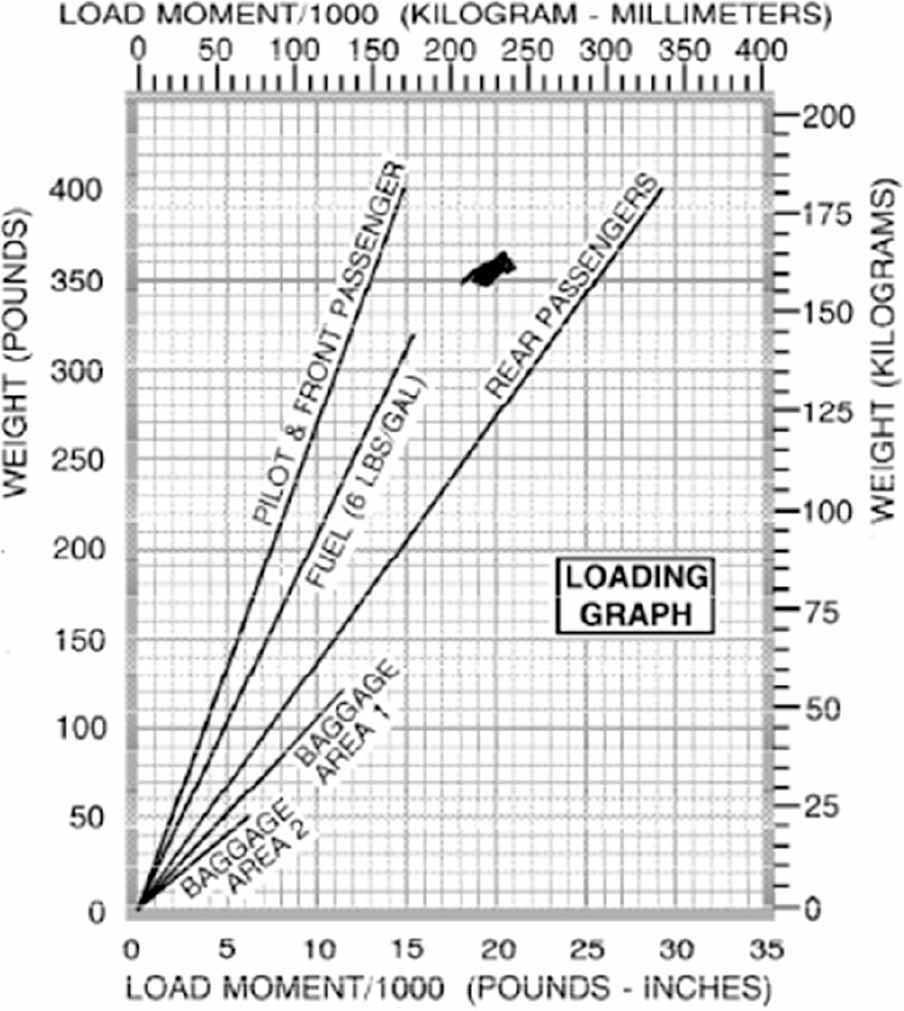
Fig. 5.
Graph-based weight-and-balance method [5].
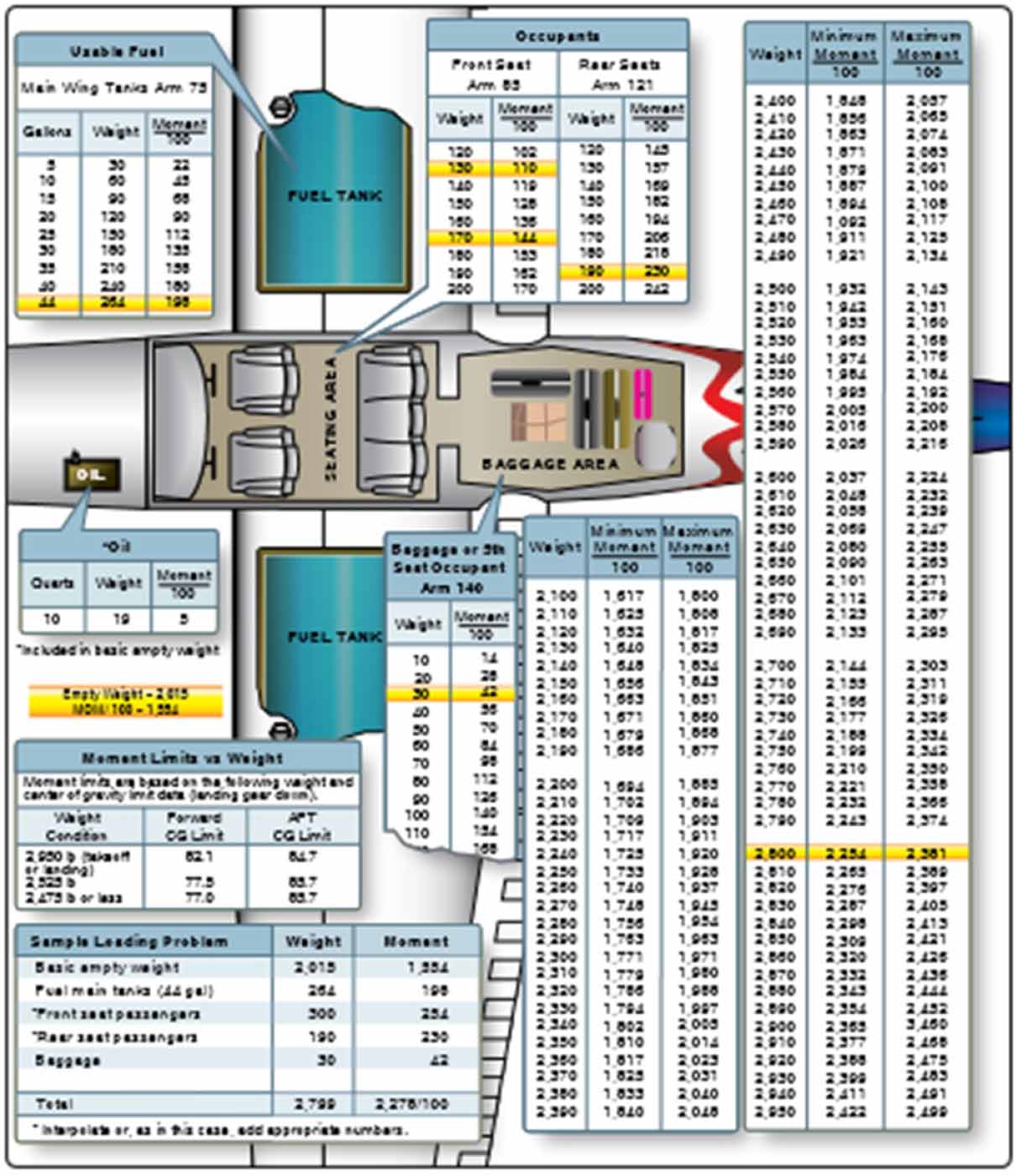
Fig. 6.
Table-based weight-and-balance method [6].
Tab. 1.
Computational Weight and Balance Method.
| N198BW | Weight | Arm | Moment |
|---|---|---|---|
| Basic Empty Weight | 1626.18 | 39.19 | 63732.89 |
| Front Seats | 37 | ||
| Rear Seats | 73 | ||
| Baggage | 95 | ||
| Usable Fuel (6lb/gal) | 48 | ||
| Take-Off Weight | |||
| Fuel Burn | 48 | ||
| Landing Weight |
The following formulas were used to create the weight-and-balance control method:
whereIn most small aircraft, the center of gravity is expressed in inches from the datum. Commercial aircraft, however, typically use the percentage of the Mean Aerodynamic Chord (MAC%), as this measure provides a more accurate indication of controllability. For commercial passenger aircraft, expressing the CG as a percentage of MAC is particularly informative for determining the required configuration. For example.
25% MAC represents an optimal configuration;
38% MAC corresponds to a very lightly loaded aircraft, which may be difficult to land under windy or rainy conditions;
9% MAC indicates a heavily loaded aircraft with poor takeoff performance and reduced controllability.
The Cessna 172R MAC percentage can be determined using the formula from Chapter 6 (Weight and Balance & Equipment List) of the Pilot Information Manual [5]:
Longitudinal stability refers to the aircraft’s stability about its lateral axis, involving the pitching motion as the nose moves up and down during flight. A longitudinally unstable aircraft has a tendency to continue pitching – either into a steep dive or a steep climb – and may even stall. Therefore, longitudinal instability can make an aircraft difficult or dangerous to fly.
Static longitudinal stability or instability depends on three key factors [6]:
Location of the wing relative to the CG,
Location of the horizontal tail surfaces relative to the CG,
Area (size) of the tail surfaces. (See Fig. 7.)
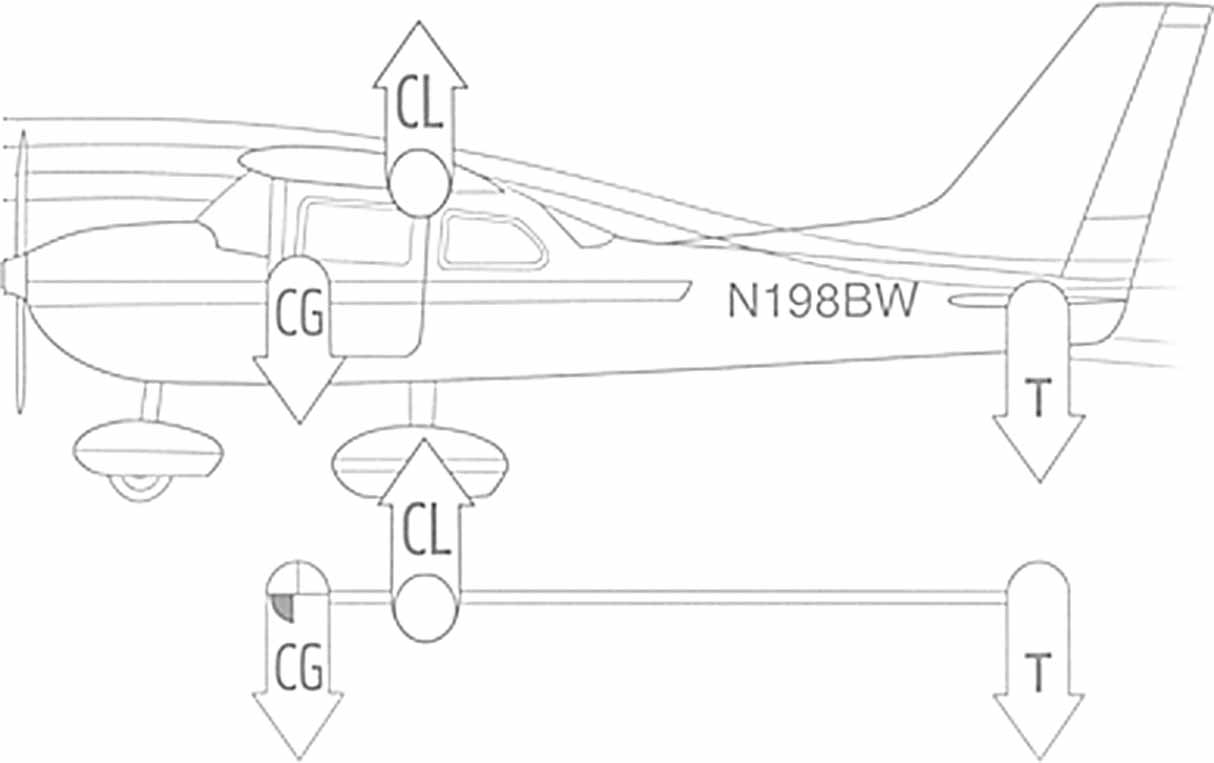
Fig. 7.
Cessna 172 Longitudinal Stability.
A CG location beyond the forward limit can result in excessive nose heaviness, making it difficult – or even impossible – to flare properly during landing. Manufacturers intentionally set the forward CG limit as far rearward as practicable to help pilots avoid damage during landing. In addition to reduced static and dynamic longitudinal stability, a CG located aft of the allowable range may lead to several undesirable effects, including extreme control difficulty, abrupt stall characteristics, and very light control forces that can cause pilots to overstress the aircraft inadvertently. A restricted forward CG limit also ensures that sufficient elevator deflection is available at minimum airspeed. When structural constraints do not determine the forward CG limit, it is set at the point where full-up elevator deflection is required to achieve the high angle of attack needed for landing.
The aft CG limit represents the most rearward position at which the CG may be located during the most critical maneuver or operating condition. As the CG moves aft, the aircraft becomes less stable, reducing its ability to return to equilibrium after maneuvering or encountering turbulence.
For some aircraft, both forward and aft CG limits vary with gross weight. These limits may also change for certain operations, such as acrobatic flight, landing gear retraction, or the installation of special equipment that alters flight characteristics [6].
4. DISCUSSION
As previously noted, Weight and Balance (W&B) assessments are performed regularly; however, they are not always effectively monitored by the National Transportation Safety Board (NTSB). This lack of oversight can have catastrophic consequences, especially when an aircraft impacts the ground or terrain – such as mountainous areas, antenna towers, or power lines – located near the intended flight path or runway.
One example occurred near the present author’s primary training location, North Perry Airport (ICAO: KHWO) in Pembroke Pines, Florida. The accident took place after a departure from Runway 36 at Calhoun County Airport (F95), Florida, USA, and resulted from improper – or more accurately, nonexistent – weight-and-balance calculations. The aircraft was completely destroyed upon impact with the ground, and a post-impact fire ensued (see Fig. 8).
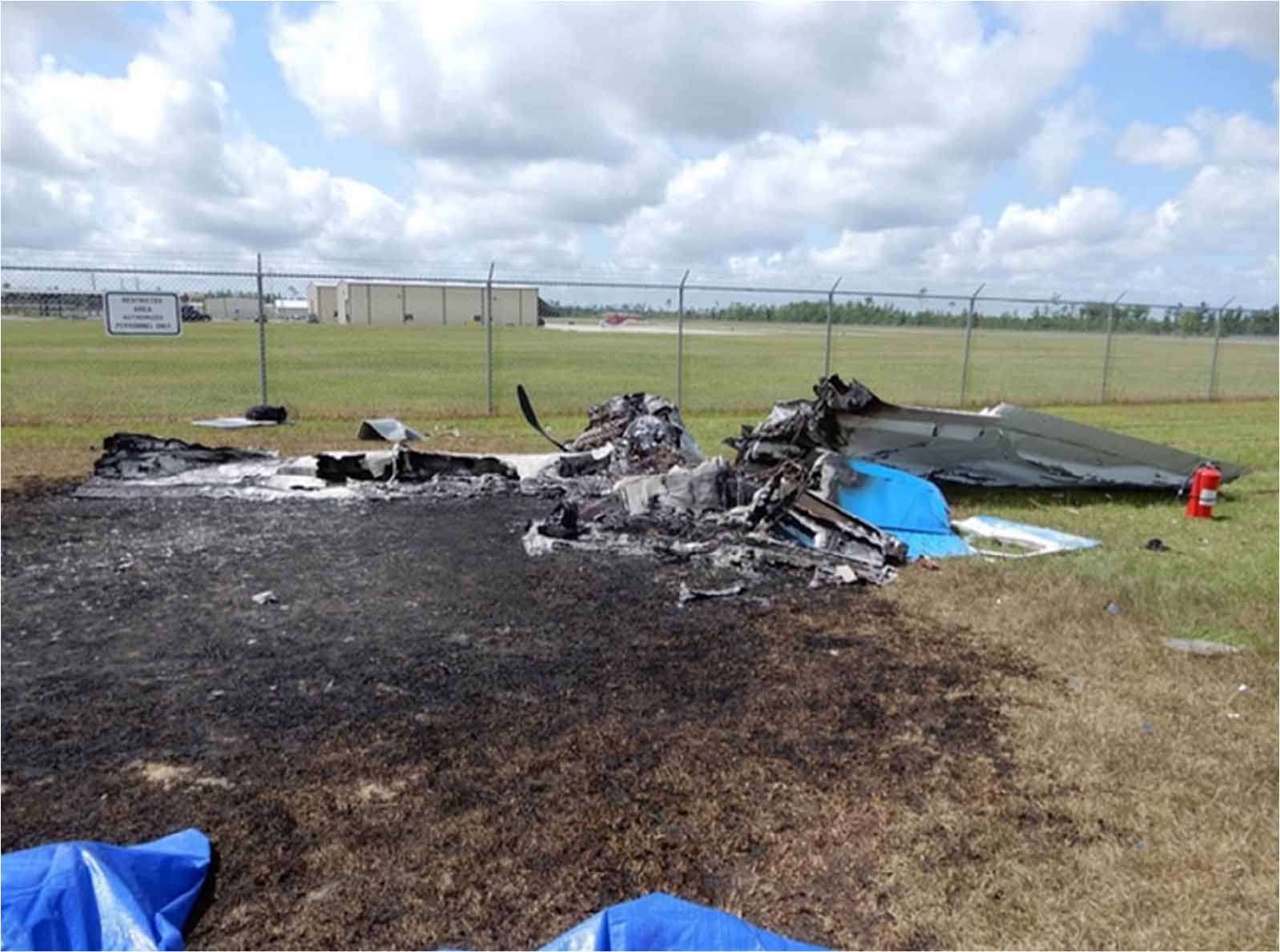
Fig. 8.
In this incident, a failure to perform a weight-and-balance calculation proved fatal for two.
Airport surveillance footage and witness statements indicated that the airplane lifted off and immediately adopted a high angle of attack at a low airspeed. After passing the departure end of Runway 36, the aircraft entered a left 270° turn at low altitude without gaining height. It then proceeded eastbound, crossed the departure end of Runway 36 once more, and descended behind a hangar. Moments later, the aircraft impacted the ground, followed by a post-crash fire.
A post-accident examination of the engine revealed no evidence of pre-existing mechanical malfunction or failure that would have prevented normal operation.
A review of the airplane’s weight and balance at the time of the accident showed that the pilot and passenger weights, obtained from autopsy and hospital records, placed the aircraft at an estimated 2,424 pounds – which is 224 pounds above the maximum allowable gross weight of 2,200 pounds. At this weight, the center of gravity was outside the allowable operating envelope. One of the surviving passengers reported that the pilot did not ask for his weight and that he did not observe the pilot performing any preflight weight-and-balance calculation.
The probable cause was ruled to be the pilot’s failure to perform a preflight weight-and-balance calculation and his operation of the aircraft at an excessive takeoff weight, which resulted in exceeding the critical angle of attack after liftoff and an aerodynamic stall from which recovery was not possible [7]. As shown in the Aviation Investigation Docket – 17 Docket Items, ERA22FA218 [8], the weight and balance of the aircraft with FAA registration N6413B were completely outside both the Center of Gravity (CG) and weight limits (see Fig. 9).
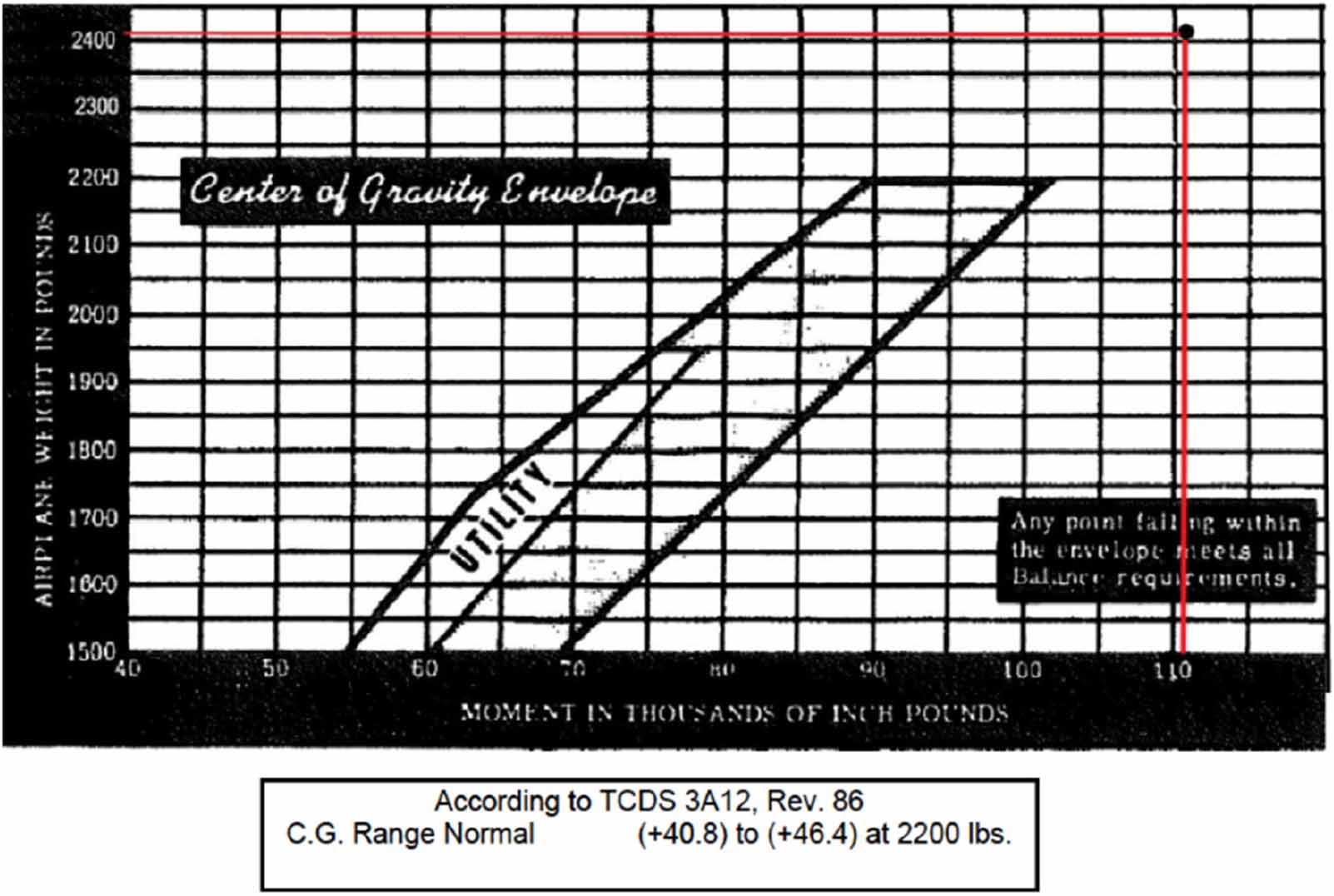
Fig. 9.
Estimated Weight and Balance of the N6413B.
This accident underscores once again the critical importance of proper preflight preparation. The pilot-in-command’s failure to perform a weight-and-balance calculation directly contributed to a catastrophic outcome. According to the official NTSB report, the pilot held a Private Pilot License and had accumulated approximately 575 flight hours – a reasonable amount of experience from which one might expect adequate judgment in estimating CG location. However, as the accident demonstrates, informal estimation was insufficient, and the resulting miscalculation proved fatal. Had the pilot used the C2PO method, this accident might potentially have been avoided.
5. CONCLUSIONS
This study introduces a simplified, geometry-based method for determining the center of gravity (CG) of the Cessna 172R, addressing one of the most persistent and underappreciated challenges in general aviation: the consistent and accurate completion of preflight weight-and-balance (W&B) checks. While W&B calculations are essential to safe flight operations, many GA pilots rely on estimation or skip the procedure altogether, in part because traditional computational, table-based, and graph-based methods require multiple steps, moment calculations, and often a calculator. As accident reports show, these omissions can lead to aircraft being operated outside their certified loading envelope, resulting in degraded handling, inability to climb, aerodynamic stalls, and fatal outcomes.
The C2PO method presented in this paper offers a practical alternative by embedding the W&B relationships directly into a planar grid constructed through proportional geometric principles. By leveraging conformal mapping and homeomorphic structural relationships, the method transforms a multi-step calculation into a simple graphical interaction. A pilot needs only to determine the total takeoff or landing weight and then slide along the established axes to derive the updated CG. Every possible loading configuration is pre-calculated and encoded into the diagram, eliminating the need for moment computations and reducing the opportunity for arithmetic mistakes.
The evaluation conducted in this study demonstrates that the C2PO method significantly improves operational efficiency. It reduces preflight calculation time by 43.83%, performing the task in approximately 56% of the time required by the standard computational method, while maintaining an accuracy of 0 to 0.15 inches. This reduction in workload directly addresses one of the major behavioral barriers to consistent W&B compliance. By making the process faster, simpler, and independent of calculators or manuals, the method increases the likelihood that pilots – especially those operating under FAA Part 91 – will conduct proper W&B checks before every flight.
The broader safety implications are substantial. Even a small decrease in the number of flights conducted outside certified CG and weight limits would represent a meaningful improvement for general aviation safety. The accident case reviewed in this study illustrates how informal estimation, even by experienced pilots, can lead to catastrophic consequences. A method that requires only minimal effort while providing accurate, visual feedback can help prevent such scenarios. Furthermore, because the C2PO system is derived from general geometric principles and station-based proportionality, it has potential applicability to a wide range of small aircraft beyond the Cessna 172R.
The method also offers value for training organizations, flight schools, and commercial operators. Its simplicity makes it suitable for student pilots learning foundational W&B concepts, while its precision and speed support efficient operations in busy training environments. As aviation increasingly embraces intuitive, user-friendly tools, the C2PO system aligns well with current trends that link safety with human-factor–oriented design.
In summary, the proposed approach represents more than a computational shortcut. It is a practical safety enhancement that brings together mathematical clarity, operational efficiency, and human-factor considerations. By reducing pilot workload, eliminating sources of error, and promoting consistent compliance with essential safety procedures, the C2PO method has the potential to meaningfully reduce W&B-related accidents and improve safety outcomes across the general aviation community.
Acknowledgements
This publication was developed for the Lukasiewicz Research Network – Institute of Aviation in 2025. The authors would like to thank the conference organizers for the opportunity to present this work and to share an innovation aimed at improving safety and operational practices within the general aviation community.